Free Printable Heavy and Light Worksheets for Grade 2
Explore Grade 2 heavy and light printable worksheets and free PDF practice problems that help young students understand weight concepts through engaging activities with complete answer keys.
Explore printable Heavy and Light worksheets for Grade 2
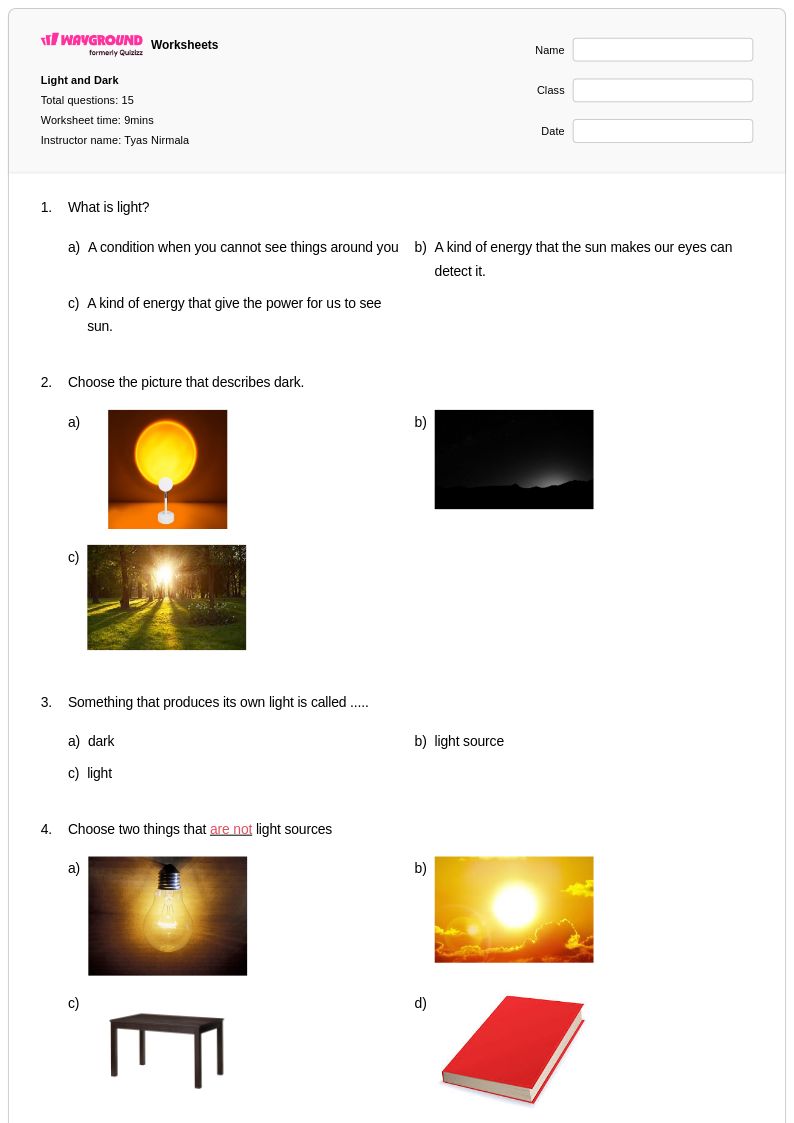
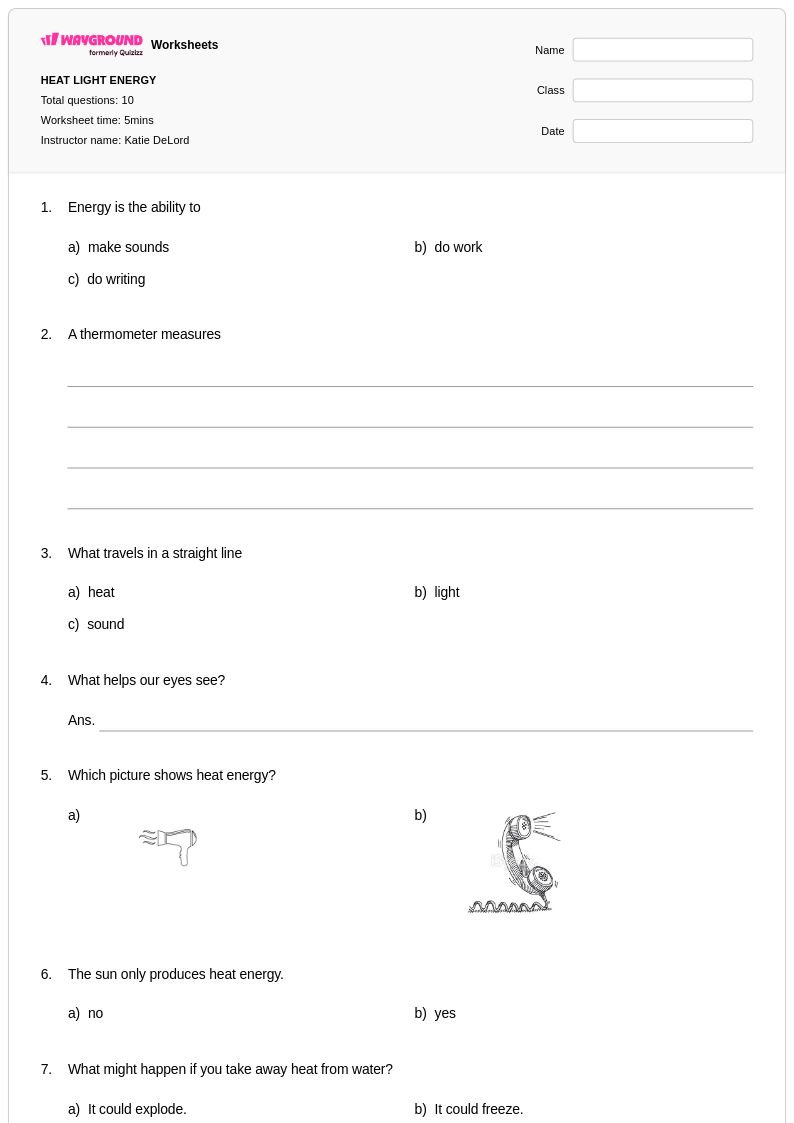
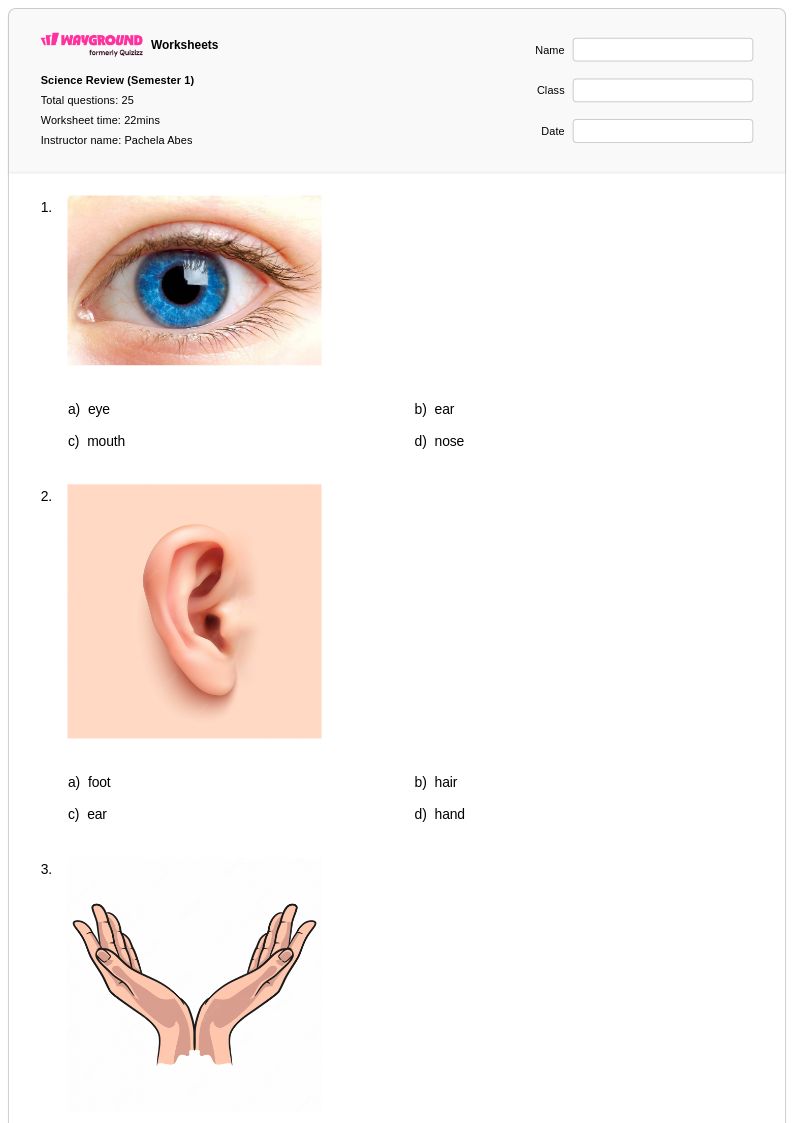
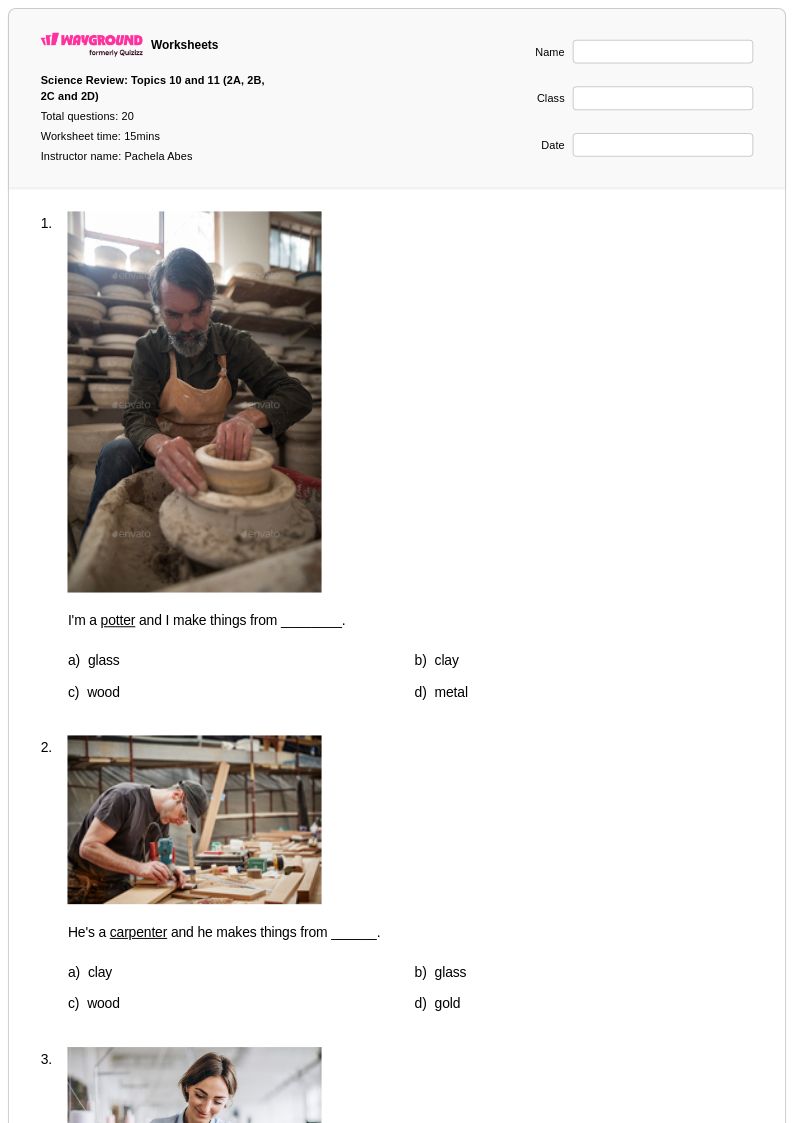
Heavy and light concepts form a fundamental cornerstone of Grade 2 physical science education, and Wayground's comprehensive worksheet collection provides young learners with engaging opportunities to explore weight comparison and measurement principles. These carefully designed worksheets guide second-grade students through hands-on activities that develop critical observation skills, comparative reasoning abilities, and early scientific vocabulary related to mass and weight. Students work through practice problems that challenge them to categorize objects, make predictions about relative weights, and understand the relationship between size and heaviness through systematic investigation. Each worksheet includes a detailed answer key that supports both independent learning and teacher-guided instruction, while the free printables ensure accessibility for diverse classroom environments and home learning situations.
Wayground, formerly Quizizz, empowers educators with millions of teacher-created resources specifically designed for heavy and light instruction in Grade 2 physical science curricula. The platform's robust search and filtering capabilities allow teachers to quickly locate worksheets that align with specific learning standards and accommodate various skill levels within their classrooms. Advanced differentiation tools enable seamless customization of content complexity, ensuring that struggling learners receive appropriate scaffolding while advanced students access enrichment activities that deepen their understanding of weight concepts. Available in both printable and digital PDF formats, these versatile resources support flexible lesson planning approaches, targeted remediation sessions, and extended skill practice opportunities that reinforce essential physical science foundations throughout the academic year.
FAQs
How do I teach heavy and light concepts to young students?
Teaching heavy and light works best through direct comparison activities where students physically handle pairs of objects and predict which is heavier before confirming with a balance scale. Start with objects that have obvious weight differences, then gradually introduce pairs that challenge assumptions, such as a large foam block versus a small rock. This progression builds observational skills and helps students understand that size does not always determine weight.
What activities help students practice comparing heavy and light objects?
Effective practice activities include sorting real or pictured objects into heavy and light categories, completing balance scale diagrams, and ranking a set of objects from lightest to heaviest. Worksheets that ask students to circle the heavier object or draw arrows showing which side of a scale would tip reinforce the concept through repeated, low-stakes decision-making. These tasks build the foundational comparative reasoning students need before moving on to standard units of measurement.
What mistakes do students commonly make when learning about heavy and light?
The most common misconception is that bigger objects are always heavier, which leads students to consistently misjudge pairs like a large pillow versus a small book. Students also confuse weight with volume, assuming a full container is always heavier than an empty one of a different size. Targeted practice with counterintuitive examples directly addresses these errors before they become entrenched.
How can I differentiate heavy and light worksheets for students at different levels?
For students who need additional support, reduce the number of objects being compared and pair visuals with simple labels so cognitive load stays manageable. More advanced students can move from binary heavy-or-light sorting to ordering multiple objects by weight and explaining their reasoning in writing. On Wayground, teachers can apply accommodations such as reduced answer choices or read-aloud support to individual students, while the rest of the class works through default settings without disruption.
How do I use Wayground's heavy and light worksheets in my classroom?
Wayground's heavy and light worksheets are available as printable PDFs, making them straightforward to distribute in a traditional classroom, and in digital formats for use on devices in technology-integrated settings. Teachers can also host the worksheet as a quiz directly on Wayground, which allows for streamlined collection and review of student responses. Each worksheet includes a complete answer key, so grading and providing immediate feedback requires minimal extra preparation time.