Explore our comprehensive collection of Grade 8 human skull worksheets and printables that help students master skeletal anatomy through engaging practice problems, detailed diagrams, and complete answer keys available as free PDF downloads.
Explore printable Human Skull worksheets for Grade 8
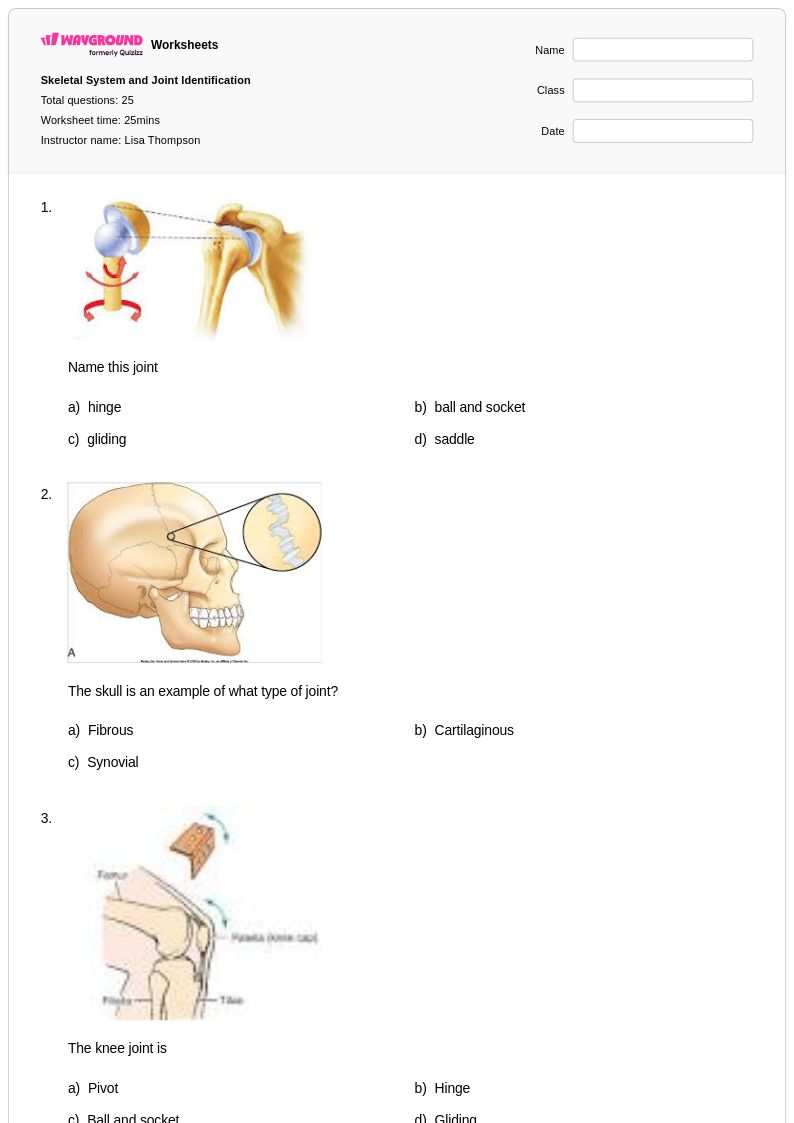
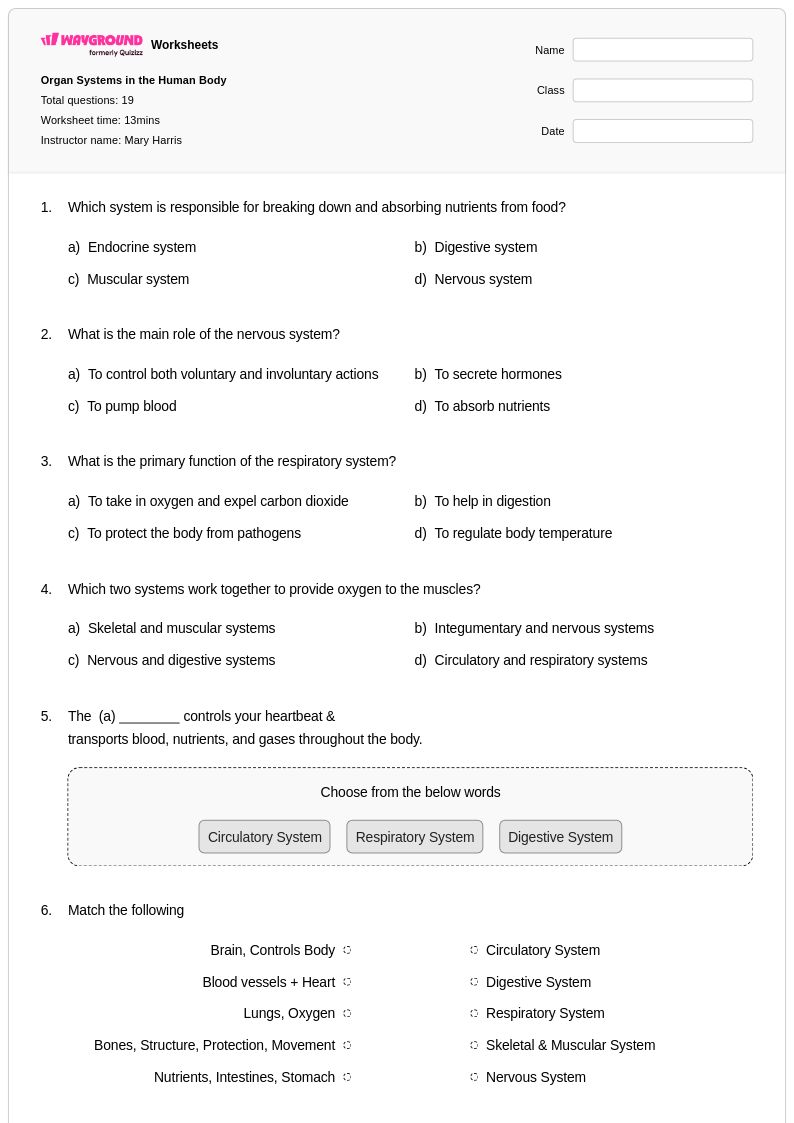
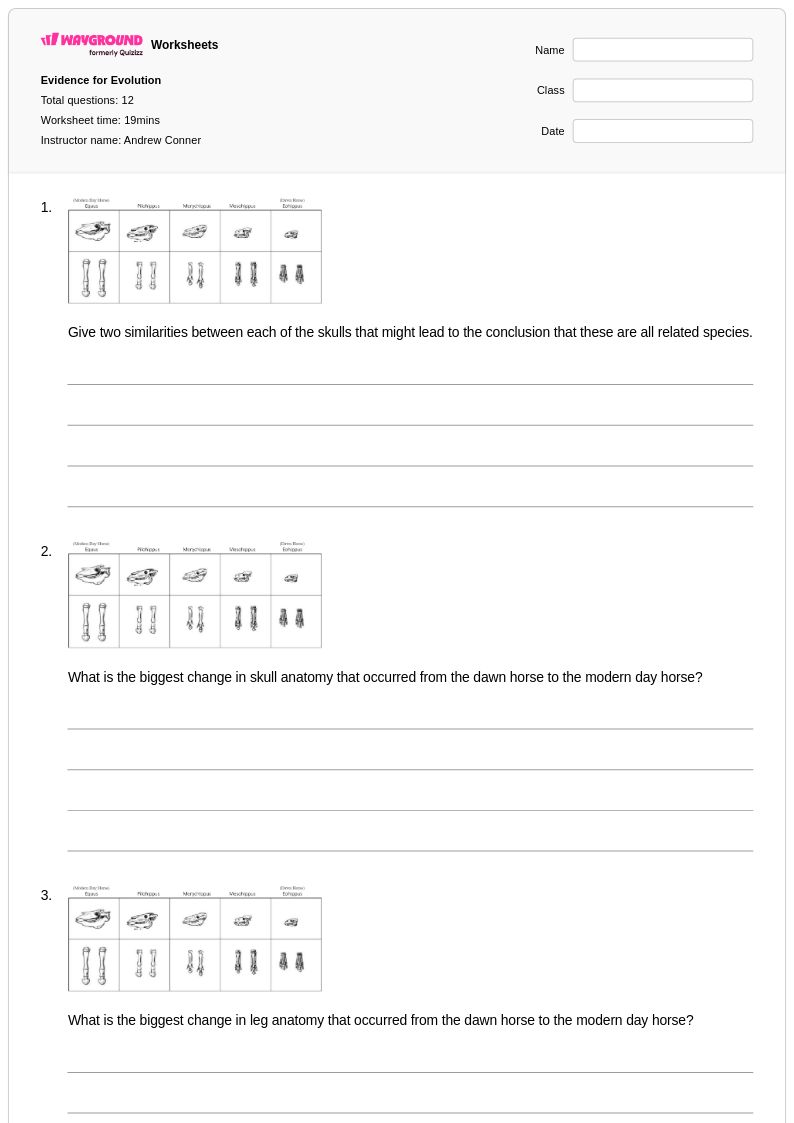
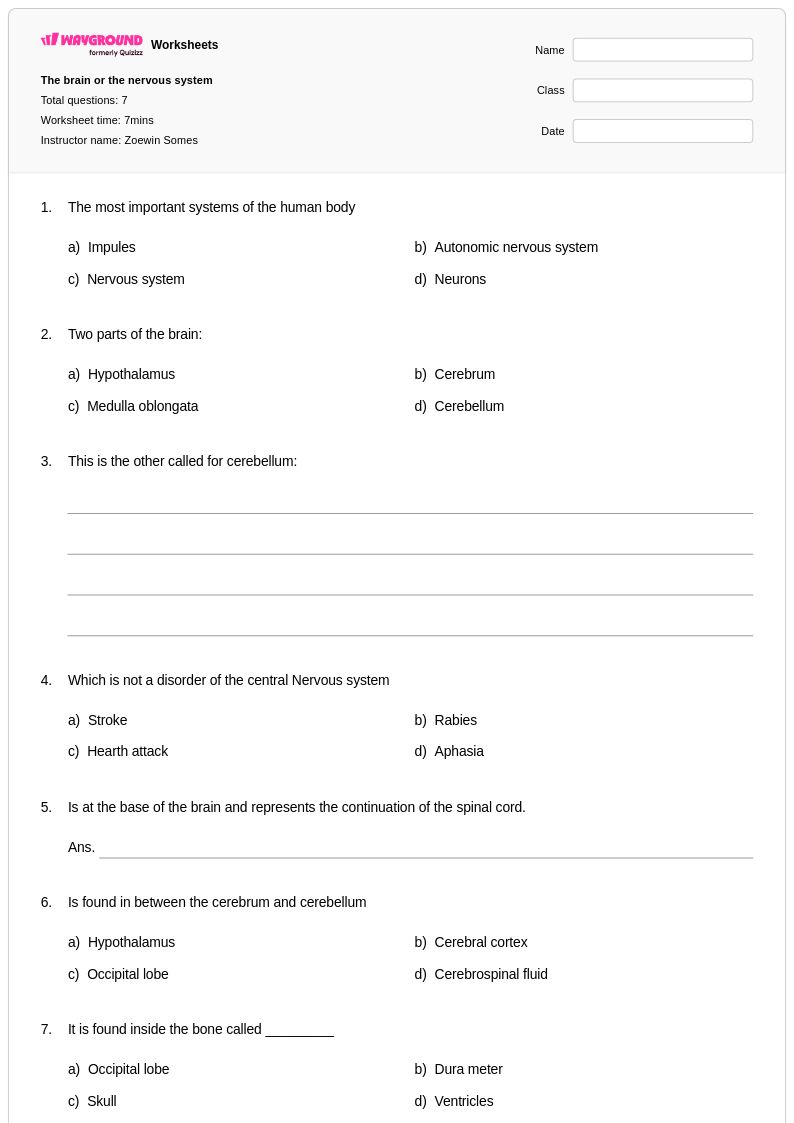
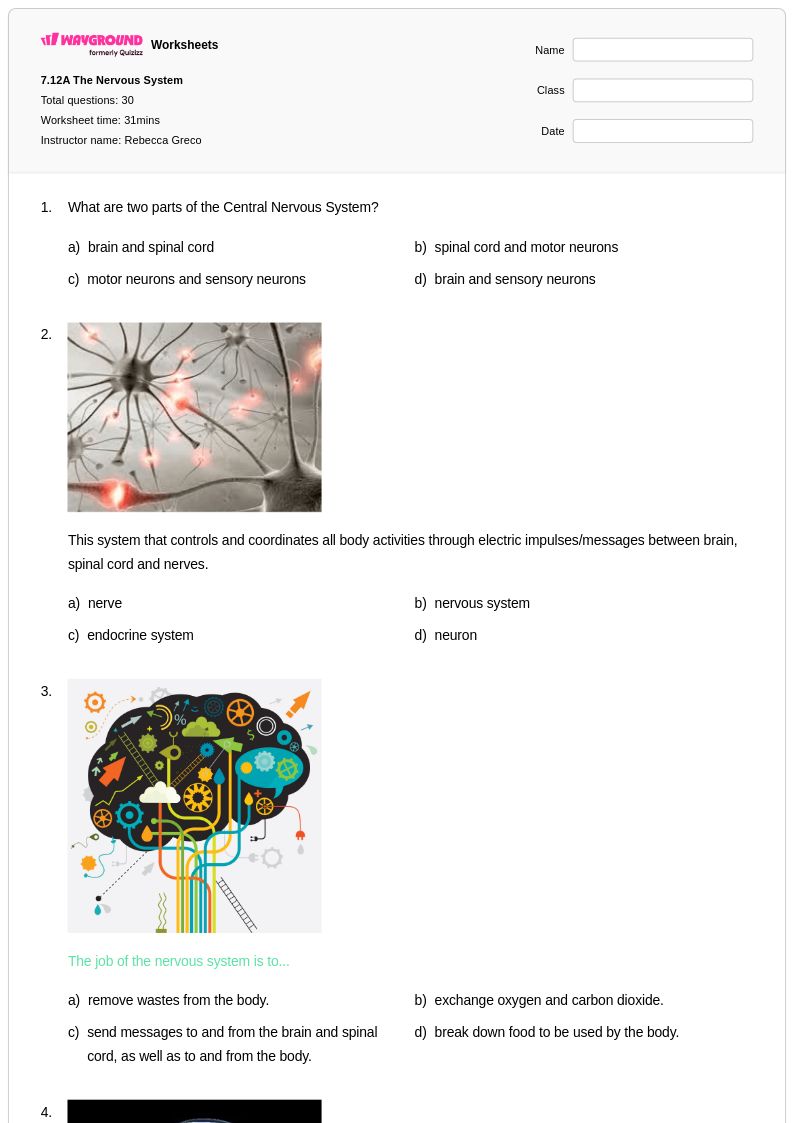
Human skull worksheets for Grade 8 Biology provide students with comprehensive learning materials that explore the intricate structure and function of the cranium and facial bones. These educational resources guide eighth-grade learners through detailed anatomical studies, helping them identify major skull bones such as the frontal, parietal, temporal, and occipital bones, while understanding their protective roles for the brain and sensory organs. The worksheets strengthen critical thinking skills through practice problems that require students to label diagrams, analyze bone relationships, and connect skull anatomy to broader human body systems. Each resource includes answer keys to support independent learning and self-assessment, with many available as free printables in convenient pdf formats that accommodate various classroom and homework needs.
Wayground, formerly Quizizz, empowers educators with an extensive collection of teacher-created human skull worksheets specifically designed for Grade 8 Biology instruction. The platform's millions of resources undergo careful curation and organization through advanced search and filtering capabilities, allowing teachers to quickly locate materials that align with specific curriculum standards and learning objectives. These differentiation tools enable instructors to customize worksheets for diverse learning needs, whether supporting struggling students through remediation exercises or challenging advanced learners with enrichment activities. Available in both printable and digital formats, including downloadable pdf versions, these flexible resources streamline lesson planning while providing targeted skill practice that reinforces anatomical vocabulary, spatial reasoning, and scientific observation techniques essential for middle school biology success.
FAQs
How do I teach the bones of the human skull to students?
Start by introducing the skull in two parts: the cranium (which houses and protects the brain) and the facial skeleton. Use labeled diagrams to walk students through the major bones in sequence, beginning with the frontal bone and moving through the parietal, temporal, and occipital bones before addressing facial structures. Pairing visual identification with function, such as explaining how the temporal bone houses the auditory structures, helps students retain the material more effectively than memorization alone.
What are good exercises for practicing human skull anatomy?
Labeling exercises using detailed diagrams are among the most effective tools for reinforcing skull anatomy, as they require active recall rather than passive recognition. Having students identify suture lines, cranial foramina, and specific bones like the frontal, parietal, temporal, and occipital bones in varied diagram orientations deepens spatial understanding. Practice problems that ask students to match bones to their protective or structural functions add another layer of comprehension beyond simple identification.
What mistakes do students commonly make when learning skull anatomy?
A common error is confusing the parietal and occipital bones due to their adjacent positioning and similar appearance in two-dimensional diagrams. Students also frequently misidentify suture lines as bone boundaries rather than understanding them as fibrous joints between bones. Another persistent misconception is treating the skull as a single bone rather than a composite of 22 bones, which affects how students understand both cranial development and injury mechanics.
How can I differentiate human skull worksheets for students at different learning levels?
For students who need additional support, begin with simplified diagrams that label only the major cranial bones before introducing facial structures and foramina. More advanced students can be challenged with unlabeled diagrams requiring full identification, or with questions linking skull structure to neurological and sensory function. On Wayground, teachers can apply accommodations such as read aloud support and reduced answer choices to individual students, allowing the same worksheet to serve diverse learners within a single classroom without singling anyone out.
How do I use Wayground's human skull worksheets in my classroom?
Wayground's human skull worksheets are available as free printable PDFs for traditional classroom use and in digital formats for technology-integrated environments, making them suitable for in-person instruction, homework, or hybrid learning setups. Teachers can also host the worksheets as a quiz directly on Wayground, enabling immediate student interaction and streamlined assessment. Each worksheet includes a complete answer key, which supports independent student review as well as efficient teacher grading.
How do suture lines relate to skull anatomy, and why do students need to know them?
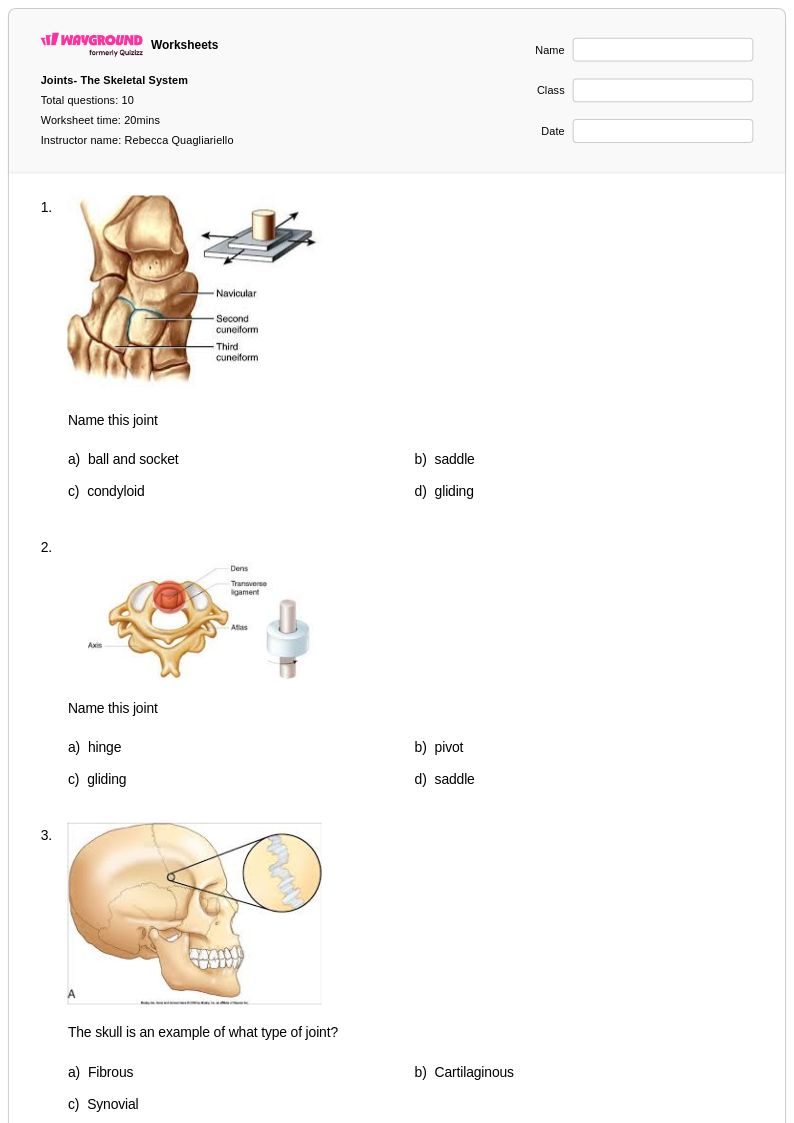
Suture lines are fibrous joints that connect the individual bones of the cranium, and understanding them is essential for students to recognize the skull as a multi-bone structure rather than a single unit. Key sutures, such as the coronal, sagittal, lambdoid, and squamous sutures, serve as anatomical landmarks used in both clinical and academic contexts. Students who can identify suture lines are better prepared for discussions of skull development, forensic anatomy, and conditions like craniosynostosis.