
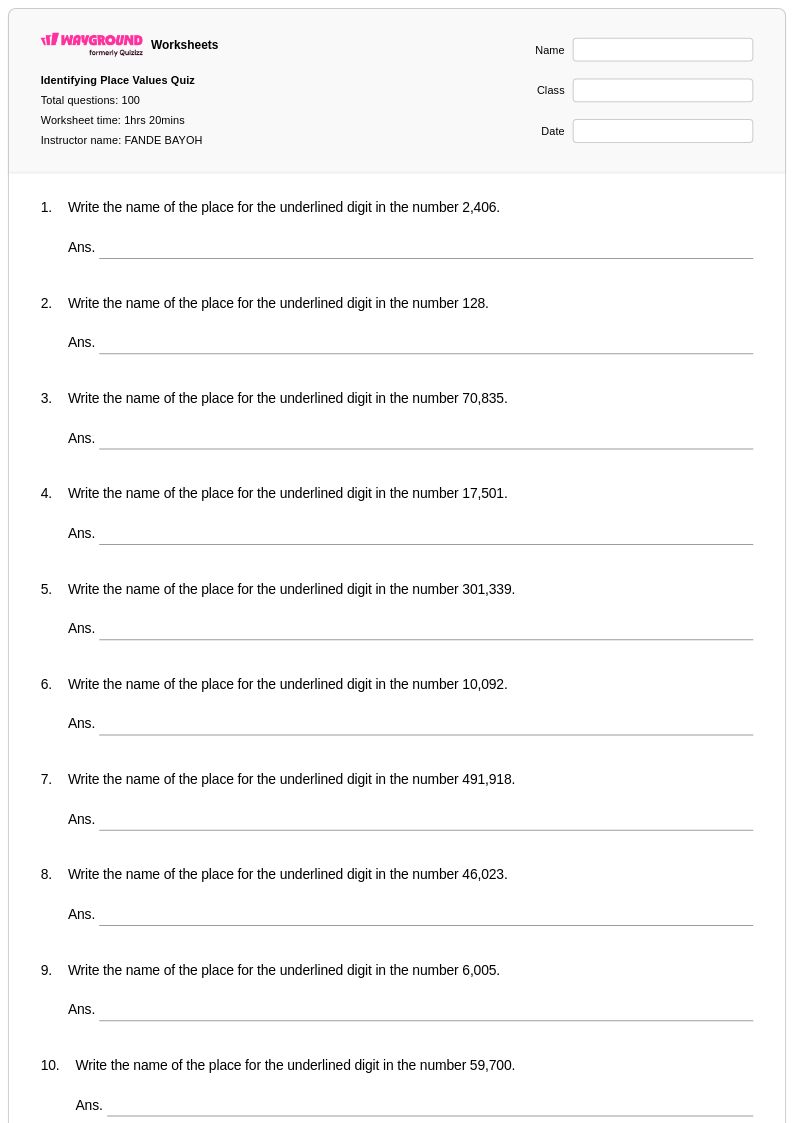
100 Q
10th
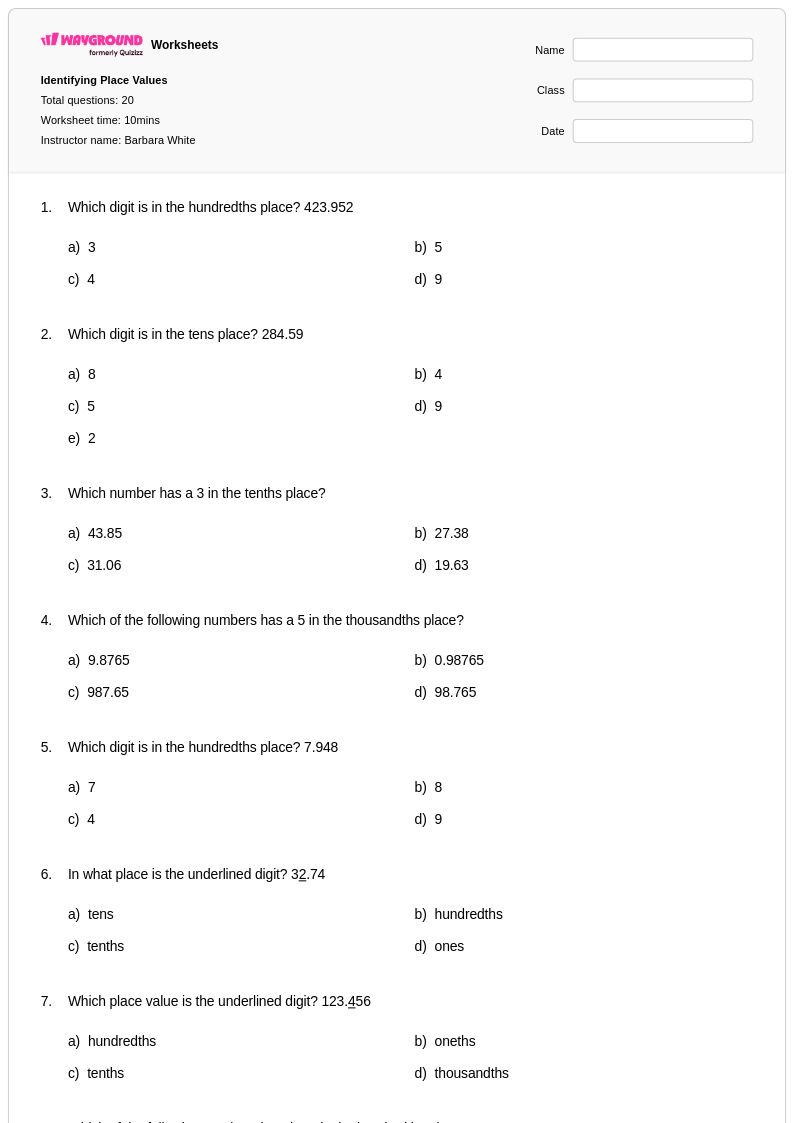
20 Q
4th - 5th
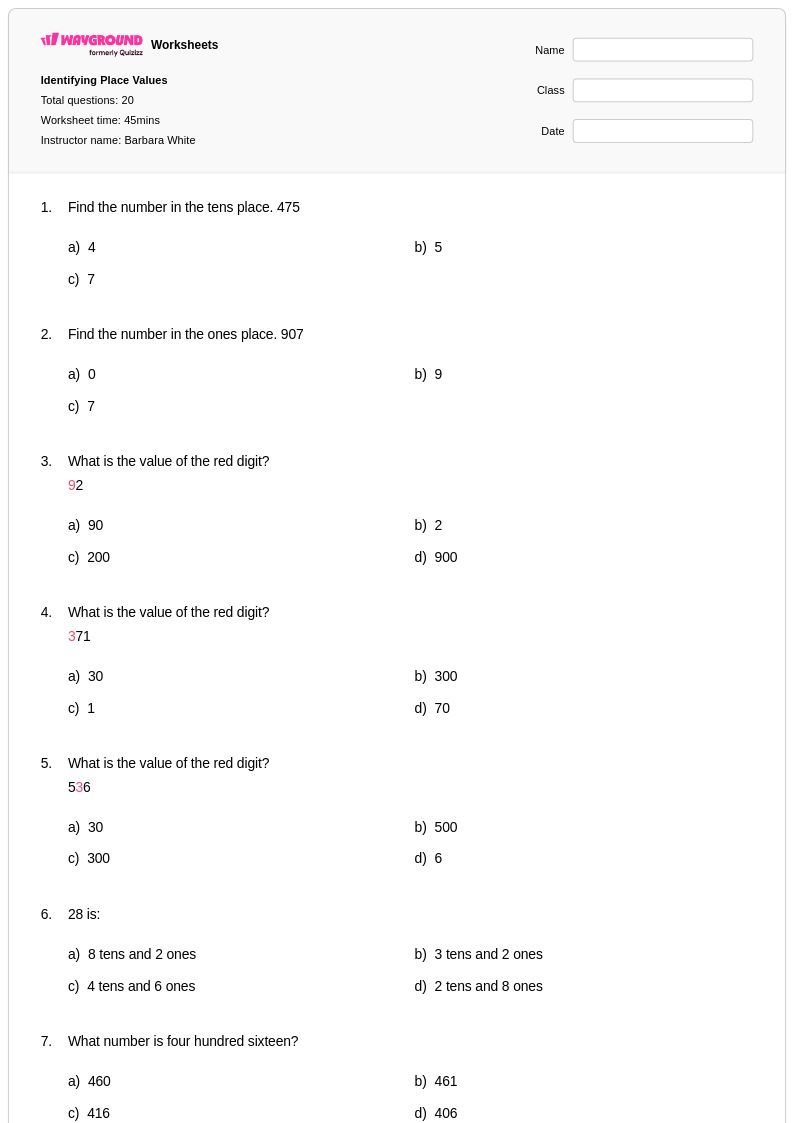
20 Q
1st - 2nd
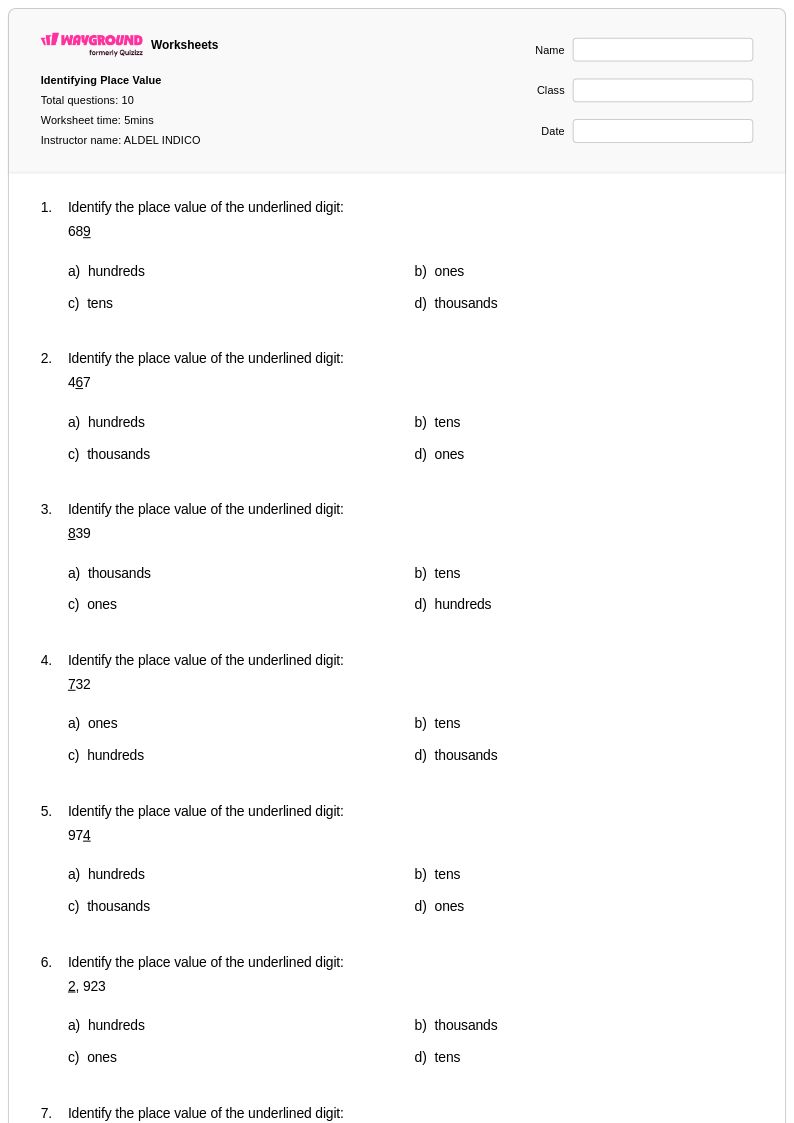
10 Q
1st
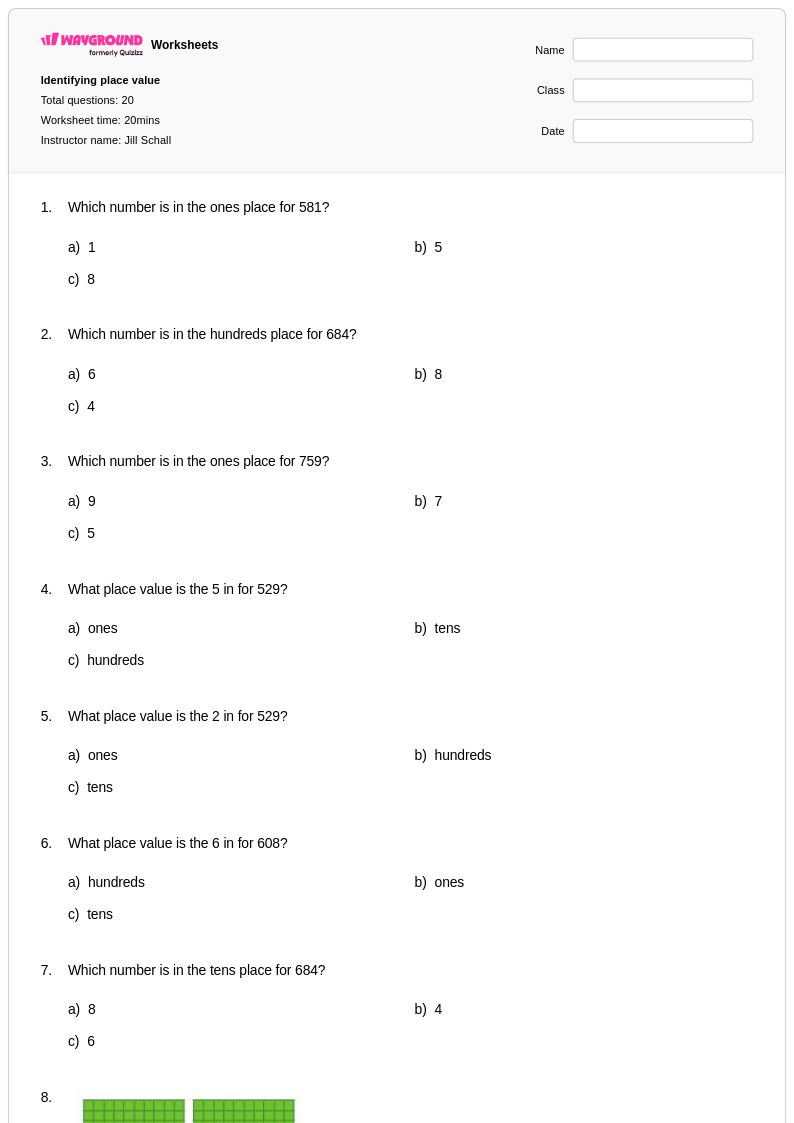
20 Q
1st - 3rd
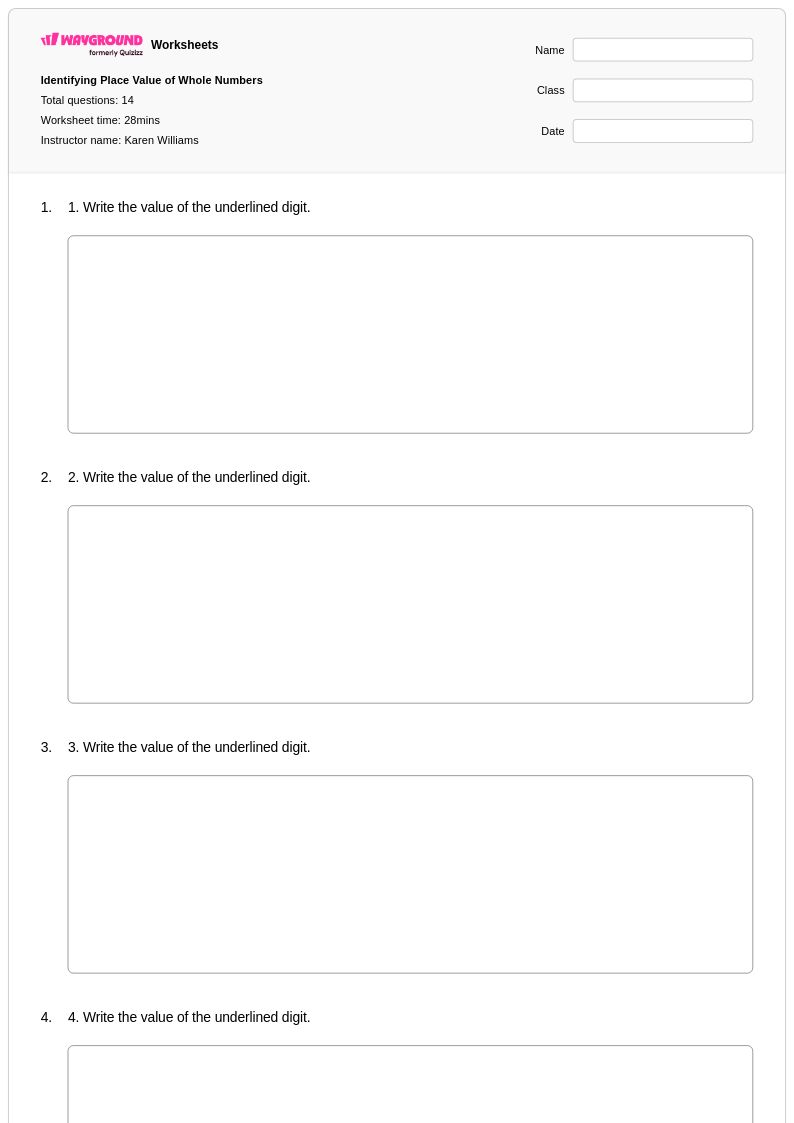
14 Q
5th
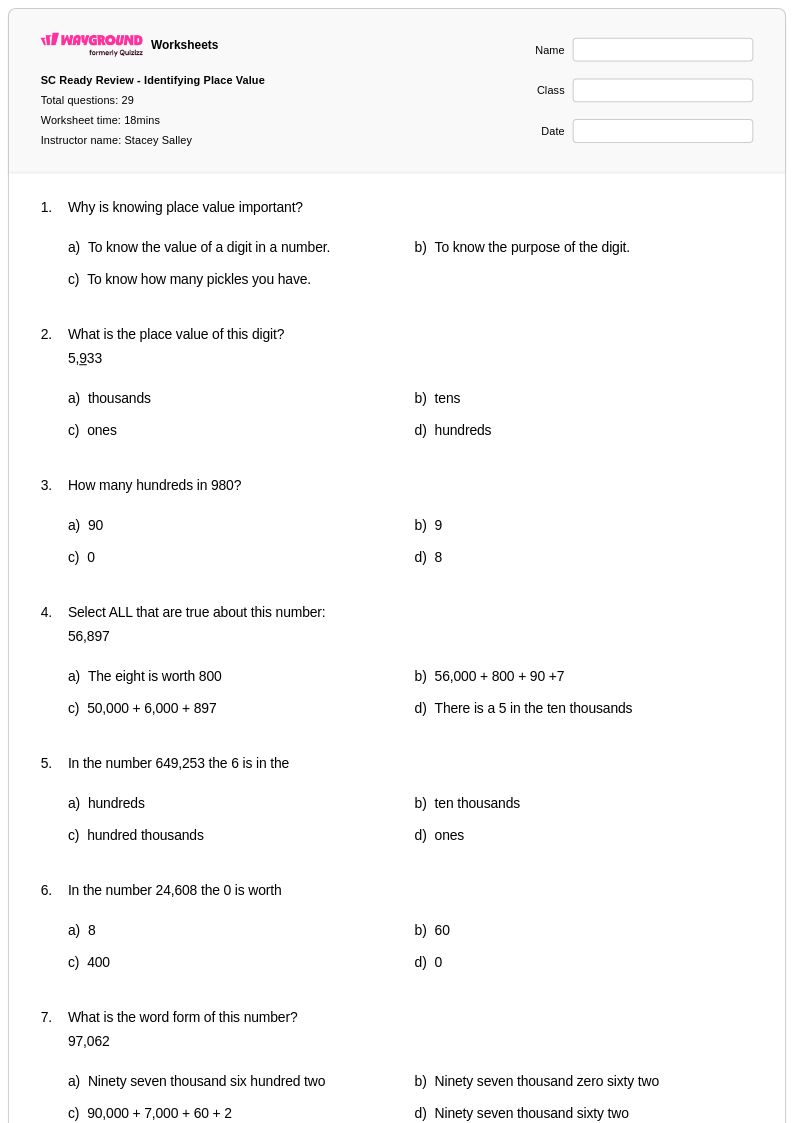
29 Q
2nd
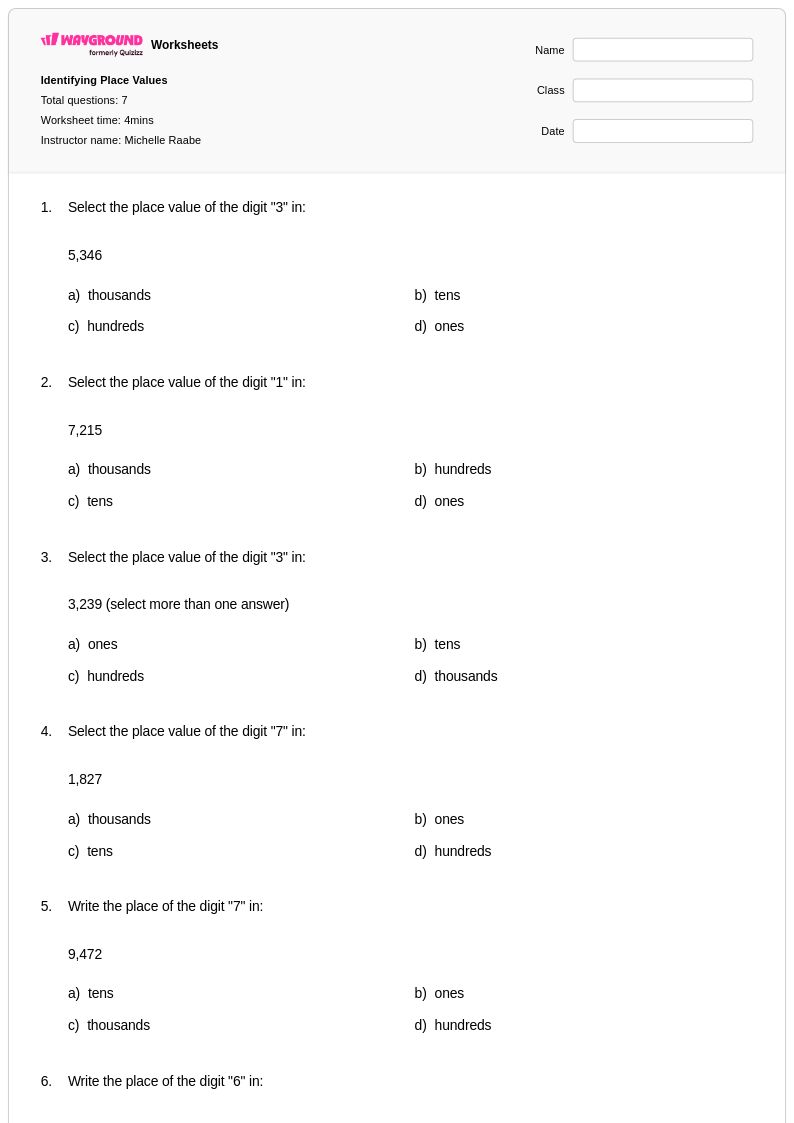
7 Q
3rd
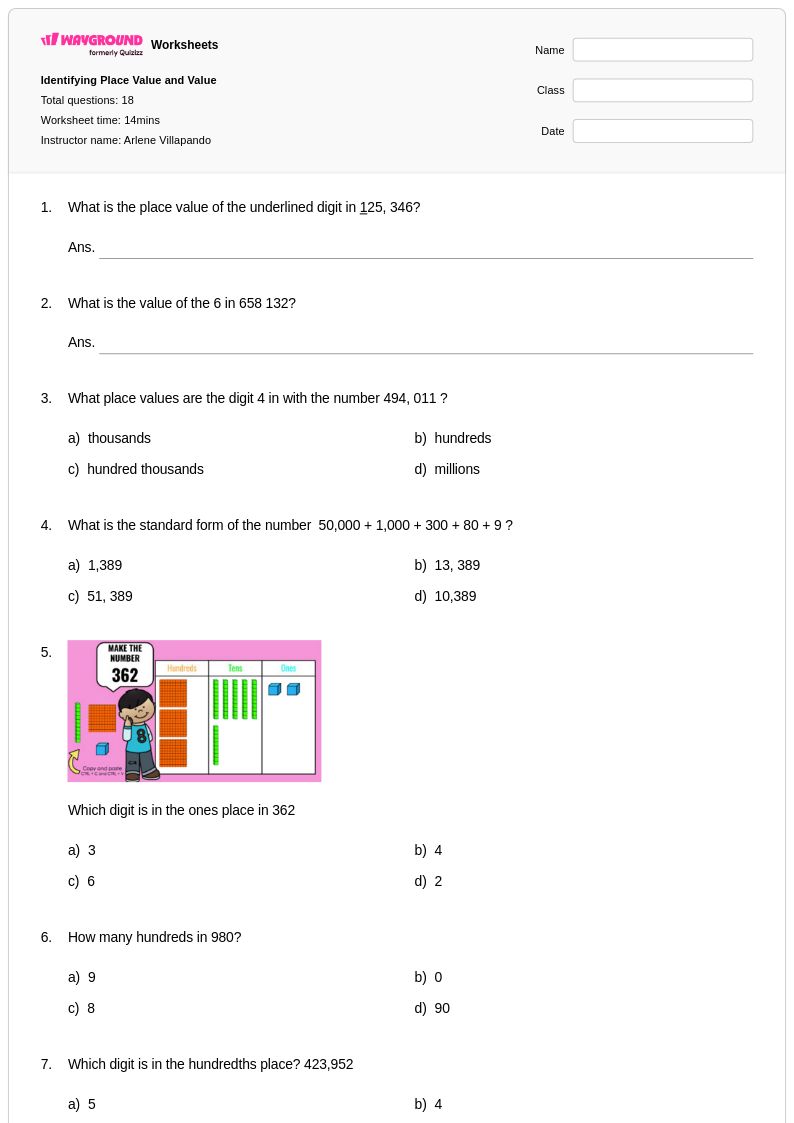
18 Q
4th
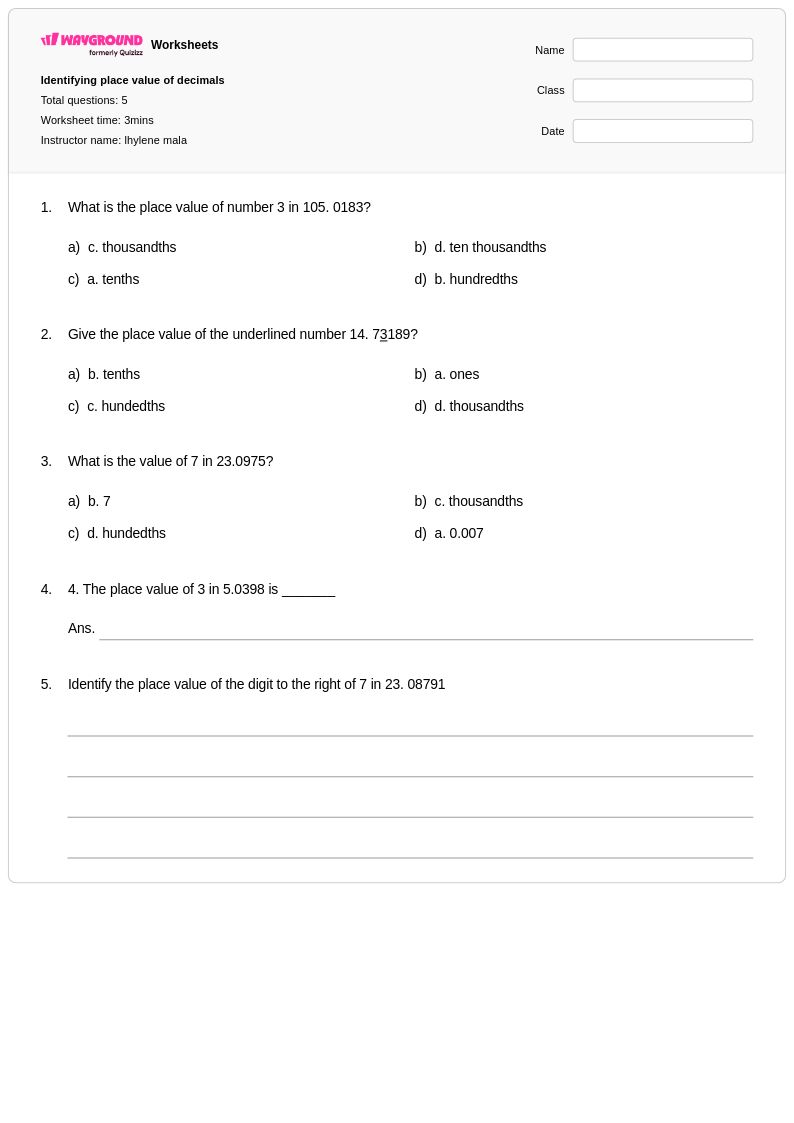
5 Q
5th
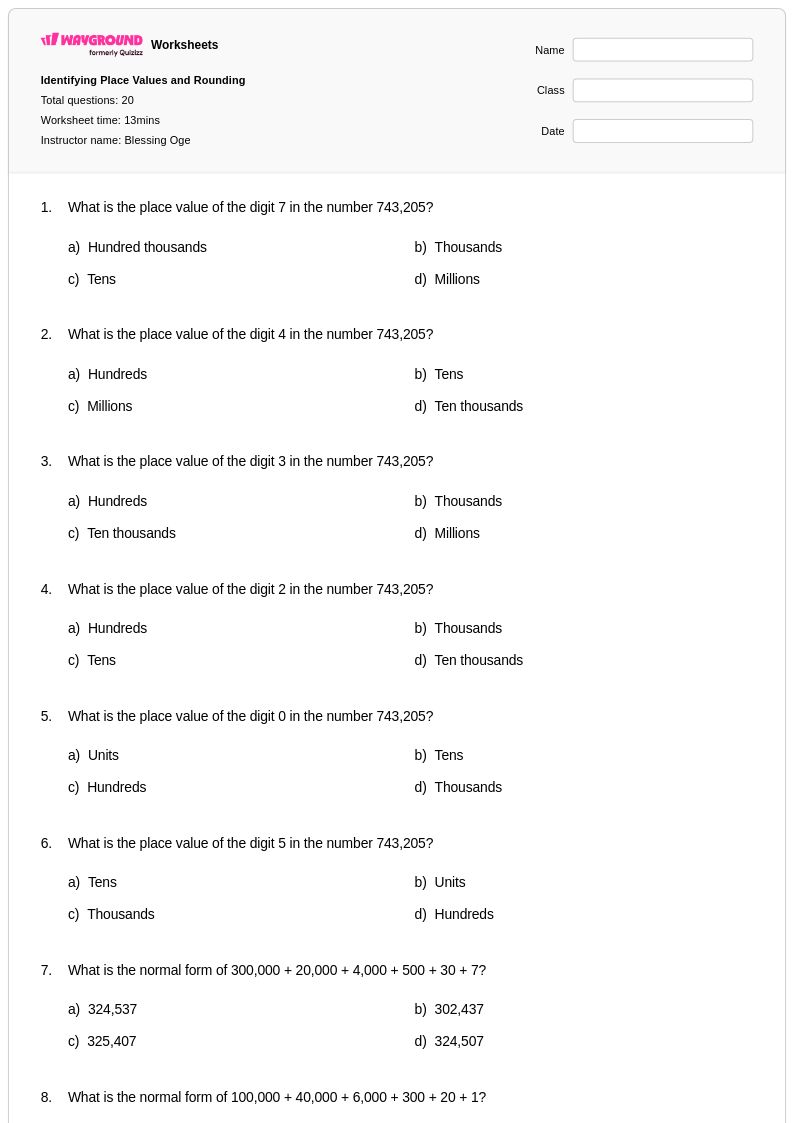
20 Q
3rd
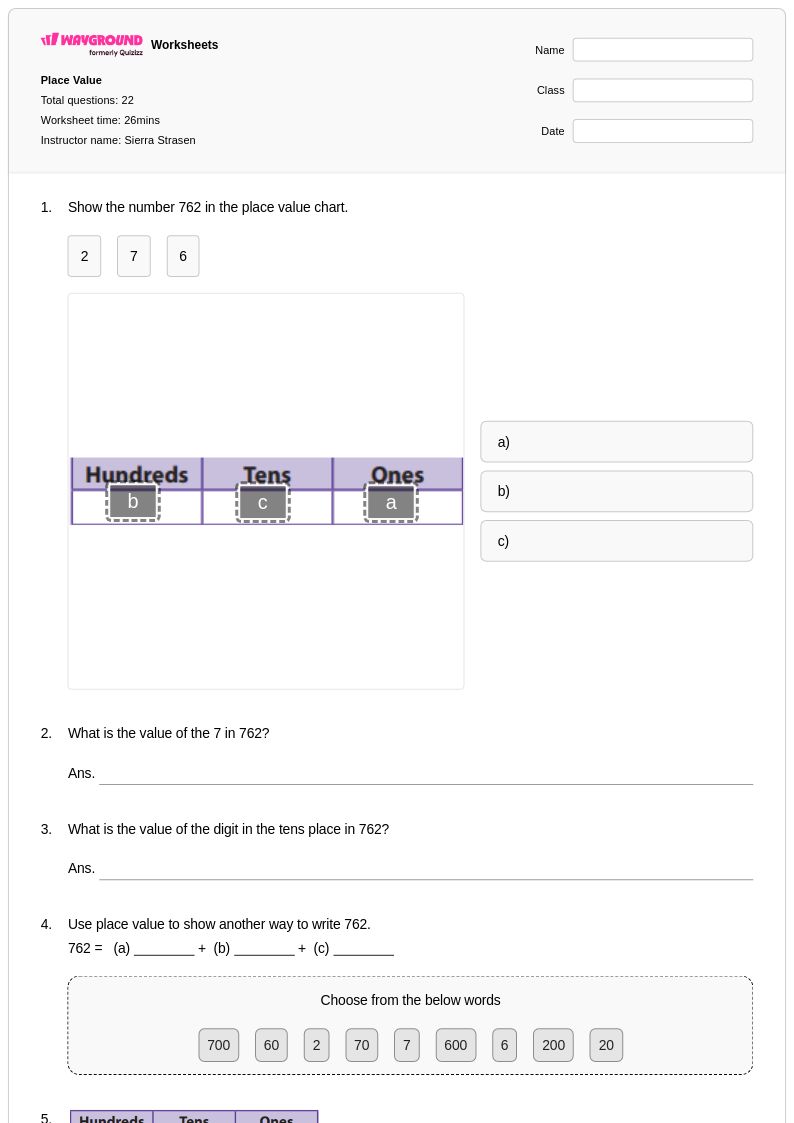
22 Q
4th
10 Q
4th
15 Q
3rd
10 Q
2nd
10 Q
3rd
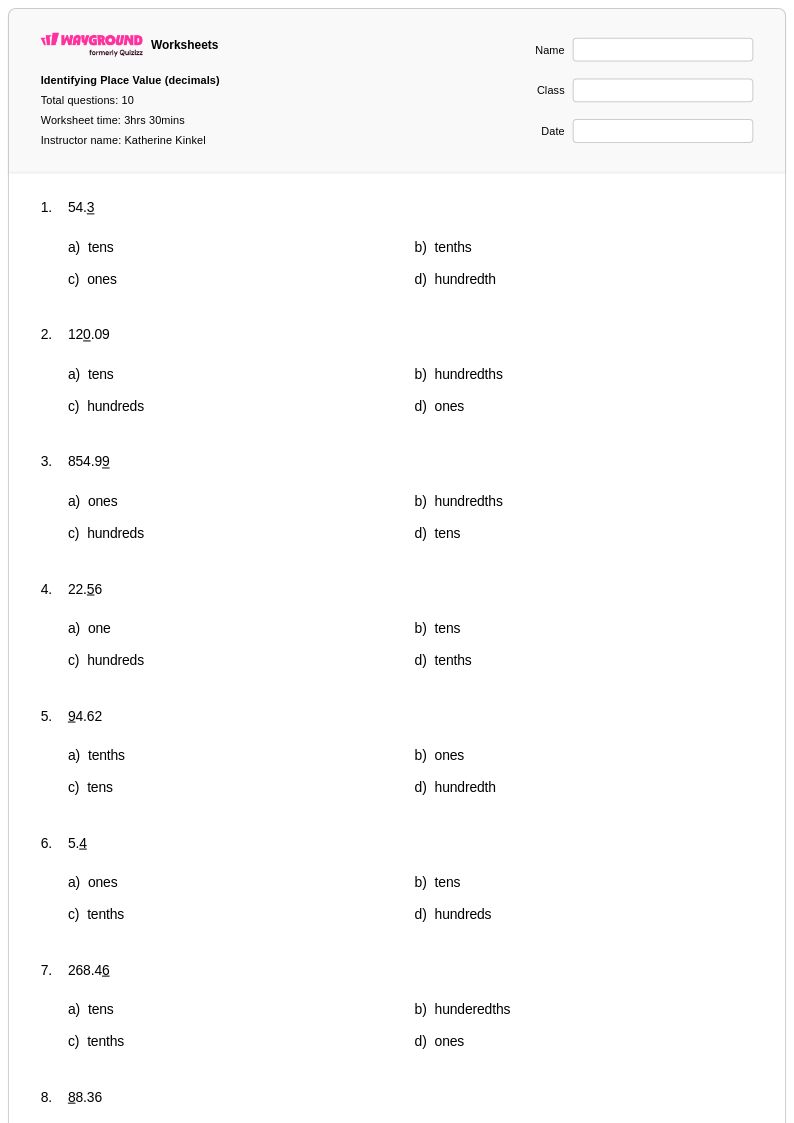
10 Q
2nd - 5th
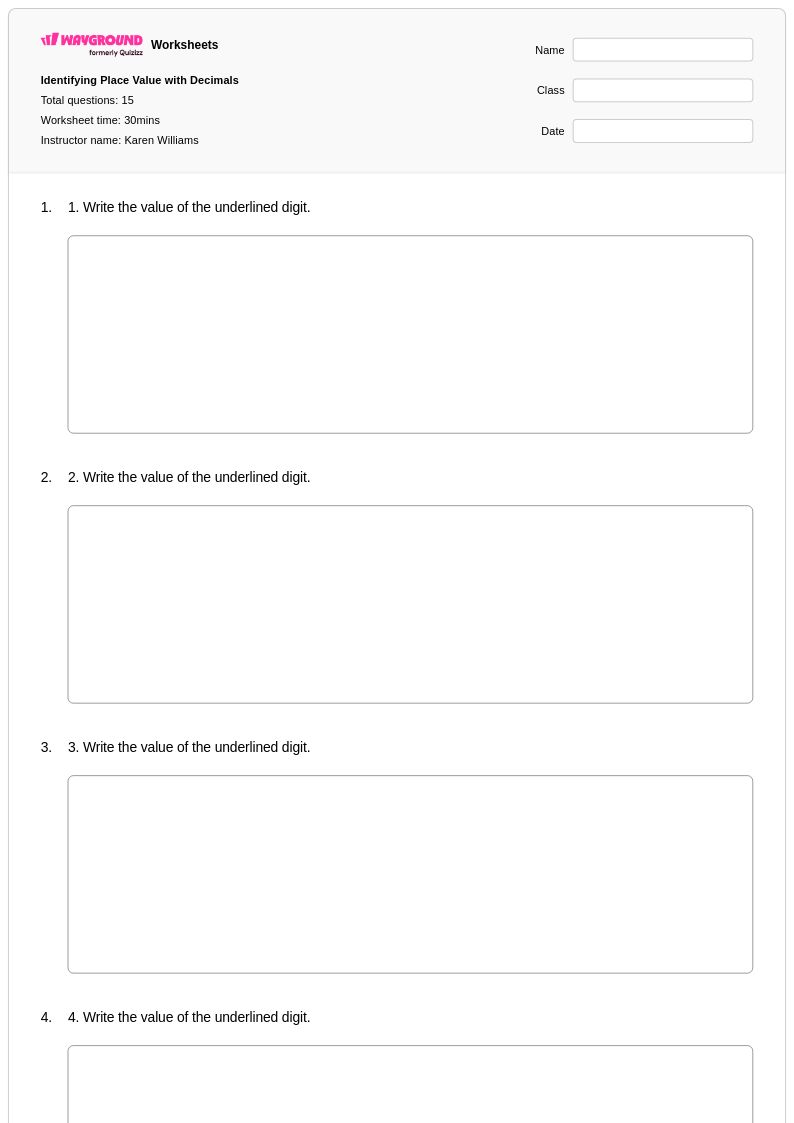
15 Q
5th
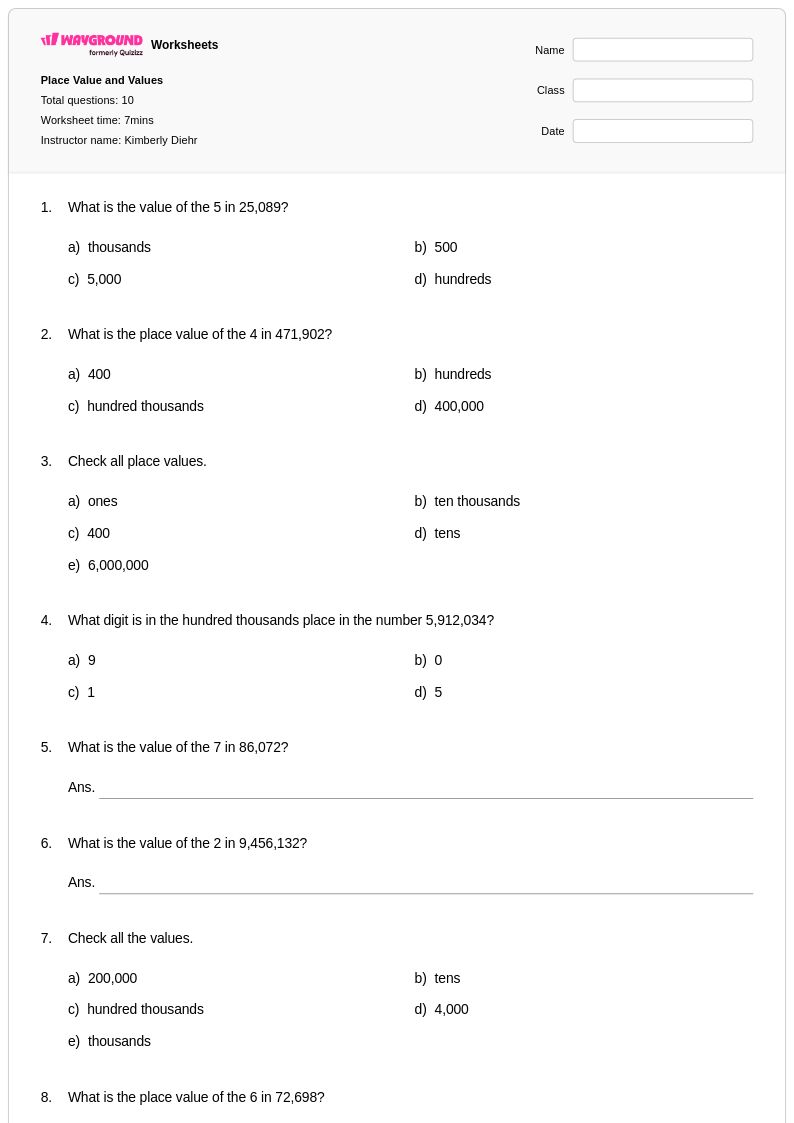
10 Q
4th
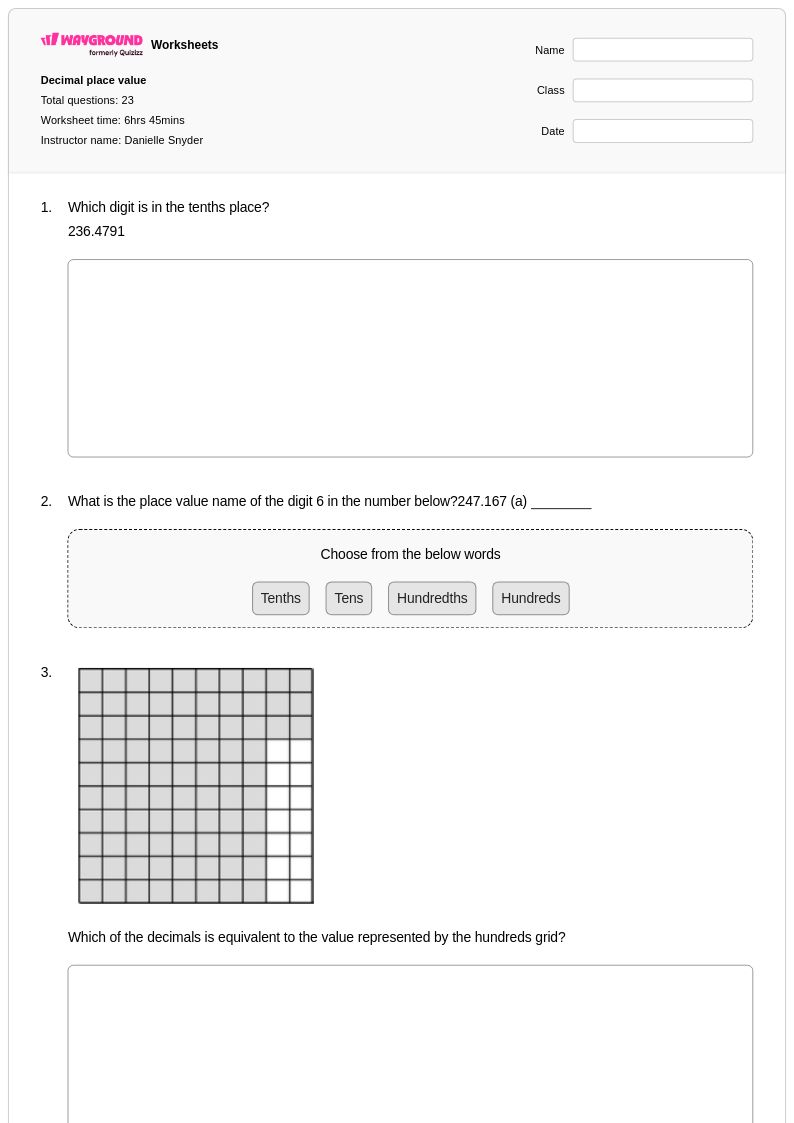
23 Q
5th
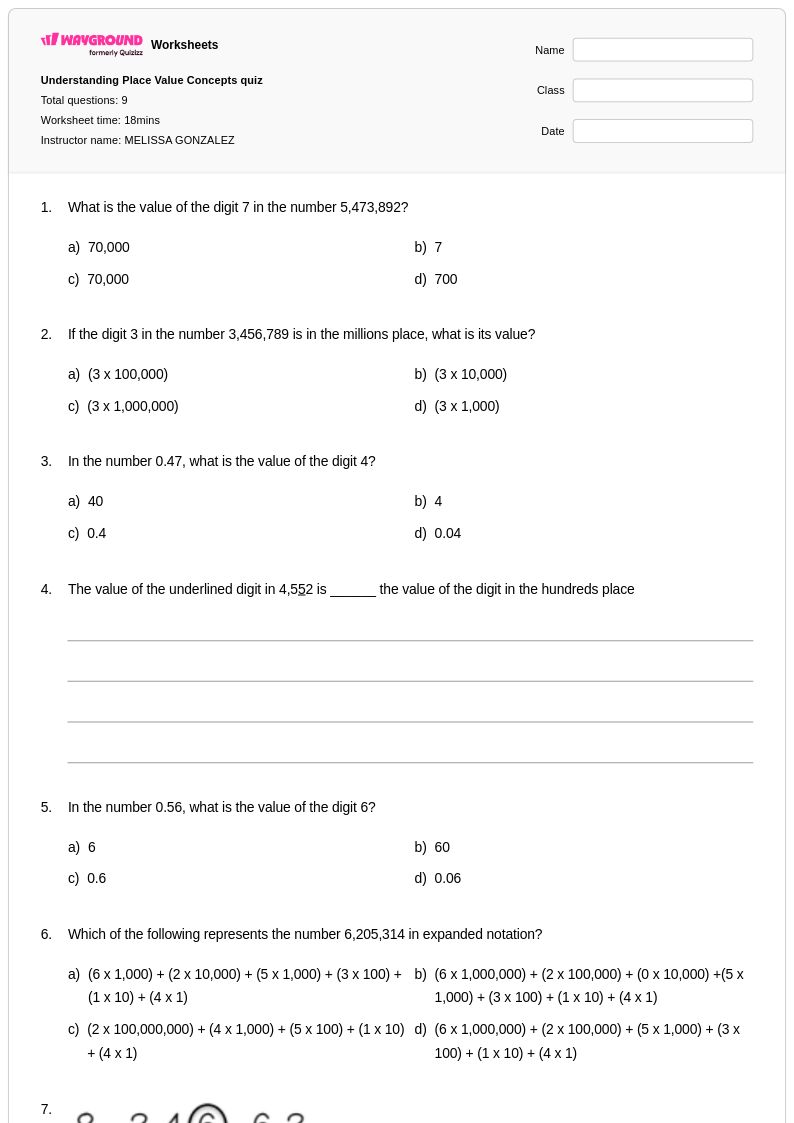
9 Q
4th
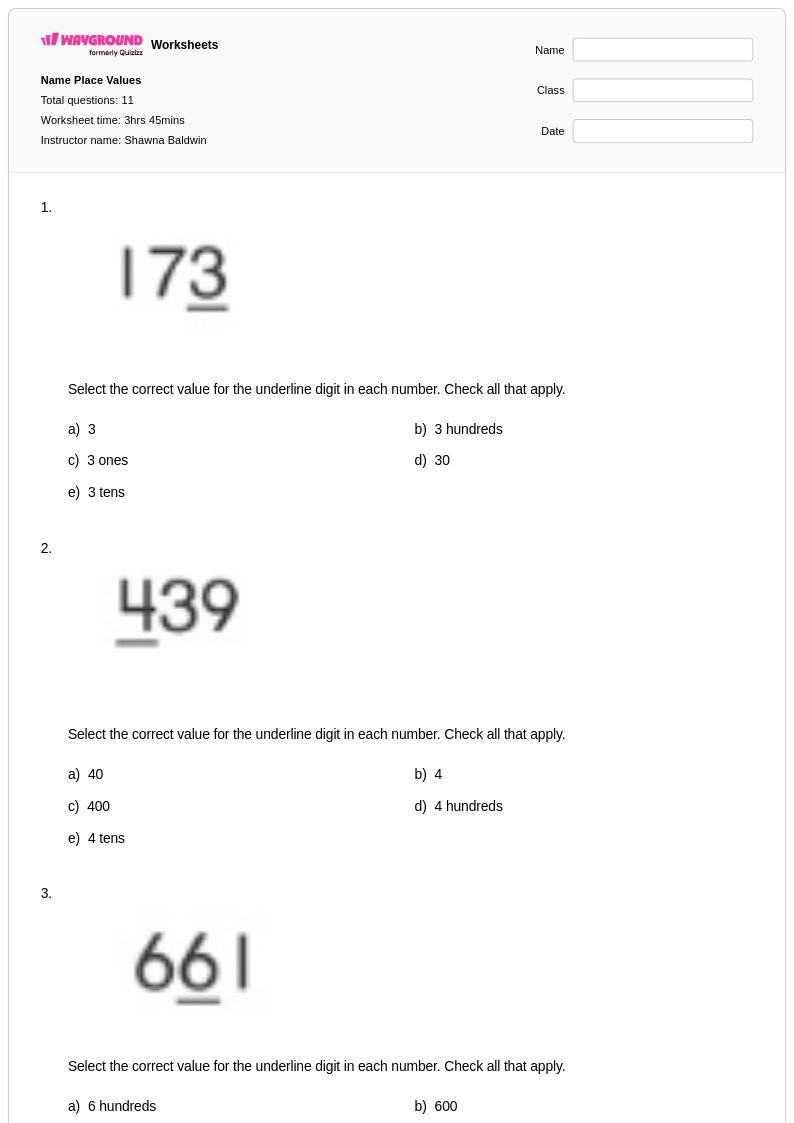
11 Q
2nd
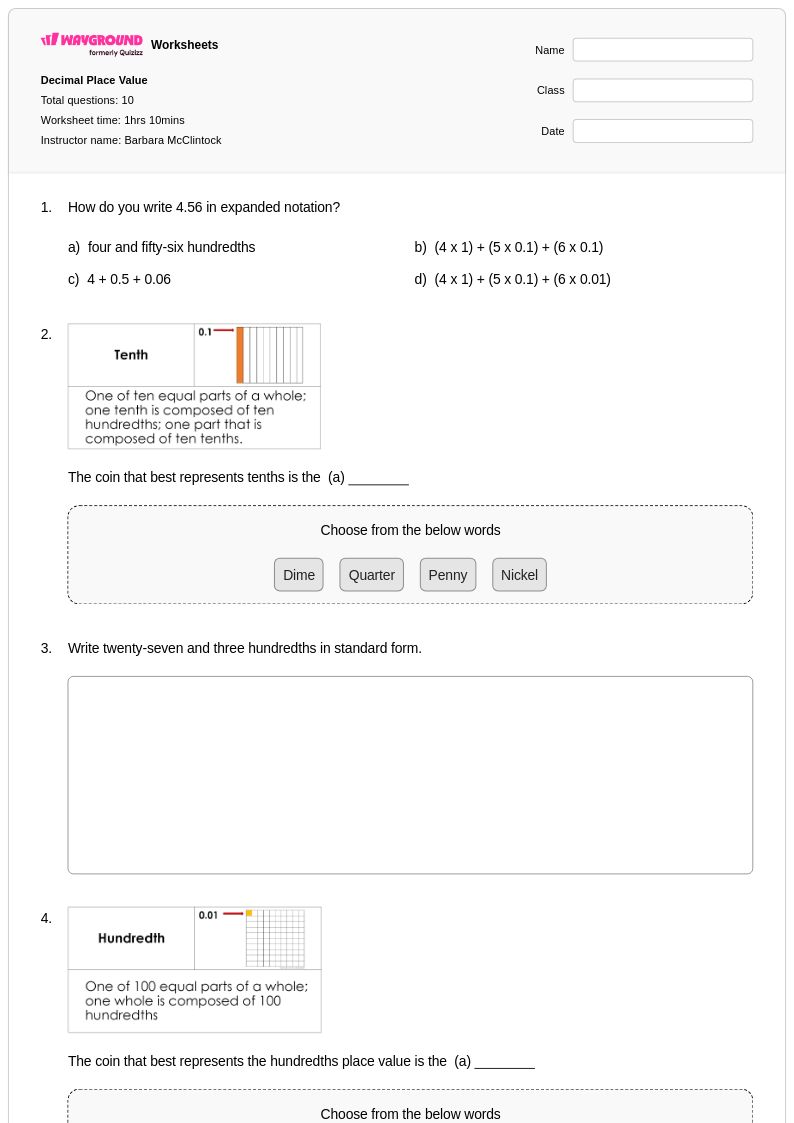
10 Q
4th
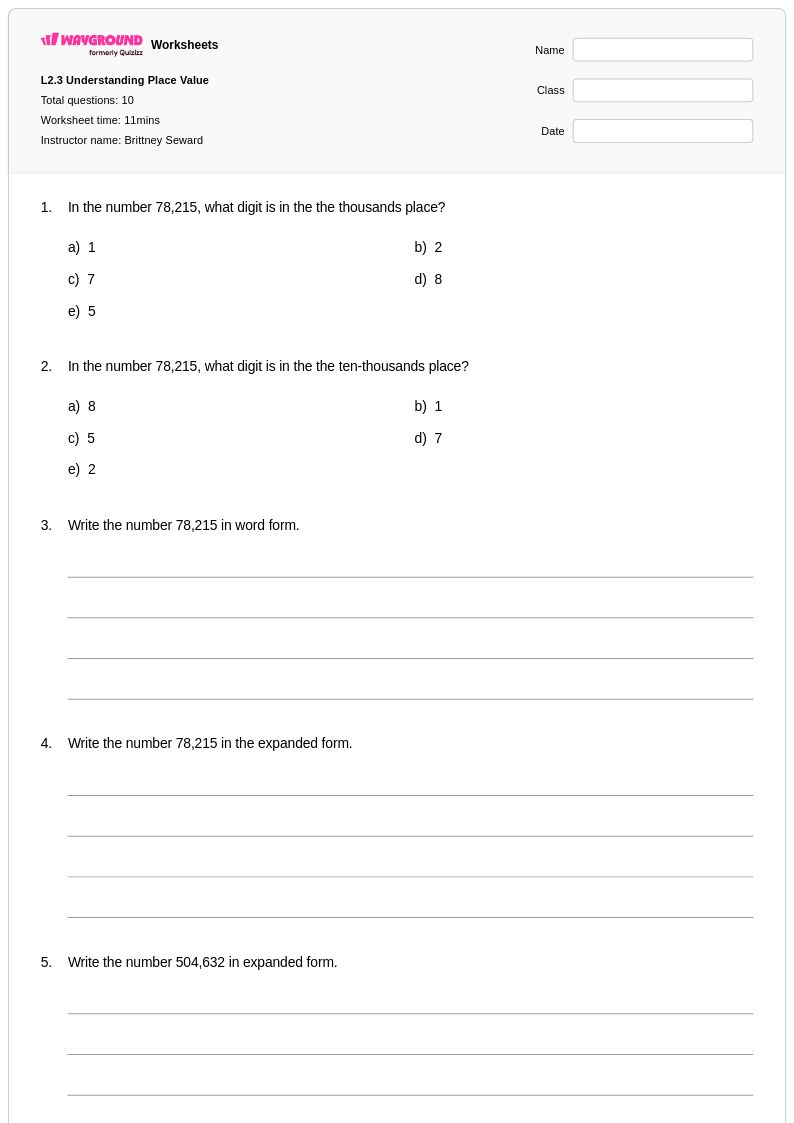
10 Q
4th
Explore Identifying Place Value Worksheets by Grades
Explore Other Subject Worksheets for kindergarten
Explore printable Identifying Place Value worksheets for Kindergarten
Identifying place value worksheets for kindergarten students available through Wayground (formerly Quizizz) provide foundational mathematical experiences that help young learners understand how numbers are organized and represented. These carefully designed practice problems introduce kindergarteners to the concept that numbers have specific positions that determine their value, focusing on ones and tens place recognition within numbers 1-20. The worksheet collection strengthens essential number sense skills by guiding students through visual representations, manipulative-based activities, and interactive exercises that make abstract mathematical concepts concrete and accessible. Each printable resource includes comprehensive answer keys and free pdf downloads, ensuring teachers have complete instructional support for implementing effective place value instruction that builds critical mathematical thinking skills.
Wayground (formerly Quizizz) empowers educators with millions of teacher-created resources specifically designed for kindergarten place value instruction, featuring robust search and filtering capabilities that help teachers quickly locate materials aligned with specific learning standards and student needs. The platform's differentiation tools enable teachers to customize worksheets for varied ability levels, while flexible formatting options provide both printable and digital access, including downloadable pdf versions for seamless classroom integration. These comprehensive features support strategic lesson planning by offering educators extensive options for skill practice, targeted remediation for struggling learners, and enrichment opportunities for advanced students, ultimately creating a dynamic learning environment where kindergarten students can develop strong foundational understanding of place value concepts through engaging, developmentally appropriate mathematical experiences.
FAQs
What do kindergarteners learn about place value?
How do I introduce place value to kindergarteners?
What are good place value activities for kindergarten?
How can I tell if a kindergartener understands place value?
How can I use these kindergarten place value worksheets?
How can I support diverse learners with this concept?