Free Printable Interpretation Worksheets for Grade 12
Master Grade 12 physics interpretation skills with Wayground's comprehensive collection of free worksheets, printables, and practice problems complete with answer keys to enhance analytical thinking and data comprehension.
Explore printable Interpretation worksheets for Grade 12
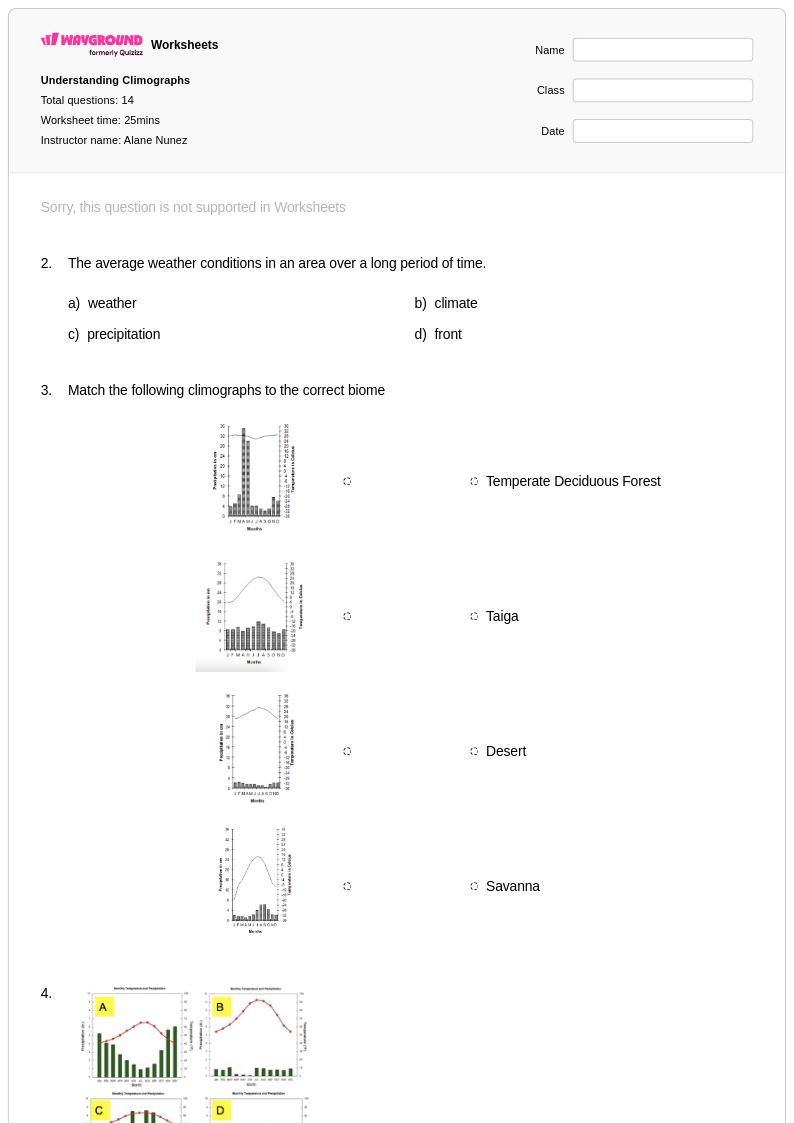
Grade 12 physics interpretation worksheets available through Wayground (formerly Quizizz) provide advanced students with comprehensive practice in analyzing and understanding complex physical phenomena, experimental data, and theoretical concepts. These expertly designed resources strengthen critical thinking skills by challenging students to interpret graphs, diagrams, laboratory results, and mathematical relationships across all major physics domains including mechanics, thermodynamics, electromagnetism, and modern physics. The worksheets feature diverse problem types that require students to extract meaningful information from data sets, analyze error sources, draw conclusions from experimental observations, and connect theoretical principles to real-world applications. Each worksheet collection includes detailed answer keys and is available as free printable PDFs, making them invaluable resources for reinforcing analytical skills essential for success in advanced physics coursework and standardized assessments.
Wayground (formerly Quizizz) empowers physics educators with access to millions of teacher-created worksheet resources specifically focused on interpretation skills development for Grade 12 students. The platform's robust search and filtering capabilities allow instructors to quickly locate materials aligned with specific curriculum standards and learning objectives, while advanced differentiation tools enable seamless customization to meet diverse student needs and ability levels. Teachers can efficiently modify existing worksheets or combine multiple resources to create targeted practice sets for remediation, enrichment, or skill reinforcement activities. The flexible digital and printable PDF formats support various instructional approaches, from traditional classroom assignments to blended learning environments, ensuring that educators have the tools necessary to develop students' critical interpretation abilities through systematic, standards-aligned practice problems that prepare them for collegiate-level physics study.
FAQs
How do I teach physics interpretation skills to my students?
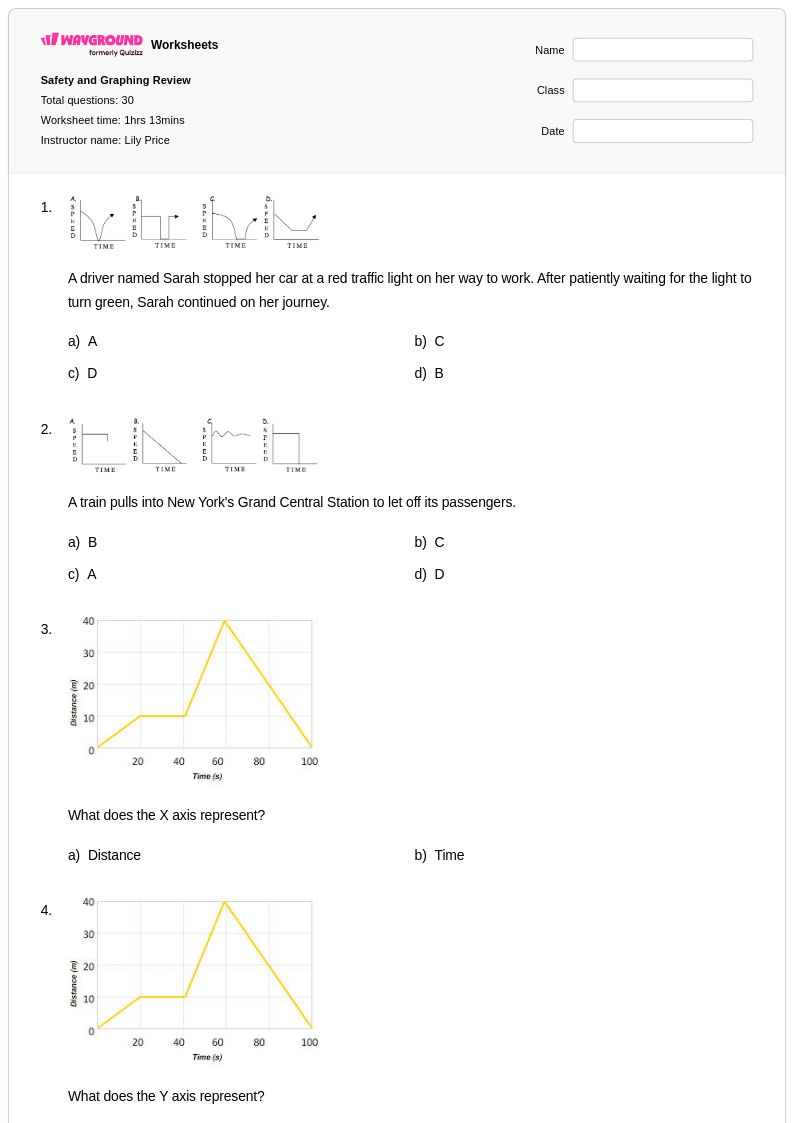
Teaching physics interpretation begins with explicit instruction in reading scientific representations, such as motion graphs, circuit diagrams, and wave patterns, before asking students to analyze them independently. Start by modeling how to extract key information from a graph or data set, narrate your reasoning aloud, and then gradually release responsibility to students through guided and independent practice. Pairing visual representations with real experimental contexts helps students connect abstract data to physical phenomena they can observe and understand.
What kinds of exercises help students practice physics data interpretation?
Effective practice exercises include analyzing position-time and velocity-time graphs to describe motion, interpreting wave diagrams to identify frequency and amplitude, reading circuit schematics to predict current and voltage behavior, and drawing conclusions from experimental result tables. Worksheets that present a variety of problem types within the same session build flexibility, helping students recognize that interpretation strategies transfer across different physics contexts rather than being isolated skills.
What mistakes do students commonly make when interpreting physics graphs and data?
A frequent error is confusing the slope of a motion graph with the position itself, leading students to misread a steep line as meaning the object is far from the origin rather than moving quickly. Students also tend to over-read data by drawing conclusions that go beyond what the graph actually shows, a habit that undermines scientific reasoning. Another common mistake is ignoring axis labels and units, which causes misinterpretation of scale and magnitude across all graph types.
How can I differentiate physics interpretation worksheets for students at different skill levels?
For struggling students, begin with single-variable graphs and provide sentence stems or guided question scaffolds that direct attention to specific features before asking for conclusions. Advanced learners benefit from multi-variable data sets or experiments with anomalous results that require them to evaluate reliability and propose explanations. On Wayground, teachers can apply accommodations such as read aloud, reduced answer choices, and extended time to individual students, allowing the same worksheet to serve the full range of learners in one class without singling anyone out.
How do I use Wayground's physics interpretation worksheets in my classroom?
Wayground's physics interpretation worksheets are available as printable PDFs for traditional classroom and homework use, and in digital formats that support technology-integrated and remote learning environments. Teachers can also host any worksheet as a live or assigned quiz directly on Wayground, making it easy to collect student responses and review results in one place. Each worksheet includes a complete answer key, so students can self-assess during independent practice or you can use it for rapid grading after a class activity.
How do I help students move from describing a graph to actually interpreting it?
Description and interpretation are distinct cognitive tasks, and students often stall at description because they have not been taught the next step. After a student identifies what a graph shows, prompt them with questions like 'What does this tell us about how the object was moving?' or 'What physical event could have caused this change?' This forced inference step, practiced repeatedly with varied graph types, trains students to treat data as evidence for a claim rather than as an end in itself.