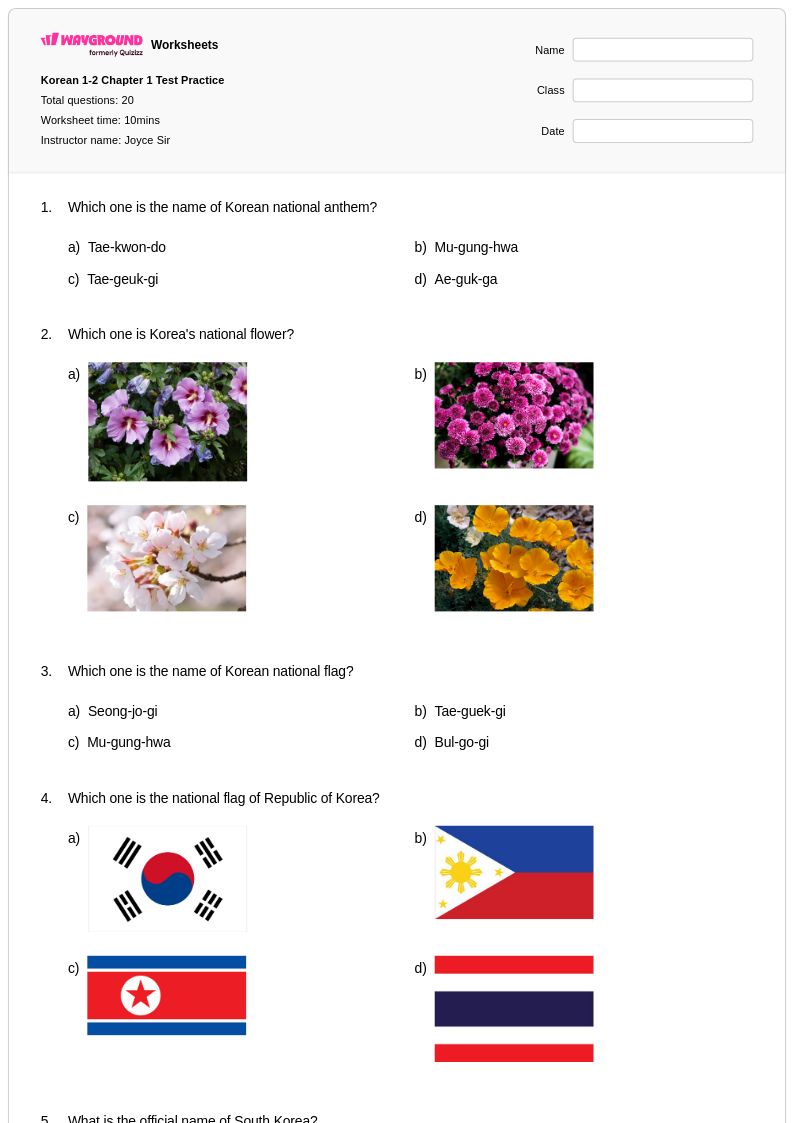
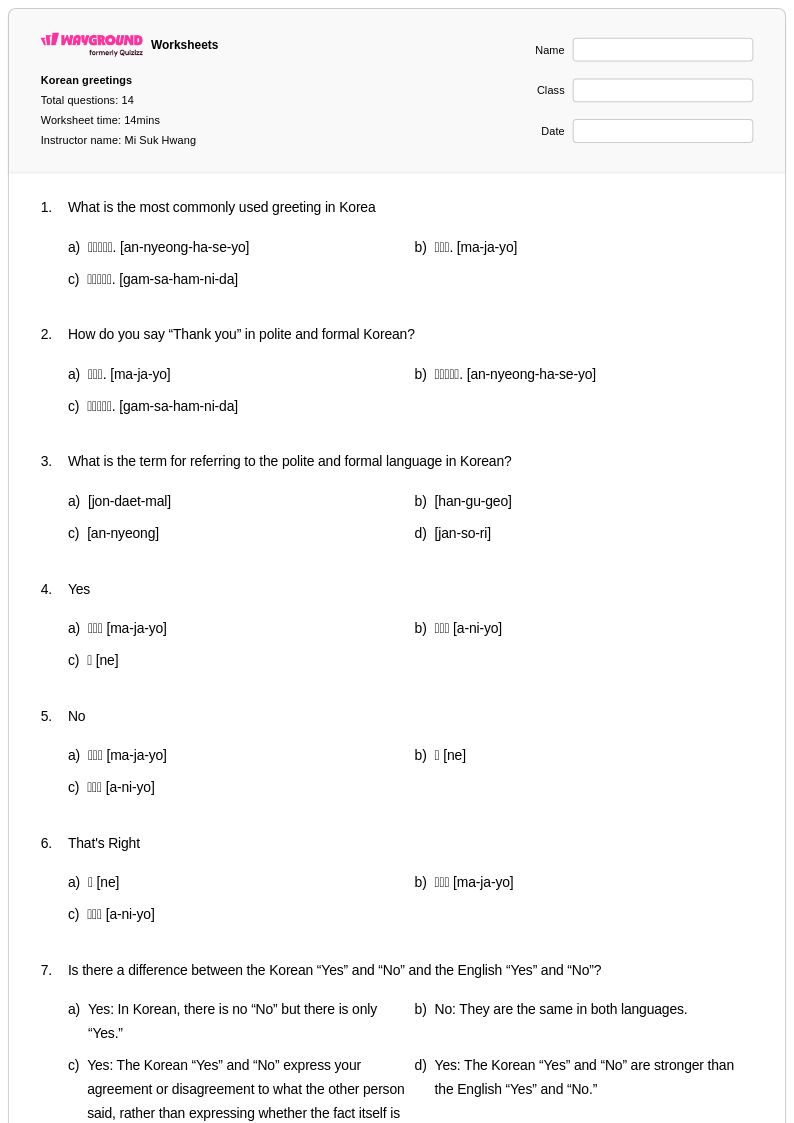
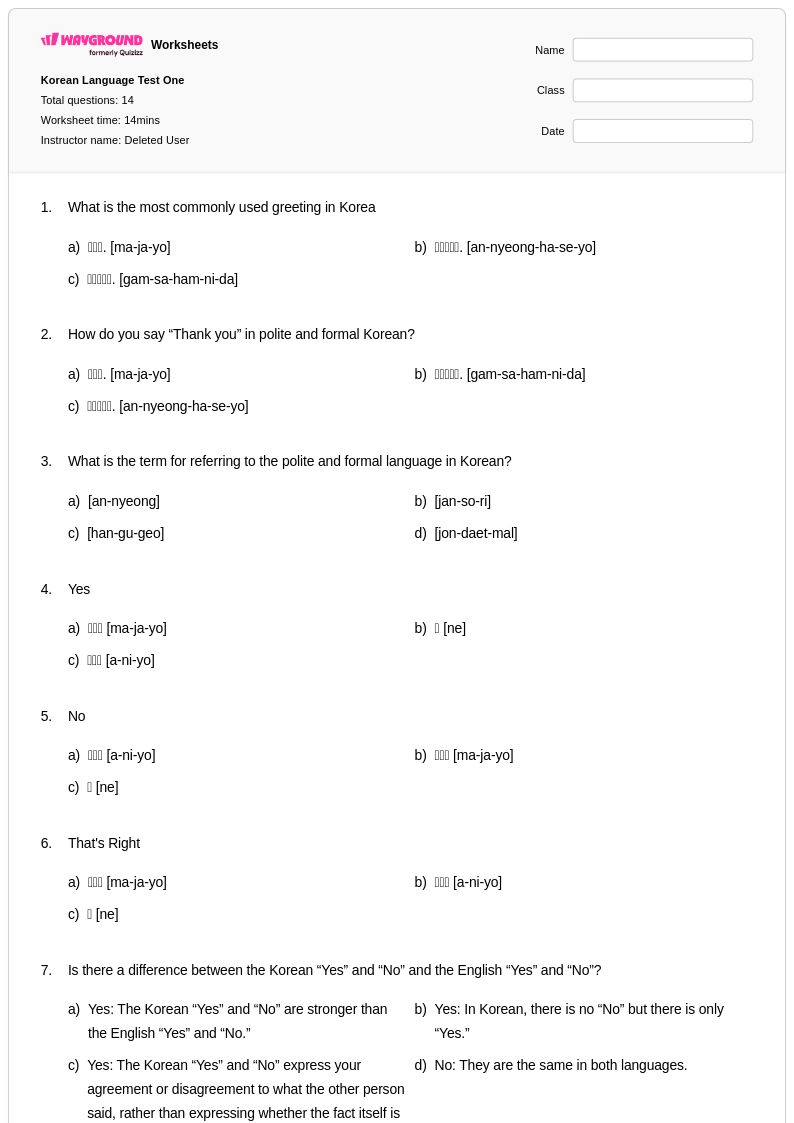
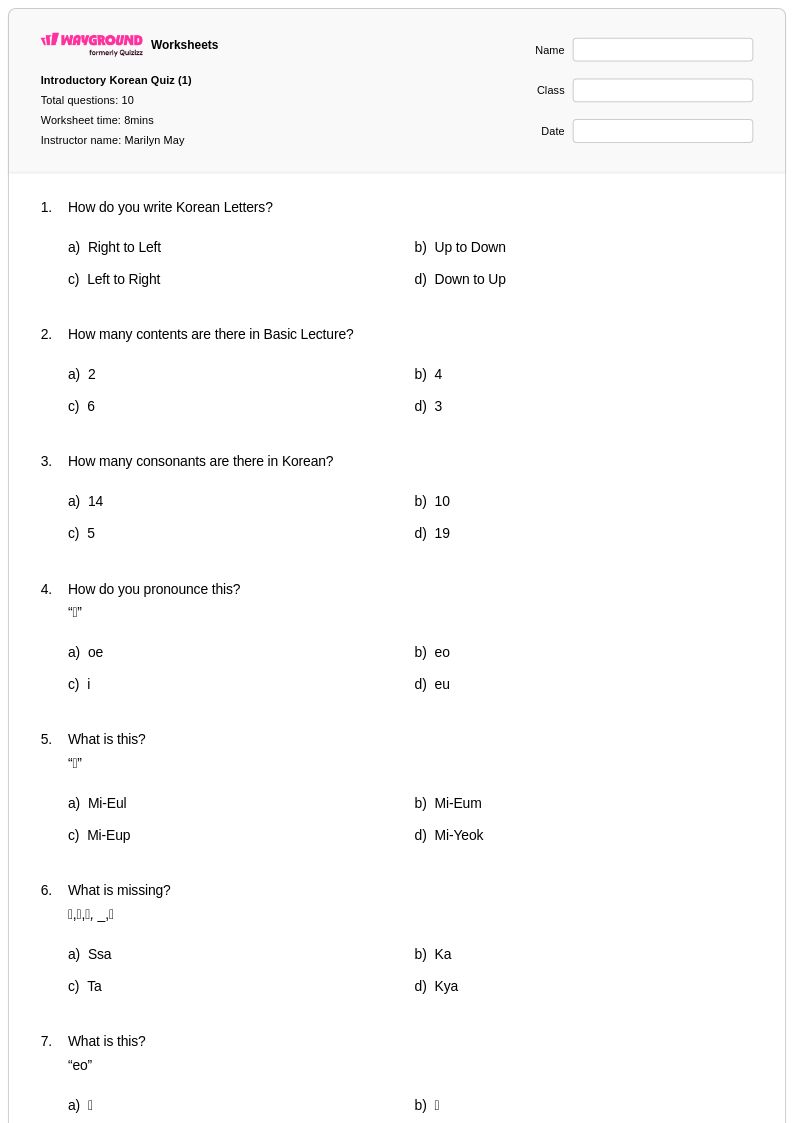
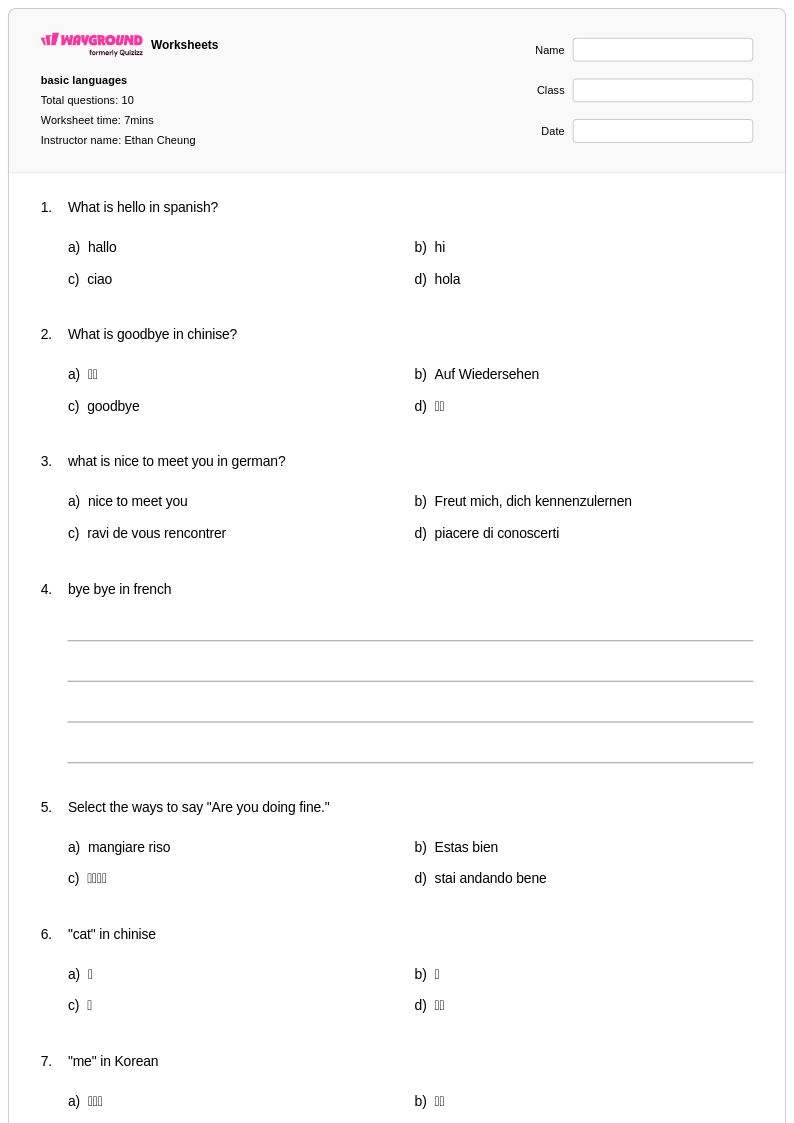
Grade 11 Korean worksheets and printables help students master essential language skills through comprehensive practice problems, free PDF resources, and detailed answer keys for effective learning.
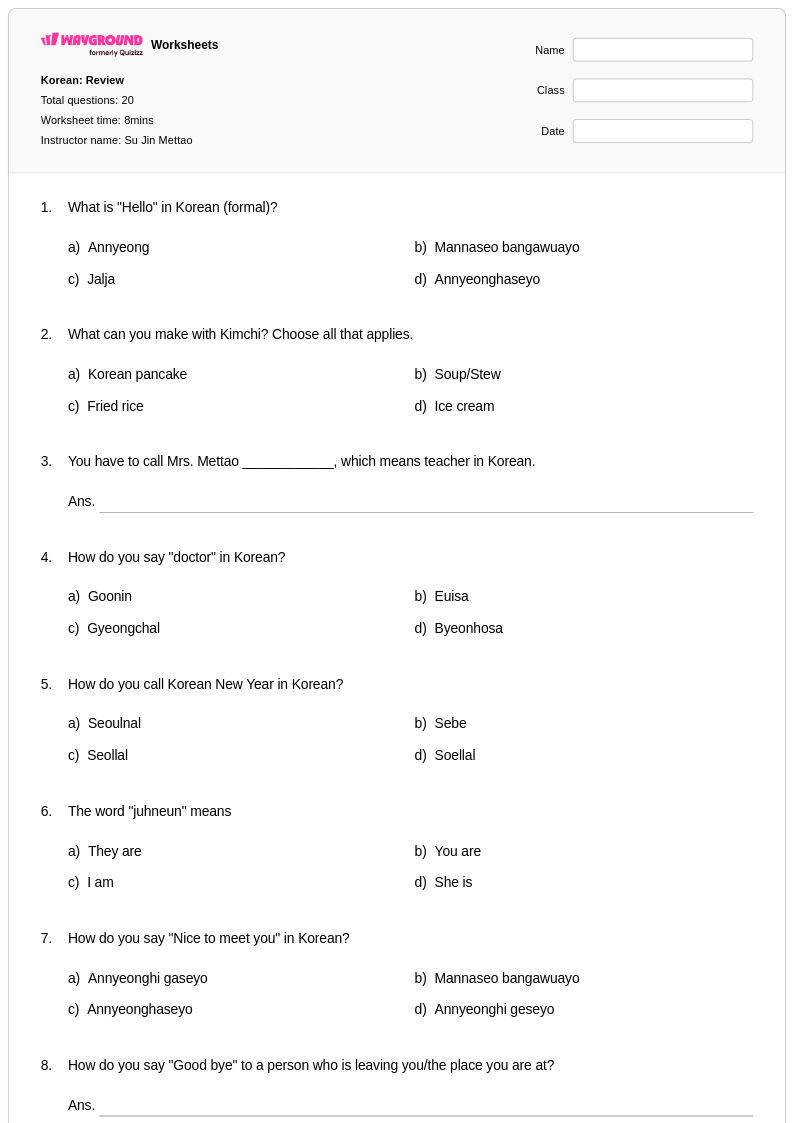
Korean worksheets for Grade 11 students through Wayground (formerly Quizizz) provide comprehensive language learning resources that develop advanced proficiency in reading, writing, speaking, and listening skills. These carefully designed materials focus on complex grammatical structures, sophisticated vocabulary expansion, cultural comprehension, and authentic communication scenarios that prepare students for real-world Korean language use. The worksheets incorporate practice problems that challenge students to apply honorific speech patterns, master intricate verb conjugations, and analyze Korean literature and media texts. Each resource includes detailed answer keys that support independent study and self-assessment, while the free printables in pdf format make these materials accessible for both classroom instruction and home practice.
Wayground (formerly Quizizz) empowers educators with millions of teacher-created Korean language resources that can be easily searched and filtered to match specific curriculum requirements and proficiency levels. The platform's robust differentiation tools allow teachers to customize worksheets for diverse learner needs, whether providing additional support for struggling students or offering enrichment activities for advanced Korean speakers. Standards alignment features ensure that materials meet established world language learning objectives, while the flexible availability of resources in both printable and digital formats, including downloadable pdfs, supports varied instructional approaches. These comprehensive tools streamline lesson planning and enable targeted remediation and skill practice, helping teachers create engaging Korean language experiences that build student confidence and cultural understanding at the Grade 11 level.
FAQs
How do I teach Hangul to beginners?
Start by introducing the basic vowels and consonants in isolation before combining them into syllable blocks, since Korean syllables are written in clusters rather than linearly like English. Daily tracing and recognition practice helps students internalize letter shapes quickly. Once students can read and write simple syllable blocks, move on to high-frequency vocabulary words to build meaning alongside mechanics.
What Korean grammar structures should I focus on first in my lessons?
Prioritize subject-object-verb word order, the use of topic and subject markers (은/는 and 이/가), and basic sentence-ending conjugations in polite speech. These structures appear in nearly every Korean sentence, so early mastery gives students a functional foundation for both reading comprehension and speaking. Drilling these patterns through sentence-building exercises helps students internalize the grammar before moving to more complex constructions.
What exercises help students practice Korean vocabulary effectively?
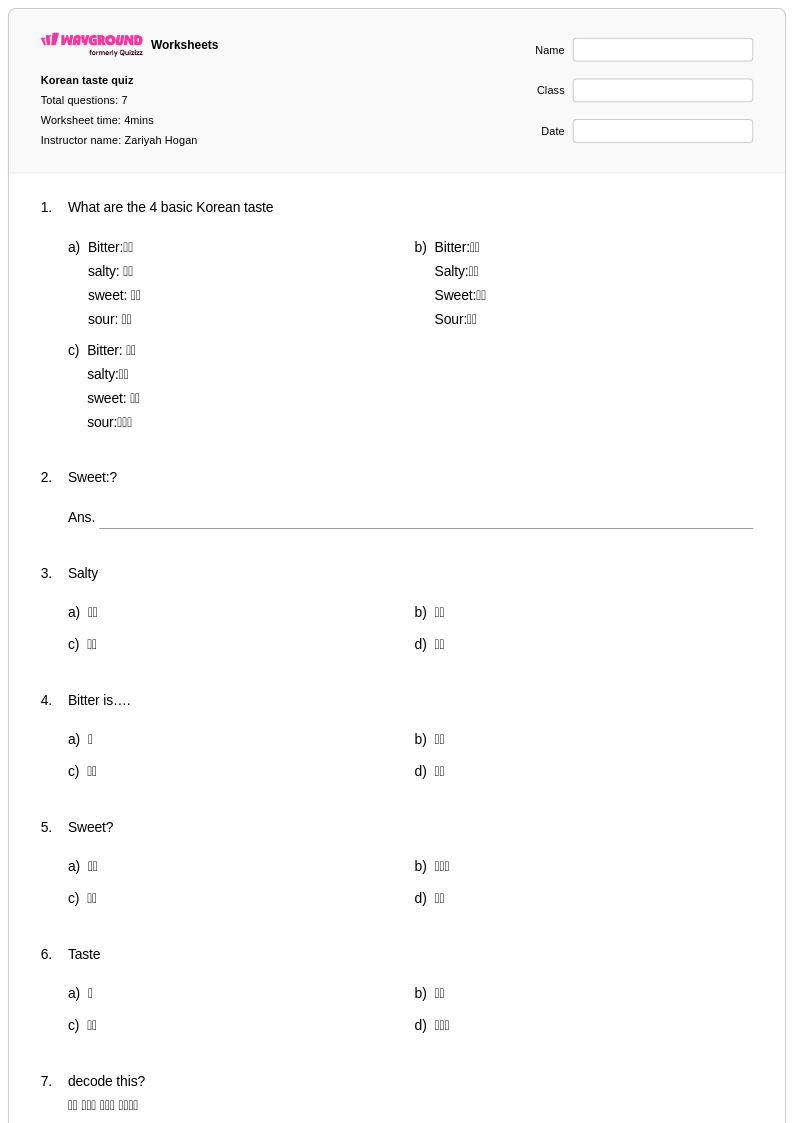
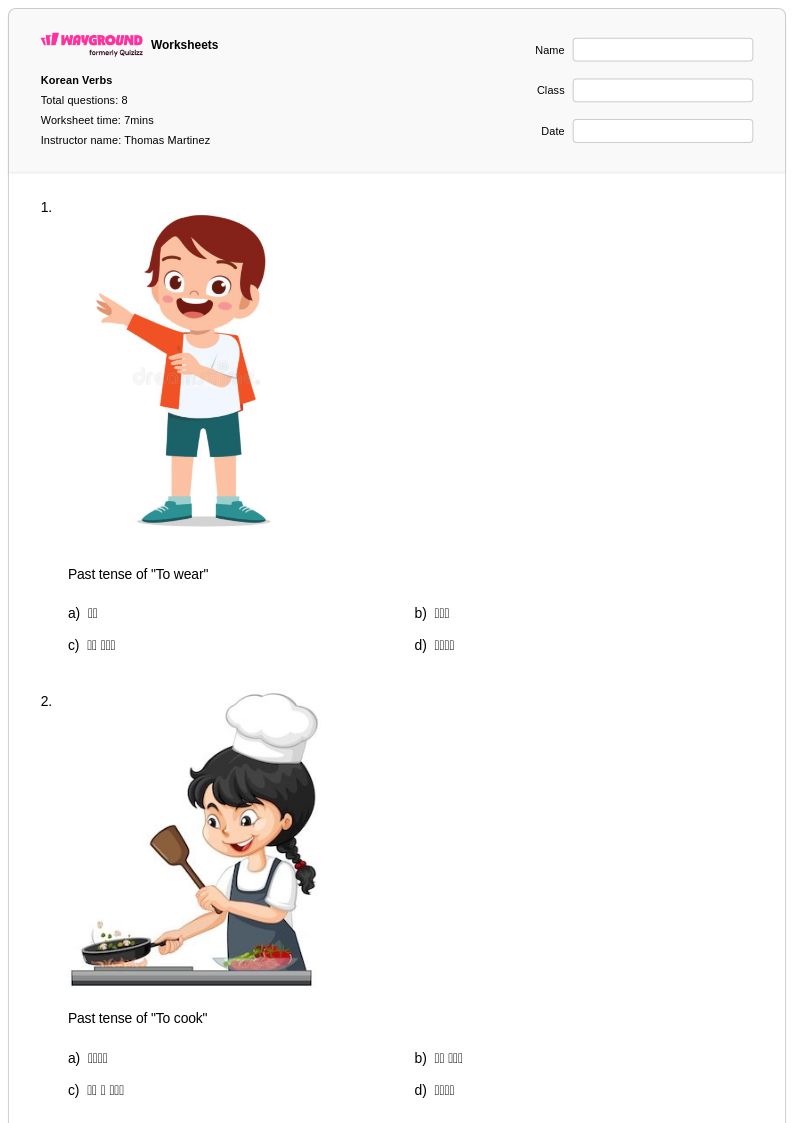
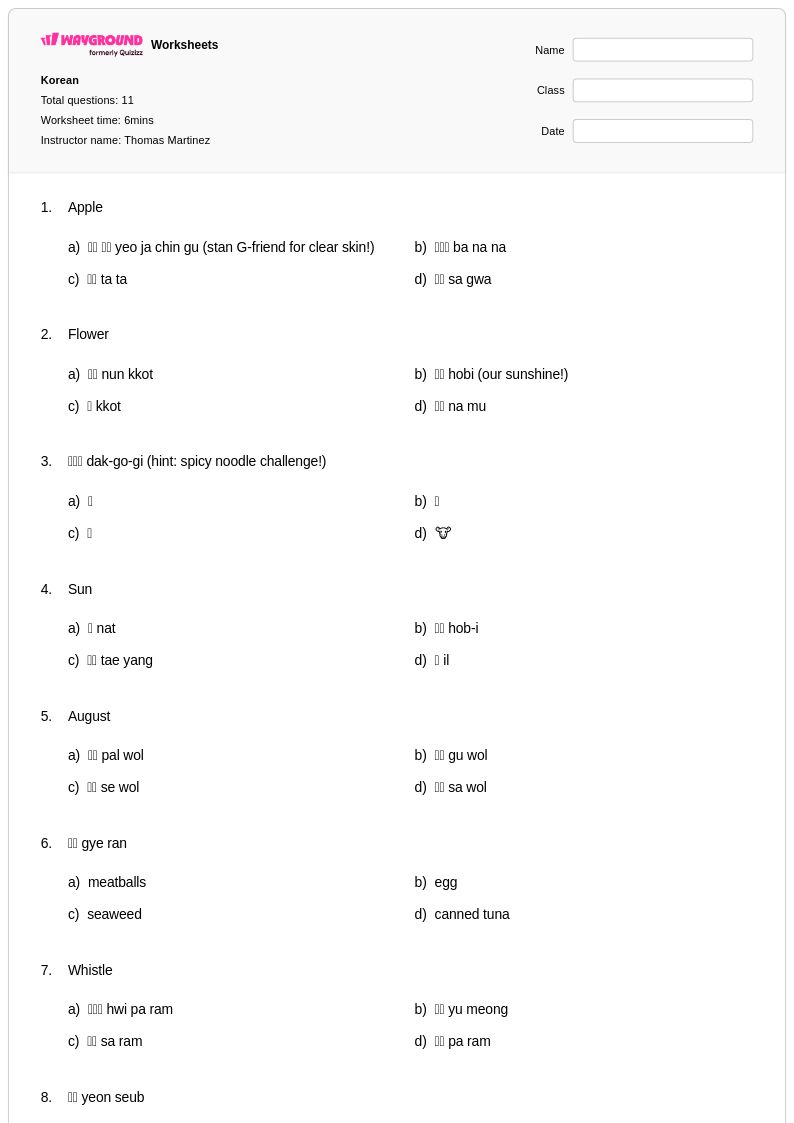
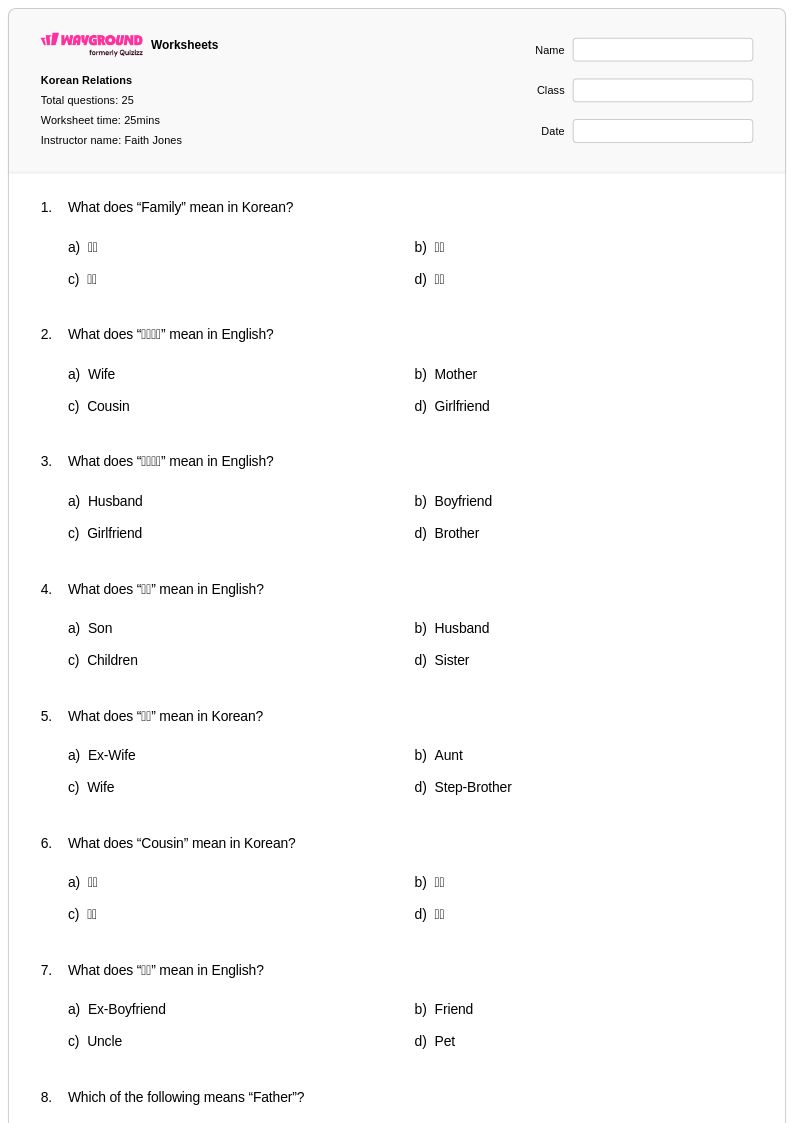
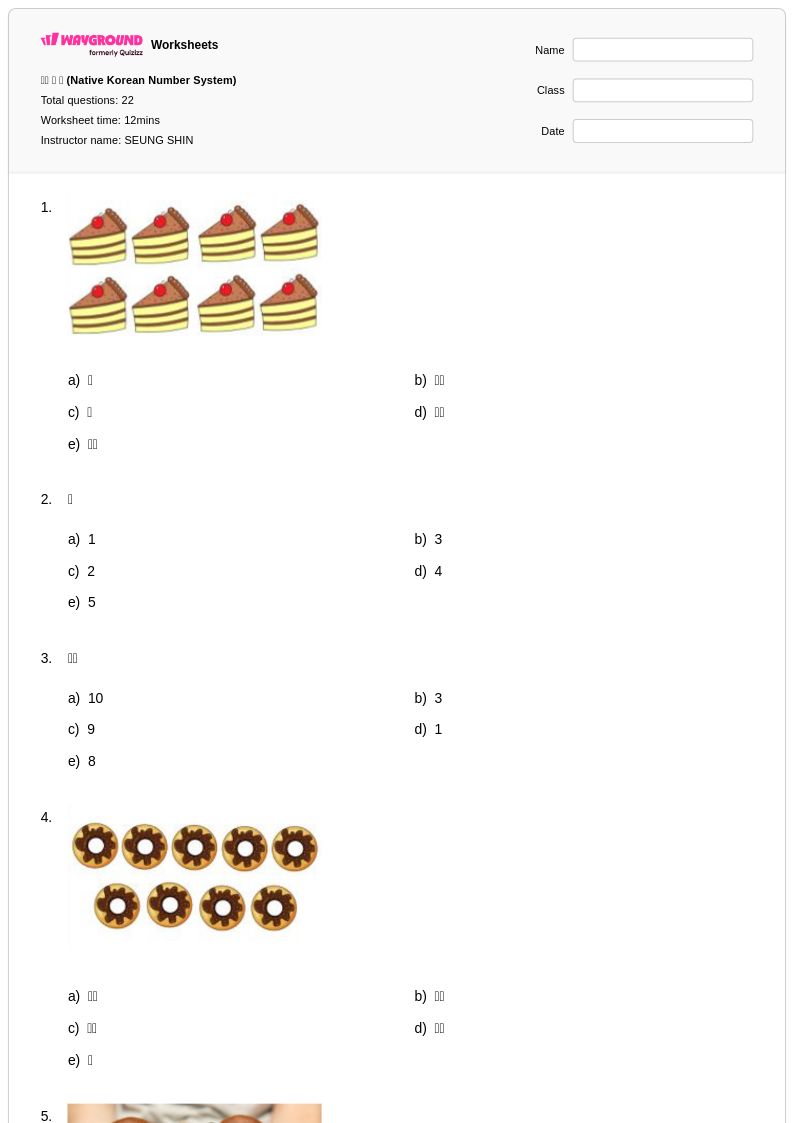
Vocabulary practice is most effective when it combines recognition, recall, and production. Exercises such as matching Korean words to images, fill-in-the-blank sentences using target vocabulary, and short writing prompts that require students to use new words in context all reinforce retention. Thematic vocabulary sets (food, family, school, numbers) help students build usable clusters rather than isolated word lists.
What mistakes do students commonly make when learning Korean?
One of the most common errors is misreading syllable blocks by treating each letter individually rather than as a unit, which leads to mispronunciation and spelling mistakes. Students also frequently confuse formal and informal speech levels, applying casual verb endings in contexts that require polite forms. Another persistent error involves particle usage, particularly mixing up topic markers and subject markers, which changes the nuance of a sentence significantly.
How can I differentiate Korean language worksheets for students at different proficiency levels?
For beginners, reduce the number of answer choices or focus exercises on a single skill such as letter recognition or matching. Intermediate students benefit from fill-in-the-blank grammar exercises and guided writing tasks, while advanced learners can work on open-ended composition and reading comprehension. On Wayground, teachers can apply student-level accommodations such as reduced answer choices and read aloud support individually, so each student receives the right level of scaffolding without disrupting the rest of the class.
How do I use Wayground's Korean worksheets in my classroom?
Wayground's Korean worksheets are available as printable PDFs for traditional classroom distribution and in digital formats for technology-integrated instruction, giving teachers flexibility depending on their environment. You can assign worksheets for direct instruction, independent practice, or homework, and each worksheet includes a complete answer key so grading is straightforward. Teachers can also host worksheets as a quiz directly on Wayground, enabling real-time student responses and instant scoring.