
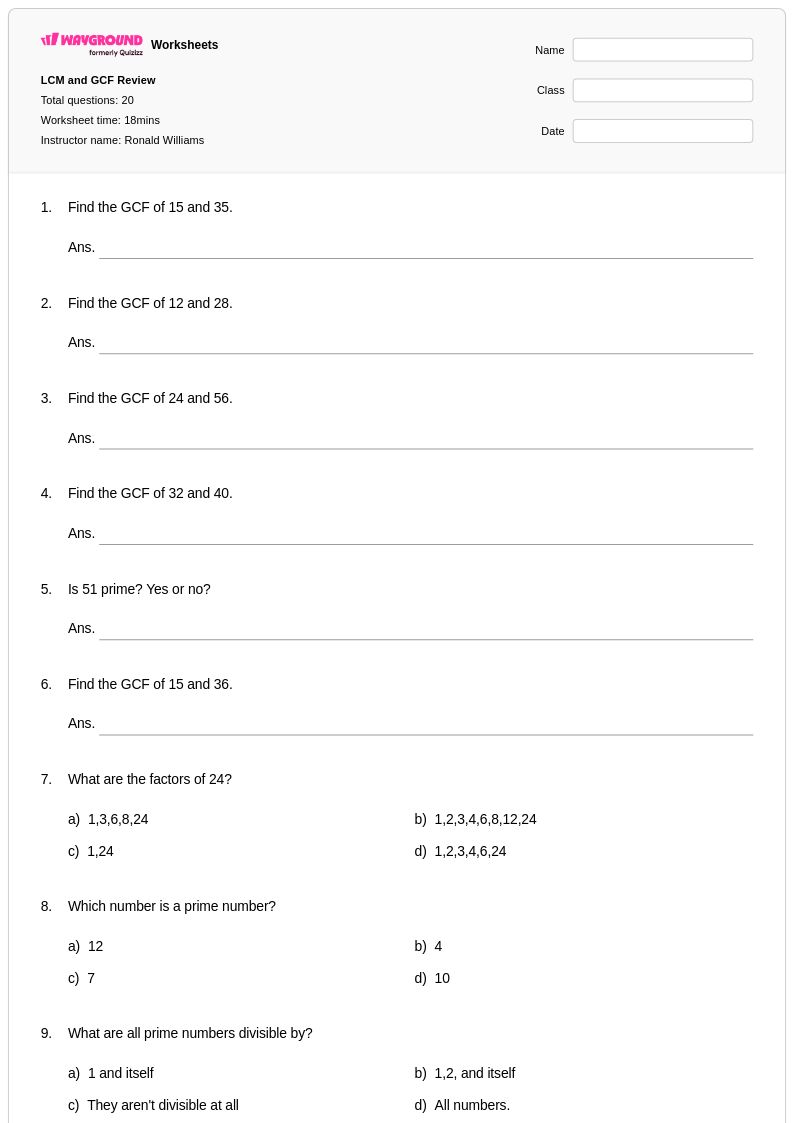
20 Q
5th - 6th
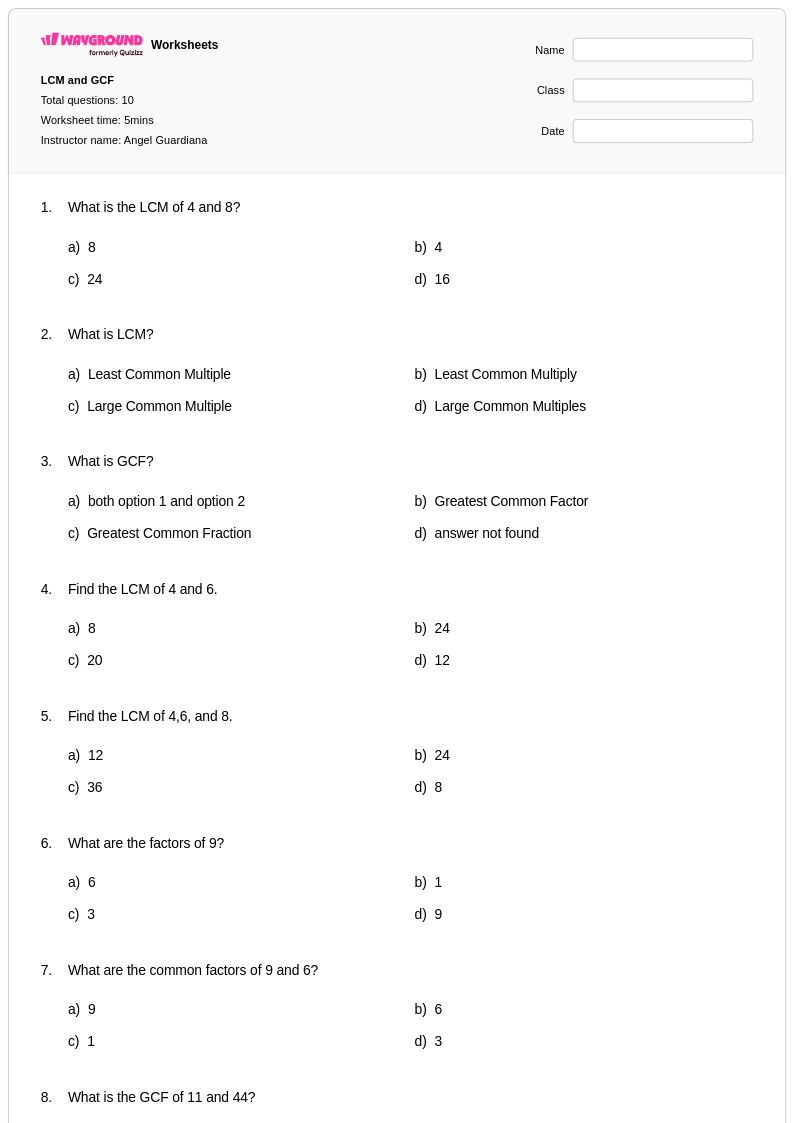
10 Q
5th
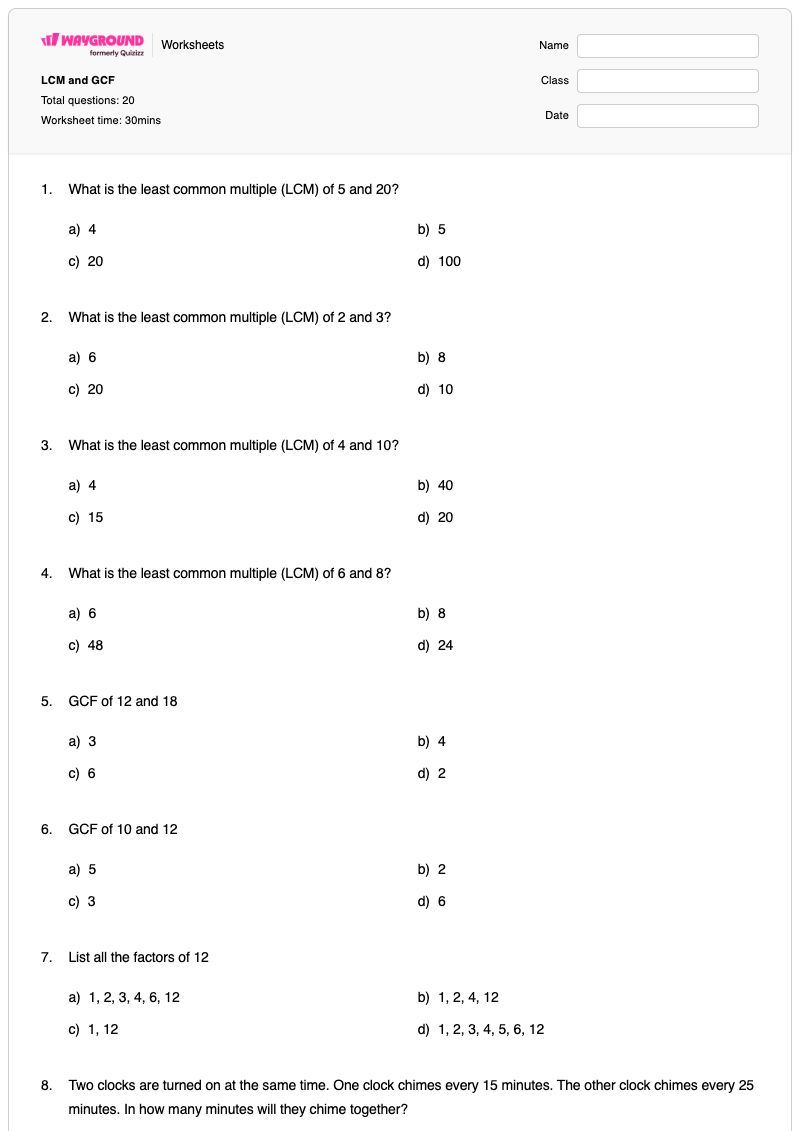
20 Q
5th
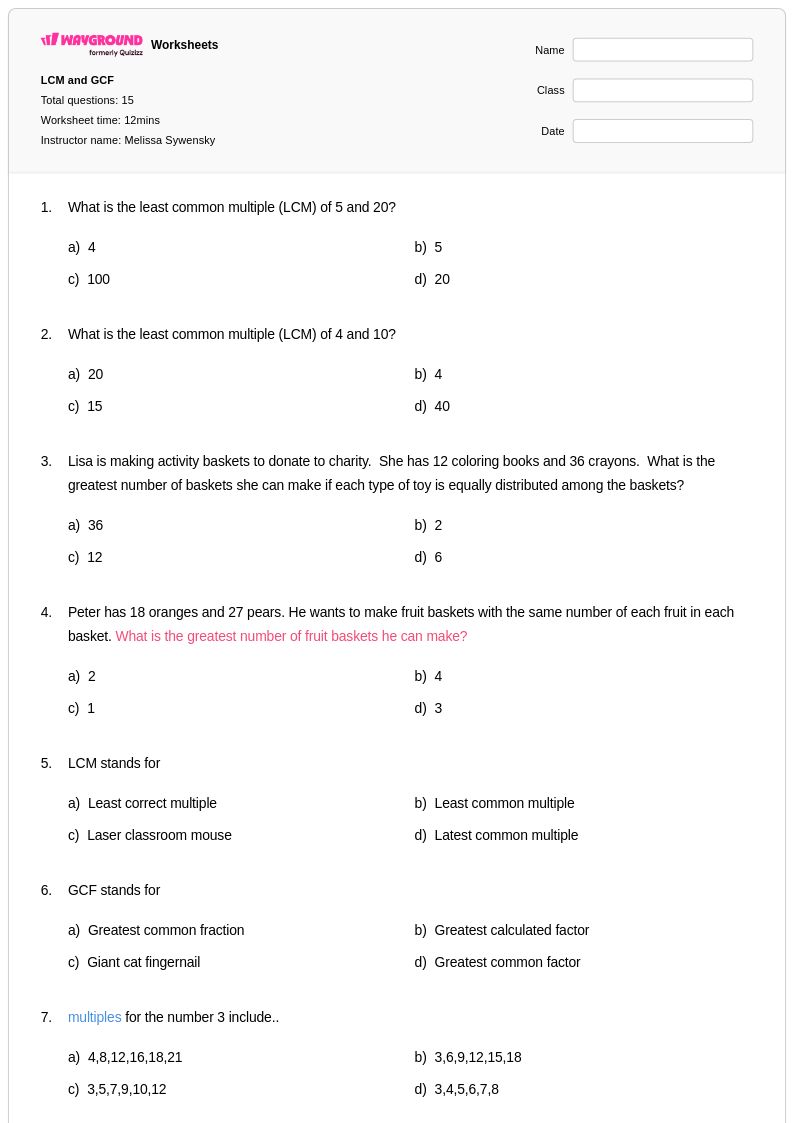
15 Q
5th
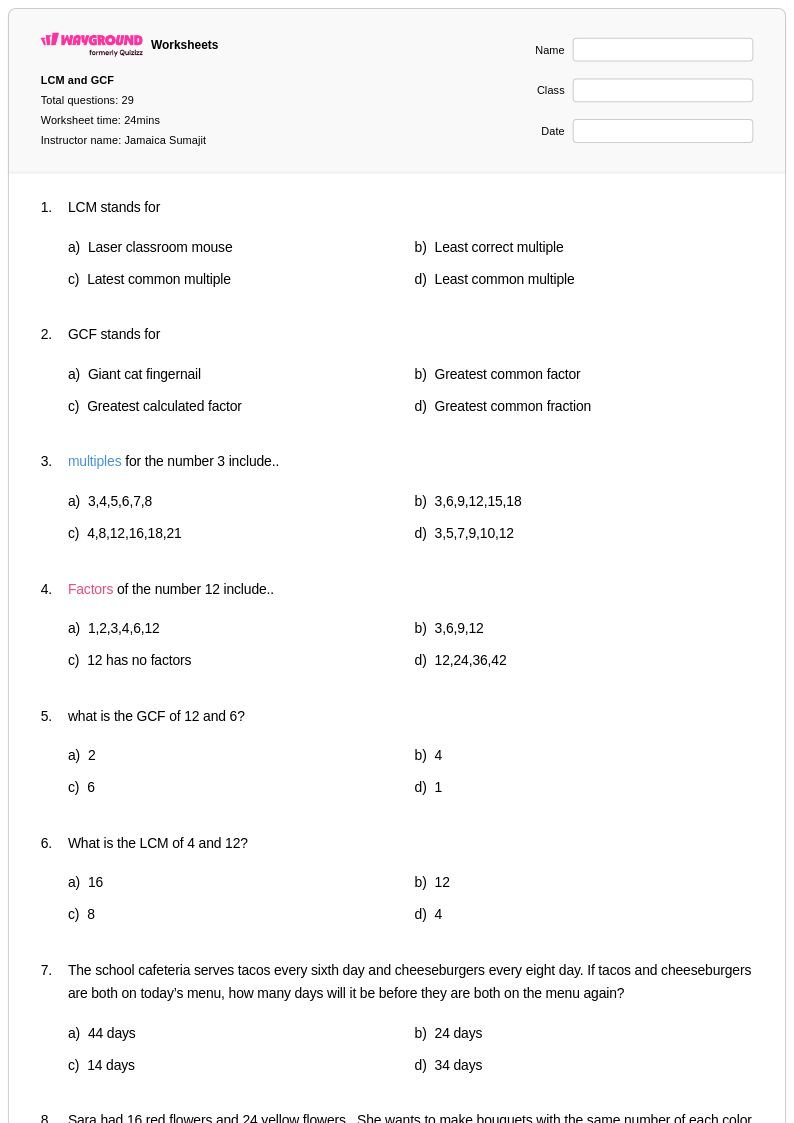
29 Q
5th
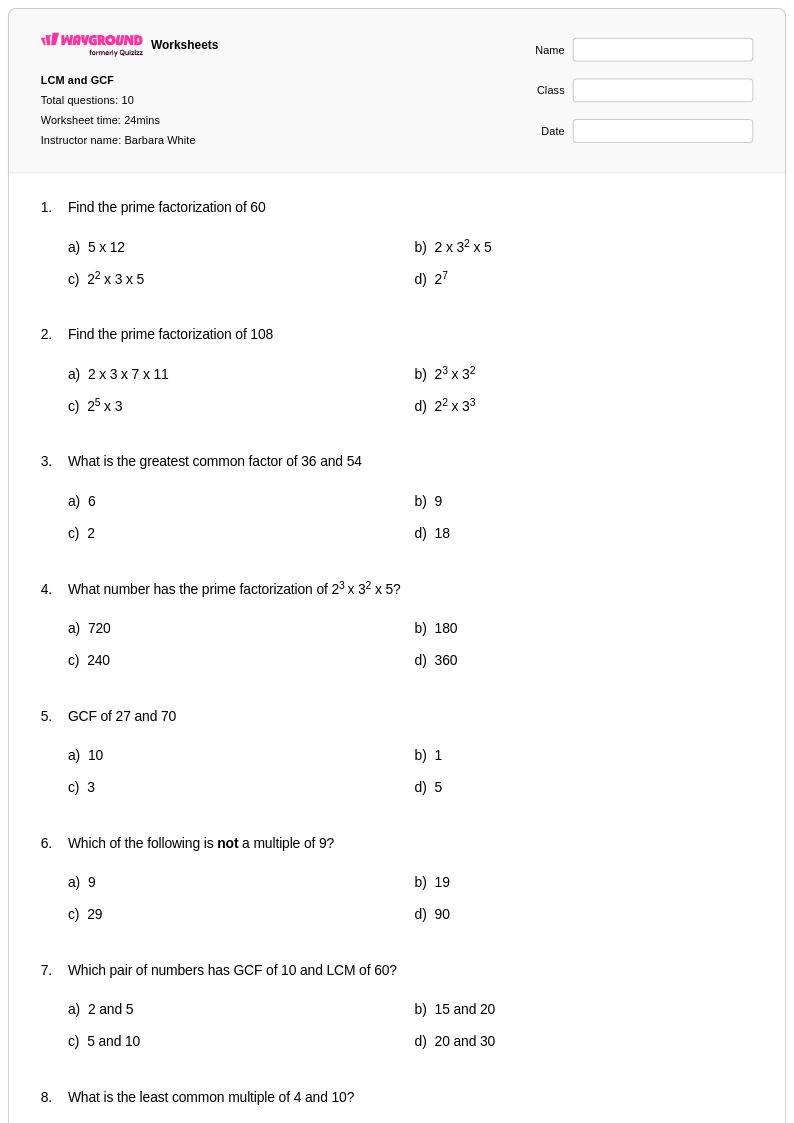
10 Q
5th
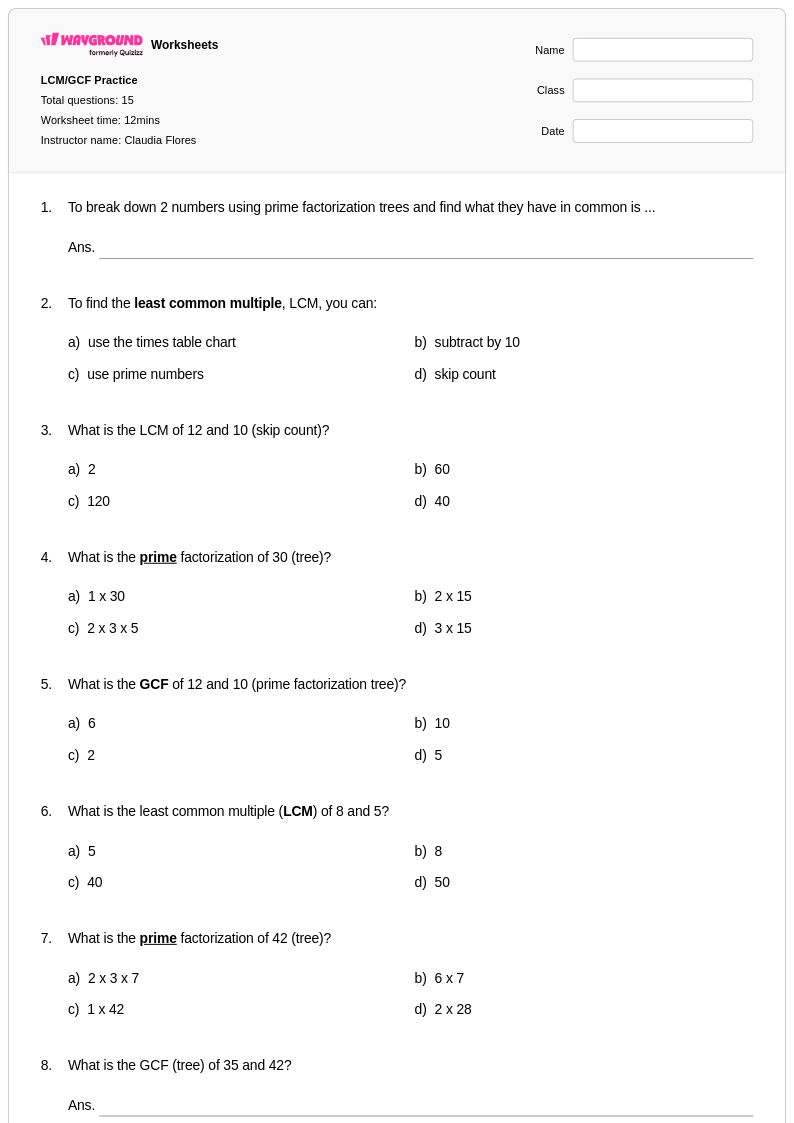
15 Q
5th - 6th
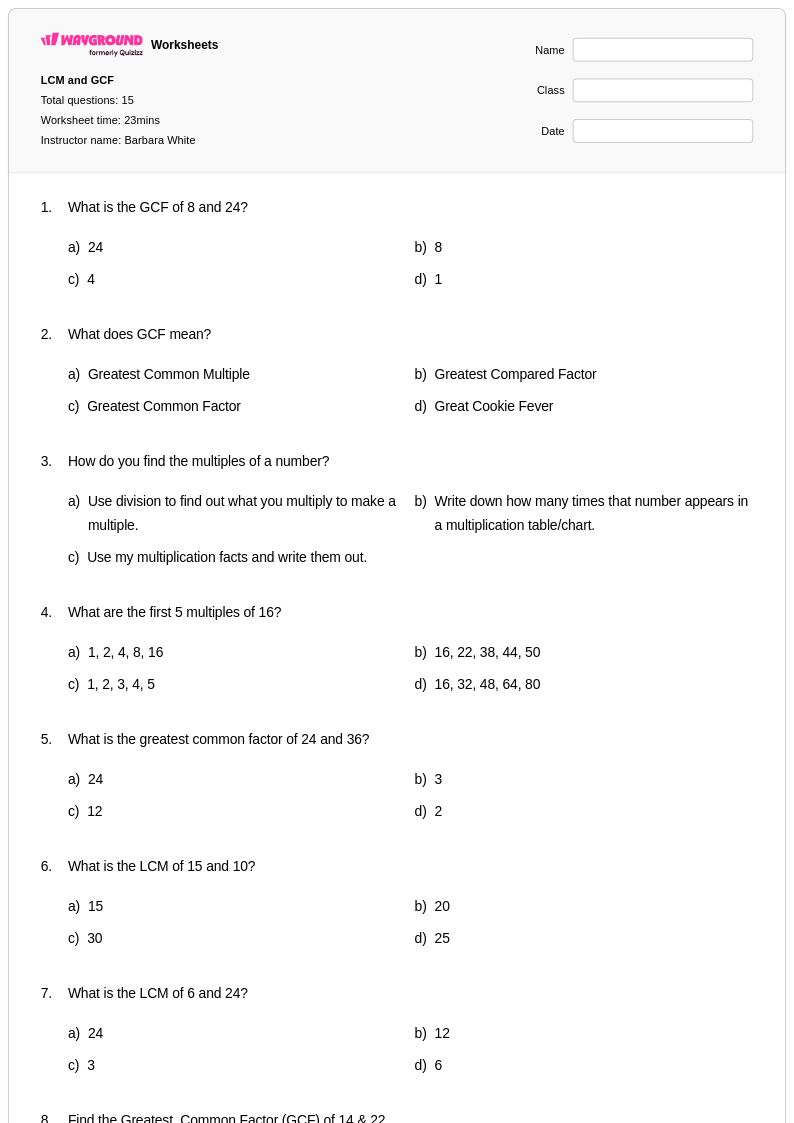
15 Q
5th - 6th
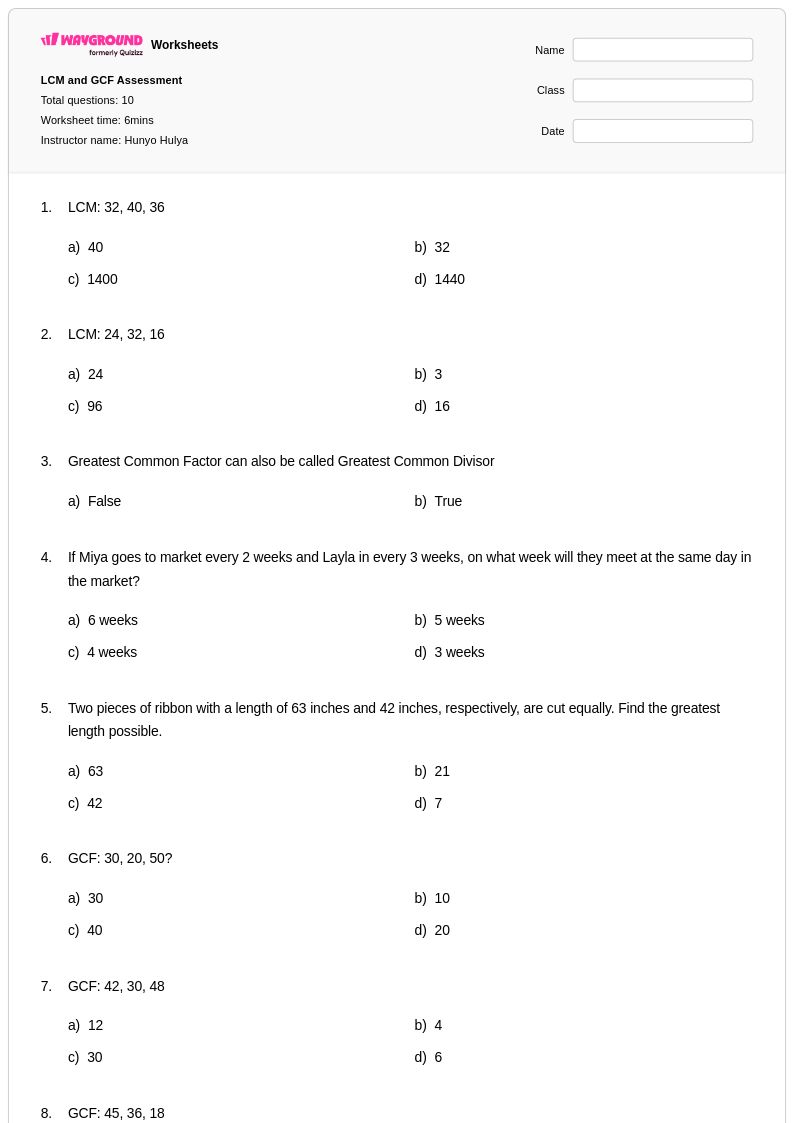
10 Q
5th - 6th
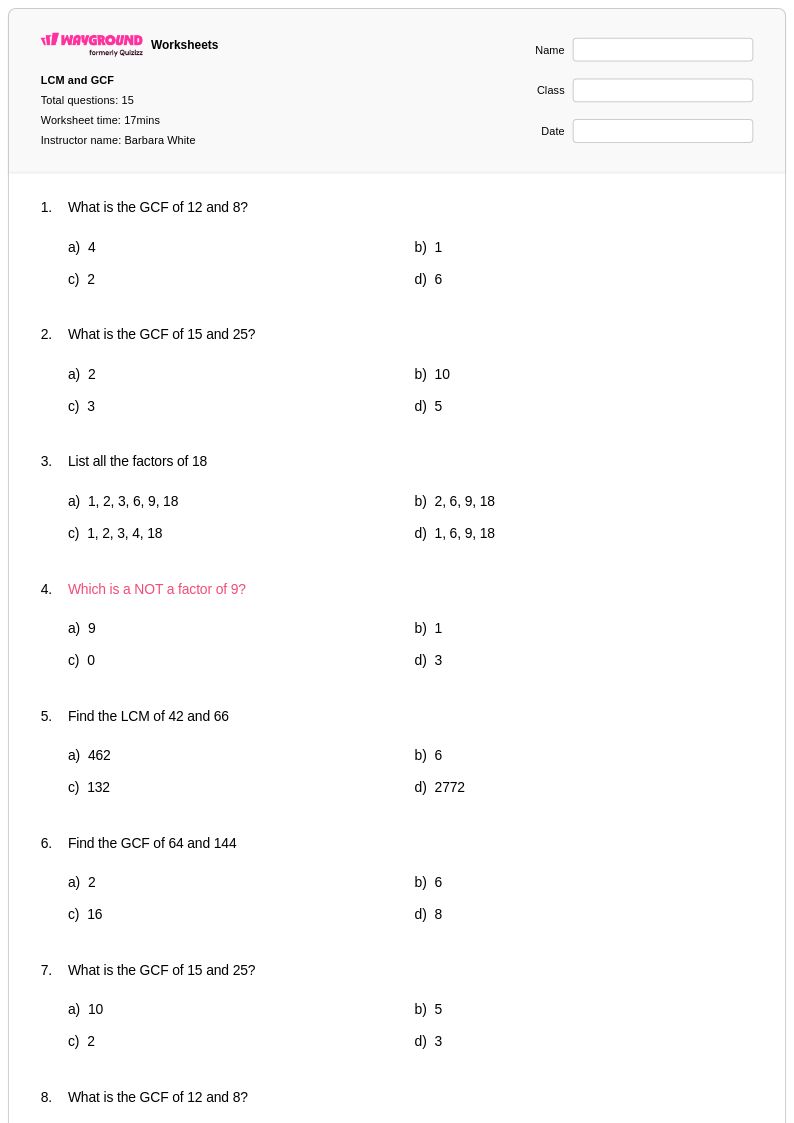
15 Q
3rd - 6th
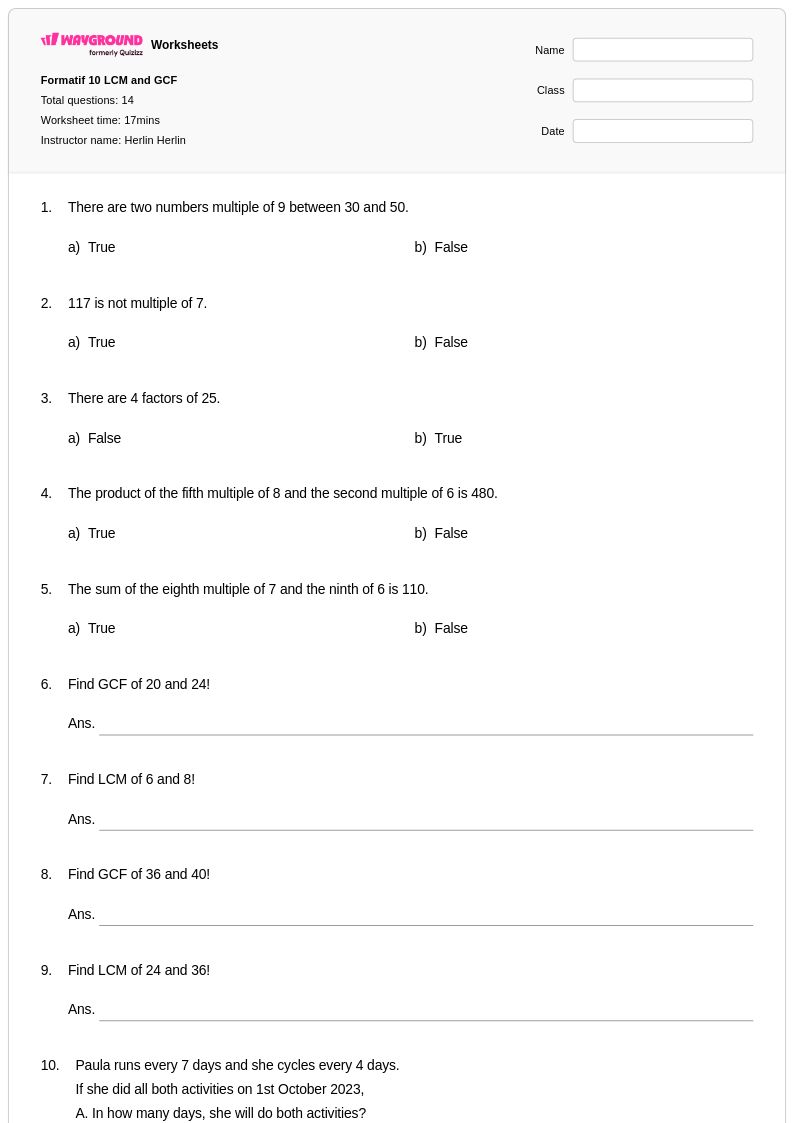
14 Q
5th
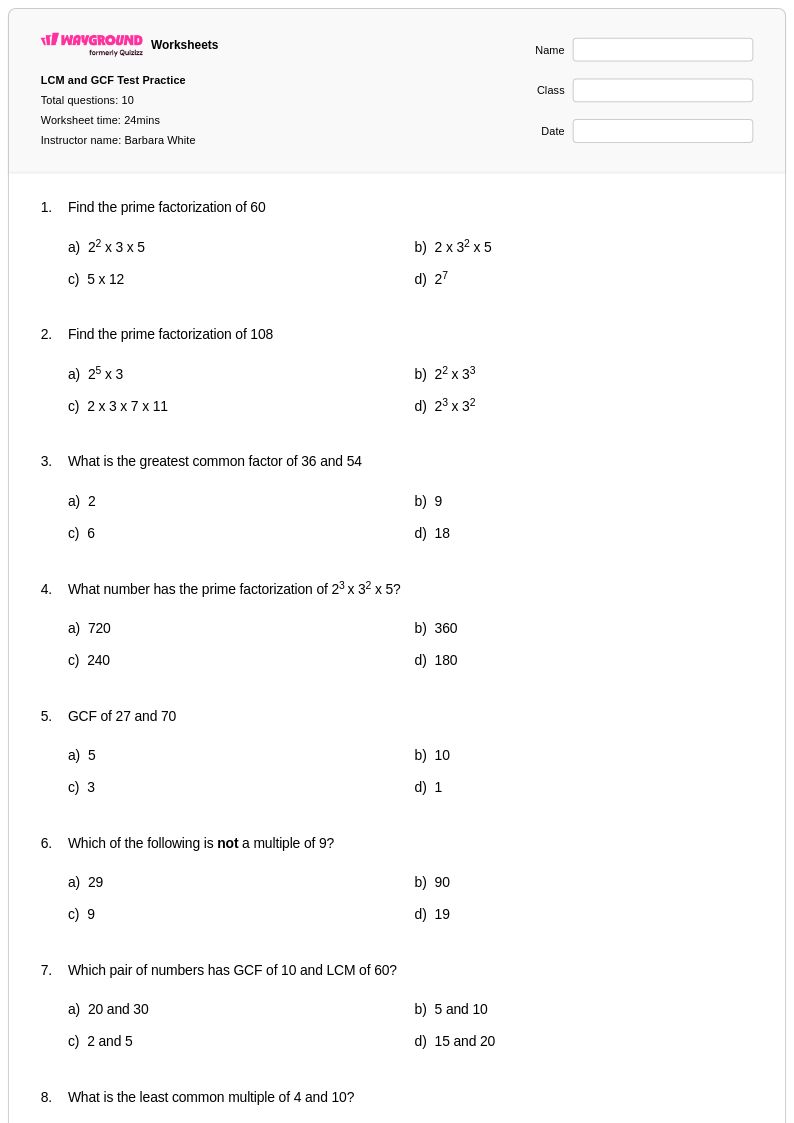
10 Q
5th

20 Q
5th
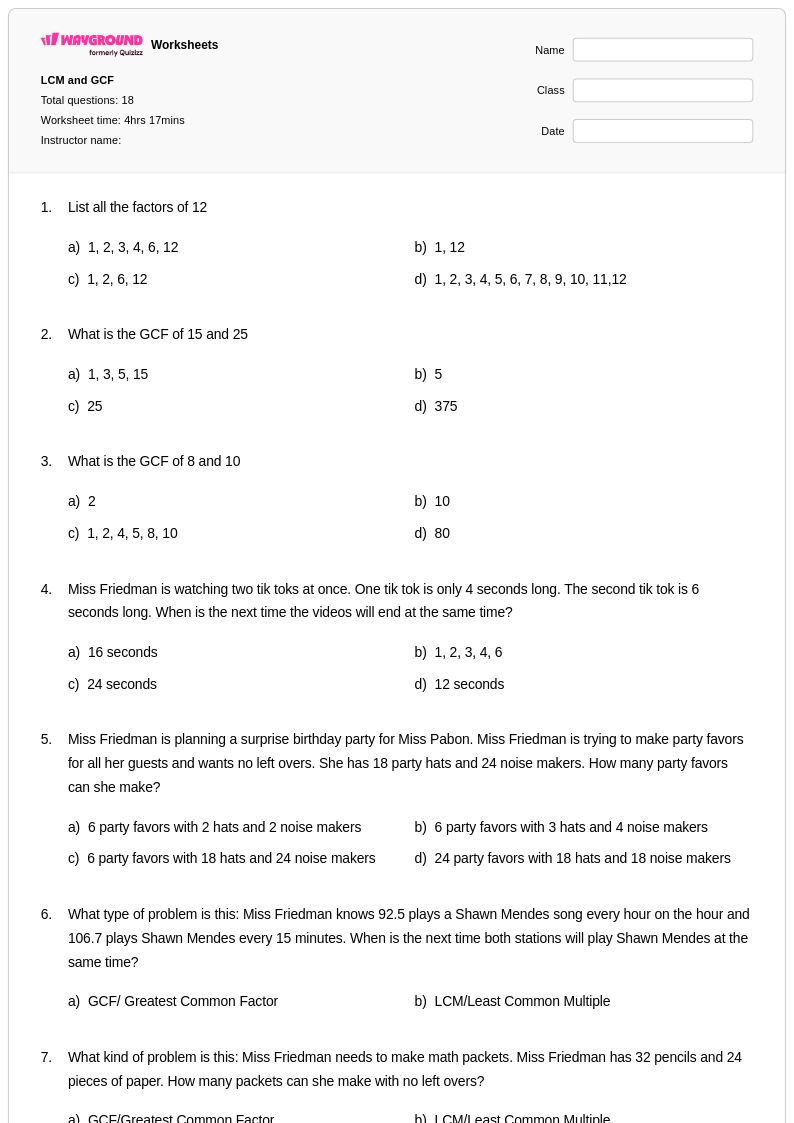
18 Q
5th - 7th
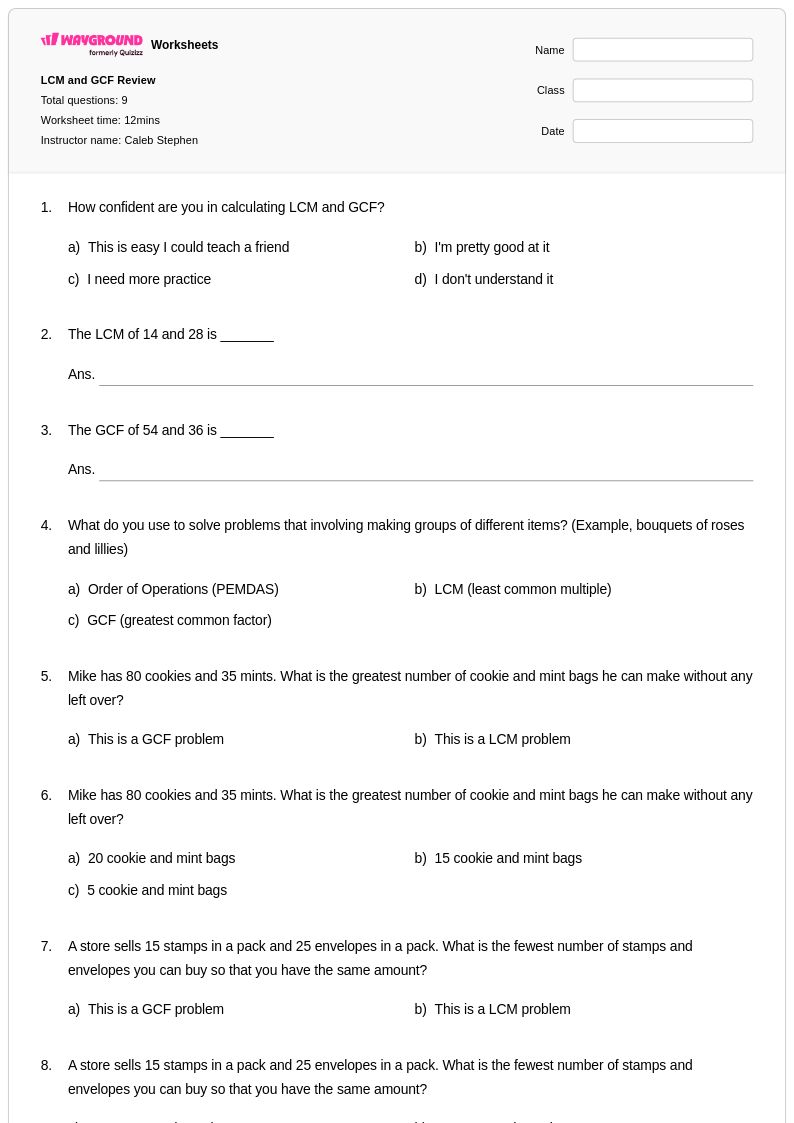
9 Q
5th - 8th
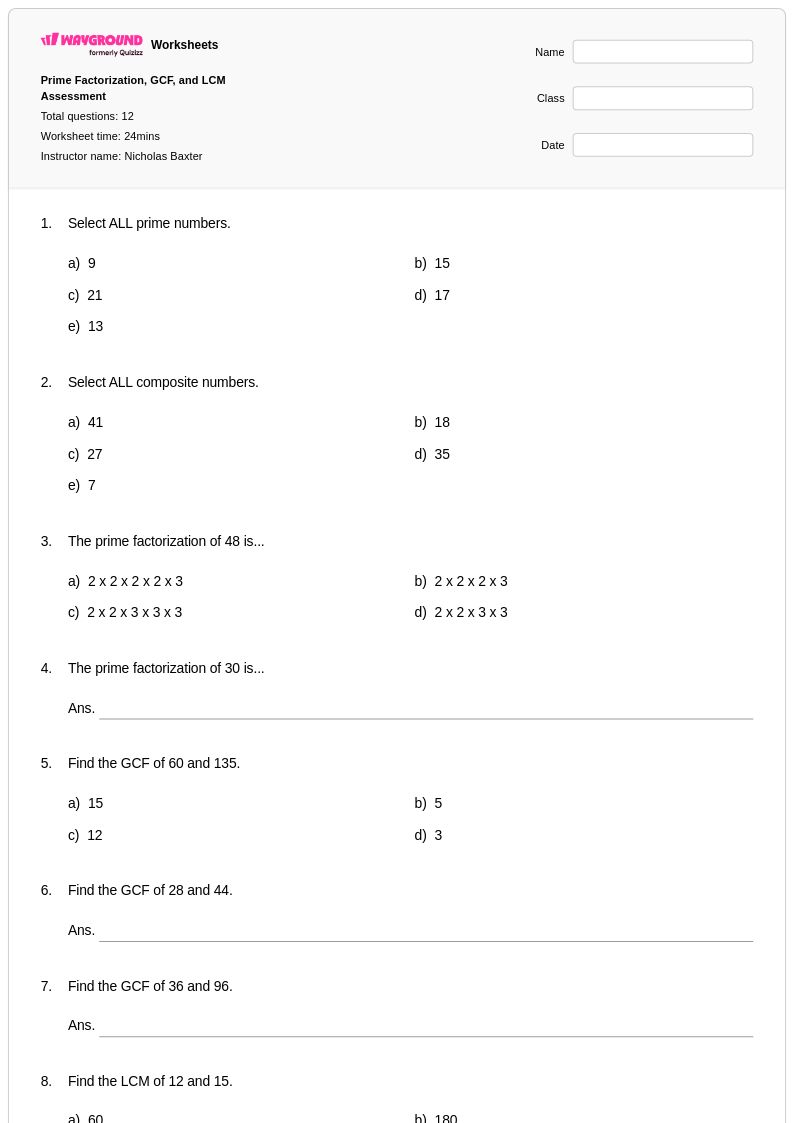
12 Q
5th - 7th
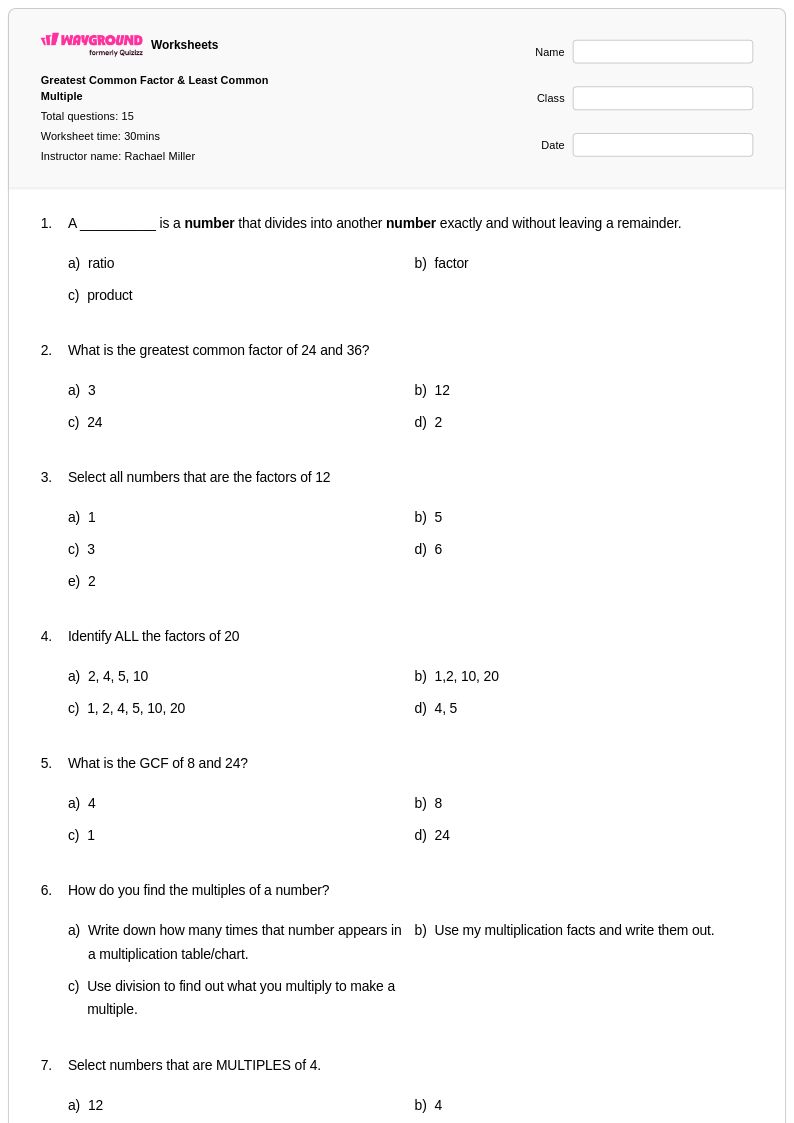
15 Q
5th - 6th
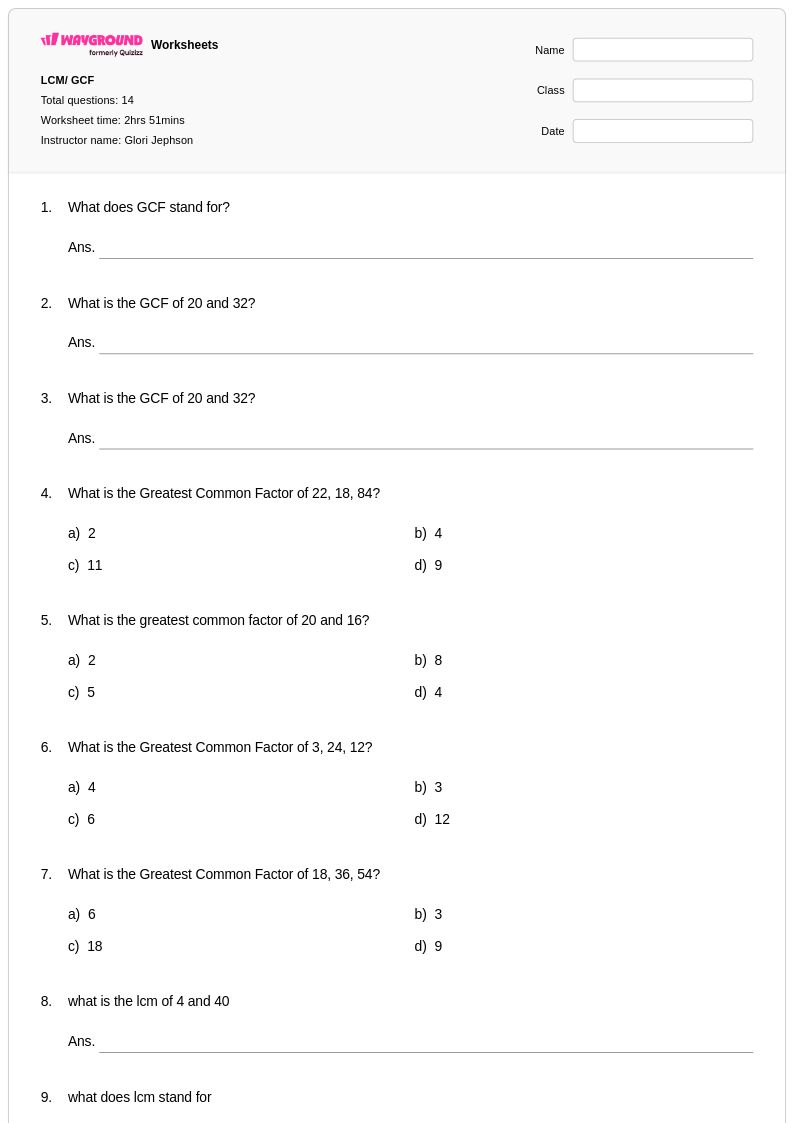
14 Q
4th - Uni
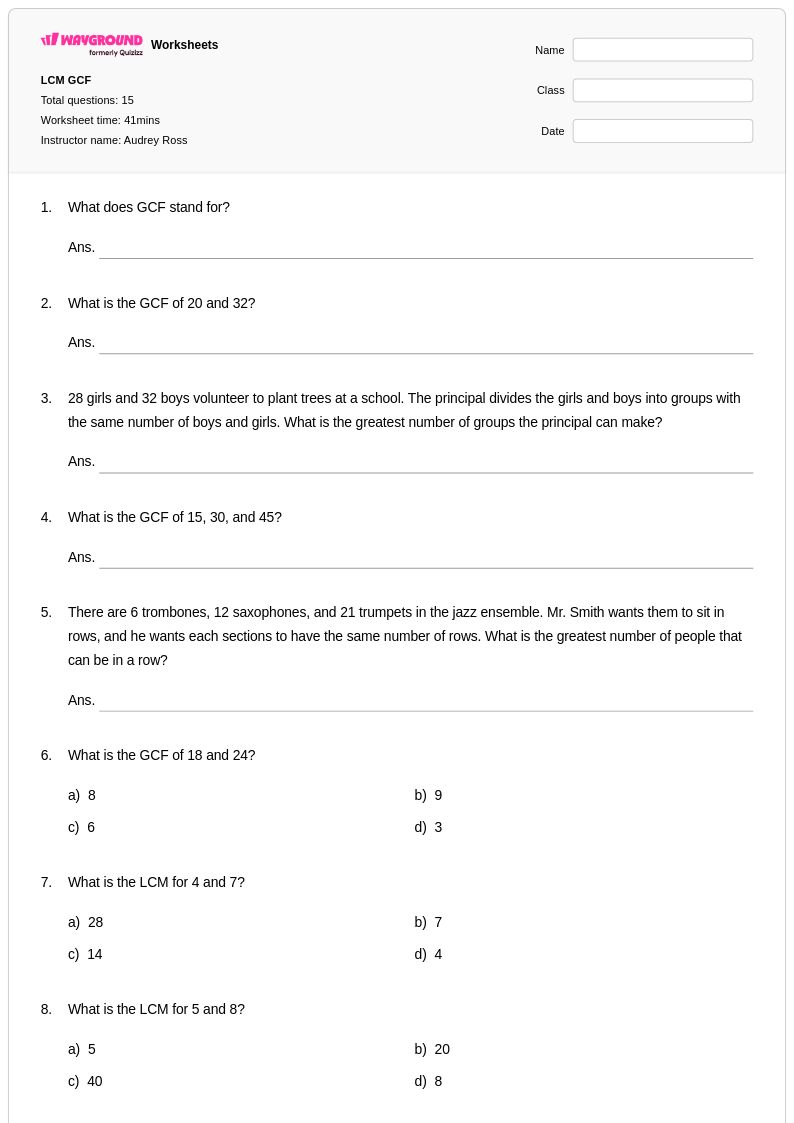
15 Q
4th - 6th
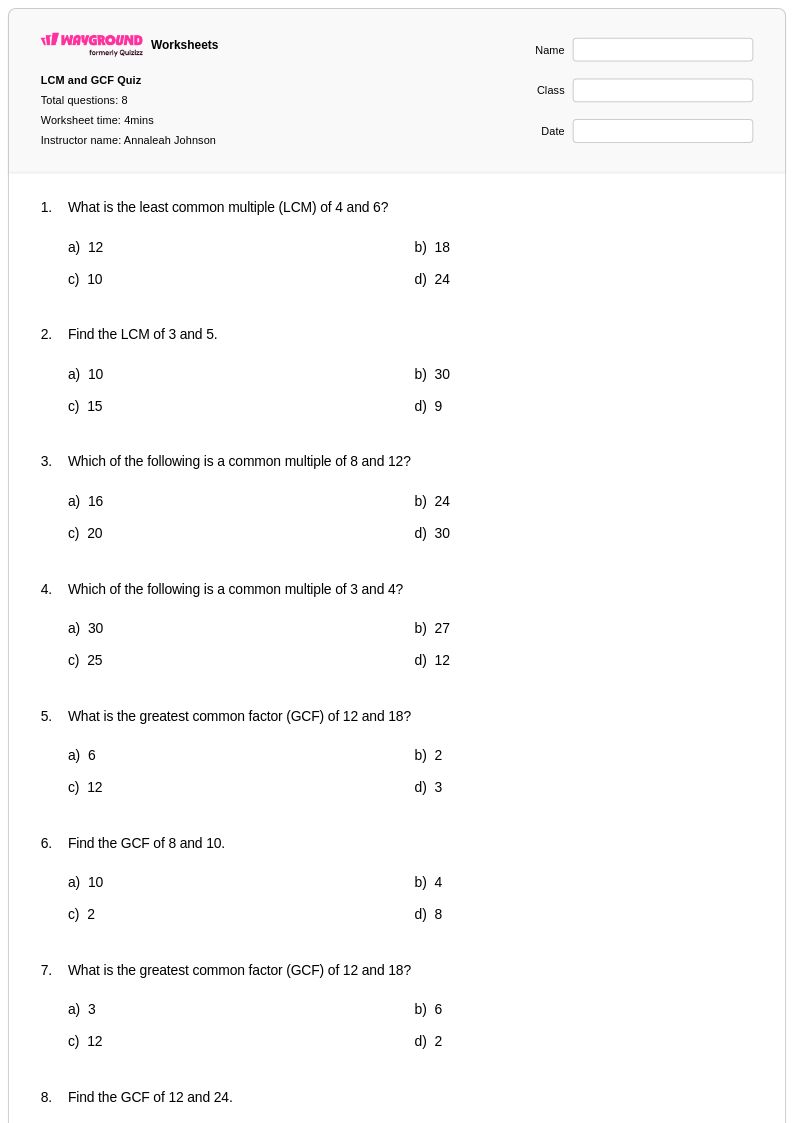
8 Q
5th
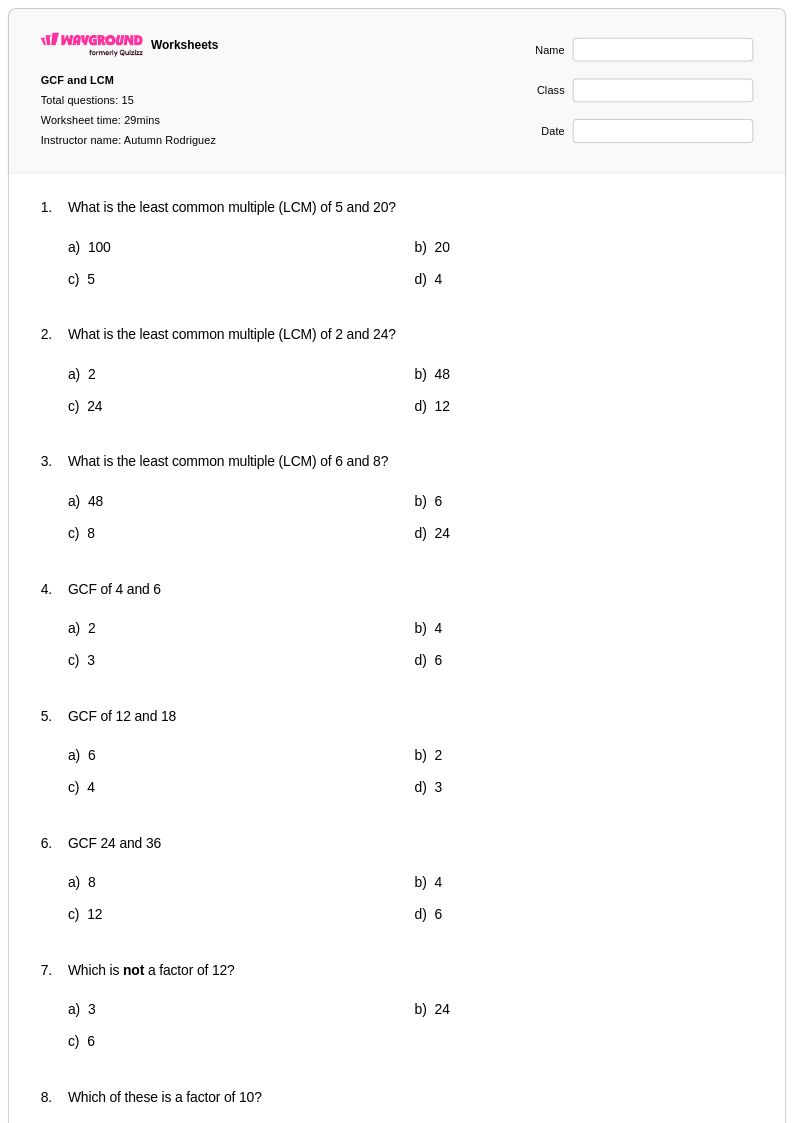
15 Q
4th - 5th
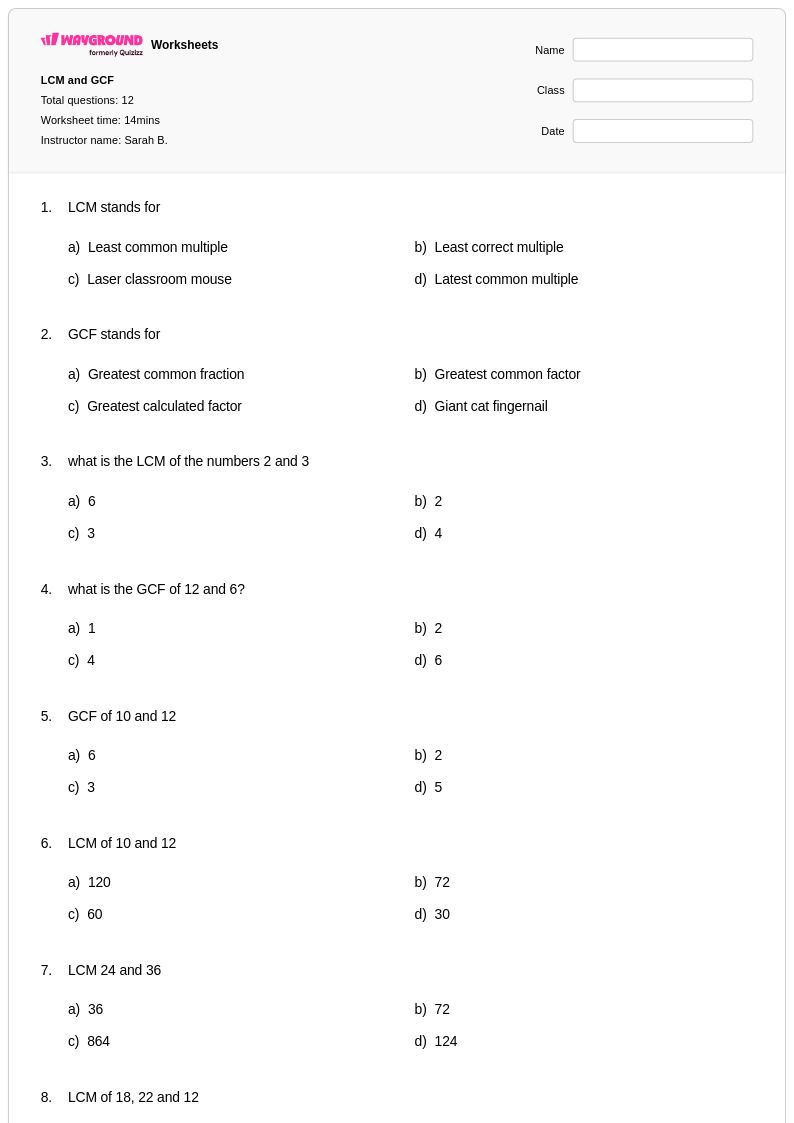
12 Q
5th
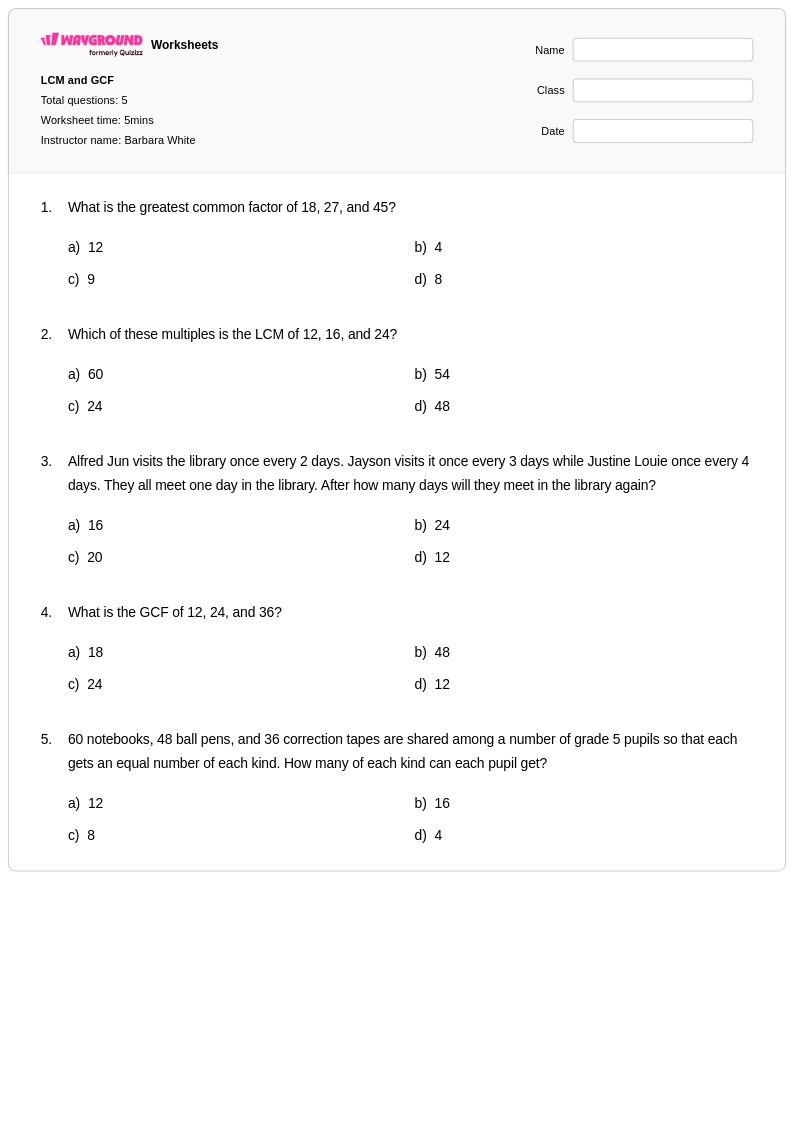
5 Q
5th
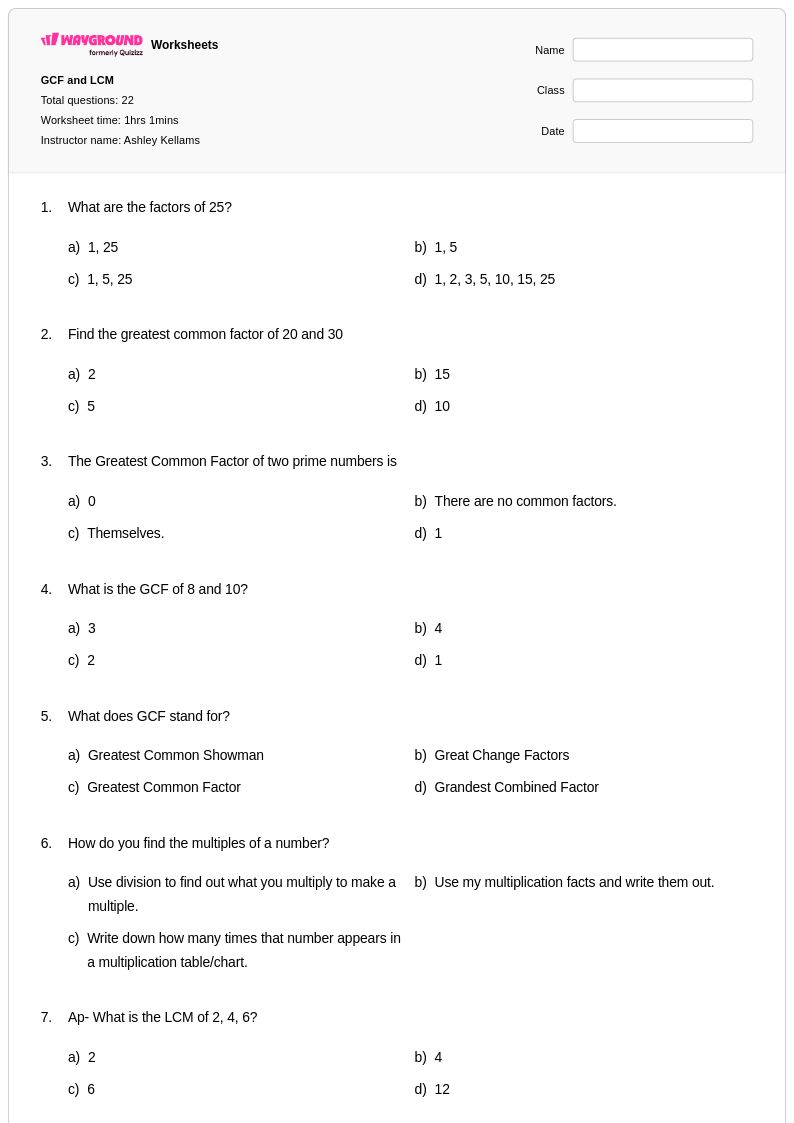
22 Q
5th - 7th
Explore Other Subject Worksheets for grade 5
Explore printable LCM and GCF worksheets for Grade 5
LCM and GCF worksheets for Grade 5 mathematics provide students with essential practice in finding the least common multiple and greatest common factor of numbers, fundamental concepts that form the foundation for advanced mathematical reasoning. These comprehensive worksheet collections available through Wayground (formerly Quizizz) strengthen students' number sense and computational skills while building their understanding of divisibility, prime factorization, and the relationships between numbers. Each worksheet includes carefully scaffolded practice problems that progress from basic identification exercises to more complex multi-step applications, complete with detailed answer keys that support both independent learning and teacher-guided instruction. The free printable resources offer diverse problem formats, from visual arrays and factor trees to word problems that contextualize LCM and GCF concepts in real-world scenarios, ensuring students develop both procedural fluency and conceptual understanding.
Wayground (formerly Quizizz) empowers educators with millions of teacher-created LCM and GCF worksheet resources that streamline lesson planning and differentiated instruction for Grade 5 mathematics. The platform's robust search and filtering capabilities allow teachers to quickly locate worksheets aligned with specific curriculum standards and learning objectives, while customization tools enable seamless modification of difficulty levels, problem types, and visual layouts to meet diverse student needs. These versatile worksheet collections are available in both printable PDF format and interactive digital versions, facilitating flexible implementation across traditional classroom settings and remote learning environments. Teachers can efficiently identify resources for targeted skill practice, remediation support for struggling learners, and enrichment opportunities for advanced students, creating a comprehensive instructional toolkit that addresses the full spectrum of student abilities and learning preferences.
FAQs
What is the focus of LCM and GCF in 5th grade?
How do I connect GCF and LCM to fraction operations for my 5th graders?
What exercises help 5th graders practice applying LCM and GCF?
What mistakes do 5th graders make when using LCM for fractions?
How can I use these Grade 5 LCM and GCF worksheets?
How does this align with 5th grade Common Core standards?