Free Printable Leadership Skills Worksheets for Grade 7
Grade 7 leadership skills worksheets from Wayground help students develop essential social studies competencies through engaging printables, practice problems, and comprehensive answer keys in convenient PDF format.
Explore printable Leadership Skills worksheets for Grade 7
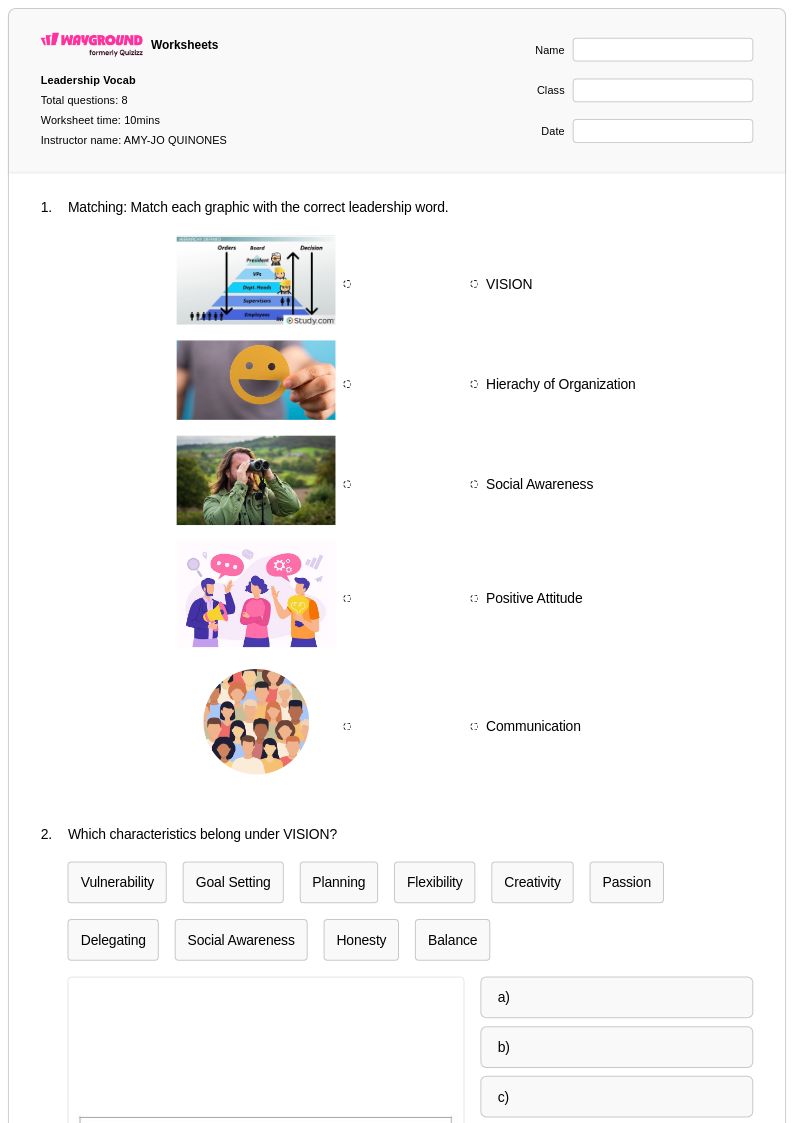
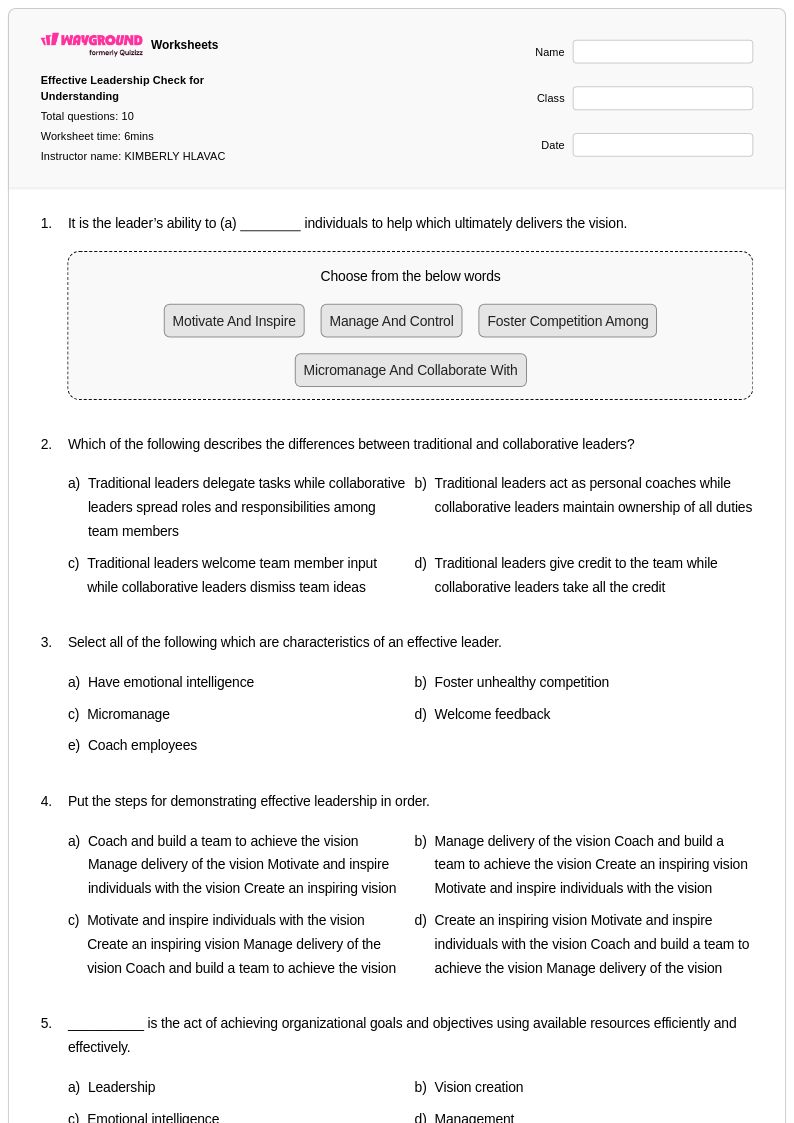
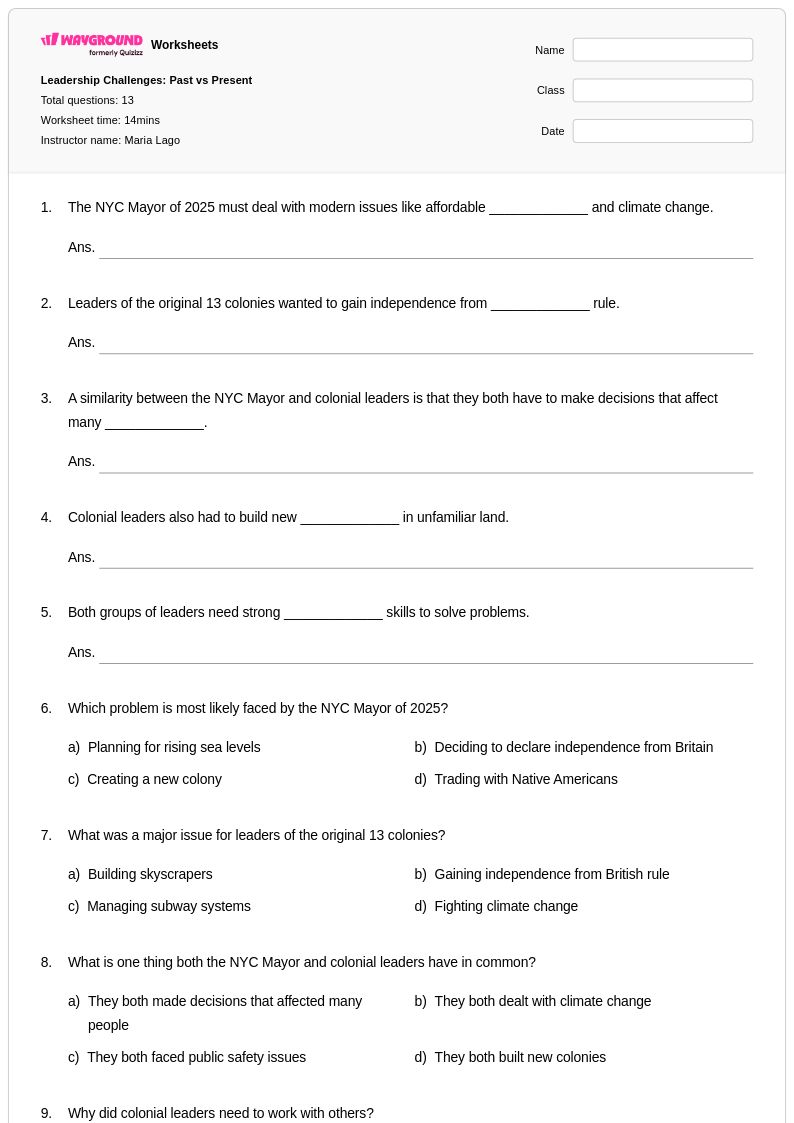
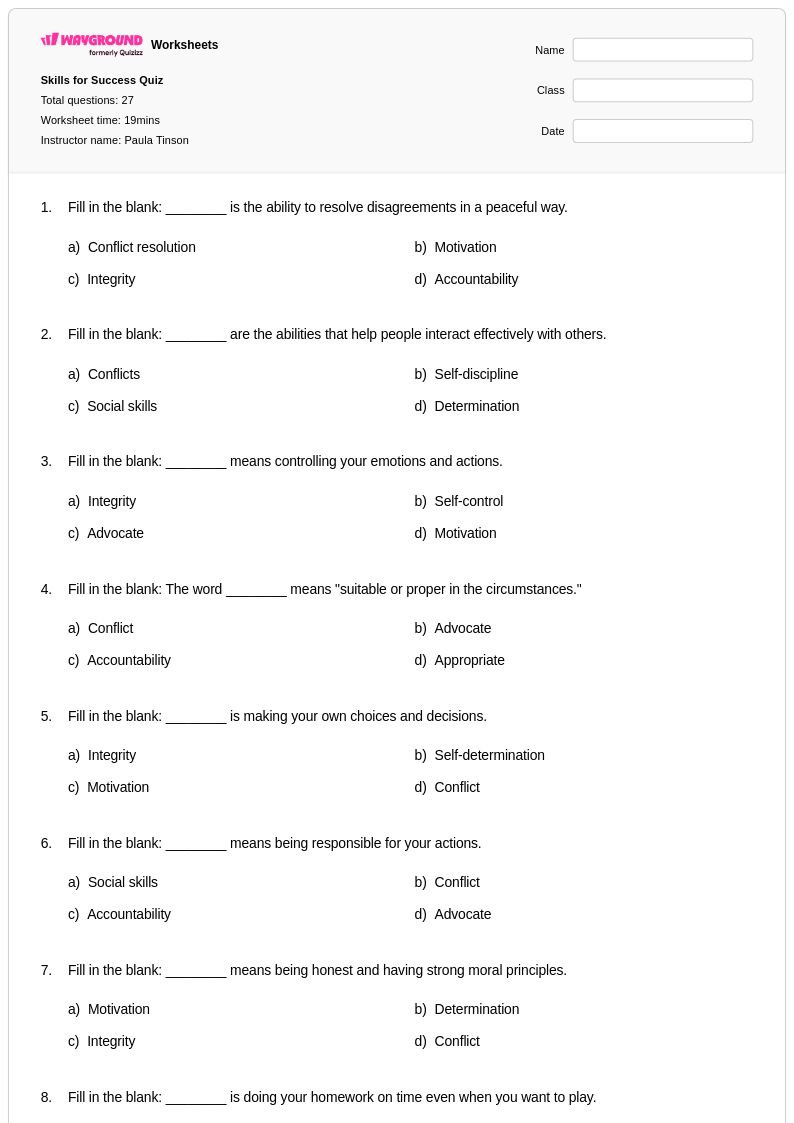
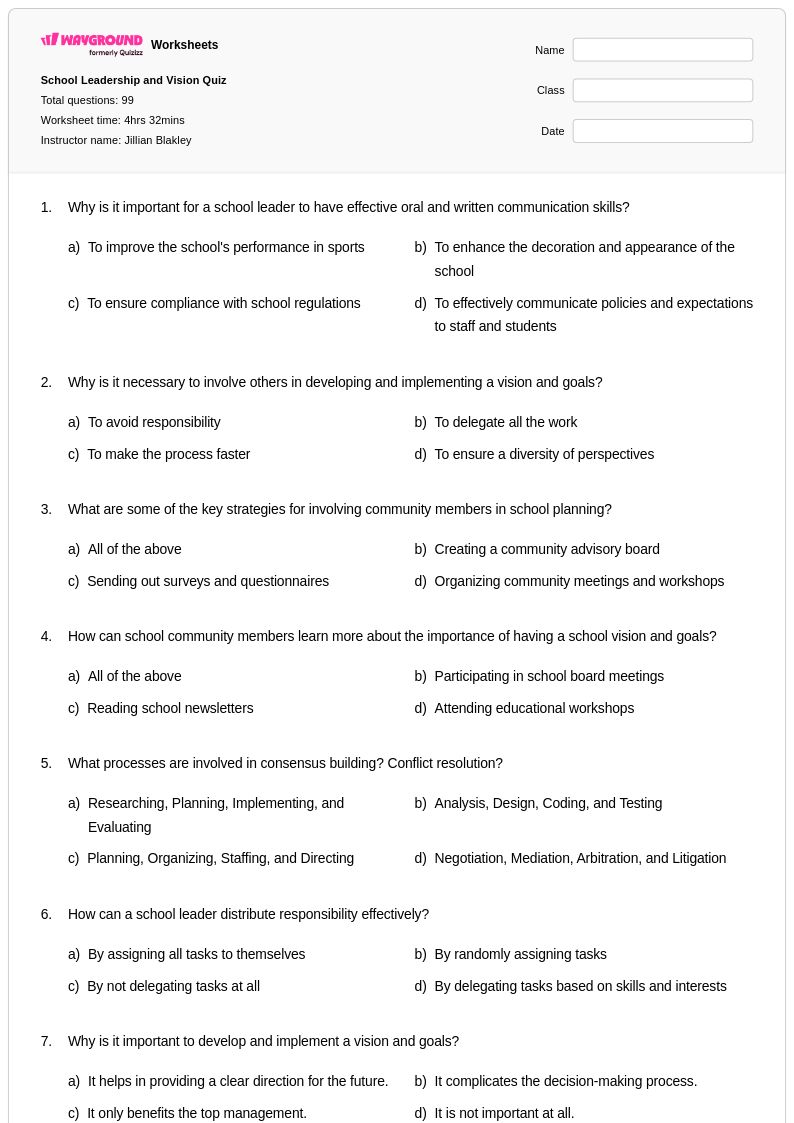
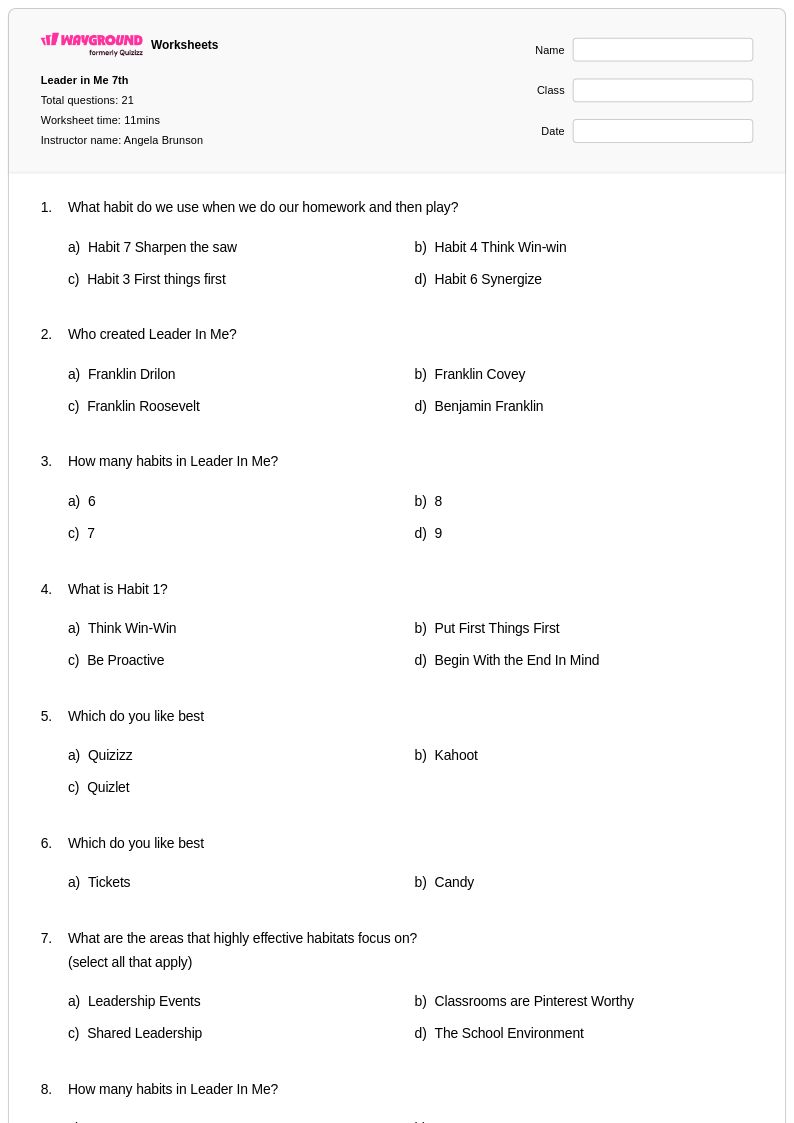
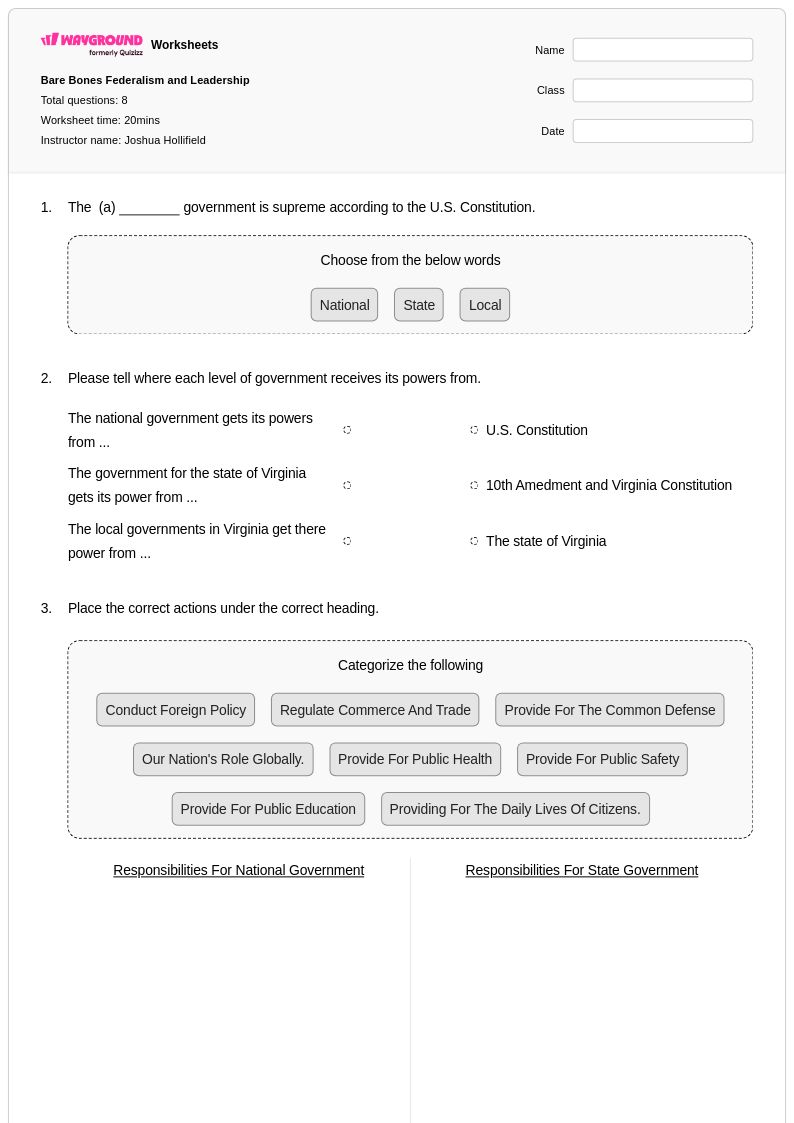
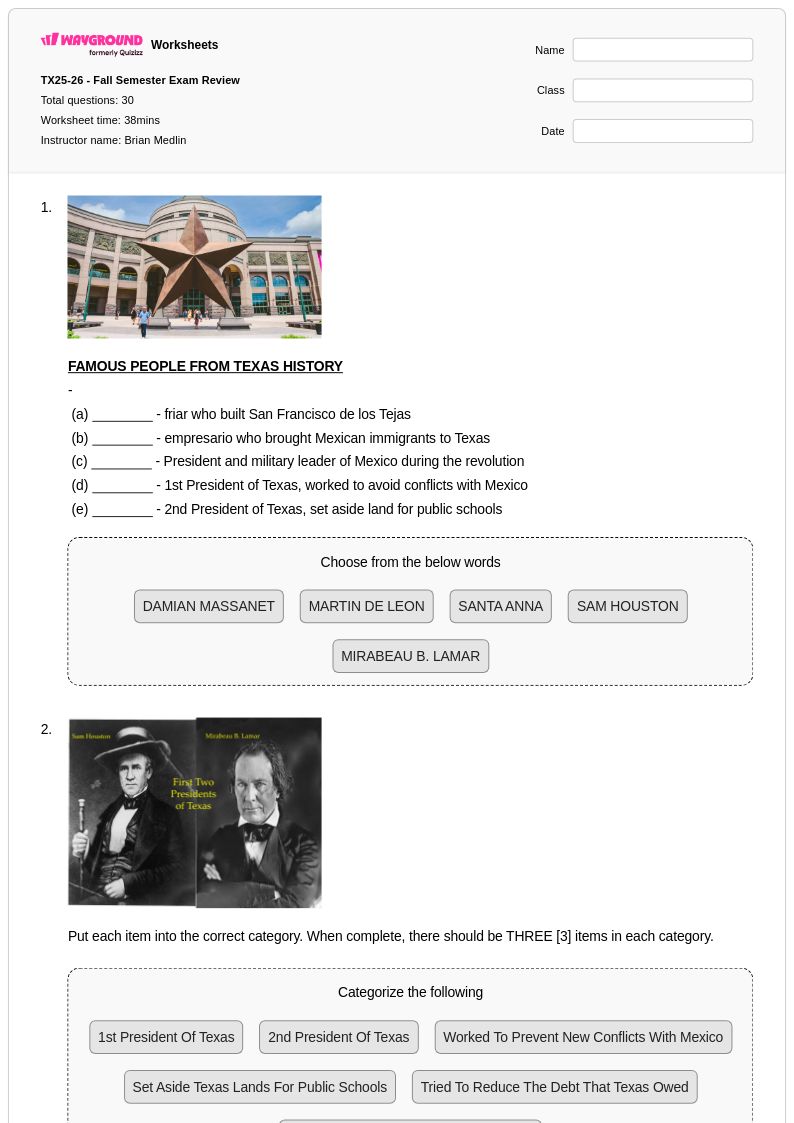
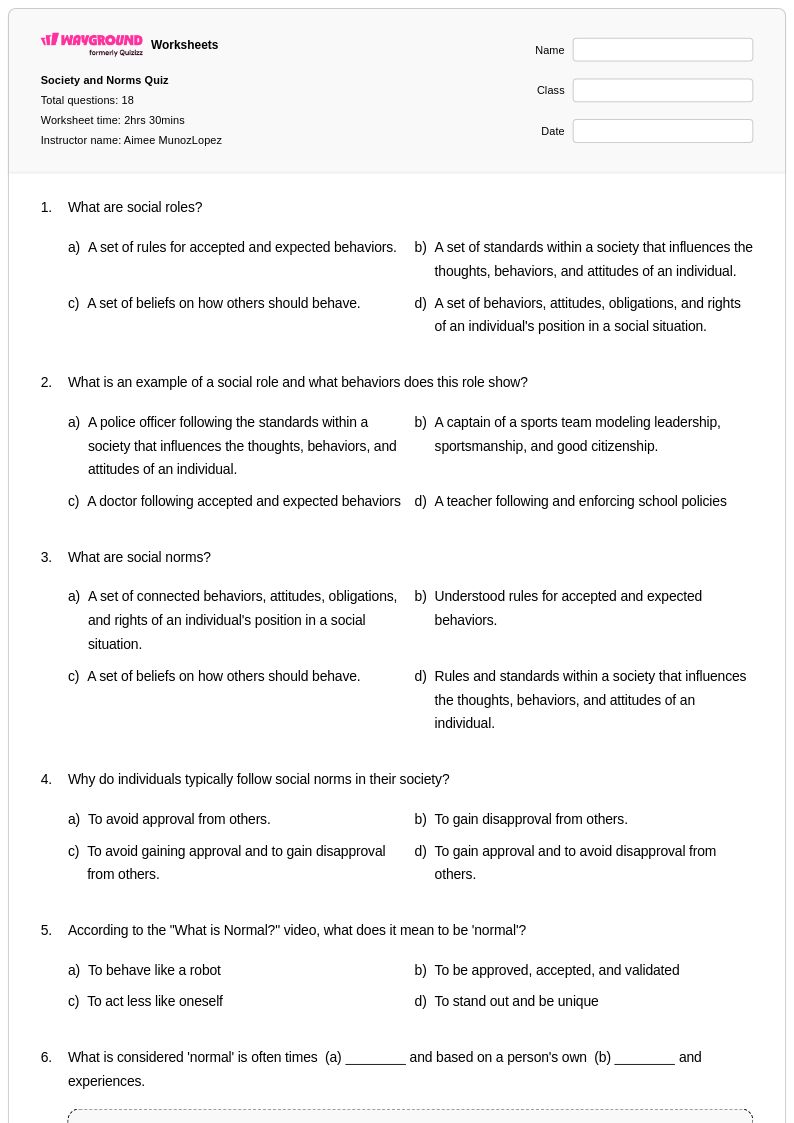
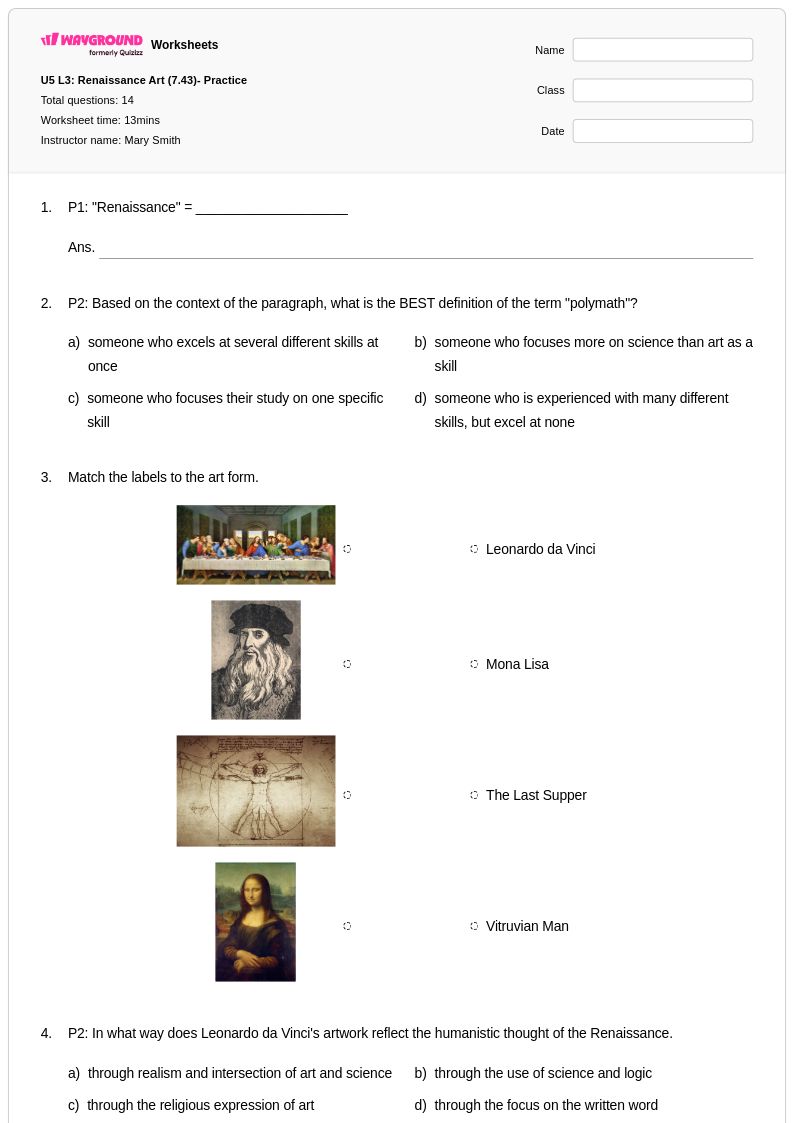
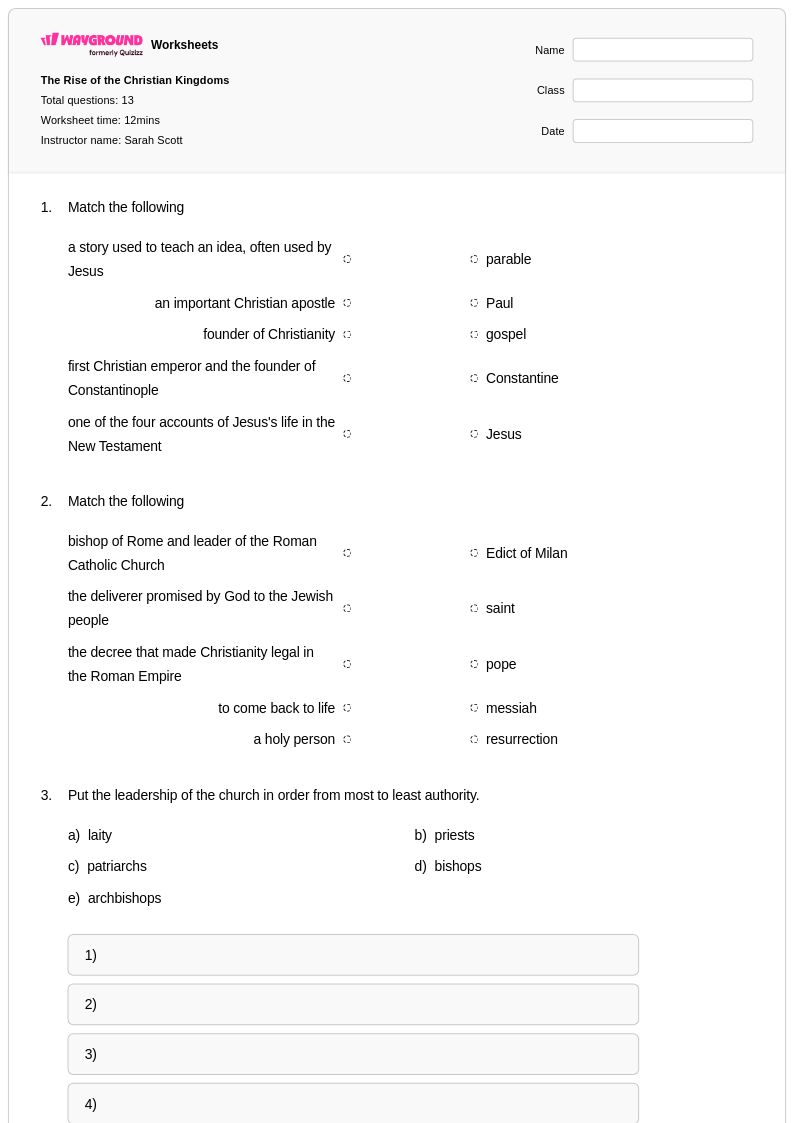
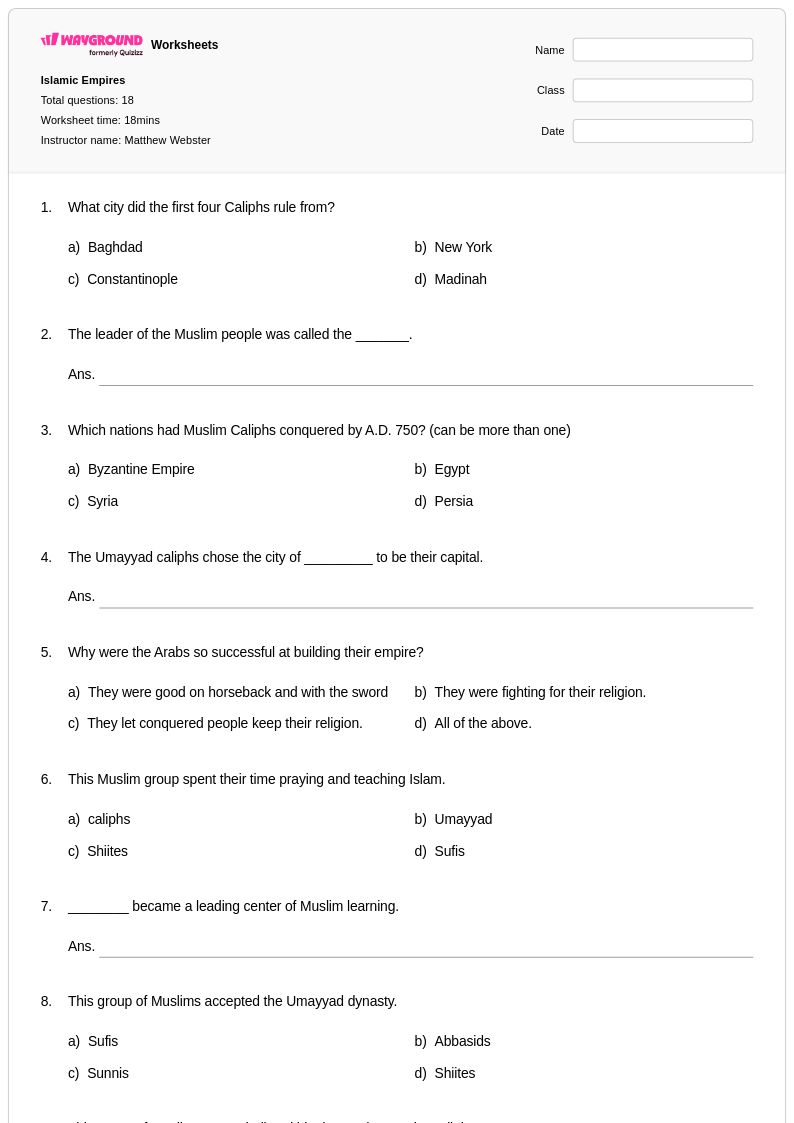
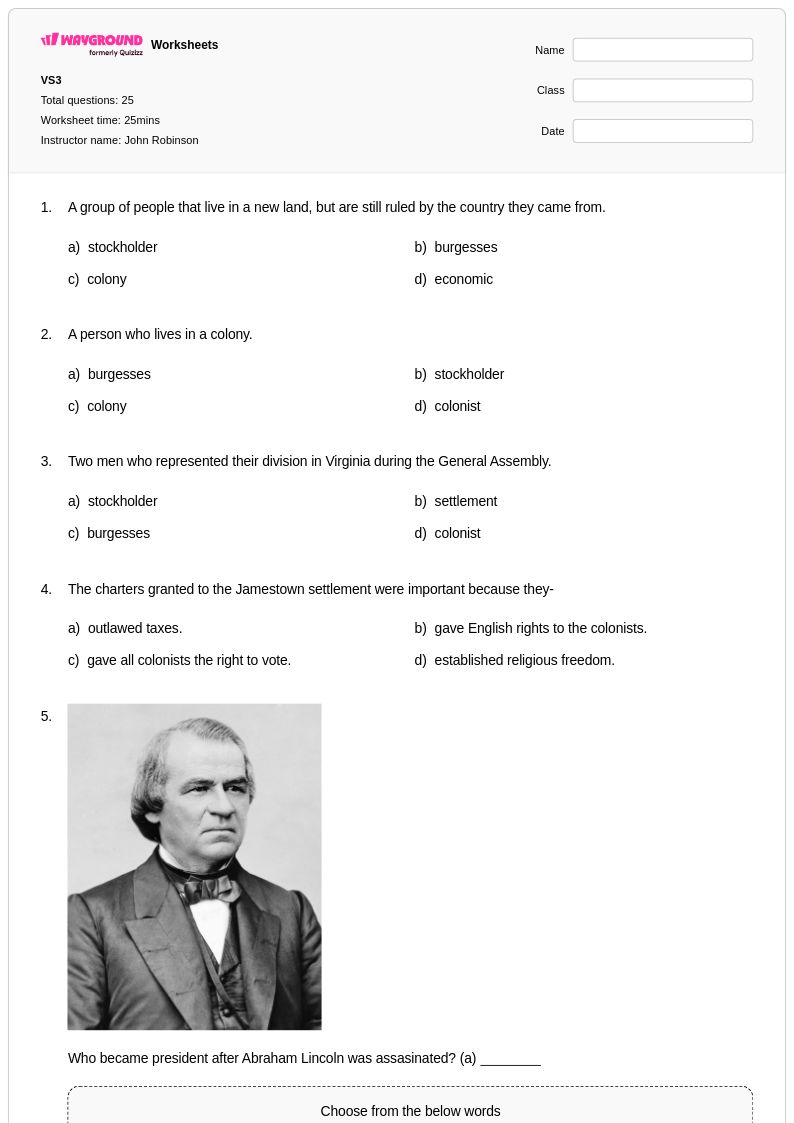
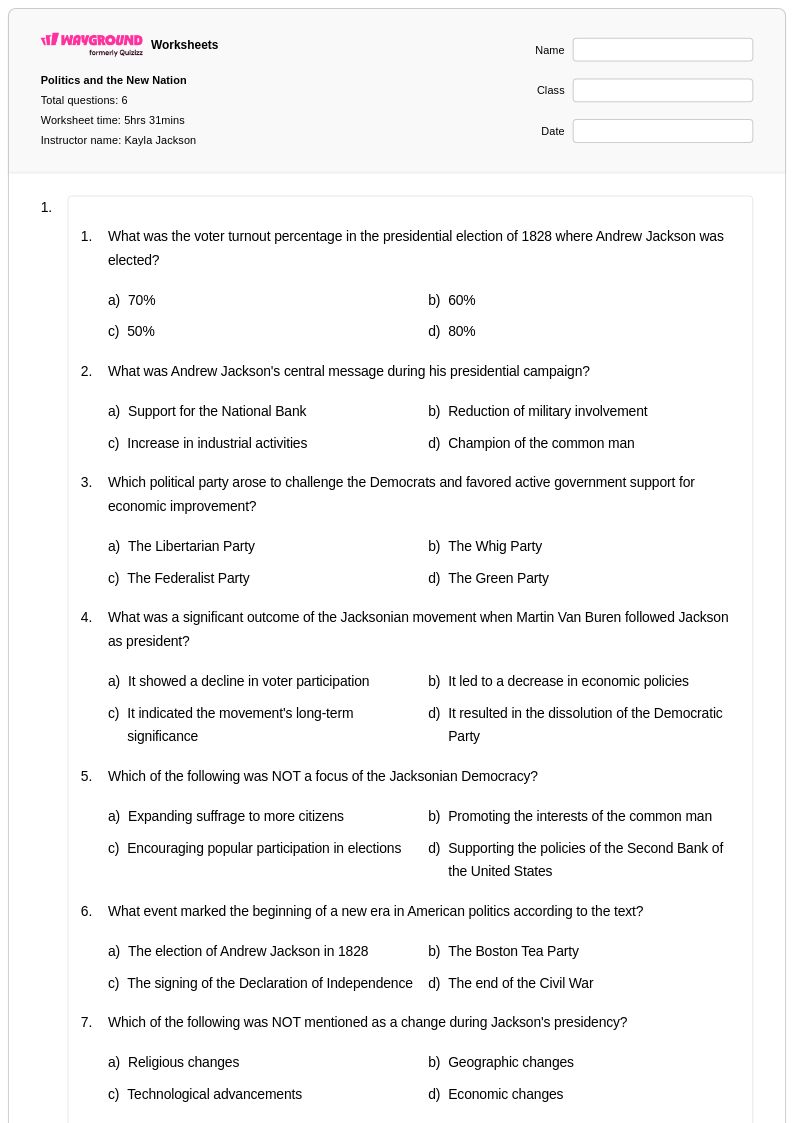
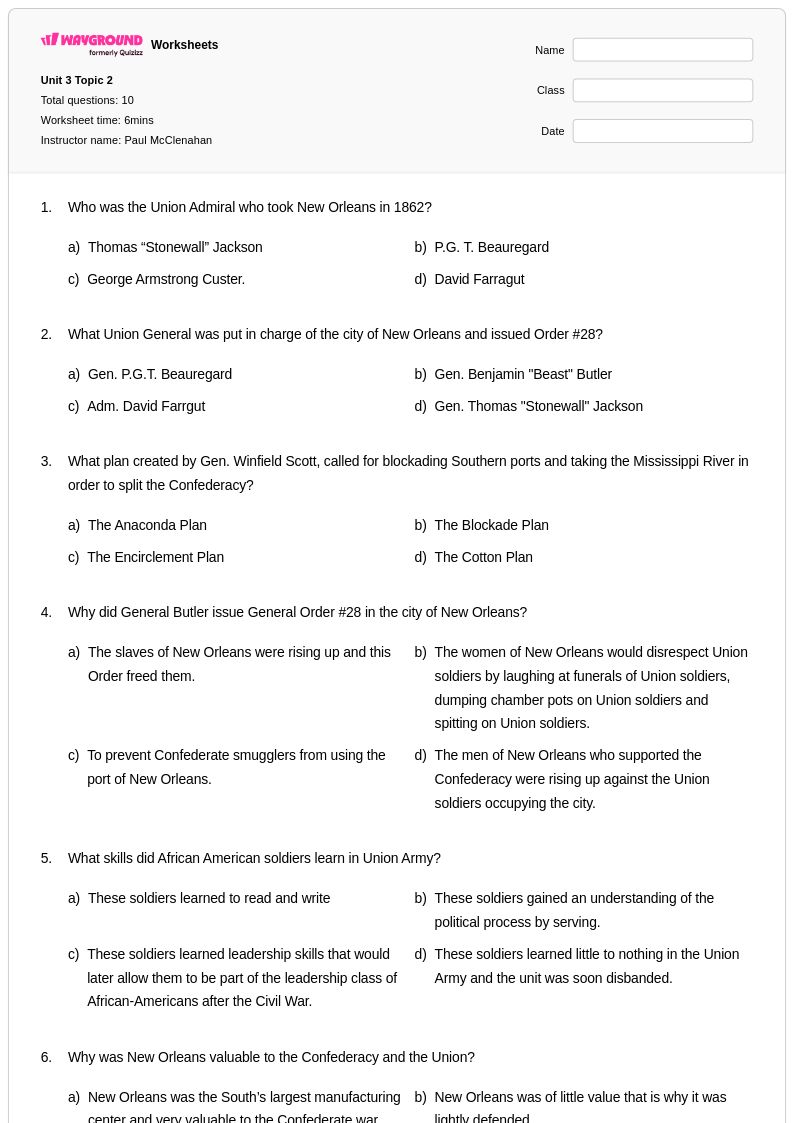
Leadership skills worksheets for grade 7 social studies provide students with essential practice in developing the interpersonal and organizational abilities that form the foundation of effective leadership. These comprehensive printables focus on key competencies such as communication, decision-making, problem-solving, team building, and conflict resolution through engaging scenarios and real-world applications. Students work through practice problems that challenge them to analyze different leadership styles, evaluate the qualities of historical and contemporary leaders, and reflect on their own leadership potential. The worksheets include structured activities with detailed answer keys that help students understand the nuances of leading others, taking initiative, and inspiring positive change in their communities. Available as free pdf downloads, these resources strengthen critical thinking skills while building confidence in collaborative settings.
Wayground, formerly Quizizz, supports educators with an extensive collection of teacher-created leadership skills worksheets that can be seamlessly integrated into grade 7 social studies curricula. The platform's millions of resources include materials aligned with educational standards, offering teachers powerful search and filtering tools to quickly locate worksheets that match specific learning objectives and student needs. These differentiation tools enable instructors to customize content for various skill levels, supporting both remediation for struggling learners and enrichment opportunities for advanced students. Available in both printable and digital formats including downloadable pdfs, the worksheets facilitate flexible lesson planning whether for in-person instruction, remote learning, or hybrid environments. Teachers can efficiently assess student progress in leadership development while providing targeted skill practice that prepares students for collaborative projects and future civic engagement.
FAQs
How do I teach leadership skills to students?
Teaching leadership skills is most effective when students encounter realistic scenarios that require decision-making, communication, and accountability. Structured activities such as role-playing group conflicts, analyzing case studies of real leaders, and assigning rotating leadership roles in collaborative tasks give students practice applying these competencies in context. Pairing scenario-based work with reflection prompts helps students internalize what effective leadership looks like and why it matters.
What activities help students practice decision-making and teamwork?
Worksheets that simulate authentic leadership challenges, such as organizing a group project under constraints or mediating a peer dispute, give students structured opportunities to practice decision-making and teamwork simultaneously. These activities work best when students are asked to justify their choices, because the reasoning process builds the critical thinking habits that underpin strong leadership. Revisiting the same scenario with different constraints also helps students see how context shapes good leadership decisions.
What are the most common misconceptions students have about leadership?
Students frequently conflate leadership with authority, assuming that being in charge is the defining feature of a leader rather than the ability to influence, communicate, and problem-solve collaboratively. Another common error is treating leadership as a fixed personality trait rather than a set of learnable skills, which can cause students to disengage from leadership development activities before they start. Addressing these misconceptions explicitly, before introducing activities, significantly increases student buy-in.
How does teaching leadership skills connect to social studies or character education standards?
Leadership skills instruction connects directly to social studies learning objectives around civic responsibility, community engagement, and collaborative decision-making, as well as to character education goals focused on empathy, integrity, and conflict resolution. Worksheets that situate leadership in real-world civic or community contexts help teachers make these standards connections visible and assessable. This cross-disciplinary relevance makes leadership skills content a natural fit for advisory periods, civics classes, and project-based learning units.
How can I differentiate leadership skills worksheets for students at different levels?
Differentiation for leadership skills activities can involve adjusting the complexity of the scenario, the number of variables students must weigh, or the degree of scaffolding provided for reflection prompts. On Wayground, teachers can apply student-level accommodations such as reduced answer choices to lower cognitive load for struggling learners, extended time for students who need it, and read-aloud support for students with reading challenges. These settings can be assigned to individual students while the rest of the class receives default settings, making differentiation manageable without disrupting the lesson.
How do I use Wayground's leadership skills worksheets in my classroom?
Wayground's leadership skills worksheets are available as printable PDFs for traditional classroom use and in digital formats for technology-integrated environments, so teachers can use them for in-class activities, homework assignments, or assessment preparation. Teachers can also host these worksheets as a live quiz on Wayground, adding an interactive layer to leadership skills practice. Each worksheet includes a comprehensive answer key, which supports both self-paced student review and efficient teacher feedback.