
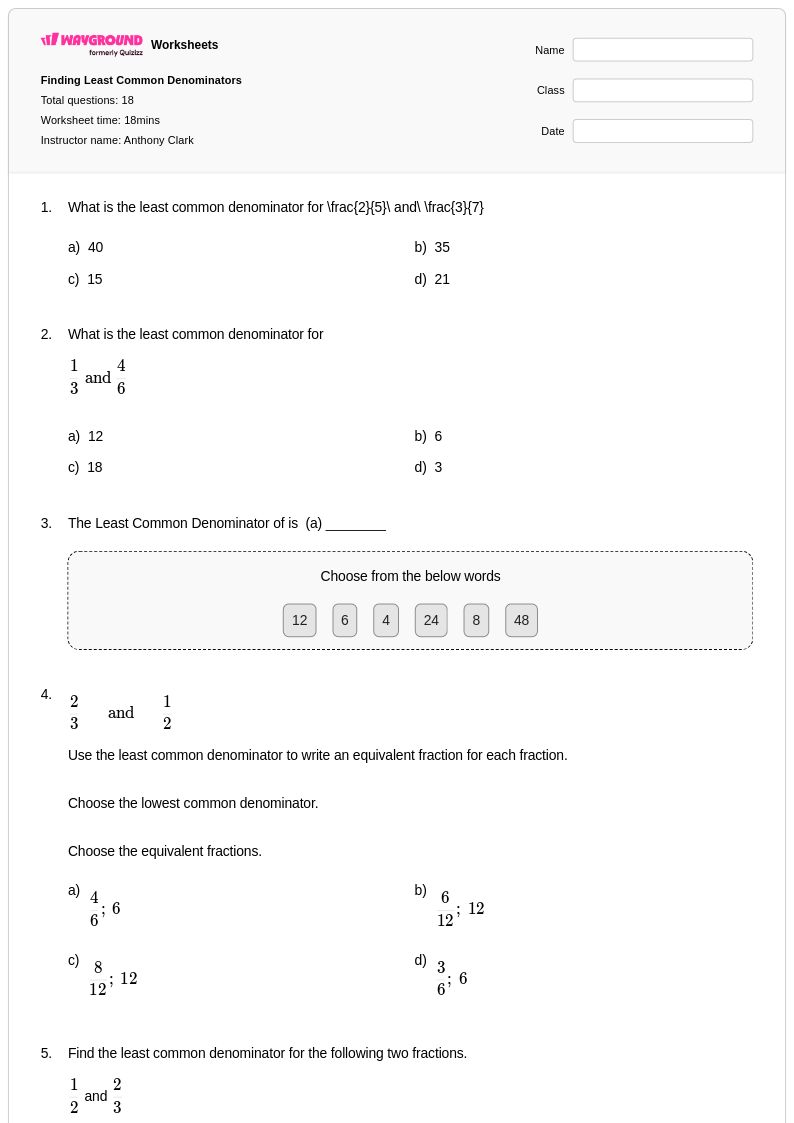
18 Q
5th - Uni
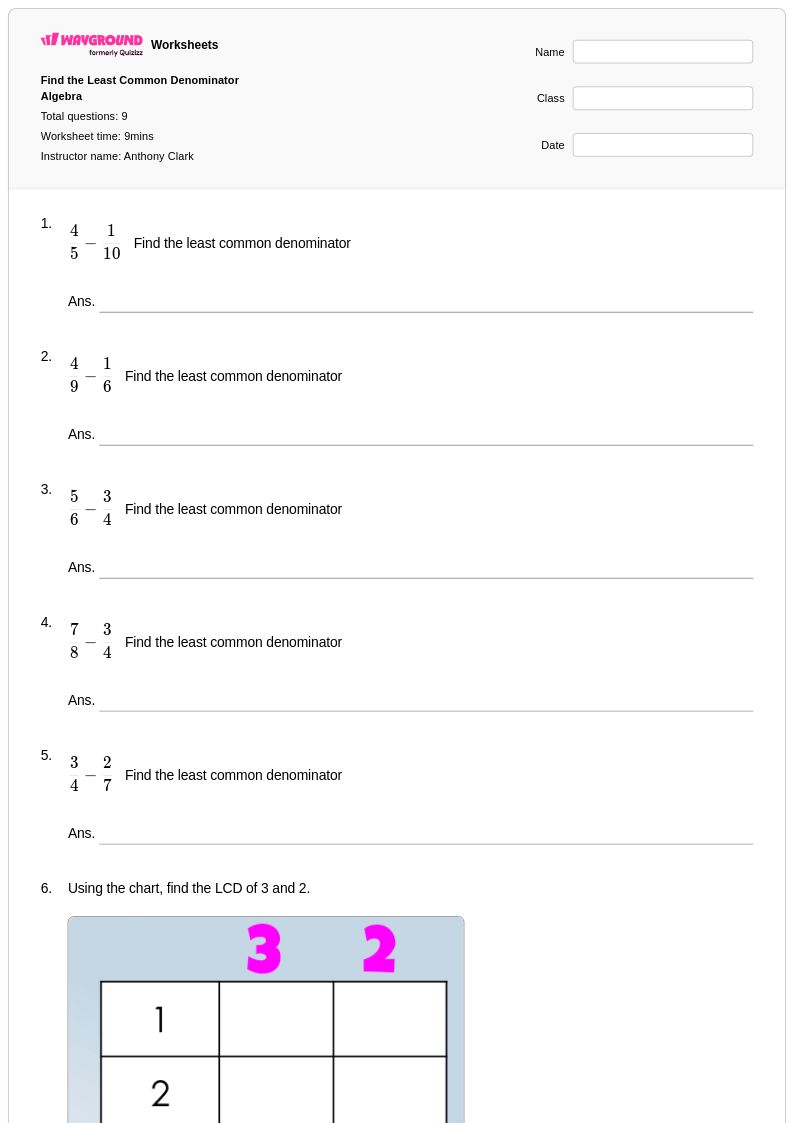
9 Q
5th - Uni
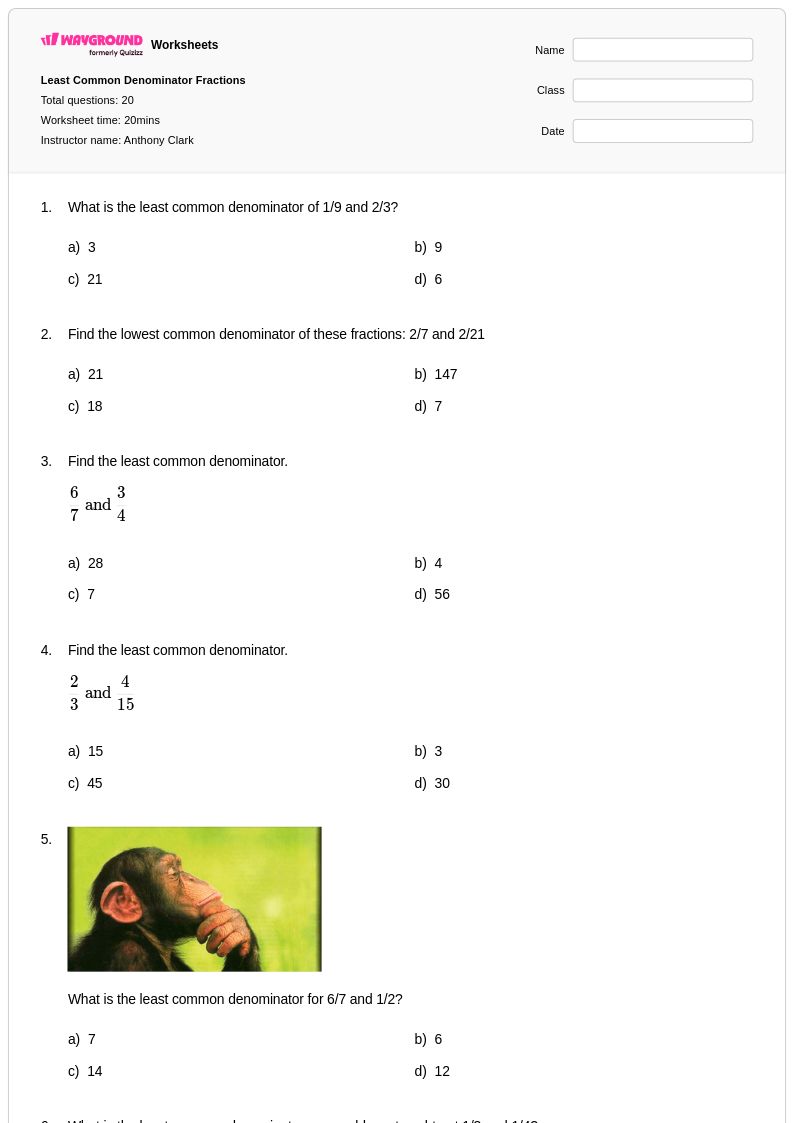
20 Q
5th - Uni
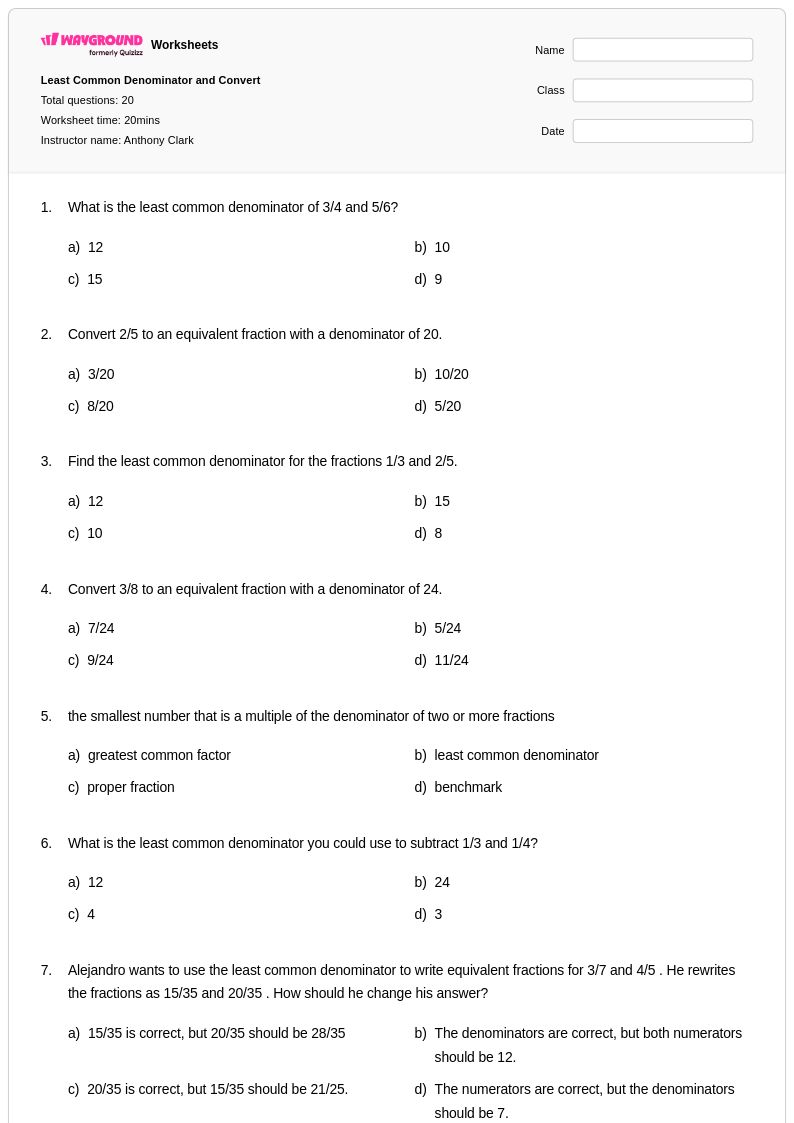
20 Q
5th - Uni
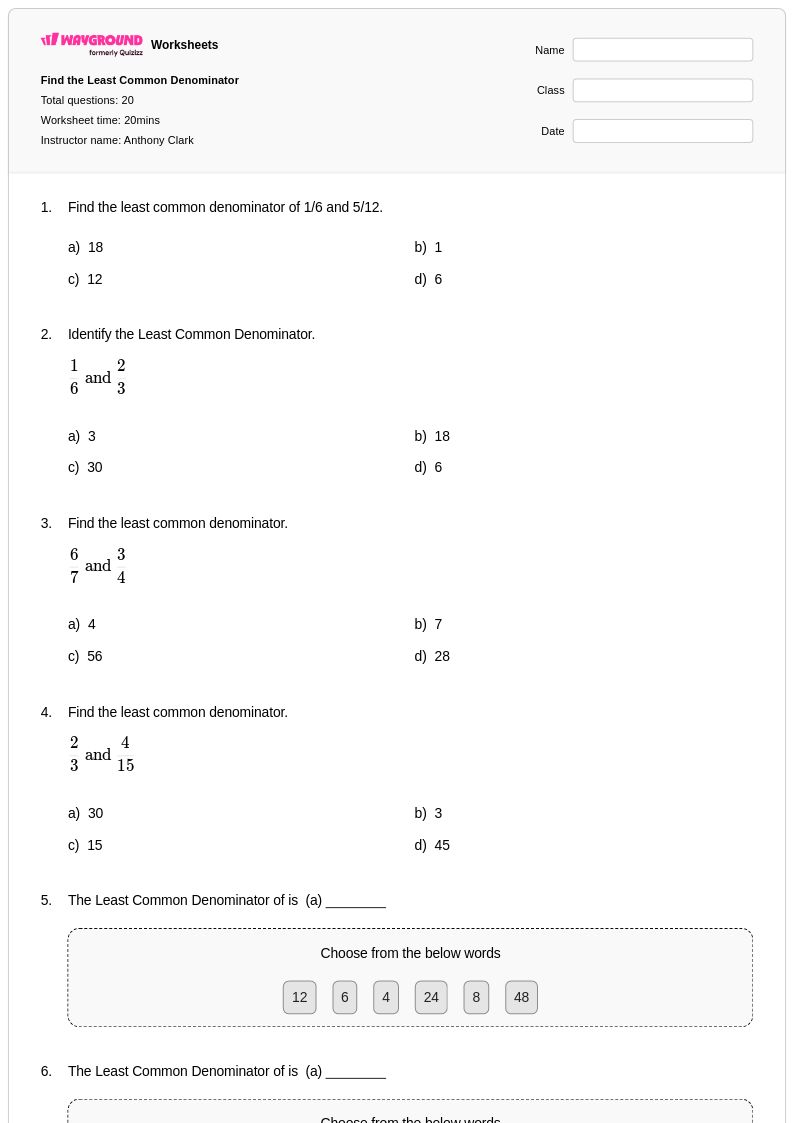
20 Q
5th - Uni
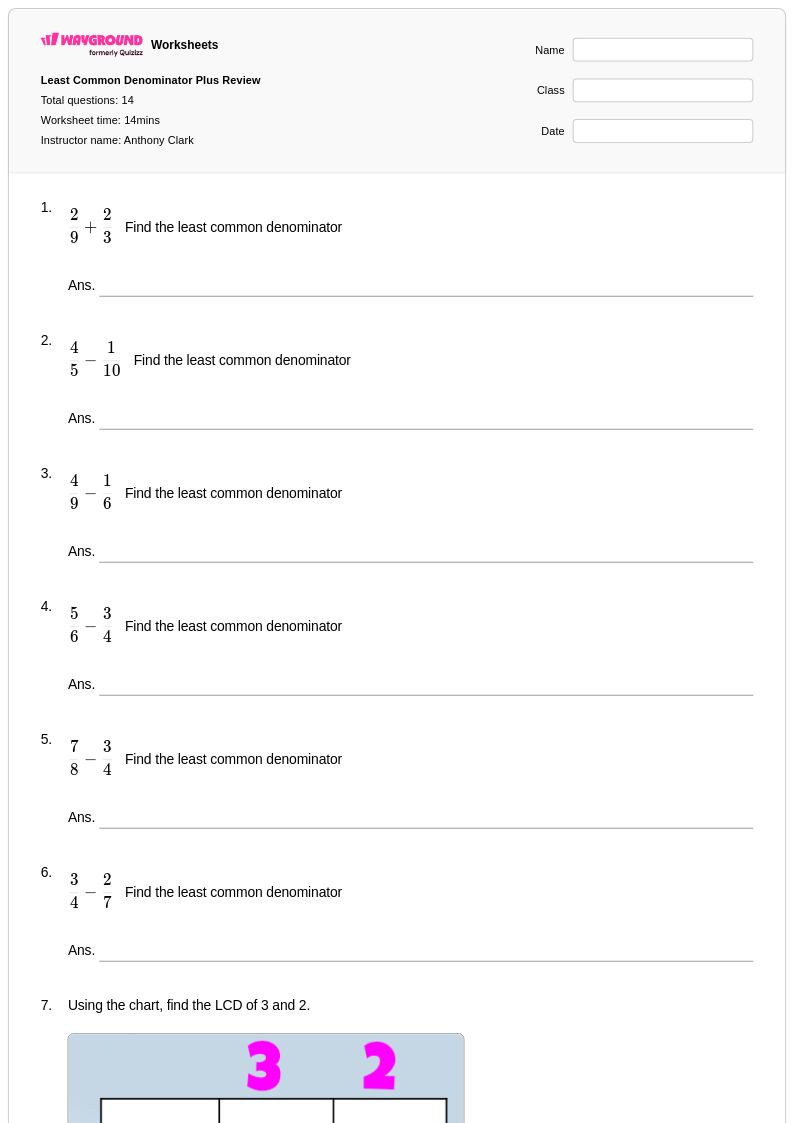
14 Q
5th - Uni
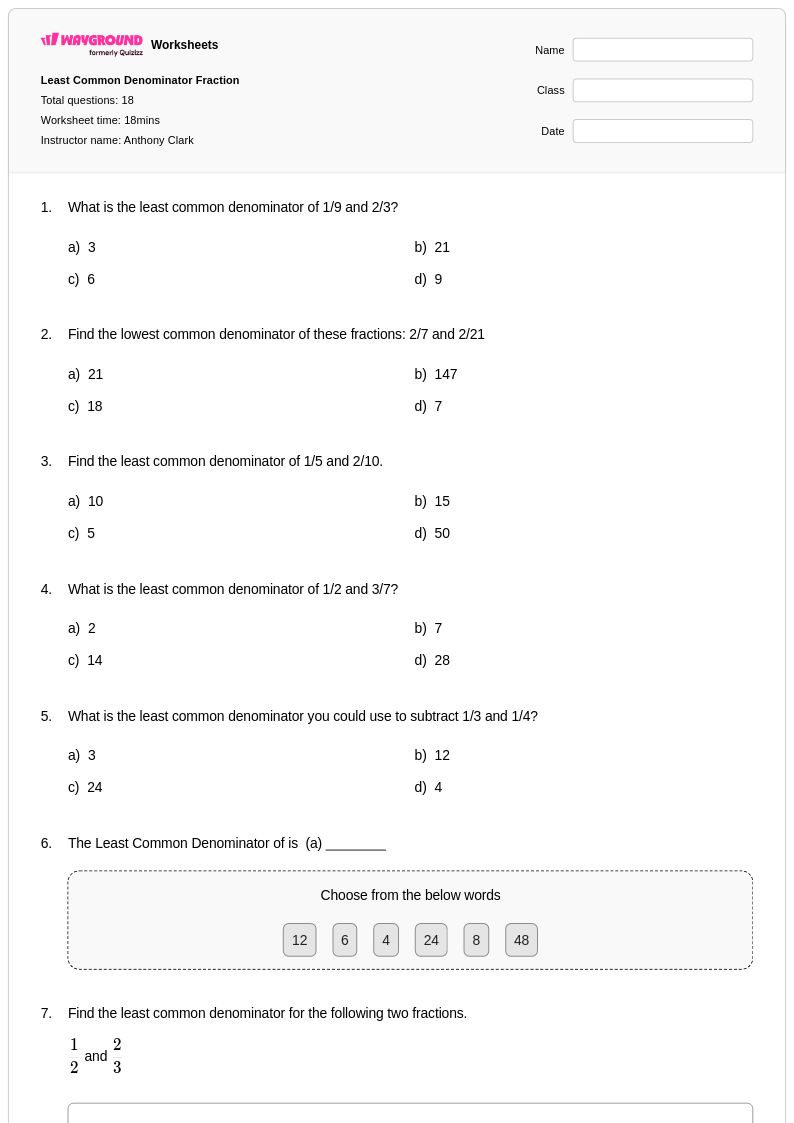
18 Q
5th - Uni
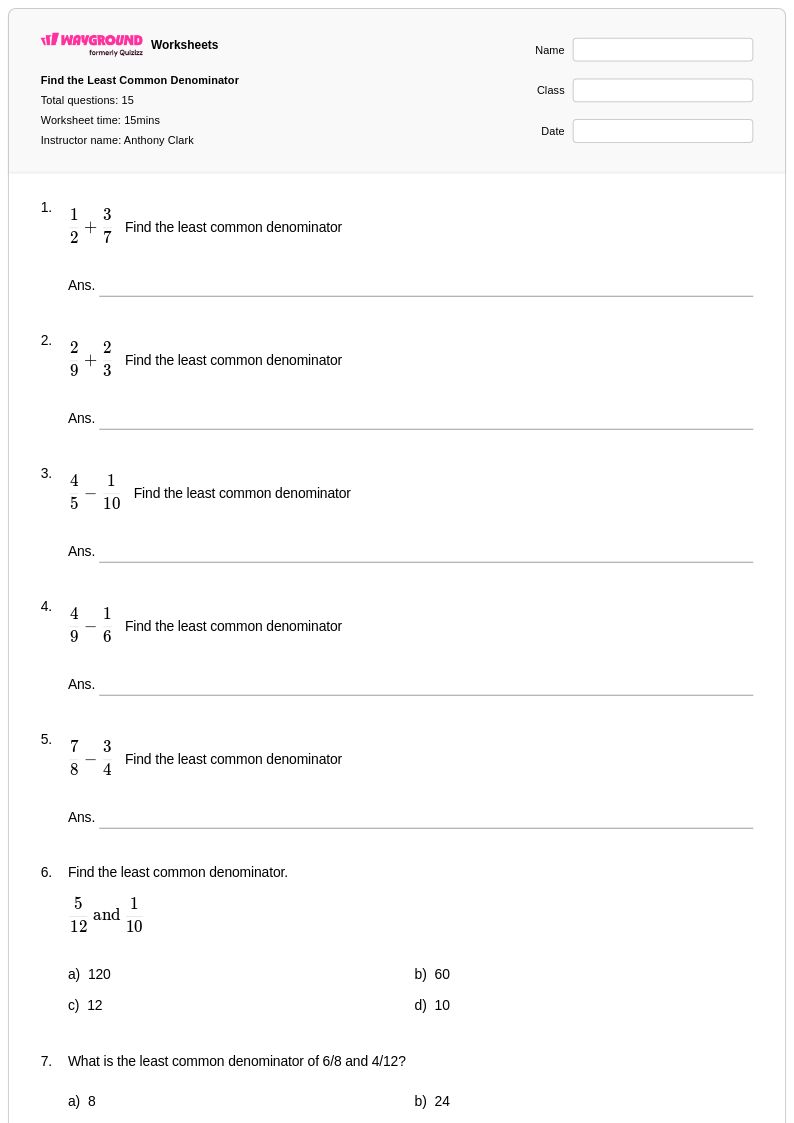
15 Q
5th - Uni
15 Q
6th - Uni
20 Q
6th - Uni
20 Q
5th - Uni
20 Q
5th - Uni
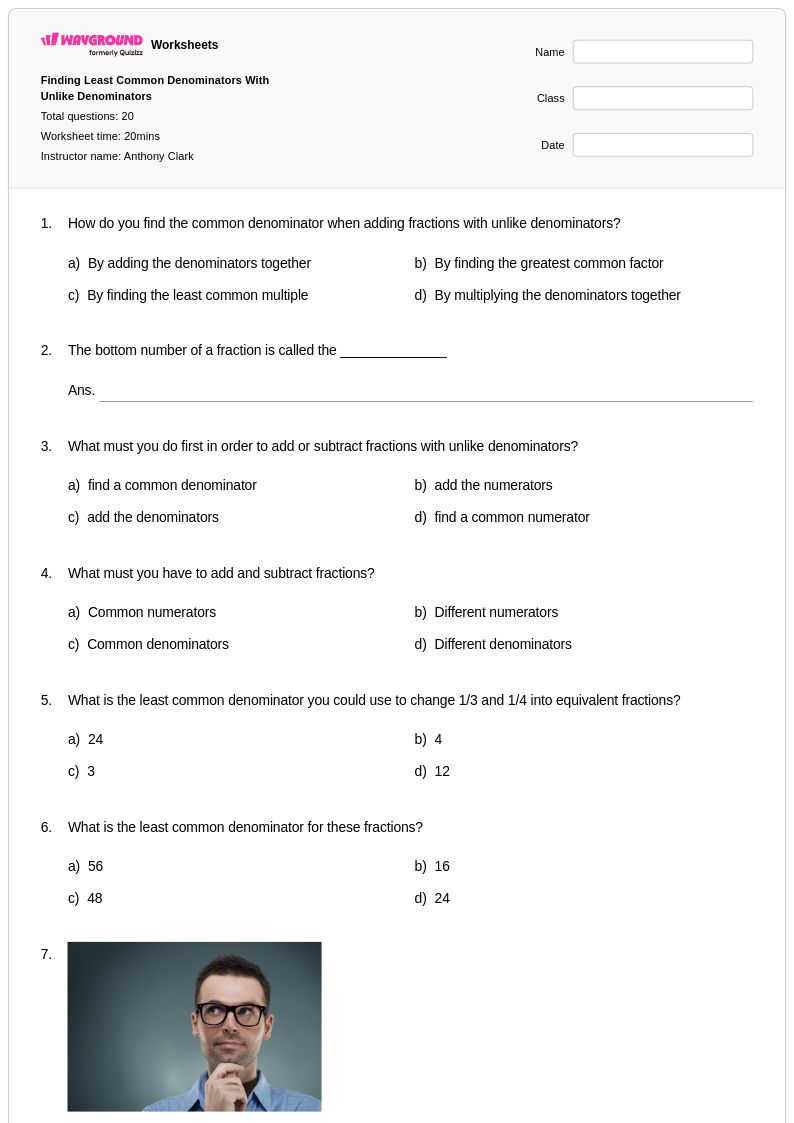
20 Q
5th - Uni
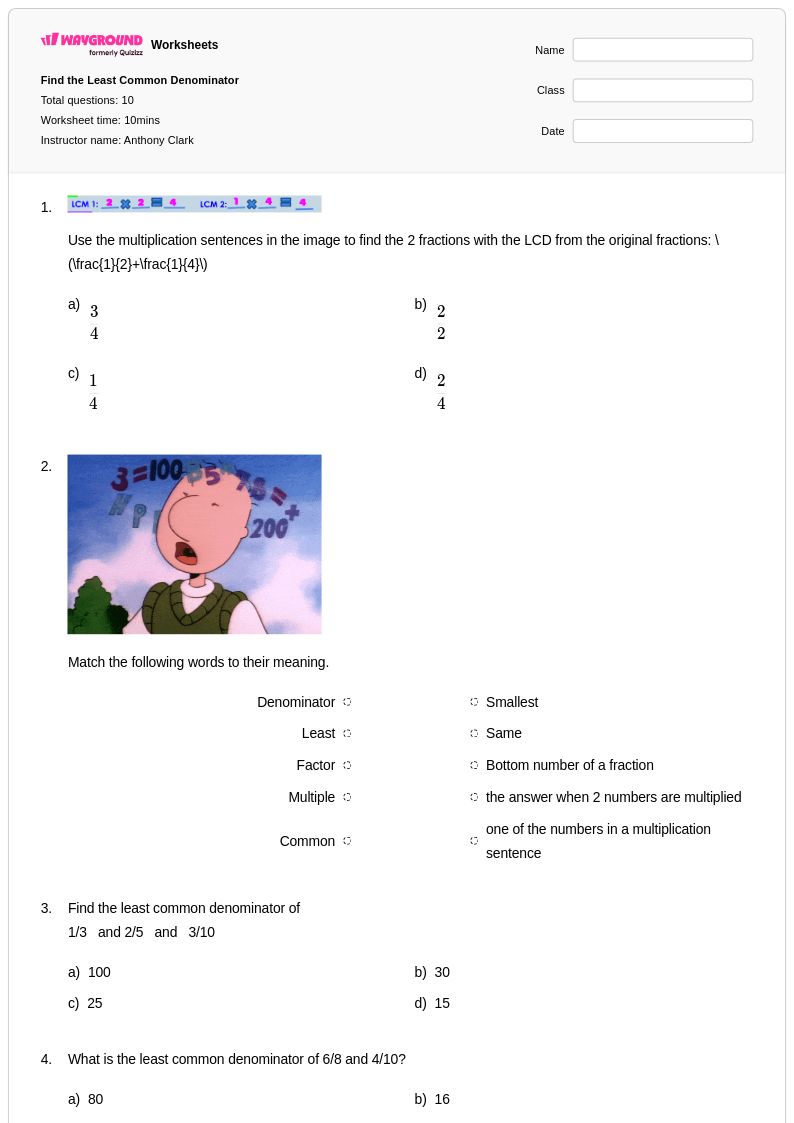
10 Q
5th - Uni
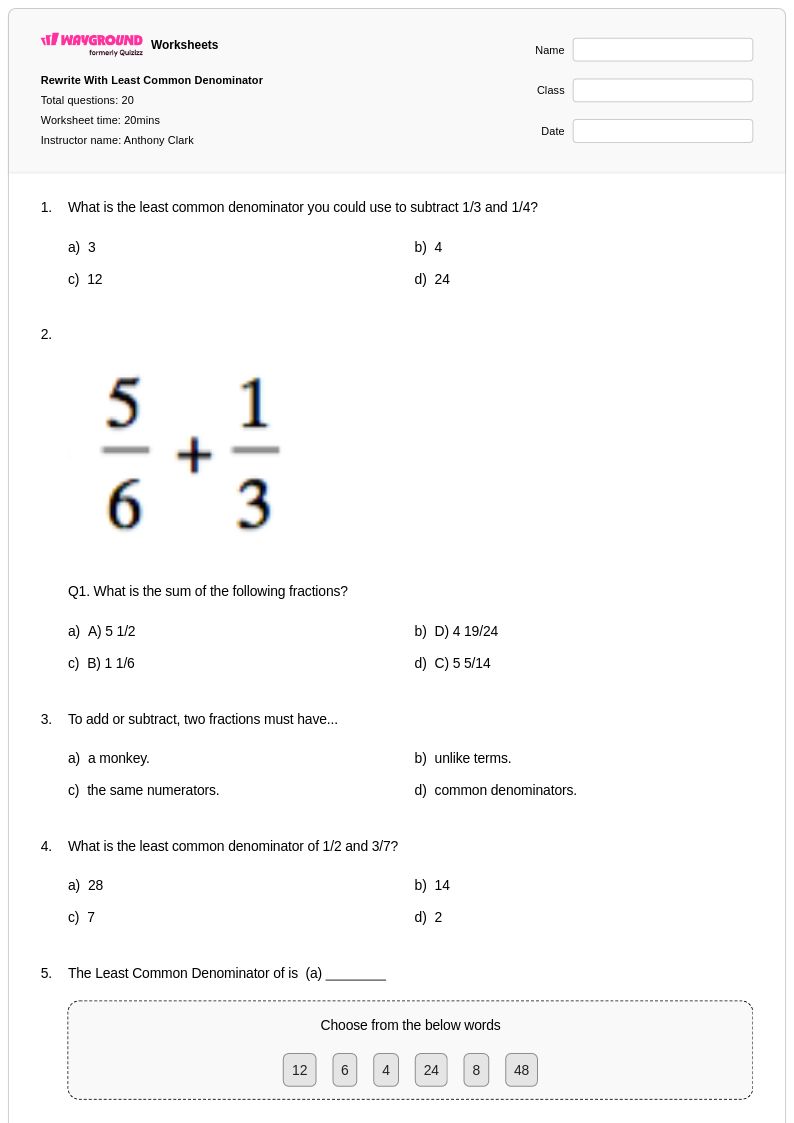
20 Q
5th - Uni
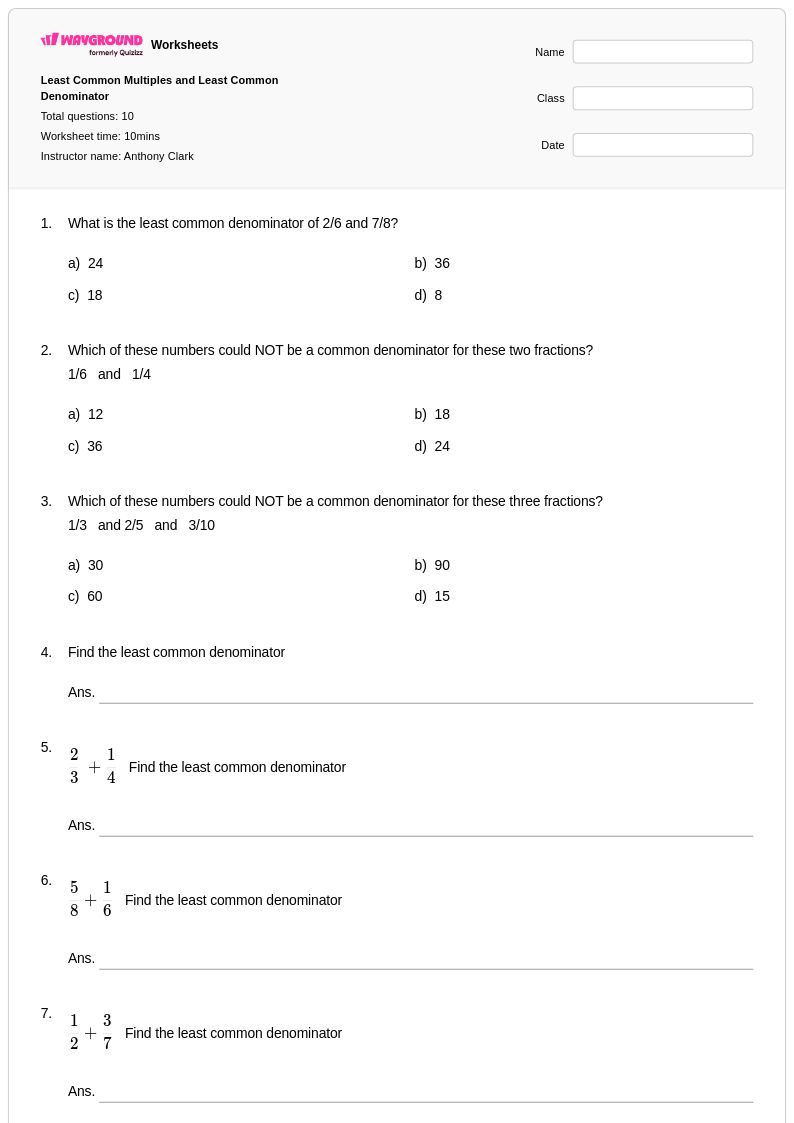
10 Q
6th - Uni
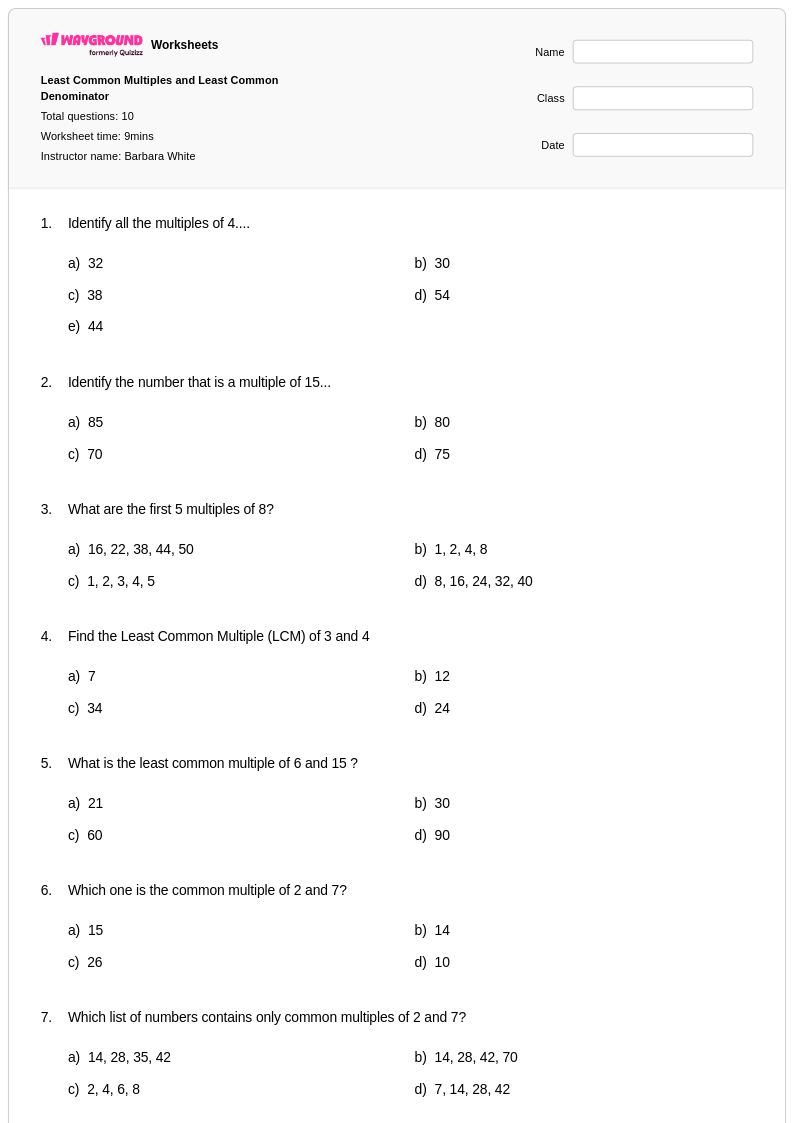
10 Q
7th
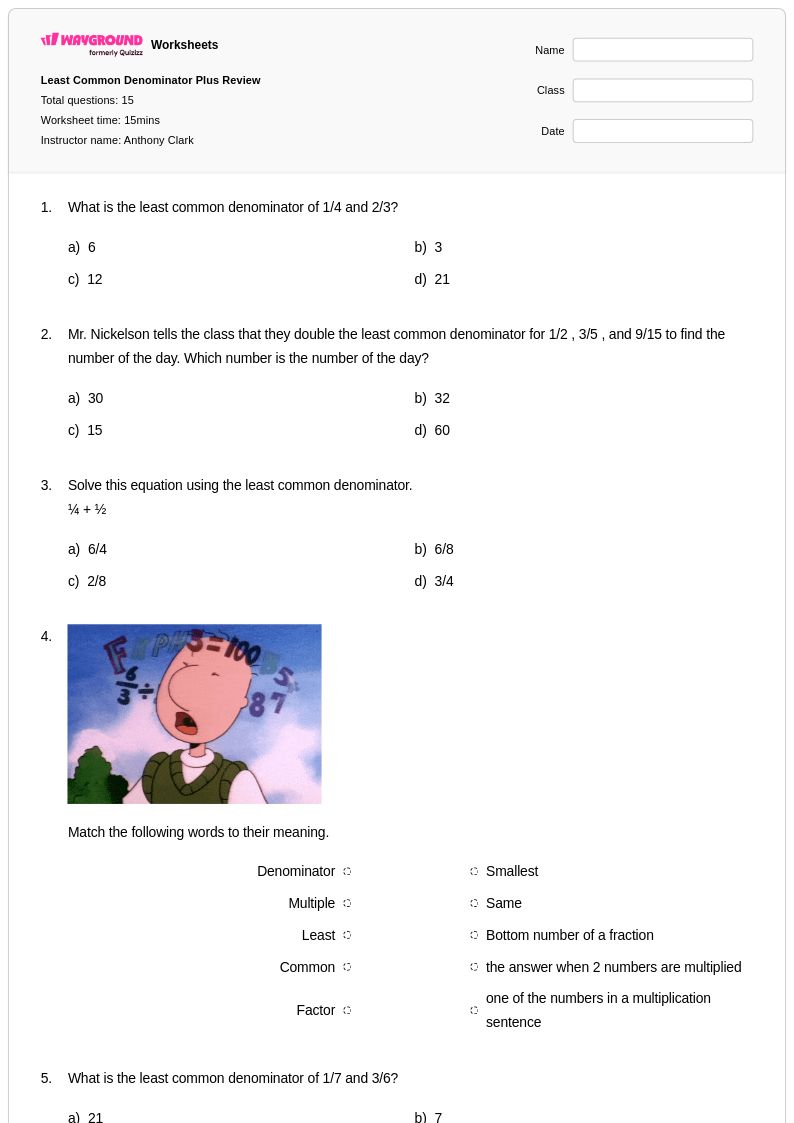
15 Q
5th - Uni
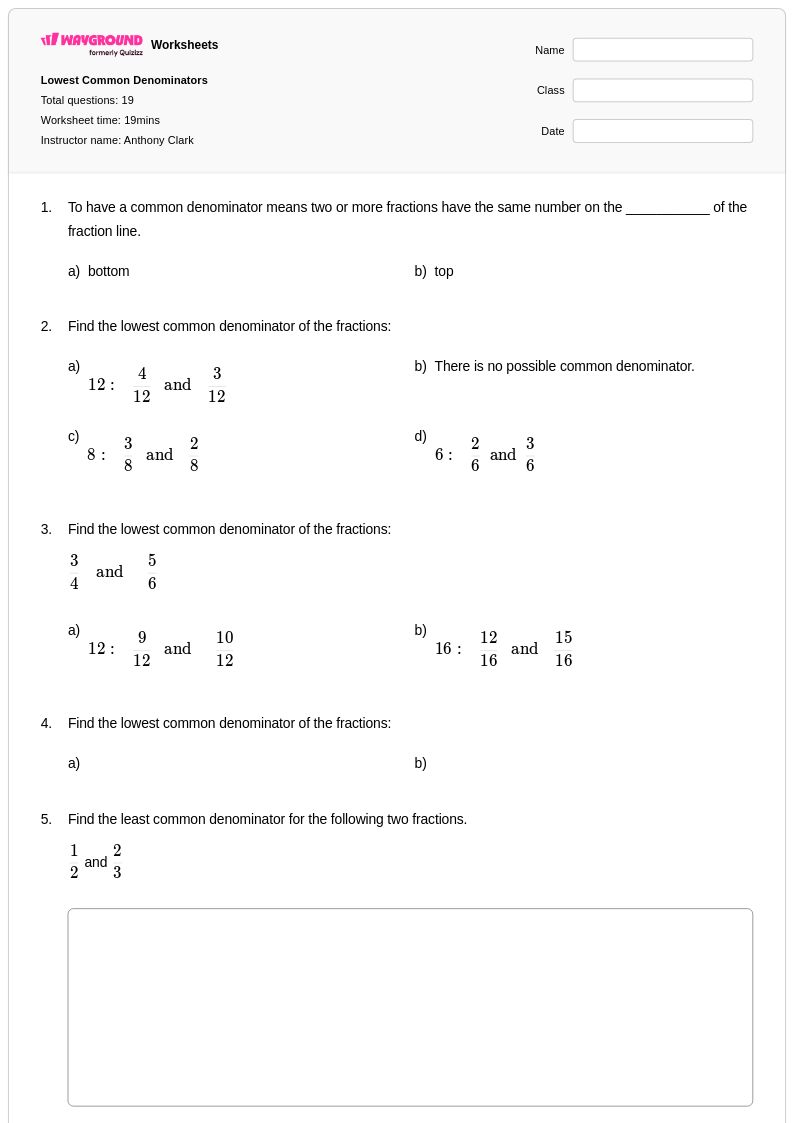
19 Q
5th - Uni
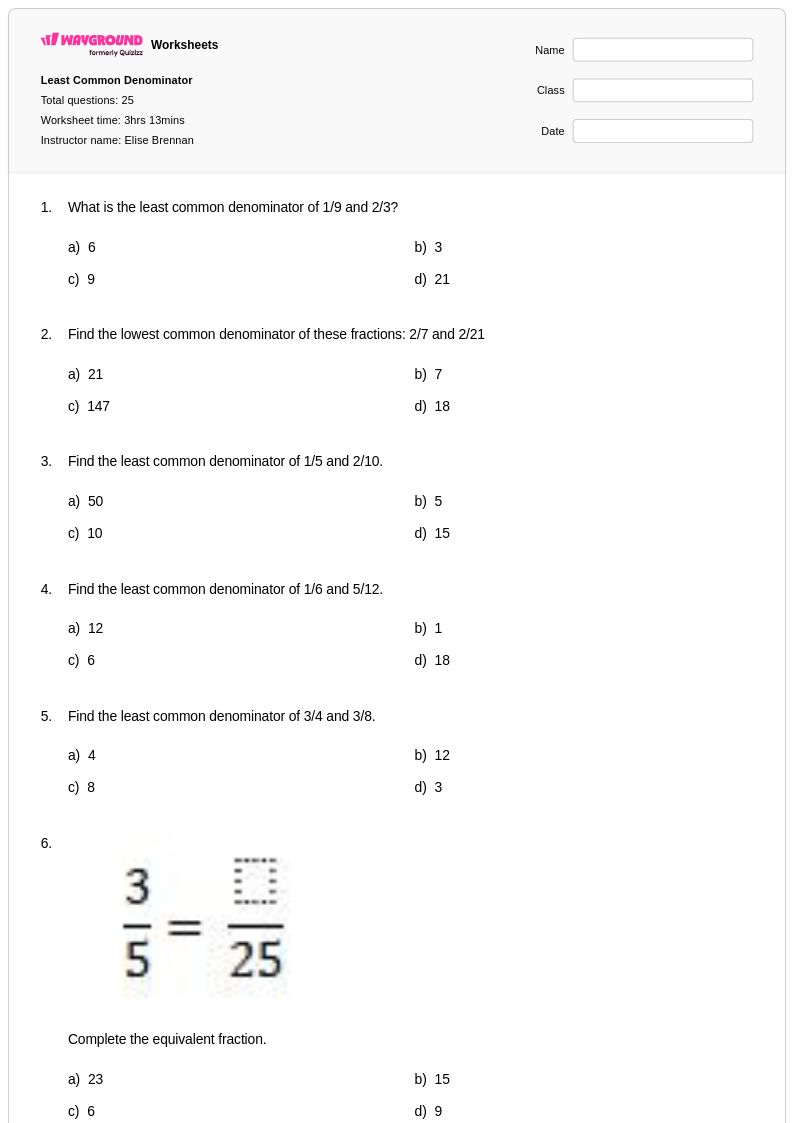
25 Q
5th - 9th
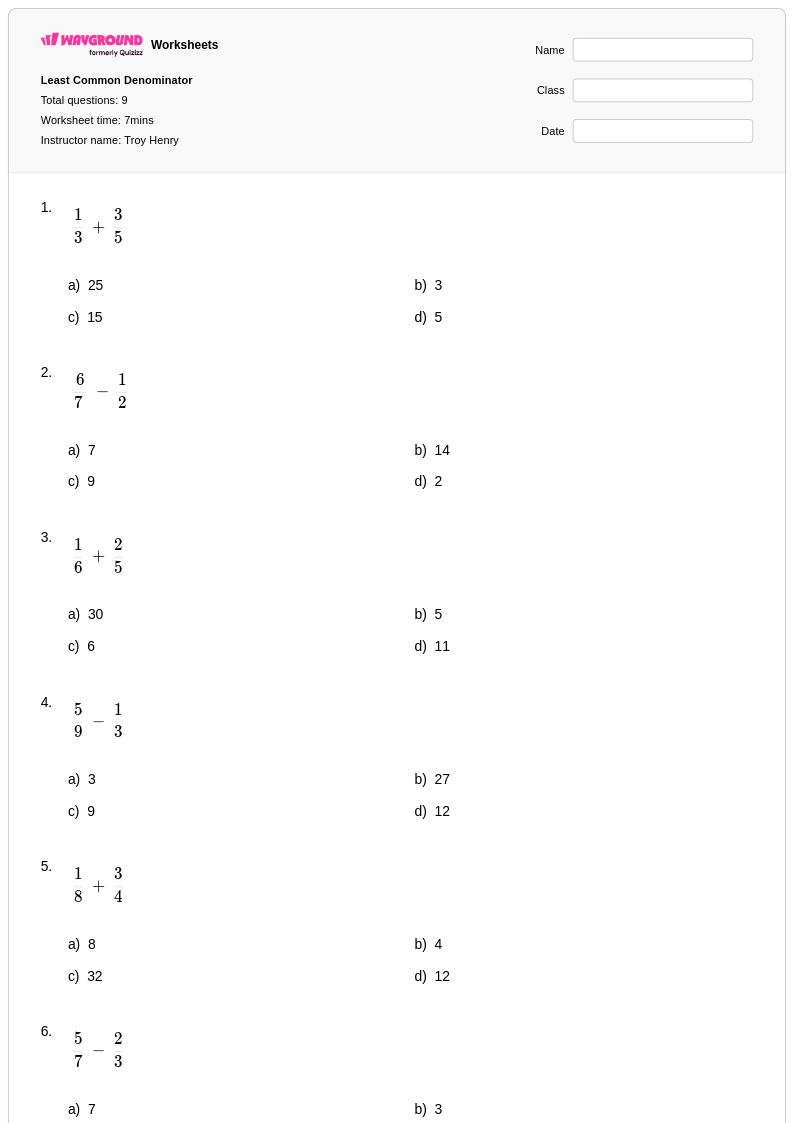
9 Q
7th
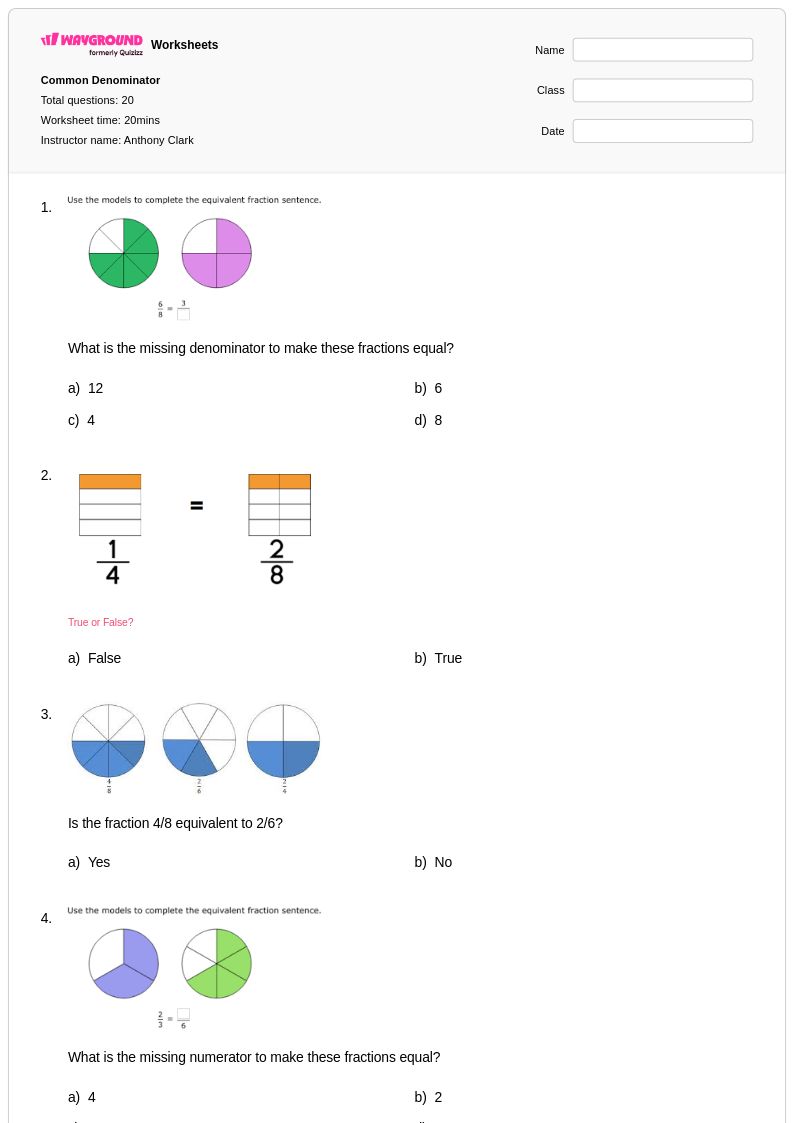
20 Q
5th - Uni
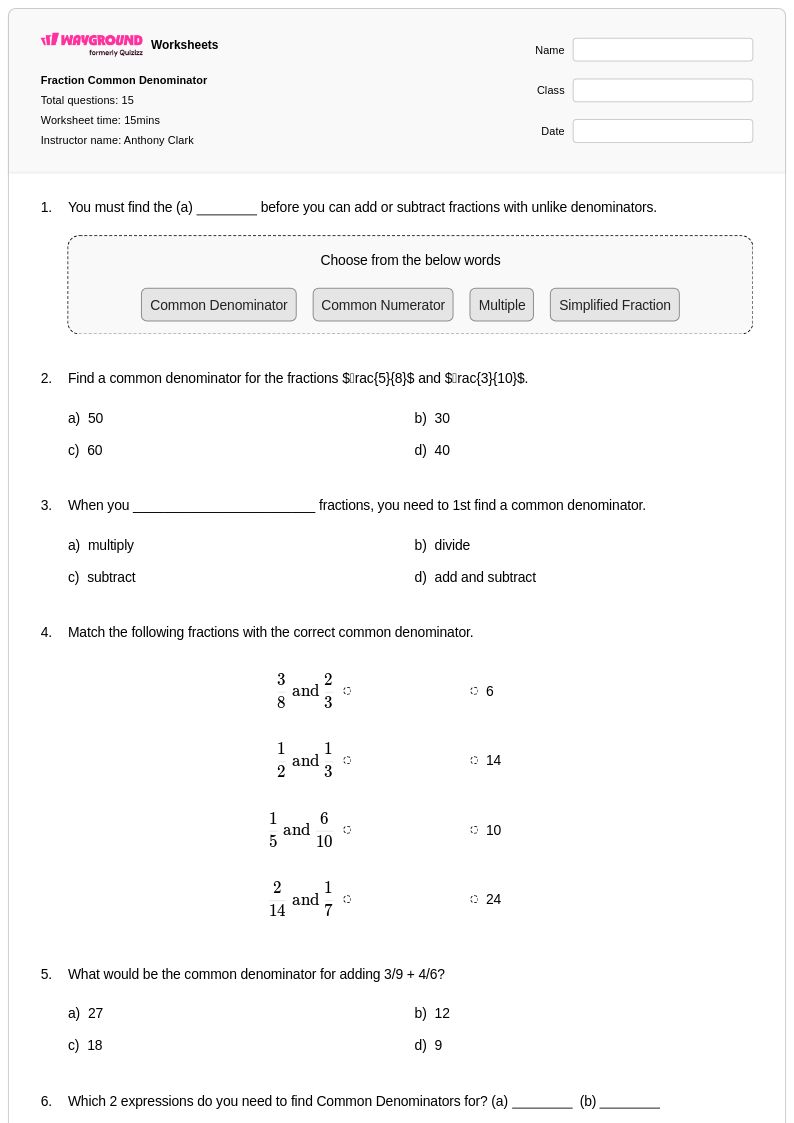
15 Q
5th - Uni
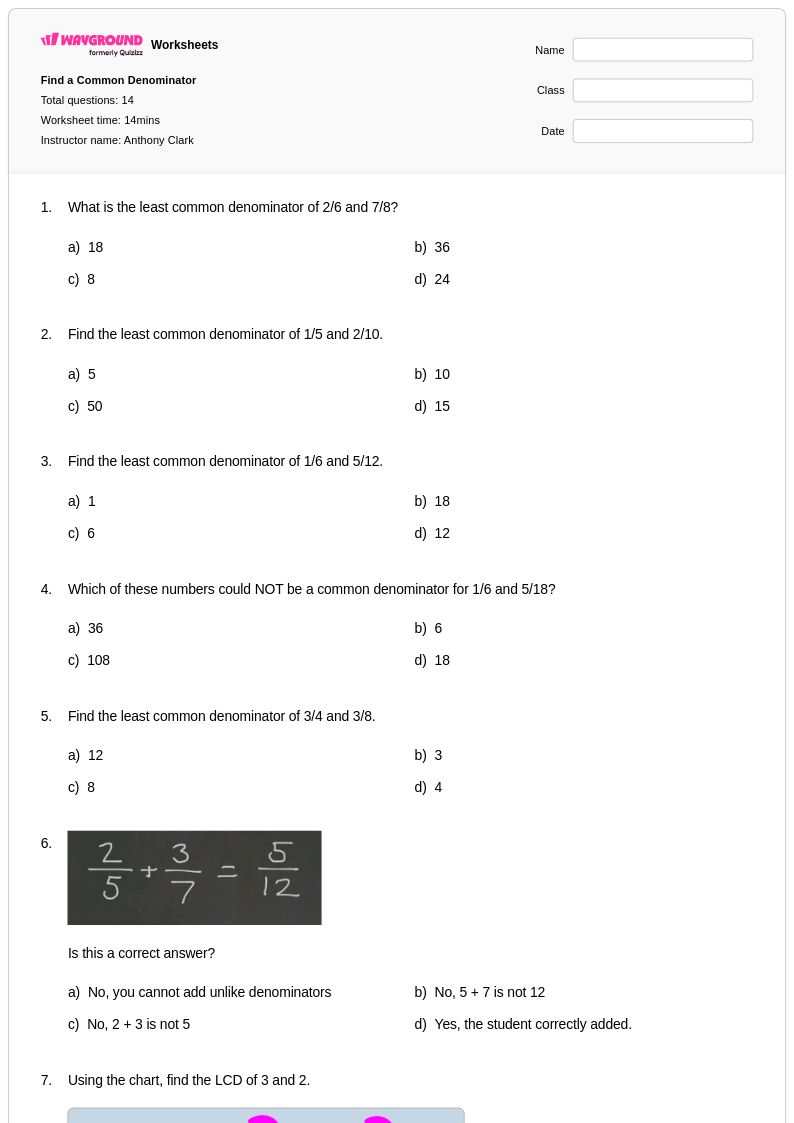
14 Q
5th - Uni
Explore Other Subject Worksheets for grade 7
Explore printable Least Common Denominator worksheets for Grade 7
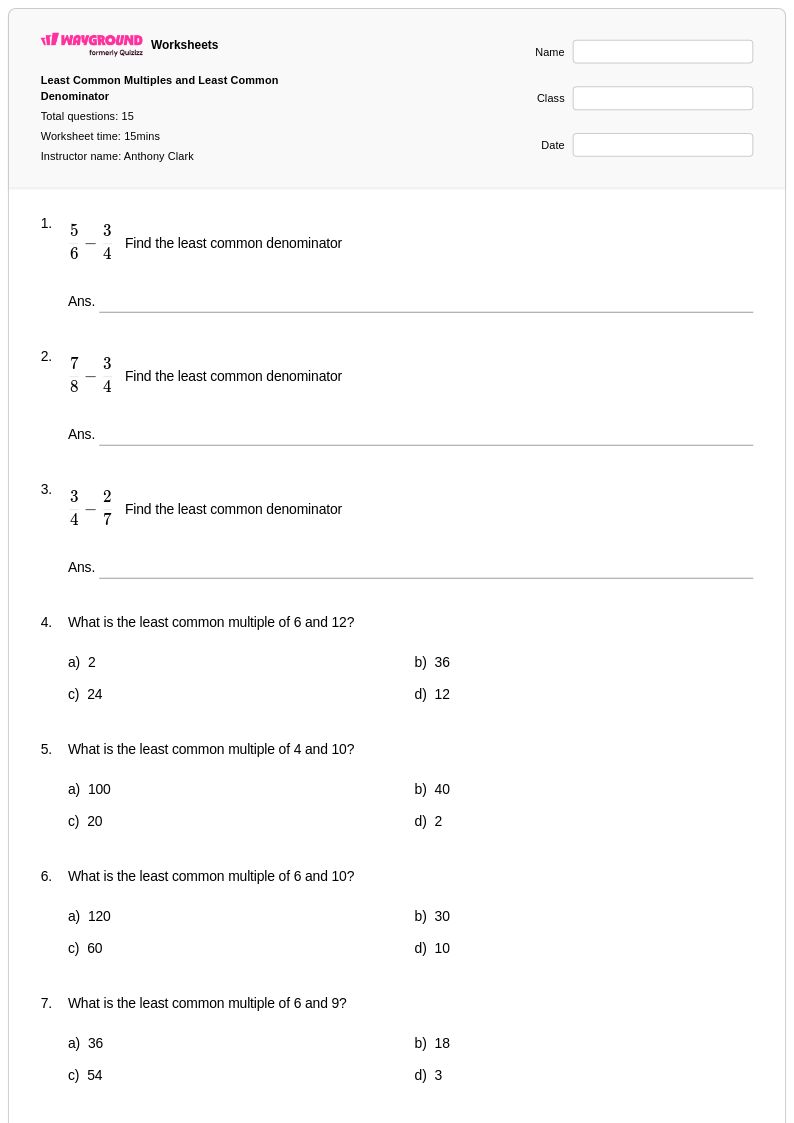
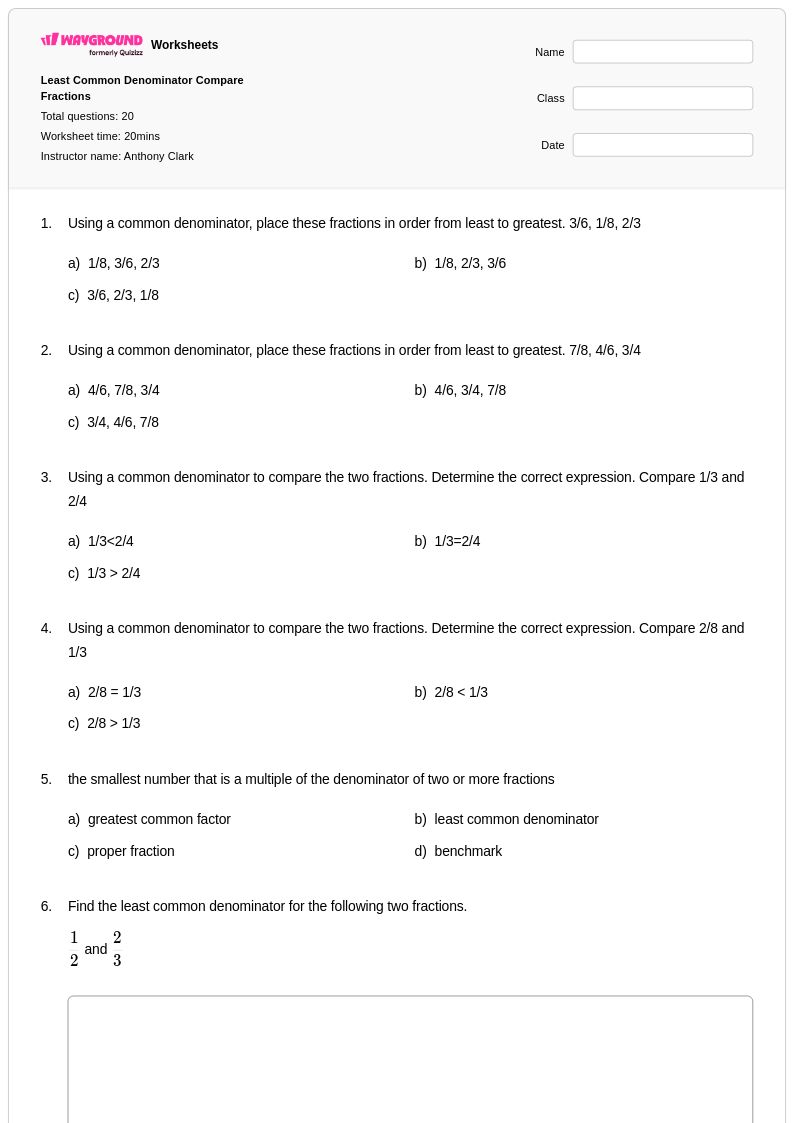
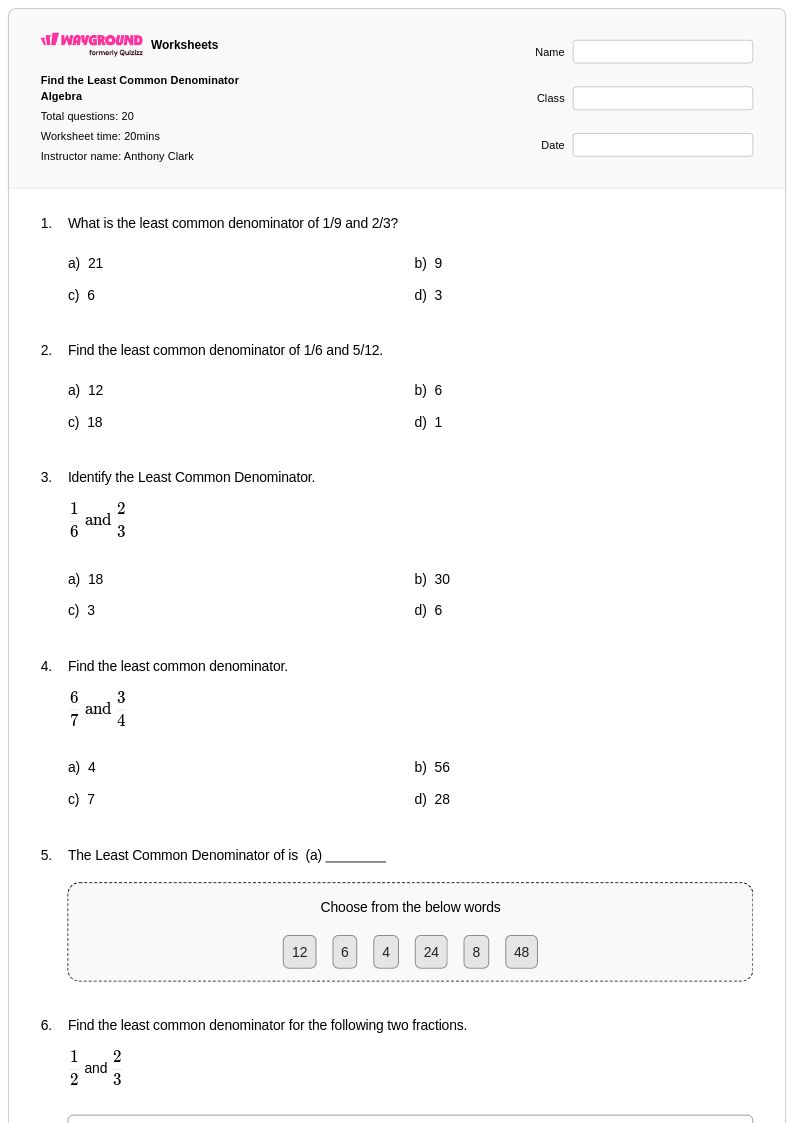
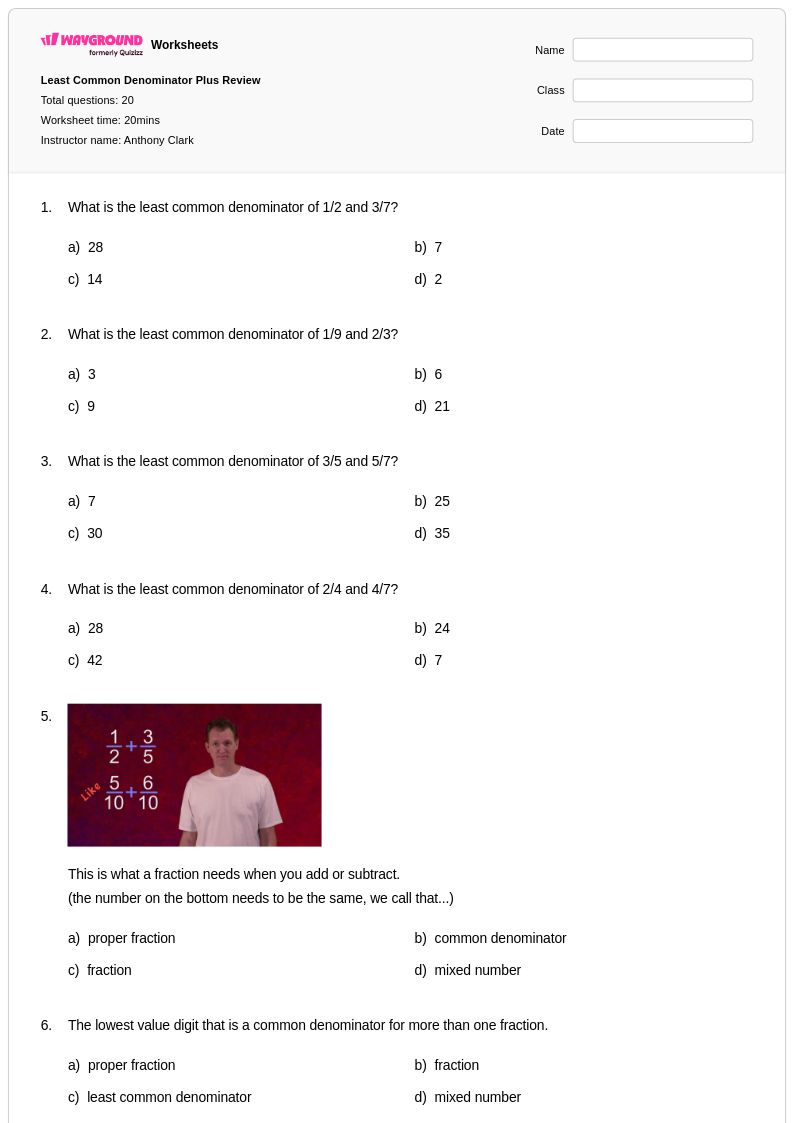
Least Common Denominator worksheets for Grade 7 students available through Wayground (formerly Quizizz) provide comprehensive practice in finding the smallest common multiple of denominators when working with fractions. These expertly designed worksheets strengthen students' understanding of multiples, factors, and denominator relationships while building essential skills for adding, subtracting, and comparing fractions with unlike denominators. Each worksheet includes carefully scaffolded practice problems that progress from simple two-fraction scenarios to more complex multi-fraction situations, with complete answer keys provided to support independent learning and self-assessment. The free printable resources offer varied problem formats including visual fraction models, numerical exercises, and real-world application problems that help seventh graders master this fundamental algebraic thinking skill.
Wayground (formerly Quizizz) empowers educators with access to millions of teacher-created Least Common Denominator resources that can be easily searched, filtered, and customized to meet diverse classroom needs. The platform's robust collection includes worksheets aligned to state and national mathematics standards, ensuring that Grade 7 fraction instruction meets curricular requirements while providing differentiation options for students at various skill levels. Teachers can modify existing worksheets or combine multiple resources to create targeted practice sets for remediation, enrichment, or regular skill reinforcement. All materials are available in both printable pdf format for traditional paper-based learning and digital formats for technology-integrated instruction, giving educators the flexibility to adapt their least common denominator lessons to any teaching environment or learning preference.
FAQs
What is the role of the least common denominator in 7th grade math?
How do these worksheets prepare 7th graders for algebra?
Where do 7th graders struggle with LCD in complex problems?
How can I use this 7th grade LCD worksheet in my classroom?
How does this topic align with 7th grade math standards?
How can I challenge advanced 7th graders with this topic?