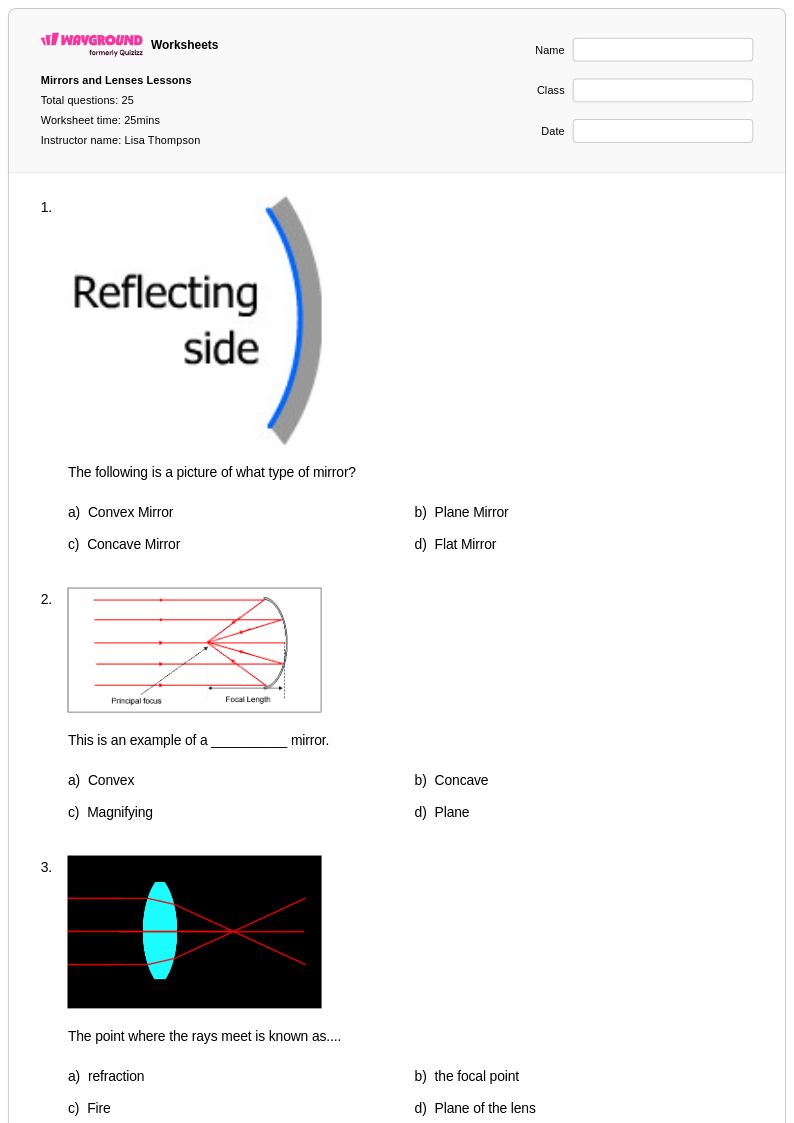
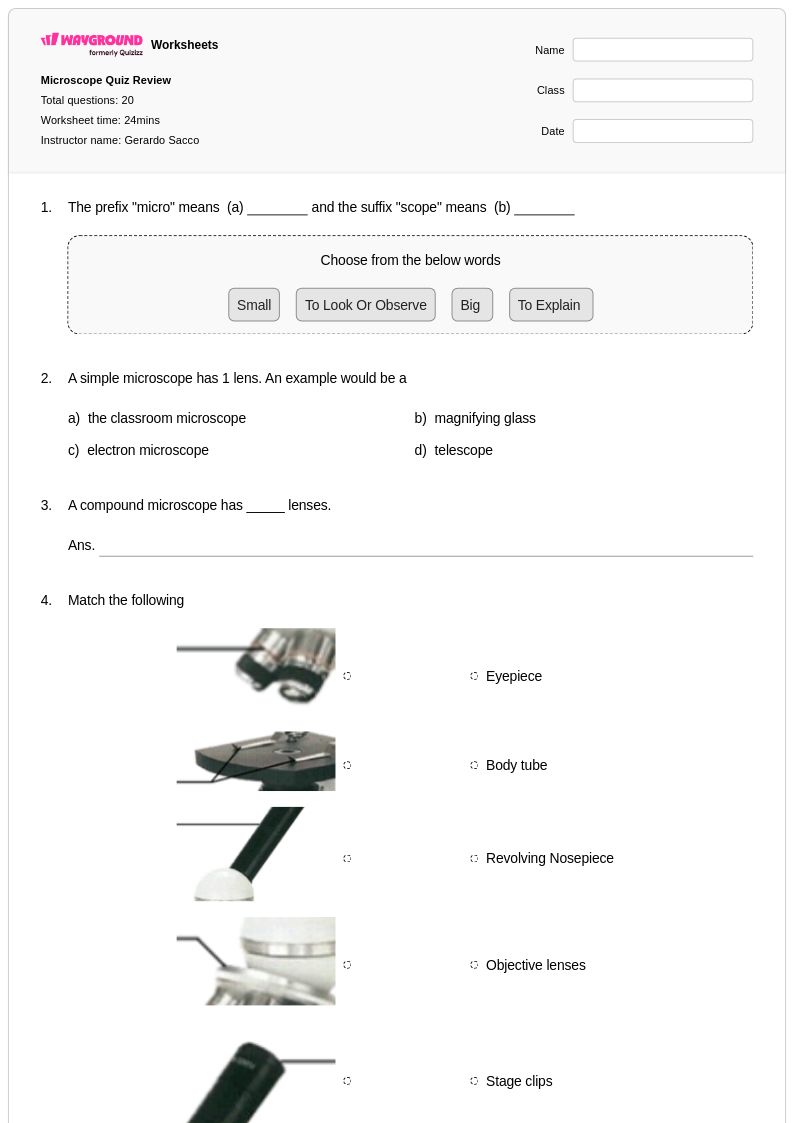
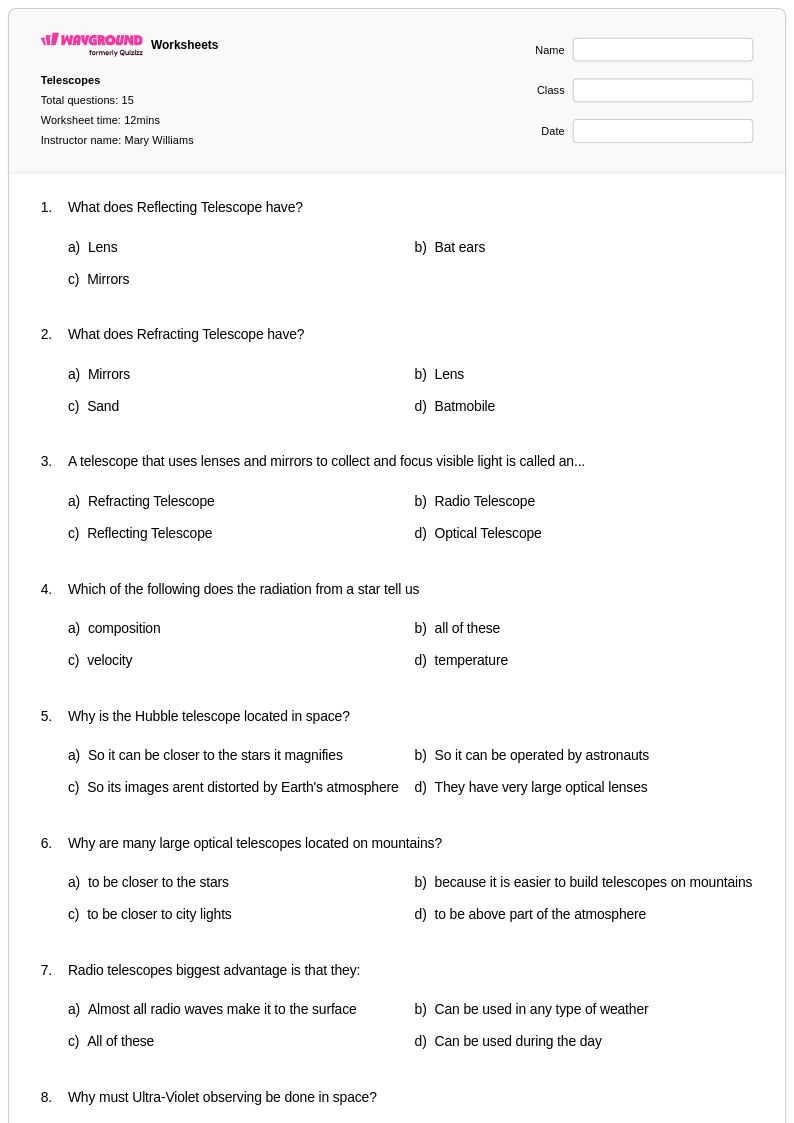
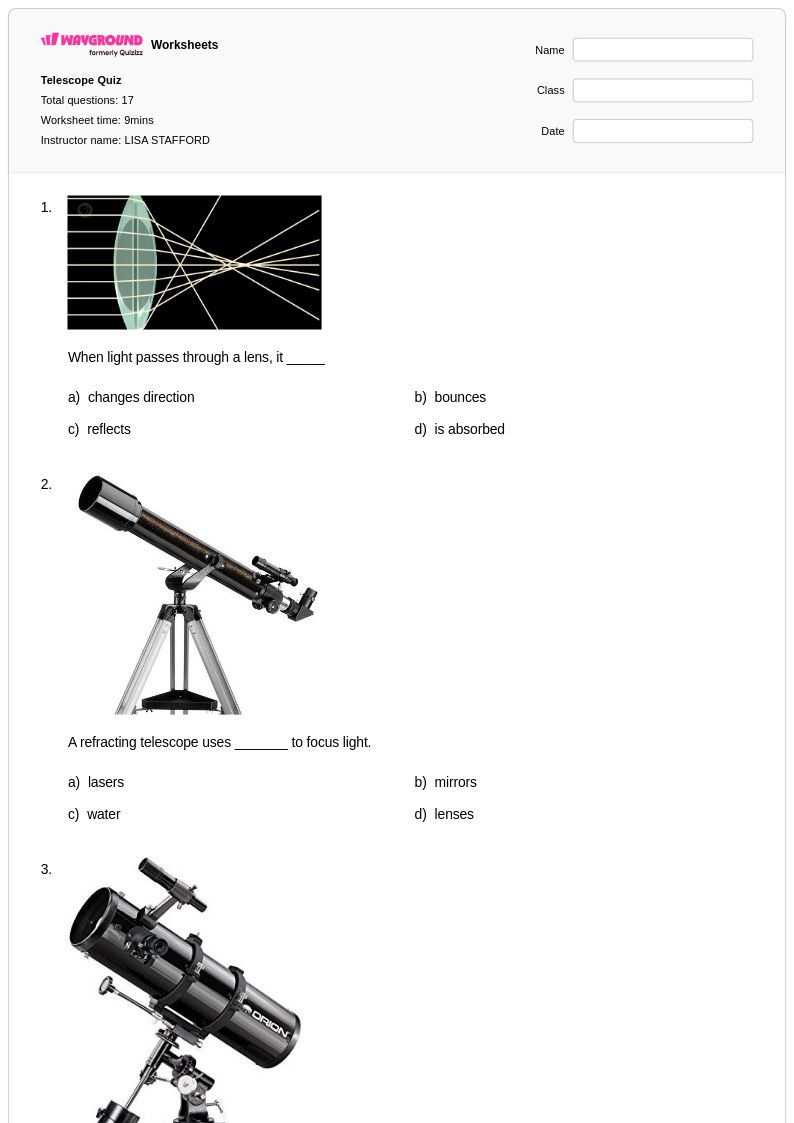
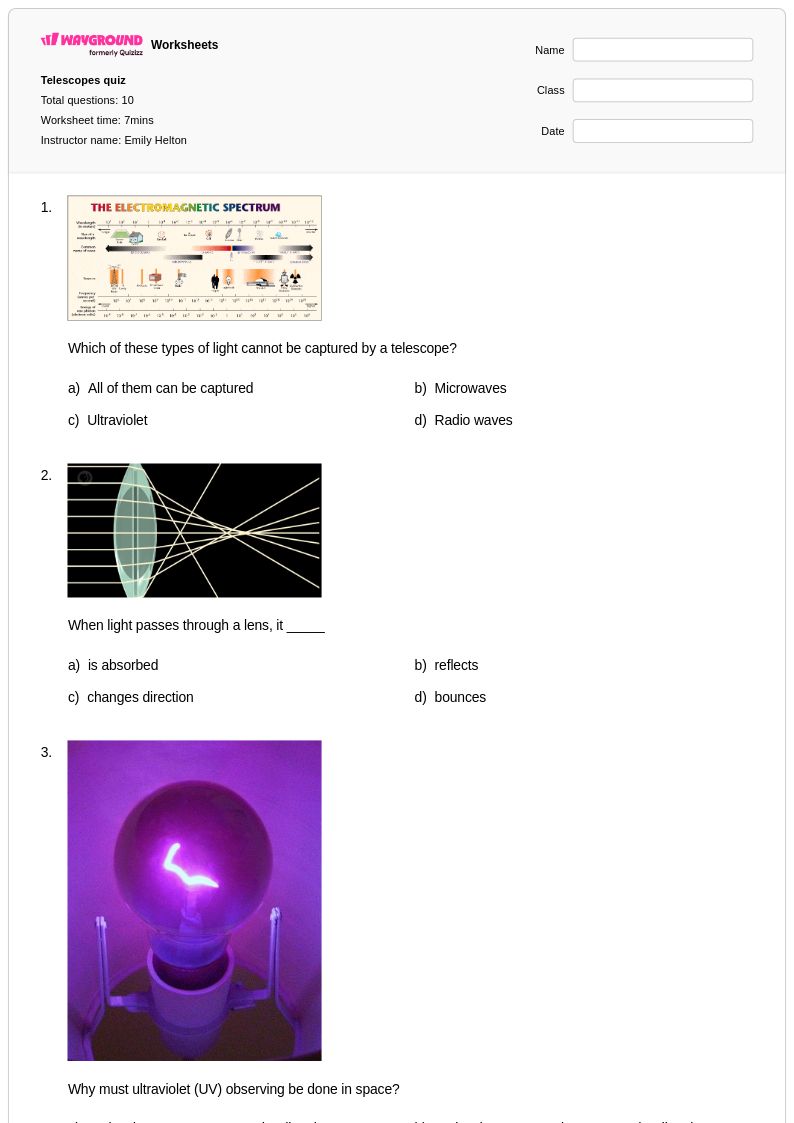
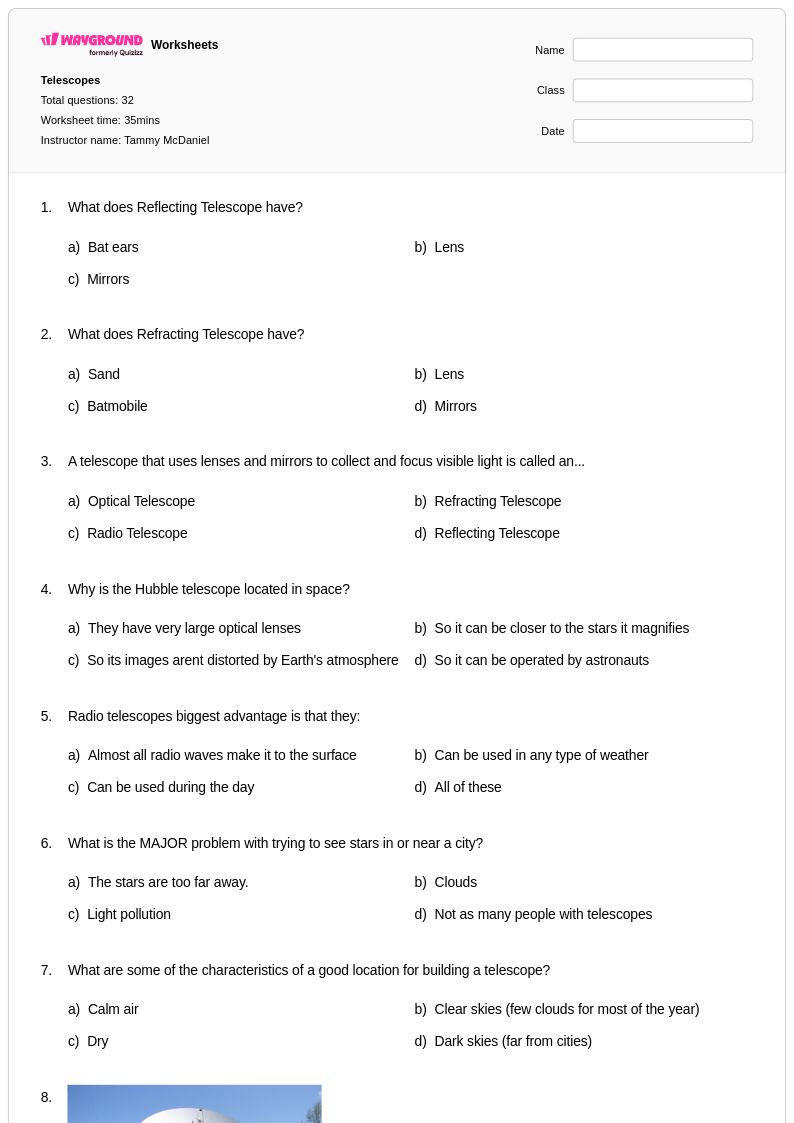
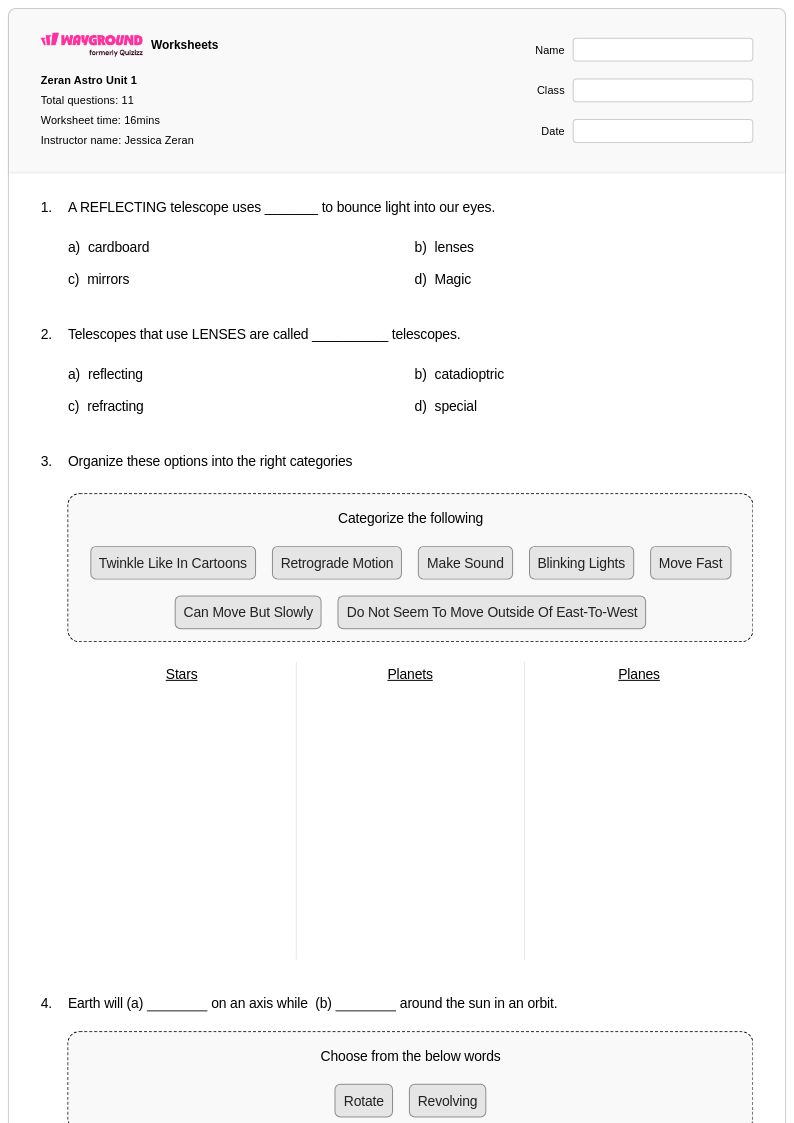
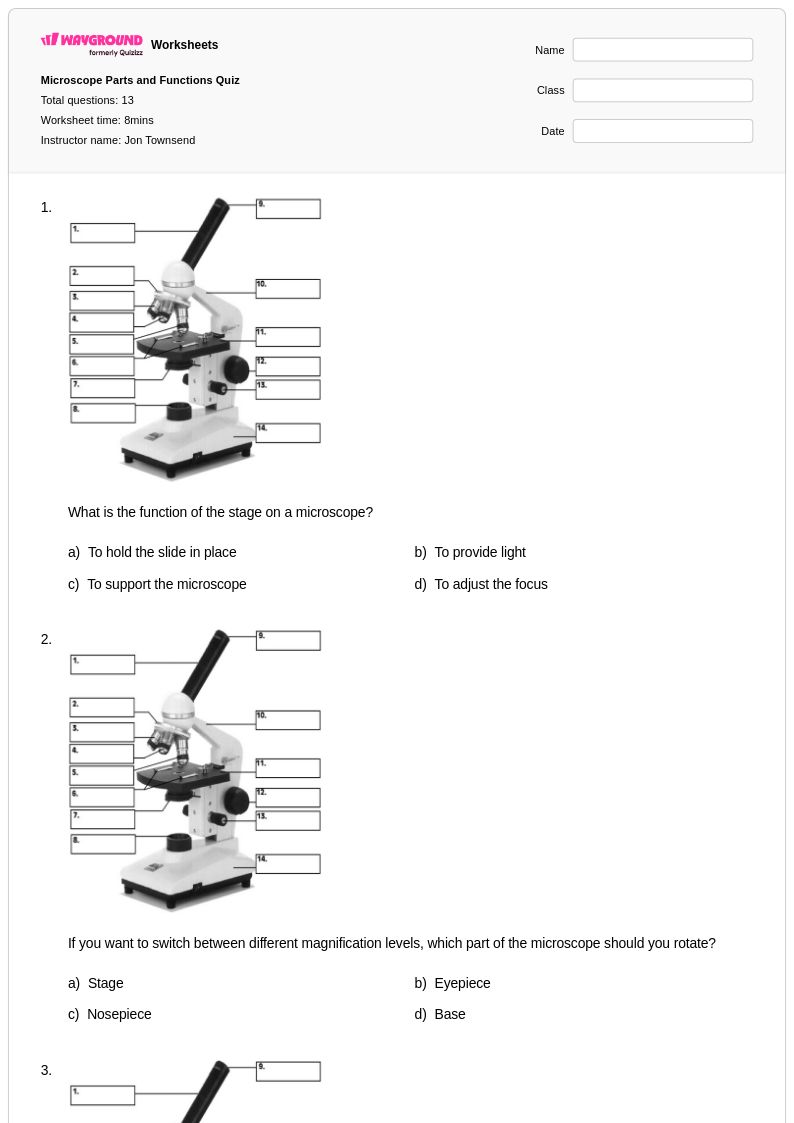
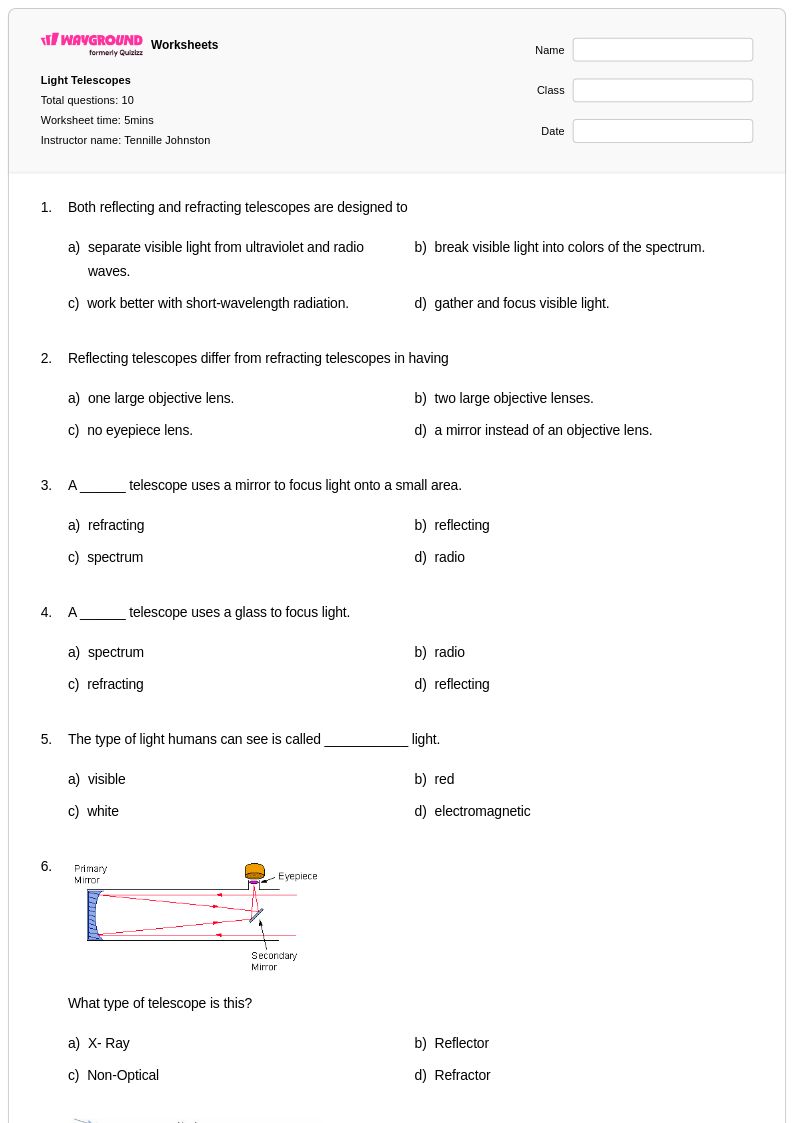
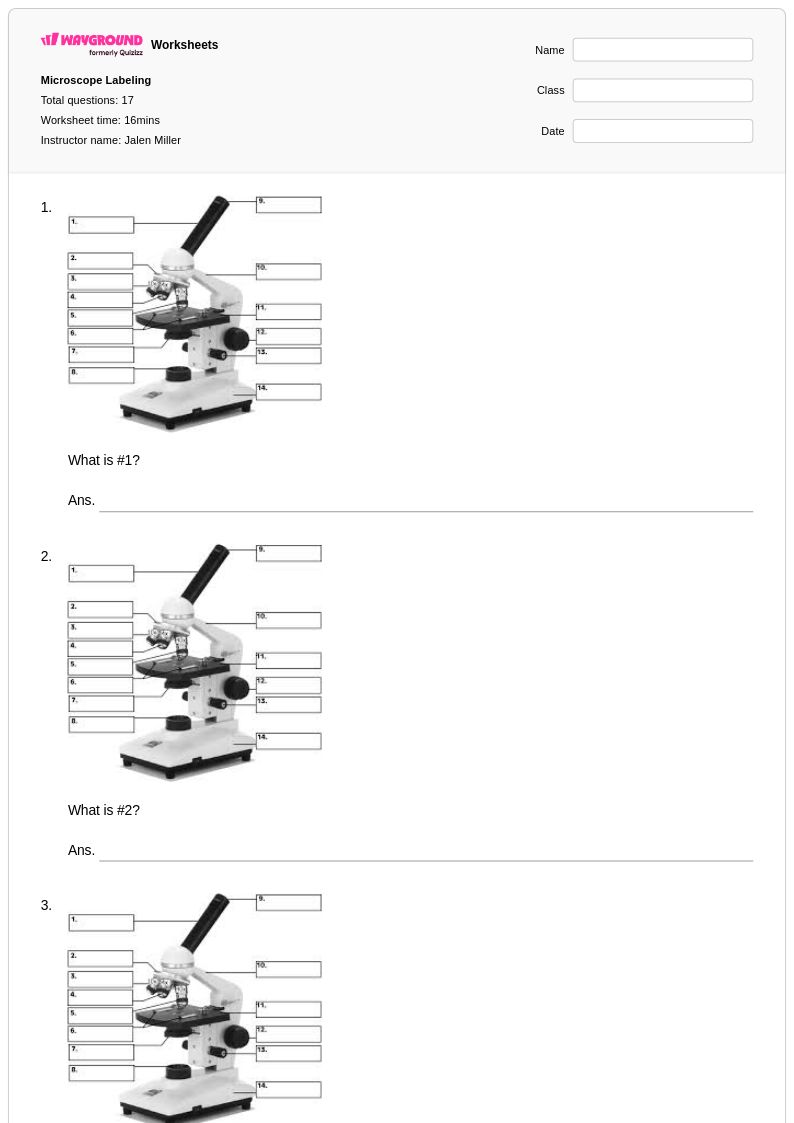
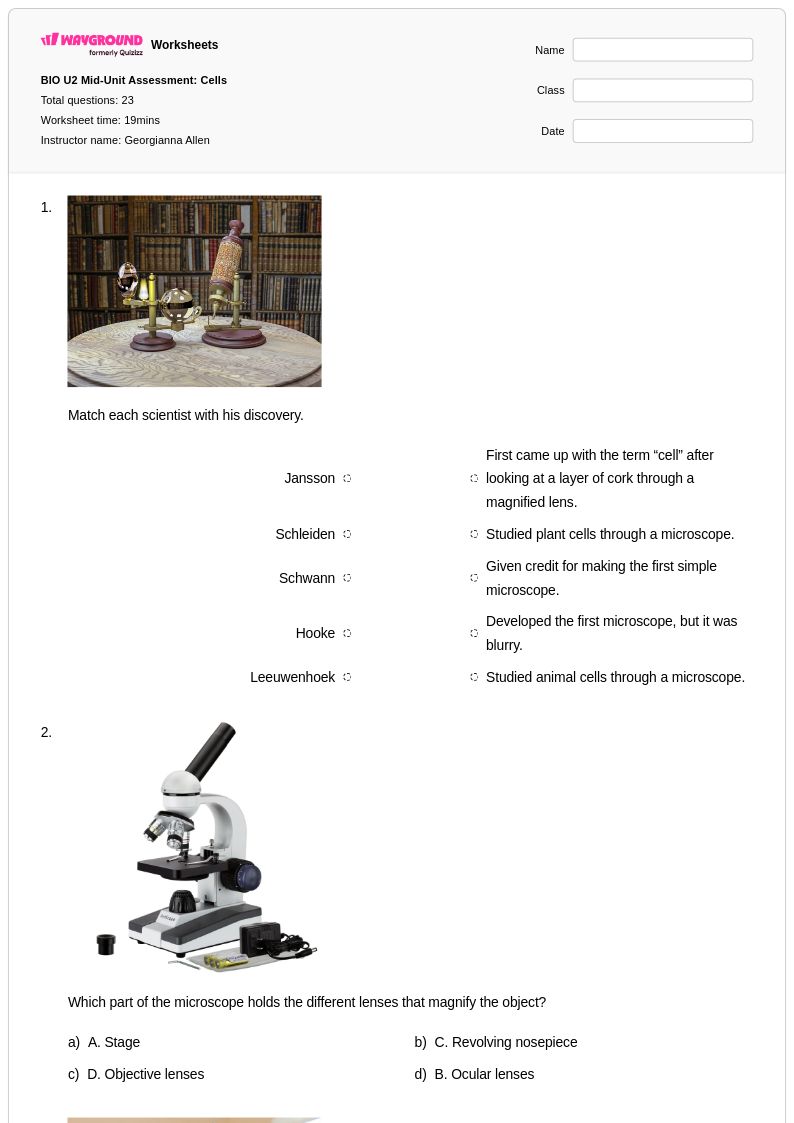
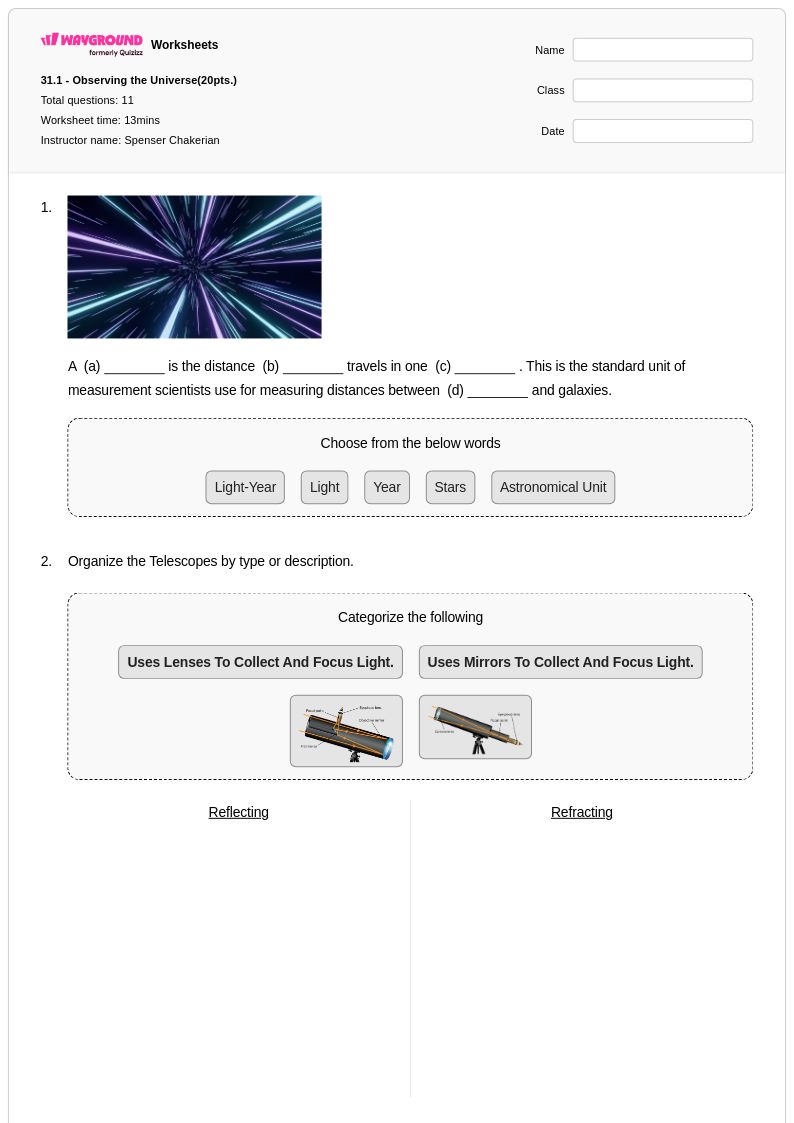
Grade 11 lenses worksheets from Wayground provide comprehensive printables and practice problems to help students master geometric optics concepts, featuring free PDF downloads with complete answer keys.
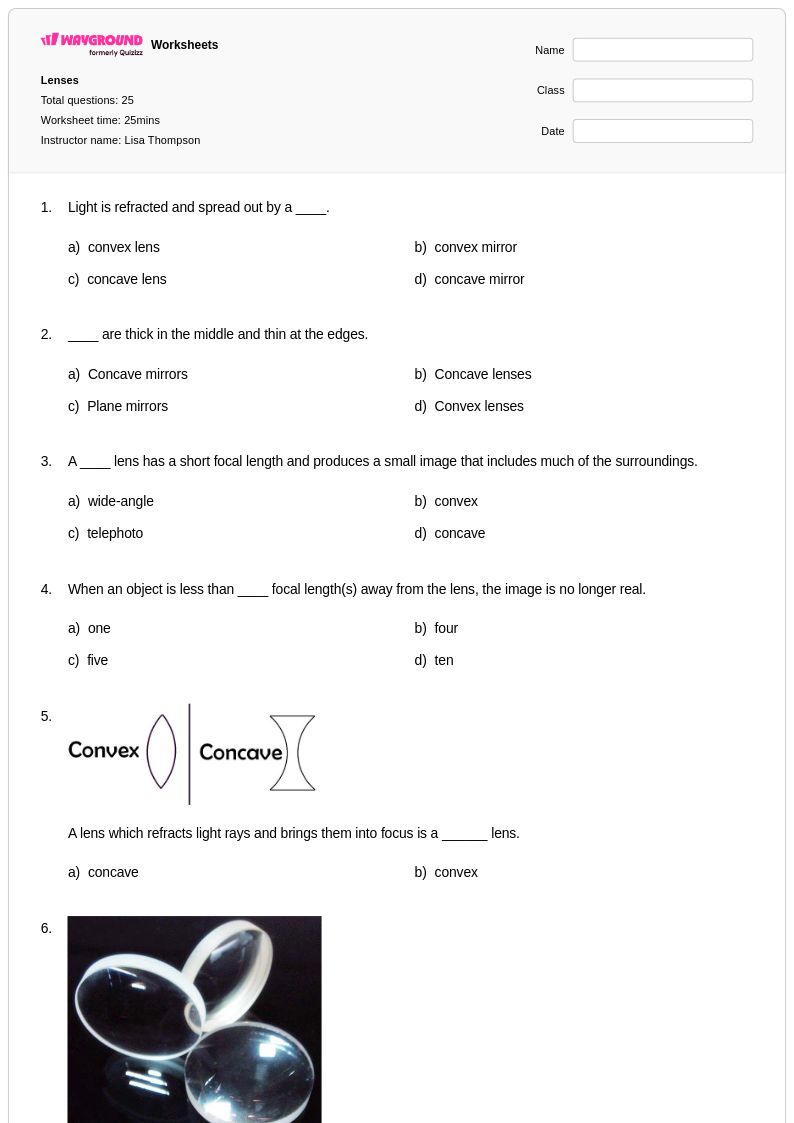
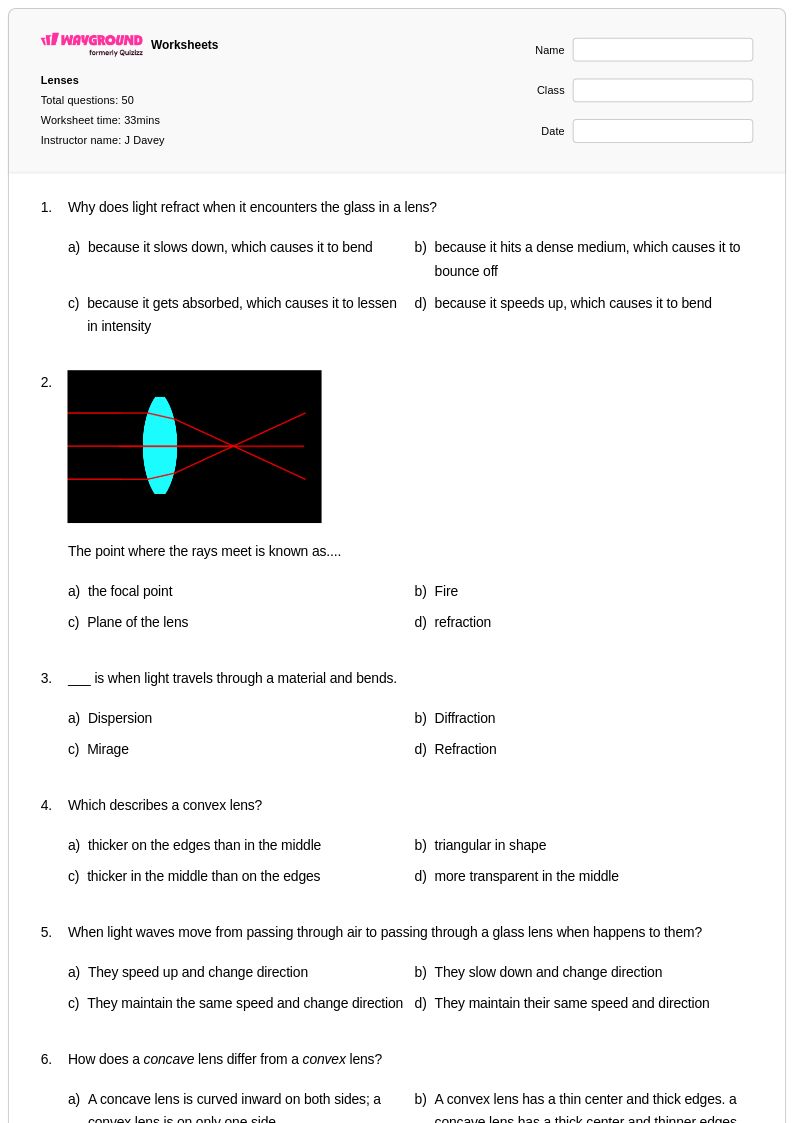
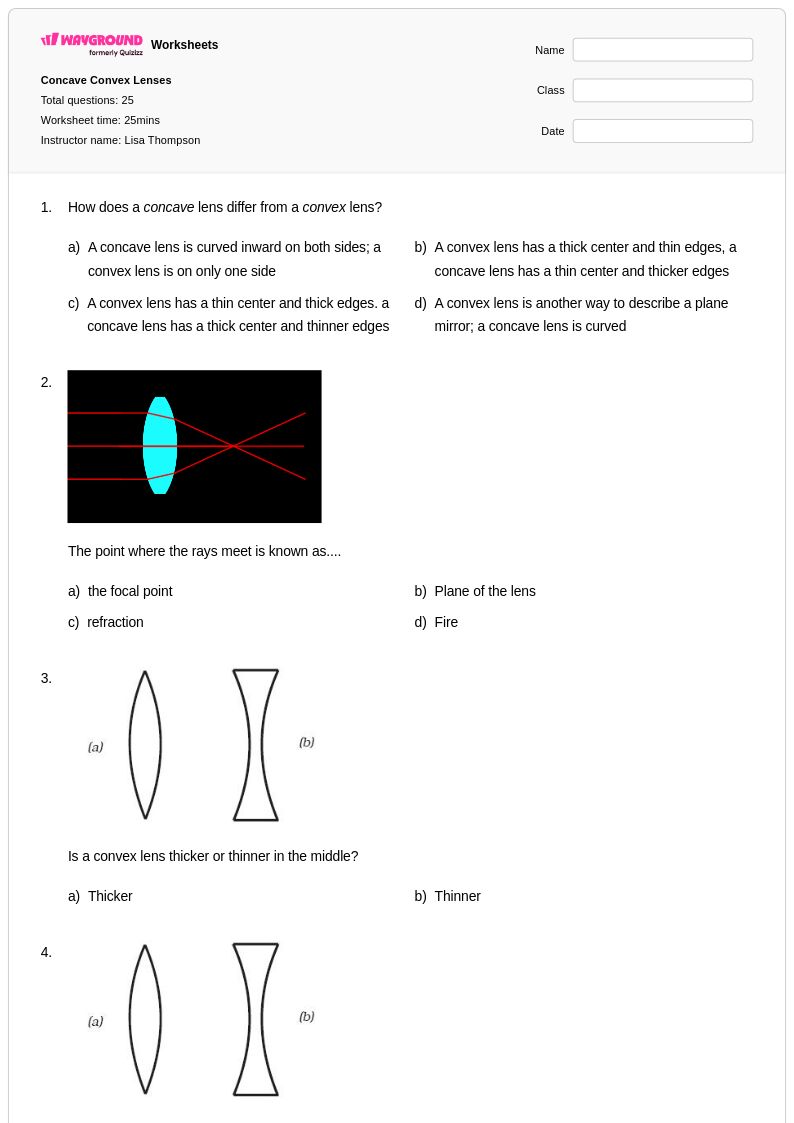
Grade 11 lenses worksheets available through Wayground (formerly Quizizz) provide comprehensive practice with the fundamental principles of how curved glass surfaces refract light to form images. These expertly designed resources strengthen students' understanding of converging and diverging lenses, focal length calculations, ray diagram construction, and the lens equation applications that are essential for advanced geometric optics mastery. Students work through carefully scaffolded practice problems that develop their ability to predict image characteristics, calculate magnification ratios, and analyze real-world optical systems like cameras and eyeglasses. Each worksheet includes detailed answer keys and step-by-step solutions, making them valuable free printables for both classroom instruction and independent study, with pdf formats ensuring easy distribution and consistent formatting across different devices.
Wayground (formerly Quizizz) empowers educators with millions of teacher-created lens worksheets that can be seamlessly integrated into Grade 11 physics curricula through advanced search and filtering capabilities. The platform's robust standards alignment ensures that worksheet collections match specific learning objectives for geometric optics, while built-in differentiation tools allow teachers to modify problem complexity and provide targeted support for diverse learning needs. These flexible customization features enable educators to create personalized learning experiences, whether students need remediation with basic lens concepts or enrichment through challenging multi-step optical calculations. Available in both printable and digital formats including downloadable pdfs, these resources streamline lesson planning while providing the consistent skill practice necessary for students to develop confidence with complex lens systems and optical problem-solving techniques.
FAQs
How do I teach converging and diverging lenses to my students?
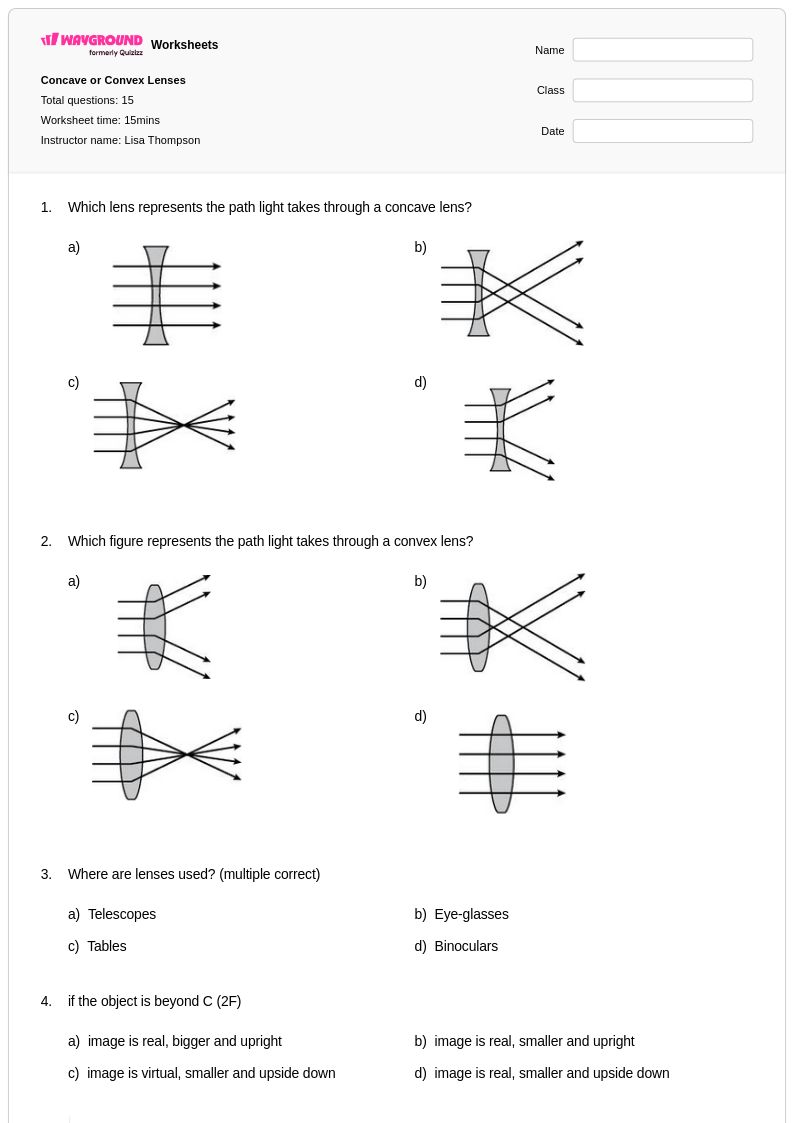
Start by grounding students in the behavior of light rays before introducing lens types. Use ray diagrams to show how converging (convex) lenses bring parallel rays to a focal point, while diverging (concave) lenses spread rays outward as if they originated from a virtual focal point. Connecting each lens type to real-world applications — eyeglasses, cameras, microscopes — helps students build intuition before they attempt focal length calculations or the thin lens equation.
What kinds of practice problems help students master the thin lens equation?
Students benefit most from problems that move systematically from known to unknown: start with object distance and focal length given, then ask students to solve for image distance. Follow-up problems should ask students to determine magnification and classify the image as real or virtual, upright or inverted. Mixing converging and diverging lens scenarios within a problem set forces students to apply sign conventions carefully, which is where most errors occur.
What mistakes do students commonly make when working with lenses?
The most common error is misapplying sign conventions — students frequently assign positive values to image distances that should be negative, particularly when dealing with virtual images or diverging lenses. Another frequent mistake is confusing focal length with object distance, especially when the object is placed at or near the focal point. Students also struggle to accurately draw ray diagrams, often skipping the three principal rays required to correctly locate the image.
How do I help students understand real versus virtual images formed by lenses?
Emphasize that a real image is formed where refracted light rays actually converge, meaning it can be projected onto a screen, while a virtual image is formed where rays only appear to diverge from — it cannot be projected. Converging lenses produce real images when the object is beyond the focal point, and virtual images when the object is inside the focal point. Having students verify this with ray diagrams before solving the equation algebraically reinforces the geometric reasoning behind the math.
How do I use Wayground's lenses worksheets in my classroom?
Wayground's lenses worksheets are available as printable PDFs for traditional classroom use and in digital formats for technology-integrated environments, including the option to host them as a quiz directly on Wayground. Each worksheet includes a complete answer key, making them practical for independent practice, small group work, or formative assessment. Teachers can also customize existing worksheets to target specific skill gaps, from introductory ray diagram practice to advanced lens equation calculations.
How can I differentiate lenses instruction for students at different skill levels?
For students still developing foundational understanding, begin with qualitative ray diagram exercises before introducing the thin lens equation. Advanced students can be challenged with multi-lens system problems or real-world optical design scenarios. On Wayground, teachers can apply accommodations such as reduced answer choices to lower cognitive load for struggling learners, or enable Read Aloud for students who need questions read to them — settings that can be assigned per student without disrupting the rest of the class.