
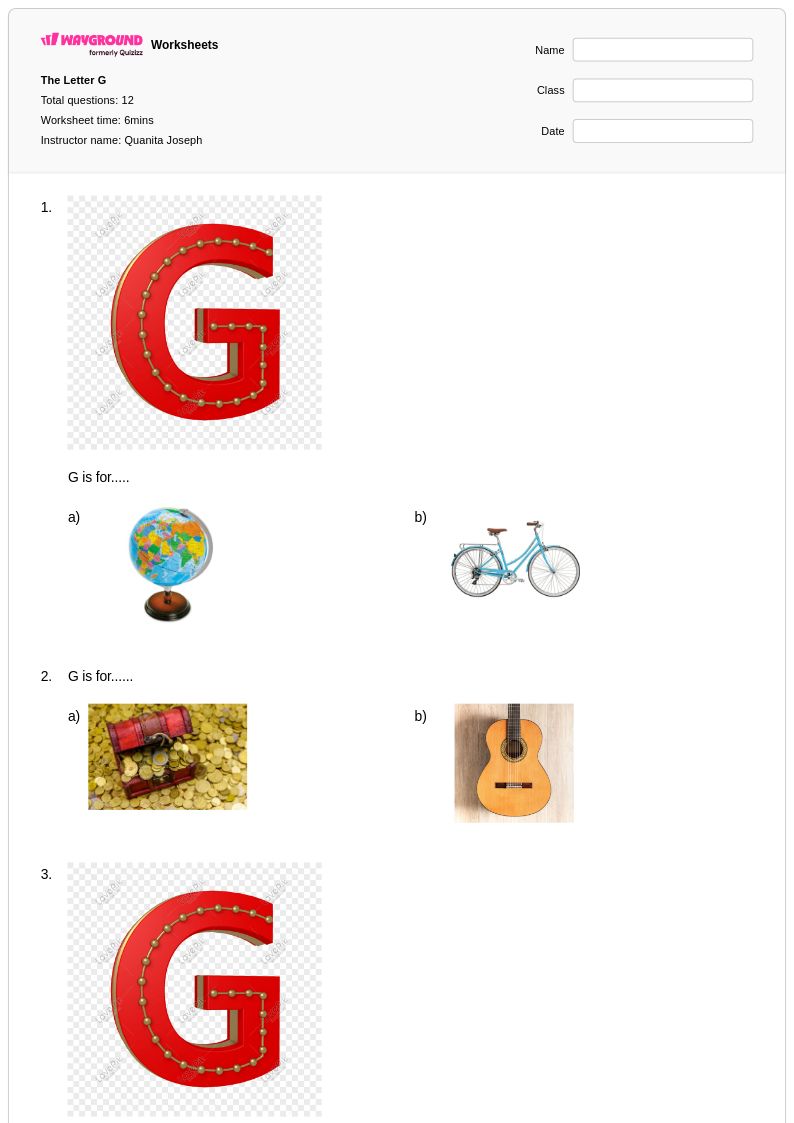
12 Q
KG - 2nd
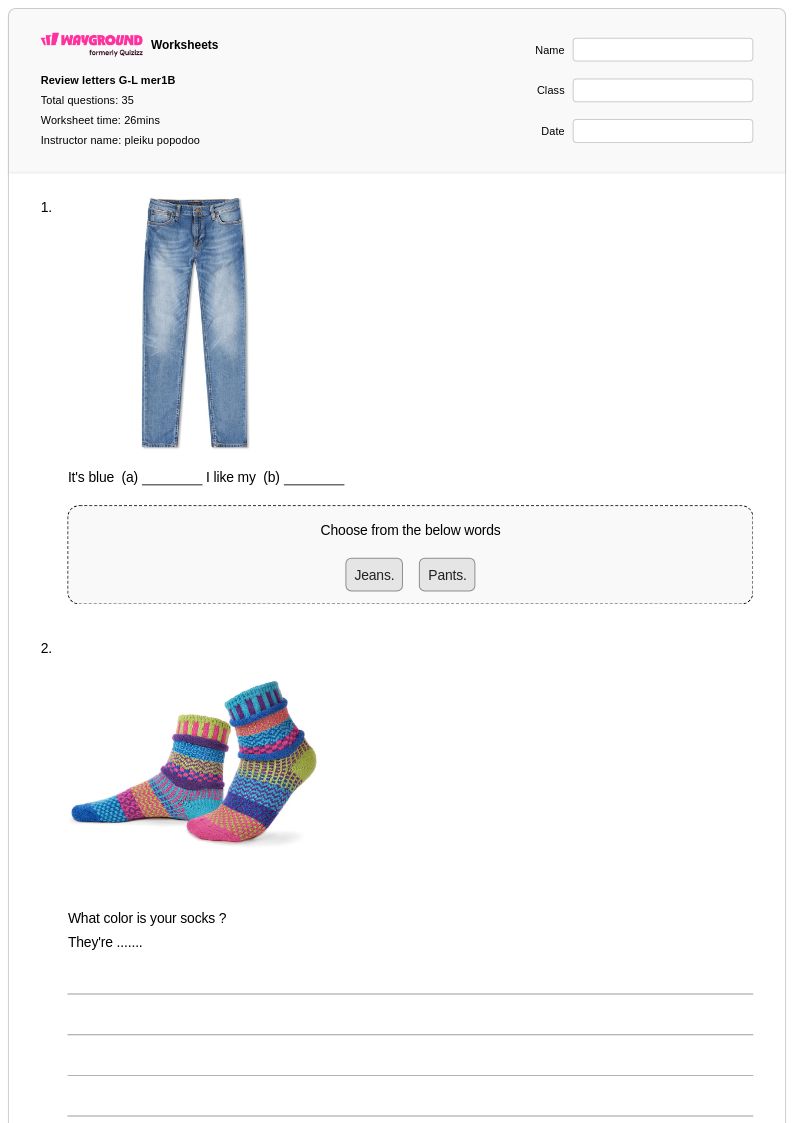
35 Q
1st - 5th
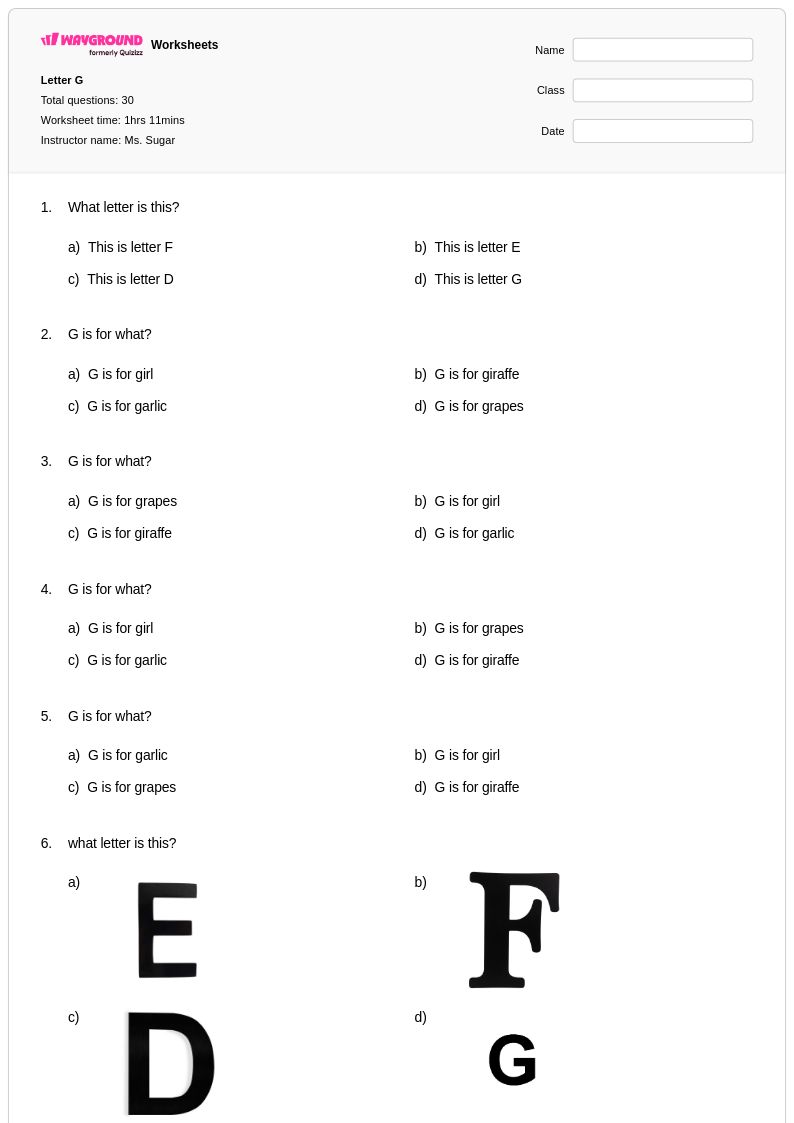
30 Q
1st - 2nd
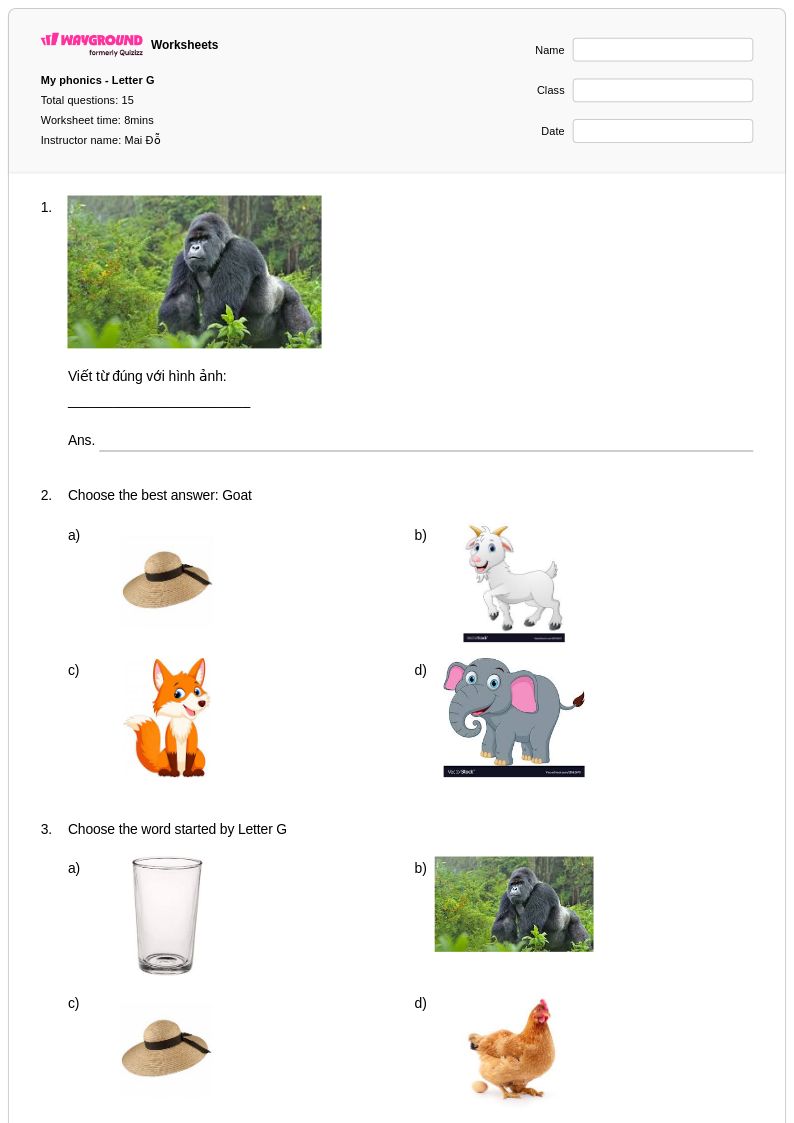
15 Q
1st - 3rd
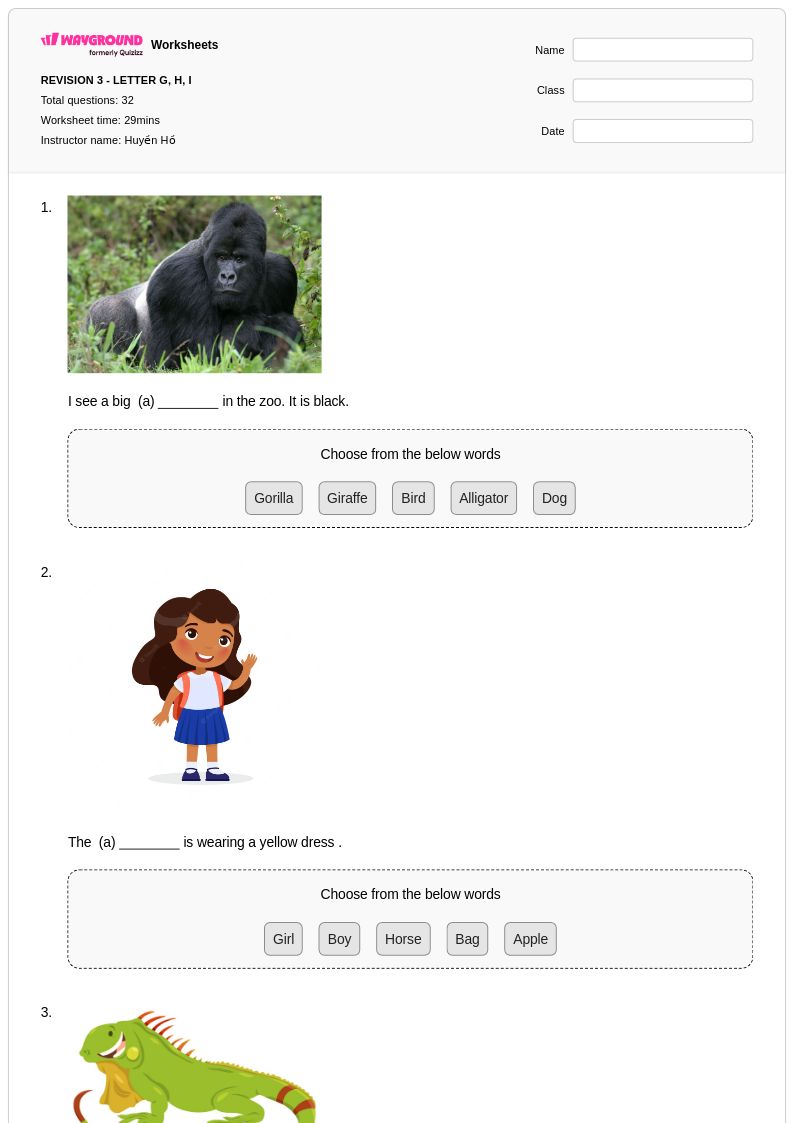
32 Q
1st - 5th
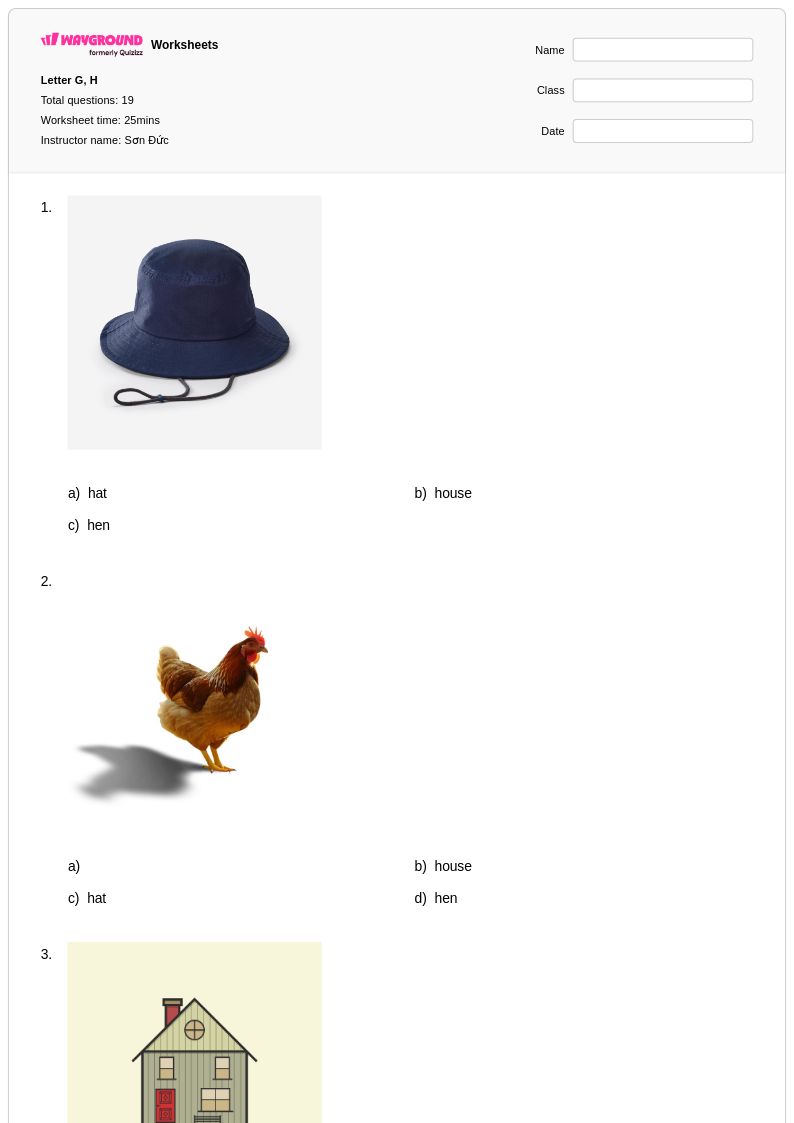
19 Q
1st
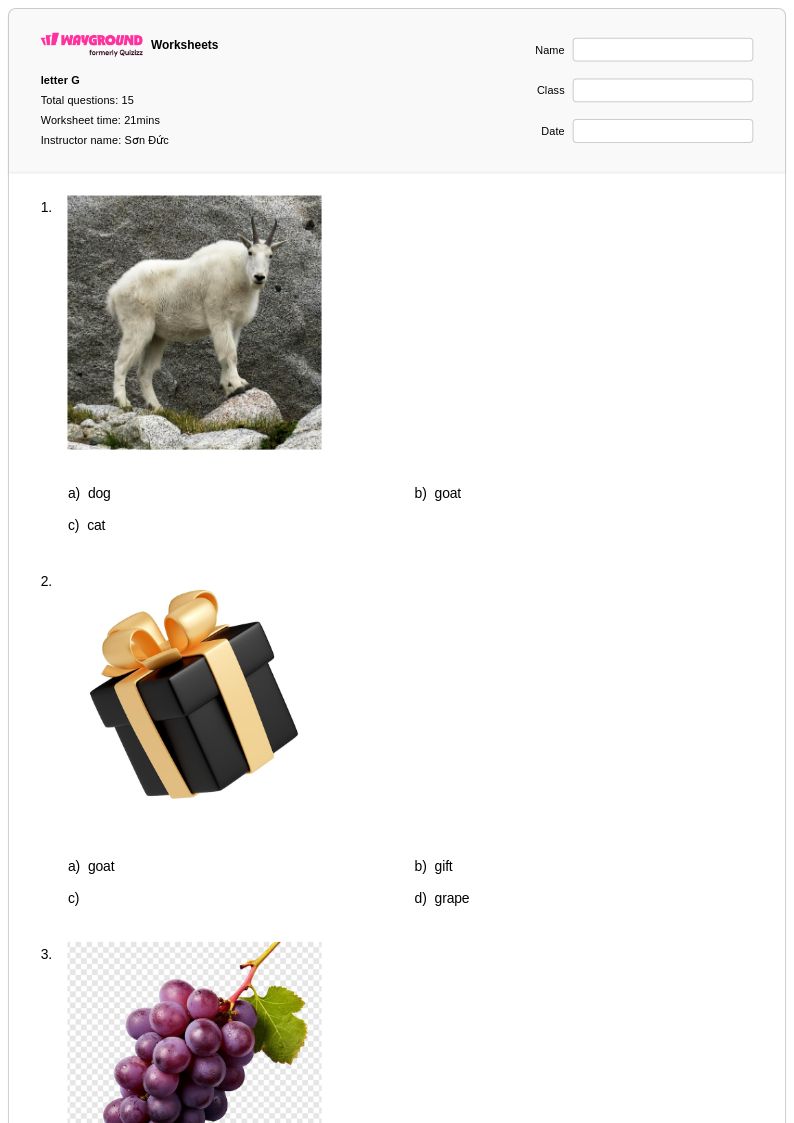
15 Q
1st
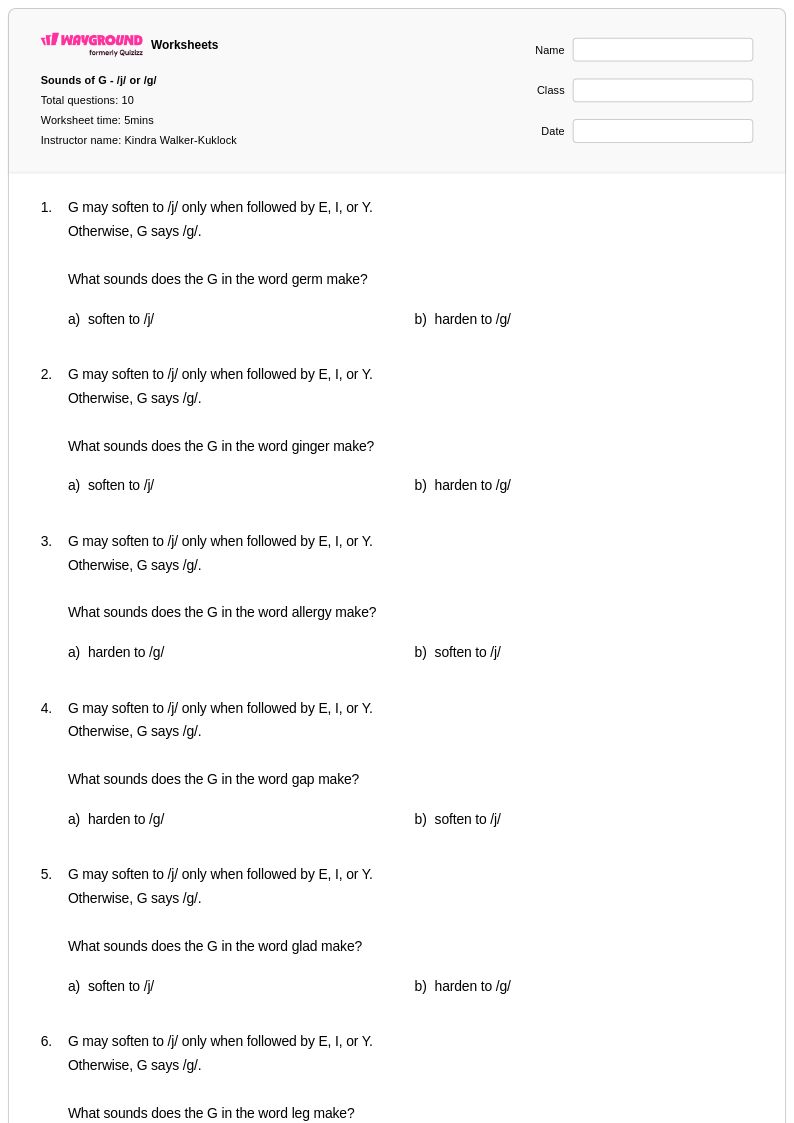
10 Q
1st - 4th
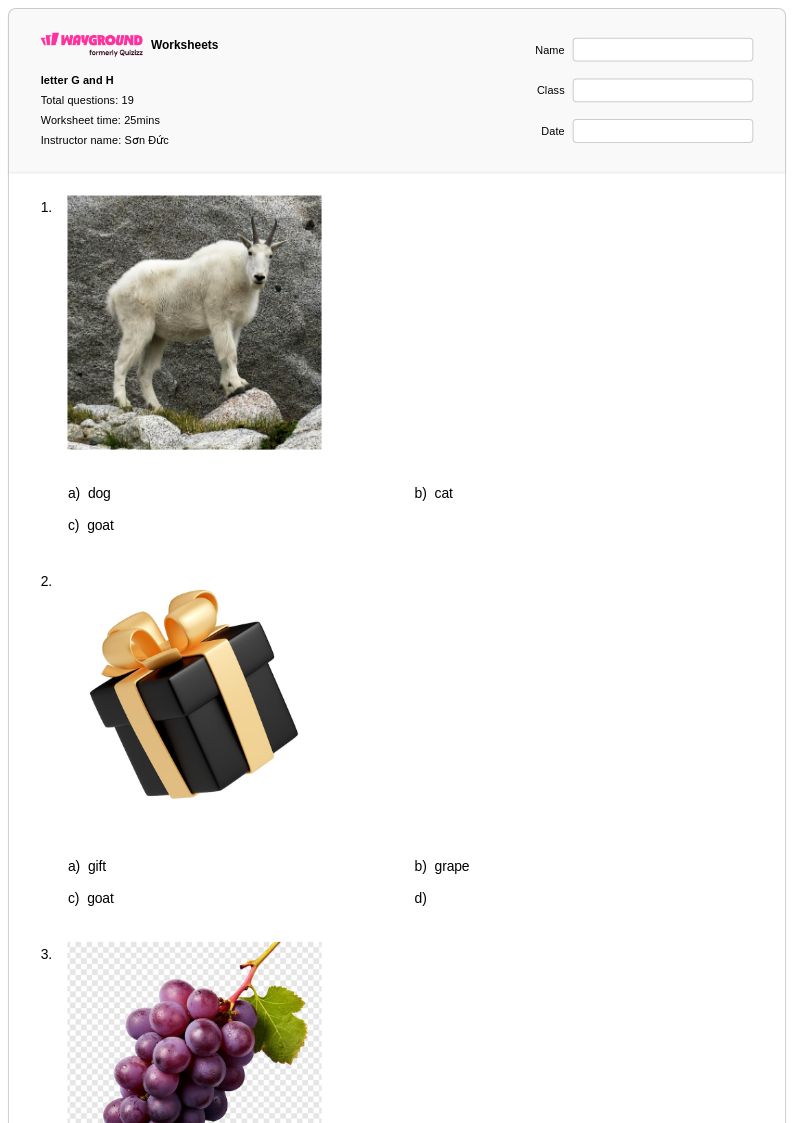
19 Q
1st
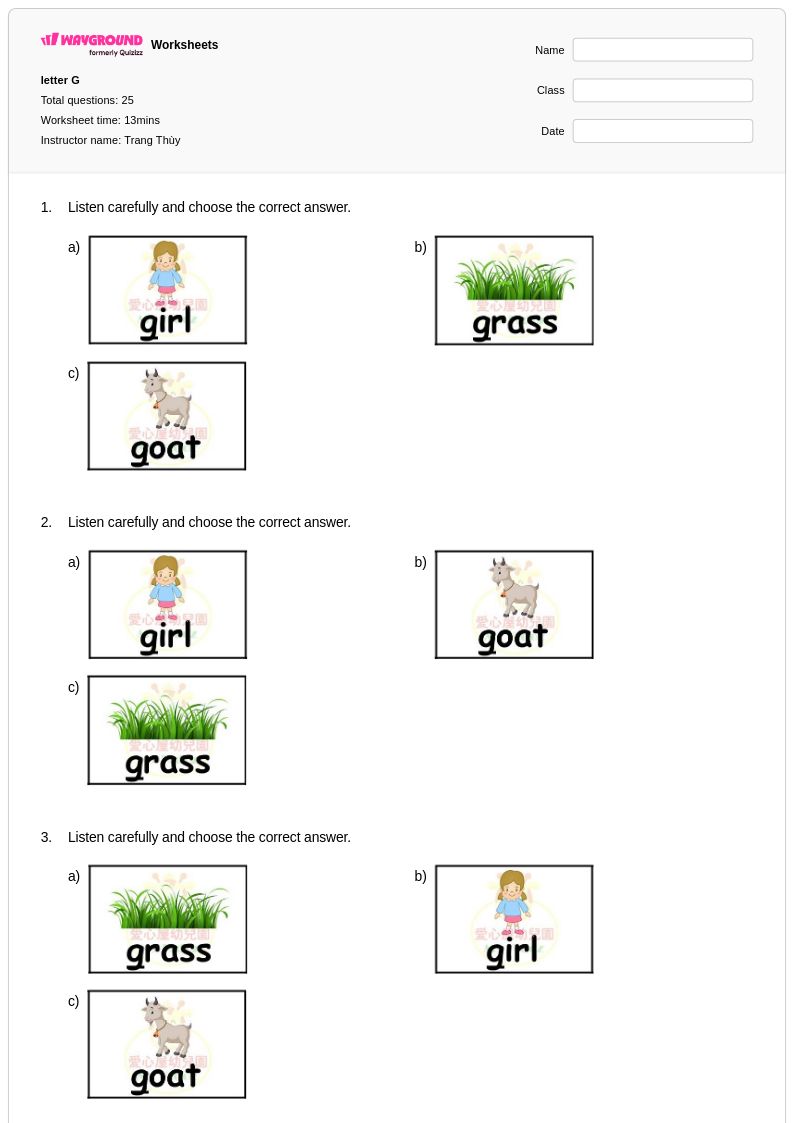
25 Q
1st - 2nd
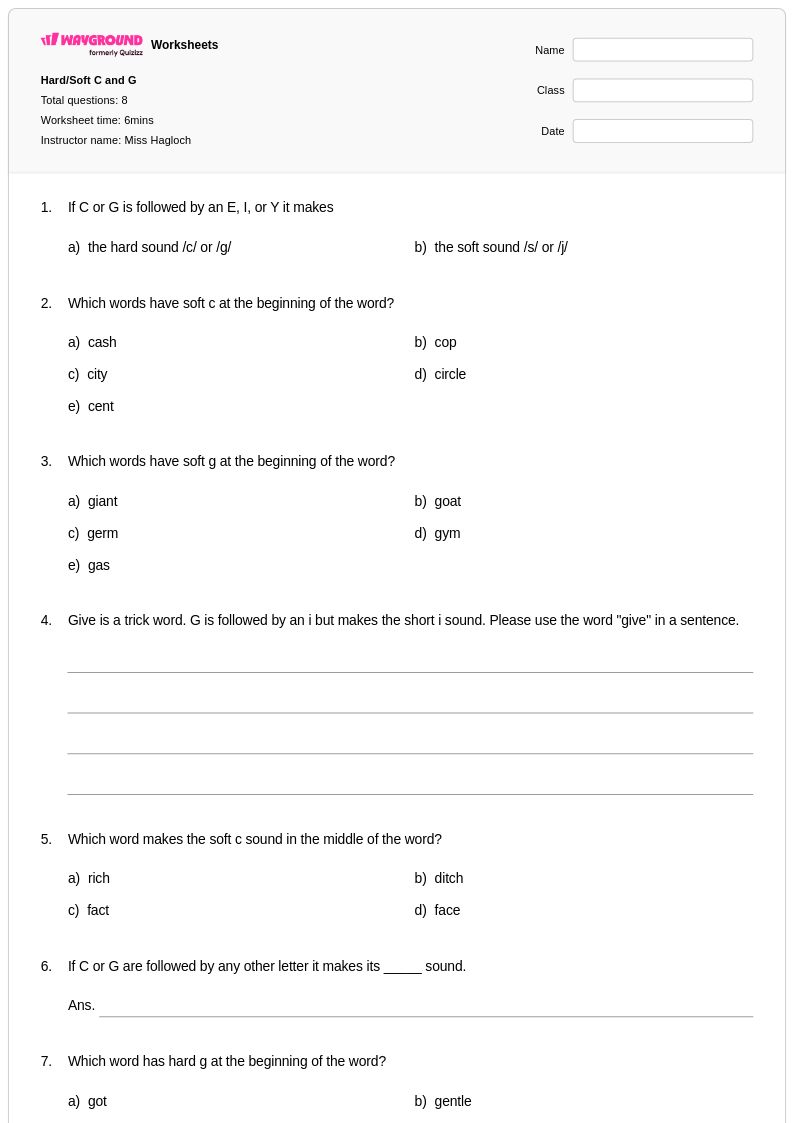
8 Q
1st - 2nd
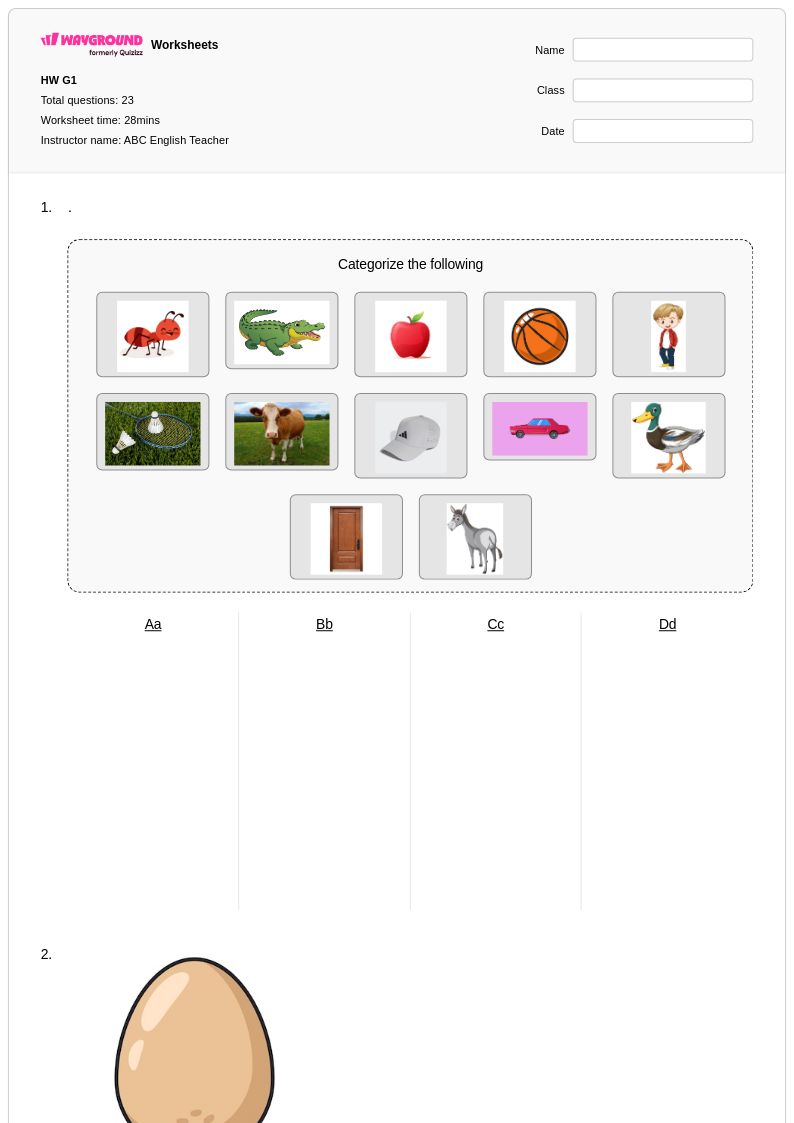
23 Q
1st
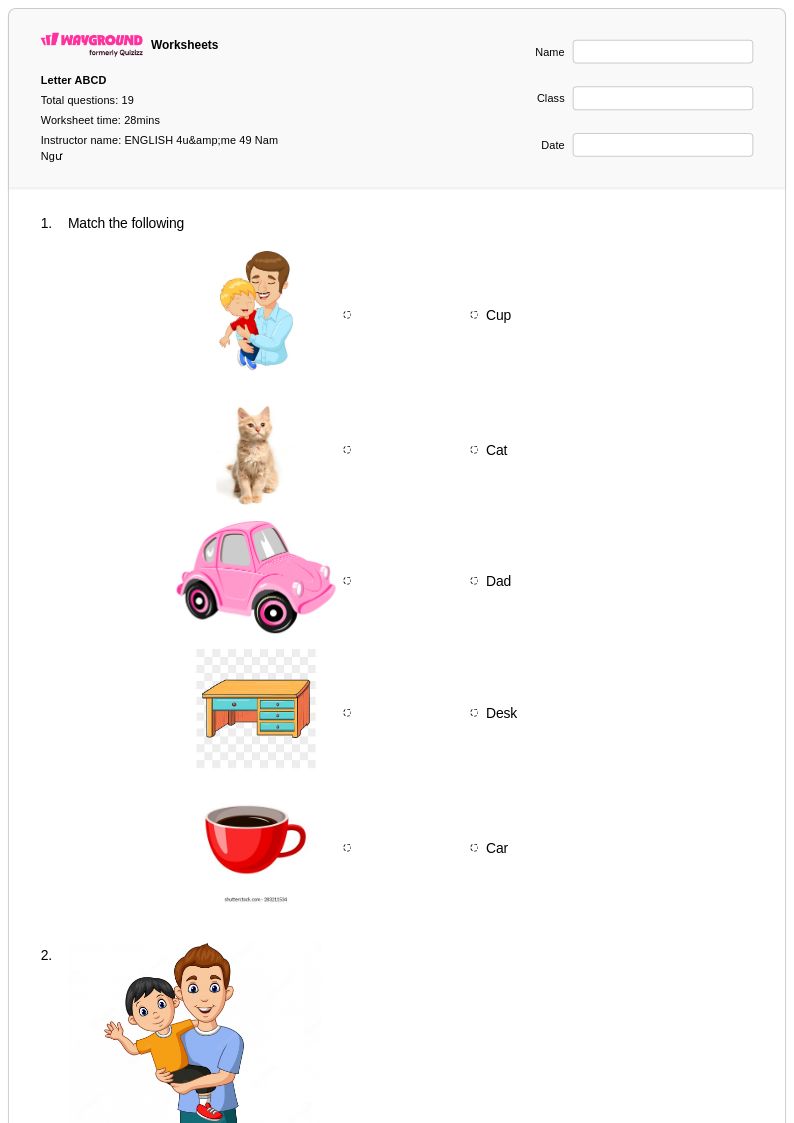
19 Q
1st
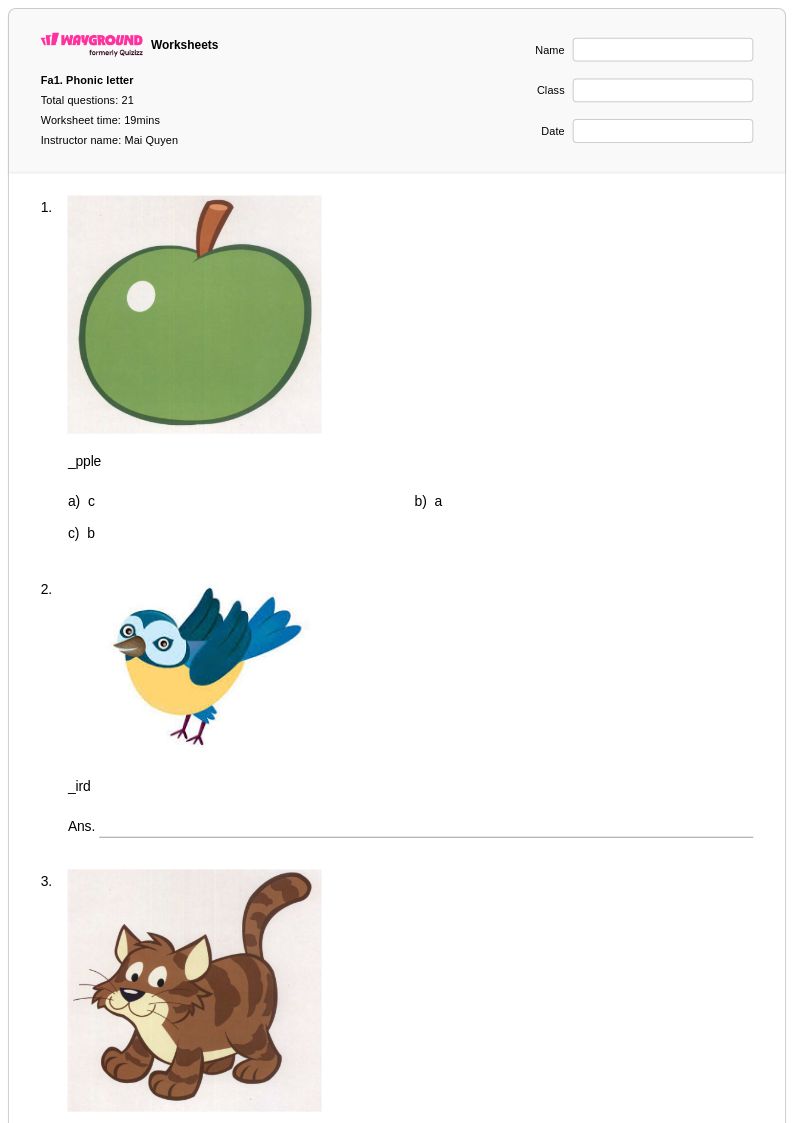
21 Q
1st
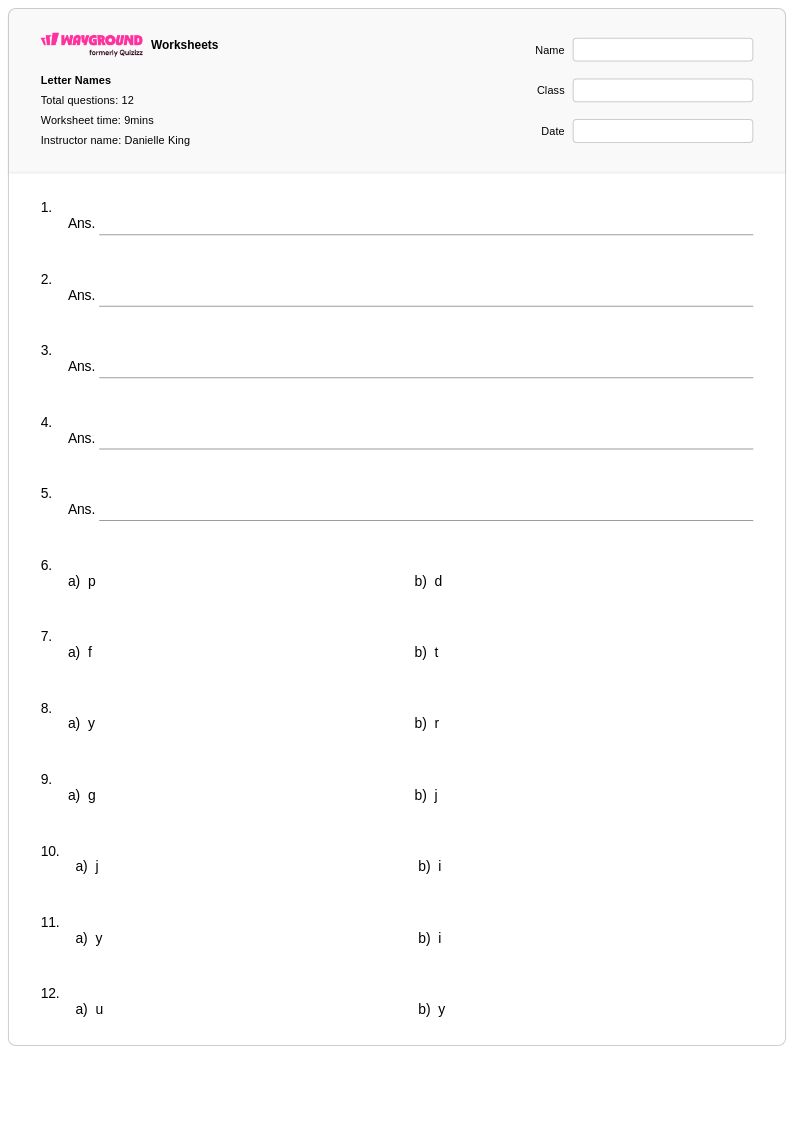
12 Q
1st
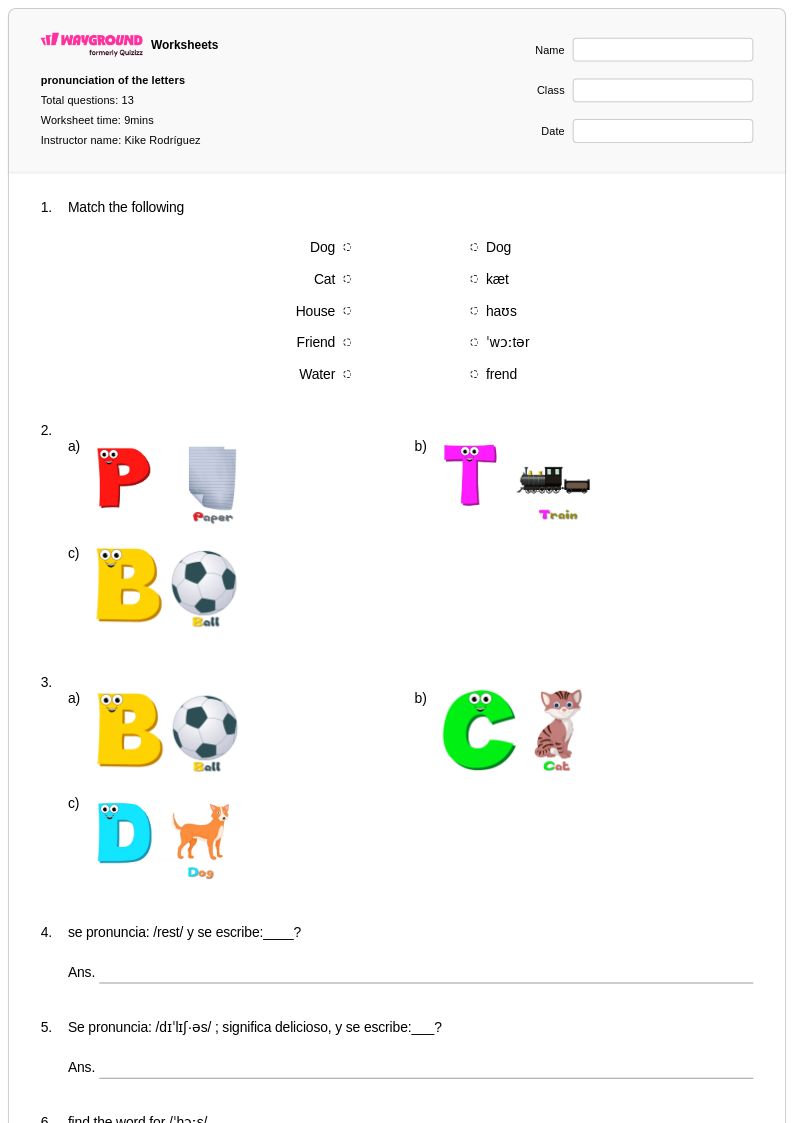
13 Q
1st
12 Q
1st
20 Q
1st
20 Q
1st - 5th
21 Q
1st
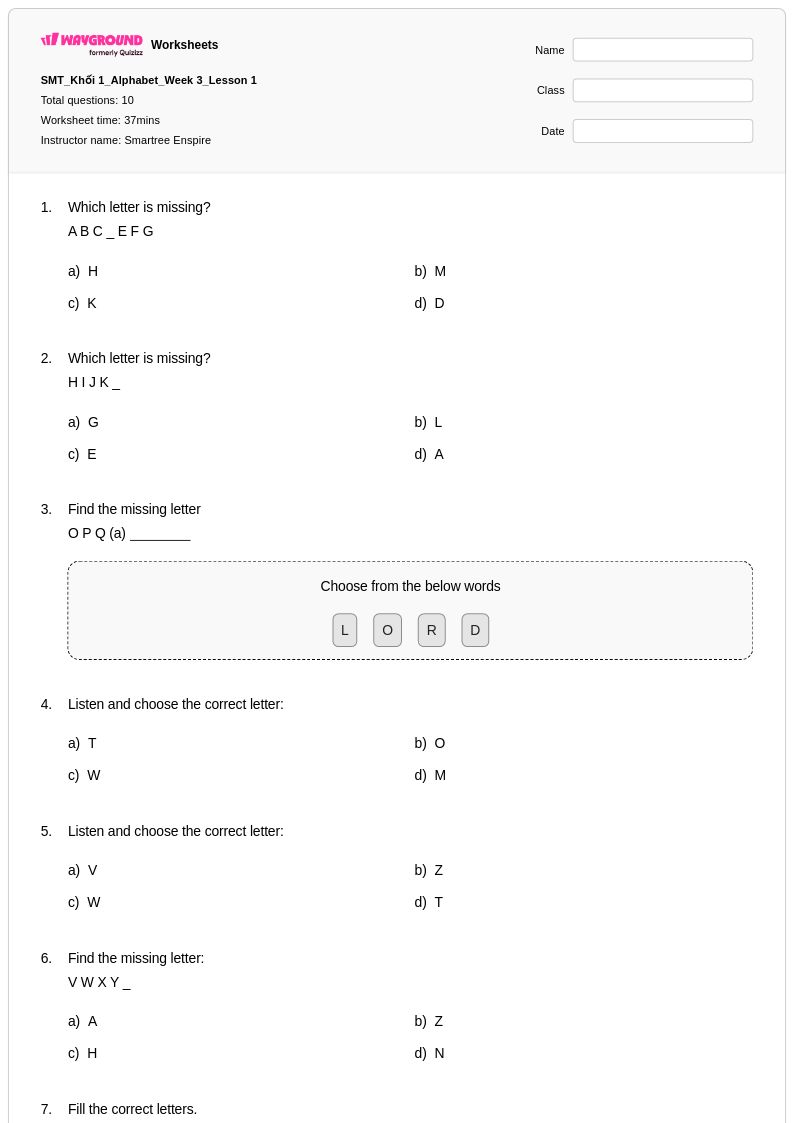
10 Q
1st
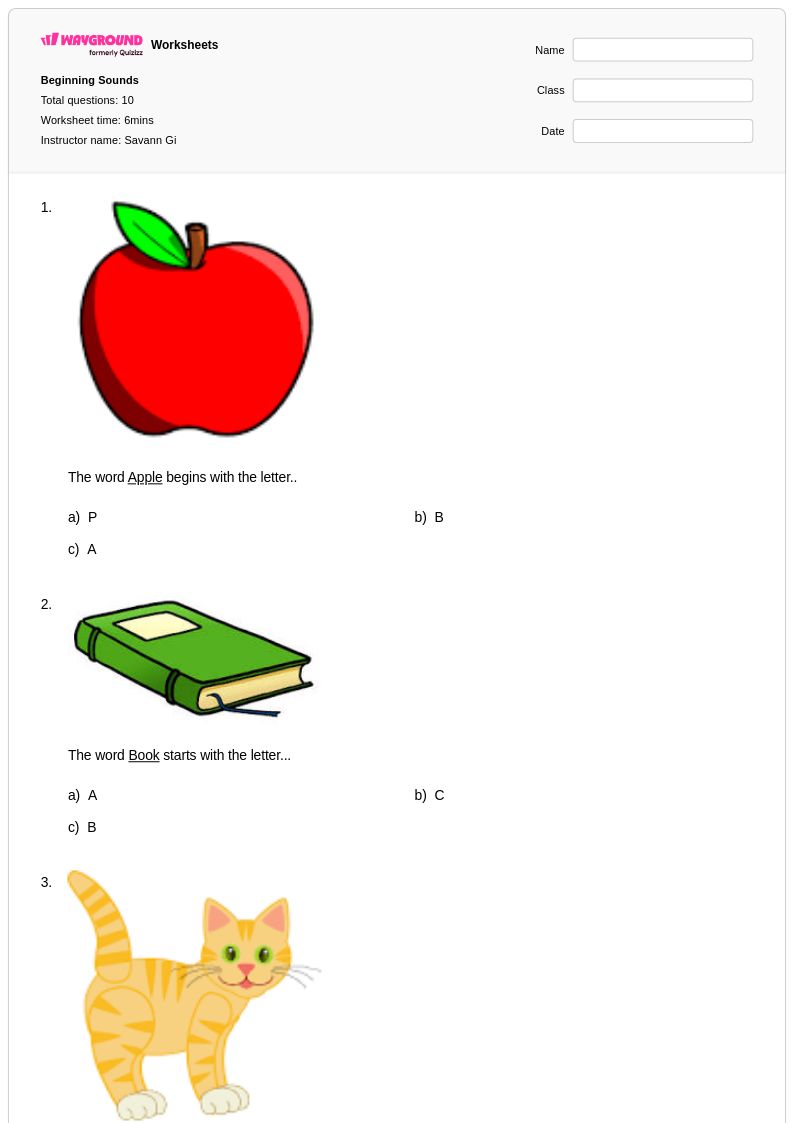
10 Q
KG - 5th
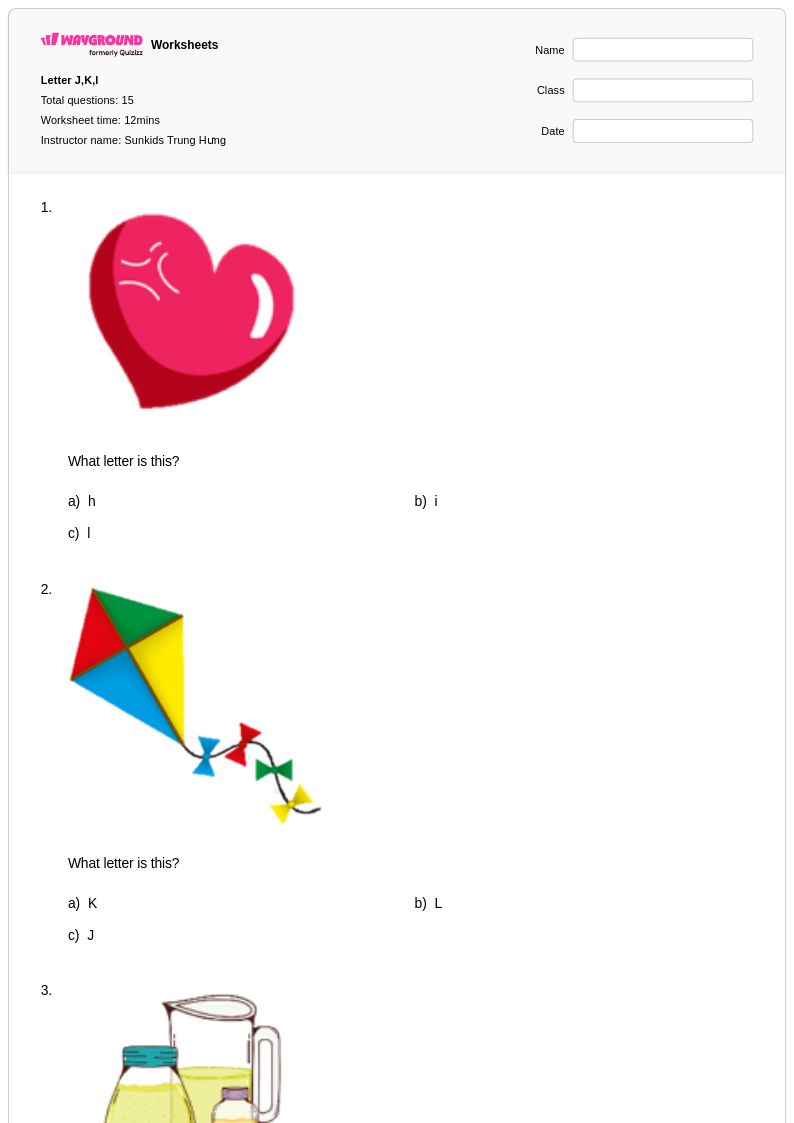
15 Q
KG - 2nd
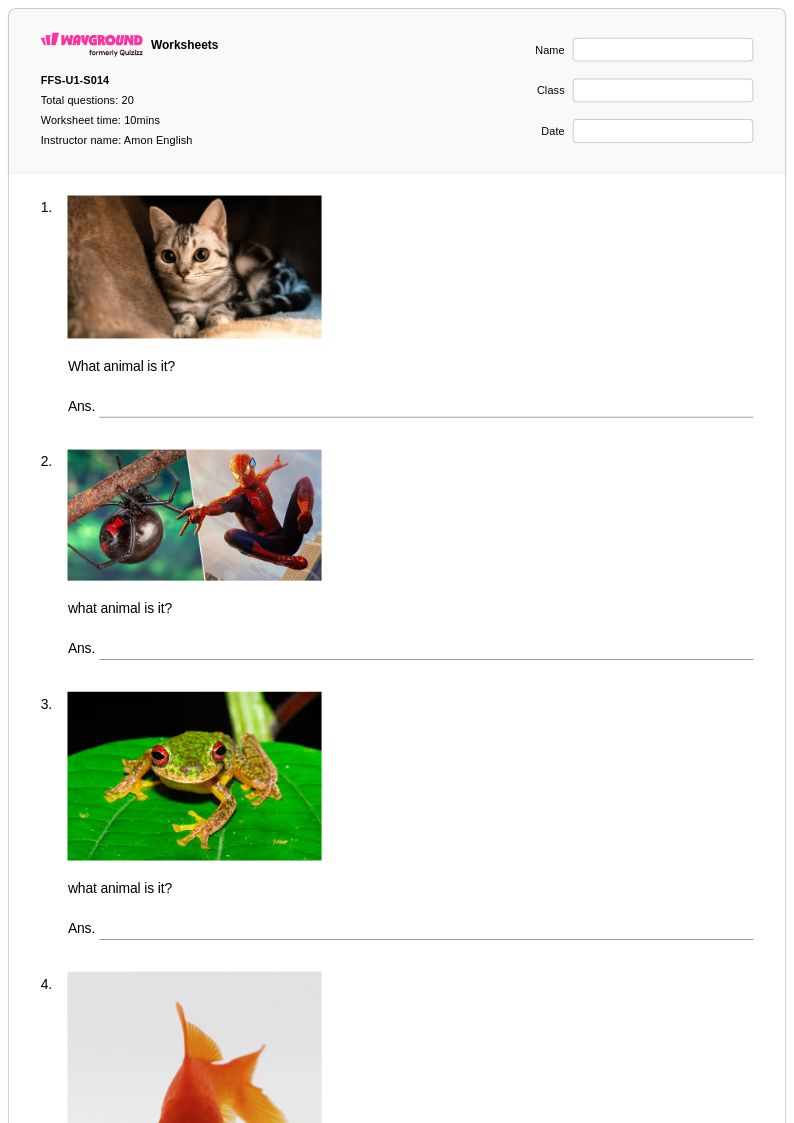
20 Q
1st - 5th
Explore The Letter G Worksheets by Grades
Explore Other Subject Worksheets for grade 1
Explore printable The Letter G worksheets for Grade 1
The Letter G worksheets for Grade 1 students provide comprehensive practice opportunities for young learners to master this important consonant through engaging, developmentally appropriate activities. These educational resources focus on essential foundational skills including letter recognition, proper formation through tracing exercises, and phonetic awareness of the hard and soft G sounds found in words like "goat" and "giraffe." Students work through carefully structured practice problems that reinforce visual discrimination between uppercase and lowercase forms while building confidence in handwriting mechanics. Each worksheet collection includes detailed answer keys to support accurate assessment, and these free printables offer teachers and parents convenient access to high-quality materials that strengthen early literacy development through systematic letter-sound correspondence practice.
Wayground (formerly Quizizz) empowers educators with access to millions of teacher-created Letter G resources that can be easily customized to meet diverse classroom needs and learning objectives. The platform's robust search and filtering capabilities allow teachers to quickly locate grade-appropriate materials aligned with state literacy standards, while built-in differentiation tools enable seamless adaptation for students requiring additional support or enrichment opportunities. These versatile worksheet collections are available in both printable pdf format for traditional paper-and-pencil activities and digital formats for interactive learning experiences, providing maximum flexibility for lesson planning and skill remediation. Teachers can efficiently organize targeted practice sessions, track student progress through structured activities, and implement data-driven instruction that addresses individual learning gaps in alphabet mastery and phonemic awareness development.
FAQs
How do I teach the letter G to early learners?
What exercises help students practice the letter G?
What mistakes do students commonly make when learning the letter G?
How do I use Letter G worksheets in my classroom?
How can I support struggling readers who are having difficulty with the letter G?