Free Printable Letter Recognition Worksheets for Grade 1
Enhance Grade 1 students' letter recognition skills with Wayground's comprehensive collection of free worksheets, printables, and practice problems featuring engaging activities and complete answer keys in PDF format.
Explore printable Letter Recognition worksheets for Grade 1
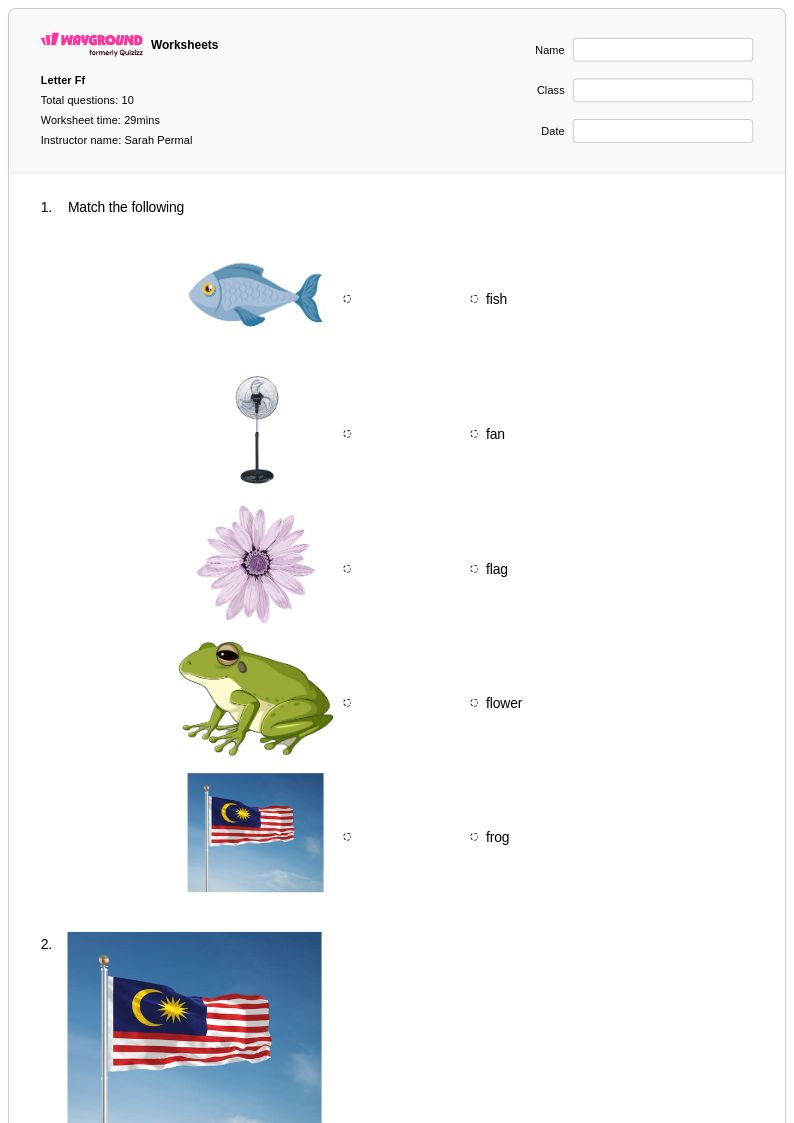
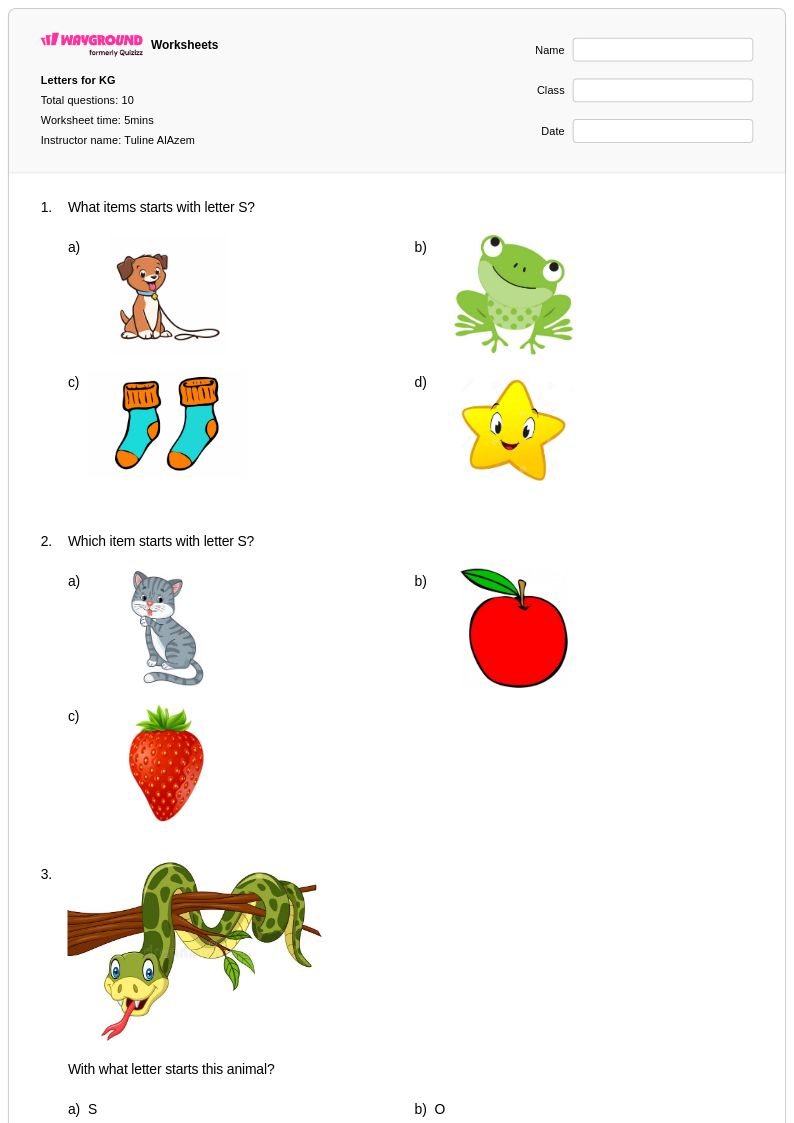
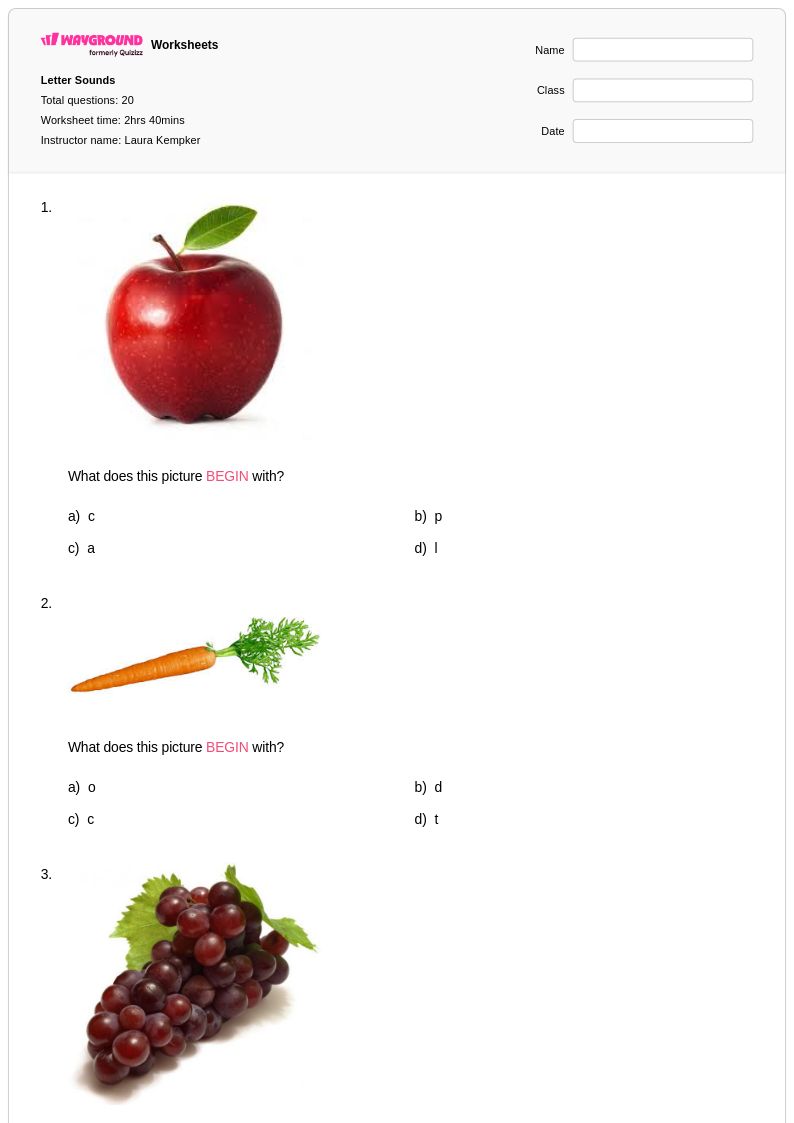
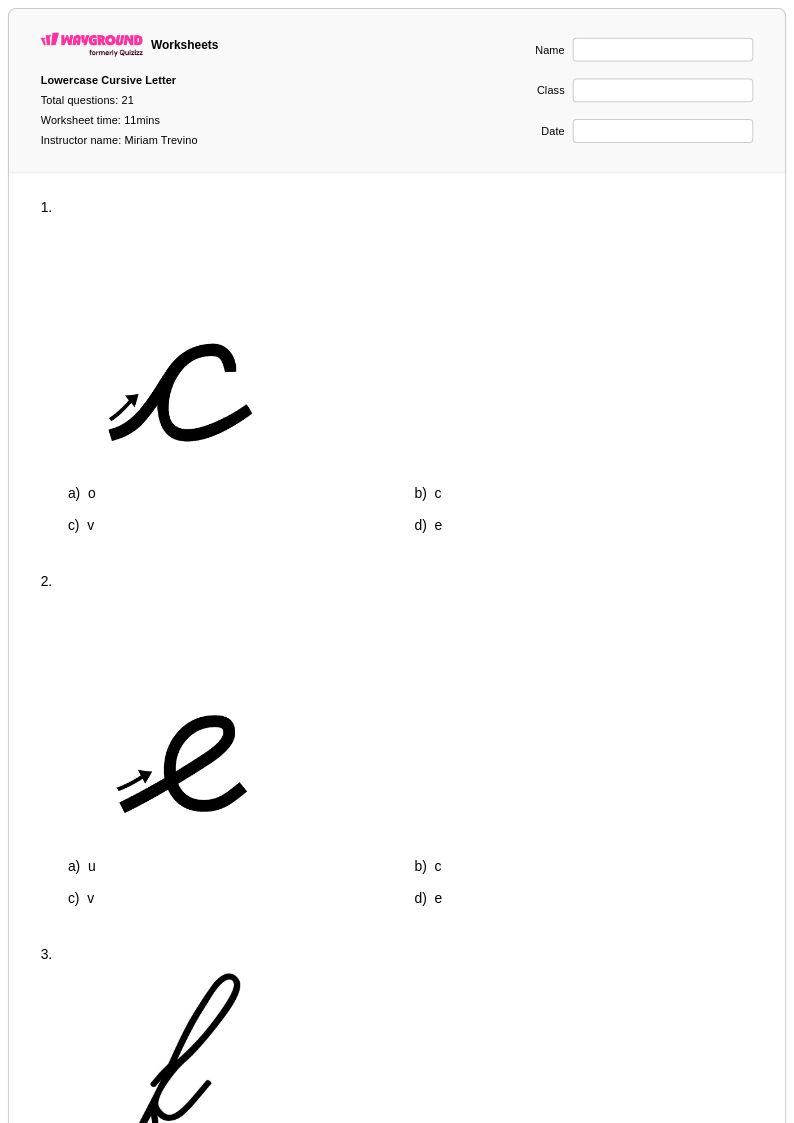
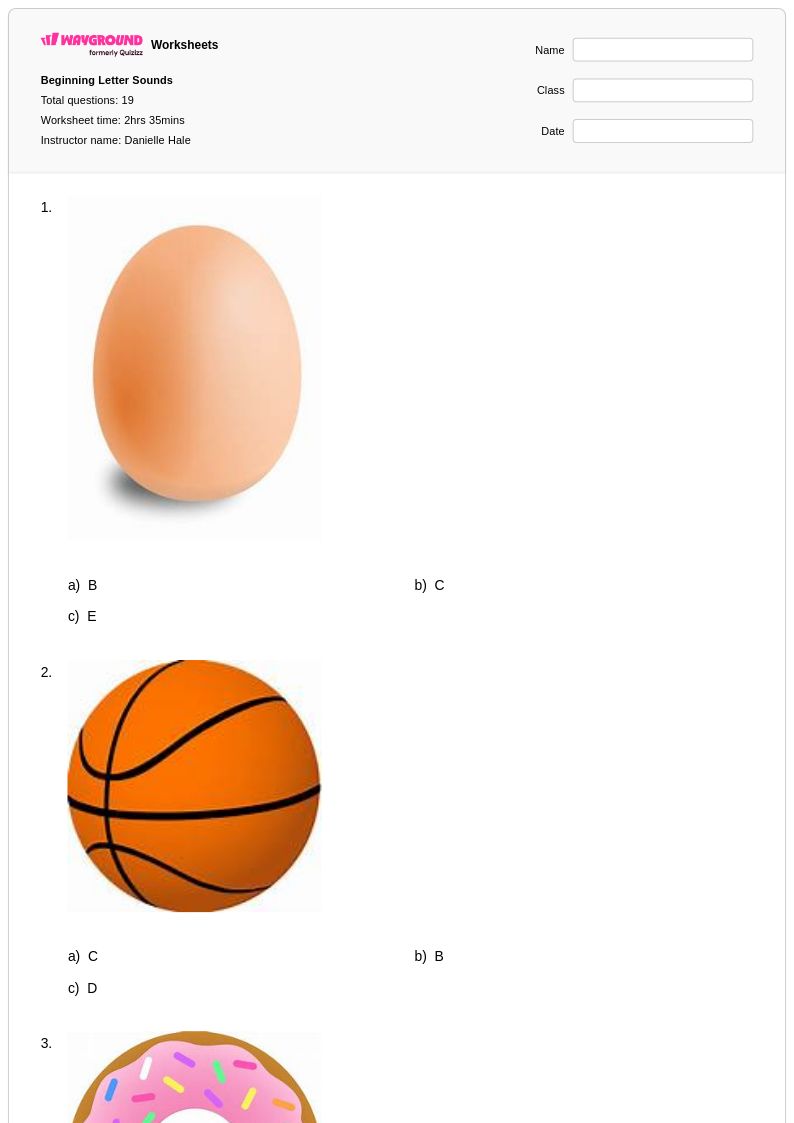
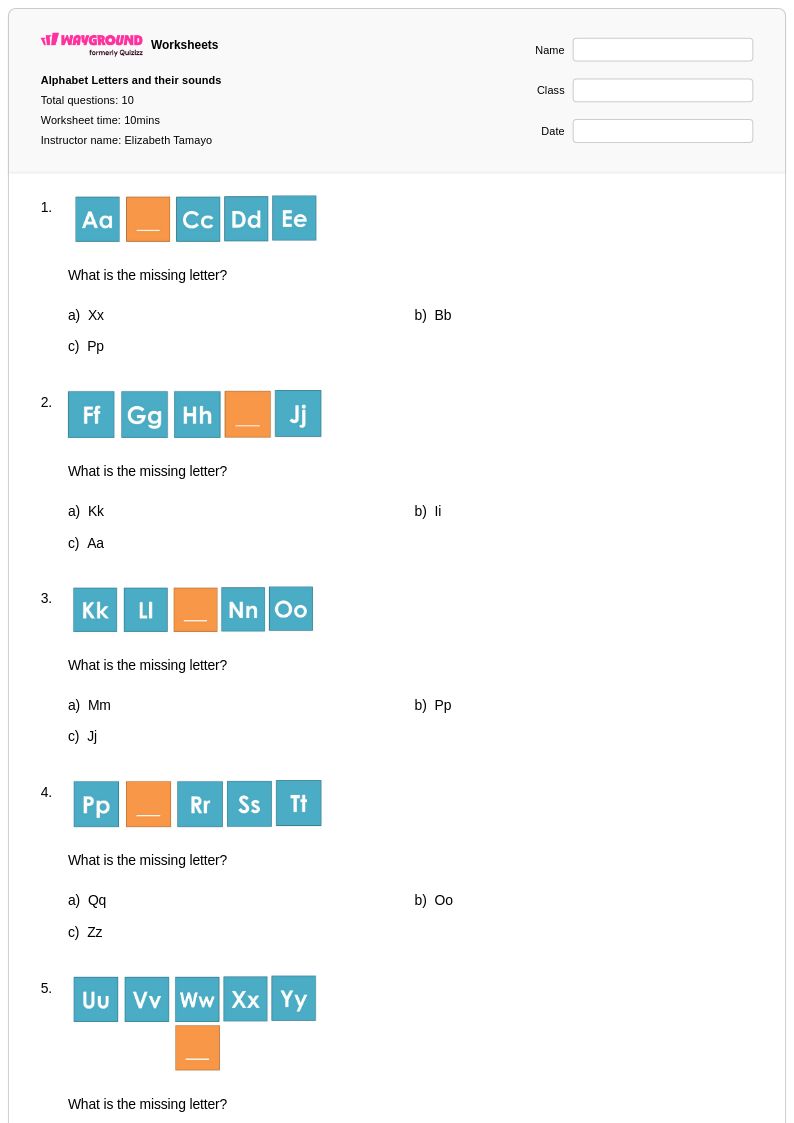
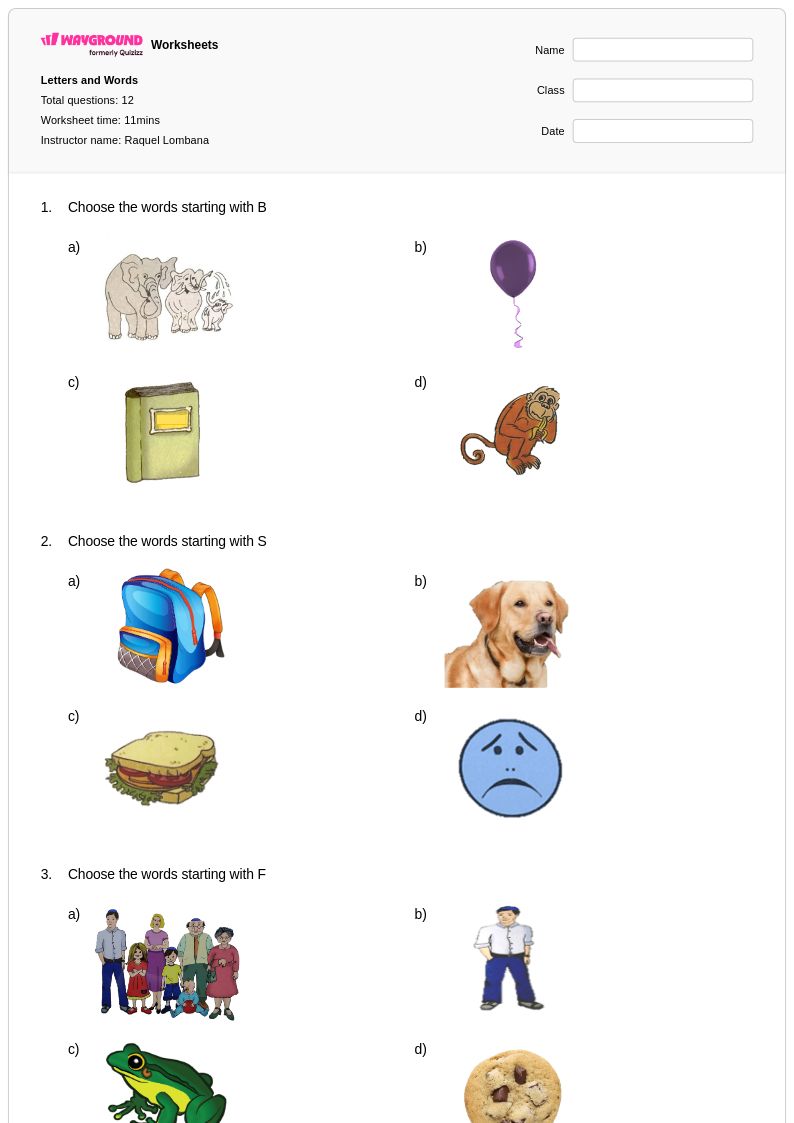
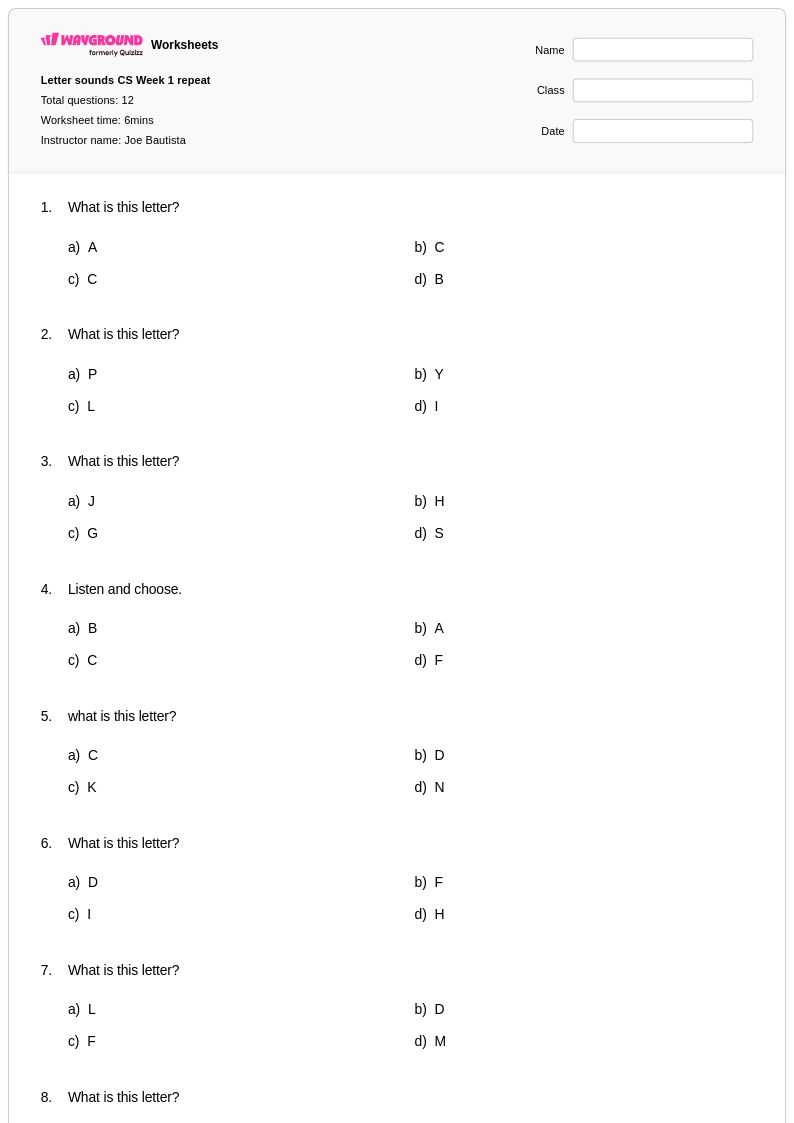
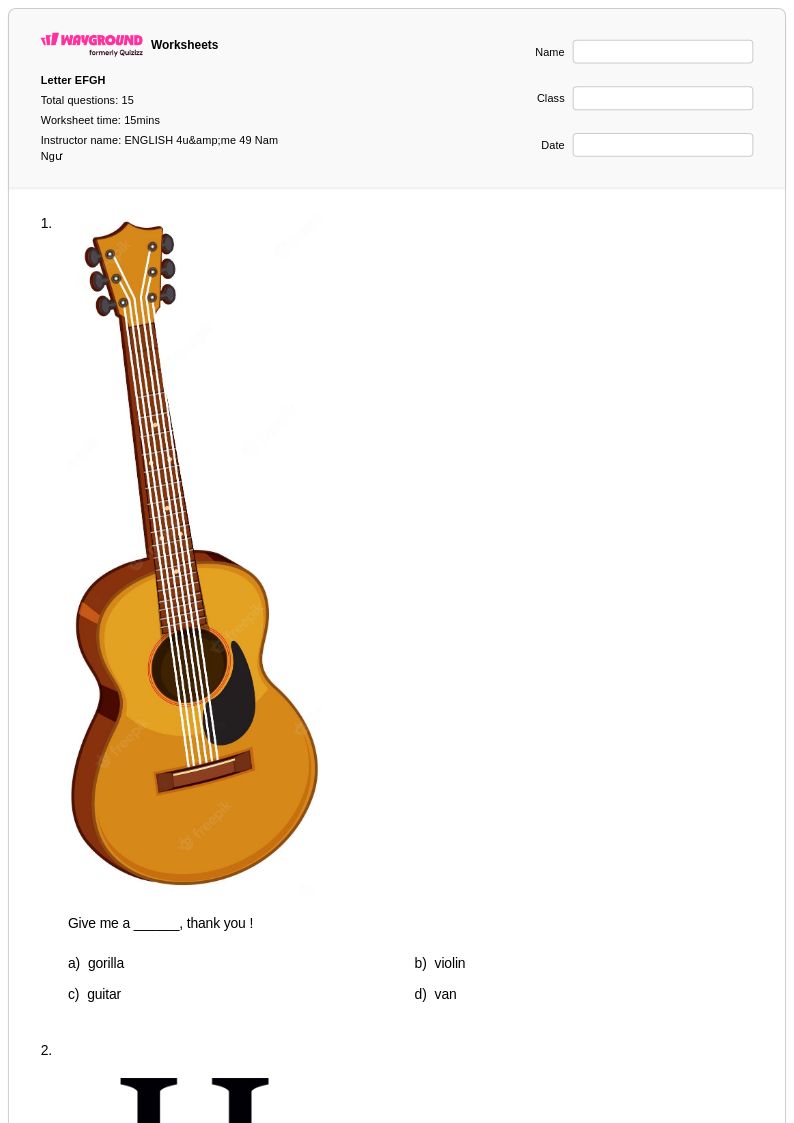
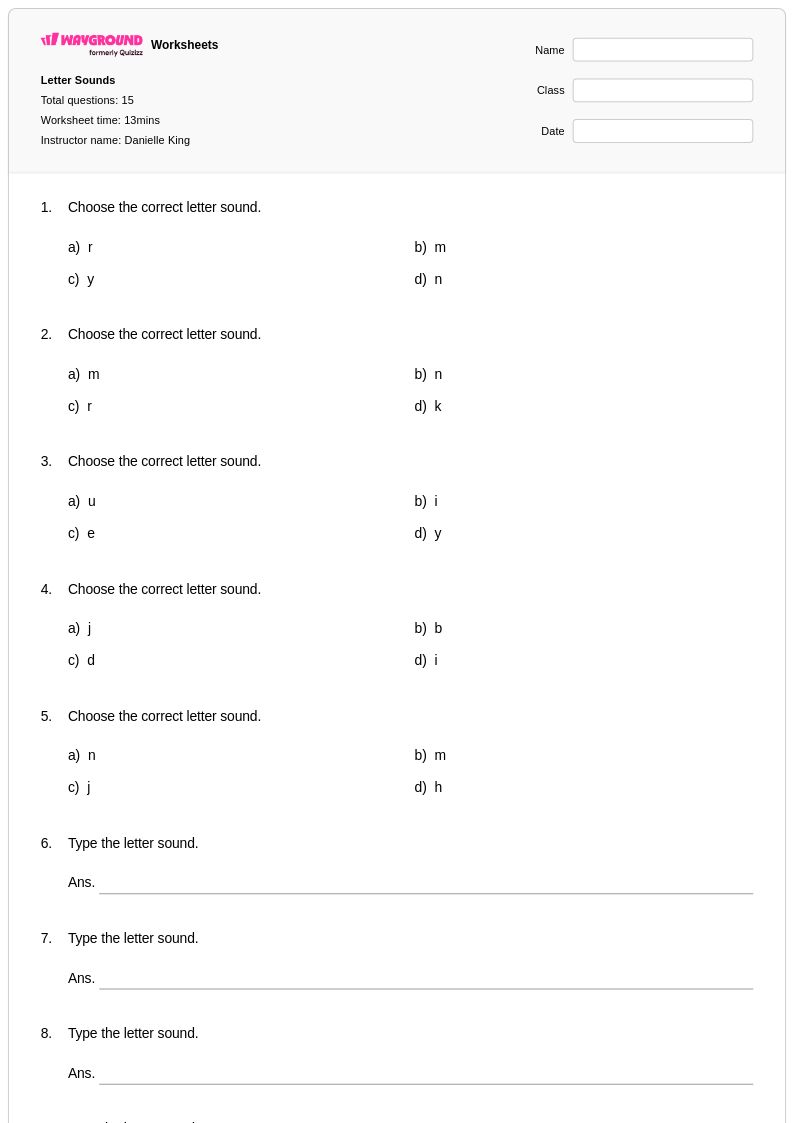
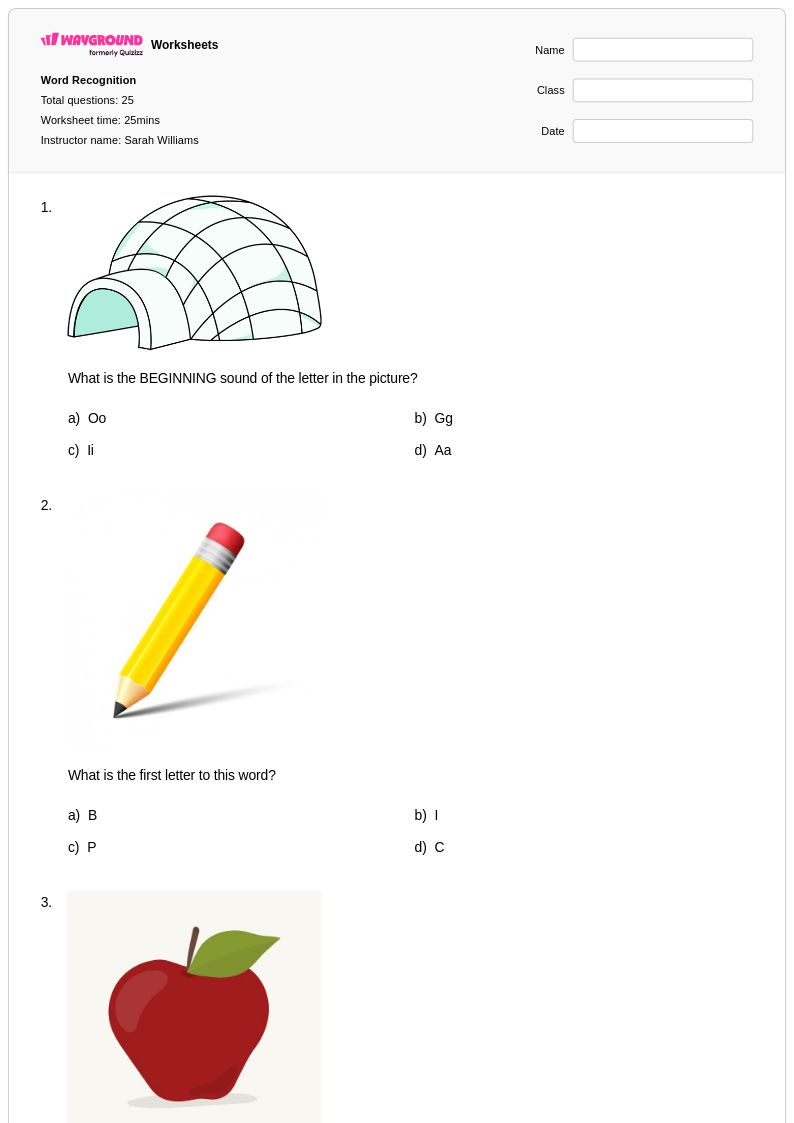
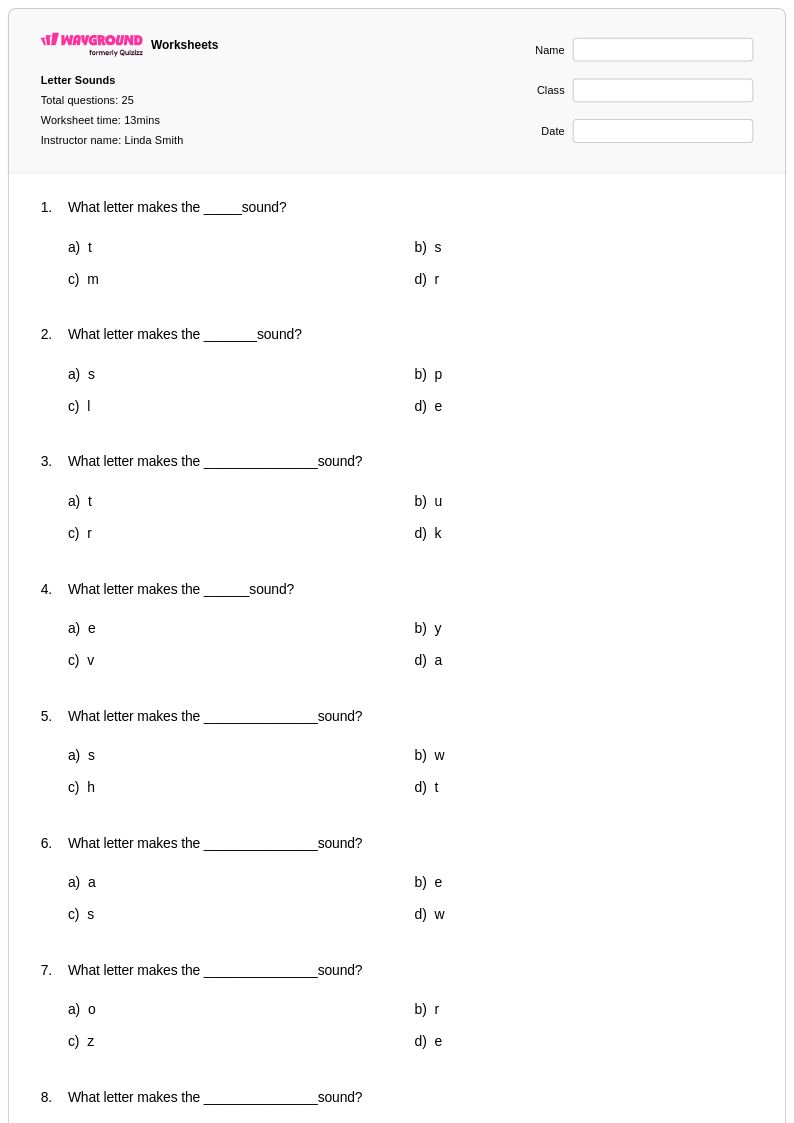
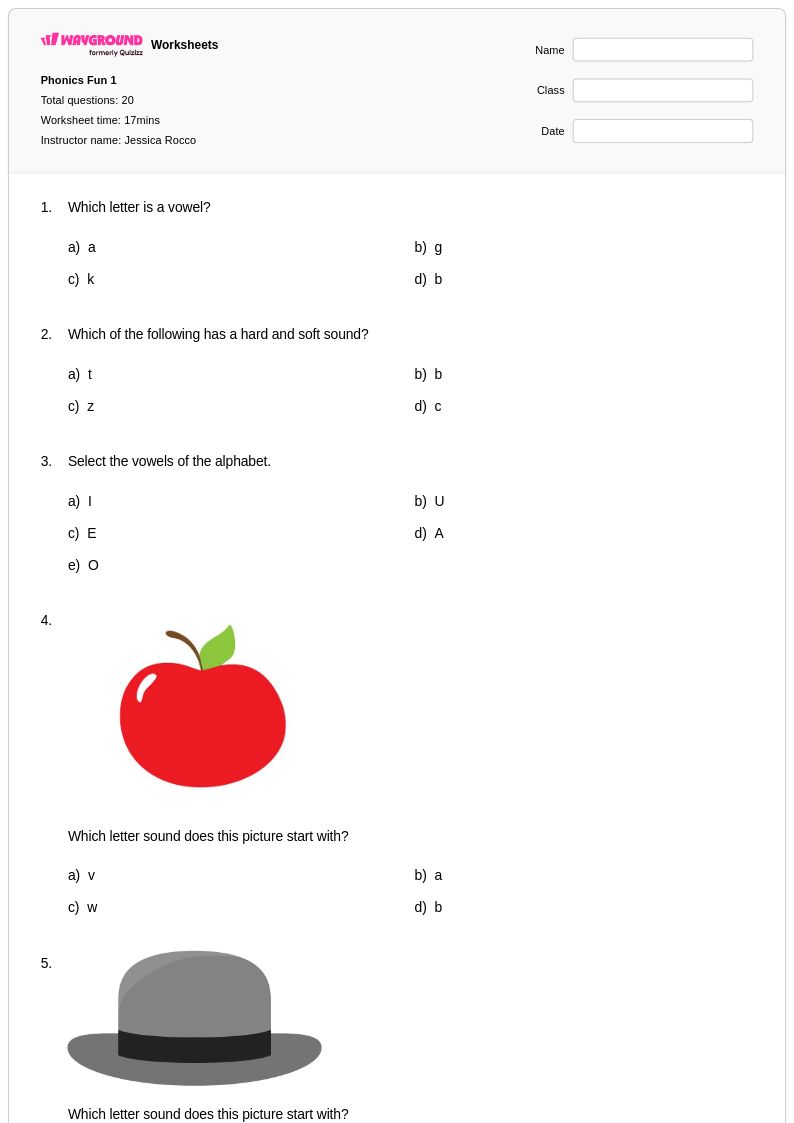
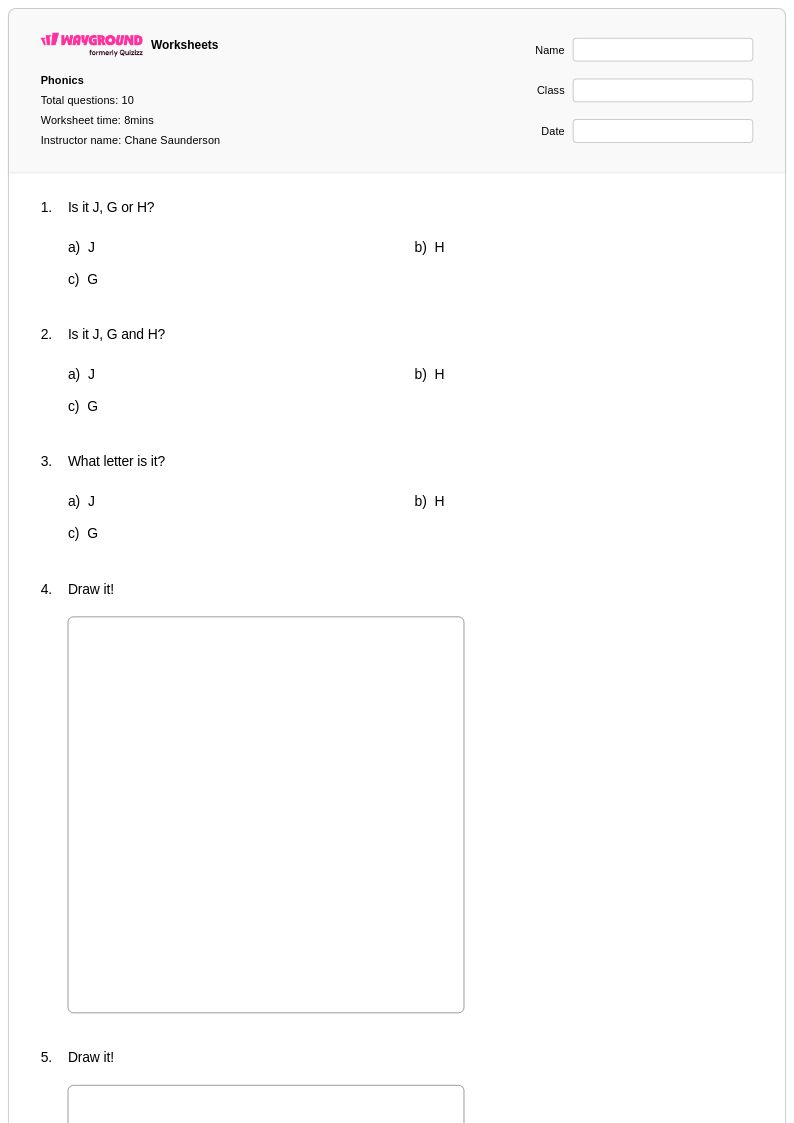
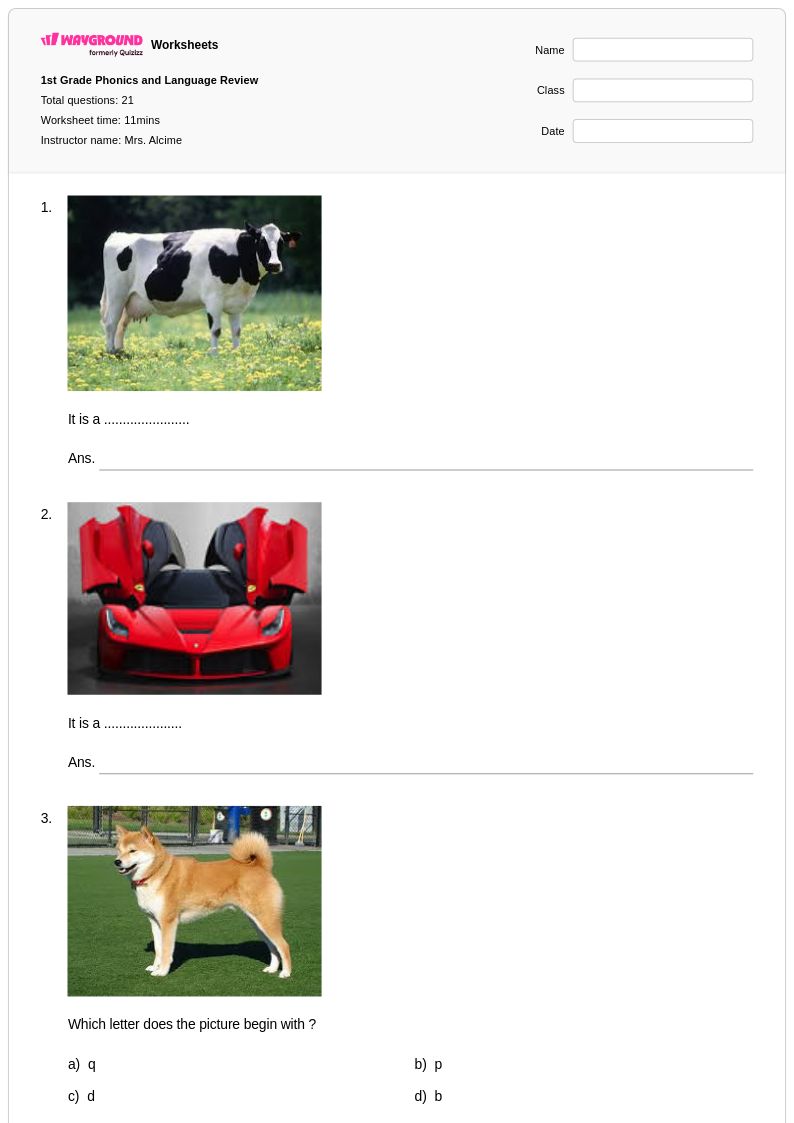
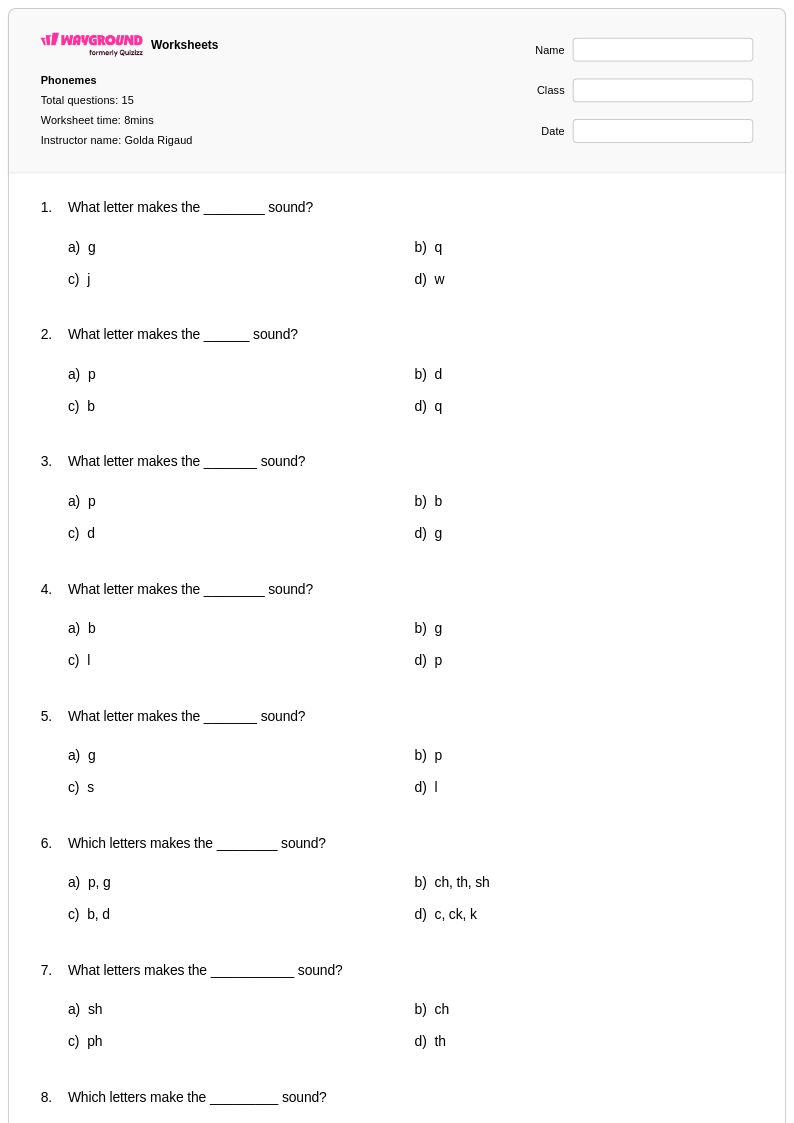
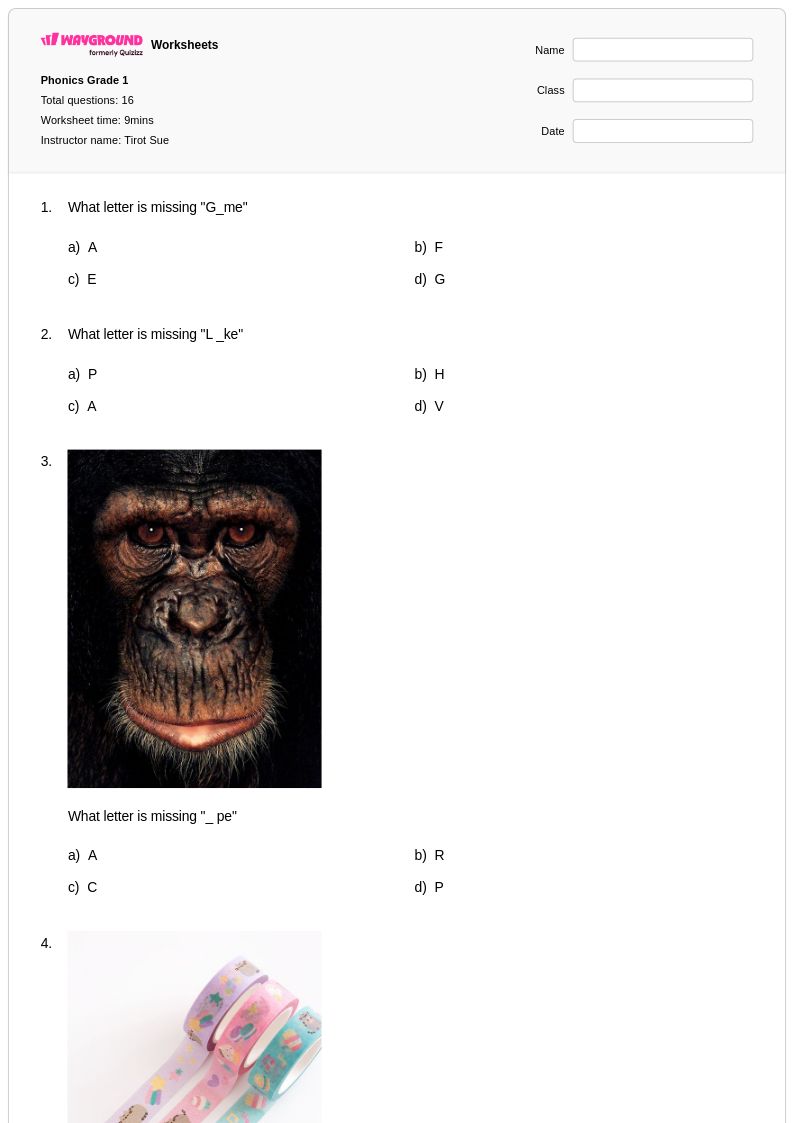
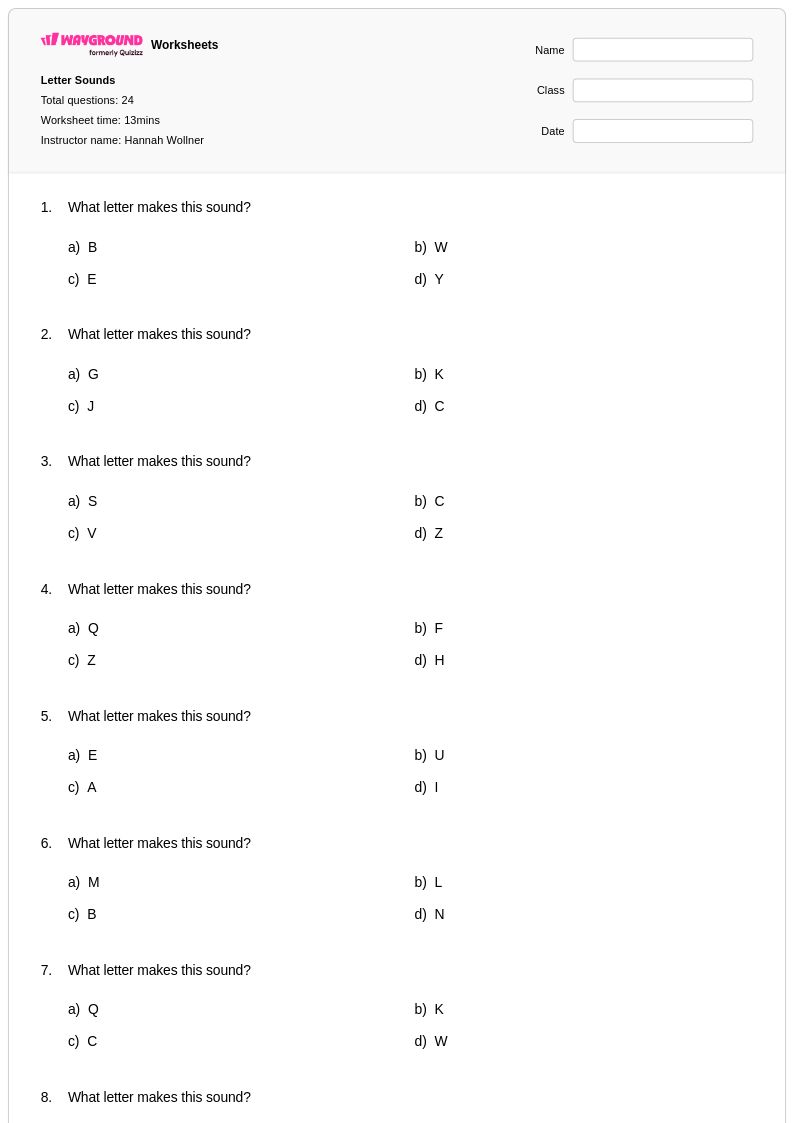
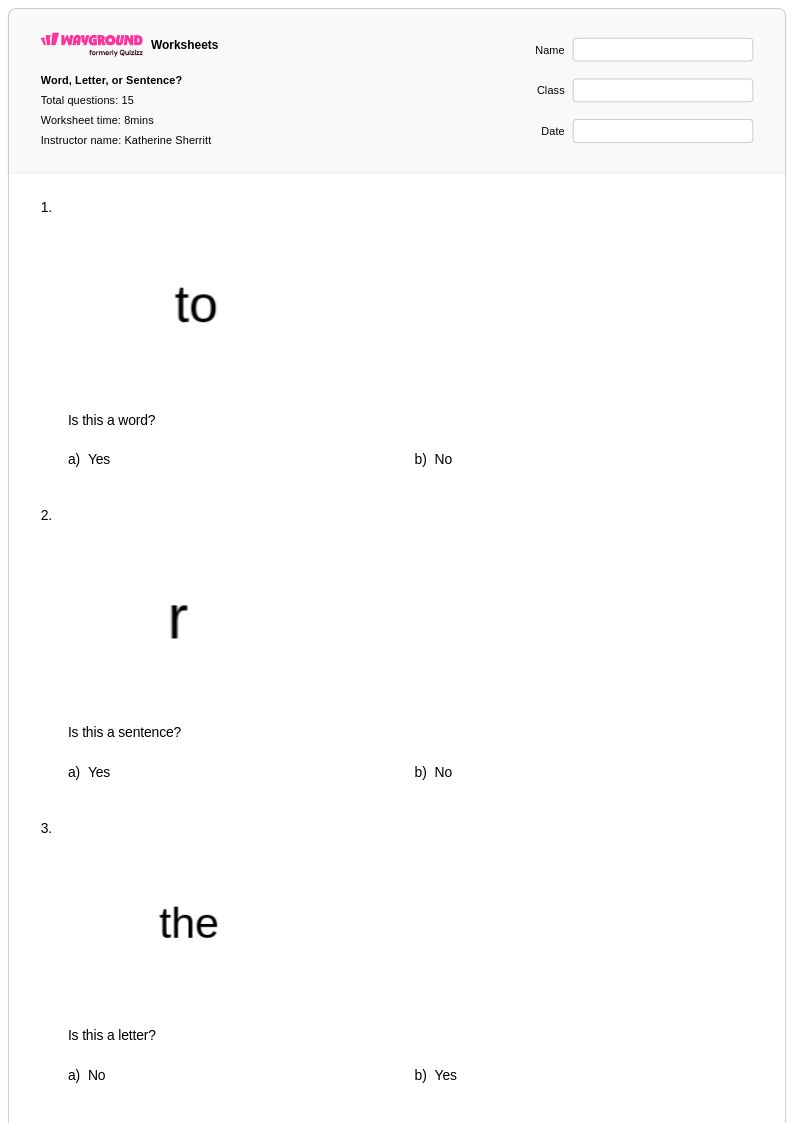
Letter recognition worksheets for Grade 1 students available through Wayground (formerly Quizizz) provide essential foundational practice for developing crucial pre-reading and early literacy skills. These comprehensive printables focus on helping young learners identify, distinguish, and memorize both uppercase and lowercase letters across various engaging formats and difficulty levels. Students strengthen their visual discrimination abilities, letter-sound correspondence understanding, and alphabet knowledge through carefully structured practice problems that progress from basic letter identification to more complex recognition tasks in different fonts and contexts. Each worksheet collection includes detailed answer keys and free pdf downloads, enabling teachers to efficiently assess student progress while providing targeted skill reinforcement that builds the essential letter recognition automaticity required for successful reading development.
Wayground (formerly Quizizz) supports educators with an extensive library of millions of teacher-created letter recognition resources, featuring robust search and filtering capabilities that allow instructors to quickly locate materials aligned with specific learning standards and student needs. The platform's differentiation tools enable teachers to customize worksheets for varying skill levels within their Grade 1 classrooms, while the flexible format options provide both printable pdf versions for traditional paper-based learning and digital alternatives for technology-integrated instruction. These comprehensive worksheet collections streamline lesson planning by offering ready-to-use materials for daily practice, targeted remediation sessions, and enrichment activities, empowering educators to address individual student needs while systematically building the letter recognition proficiency that serves as the cornerstone of early literacy development.
FAQs
How do I teach letter recognition to young learners?
Effective letter recognition instruction begins with explicit, multisensory exposure to letter shapes and names, pairing visual, auditory, and tactile experiences so students build strong mental representations of each letter. Teachers typically introduce uppercase letters first, then lowercase, using consistent letter formations and connecting each letter to a familiar word or sound. Systematic daily practice with both forms, through activities like matching, tracing, and sorting, helps students internalize distinctions between visually similar letters such as b/d and p/q.
What exercises help students practice letter recognition?
Matching exercises that pair uppercase and lowercase letters, visual discrimination tasks that ask students to identify a target letter among similar-looking options, and tracing activities that reinforce letter shape through motor memory are all highly effective for letter recognition practice. Varied practice formats prevent rote memorization and ensure students can recognize letters across different fonts, sizes, and contexts, which is essential for transferring skills to real reading.
What mistakes do students commonly make when learning to recognize letters?
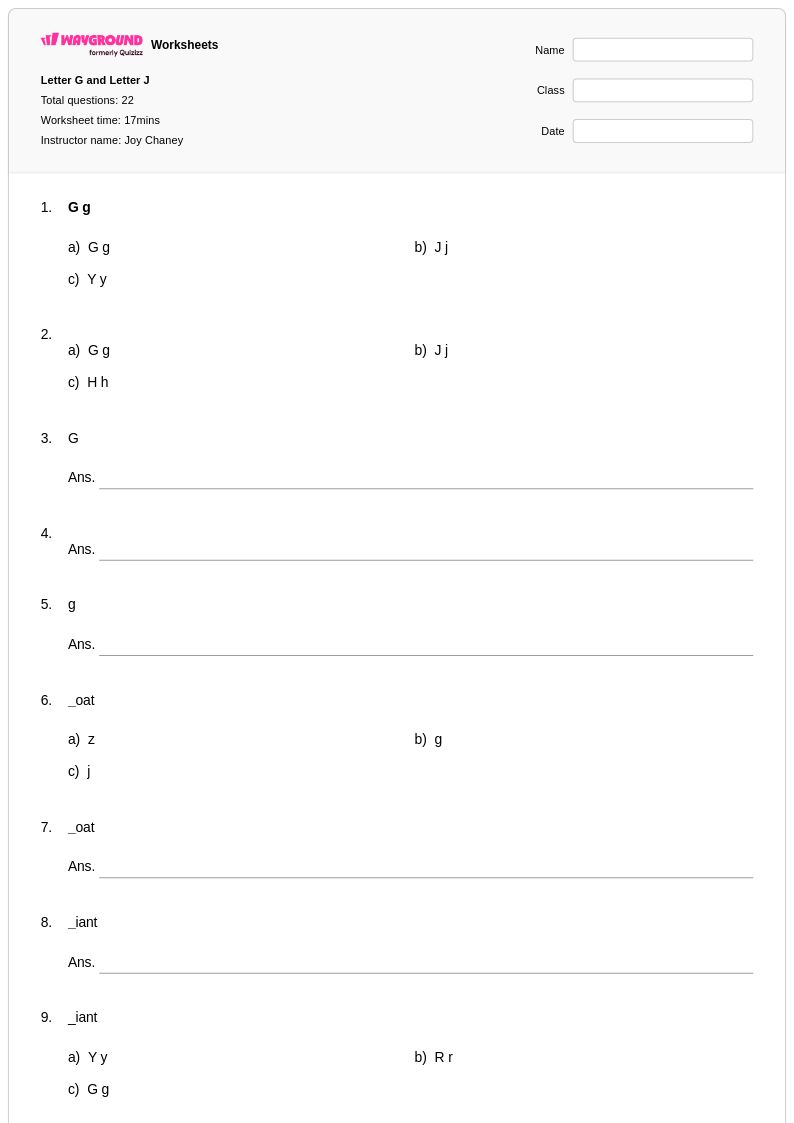
The most common errors involve visually similar letter pairs: students frequently confuse b/d, p/q, m/w, and n/u because these letters share identical shapes that are simply flipped or rotated. Students also often struggle to connect uppercase and lowercase forms of the same letter when the shapes differ significantly, such as A/a or G/g. Targeted practice that isolates these high-confusion pairs and provides repeated, spaced exposure is the most effective way to address these patterns.
How can I differentiate letter recognition practice for students at different levels?
For students who need additional support, reduce the number of letters introduced at one time and focus on high-frequency letters or those in the student's own name, which research shows accelerates recognition. More advanced students can move from isolated letter identification to letter-sound correspondence tasks or work with letters in the context of simple words. On Wayground, teachers can apply accommodations such as read aloud, reduced answer choices, and extended time to individual students, allowing the same worksheet to serve learners across a range of readiness levels without singling anyone out.
How do I use letter recognition worksheets from Wayground in my classroom?
Wayground's letter recognition worksheets are available as printable PDFs for traditional classroom use and in digital formats for technology-integrated learning environments, including the option to host them as a quiz directly on Wayground. Teachers can use printable versions for independent seat work, small group instruction, or take-home practice, while digital formats work well for whole-class instruction on interactive boards or individual student devices. Each worksheet includes a complete answer key, making it easy to provide fast, accurate feedback.
At what age or grade level should students master letter recognition?
Letter recognition is a foundational pre-reading skill typically developed in pre-K through kindergarten, with most students expected to identify all 26 uppercase and lowercase letters by the end of kindergarten. Students who enter first grade without secure letter recognition often struggle with phonics instruction because decoding relies on automatic letter identification. Early screening and targeted practice in pre-K and kindergarten are the most effective ways to ensure all students build this foundation on schedule.