Free Printable Letter Sound Identification Worksheets for Grade 1
Boost Grade 1 students' letter sound identification skills with Wayground's free printable phonics worksheets featuring engaging practice problems and comprehensive answer keys in convenient PDF format.
Explore printable Letter Sound Identification worksheets for Grade 1
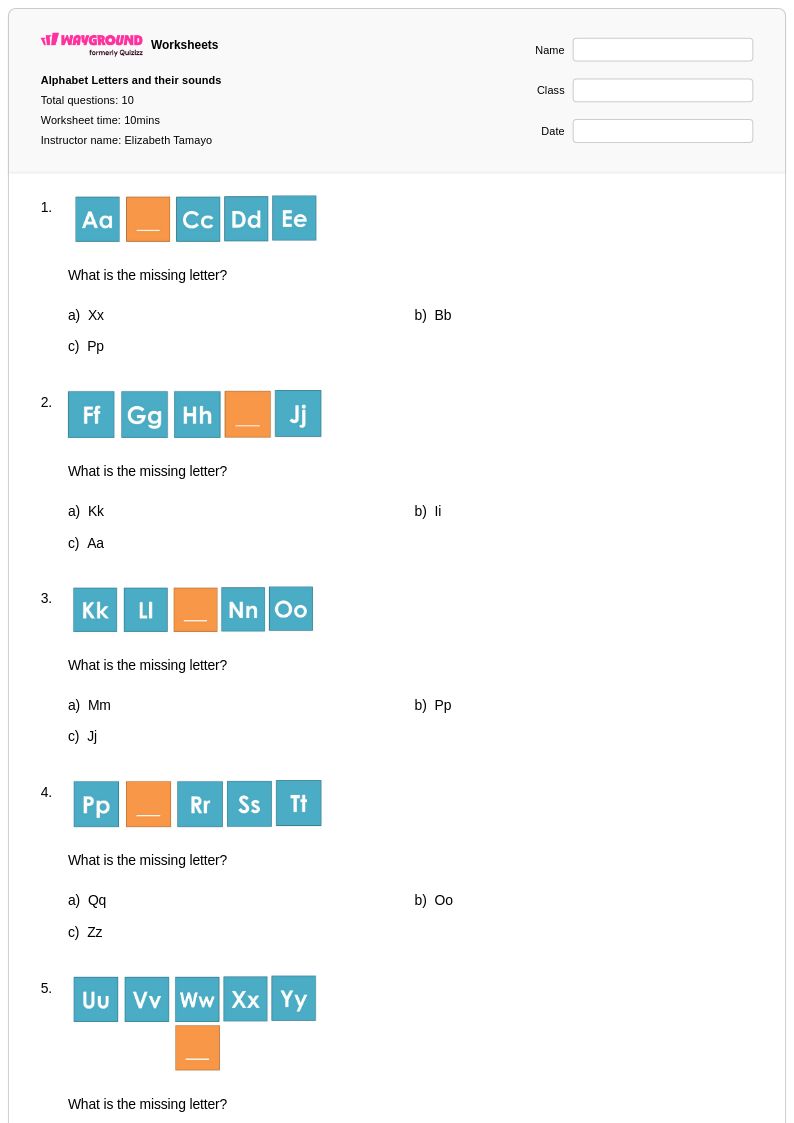
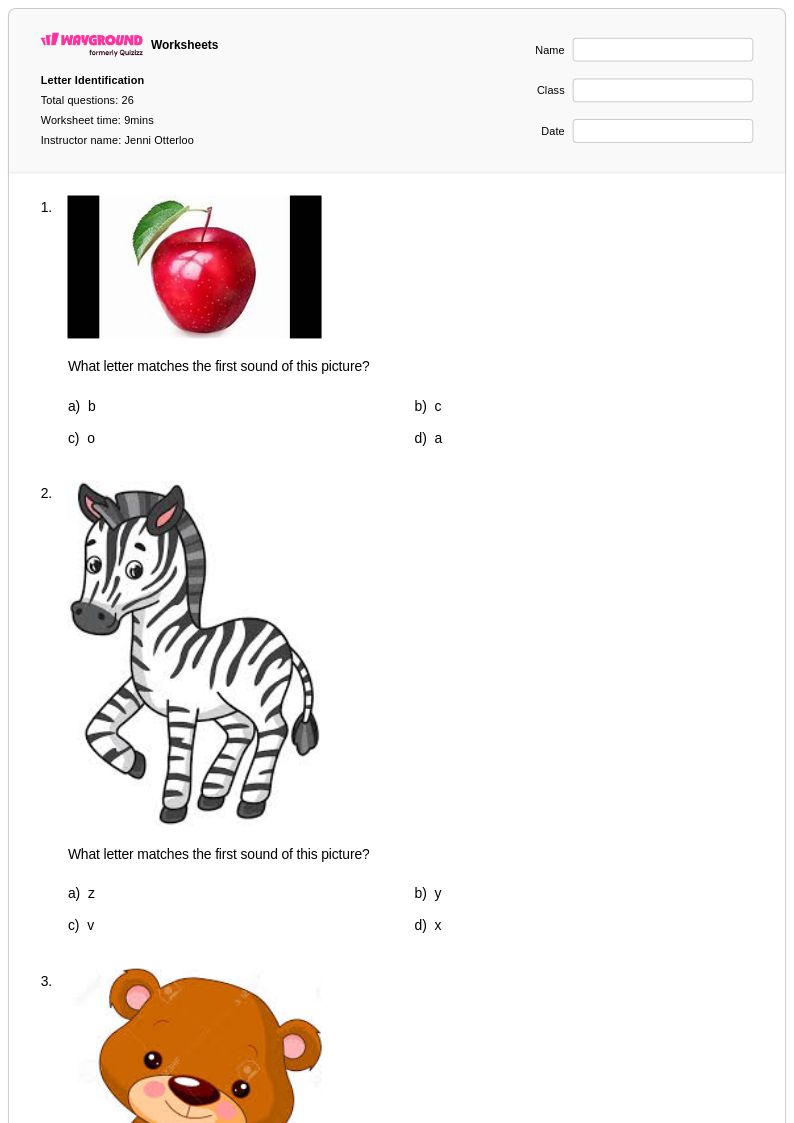
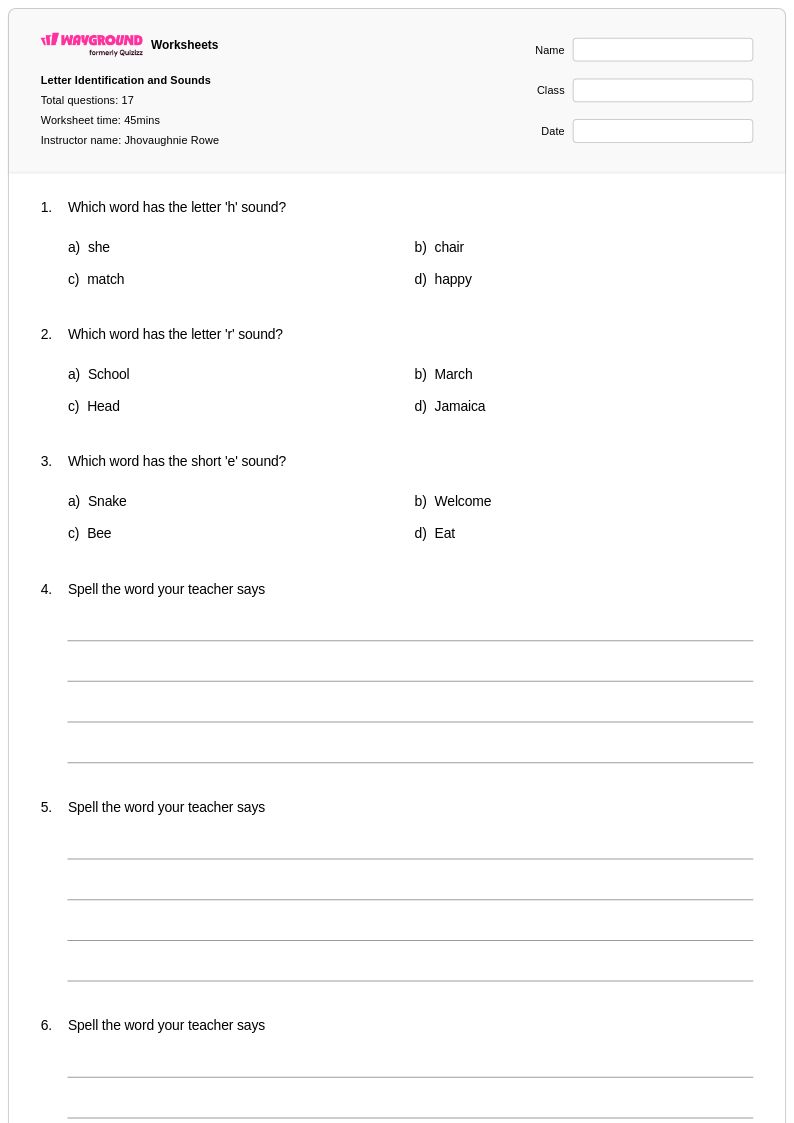
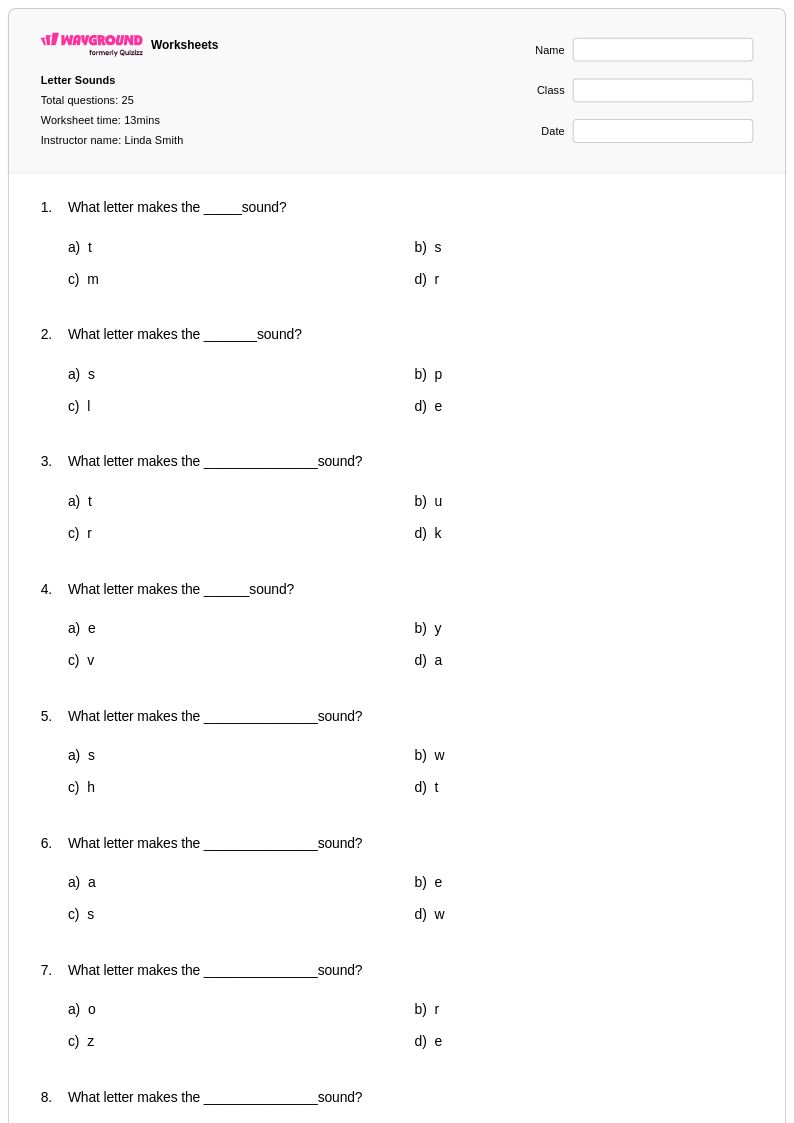
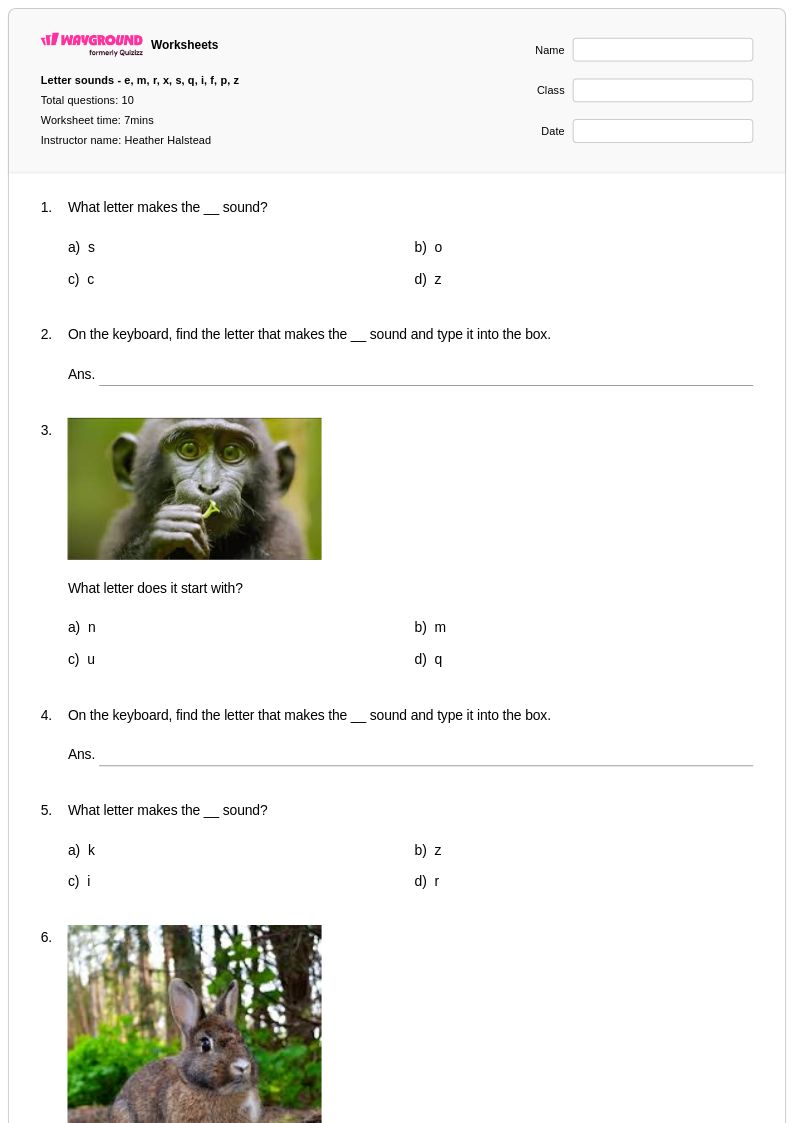
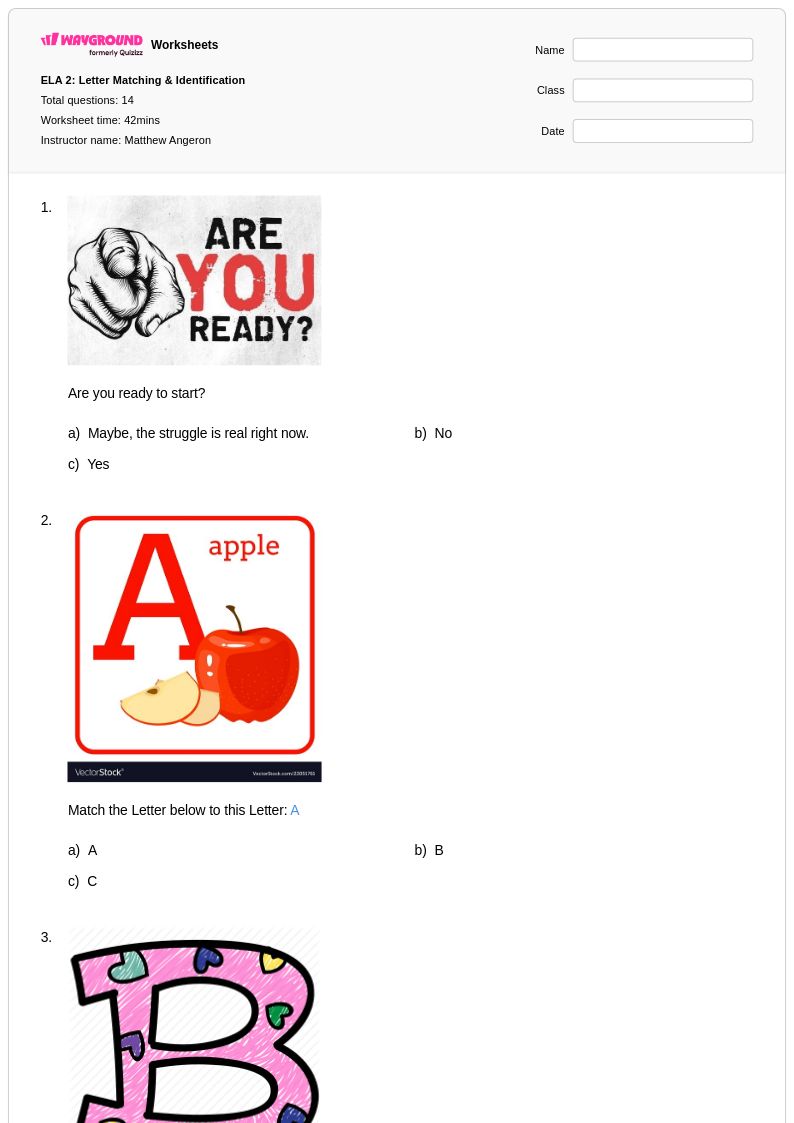
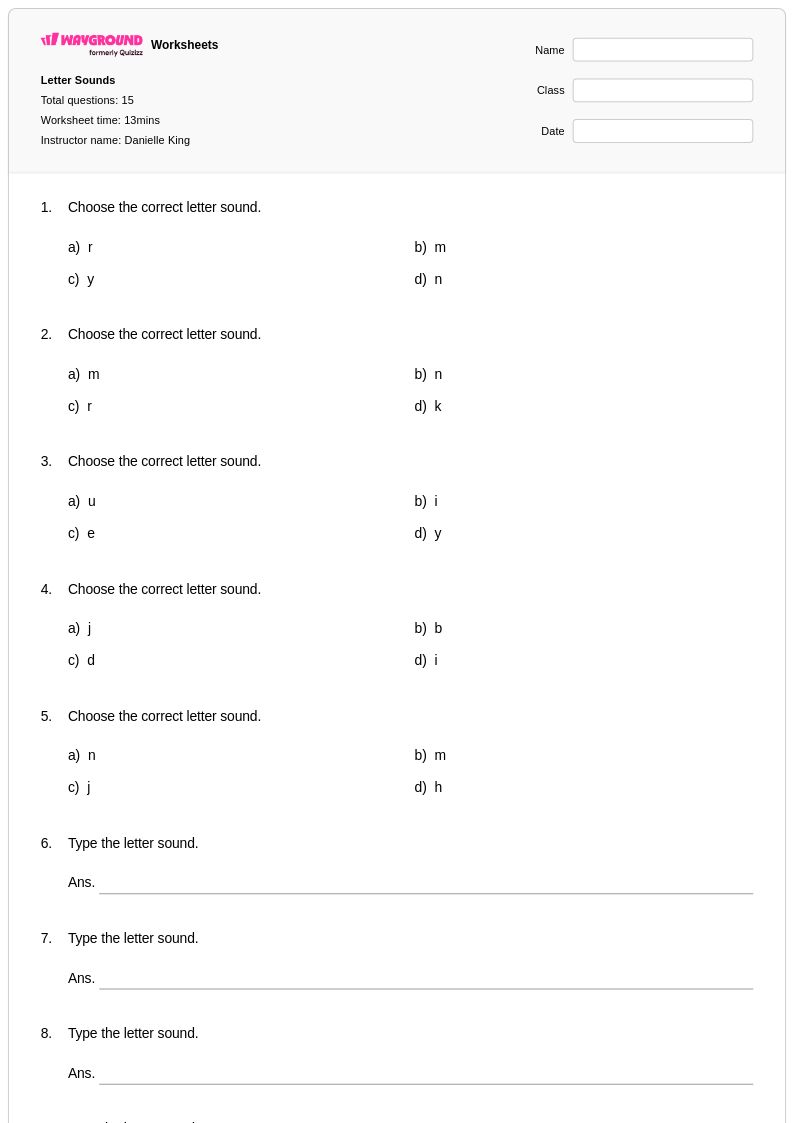
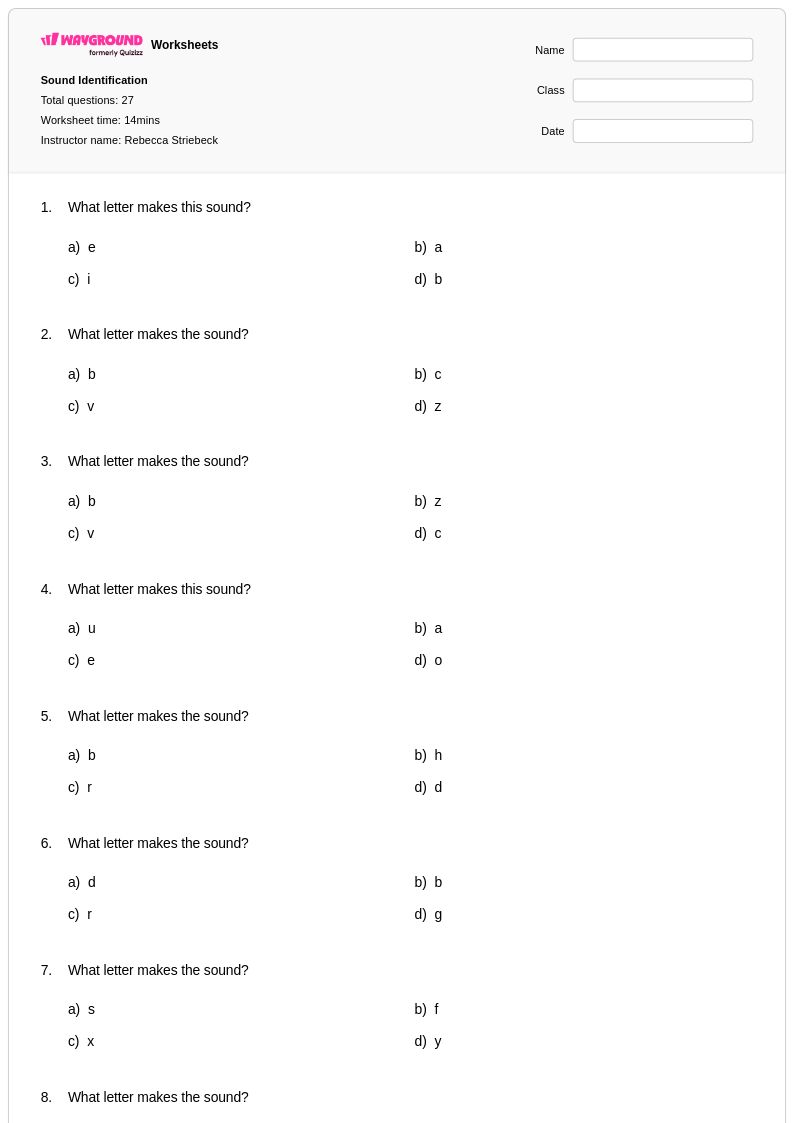
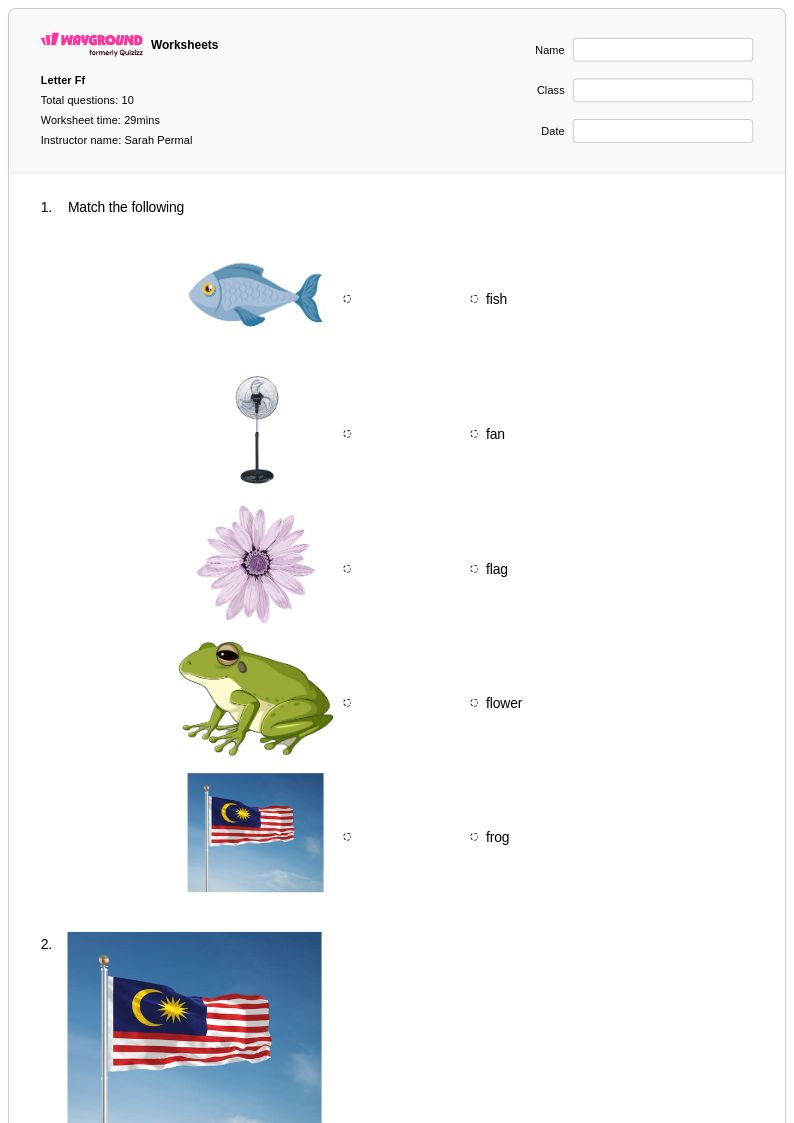
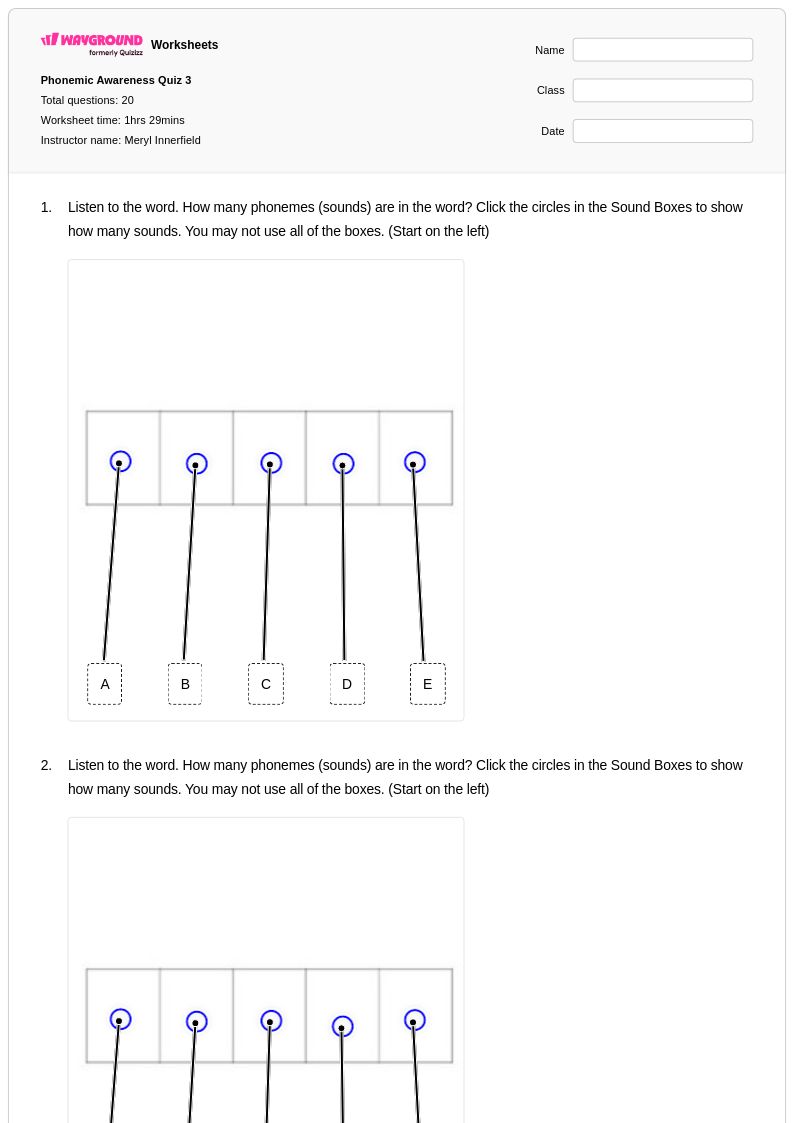
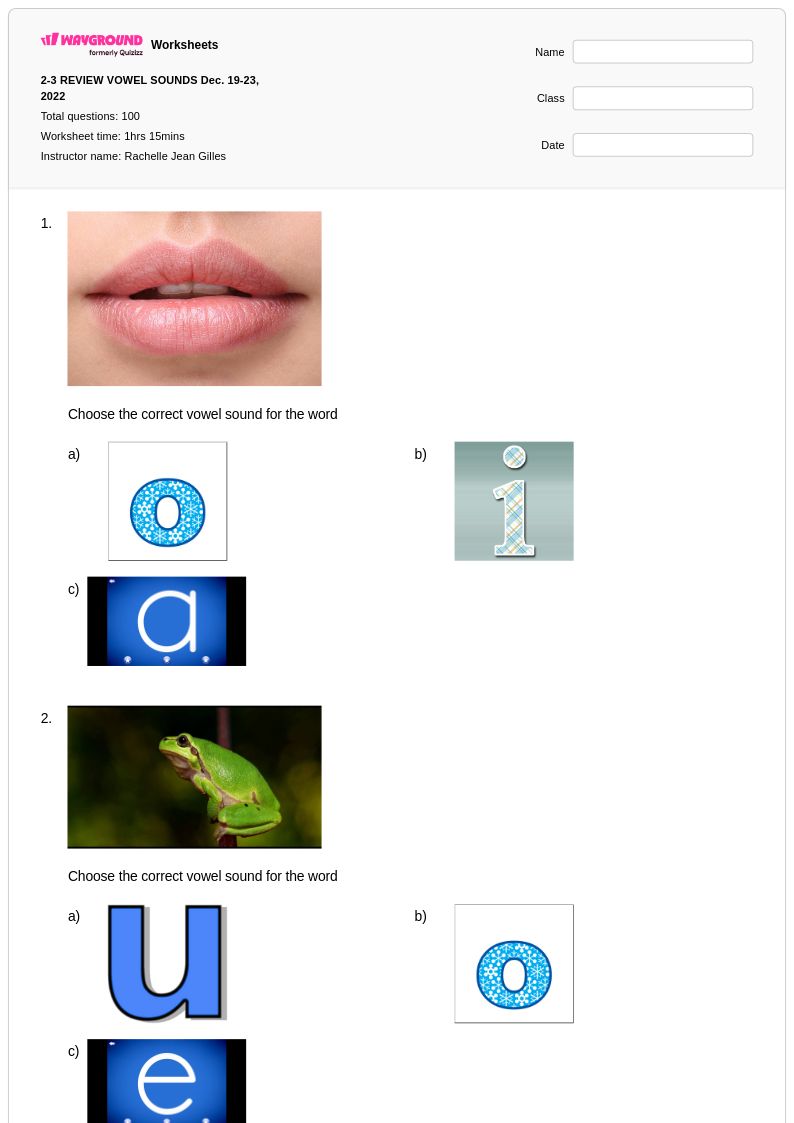
Letter sound identification worksheets for Grade 1 students through Wayground (formerly Quizizz) provide essential foundational practice for developing phonemic awareness and early reading skills. These comprehensive printables focus on helping young learners connect letters with their corresponding sounds, a critical milestone in the phonics learning progression. Students engage with diverse practice problems that include matching activities, sound discrimination exercises, and letter recognition tasks that strengthen their ability to decode written language. Each worksheet includes an answer key to support accurate assessment and feedback, while the free pdf format ensures easy access for both classroom instruction and home practice. These targeted resources build the fundamental skills students need to transition from letter recognition to successful word reading and spelling.
Wayground (formerly Quizizz) empowers educators with an extensive collection of millions of teacher-created letter sound identification resources specifically designed for Grade 1 phonics instruction. The platform's robust search and filtering capabilities allow teachers to quickly locate worksheets aligned with specific learning standards and student needs, while built-in differentiation tools enable customization for varying ability levels within the classroom. These materials are available in both printable and digital formats, including convenient pdf downloads that facilitate seamless lesson planning and implementation. Teachers can effectively use these resources for targeted skill practice, remediation support for struggling readers, and enrichment activities for advanced students, creating a comprehensive approach to phonics instruction that meets diverse learning requirements and accelerates reading development.
FAQs
How do I teach letter sound identification to early readers?
Letter sound identification is best taught through explicit, systematic phonics instruction that introduces one letter-sound correspondence at a time before combining them. Multisensory approaches work especially well — having students see the letter, say the sound, and trace or write the letter simultaneously strengthens the connection across multiple memory pathways. Consistent daily practice with immediate corrective feedback is key to helping students internalize these foundational relationships before moving on to blending and decoding.
What exercises help students practice letter-sound relationships?
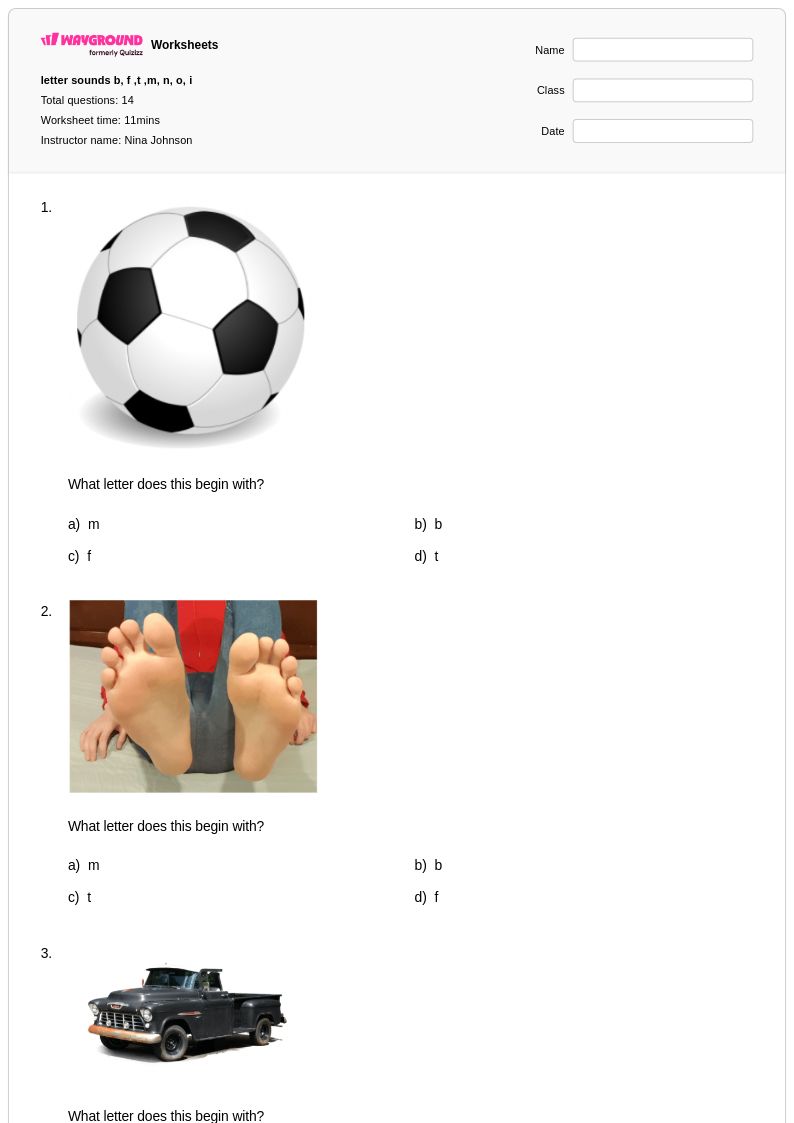
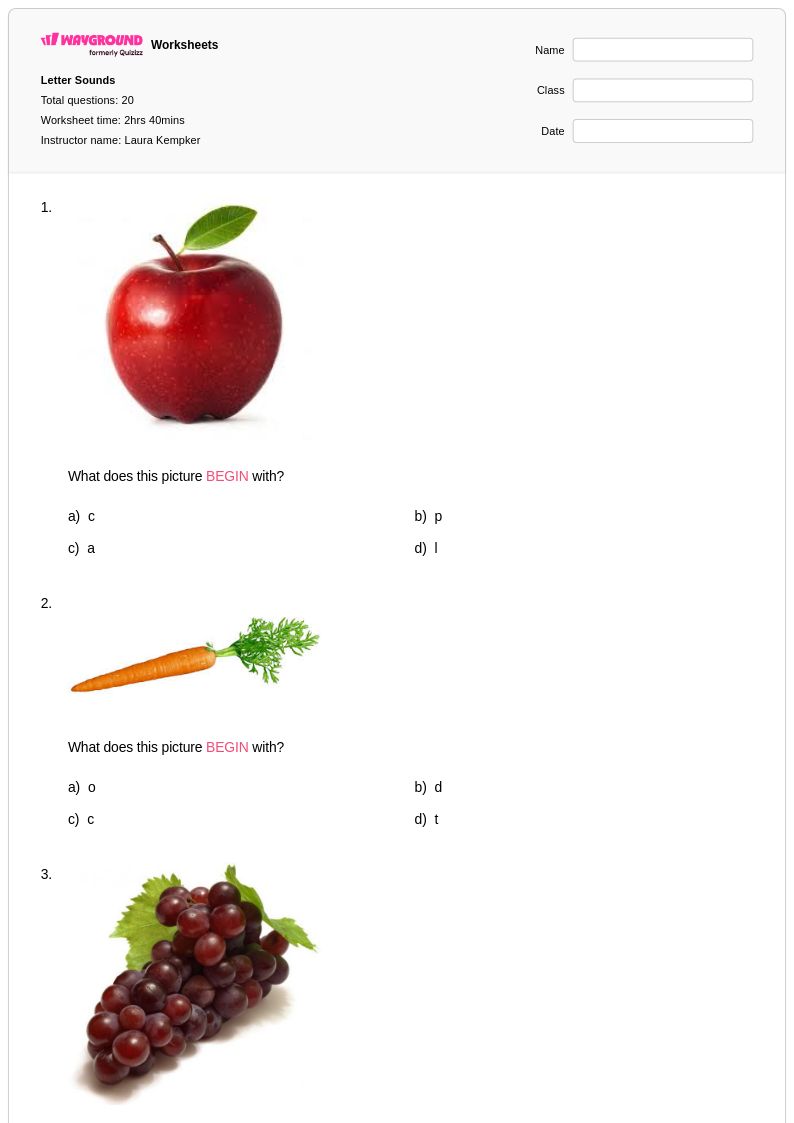
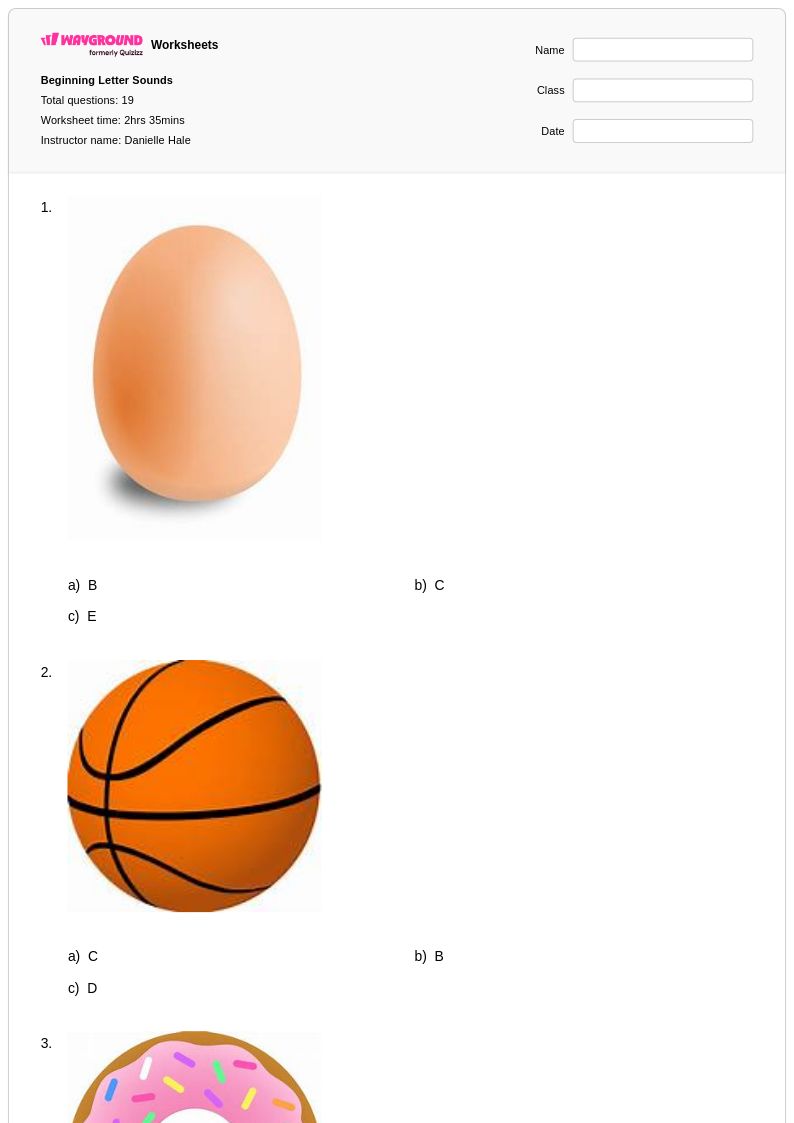
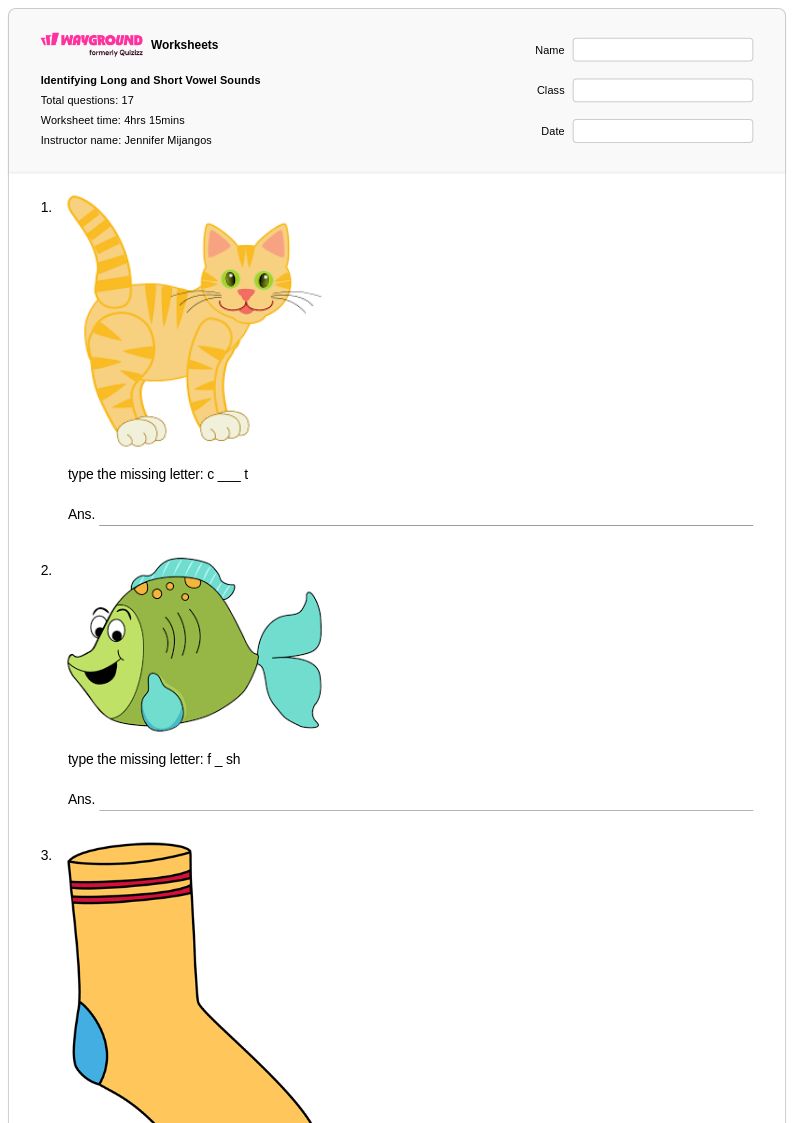
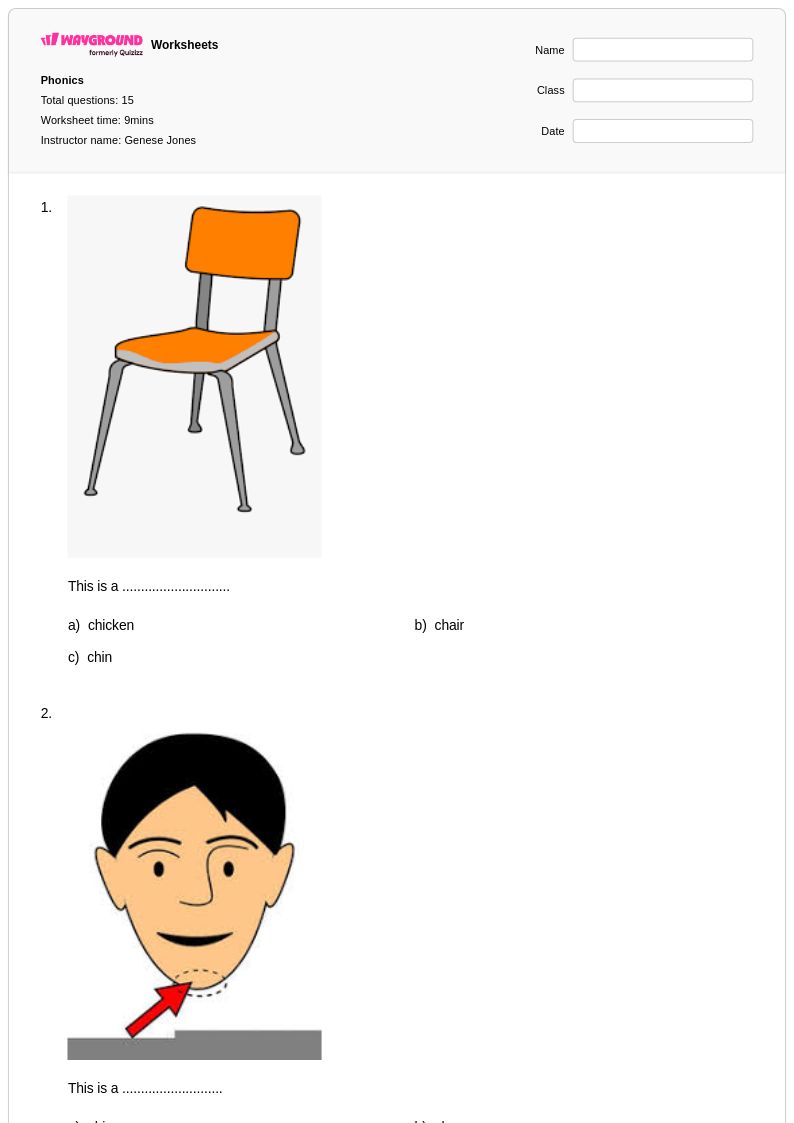
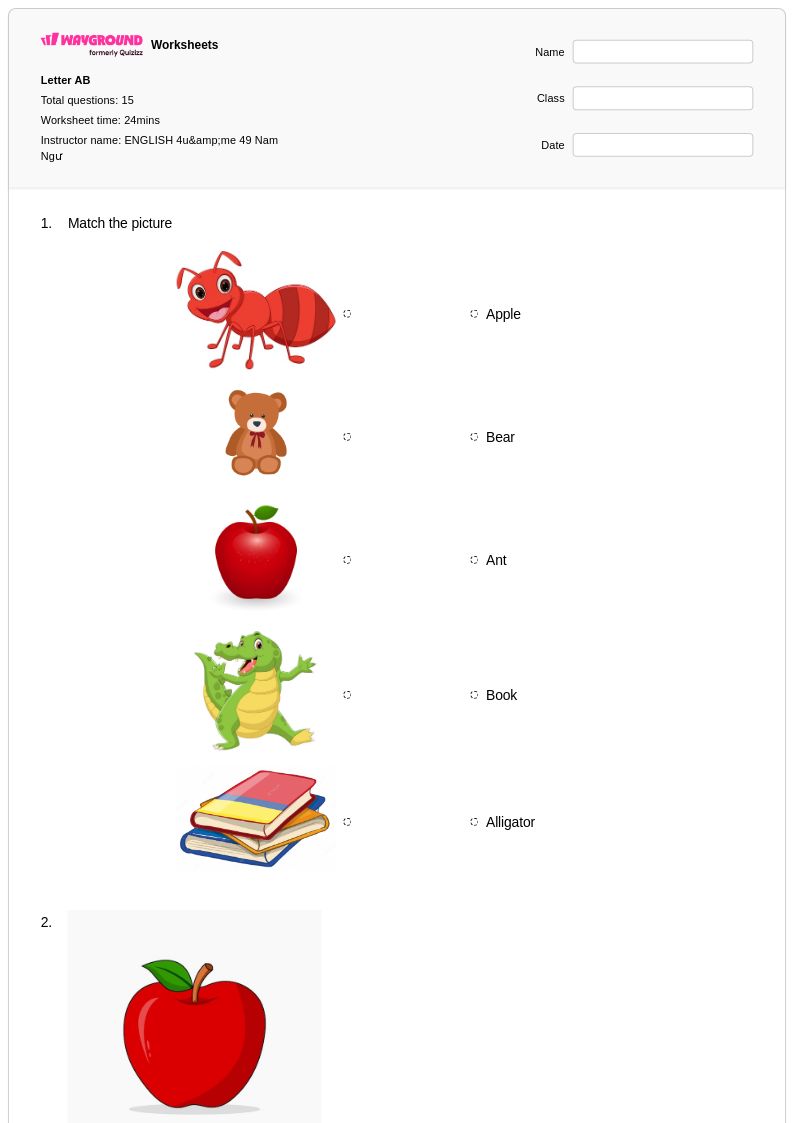
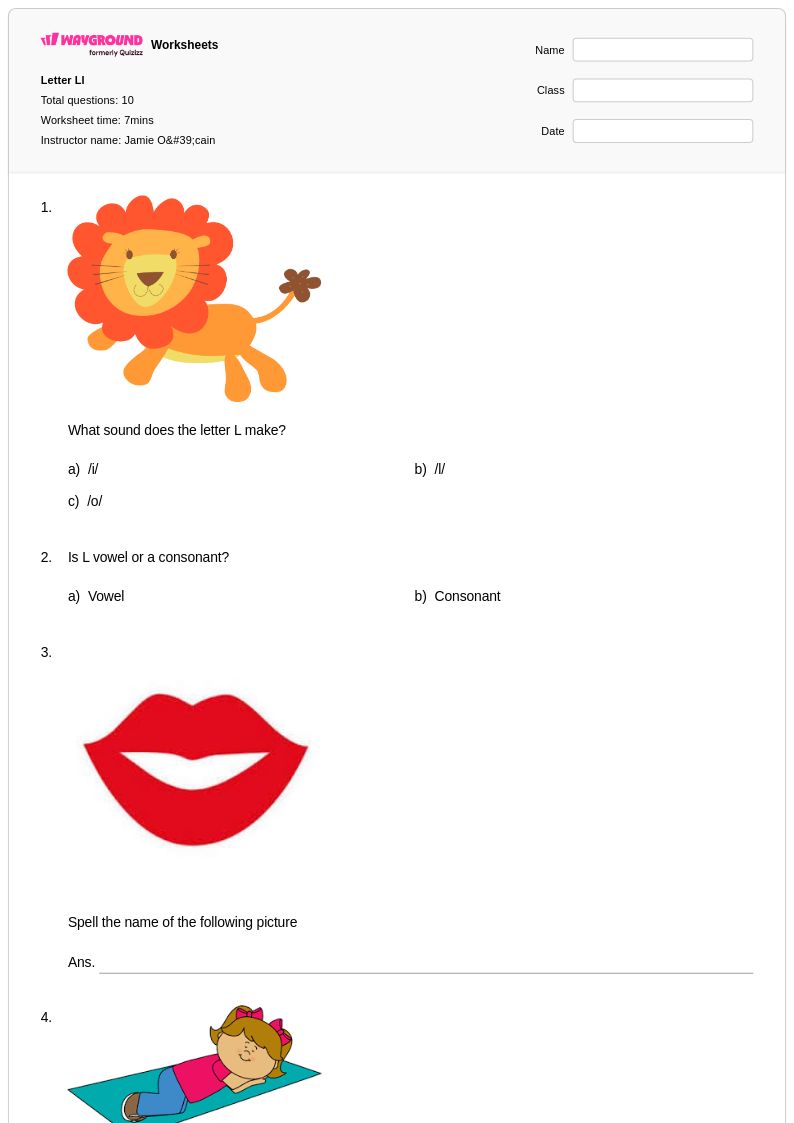
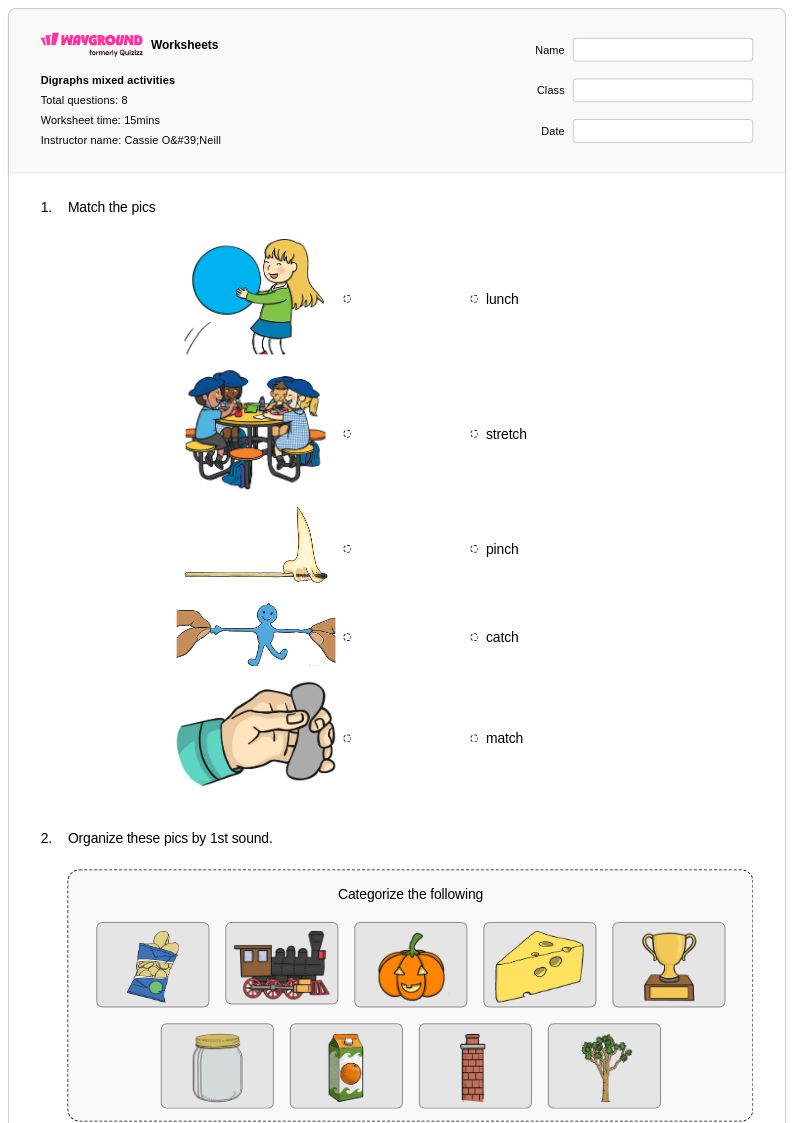
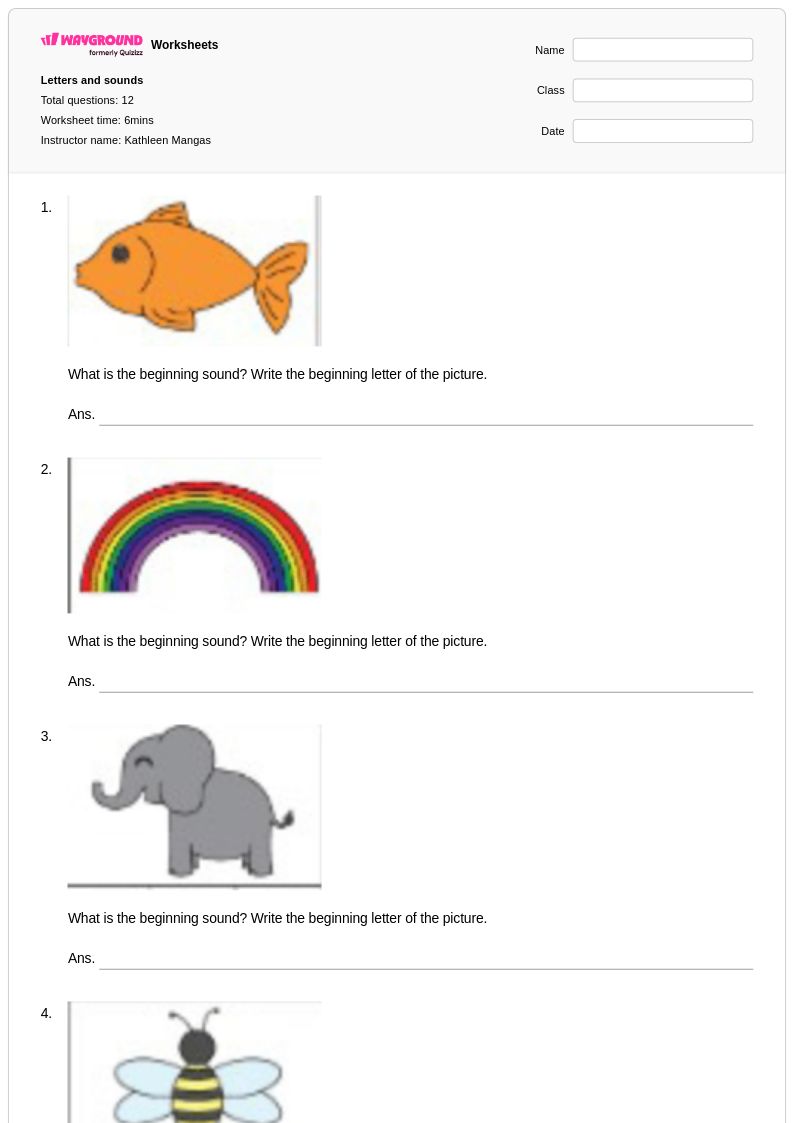
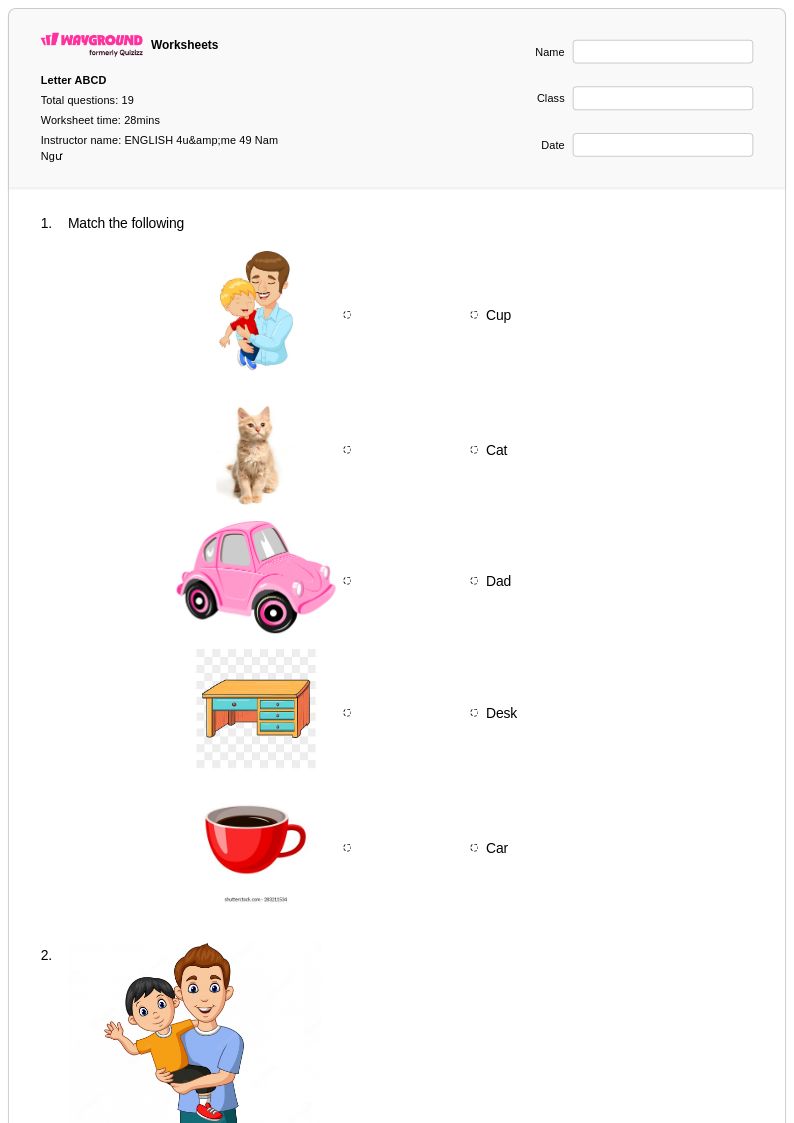
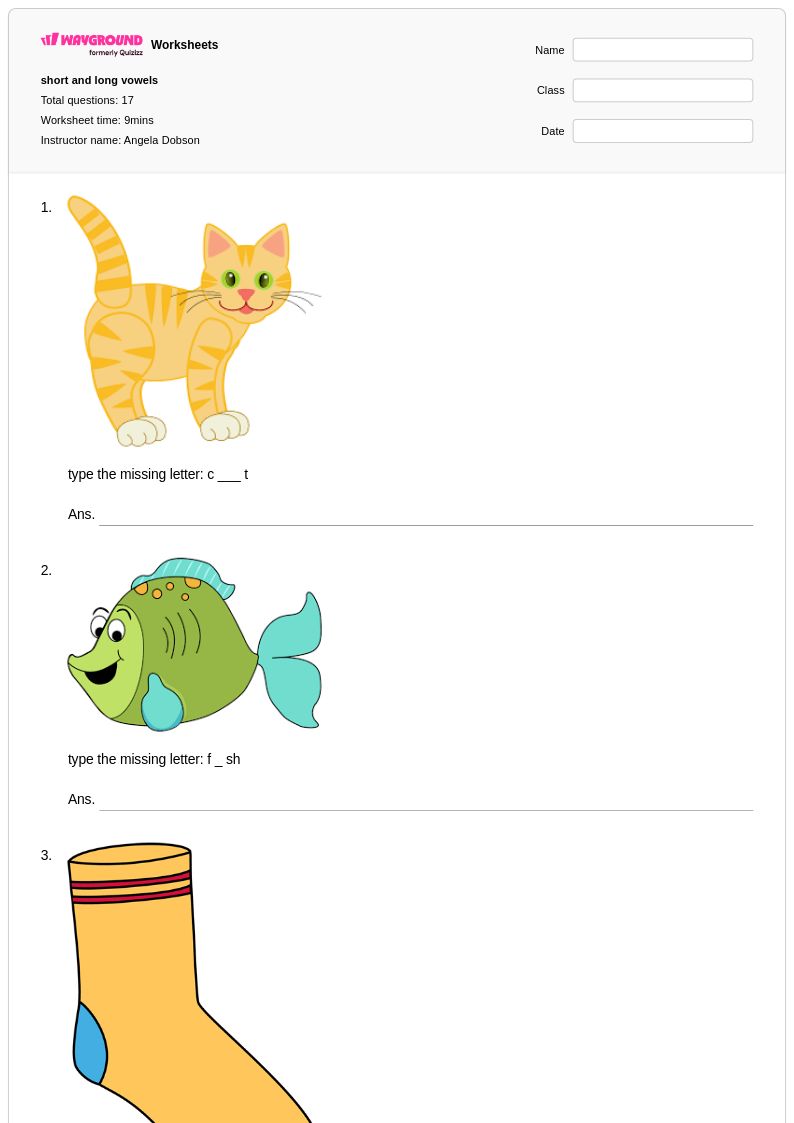
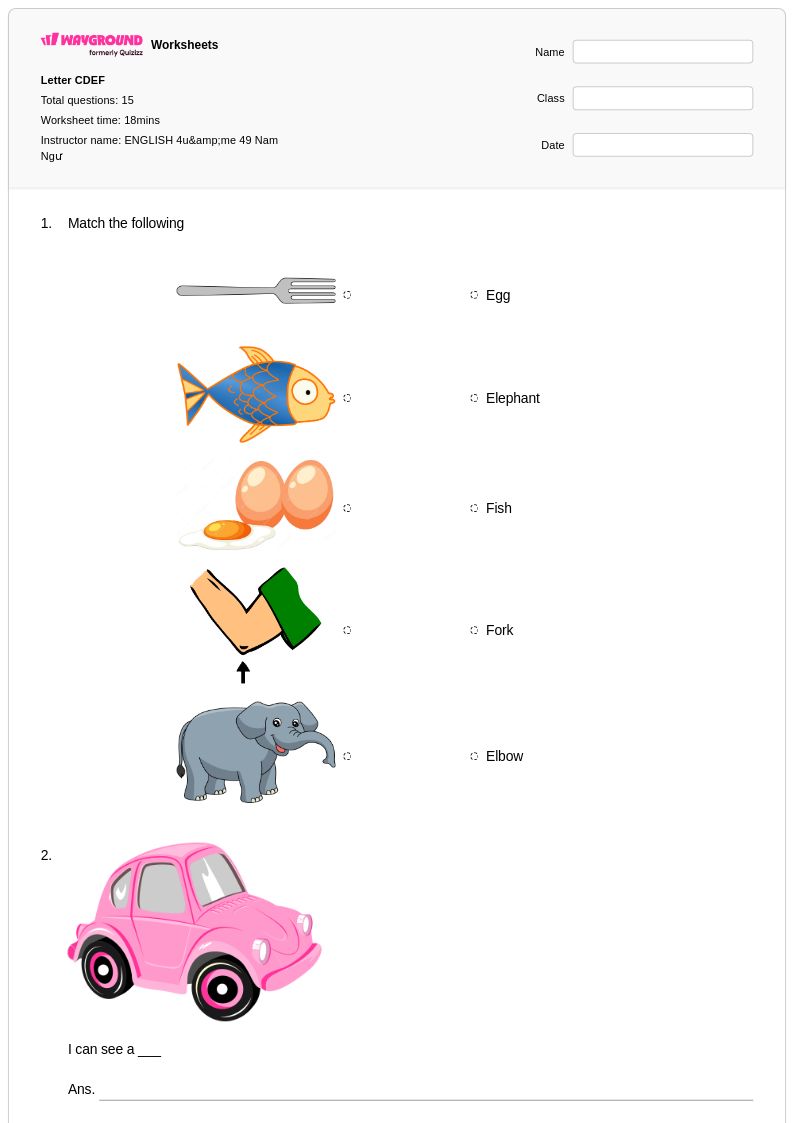
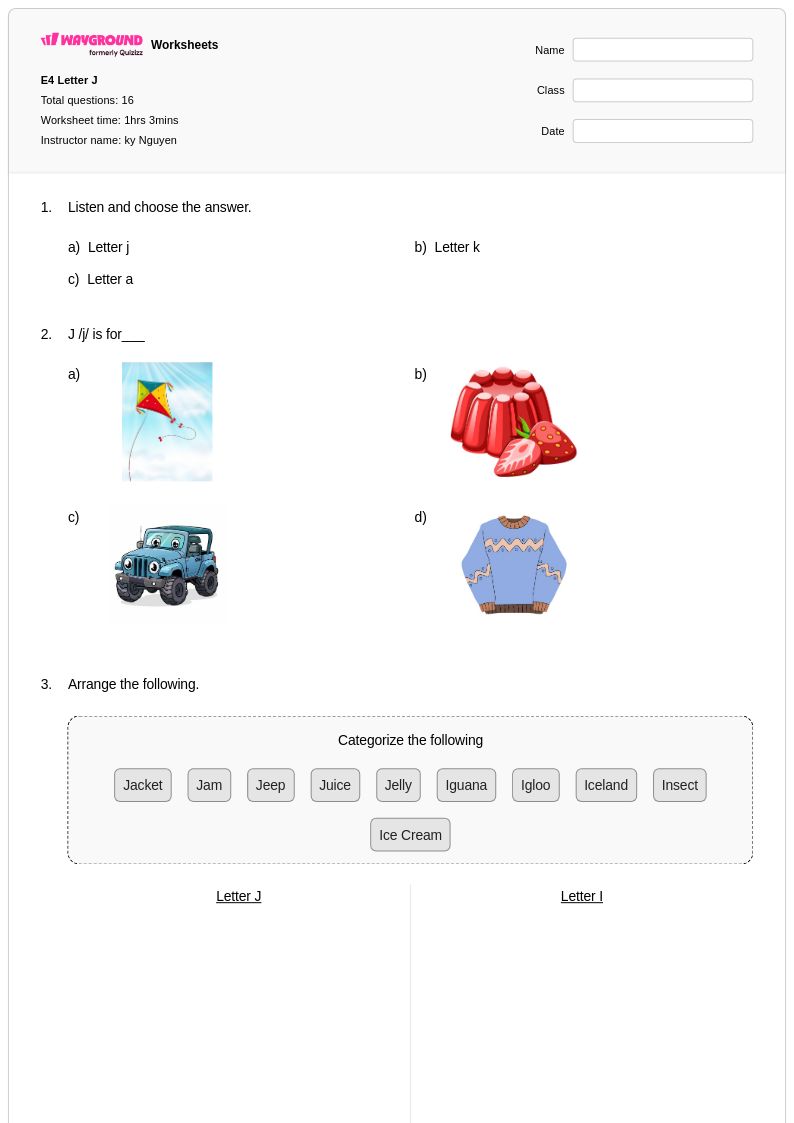
Effective practice exercises include picture-to-letter matching (students identify the beginning sound of a pictured object and match it to the correct letter), sound sorting activities (grouping pictures by shared initial or final sounds), and fill-in-the-blank tasks where students supply the missing letter for a given sound. Repetition across varied formats prevents rote memorization without understanding and helps students generalize letter-sound knowledge to unfamiliar words.
What mistakes do students commonly make when learning letter sounds?
The most common errors involve letter-sound pairs that are visually or auditorily similar — students frequently confuse b/d, p/q, and m/n because of their similar letter shapes, and they mix up short vowel sounds such as /e/ and /i/ because the distinction is subtle in spoken language. Another frequent misconception is assuming that letter names and letter sounds are the same, which causes confusion particularly with vowels and letters like 'h', 'w', and 'y'. Targeted practice on these specific confusable pairs is more effective than general review.
How can I use letter sound identification worksheets in my classroom?
Letter sound identification worksheets on Wayground are available as printable PDFs for traditional classroom use and in digital formats for technology-integrated learning environments, making them flexible enough for whole-class instruction, small group intervention, or independent practice stations. Teachers can also host them as a quiz directly on Wayground, which allows for real-time participation and instant results. Each worksheet includes a complete answer key, so checking work and monitoring individual progress takes minimal preparation time.
How do I differentiate letter sound instruction for students at different skill levels?
For students who are still developing phonemic awareness, focus practice on a single letter-sound correspondence per session and pair it with high-frequency picture cues they already recognize. More advanced students can work on less common correspondences, variant spellings (such as 'c' making the /s/ sound), and multi-letter patterns. On Wayground, teachers can apply individual student accommodations such as Read Aloud support, reduced answer choices, and extended time, which allows struggling readers to access the same phonics content without being overwhelmed by decoding demands on the worksheet itself.
At what age or grade level should students master letter sound identification?
Most students are introduced to letter-sound correspondences in pre-kindergarten and kindergarten, with the expectation that they have solid command of all basic letter sounds by the end of first grade. Students who have not yet mastered these relationships by second grade typically require targeted intervention, as unresolved gaps in letter-sound knowledge directly impede progress in decoding, spelling, and reading fluency. Early and consistent screening helps identify students who need additional support before these gaps compound.