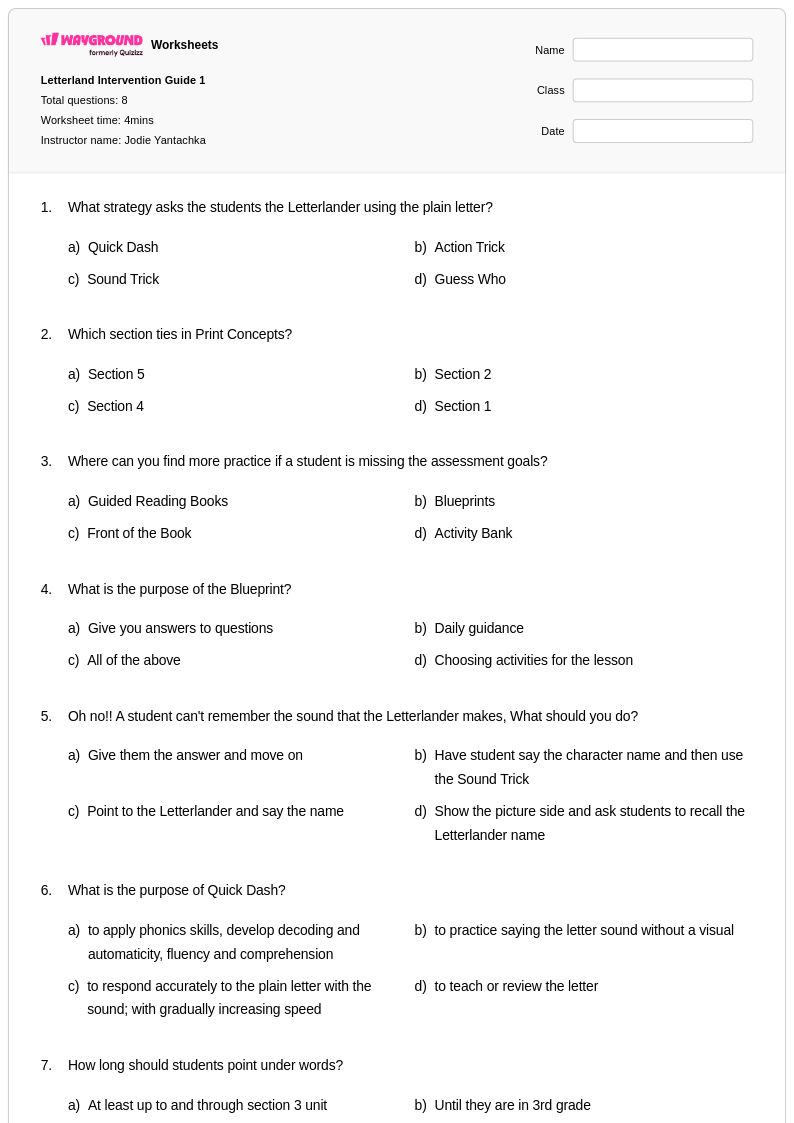
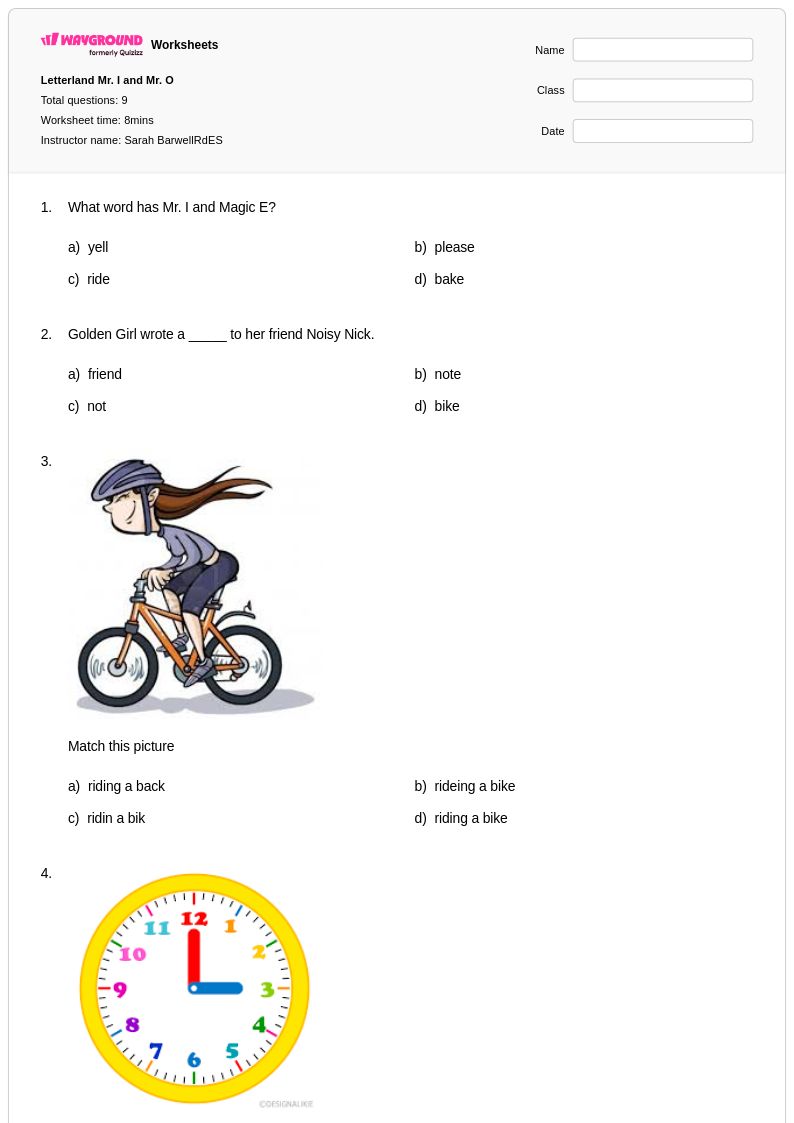
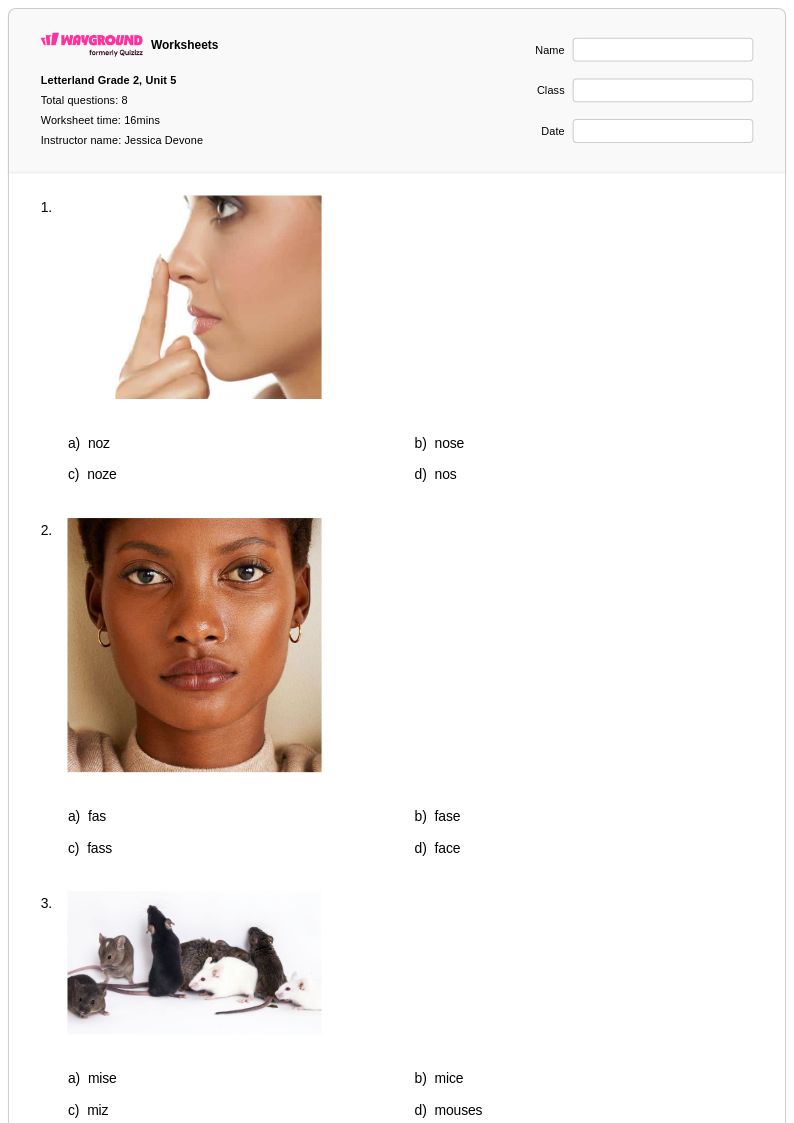
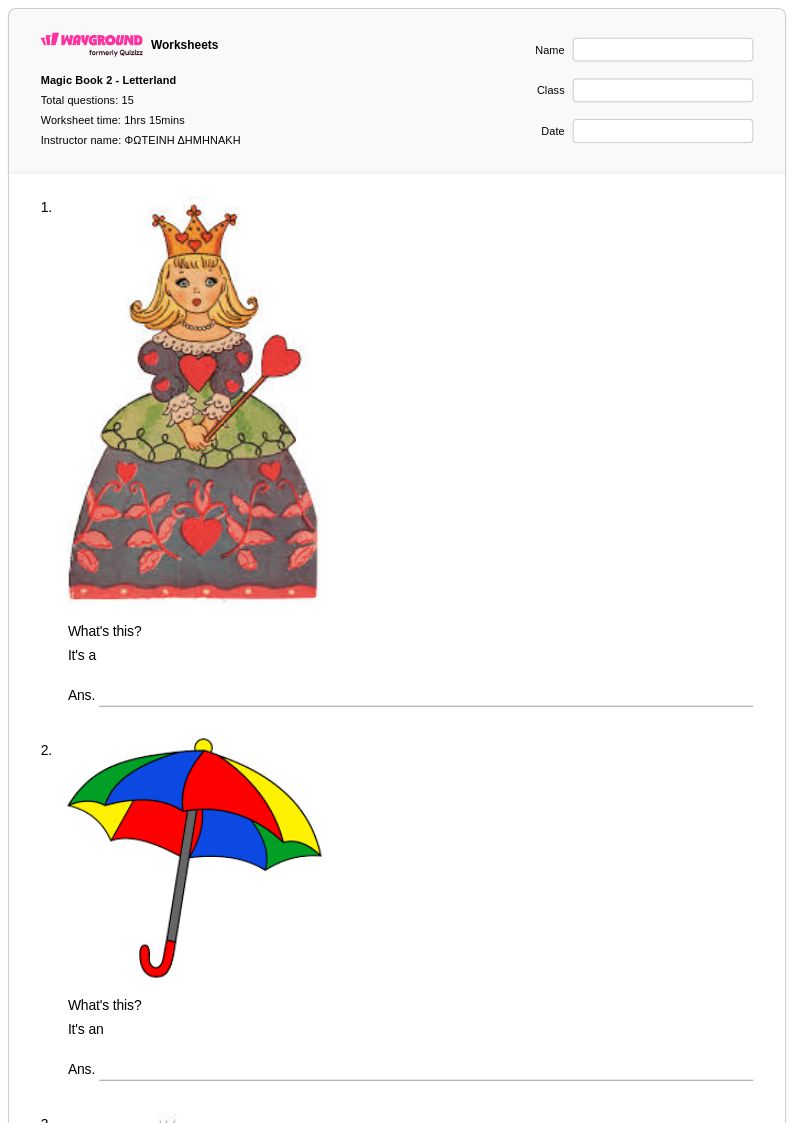
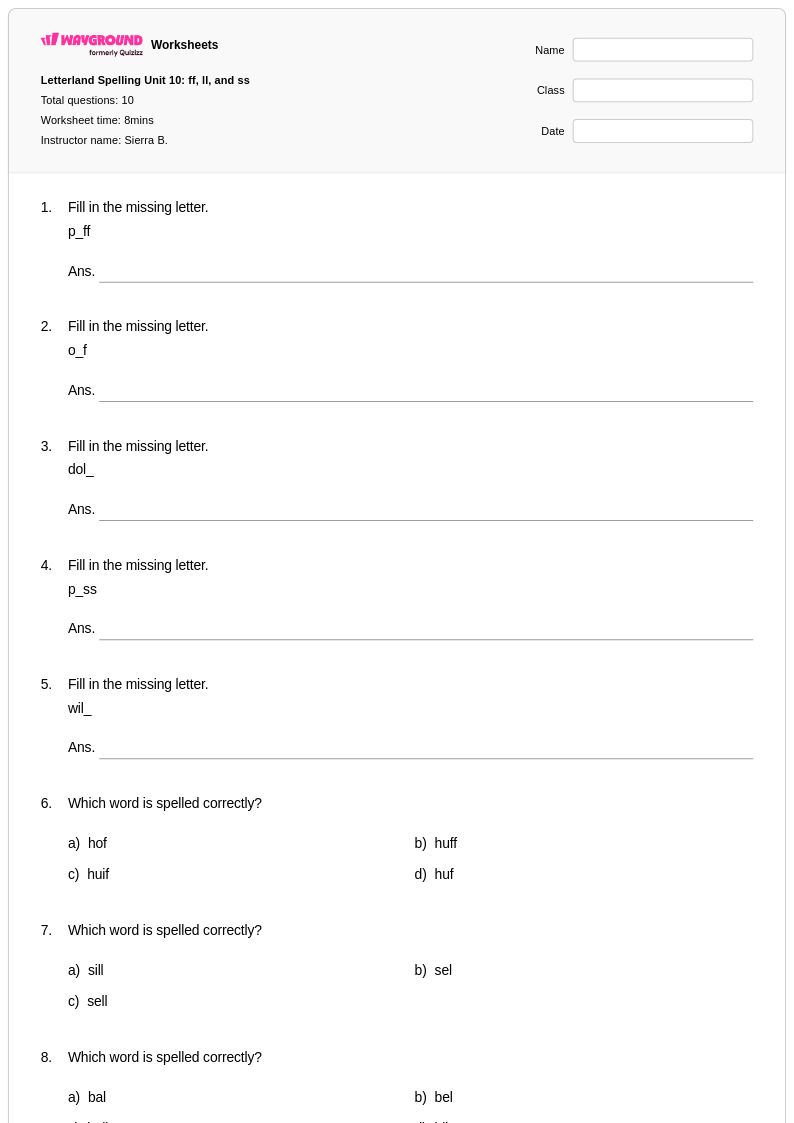
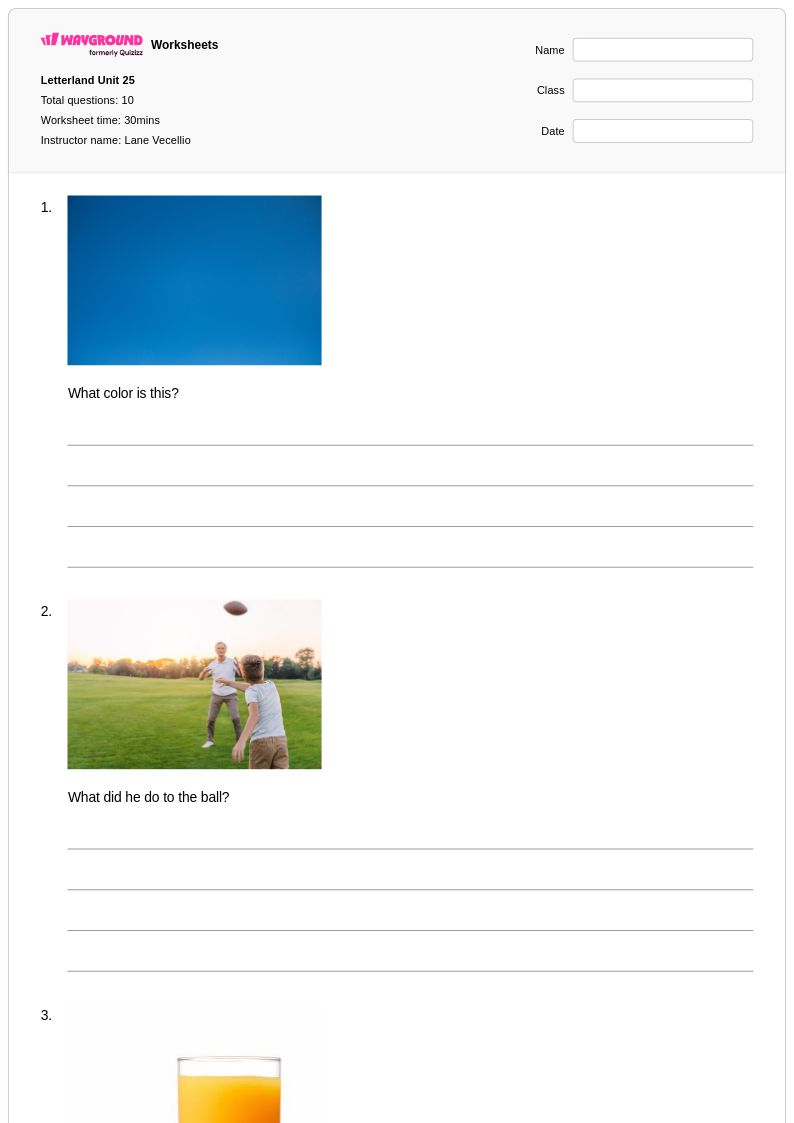
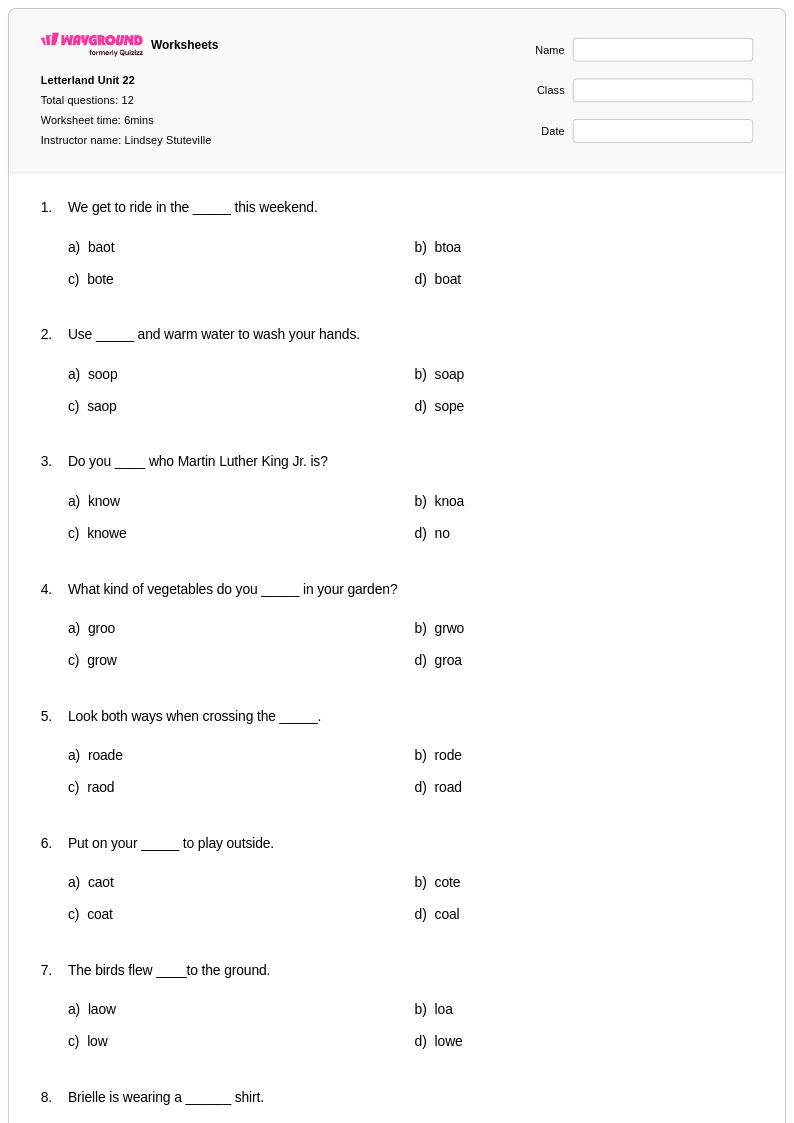
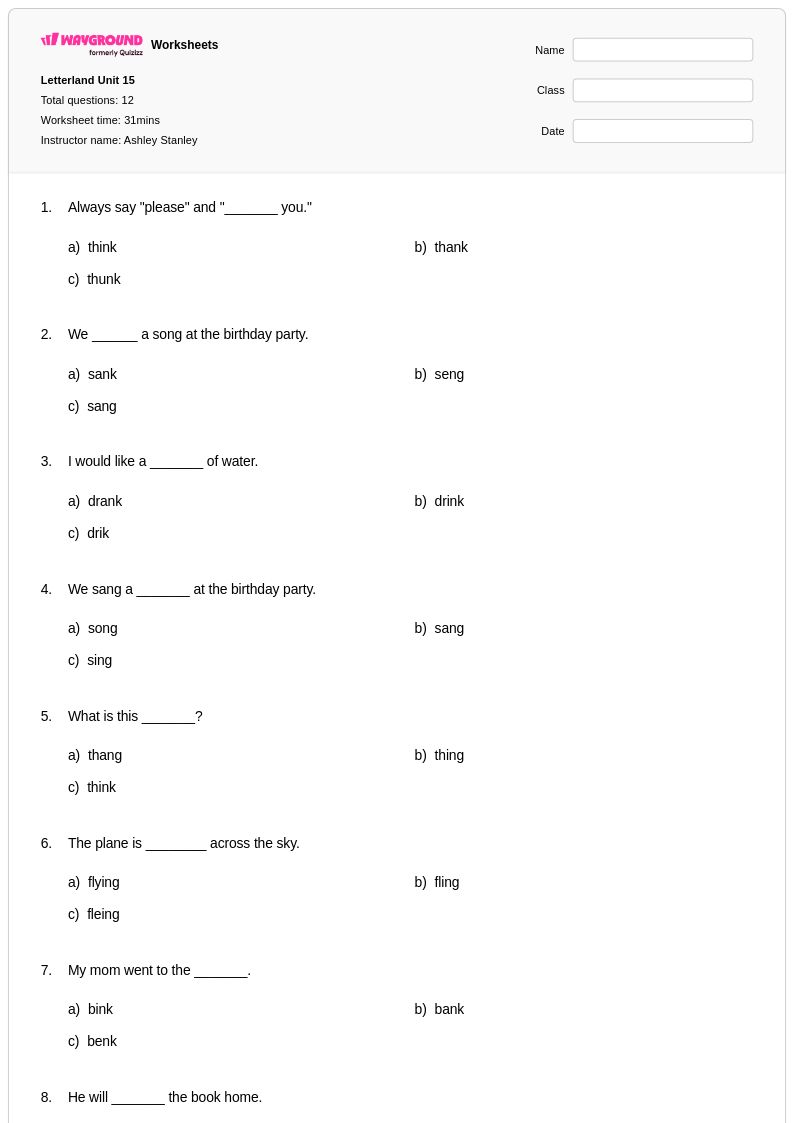
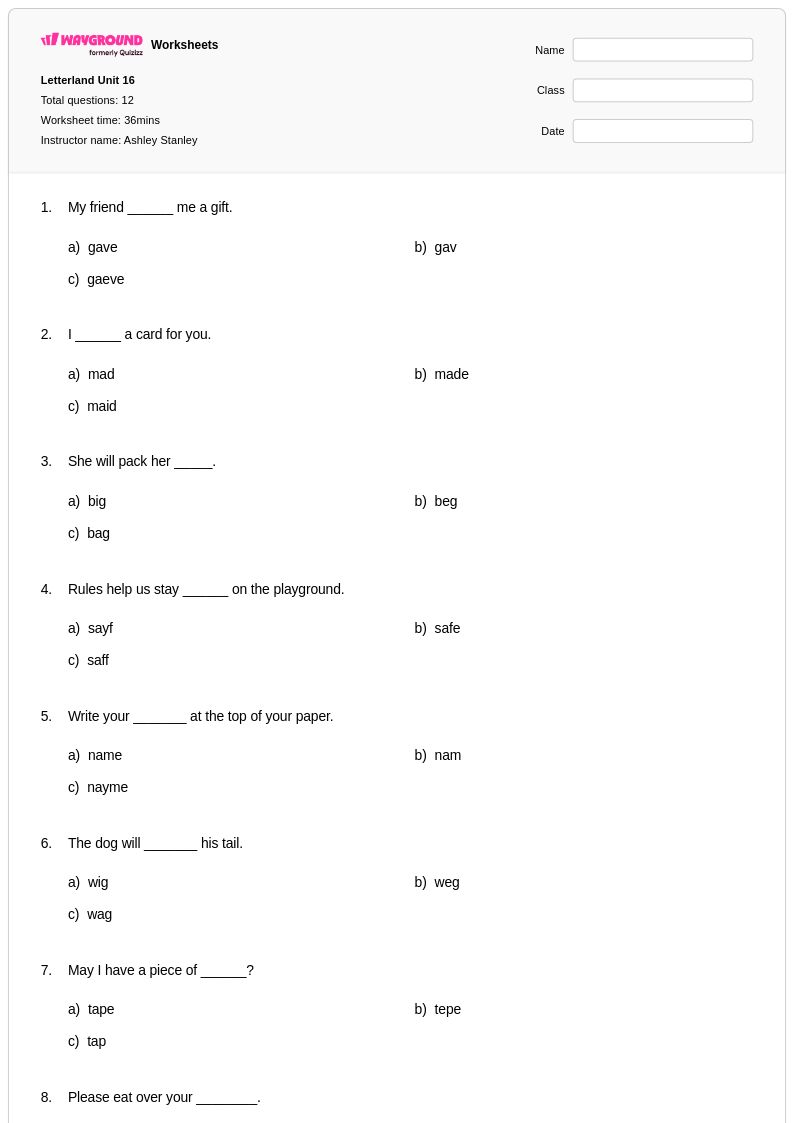
Grade 1 Letterland phonics worksheets from Wayground provide engaging printables and practice problems that help young learners master letter sounds and reading fundamentals through fun character-based activities with complete answer keys.
Explore printable Letterland worksheets for Grade 1
Letterland worksheets for Grade 1 students available through Wayground (formerly Quizizz) provide an engaging foundation for early phonics instruction by transforming letters into memorable characters and stories. These comprehensive printables help young learners develop essential pre-reading and reading skills through systematic phonetic awareness activities that make abstract letter concepts concrete and meaningful. Each worksheet incorporates the proven Letterland methodology, where letters become animated characters with distinct personalities and adventures that help children remember letter sounds, formations, and relationships. The collection includes practice problems that progress from basic letter recognition to more complex phonemic awareness tasks, with detailed answer keys provided to support both independent learning and guided instruction. Teachers can access these free resources in convenient PDF format, making it easy to integrate Letterland's multi-sensory approach into daily phonics lessons.
Wayground's extensive library supports educators with millions of teacher-created Letterland resources that can be easily located through robust search and filtering capabilities designed specifically for Grade 1 phonics instruction. The platform's alignment with early literacy standards ensures that worksheets meet curriculum requirements while offering differentiation tools that allow teachers to customize activities for diverse learning needs and reading readiness levels. Whether delivered as printable worksheets for hands-on practice or digital activities for interactive learning, these resources provide flexibility for various classroom environments and teaching styles. Teachers can efficiently plan comprehensive phonics units, implement targeted remediation for struggling readers, offer enrichment opportunities for advanced students, and provide consistent skill practice that reinforces the Letterland characters and their phonetic relationships throughout the academic year.
FAQs
How do I teach phonics using Letterland characters?
Letterland teaches phonics by associating each letter with a memorable character — for example, Annie Apple represents the letter 'a' and Bouncy Ben represents 'b' — so students form a story-based connection to each letter sound rather than memorizing abstract symbols. In practice, introduce one character at a time, reinforce the character's name and sound together, and use consistent visual and verbal cues across activities. This character-based approach is especially effective for early readers because it gives them a concrete mental anchor when they encounter a letter in print.
What exercises help students practice letter-sound relationships in Letterland?
Effective Letterland practice exercises include character-matching tasks where students connect a letter to its Letterland figure, tracing and writing activities that reinforce letter formation alongside the associated sound, and early decoding tasks where students identify the target sound within simple words. Worksheets that incorporate the Letterland characters visually — rather than presenting letters in isolation — tend to strengthen phonemic awareness more durably for young learners. Repeated exposure to the same character across varied exercise types helps students internalize letter-sound relationships without rote drilling.
What mistakes do young students commonly make when learning letter sounds with Letterland?
A common error is confusing visually similar letters such as 'b' and 'd' or 'p' and 'q', even within a character-based system, because students may remember the character name without fully anchoring it to the correct letter orientation. Students also sometimes recall the character's name but struggle to transfer the sound to print when the character image is removed. Regularly pairing character visuals with plain letter practice — rather than relying on the image as a permanent scaffold — helps students build independent decoding skills.
How can I differentiate Letterland phonics instruction for students at different ability levels?
For struggling readers, focus on one Letterland character at a time with high repetition, and consider using Wayground's Read Aloud feature so questions and prompts are read to students who need additional decoding support. Students who are advancing quickly can move into early blending and segmenting tasks that combine multiple Letterland characters within simple CVC words. Wayground also supports reduced answer choices for students who need lower cognitive load, and extended time settings can be assigned individually so each student works at an appropriate pace without disrupting the rest of the class.
How do I use Letterland worksheets on Wayground in my classroom?
Letterland worksheets on Wayground are available as printable PDFs for traditional classroom use and in digital formats for technology-integrated or distance learning environments, giving teachers flexibility in how they deploy them. Teachers can also host worksheets as a live quiz on Wayground, which allows for real-time participation and immediate feedback. Each worksheet includes an answer key, making them practical for independent centers, guided small-group instruction, or take-home practice.