
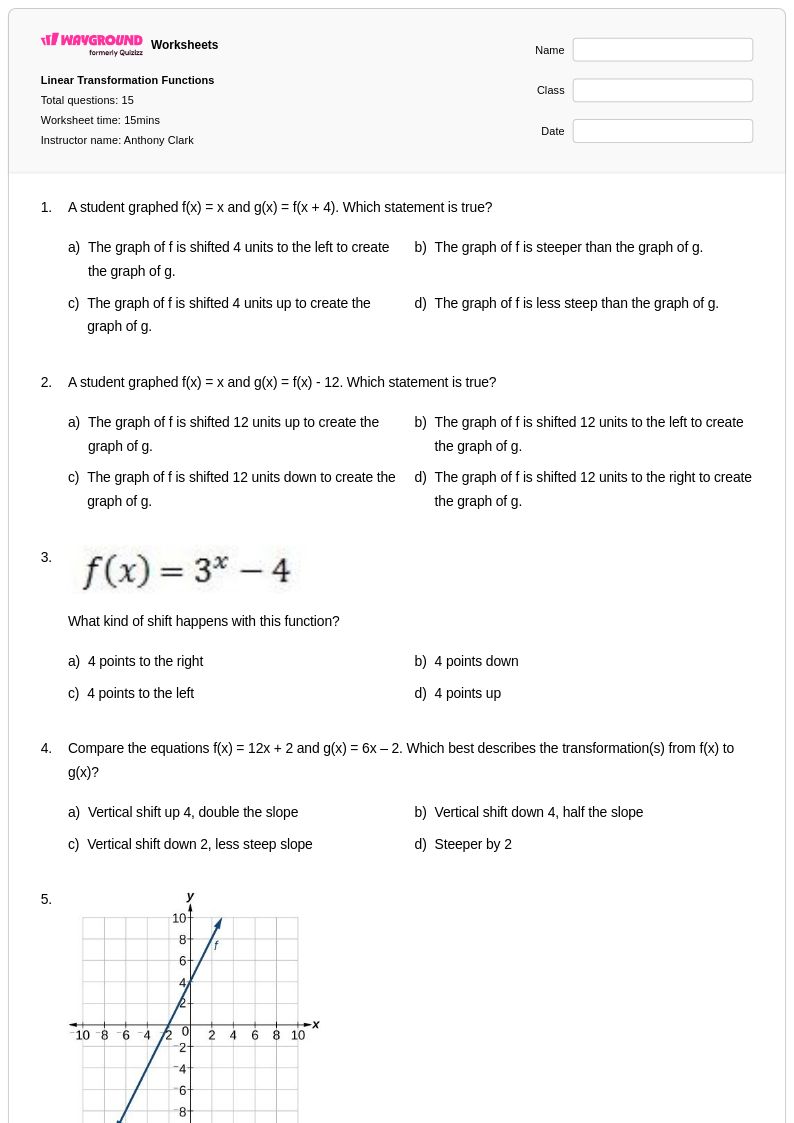
15 Q
9th - Uni
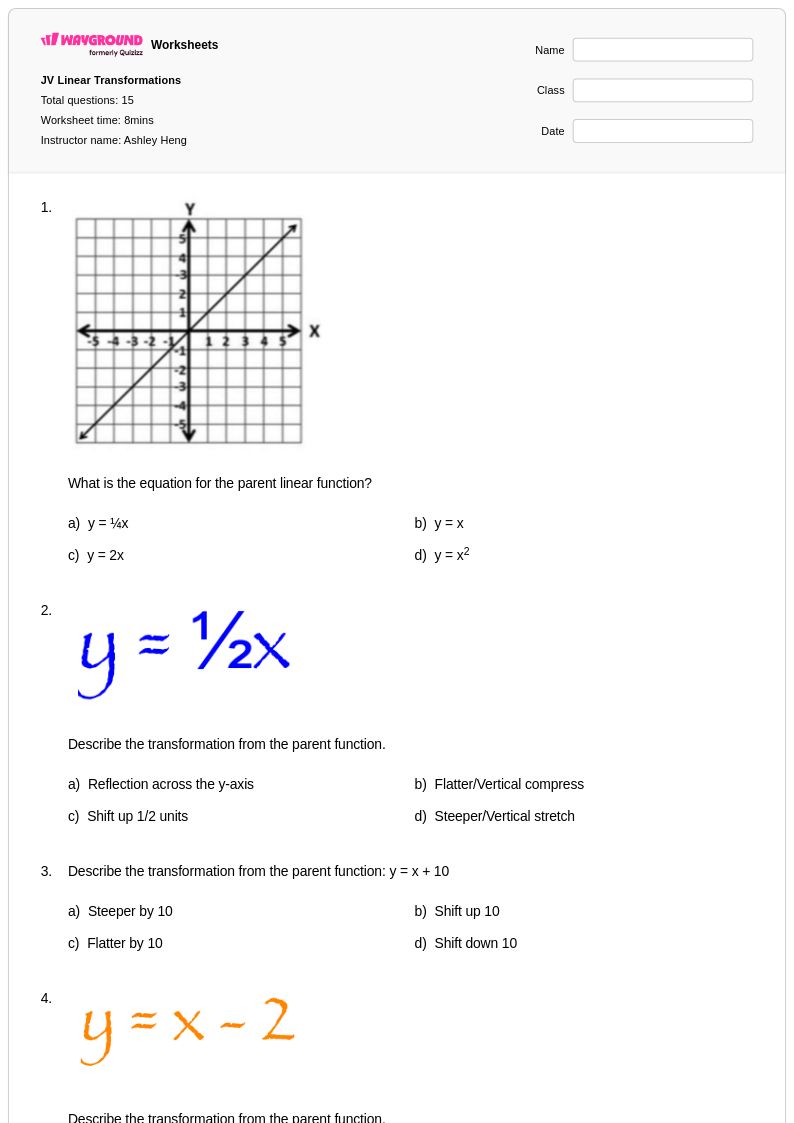
15 Q
9th
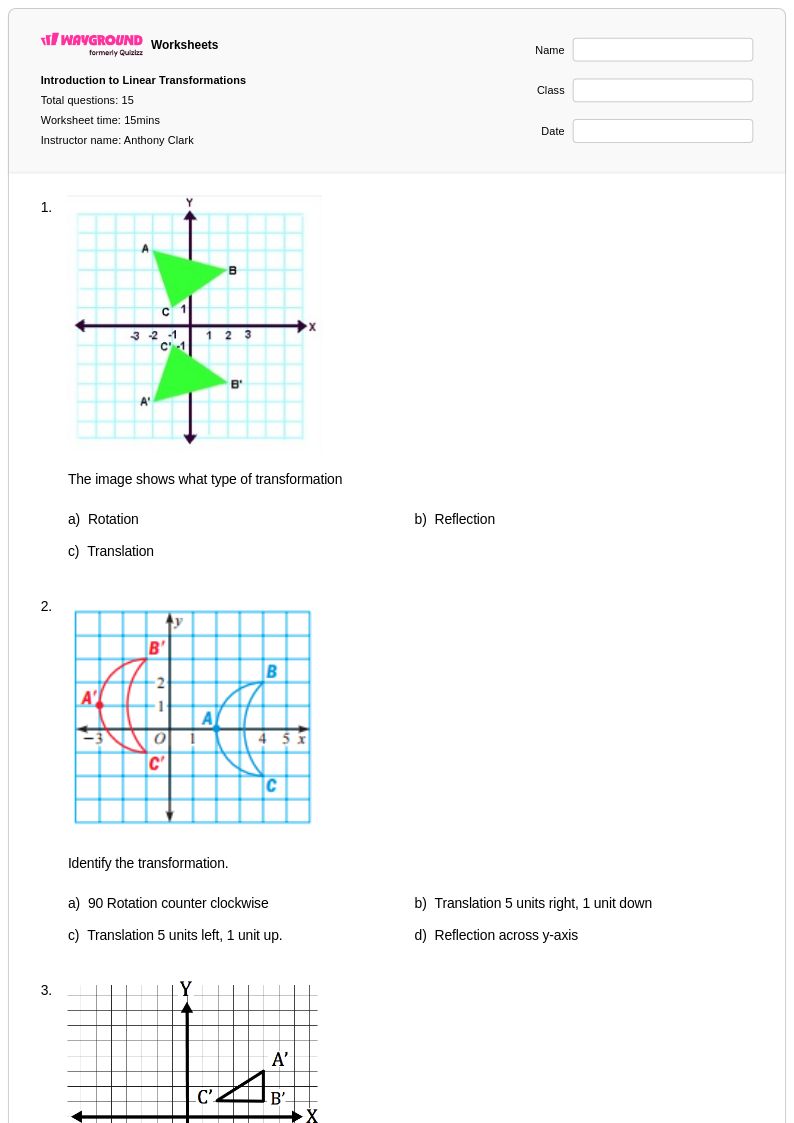
15 Q
9th - Uni
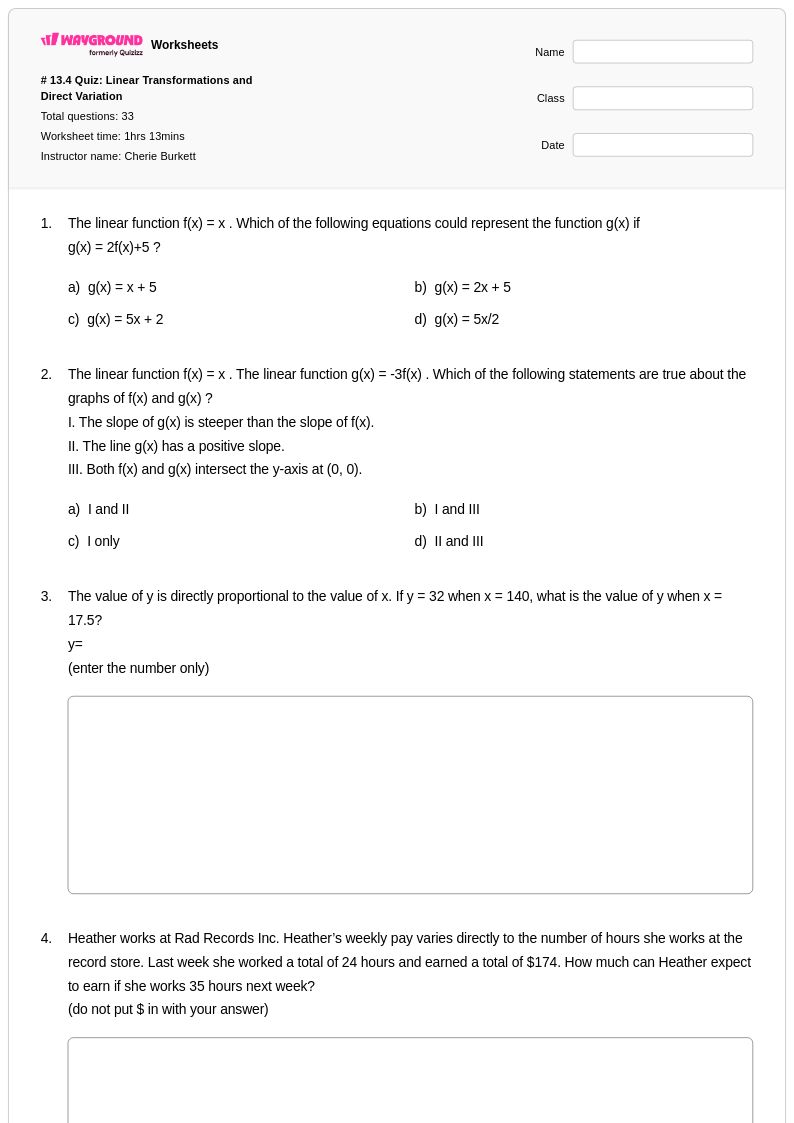
33 Q
9th
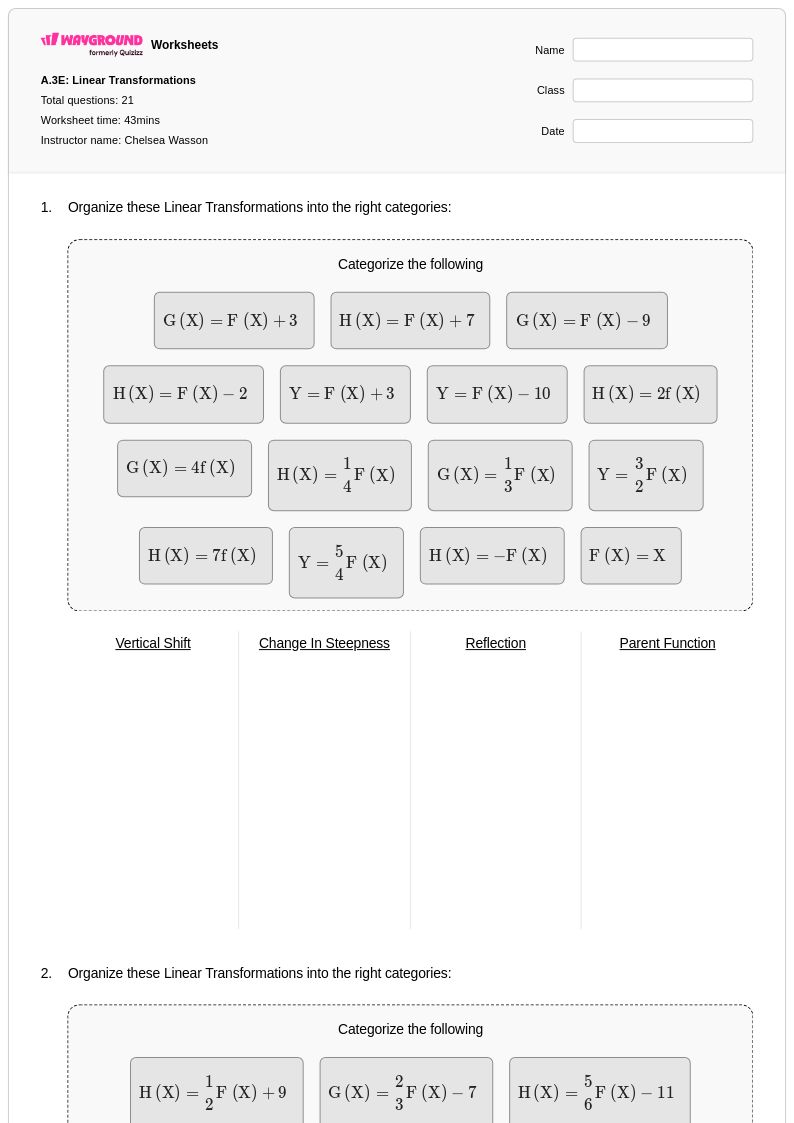
21 Q
9th
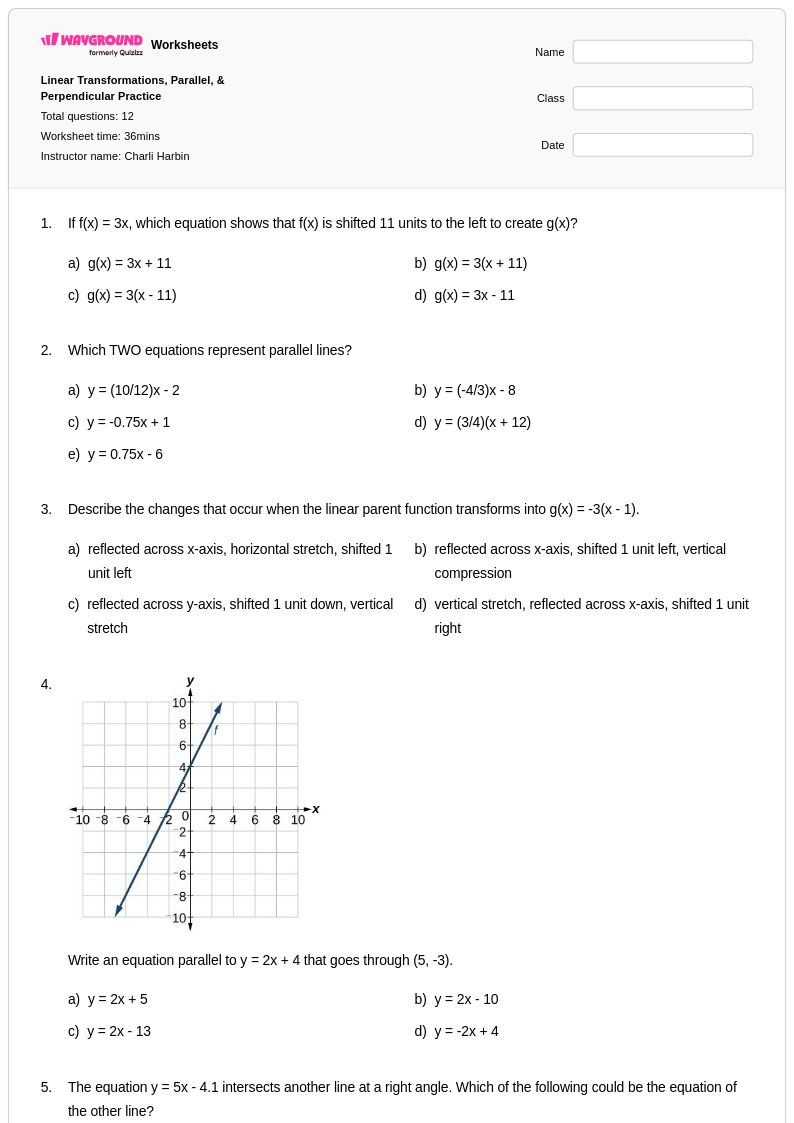
12 Q
8th - 10th
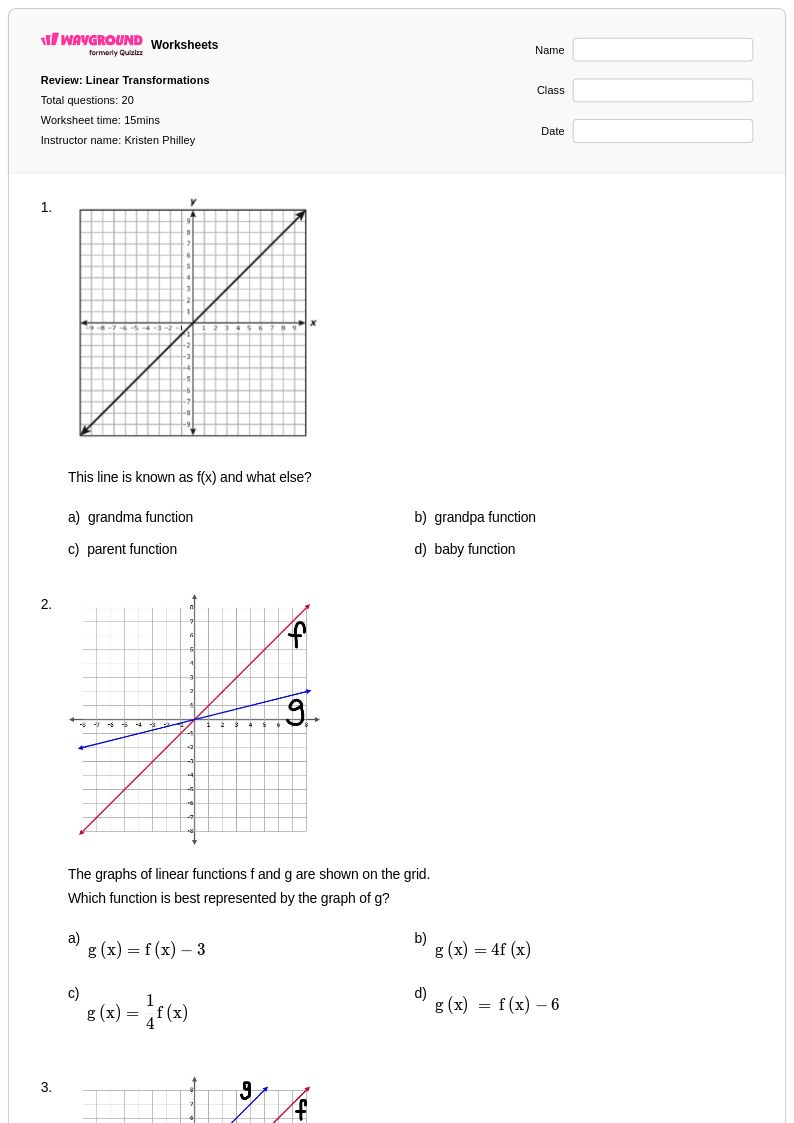
20 Q
9th
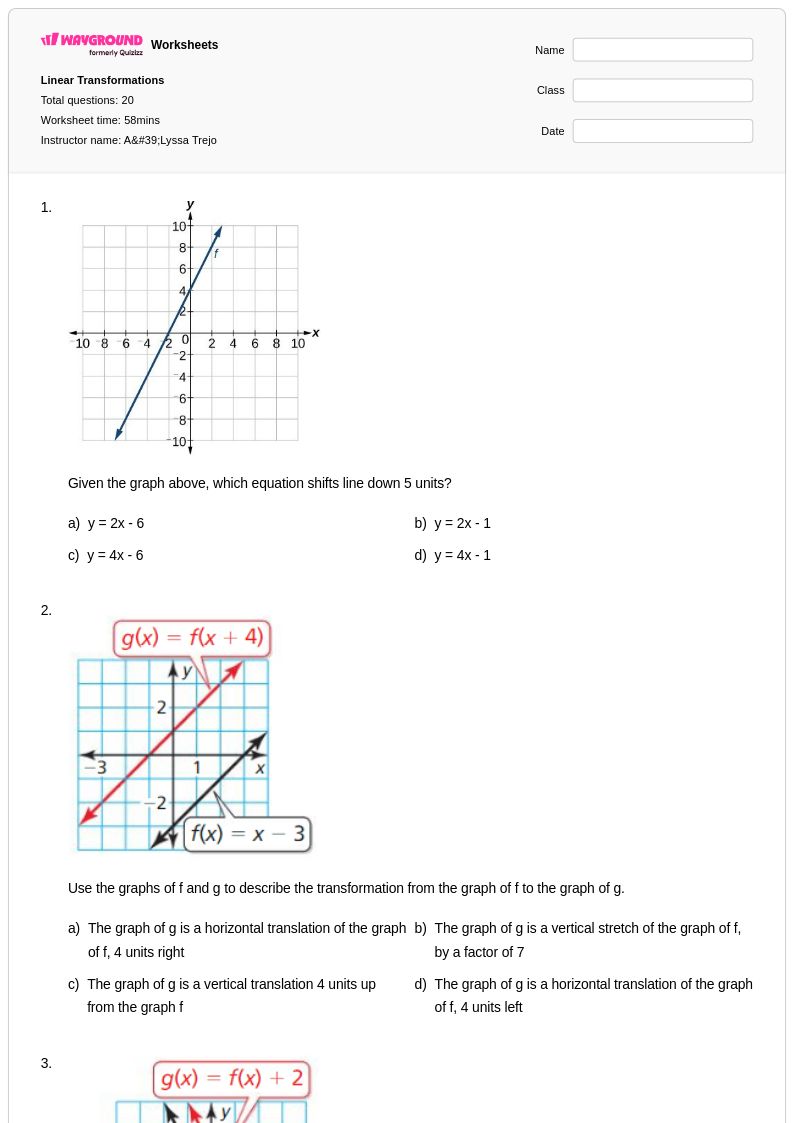
20 Q
9th
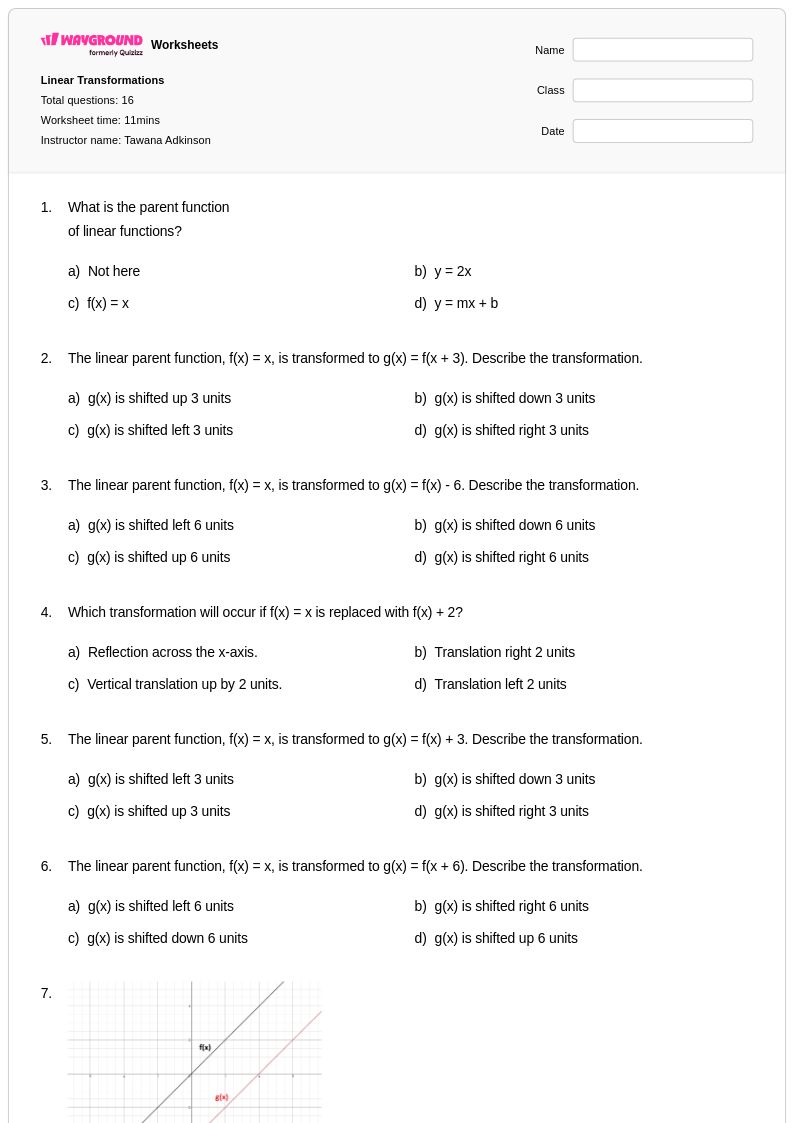
16 Q
9th
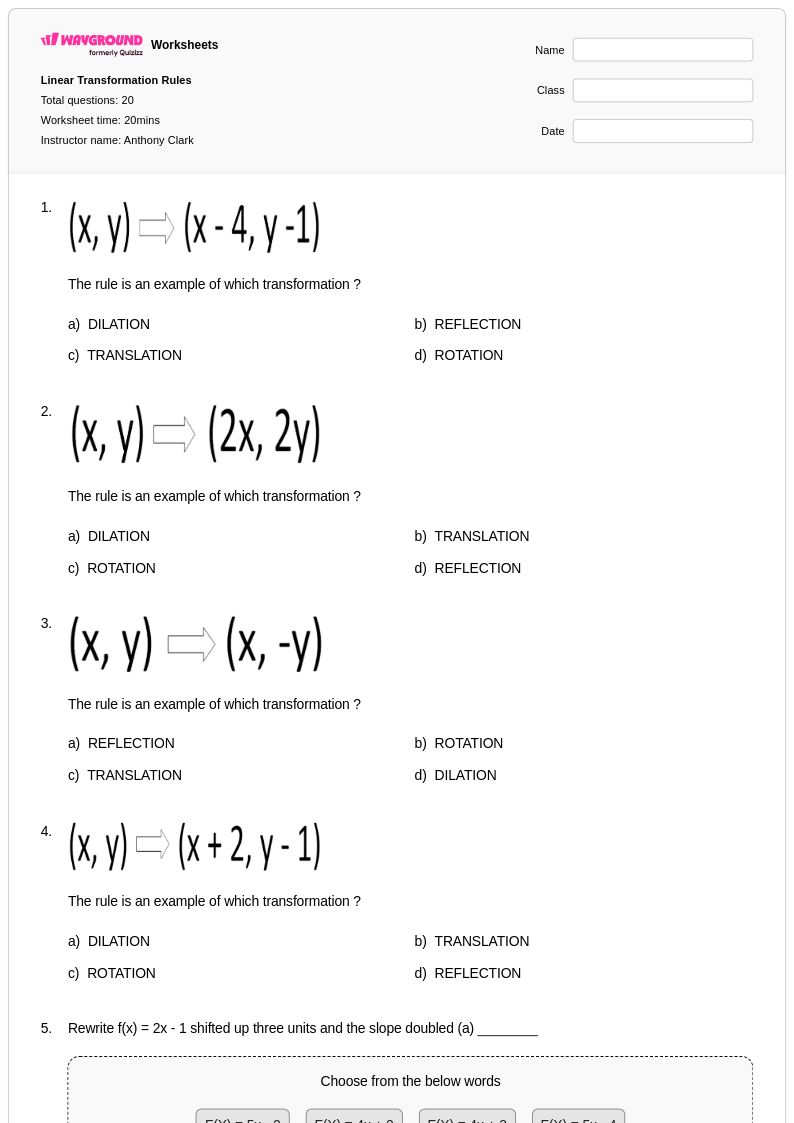
20 Q
8th - Uni
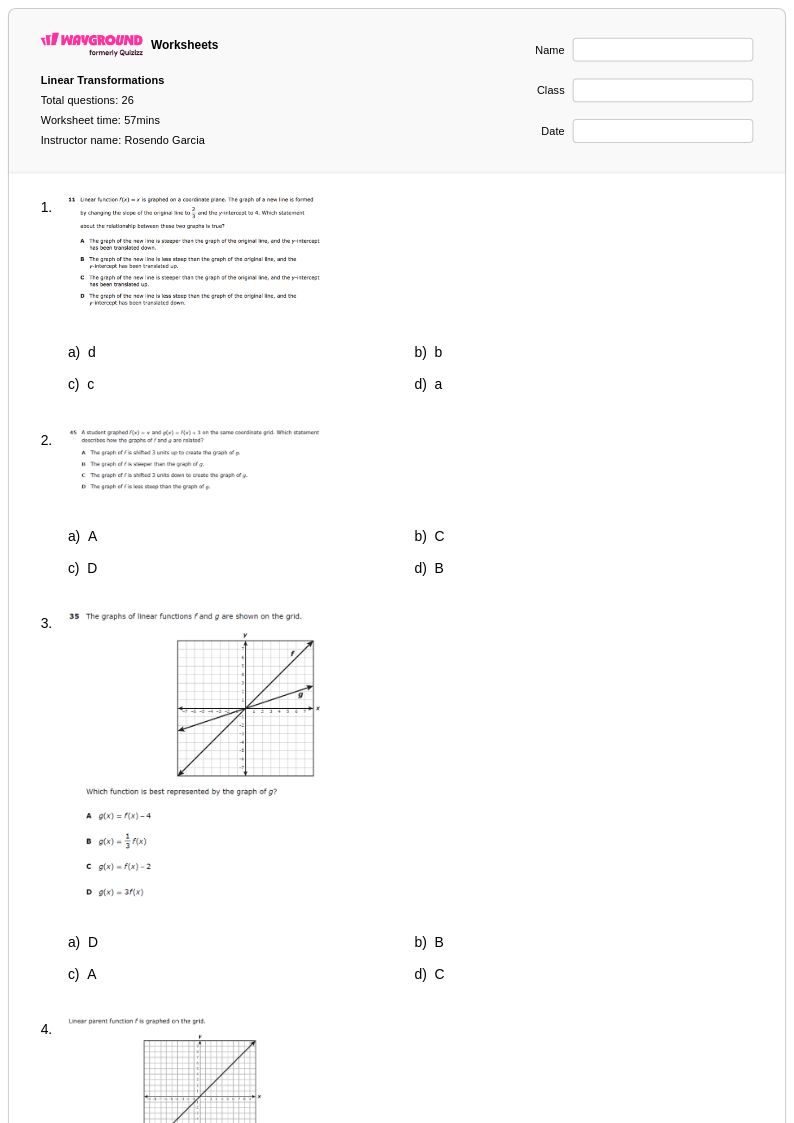
26 Q
9th
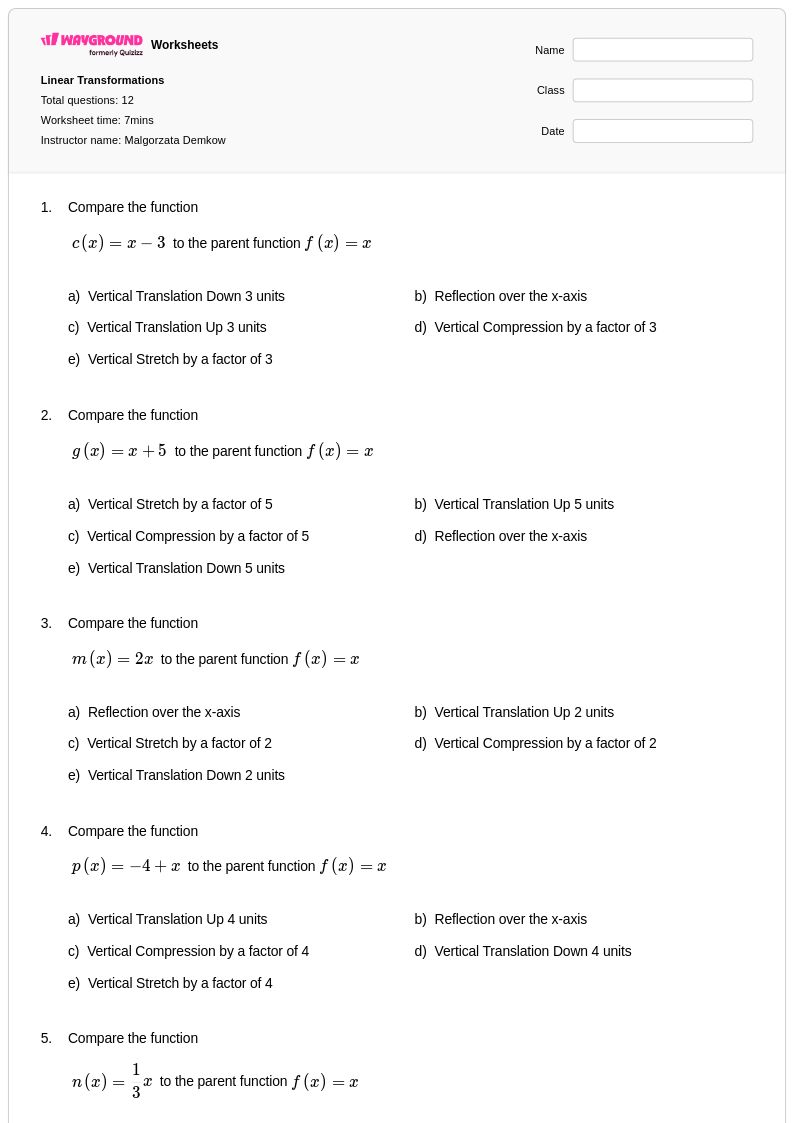
12 Q
8th - 9th
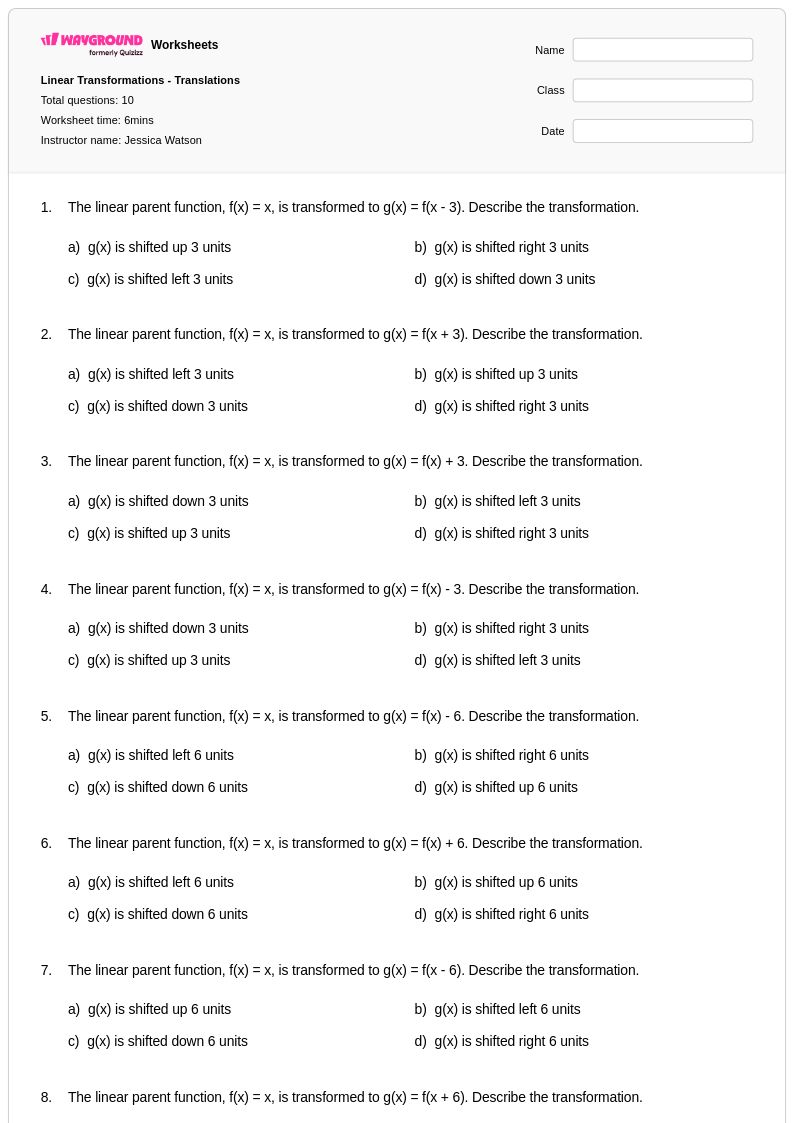
10 Q
9th
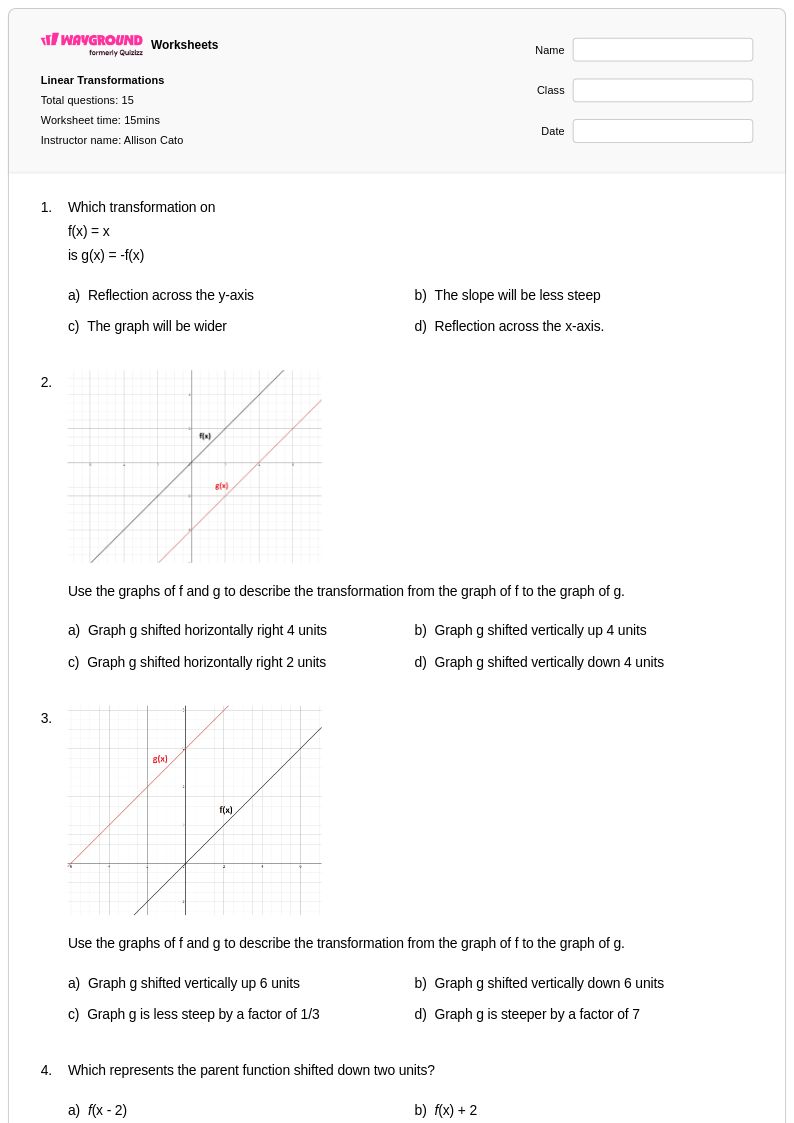
15 Q
9th
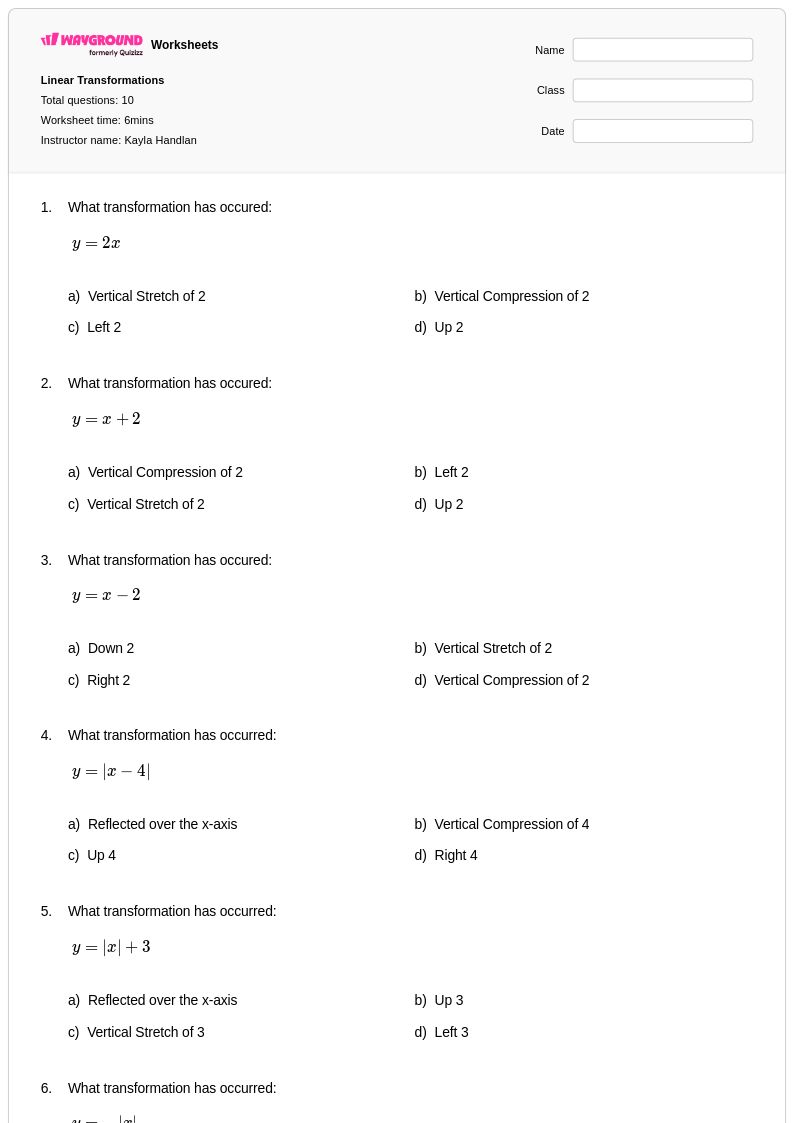
10 Q
9th - 11th
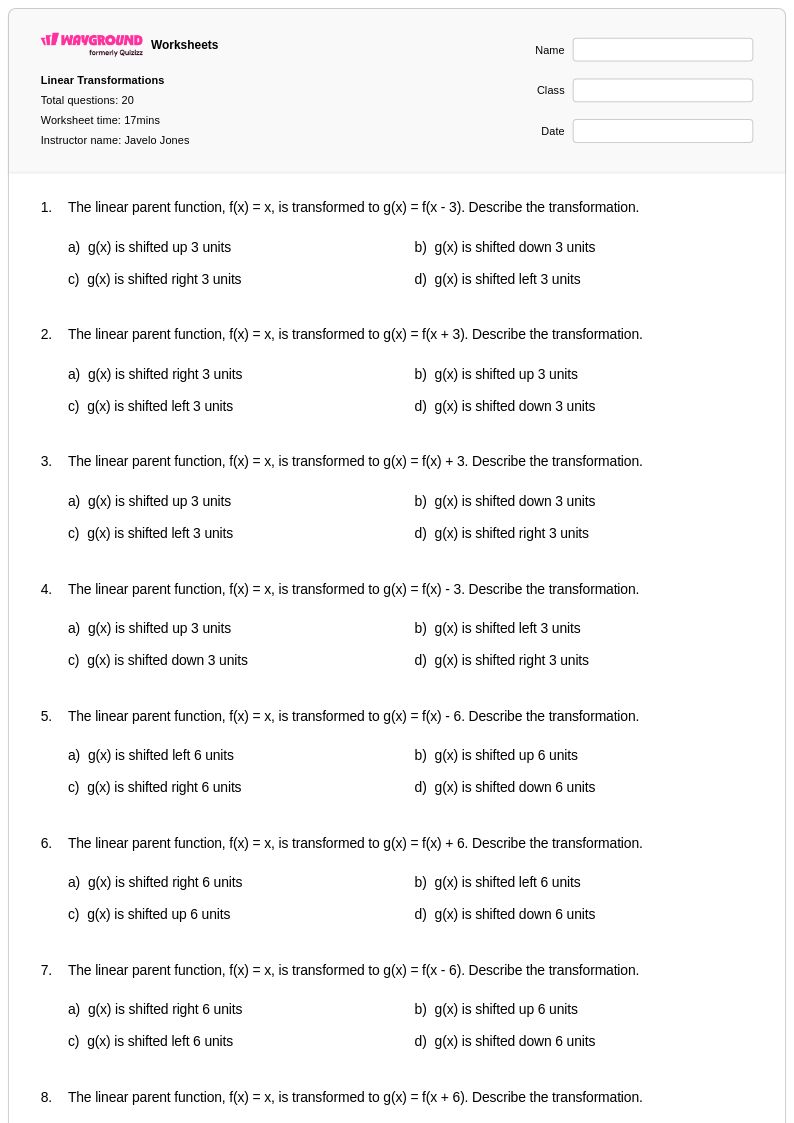
20 Q
8th - 9th
10 Q
9th
20 Q
8th - 9th
26 Q
9th - 12th
14 Q
9th - Uni
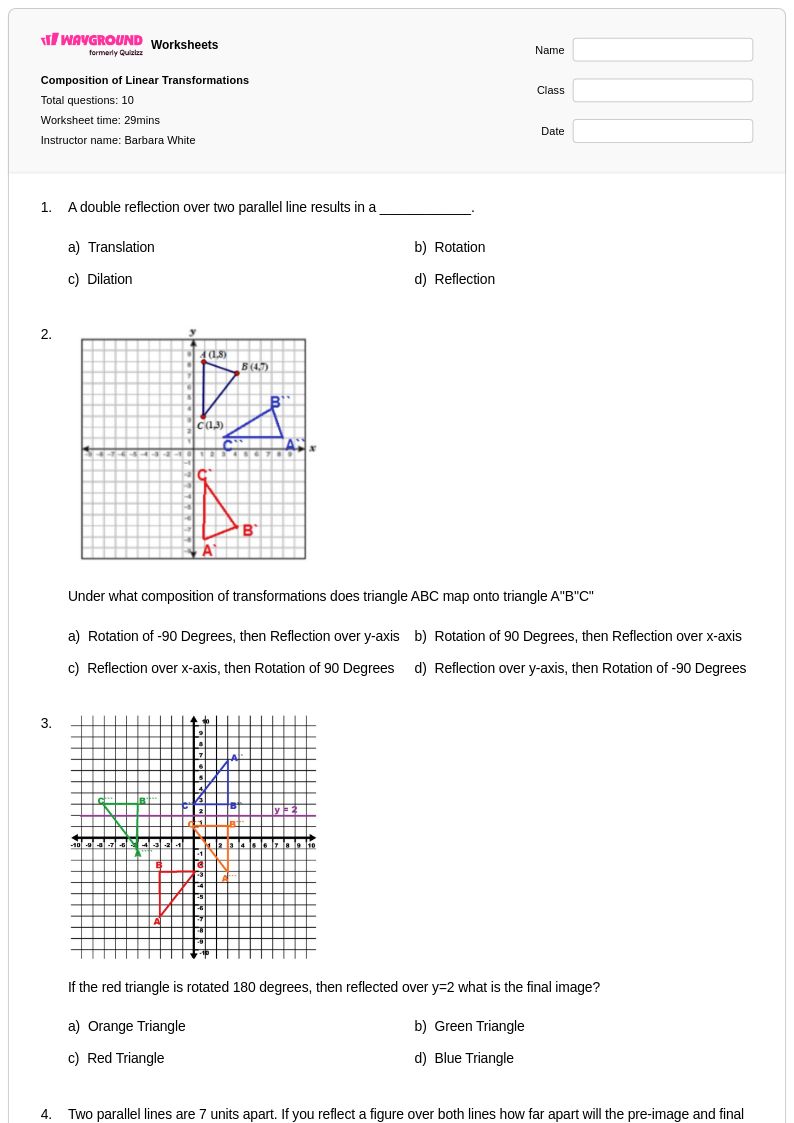
10 Q
8th - 12th
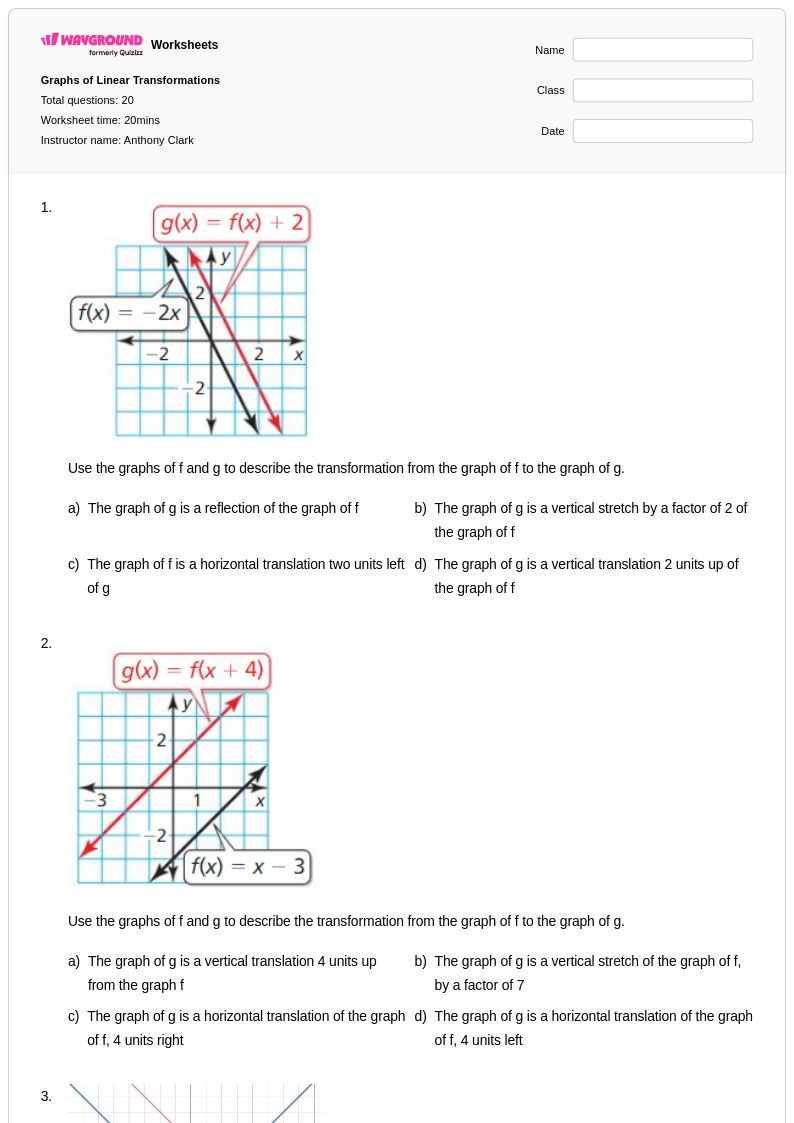
20 Q
9th - Uni
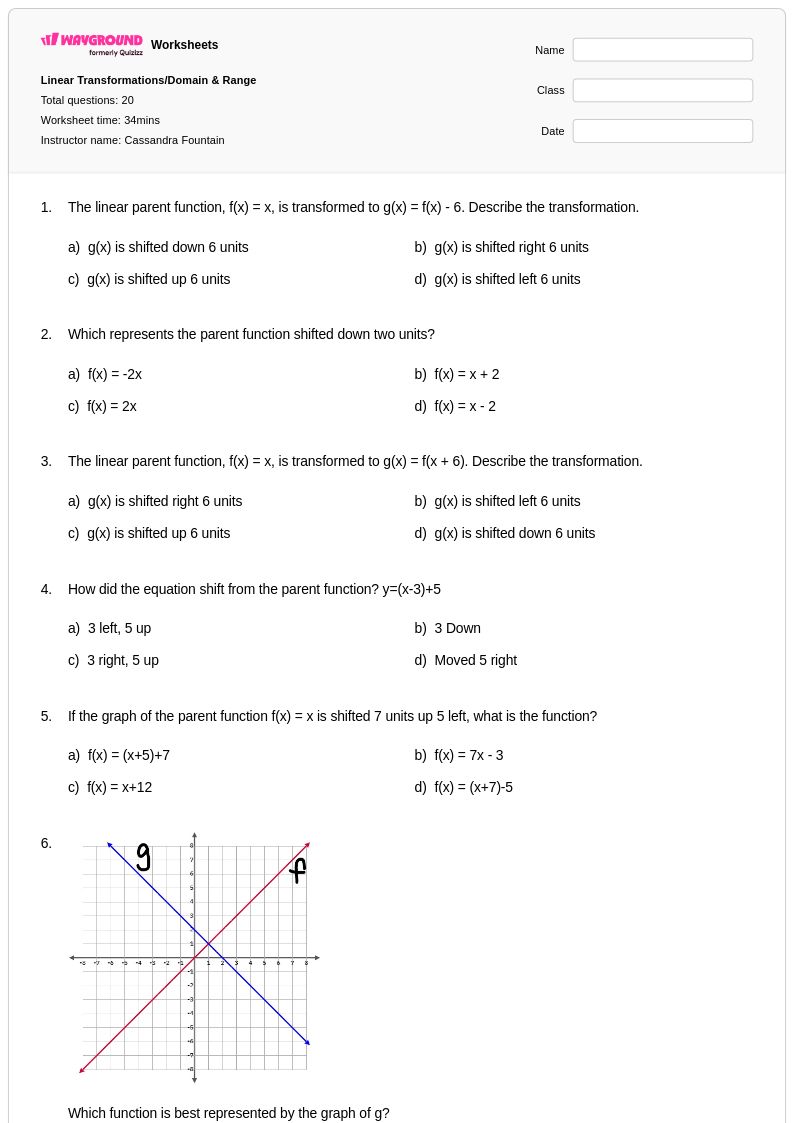
20 Q
9th - 12th
Explore Other Subject Worksheets for grade 9
Explore printable Linear Transformation worksheets for Grade 9
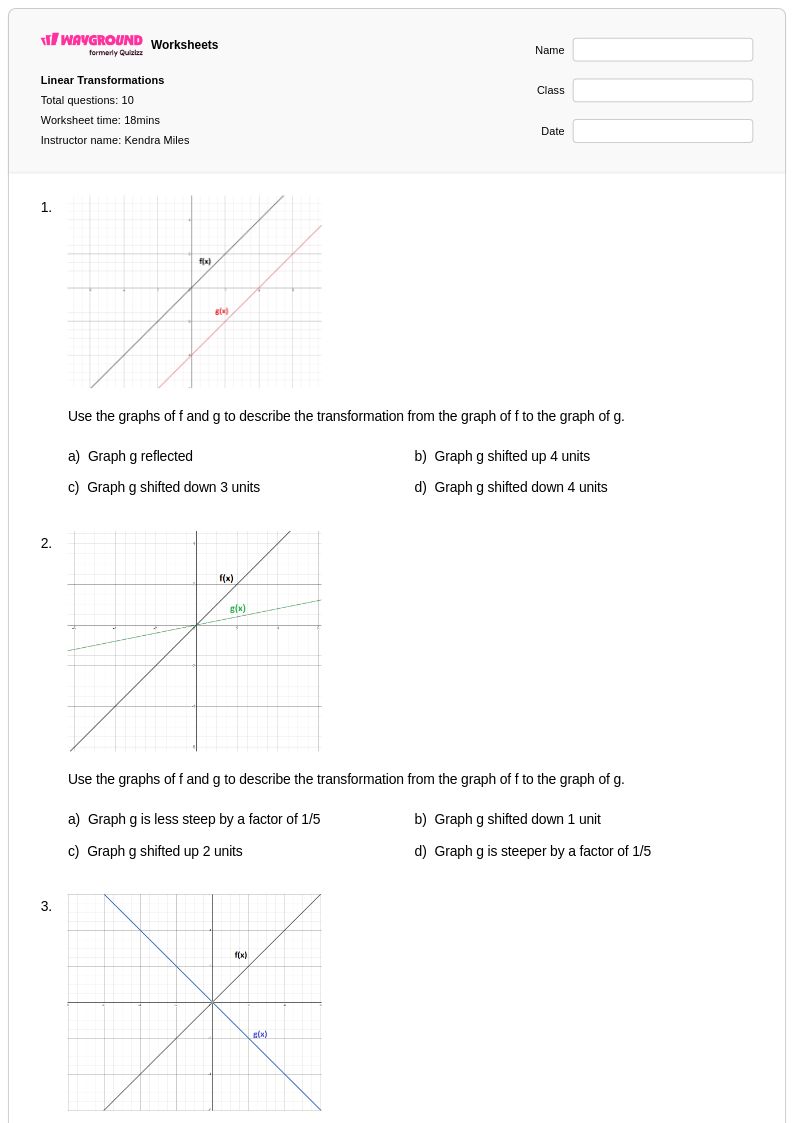
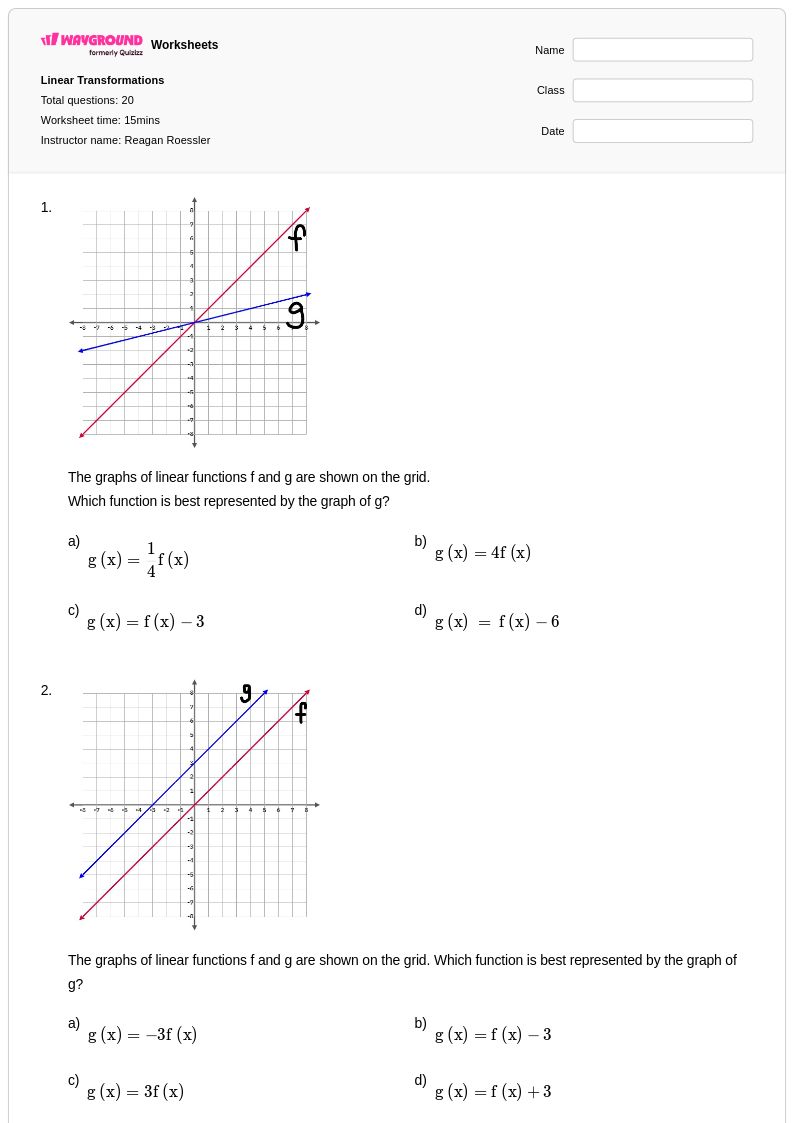
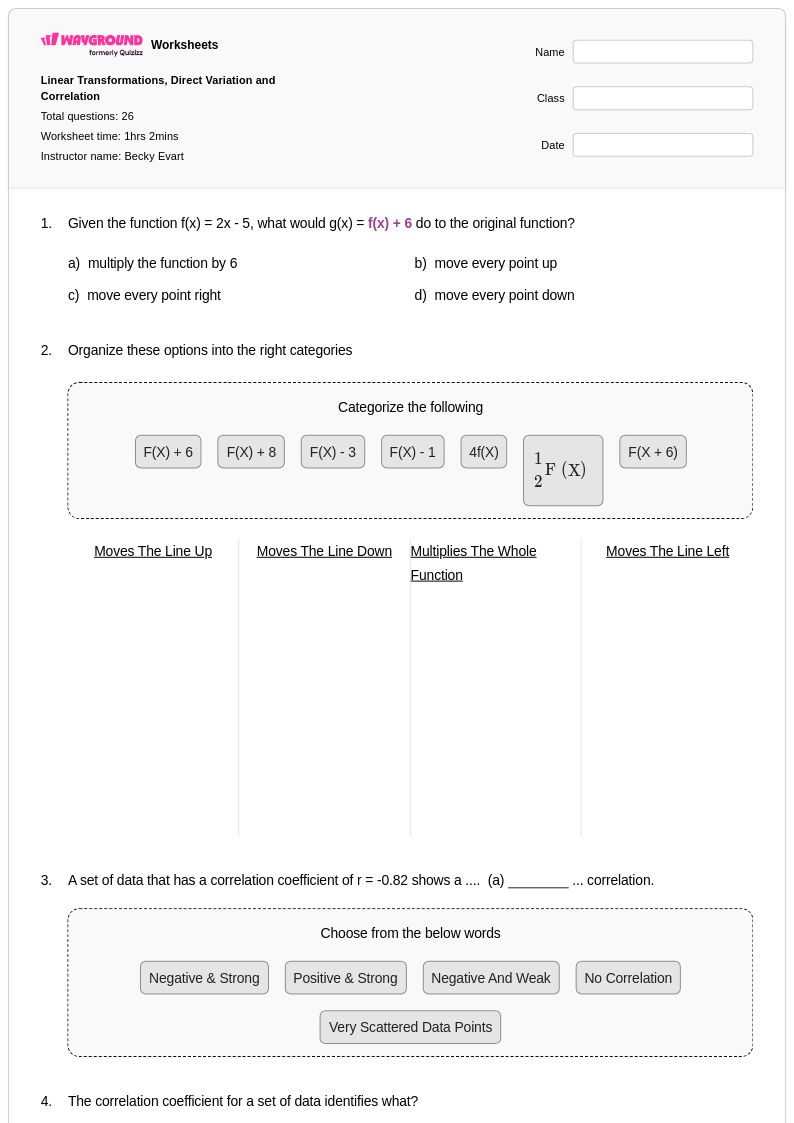
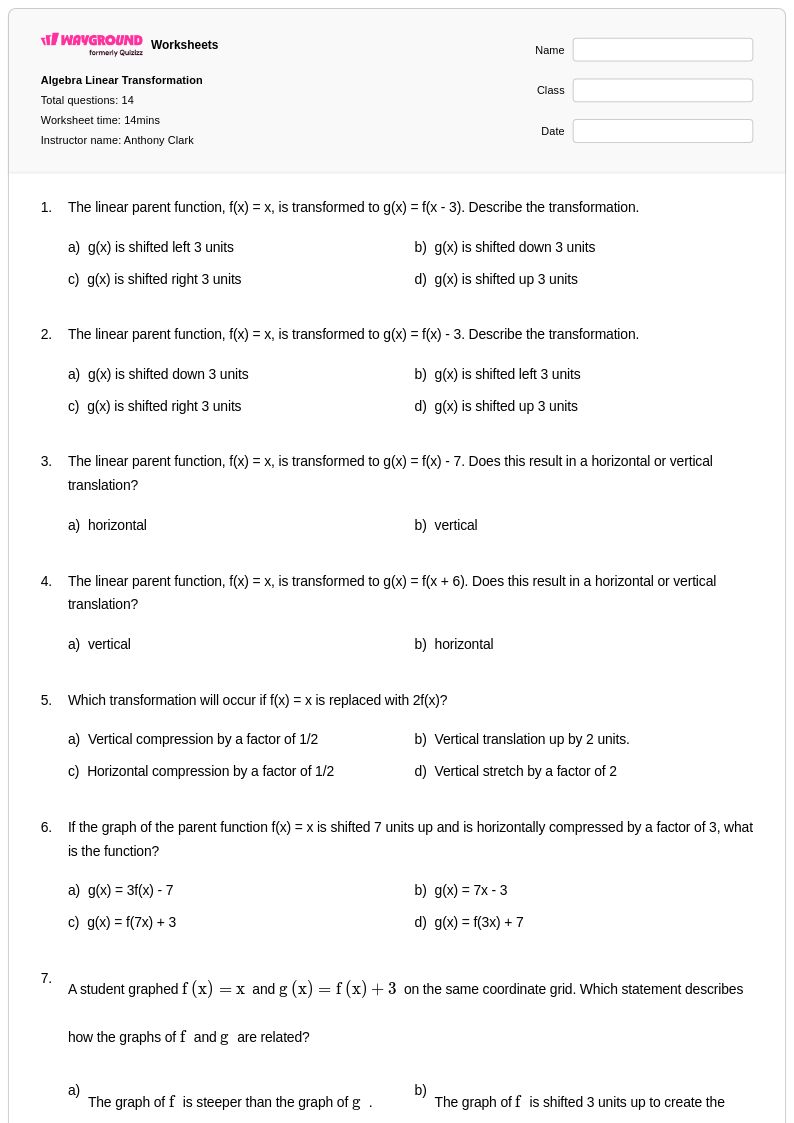
Linear transformation worksheets for Grade 9 mathematics provide students with essential practice in understanding how functions systematically change input values to produce corresponding outputs. These comprehensive worksheets available through Wayground (formerly Quizizz) focus on developing critical algebraic thinking skills including identifying transformation patterns, graphing linear functions, and analyzing how changes in slope and y-intercept affect function behavior. Students work through carefully structured practice problems that build proficiency in recognizing translations, reflections, rotations, and dilations of linear functions, while also strengthening their ability to write equations that represent these transformations. Each worksheet includes a detailed answer key and is available as a free printable pdf, allowing educators to seamlessly integrate these resources into their algebra curriculum to support both classroom instruction and independent practice.
Wayground (formerly Quizizz) empowers teachers with an extensive collection of millions of teacher-created linear transformation worksheets specifically designed for Grade 9 algebra instruction. The platform's robust search and filtering capabilities enable educators to quickly locate resources that align with specific curriculum standards and match their students' varying skill levels, from introductory transformation concepts to more complex applications involving multiple transformations. Teachers can customize these worksheets to meet diverse classroom needs, whether for initial skill building, targeted remediation, or advanced enrichment activities, with materials available in both digital and printable pdf formats. The platform's differentiation tools allow instructors to modify problem complexity and provide scaffolded support, making it easier to plan comprehensive lessons that address the full spectrum of student abilities while ensuring all learners develop strong foundational skills in linear transformations.
FAQs
What grade are linear transformations introduced?
How do I teach linear function transformations in Grade 9?
What skills do these Grade 9 worksheets focus on?
What are common errors for 9th graders with function transformations?
How can I use this worksheet for Grade 9 algebra?
How does this topic connect to the broader algebra curriculum?