Free Printable Linear Velocity Worksheets for Grade 11
Enhance Grade 11 physics understanding with our comprehensive linear velocity worksheets featuring printable PDFs, practice problems, and answer keys to help students master motion concepts.
Explore printable Linear Velocity worksheets for Grade 11
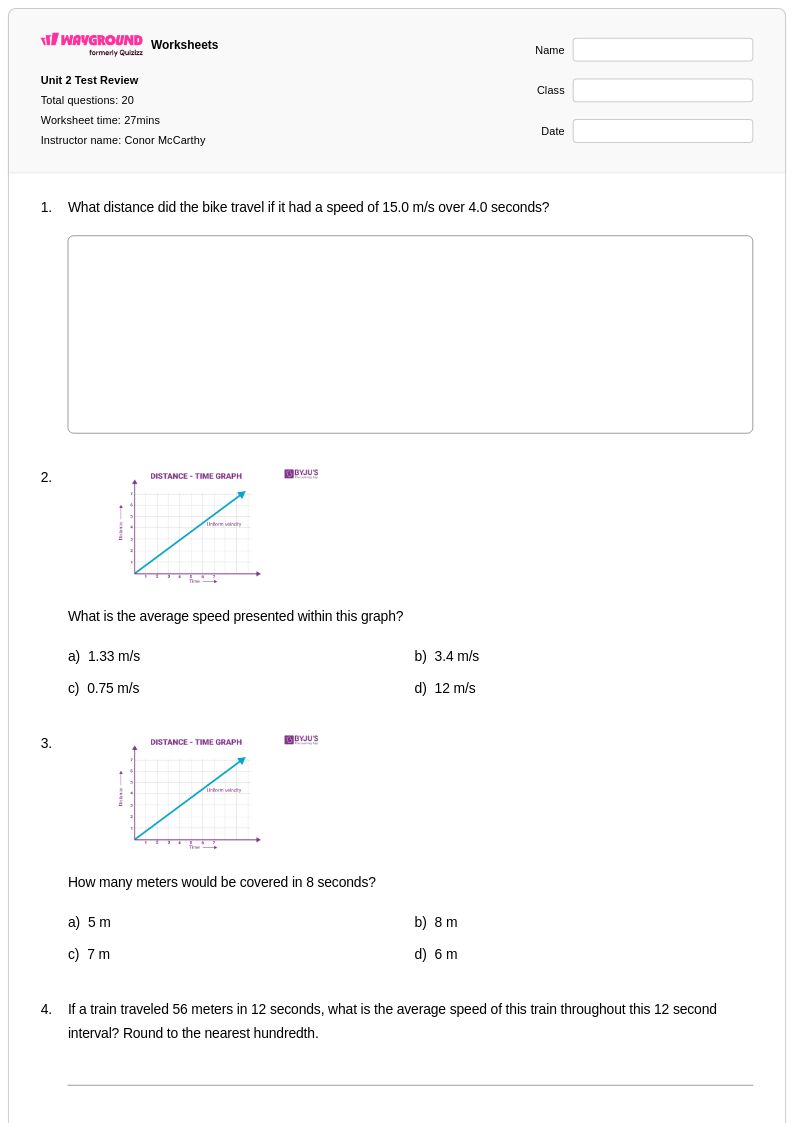
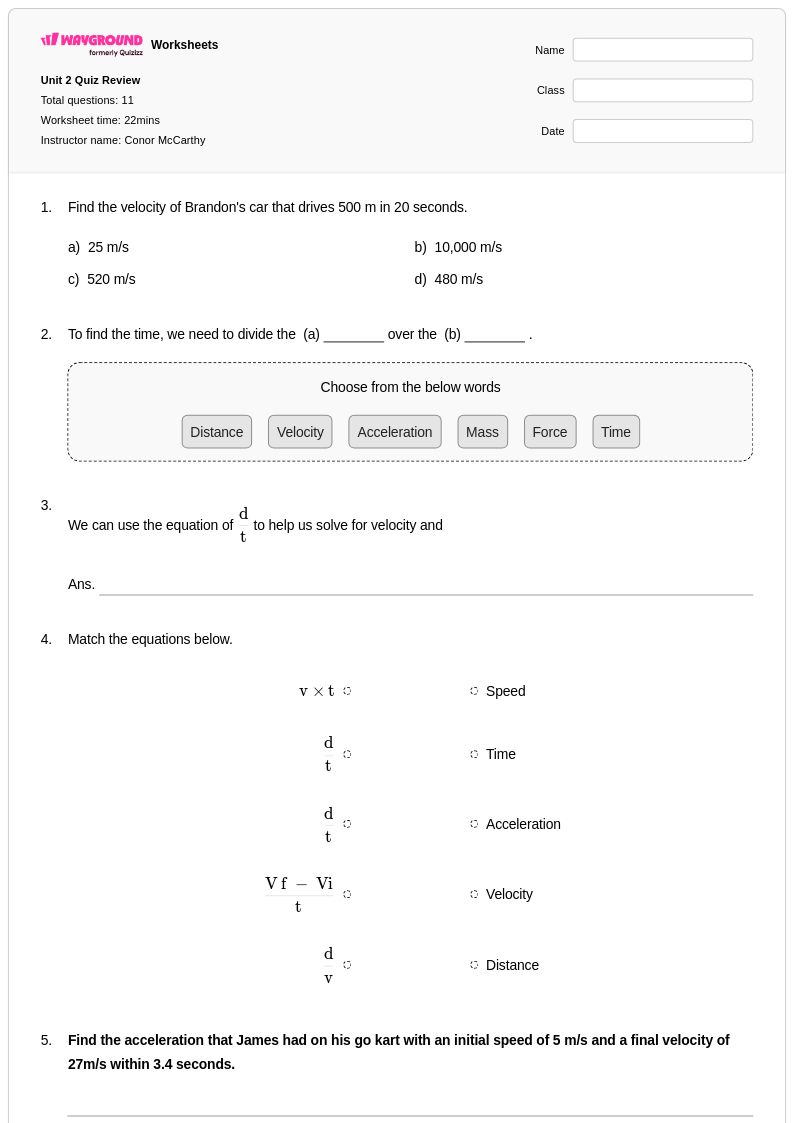
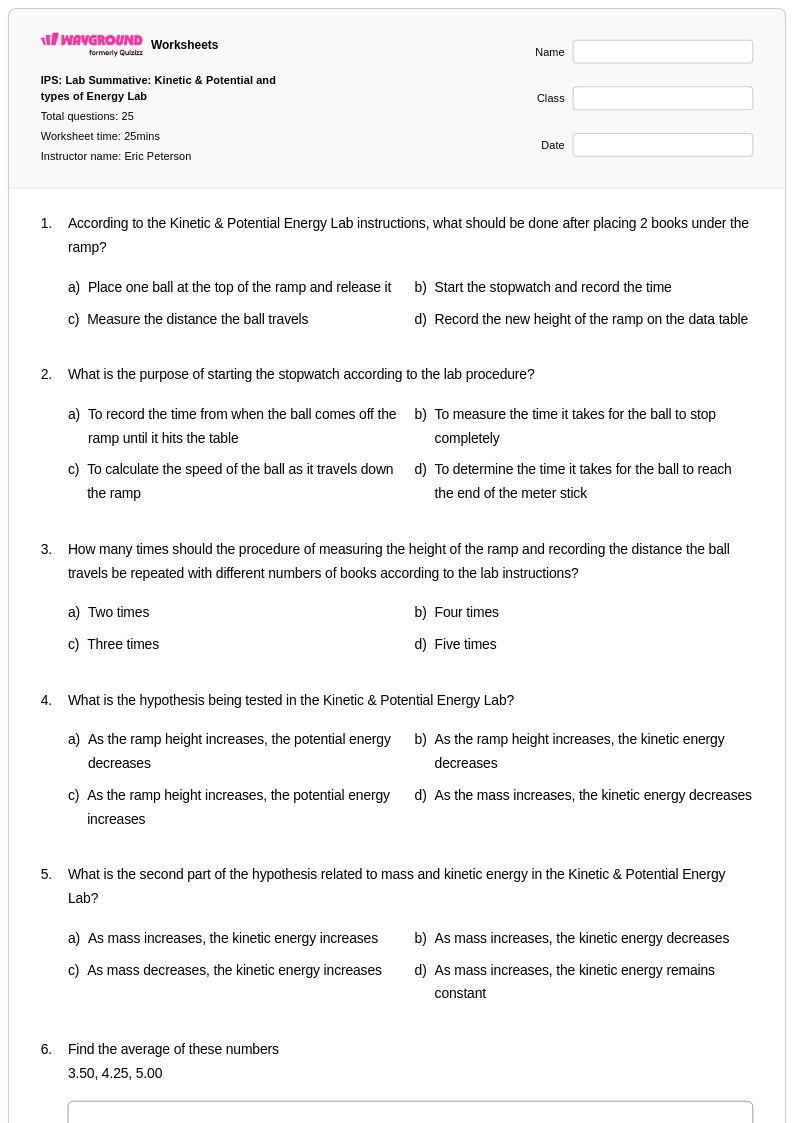
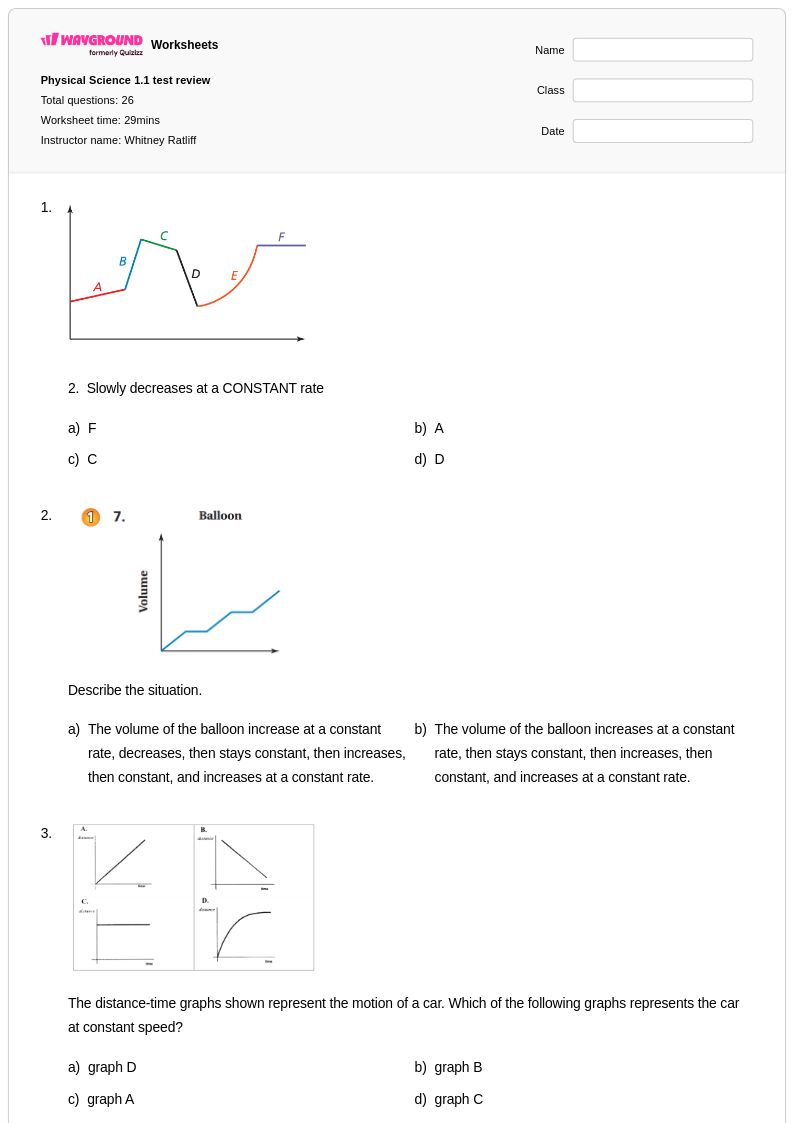
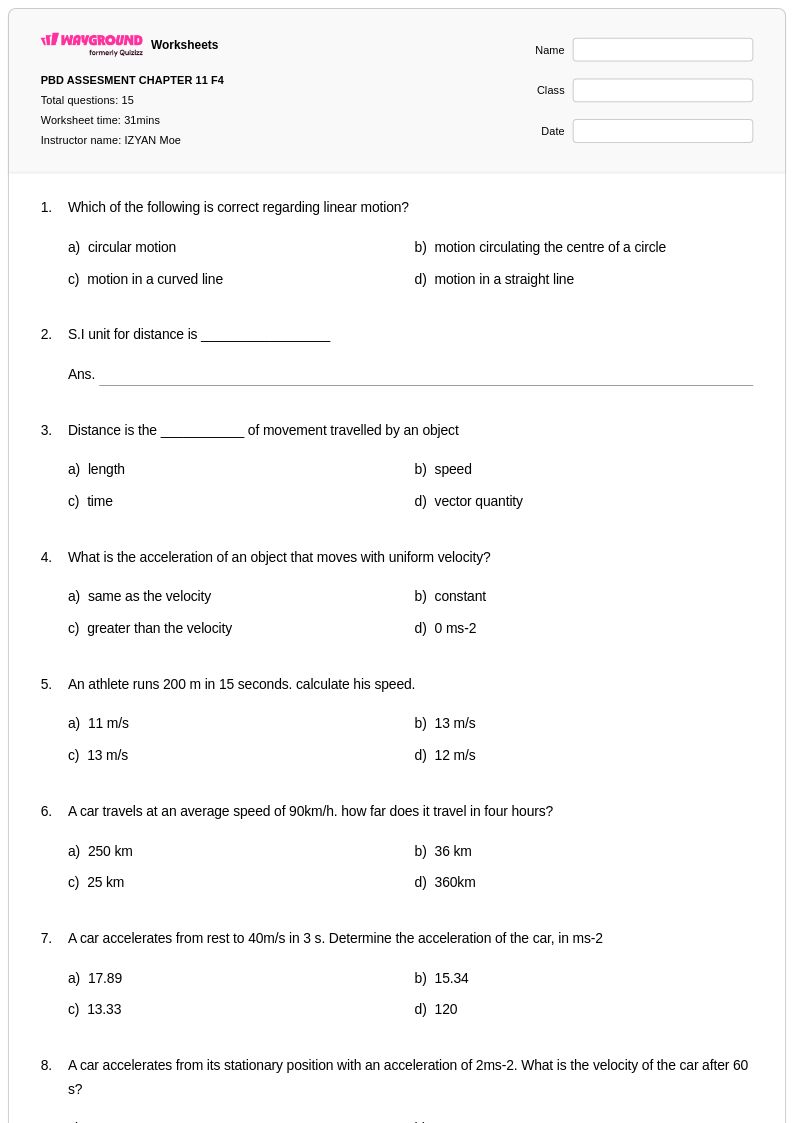
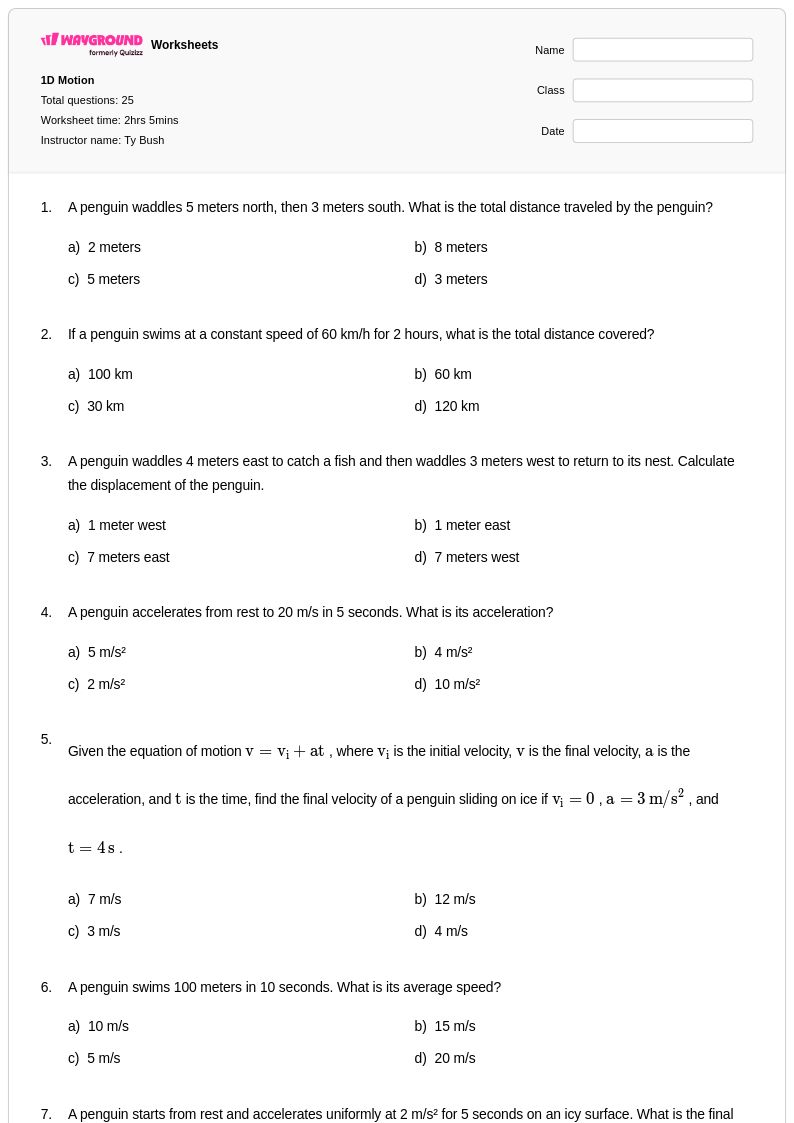
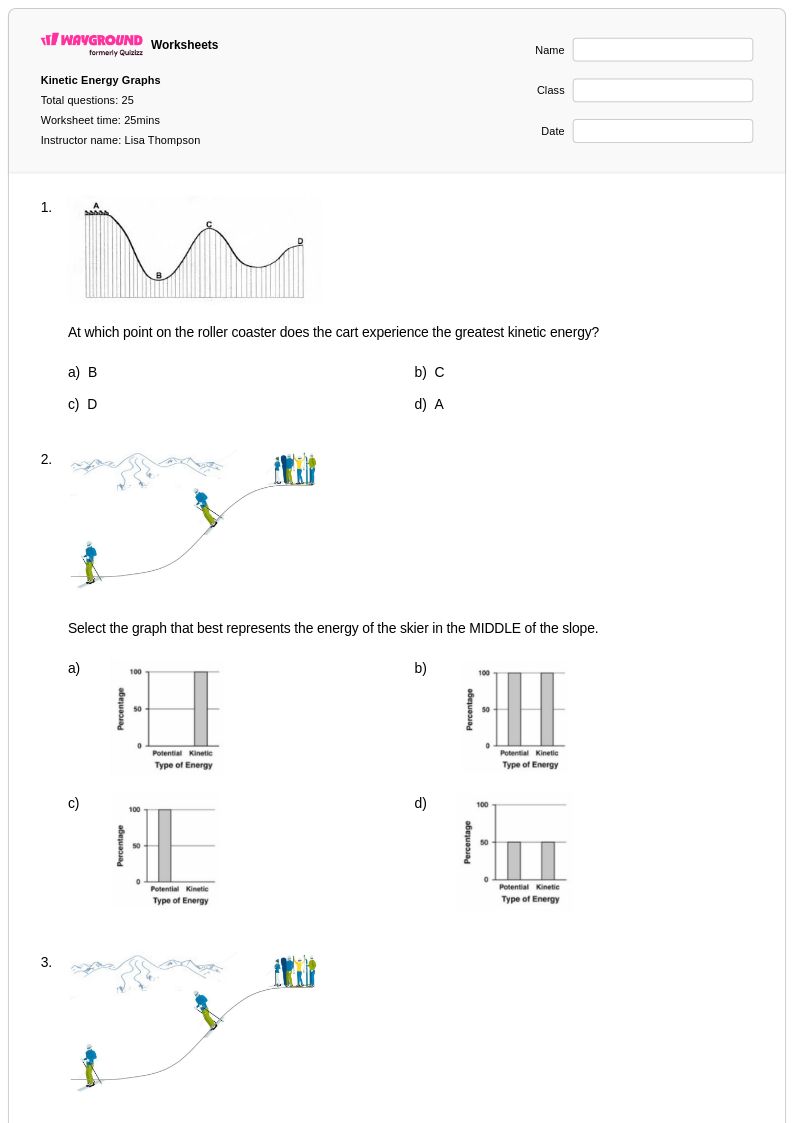
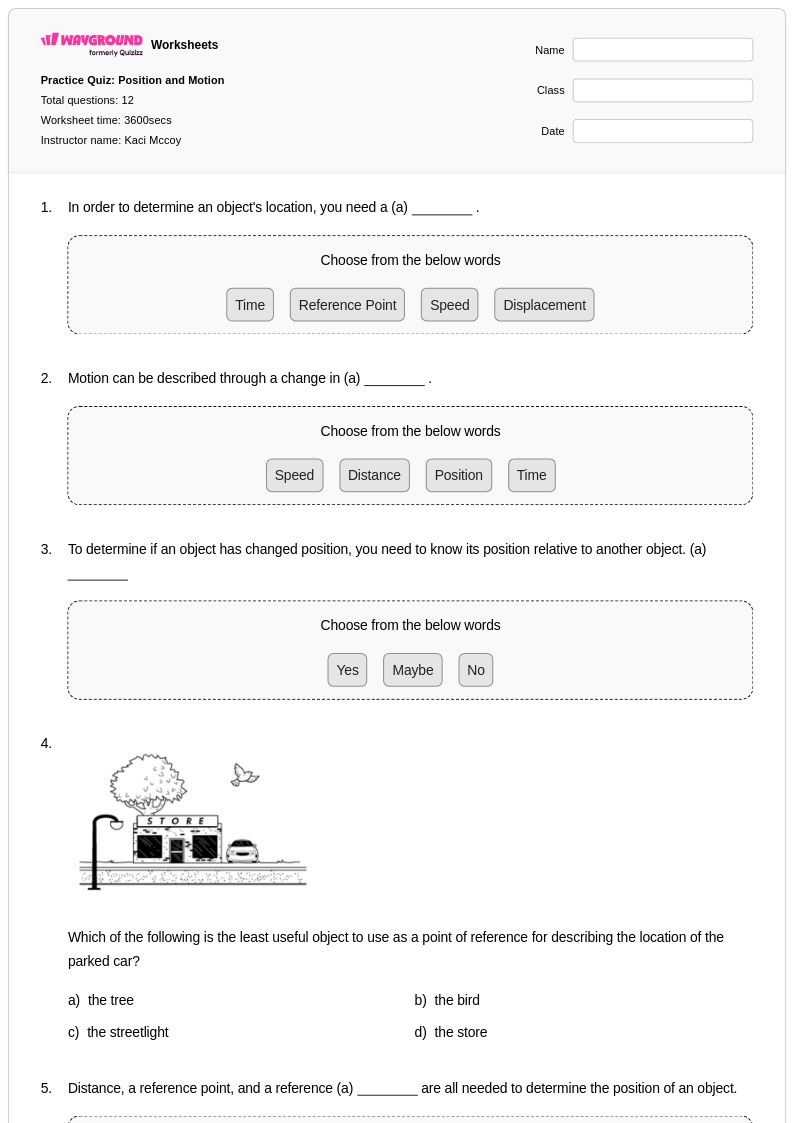
Linear velocity worksheets for Grade 11 students through Wayground (formerly Quizizz) provide comprehensive practice with the fundamental concepts of motion in physics, focusing specifically on objects moving along straight-line paths. These expertly designed worksheets strengthen students' ability to calculate linear velocity using displacement and time relationships, analyze motion graphs, and solve complex problems involving constant and variable velocity scenarios. Students work through practice problems that challenge them to apply kinematic equations, interpret velocity-time graphs, and understand the vector nature of velocity in one-dimensional motion. Each worksheet collection includes detailed answer keys that guide students through step-by-step solutions, while the free printable pdf format ensures accessibility for both classroom instruction and independent study.
Wayground (formerly Quizizz) empowers physics teachers with millions of teacher-created linear velocity resources that streamline lesson planning and enhance student understanding of motion concepts. The platform's robust search and filtering capabilities allow educators to quickly locate worksheets aligned with specific physics standards and curriculum requirements, while built-in differentiation tools enable teachers to customize content for varying skill levels within their Grade 11 classrooms. Teachers can seamlessly adapt these resources for remediation with struggling students or provide enrichment challenges for advanced learners, utilizing both printable pdf versions for traditional instruction and digital formats for technology-integrated lessons. The extensive collection supports systematic skill practice through varied problem types, from basic velocity calculations to complex real-world applications, ensuring students develop mastery of linear motion principles essential for advanced physics coursework.
FAQs
How do I teach linear velocity to physics students?
Teaching linear velocity effectively starts with grounding students in the core relationship: velocity equals displacement divided by time, with attention to direction as a vector quantity. Begin with concrete, real-world examples such as a car traveling along a straight road, then progress to interpreting velocity-time graphs before introducing variable motion and acceleration. Building from basic calculations to more complex scenarios helps students develop problem-solving fluency rather than rote formula application.
What types of practice problems help students master linear velocity?
Students benefit most from a sequenced mix of problem types: starting with straightforward velocity calculations from given distance and time values, then moving into velocity-time graph interpretation, and finally tackling multi-step problems involving acceleration and displacement. Real-world contexts such as athletes, vehicles, or projectiles keep problems meaningful and help students connect abstract formulas to observable motion. Structured worksheet sets that scaffold difficulty level are especially effective for building confidence before introducing complexity.
What mistakes do students commonly make when calculating linear velocity?
The most frequent error is confusing speed with velocity — students often ignore the directional component and treat velocity as a scalar quantity. A second common mistake is misreading or misinterpreting velocity-time graphs, particularly confusing the slope of the graph (acceleration) with the value plotted on the y-axis (velocity). Students also frequently mishandle unit conversions, especially when distance is given in kilometers and time in seconds, leading to calculation errors even when the conceptual understanding is sound.
How do I differentiate linear velocity instruction for students at different levels?
For struggling learners, reduce cognitive load by providing formula reference sheets and limiting initial problems to constant velocity scenarios before introducing variable motion. Advanced students can be challenged with multi-step problems that combine velocity, acceleration, and displacement, or with graph analysis tasks requiring interpretation rather than calculation. On Wayground, teachers can also apply accommodations such as read aloud support, reduced answer choices, and extended time to individual students without disrupting the rest of the class.
How can I use Wayground's linear velocity worksheets in my classroom?
Wayground's linear velocity worksheets are available as printable PDFs for traditional classroom use and in digital formats for technology-integrated or remote learning environments. Teachers can assign them as guided practice, homework, or test preparation, and can also host them as a quiz directly on Wayground for real-time student engagement. Each worksheet includes detailed answer keys and step-by-step solutions, reducing prep time and supporting independent student review after submission.
How do velocity-time graphs connect to linear velocity concepts?
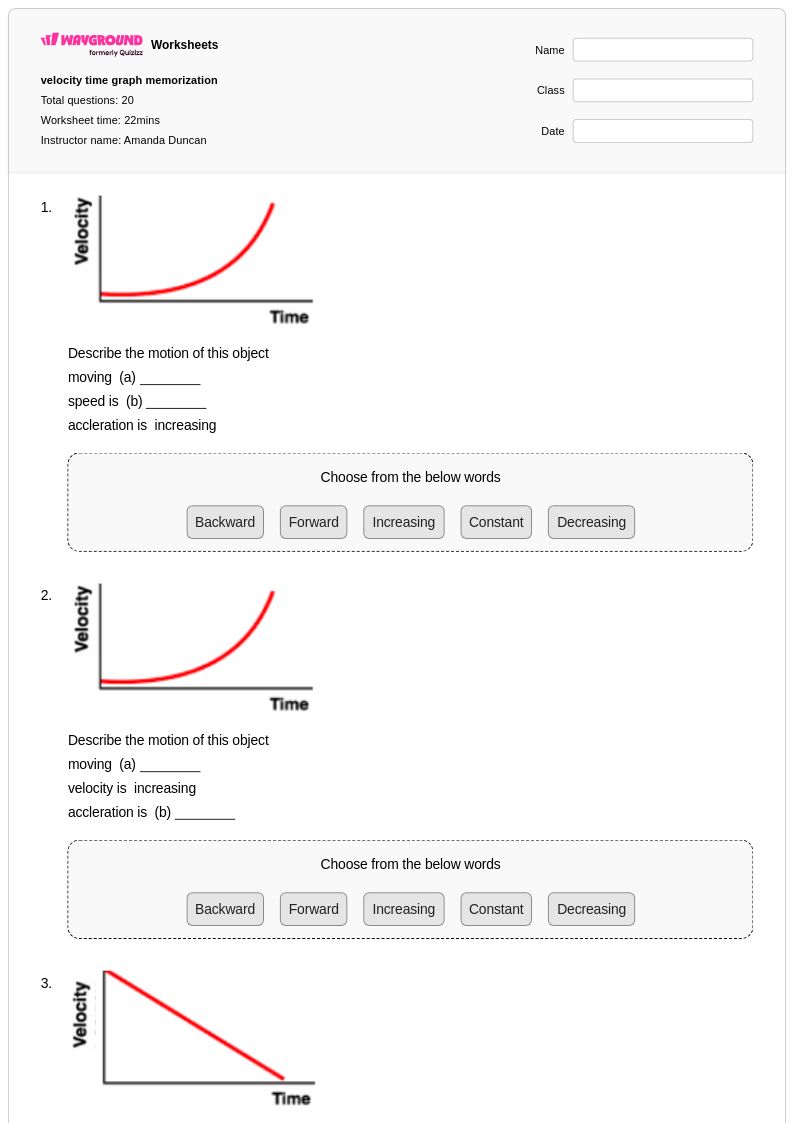
A velocity-time graph displays how an object's velocity changes over time along a straight-line path, making it a critical tool for visualizing linear motion. The slope of the line represents acceleration — a flat line indicates constant velocity, while a rising or falling slope indicates speeding up or slowing down respectively. Students who can fluently read and construct these graphs develop a much stronger conceptual understanding of the relationship between displacement, time, and velocity than those who rely on formula substitution alone.