
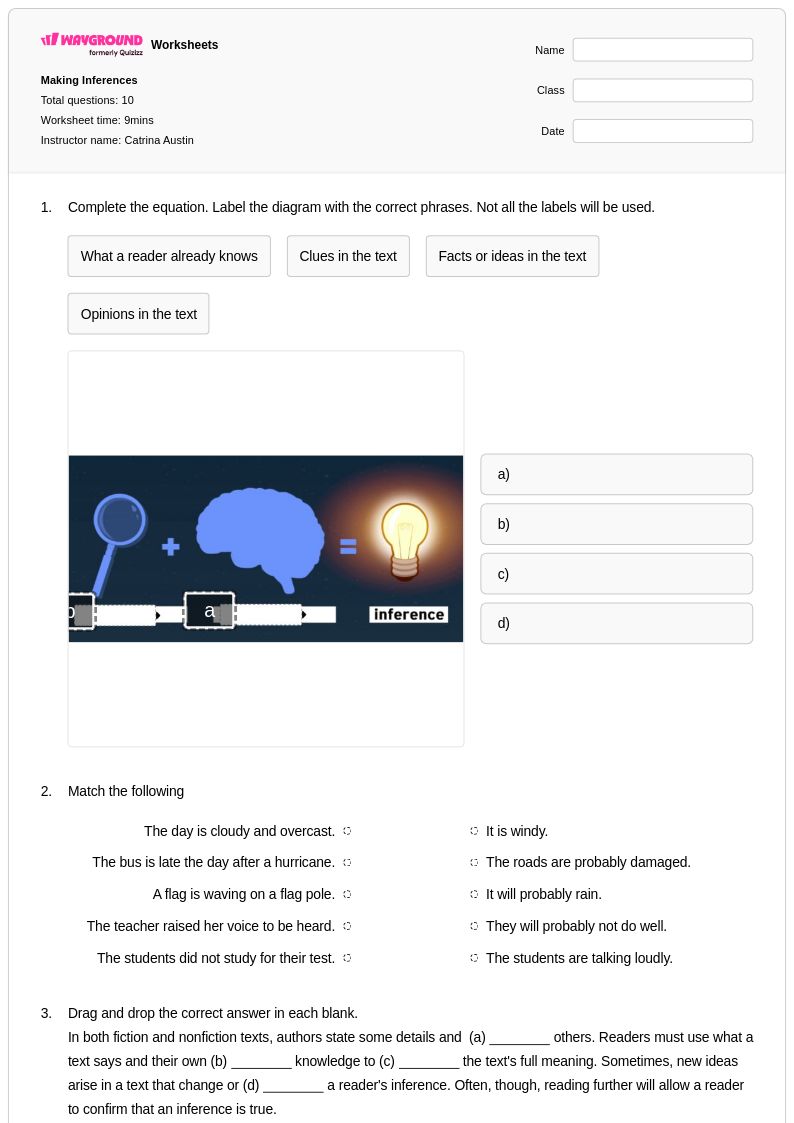
10 Q
7th
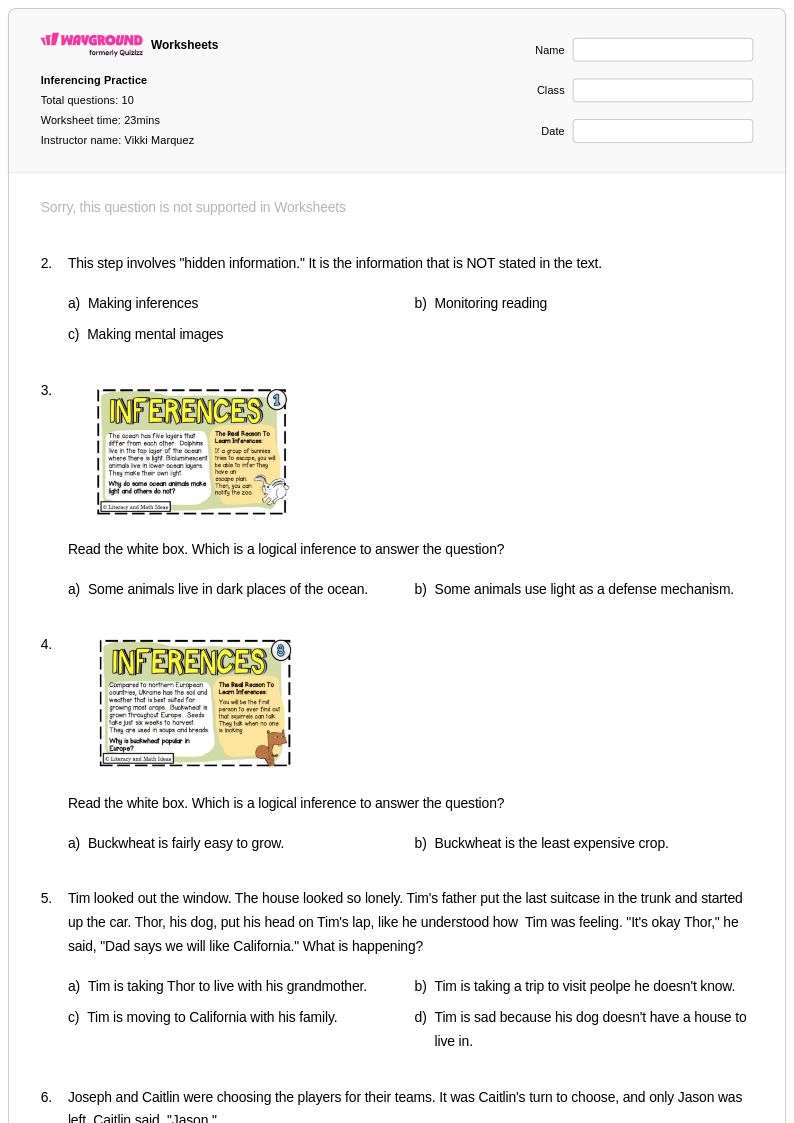
14 Q
6th - 8th
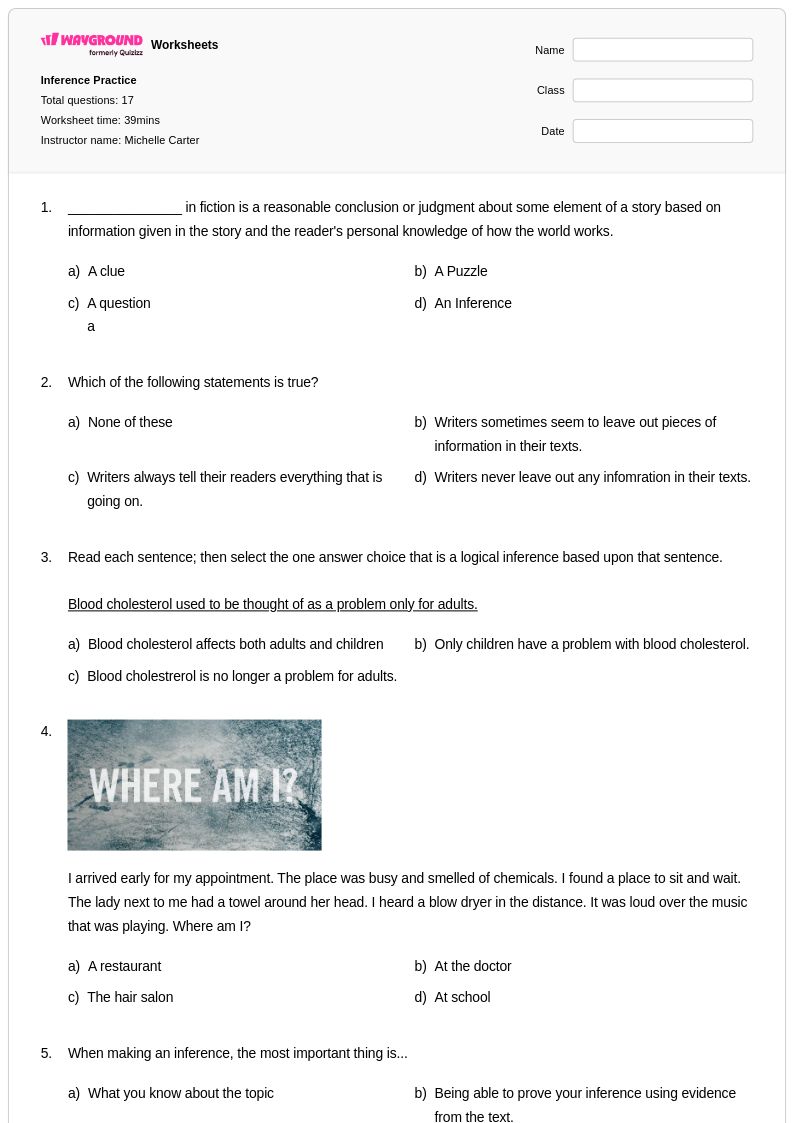
17 Q
6th - 8th
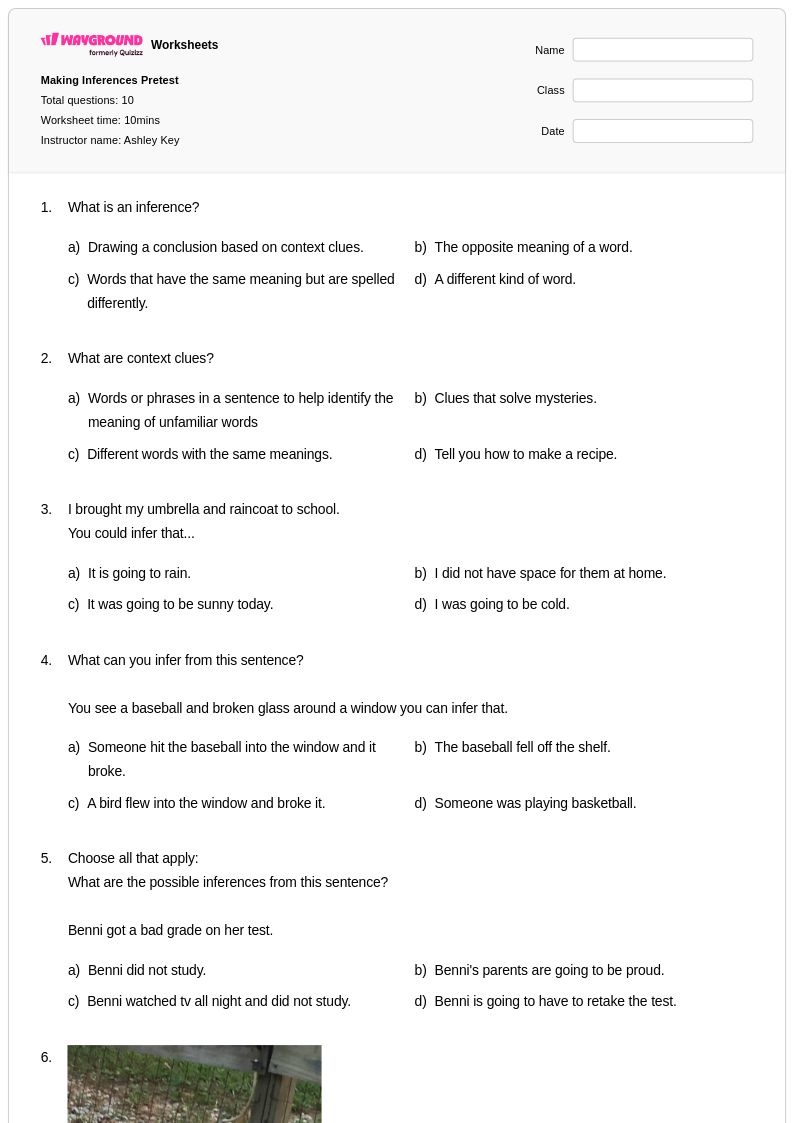
10 Q
5th - 7th
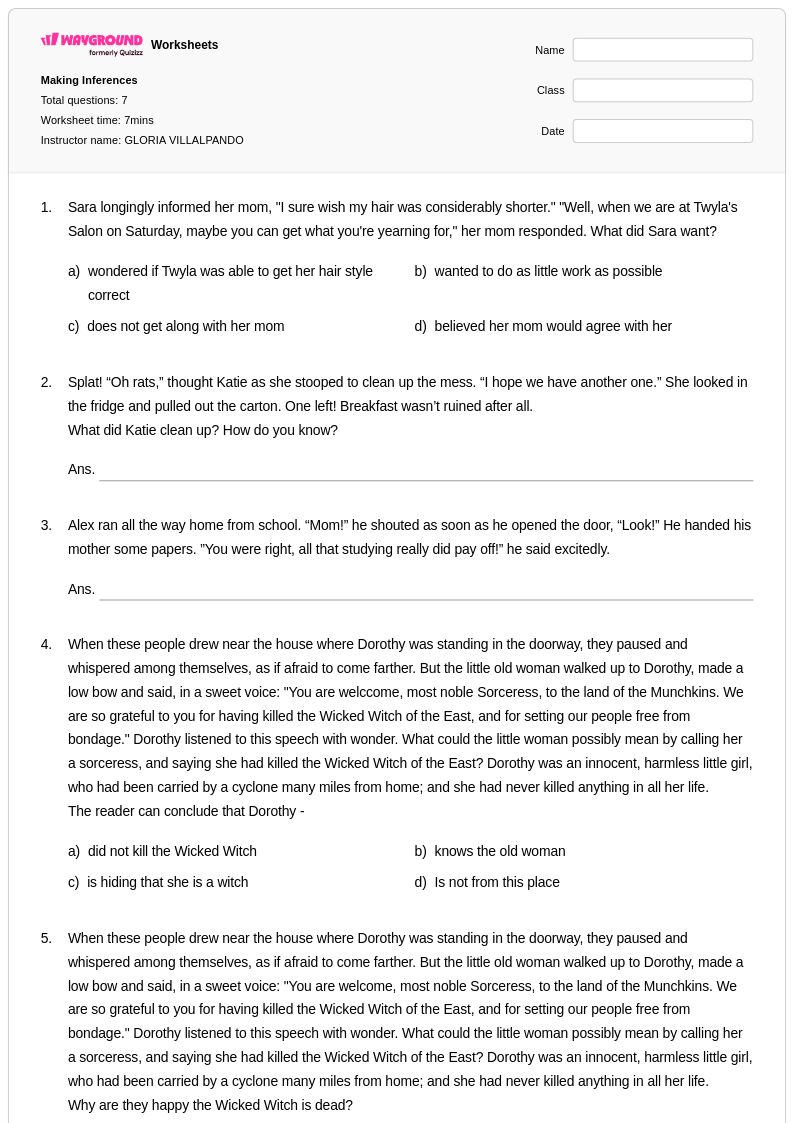
7 Q
6th - 8th
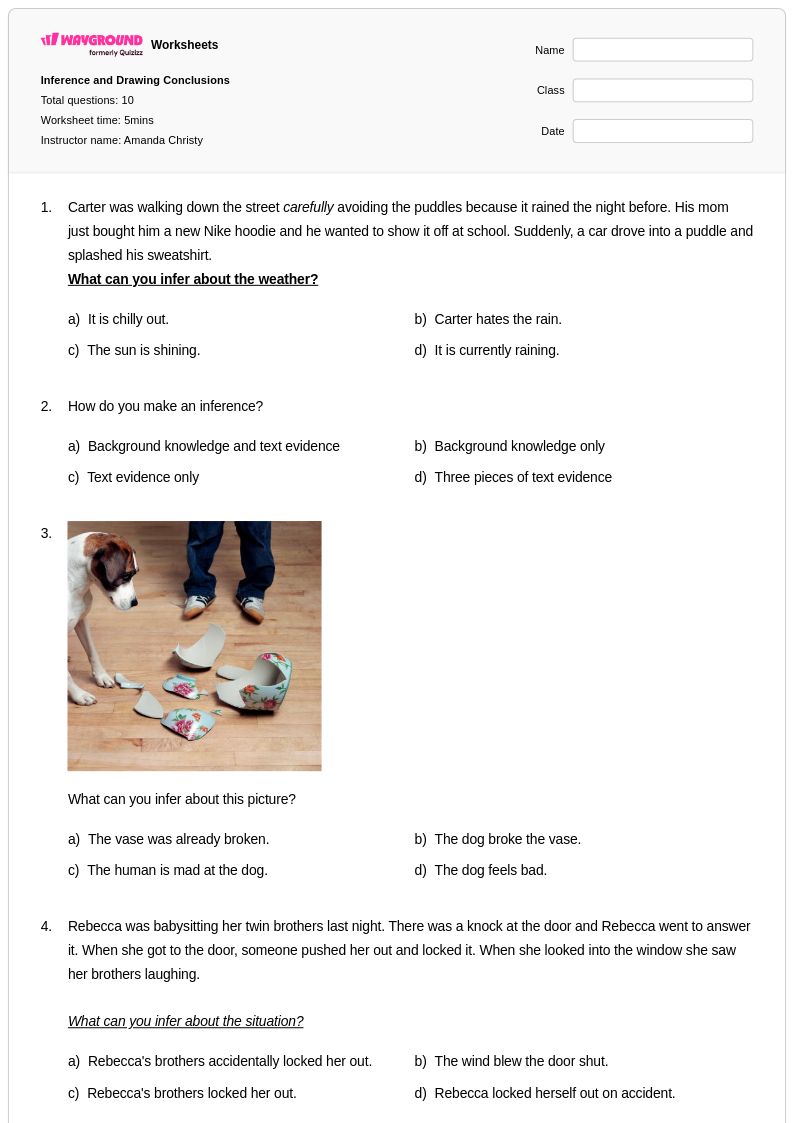
10 Q
5th - 10th
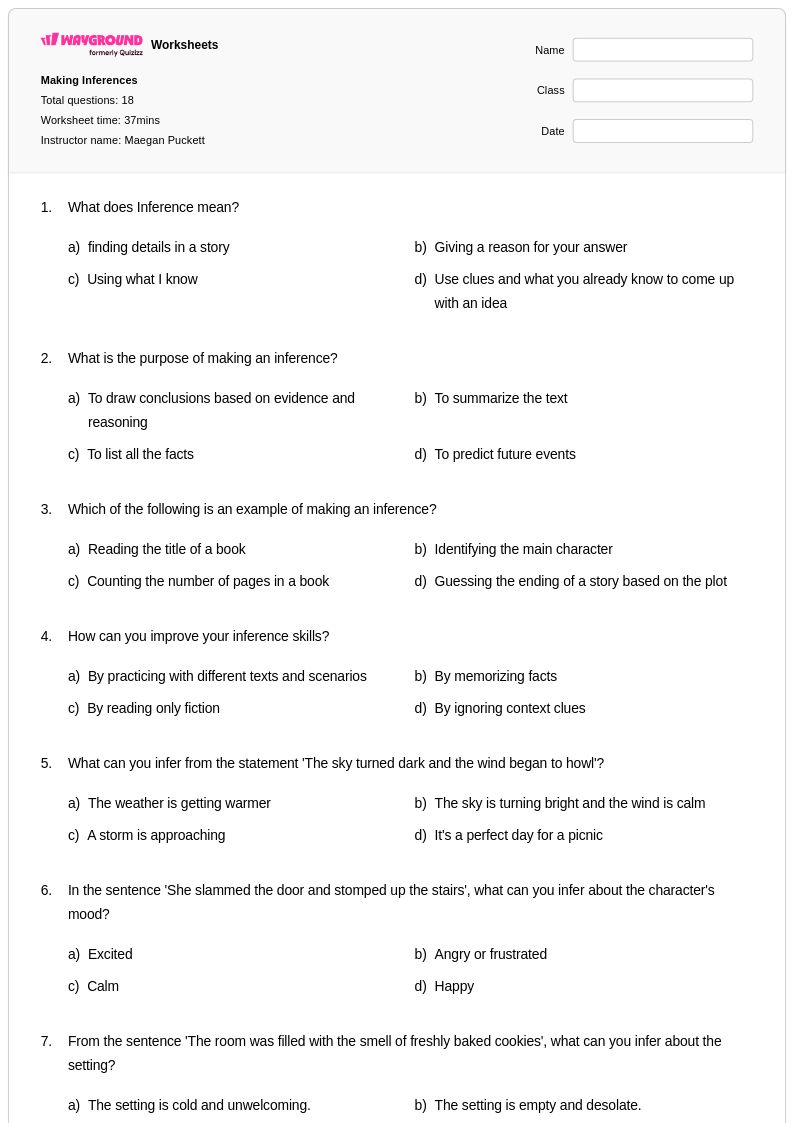
18 Q
7th
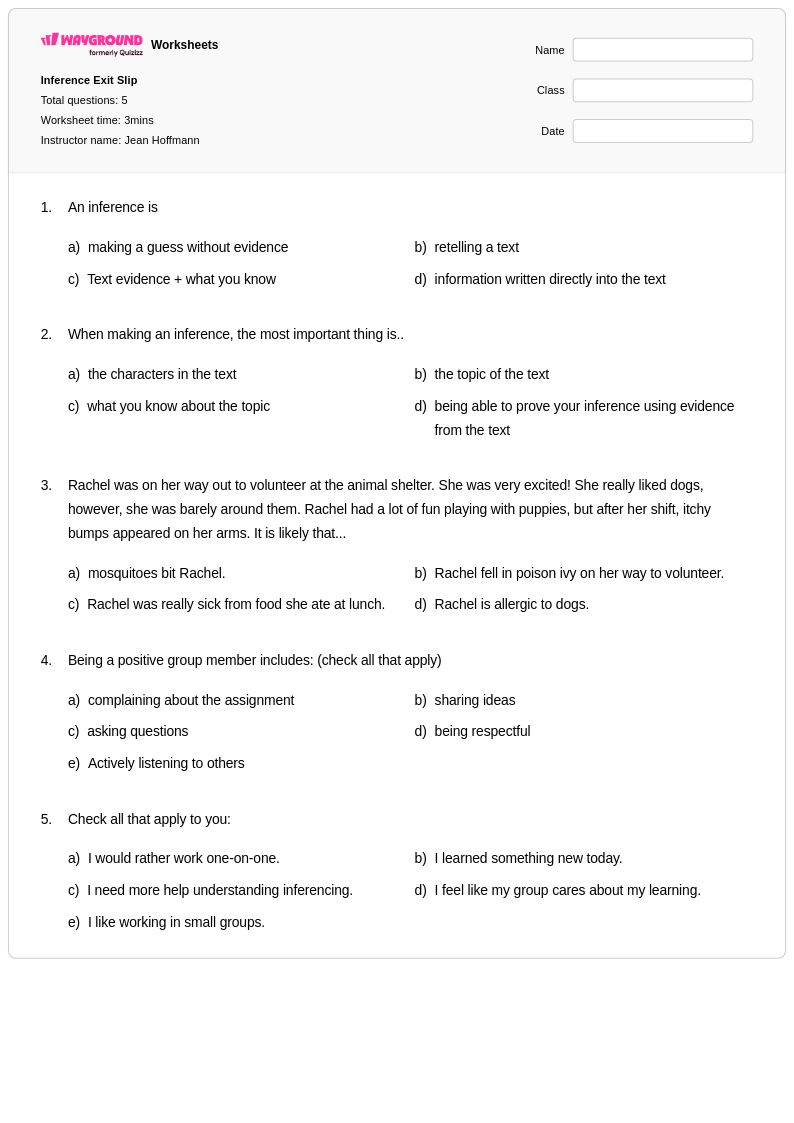
5 Q
7th
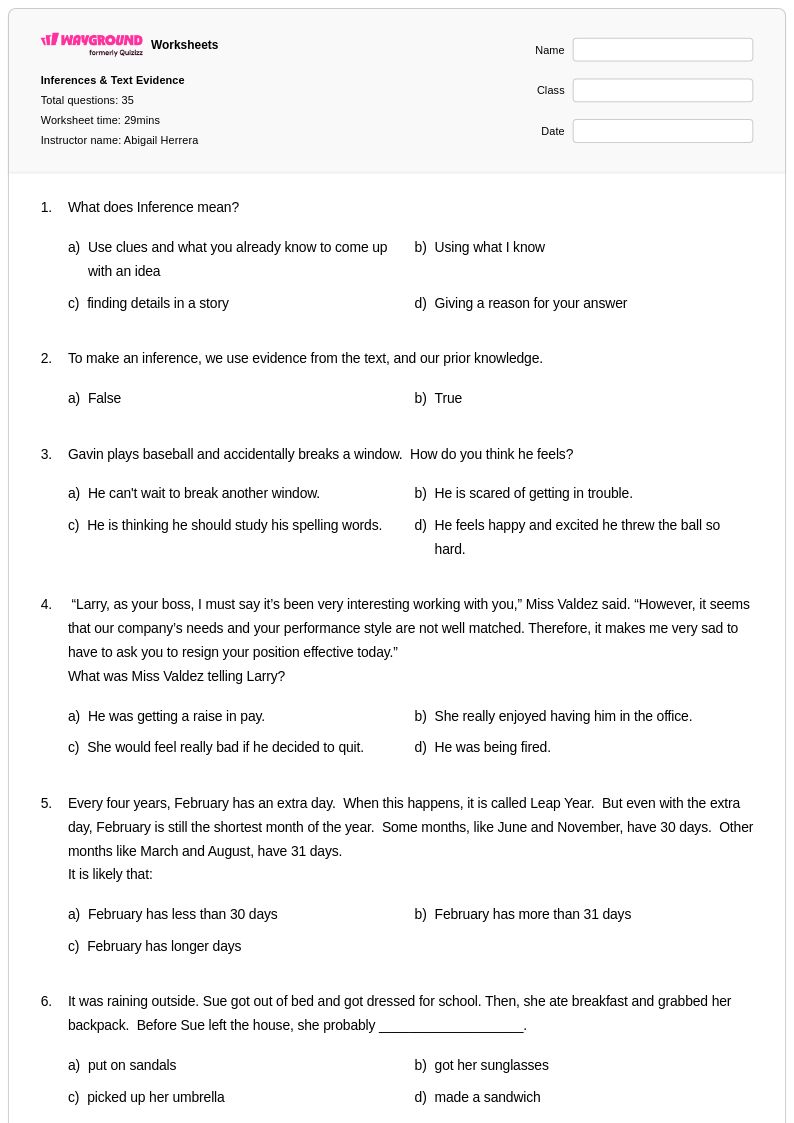
35 Q
7th
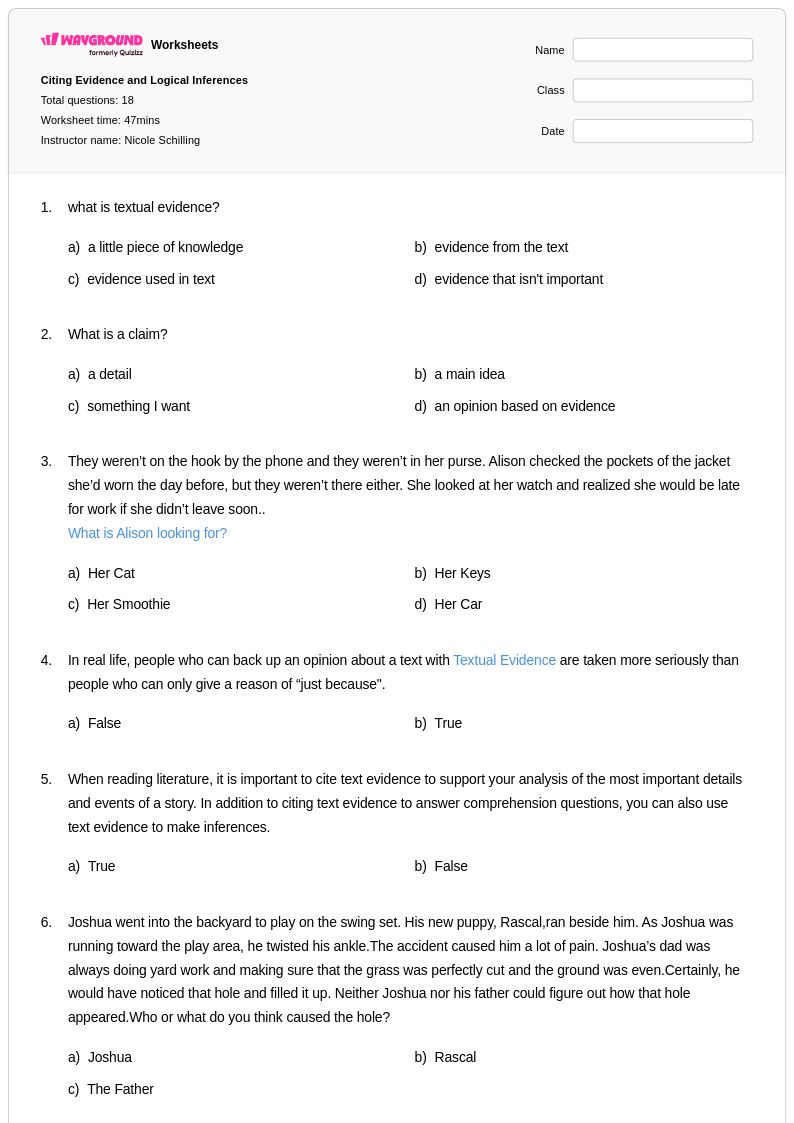
18 Q
7th
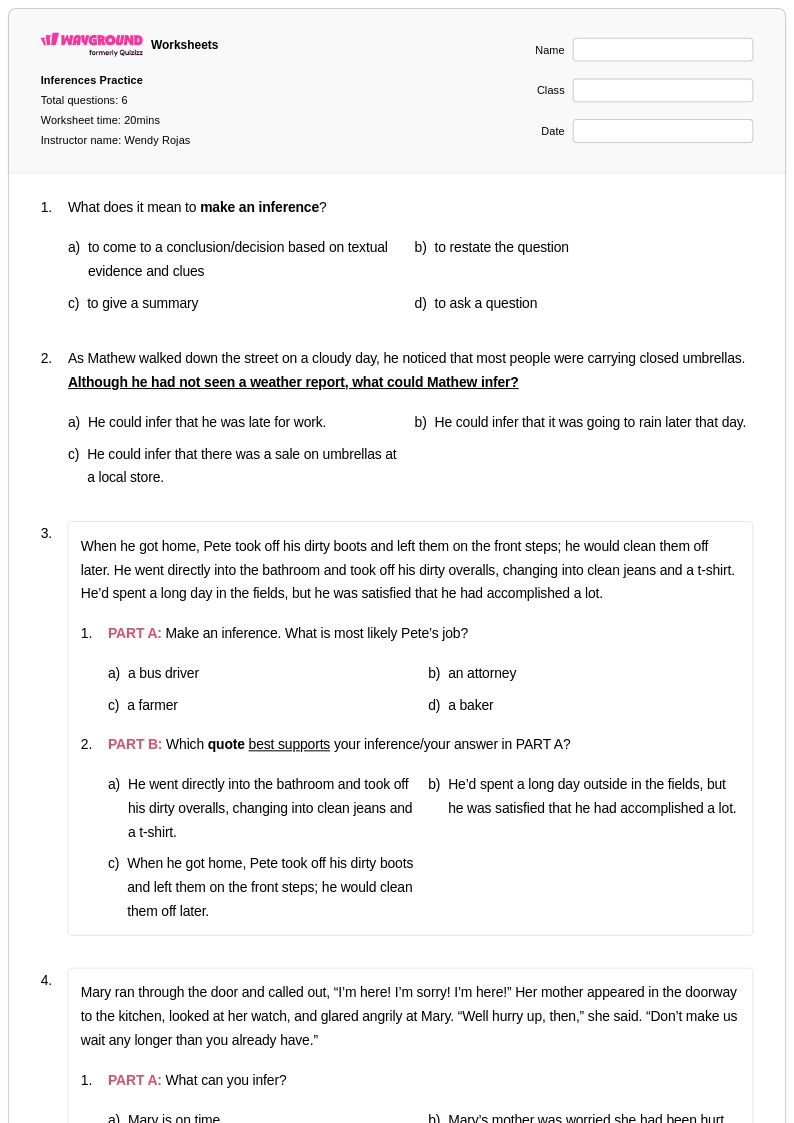
14 Q
7th
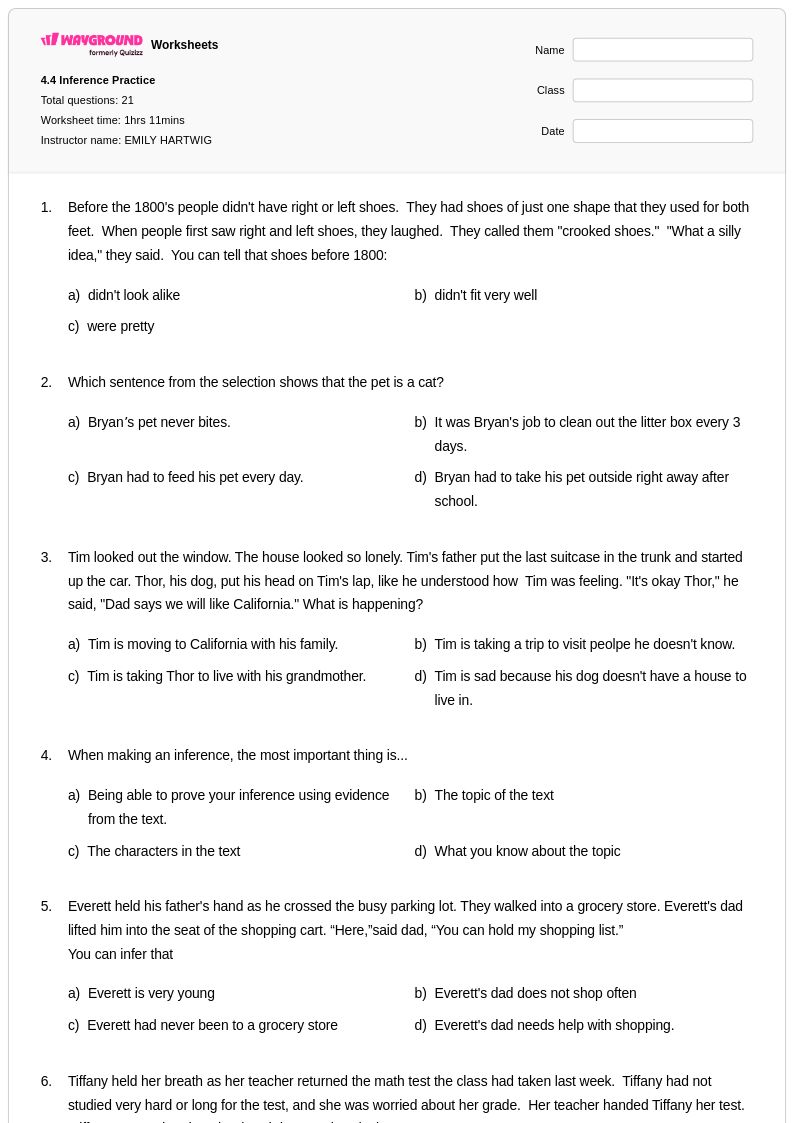
21 Q
6th - 8th
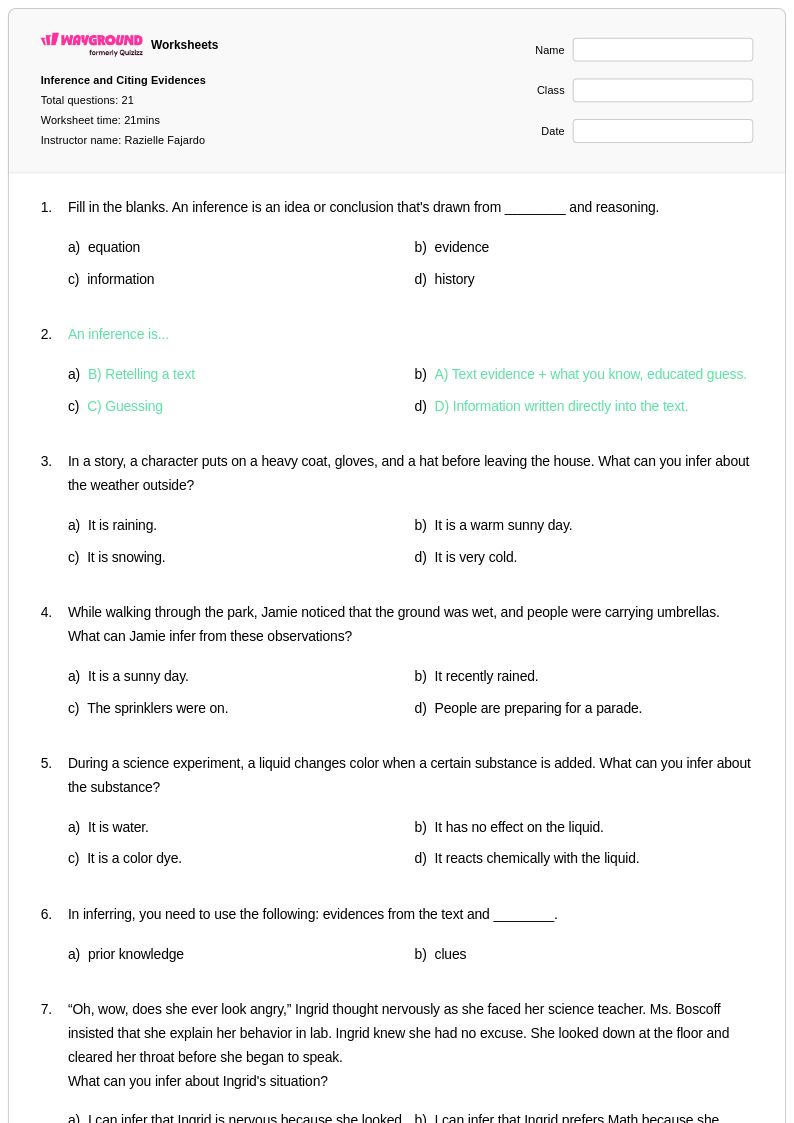
21 Q
7th
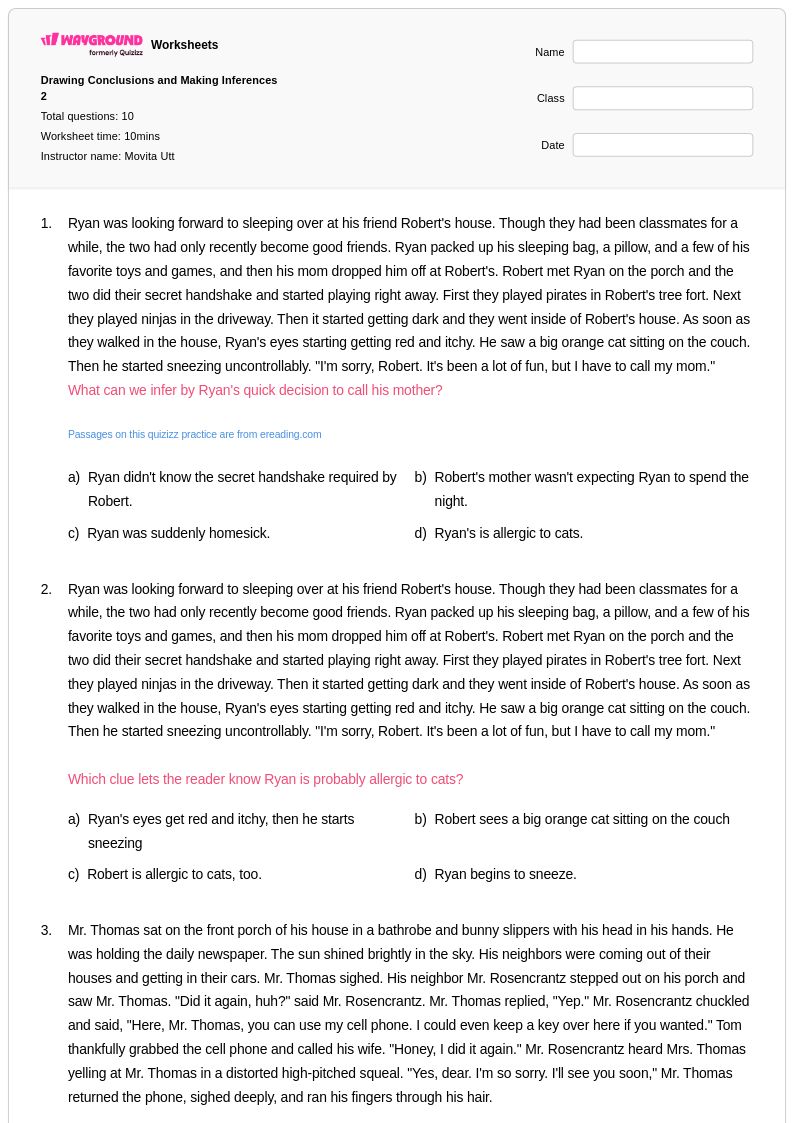
10 Q
6th - 8th
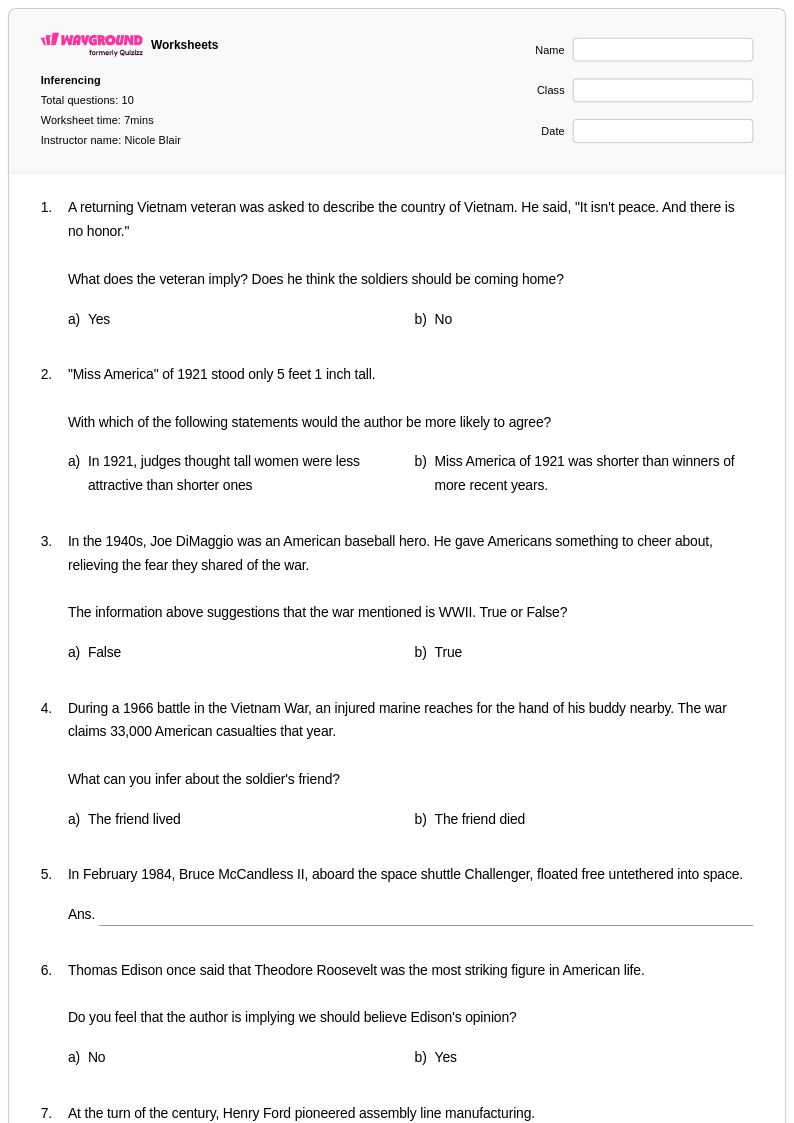
10 Q
7th
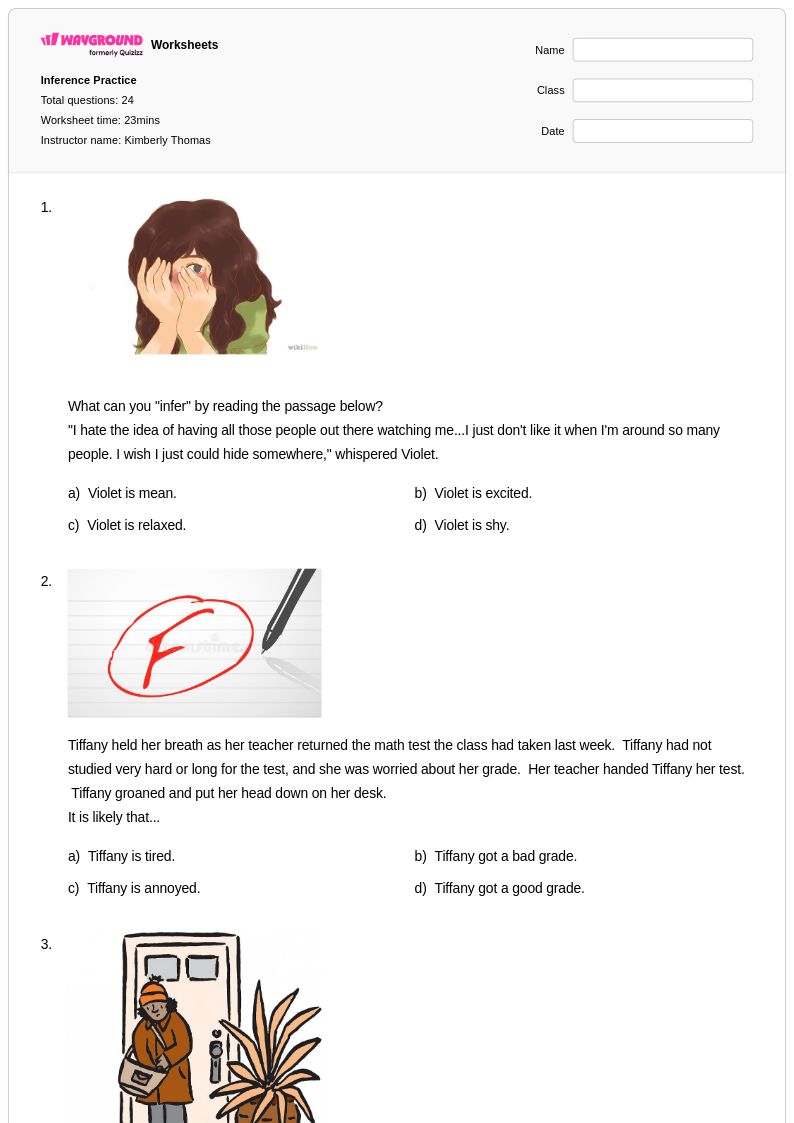
24 Q
6th - 8th
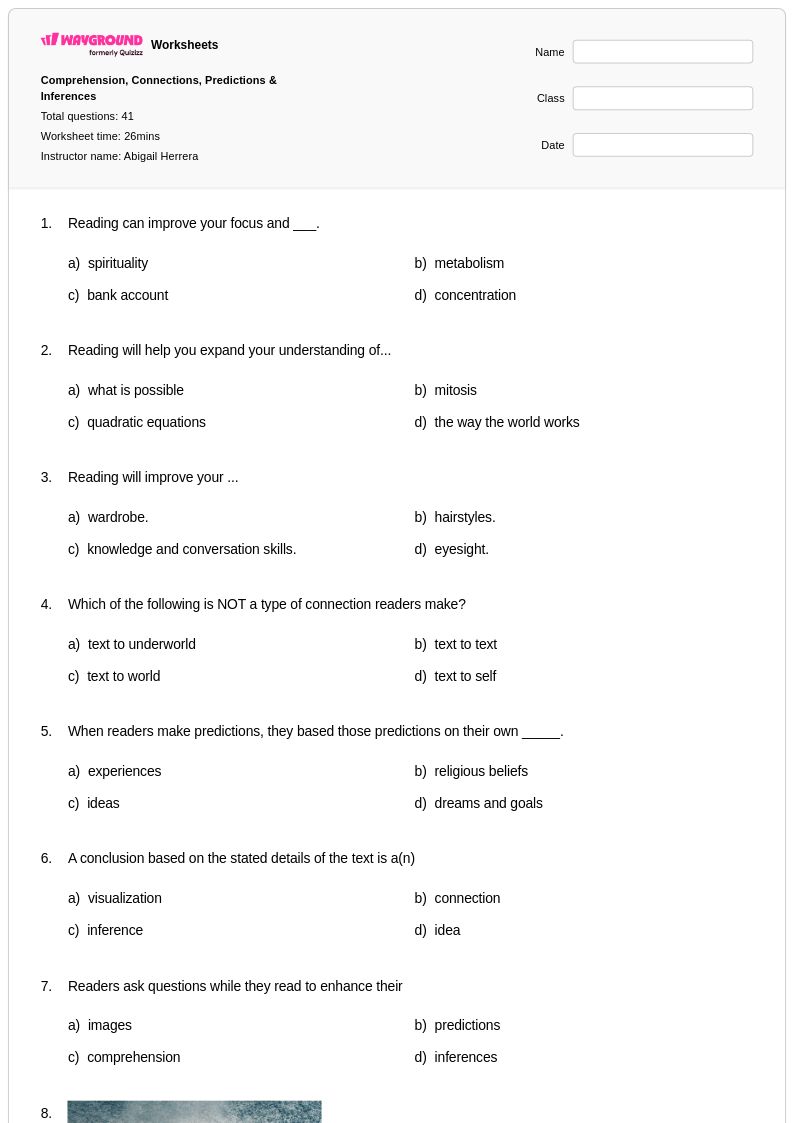
41 Q
7th
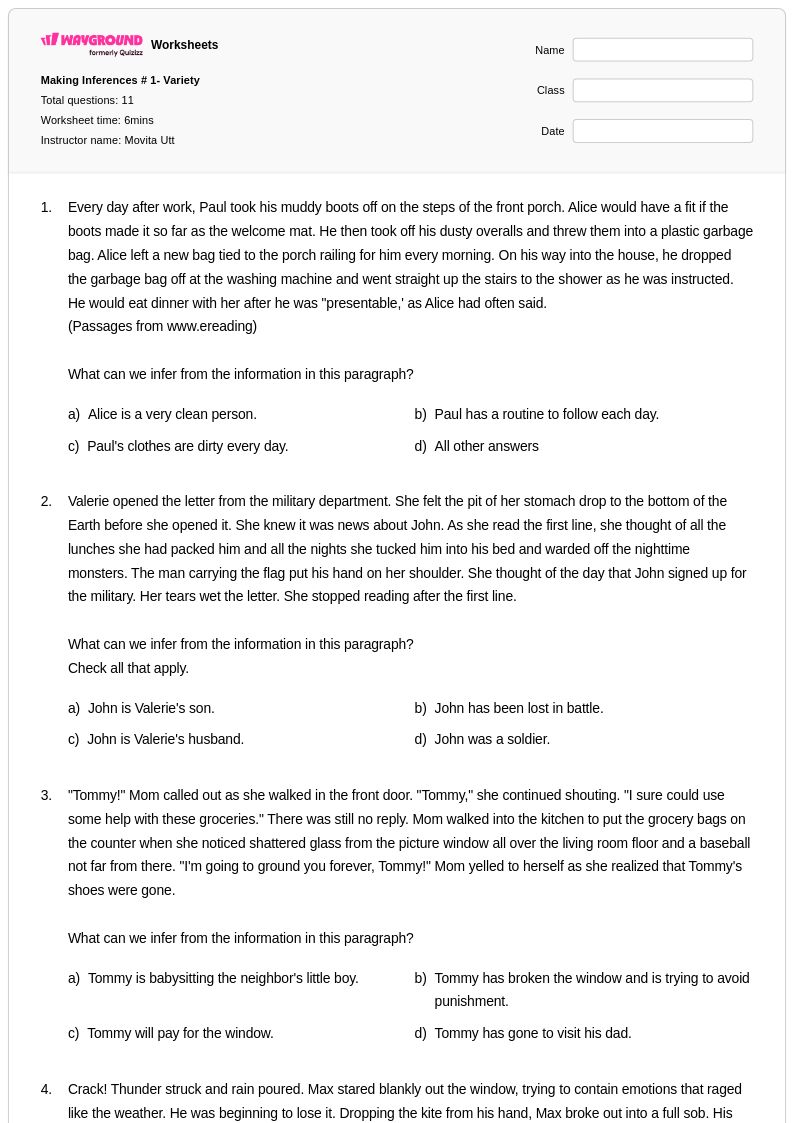
11 Q
6th - 8th
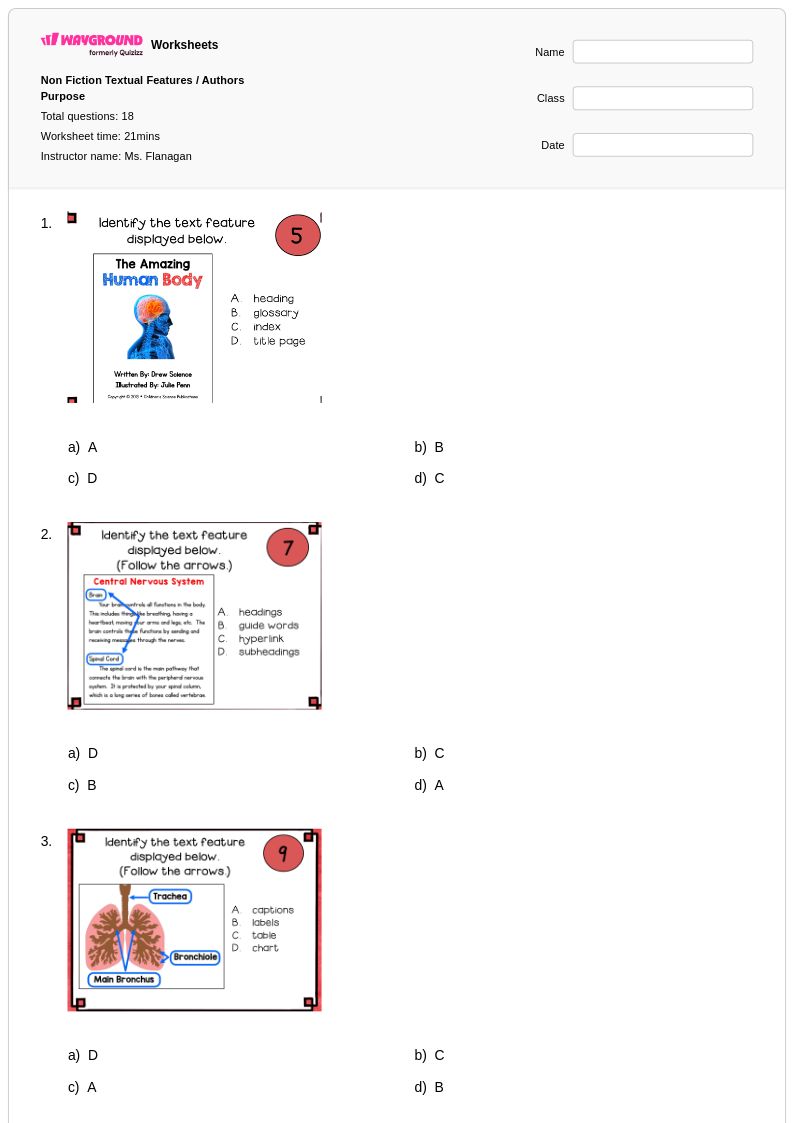
18 Q
6th - 7th
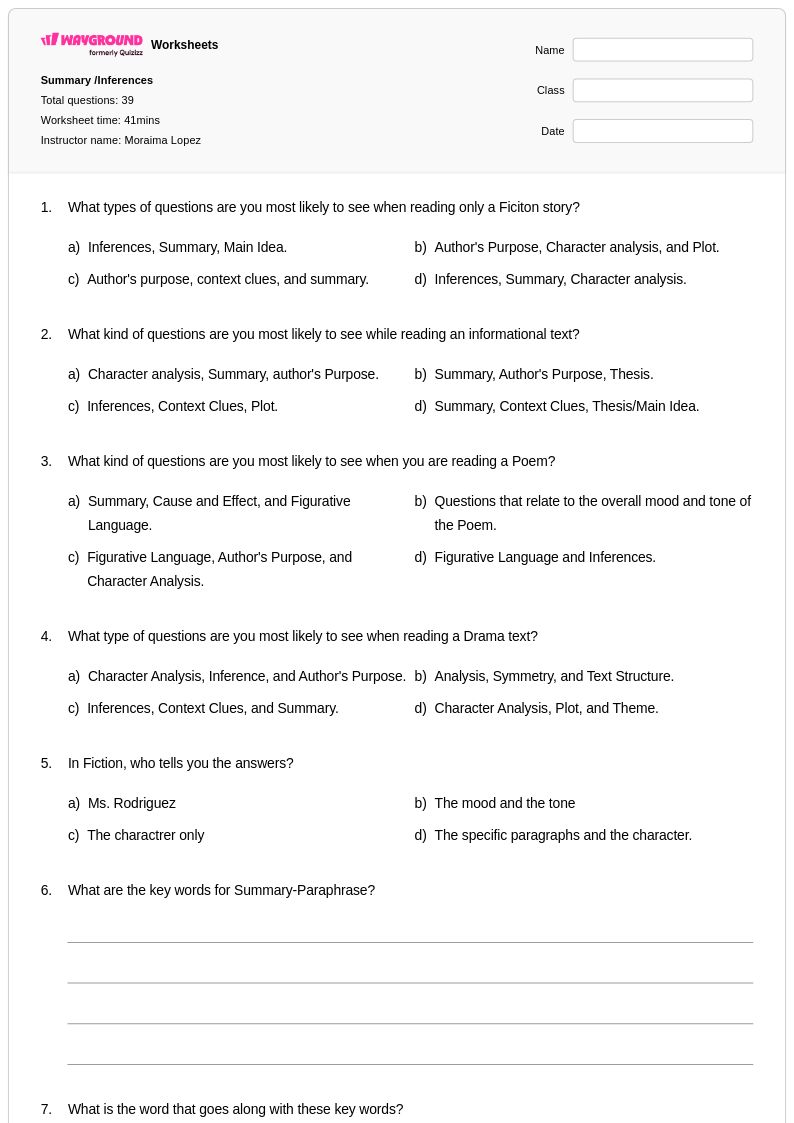
39 Q
3rd - 8th
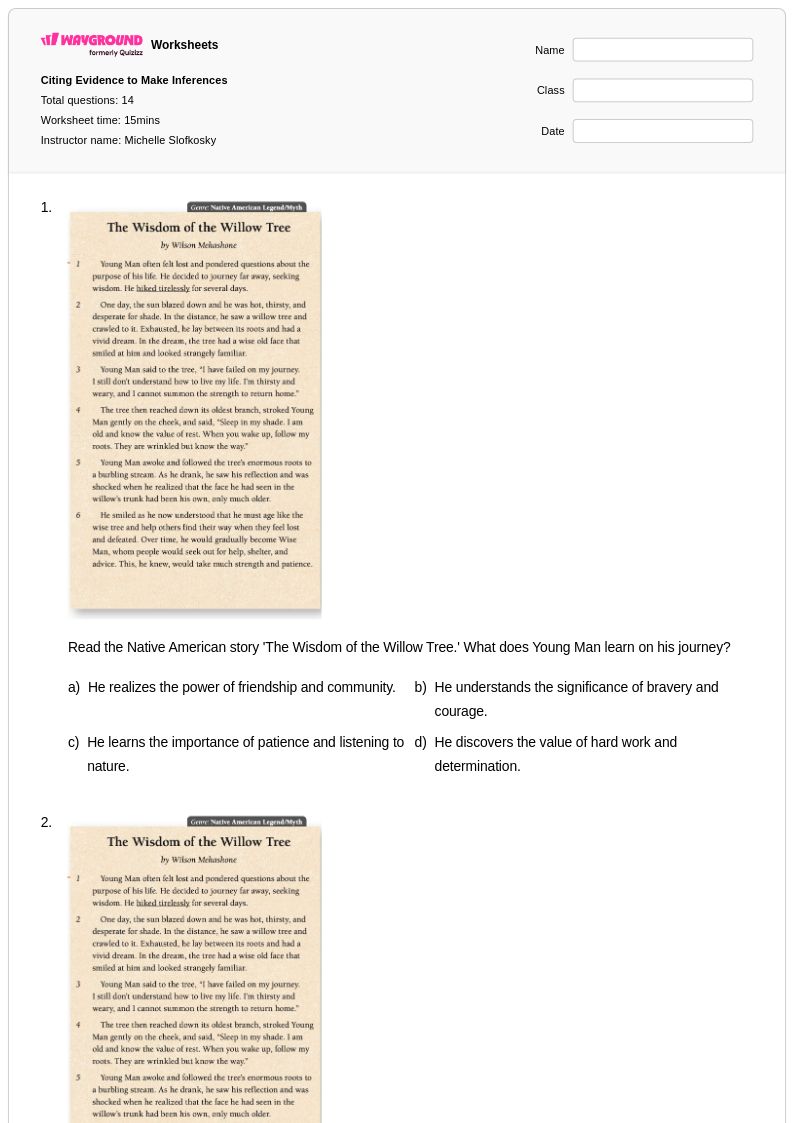
14 Q
7th - Uni
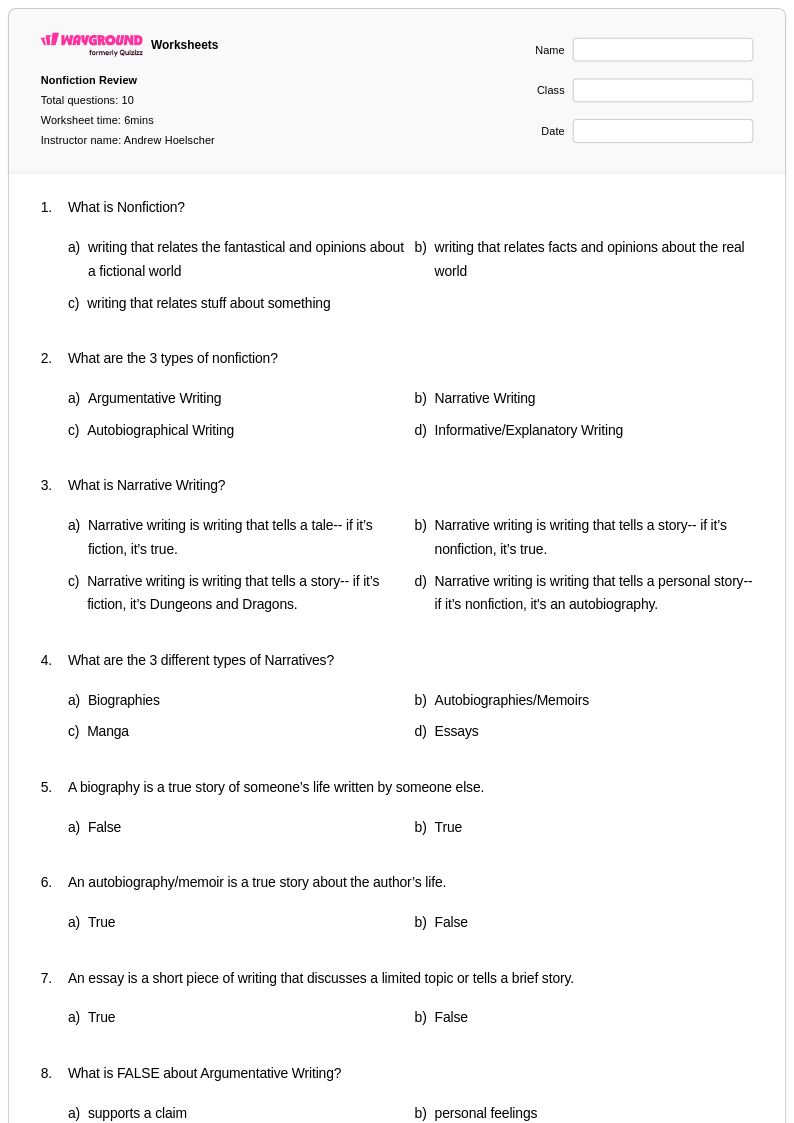
10 Q
7th
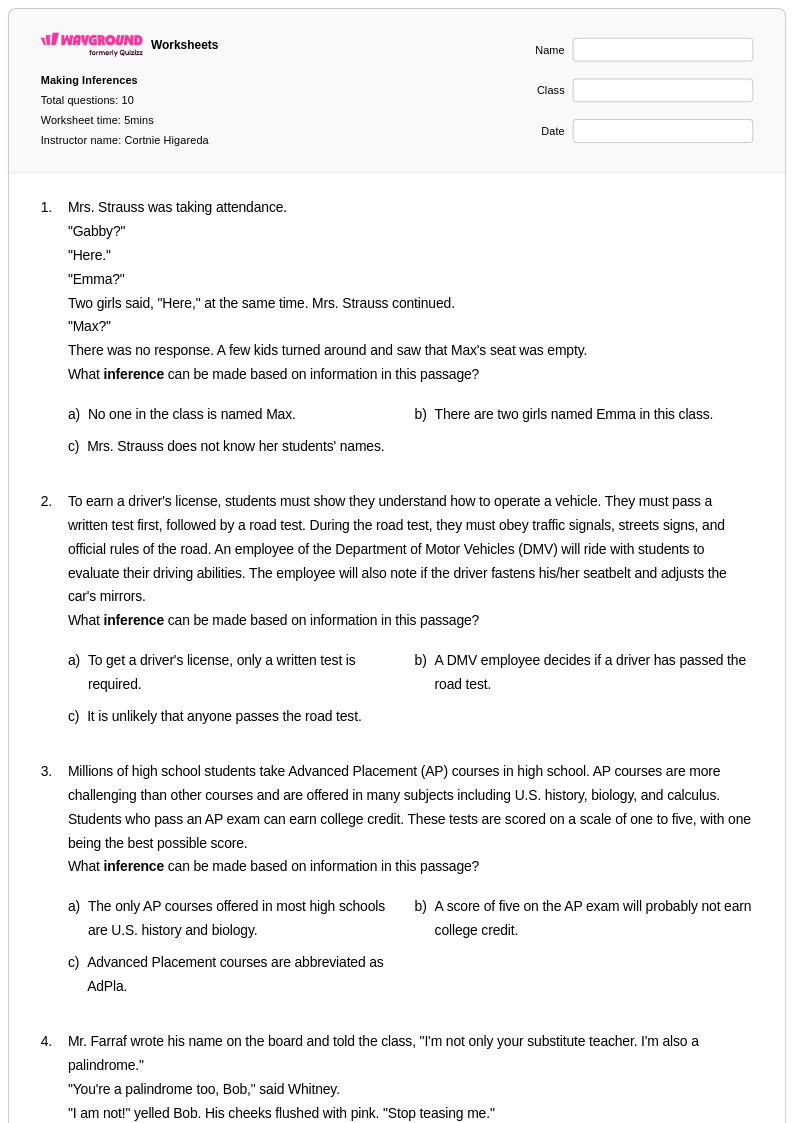
10 Q
7th
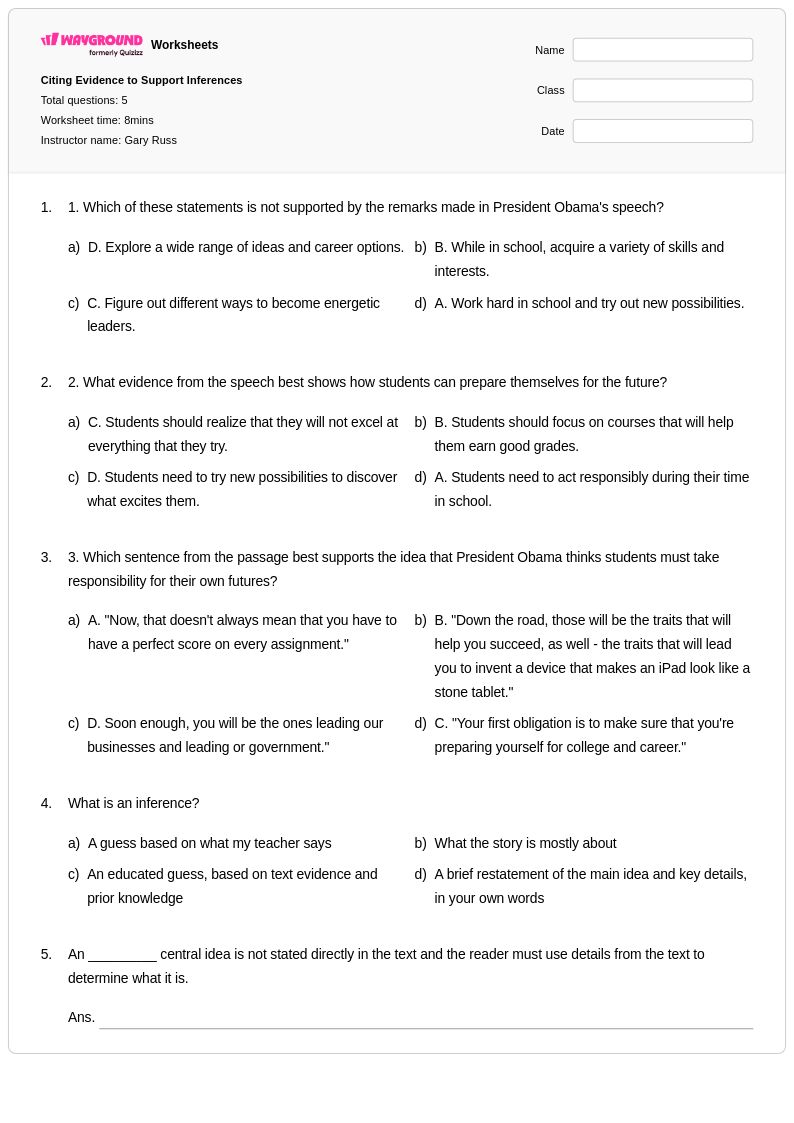
5 Q
6th - 7th
Explore Making Inferences in Nonfiction Worksheets by Grades
Explore Other Subject Worksheets for grade 7
Explore printable Making Inferences in Nonfiction worksheets for Grade 7
Making inferences in nonfiction represents a critical reading comprehension skill for Grade 7 students, requiring them to analyze textual evidence and draw logical conclusions beyond what is explicitly stated. Wayground's comprehensive collection of making inferences in nonfiction worksheets provides students with targeted practice in extracting deeper meaning from informational texts, scientific articles, historical documents, and biographical passages. These carefully crafted worksheets strengthen students' analytical thinking abilities by challenging them to connect textual clues with their background knowledge to form reasonable interpretations. Each worksheet includes detailed answer keys that help educators assess student understanding, while the free printable format ensures easy classroom distribution. The practice problems progressively build complexity, guiding seventh-grade students from identifying basic implicit information to making sophisticated inferences about author purpose, cause-and-effect relationships, and underlying themes in nonfiction materials.
Wayground supports educators with millions of teacher-created resources specifically designed for making inferences in nonfiction instruction, featuring robust search and filtering capabilities that allow teachers to quickly locate materials aligned with their curriculum standards and student needs. The platform's differentiation tools enable instructors to customize worksheets for varying ability levels within their Grade 7 classrooms, ensuring that struggling readers receive appropriate scaffolding while advanced students encounter challenging enrichment opportunities. Teachers can access these resources in both printable PDF format for traditional classroom use and digital formats for technology-integrated learning environments. This flexibility proves invaluable for lesson planning, targeted remediation sessions, and skill practice across diverse learning contexts, empowering educators to provide consistent, high-quality instruction in this essential reading comprehension strategy that students will apply throughout their academic careers.