
13 Q
6th
10 Q
4th - 6th
5 Q
5th - 6th
18 Q
6th
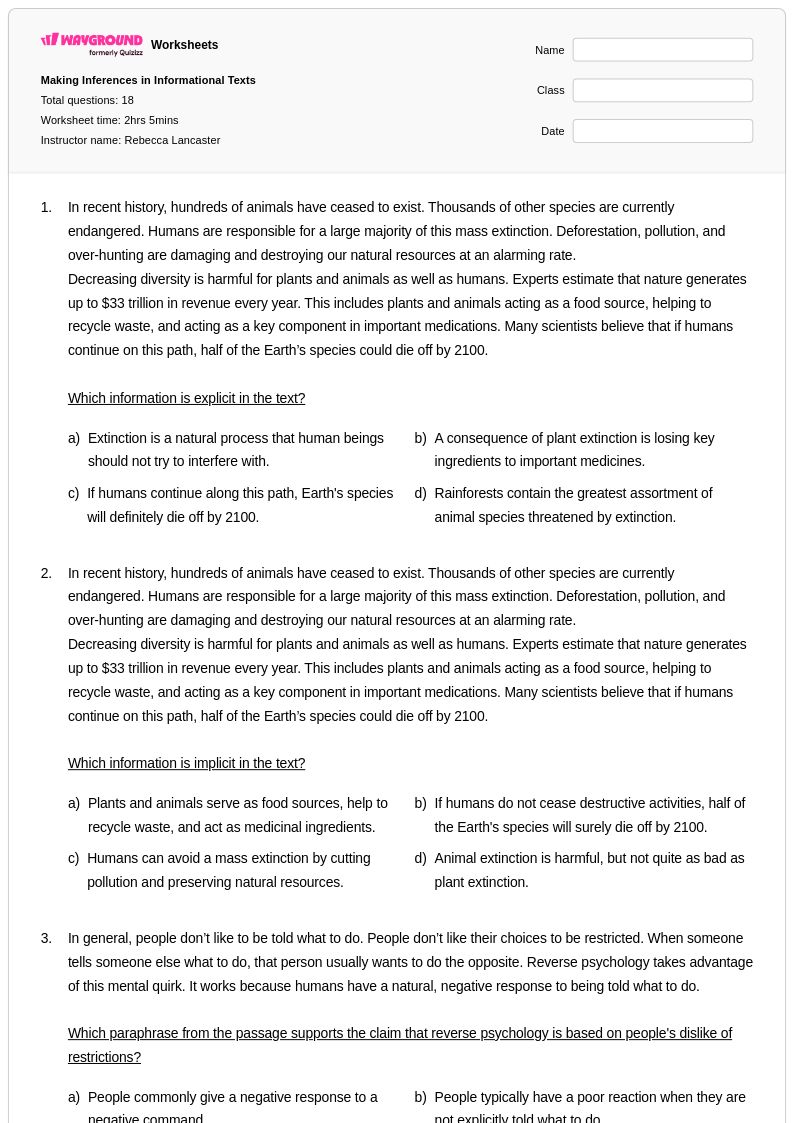
18 Q
6th
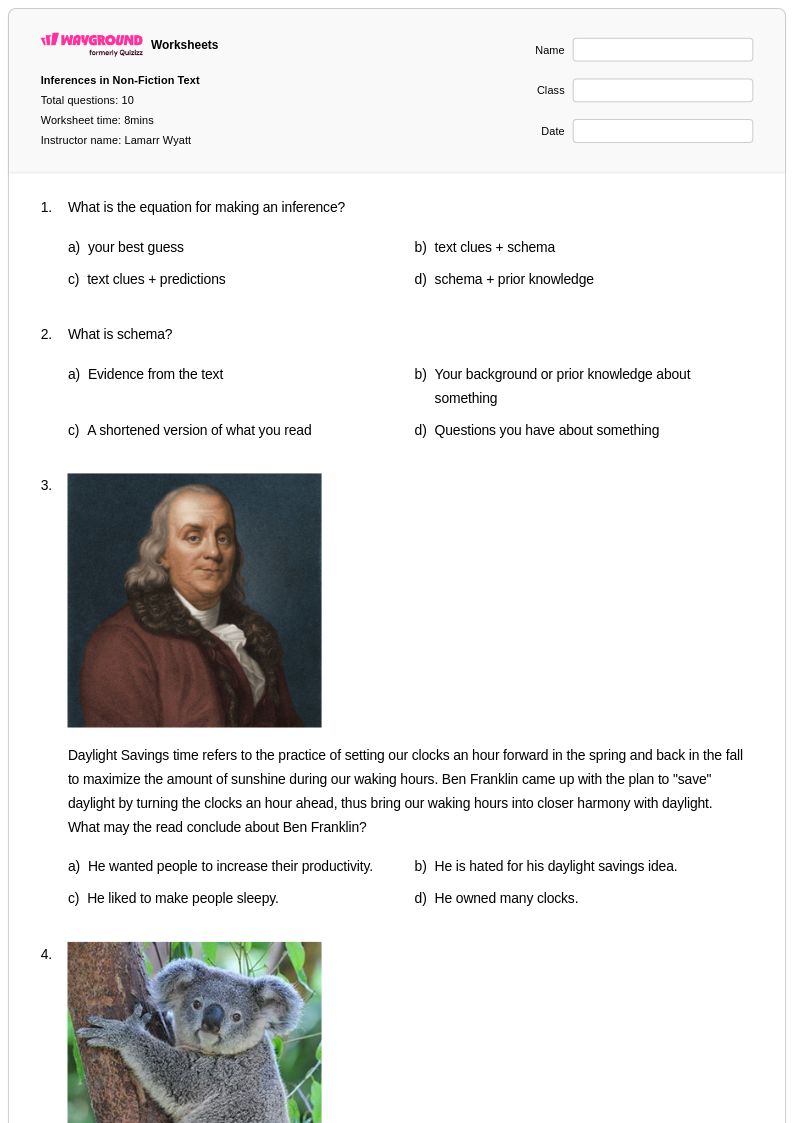
10 Q
5th - 6th
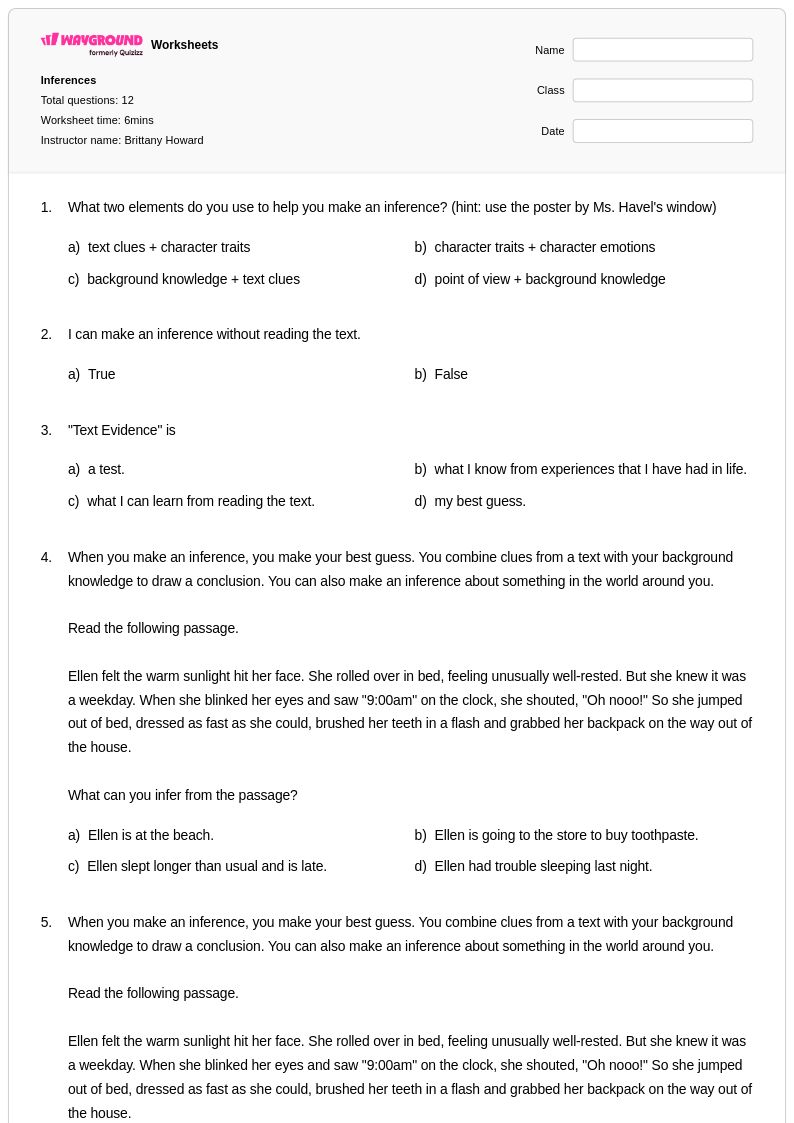
12 Q
6th
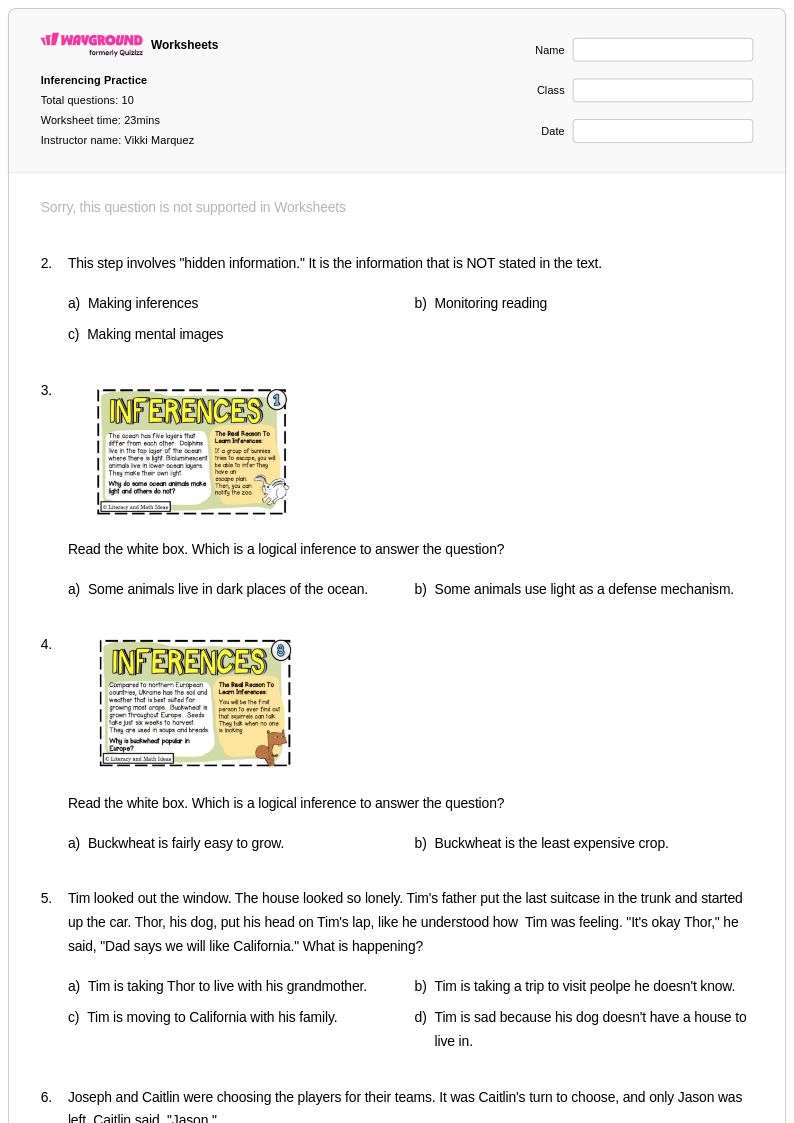
14 Q
6th - 8th
15 Q
6th
17 Q
6th - 8th
10 Q
3rd - 6th
11 Q
6th
11 Q
6th
10 Q
5th - 7th
7 Q
6th - 8th
10 Q
5th - 10th
10 Q
6th
51 Q
6th
10 Q
6th
8 Q
6th
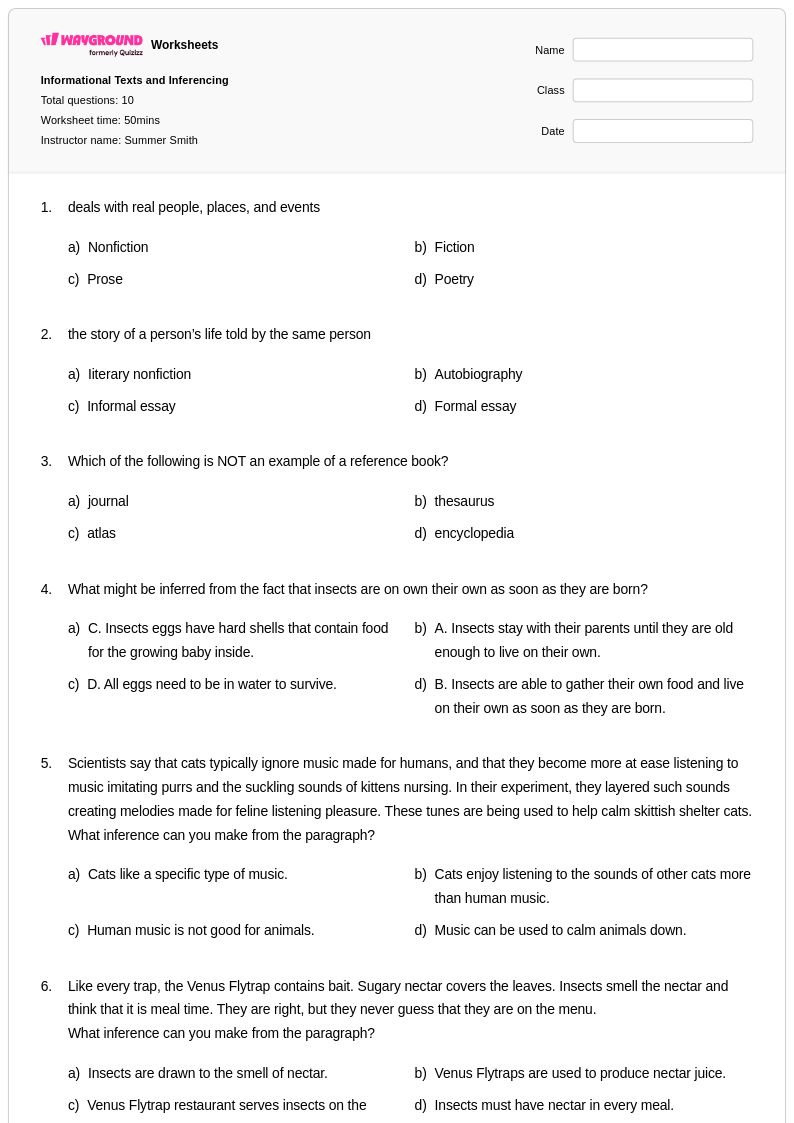
10 Q
6th
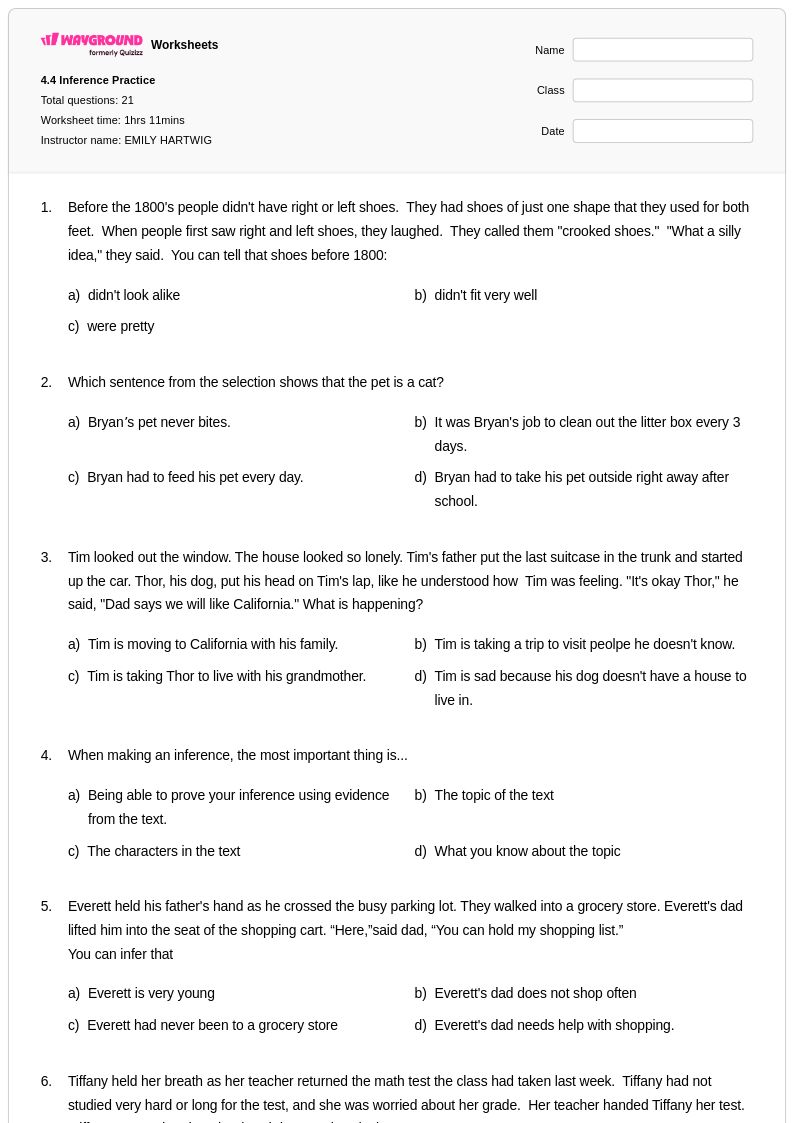
21 Q
6th - 8th
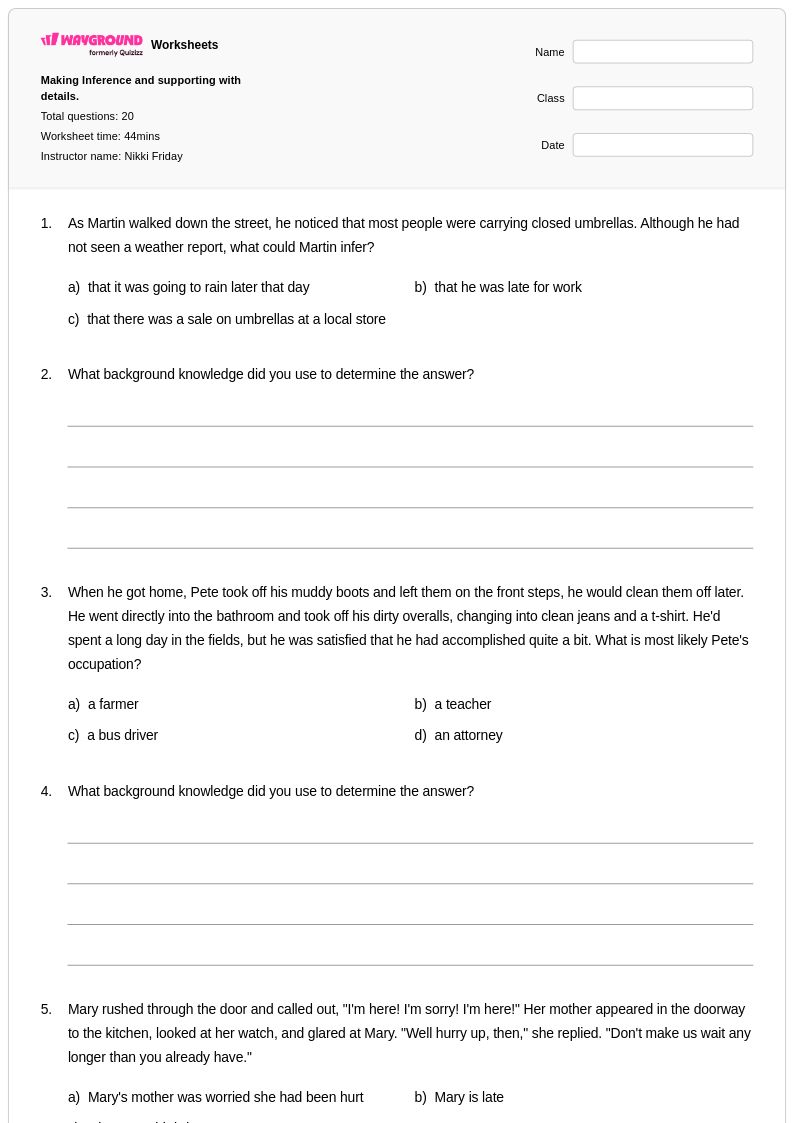
20 Q
6th
Explore Making Inferences in Nonfiction Worksheets by Grades
Explore Other Subject Worksheets for grade 6
Explore printable Making Inferences in Nonfiction worksheets for Grade 6
Making inferences in nonfiction for Grade 6 students requires targeted practice with authentic texts and systematic skill development. Wayground's comprehensive collection of worksheets focuses specifically on helping sixth-grade learners analyze factual content, identify implied meanings, and draw logical conclusions from evidence presented in nonfiction passages. These carefully designed practice problems guide students through the critical thinking process of reading between the lines in informational texts, scientific articles, historical documents, and biographical excerpts. Each worksheet includes detailed answer keys that not only provide correct responses but also explain the reasoning behind effective inference-making strategies. Available as free printables in convenient pdf format, these resources systematically build students' analytical reading skills through progressively challenging exercises that mirror real-world reading scenarios.
Wayground's platform, formerly Quizizz, empowers educators with millions of teacher-created resources specifically designed for making inferences in nonfiction at the sixth-grade level. Teachers can efficiently search and filter through extensive worksheet collections using precise criteria, ensuring alignment with curriculum standards and learning objectives. The platform's differentiation tools enable educators to customize materials for diverse learning needs, providing both remediation support for struggling readers and enrichment opportunities for advanced students. Available in both printable pdf formats for traditional classroom use and digital versions for interactive learning environments, these worksheets streamline lesson planning while offering flexible implementation options. This comprehensive approach supports systematic skill practice, targeted intervention, and ongoing assessment of students' inference-making abilities across various nonfiction text types and complexity levels.