
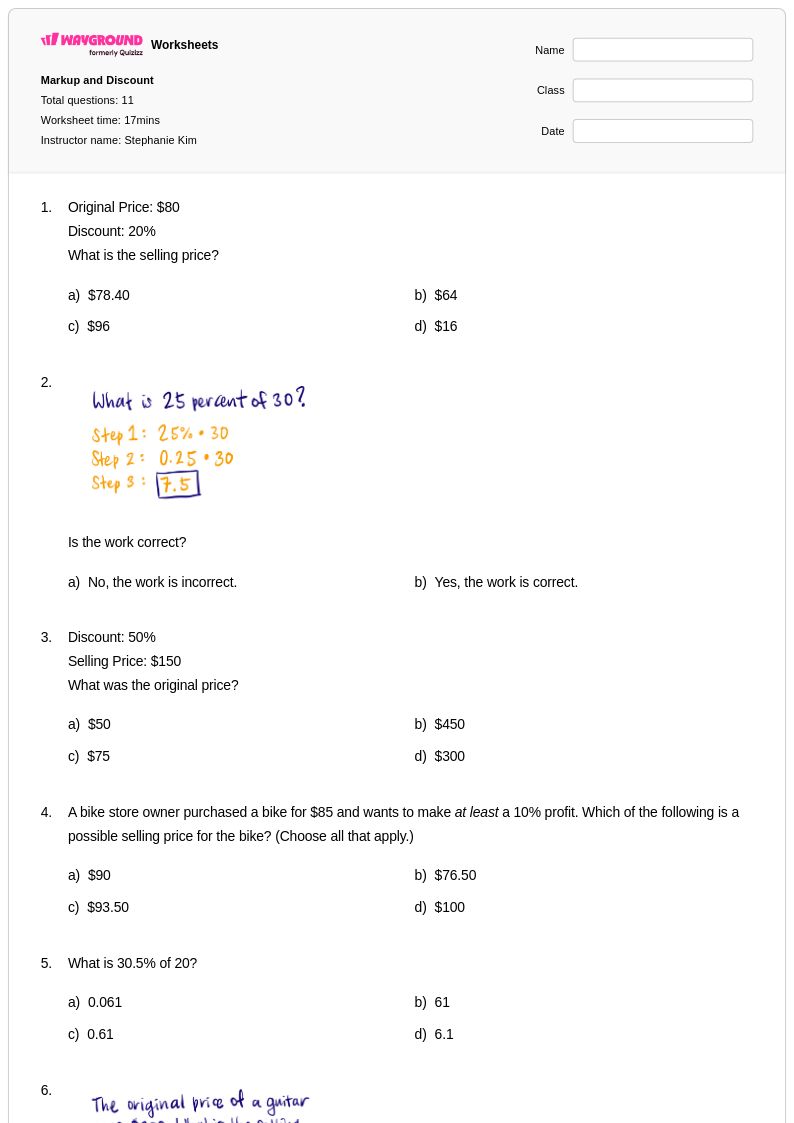
11 Q
5th - 8th
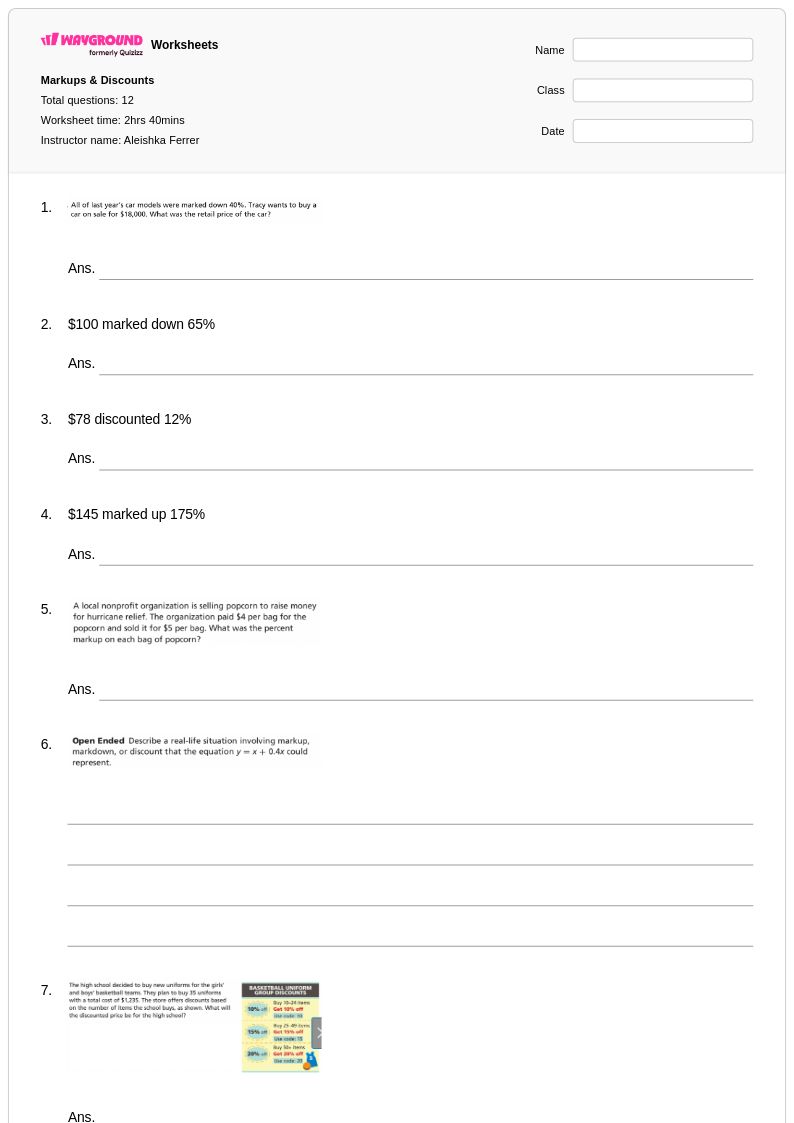
12 Q
7th - 8th
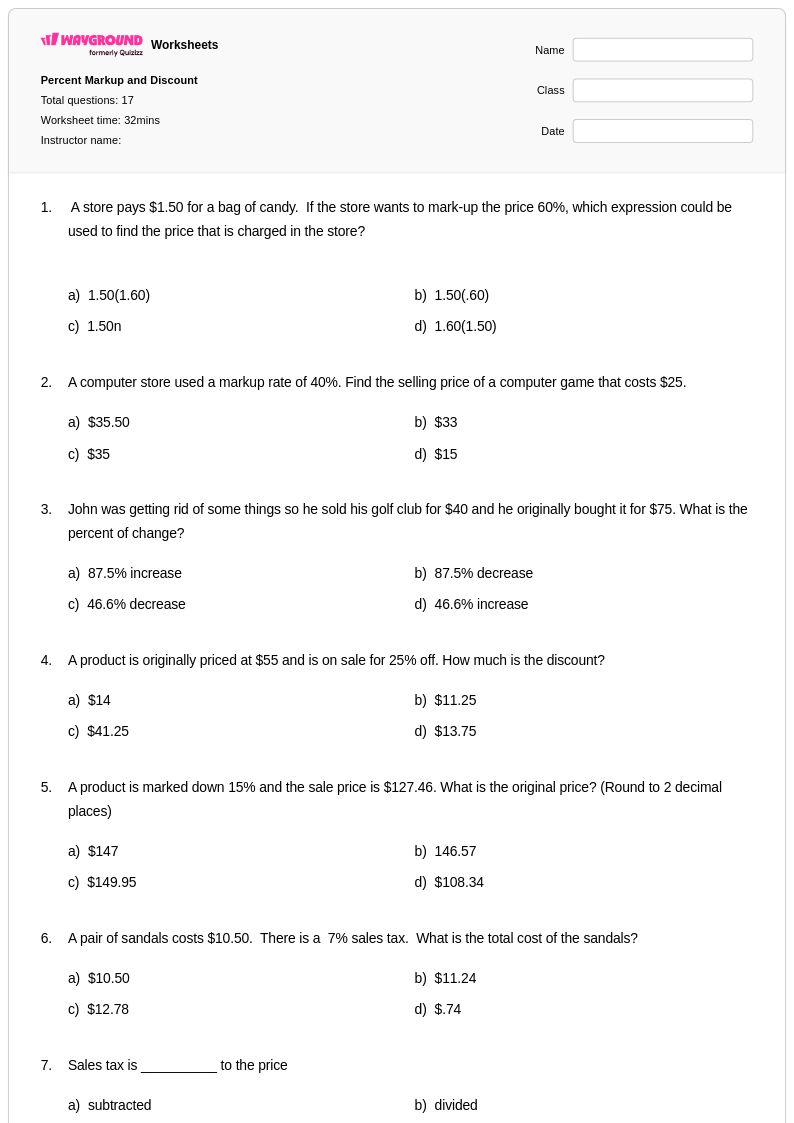
17 Q
6th - 10th
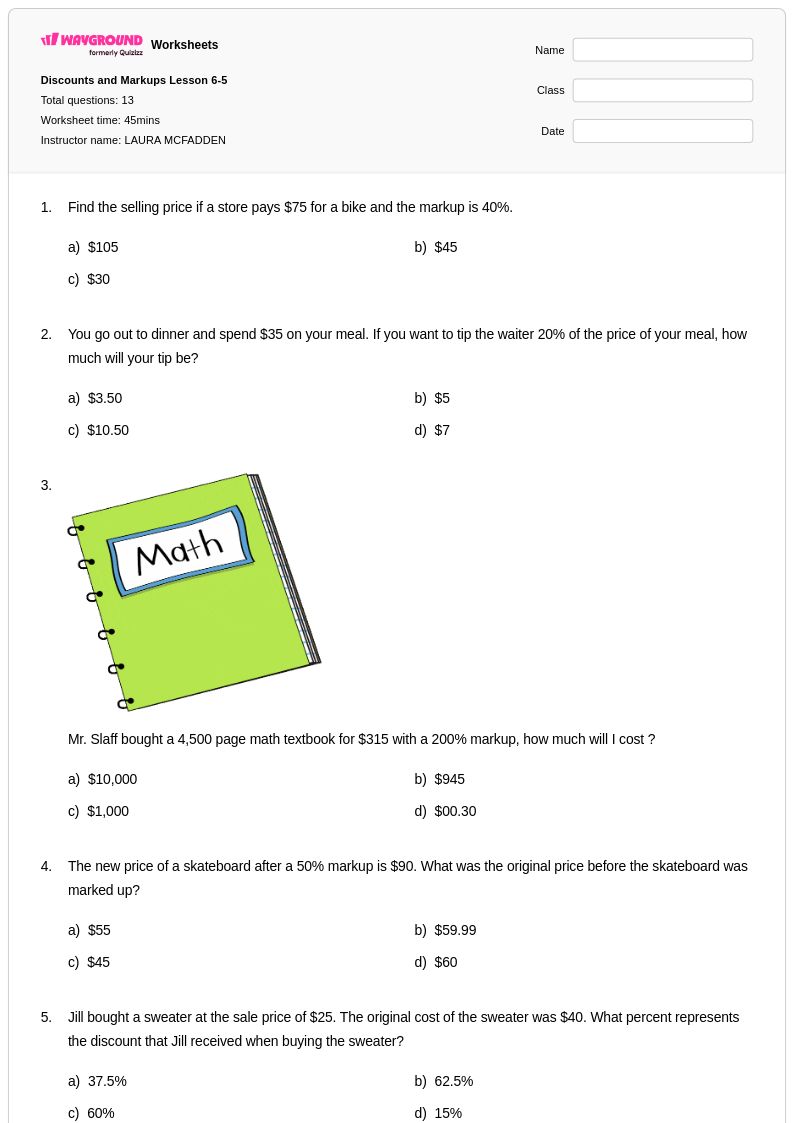
13 Q
8th
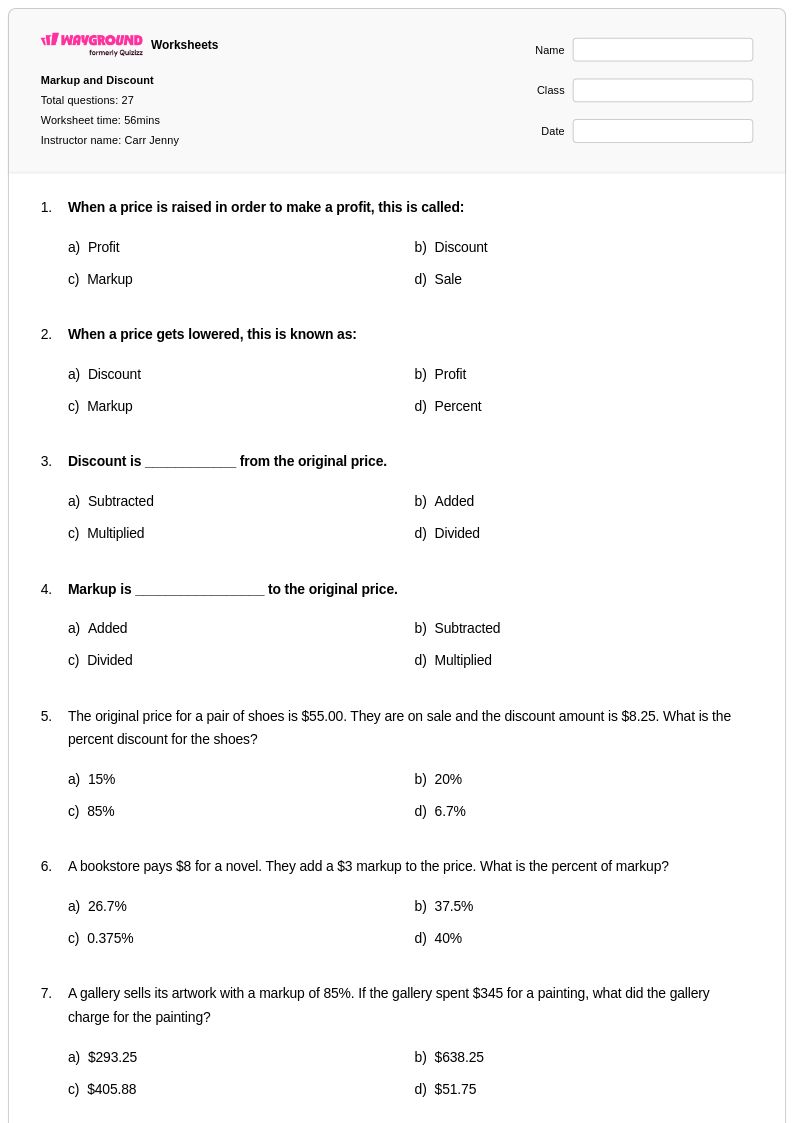
27 Q
8th
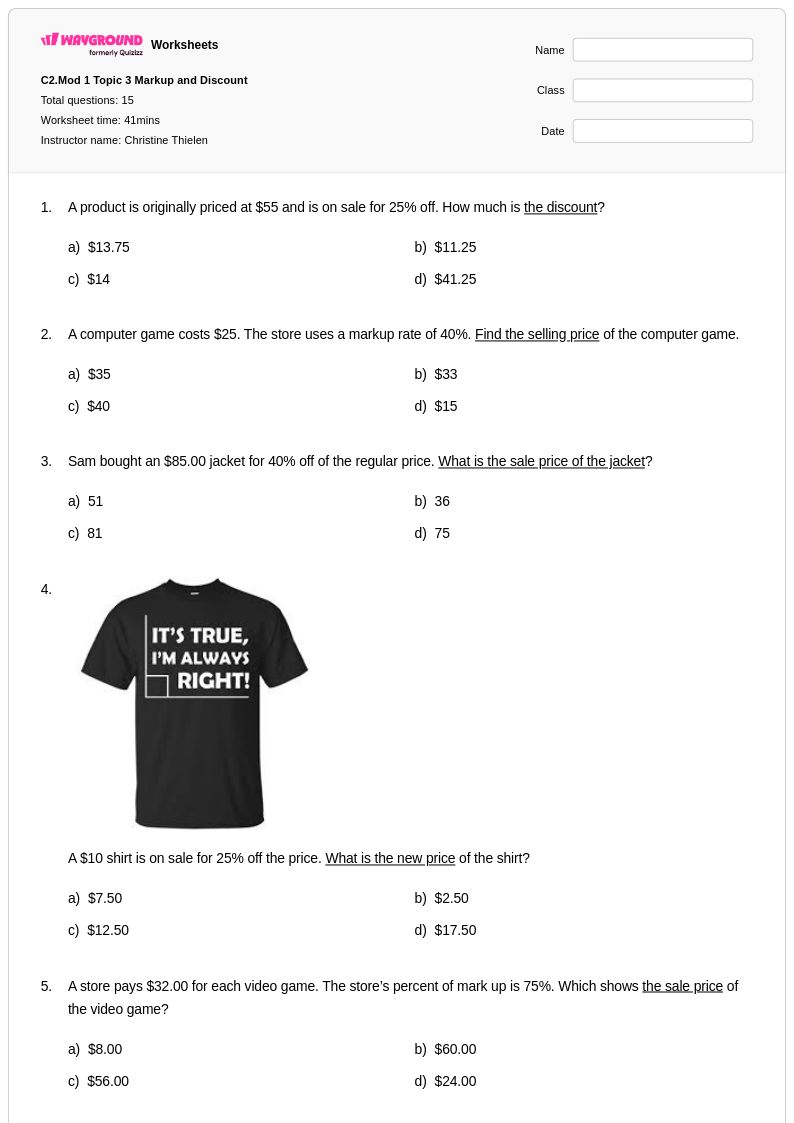
15 Q
7th - Uni
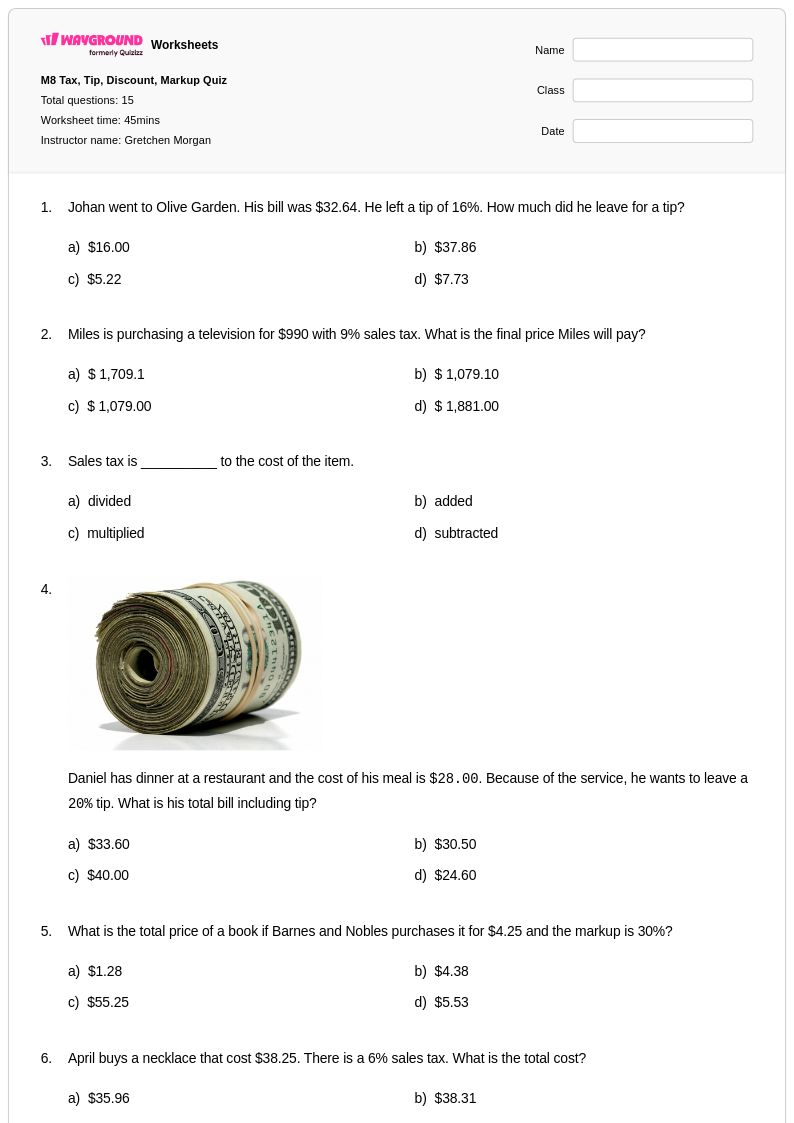
15 Q
8th
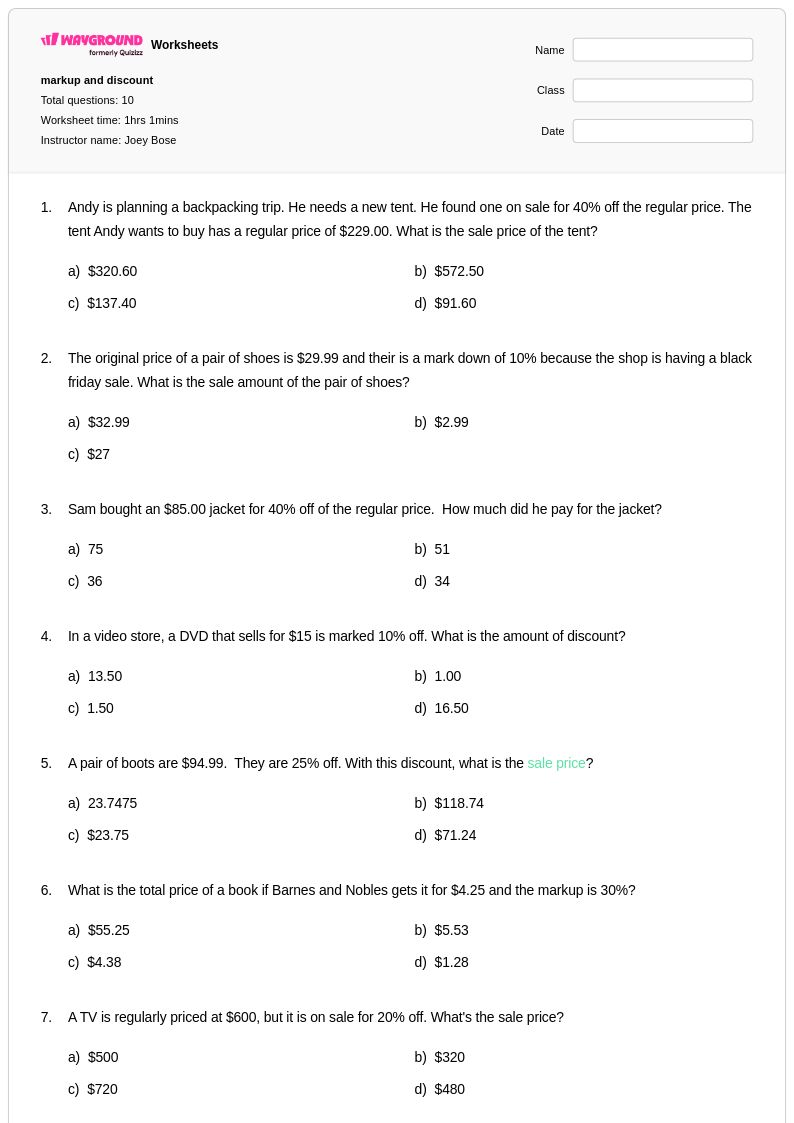
10 Q
7th - 8th
15 Q
6th - 8th
15 Q
8th
22 Q
6th - 8th
8 Q
6th - 8th
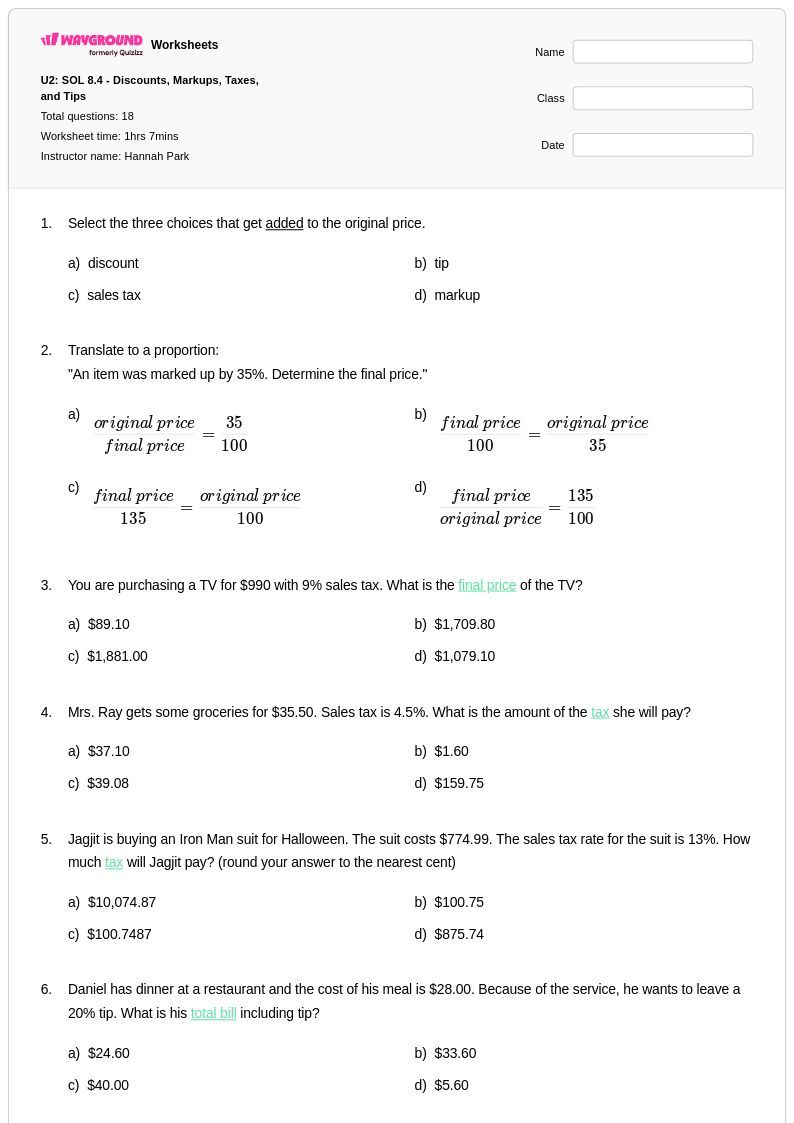
18 Q
7th - 8th
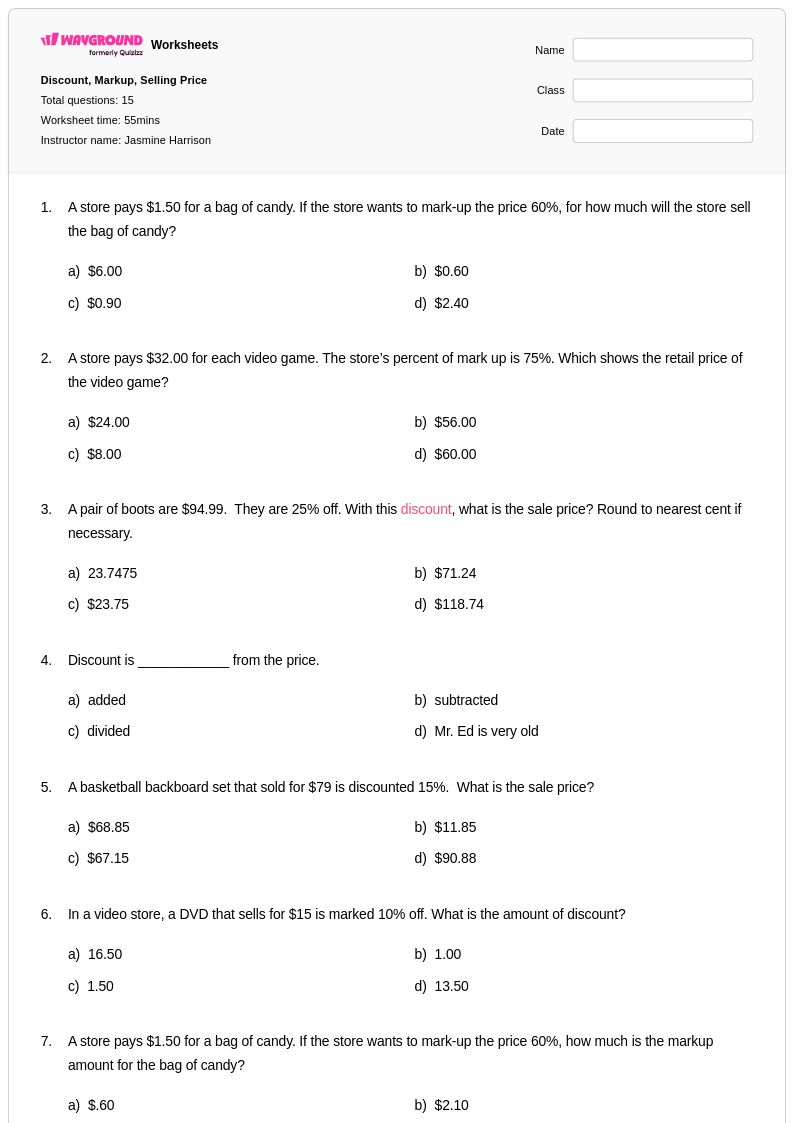
15 Q
7th - 8th
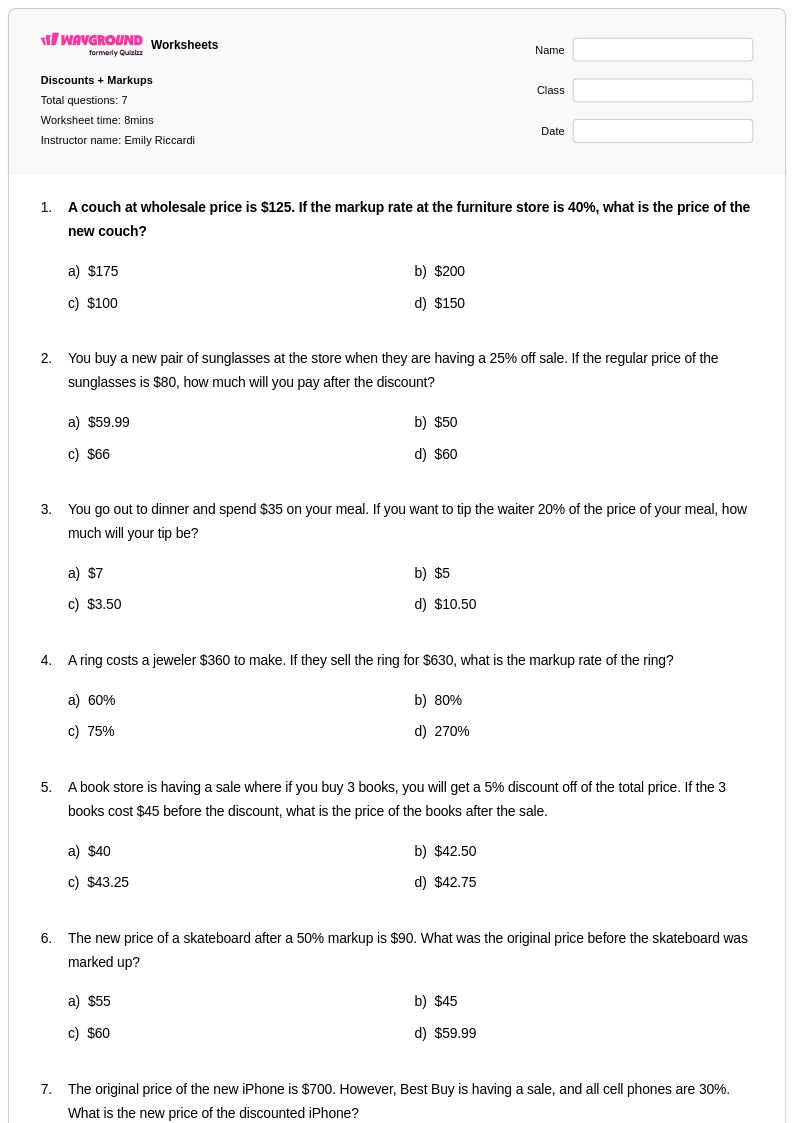
7 Q
7th - 8th
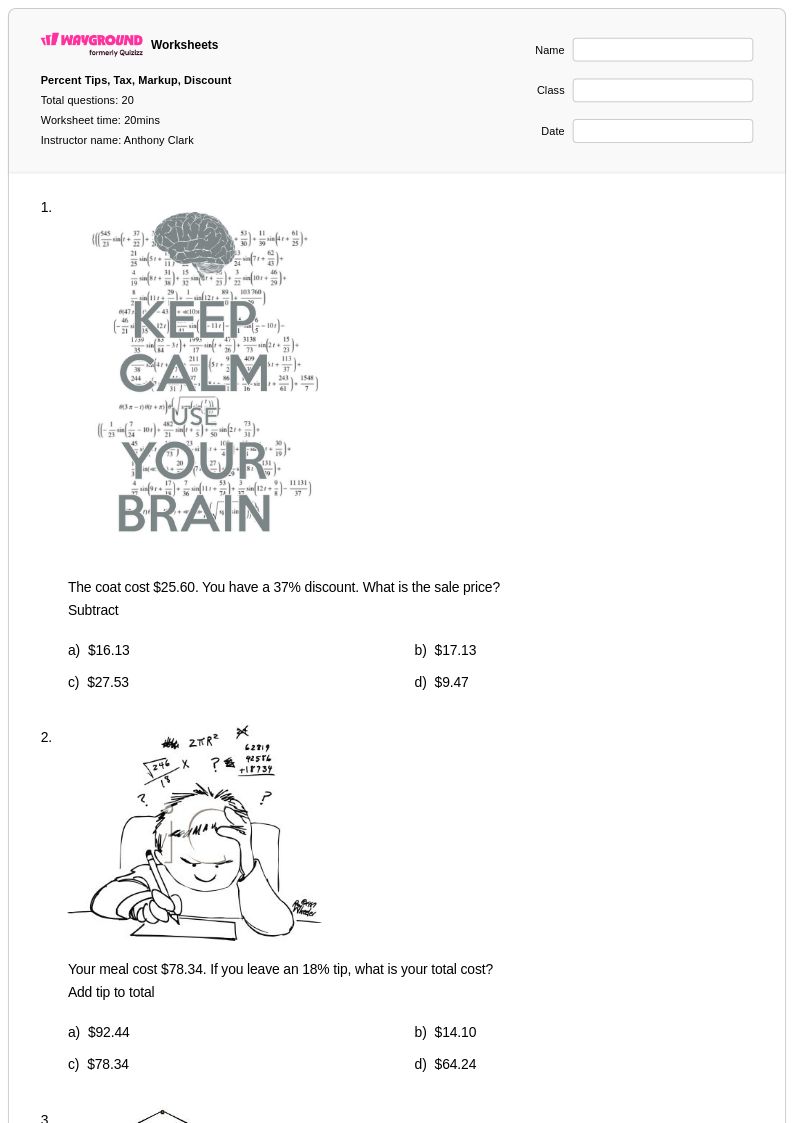
20 Q
7th - Uni
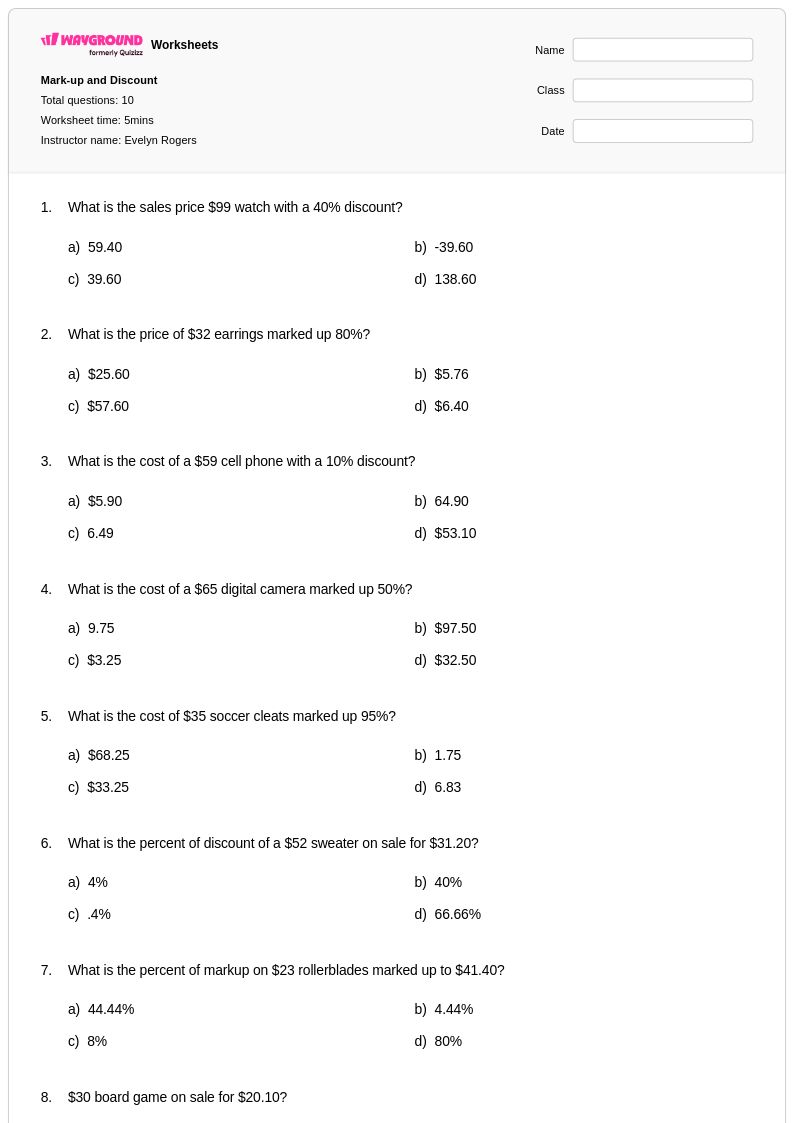
10 Q
6th - 8th
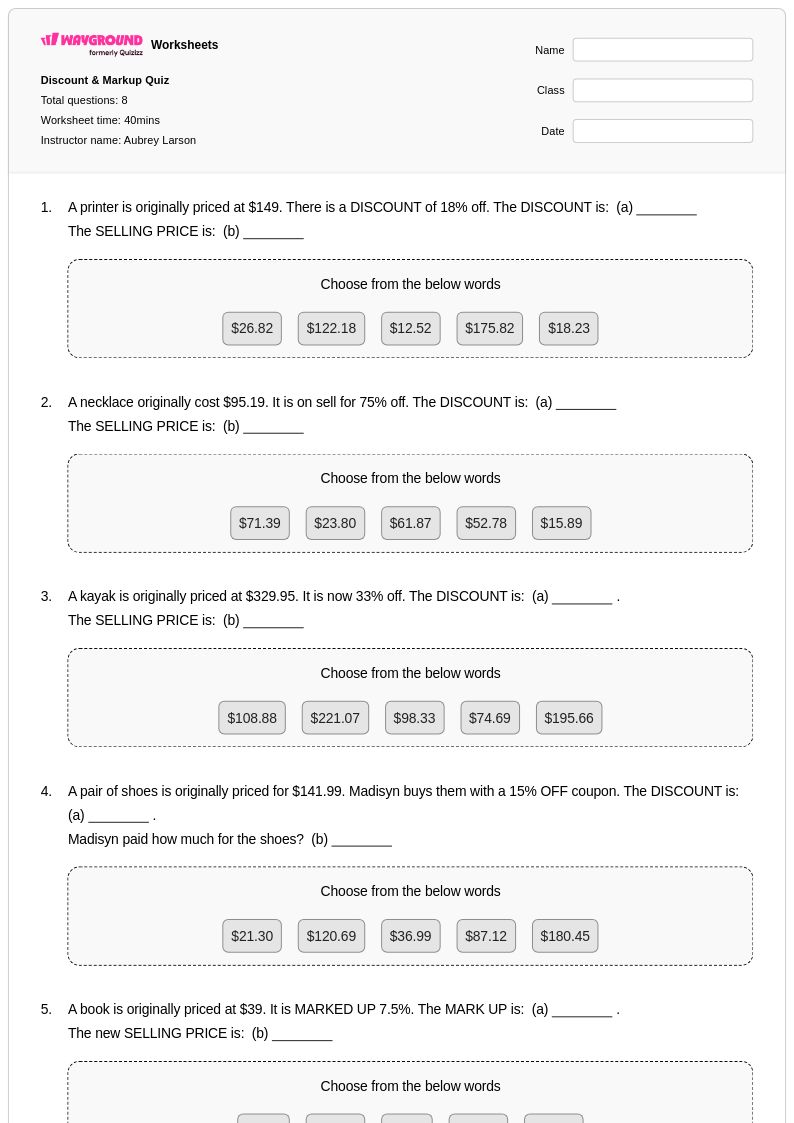
8 Q
8th
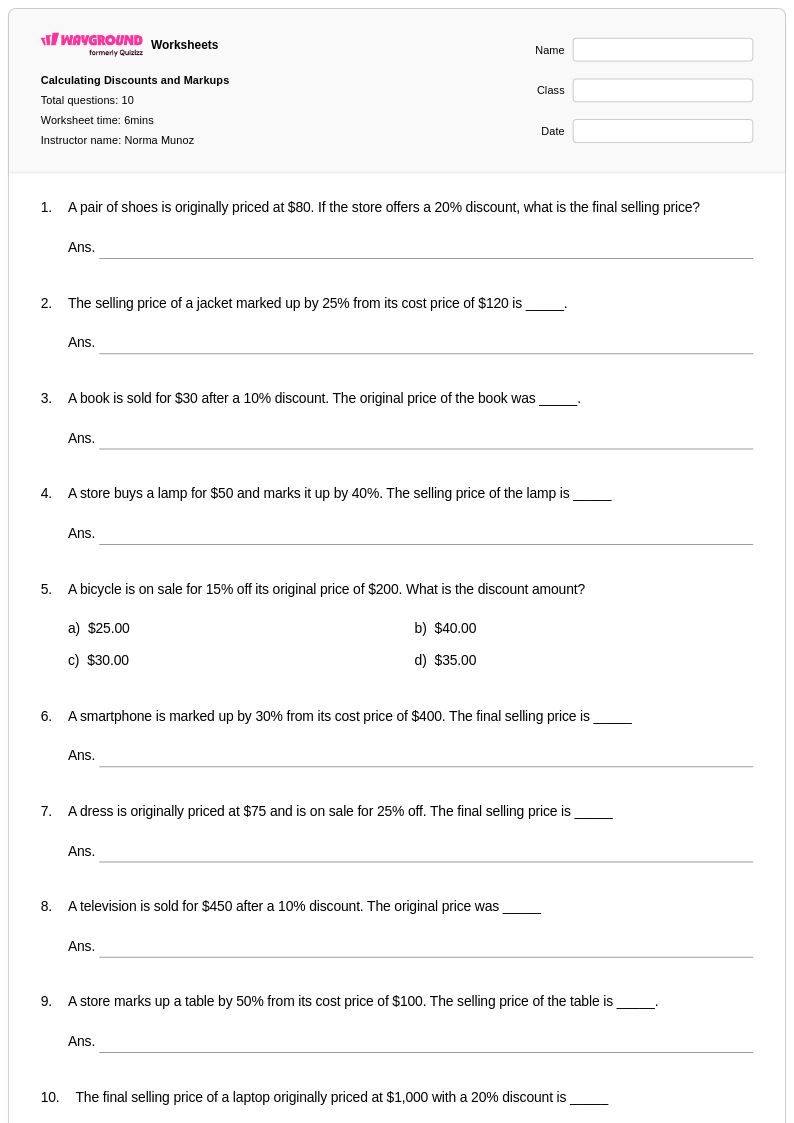
10 Q
8th
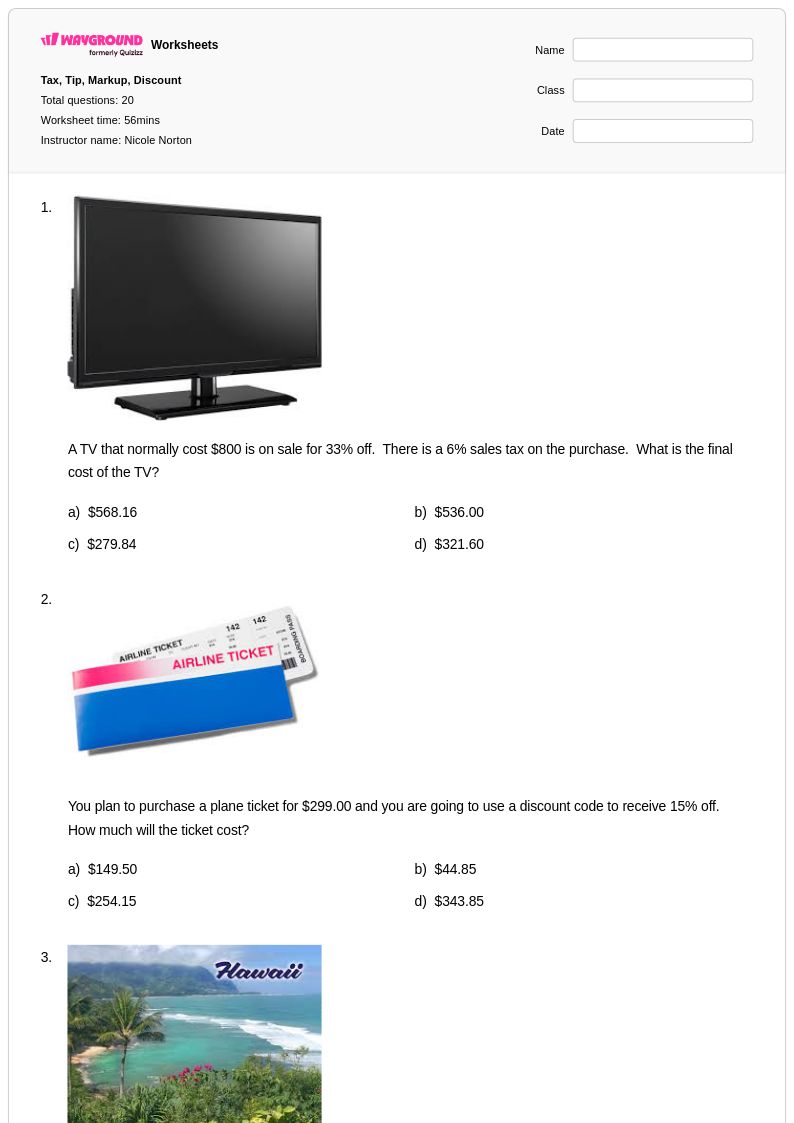
20 Q
8th
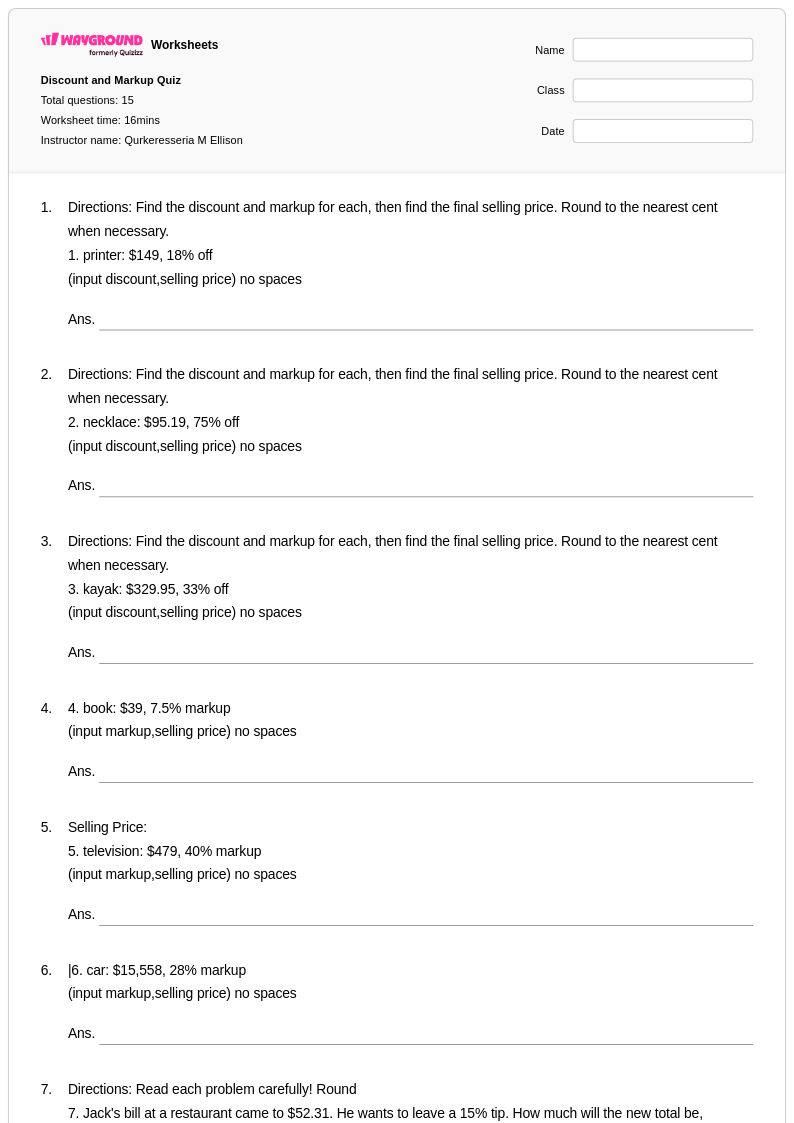
15 Q
8th
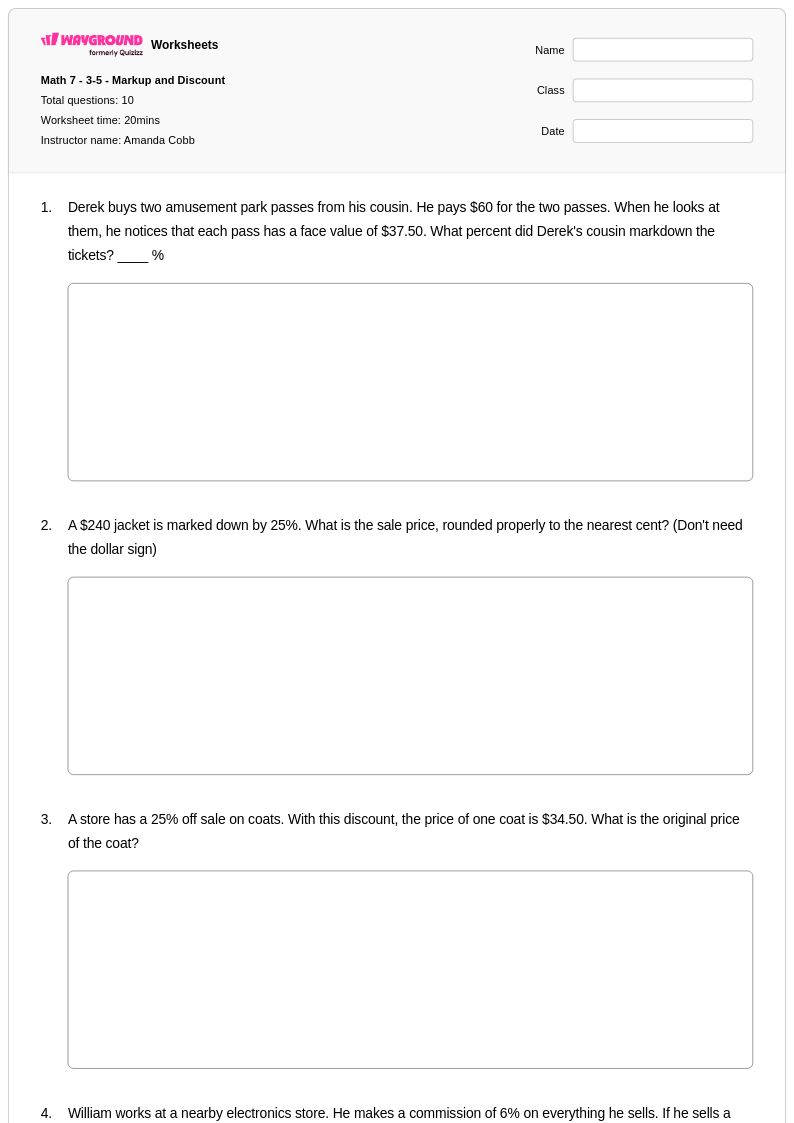
10 Q
6th - 8th
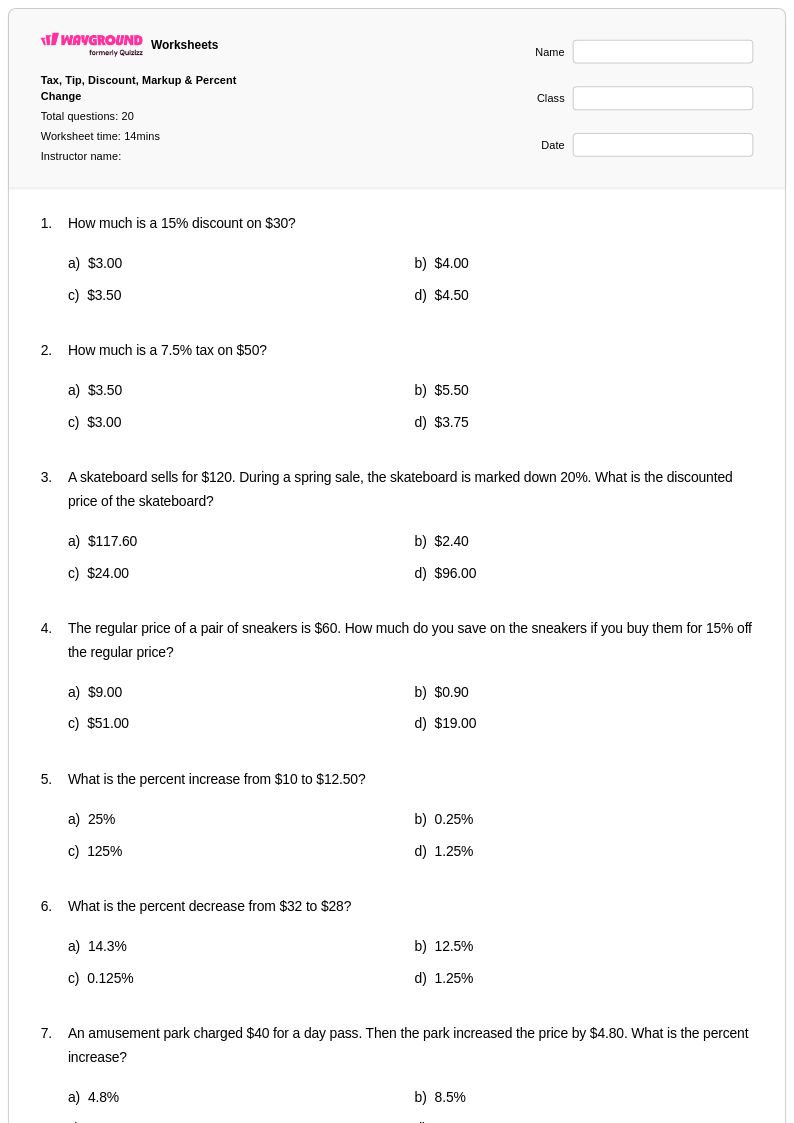
20 Q
8th
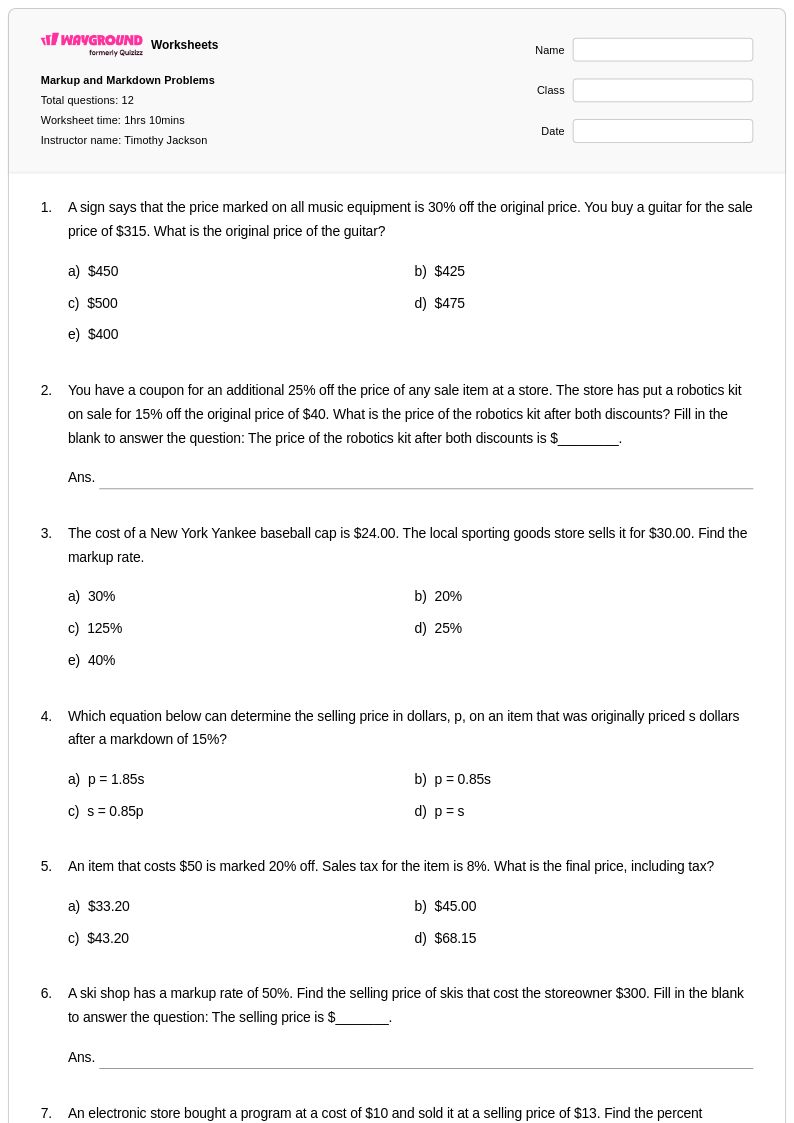
12 Q
6th - 8th
Explore Markup and Discount Worksheets by Grades
Explore Other Subject Worksheets for grade 8
Explore printable Markup and Discount worksheets for Grade 8
Grade 8 markup and discount worksheets available through Wayground (formerly Quizizz) provide comprehensive practice with real-world percentage applications that students encounter in retail, business, and consumer mathematics. These carefully designed printables strengthen essential skills including calculating original prices from marked-up amounts, determining sale prices after discounts are applied, finding percentage increases and decreases, and solving multi-step problems involving successive markups or discounts. Each worksheet collection includes detailed answer keys and step-by-step solutions, enabling students to verify their work and understand the logical progression of markup and discount calculations. The free practice problems range from basic single-step calculations to complex scenarios involving multiple percentage changes, helping students develop fluency with the formulas and conceptual understanding needed for advanced mathematics and practical financial literacy.
Wayground (formerly Quizizz) supports mathematics educators with millions of teacher-created markup and discount worksheet resources that streamline lesson planning and enhance student learning outcomes. The platform's robust search and filtering capabilities allow teachers to quickly locate materials aligned with specific grade 8 mathematics standards and learning objectives, while differentiation tools enable customization of problem difficulty and complexity to meet diverse student needs. These versatile worksheet collections are available in both printable pdf formats for traditional classroom use and digital formats for online learning environments, providing flexibility for various instructional settings. Teachers can effectively use these resources for targeted skill practice, remediation support for struggling learners, enrichment activities for advanced students, and formative assessment to monitor student progress in understanding percentage applications in real-world financial contexts.
FAQs
What is the focus for markups and discounts in 8th grade?
How do you teach successive discounts, like '20% off, then an extra 10% off'?
What kinds of problems challenge 8th graders with this topic?
What's a common algebraic error 8th graders make with these problems?
How can I use these Grade 8 worksheets in my class?
How can I differentiate these 8th-grade problems for diverse learners?