
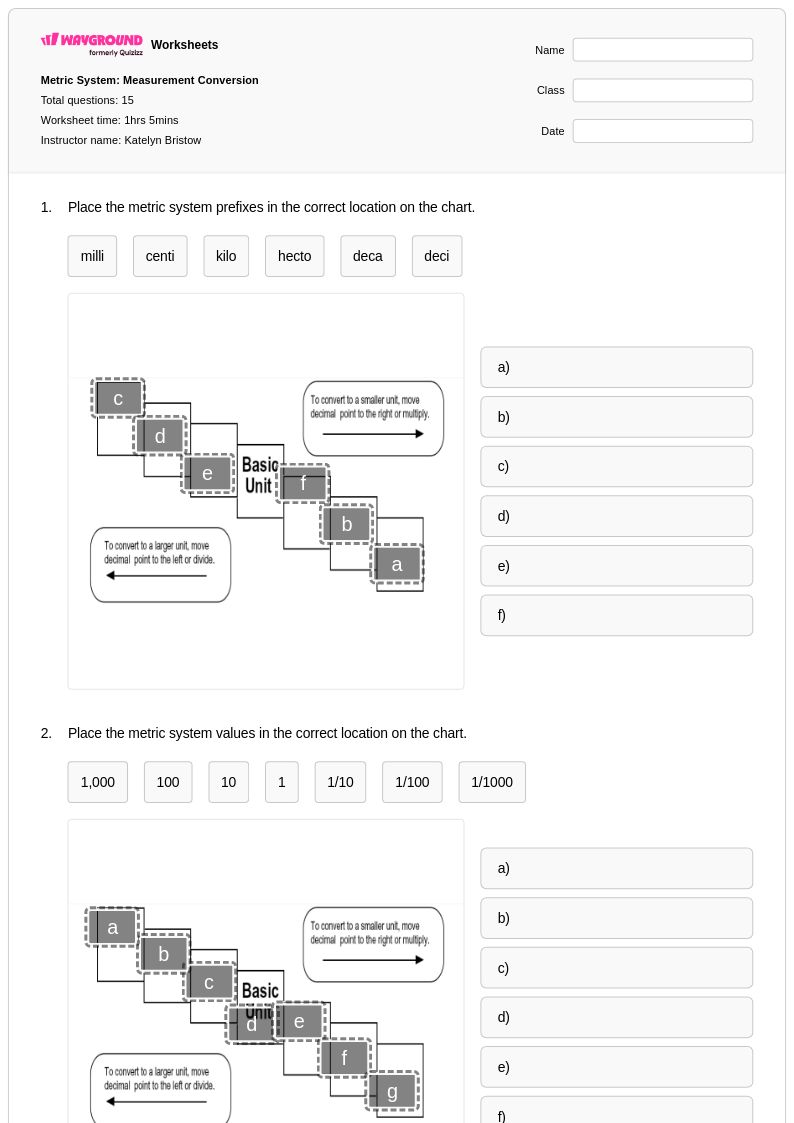
15 Q
5th
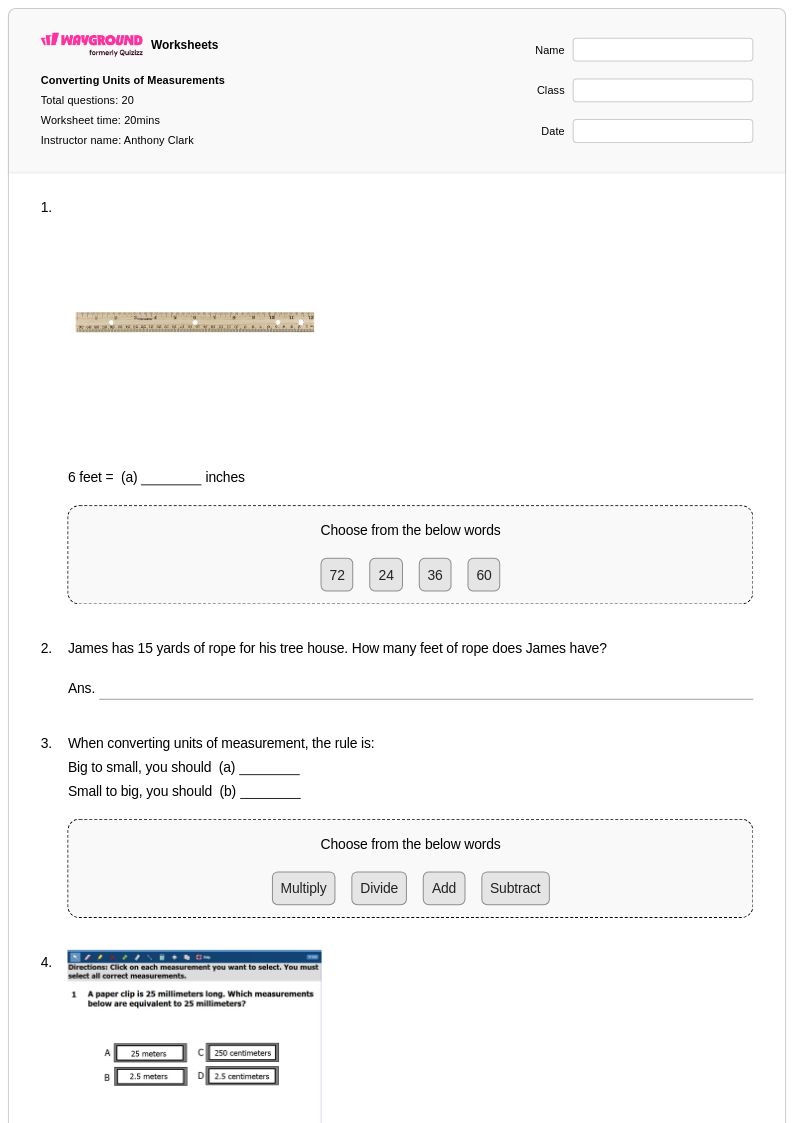
20 Q
5th - Uni
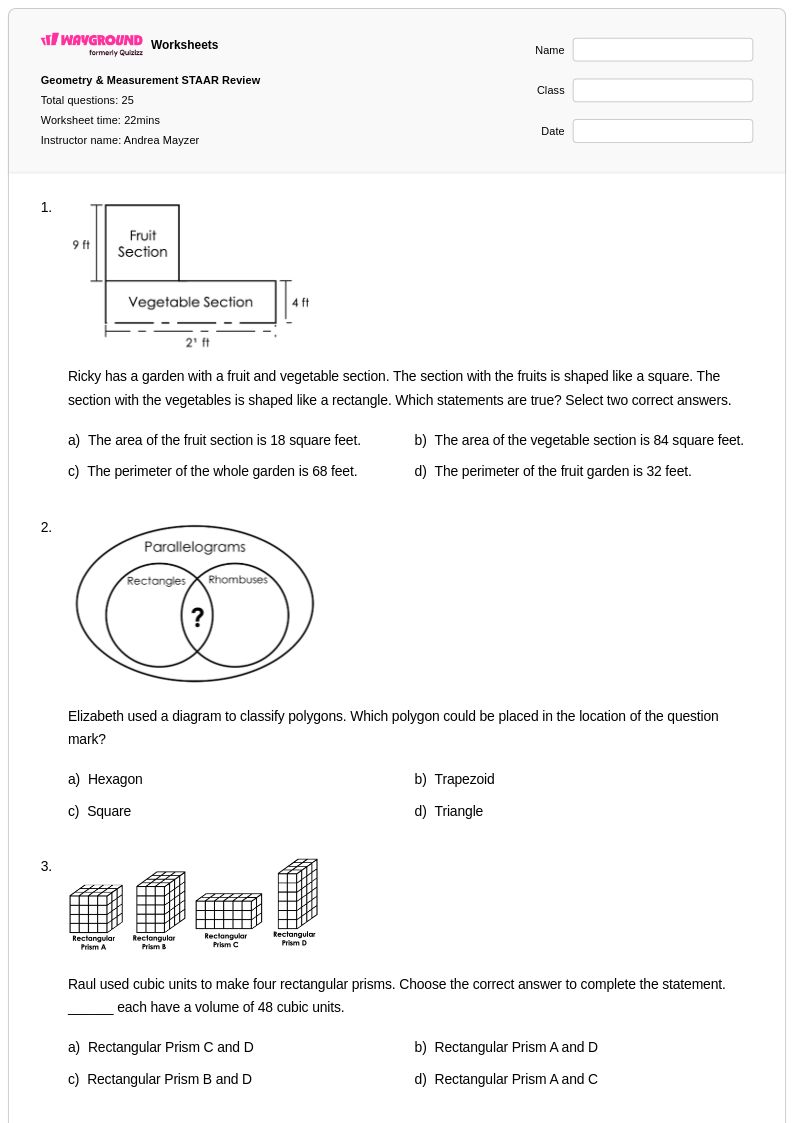
25 Q
5th
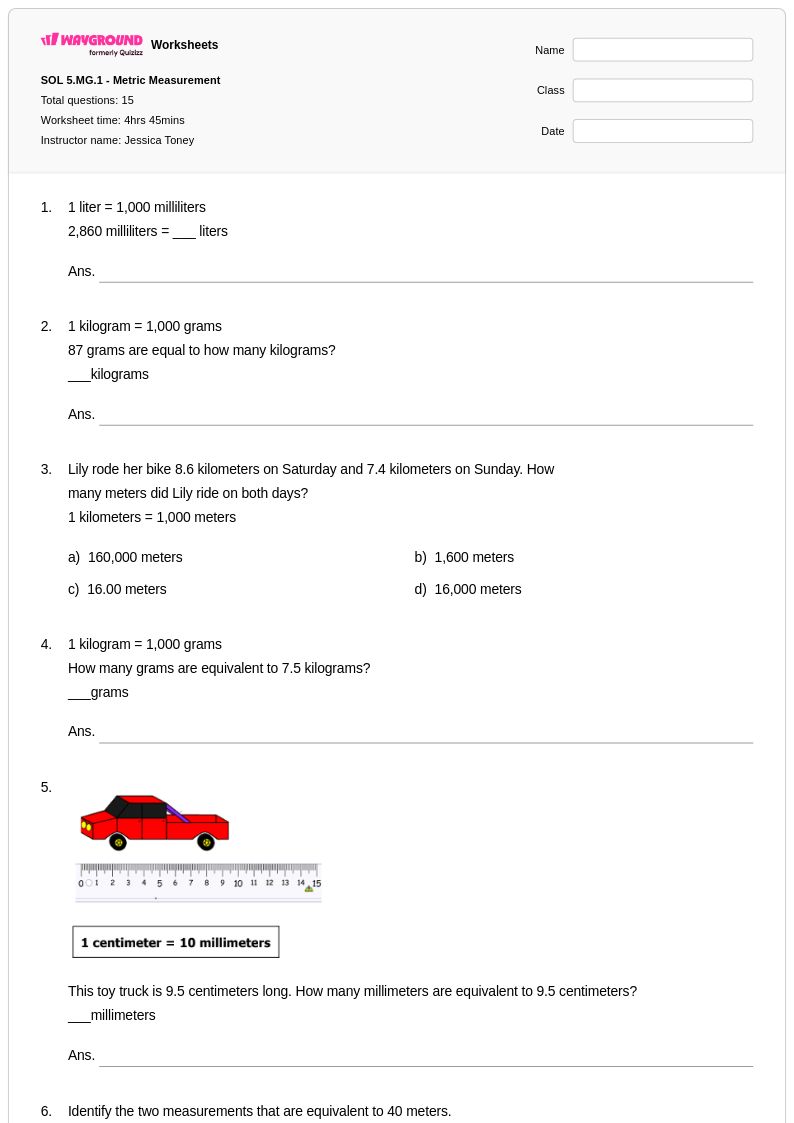
15 Q
5th
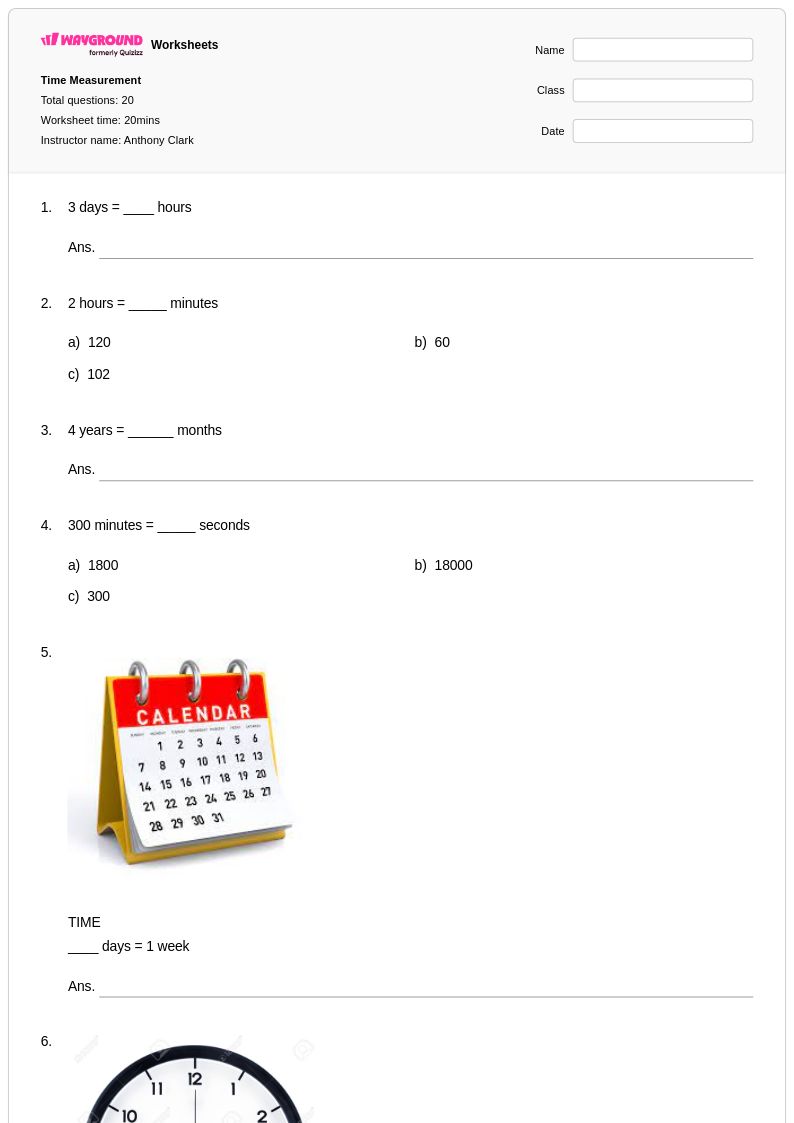
20 Q
3rd - Uni
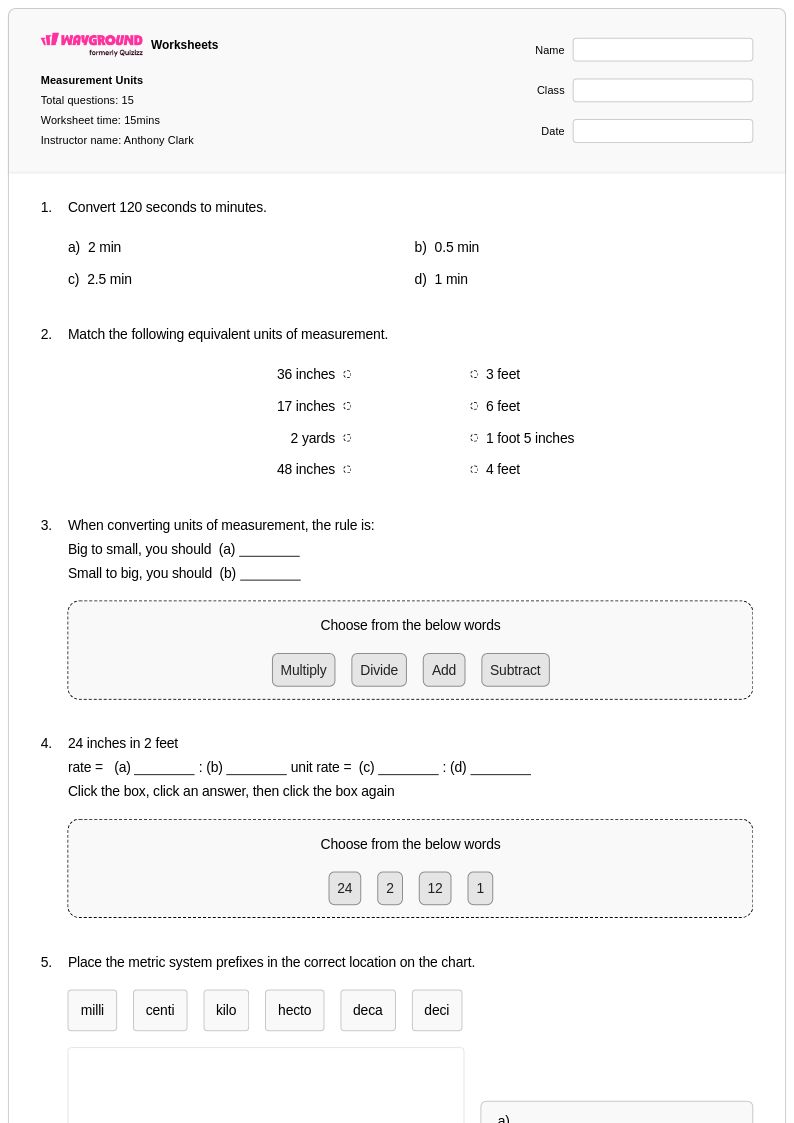
15 Q
4th - Uni
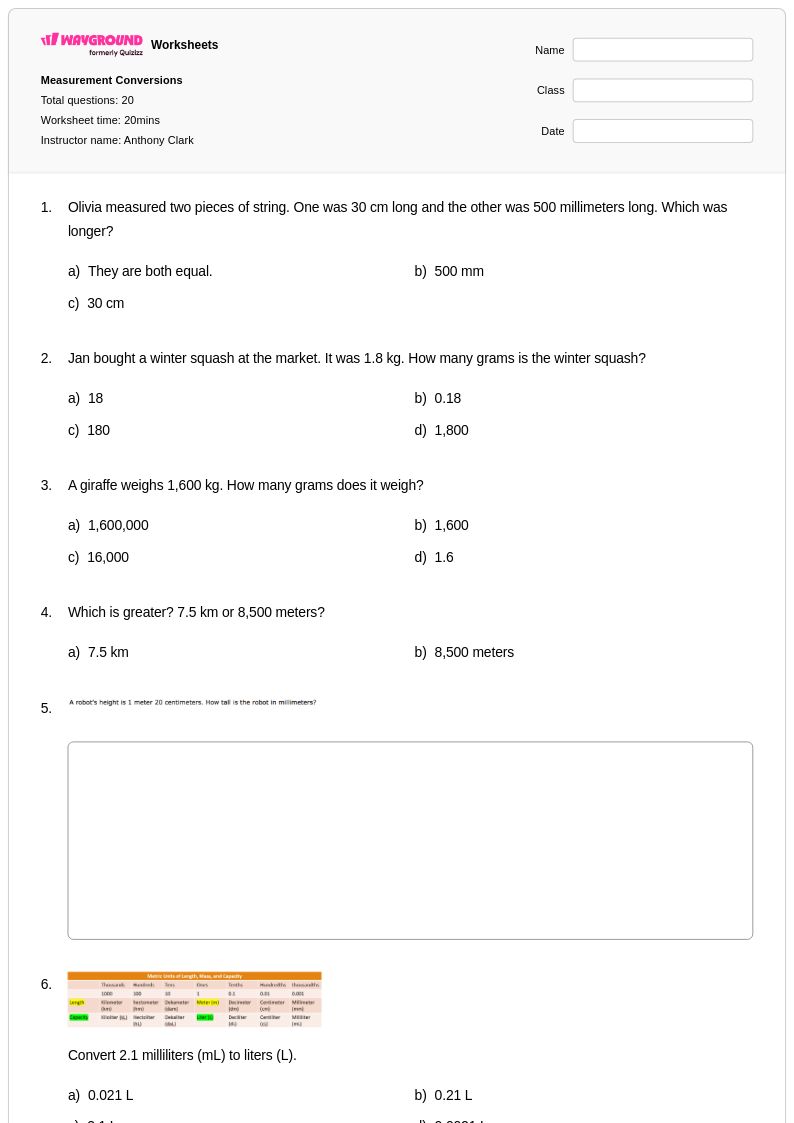
20 Q
5th - Uni
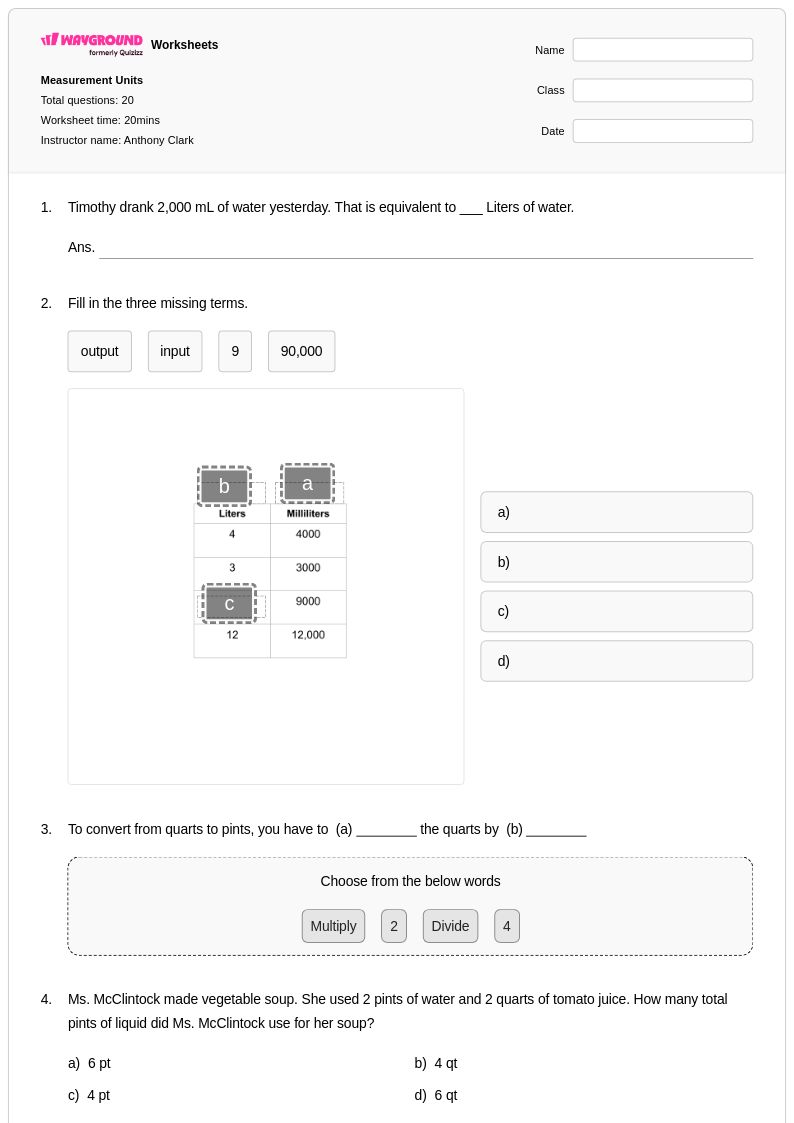
20 Q
4th - Uni
20 Q
4th - Uni
20 Q
5th - Uni
20 Q
4th - Uni
14 Q
5th
19 Q
4th - Uni
20 Q
5th - Uni
20 Q
4th - 5th
20 Q
4th - Uni
20 Q
4th - Uni
15 Q
5th
10 Q
5th

20 Q
4th - Uni
25 Q
5th
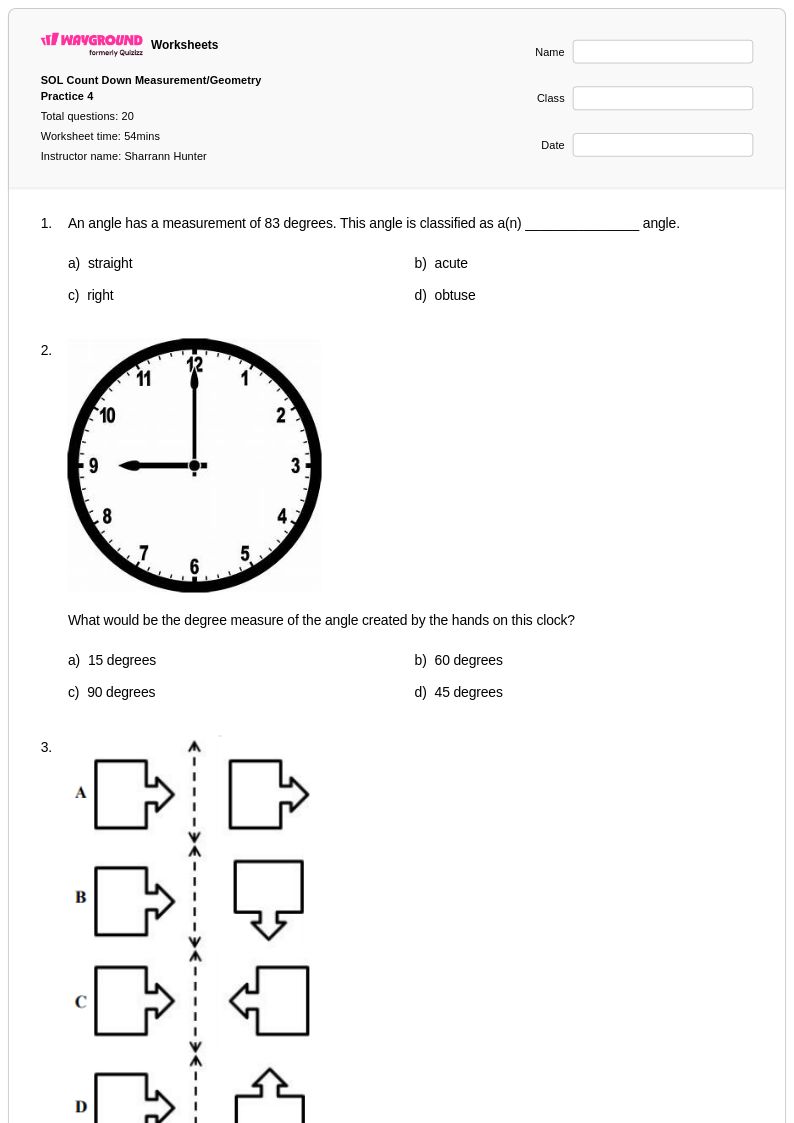
20 Q
5th
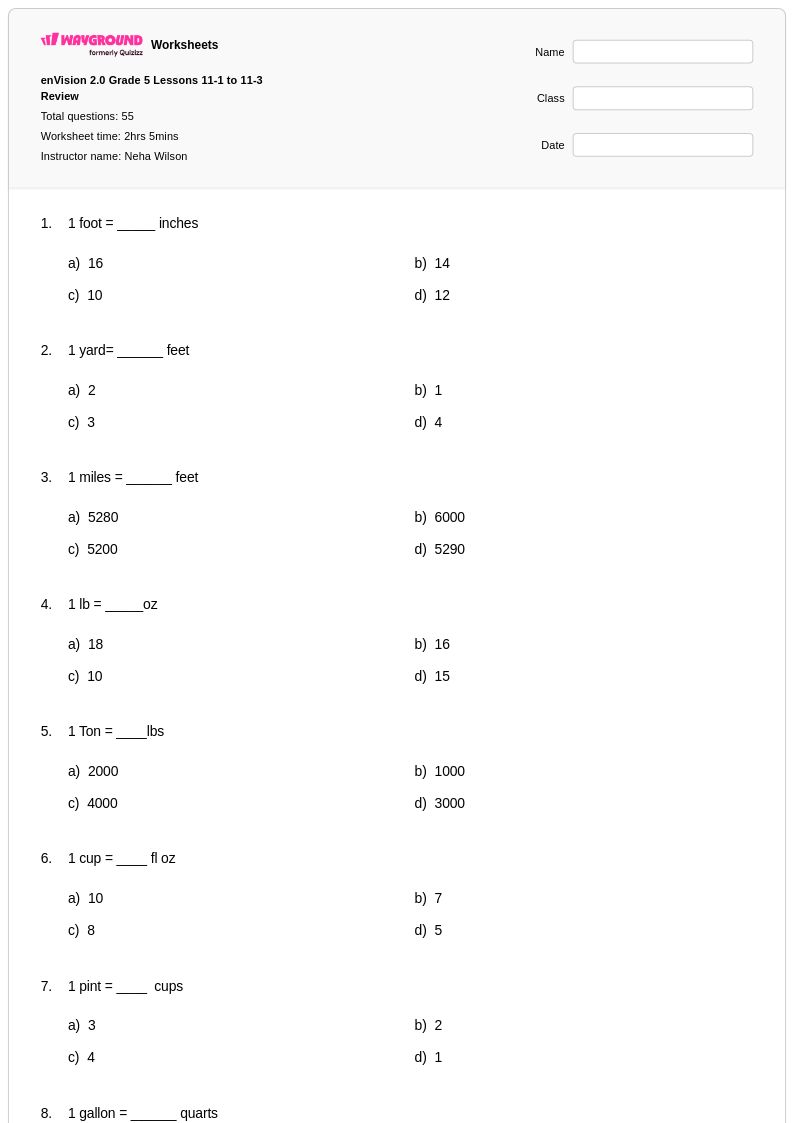
55 Q
5th - Uni
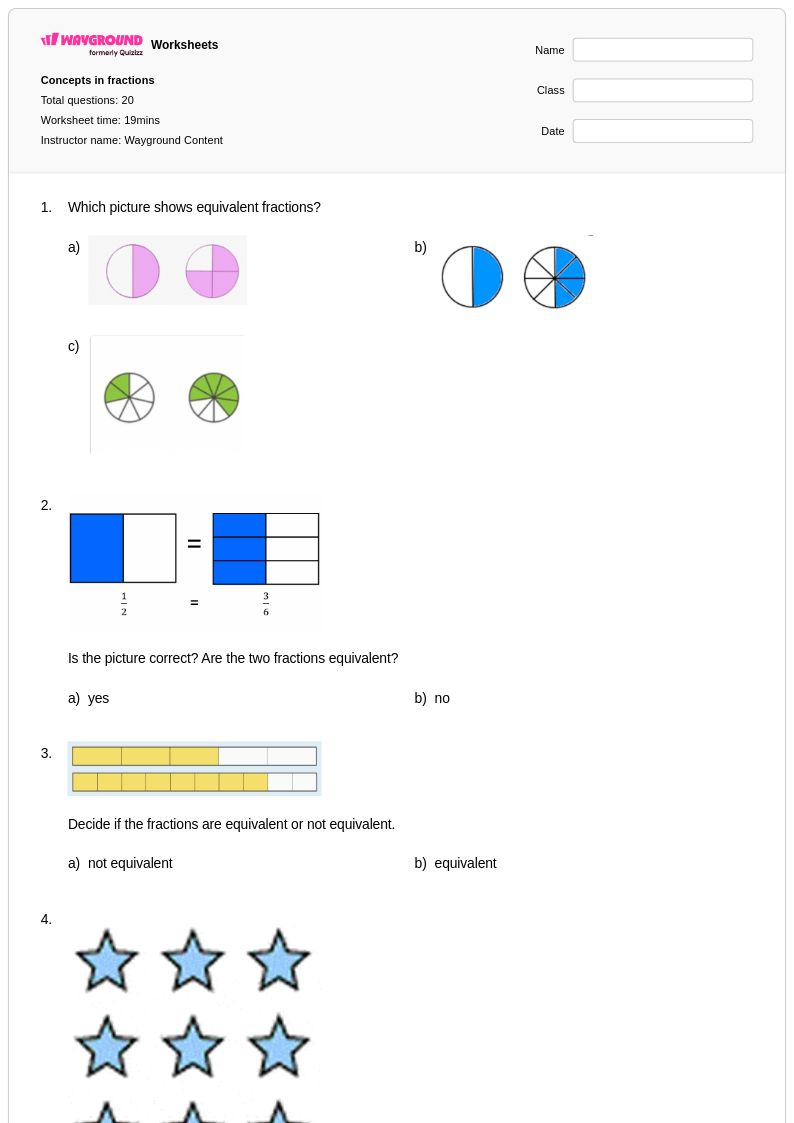
20 Q
4th - 5th
Explore Measurement and Equivalence Worksheets by Grades
Explore Other Subject Worksheets for grade 5
Explore printable Measurement and Equivalence worksheets for Grade 5
Grade 5 measurement and equivalence worksheets available through Wayground (formerly Quizizz) provide students with comprehensive practice in understanding relationships between different units of measurement and converting between them accurately. These educational resources strengthen critical mathematical skills including recognizing equivalent measurements across customary and metric systems, comparing lengths, weights, volumes, and capacities using appropriate units, and developing number sense through real-world measurement scenarios. Students work through carefully designed practice problems that build fluency in unit conversion, estimation strategies, and proportional reasoning. Each worksheet collection includes detailed answer keys to support independent learning and self-assessment, with free printables available in convenient pdf format for classroom and home use.
Wayground (formerly Quizizz) supports mathematics educators with an extensive library of millions of teacher-created measurement and equivalence resources specifically designed for fifth-grade learners. The platform's advanced search and filtering capabilities enable teachers to quickly locate worksheets aligned with specific curriculum standards and learning objectives, while built-in differentiation tools allow for seamless customization based on individual student needs and ability levels. These versatile materials are available in both printable pdf formats and interactive digital versions, making them ideal for varied instructional settings including whole-group lessons, small-group interventions, homework assignments, and assessment preparation. Teachers can efficiently plan targeted skill practice, provide remediation for struggling learners, offer enrichment opportunities for advanced students, and track progress through comprehensive measurement units that build conceptual understanding alongside procedural fluency.
FAQs
How do I teach measurement equivalence to fifth graders?
What exercises help Grade 5 students practice measurement conversions?
What mistakes do fifth graders commonly make with equivalent measurements?
How can I use a Grade 5 measurement and equivalence worksheet on Wayground?
How does Grade 5 measurement equivalence align with Common Core math?
How can I differentiate Grade 5 measurement conversion worksheets?
What measurement skills should fifth graders be able to demonstrate?