Free Printable Mixtures and Pure Substances Worksheets for Grade 5
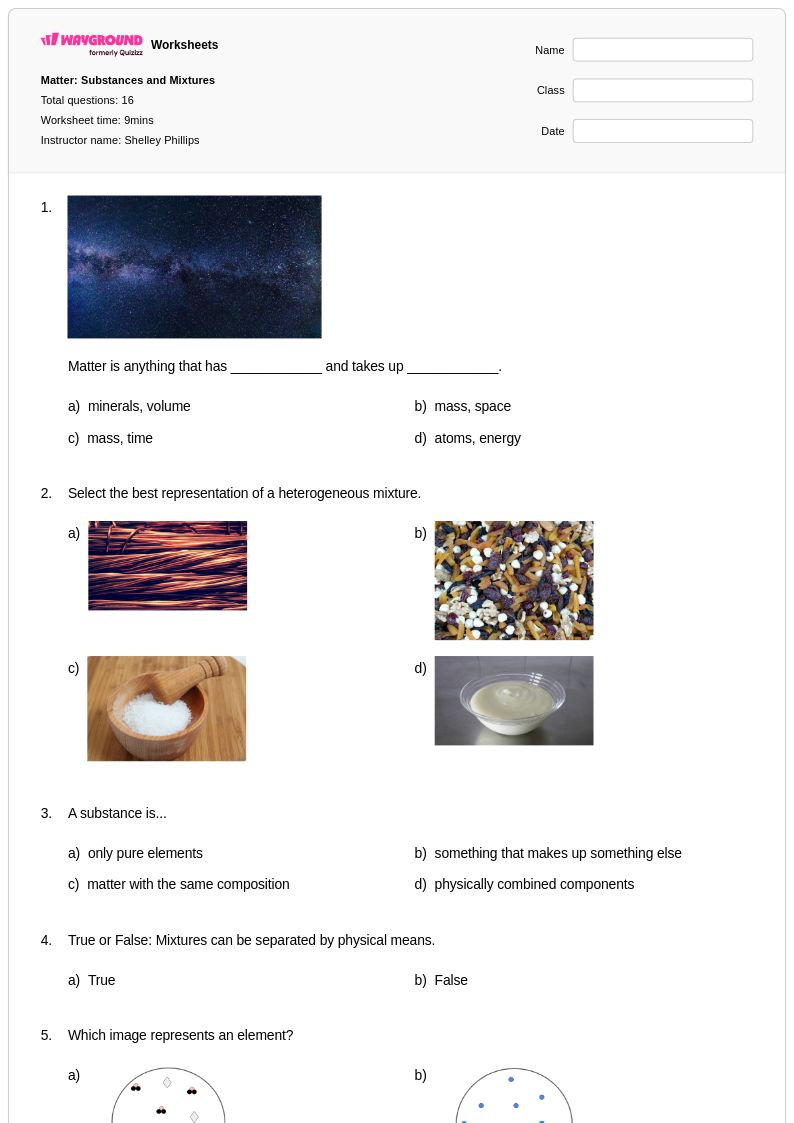
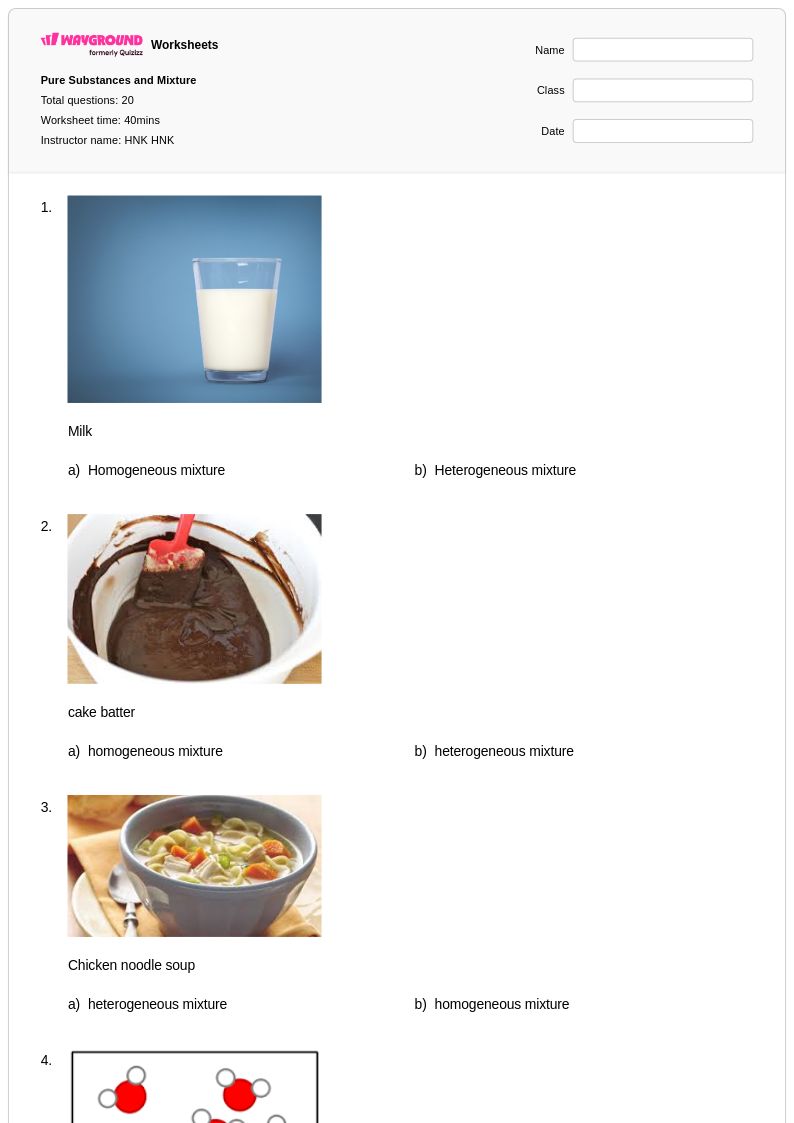
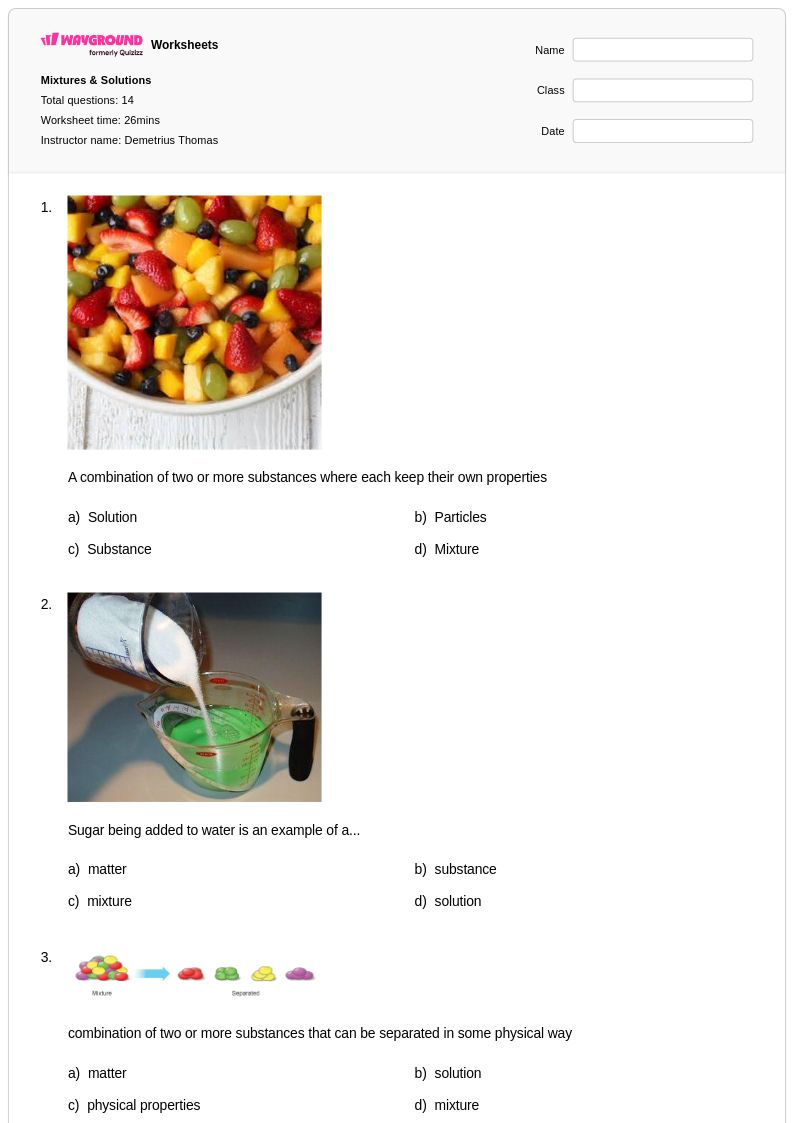
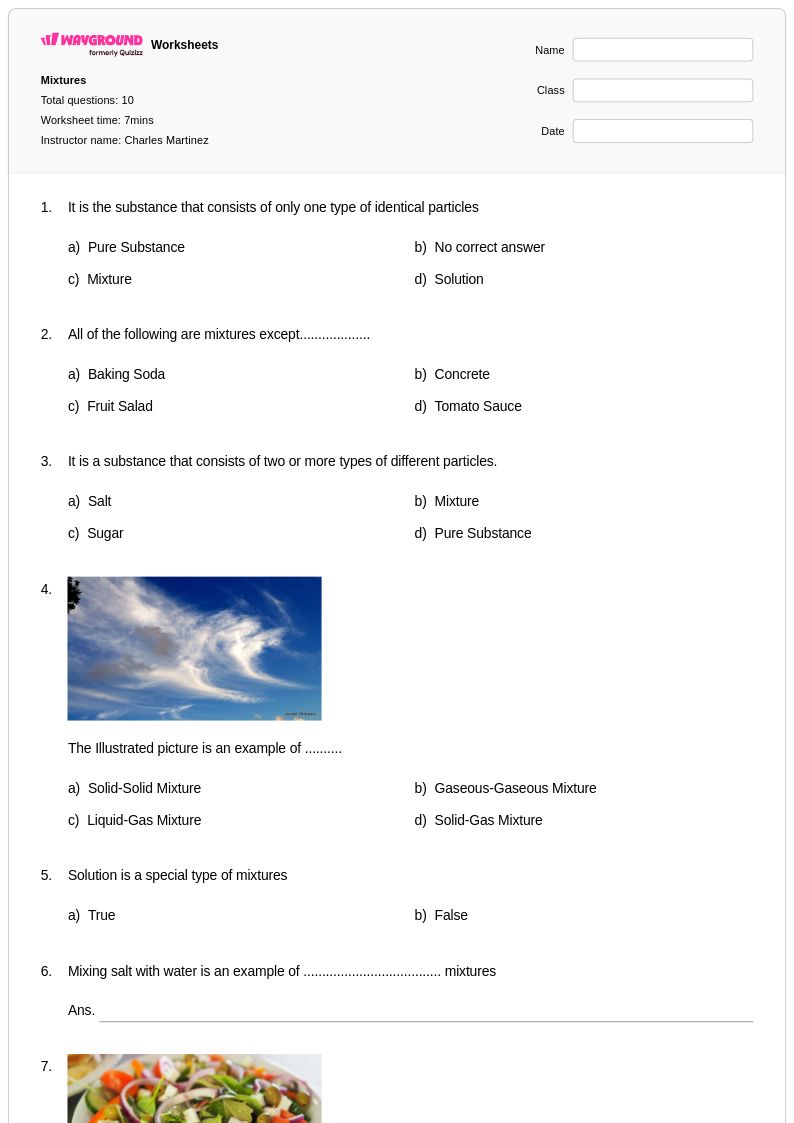
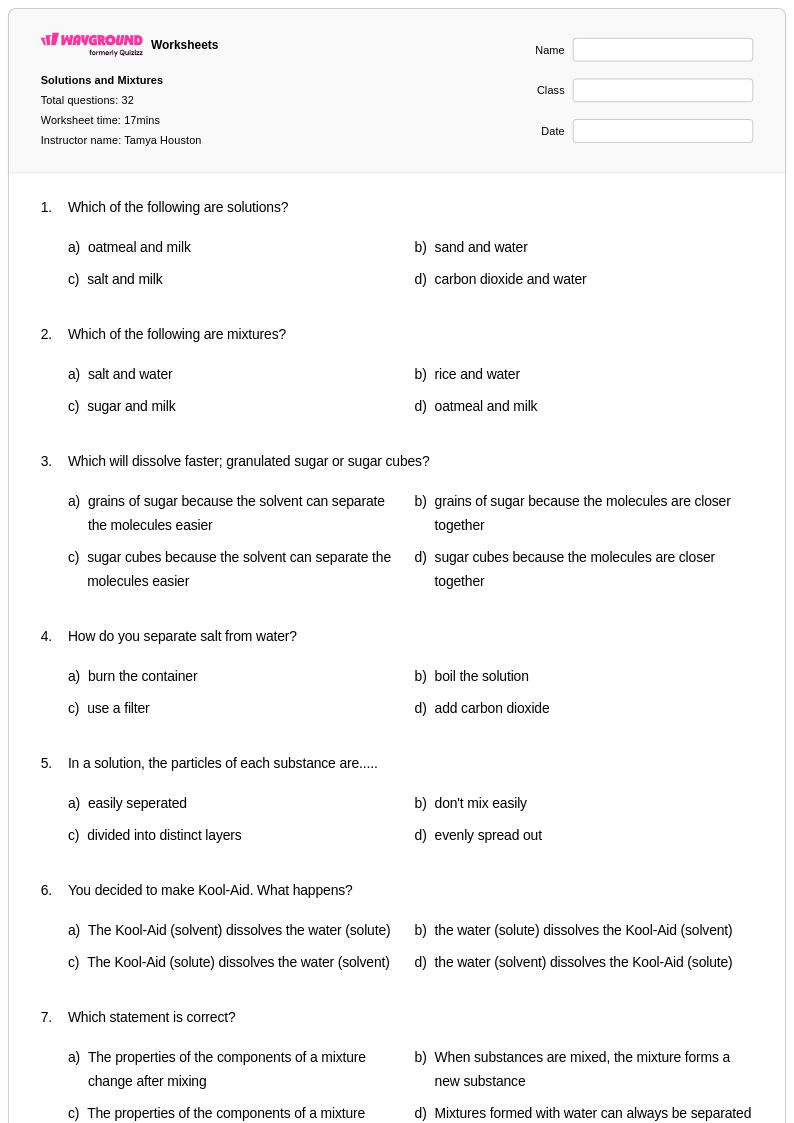
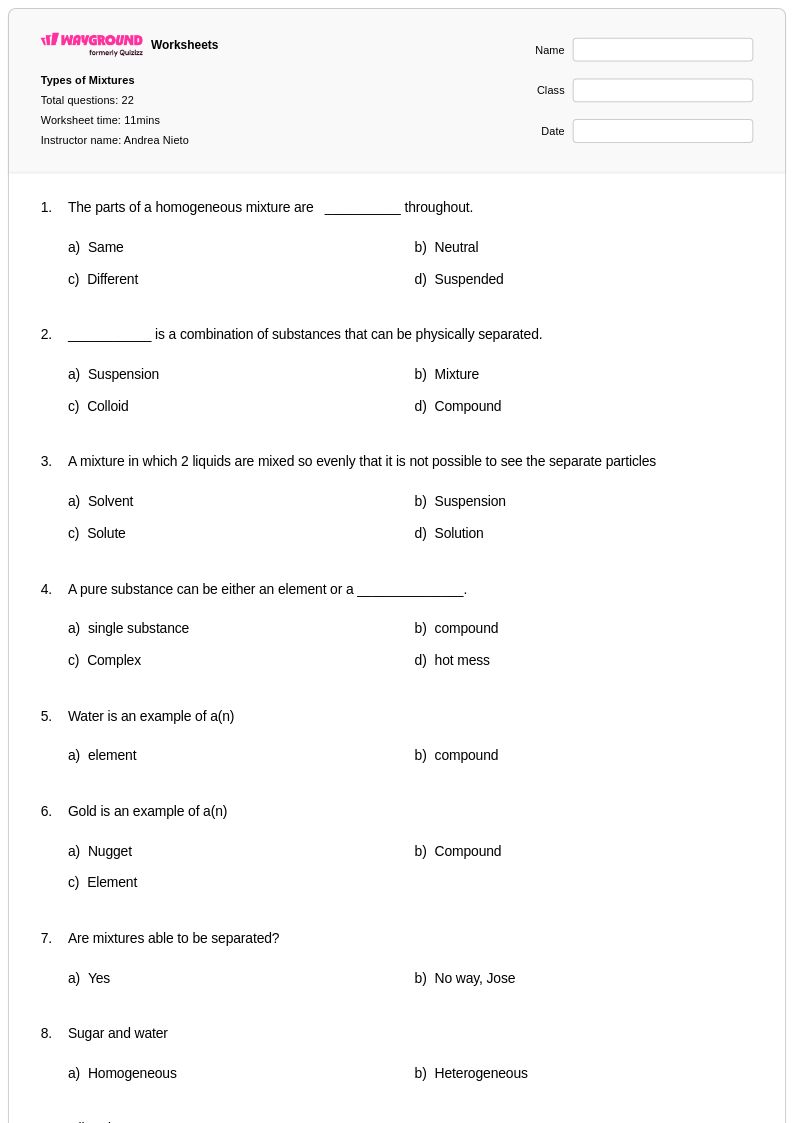
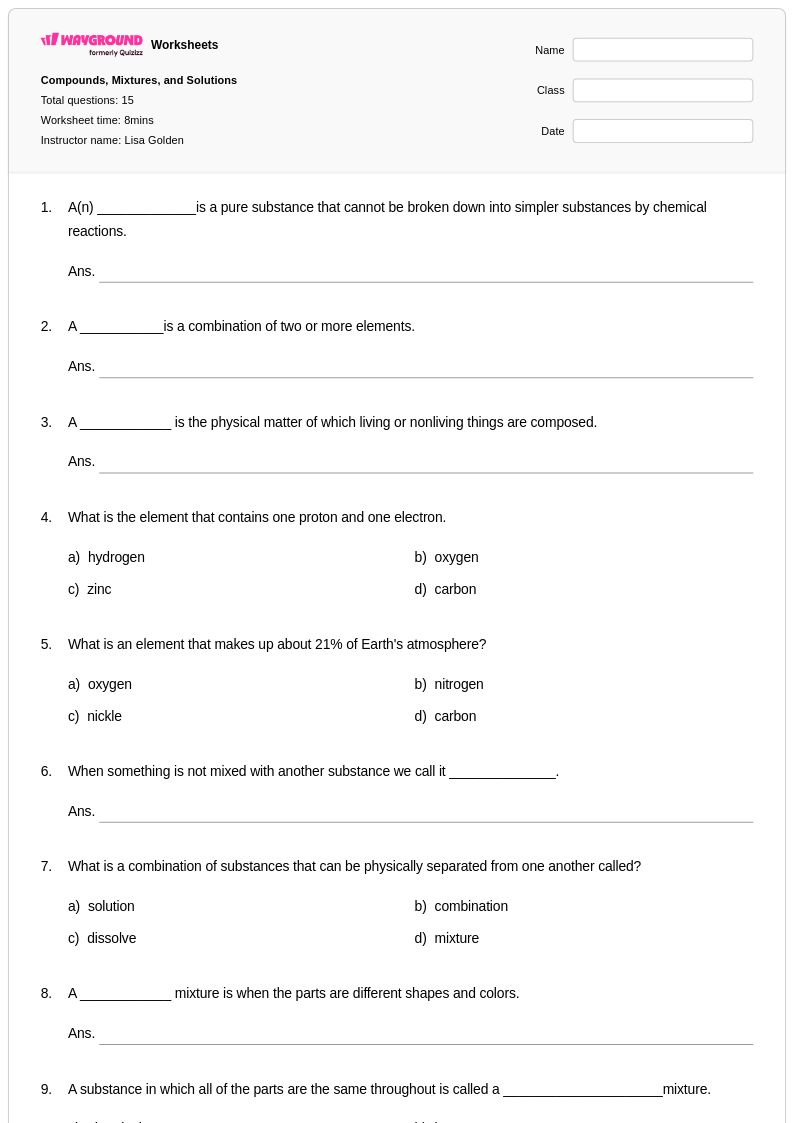
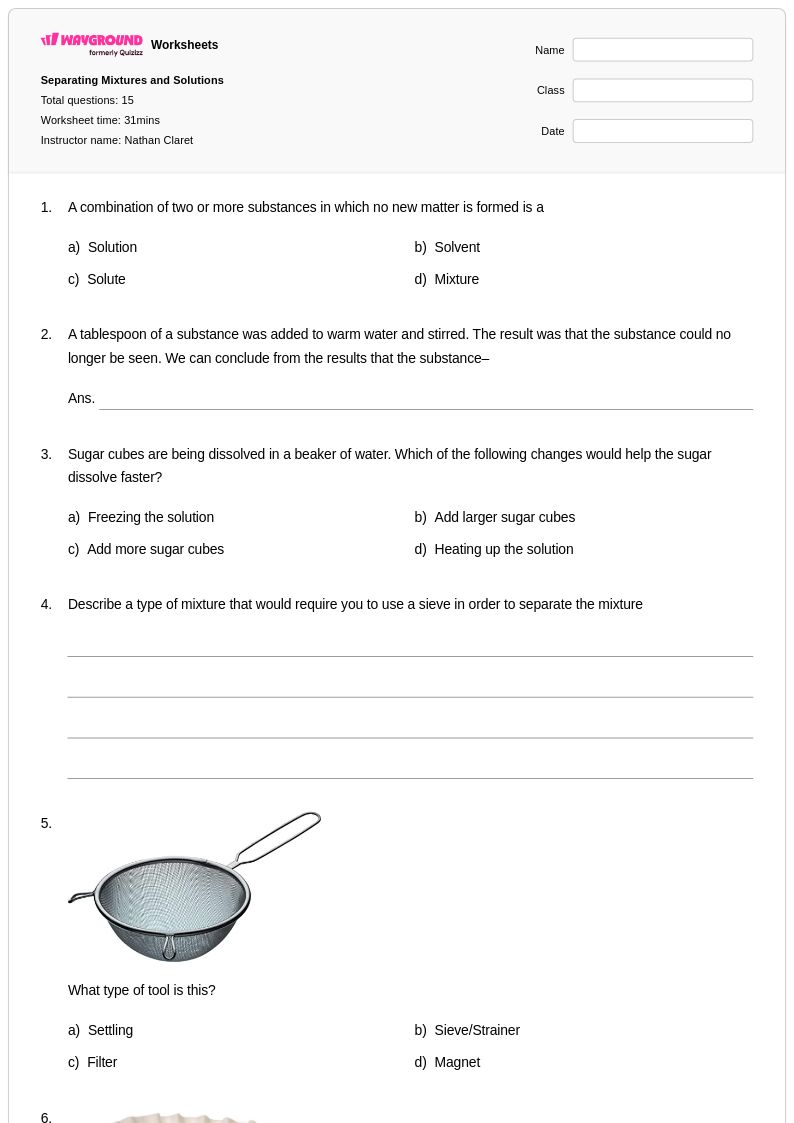
Grade 5 mixtures and pure substances worksheets from Wayground offer free printables and practice problems with answer keys to help students learn to identify, classify, and distinguish between different types of matter through engaging activities.
Explore printable Mixtures and Pure Substances worksheets for Grade 5
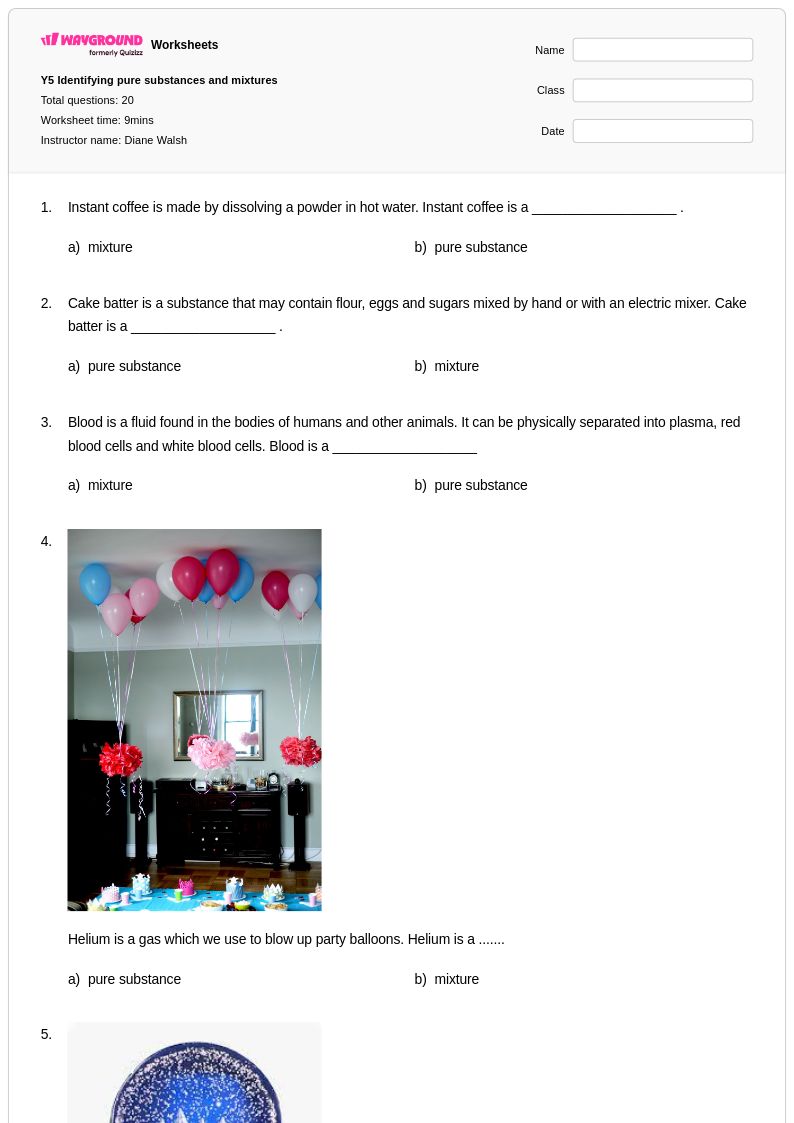
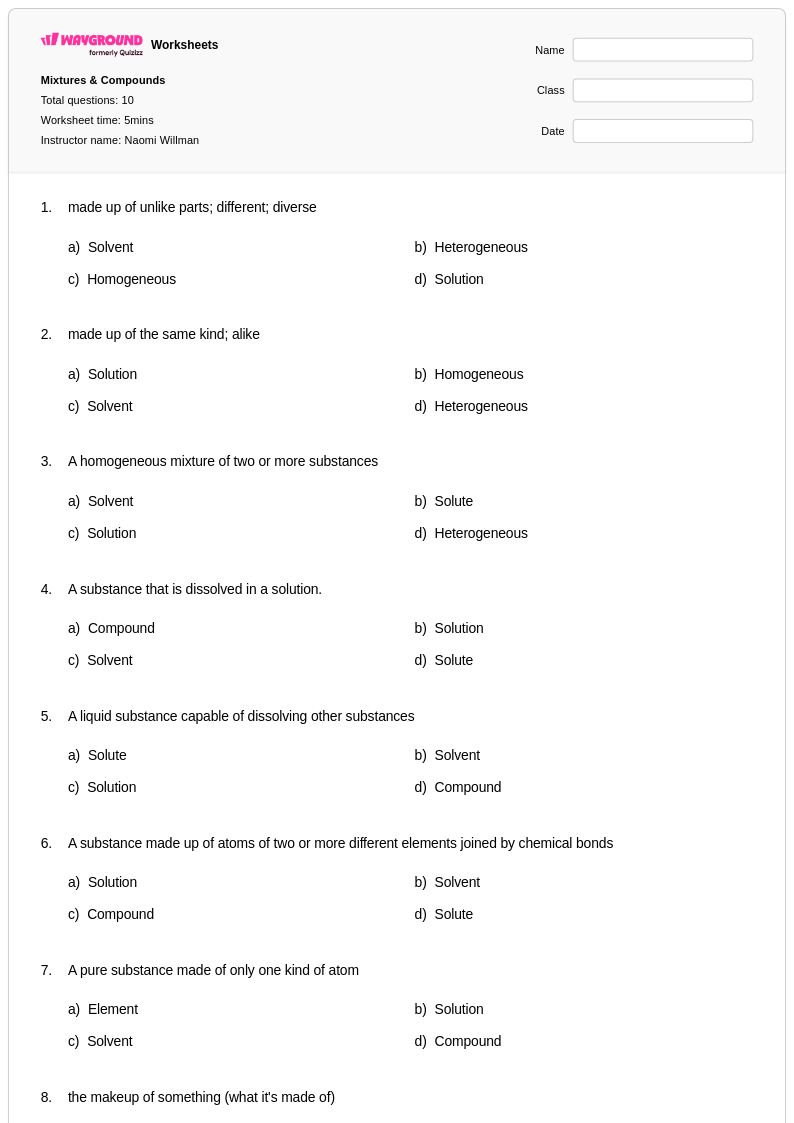
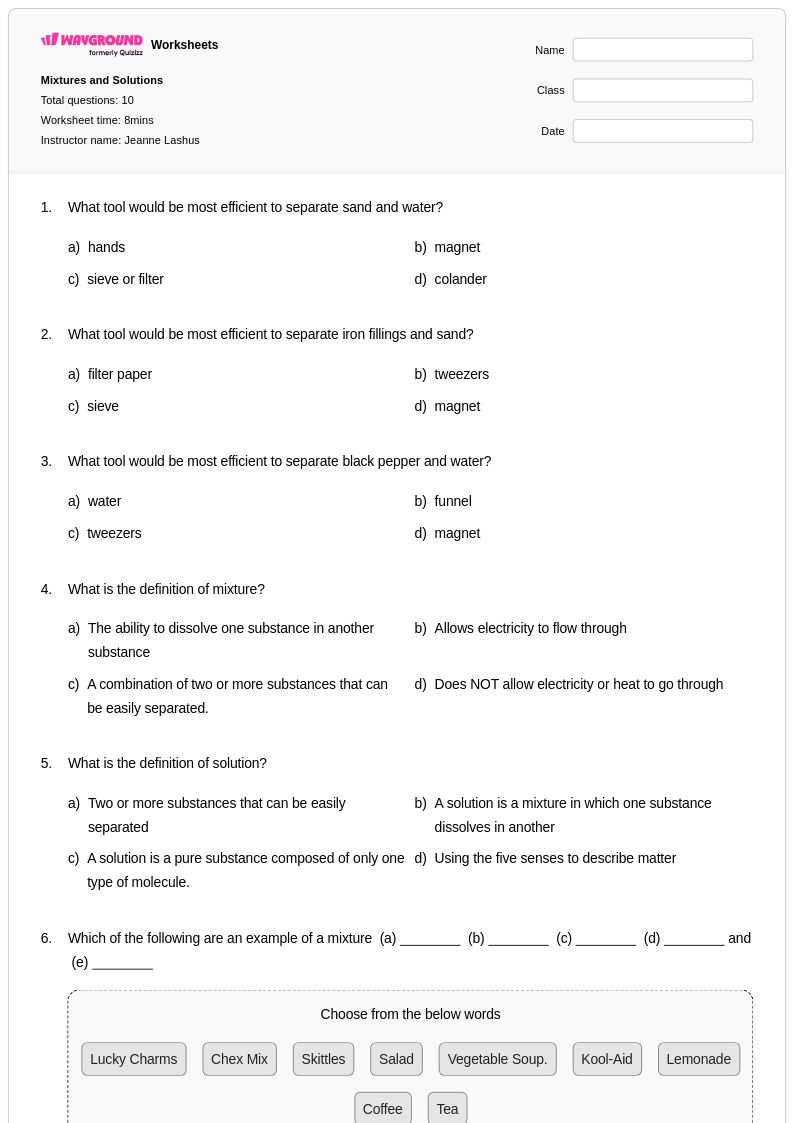
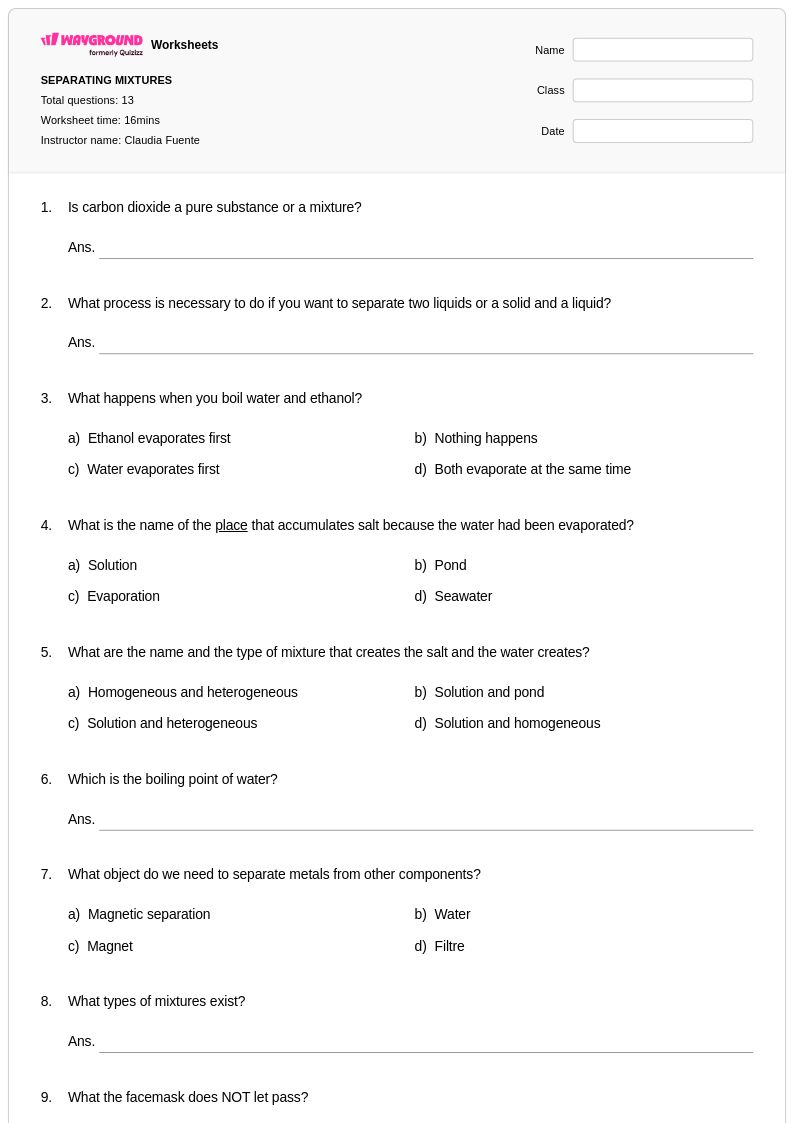
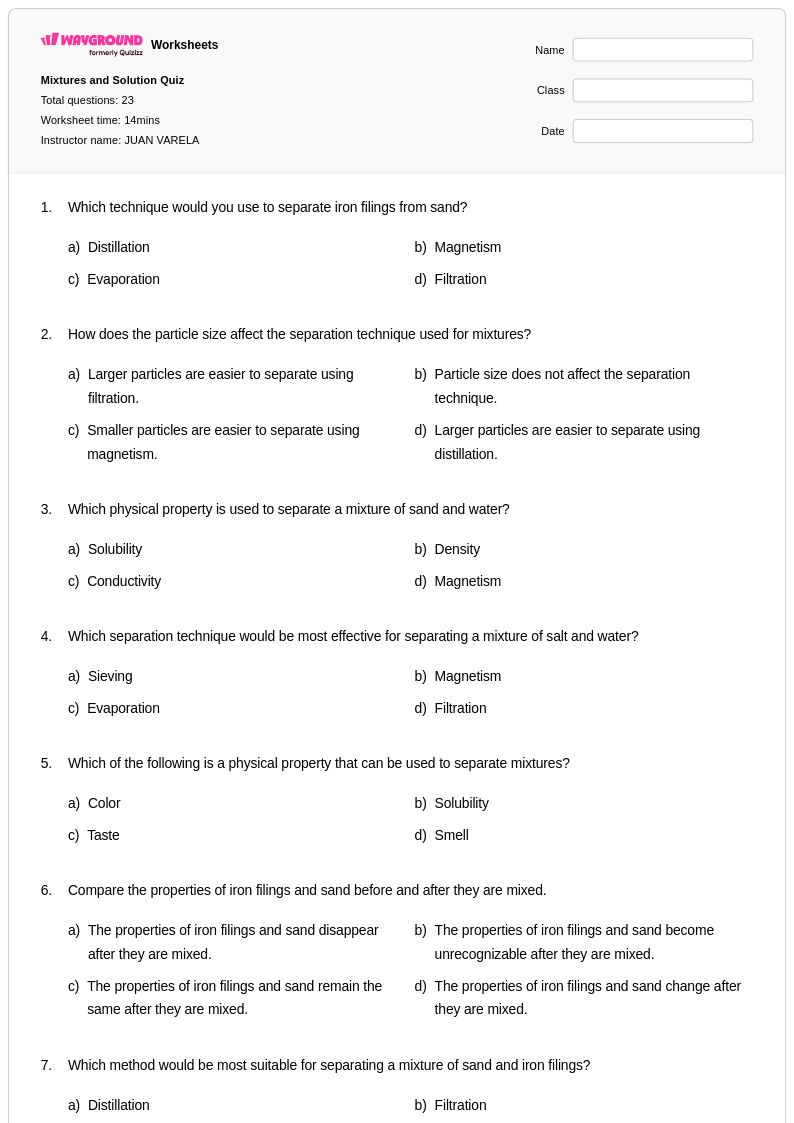
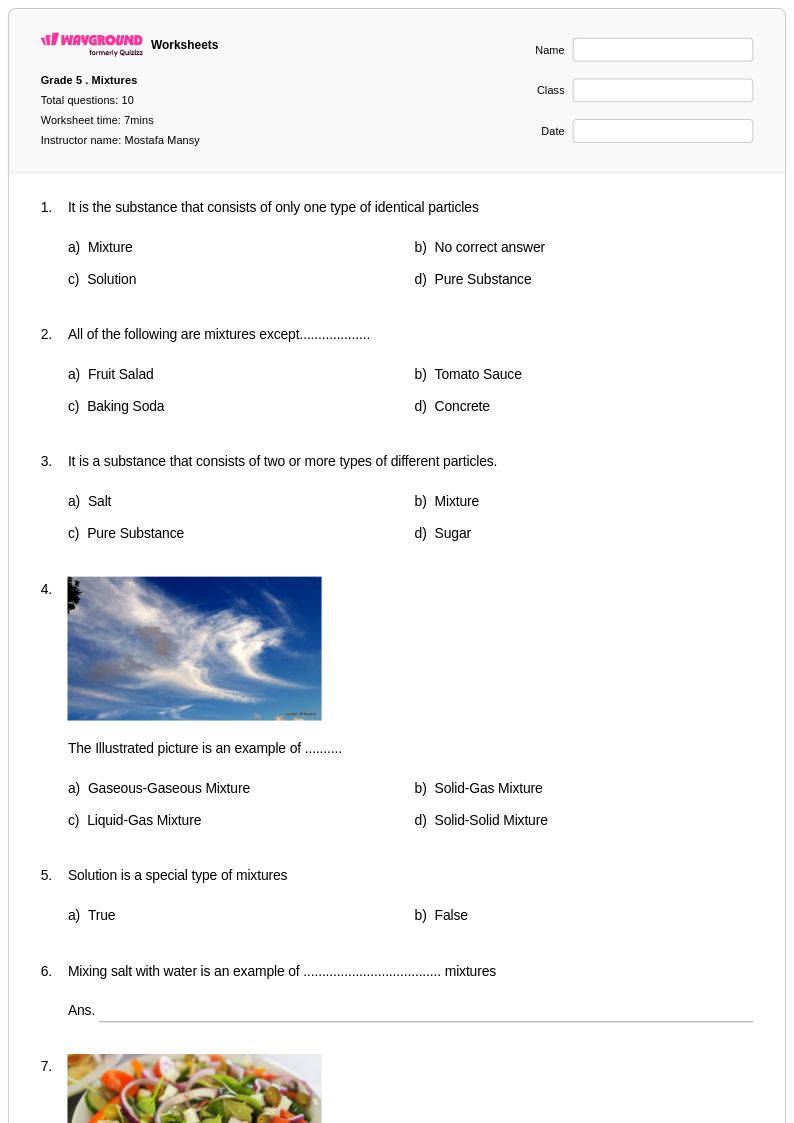
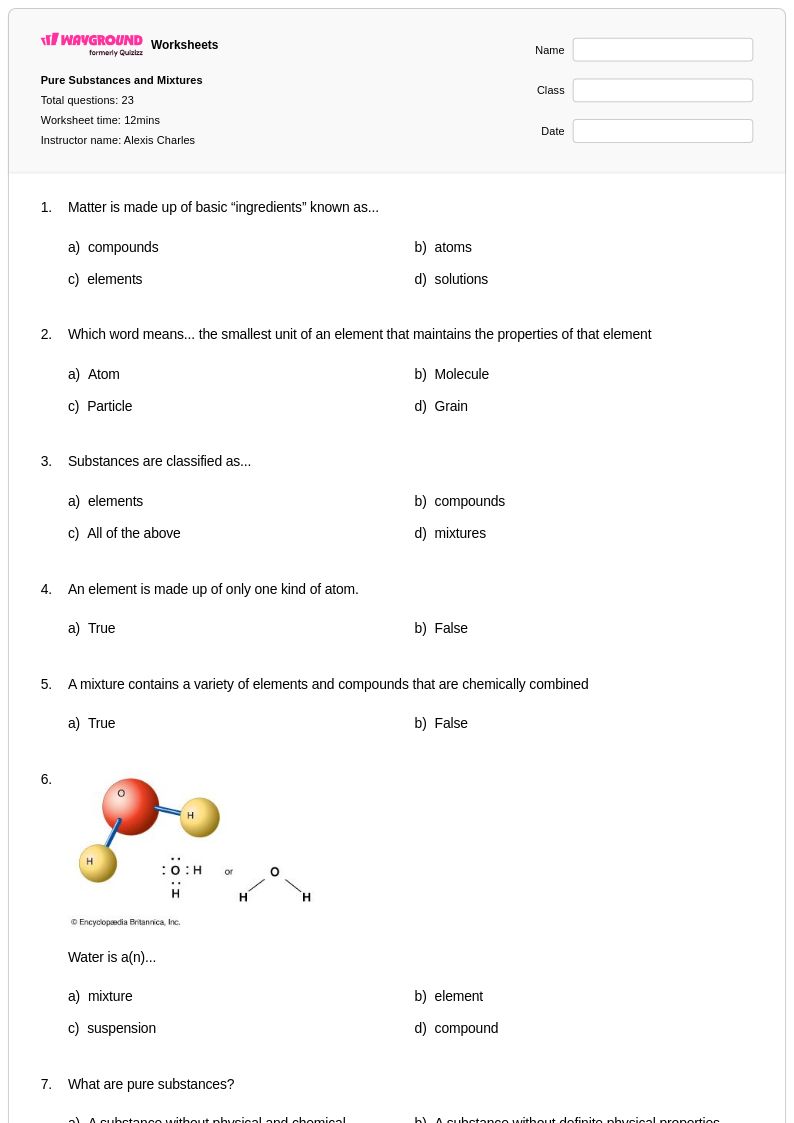
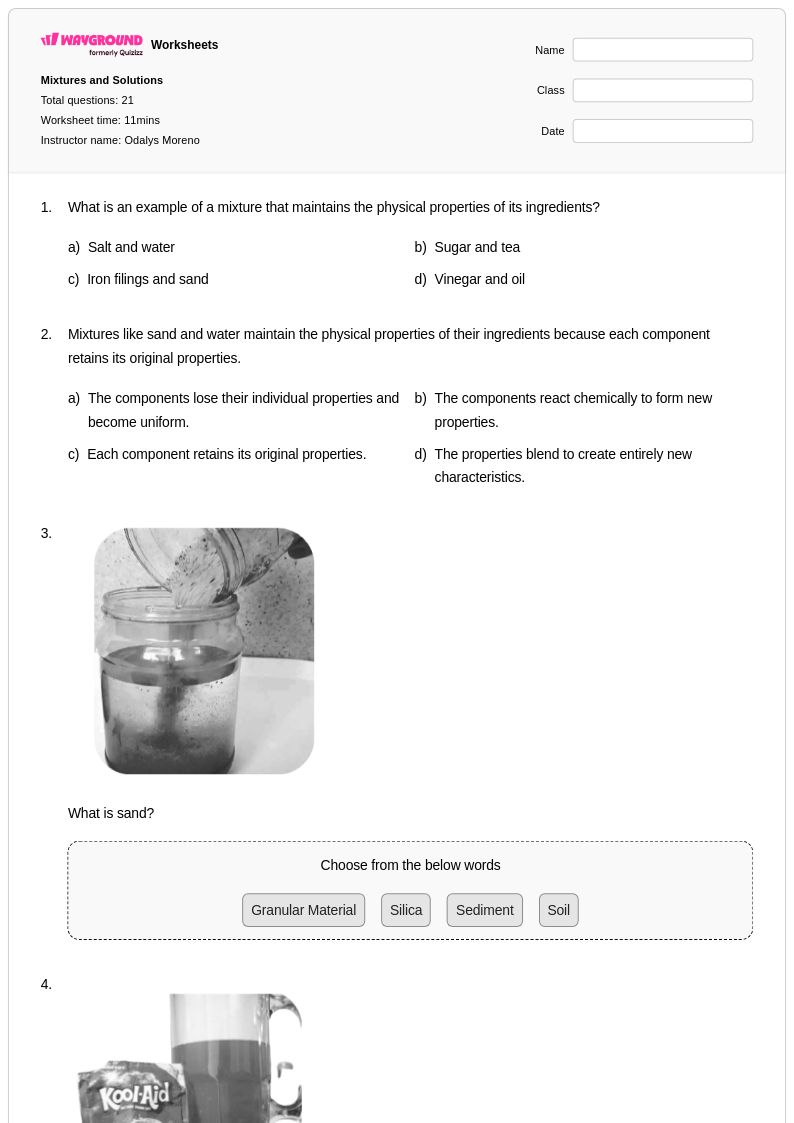
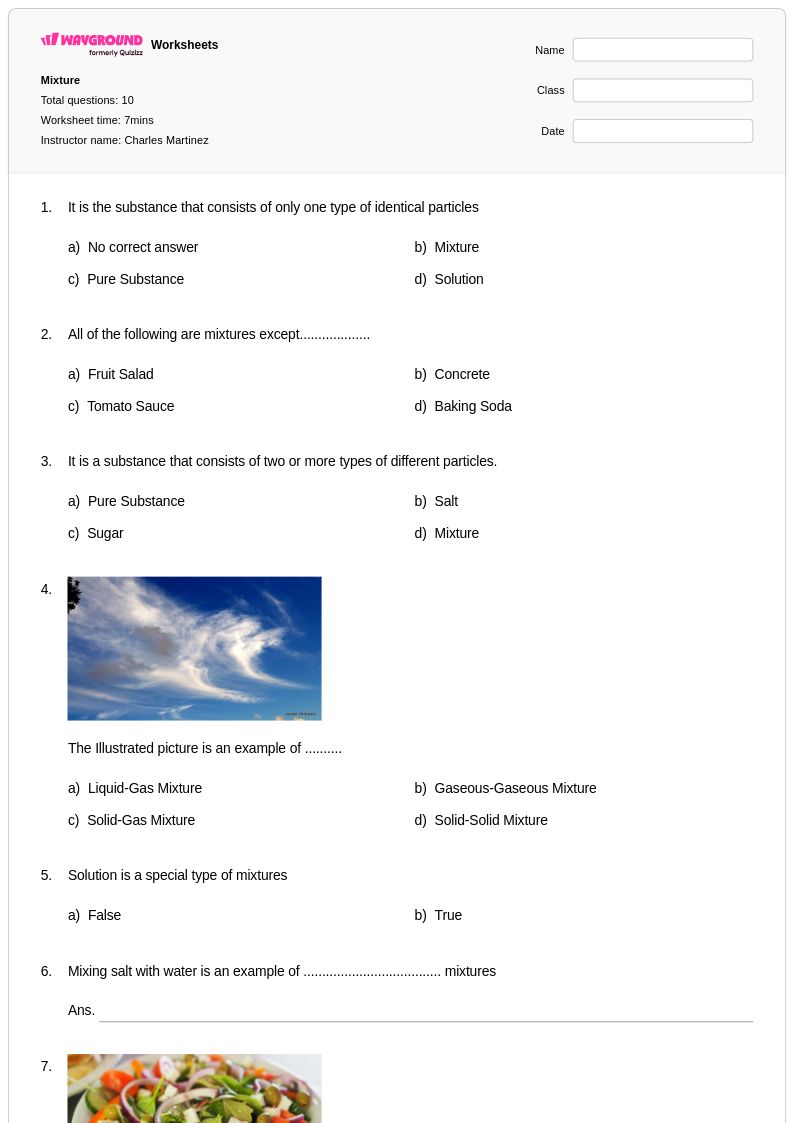
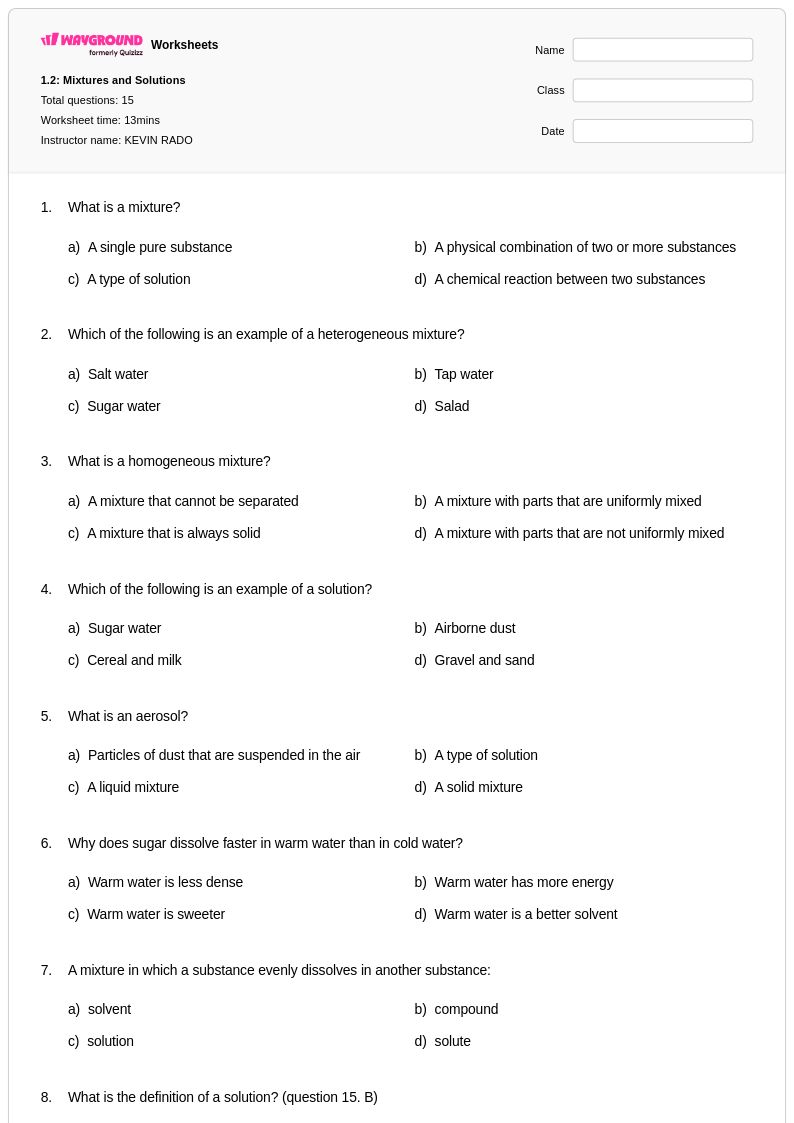
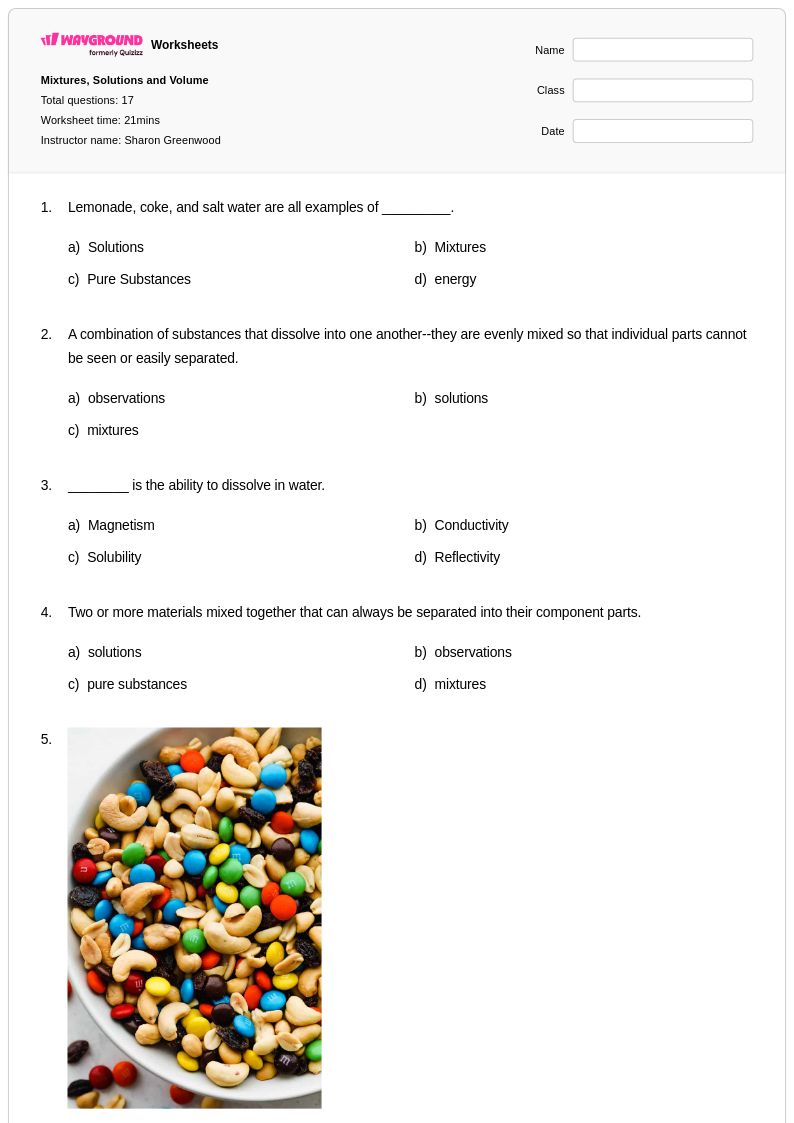
Mixtures and pure substances worksheets for Grade 5 students available through Wayground (formerly Quizizz) provide comprehensive practice opportunities for developing fundamental chemistry concepts at the elementary level. These carefully designed resources help students distinguish between homogeneous and heterogeneous mixtures while learning to identify pure substances through hands-on practice problems and visual examples. Students strengthen critical thinking skills as they classify everyday materials, understand separation techniques like filtering and evaporation, and explore the properties that differentiate mixtures from pure substances. Each worksheet includes detailed answer keys that support both independent study and guided instruction, with free printable pdf formats ensuring easy classroom distribution and home practice accessibility.
Wayground (formerly Quizizz) empowers teachers with millions of educator-created resources specifically focused on mixtures and pure substances, featuring robust search and filtering capabilities that align with state science standards for Grade 5 chemistry instruction. The platform's differentiation tools allow teachers to customize worksheets based on individual student needs, providing both remediation support for struggling learners and enrichment opportunities for advanced students. Available in both printable and digital pdf formats, these worksheet collections streamline lesson planning while offering flexible implementation options for diverse classroom environments. Teachers can efficiently target specific skill gaps, reinforce laboratory observations, and provide meaningful practice that bridges concrete experiences with abstract chemical concepts, ultimately supporting comprehensive understanding of matter classification principles.
FAQs
How do I teach the difference between mixtures and pure substances?
Start by anchoring instruction in familiar examples: salt water as a homogeneous mixture, a salad as a heterogeneous mixture, and distilled water as a pure substance. Use particle diagrams to make the abstract visible, showing students how the arrangement and identity of particles differ across each category. From there, build toward classification rules — pure substances have a fixed composition and uniform properties throughout, while mixtures can vary in ratio and be physically separated. Moving from concrete examples to molecular-level reasoning helps students internalize the distinction rather than just memorize definitions.
What exercises help students practice classifying matter as mixtures or pure substances?
Effective practice exercises include particle diagram analysis, where students identify whether diagrams represent elements, compounds, or mixtures based on particle arrangement. Classification sorting activities — where students assign everyday substances like bronze, oxygen, or trail mix to the correct category — build fluency with the underlying rules. Practice problems that require students to justify their classifications using physical properties, such as boiling point consistency or appearance, push beyond surface-level recall and develop analytical reasoning.
What common mistakes do students make when classifying mixtures and pure substances?
A frequent misconception is that a substance must look uniform to be a pure substance — students often misclassify homogeneous mixtures like saltwater or brass as pure substances because they appear consistent. Another common error is conflating 'mixture' with 'impure,' leading students to assume that all mixtures are somehow contaminated or irregular. Students also struggle to distinguish between elements and compounds within the pure substances category, particularly when given chemical formulas rather than names. Targeted practice with particle diagrams and real-world examples helps address each of these error patterns directly.
How do I teach separation techniques like filtration, distillation, and chromatography?
Teach separation techniques by tying each method to the physical property it exploits: filtration separates by particle size, distillation separates by differences in boiling point, and chromatography separates by solubility and how components travel through a medium at different rates. Students grasp these concepts more readily when they first understand why a mixture can be separated at all — because its components retain their individual properties. Connecting each technique to a real-world application, such as water purification for filtration or ink analysis for chromatography, makes the purpose concrete and memorable.
How do I use Wayground's mixtures and pure substances worksheets in my classroom?
Wayground's mixtures and pure substances worksheets are available as printable PDFs for traditional classroom use and in digital formats for technology-integrated environments, giving teachers flexibility across different instructional settings. You can assign them as guided practice during a lesson, independent work, homework, or as a hosted digital quiz directly on the Wayground platform. Each worksheet includes a complete answer key, which supports self-paced review, peer checking, or teacher-led correction. For students who need accommodations, Wayground allows teachers to enable features like read aloud, extended time, or reduced answer choices on an individual basis without disrupting the rest of the class.
How can I differentiate mixtures and pure substances instruction for students at different skill levels?
For students who are still building foundational understanding, focus practice on concrete classification tasks using familiar substances before introducing particle diagrams. More advanced learners can be challenged with complex mixture compositions, multi-step separation problems, or questions that require them to select and justify the most appropriate separation technique for a given scenario. Wayground supports this differentiation directly — teachers can modify problem sets for varied skill levels and apply individual accommodations such as reduced answer choices or read aloud for students who need additional support, while other students work with standard settings.