Free Printable Separating Mixtures Worksheets for Grade 5
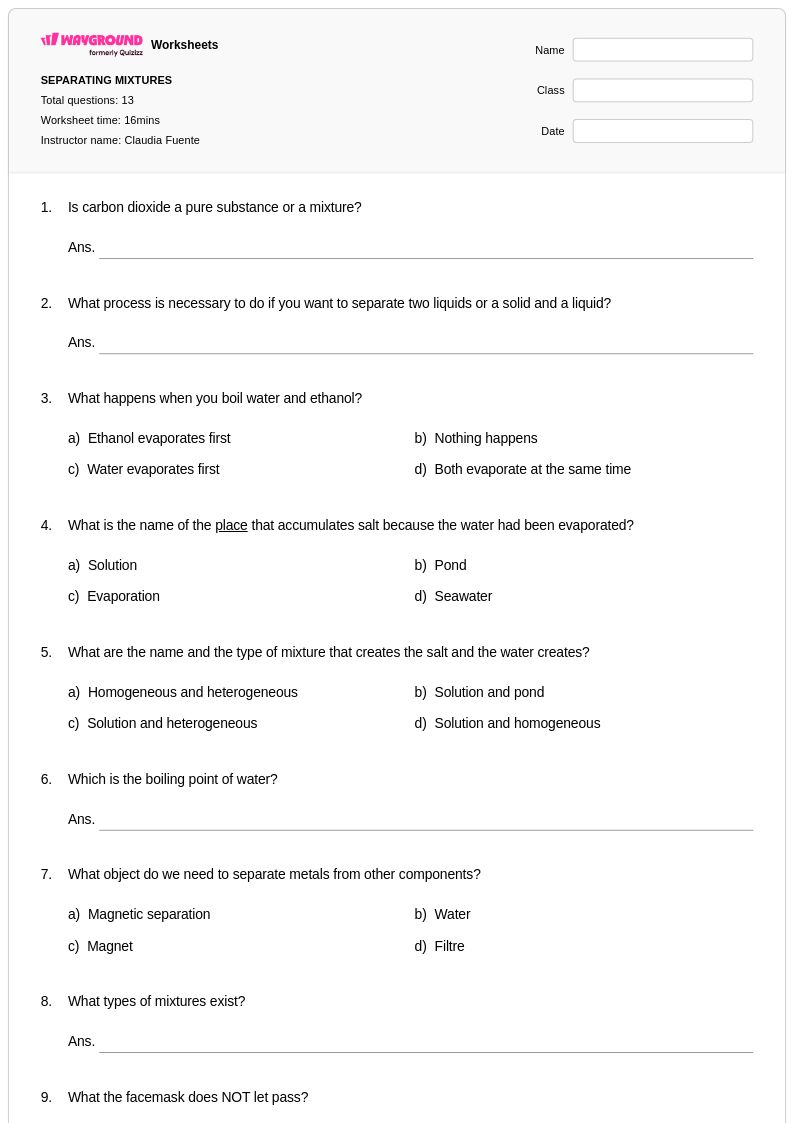
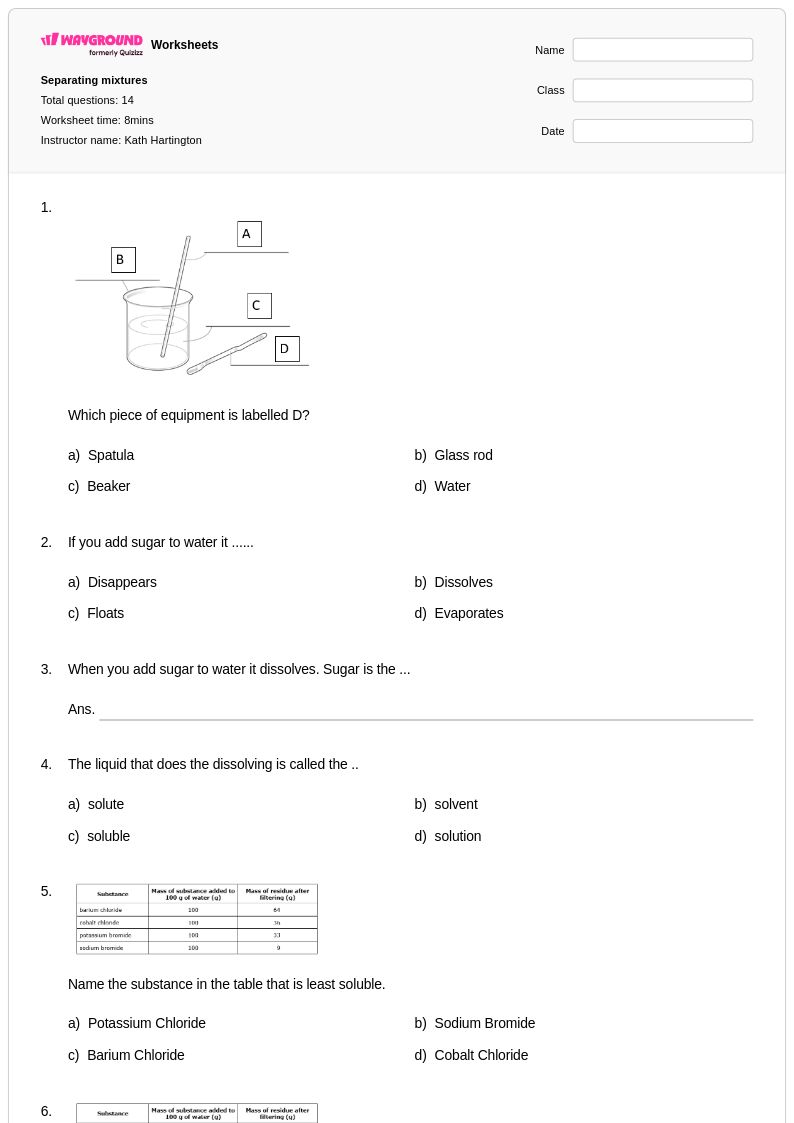
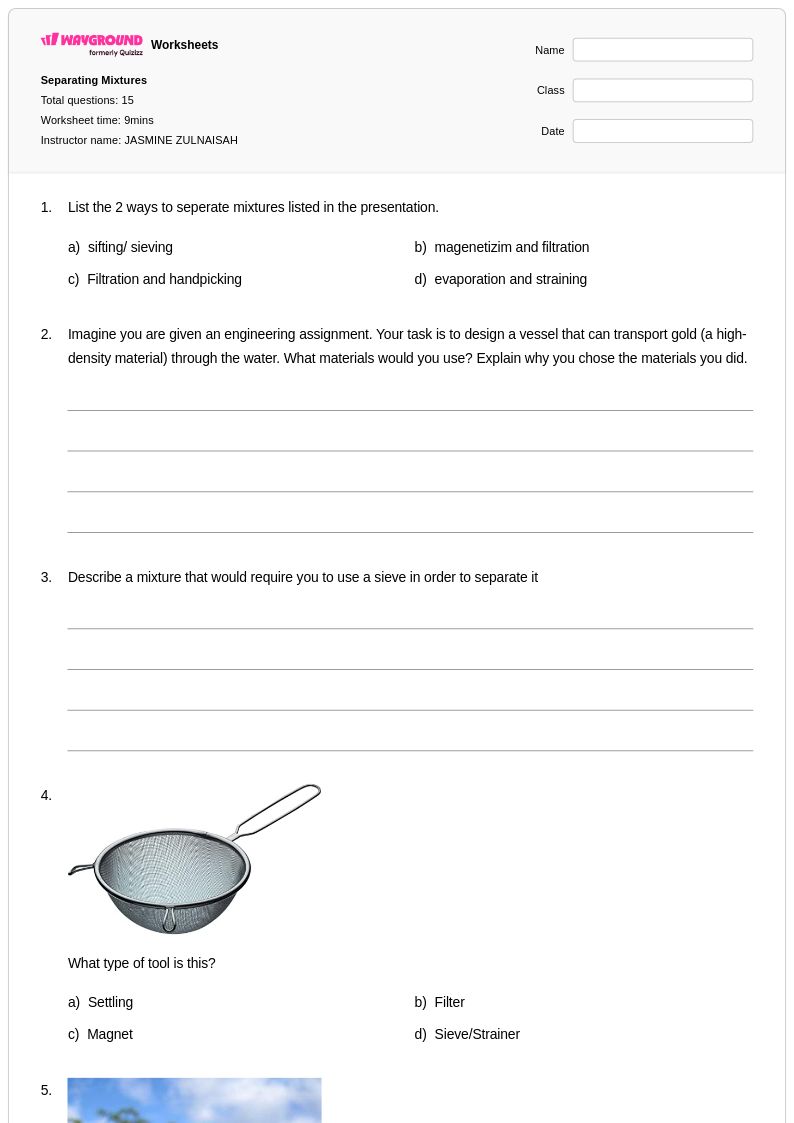
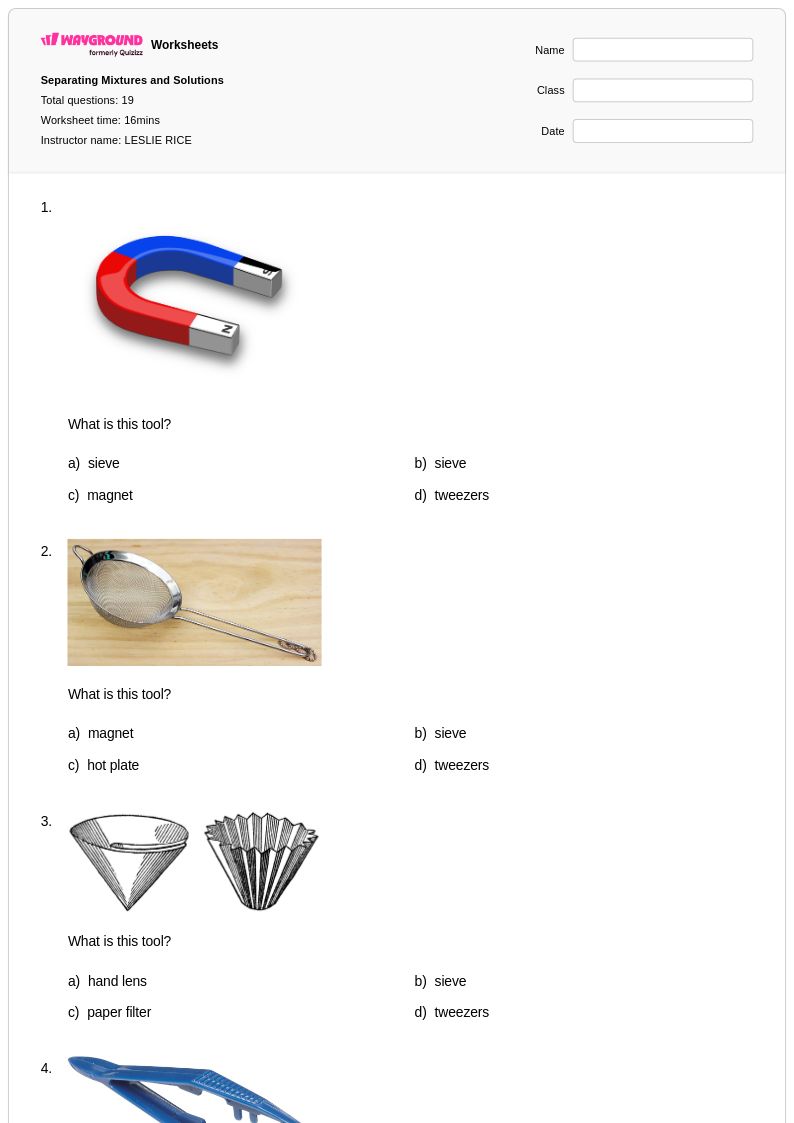
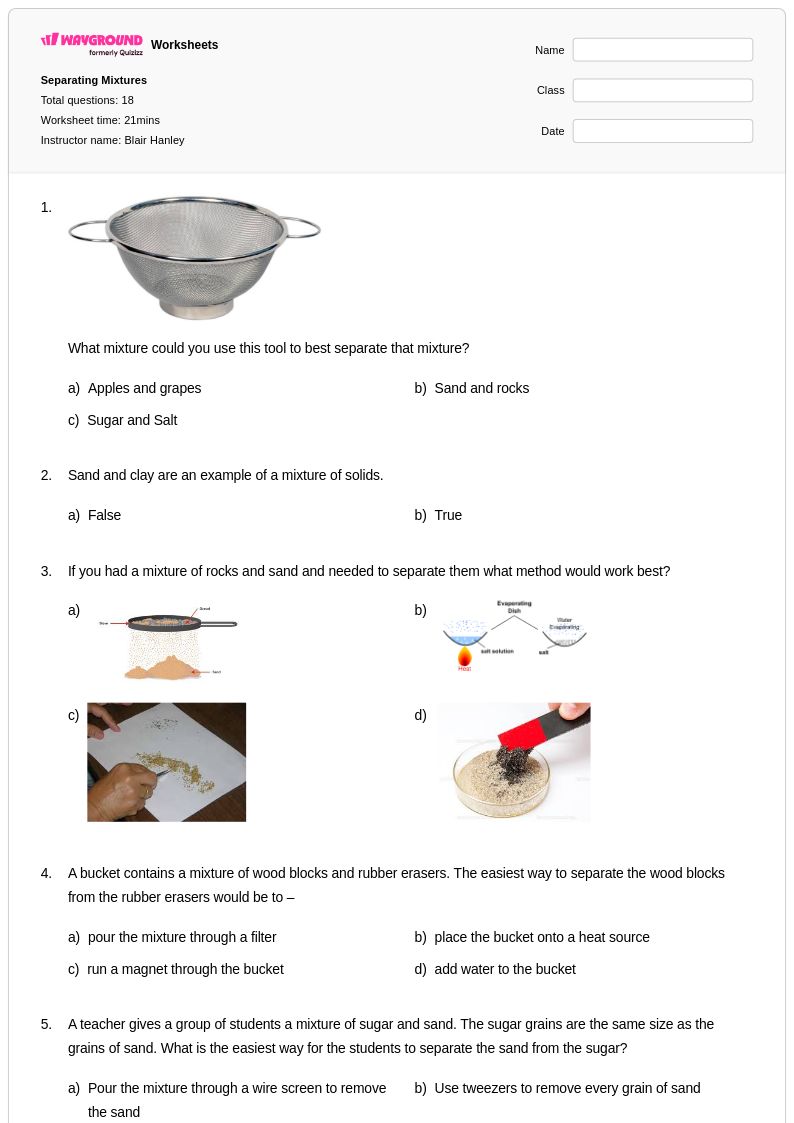
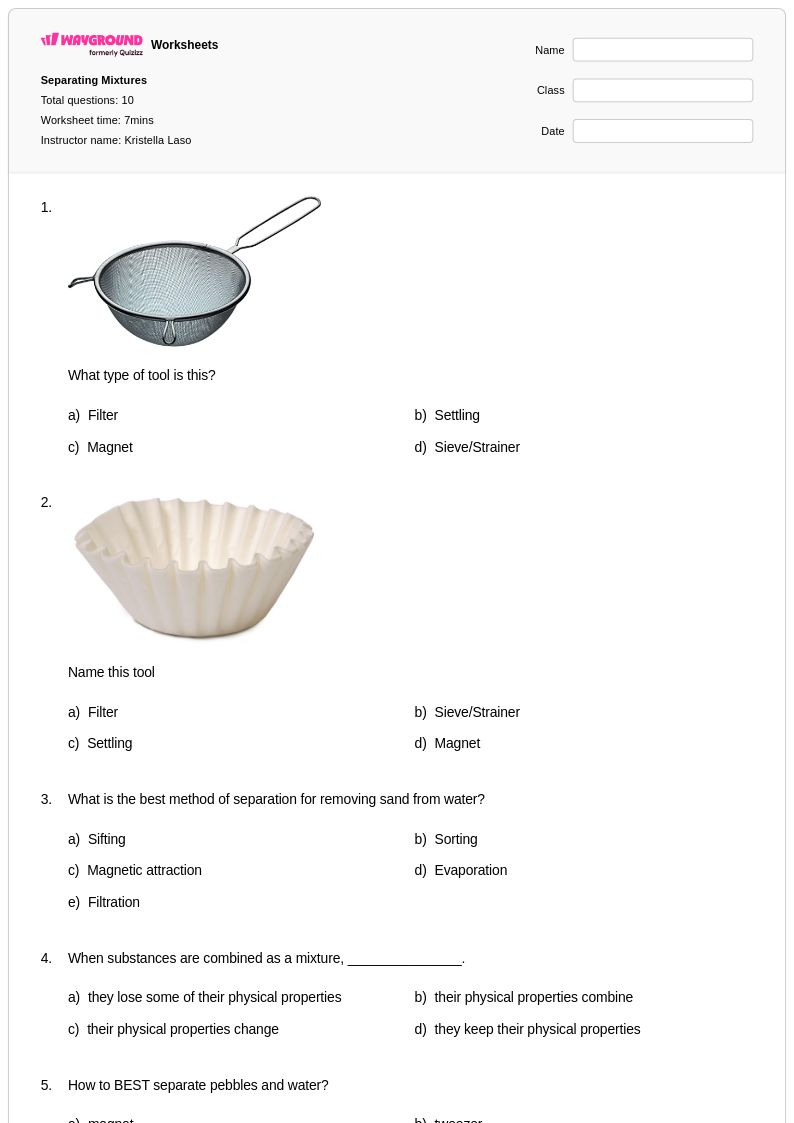
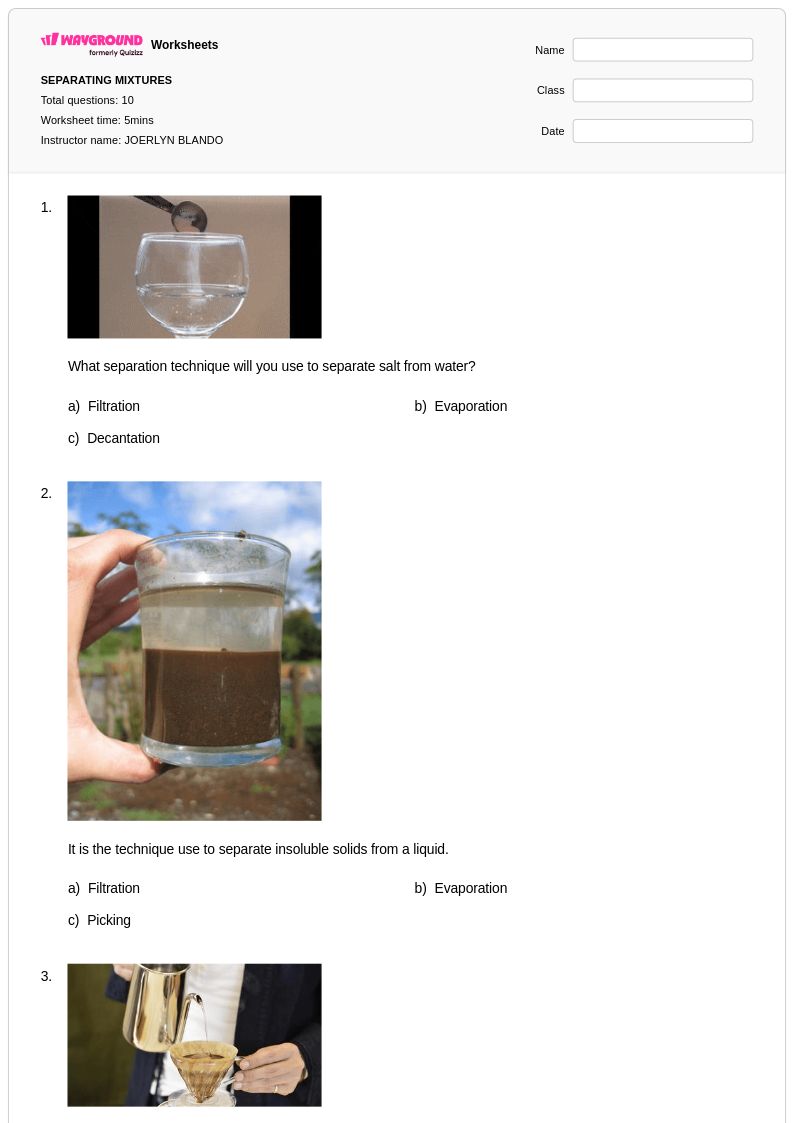
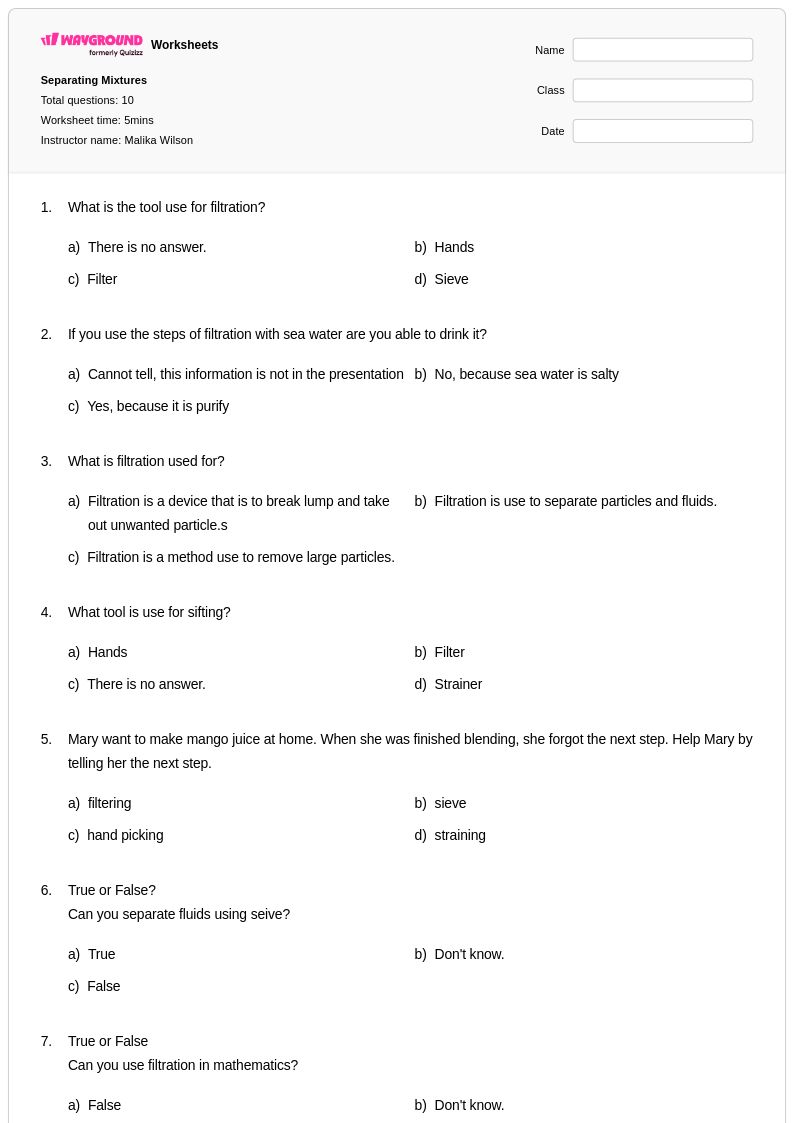
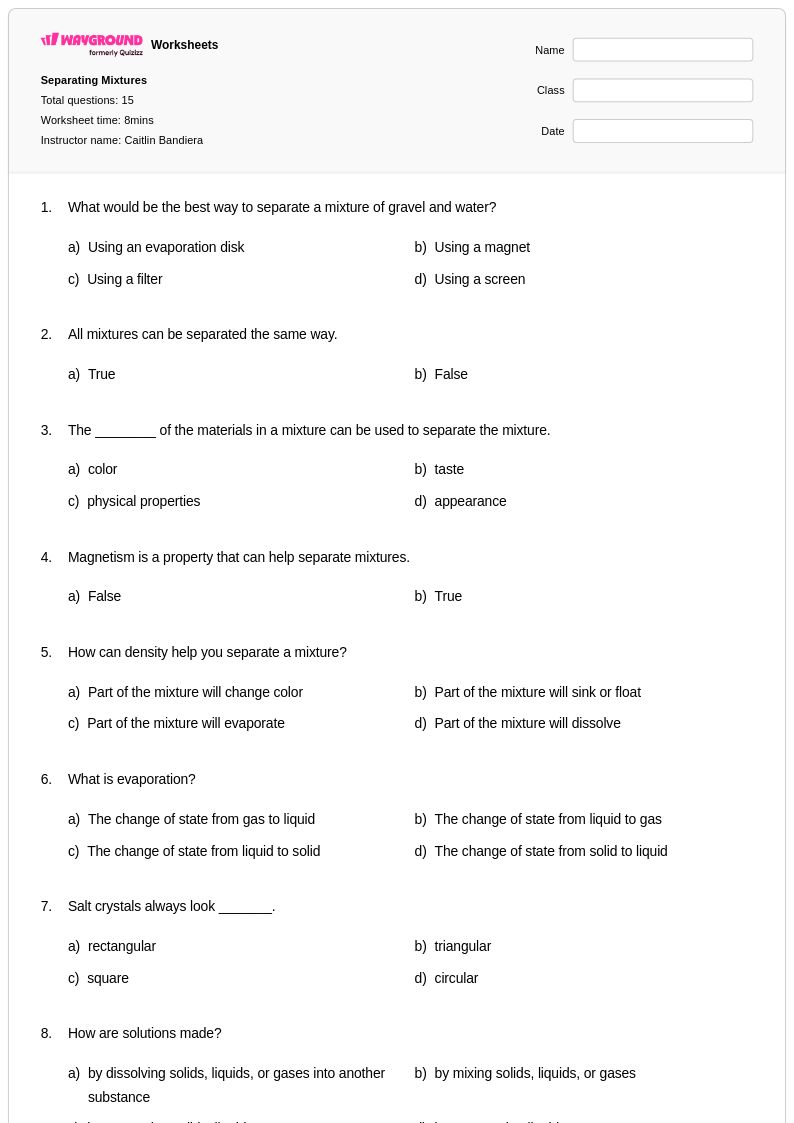
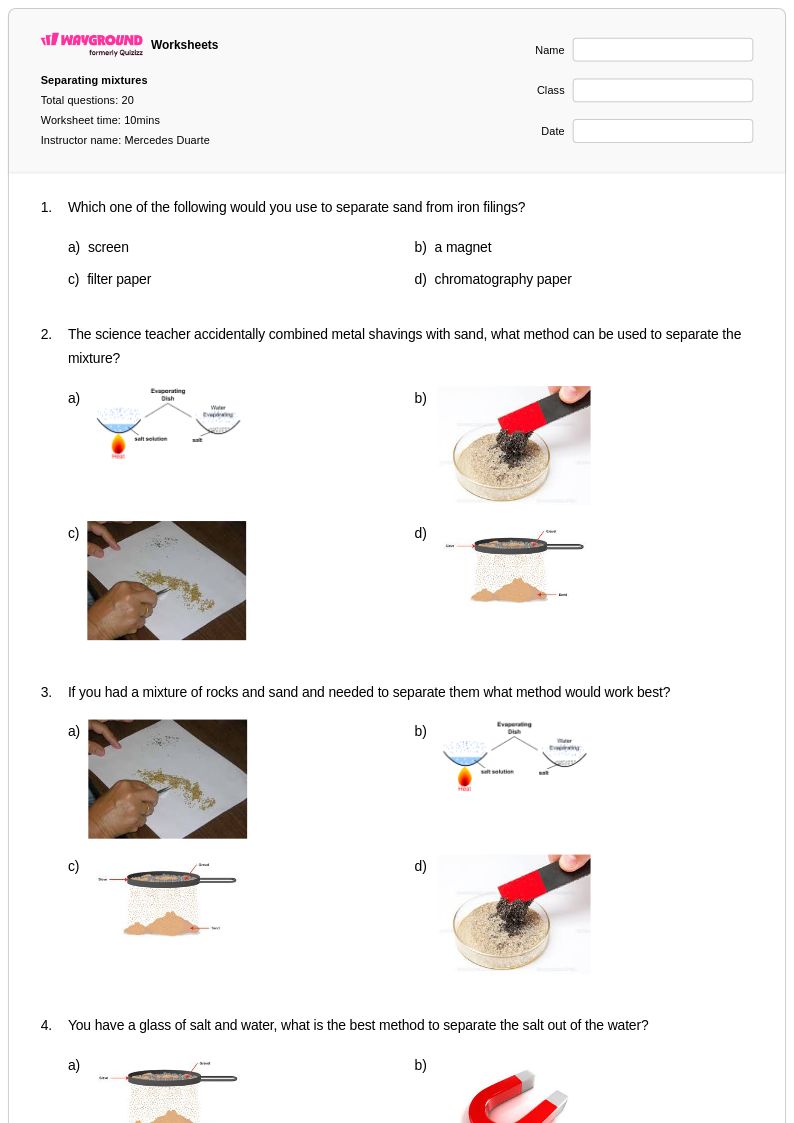
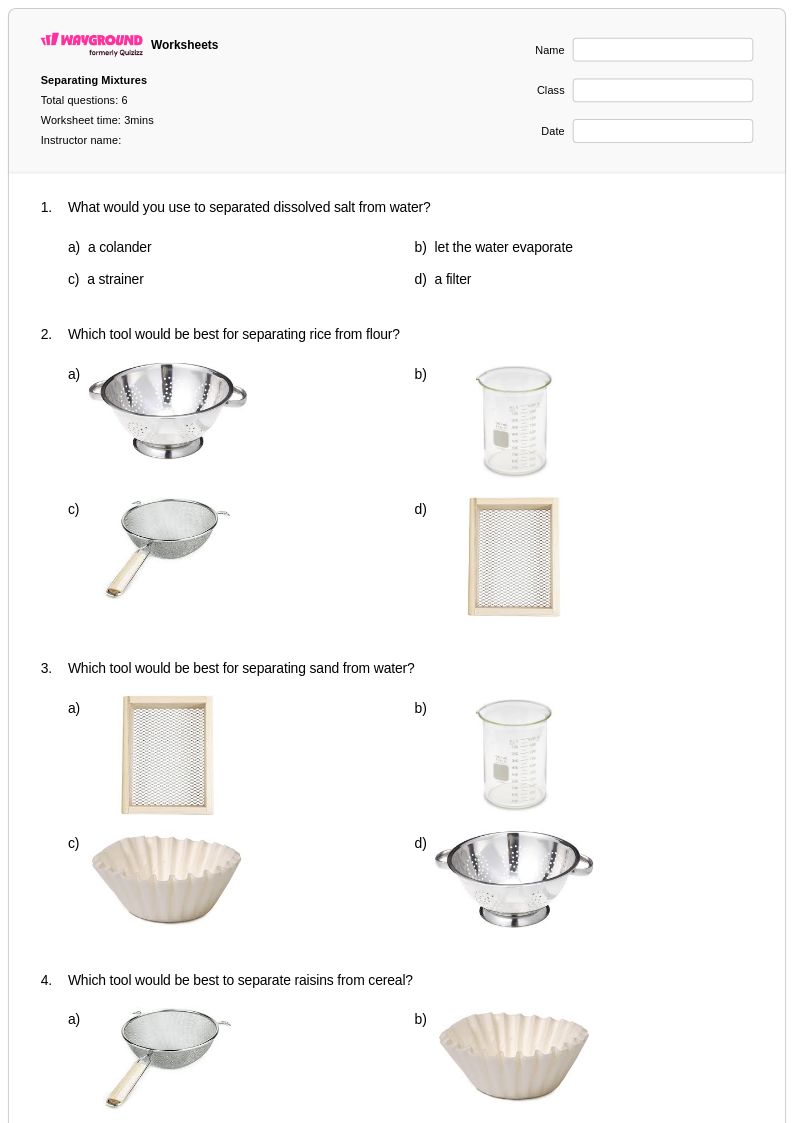
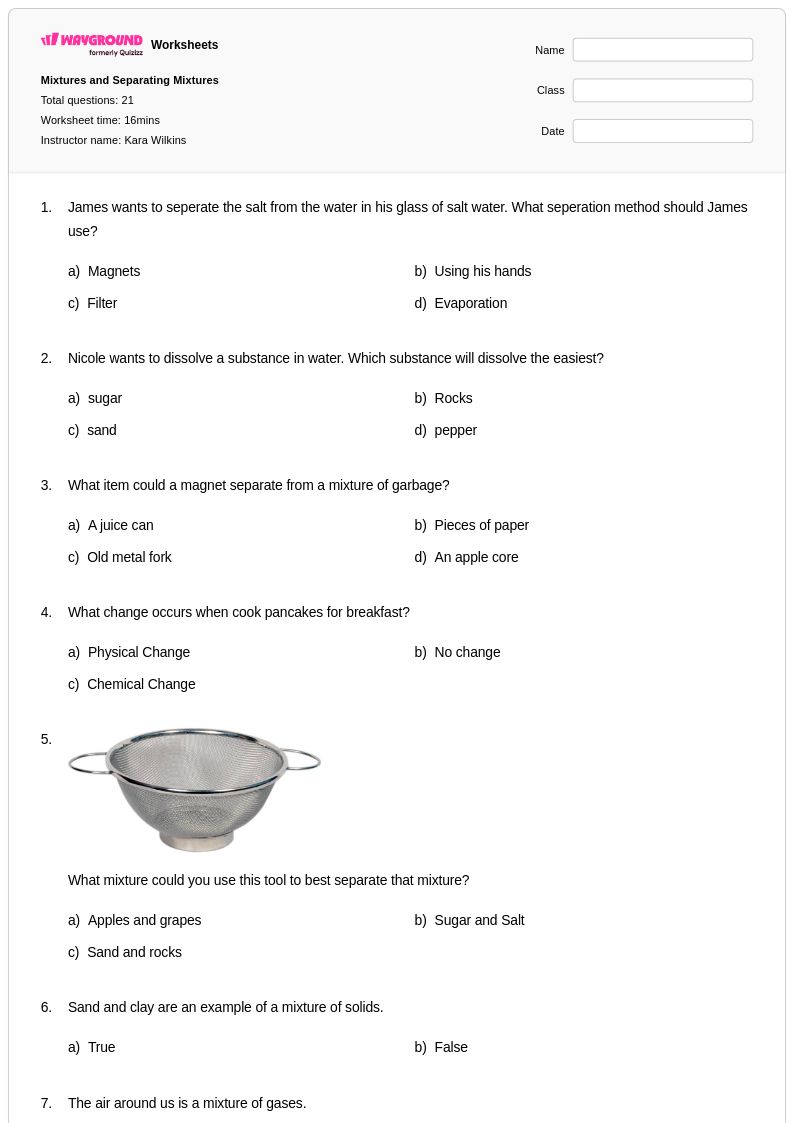
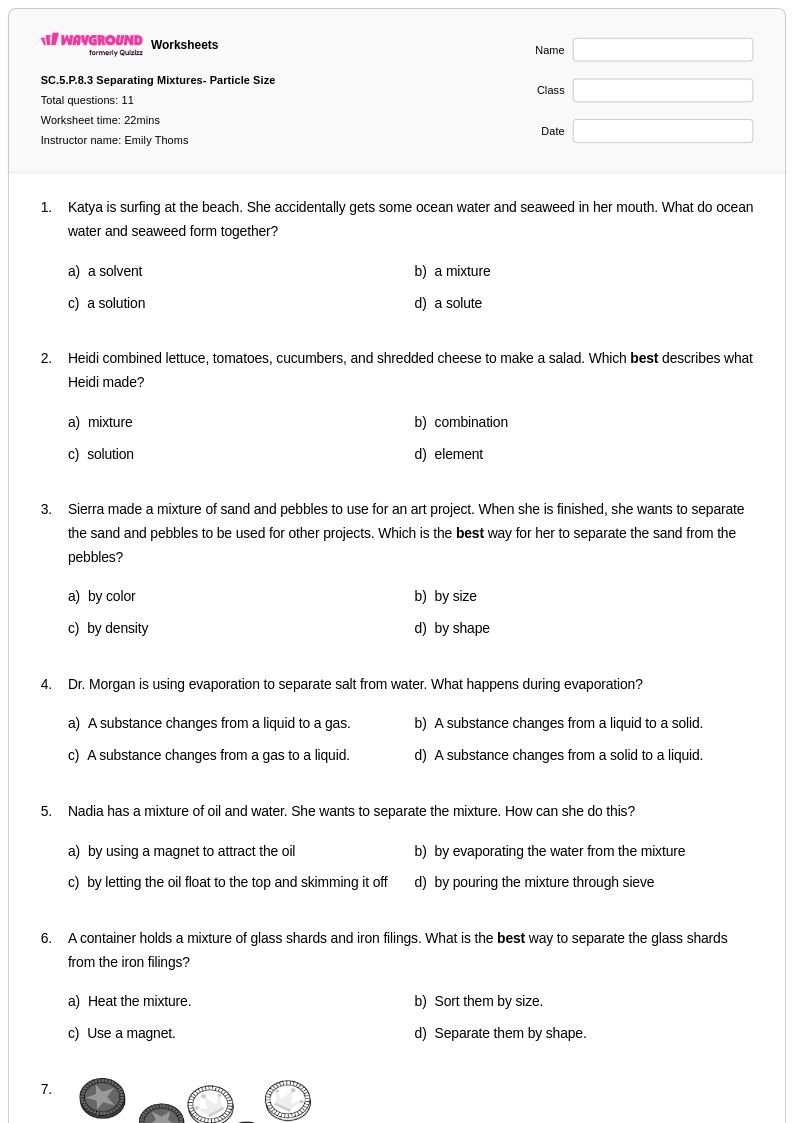
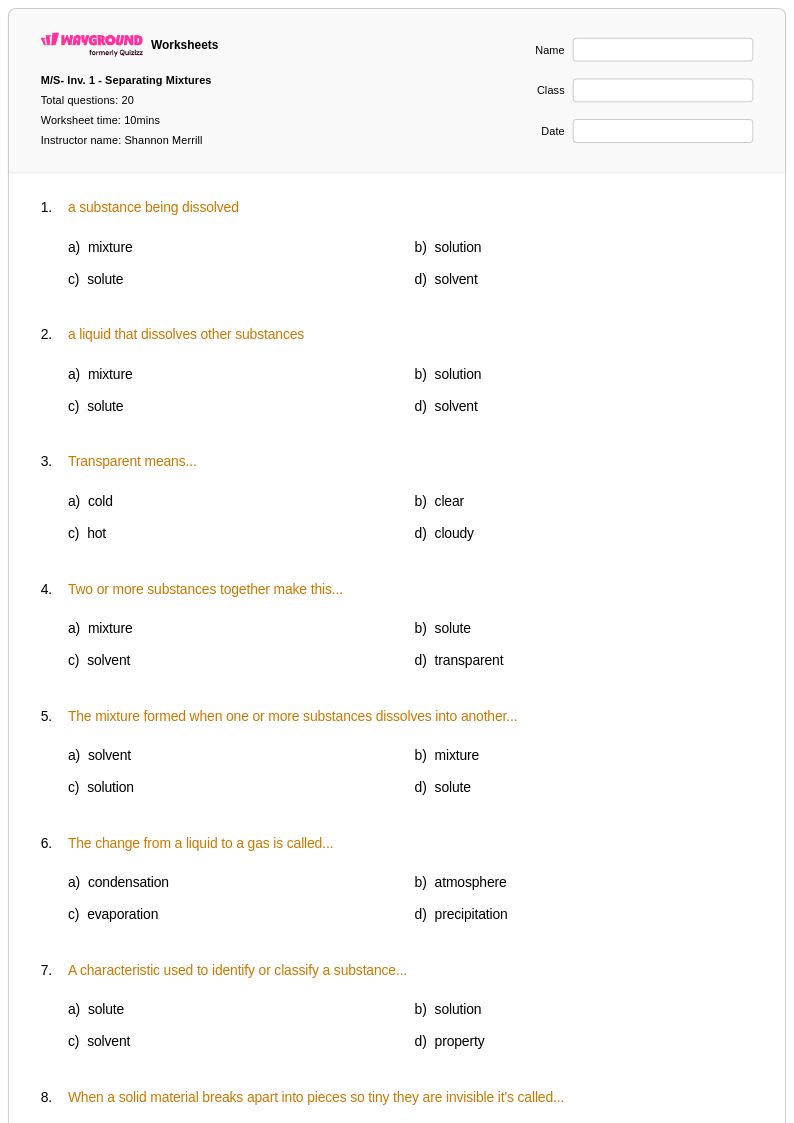
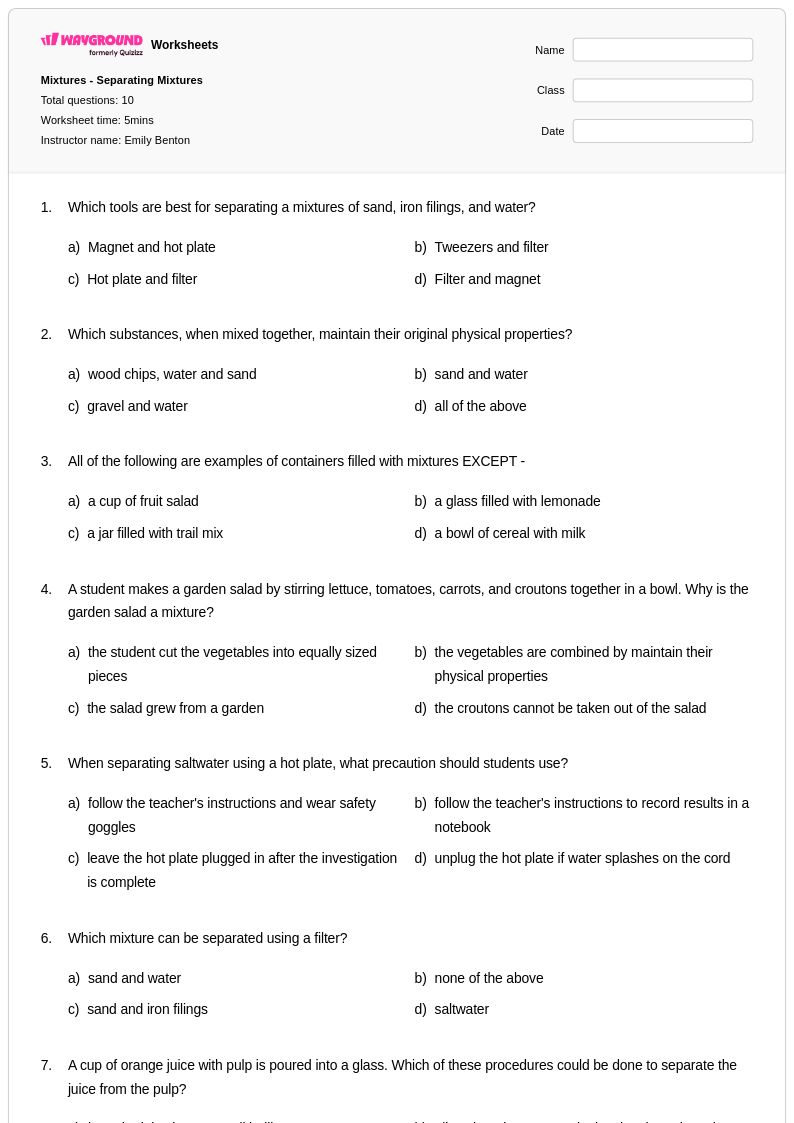
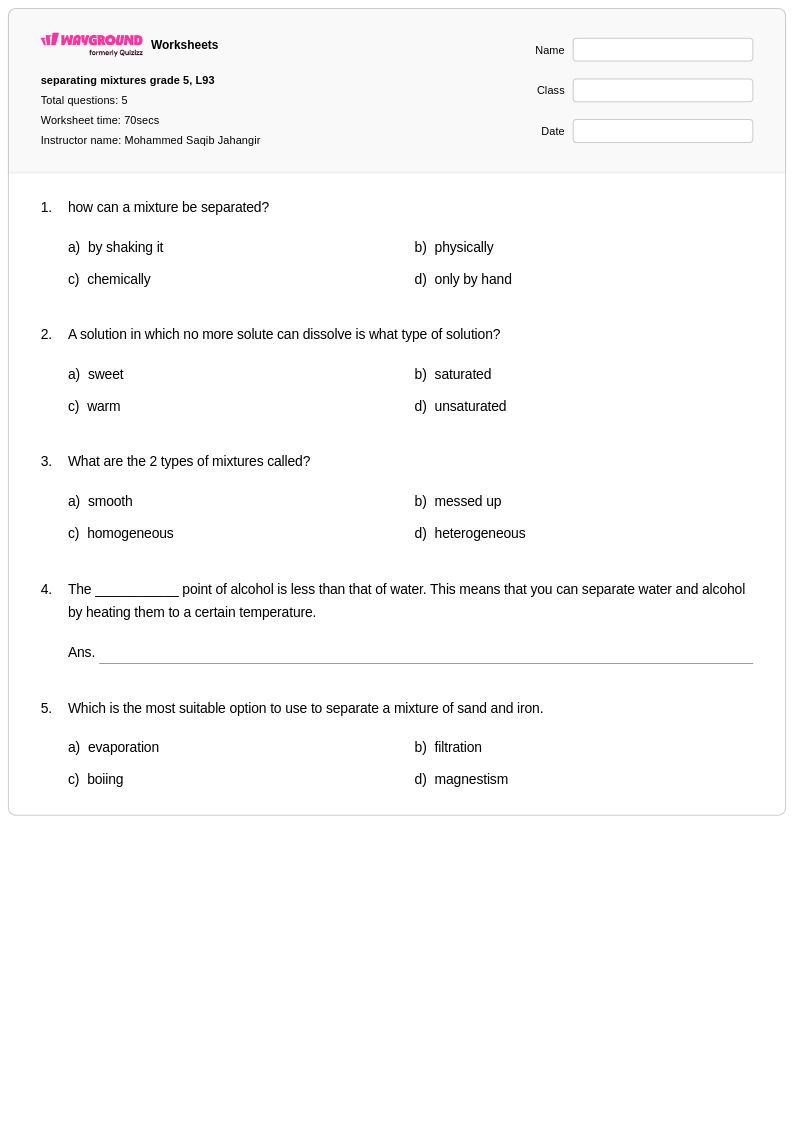
Grade 5 separating mixtures worksheets provide free printables and practice problems that help students learn filtration, evaporation, and magnetic separation techniques through hands-on activities with complete answer keys.
Explore printable Separating Mixtures worksheets for Grade 5
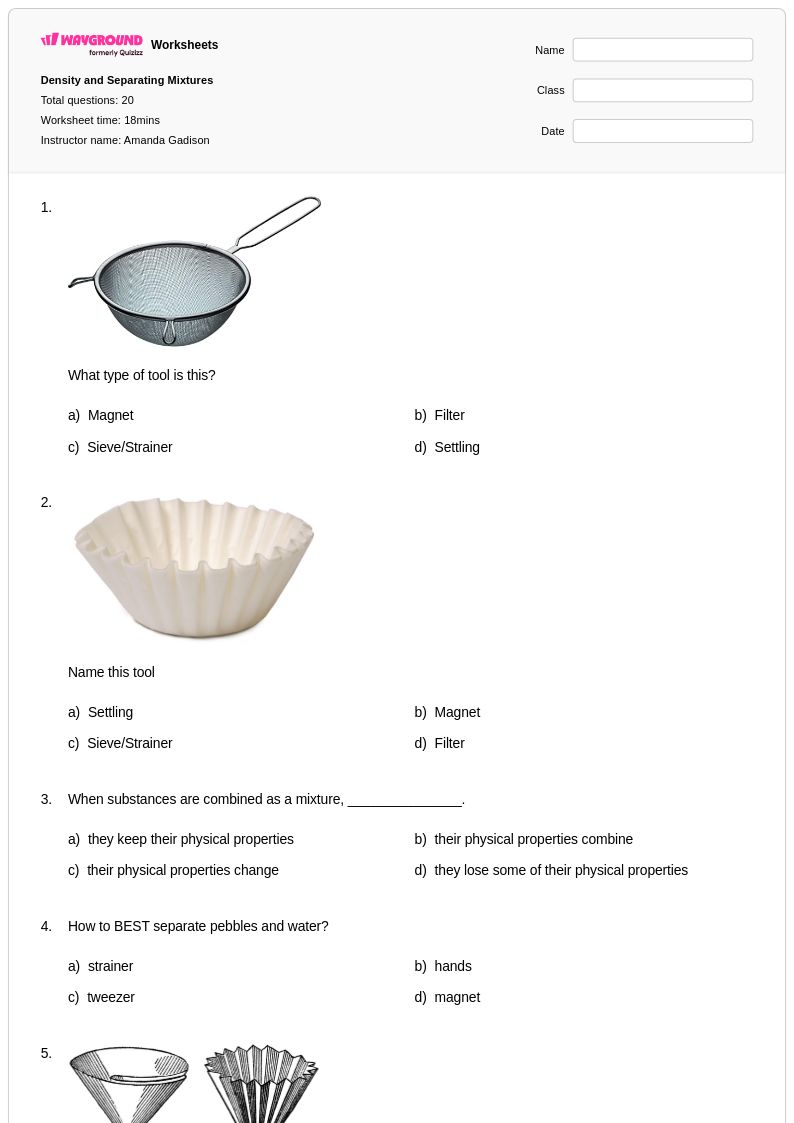
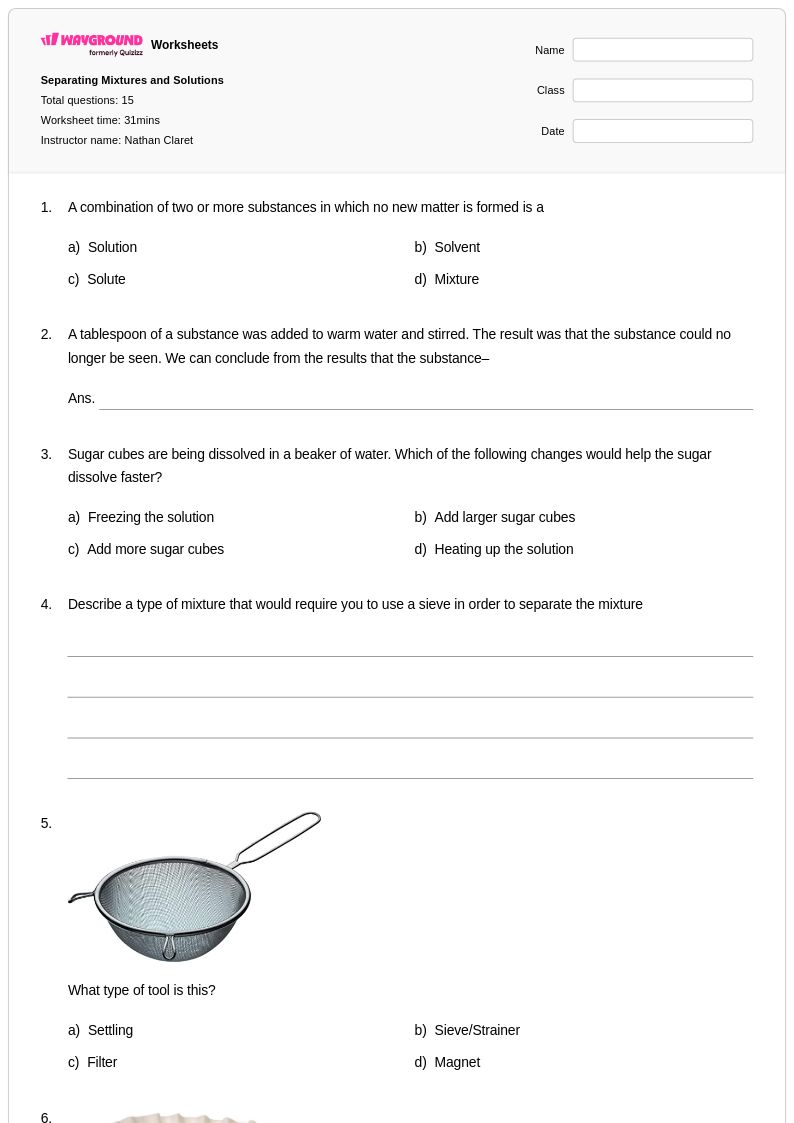
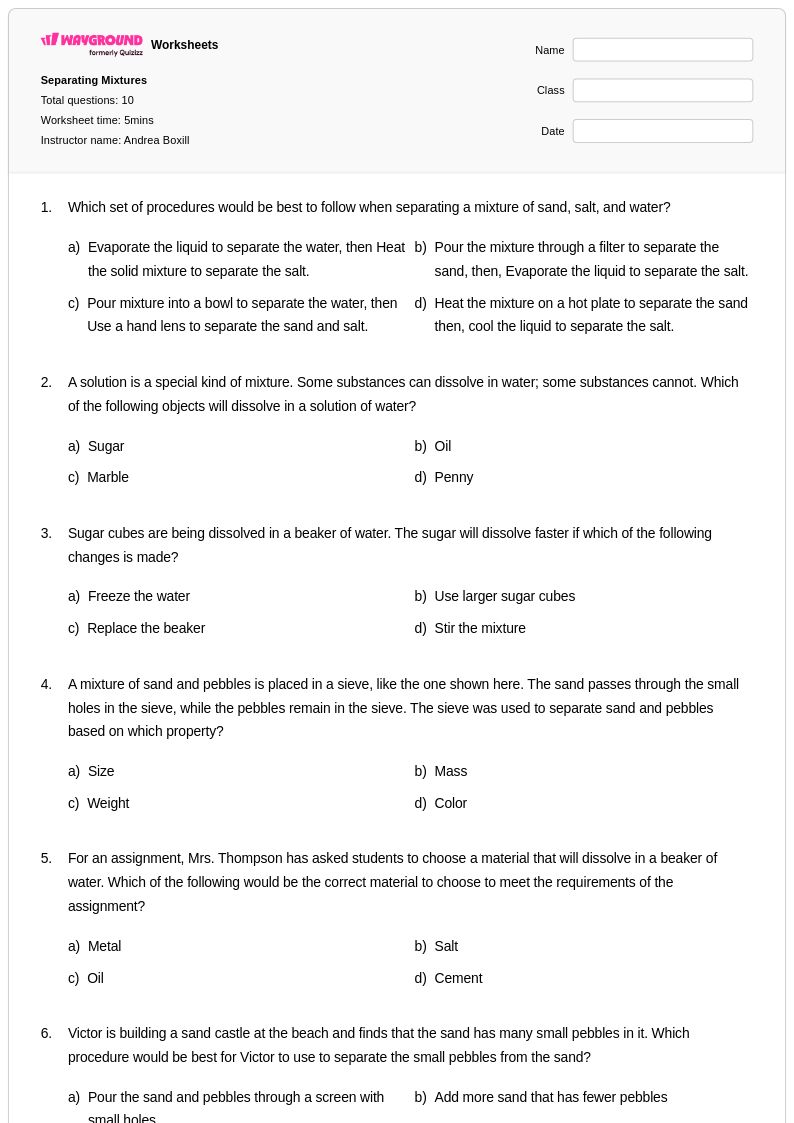
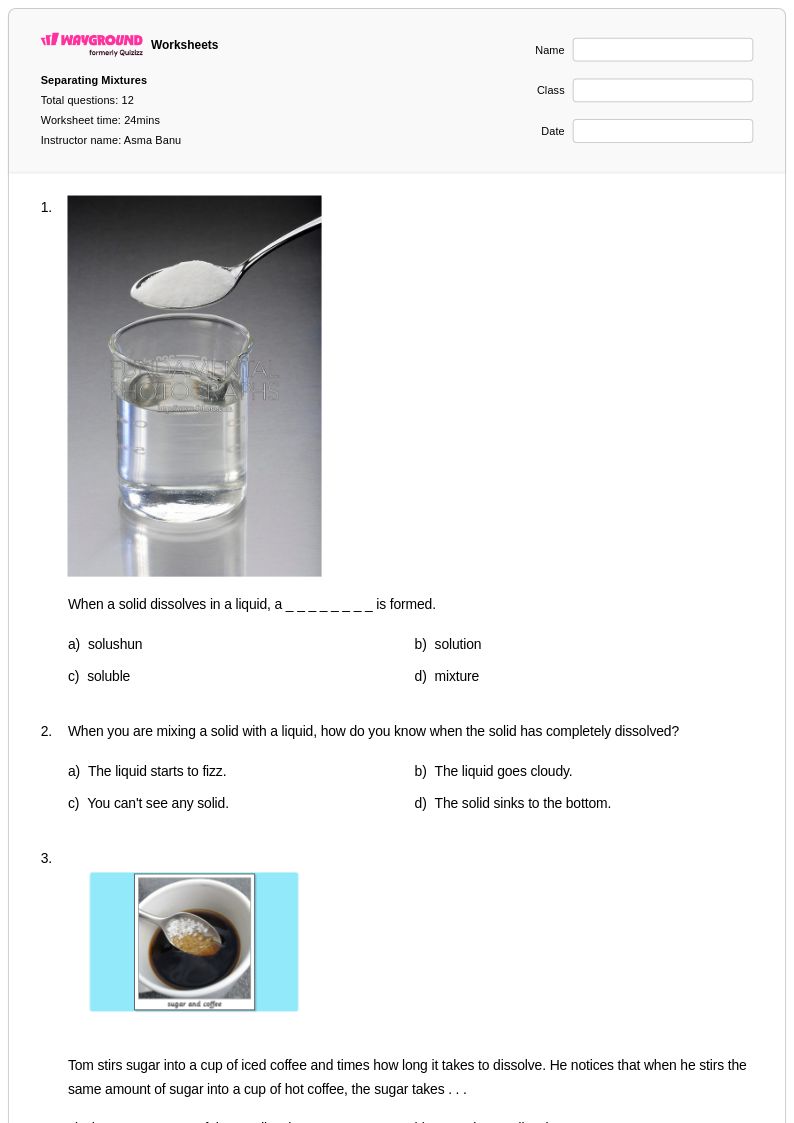
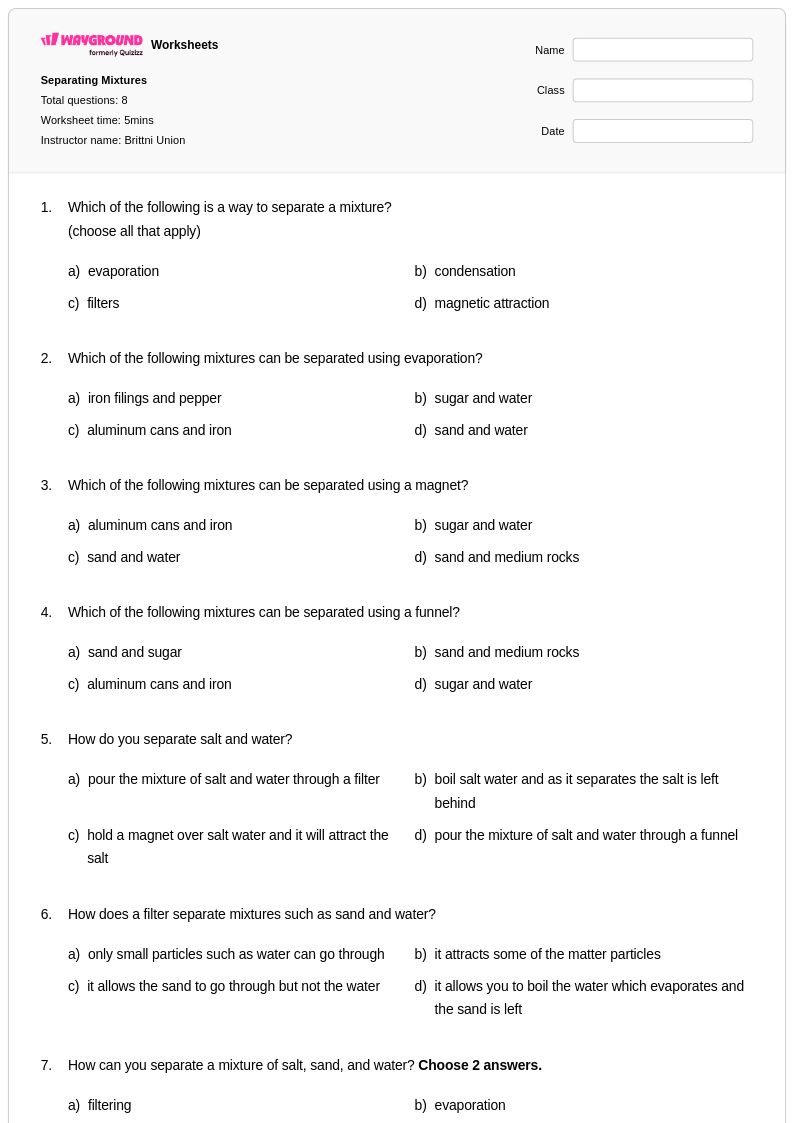
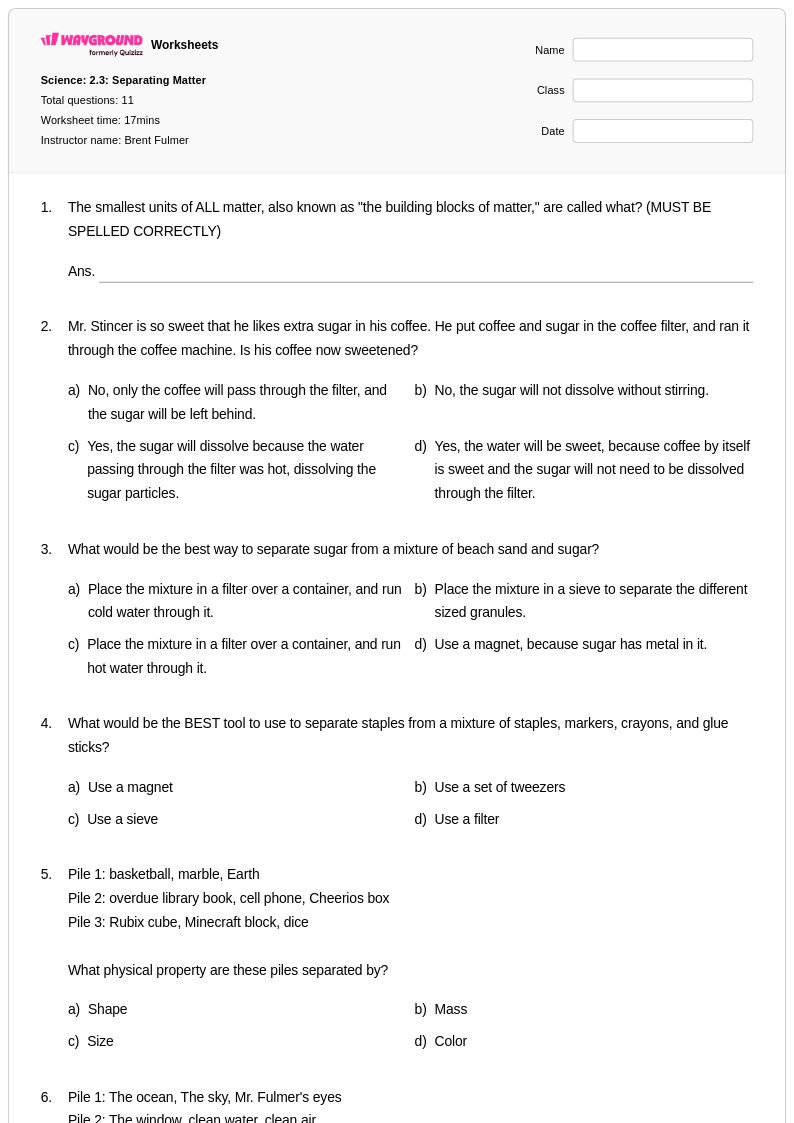
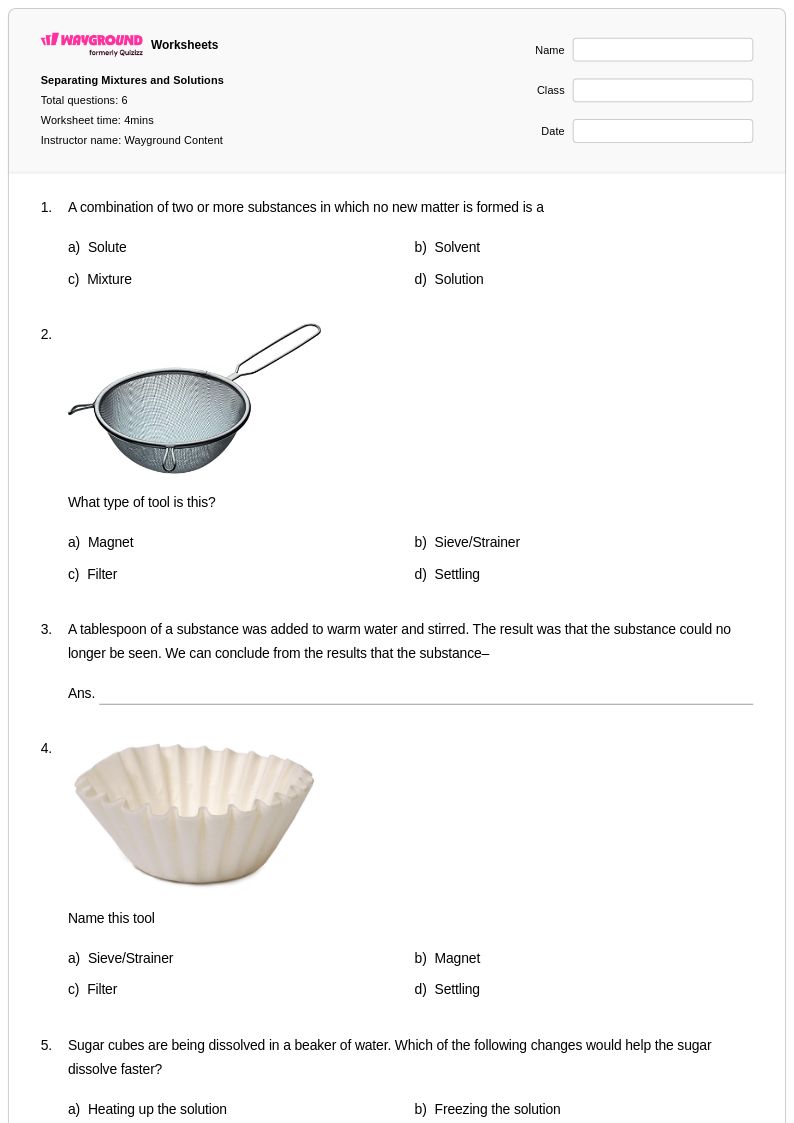
Separating mixtures worksheets for Grade 5 students through Wayground provide comprehensive practice with fundamental chemistry concepts that introduce young learners to scientific methods of classification and separation. These carefully designed worksheets strengthen critical thinking skills as students learn to identify different types of mixtures and apply appropriate separation techniques such as filtration, sieving, magnetic separation, and evaporation. Each worksheet collection includes detailed answer keys that help teachers assess student understanding of physical properties and separation methods, while printable pdf formats ensure easy classroom distribution. The free practice problems guide students through hands-on scenarios where they must determine the most effective way to separate common mixture combinations like sand and water, iron filings and salt, or oil and vinegar, building foundational laboratory thinking skills essential for future chemistry studies.
Wayground supports educators with an extensive library of millions of teacher-created separating mixtures resources that can be filtered and customized to match specific Grade 5 curriculum standards and learning objectives. The platform's robust search functionality allows teachers to quickly locate worksheets that align with state science standards while offering differentiation tools that accommodate diverse learning needs within the classroom. Teachers can easily modify existing worksheets or combine multiple resources to create comprehensive lesson plans that support both remediation for struggling students and enrichment activities for advanced learners. The flexible format options, including both digital and printable pdf versions, enable seamless integration into various teaching environments, whether for individual skill practice, small group laboratory preparation, or whole-class instruction on the fundamental principles of mixture separation in elementary chemistry education.
FAQs
How do I teach separating mixtures to chemistry students?
Start by distinguishing between mixtures and pure substances, then introduce each separation technique in context of a physical property it exploits — filtration uses particle size, distillation uses boiling point differences, chromatography uses solubility, and magnetic separation uses magnetic properties. Anchoring each method to a real-world application (e.g., purifying drinking water through filtration) helps students understand why a particular technique is chosen. Moving from conceptual explanation to hands-on or diagram-based practice reinforces the logic behind each method before students are asked to apply it independently.
What exercises help students practice separating mixtures?
Effective practice exercises ask students to identify the most appropriate separation technique for a described mixture and justify their reasoning based on the physical properties involved. Scenario-based problems — such as separating sand from salt water, or separating dyes in ink — push students to apply their knowledge rather than recall it. Worksheets that include step-by-step procedural questions alongside conceptual problems help reinforce both the how and the why of each separation method.
What mistakes do students commonly make when learning about separating mixtures?
A frequent misconception is that any liquid mixture can be separated by filtration — students often overlook that filtration only works when one component is an insoluble solid. Students also confuse evaporation and distillation, not recognizing that distillation is necessary when you want to collect the liquid component rather than the dissolved solid. Another common error is failing to connect the choice of separation technique to a specific physical property difference between the components of the mixture.
How do I use separating mixtures worksheets in my classroom?
Separating mixtures worksheets on Wayground are available as printable PDFs for traditional classroom use and in digital formats for technology-integrated learning environments, and can also be hosted as a quiz directly on Wayground. Printable versions work well for structured lab follow-up activities or homework, while digital versions allow for immediate feedback when assigned as an in-class exercise. The included answer keys make these resources suitable for independent practice, peer review, or self-paced study.
How do I differentiate separating mixtures instruction for students at different levels?
For students who are struggling, start with concrete, visual examples of each separation technique before introducing abstract or multi-step problems. On Wayground, teachers can apply accommodations such as reduced answer choices to lower cognitive load for individual students, or enable Read Aloud so that question text is read to students who need it. These settings can be applied to specific students without affecting the experience of the rest of the class, making it straightforward to support diverse learners within a single assignment.
How do I assess whether students understand when to use each separation technique?
Effective assessment goes beyond asking students to name separation techniques — it requires them to analyze a mixture's properties and select the correct method with a reasoned explanation. Look for whether students can articulate which physical property difference each technique exploits, not just recall a definition. Common errors to watch for include selecting filtration for soluble mixtures or choosing distillation when simple evaporation would suffice, which reveal gaps in conceptual understanding rather than just recall.