Free Printable Types of Matter Worksheets for Grade 5
Explore Wayground's free Grade 5 types of matter worksheets and printables that help students learn to identify and classify solids, liquids, and gases through engaging practice problems with complete answer keys.
Explore printable Types of Matter worksheets for Grade 5
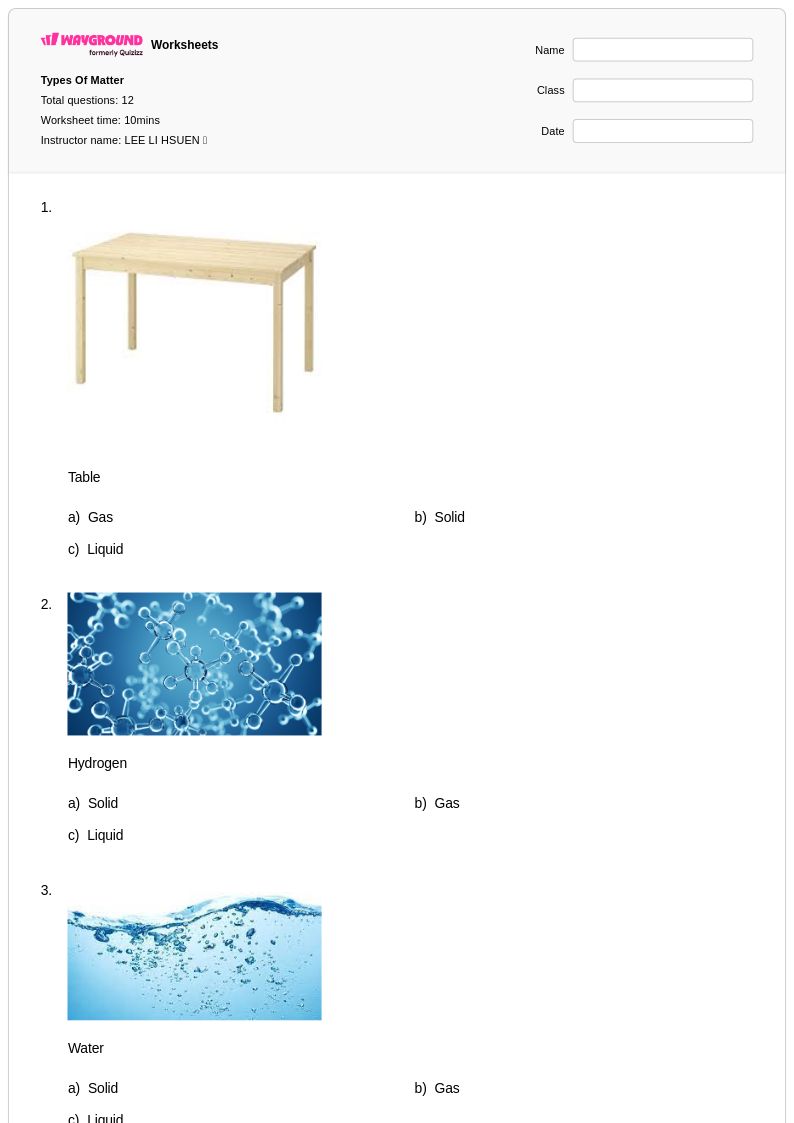
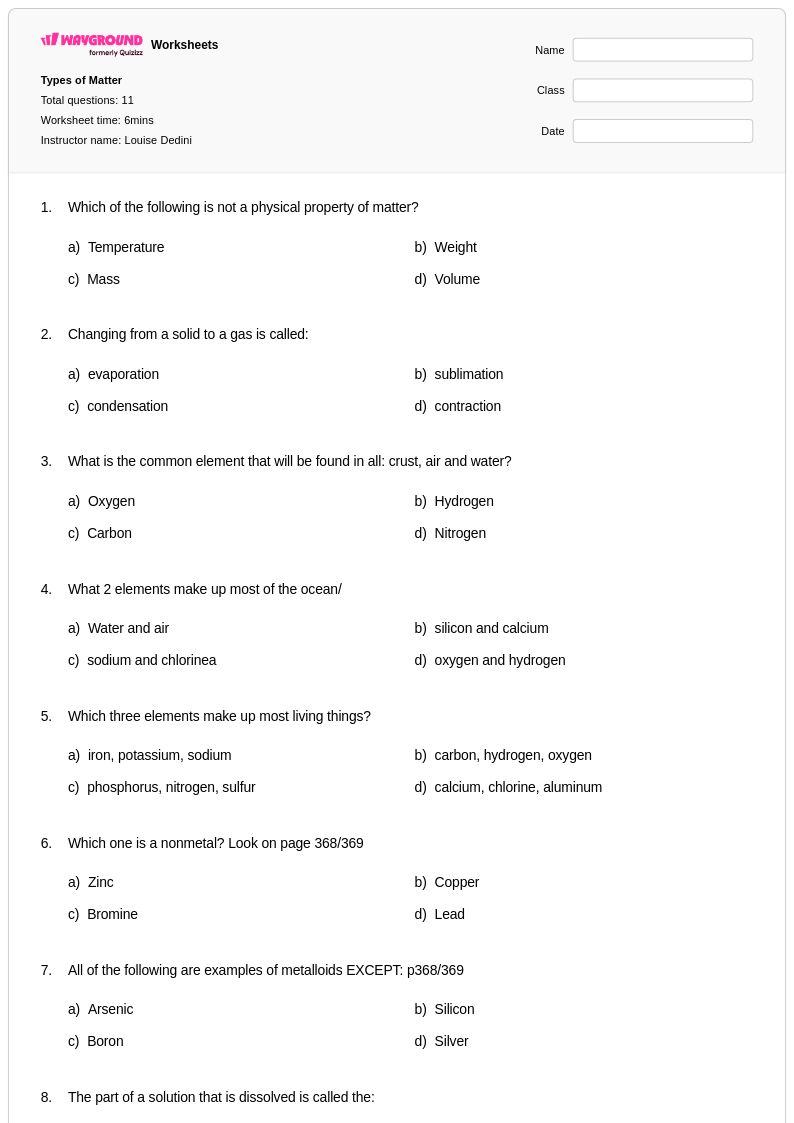
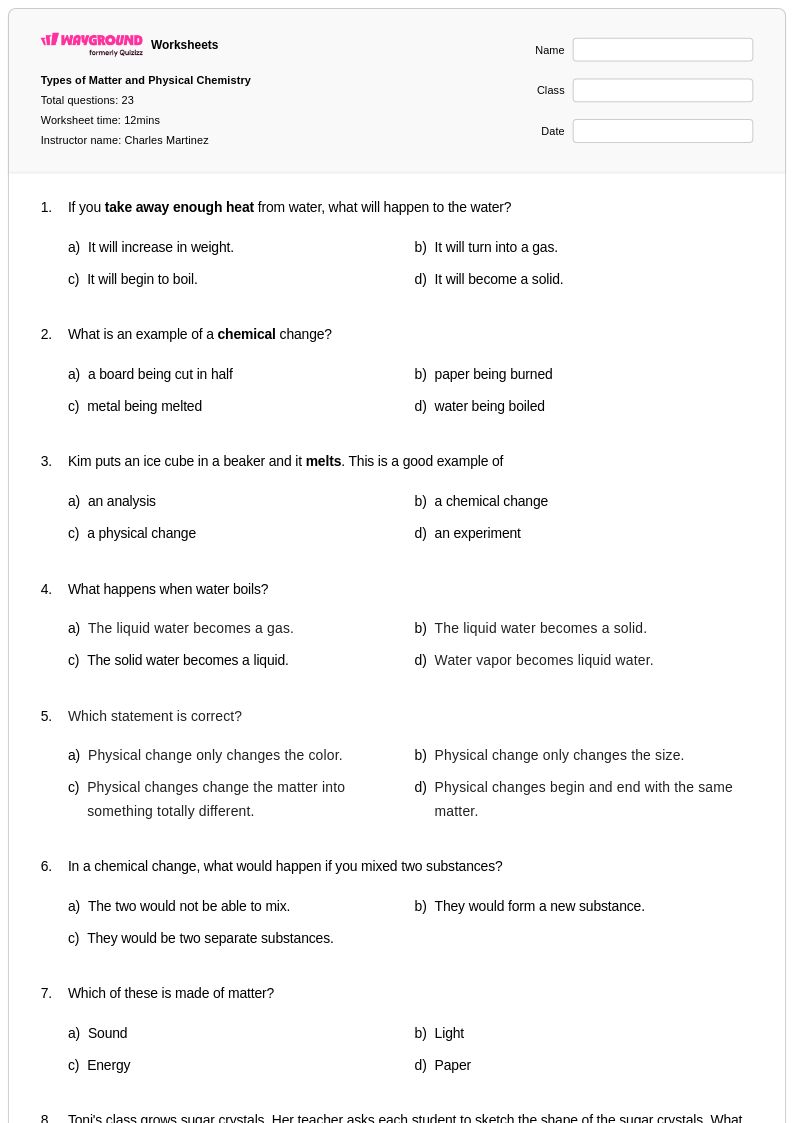
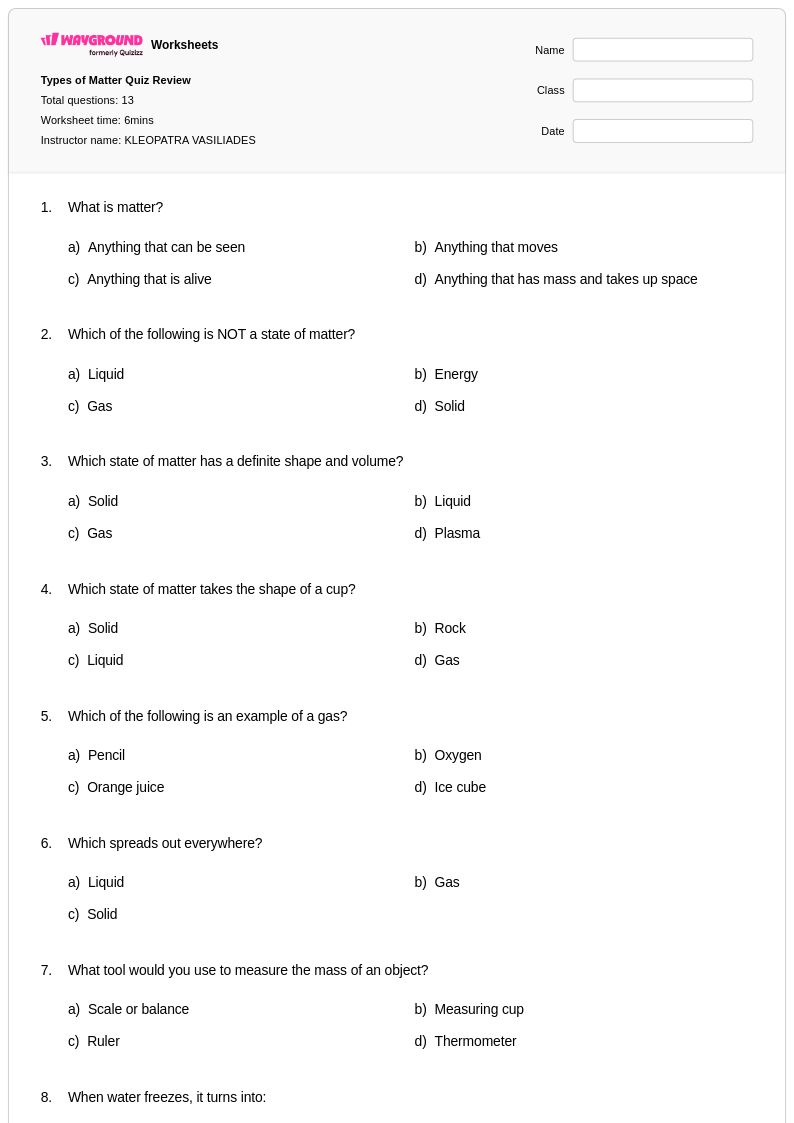
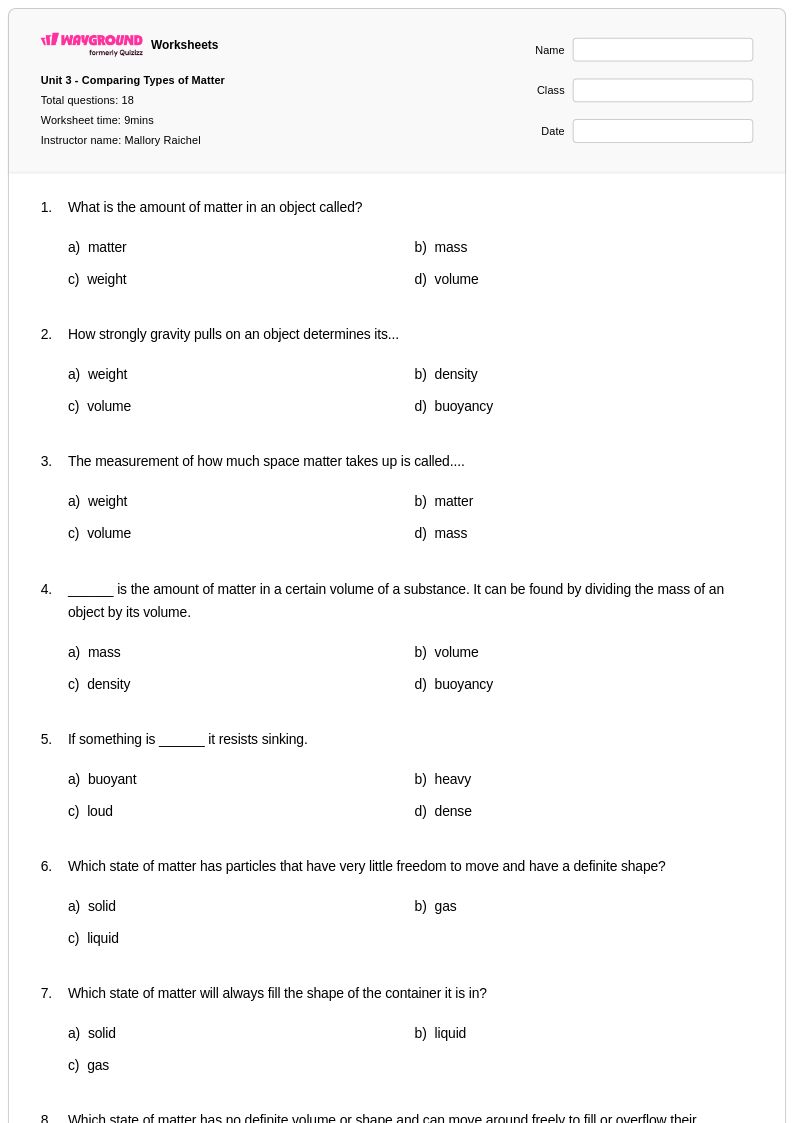
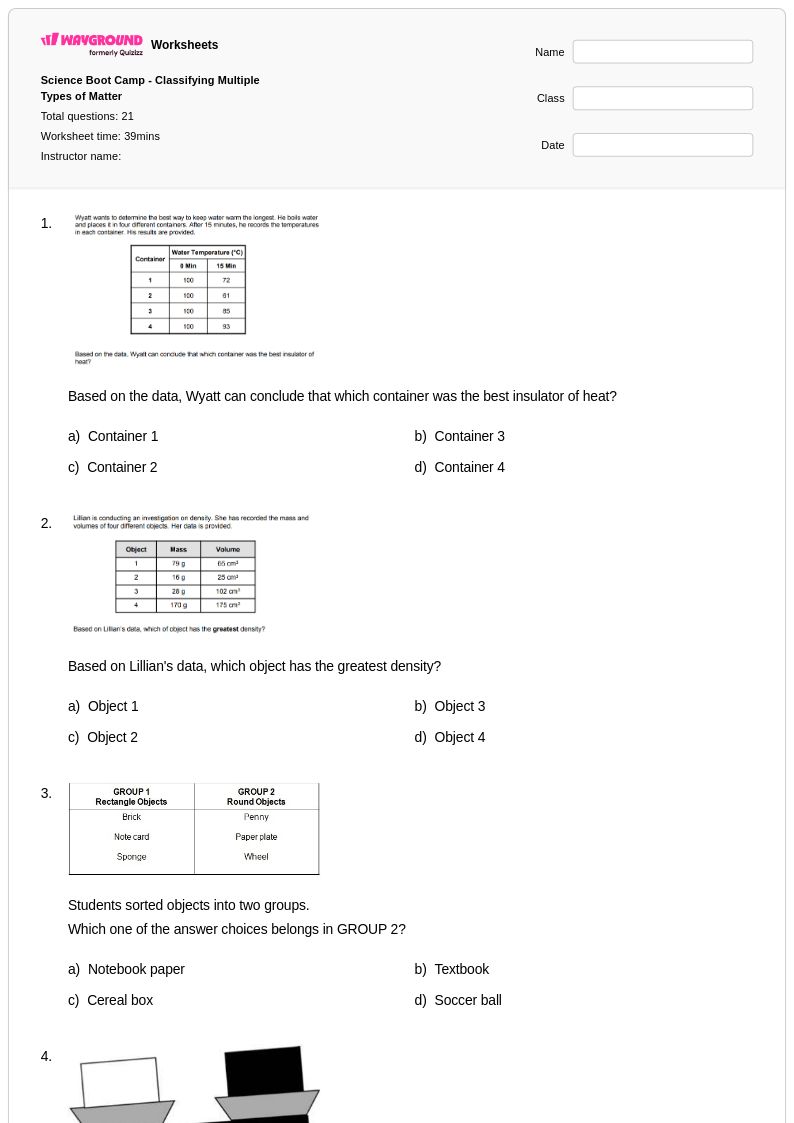
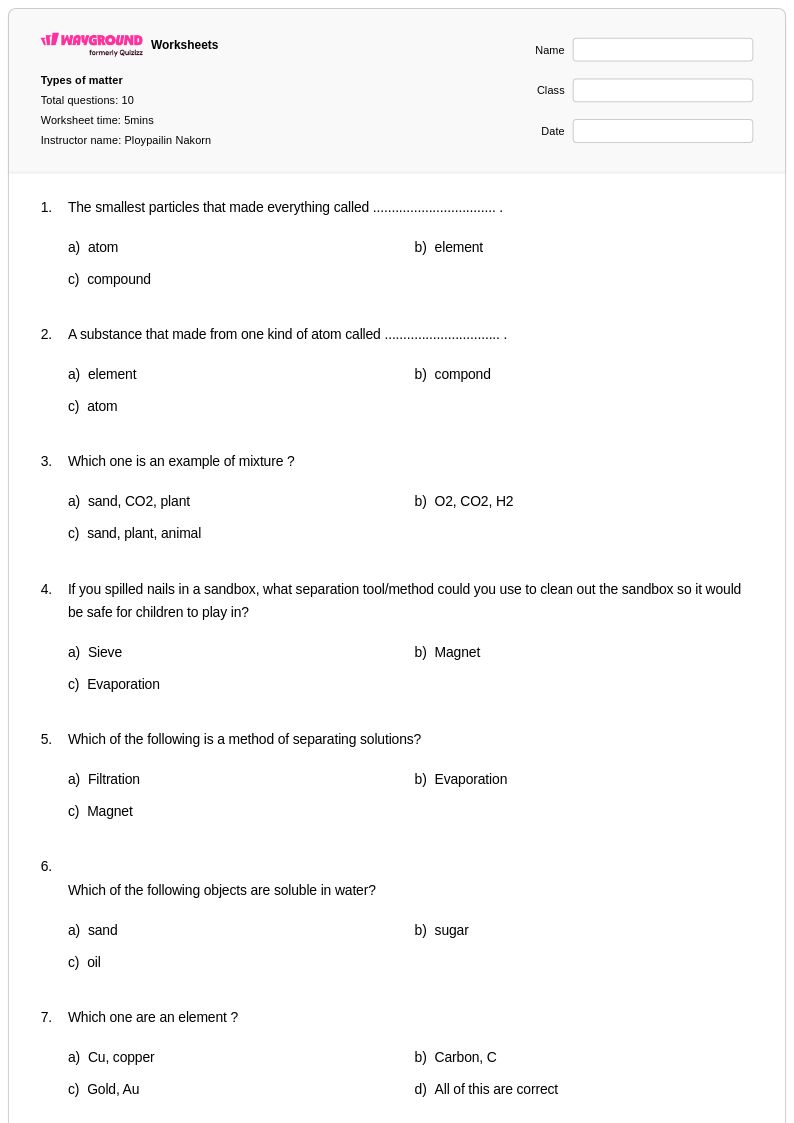
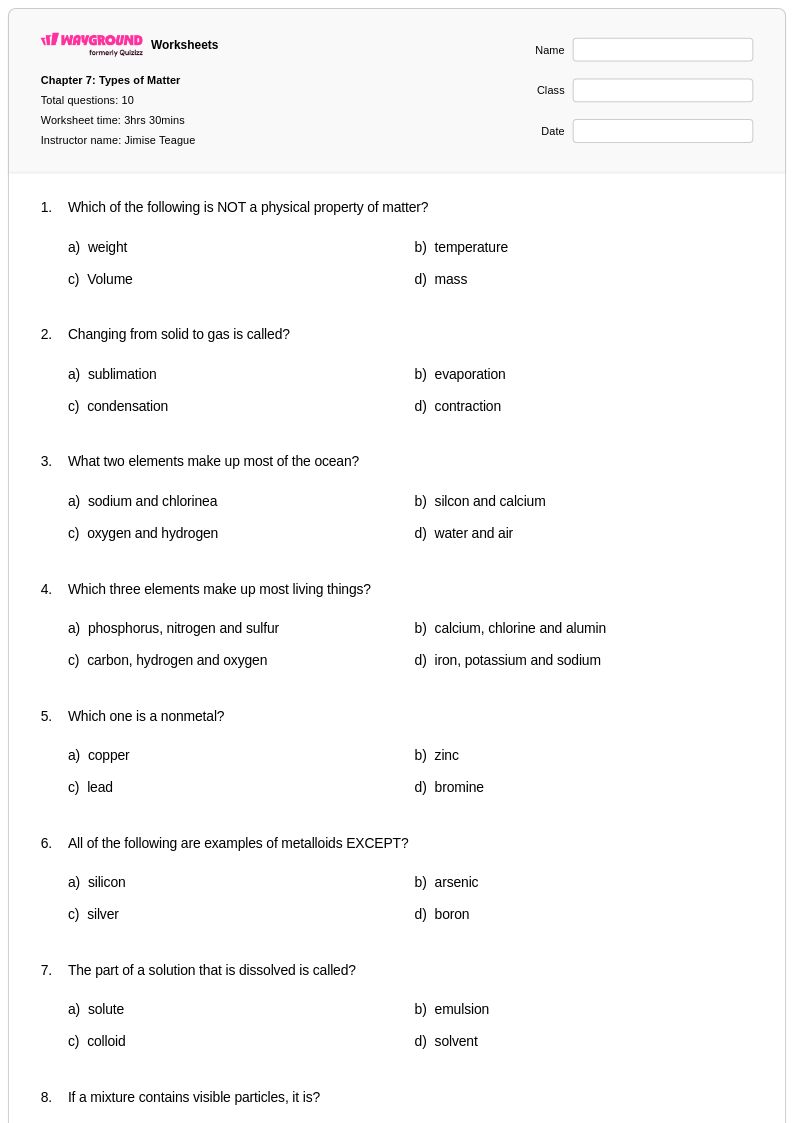
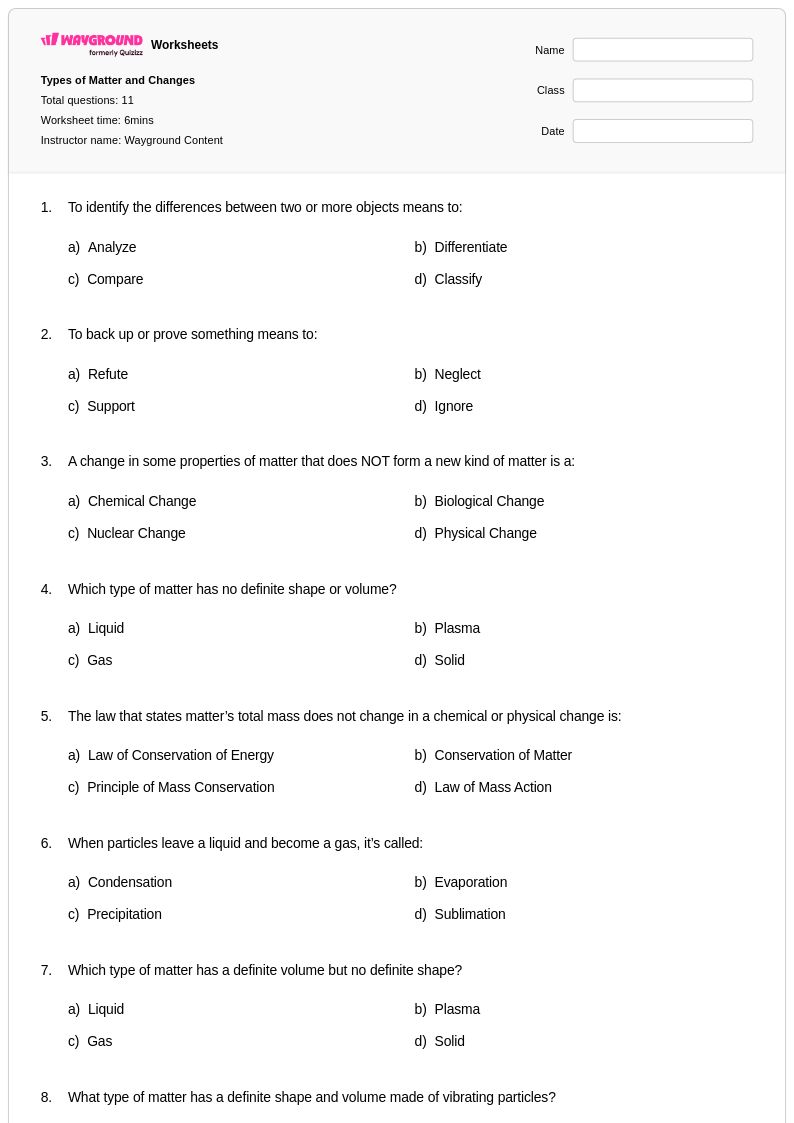
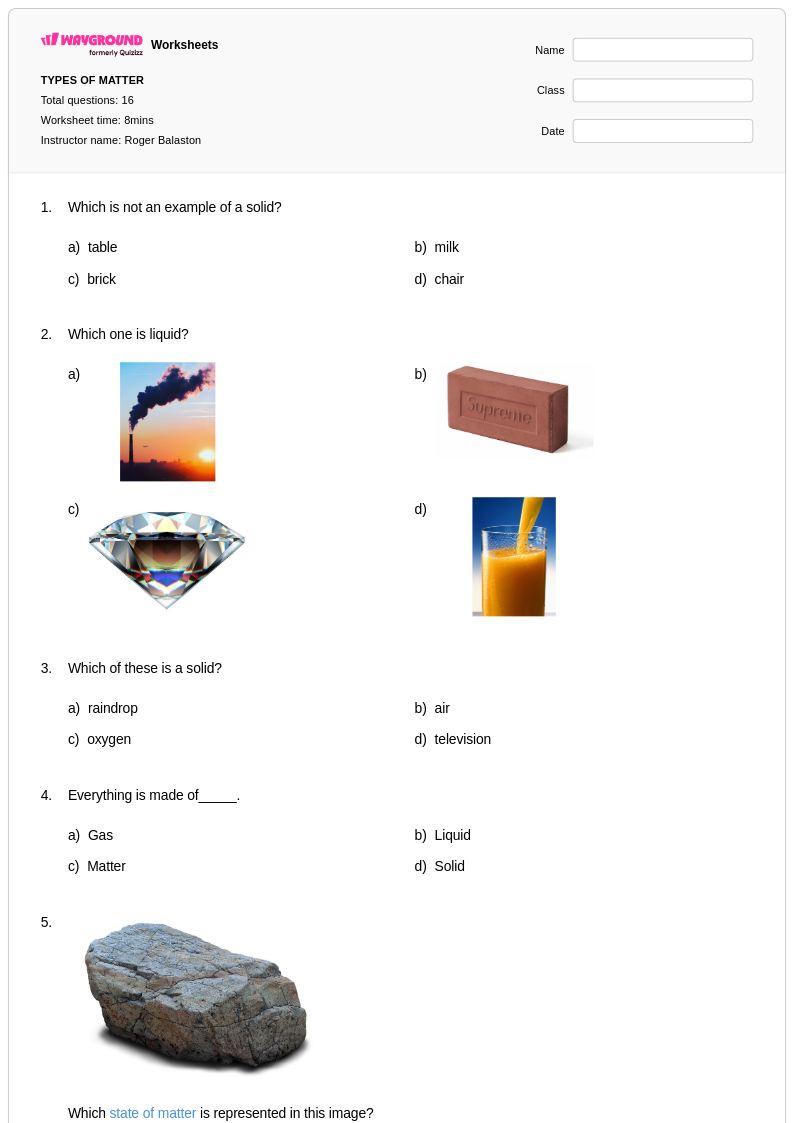
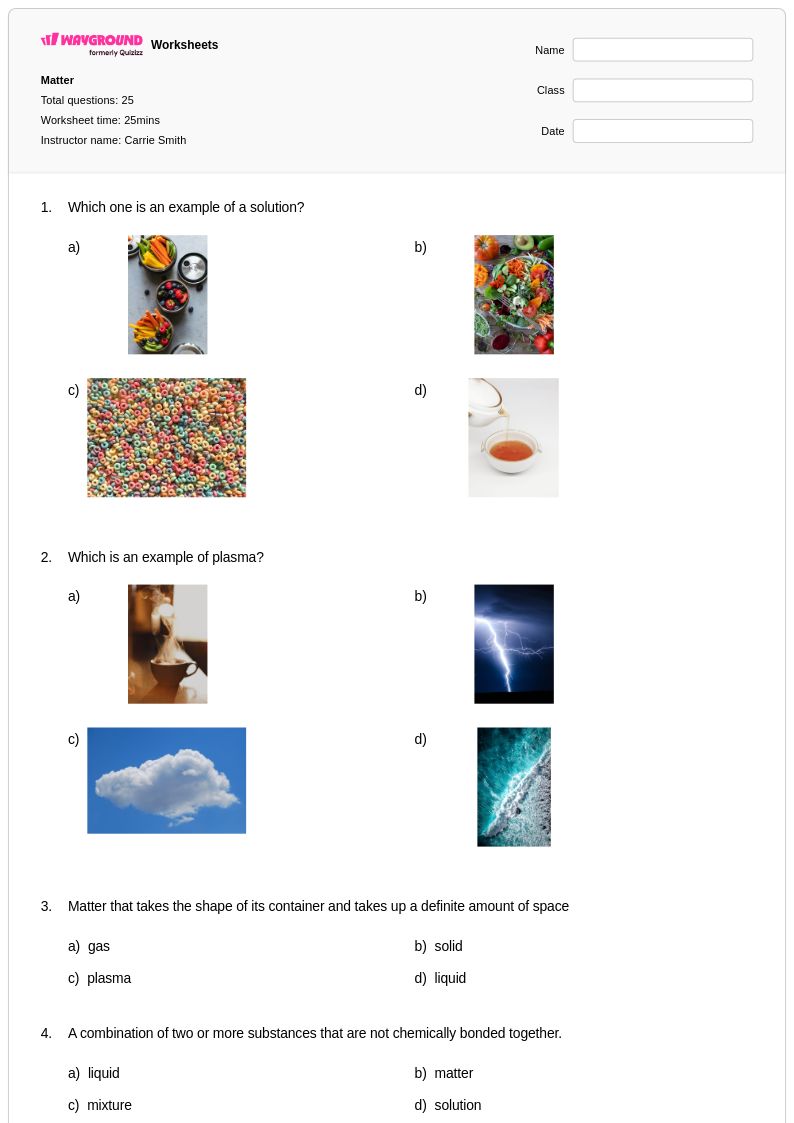
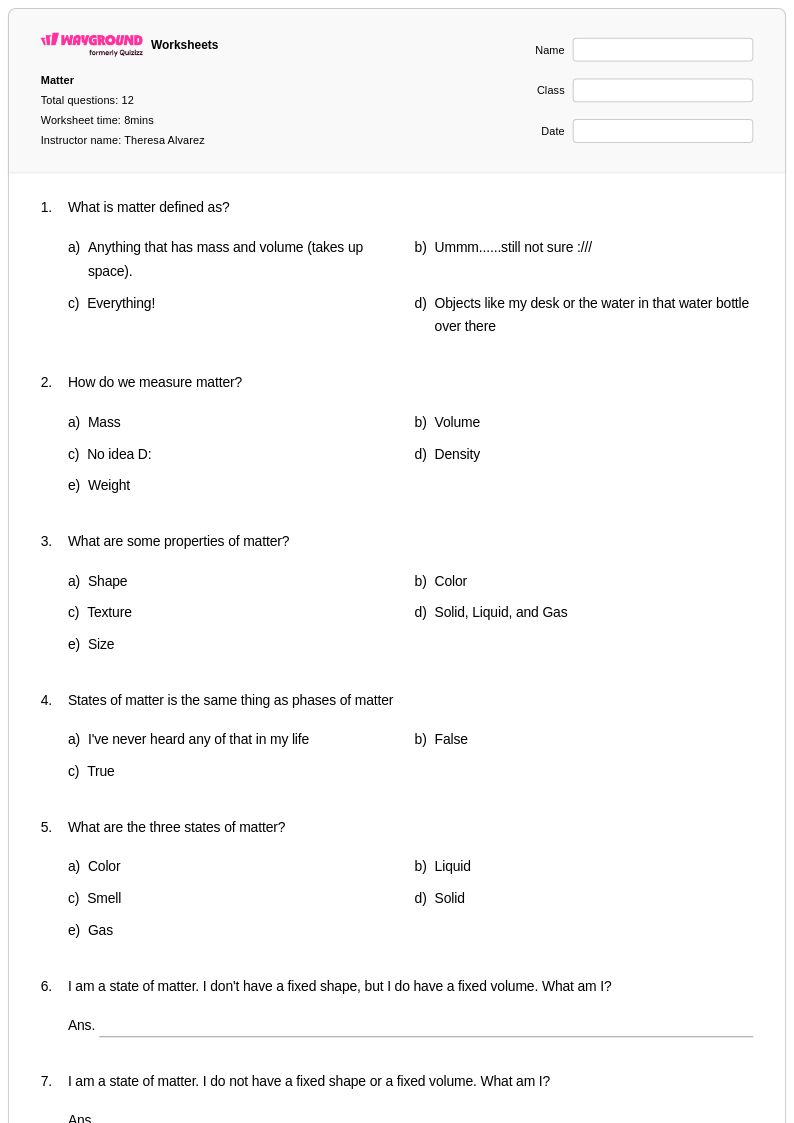
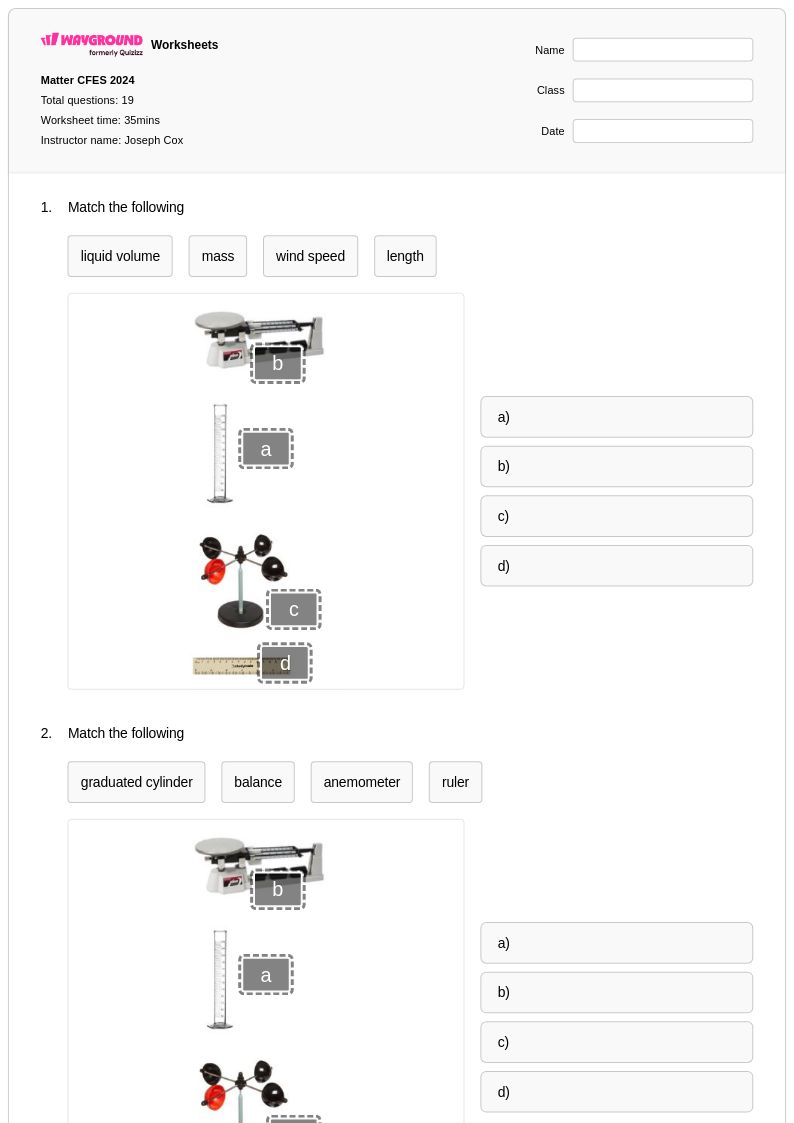
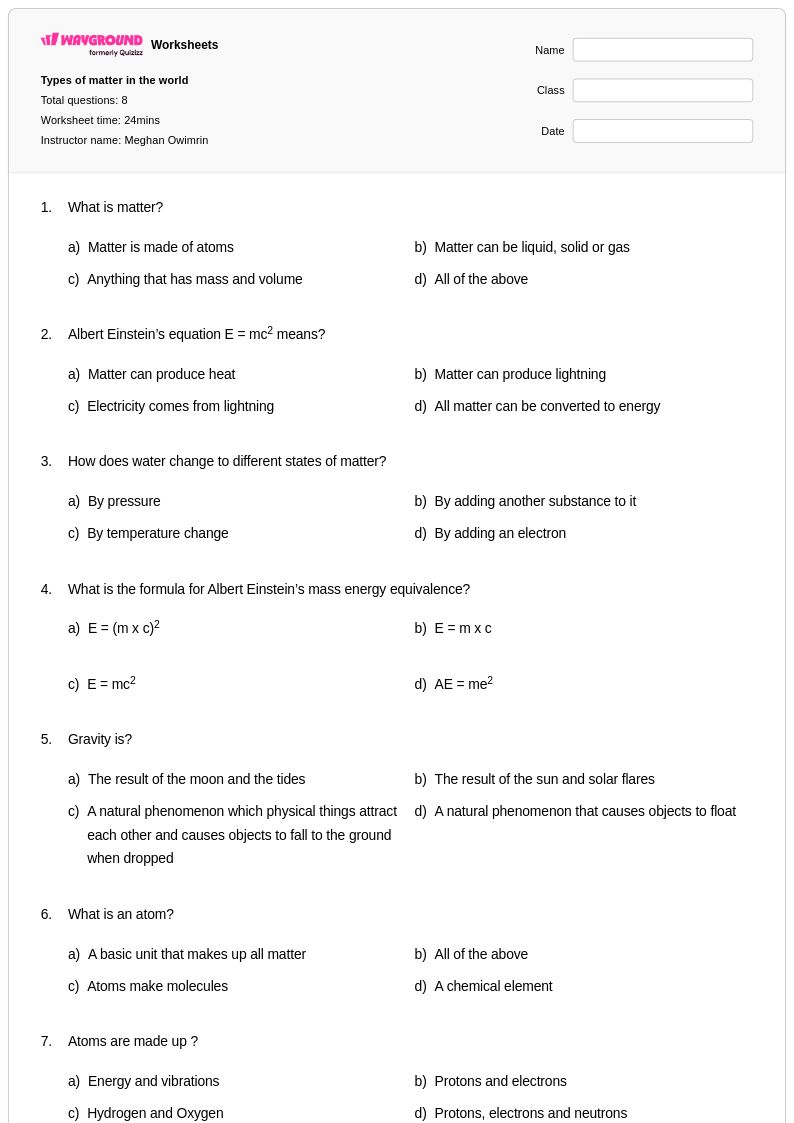
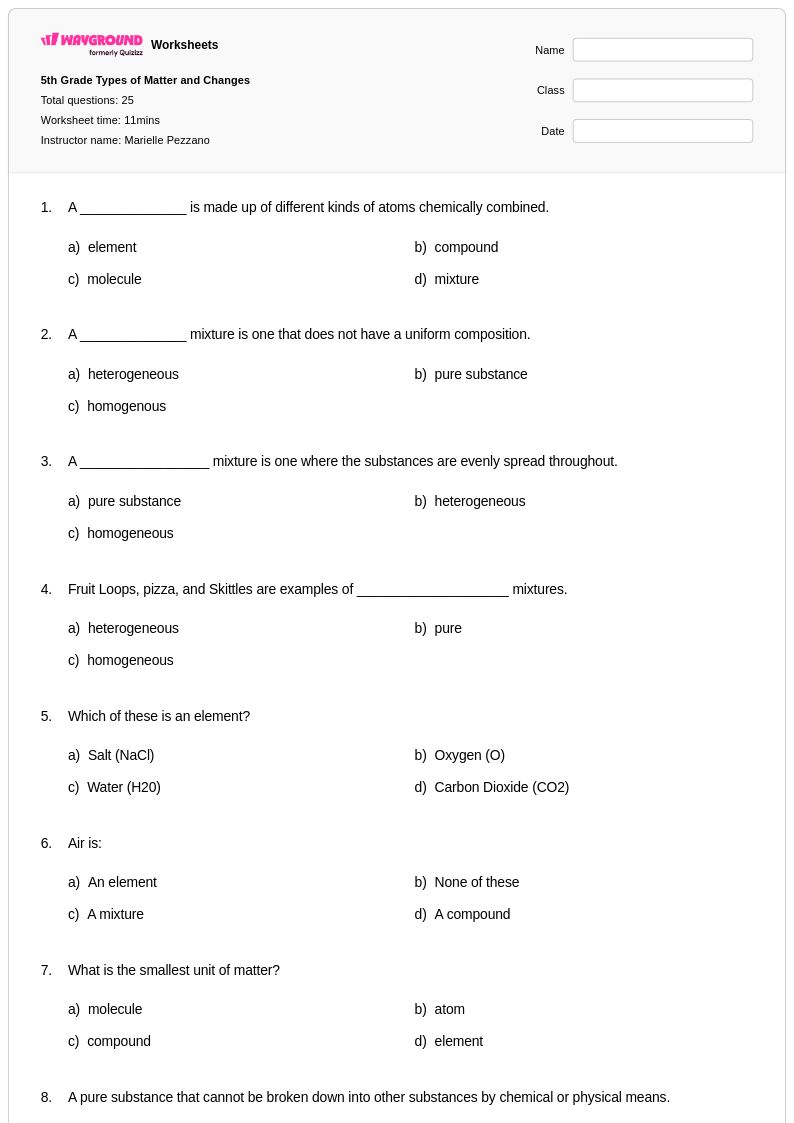
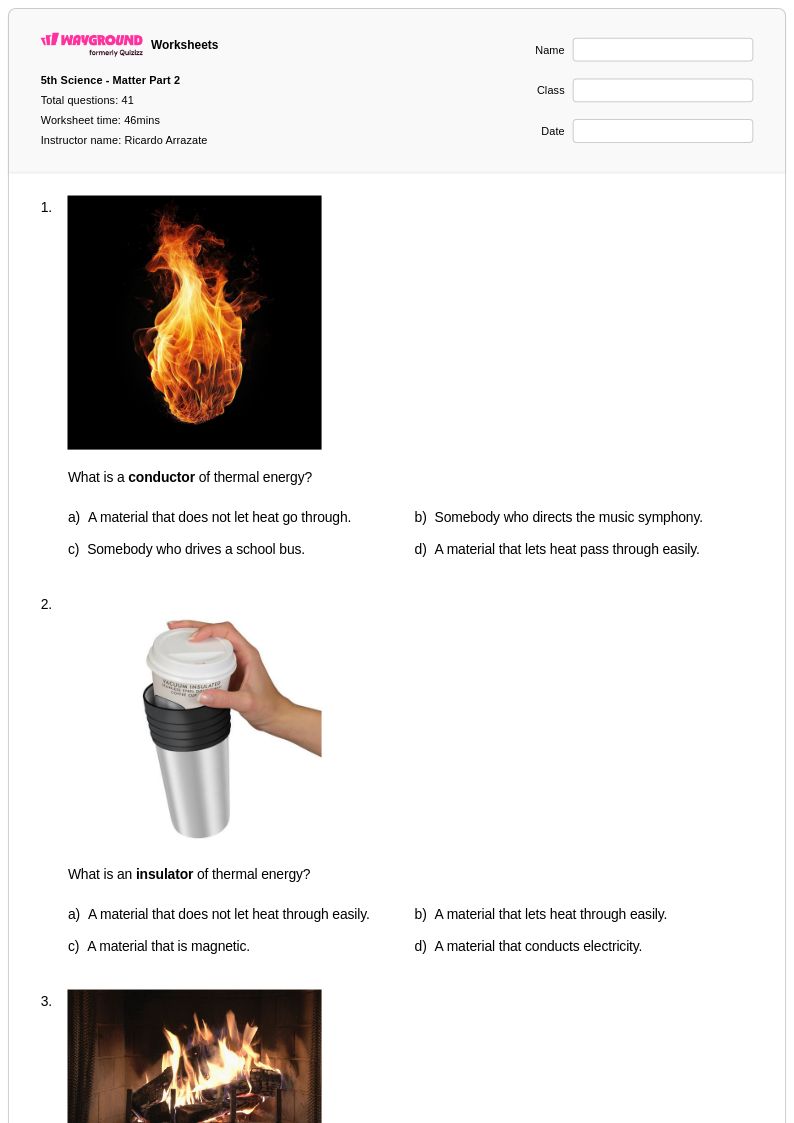
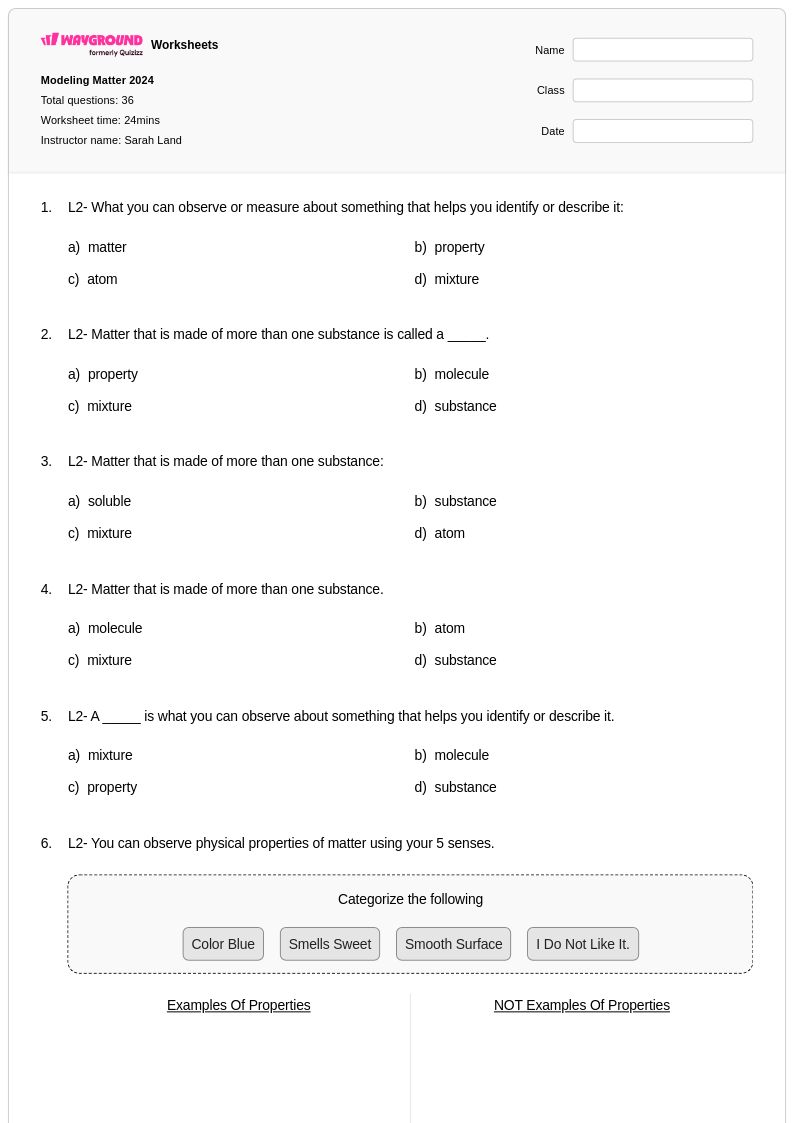
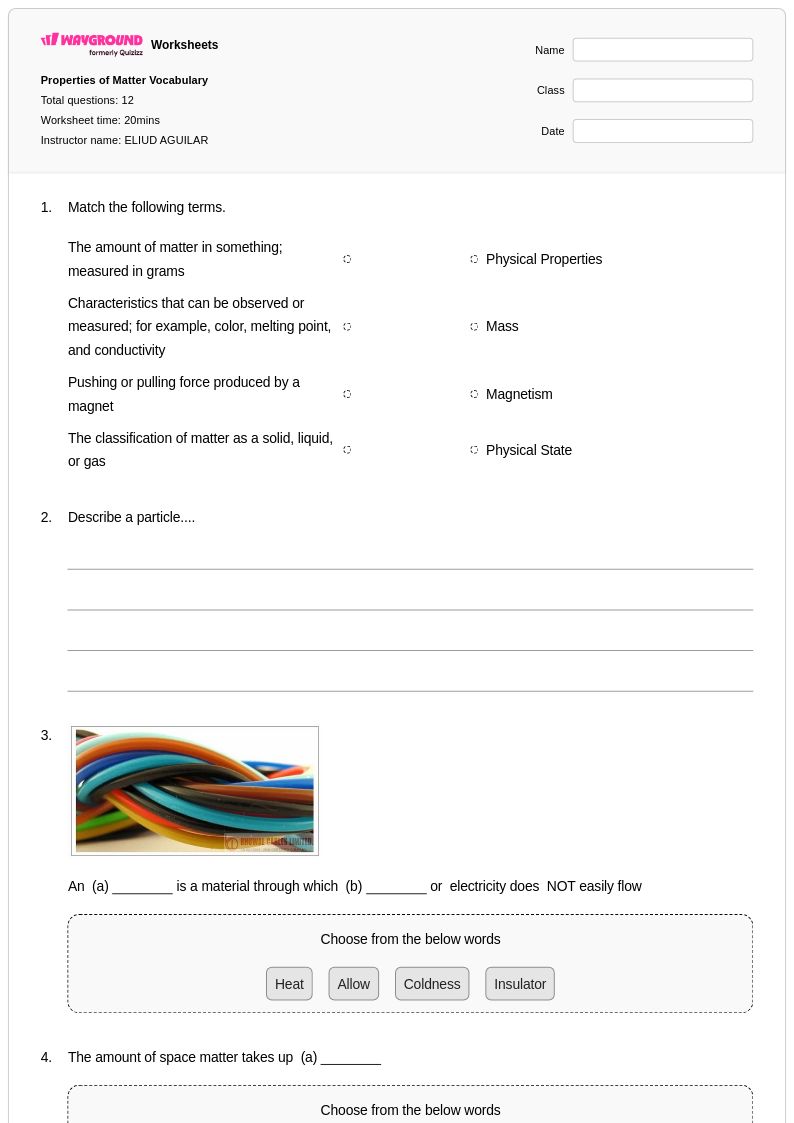
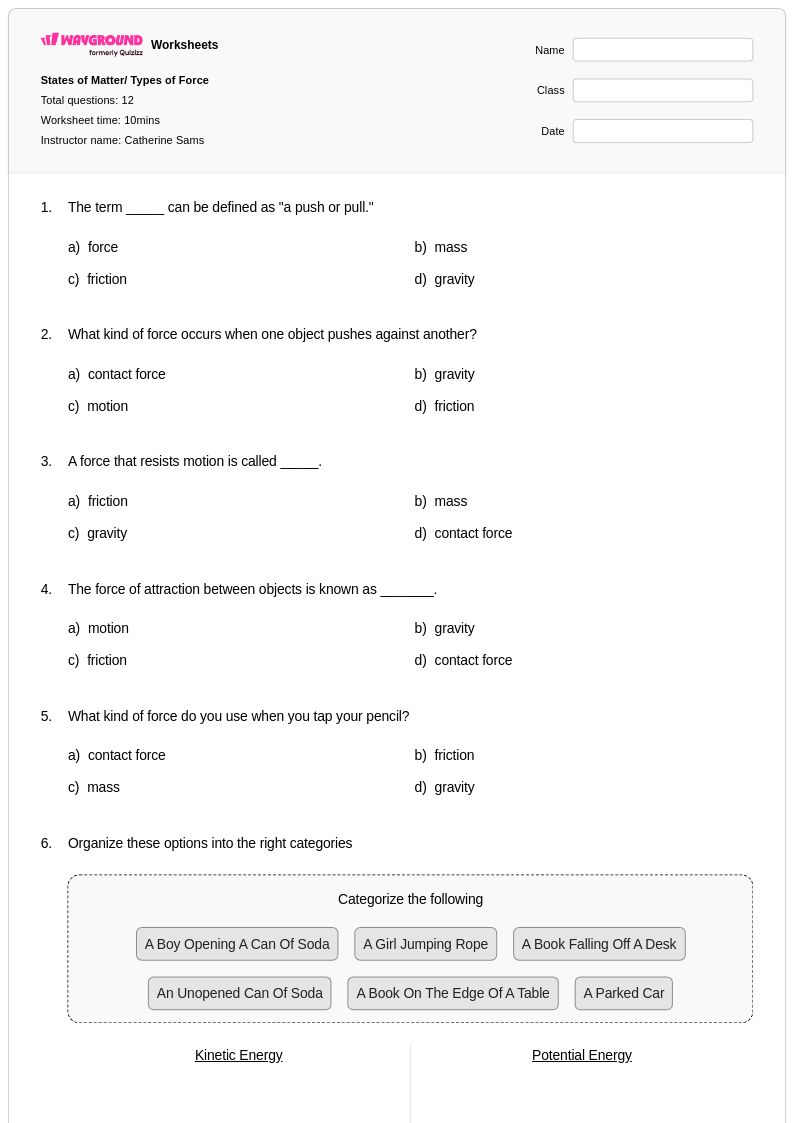
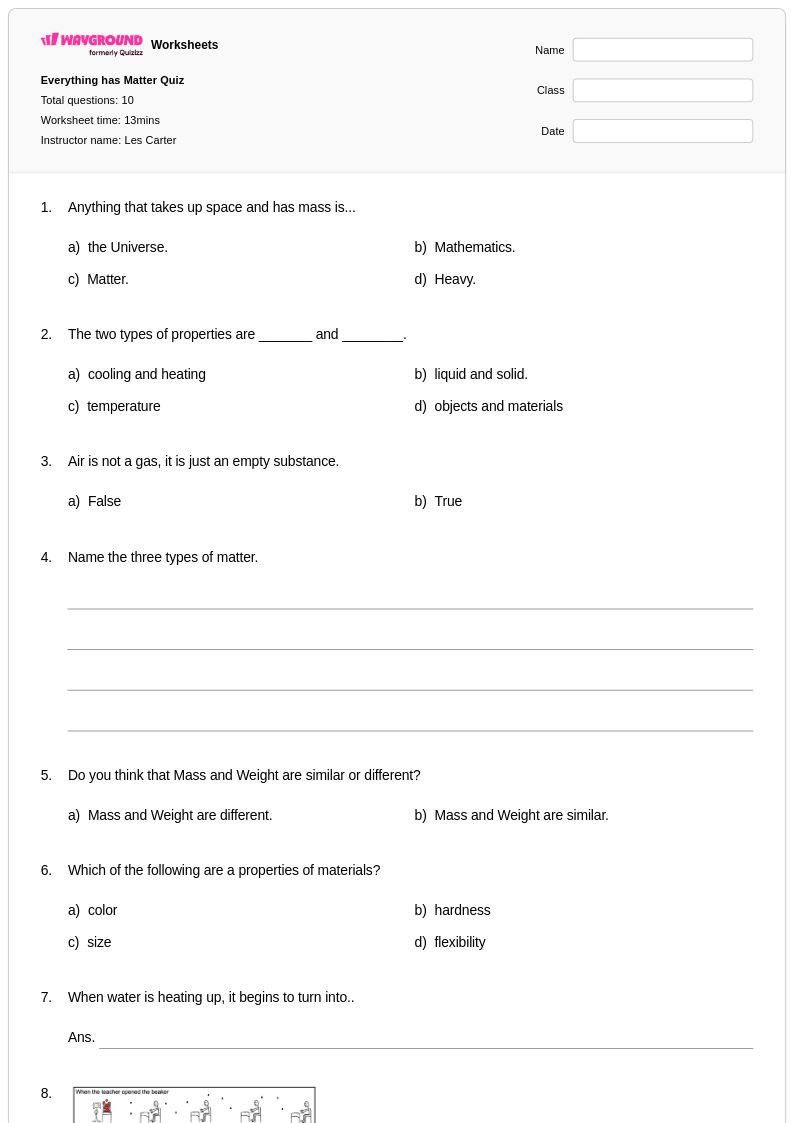
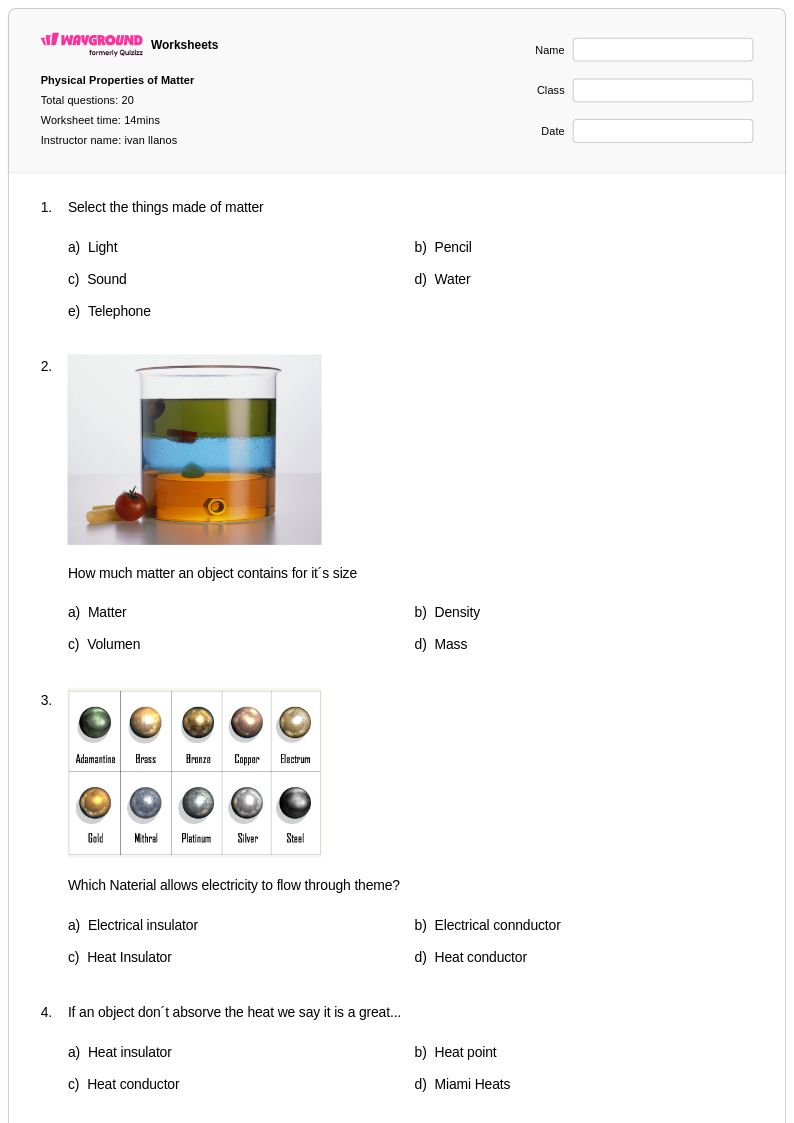
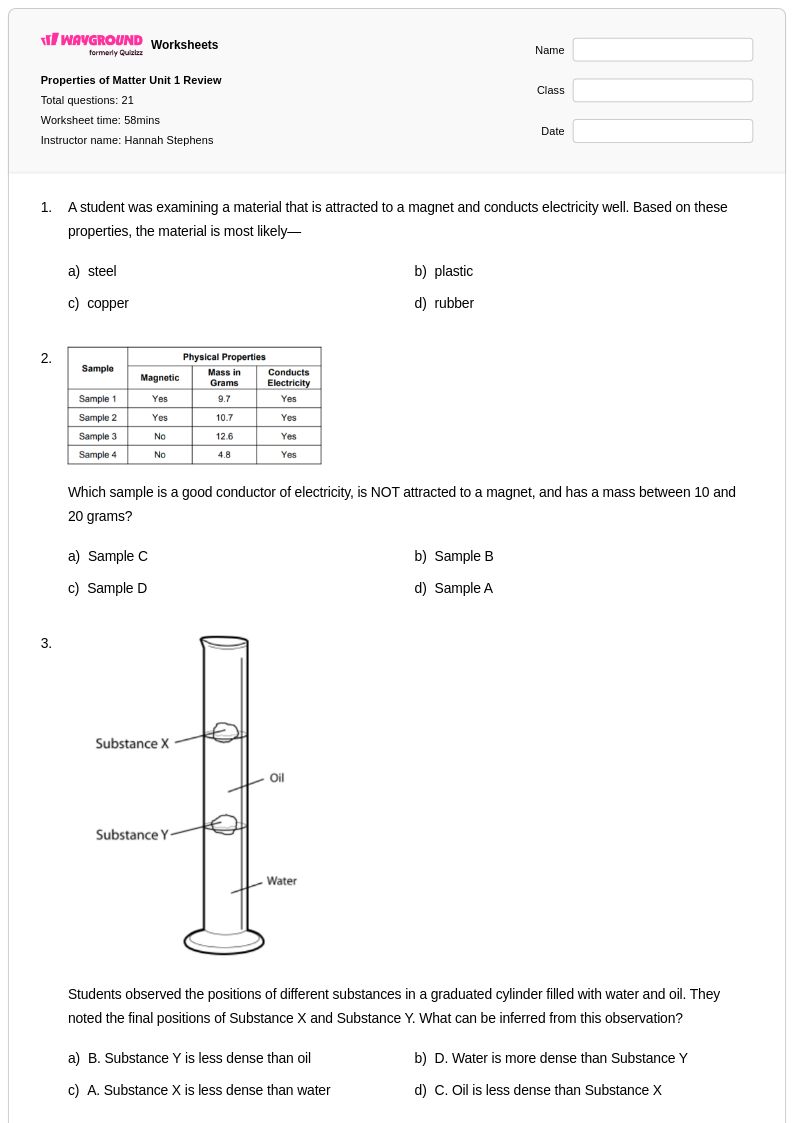
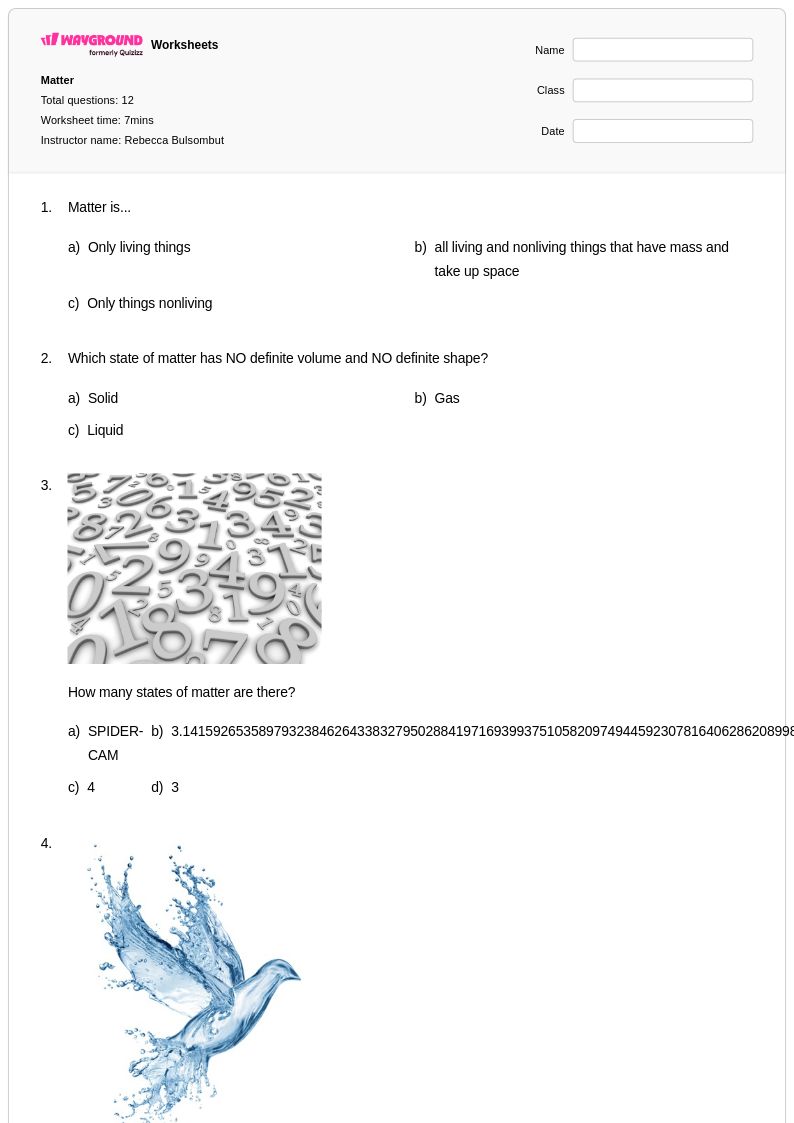
Types of matter worksheets for Grade 5 students available through Wayground (formerly Quizizz) provide comprehensive exploration of the fundamental states and properties of matter that surround us every day. These educational resources systematically guide fifth-grade learners through the classification of solids, liquids, and gases while examining their unique characteristics and behaviors. The worksheets strengthen critical scientific observation skills, encourage hands-on investigation of matter's properties, and develop students' ability to categorize materials based on observable evidence. Practice problems within these free printables challenge students to identify examples of each state of matter, predict changes between states, and explain the molecular behavior that creates these distinct phases. Each worksheet includes a detailed answer key that supports both independent learning and classroom instruction, making these pdf resources invaluable for building foundational chemistry concepts.
Wayground (formerly Quizizz) empowers educators with millions of teacher-created resources specifically designed to enhance types of matter instruction for Grade 5 science curricula. The platform's robust search and filtering capabilities allow teachers to quickly locate worksheets that align with specific learning standards and match their students' diverse academic needs. These versatile materials support effective lesson planning by offering both printable pdf formats for traditional classroom use and digital versions for interactive learning environments. Teachers can easily customize existing worksheets or create differentiated versions to accommodate various learning levels, making remediation and enrichment seamless within the same topic. The extensive collection enables educators to provide targeted skill practice, assess student understanding of matter classification, and reinforce key scientific vocabulary through engaging activities that make abstract molecular concepts accessible to elementary learners.
FAQs
How do I teach the types of matter to students?
Start by grounding students in observable, everyday examples before introducing formal definitions. Solids maintain a fixed shape and volume, liquids have fixed volume but take the shape of their container, gases expand to fill any space, and plasma is an ionized high-energy state often introduced at upper grade levels. Connecting each state to molecular behavior, such as how tightly or loosely particles are arranged and how freely they move, helps students build a conceptual framework rather than relying on memorization alone.
What are the most common mistakes students make when classifying types of matter?
A frequent error is confusing matter classification with material type, for example, assuming all soft or flexible things are liquids. Students also struggle with plasma, often omitting it entirely when listing states of matter. Another common misconception is that gases have no mass because they are invisible. Explicitly addressing these gaps during instruction and using targeted practice problems that require justification, not just identification, helps correct these patterns before they solidify.
What exercises help students practice identifying and classifying types of matter?
Effective practice exercises include classification tasks where students sort real-world examples into the correct state of matter, diagram labeling activities that link particle arrangement to each phase, and short-answer problems requiring students to explain why a substance belongs to a given category. Phase transition scenarios, such as what happens to water at different temperatures, are especially useful because they require students to apply knowledge of both particle behavior and state properties simultaneously.
How do I use Wayground's Types of Matter worksheets in my classroom?
Wayground's Types of Matter worksheets are available as printable PDFs for traditional classroom use and in digital formats for technology-integrated or hybrid learning environments. Teachers can assign them as in-class practice, homework, or review tools, and can also host them as a quiz directly on Wayground for real-time student response and automatic scoring. Each worksheet includes a detailed answer key, making them suitable for independent work, peer review, or self-paced learning stations.
How can I differentiate Types of Matter instruction for students who are struggling?
For students who need additional support, simplify the scope of practice by focusing first on solids, liquids, and gases before introducing plasma. On Wayground, teachers can enable accommodations such as Read Aloud to support students with reading difficulties, reduced answer choices to lower cognitive load on multiple-choice items, and extended time for students who need more processing time. These settings can be applied to individual students without affecting the experience of the rest of the class.
How does understanding types of matter connect to broader chemistry concepts?
The classification of matter as solids, liquids, gases, and plasma is foundational to understanding chemical and physical changes, phase transitions, and molecular theory. Students who can accurately describe the properties and particle behavior of each state are better prepared to engage with topics like density, thermal energy, and the behavior of substances during chemical reactions. Establishing this conceptual base early ensures students have the vocabulary and reasoning skills needed for more advanced chemistry content.