
20Q
6th - 8th
20Q
6th - 8th
18Q
2nd - 12th
12Q
6th - 8th
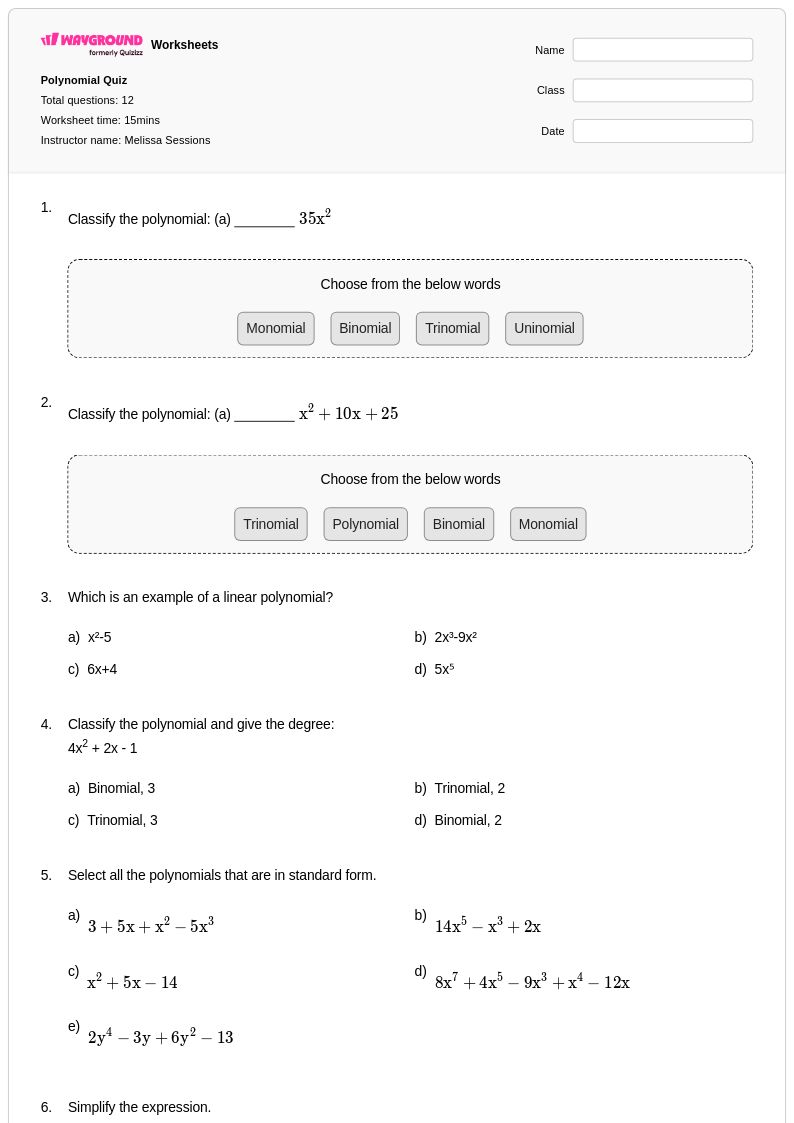
12Q
6th - 8th
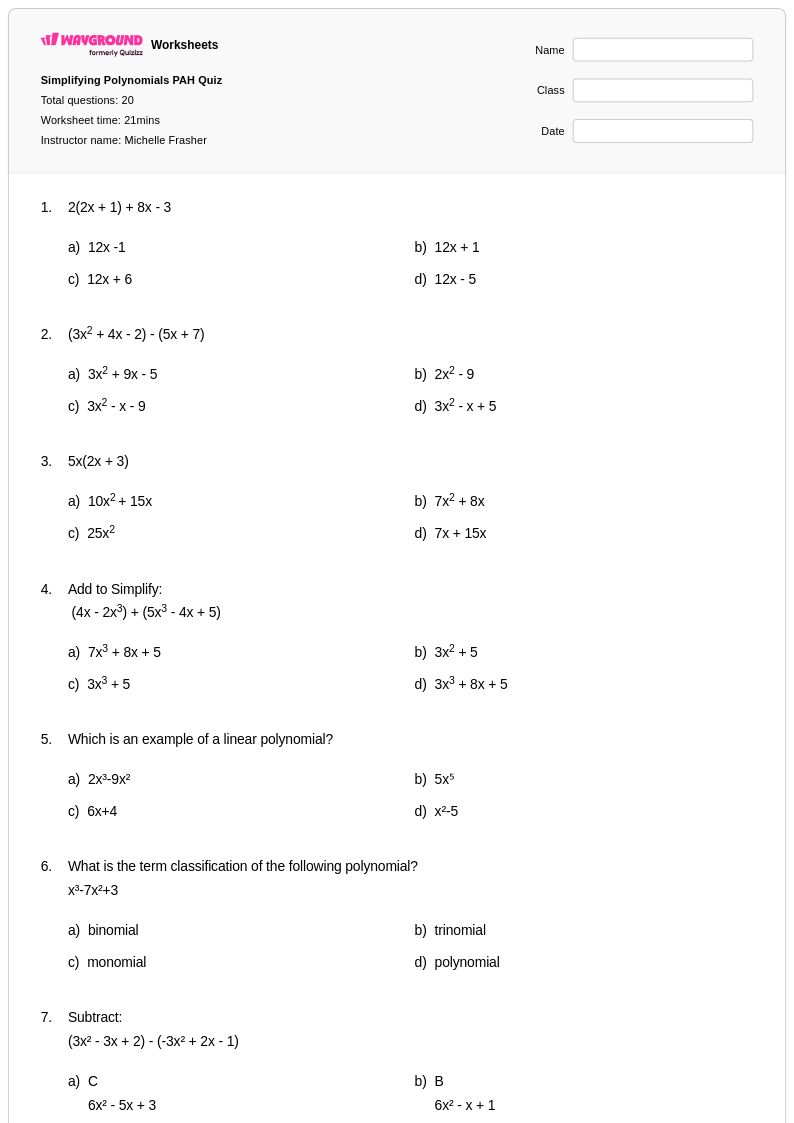
20Q
6th - 8th
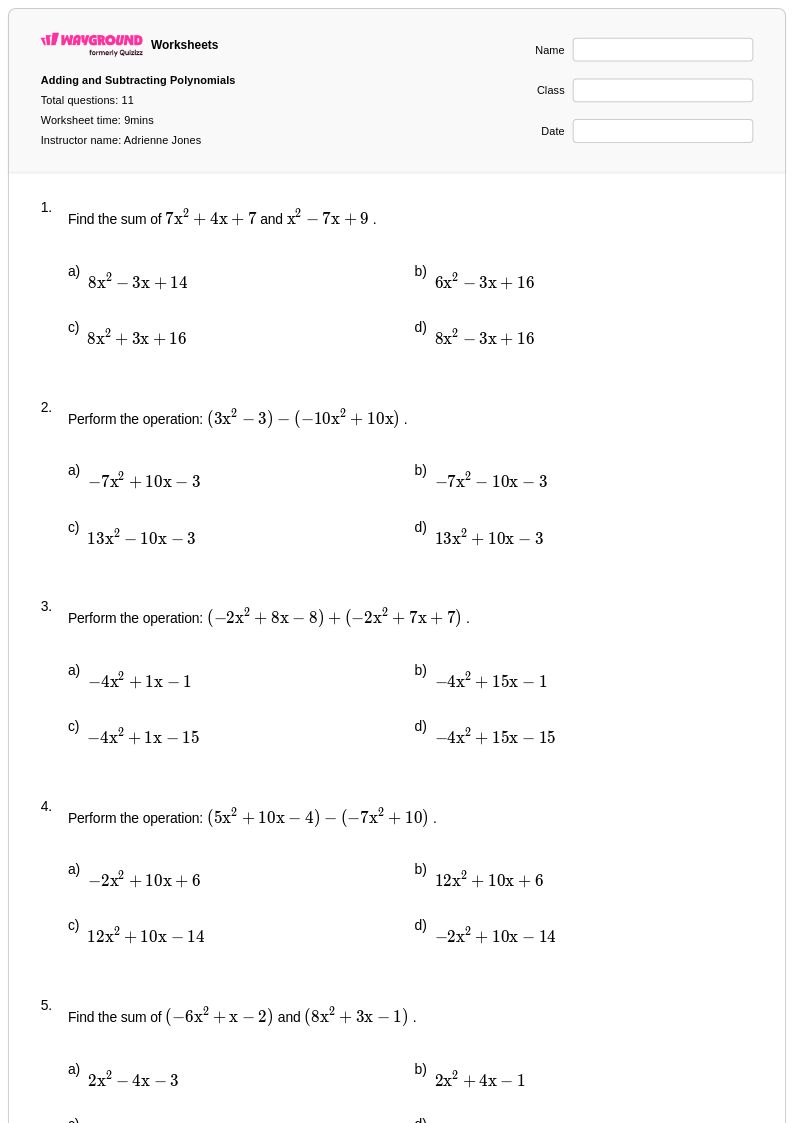
11Q
5th - Uni
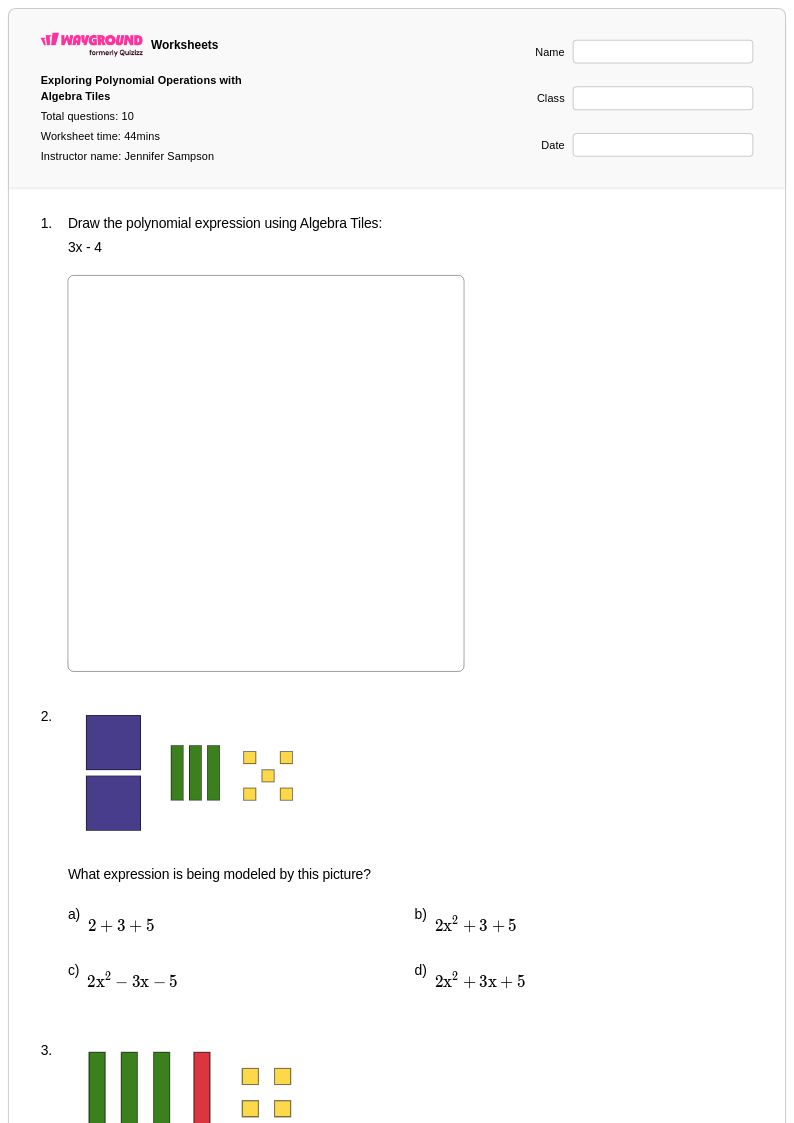
10Q
6th - 8th
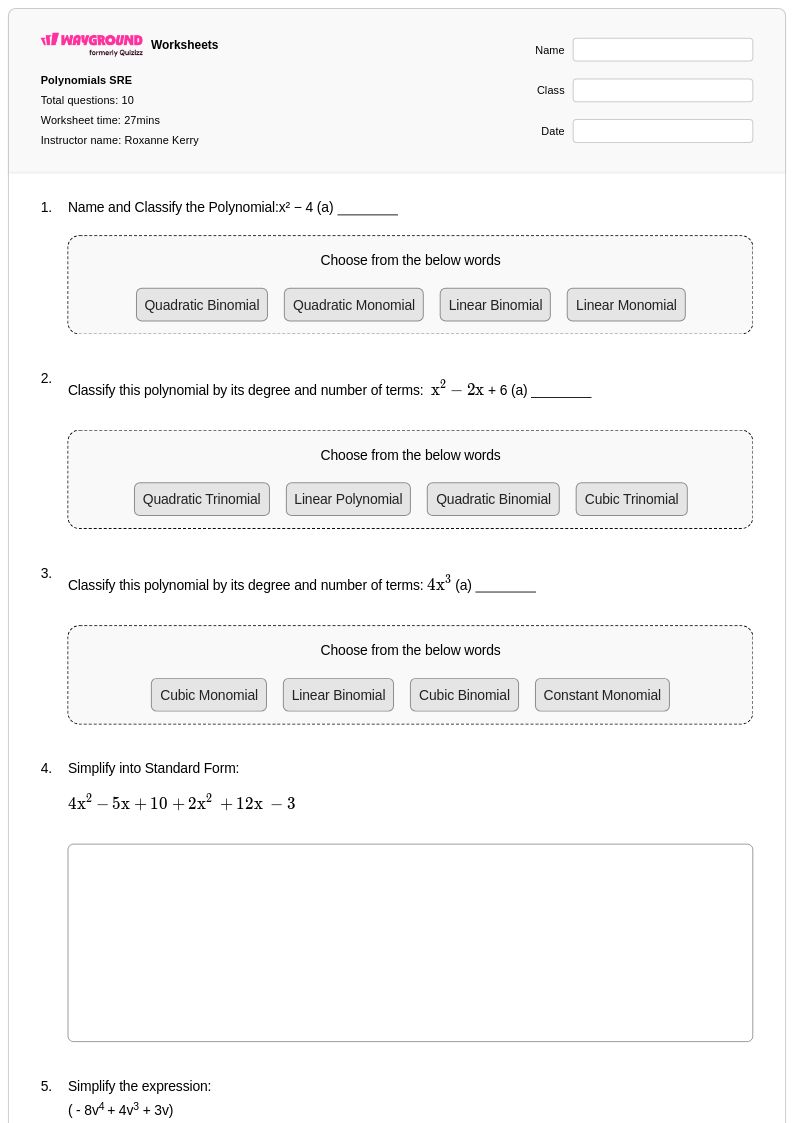
10Q
6th - 8th
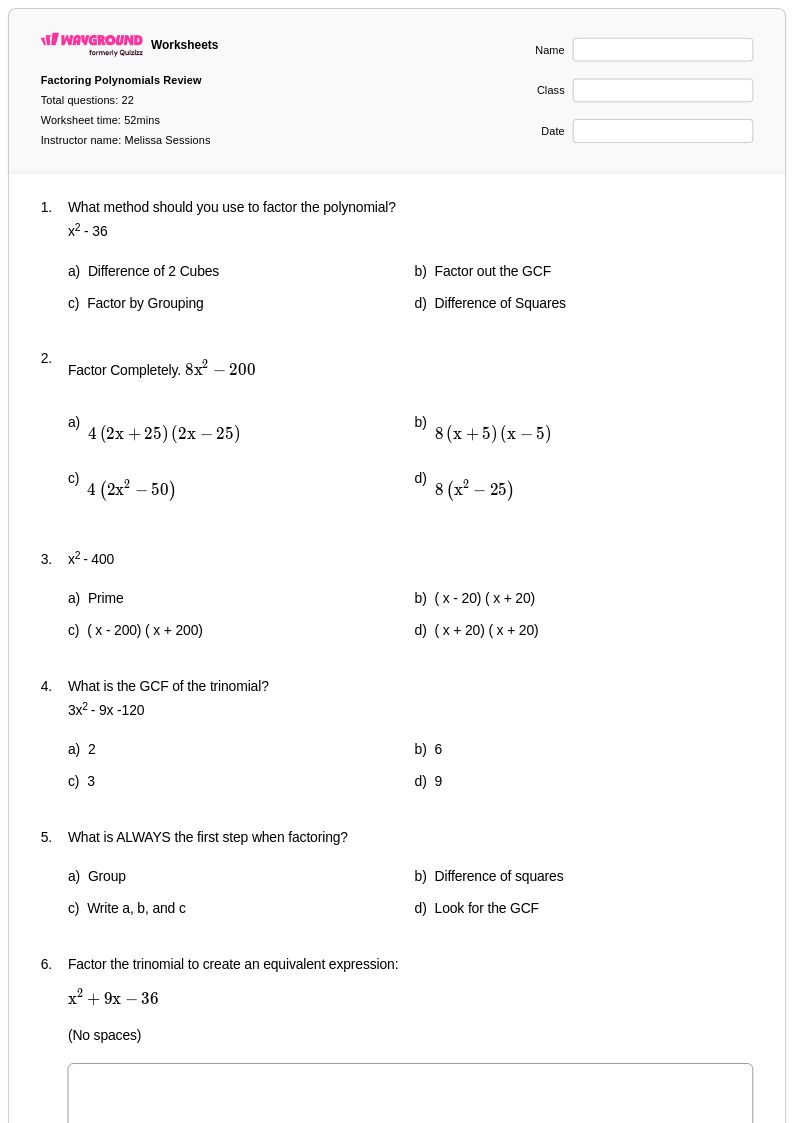
22Q
6th - 8th
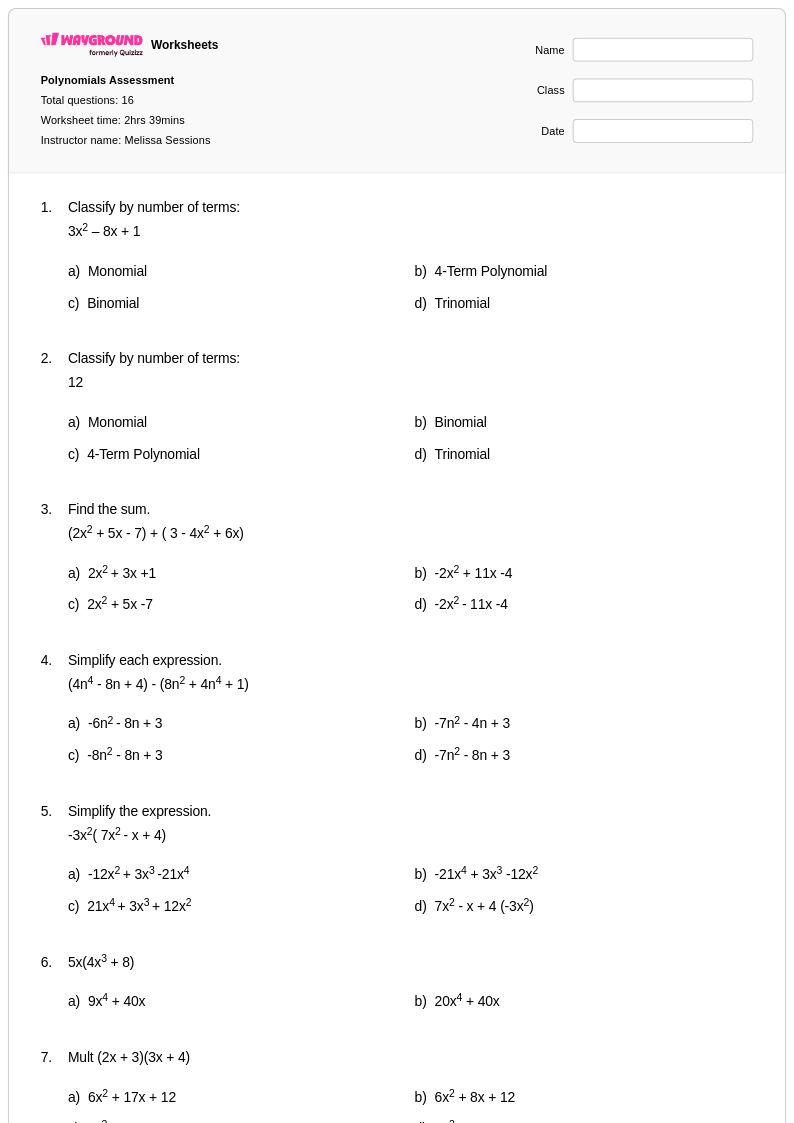
16Q
6th - 8th
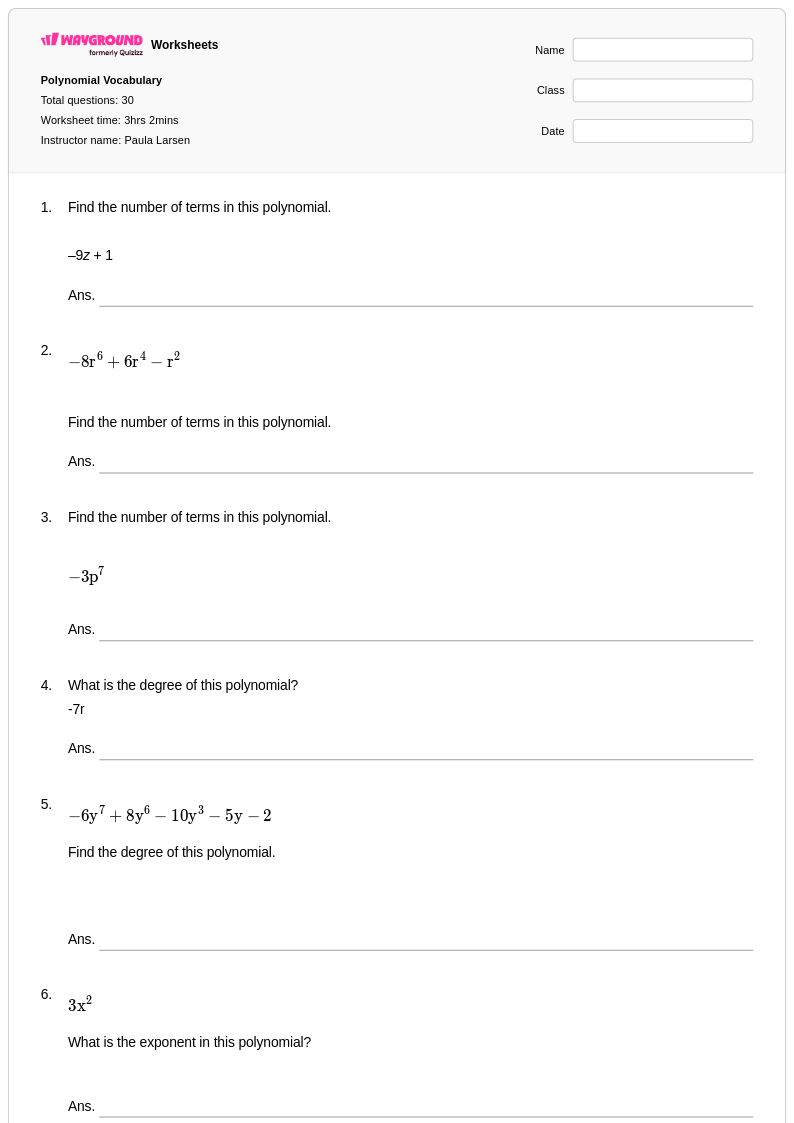
30Q
6th - 8th
30Q
6th - 8th
11Q
6th - 8th
20Q
6th - 9th
20Q
6th - Uni
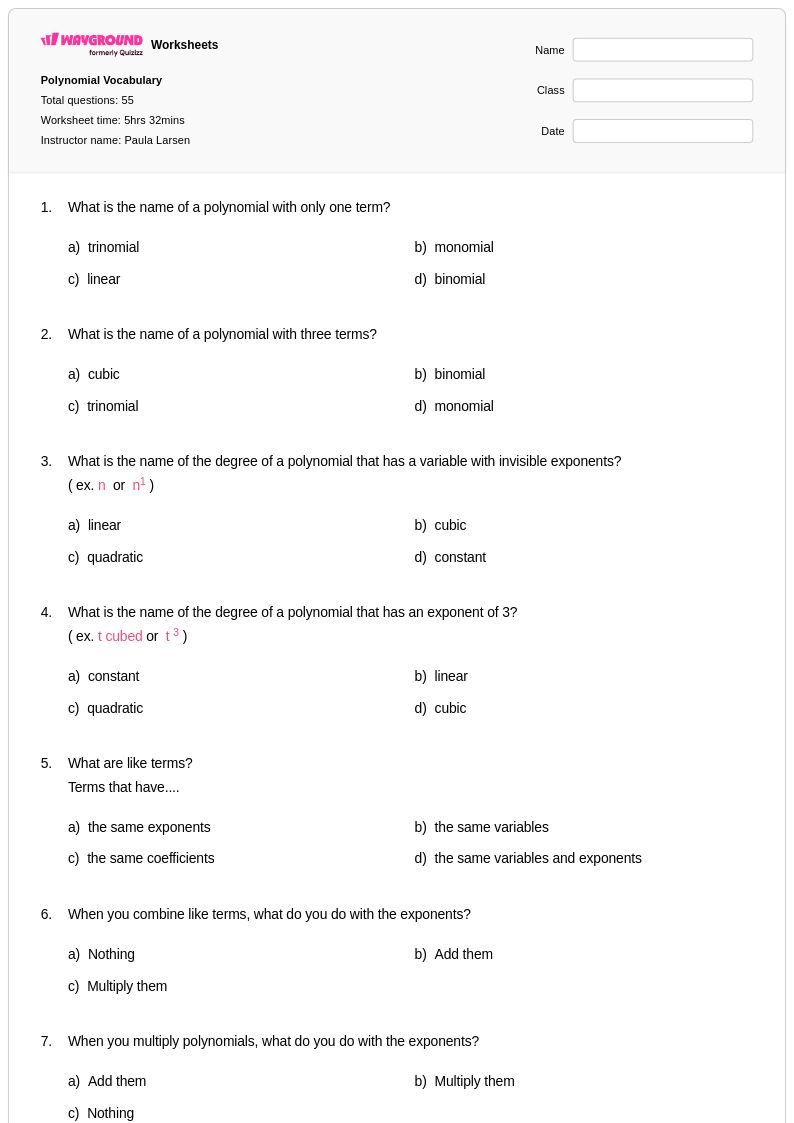
55Q
6th - 8th
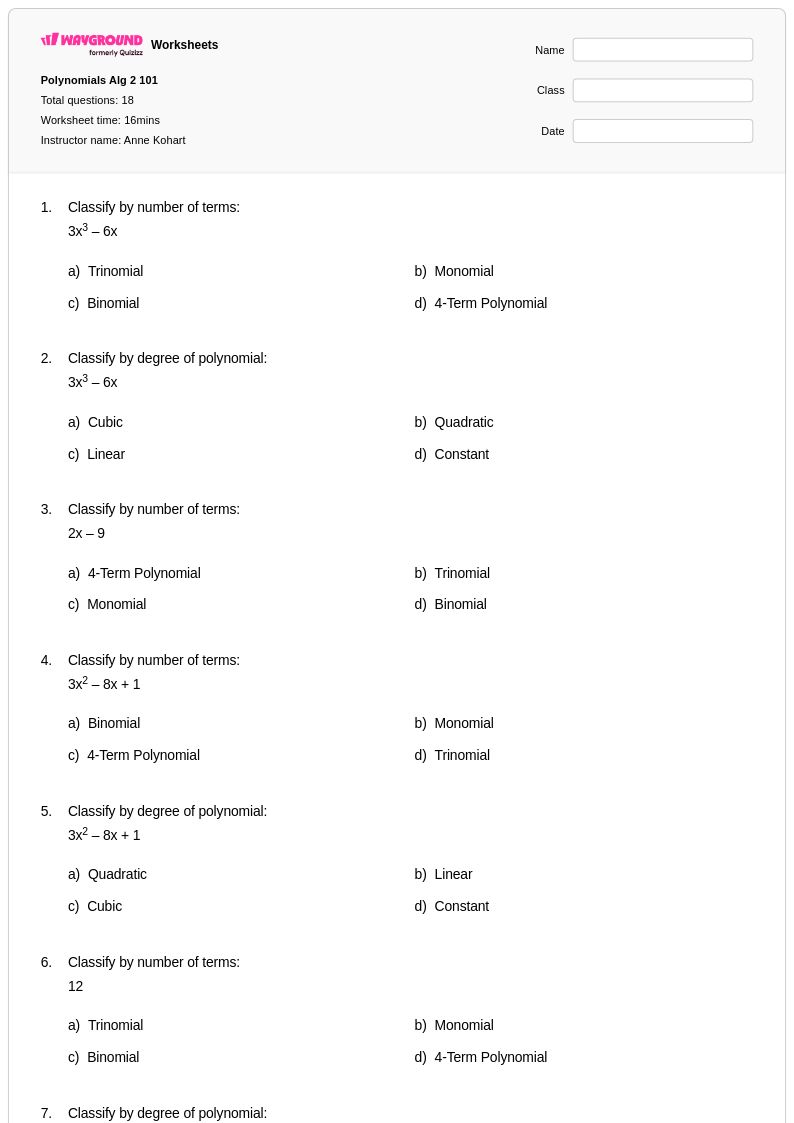
18Q
6th - 9th
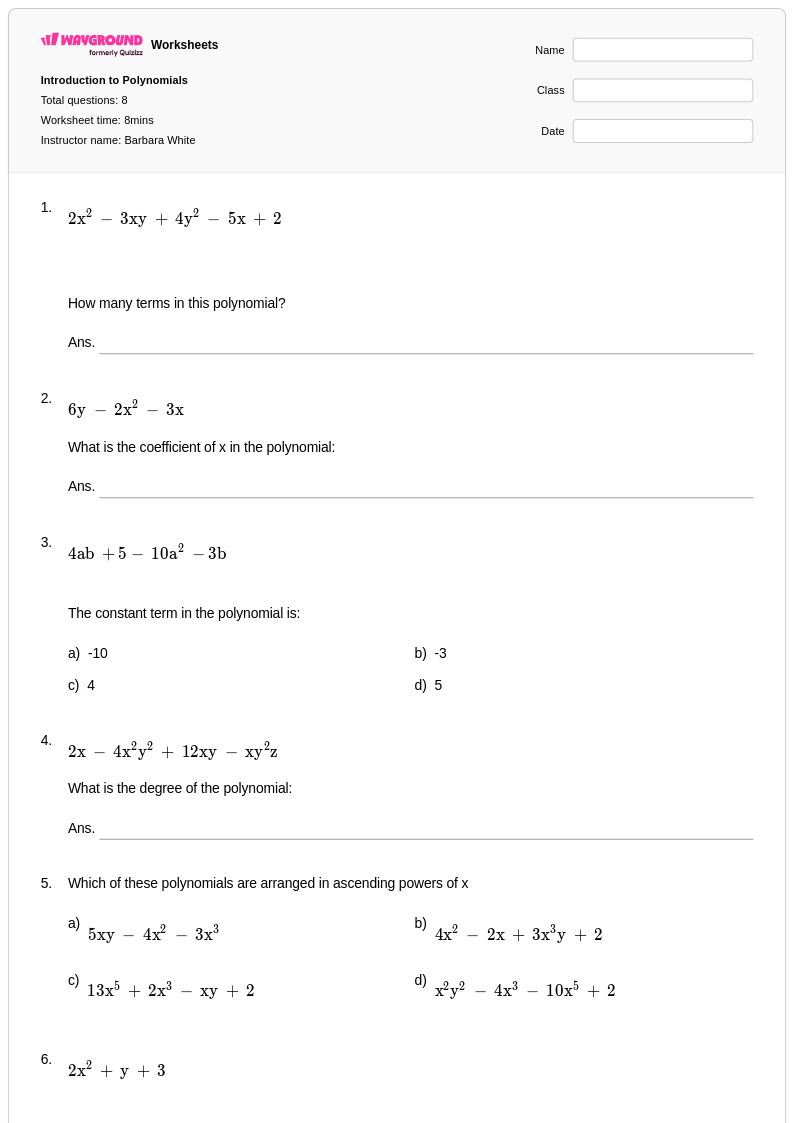
8Q
6th - 8th
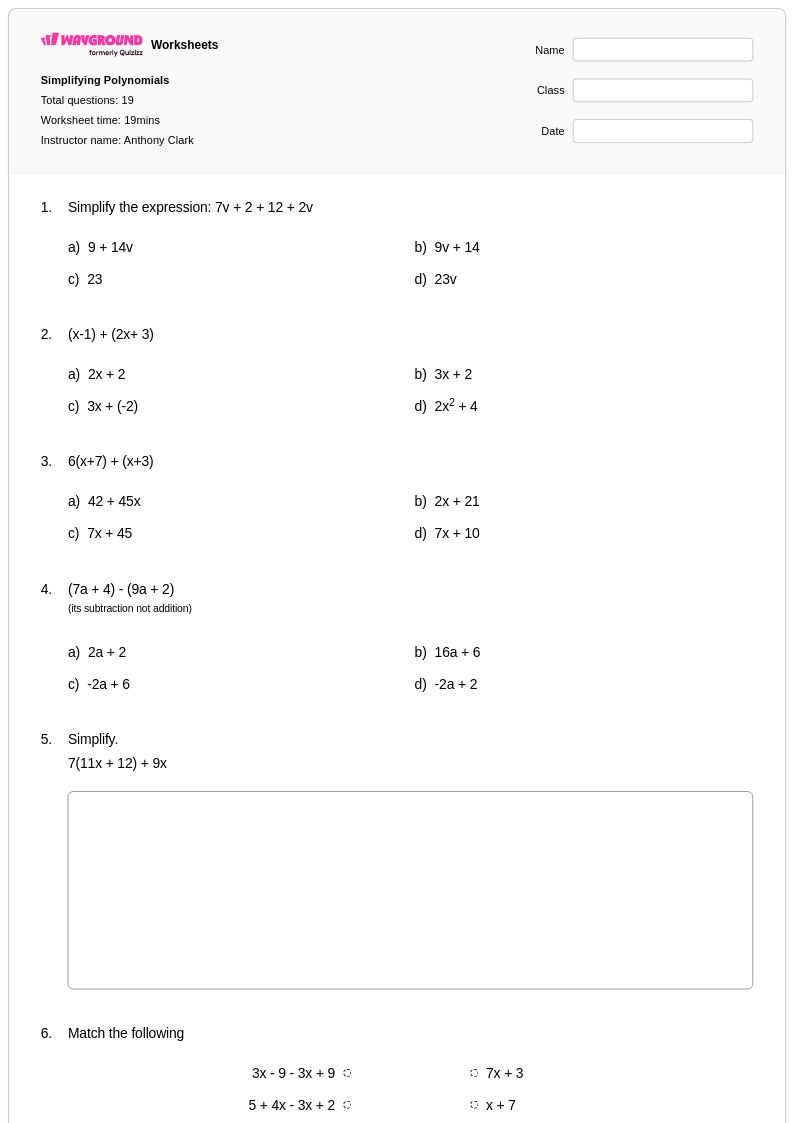
19Q
6th - Uni
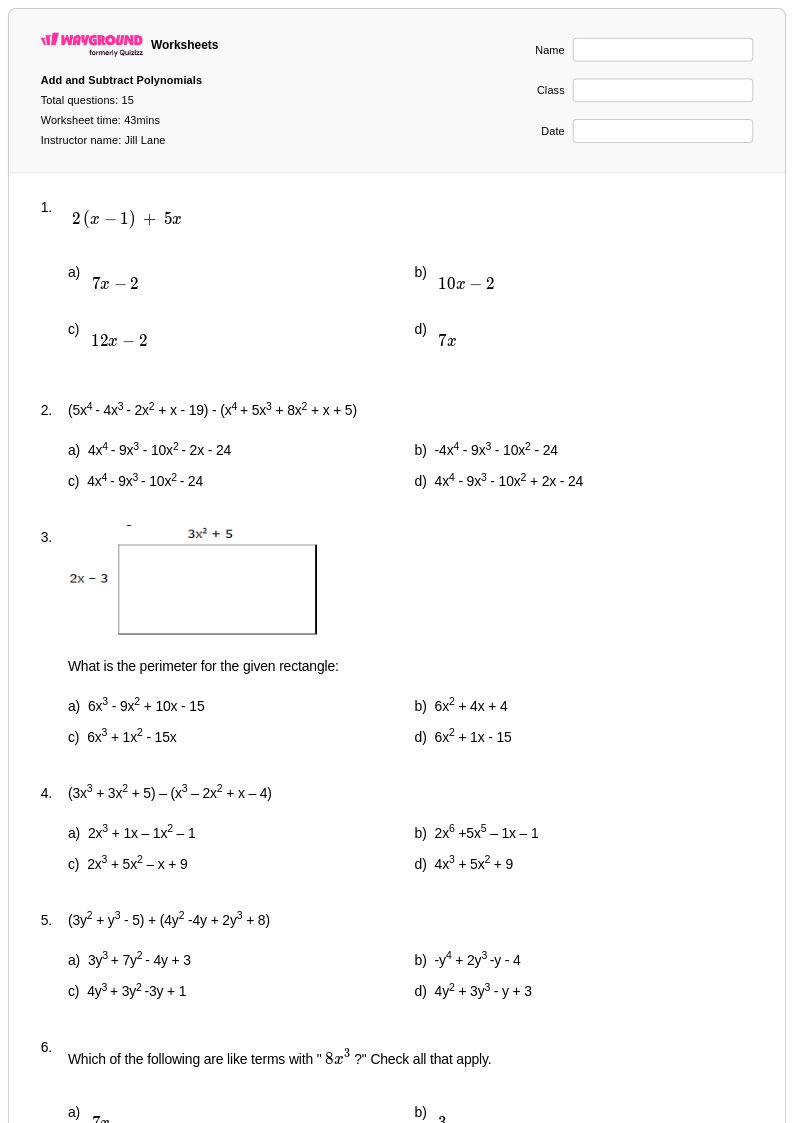
15Q
6th - 10th
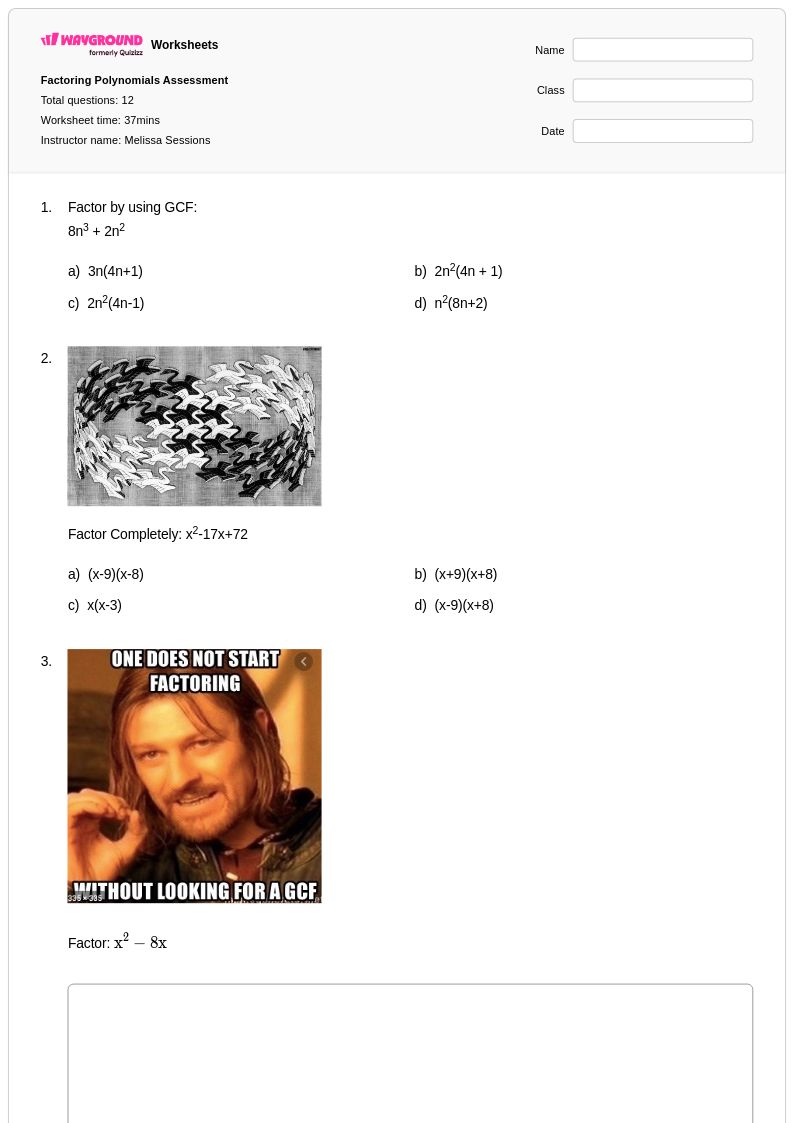
12Q
6th - 8th
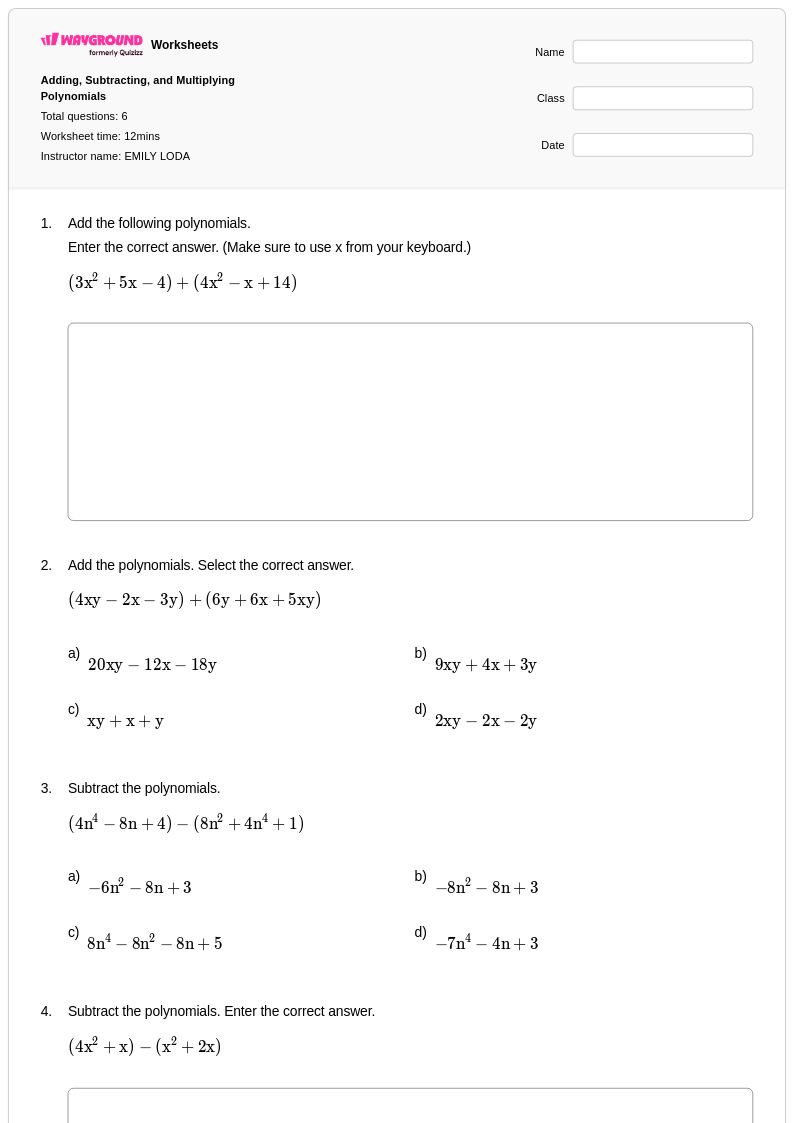
6Q
6th - 9th
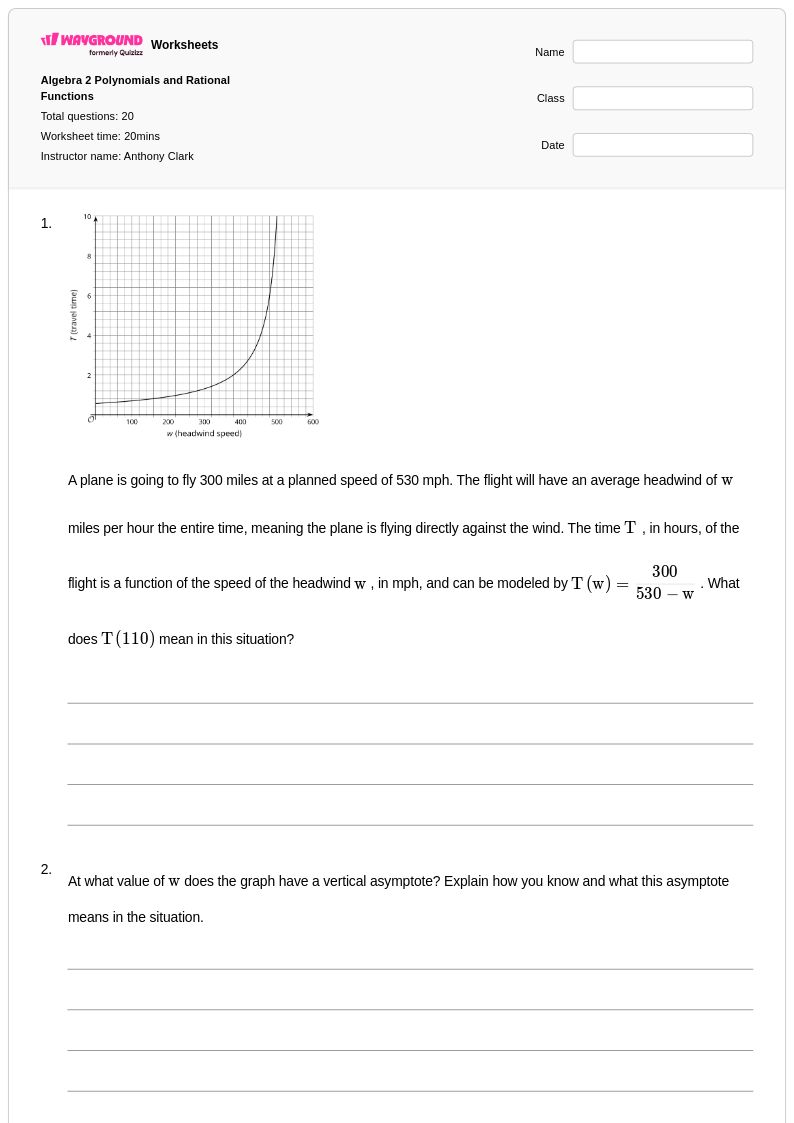
20Q
6th - Uni
Explorar Naming Polynomials hojas de trabajo por grados
Explore otras hojas de trabajo de materias para grade 6
Explore printable Naming Polynomials worksheets for Grade 6
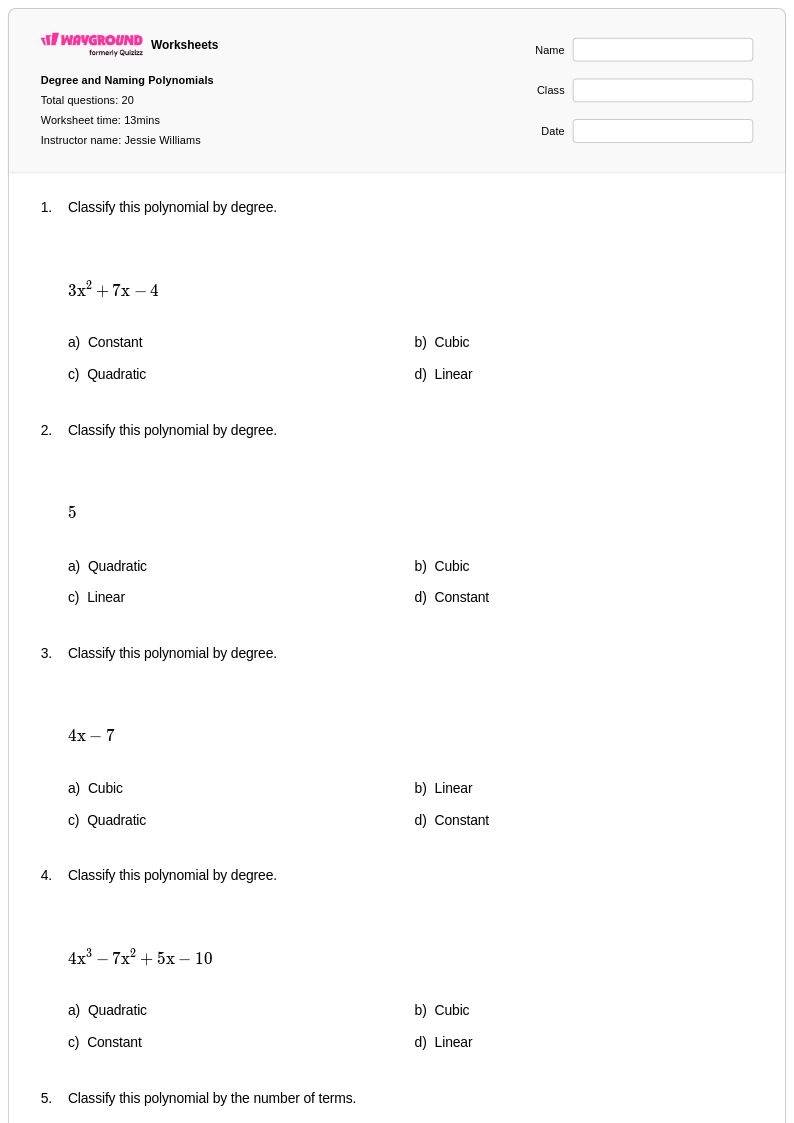
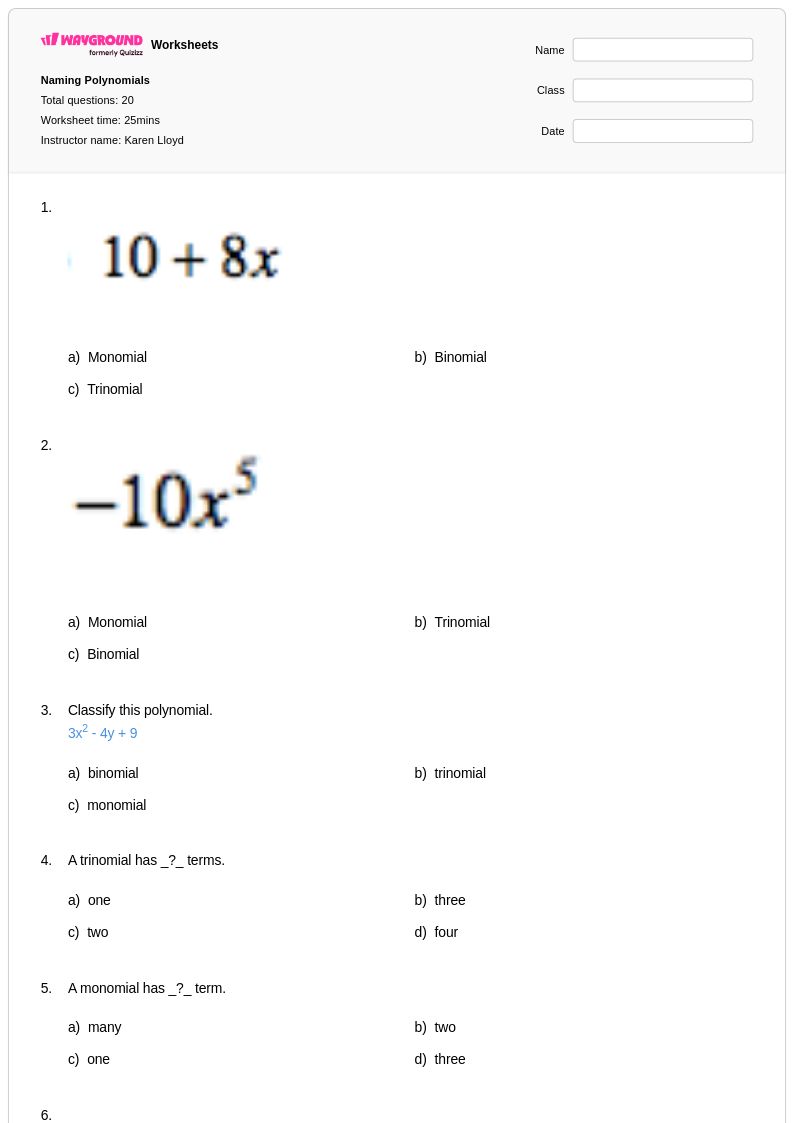
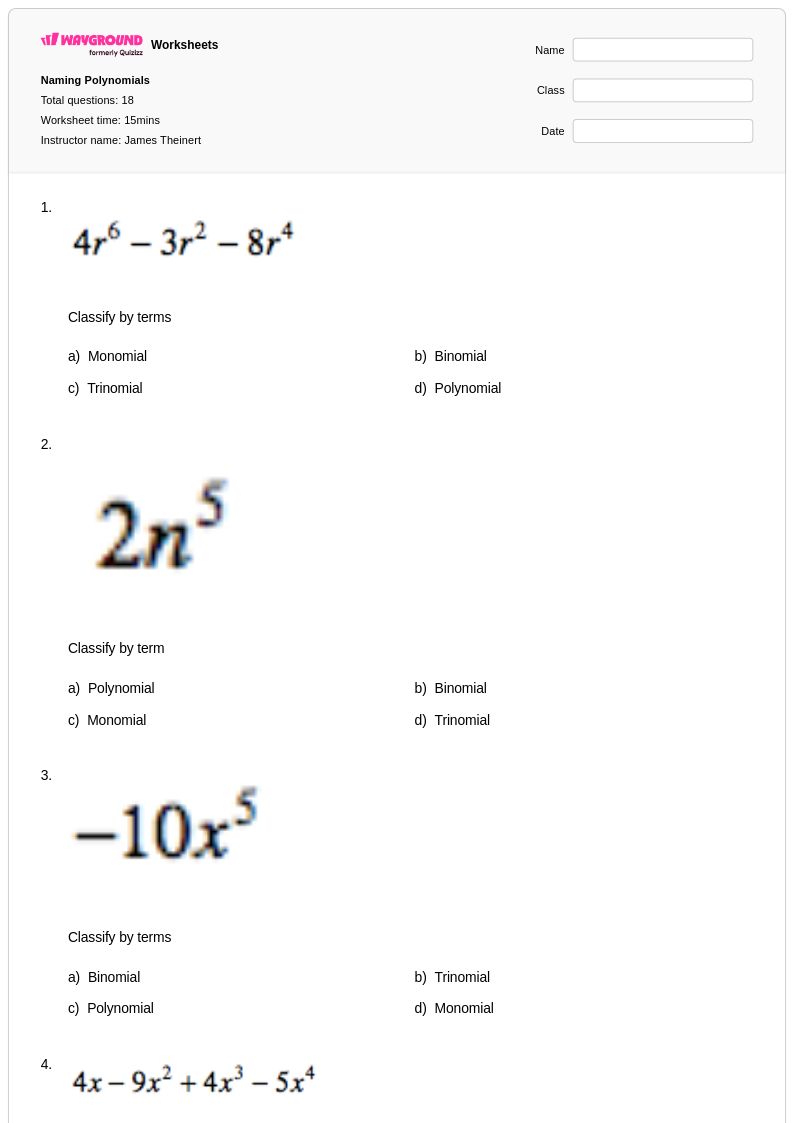
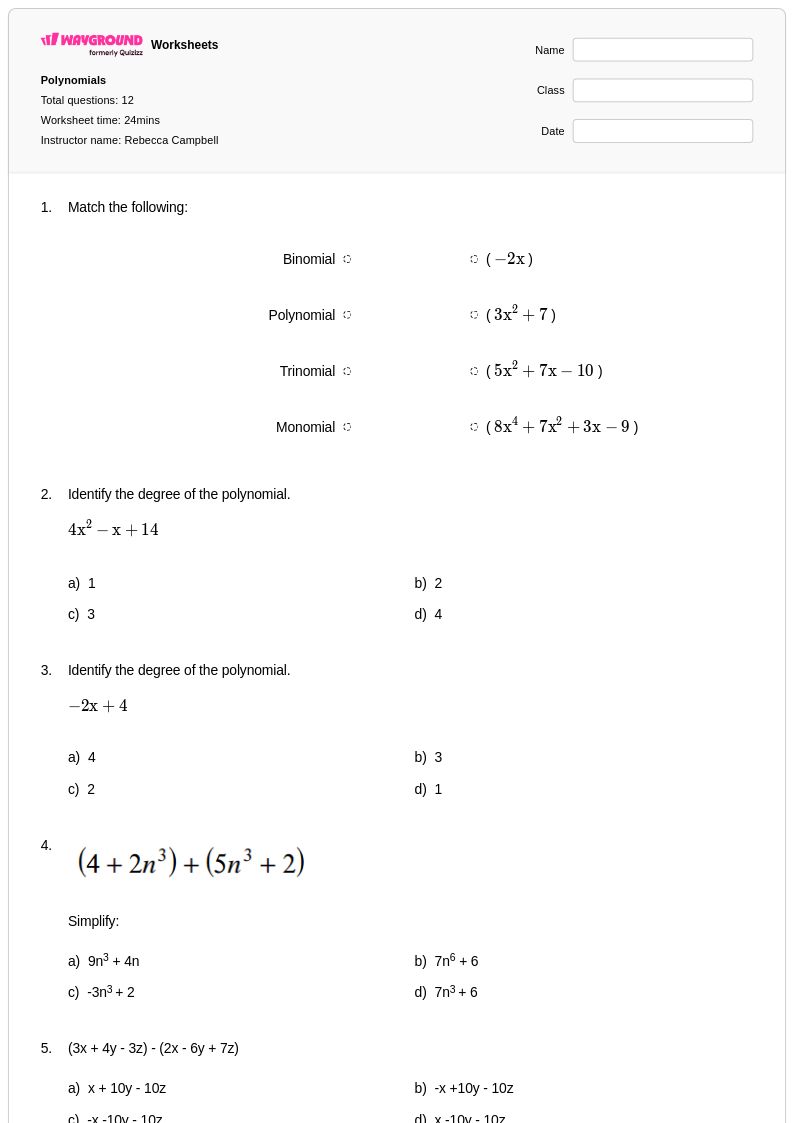
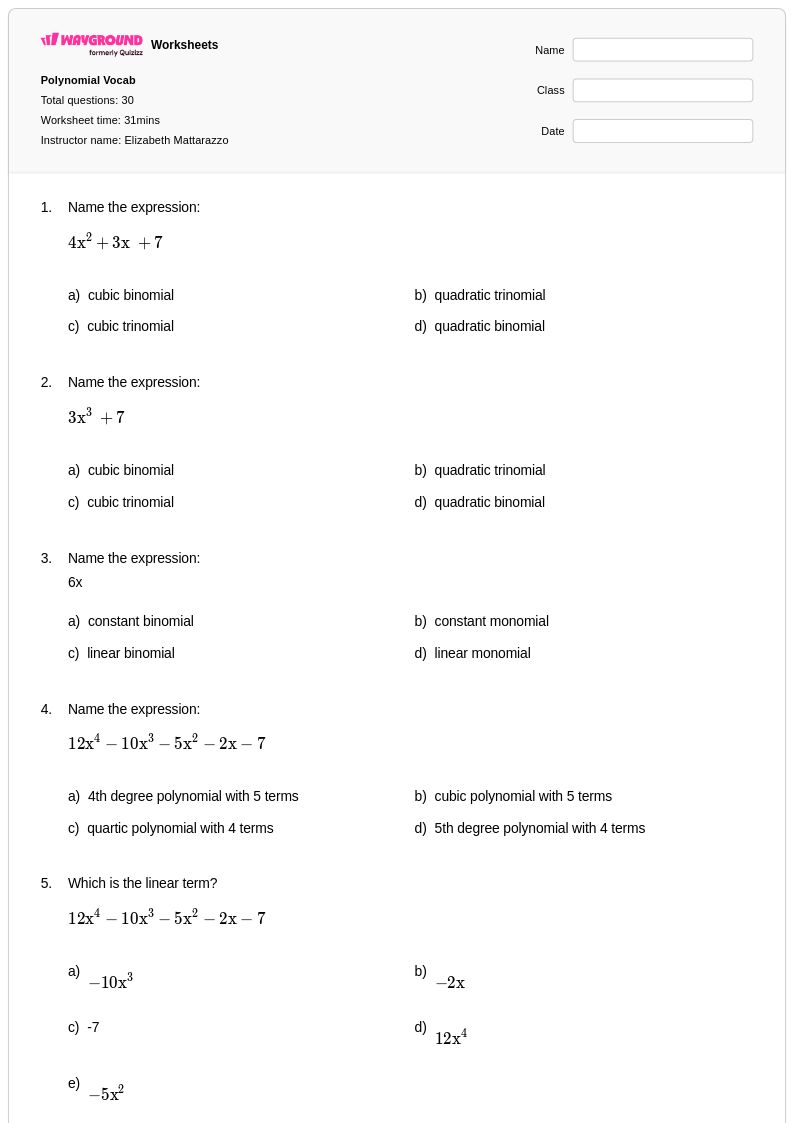
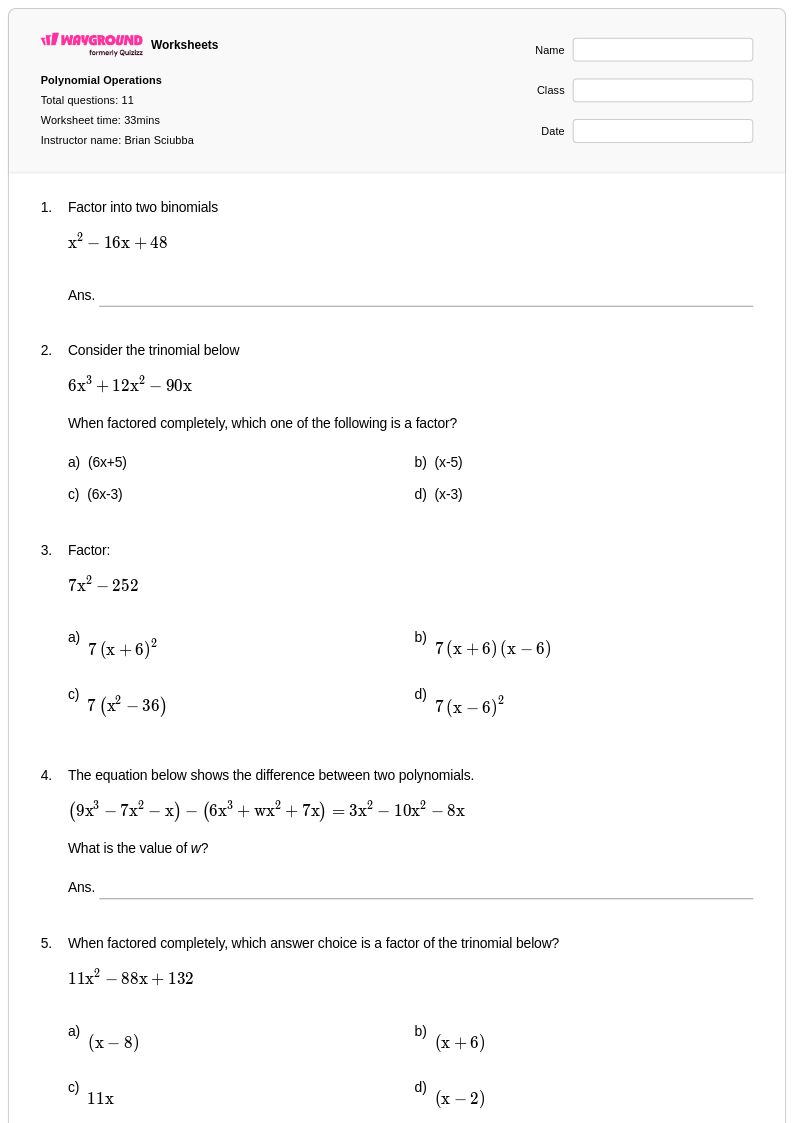
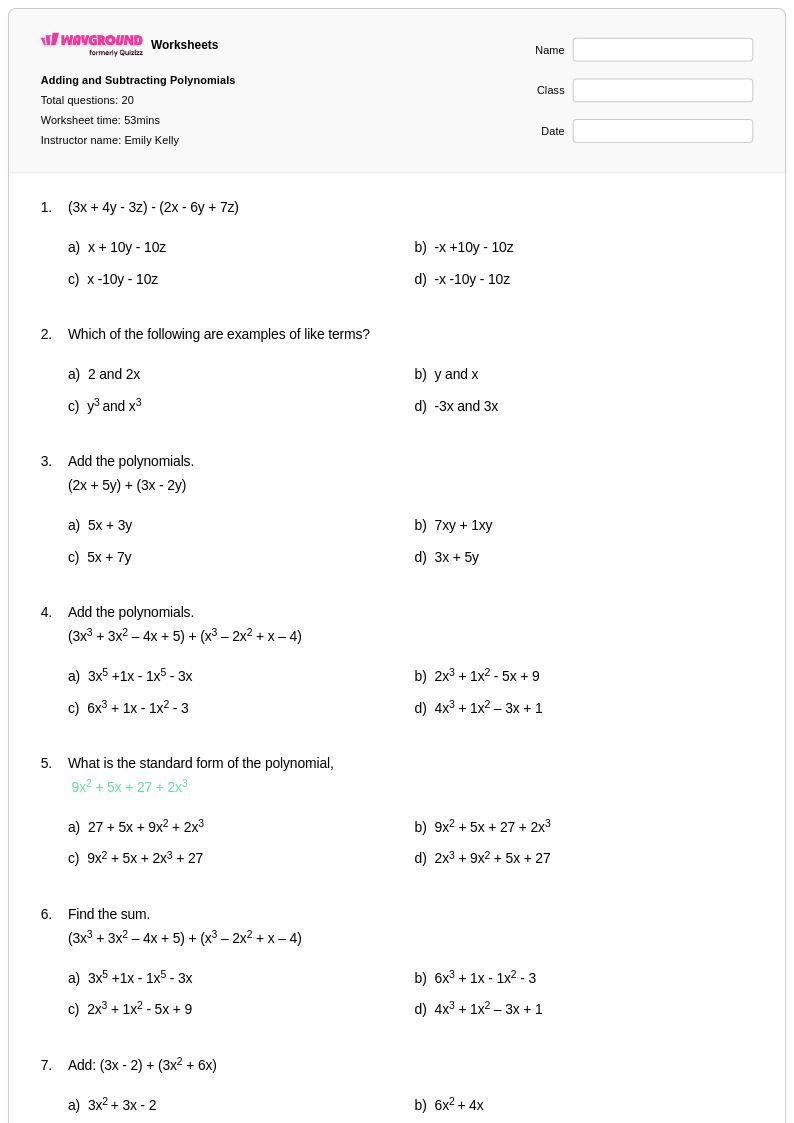
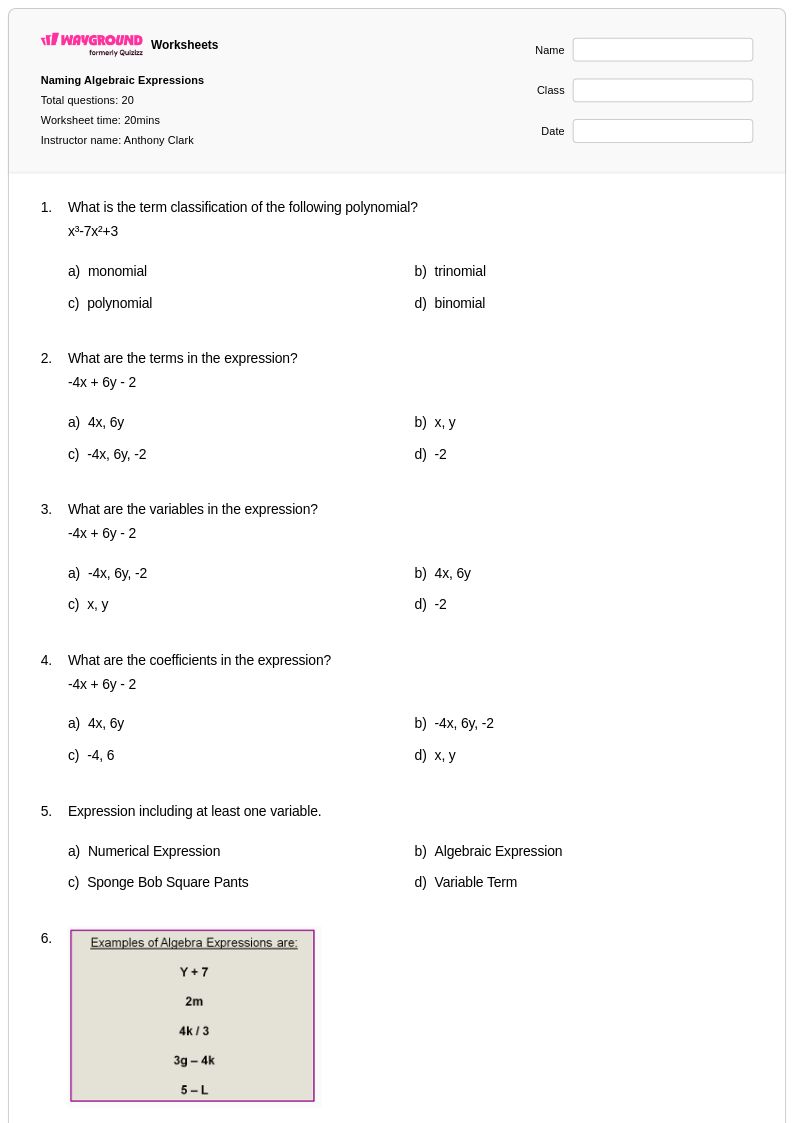
Naming polynomials worksheets for Grade 6 students available through Wayground (formerly Quizizz) provide essential foundational practice in algebraic terminology and classification skills. These carefully designed worksheets guide sixth-grade learners through the systematic process of identifying and categorizing polynomial expressions based on their degree and number of terms, including monomials, binomials, and trinomials. Students develop critical algebraic vocabulary while strengthening their ability to analyze mathematical expressions, recognize patterns, and apply proper mathematical naming conventions. Each worksheet collection includes comprehensive answer keys and detailed practice problems that reinforce understanding of polynomial structure, ensuring students can confidently distinguish between different types of algebraic expressions. These free printables in pdf format offer structured progression from basic identification exercises to more complex polynomial classification challenges.
Wayground (formerly Quizizz) empowers educators with millions of teacher-created naming polynomials resources specifically designed to support Grade 6 algebra instruction across diverse learning environments. The platform's advanced search and filtering capabilities enable teachers to quickly locate worksheets that align with specific curriculum standards and match their students' skill levels, while differentiation tools allow for seamless customization of content difficulty and scope. Teachers can access these polynomial naming worksheets in both printable and digital pdf formats, providing flexibility for classroom instruction, homework assignments, and independent practice sessions. The extensive collection supports comprehensive lesson planning by offering varied approaches to polynomial classification, from visual identification exercises to analytical problem-solving activities, making it simple for educators to implement targeted remediation for struggling learners or provide enrichment opportunities for advanced students ready to explore more sophisticated algebraic concepts.
FAQs
What grade do students learn to name polynomials?
How should I introduce naming polynomials to 6th graders?
What are the key skills for a 6th grader practicing this topic?
What common errors should I watch for with 6th graders?
How does this topic connect to the 6th-grade curriculum?
How can I use this Grade 6 worksheet?