Free Printable North America Historical Maps Worksheets for Grade 8
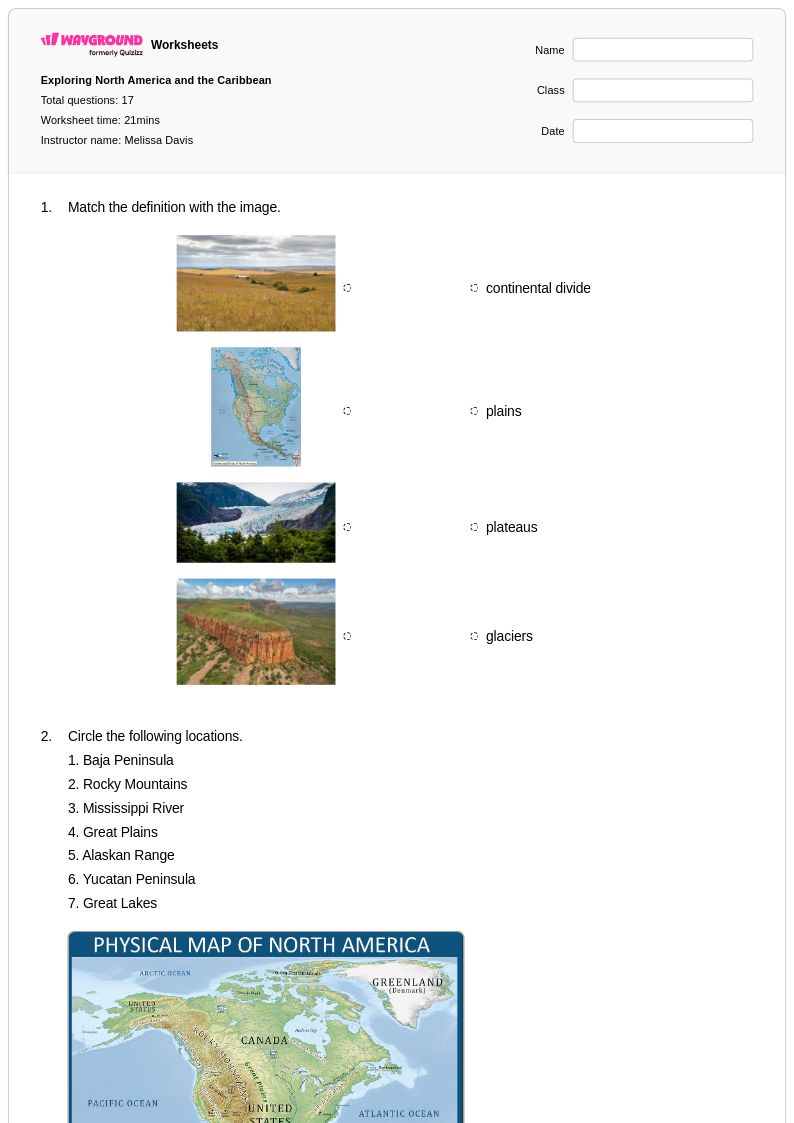
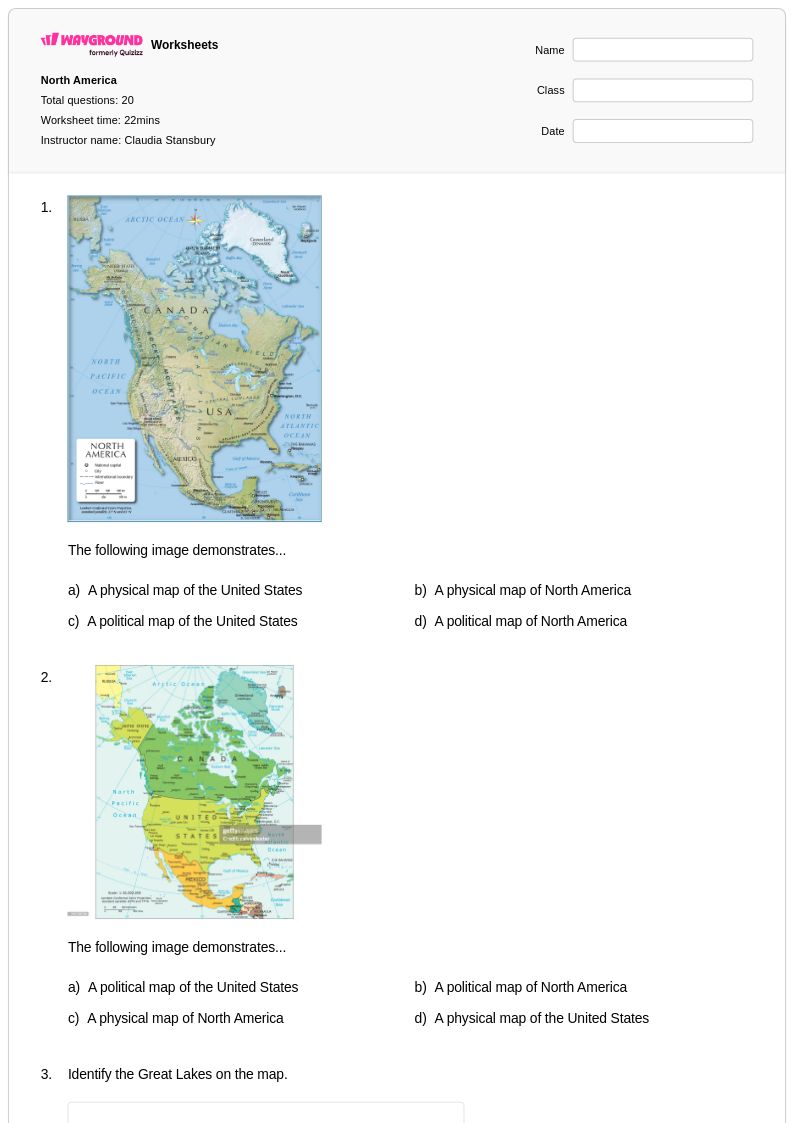
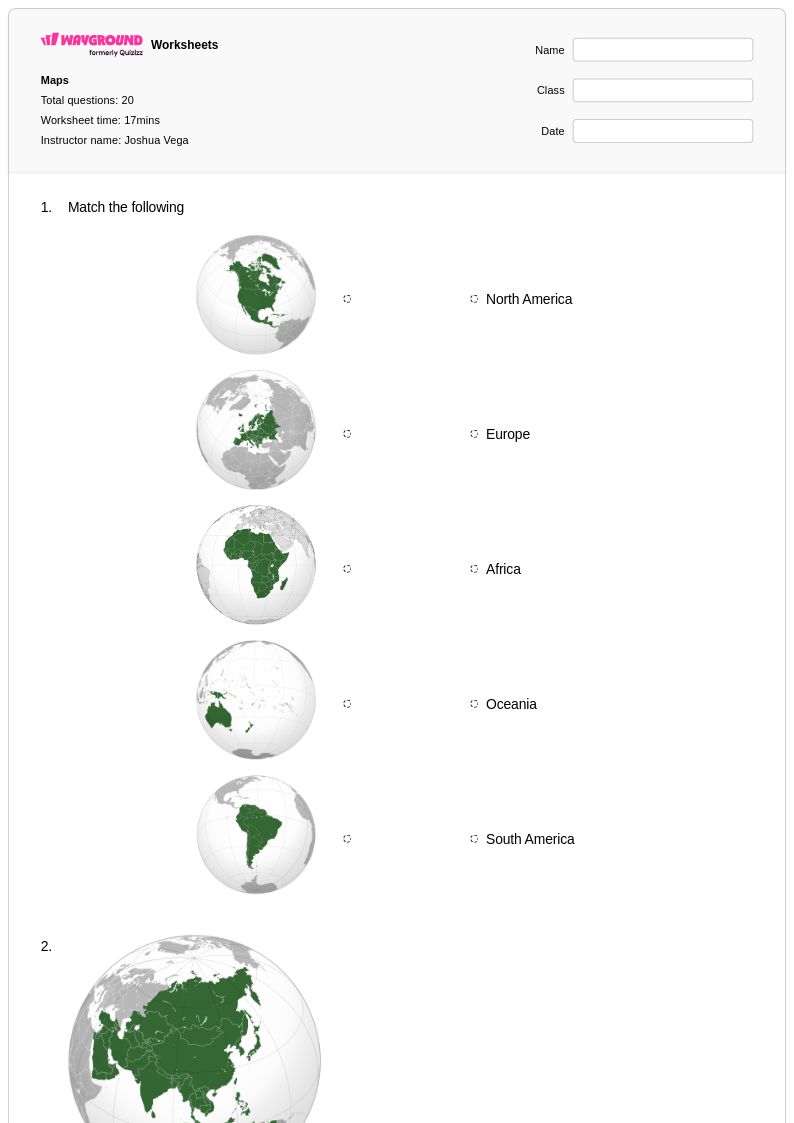
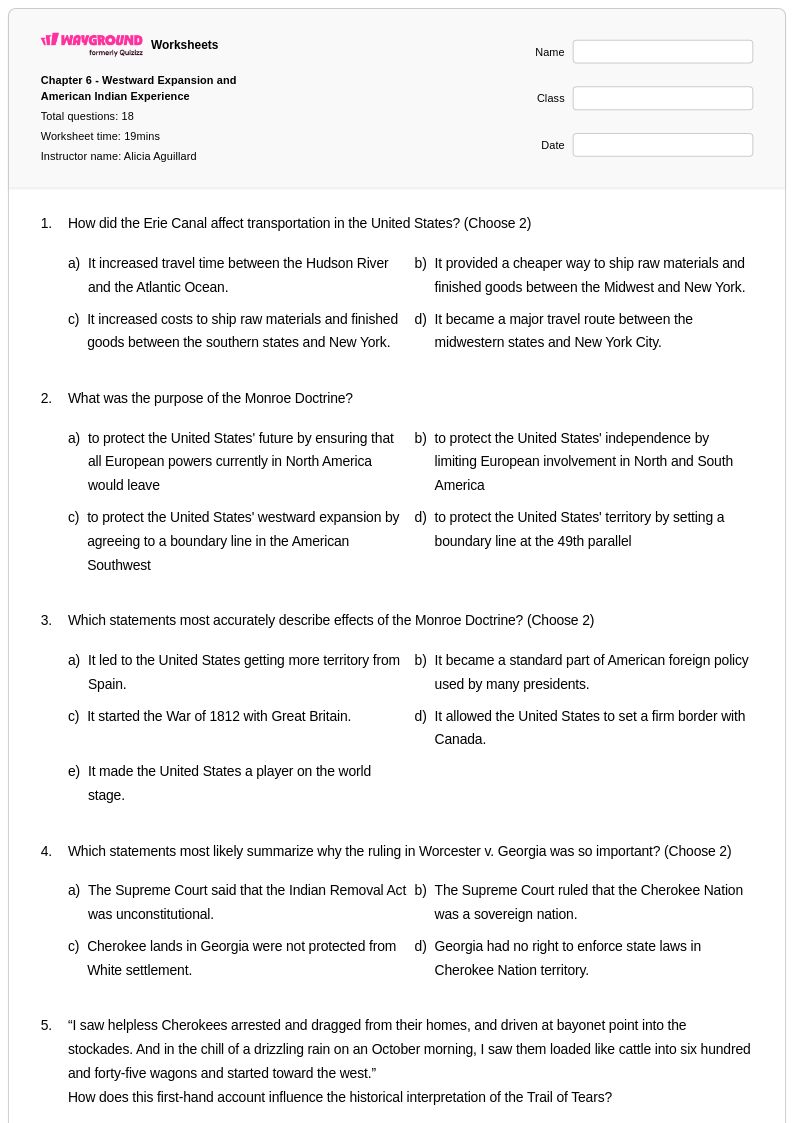
Explore Grade 8 North America Historical Maps worksheets through Wayground's free printables collection, featuring engaging practice problems and answer keys that help students analyze territorial changes, colonial developments, and geographic evolution across centuries.
Explore printable North America Historical Maps worksheets for Grade 8
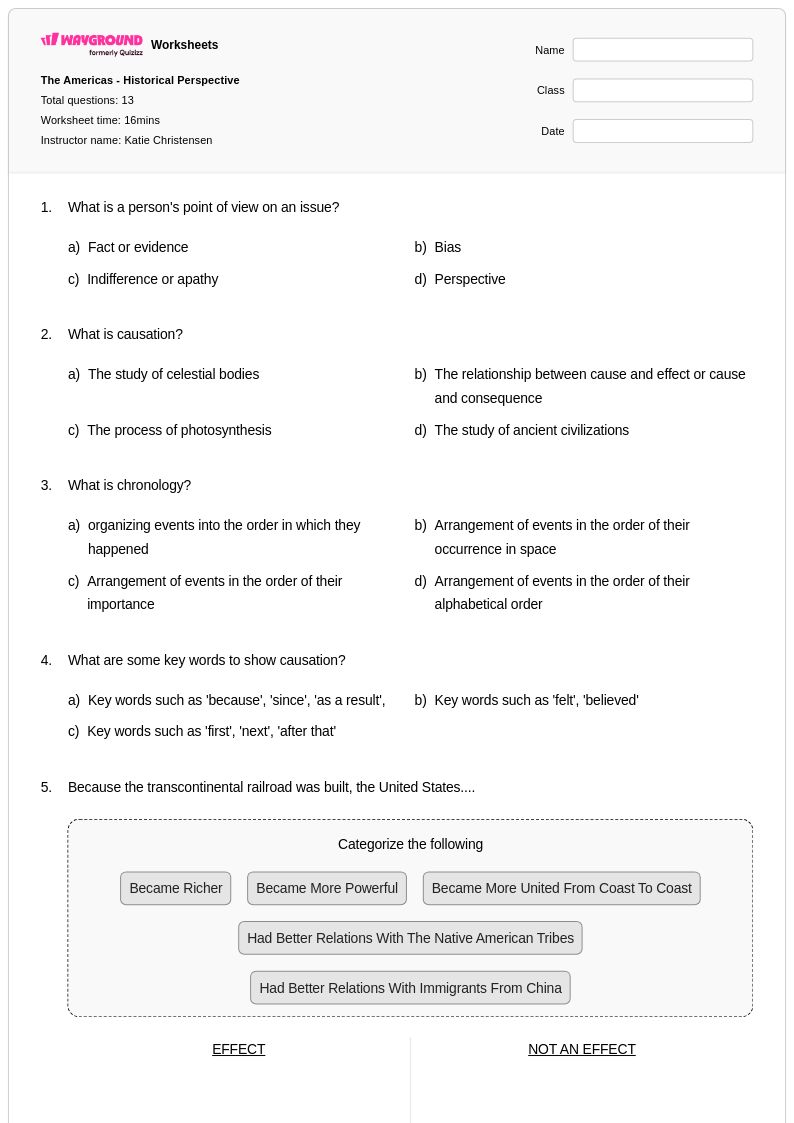
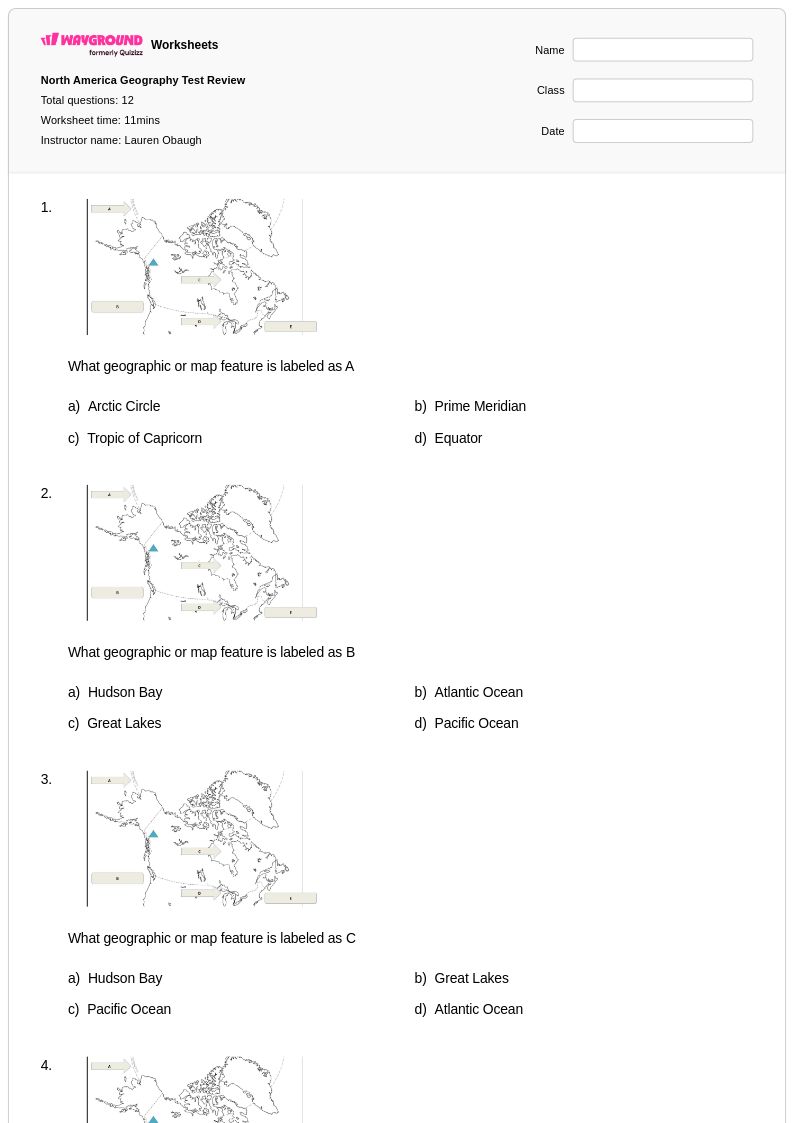
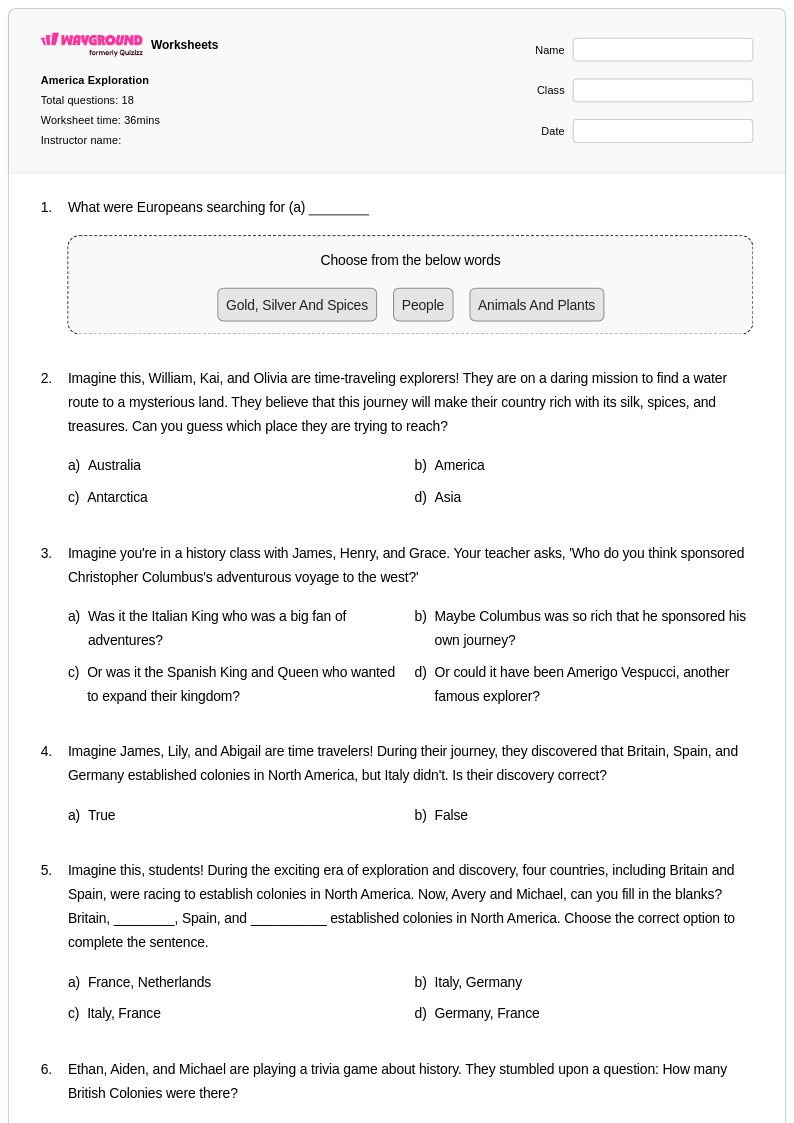
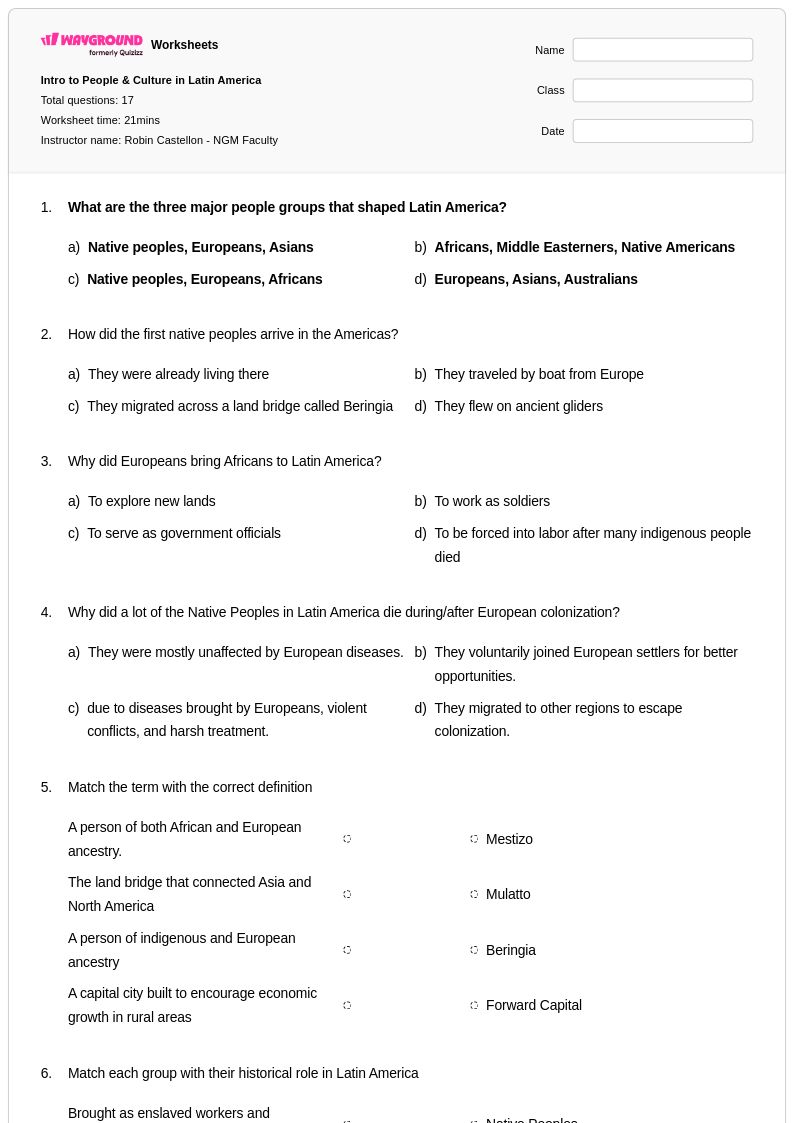
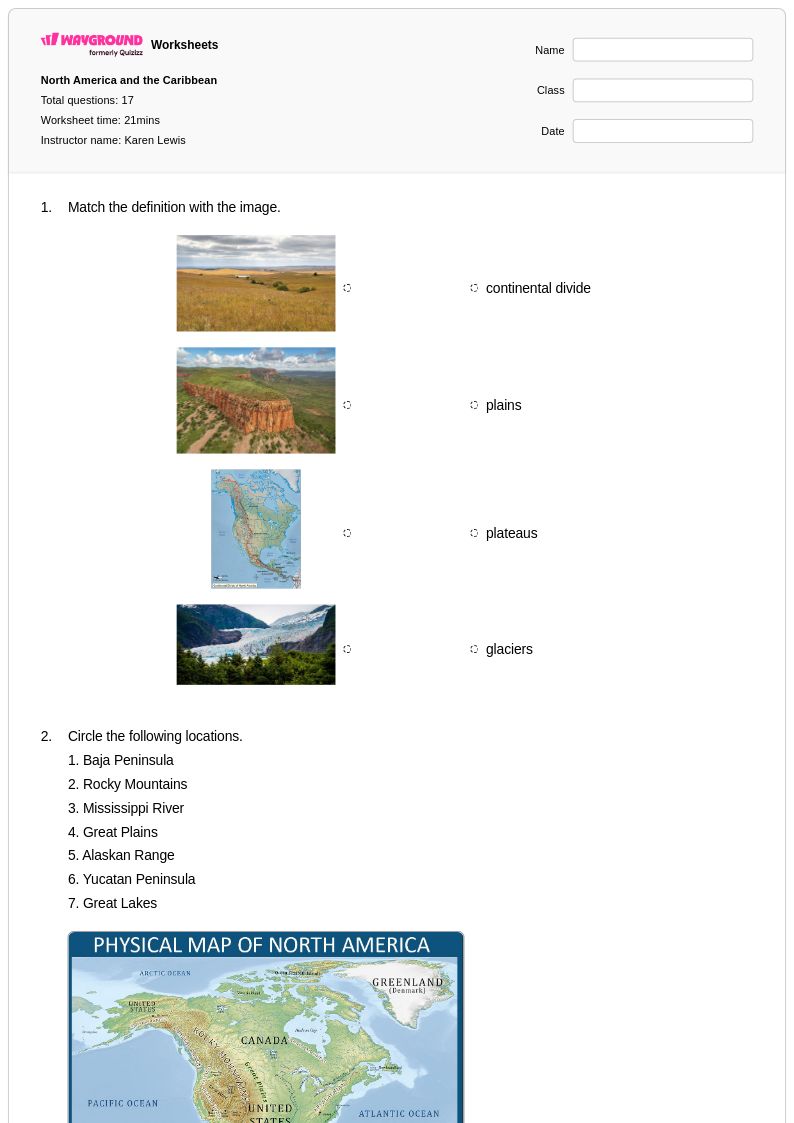
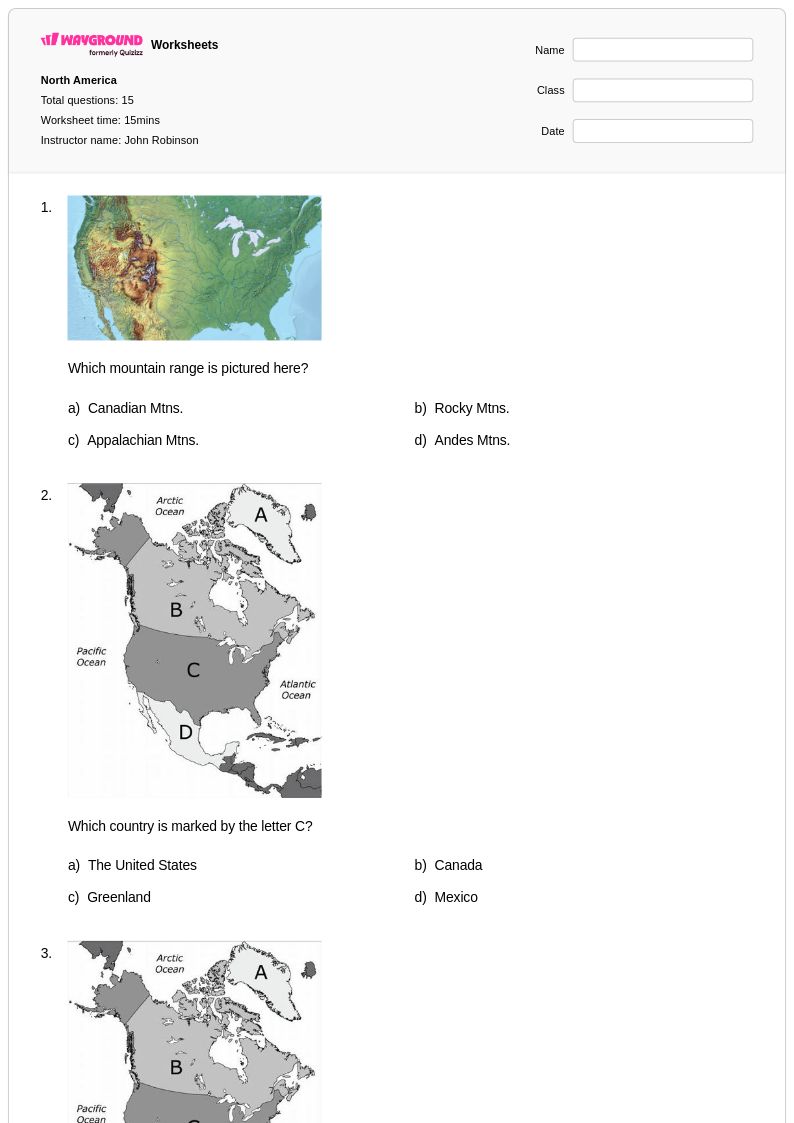
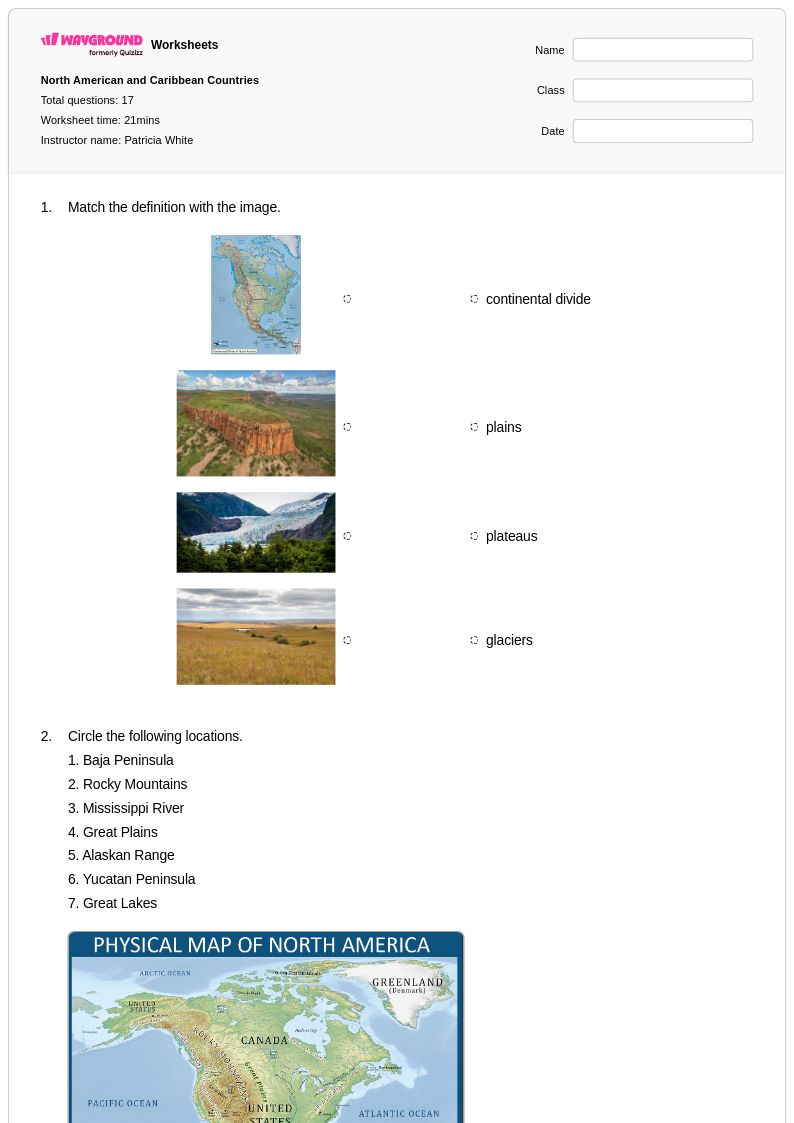
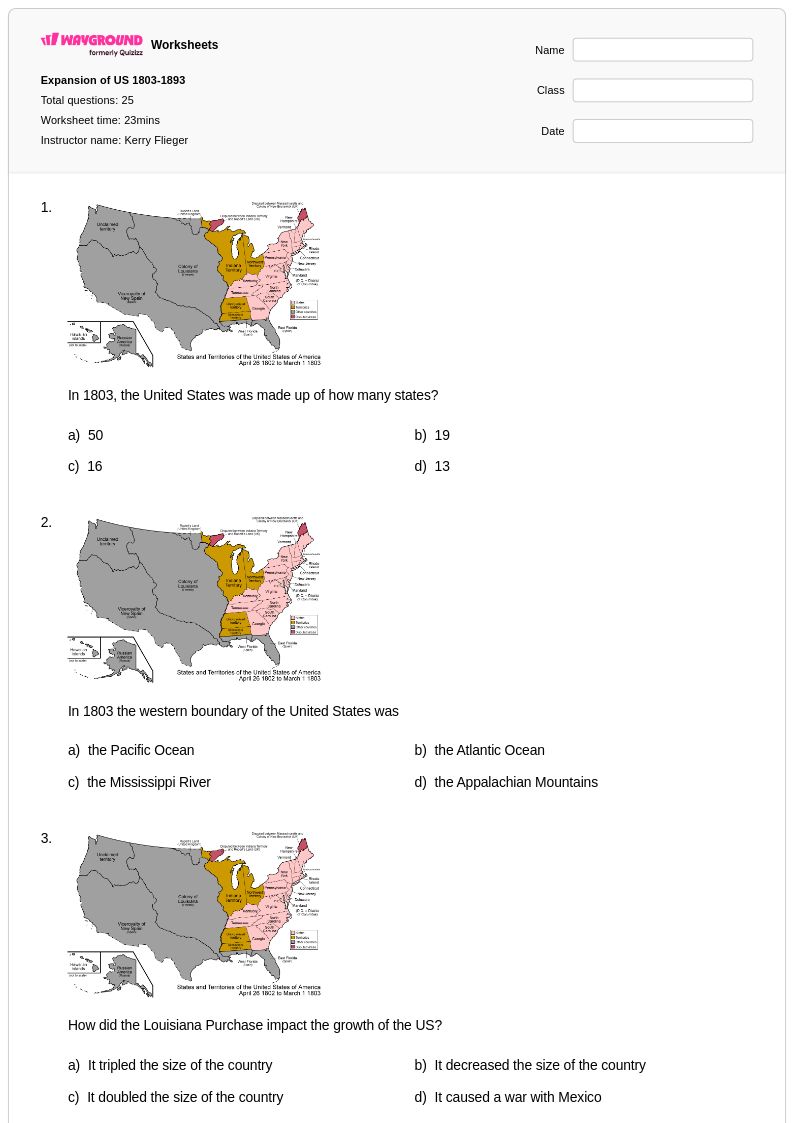
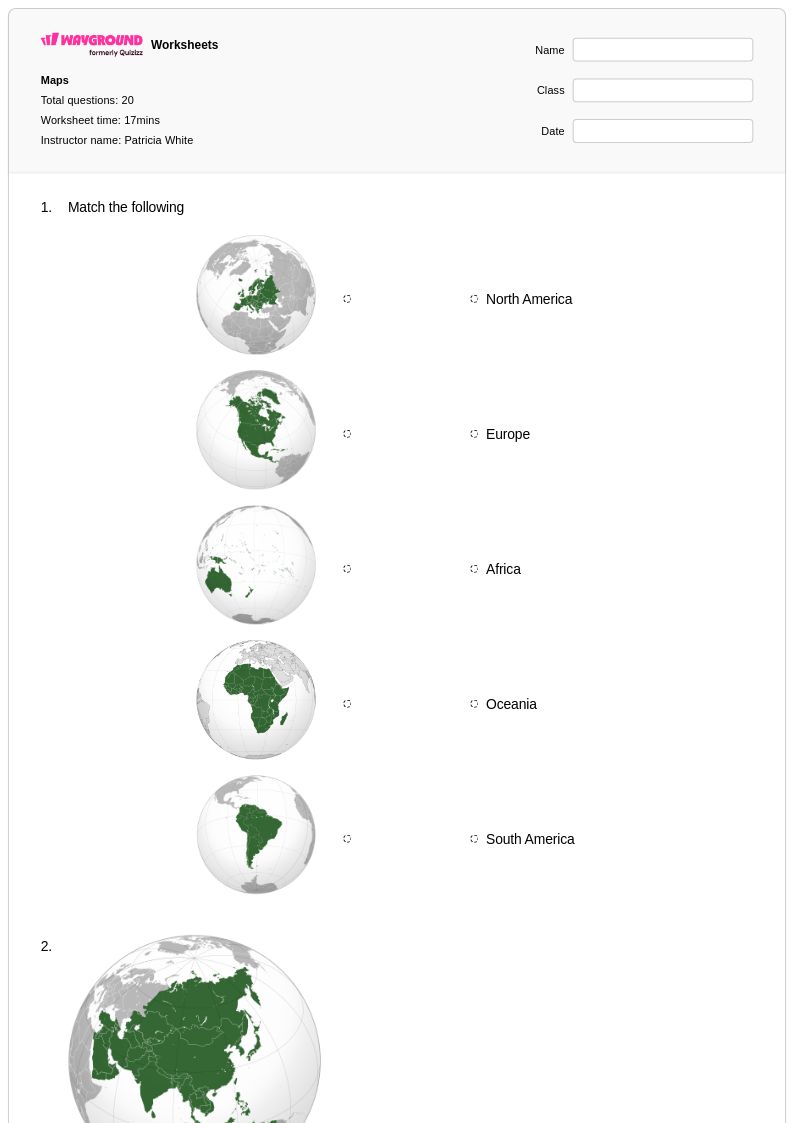
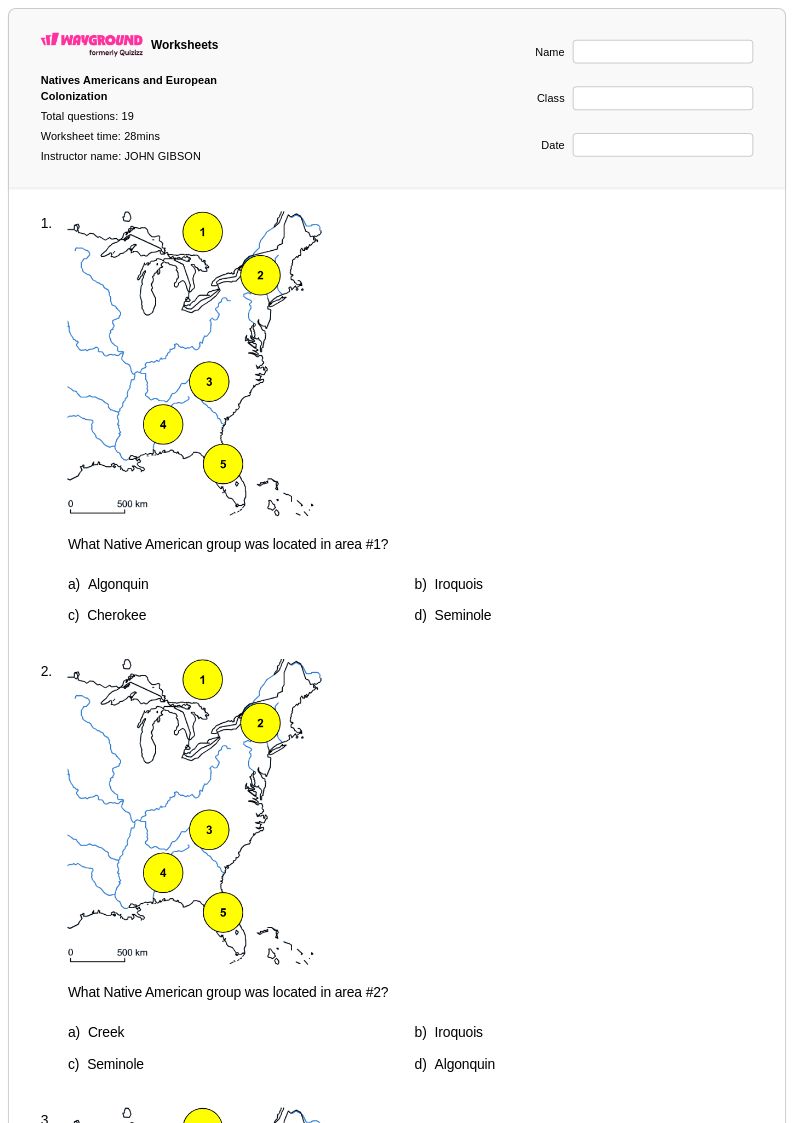
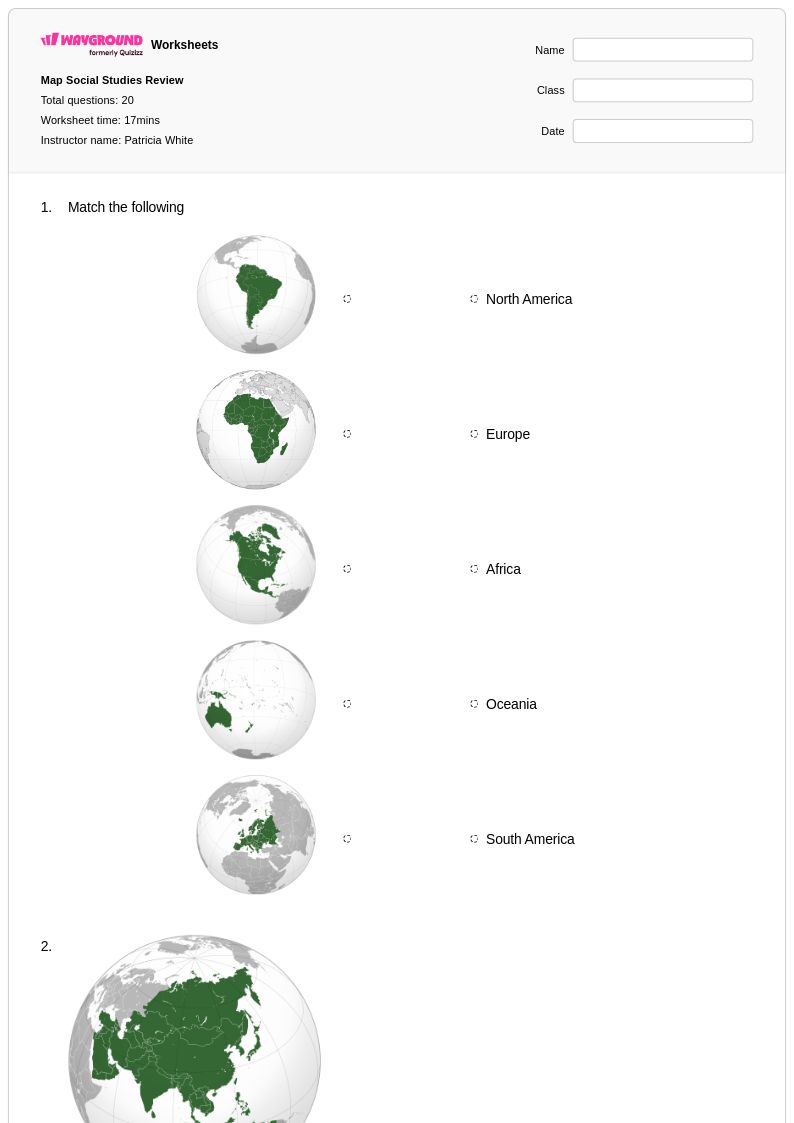
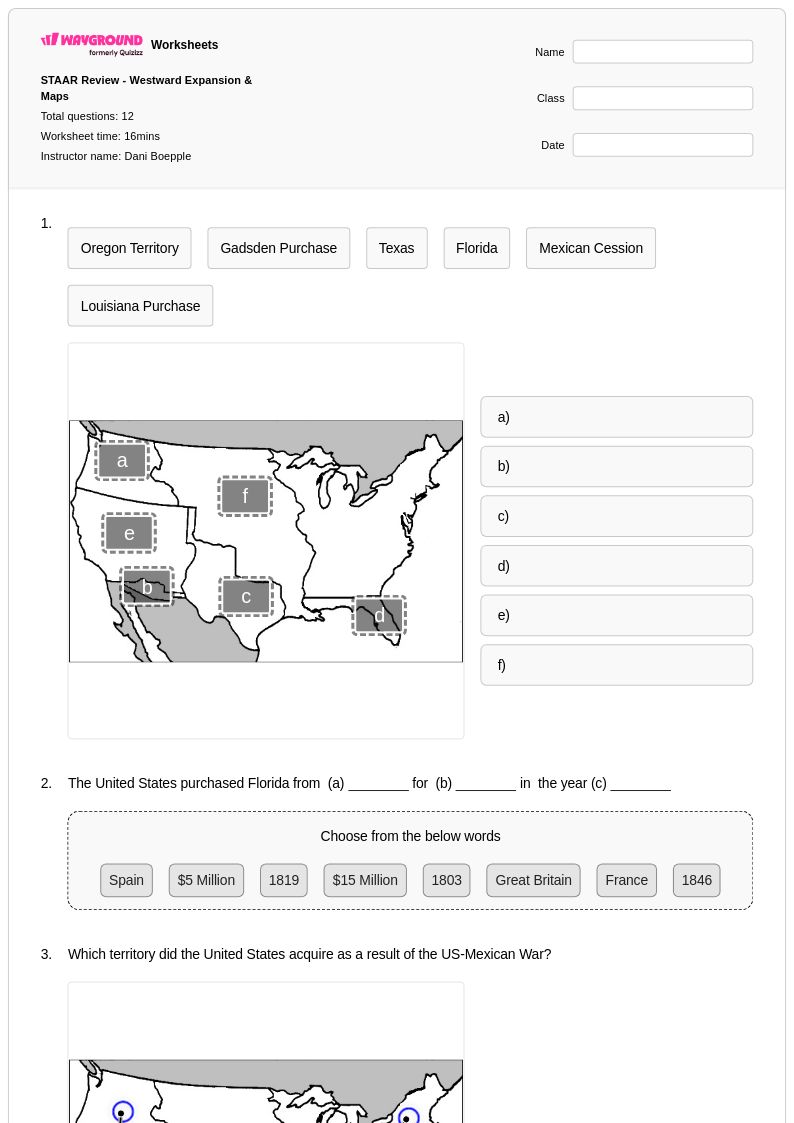
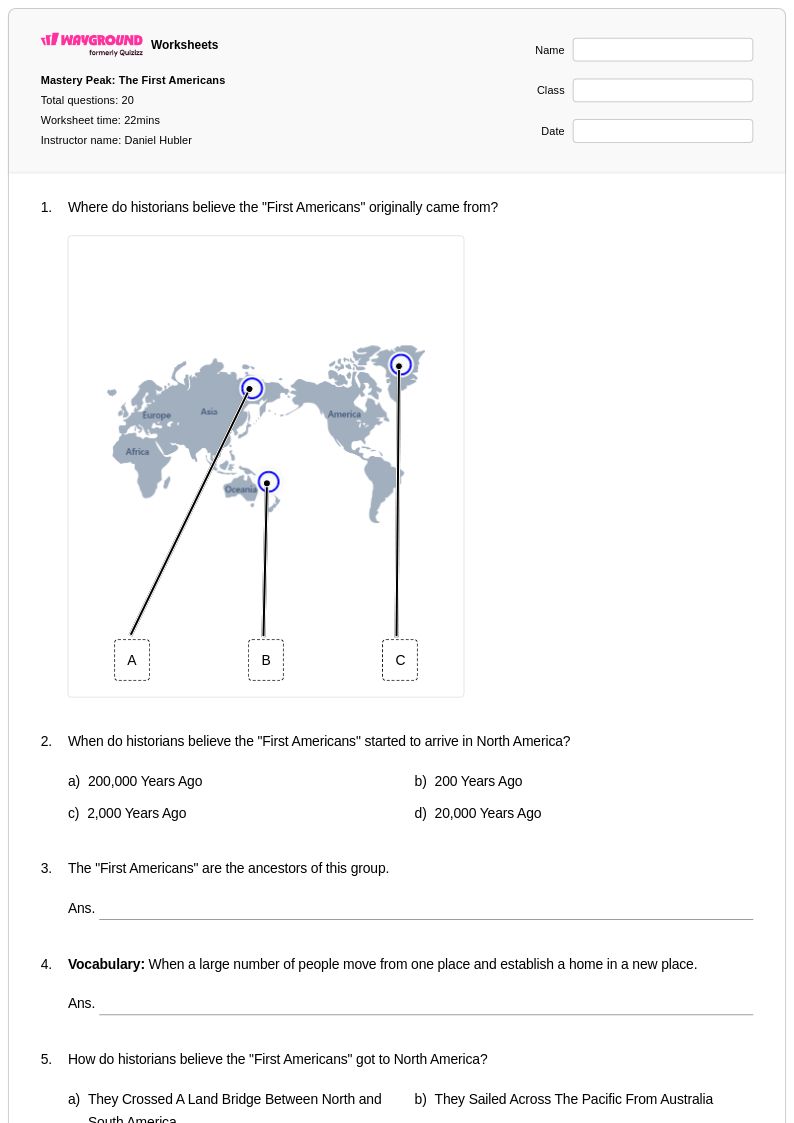
North America Historical Maps worksheets for Grade 8 students provide comprehensive exploration of the continent's evolving political, cultural, and territorial boundaries from pre-Columbian times through modern development. These carefully designed educational resources help students develop critical map analysis skills, understand chronological changes in settlement patterns, and recognize how historical events shaped the geographic landscape of Canada, the United States, Mexico, and Central America. Through engaging practice problems that examine colonial expansion, indigenous territories, westward migration routes, and border changes, students strengthen their ability to interpret cartographic evidence and connect geographic concepts to historical narratives. Each worksheet collection includes detailed answer keys and is available as free printables in convenient pdf format, making them accessible for both classroom instruction and independent study.
Wayground, formerly Quizizz, empowers educators with an extensive collection of teacher-created North America Historical Maps resources specifically aligned with Grade 8 social studies standards and curriculum requirements. The platform's millions of educational materials feature robust search and filtering capabilities that allow teachers to quickly locate worksheets targeting specific time periods, regions, or skill levels within North American historical geography. Advanced differentiation tools enable educators to customize content complexity for diverse learners, while the availability of both printable and digital formats, including downloadable pdfs, provides maximum flexibility for various classroom environments. These comprehensive features support effective lesson planning by offering ready-to-use materials for skill practice, targeted remediation for struggling students, and enrichment opportunities for advanced learners seeking deeper engagement with historical cartography concepts.
FAQs
How do I teach North American historical maps in the classroom?
Teaching North American historical maps works best when students compare maps across time periods to identify patterns in territorial expansion, colonial settlement, and shifting political boundaries. Start with a pre-Columbian map to establish baseline geography, then layer in maps from colonial, post-independence, and modern periods so students can trace how the continent transformed. Asking students to annotate changes directly on a map encourages active engagement with cartographic evidence rather than passive observation.
What exercises help students practice analyzing historical maps of North America?
Effective practice activities include identifying territorial changes between two maps from different eras, tracing migration routes, and labeling colonial land claims alongside modern national boundaries. Students benefit from guided questions that prompt them to connect geographic features like mountain ranges and river systems to historical decisions about settlement and trade routes. Worksheets that pair map analysis with short written responses help reinforce both spatial reasoning and historical thinking skills simultaneously.
What common mistakes do students make when interpreting North American historical maps?
A frequent error is treating historical boundaries as fixed or permanent rather than recognizing them as snapshots of contested, changing political realities. Students also tend to project modern country names and borders onto historical maps, which distorts their understanding of colonial-era territorial claims. Another common misconception is overlooking how physical geography, such as river systems and mountain barriers, directly shaped where settlement, trade, and conflict occurred.
How can I use North America historical maps worksheets to support different skill levels in my class?
For struggling learners, worksheets with labeled reference maps and scaffolded questions reduce cognitive load while still building map-reading skills. Advanced students can be challenged with open-ended analysis tasks, such as explaining how a territorial boundary change reflects a broader historical event. On Wayground, teachers can apply accommodations like reduced answer choices or read-aloud support to individual students, ensuring every learner engages with the same cartographic content at an appropriate level of challenge.
How do I use North America historical maps worksheets from Wayground?
Wayground's North America historical maps worksheets are available as printable PDFs for traditional classroom use and in digital formats for technology-integrated environments, giving teachers flexibility regardless of their classroom setup. Teachers can also host worksheets directly as a quiz on Wayground, enabling real-time student responses and built-in answer key grading. This makes the materials practical for whole-class instruction, small group work, or independent study with minimal preparation time.
How do North American historical maps connect to broader social studies curriculum standards?
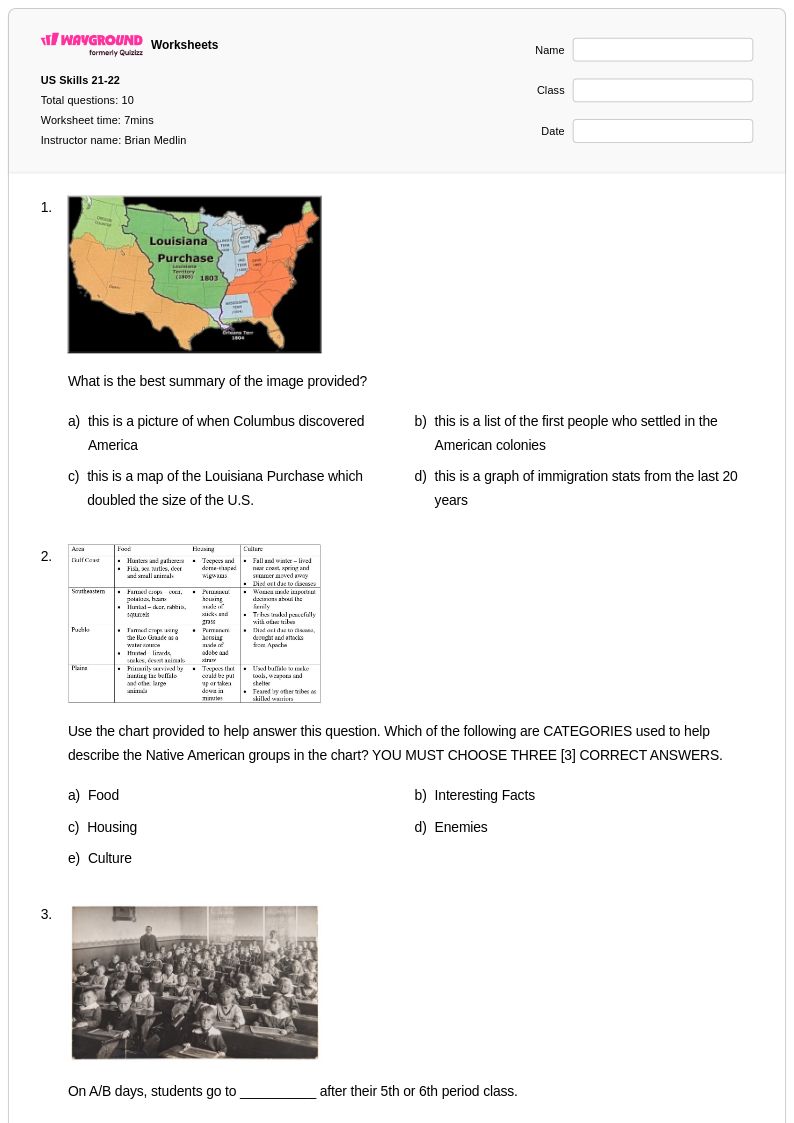
Historical map analysis directly supports standards related to geographic literacy, historical thinking, and the interpretation of primary and secondary sources. Examining maps of colonial expansion, the Louisiana Purchase, or the formation of modern borders connects cartographic skills to specific content units in U.S. and Canadian history. Because these maps span pre-Columbian times through modern boundaries, they can be integrated into multiple units across a social studies or world history course rather than treated as a standalone skill.