Free Printable Noun Clauses Worksheets for Grade 9
Enhance Grade 9 students' understanding of noun clauses with Wayground's comprehensive collection of free worksheets, printables, and practice problems that include detailed answer keys to master this essential grammar concept.
Explore printable Noun Clauses worksheets for Grade 9
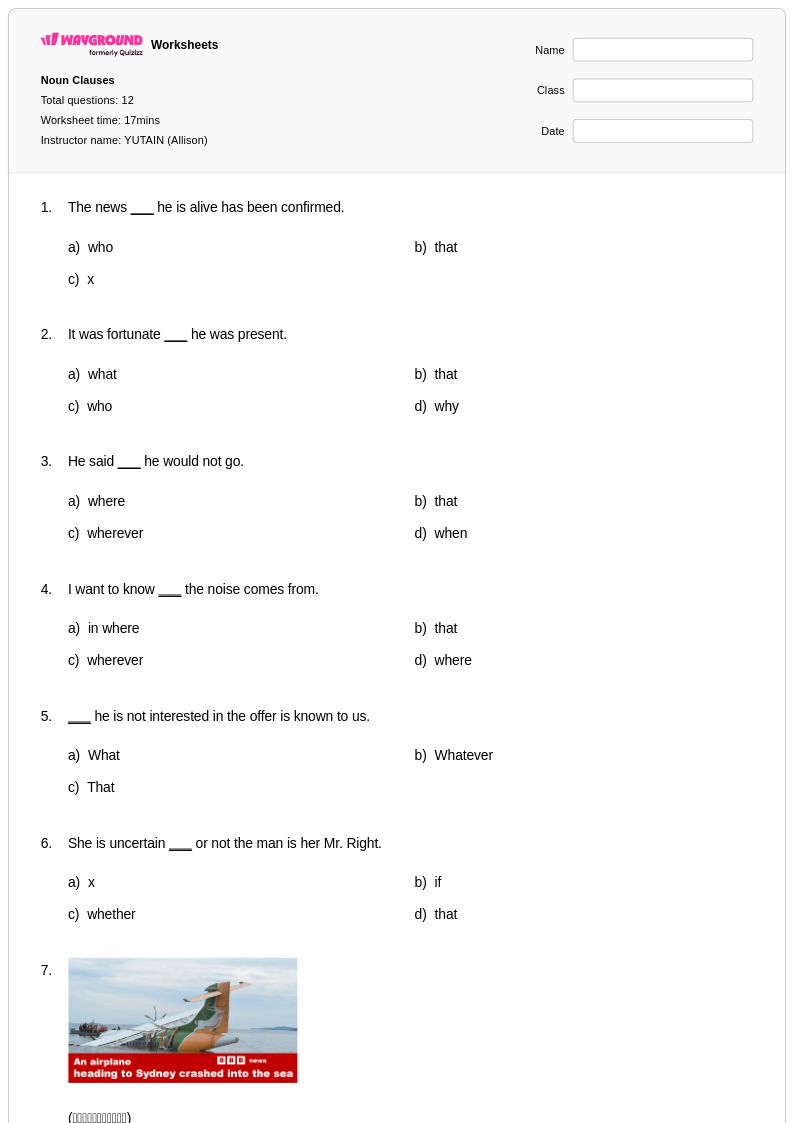
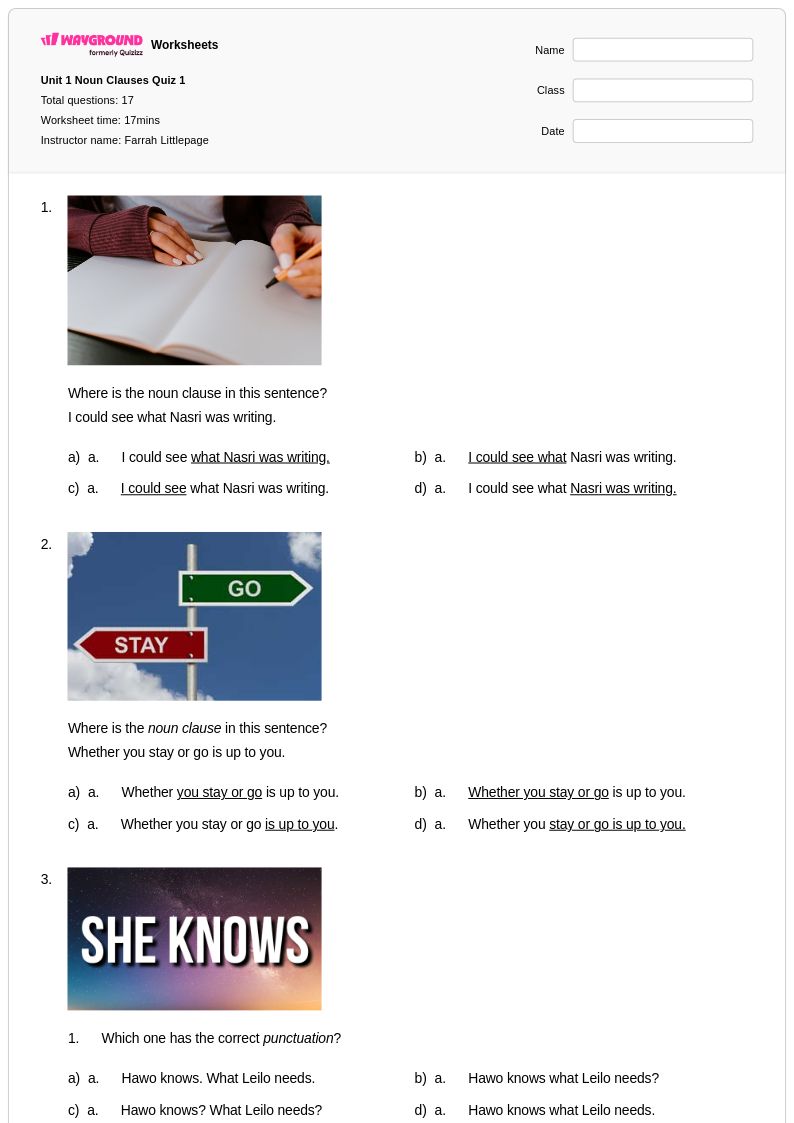
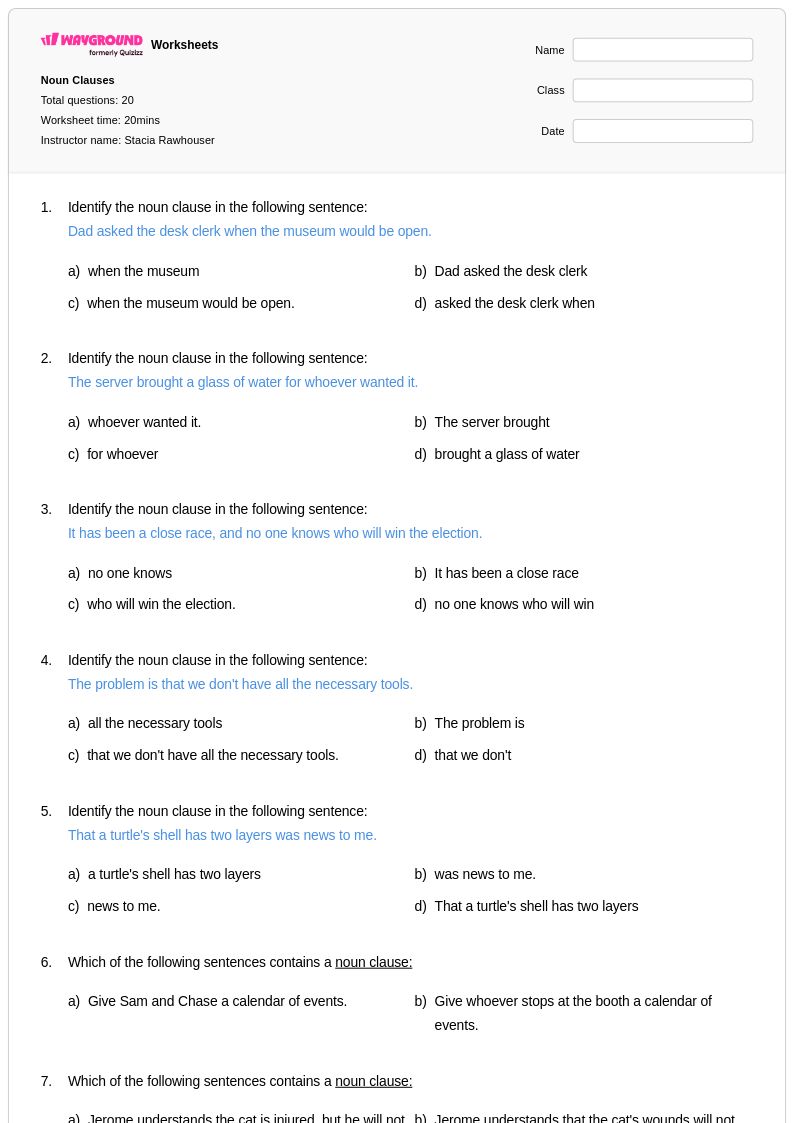
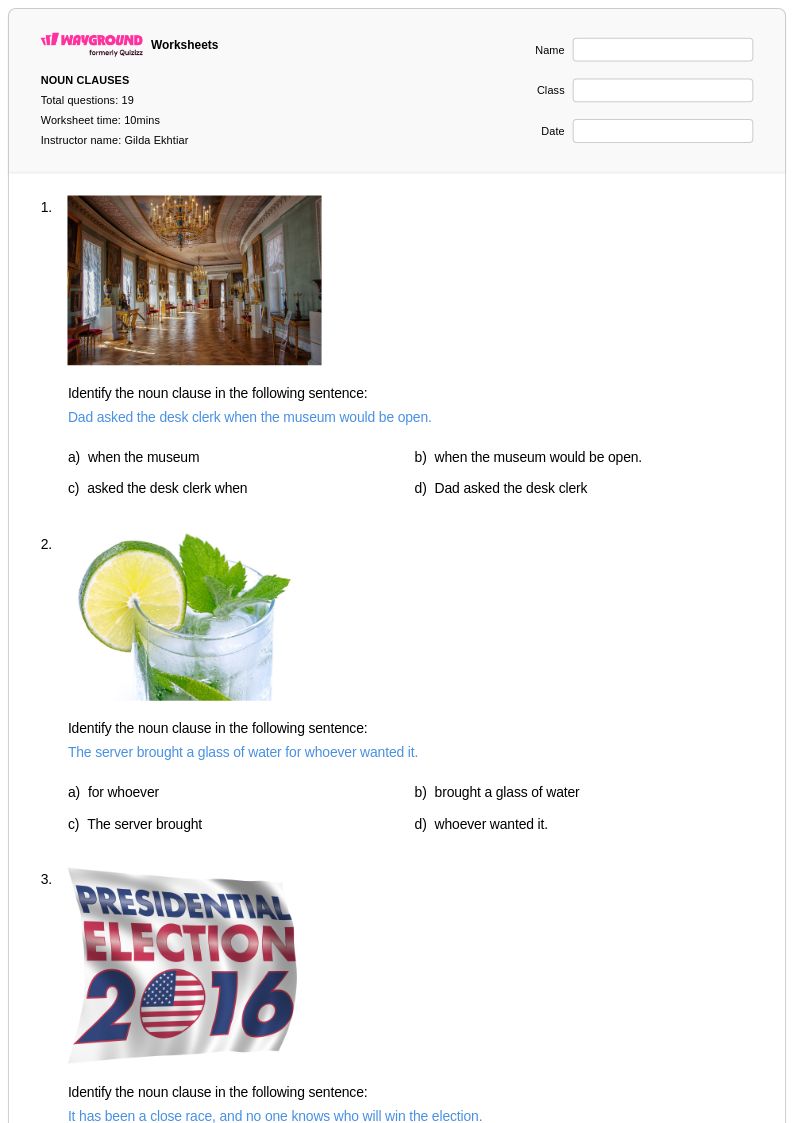
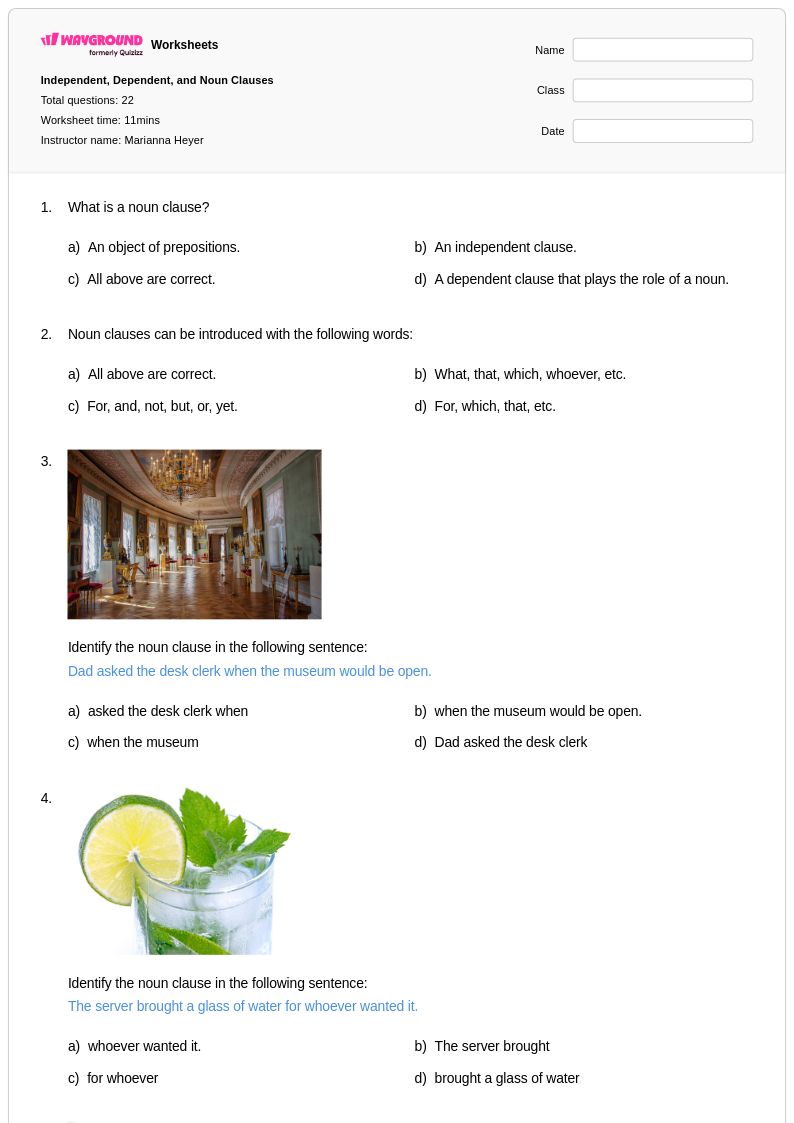
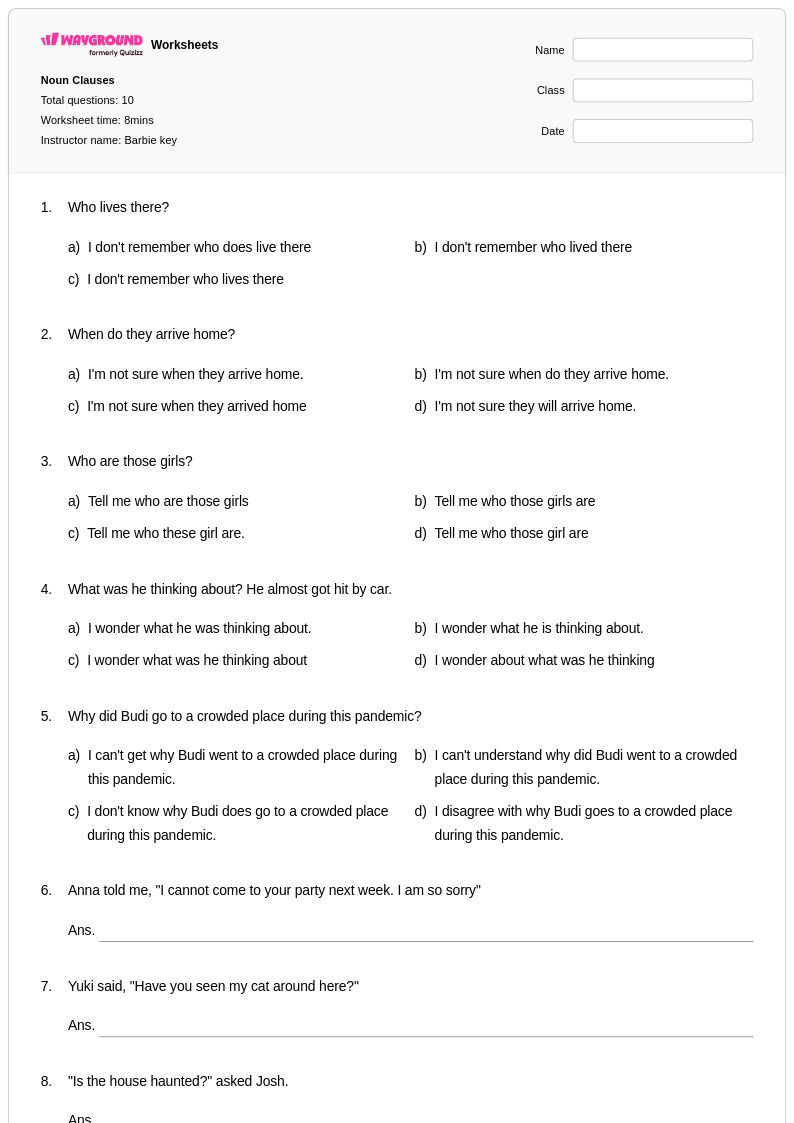
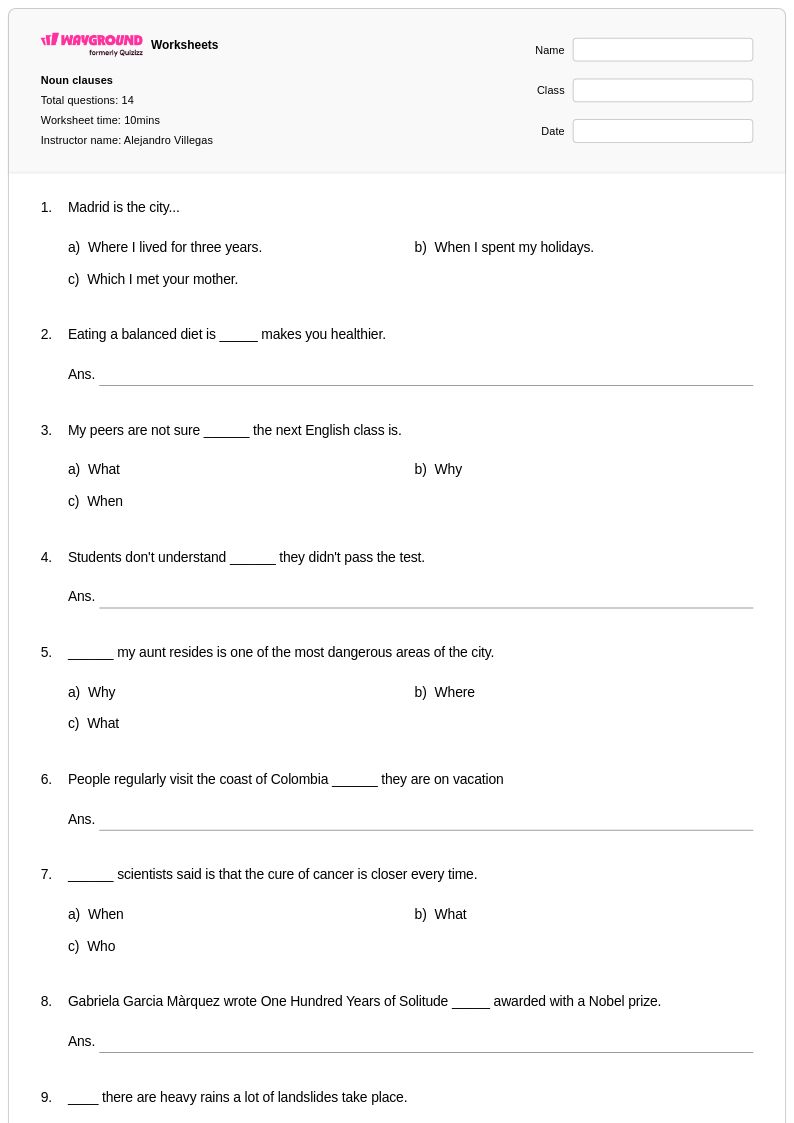
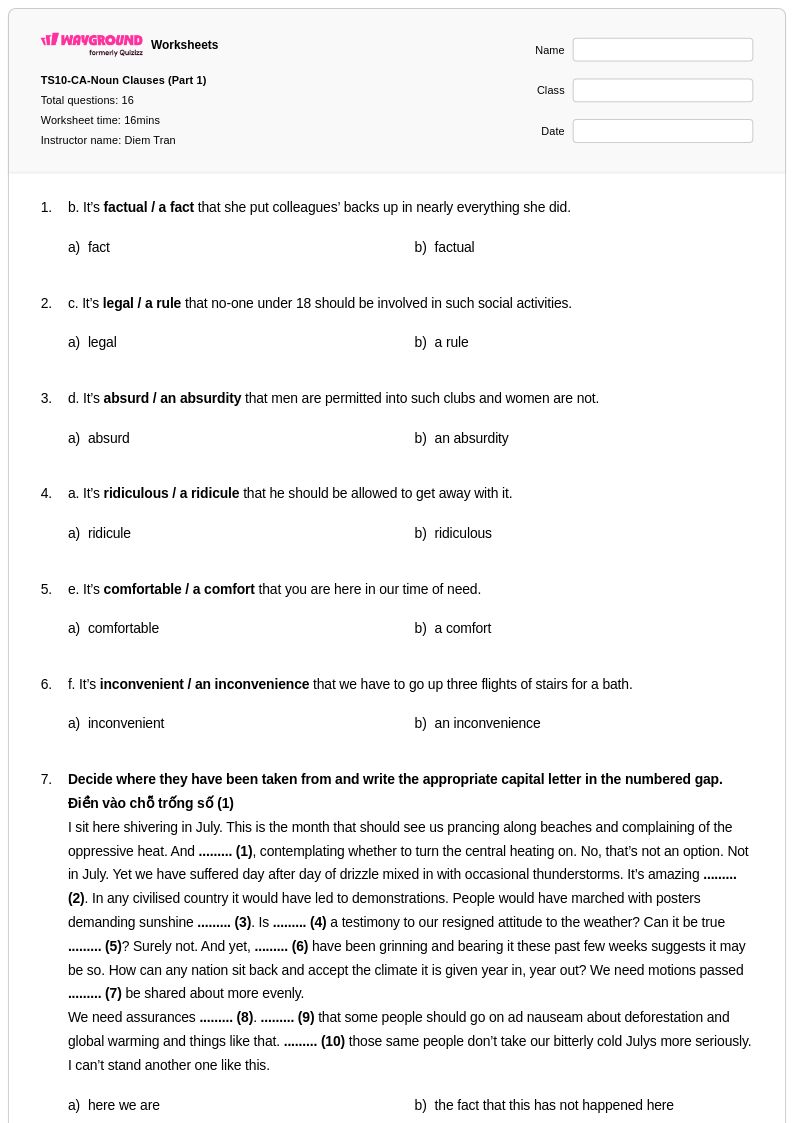
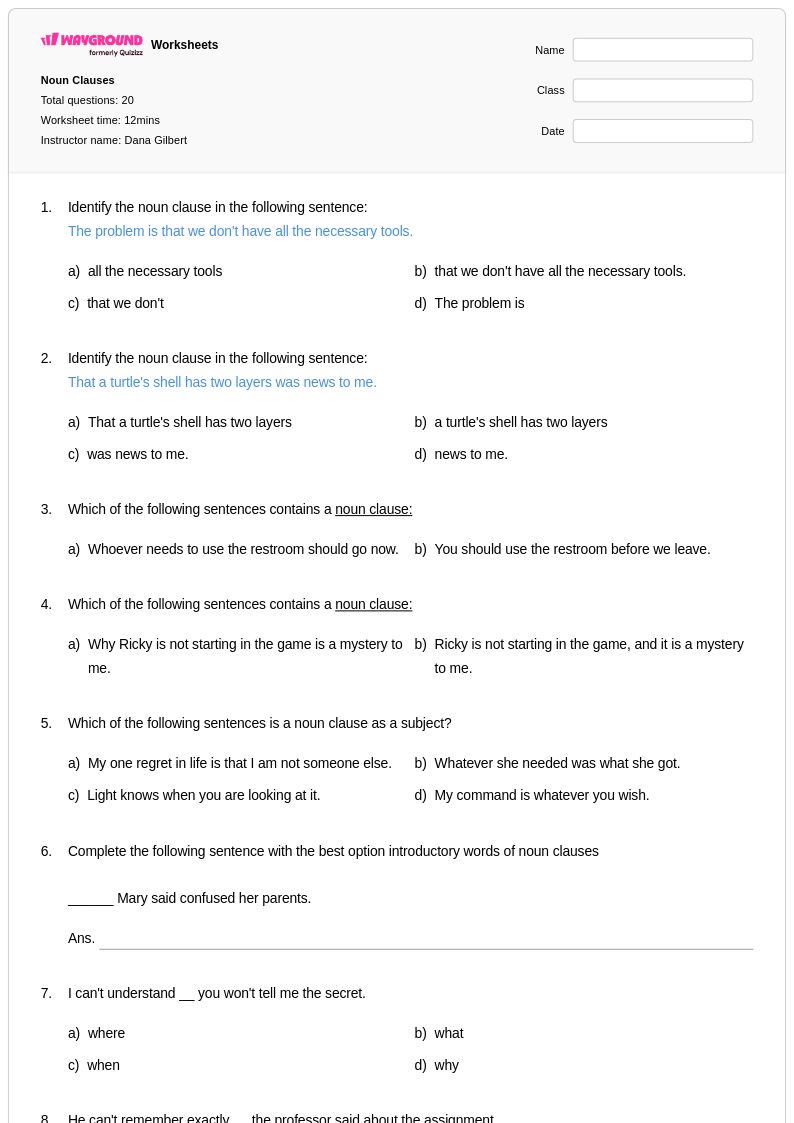
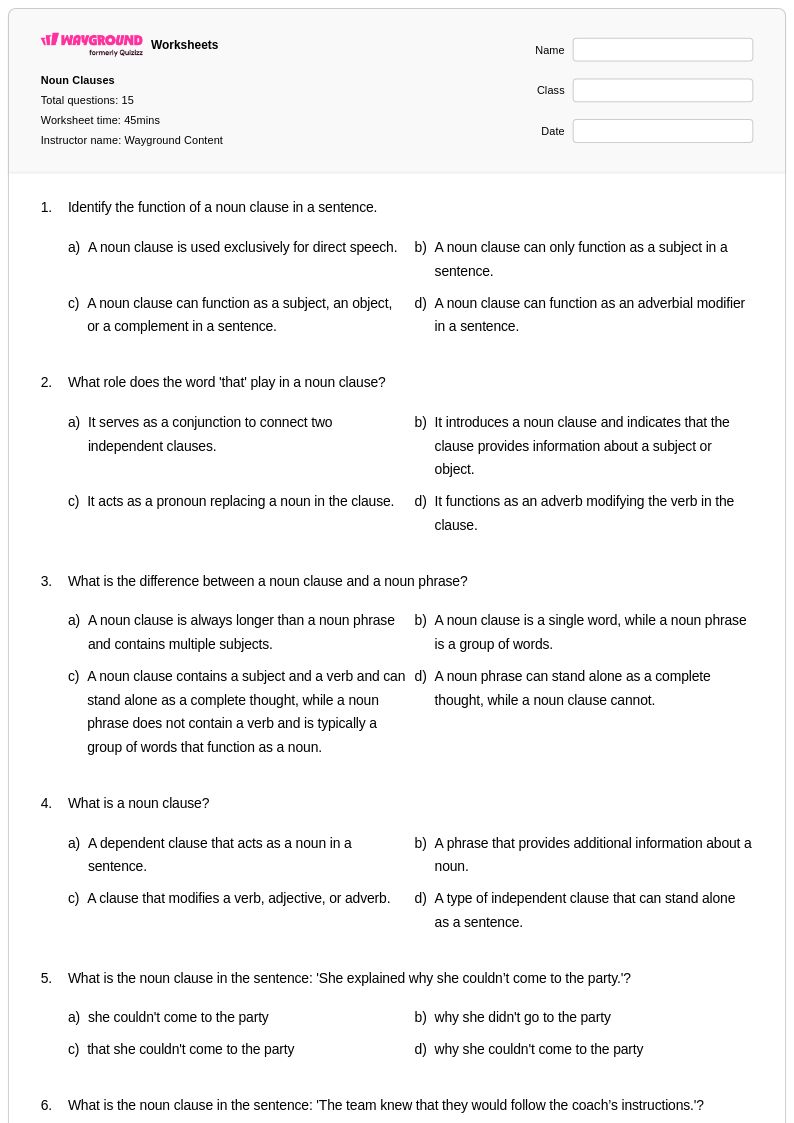
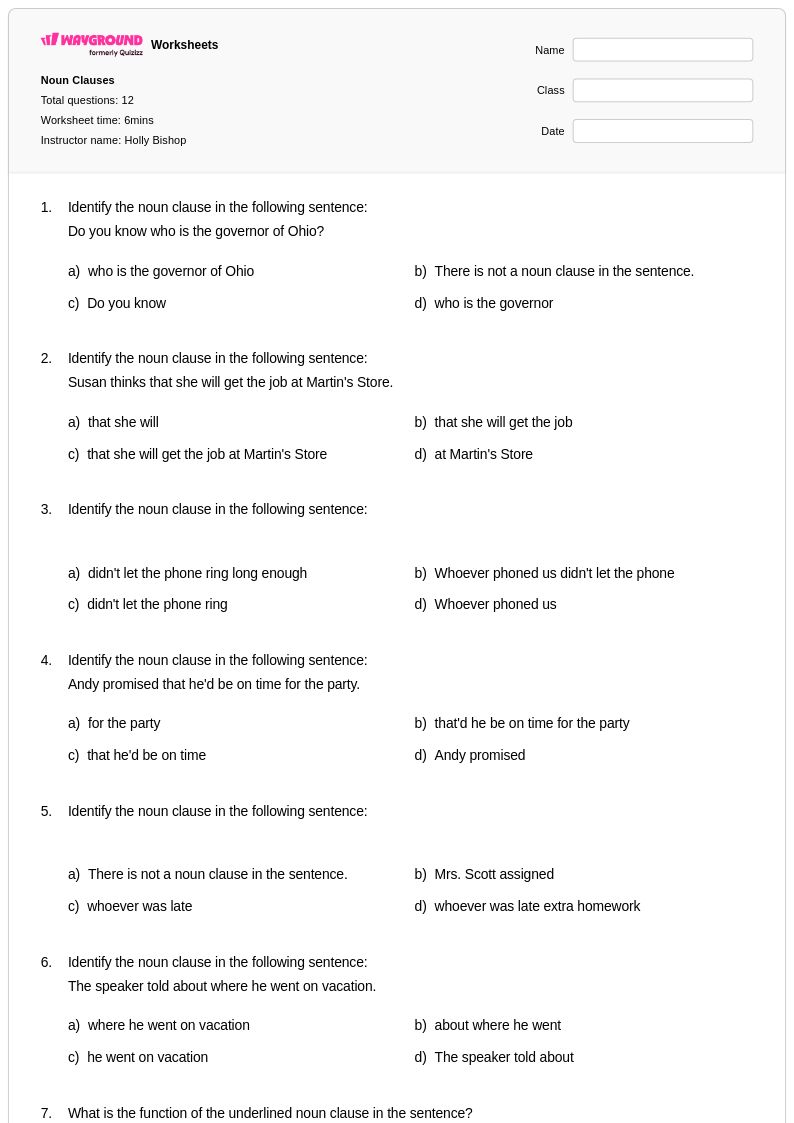
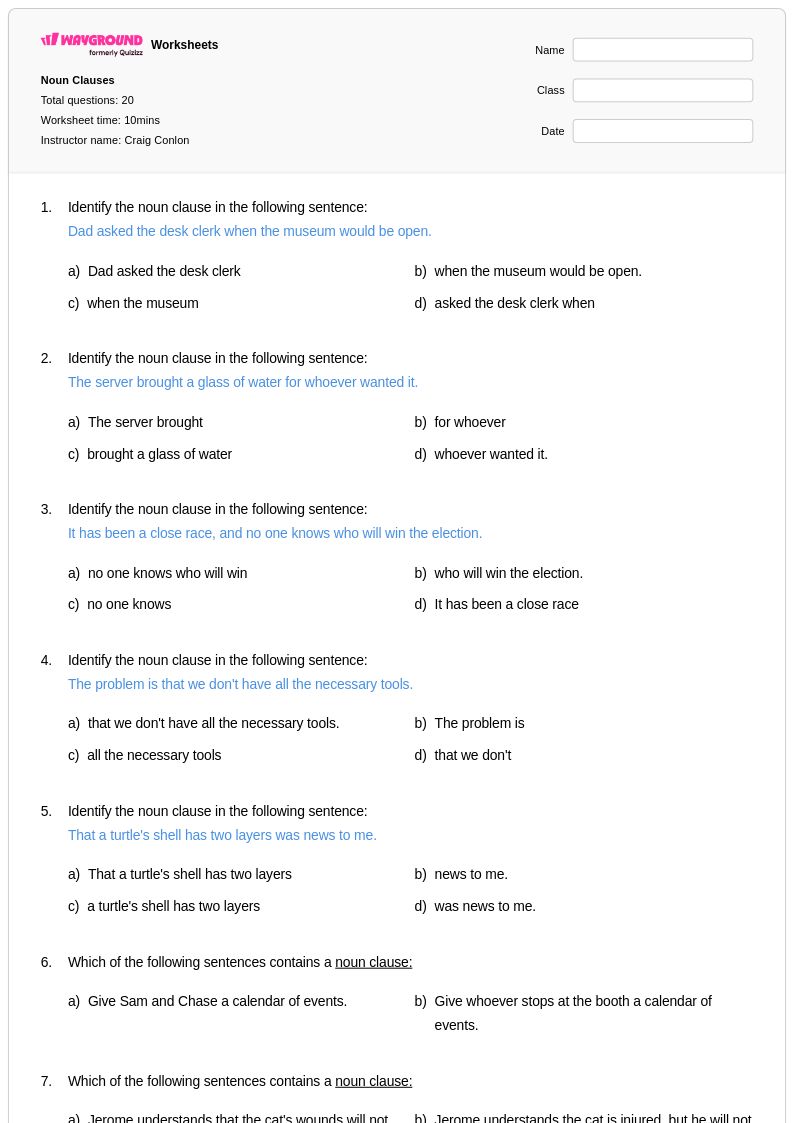
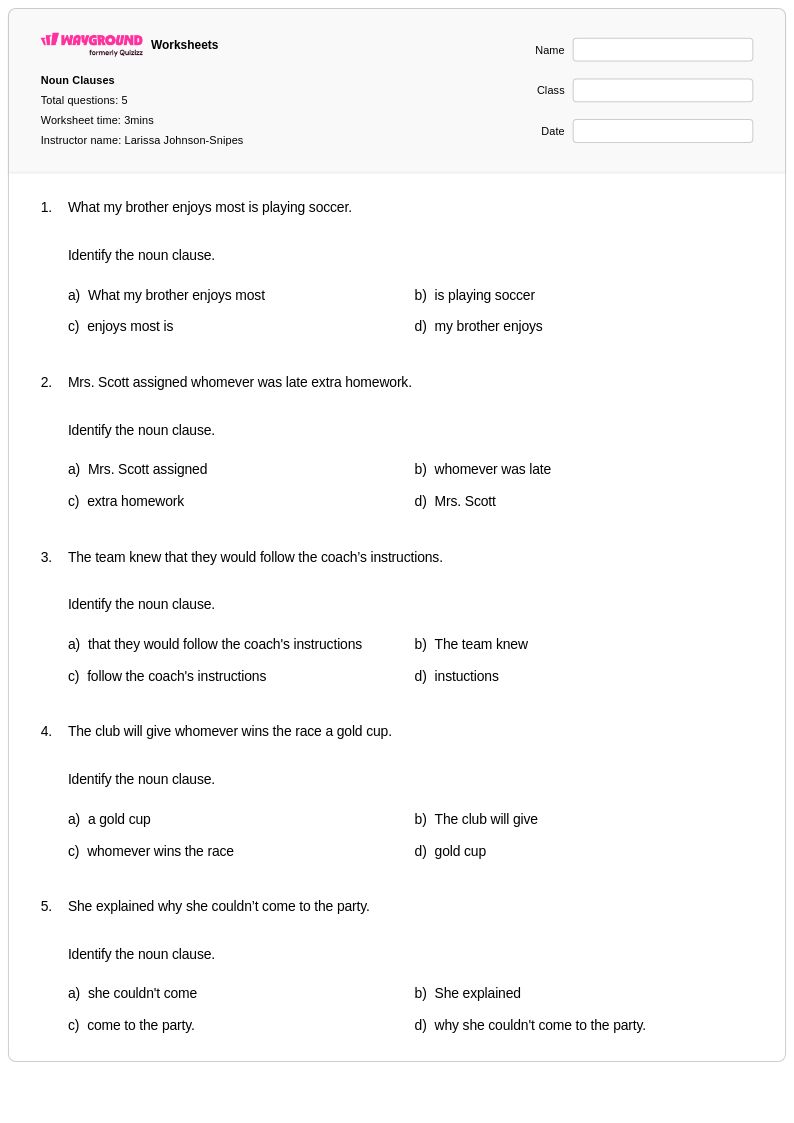
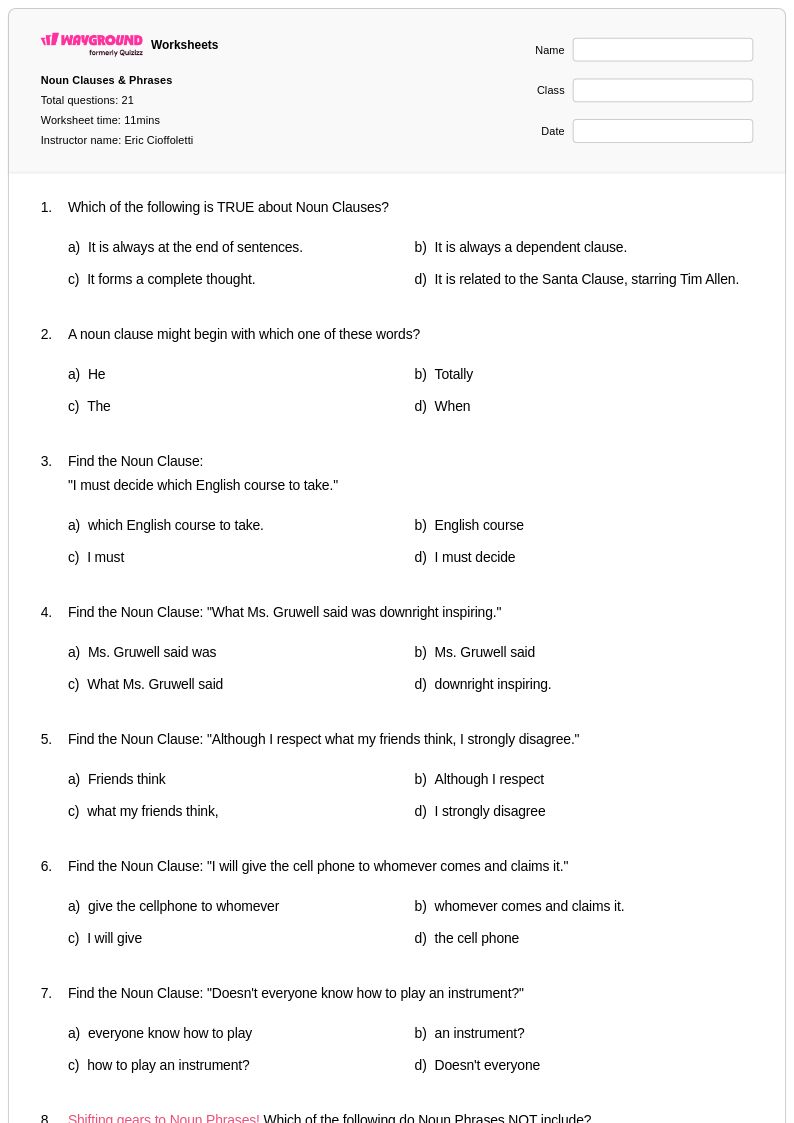
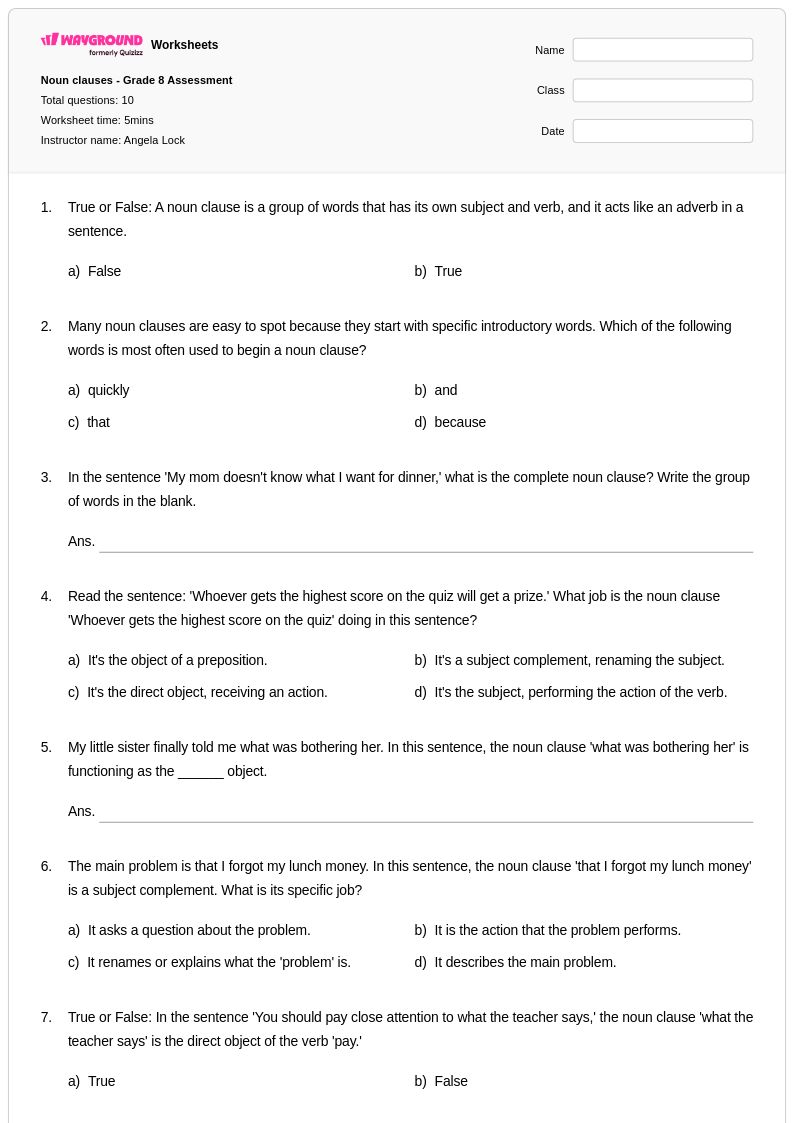
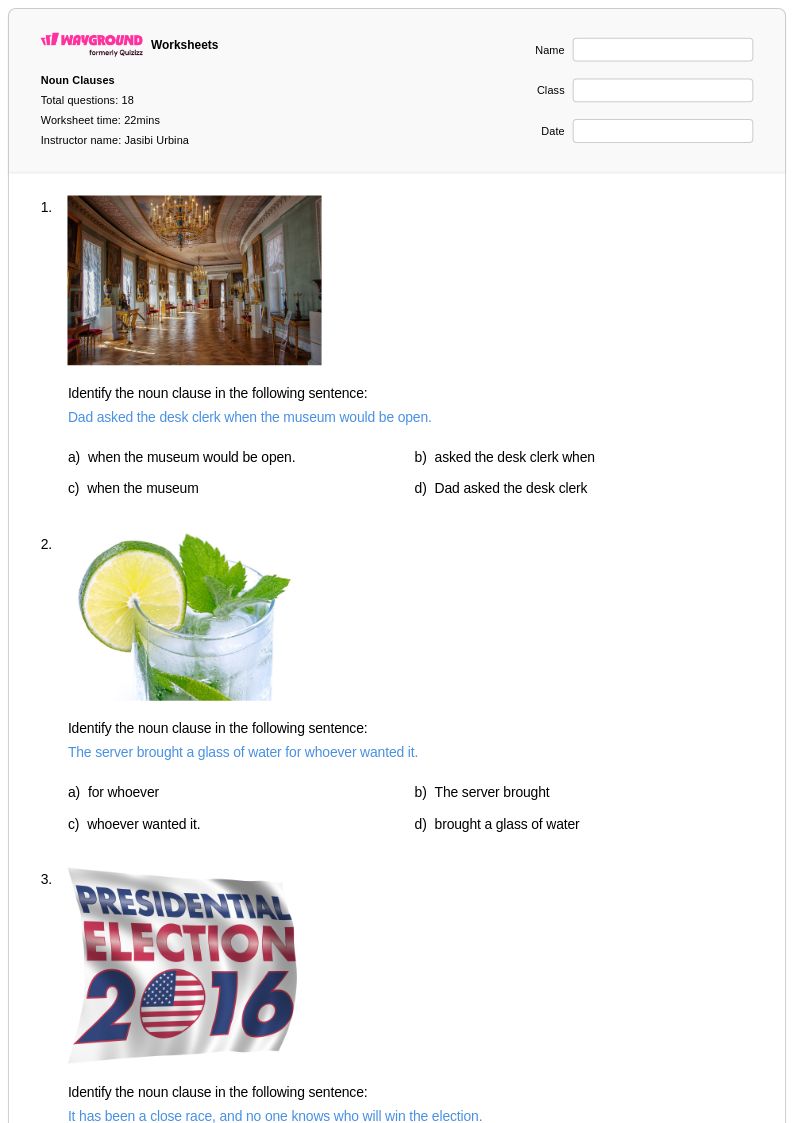
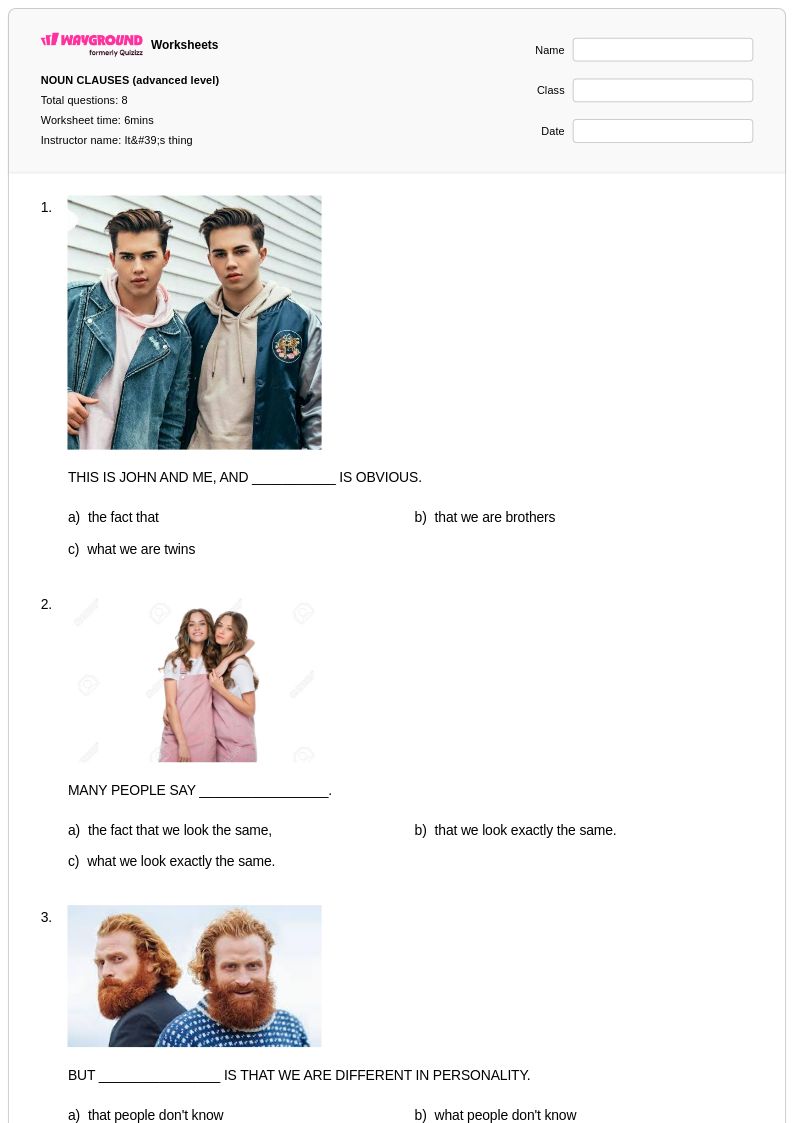
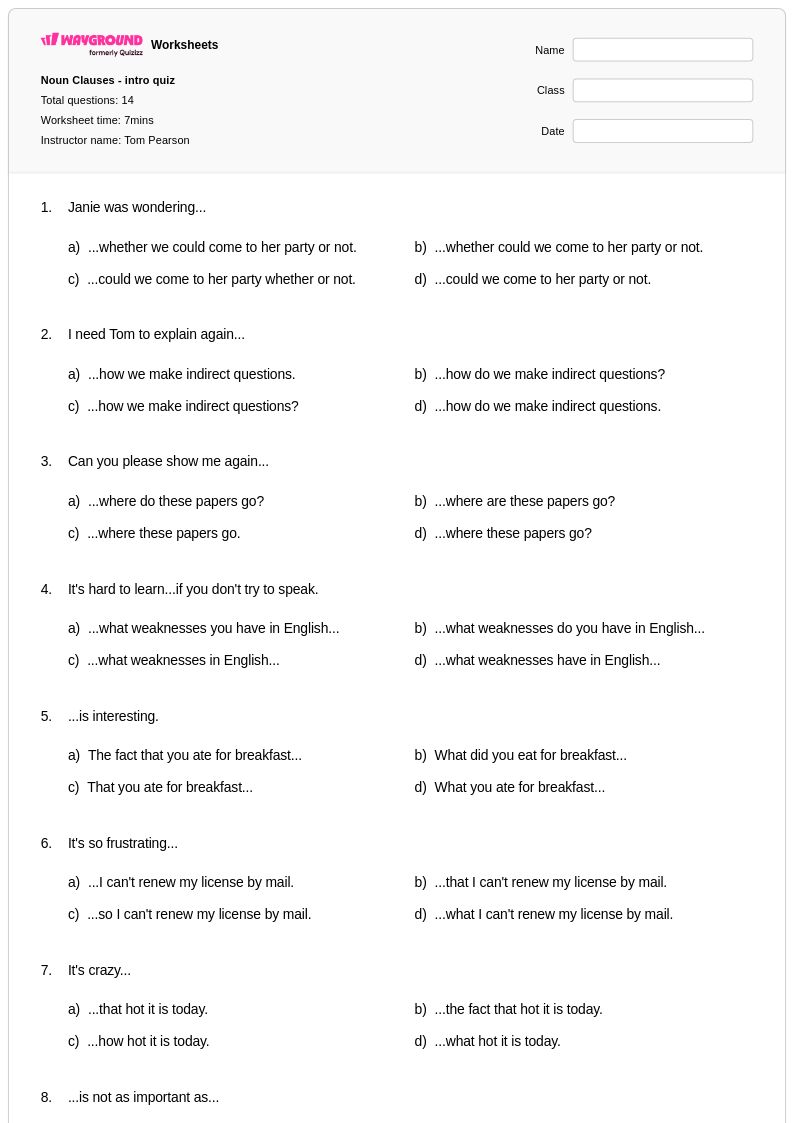
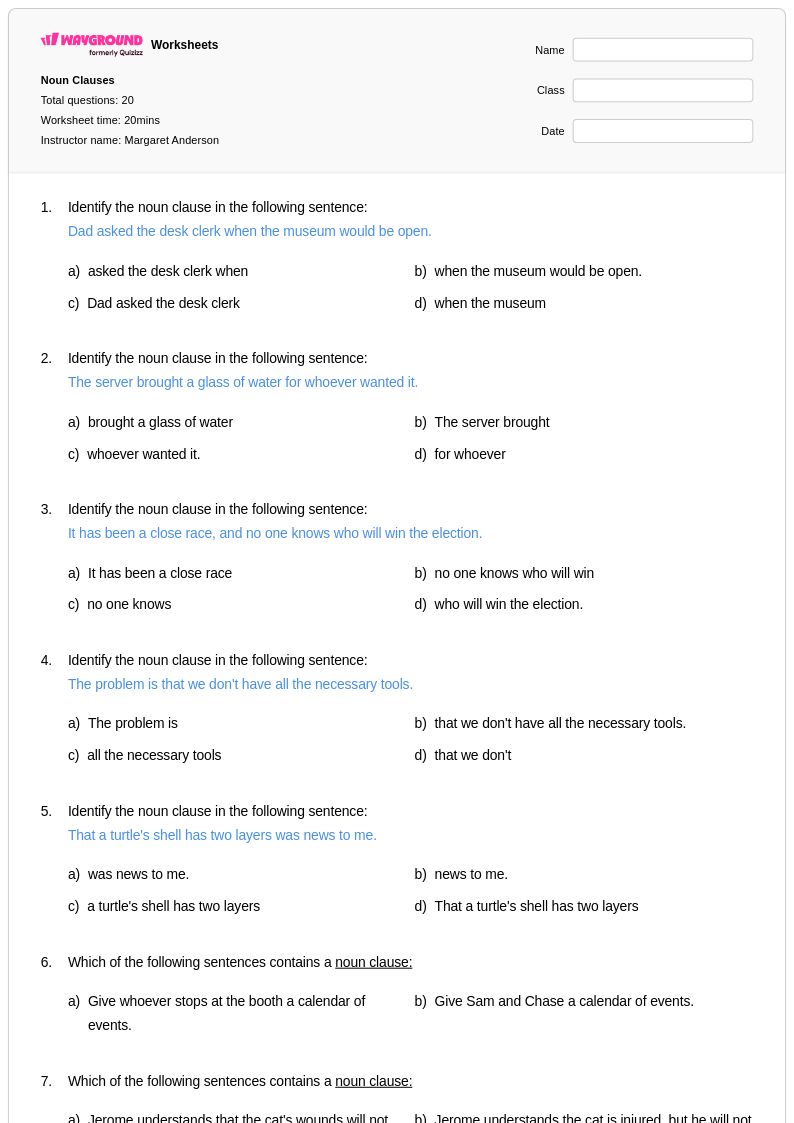
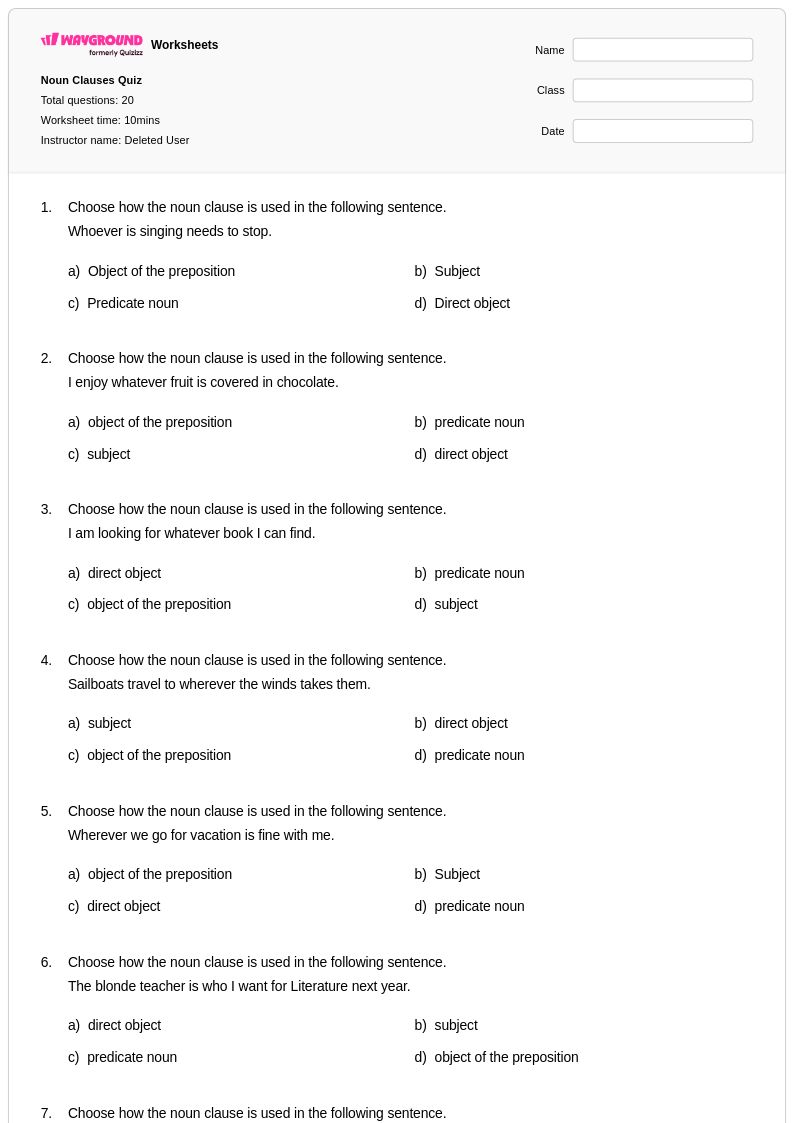
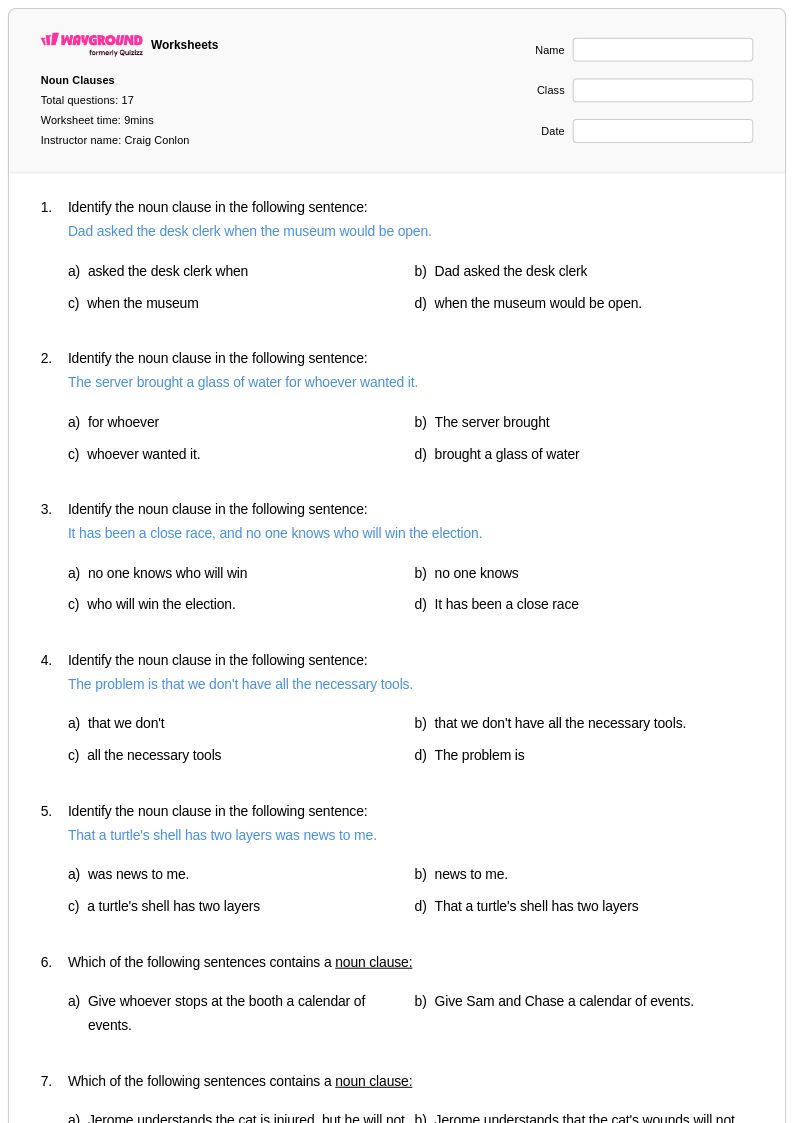
Noun clauses represent a sophisticated grammatical concept that Grade 9 students must master to advance their writing and analytical skills. Wayground's comprehensive collection of noun clause worksheets provides targeted practice in identifying, constructing, and properly punctuating these dependent clauses that function as nouns within sentences. These expertly designed printables strengthen students' understanding of how noun clauses serve as subjects, objects, and complements while teaching essential recognition of introductory words such as "that," "what," "who," and "whether." Each worksheet includes detailed answer keys and free pdf downloads, offering structured practice problems that progress from basic identification exercises to complex sentence analysis and construction tasks that build confidence in manipulating these challenging grammatical structures.
Wayground's extensive library draws from millions of teacher-created resources specifically designed to support educators in delivering effective noun clause instruction for Grade 9 students. The platform's robust search and filtering capabilities allow teachers to quickly locate worksheets aligned with specific standards and learning objectives, while differentiation tools enable customization for diverse student needs and ability levels. These resources are available in both printable pdf format and interactive digital versions, providing flexibility for classroom instruction, homework assignments, and independent practice sessions. Teachers can efficiently plan comprehensive grammar units, implement targeted remediation for struggling learners, and offer enrichment opportunities for advanced students through this carefully curated collection of noun clause materials that support systematic skill development and assessment.
FAQs
How do I teach noun clauses to my students?
Start by ensuring students have a solid grasp of what a clause is — a group of words with a subject and a verb — before introducing noun clauses as dependent clauses that function like nouns. Teach students to identify the introductory words that signal noun clauses, such as 'that,' 'what,' 'whether,' 'how,' 'who,' and 'which,' since recognizing these words is the gateway to identifying clause boundaries. From there, guide students through the three primary functions of noun clauses: as subjects, objects, and complements. Using sentence substitution is an effective technique — if a noun clause can be replaced by 'it' or 'something,' students can confirm it is functioning as a noun.
What exercises help students practice identifying and using noun clauses?
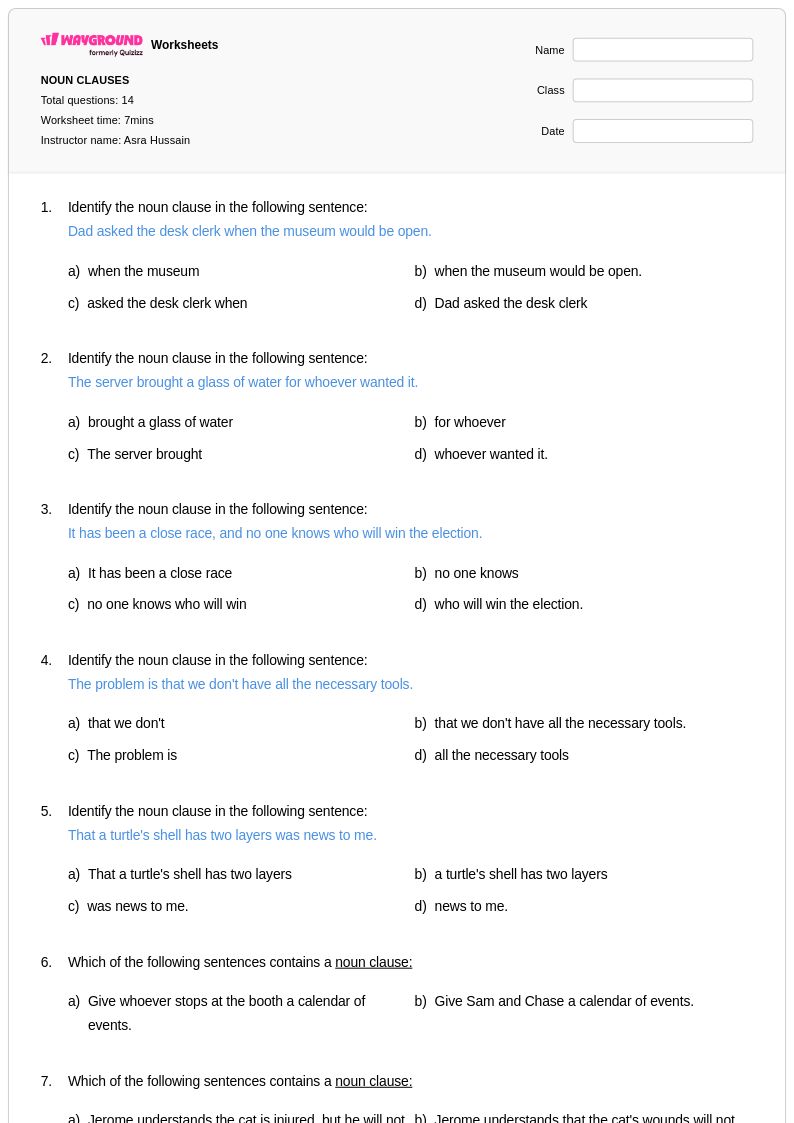
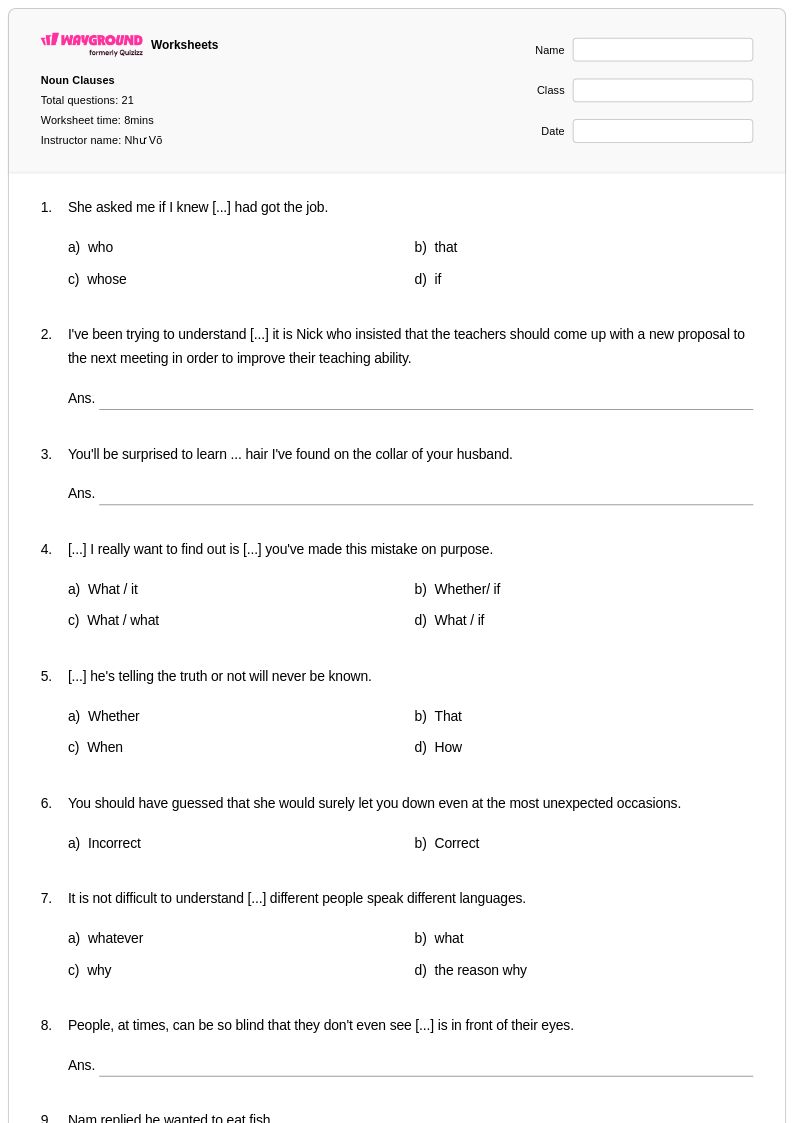
The most effective practice moves students from recognition to production in a structured sequence. Begin with identification exercises where students underline noun clauses in given sentences and label their grammatical function. Then progress to sentence combination tasks, where two simple sentences are merged using a noun clause. Finally, assign sentence construction exercises where students write original sentences using specified introductory words such as 'that,' 'whether,' or 'how.' This scaffolded approach builds both analytical and generative skills, which are both assessed in standardized grammar tasks.
What mistakes do students commonly make with noun clauses?
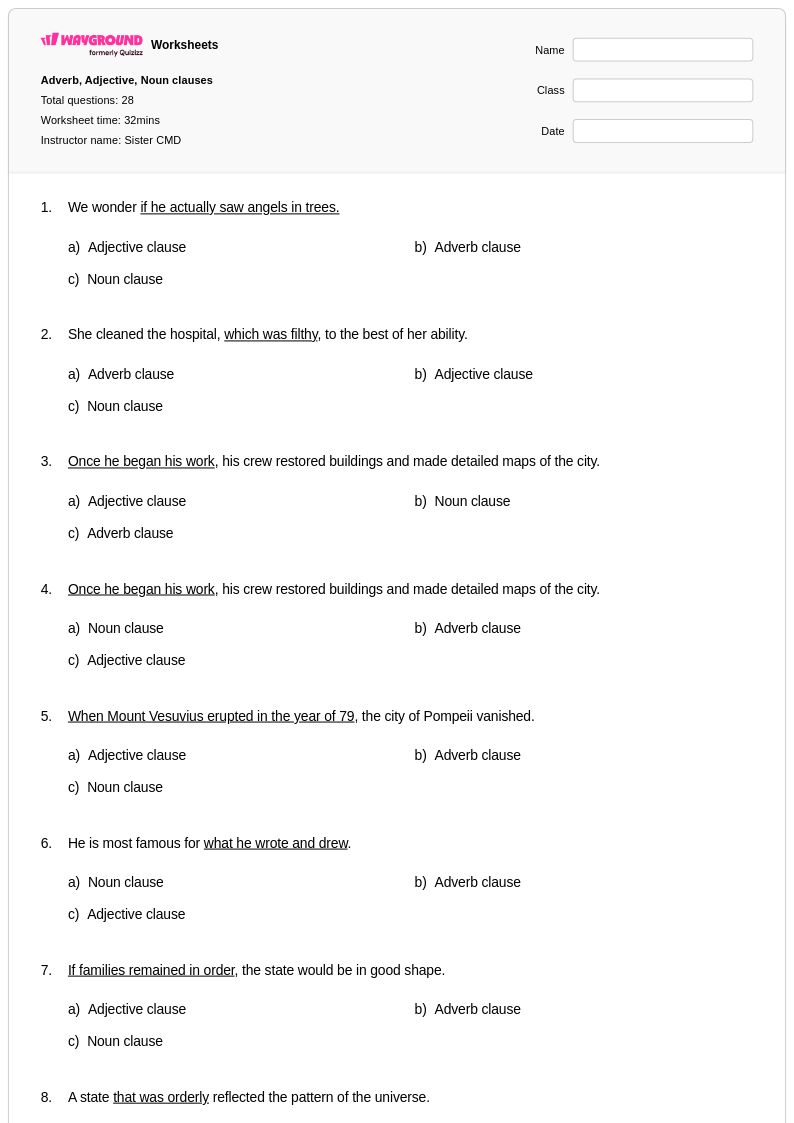
The most frequent error is confusing noun clauses with adjective or adverb clauses, especially when the same introductory word — such as 'that' or 'which' — can signal different clause types depending on context. Students also commonly misidentify the grammatical function of a noun clause, labeling it as a direct object when it is actually the subject of the sentence, or vice versa. Another persistent error involves word order in embedded questions: students often write 'She asked where was he going' instead of 'She asked where he was going,' retaining the inverted question structure instead of converting it to declarative order inside the clause.
How can I differentiate noun clause instruction for students at different skill levels?
For students who are still building foundational skills, focus on clause recognition using sentences with clear, unambiguous introductory words like 'that' and 'what,' and use the substitution test — replacing the clause with 'it' or 'something' — as a concrete strategy. Advanced learners can be challenged with sentence revision tasks that require them to embed noun clauses into complex multi-clause sentences or rewrite indirect questions correctly. On Wayground, teachers can apply accommodations such as reduced answer choices or read-aloud support for individual students, allowing the same worksheet activity to be appropriately leveled across a classroom without singling anyone out.
How do I use Wayground's noun clause worksheets in my classroom?
Wayground's noun clause worksheets are available as printable PDFs for traditional classroom use and in digital formats for technology-integrated environments, giving teachers flexibility to assign them as in-class practice, homework, or assessment. Teachers can also host a worksheet directly as a quiz on Wayground, enabling automatic scoring and immediate student feedback. Each worksheet includes a complete answer key, which reduces grading time and allows teachers to address misconceptions quickly. The collection can be filtered by complexity level and instructional focus, making it straightforward to select materials that match the specific stage of instruction.
How do noun clauses differ from other types of dependent clauses?
Noun clauses, adjective clauses, and adverb clauses are all dependent clauses, but they serve entirely different grammatical functions. A noun clause functions as a noun — it can be a subject, object, or complement — and is often introduced by words like 'that,' 'what,' 'whether,' or 'how.' An adjective clause modifies a noun and is typically introduced by relative pronouns like 'who,' 'whom,' 'which,' or 'that.' An adverb clause modifies a verb, adjective, or another adverb and is introduced by subordinating conjunctions like 'because,' 'although,' or 'when.' Teaching students to ask 'What function does this clause serve in the sentence?' is the most reliable way to distinguish among the three types.