Free Printable Pronoun-subject Agreement Worksheets for Grade 9
Grade 9 pronoun-subject agreement worksheets from Wayground offer comprehensive printables and practice problems that help students master proper pronoun usage, featuring free PDF downloads with complete answer keys.
Explore printable Pronoun-subject Agreement worksheets for Grade 9
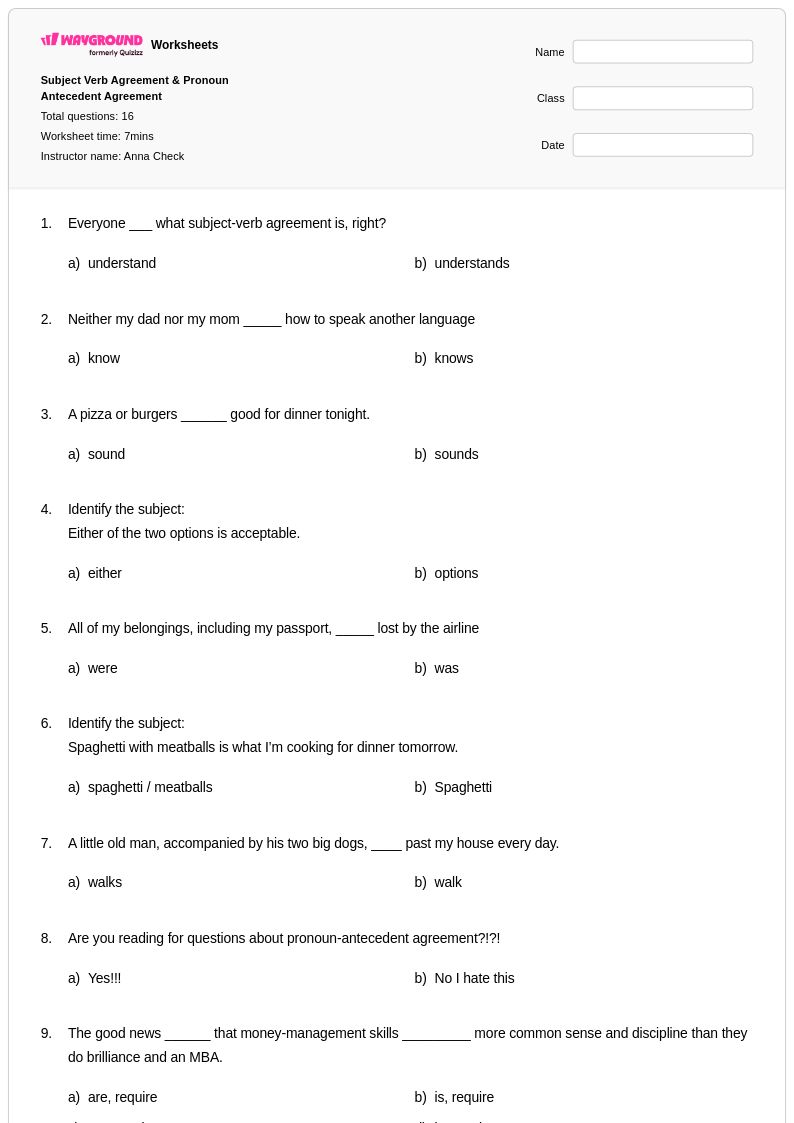
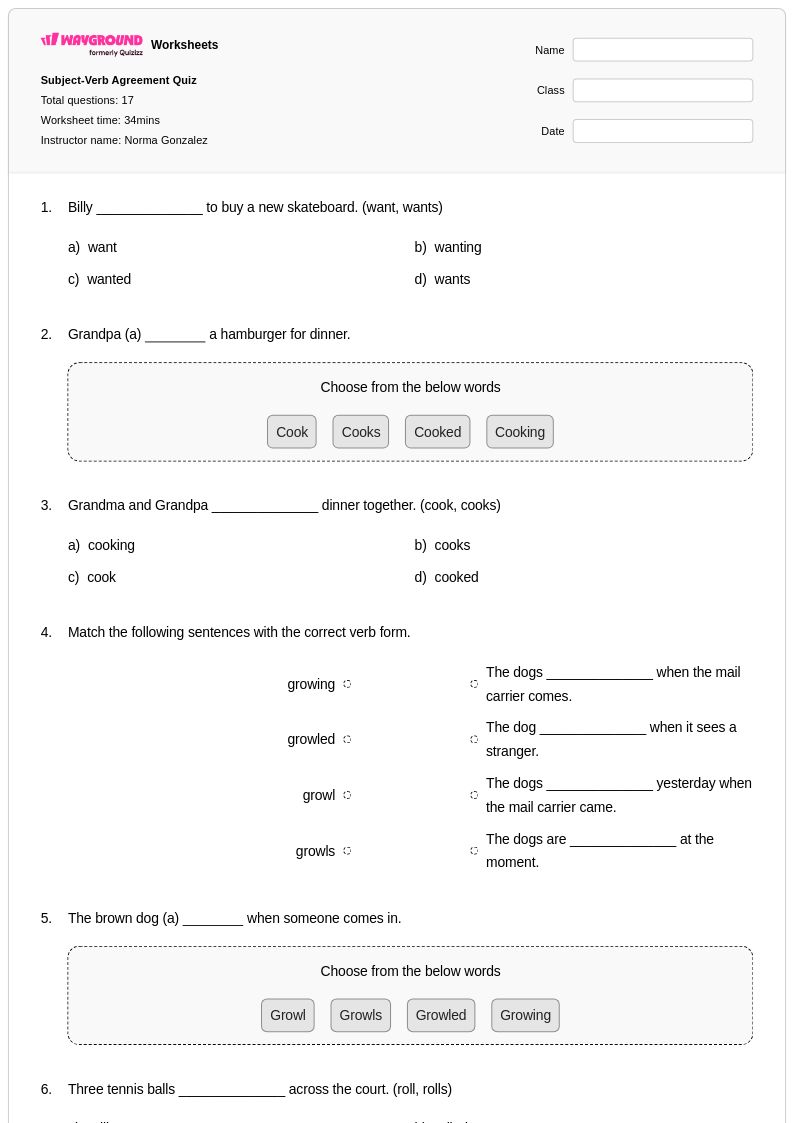
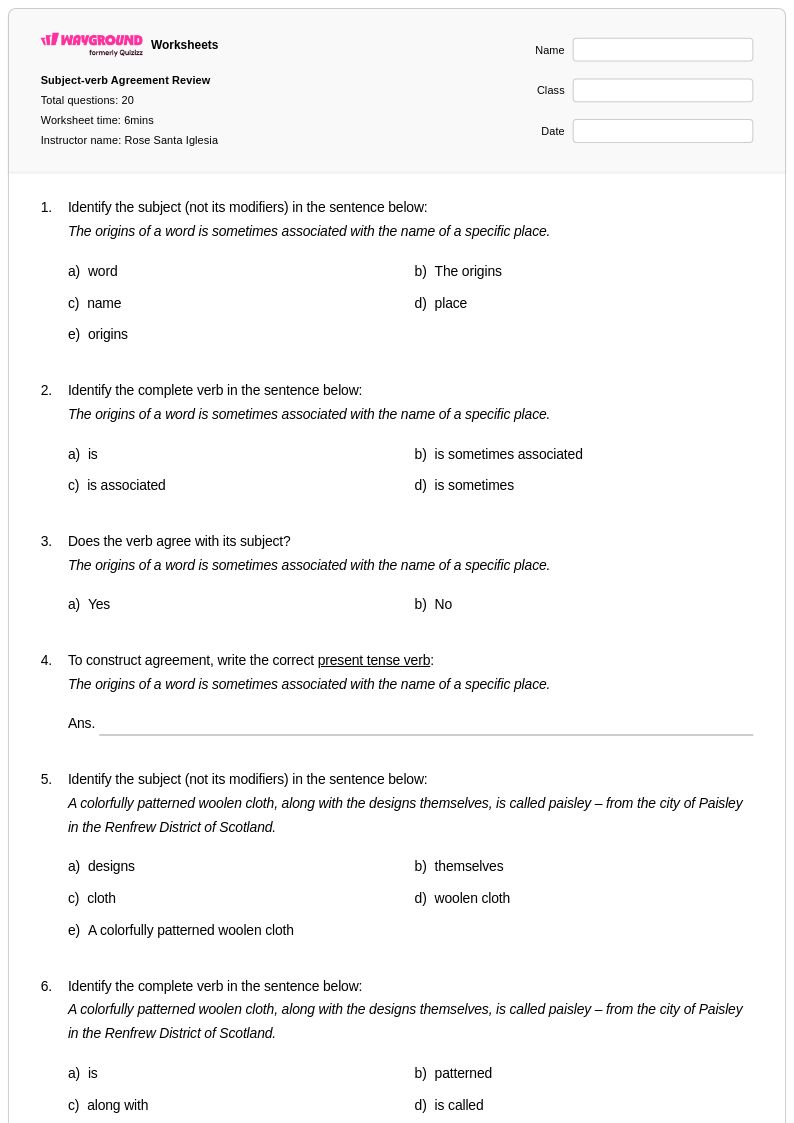
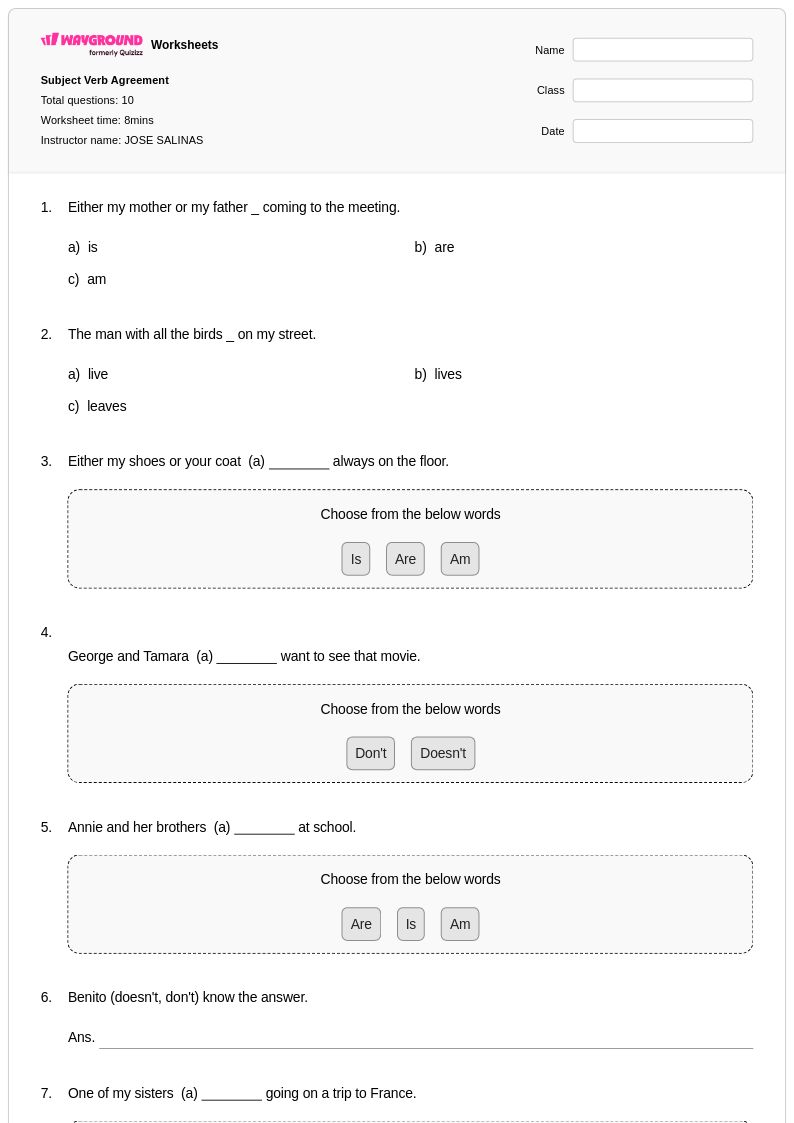
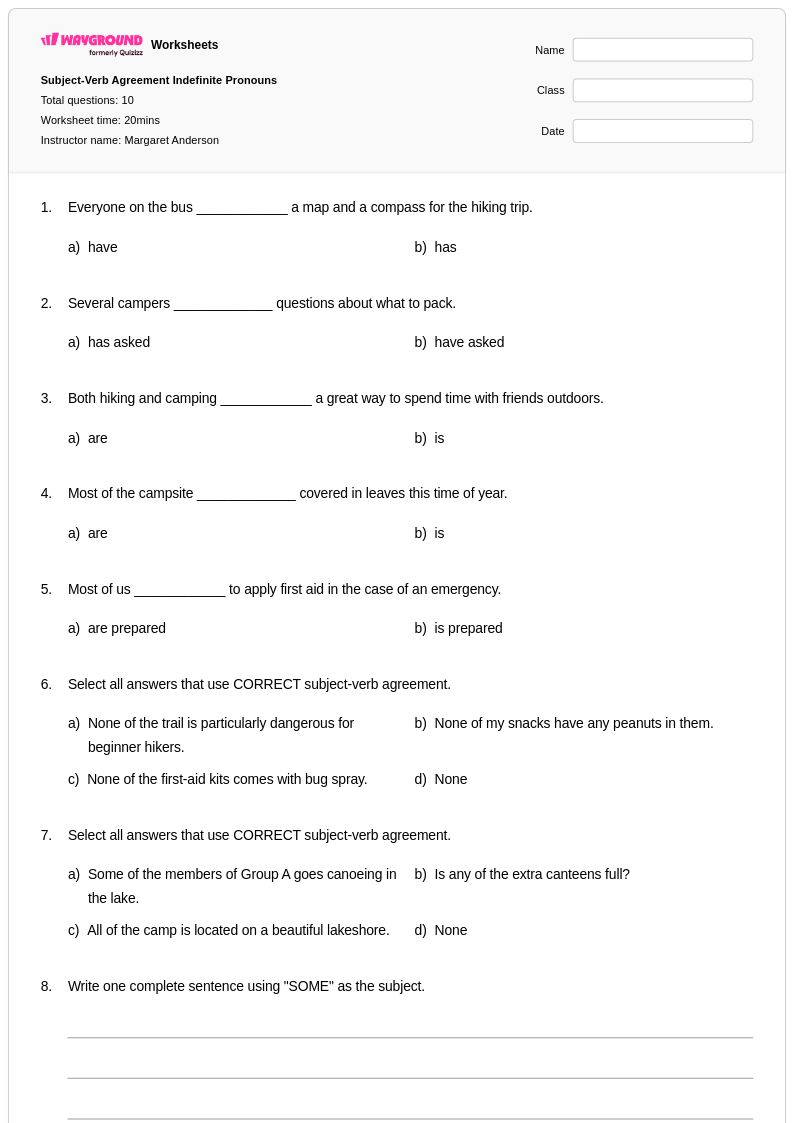
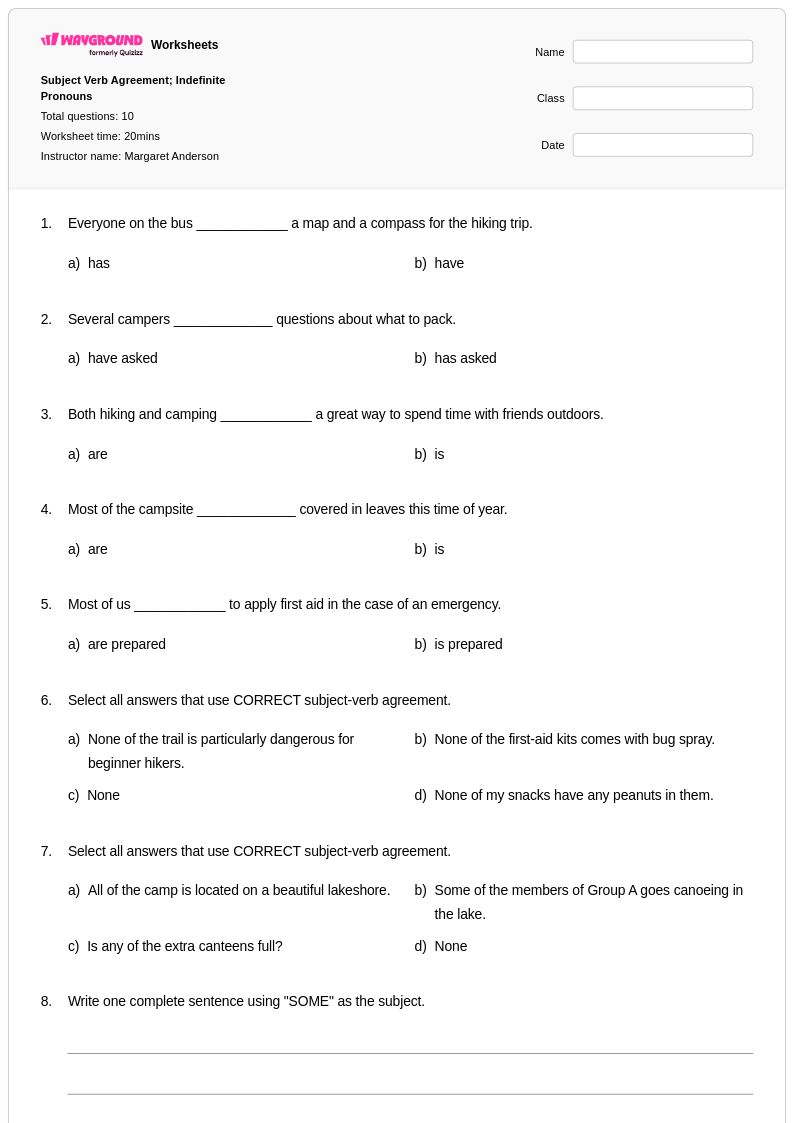
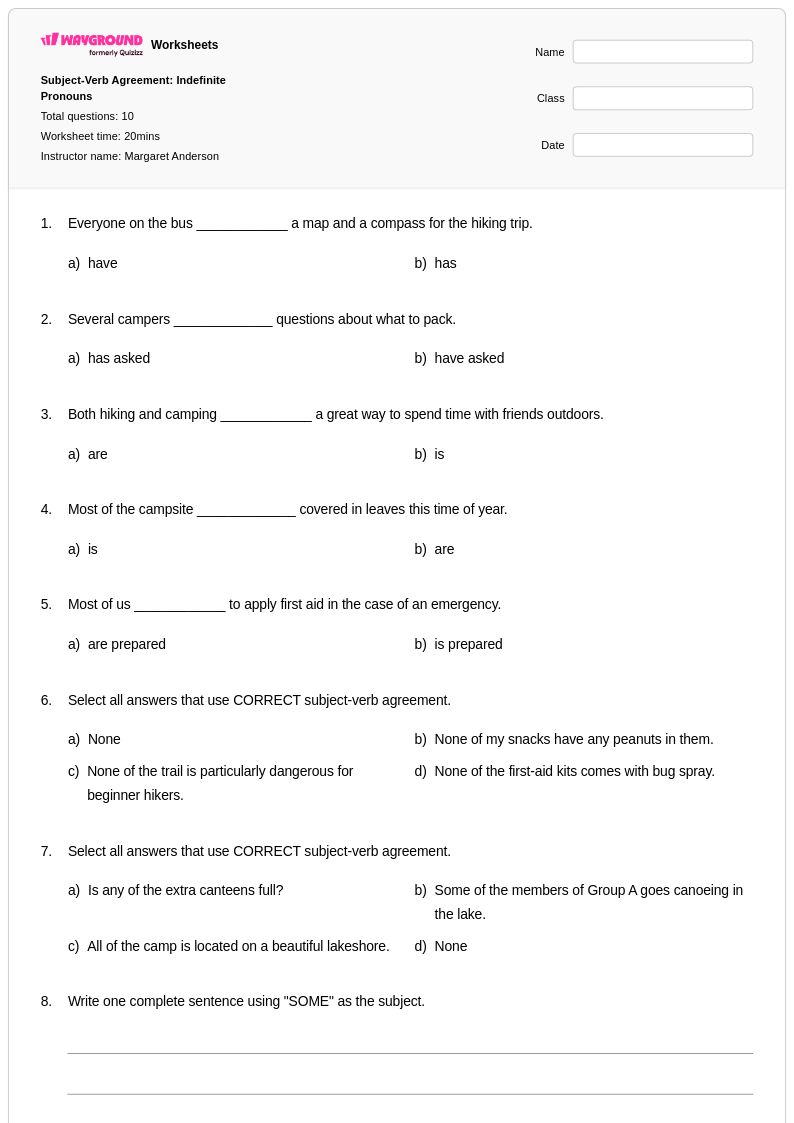
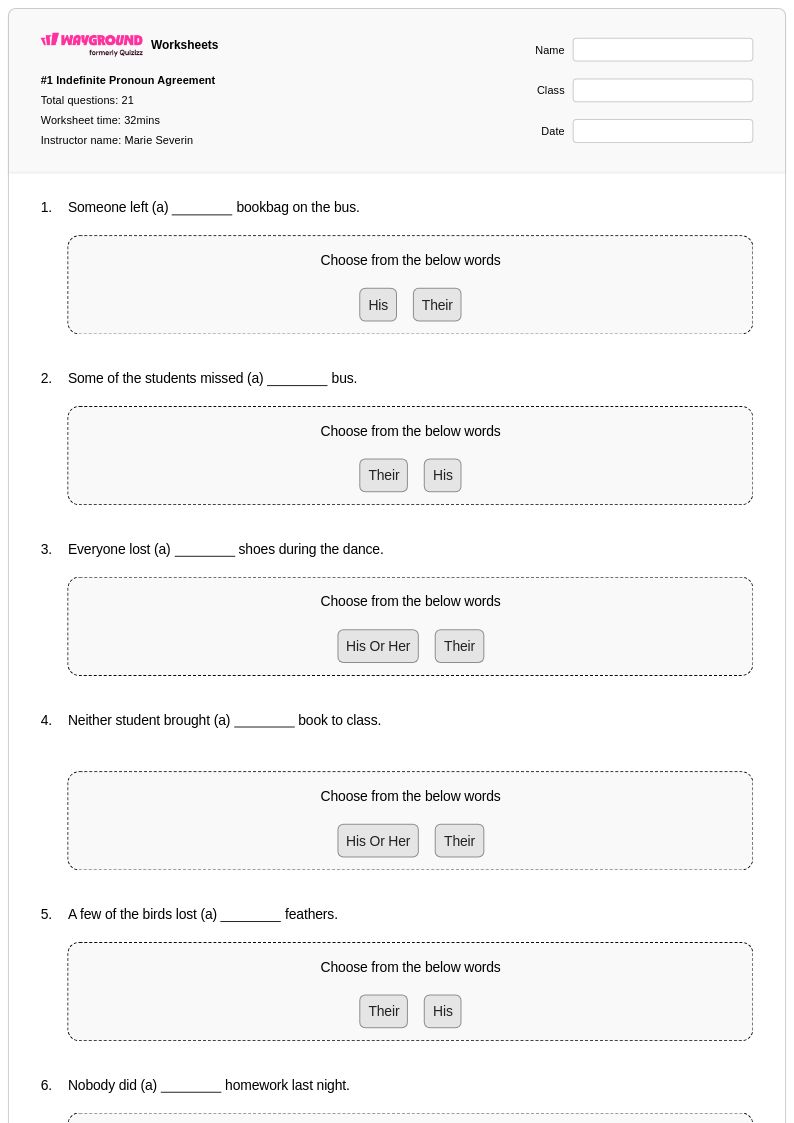
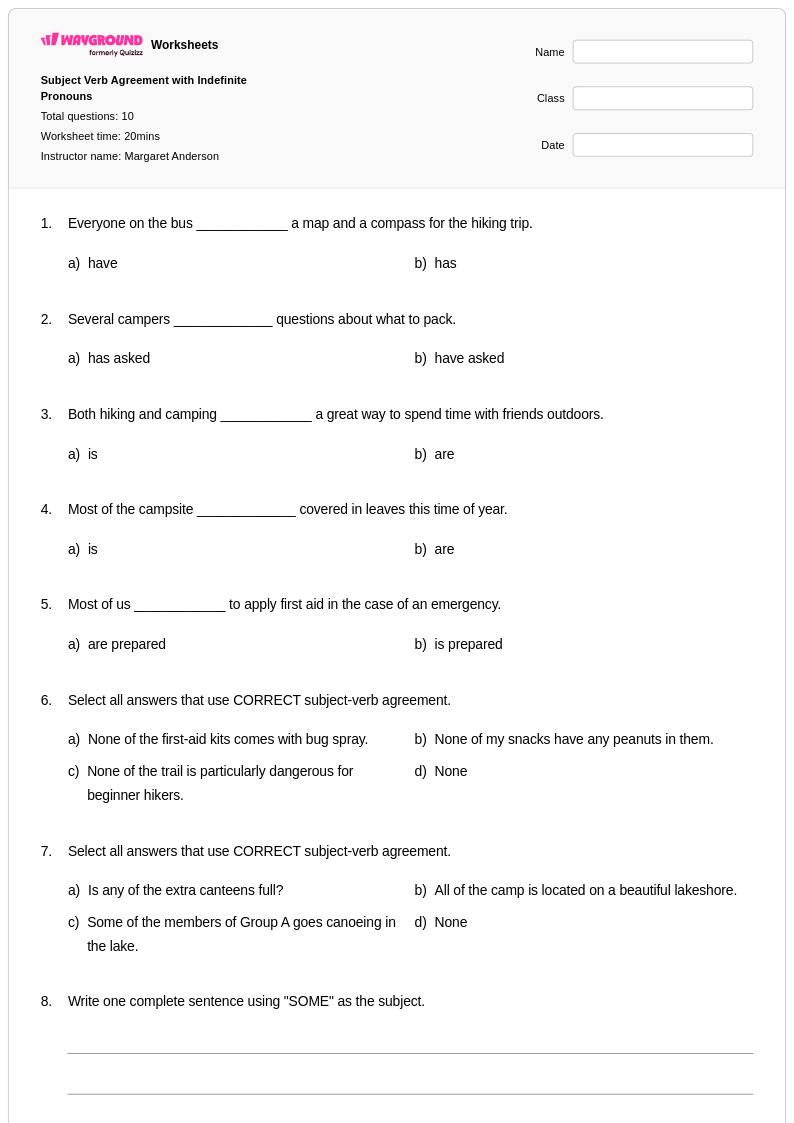
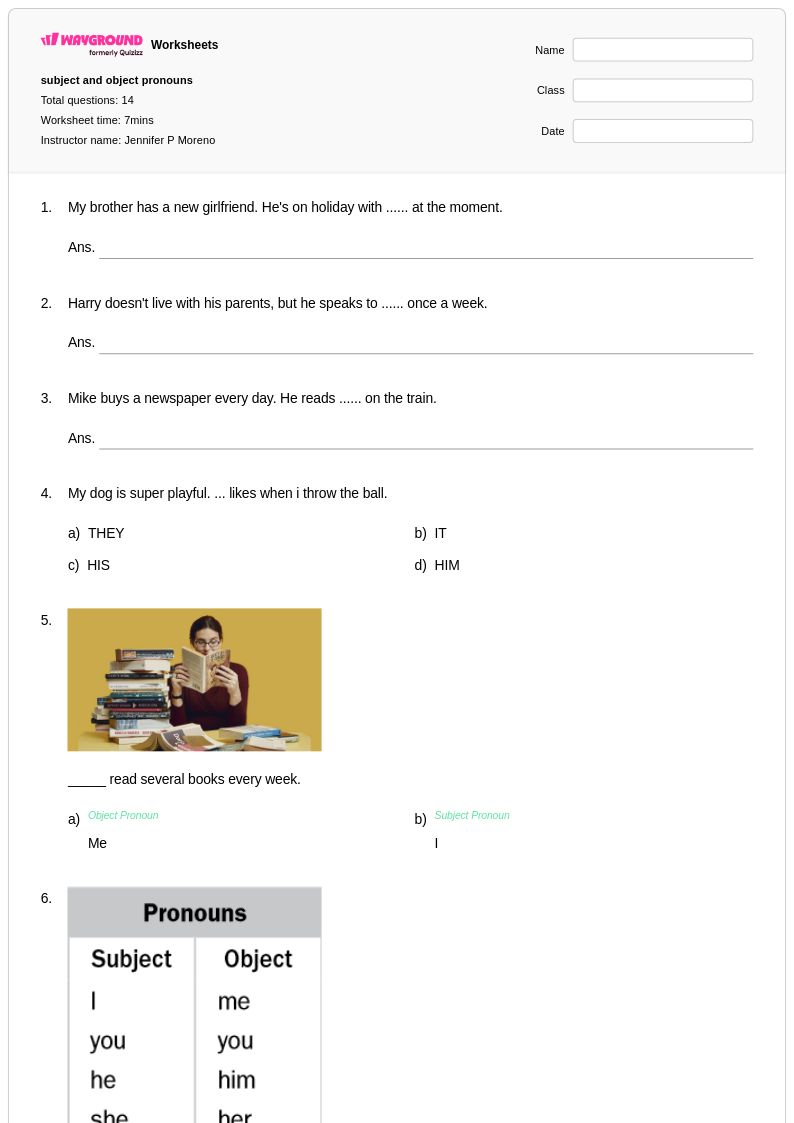
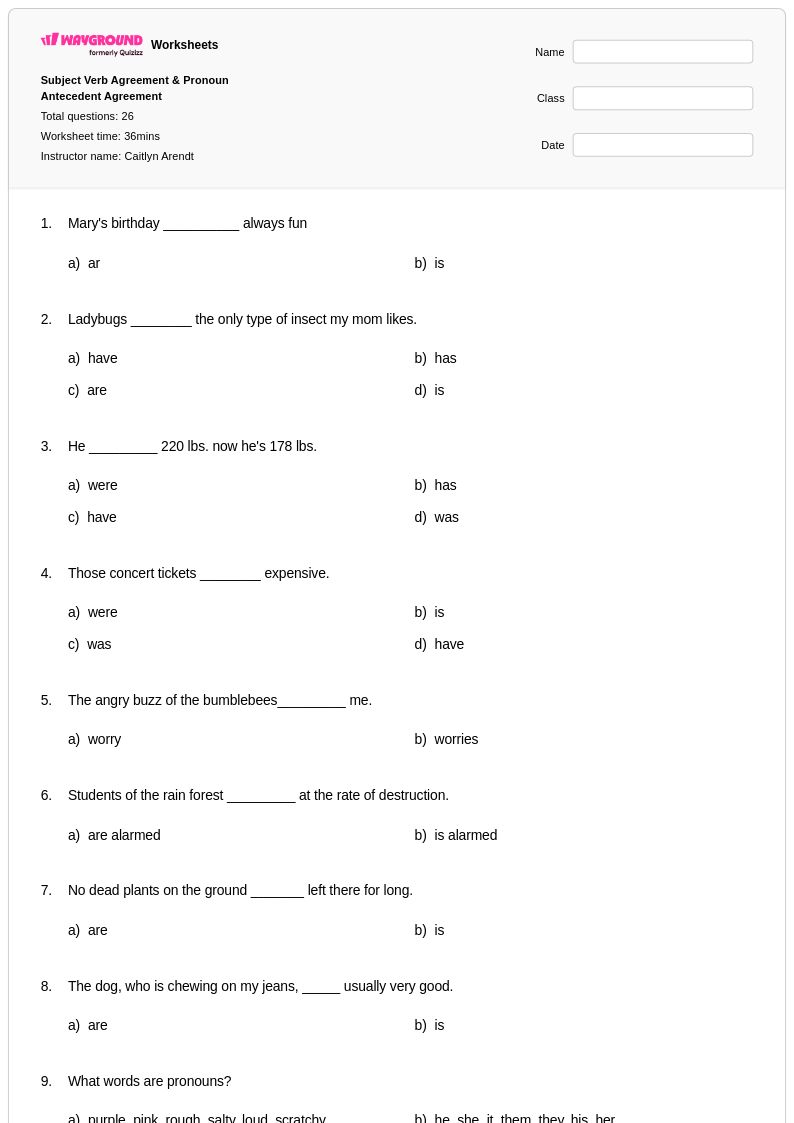
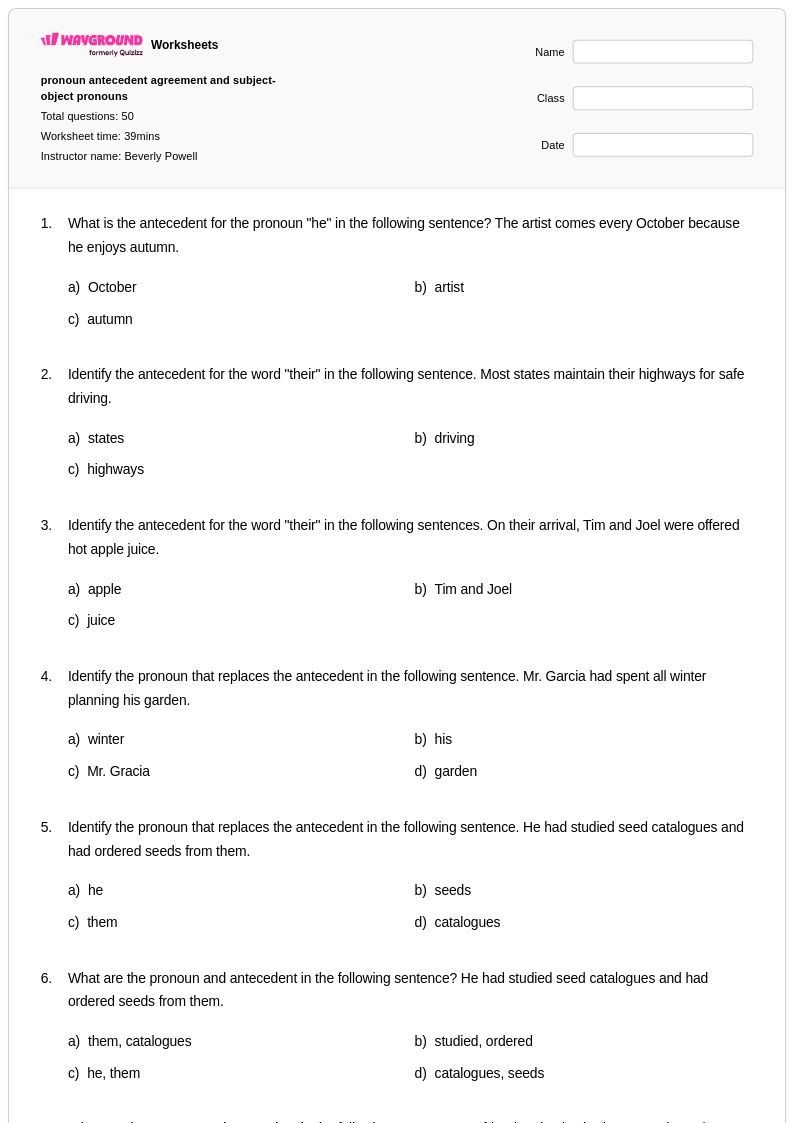
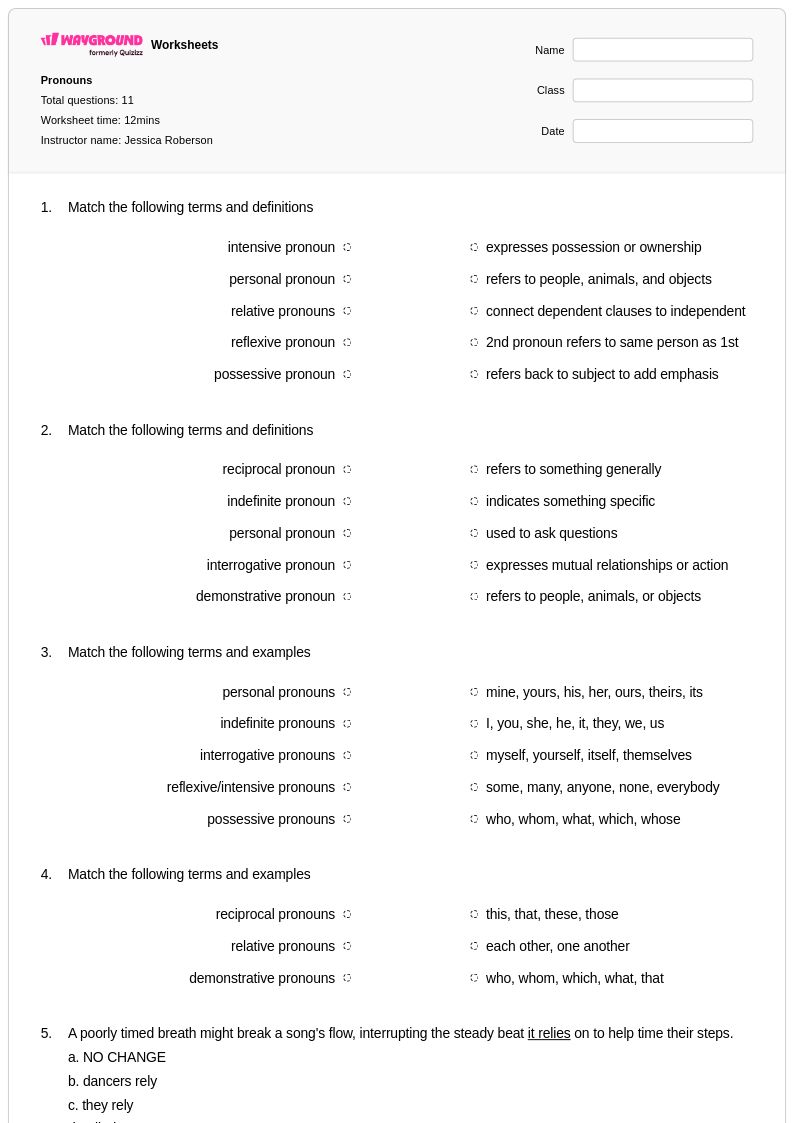
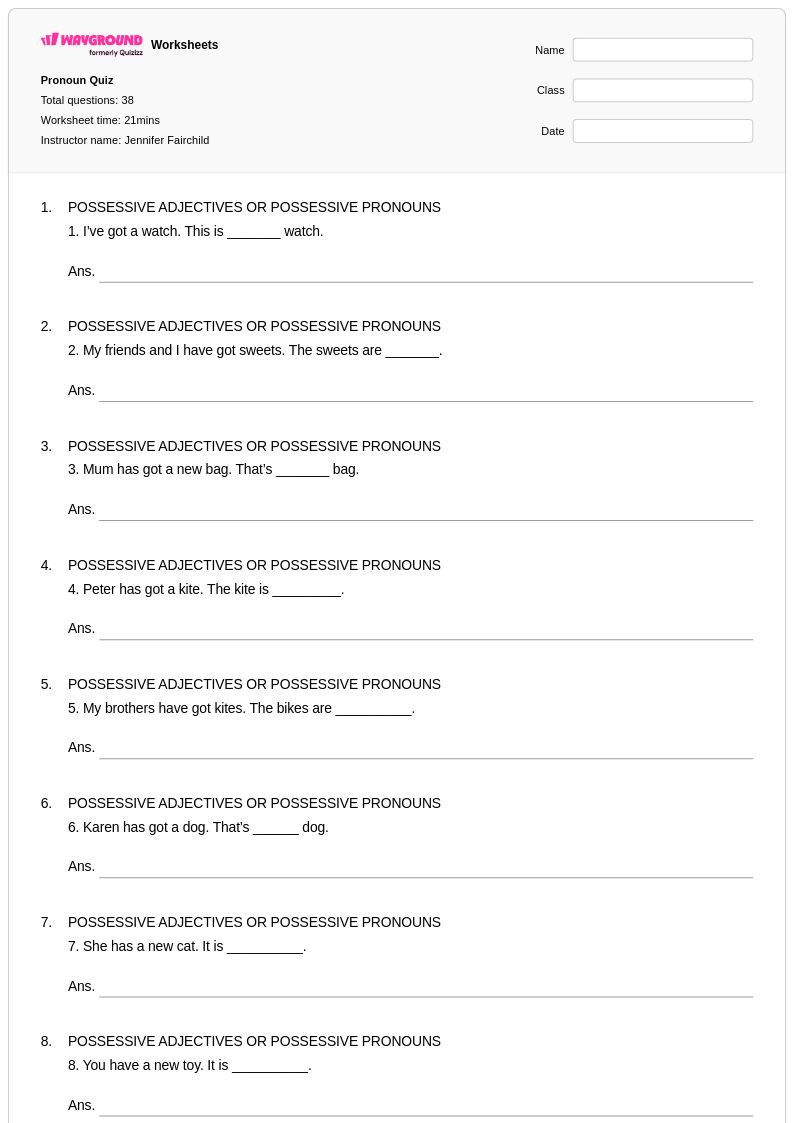
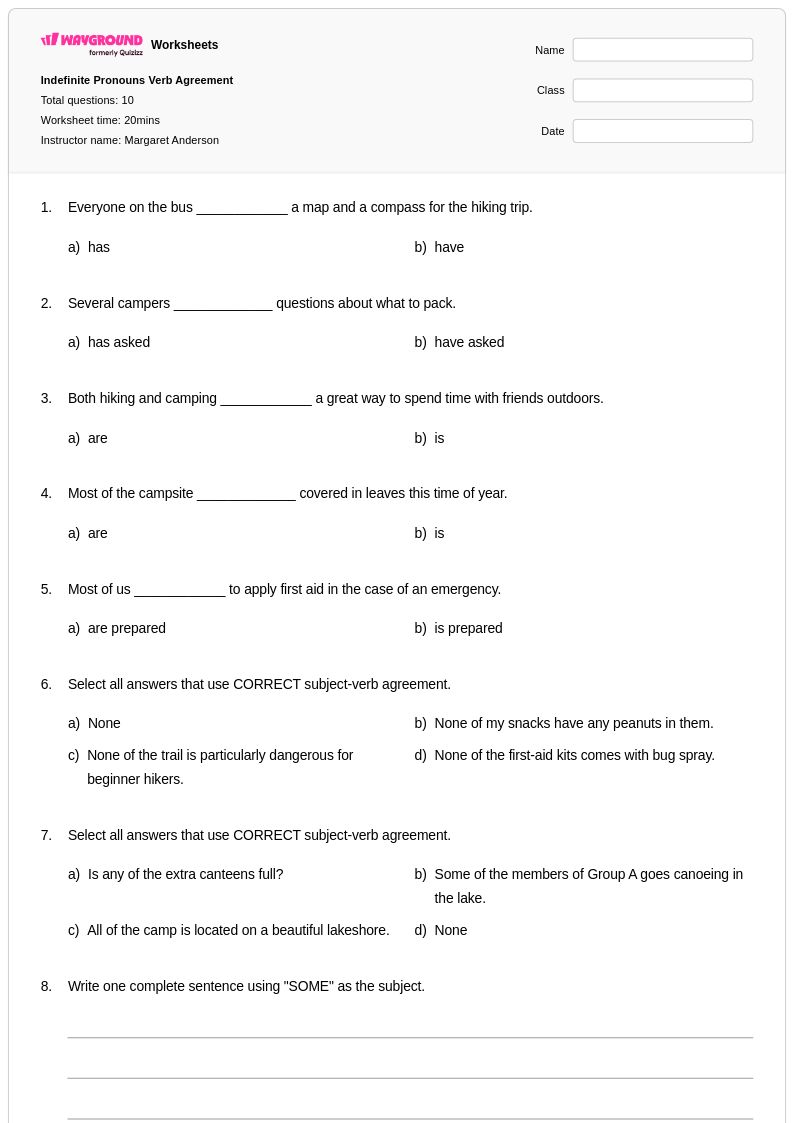
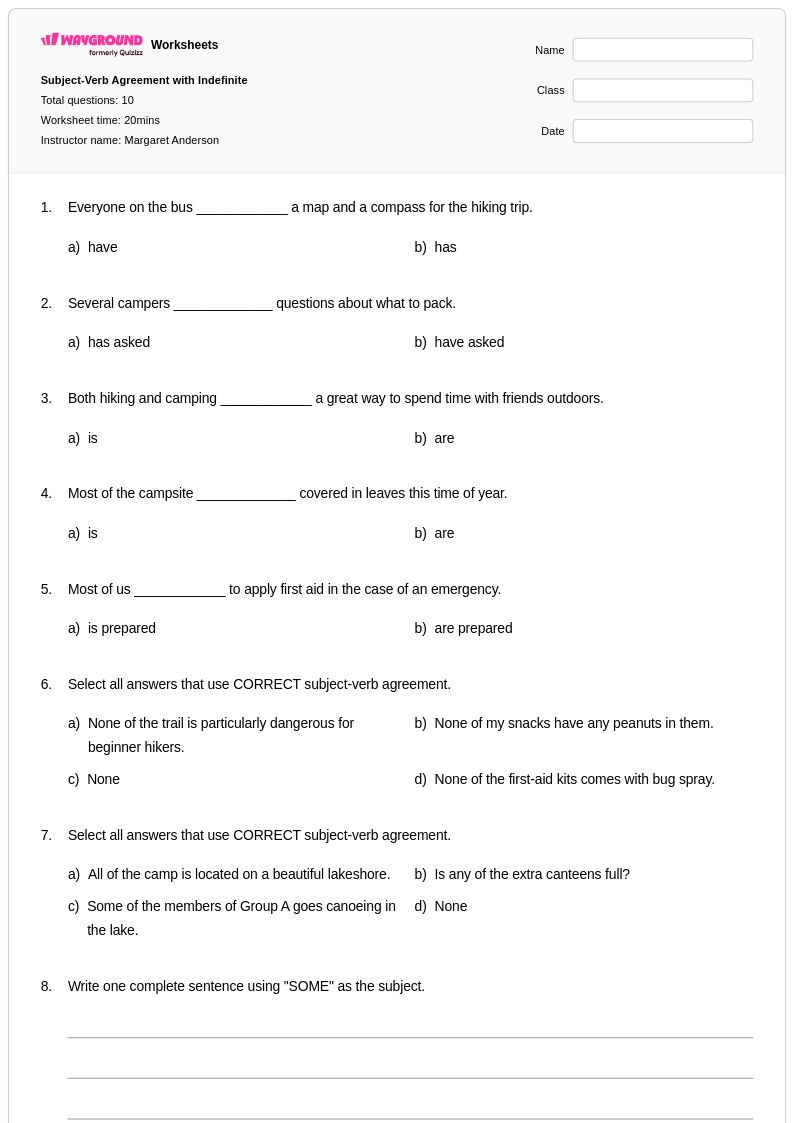
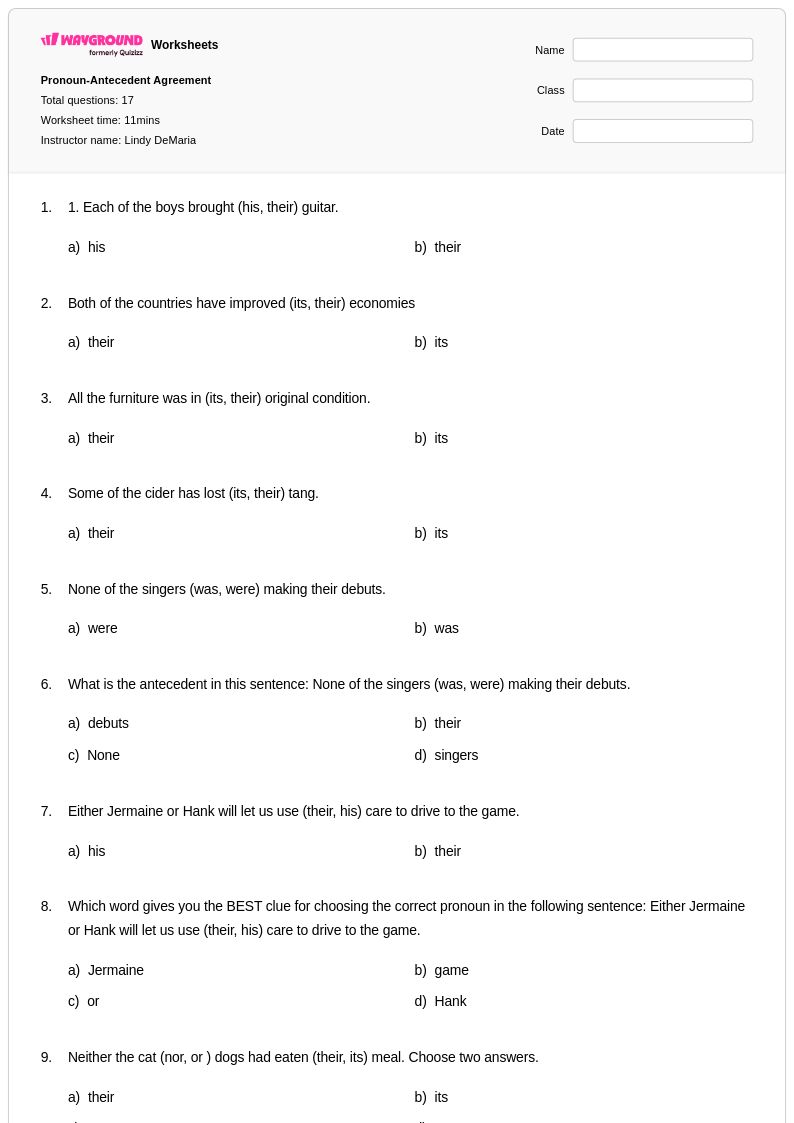
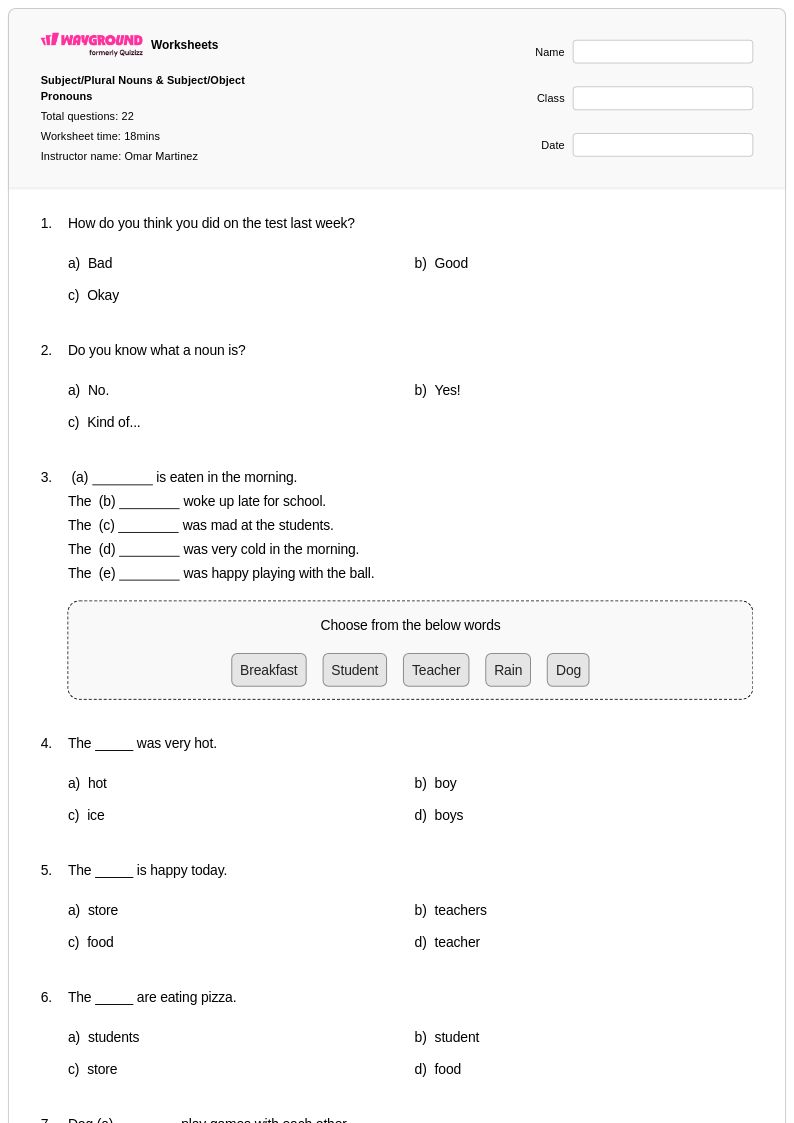
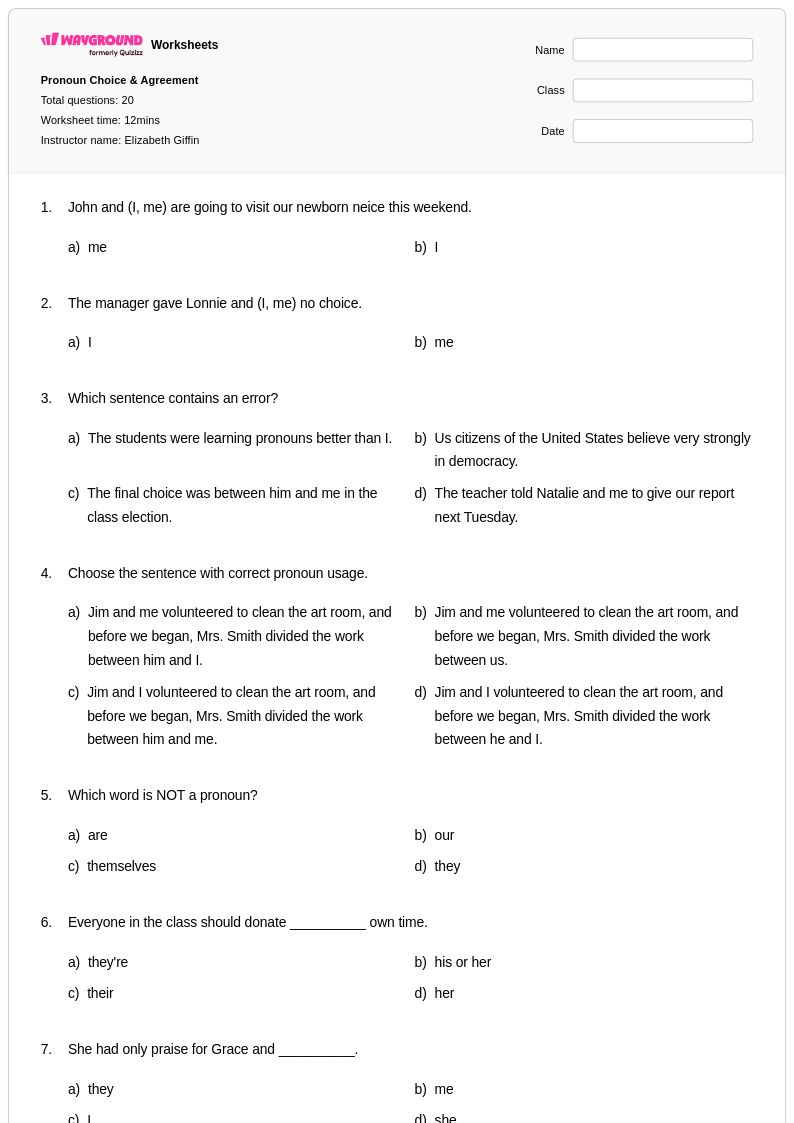
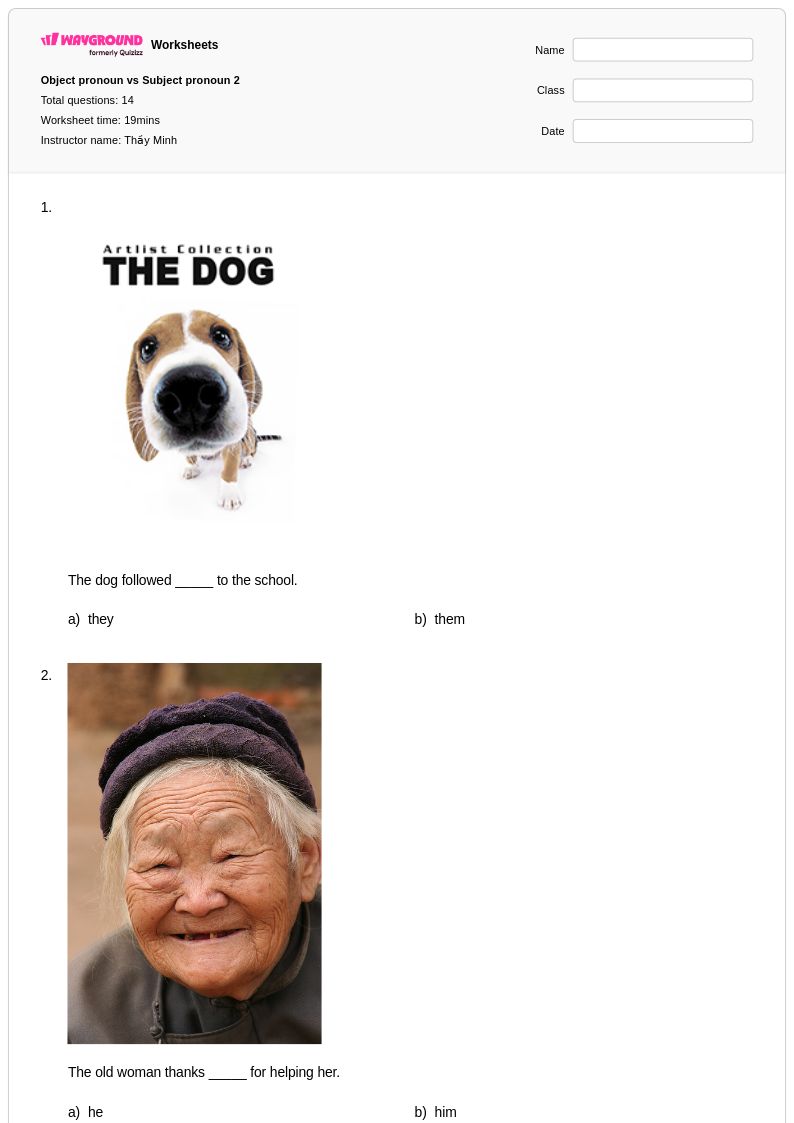
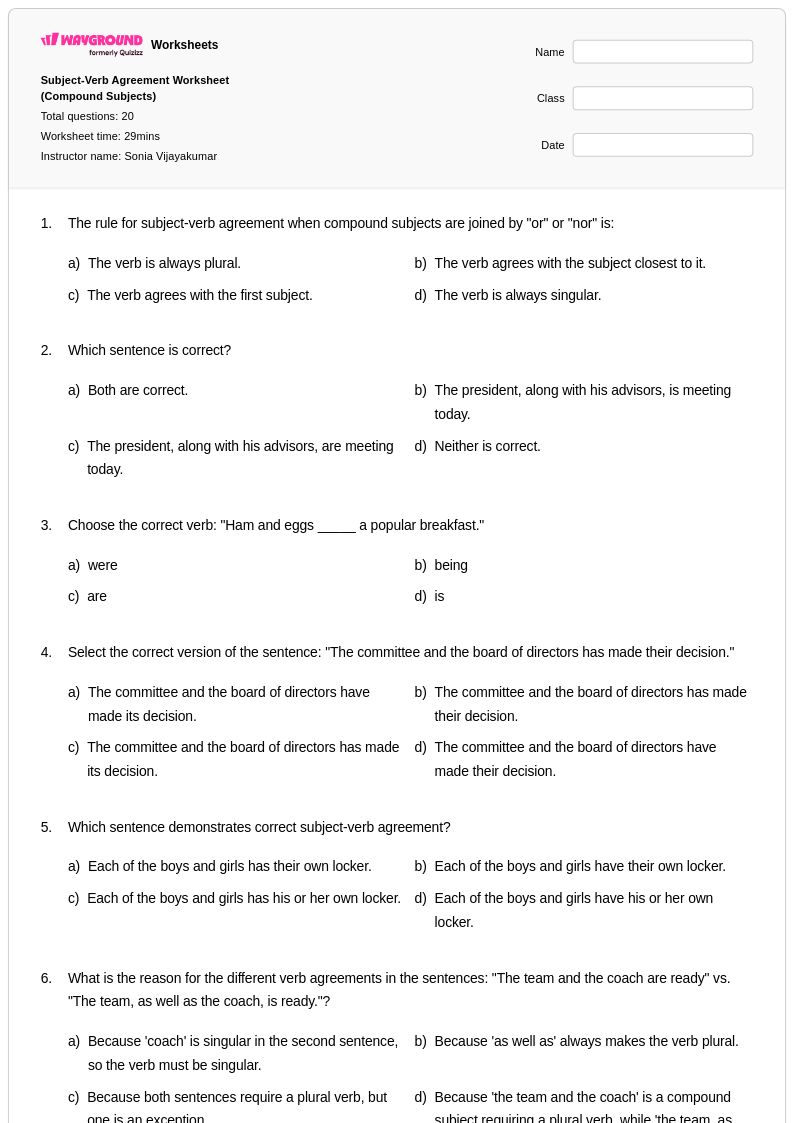
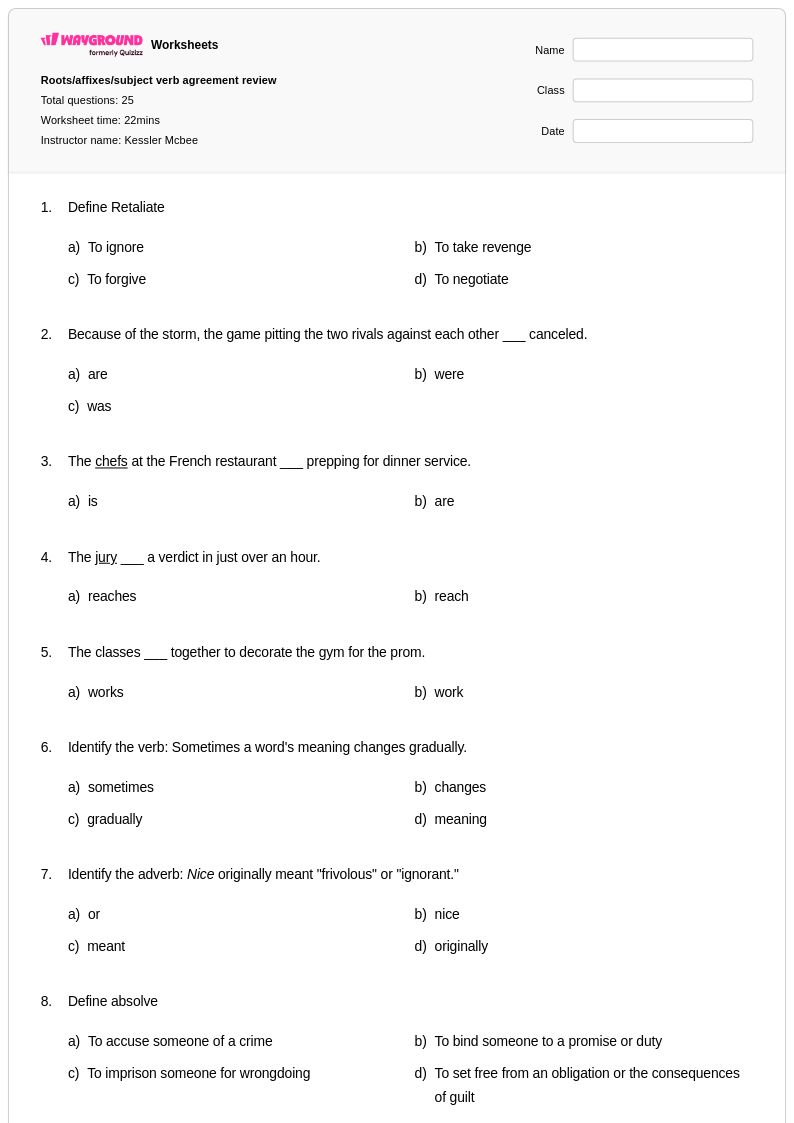
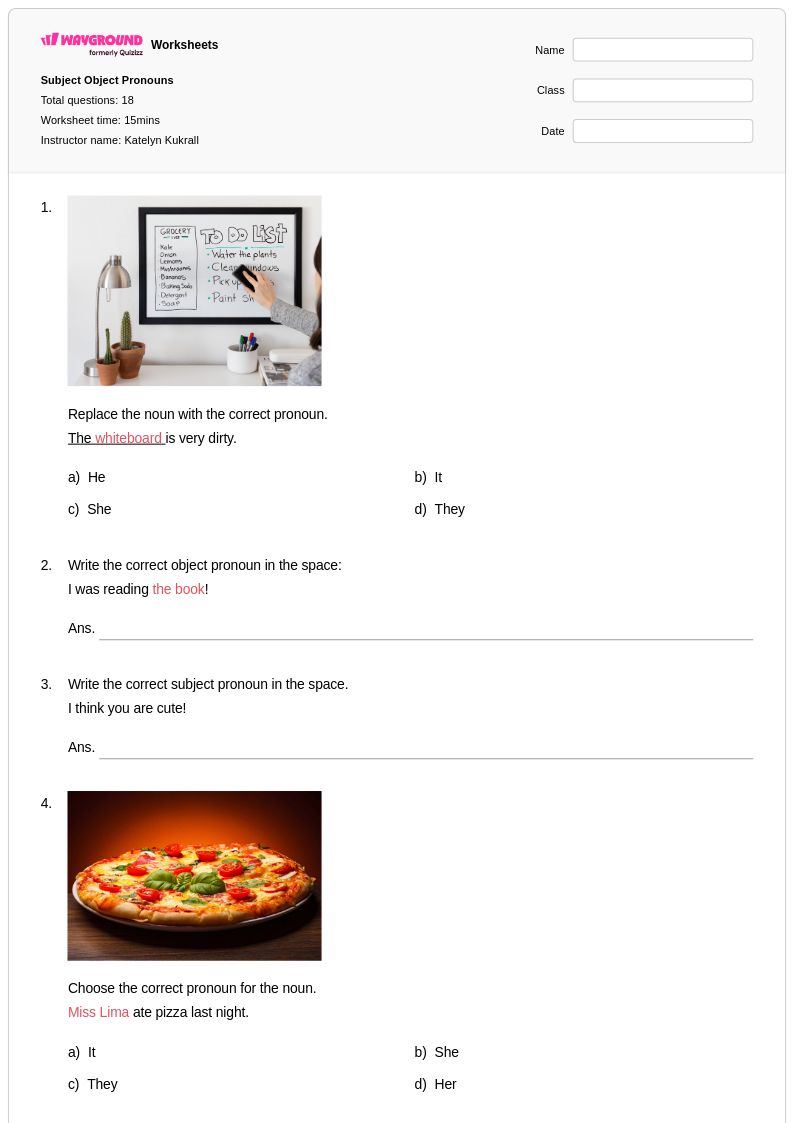
Pronoun-subject agreement worksheets for Grade 9 students available through Wayground (formerly Quizizz) provide comprehensive practice in mastering one of English grammar's most essential concepts. These carefully designed resources help students develop proficiency in matching pronouns correctly with their antecedents, ensuring clarity and grammatical accuracy in both written and spoken communication. The worksheets feature varied practice problems that challenge students to identify pronoun-antecedent relationships, correct agreement errors, and apply proper pronoun usage in complex sentence structures. Each printable resource includes detailed answer keys that enable students to self-assess their understanding and track their progress, while the free pdf format ensures easy accessibility for both classroom instruction and independent study sessions.
Wayground (formerly Quizizz) empowers educators with an extensive collection of millions of teacher-created pronoun-subject agreement resources specifically tailored for Grade 9 English instruction. The platform's robust search and filtering capabilities allow teachers to quickly locate materials that align with curriculum standards and match their students' specific learning needs. Advanced differentiation tools enable instructors to customize worksheets for various skill levels, supporting both remediation for struggling learners and enrichment opportunities for advanced students. Available in both printable and digital formats including downloadable pdfs, these resources seamlessly integrate into lesson planning workflows, providing teachers with flexible options for skill practice, formative assessment, and targeted grammar instruction that strengthens students' command of pronoun usage conventions.
FAQs
How do I teach pronoun-subject agreement to students who keep making errors?
Start by ensuring students can reliably identify the subject of a sentence before introducing pronoun matching. Once they can isolate the subject, teach singular and plural pronoun distinctions explicitly — for example, that singular subjects take 'he,' 'she,' or 'it,' while plural subjects take 'they.' Consistent, structured practice with varied sentence types helps students internalize the rule rather than guess by feel.
What exercises help students practice pronoun-subject agreement?
Effective practice exercises include sentence completion tasks where students select the correct pronoun from two options, error identification tasks where students locate agreement mistakes in existing sentences, and rewriting tasks where students correct faulty sentences. Progressing from controlled exercises to open-ended writing gives students the chance to apply agreement rules in context, which reinforces transfer to their own writing.
What mistakes do students commonly make with pronoun-subject agreement?
The most frequent error is treating collective nouns or indefinite pronouns — such as 'everyone' or 'each' — as plural when they require singular pronouns. Students also commonly misidentify the subject when a prepositional phrase separates the subject from the rest of the sentence, leading them to match the pronoun to the wrong noun. Targeted practice with these specific structures, rather than only simple sentences, helps students catch and correct these patterns.
How can I differentiate pronoun-subject agreement practice for students at different skill levels?
For students who are still building foundational grammar skills, start with simple, one-clause sentences featuring clear singular or plural subjects before introducing compound subjects or indefinite pronouns. For more advanced students, use complex sentences and ambiguous constructions that require deeper grammatical analysis. On Wayground, teachers can apply accommodations such as reduced answer choices for individual students who need additional support, lowering cognitive load without changing the core learning objective for the rest of the class.
How do I use Wayground's pronoun-subject agreement worksheets in my classroom?
Wayground's pronoun-subject agreement worksheets are available as printable PDFs for traditional classroom use and in digital formats for technology-integrated environments, so they work whether students are completing work on paper or on a device. Teachers can also host worksheets as a quiz directly on Wayground, enabling real-time participation and immediate feedback. Each worksheet includes a complete answer key, making them practical for independent practice, small-group work, or whole-class instruction with minimal prep time.
How do I help students who struggle with pronoun agreement for indefinite pronouns like 'everyone' or 'nobody'?
Indefinite pronouns are a specific sticking point because they sound plural in everyday speech but are grammatically singular. Teach students a fixed list of common singular indefinite pronouns — 'everyone,' 'nobody,' 'someone,' 'each,' 'either' — and have them practice substituting singular pronouns in sentences until the pairing feels automatic. Repeated, focused practice with this subset of cases is more effective than treating it as a general agreement review.