Free Printable Parallel Construction Worksheets for Grade 9
Enhance Grade 9 students' writing skills with Wayground's free parallel construction worksheets featuring printable PDF practice problems and comprehensive answer keys to master balanced sentence structure.
Explore printable Parallel Construction worksheets for Grade 9
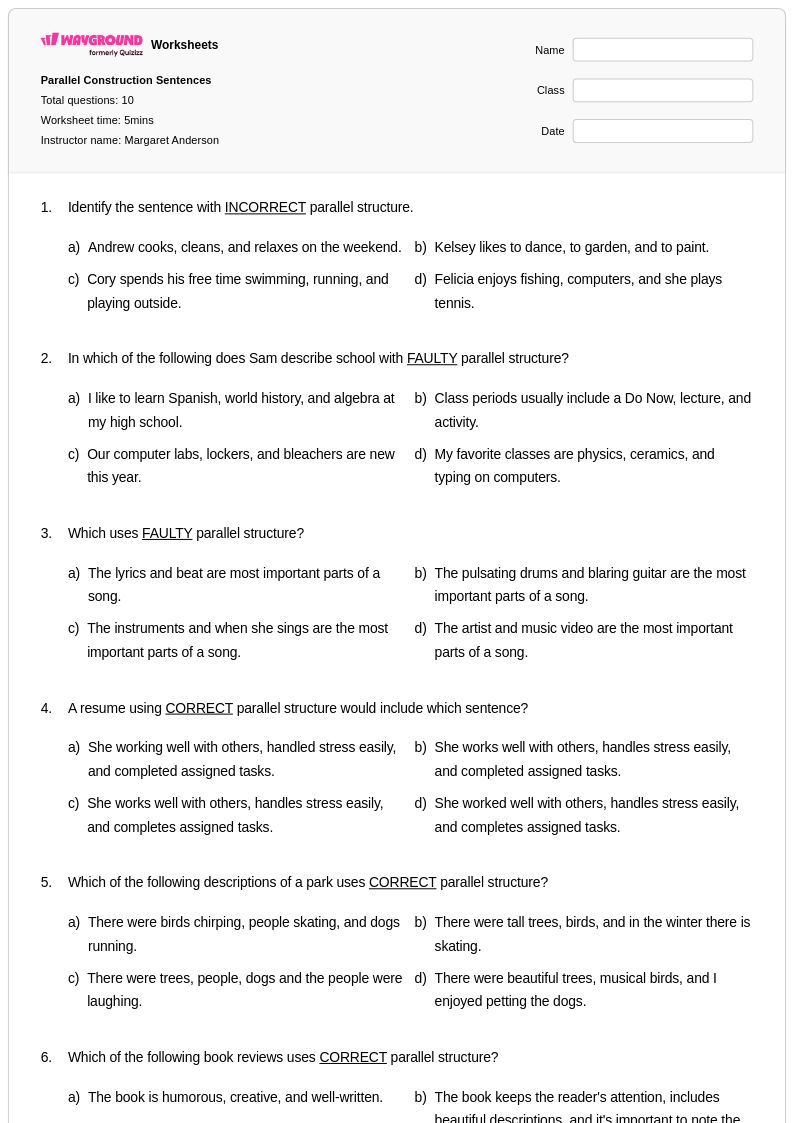
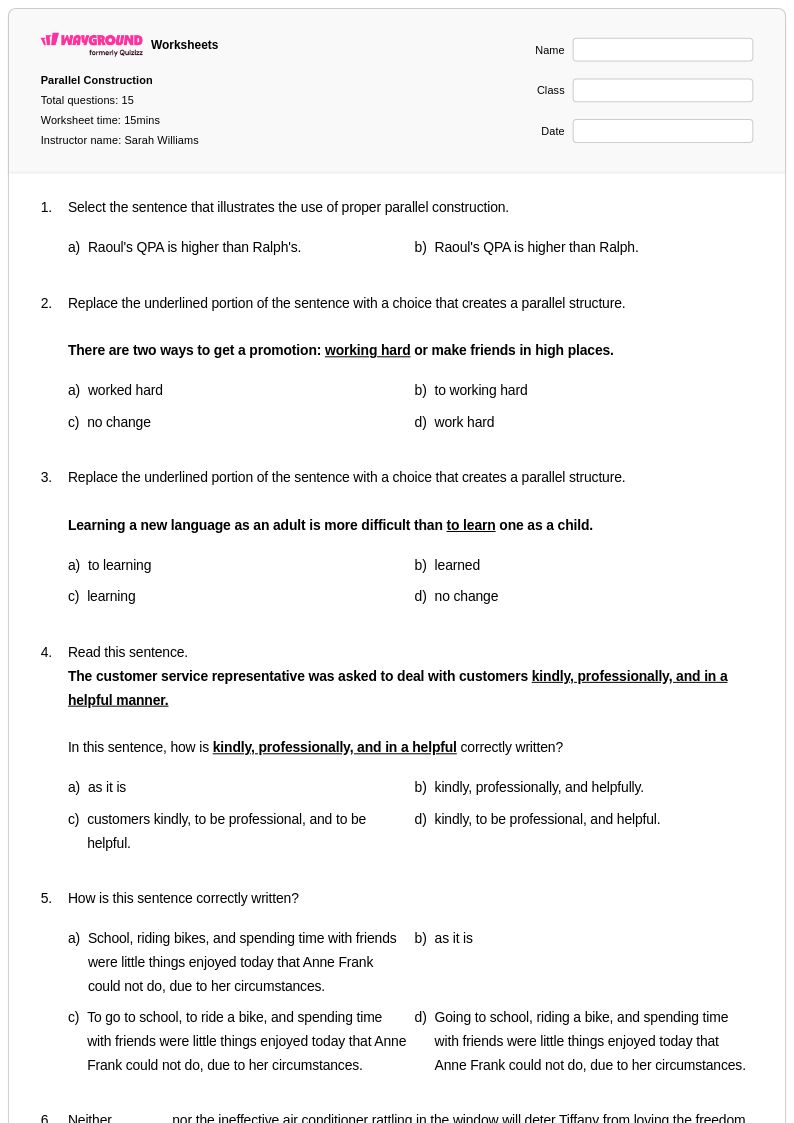
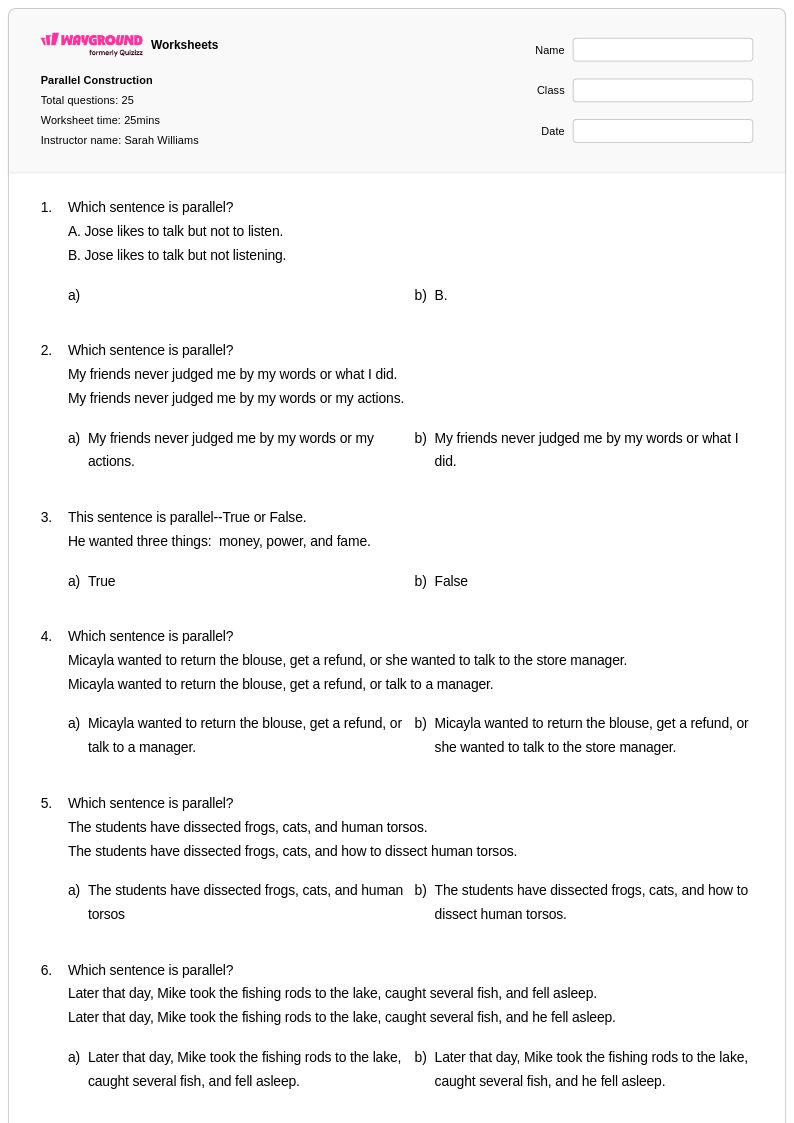
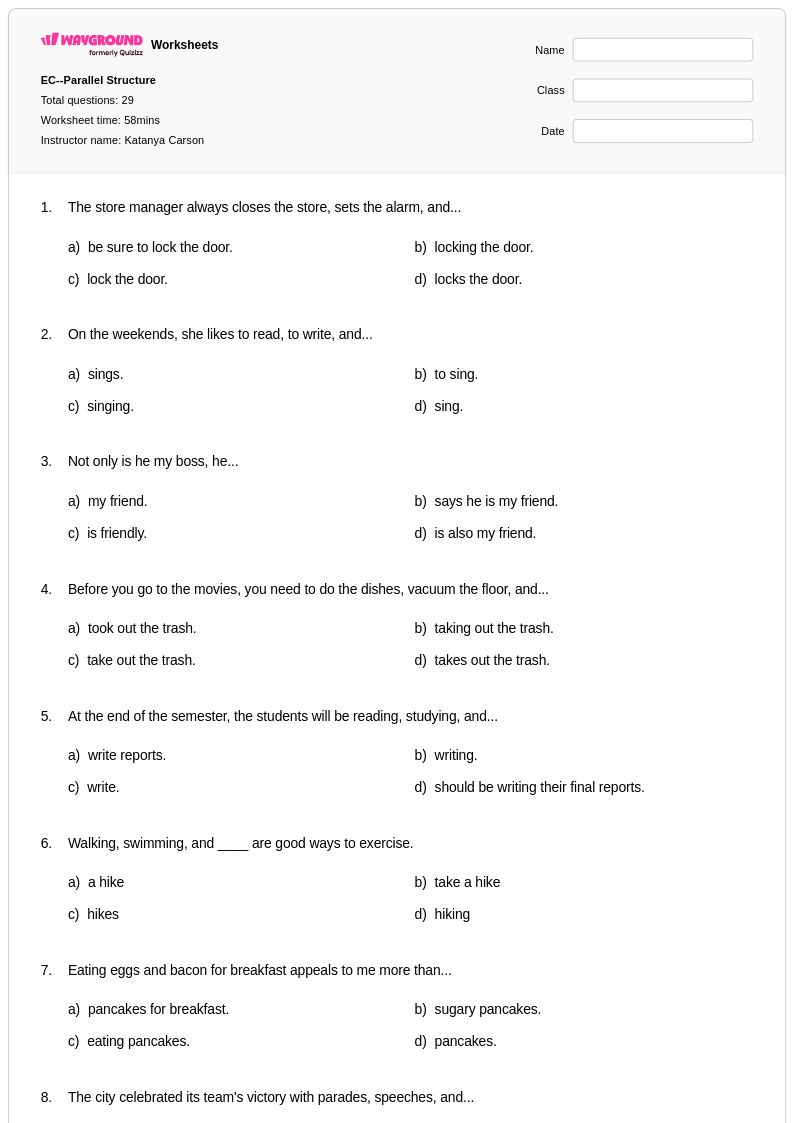
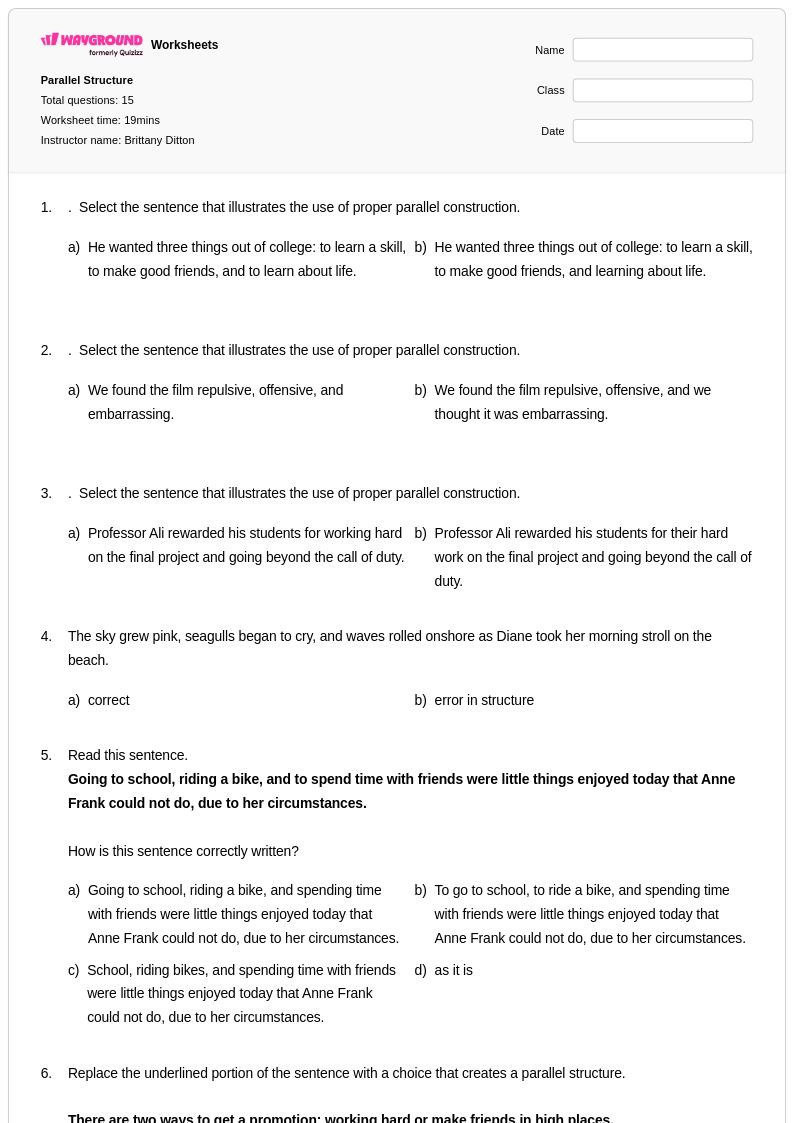
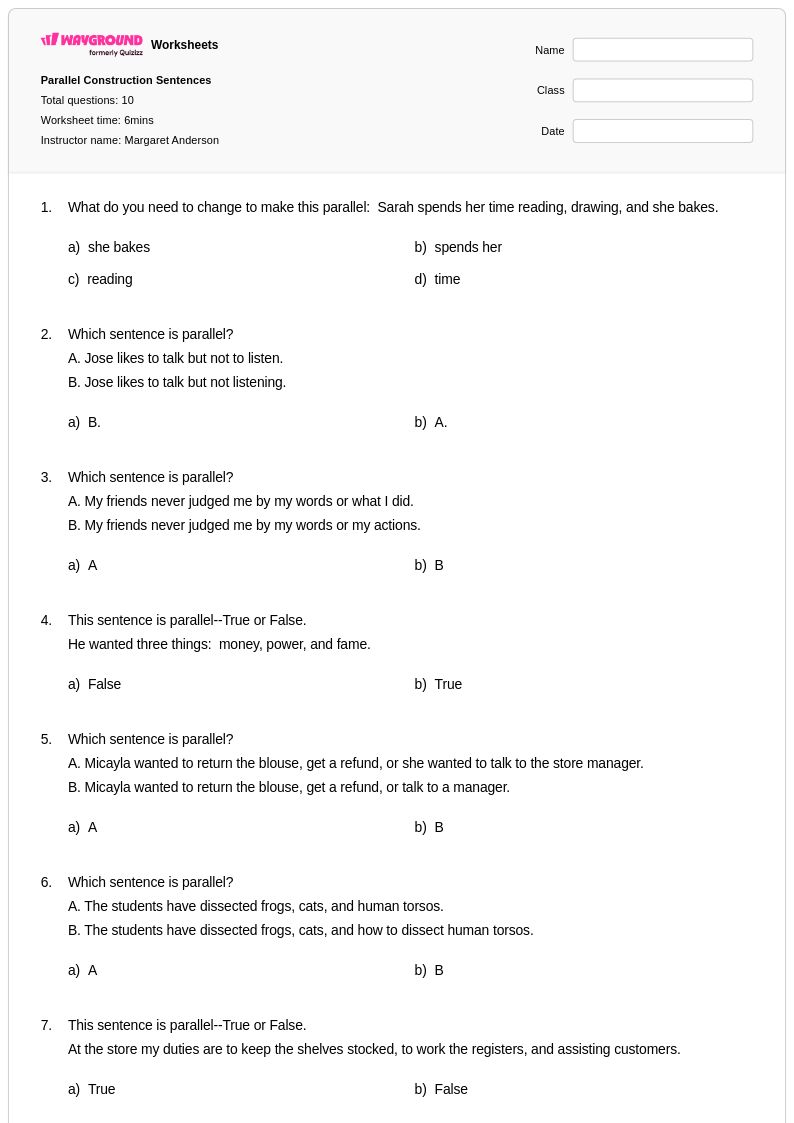
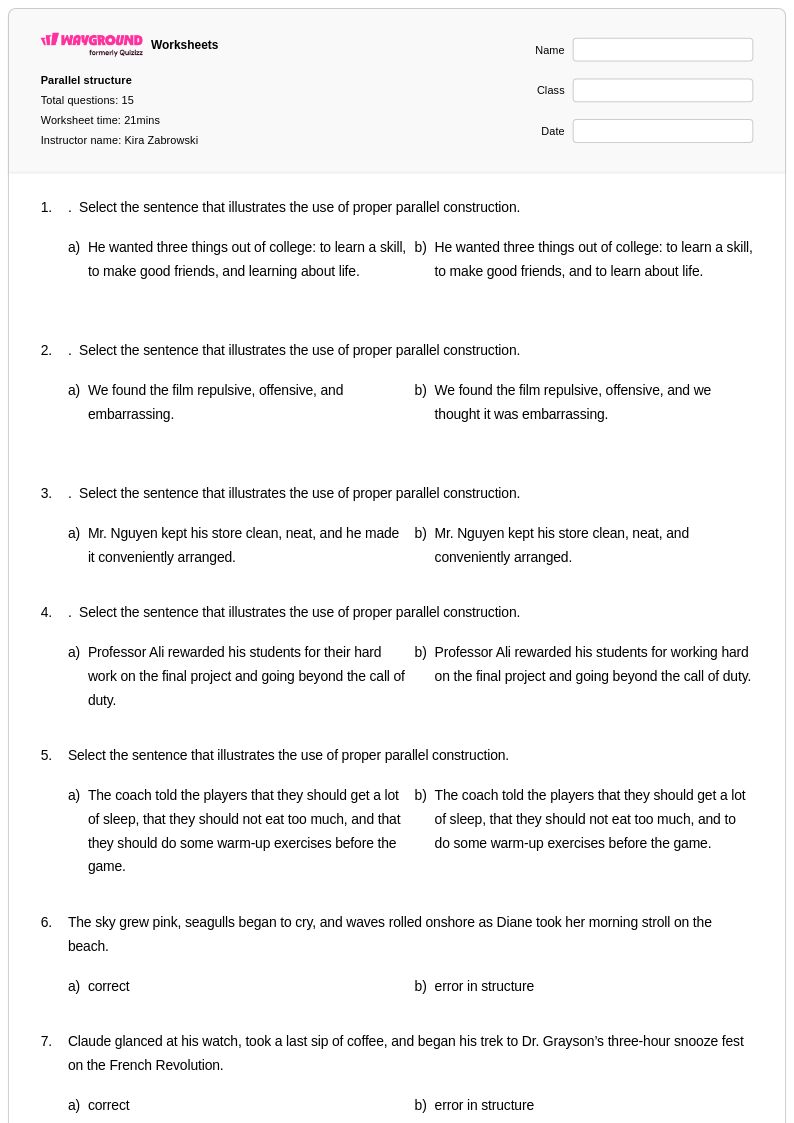
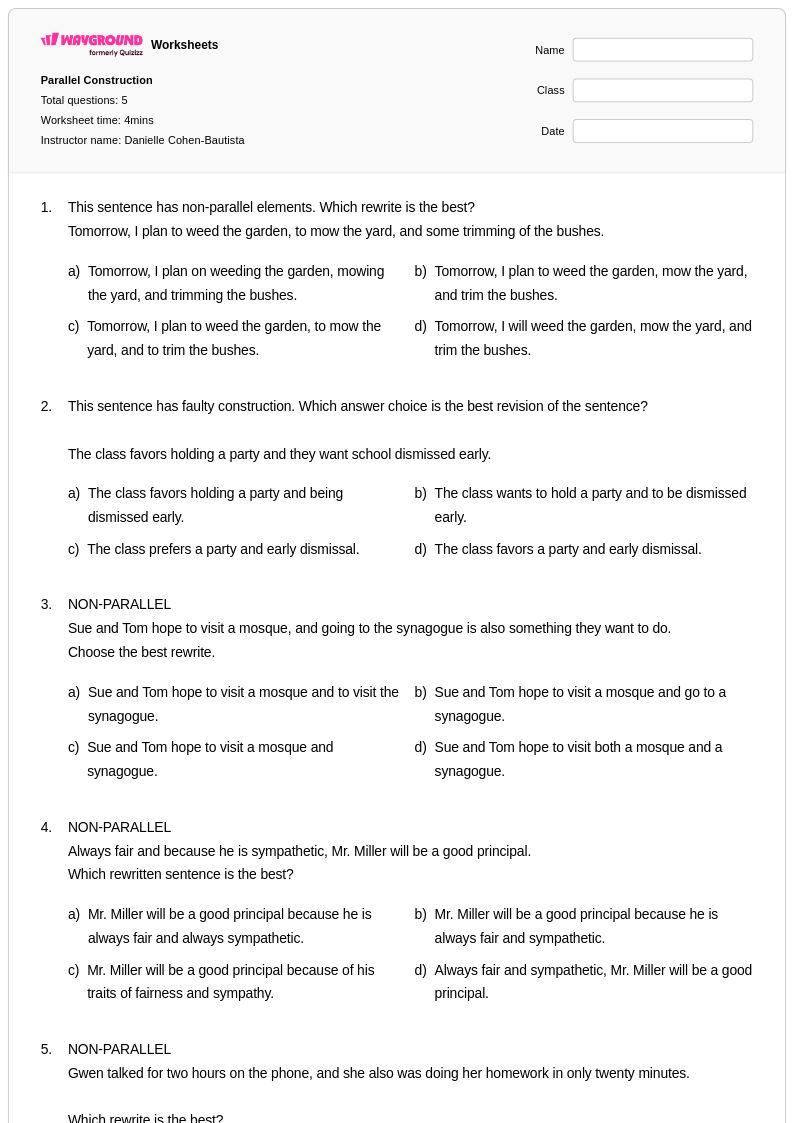
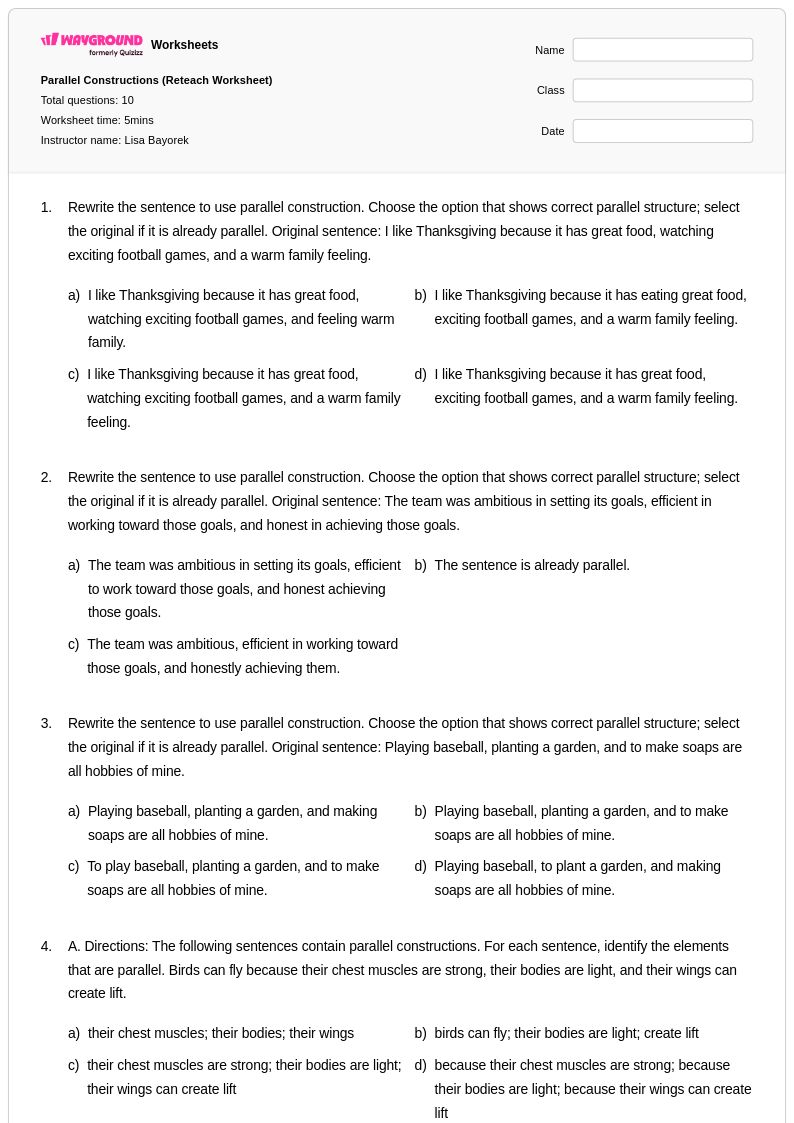
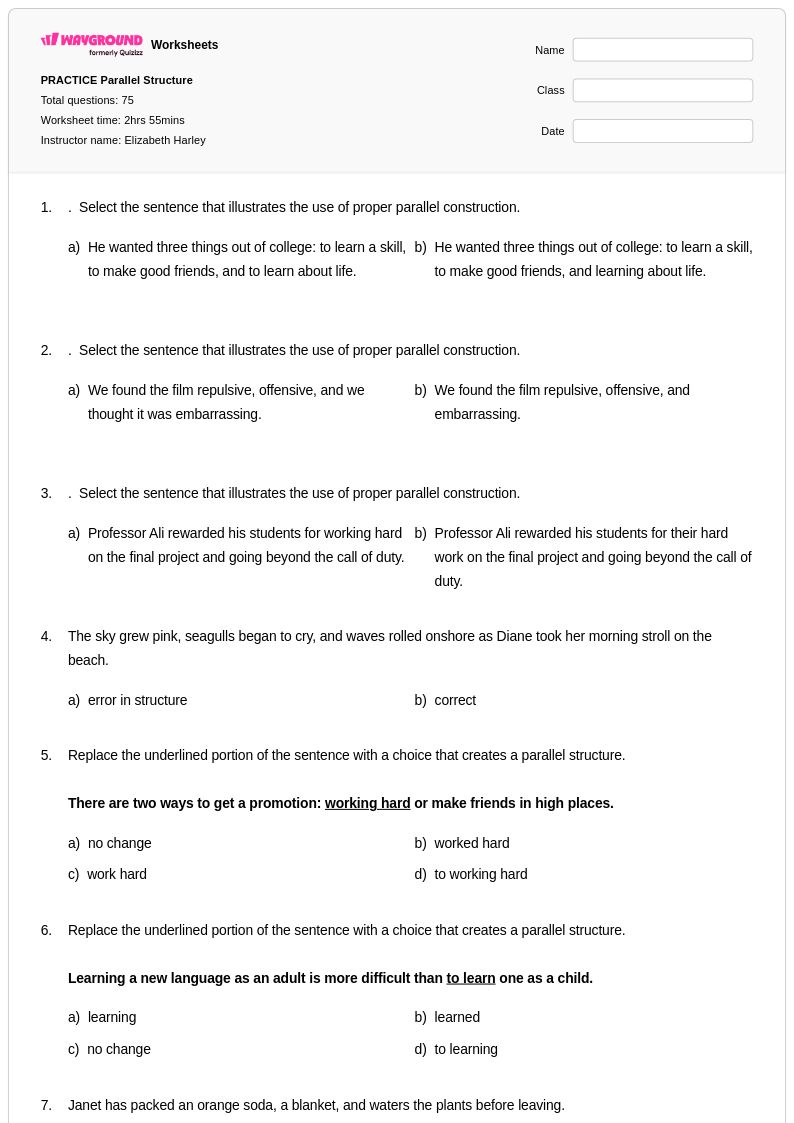
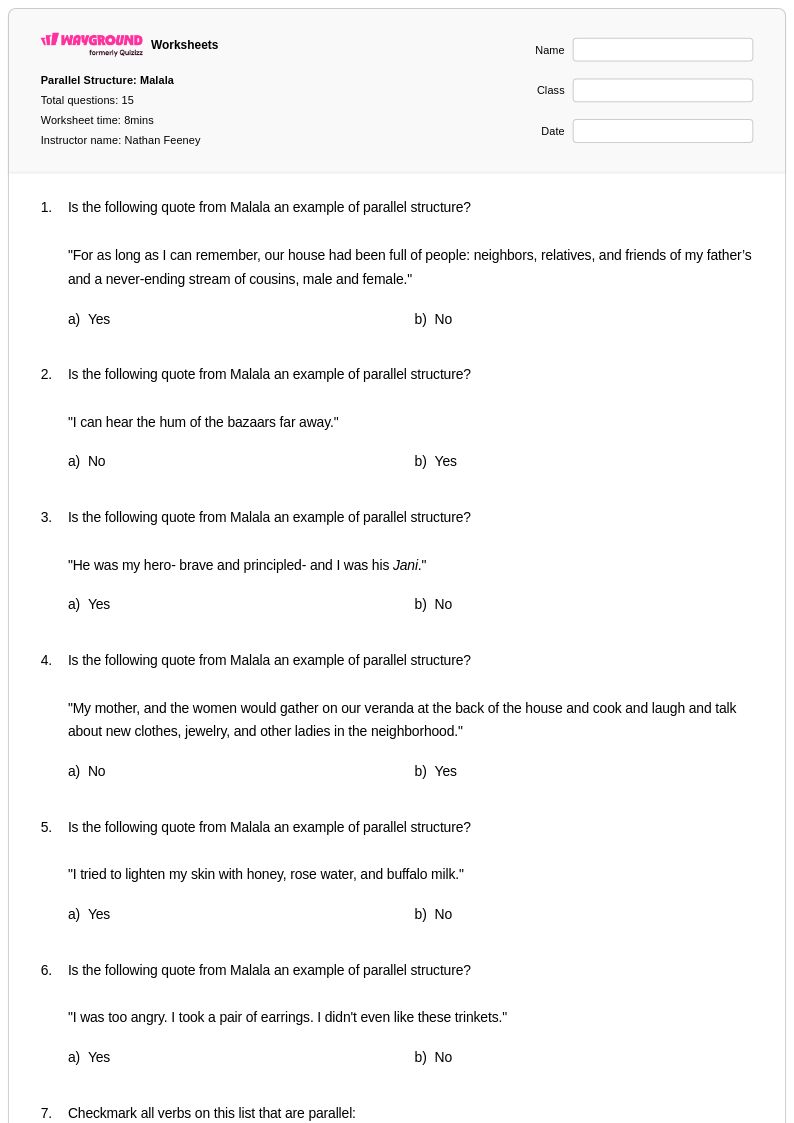
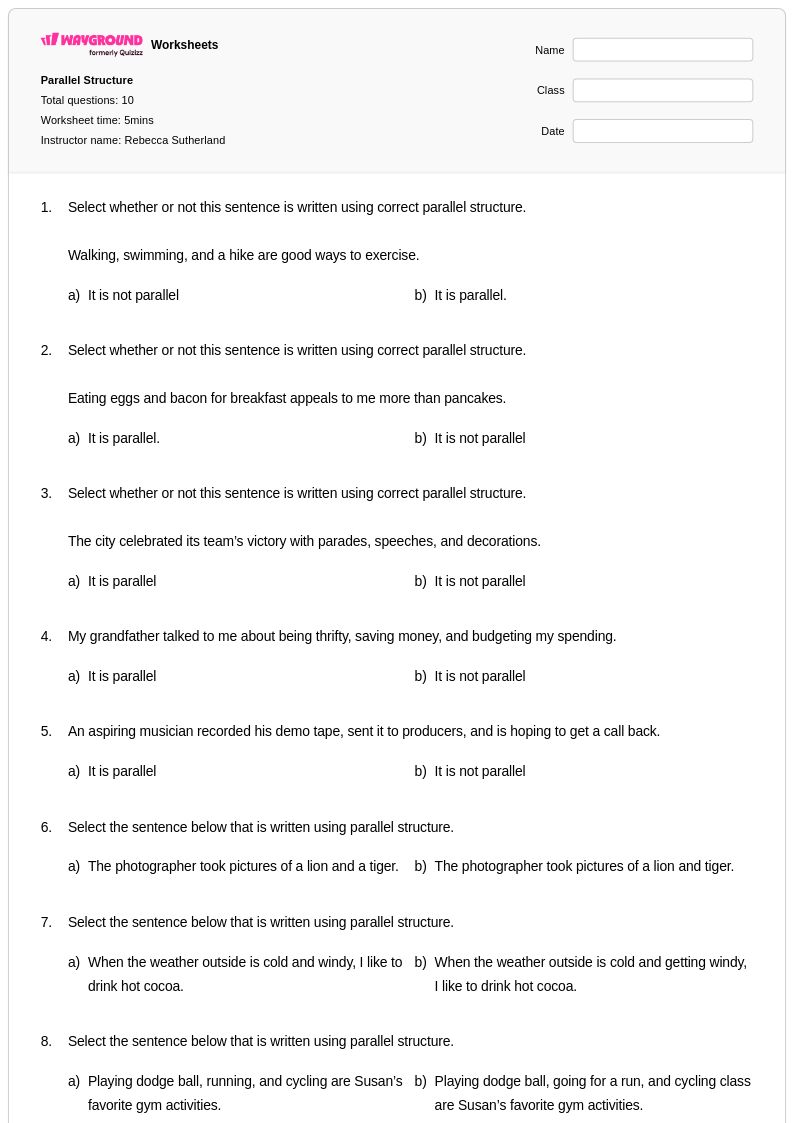
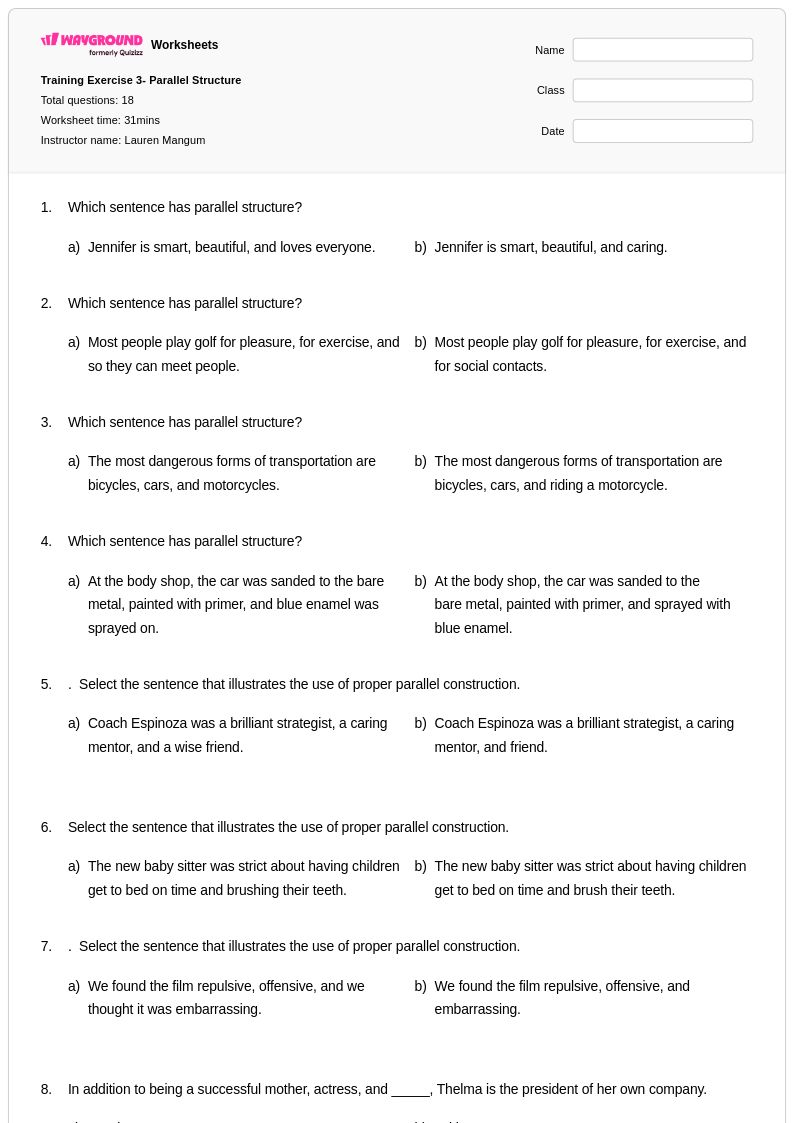
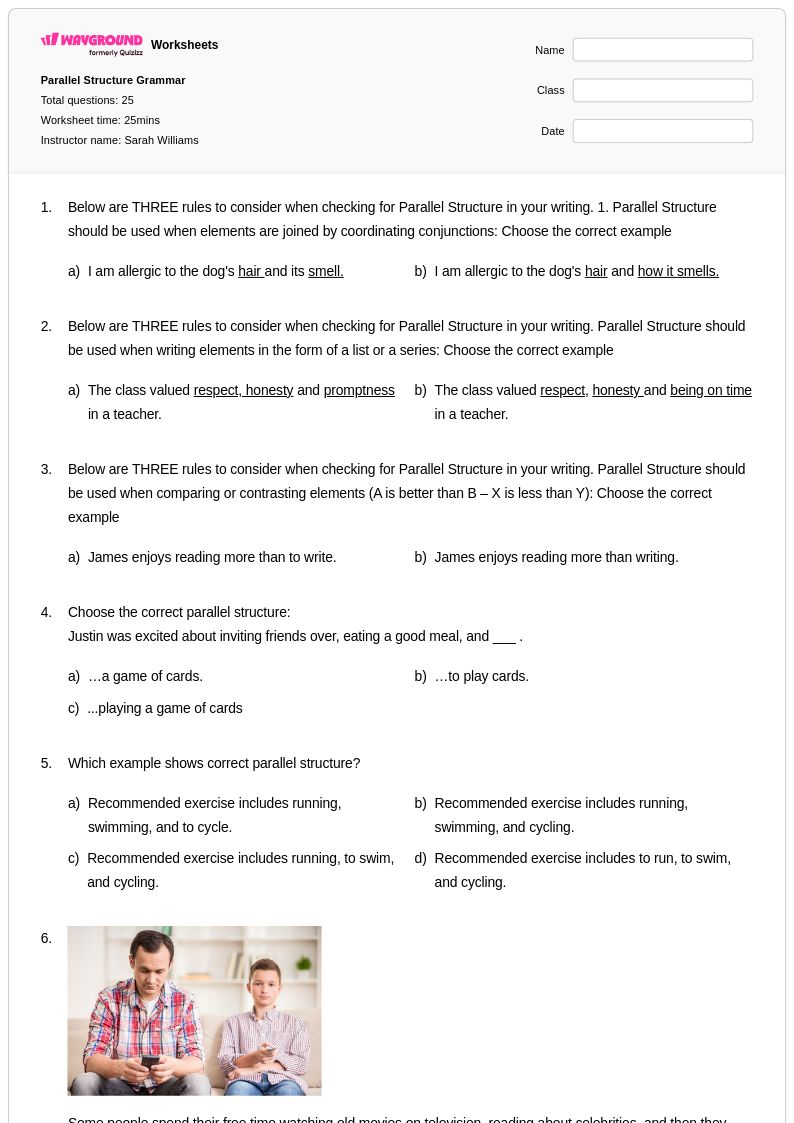
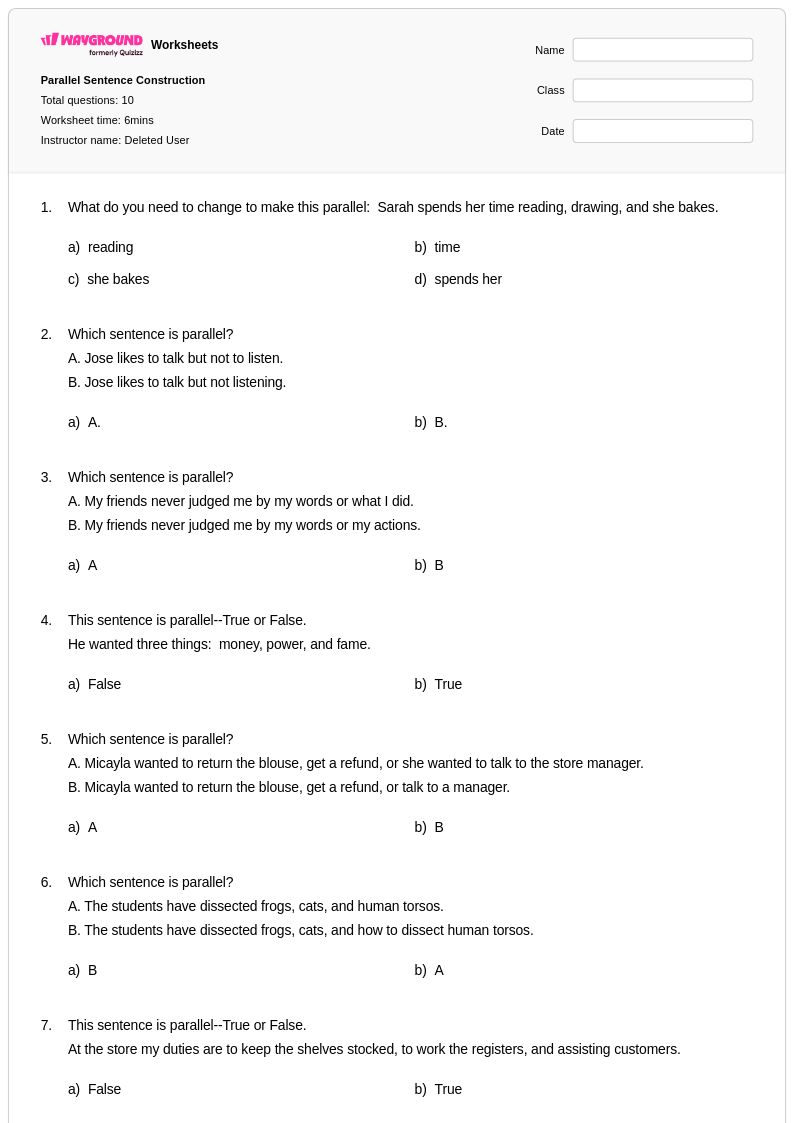
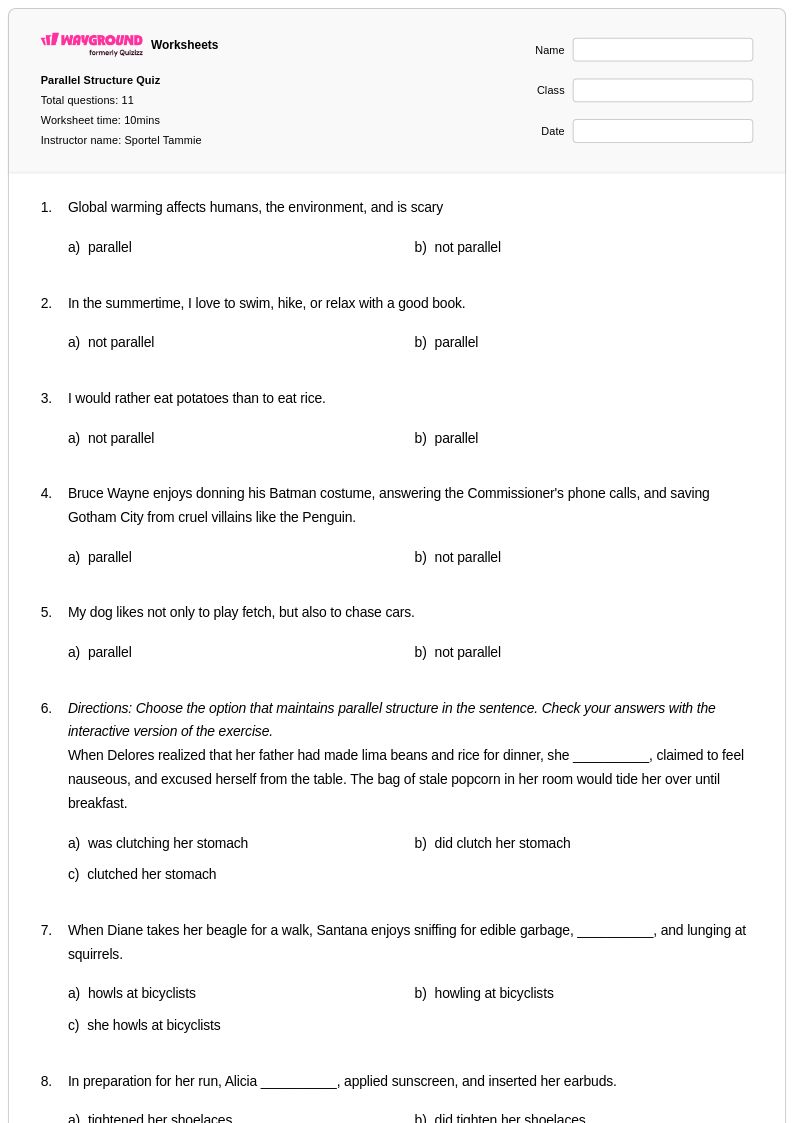
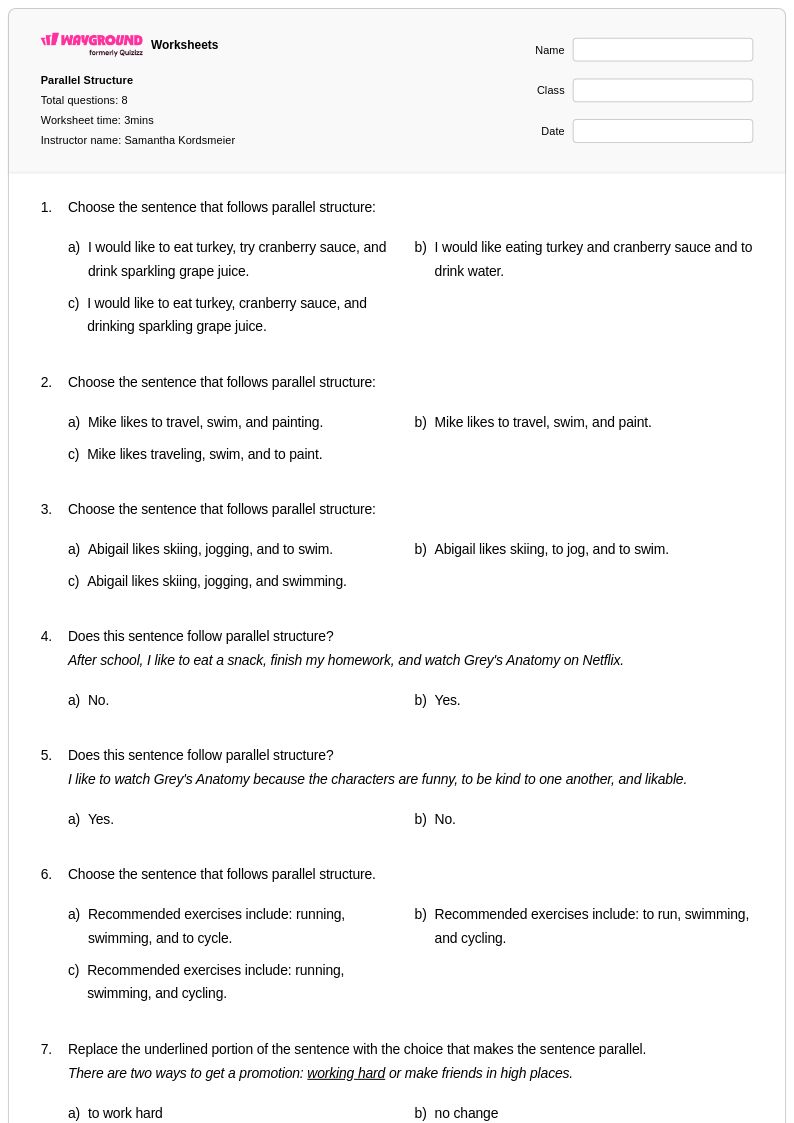
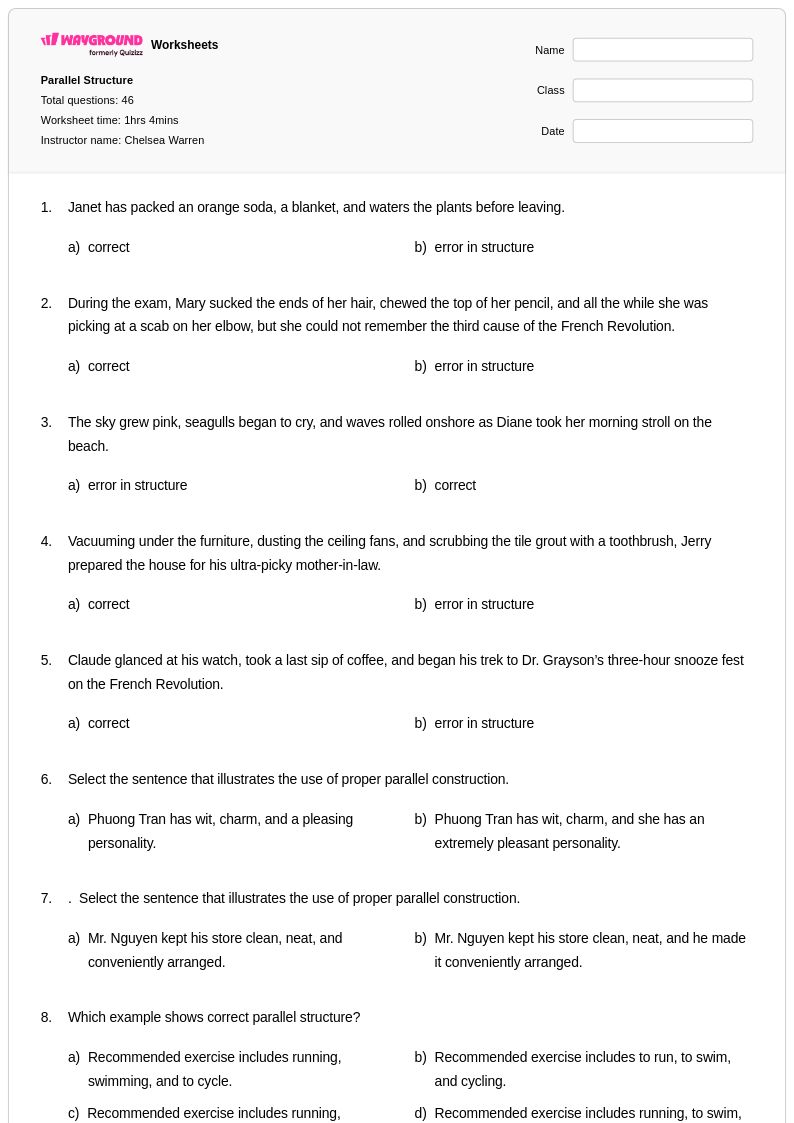
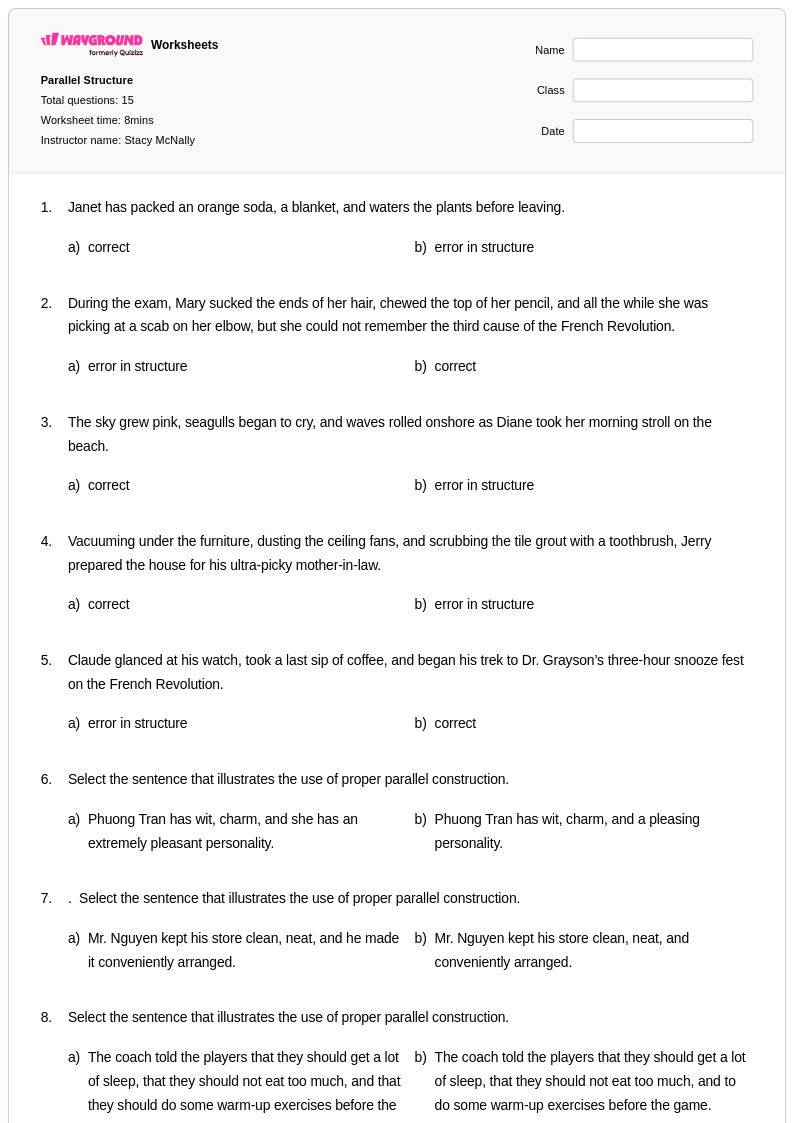
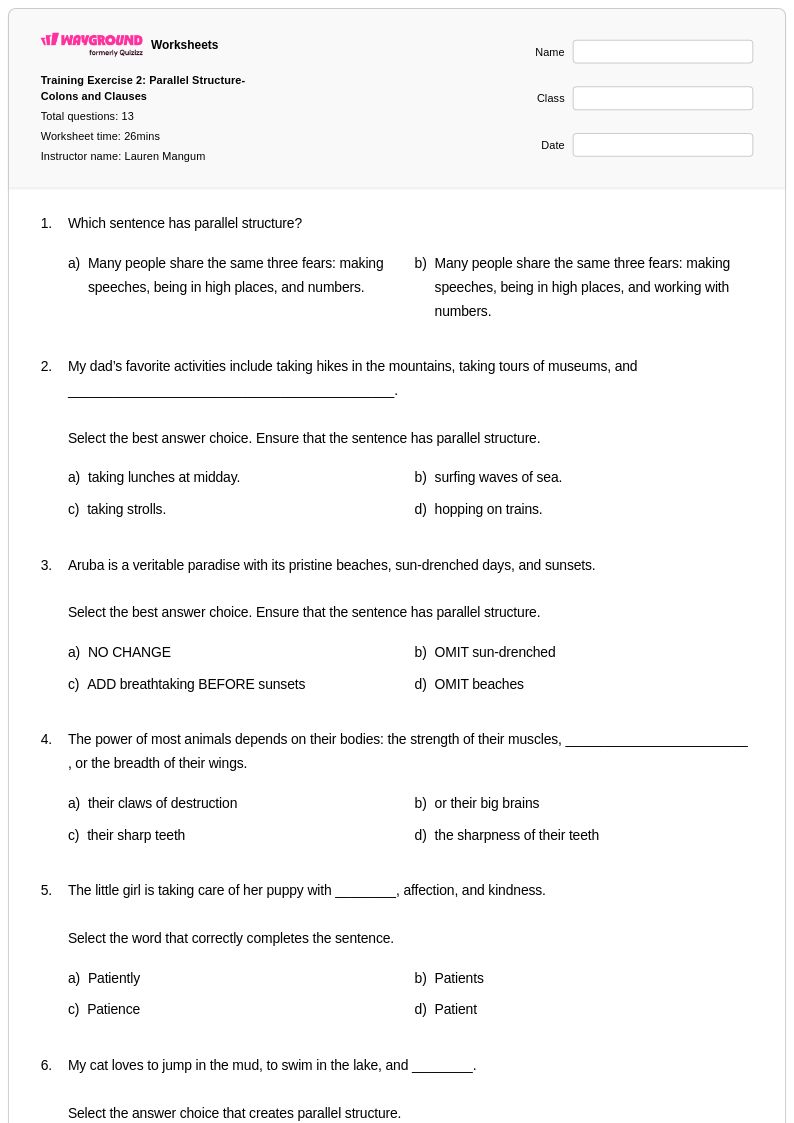
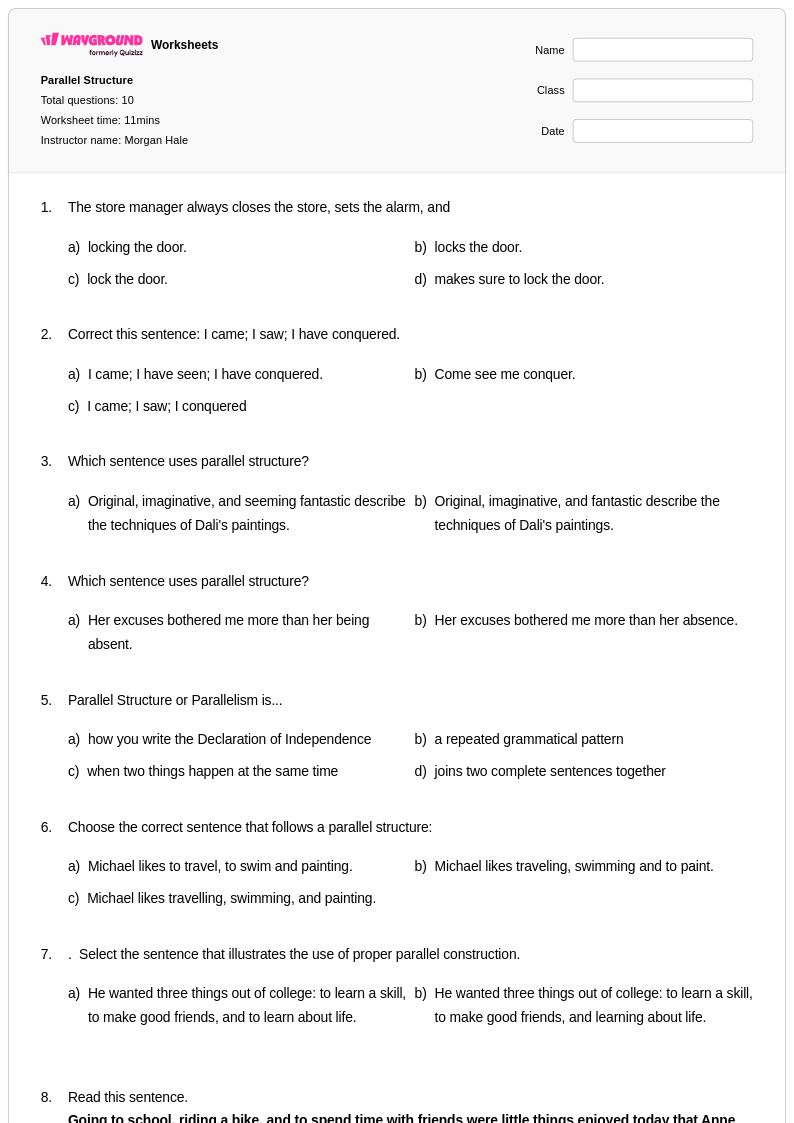
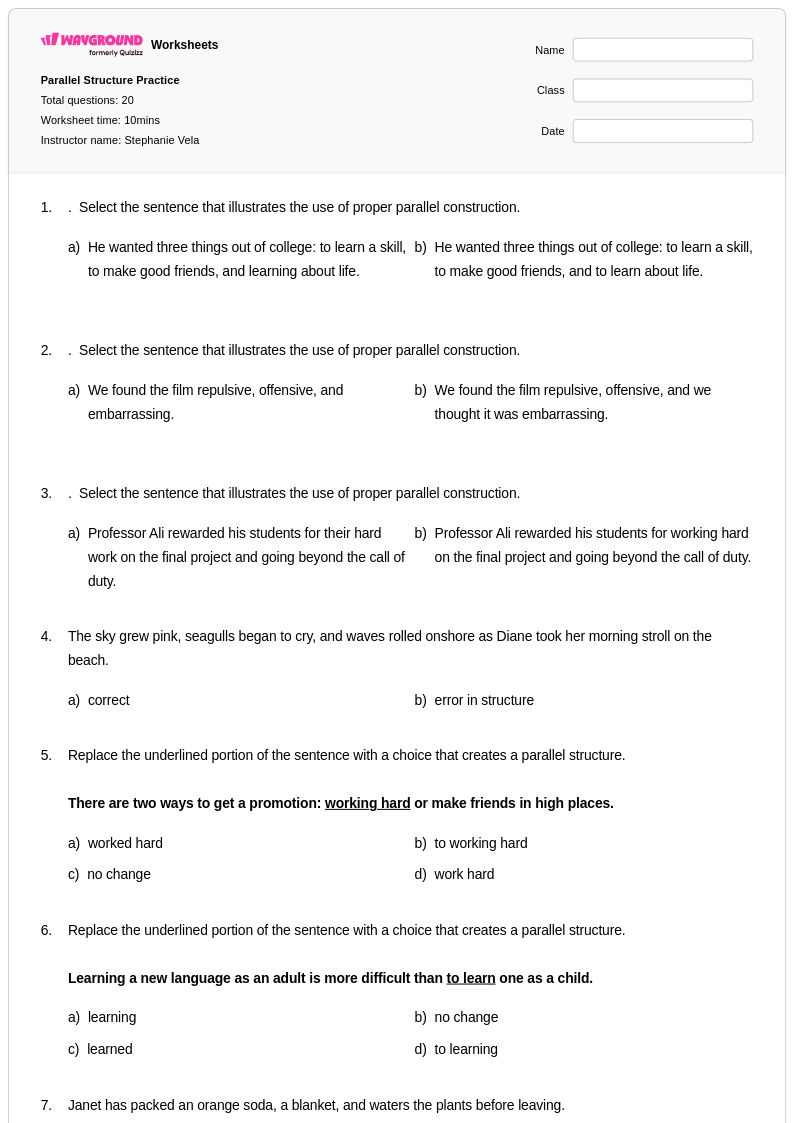
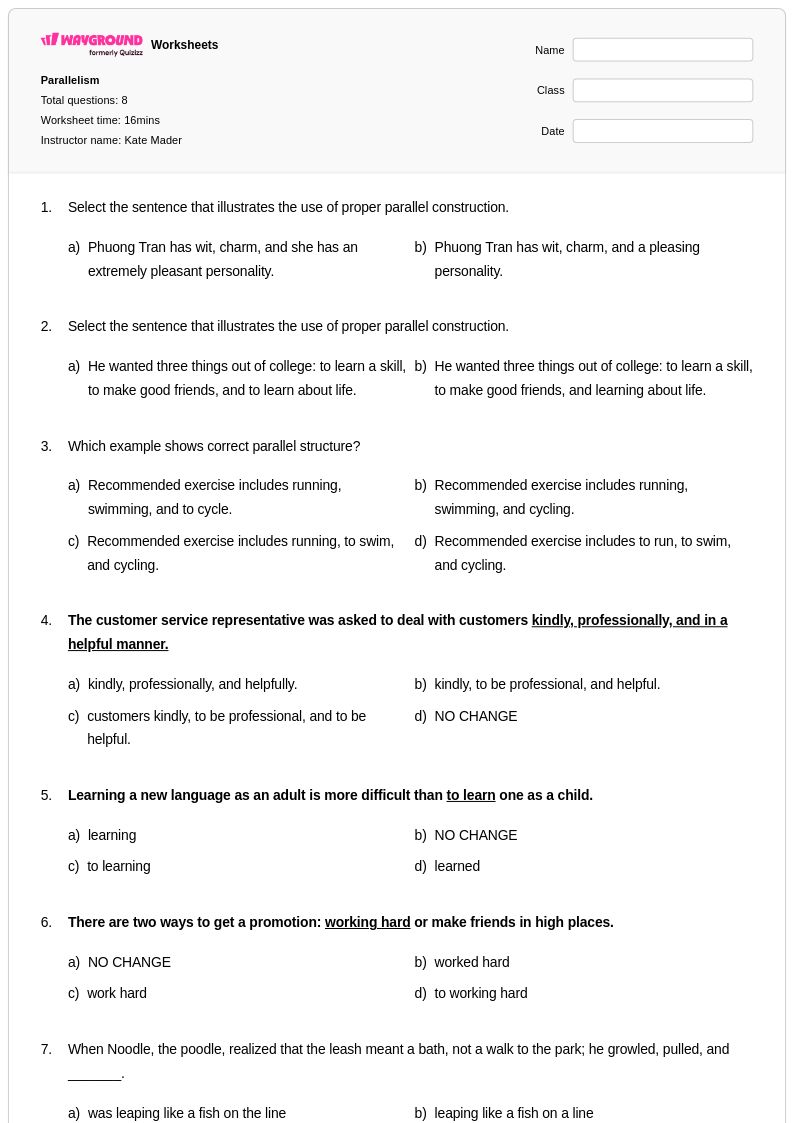
Parallel construction worksheets for Grade 9 students available through Wayground (formerly Quizizz) provide comprehensive practice in maintaining grammatical balance and structural consistency within sentences and across related ideas. These expertly designed resources strengthen students' ability to recognize and create parallel structures in series, comparisons, and coordinate elements, helping them develop more sophisticated and polished writing skills essential for academic success. The collection includes practice problems that guide students through identifying faulty parallelism, correcting unbalanced constructions, and applying parallel structure rules across various sentence types, with each worksheet featuring detailed answer keys that support independent learning and self-assessment. These free printables offer targeted skill development in areas such as parallel verb forms, coordinating conjunctions, correlative conjunctions, and maintaining consistency in lists and series.
Wayground (formerly Quizizz) supports educators with millions of teacher-created parallel construction resources that streamline lesson planning and provide flexible instructional options for Grade 9 grammar instruction. The platform's robust search and filtering capabilities allow teachers to quickly locate worksheets aligned with specific curriculum standards and differentiate instruction based on individual student needs and proficiency levels. Teachers can customize existing materials or create personalized practice sets while accessing resources in both printable pdf format for traditional classroom use and digital formats for online learning environments. This comprehensive collection enables educators to effectively address remediation needs for students struggling with parallel structure concepts, provide enrichment opportunities for advanced learners, and deliver consistent skill practice that reinforces proper grammatical construction across various writing contexts and academic disciplines.
FAQs
How do I teach parallel construction to students who are new to the concept?
Start by showing students pairs of sentences — one with parallel structure and one without — and ask them to identify which sounds more balanced. Introduce the rule that items in a series, comparisons, and correlative conjunctions (such as 'either/or' and 'not only/but also') must use matching grammatical forms. Once students can recognize the pattern, move them into revision practice where they correct faulty parallelism before writing their own parallel sentences.
What exercises help students practice parallel construction?
The most effective practice combines three task types: identifying faulty parallelism in sample sentences, revising broken parallel structures, and constructing original sentences using parallel elements in series, comparisons, and correlative conjunctions. Worksheets that cycle through all three task types in a single session give students both recognition and production practice, which reinforces the concept more durably than identification alone.
What mistakes do students most commonly make with parallel construction?
The most frequent error is mixing grammatical forms within a series — for example, pairing a noun with a gerund phrase, such as 'She enjoys hiking, swimming, and to read.' Students also struggle with correlative conjunctions, often writing unbalanced structures like 'not only fast but also with precision.' A third common mistake is inconsistent verb tense within parallel clauses, which disrupts the grammatical symmetry the structure requires.
How can I use parallel construction worksheets to address faulty parallelism specifically?
Use worksheets that isolate faulty parallelism as a dedicated task type, asking students to underline the broken element and rewrite the sentence correctly. Pairing this with a brief discussion of why the original structure fails — rather than just replacing it — builds the analytical habit students need to self-edit in their own writing. This approach is especially useful as a pre-writing or revision activity before a formal essay assignment.
How do I use Wayground's parallel construction worksheets in my classroom?
Wayground's parallel construction worksheets are available as printable PDFs for traditional classroom use and in digital formats for technology-integrated environments, making them usable whether students are at desks or on devices. Teachers can also host a worksheet directly as a quiz on Wayground, enabling real-time student responses and instant results. Each worksheet includes a complete answer key, so they work equally well for guided instruction, independent practice, or homework assignments.
How do I differentiate parallel construction practice for students at different skill levels?
For students who are still building foundational grammar skills, start with sentence-level identification tasks and reduce the number of answer choices to lower cognitive load. More advanced learners benefit from open-ended construction tasks using correlative conjunctions and multi-clause comparisons. On Wayground, teachers can apply accommodations such as reduced answer choices or read-aloud support to individual students, so the same worksheet can serve the whole class without requiring separate versions.