
Recommended Topics for you
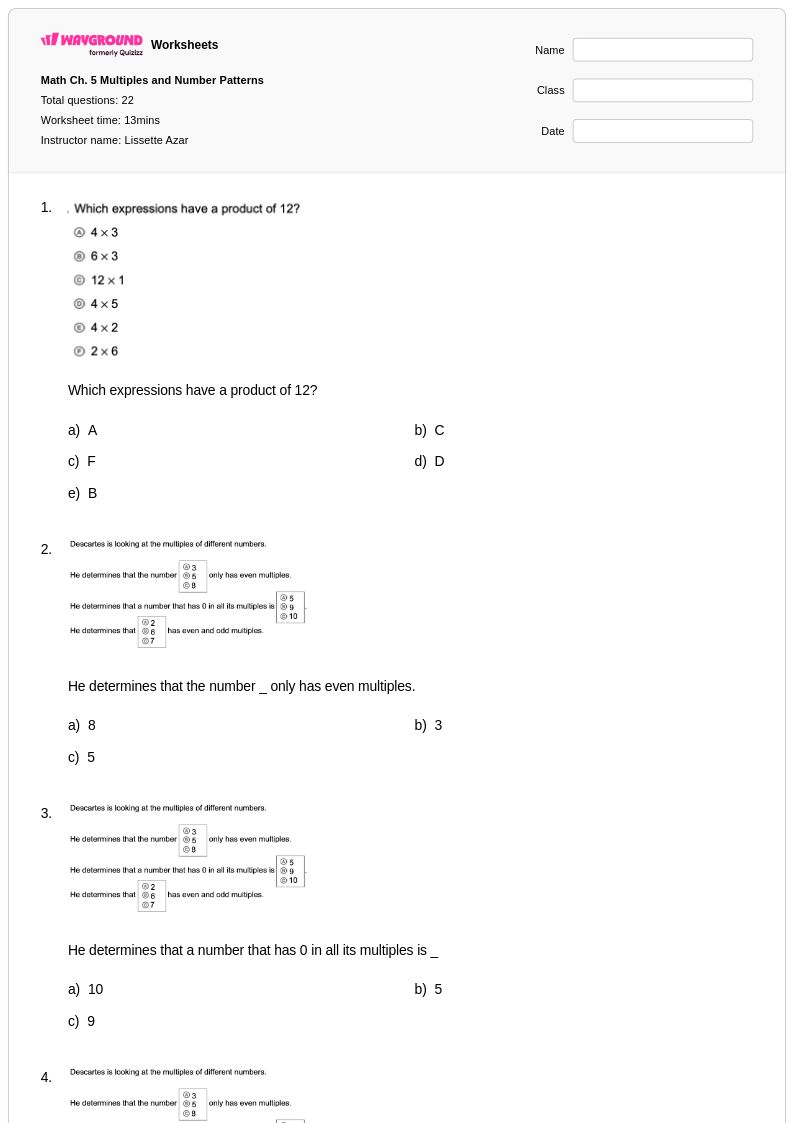
22 Q
3rd
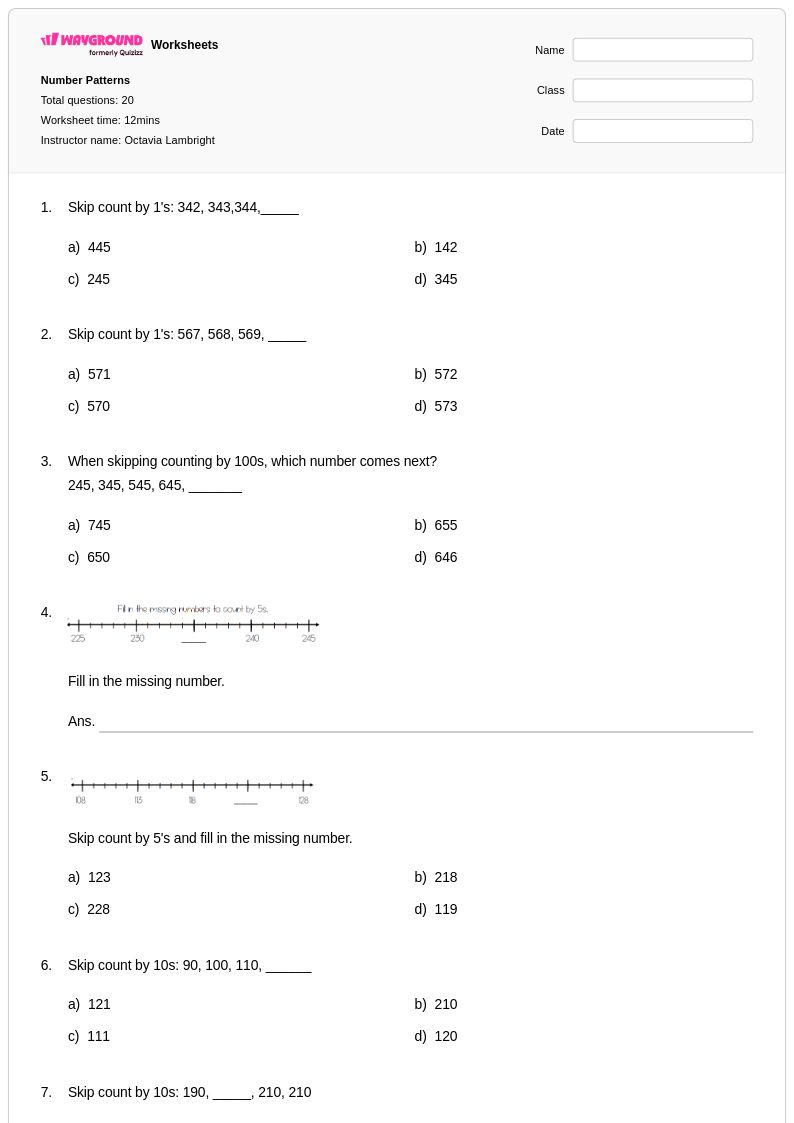
20 Q
2nd
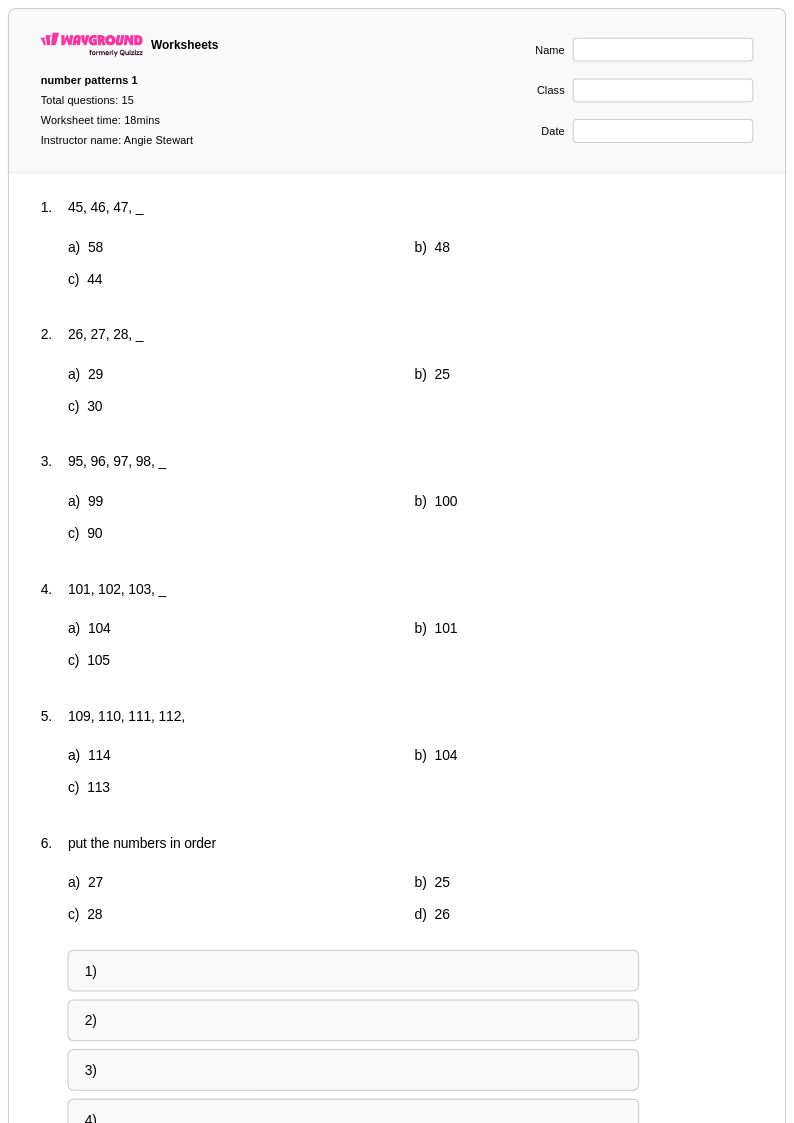
15 Q
1st
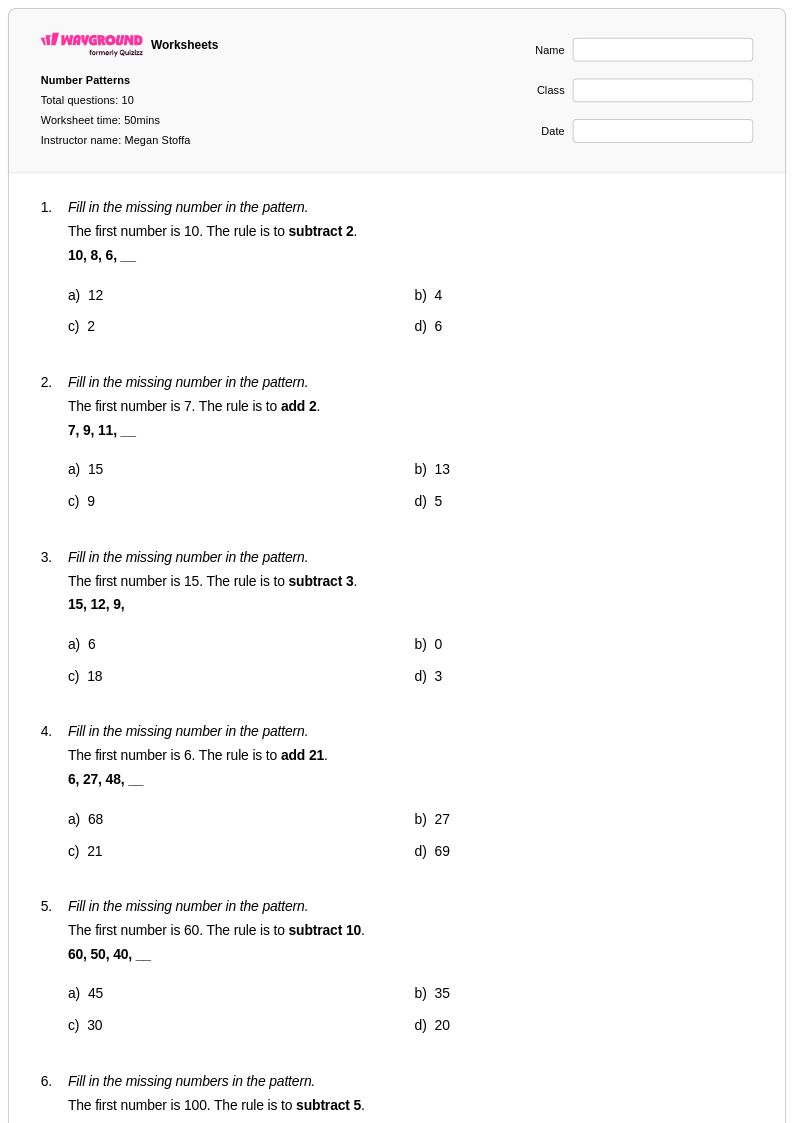
10 Q
5th - 6th
11 Q
1st
19 Q
5th - Uni
10 Q
5th - Uni
10 Q
5th - Uni
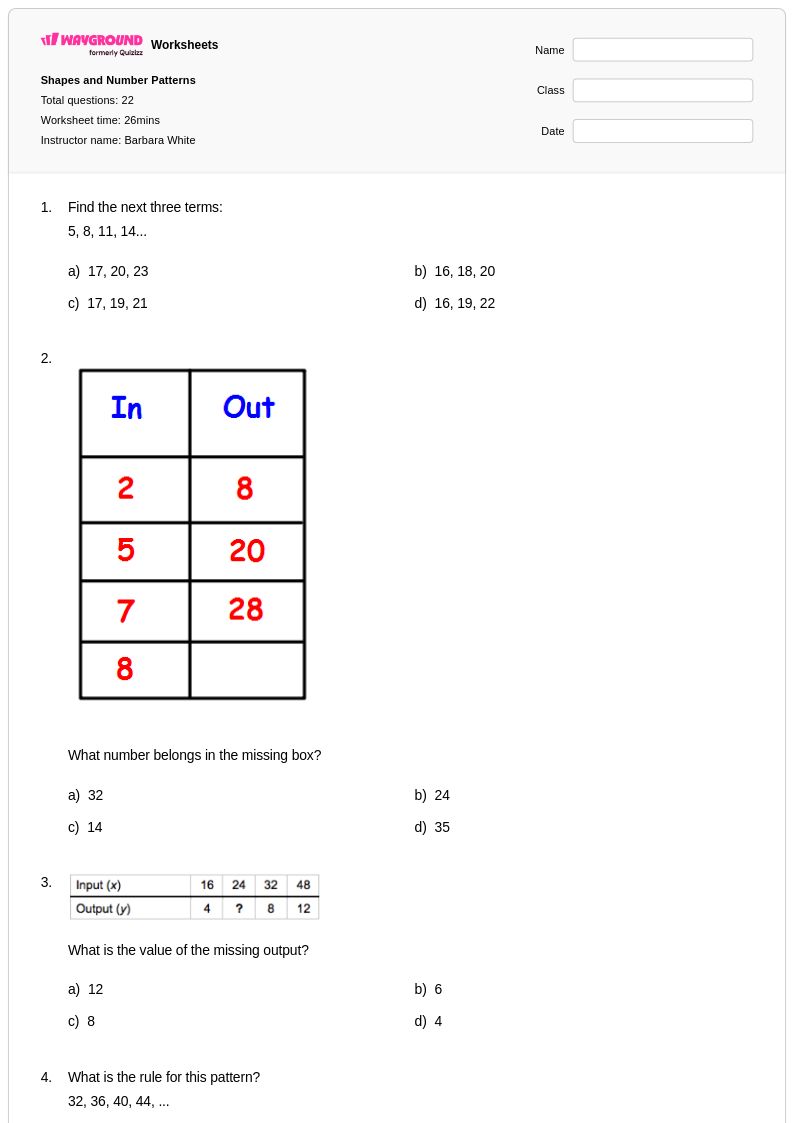
22 Q
4th
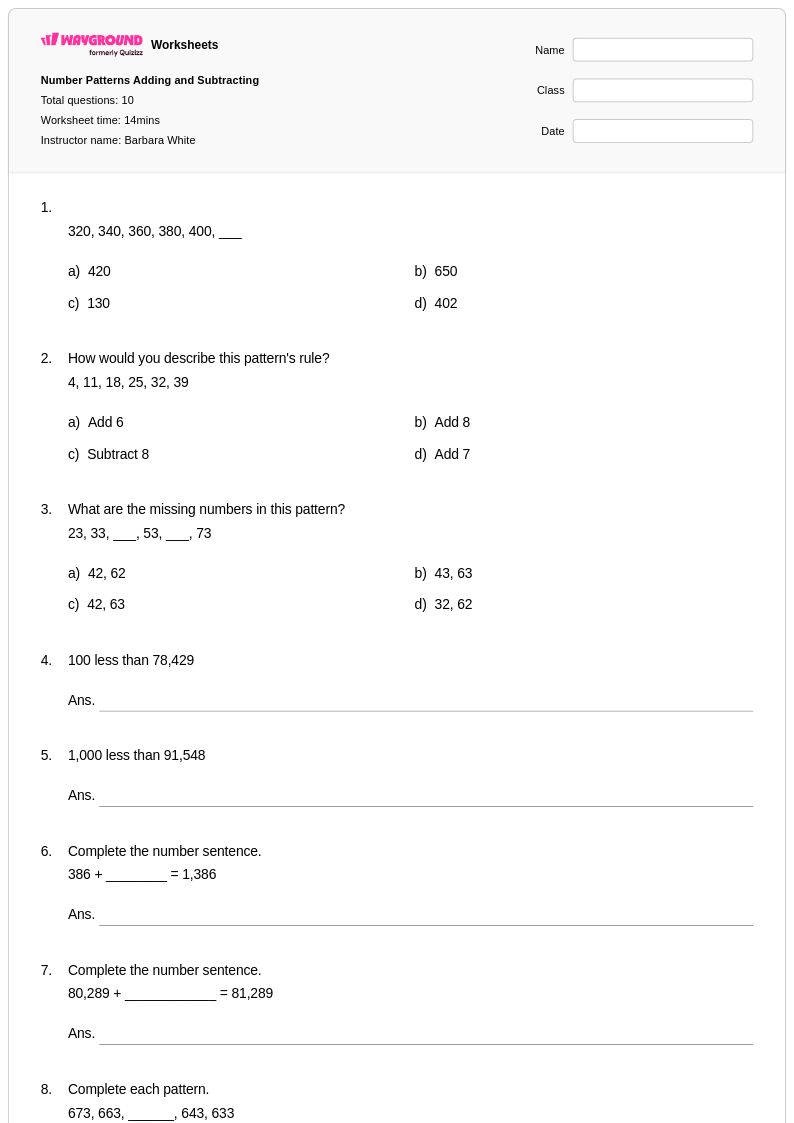
10 Q
4th
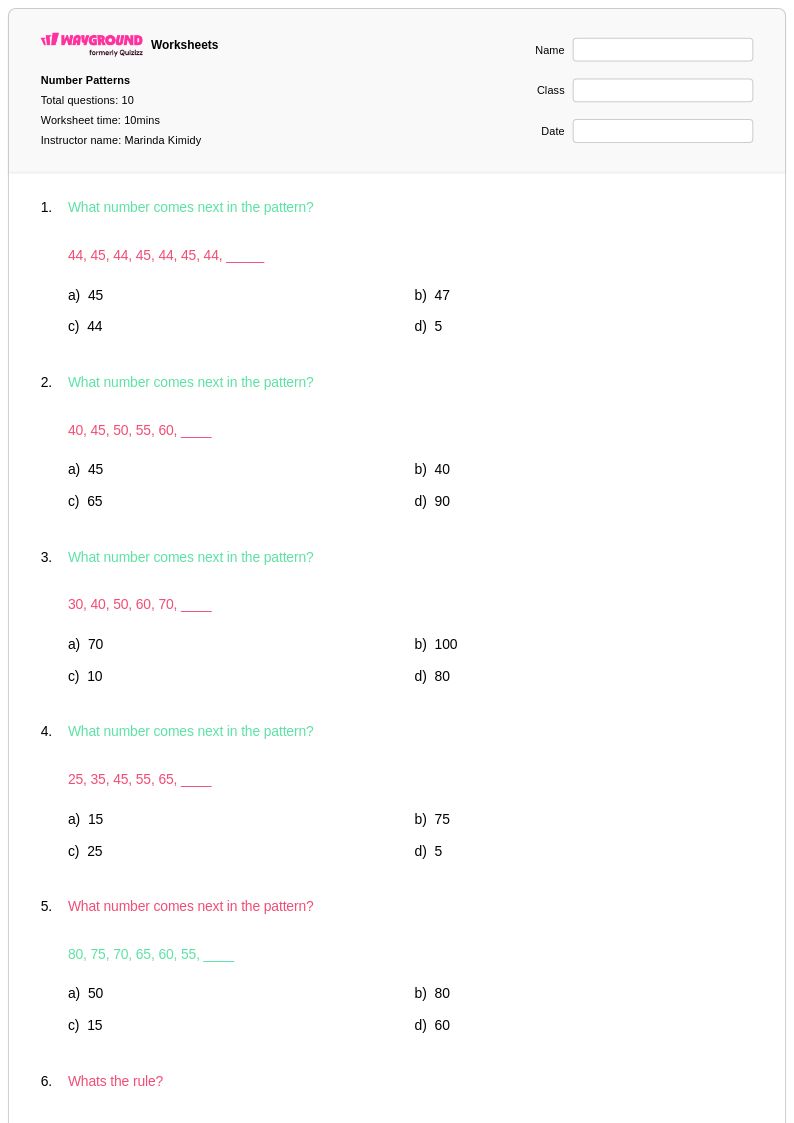
10 Q
1st
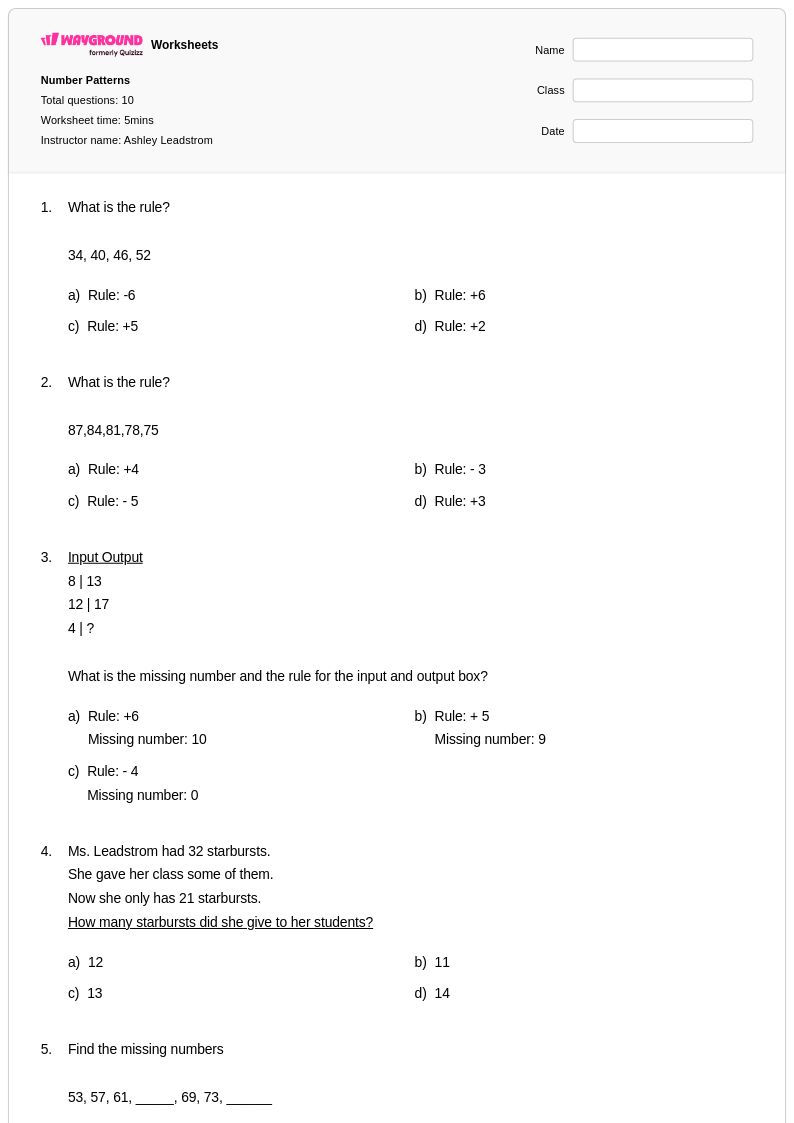
10 Q
2nd
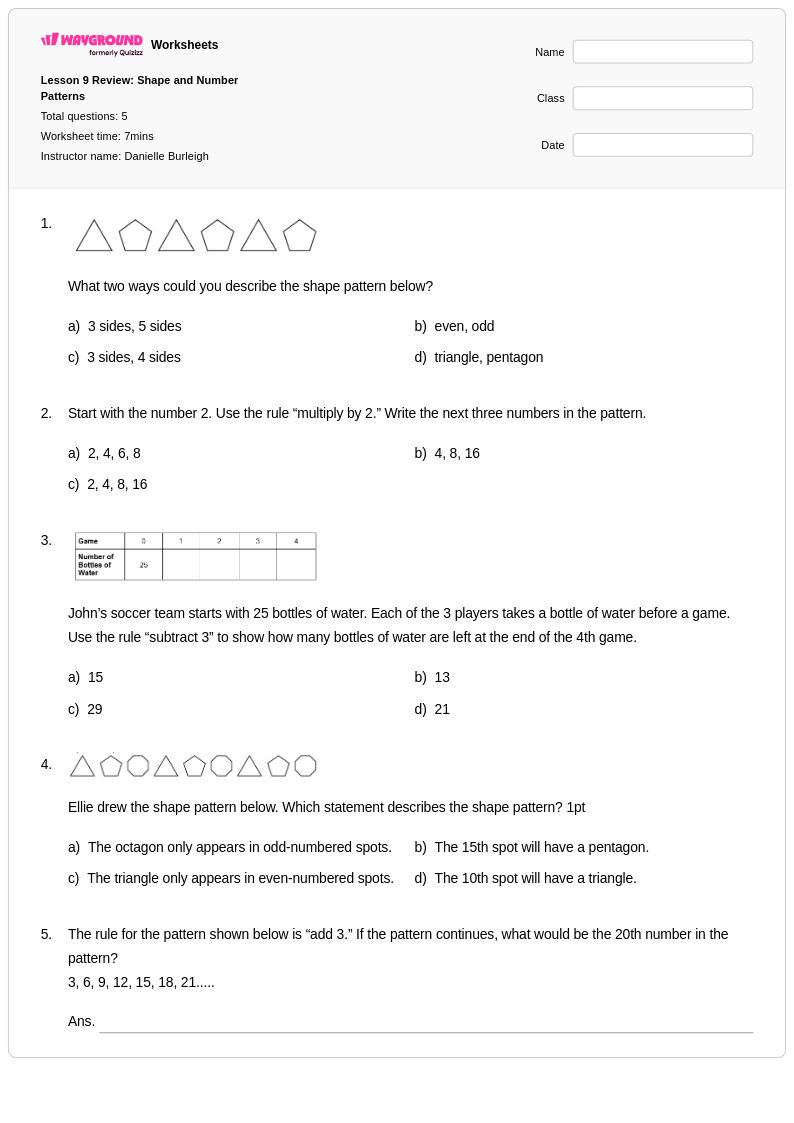
5 Q
4th
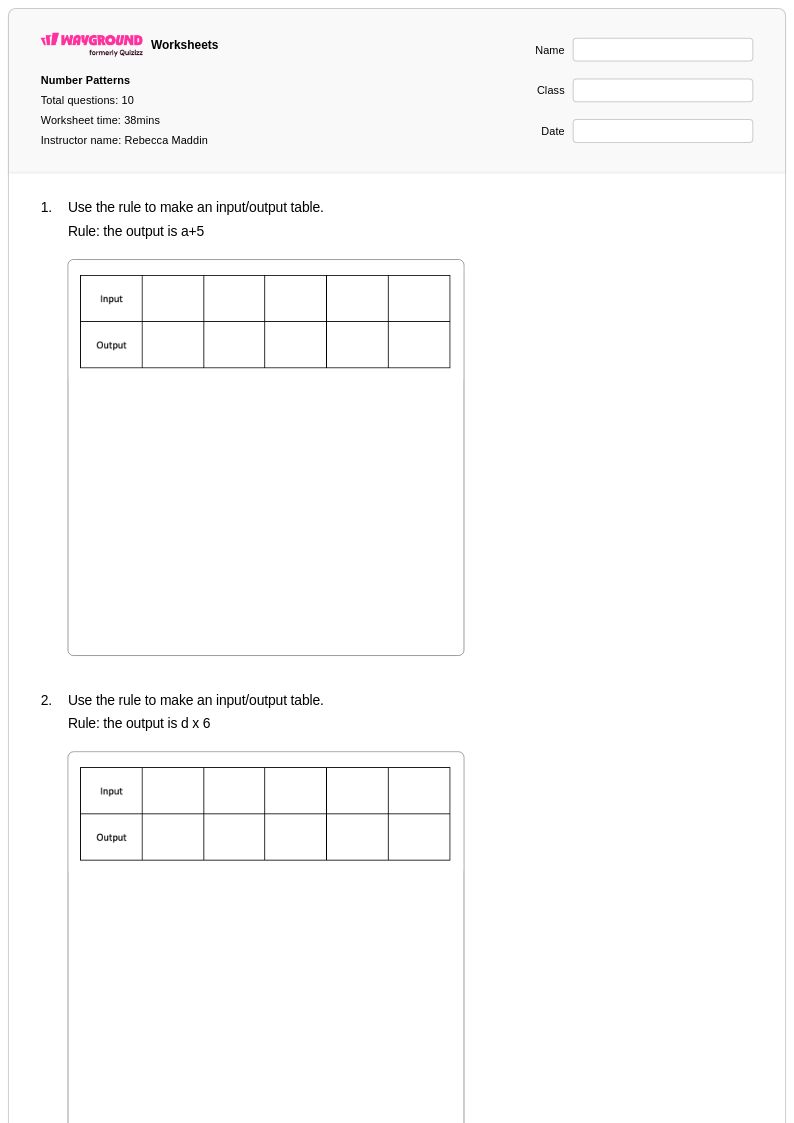
10 Q
5th
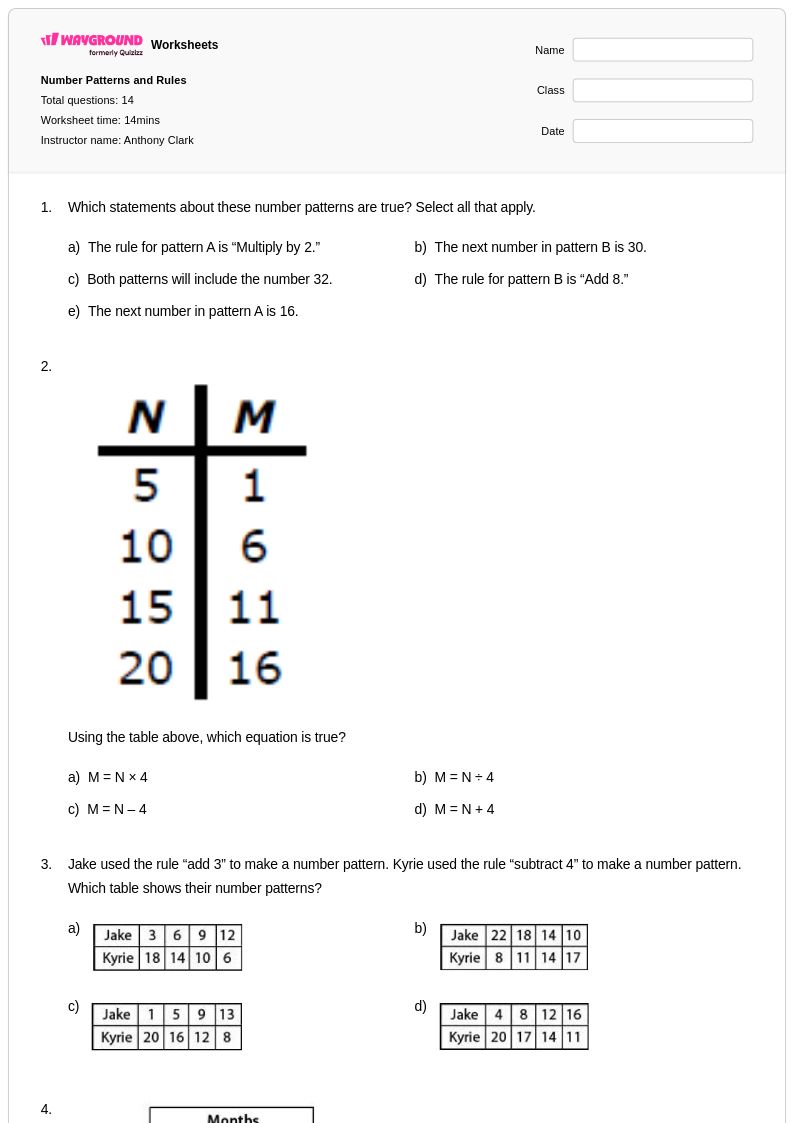
14 Q
5th - Uni
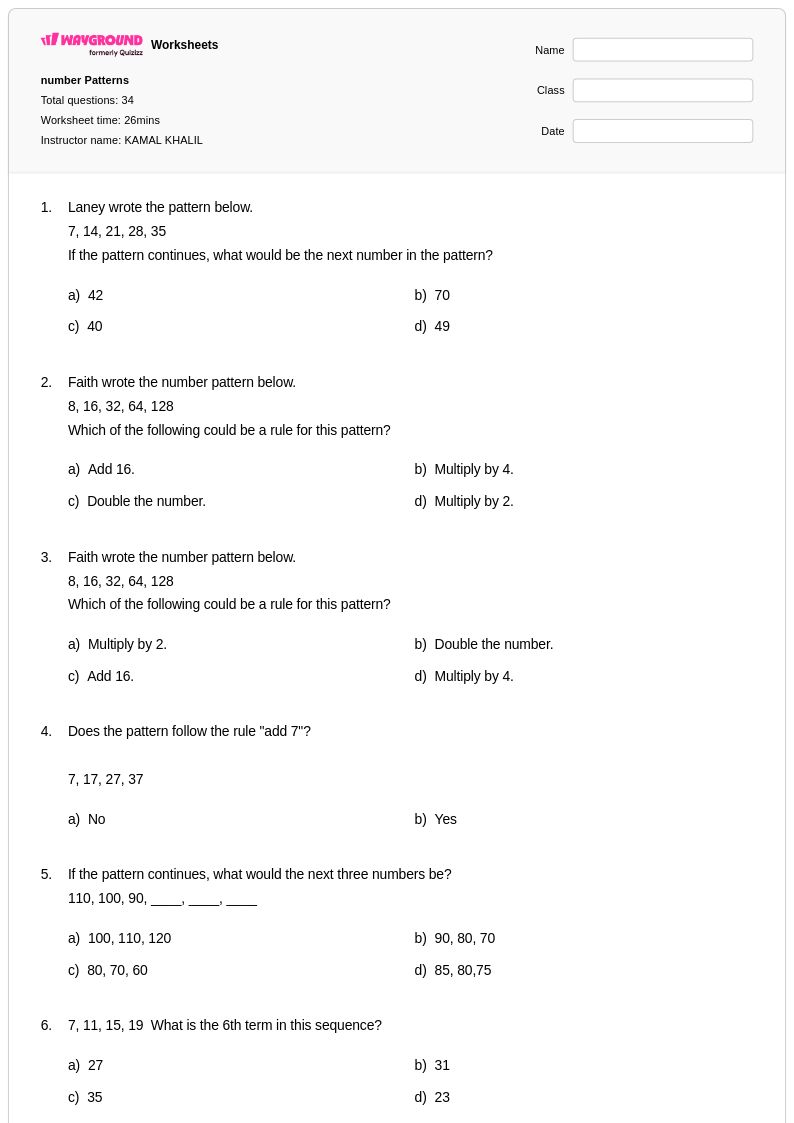
34 Q
4th
8 Q
5th
9 Q
2nd
10 Q
7th - 9th
8 Q
5th
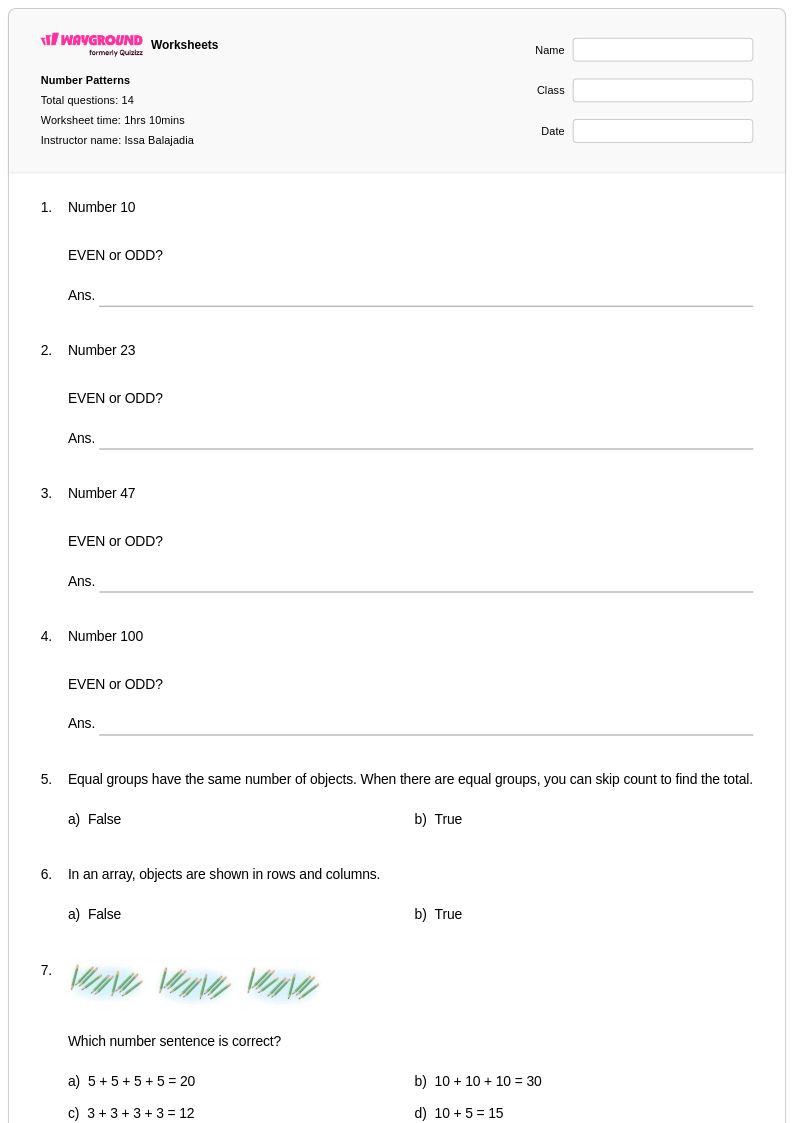
14 Q
2nd
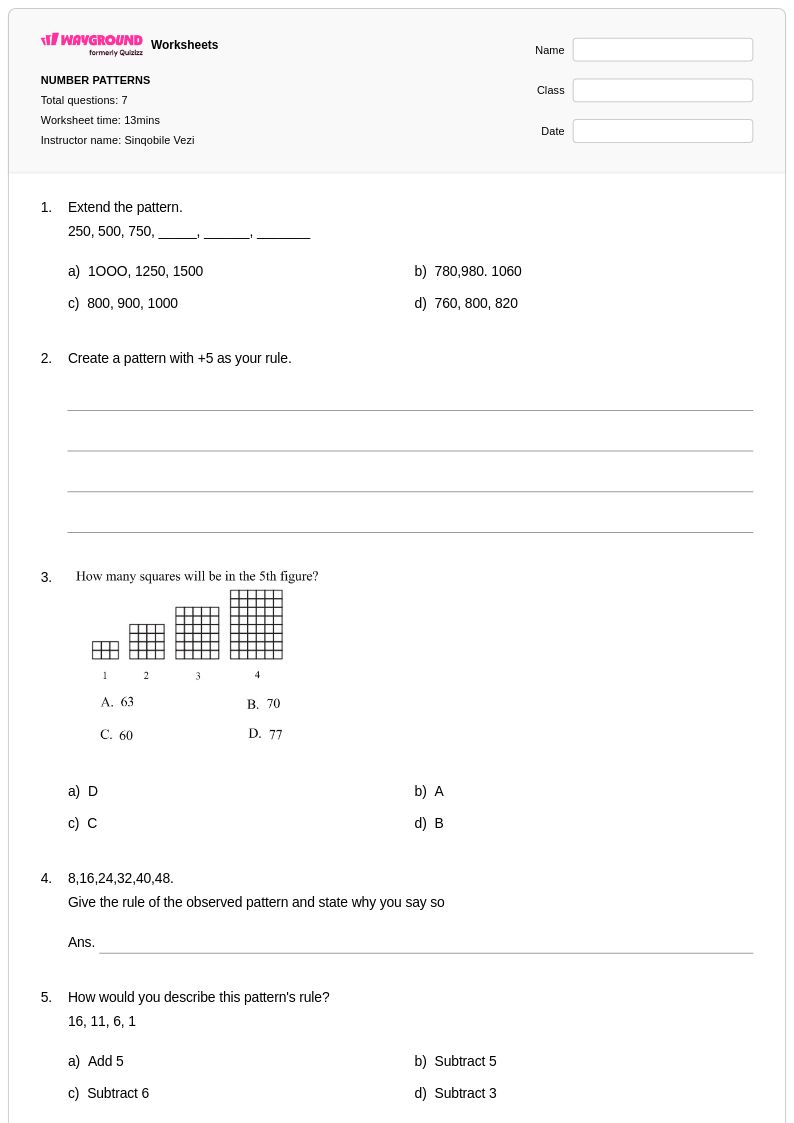
7 Q
5th
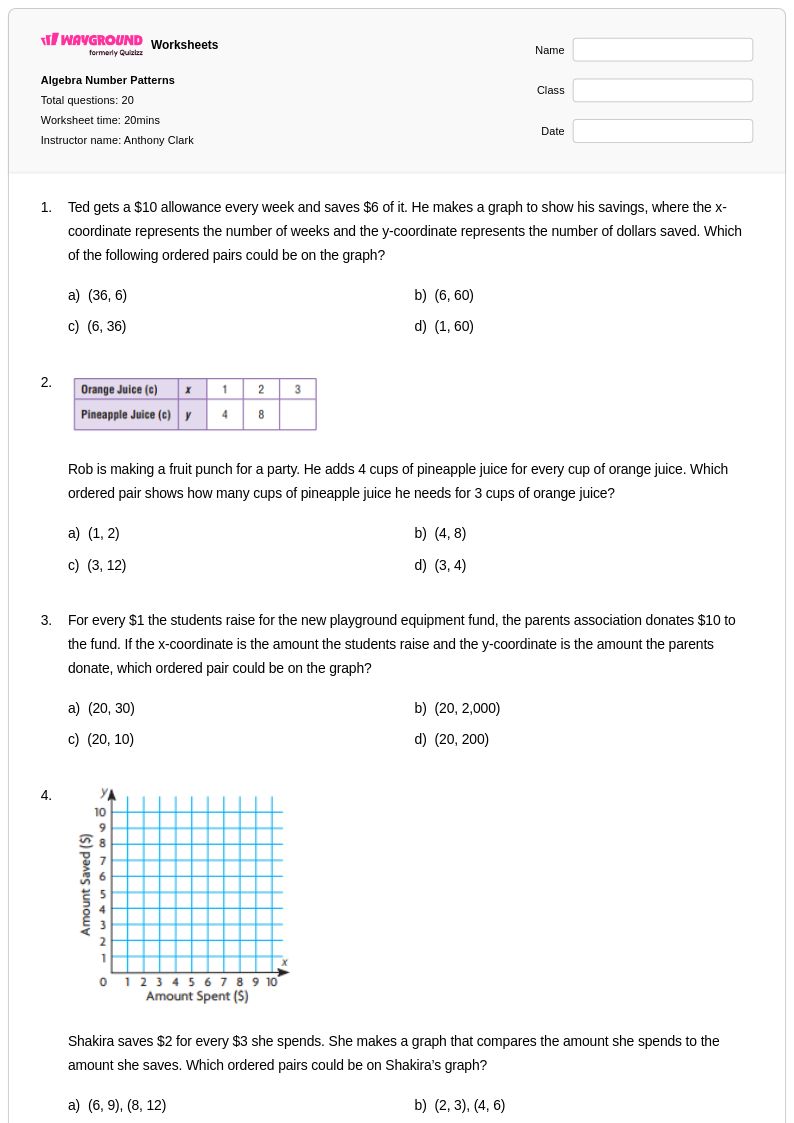
20 Q
5th - Uni
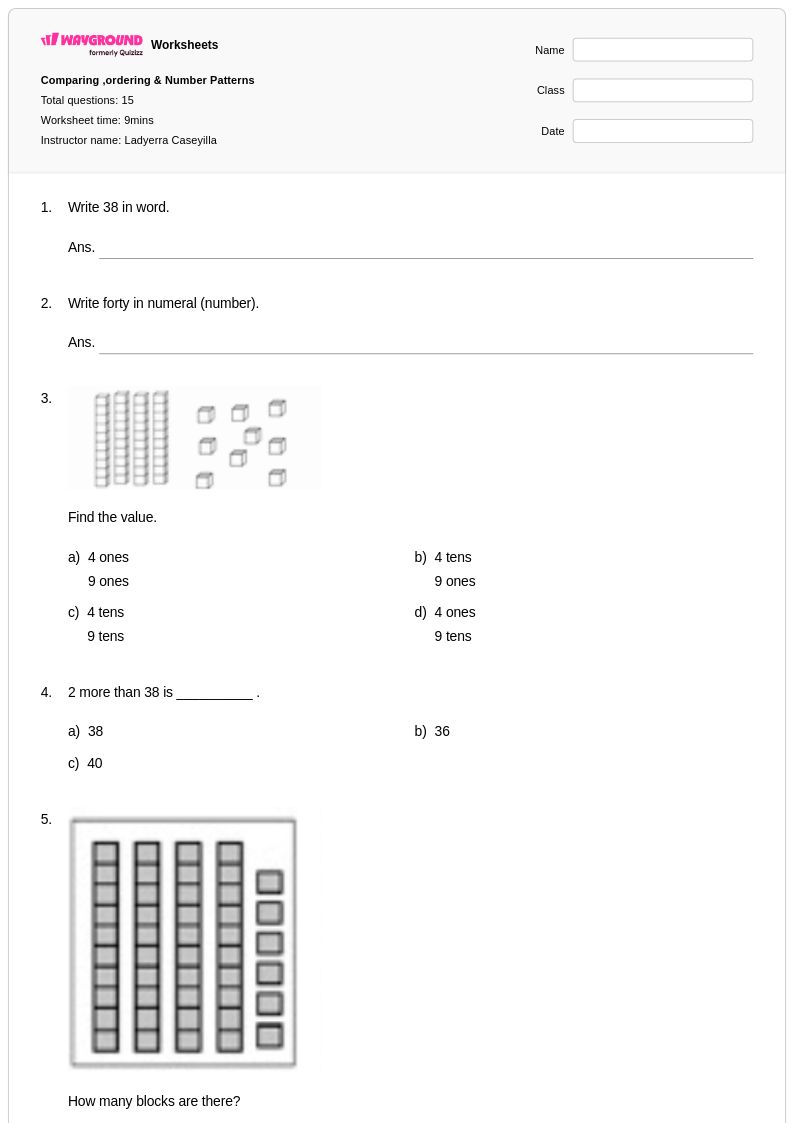
15 Q
1st
Explore Number Patterns Worksheets for kindergarten by Topic
Explore Other Subject Worksheets for kindergarten
Explore printable Number Patterns worksheets for Kindergarten
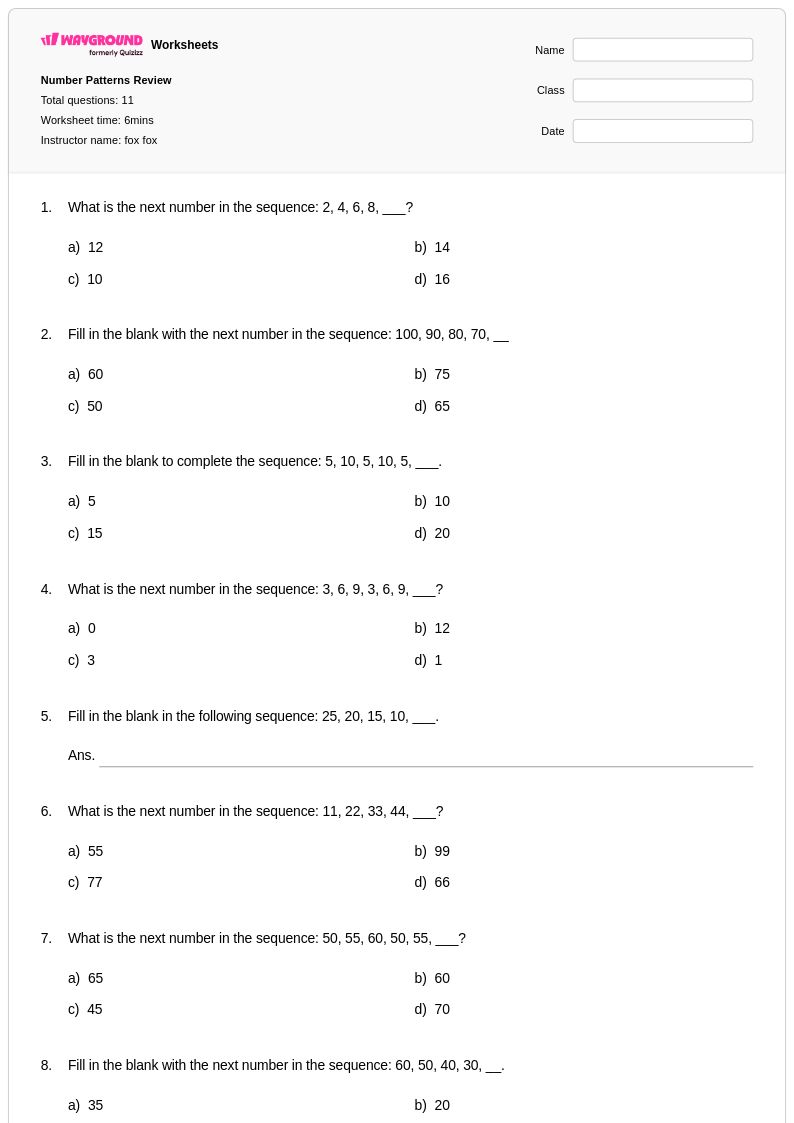
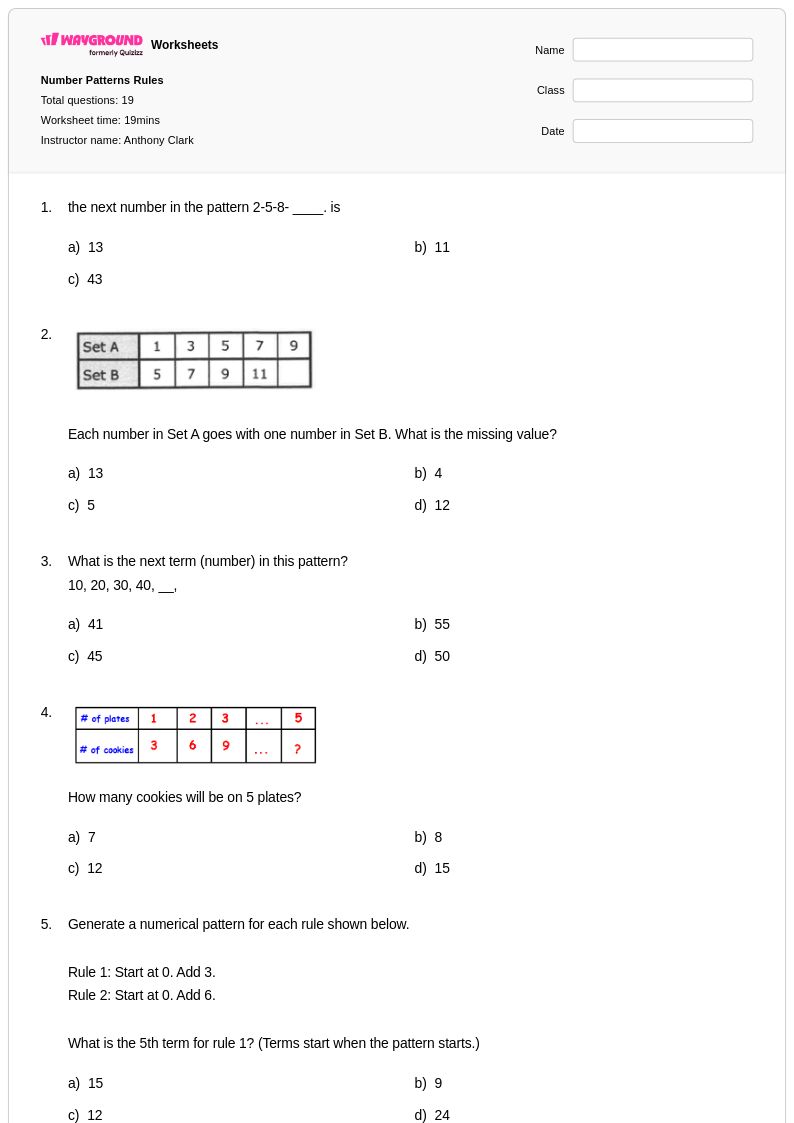
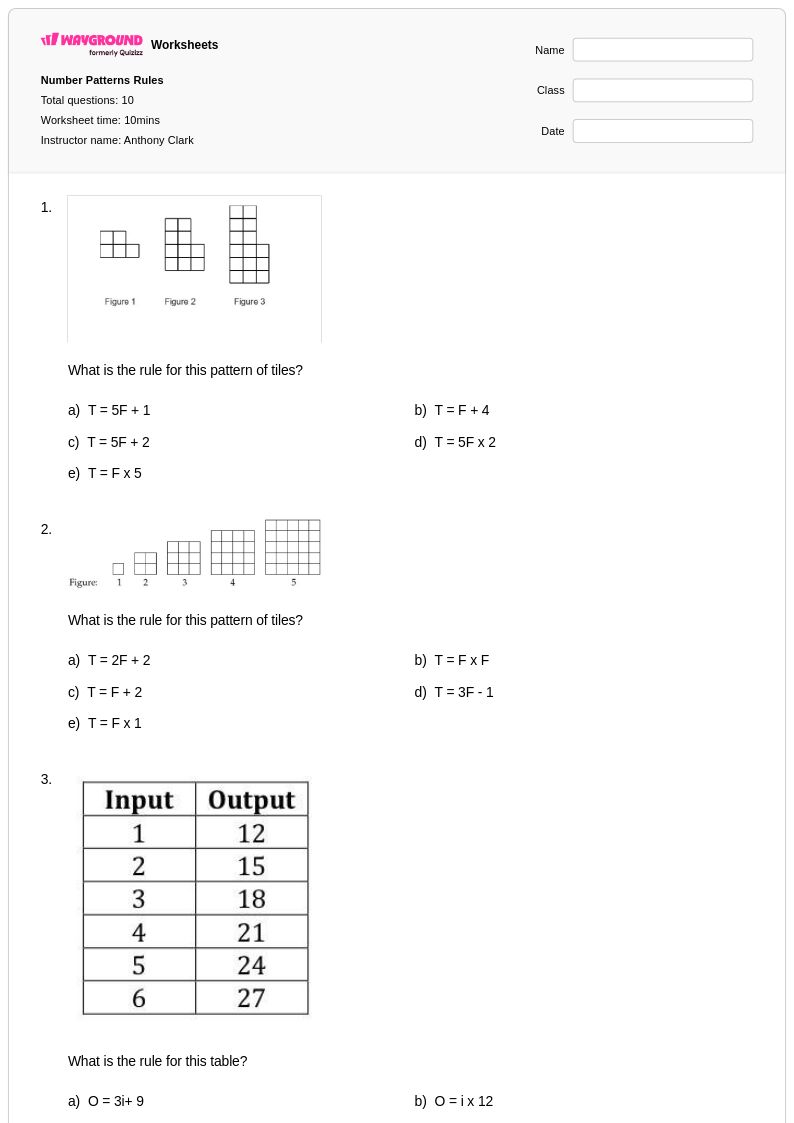
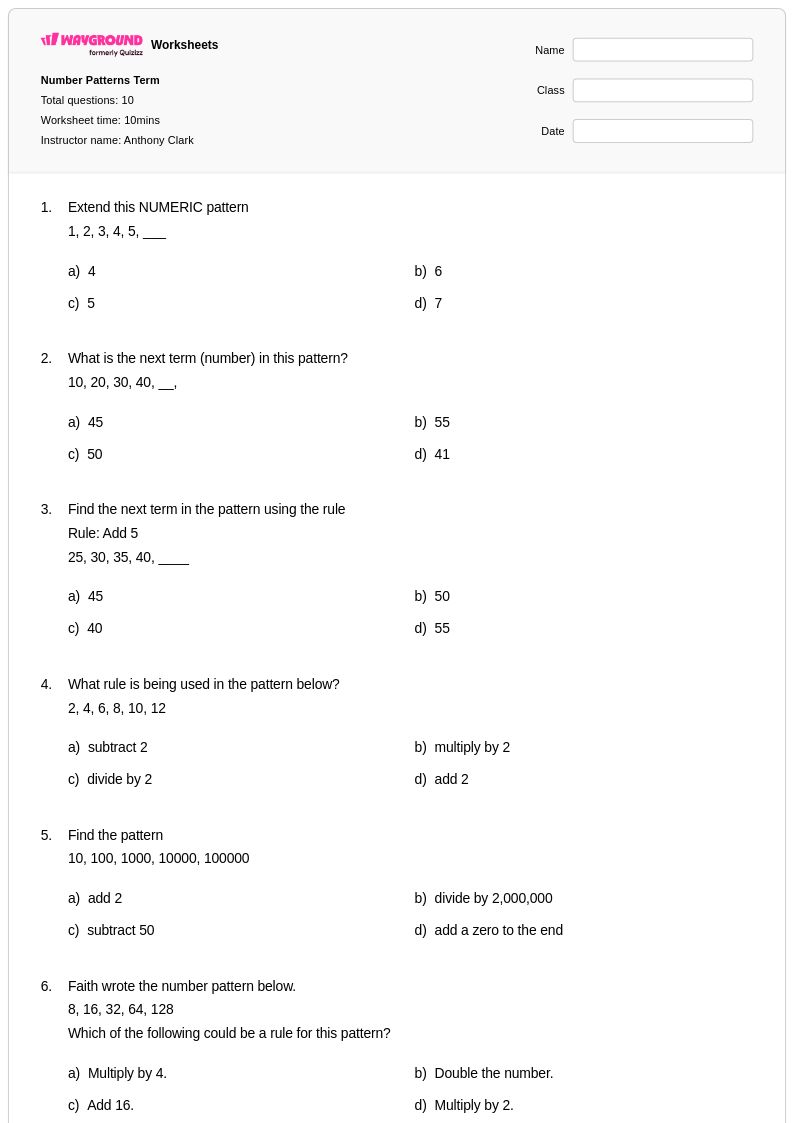
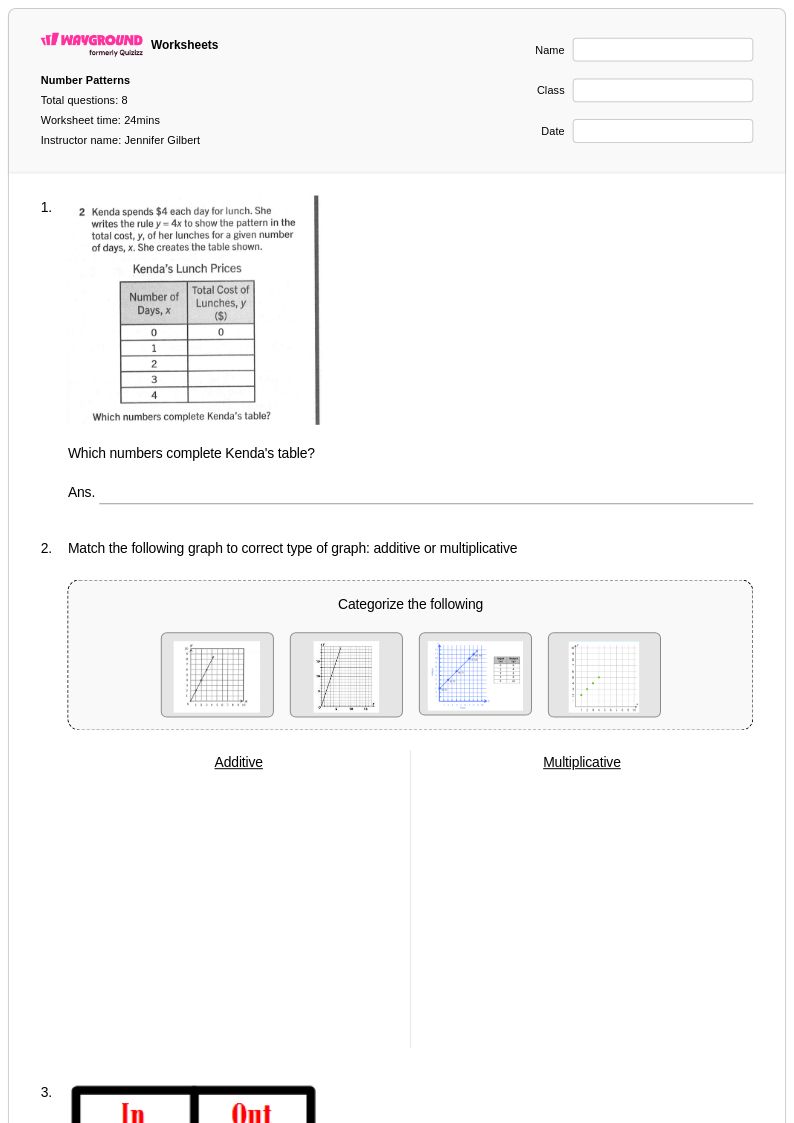
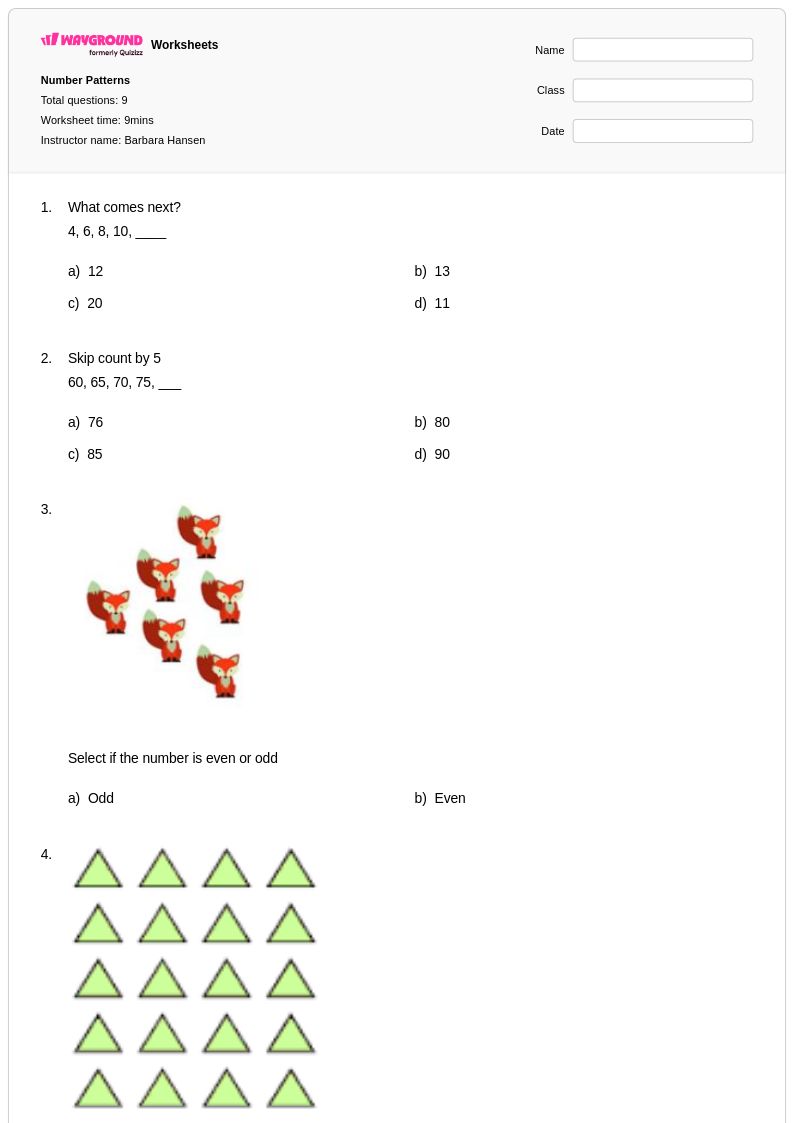
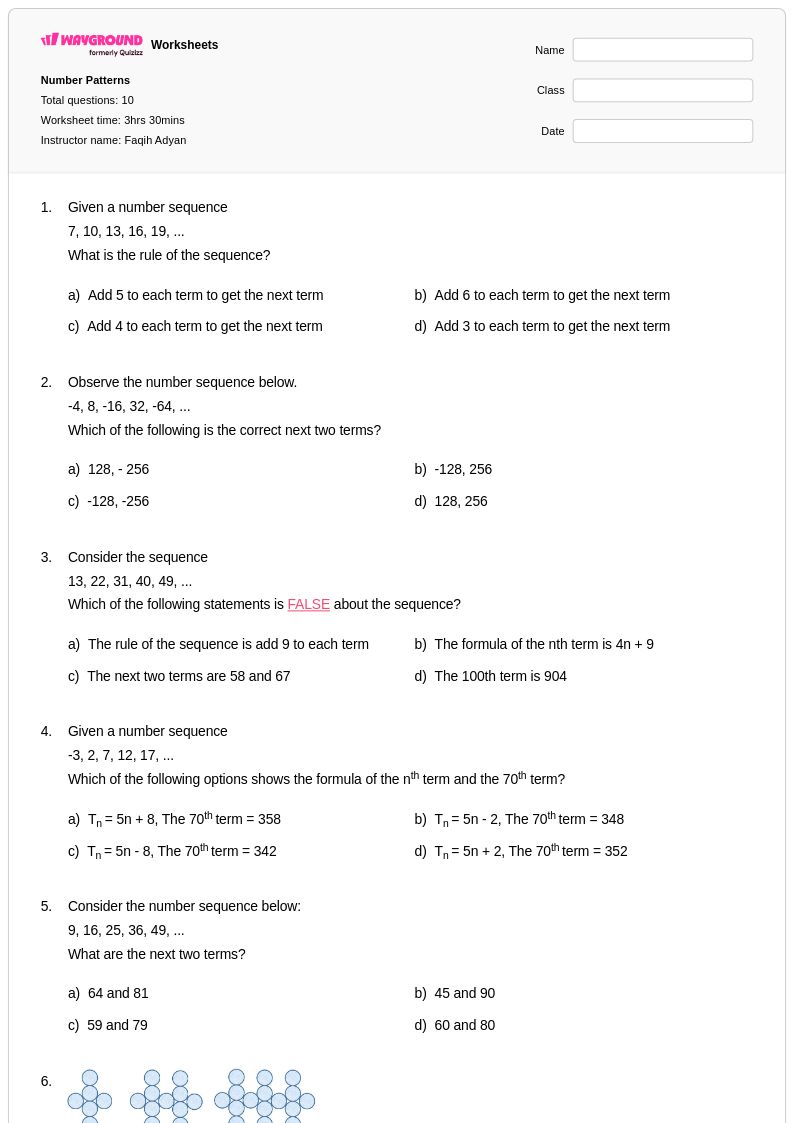
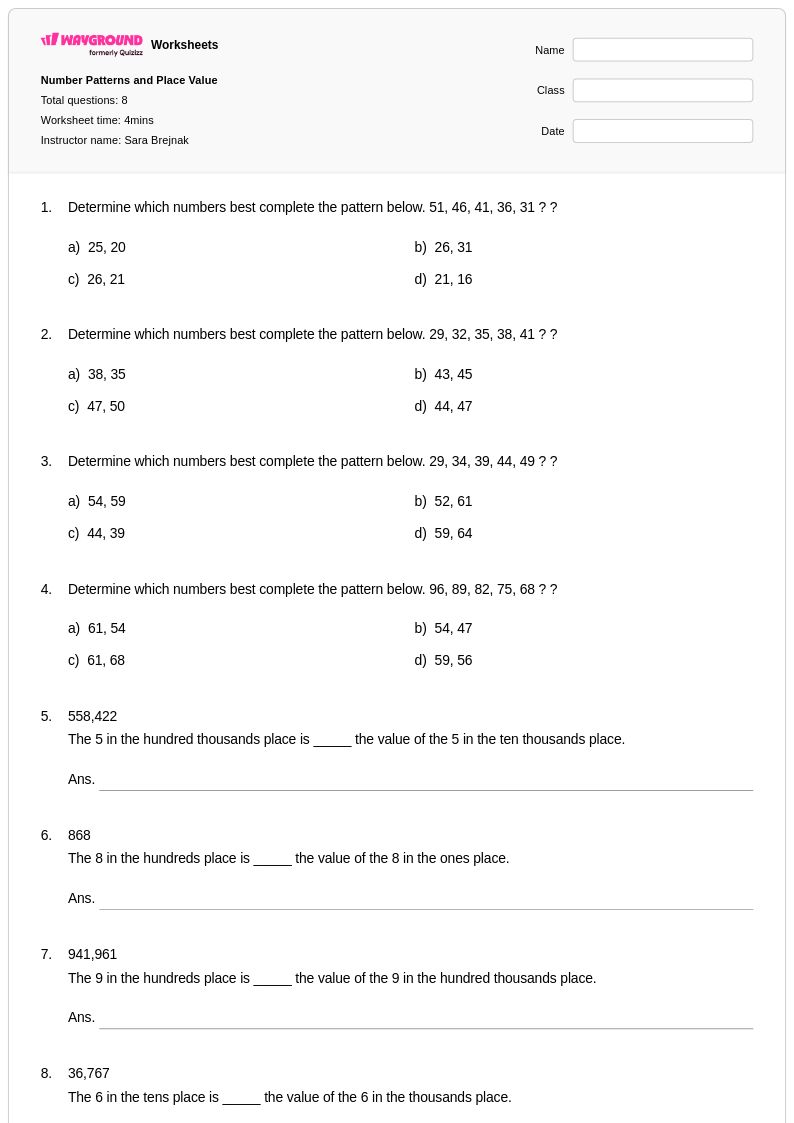
Number patterns worksheets for kindergarten through Wayground (formerly Quizizz) provide essential foundational practice for young learners developing early mathematical reasoning skills. These carefully designed printables focus on helping kindergarten students recognize, extend, and create simple patterns using colors, shapes, objects, and numbers. The worksheets strengthen critical pre-math abilities including visual discrimination, logical thinking, and sequencing skills that serve as building blocks for more advanced mathematical concepts. Each free resource includes structured practice problems that guide students through pattern identification and completion exercises, with comprehensive answer keys enabling teachers and parents to provide immediate feedback and support during the learning process.
Wayground's extensive collection of kindergarten number pattern worksheets draws from millions of teacher-created resources, offering educators powerful search and filtering capabilities to locate materials perfectly suited to their classroom needs. The platform's robust standards alignment ensures these printable and digital pdf resources support curriculum objectives while providing flexible customization options for differentiated instruction. Teachers can easily adapt worksheets to accommodate varying skill levels within their kindergarten classrooms, using these versatile tools for initial skill introduction, targeted remediation, or enrichment activities. The seamless availability of both printable and interactive digital formats allows educators to incorporate pattern practice into lesson planning with maximum flexibility, supporting diverse learning environments and helping students build confidence in recognizing mathematical relationships through engaging, age-appropriate exercises.
FAQs
How do I introduce patterns to kindergarteners?
What are good pattern activities for kindergarten?
What are common mistakes kindergarteners make with patterns?
How can I use these kindergarten pattern worksheets?
How do number patterns fit into kindergarten math standards?
How can I support diverse learners with these pattern worksheets?