Free Printable Orbital Motion Worksheets for Grade 6
Explore Grade 6 orbital motion worksheets and printables that help students understand planetary movement, satellite paths, and gravitational forces through engaging practice problems with complete answer keys available as free PDF downloads.
Explore printable Orbital Motion worksheets for Grade 6
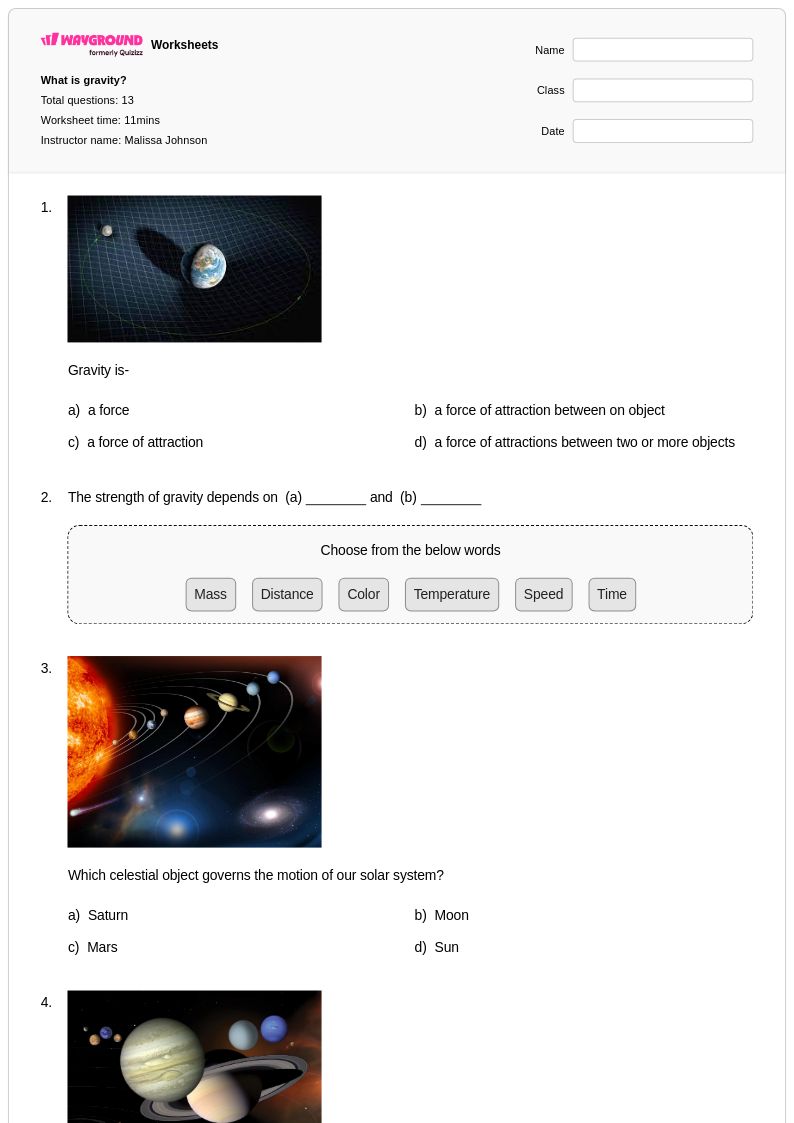
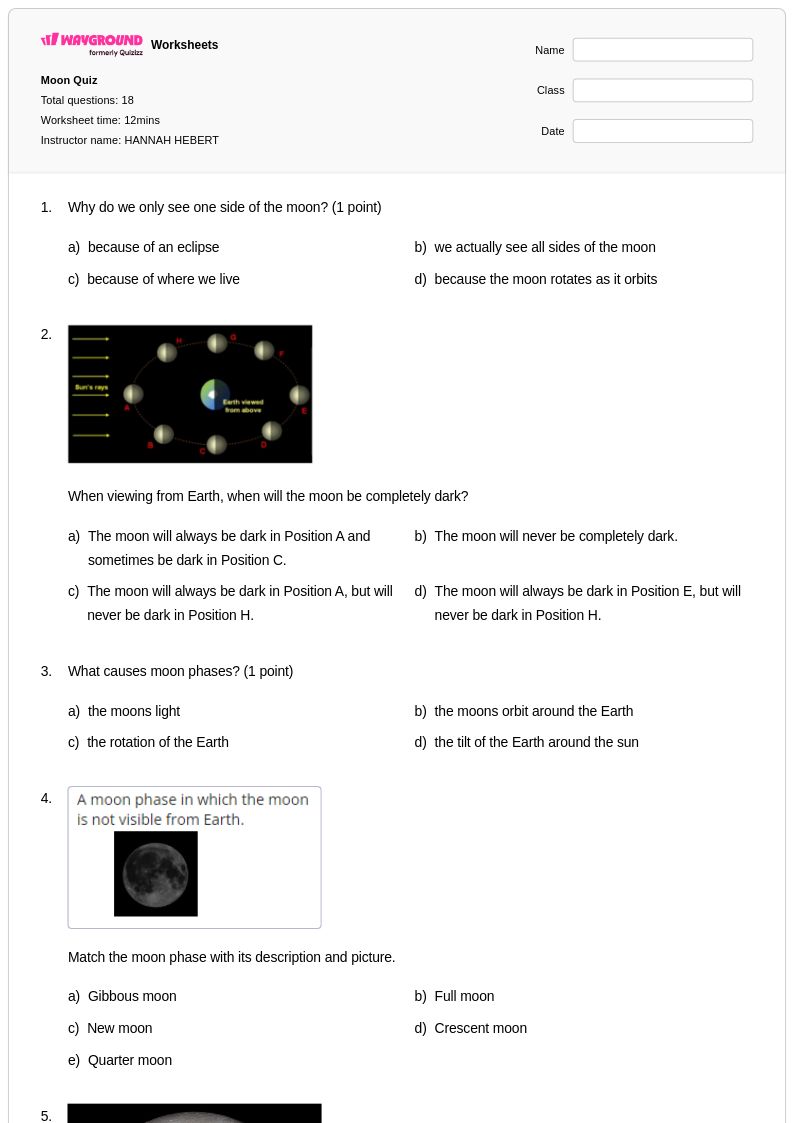
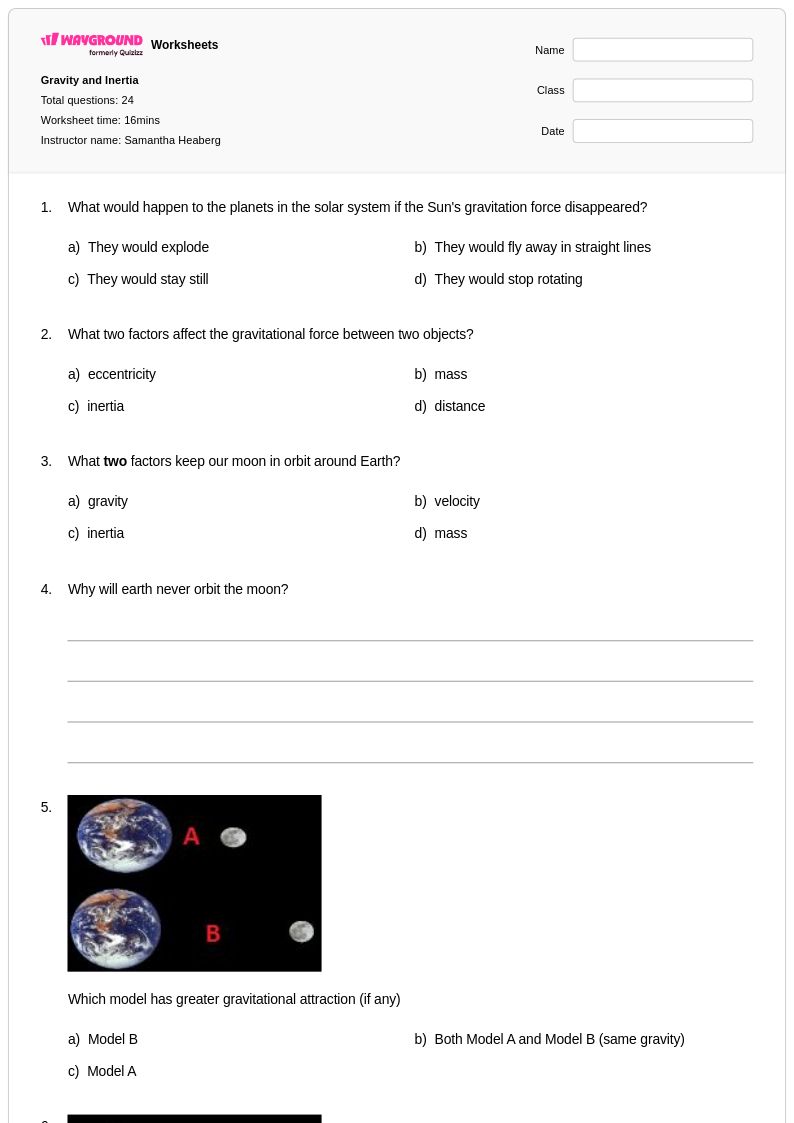
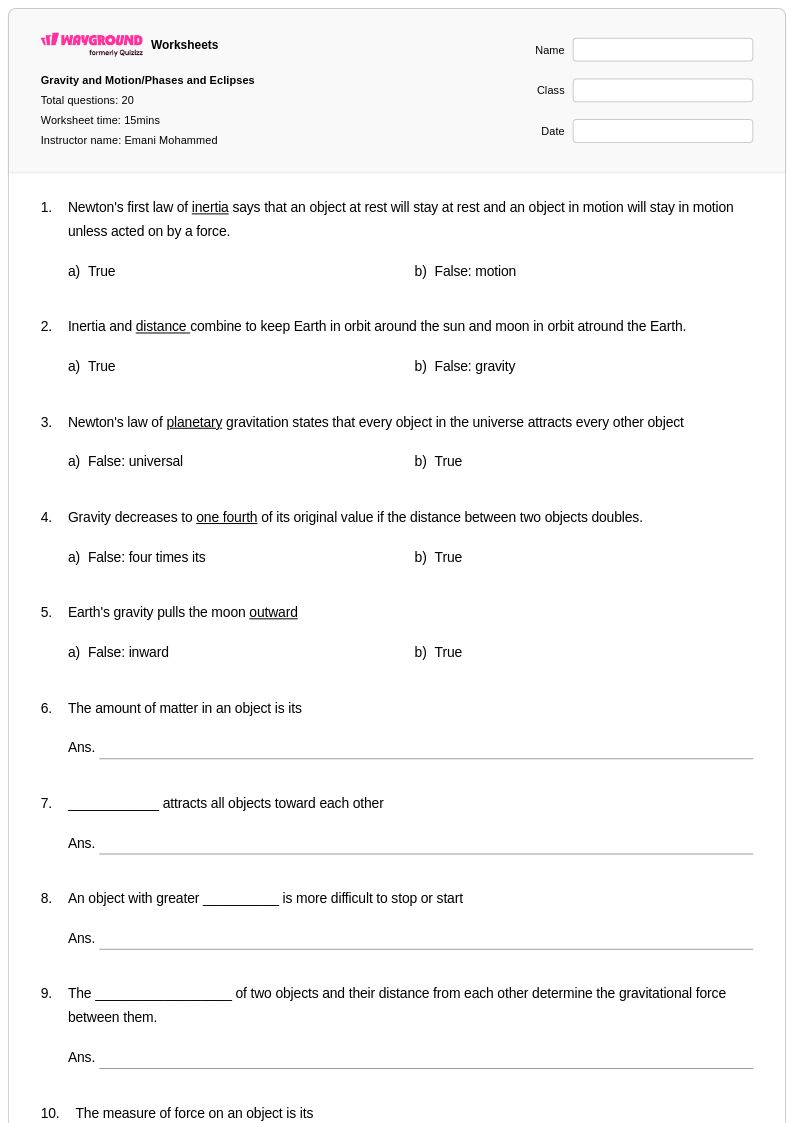
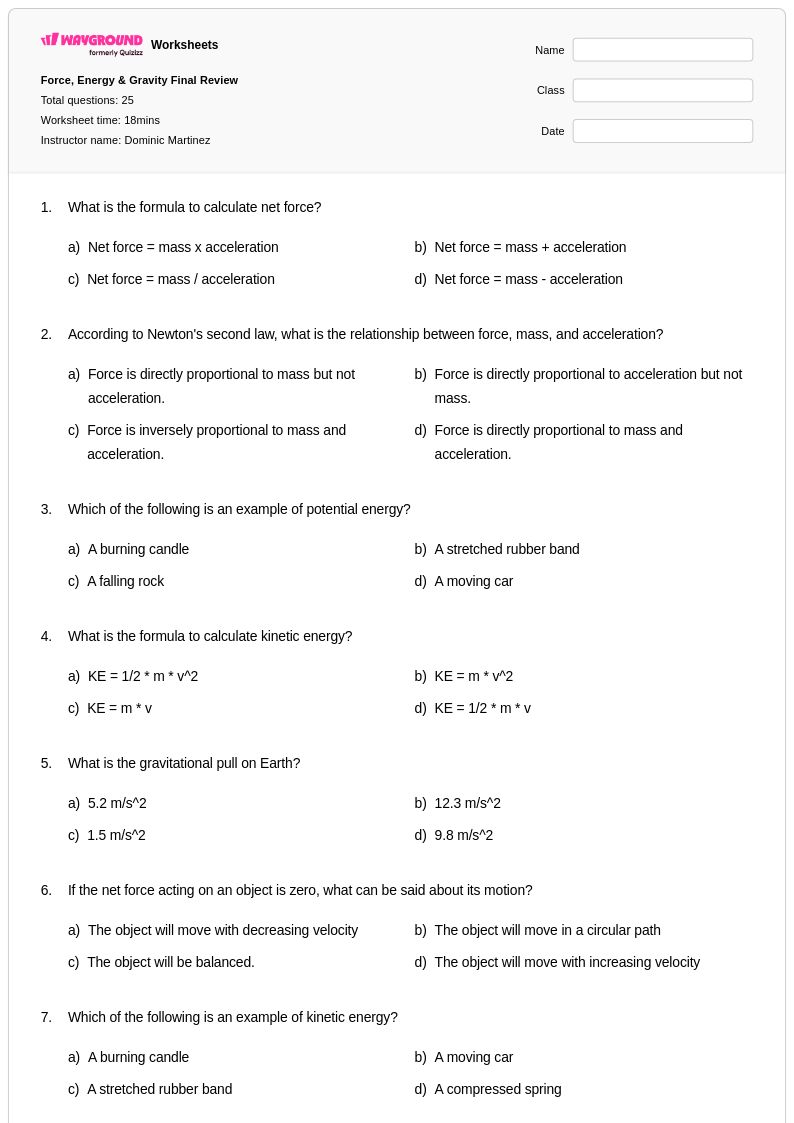
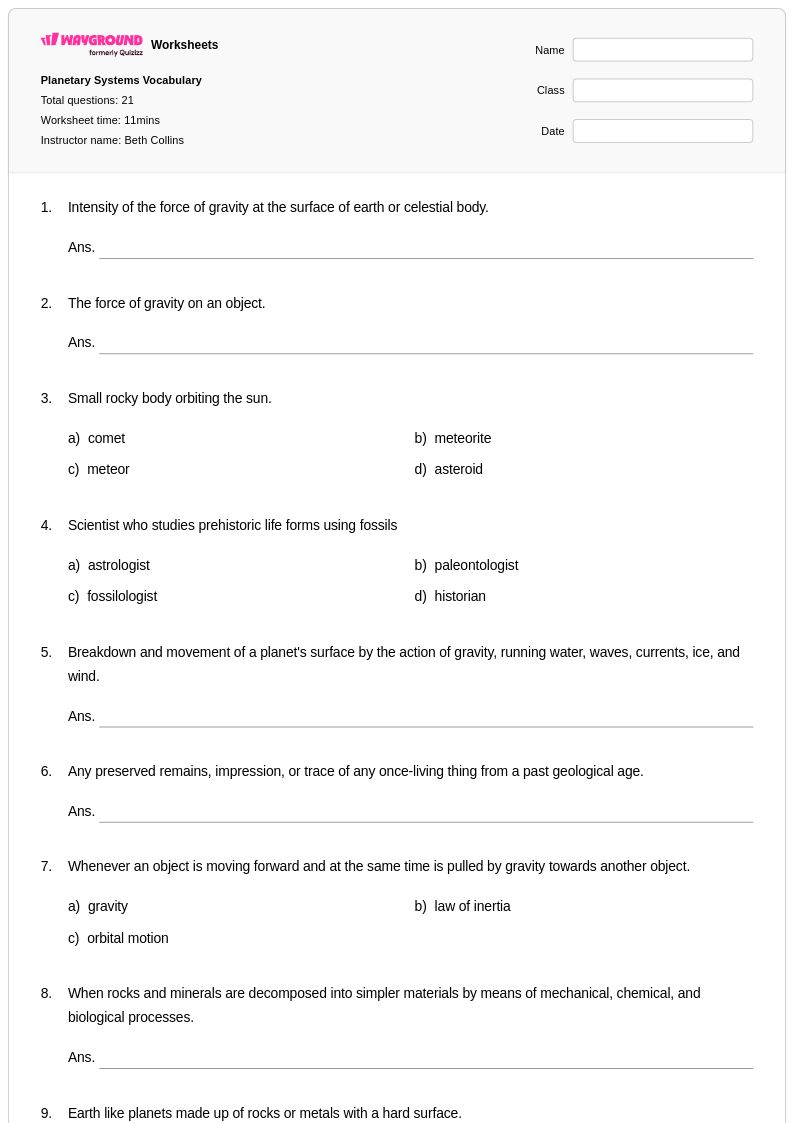
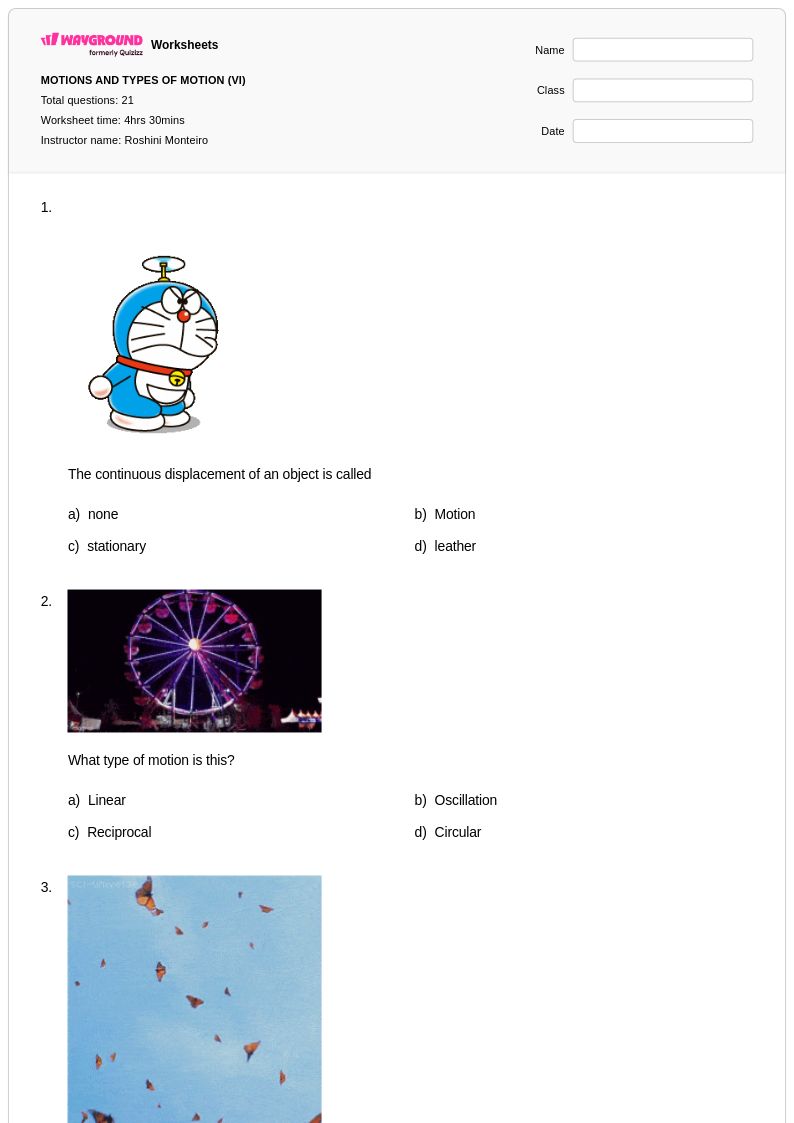
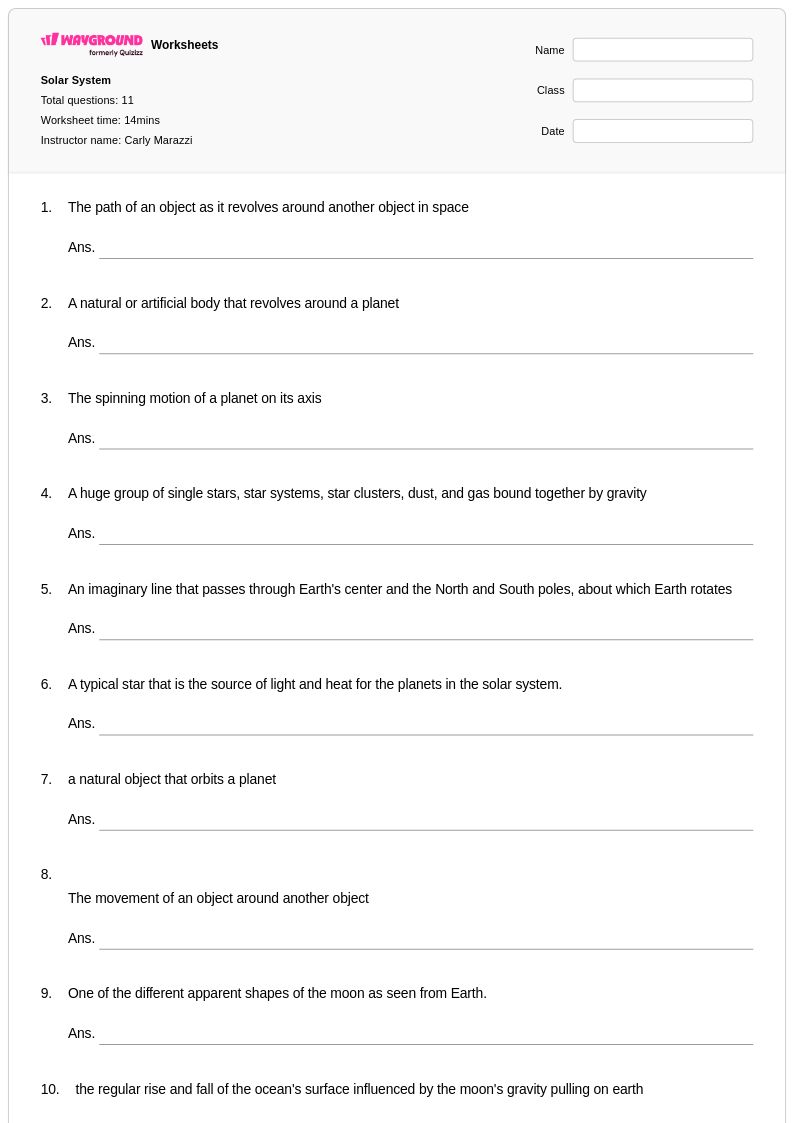
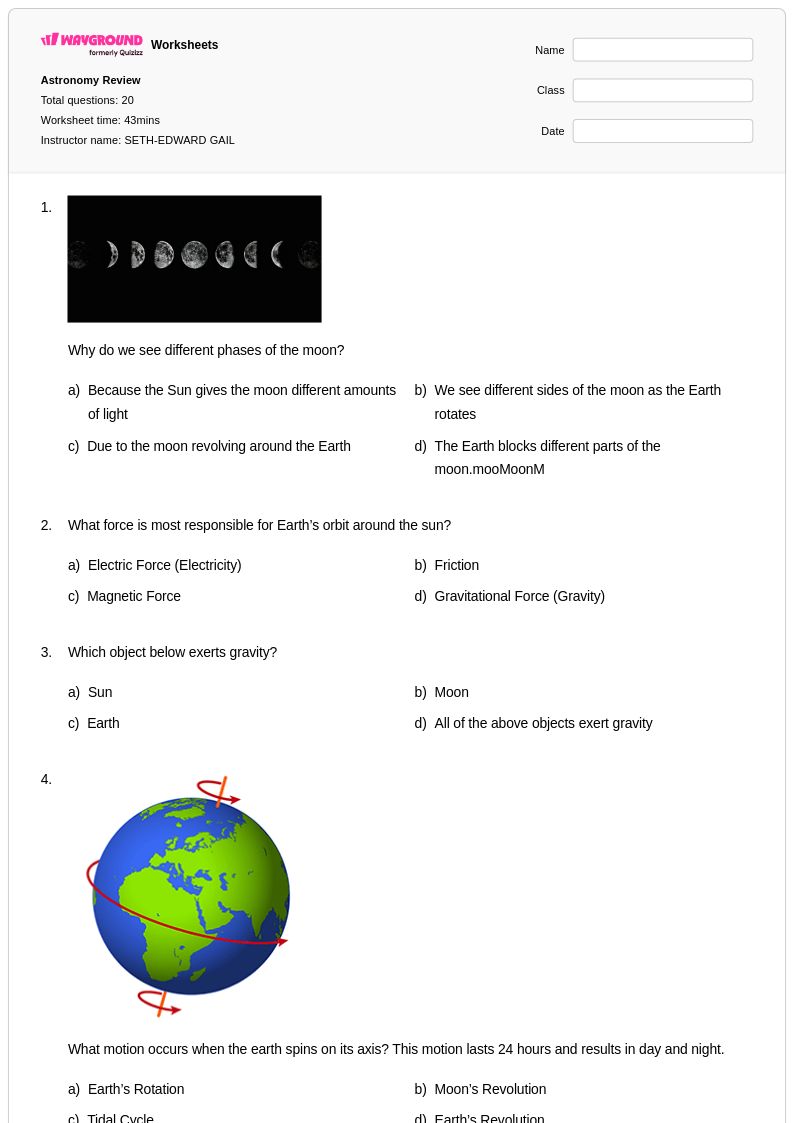
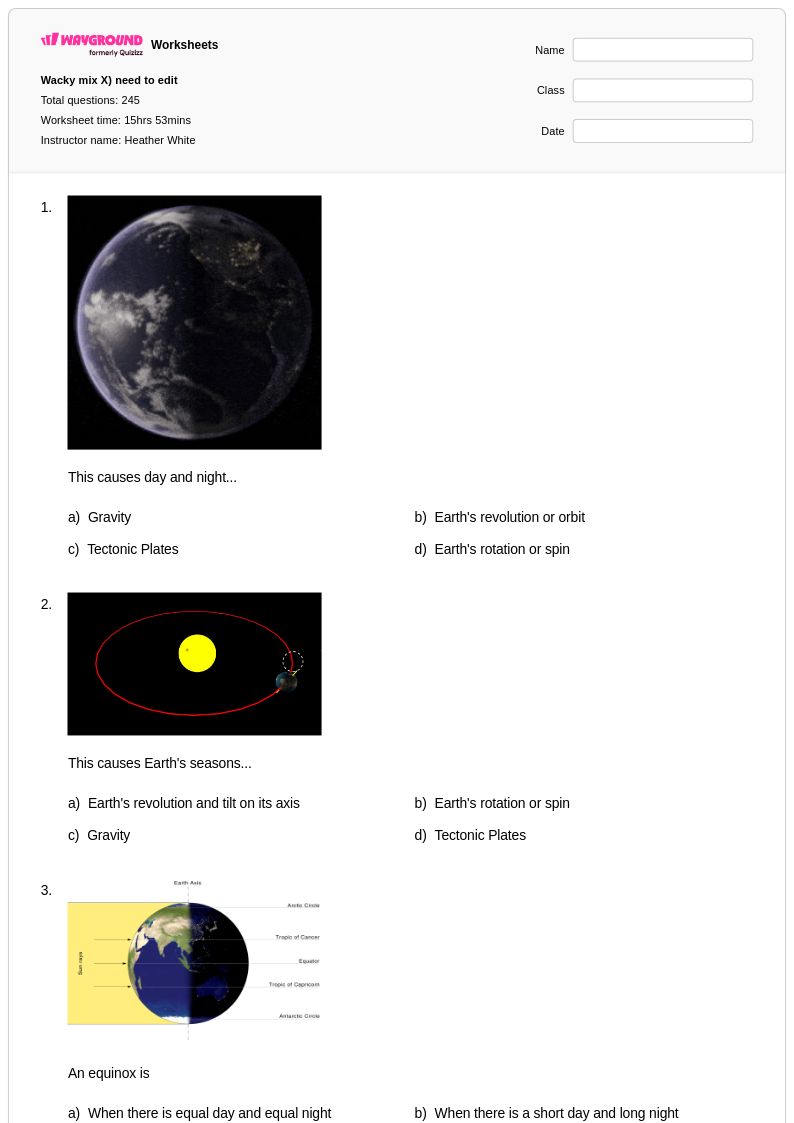
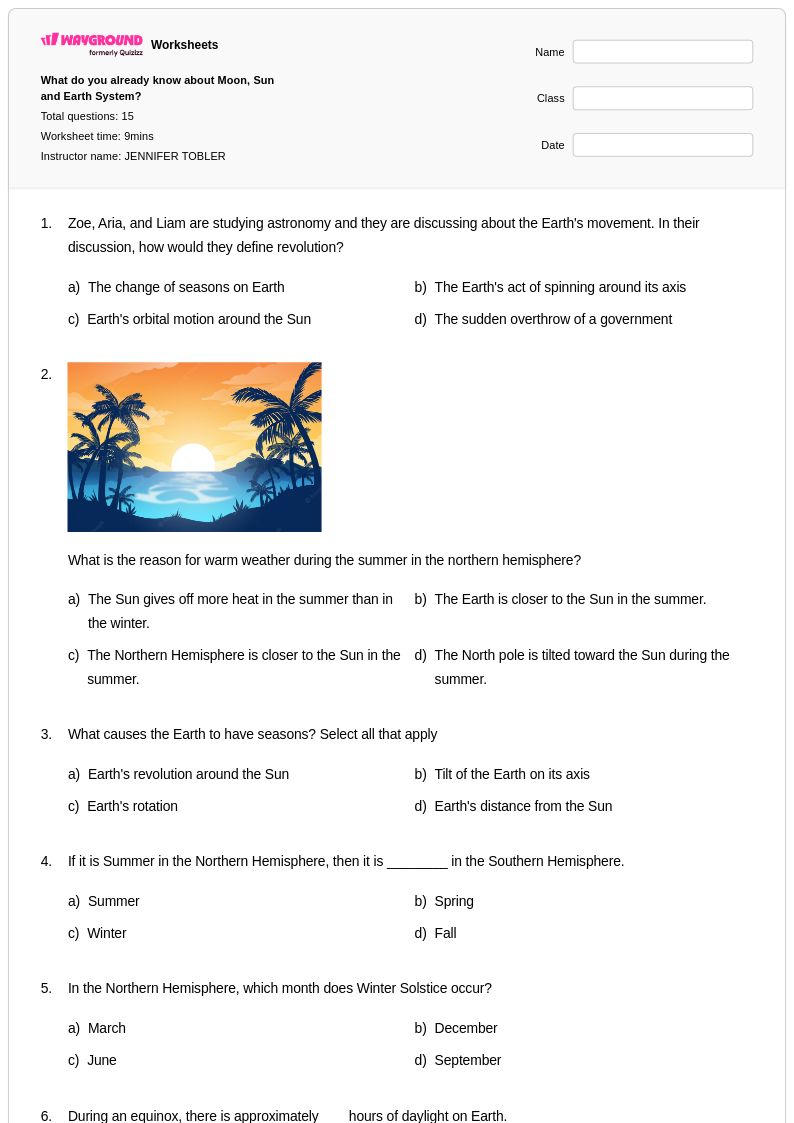
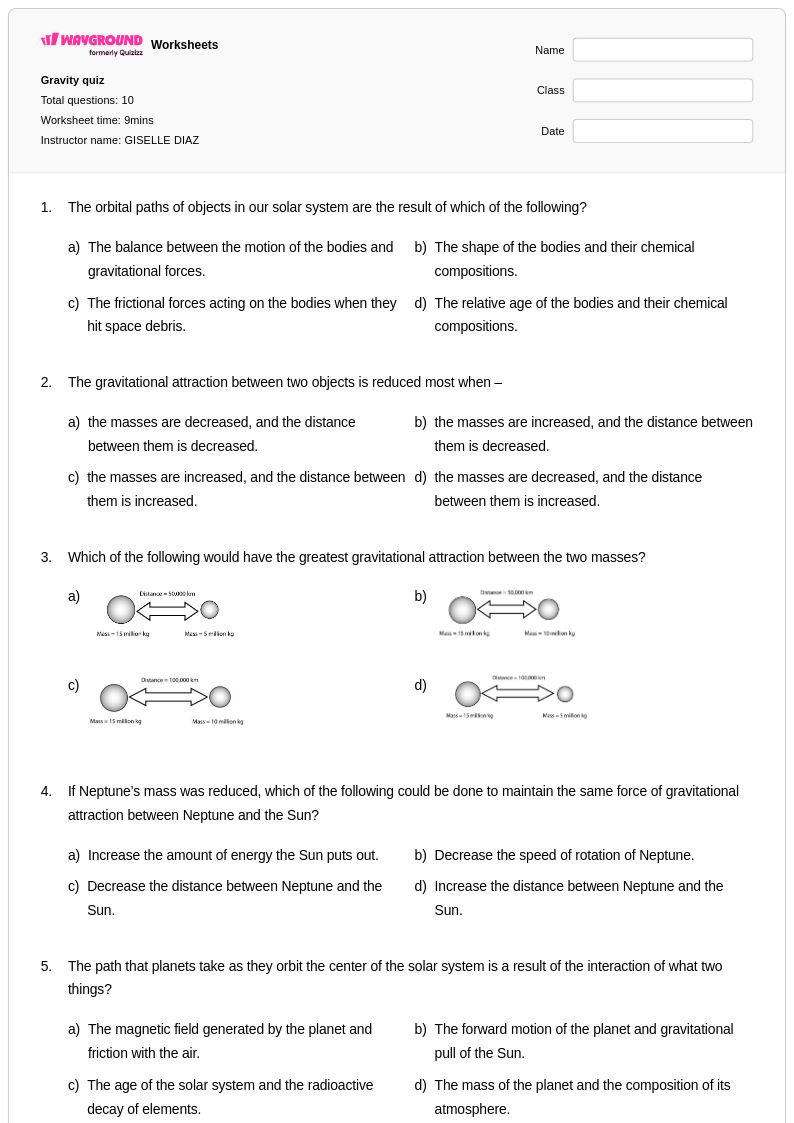
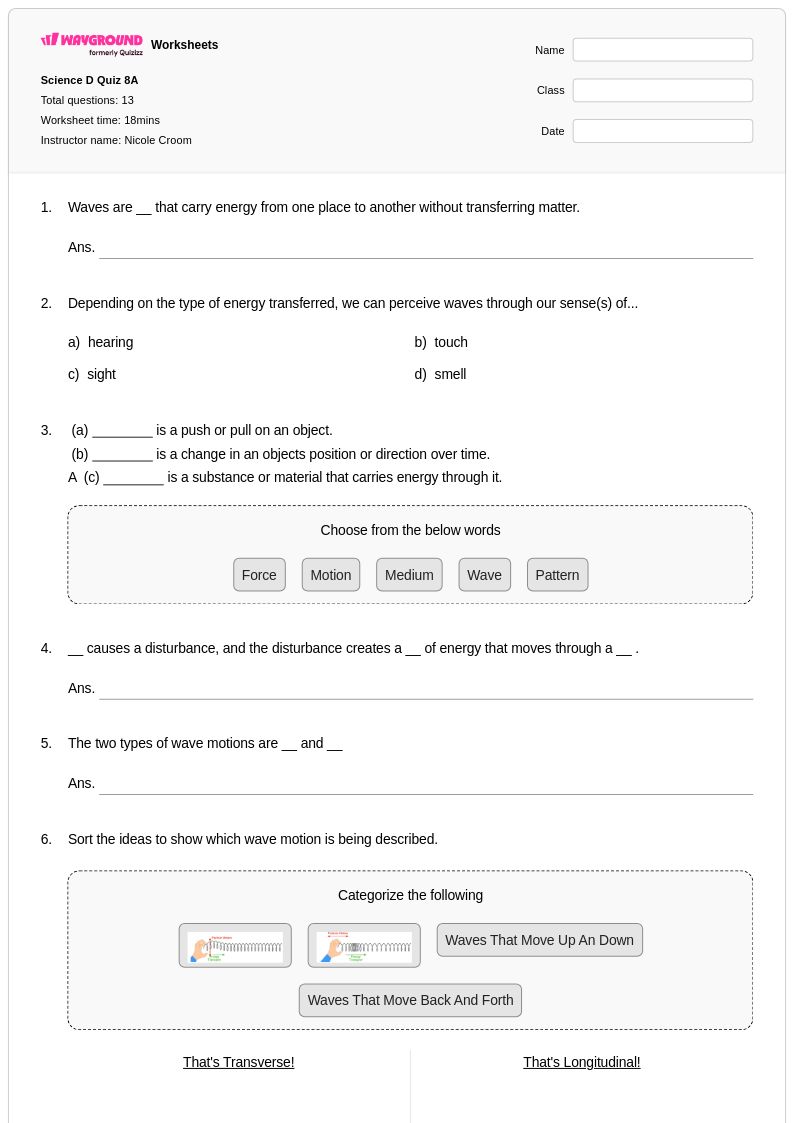
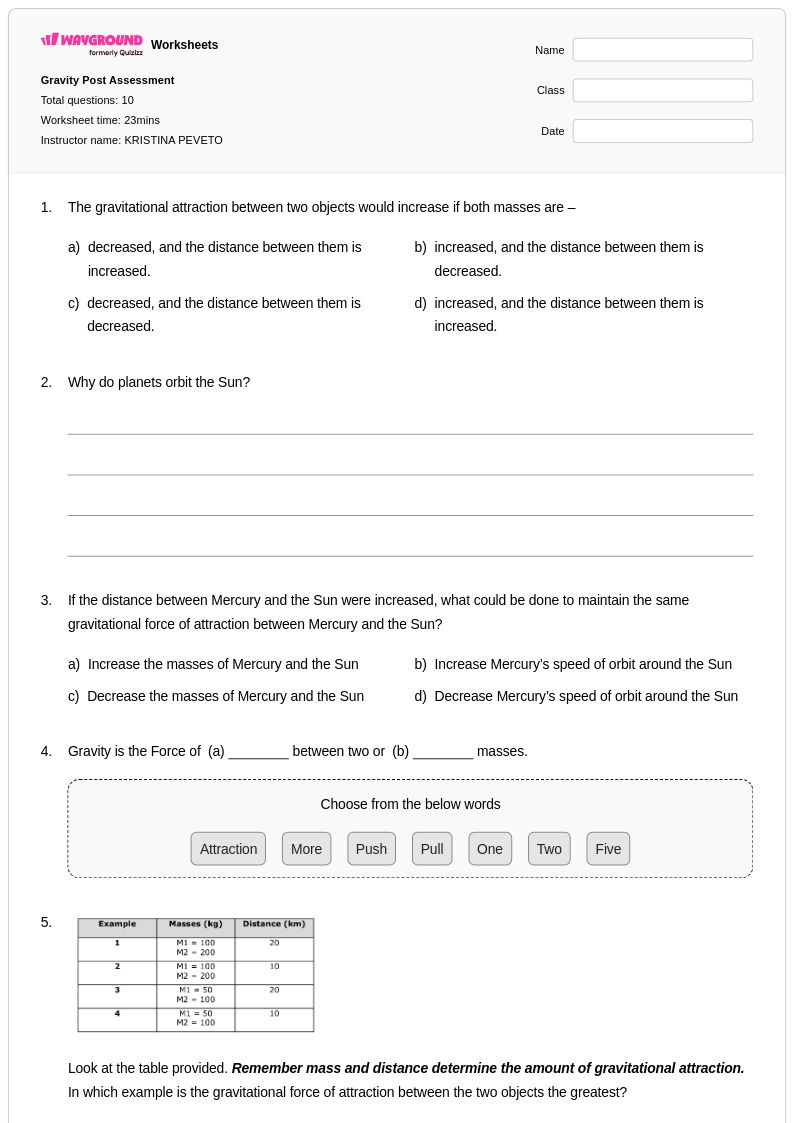
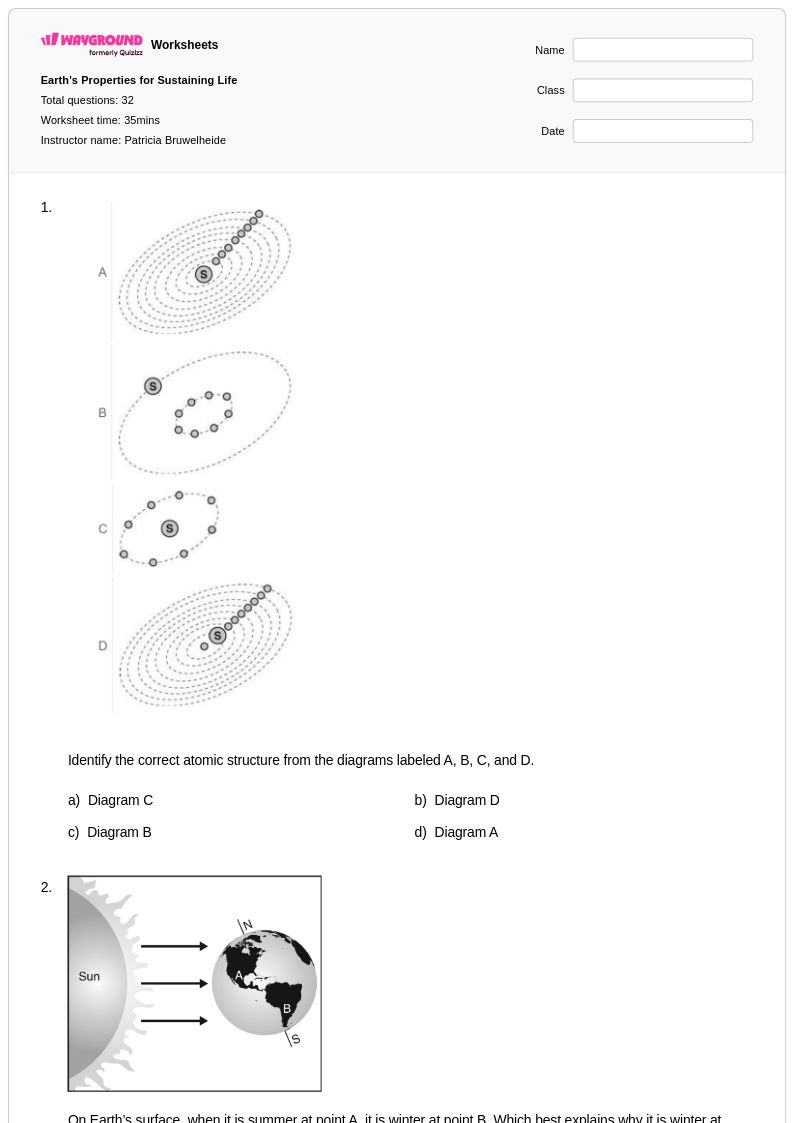
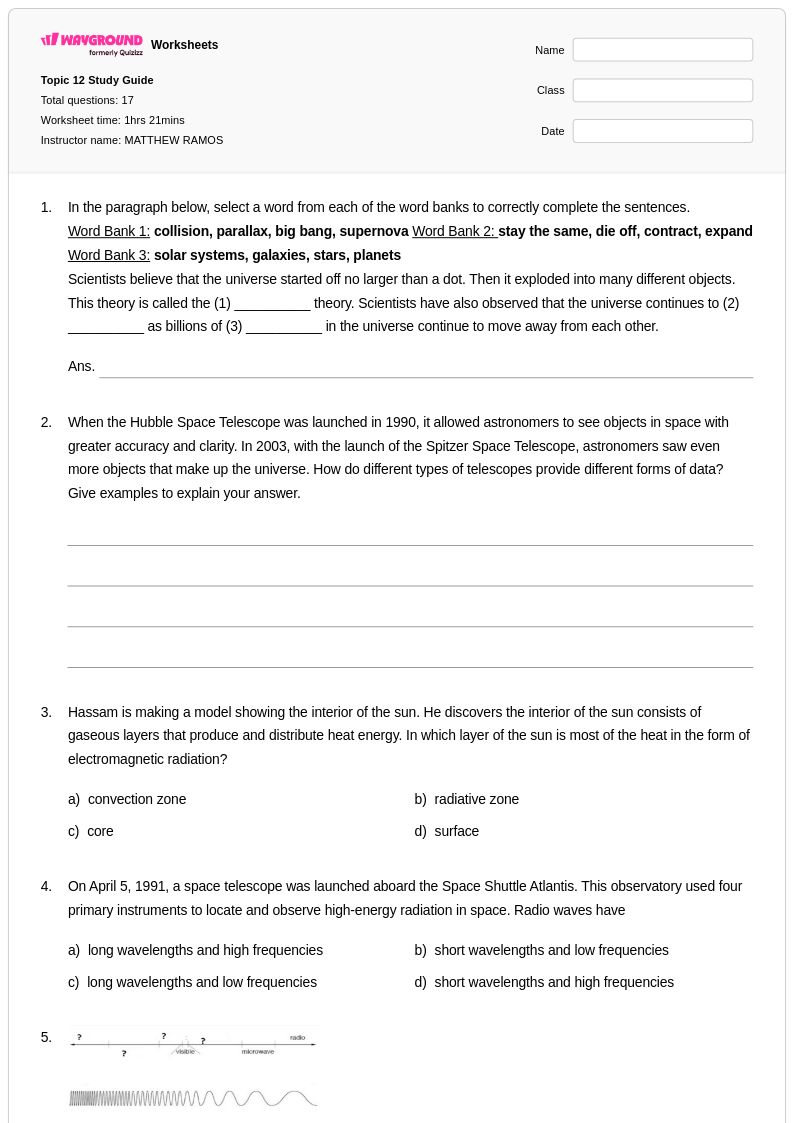
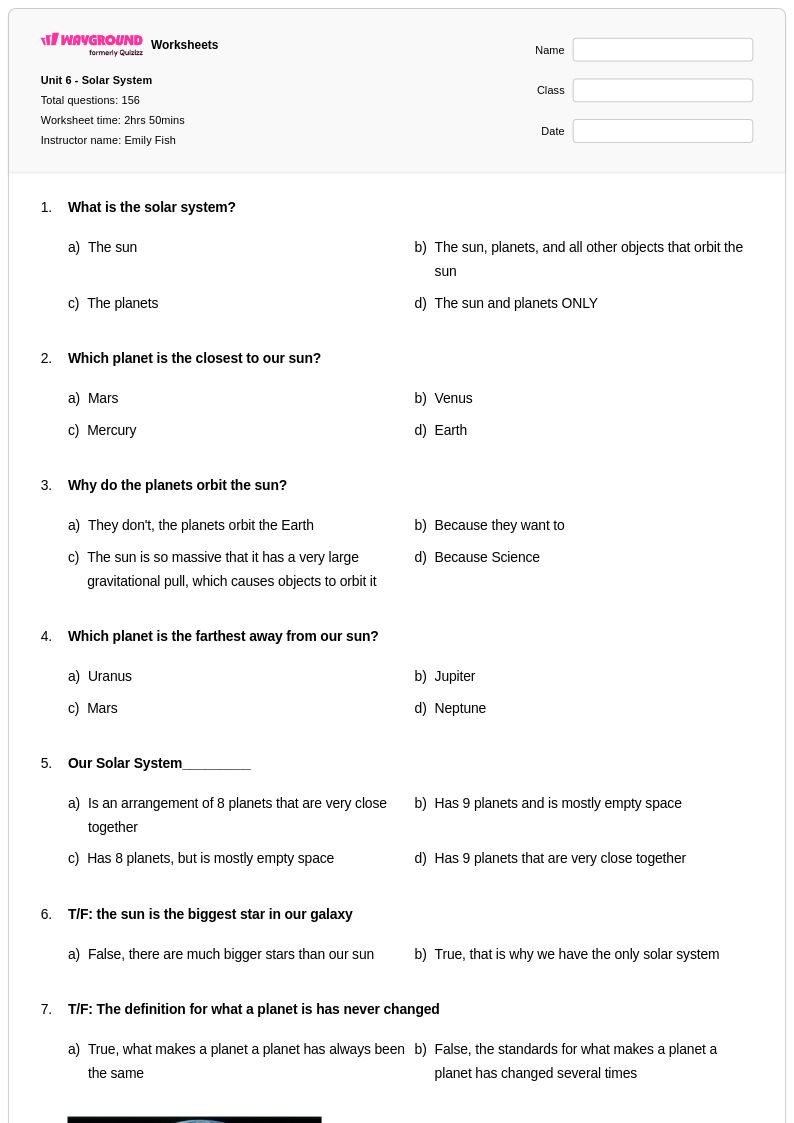
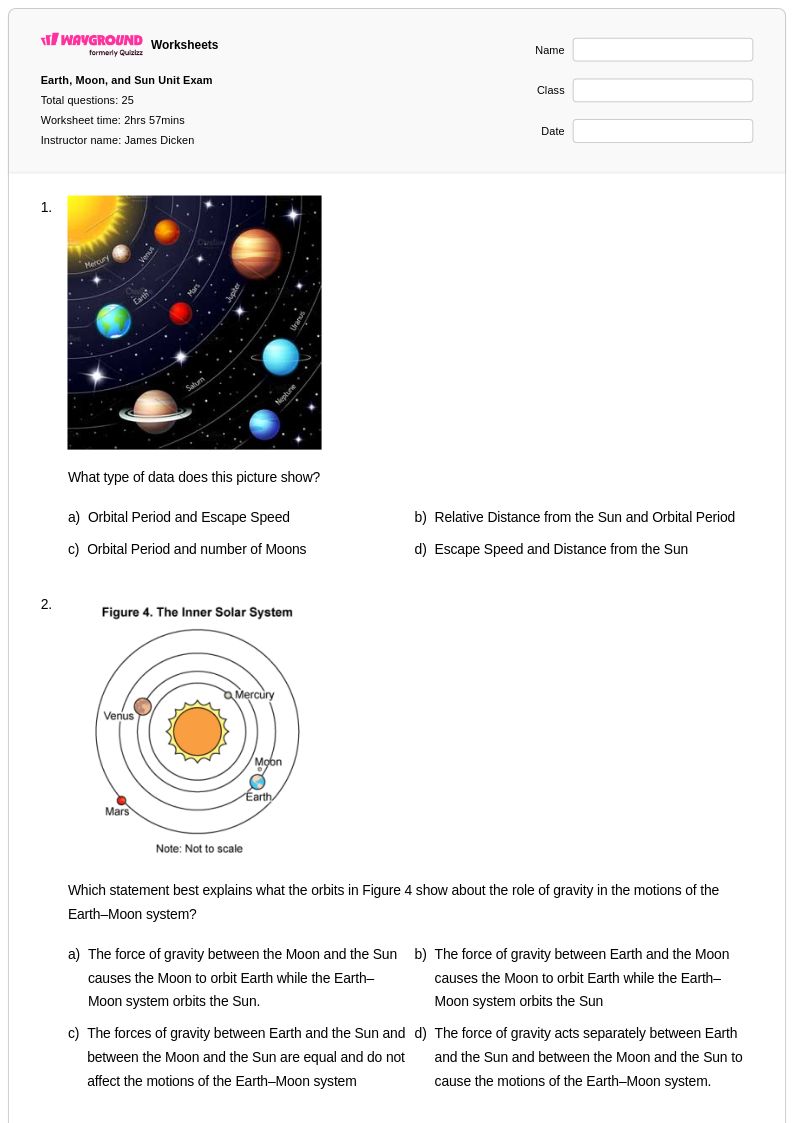
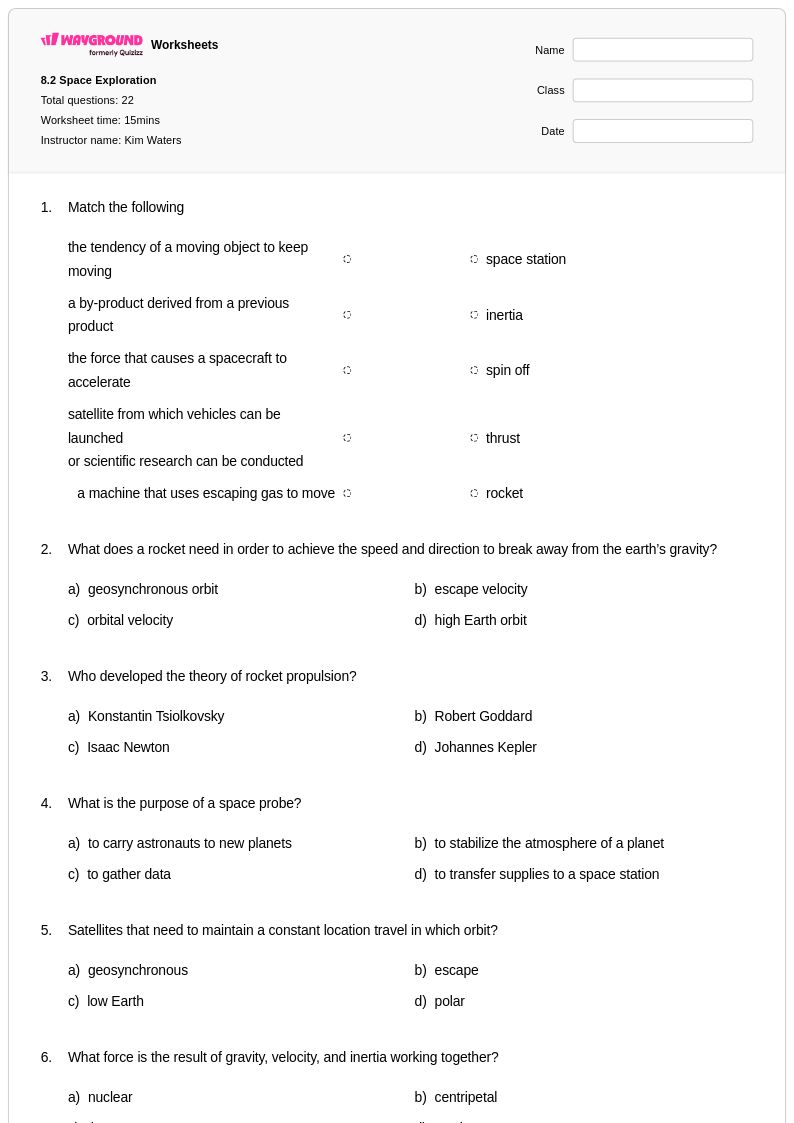
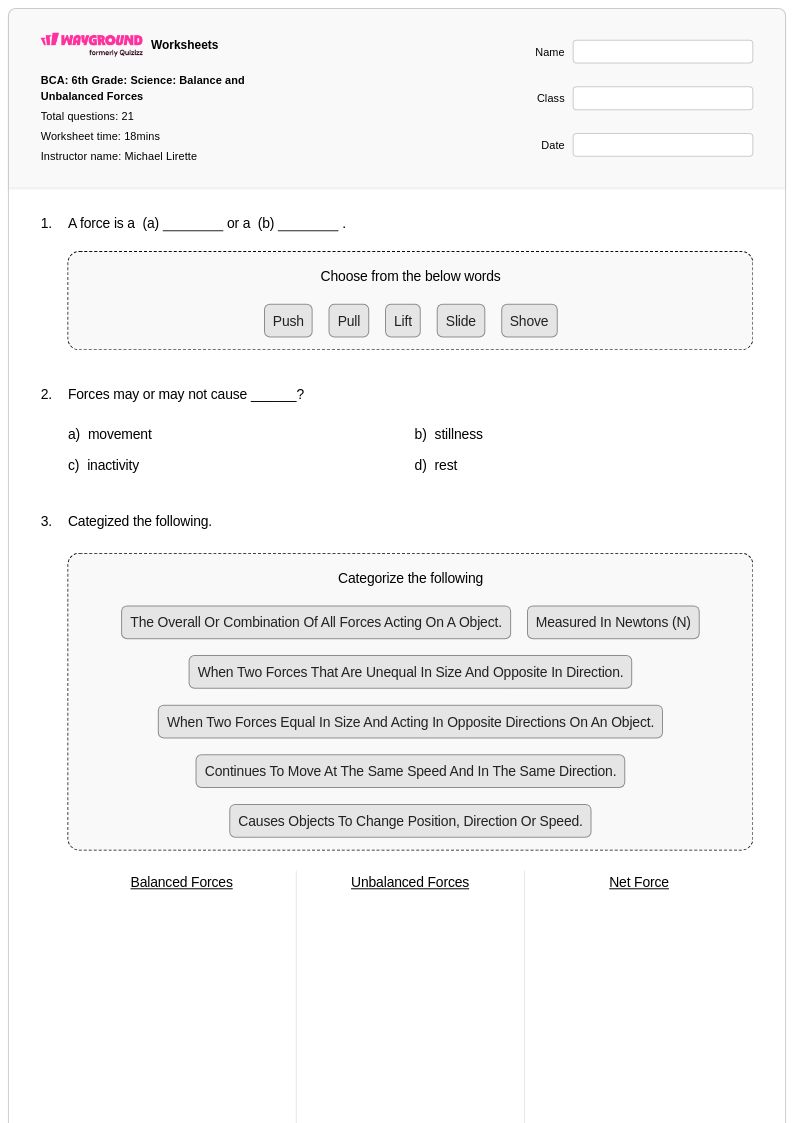
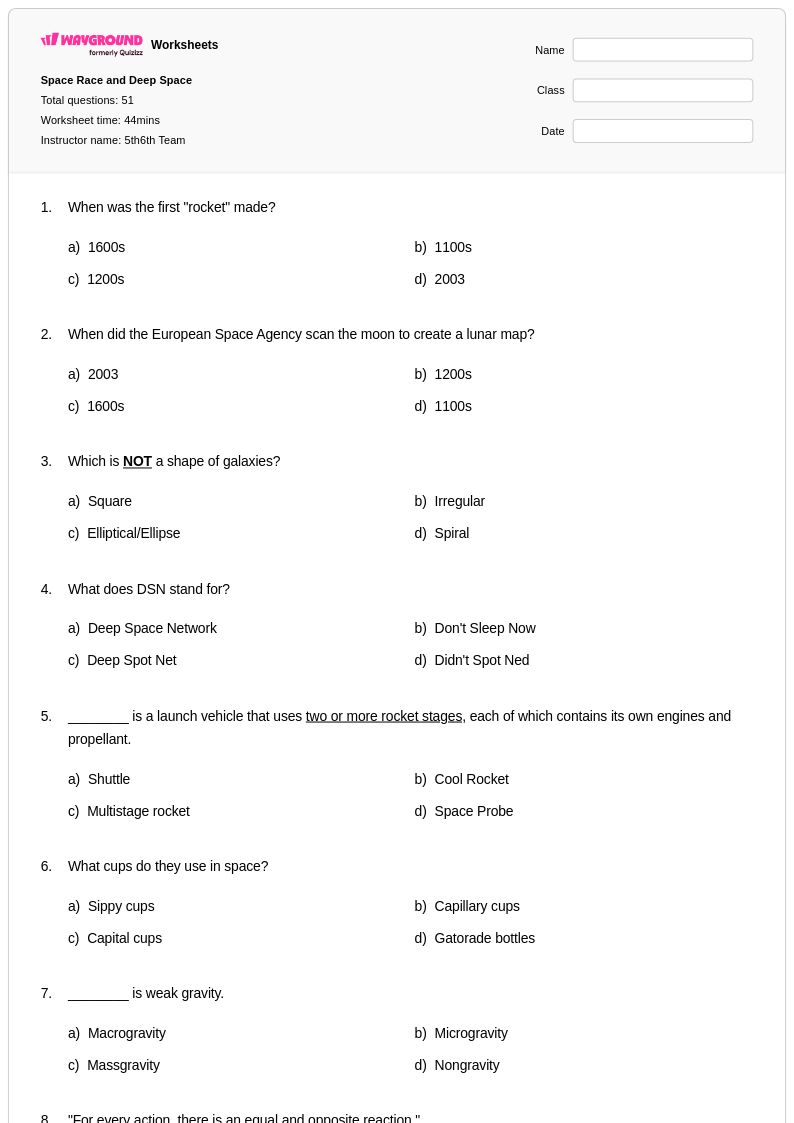
Orbital motion worksheets for Grade 6 students available through Wayground (formerly Quizizz) provide comprehensive practice problems that introduce young learners to the fundamental concepts of celestial mechanics and planetary movement. These carefully designed printables help students understand how objects move in space, including the elliptical paths of planets around the sun, the moon's orbit around Earth, and the factors that influence orbital speed and distance. Each worksheet includes an answer key to support independent learning and features age-appropriate diagrams and scenarios that make abstract physics concepts accessible to sixth-grade minds. Students develop critical thinking skills as they explore gravitational forces, orbital periods, and the relationship between distance and orbital velocity through free practice exercises that reinforce classroom instruction.
Wayground (formerly Quizizz) supports educators with millions of teacher-created resources specifically designed for Grade 6 orbital motion instruction, offering robust search and filtering capabilities that help teachers quickly locate materials aligned with their curriculum standards. The platform's differentiation tools enable instructors to customize worksheets for diverse learning needs, while flexible formatting options provide both printable pdf versions for traditional classroom use and digital formats for technology-integrated lessons. These comprehensive collections facilitate effective lesson planning by offering varied approaches to teaching orbital mechanics concepts, from basic vocabulary practice to complex problem-solving scenarios that challenge advanced learners. Teachers can seamlessly incorporate these resources into remediation sessions for struggling students or use them as enrichment activities to extend learning beyond standard curriculum requirements, ensuring all students develop a solid foundation in understanding how celestial bodies move through space.
FAQs
How do I teach orbital motion in a high school physics class?
Start by grounding orbital motion in Newton's law of universal gravitation before introducing Kepler's three laws of planetary motion. Students often find it helpful to work through the relationship between orbital radius, orbital velocity, and period mathematically before applying those relationships to real examples like the Moon or GPS satellites. Building from circular motion concepts students already know reduces the conceptual jump and gives them a familiar framework for centripetal acceleration in an orbital context.
What practice problems help students understand orbital velocity and period?
Problems that require students to derive orbital period from gravitational force and centripetal acceleration are particularly effective because they connect multiple physics principles simultaneously. Exercises involving comparisons between different orbital radii, such as low Earth orbit versus geostationary orbit, help students internalize the inverse relationship between altitude and orbital speed. Including both circular and elliptical orbit scenarios ensures students can apply Kepler's laws flexibly rather than only in idealized cases.
What mistakes do students commonly make when solving orbital motion problems?
A frequent error is confusing orbital speed with escape velocity, leading students to set up equations incorrectly when the problem context shifts. Students also commonly misapply Newton's gravitational law by forgetting to use the distance between centers of mass rather than surface distance. Another persistent misconception is treating mass of the orbiting object as a factor in orbital period, when in fact period depends on the central mass and orbital radius, not the satellite's own mass.
How do I help students apply Kepler's third law to solve orbital period problems?
Kepler's third law states that the square of a planet's orbital period is proportional to the cube of its semi-major axis, expressed as T² ∝ r³. In practice, students should first practice setting up ratio problems comparing two orbiting bodies around the same central mass, since this eliminates the gravitational constant and simplifies calculation. Moving to absolute calculations using SI units and the full form of the equation builds on that ratio intuition while introducing the role of the central body's mass.
How do I use Wayground's orbital motion worksheets in my classroom?
Wayground's orbital motion worksheets are available as printable PDFs for traditional classroom use and in digital formats for technology-integrated instruction, accommodating a range of teaching environments and student preferences. You can also host any worksheet as a quiz directly on Wayground, which allows for interactive online delivery. Each worksheet includes a complete answer key, making them practical for independent practice, guided problem-solving sessions, or targeted remediation of specific gaps in students' understanding of gravitational mechanics and satellite dynamics.
How can I differentiate orbital motion instruction for students at different skill levels?
For students who struggle with the mathematical demands of orbital mechanics, Wayground's reduced answer choices accommodation can lower cognitive load during digital practice, while extended time settings support students who need more processing time on multi-step calculations. Read Aloud functionality benefits students who find dense physics problem text difficult to parse independently. These accommodations can be assigned to individual students without affecting the experience of the rest of the class, allowing teachers to run a single assignment across mixed-ability groups.