Free Printable Parliamentary Procedure Worksheets for Grade 12
Grade 12 parliamentary procedure worksheets from Wayground help students master legislative rules, debate protocols, and formal meeting processes through comprehensive printables, practice problems, and answer keys that strengthen civic engagement skills.
Explore printable Parliamentary Procedure worksheets for Grade 12
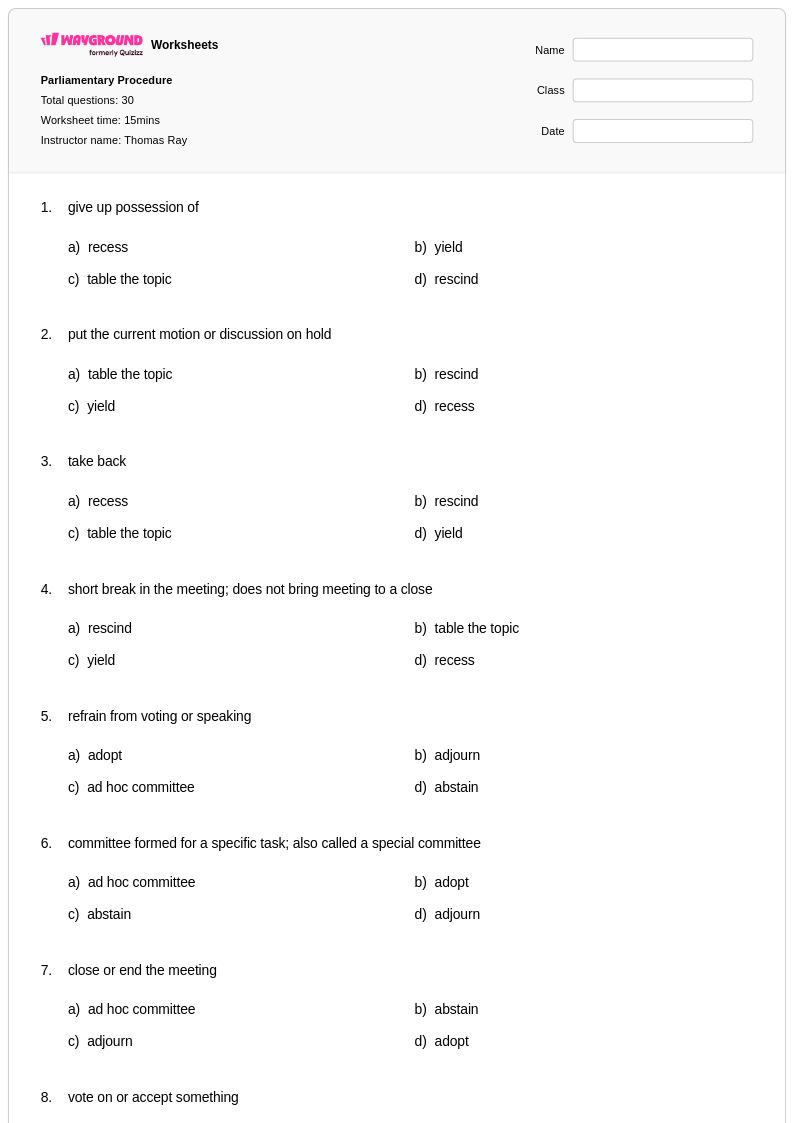
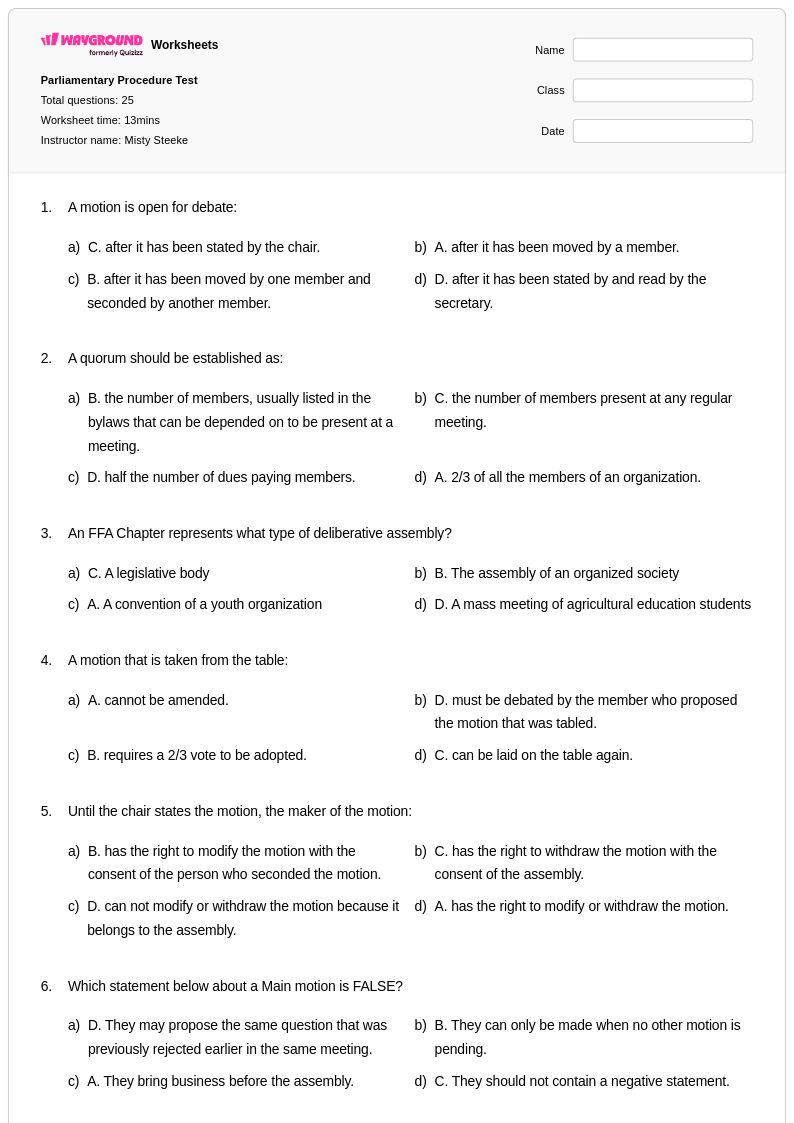
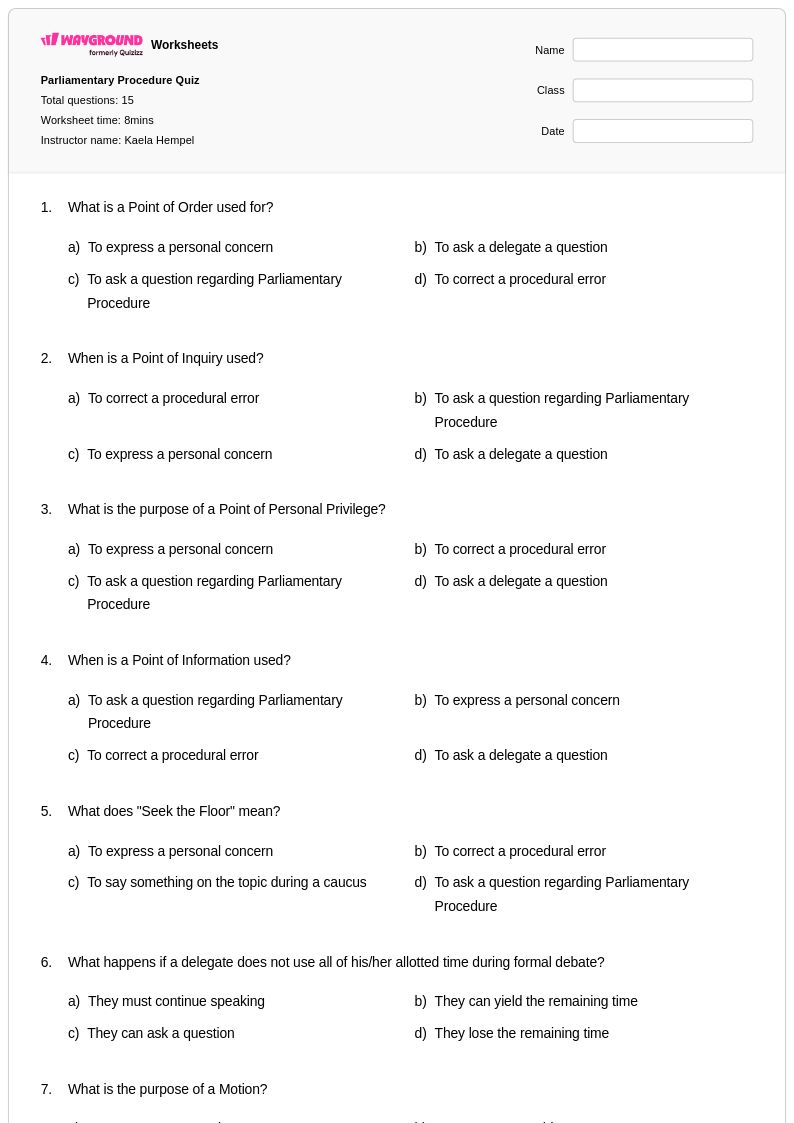
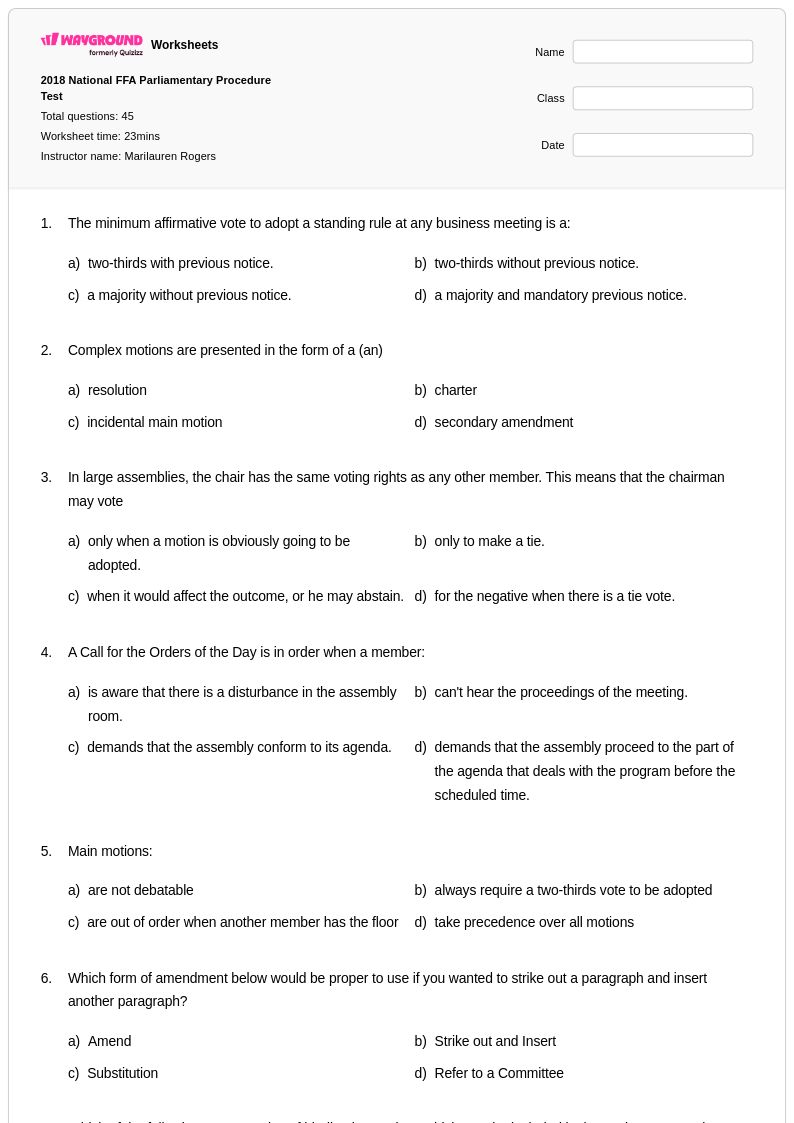
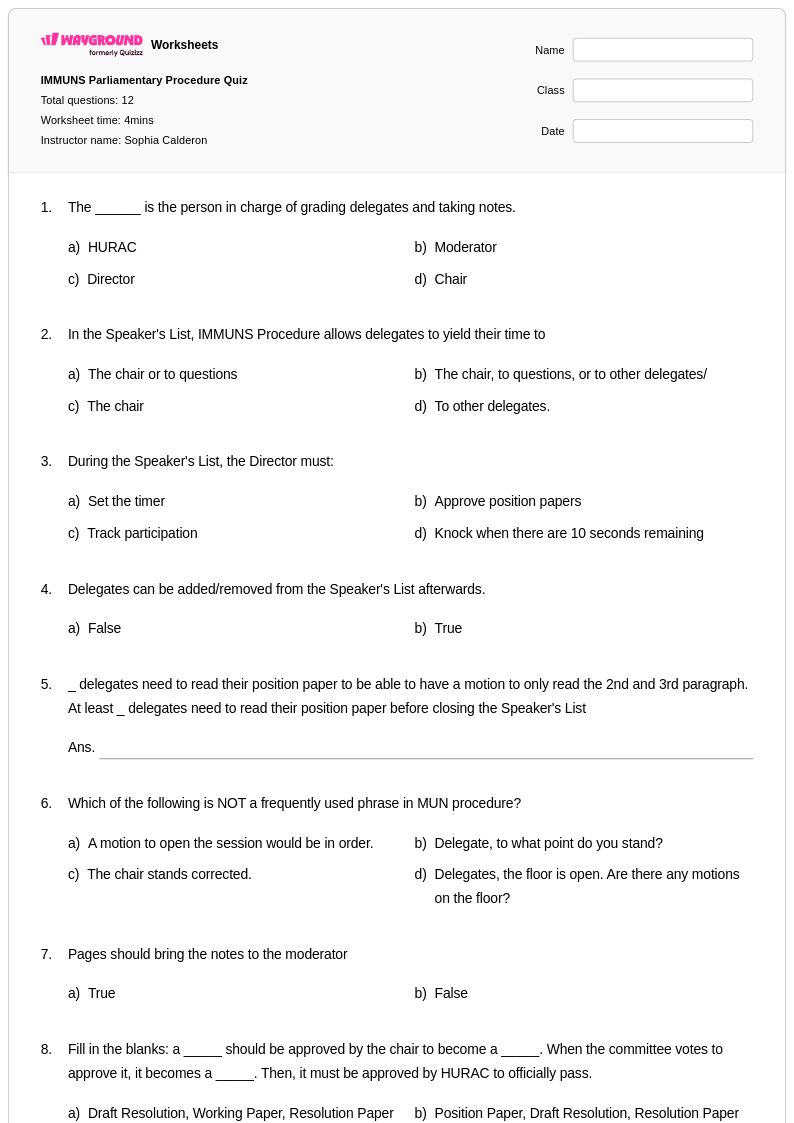
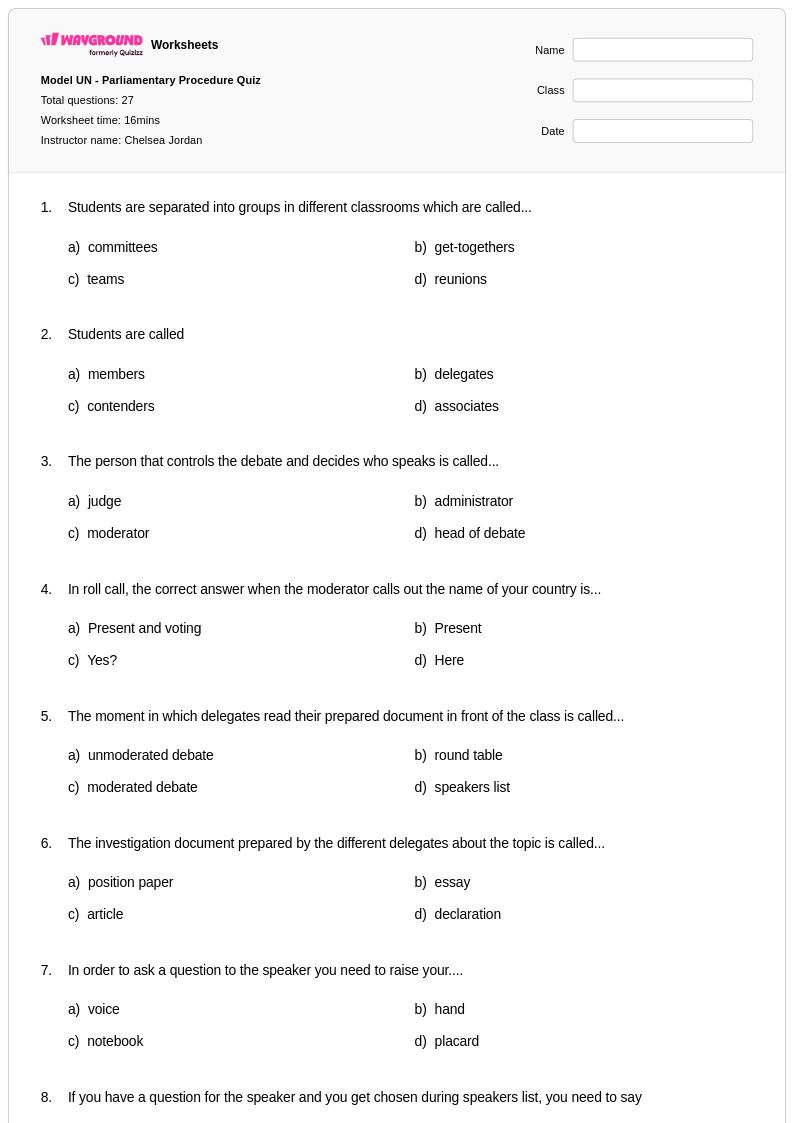
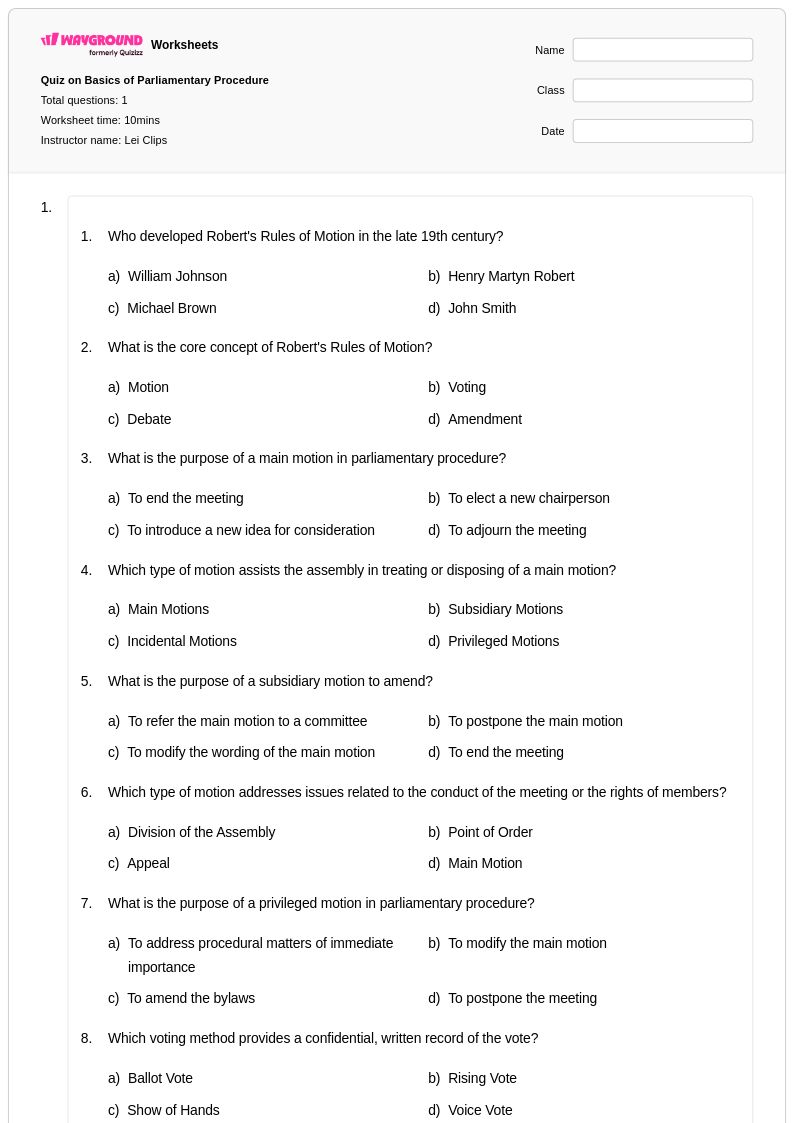
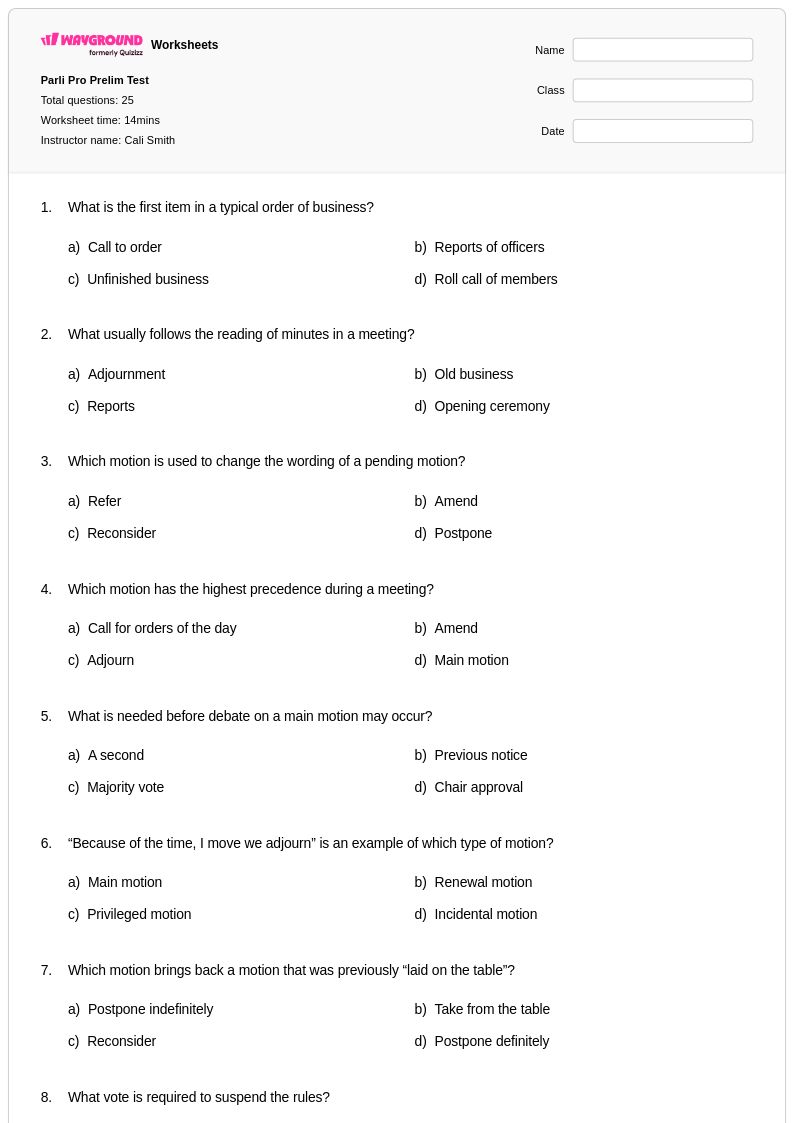
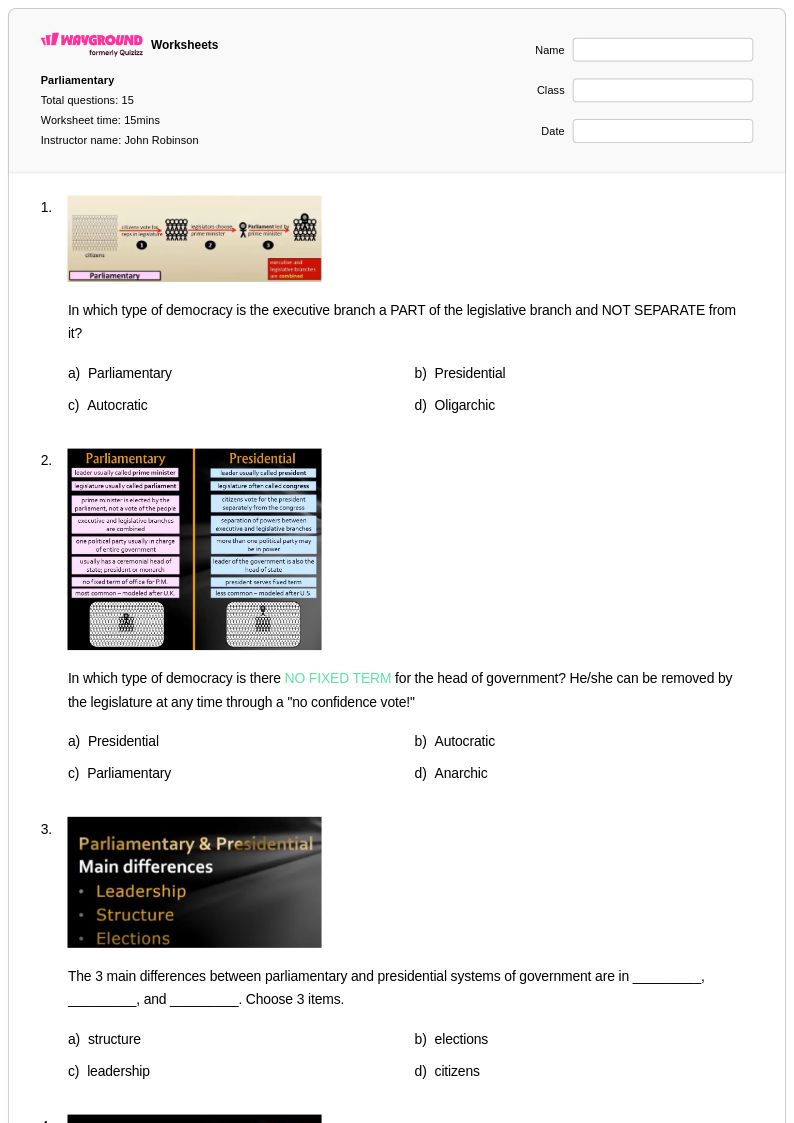
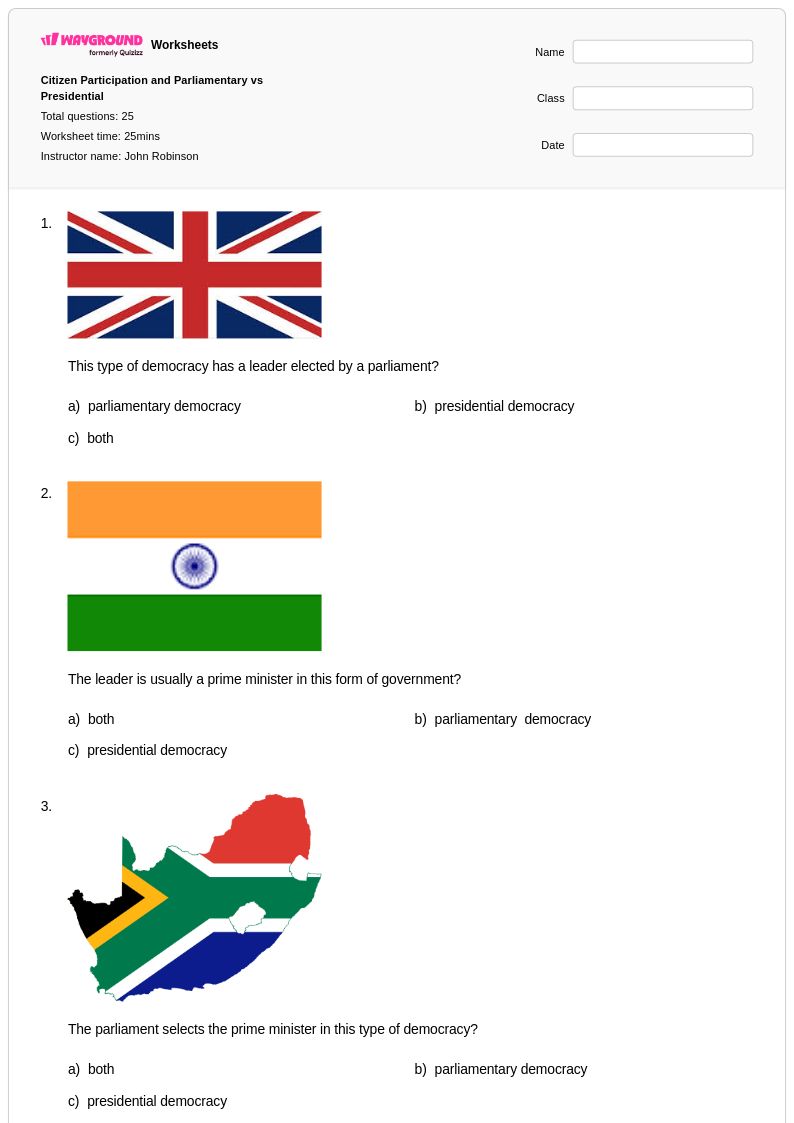
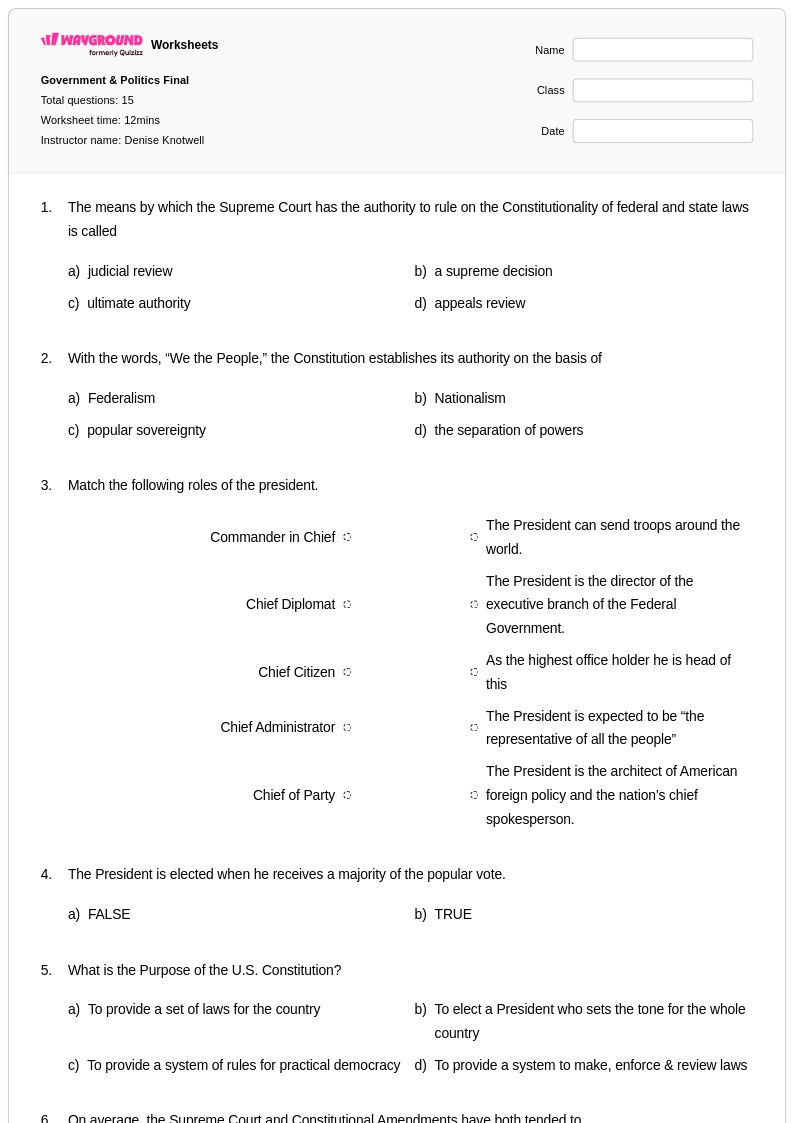
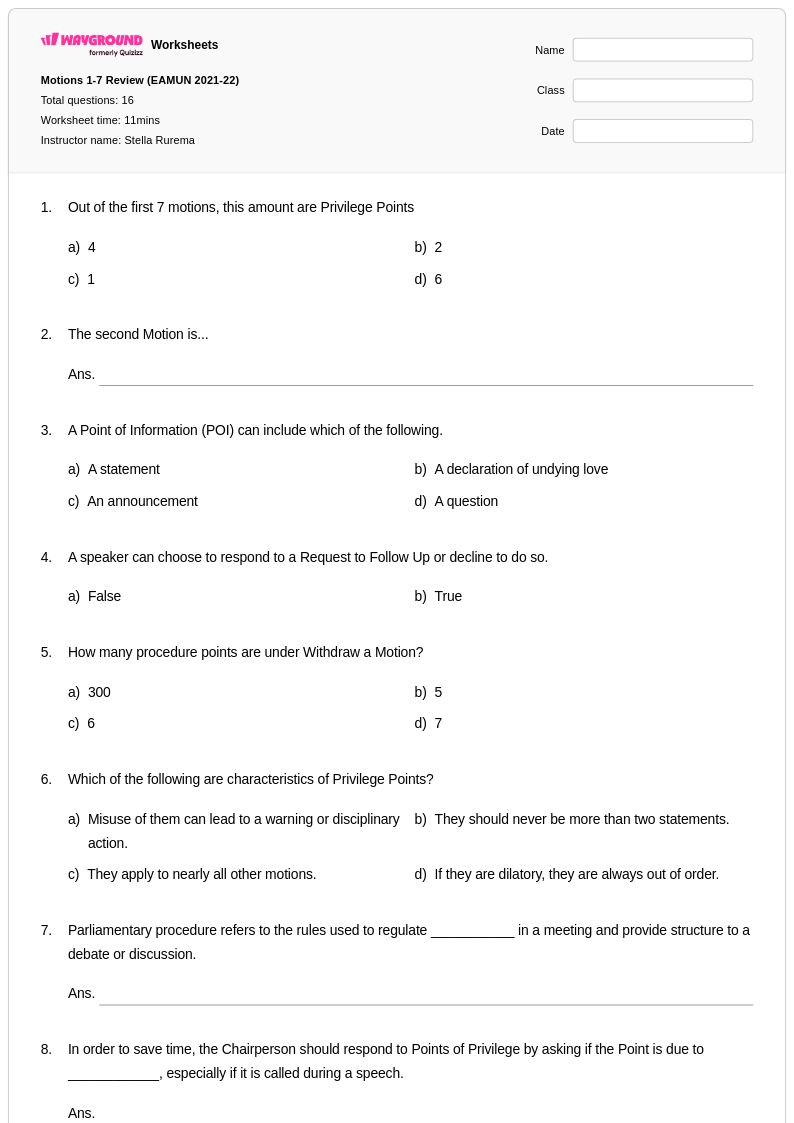
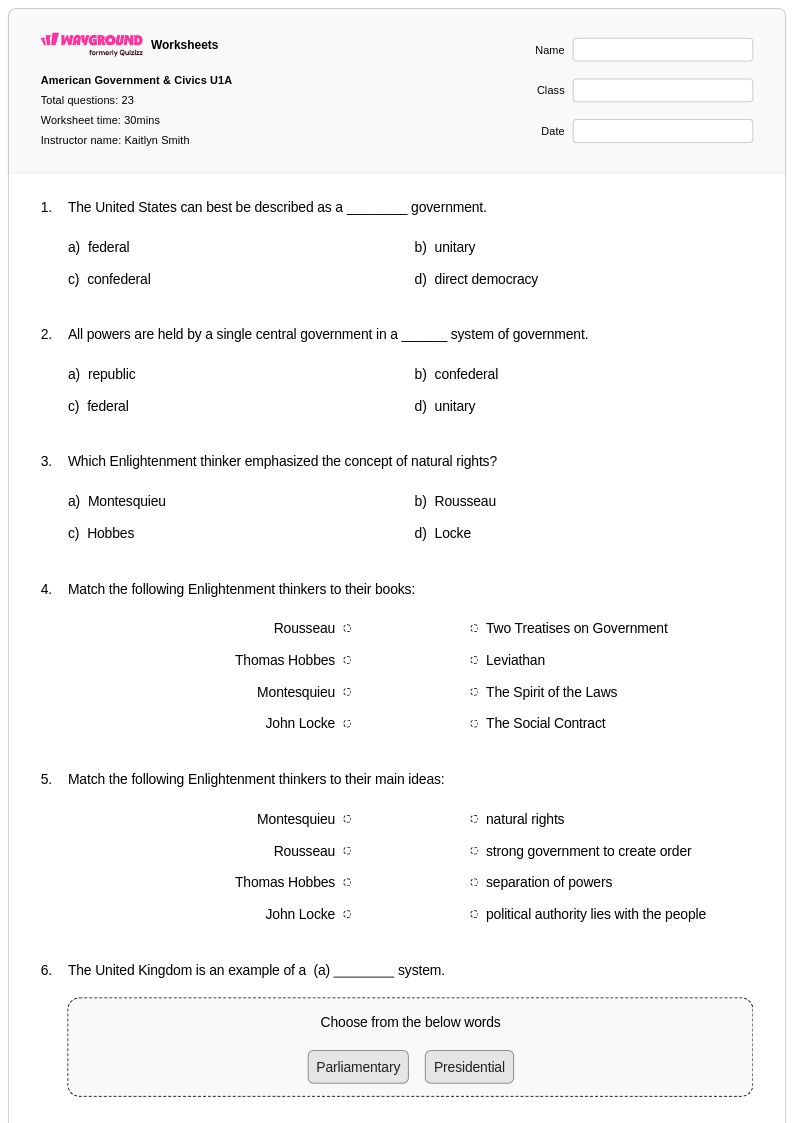
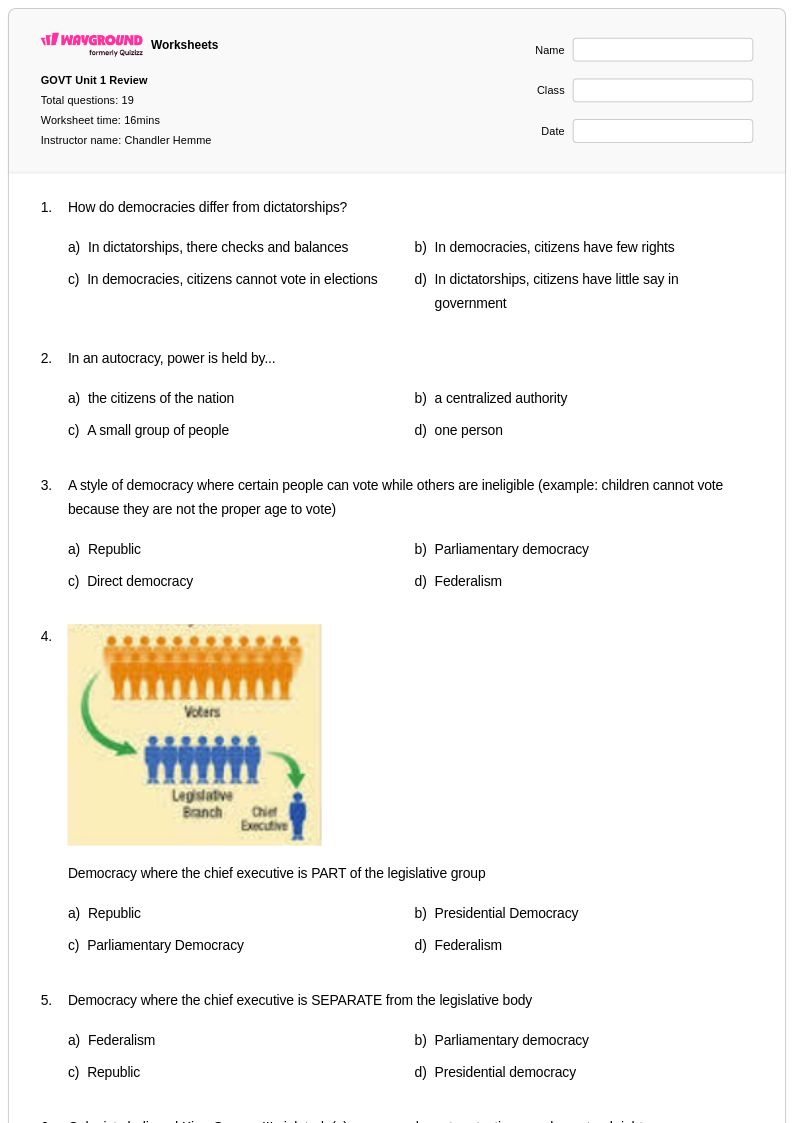
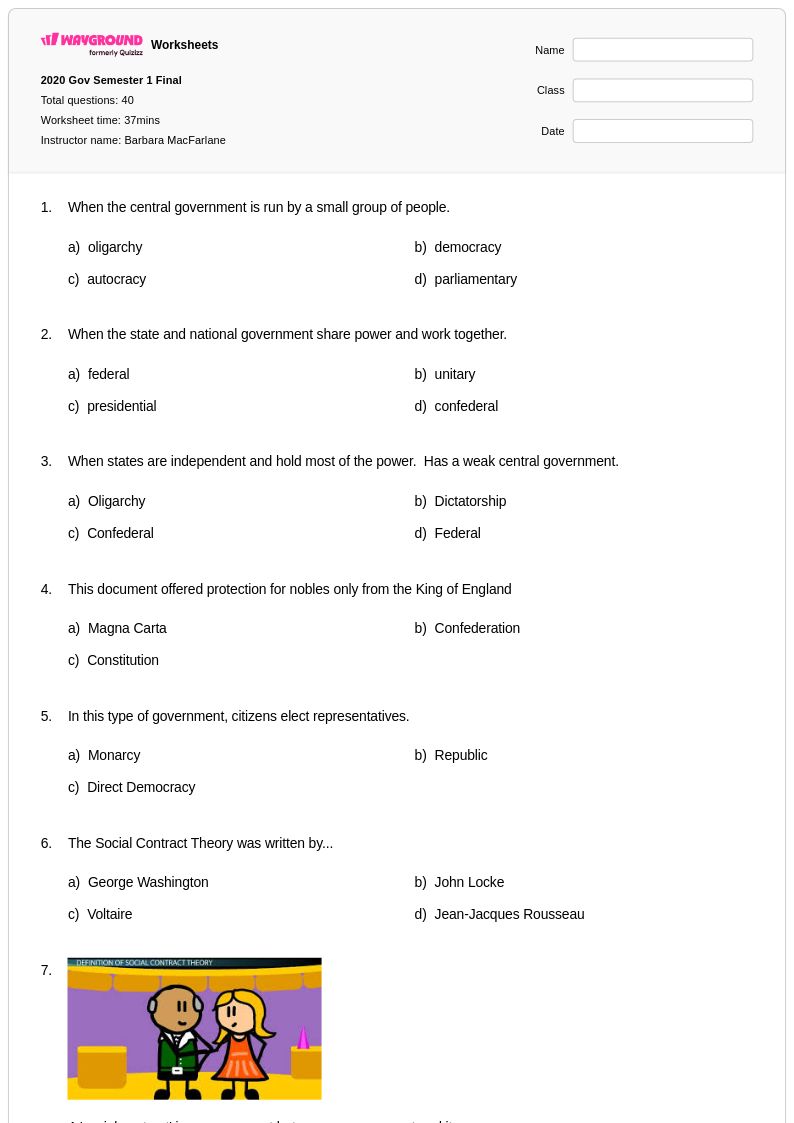
Parliamentary procedure worksheets for Grade 12 students through Wayground provide comprehensive practice with the formal rules and protocols that govern organized meetings and legislative bodies. These expertly crafted resources help students master essential democratic participation skills including understanding motions, amendments, voting procedures, debate protocols, and the roles of officers in formal assemblies. Students work through practice problems that simulate real parliamentary scenarios, from introducing main motions to handling complex procedural challenges like points of order and appeals. Each worksheet comes with detailed answer keys that explain the reasoning behind proper parliamentary decisions, while the free printable format ensures accessibility for all learners seeking to strengthen their civic engagement abilities.
Wayground's extensive collection of parliamentary procedure worksheets draws from millions of teacher-created resources, offering educators powerful search and filtering capabilities to locate materials perfectly suited to their Grade 12 civics curriculum needs. The platform's robust standards alignment ensures these resources meet academic benchmarks while providing differentiation tools that support diverse learning styles and ability levels. Teachers can easily customize worksheets for specific classroom requirements, whether planning initial instruction, targeted remediation, or enrichment activities for advanced students. Available in both printable PDF format and interactive digital versions, these parliamentary procedure resources enable flexible implementation across various teaching environments while helping students develop the procedural knowledge essential for effective participation in democratic institutions and formal organizational settings.
FAQs
How do I teach parliamentary procedure to students?
Teaching parliamentary procedure works best when you anchor instruction to a real or simulated meeting context. Start with the foundational framework of Robert's Rules of Order, introducing the order of business, types of motions, and voting procedures in sequence. Role-playing a mock committee meeting lets students practice the rules in context before applying them to more complex legislative scenarios like amendments and debate protocols.
What exercises help students practice parliamentary procedure?
Effective practice exercises for parliamentary procedure include motion-and-response drills, sequencing activities that ask students to arrange steps in the correct order of business, and scenario-based problems where students must identify the correct procedure for a given situation. Worksheets that cover Robert's Rules of Order alongside committee structures and debate protocols give students a well-rounded foundation for participating in formal meetings.
What mistakes do students commonly make when learning parliamentary procedure?
One of the most common errors students make is confusing main motions with subsidiary or privileged motions, leading to incorrect sequencing during simulated meetings. Students also frequently misapply voting thresholds, not distinguishing between simple majority and two-thirds majority requirements for different types of votes. Targeted practice problems that isolate these distinctions help students build accuracy before applying the rules in a full meeting simulation.
How can I differentiate parliamentary procedure instruction for students at different skill levels?
For students newer to the topic, focus first on basic meeting etiquette, the role of the chair, and simple main motions before introducing amendments or points of order. More advanced students can engage with complex legislative processes like subsidiary motions, reconsideration, and committee reporting procedures. On Wayground, teachers can apply accommodations such as reduced answer choices or read-aloud support to individual students, so struggling learners receive targeted scaffolding while the rest of the class works with standard materials.
How do I use Wayground's parliamentary procedure worksheets in my classroom?
Wayground's parliamentary procedure worksheets are available as printable PDFs for traditional classroom use and in digital formats for technology-integrated environments, including the option to host them as a quiz directly on Wayground. The worksheets include complete answer keys, so teachers can use them for direct instruction, independent practice, homework assignments, or formative assessment. Digital formats are particularly useful for remote or hybrid settings where students need guided practice outside the classroom.
What civic skills does parliamentary procedure help students develop?
Parliamentary procedure builds practical civic skills including the ability to make and respond to formal motions, participate in structured debate, and apply democratic voting processes. Students also develop an understanding of how organized decision-making protects minority viewpoints while allowing the majority to act, which is a foundational concept in democratic governance. These skills transfer directly to student government, community organizations, and future civic participation.