Master Past Simple 'Be' verb forms with Wayground's comprehensive collection of free worksheets, featuring engaging practice problems, printable PDFs, and complete answer keys to strengthen grammar foundations.
Past Simple 'Be' worksheets available through Wayground (formerly Quizizz) provide comprehensive practice with one of the most fundamental aspects of English grammar. These carefully designed resources help students master the correct usage of "was" and "were" in past tense constructions, strengthening their understanding of subject-verb agreement and temporal expressions. The worksheets feature diverse practice problems that guide learners through affirmative statements, negative forms, and question formations using the past simple form of the verb "to be." Each printable resource includes detailed answer keys that support independent learning and self-assessment, while the free accessibility ensures that quality grammar instruction remains available to all educators. These practice materials systematically build students' confidence in distinguishing between singular and plural subjects when forming past tense sentences with "be."
Wayground (formerly Quizizz) empowers teachers with an extensive collection of millions of teacher-created Past Simple 'Be' worksheets that streamline lesson planning and enhance grammar instruction. The platform's robust search and filtering capabilities allow educators to quickly locate resources that align with specific learning objectives and curriculum standards, while differentiation tools enable customization for diverse learner needs. Teachers can access these materials in both printable pdf formats for traditional classroom use and digital versions for interactive learning experiences. This flexibility supports various instructional approaches, from targeted remediation for struggling students to enrichment activities for advanced learners, ensuring that every student receives appropriate skill practice with past tense "be" constructions. The comprehensive nature of these resources allows educators to provide consistent, scaffolded practice that reinforces proper grammar usage across multiple learning contexts.
FAQs
How do I teach students when to use 'was' versus 'were' in past simple sentences?
Teaching 'was' versus 'were' works best when students first internalize which subjects are singular and which are plural, since 'was' pairs with I, he, she, and it, while 'were' pairs with you, we, and they. A reliable classroom strategy is to introduce affirmative statements first, then layer in negative forms and questions once the basic agreement rule is secure. Visual anchor charts that map each subject pronoun to its correct 'be' form give students a reference they can consult during independent practice until the pattern becomes automatic.
What exercises help students practice past simple 'be' verb forms?
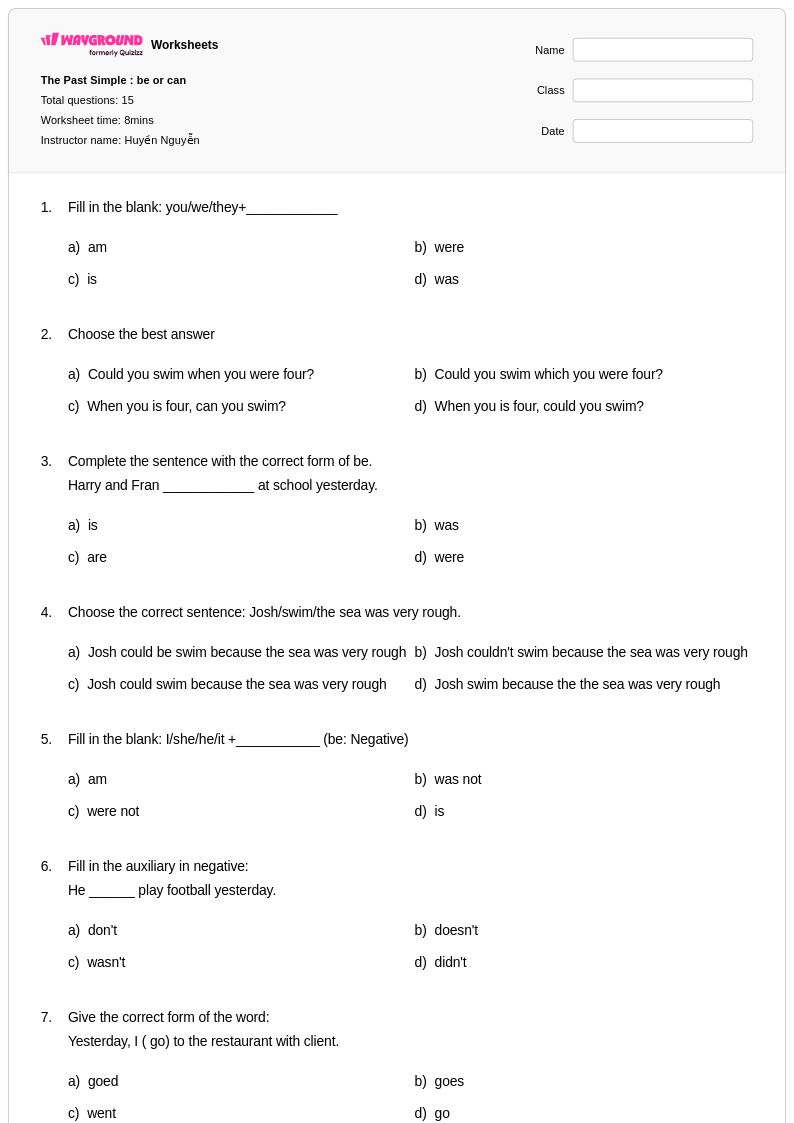
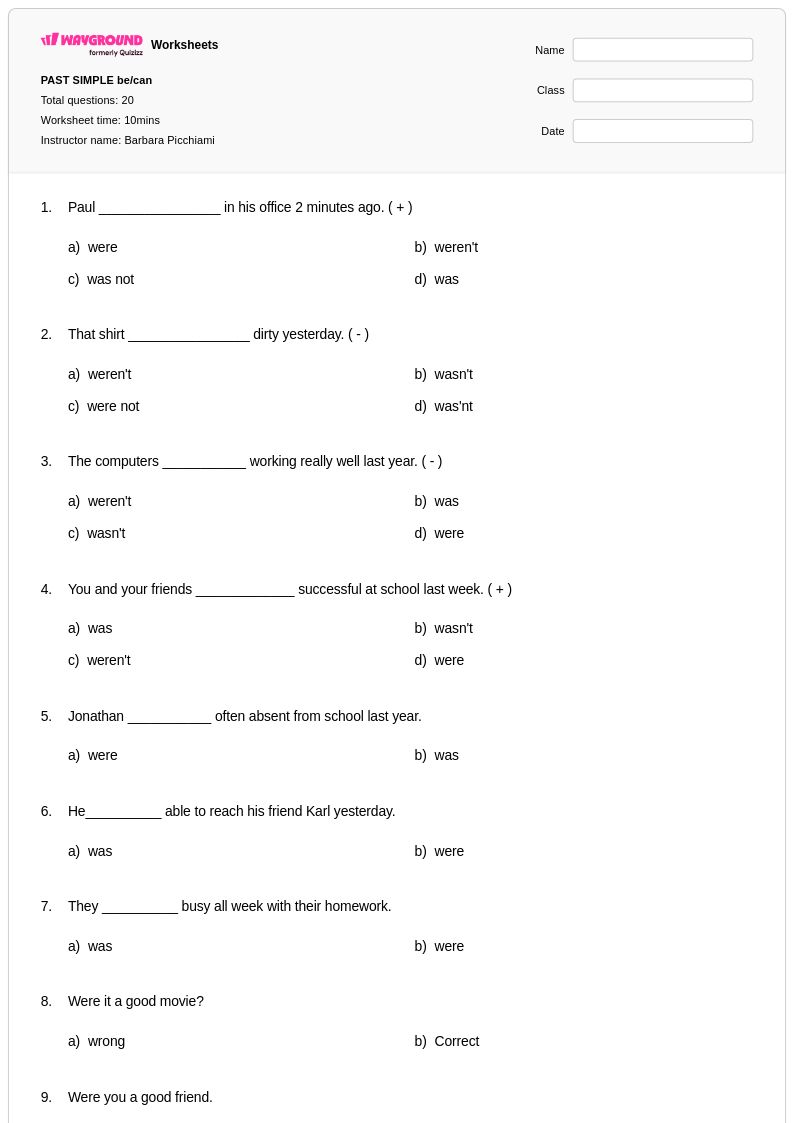
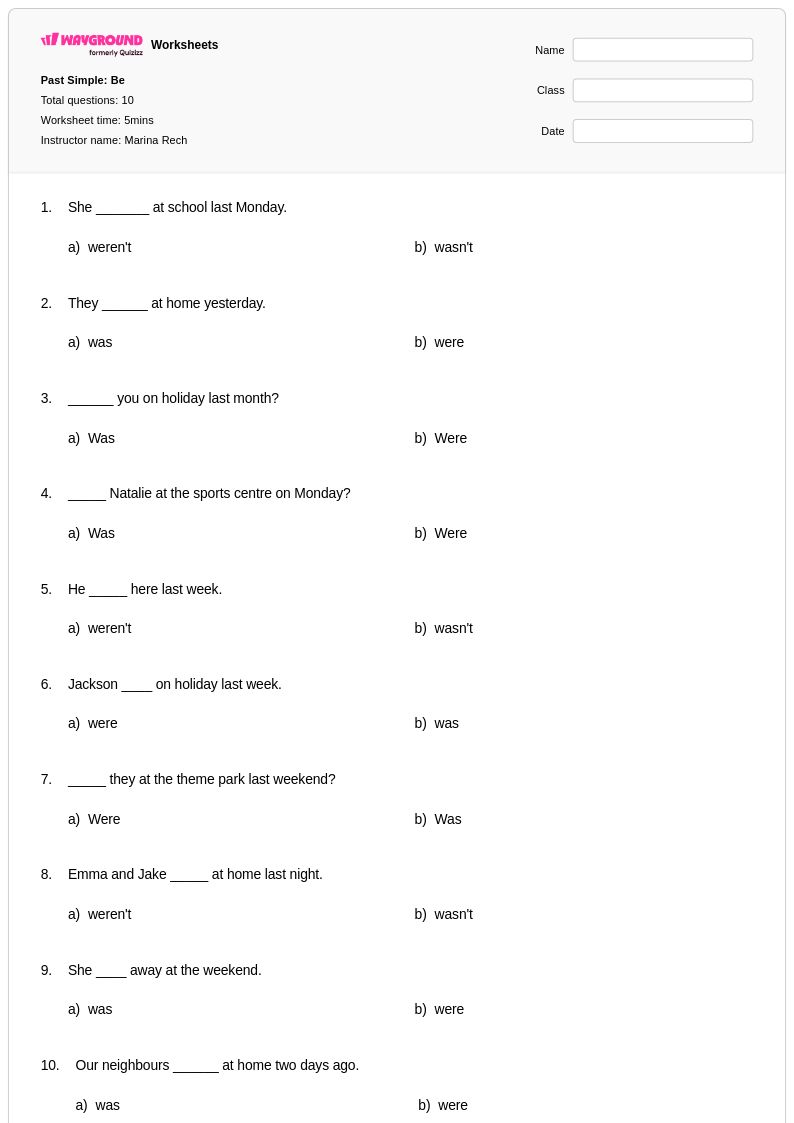
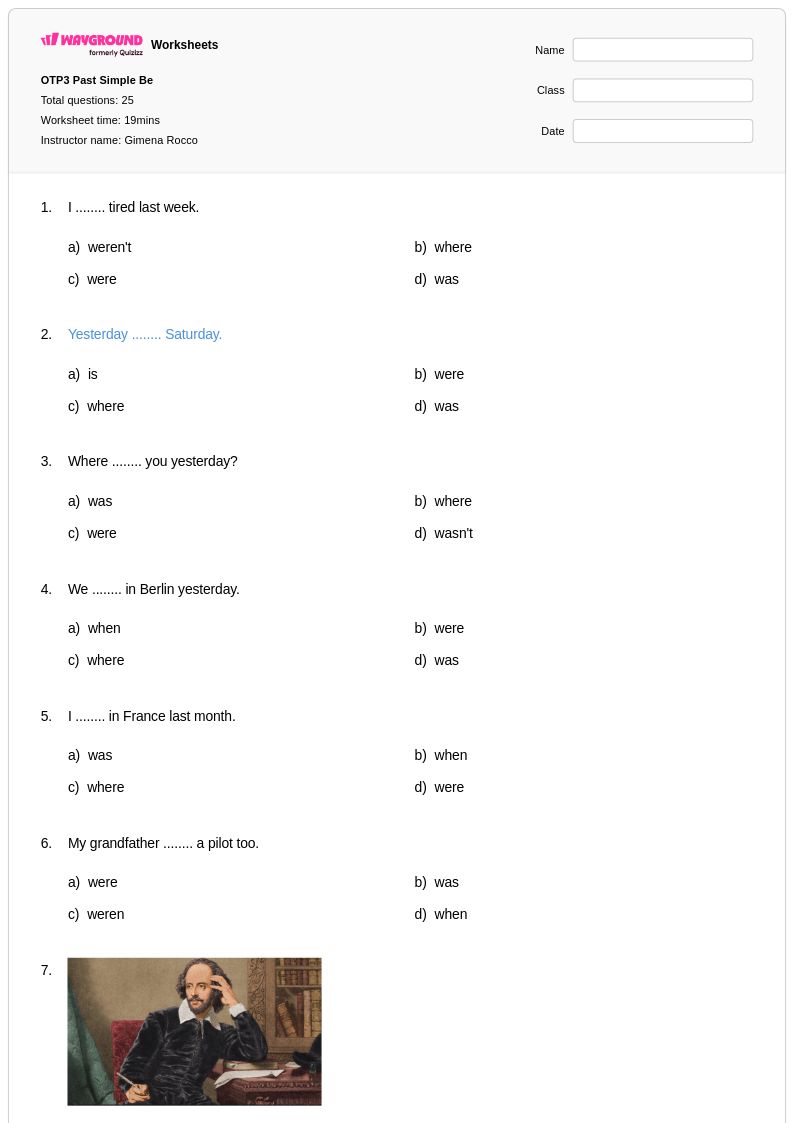
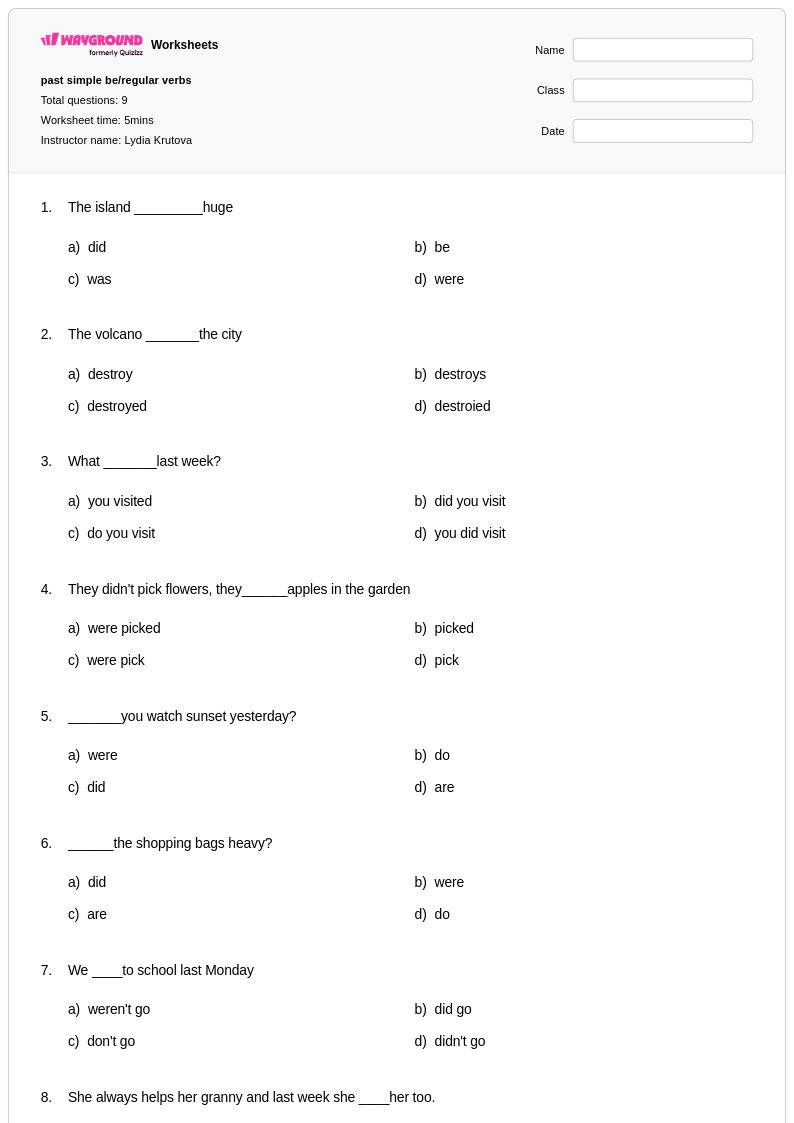
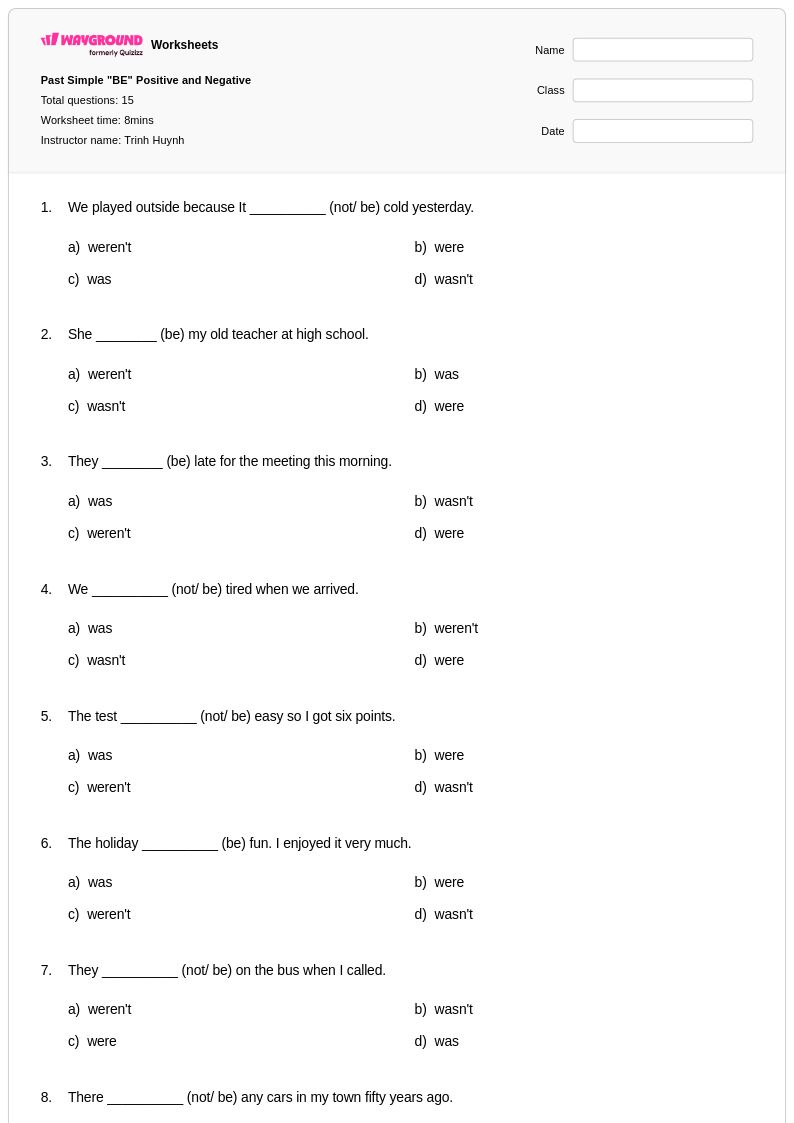
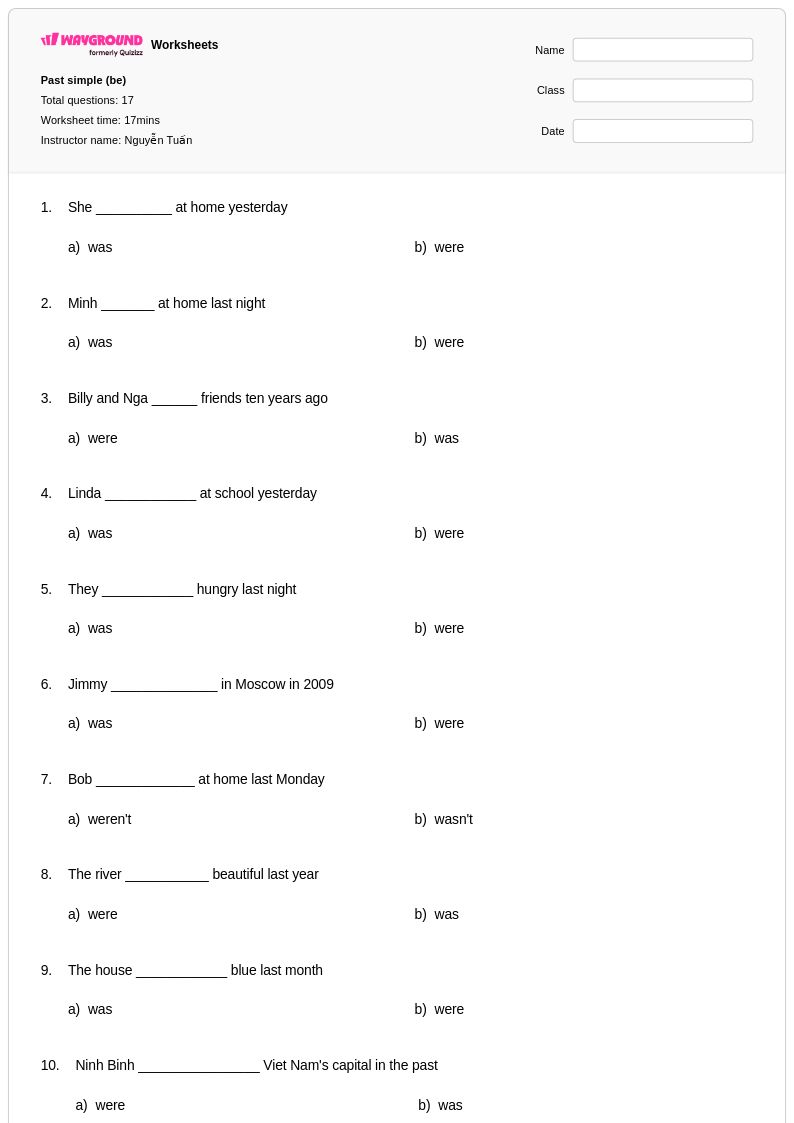
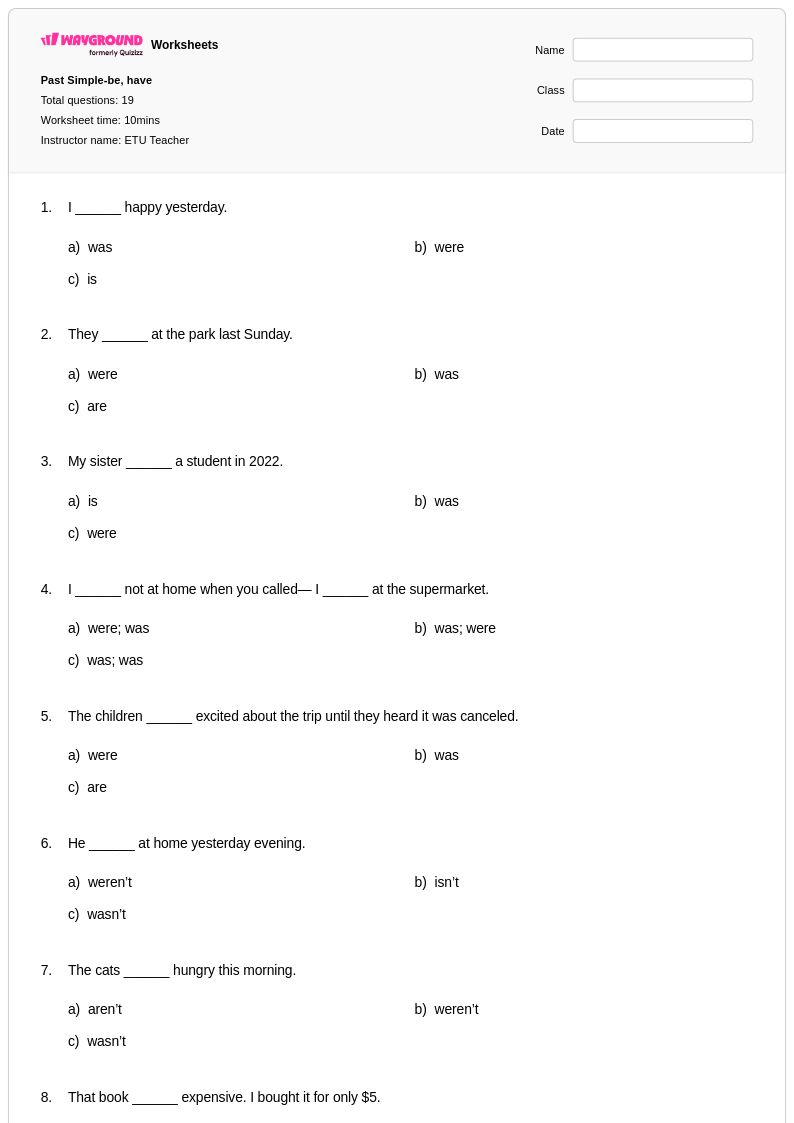
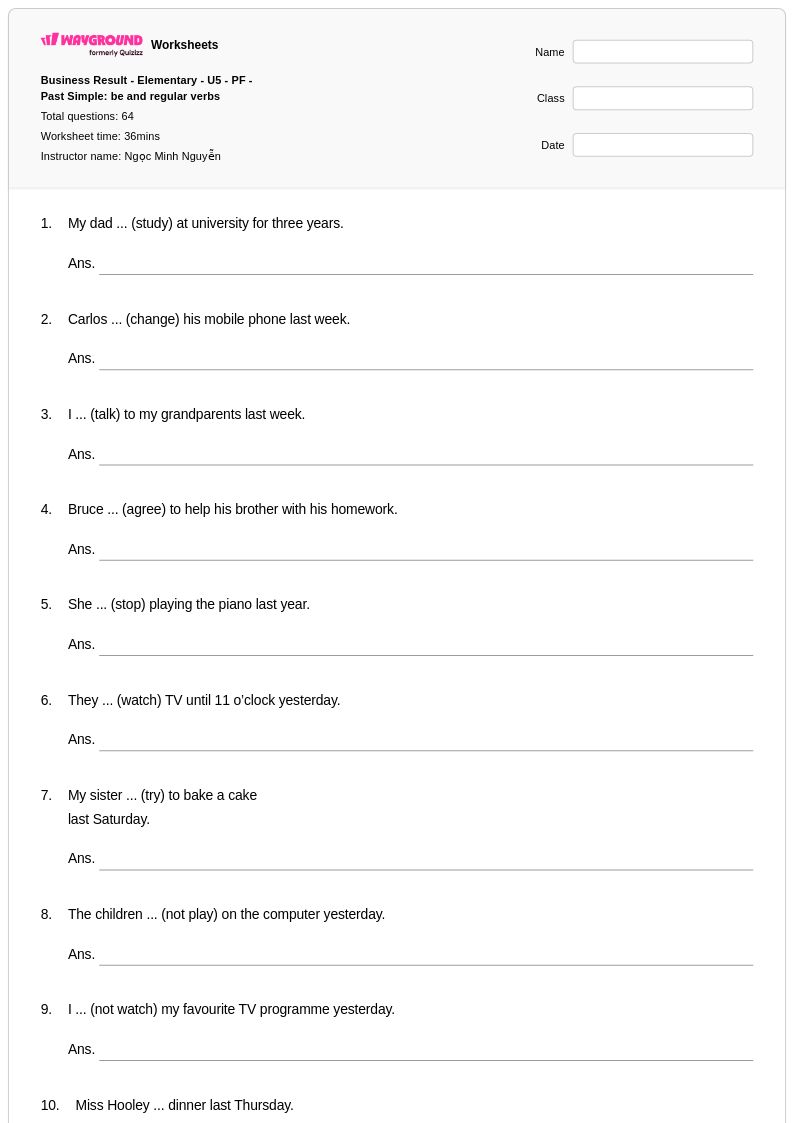
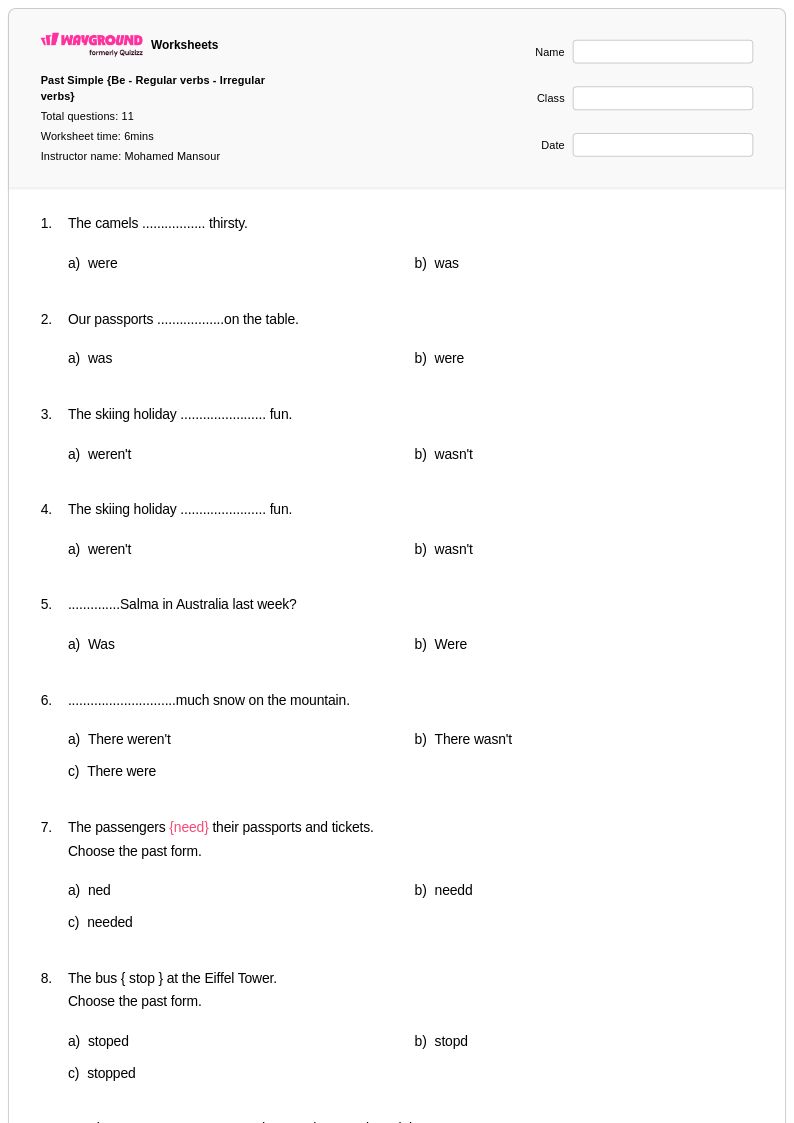
Effective practice exercises for past simple 'be' include fill-in-the-blank sentences where students choose between 'was' and 'were', sentence transformation tasks that convert present simple 'be' sentences into the past tense, and error-correction activities that ask students to identify and fix subject-verb agreement mistakes. Question formation practice is especially valuable because it requires students to apply the same 'was'/'were' distinction in an inverted structure, which reinforces the rule from a different angle. Mixing all three exercise types within a single worksheet session gives students repeated exposure across different sentence contexts.
What mistakes do students commonly make with past simple 'be'?
The most frequent error is using 'was' with plural subjects, particularly with 'they' and 'we', likely because students overgeneralize from the singular pattern they encounter most often. Students also frequently confuse 'you' as singular and apply 'was' instead of 'were', not realizing that 'you' always takes 'were' regardless of whether it refers to one person or many. A third common error involves negative contractions, where students write 'weren't' correctly but then incorrectly use 'wasn't' with a plural subject in the same exercise, suggesting the rule is inconsistently internalized rather than fully automatic.
How can I use past simple 'be' worksheets to support students at different skill levels?
For students who are still building foundational grammar knowledge, scaffolded worksheets that provide a word bank or a subject-verb reference table reduce cognitive load and allow them to focus on pattern recognition before working independently. More advanced students benefit from open-ended sentence writing tasks and error-correction exercises that require them to explain why a form is incorrect. On Wayground, teachers can apply accommodations such as reduced answer choices for students who need additional support, or enable the Read Aloud feature so that questions are read to students who need audio access, all configurable per individual student without affecting the rest of the class.
How do I use Wayground's past simple 'be' worksheets in my classroom?
Wayground's past simple 'be' worksheets are available as printable PDFs for traditional classroom use and in digital formats for technology-integrated learning environments, so teachers can deploy them in whichever setting fits their lesson. The digital format also allows teachers to host the worksheet as a quiz directly on Wayground, enabling real-time progress tracking. Each worksheet includes a complete answer key, which supports both teacher-led correction and independent student self-assessment after practice.
How do I structure a grammar lesson around past simple 'be' for beginner English learners?
A well-structured lesson for beginner English learners typically begins with a brief explicit explanation of the 'was'/'were' distinction using clear subject-pronoun examples, followed by controlled practice where students complete guided sentences before attempting independent work. Using real or relatable past-tense contexts, such as describing where students were yesterday or what the weather was like last week, makes the grammar functional rather than abstract. Ending the lesson with a short self-check activity, such as a worksheet with an included answer key, reinforces learning and helps students identify which forms still need more attention.