Free Printable Peace Studies Worksheets for Grade 7
Explore Wayground's comprehensive Grade 7 Peace Studies worksheets and printables that help students understand conflict resolution, cultural tolerance, and global cooperation through engaging practice problems with complete answer keys.
Explore printable Peace Studies worksheets for Grade 7
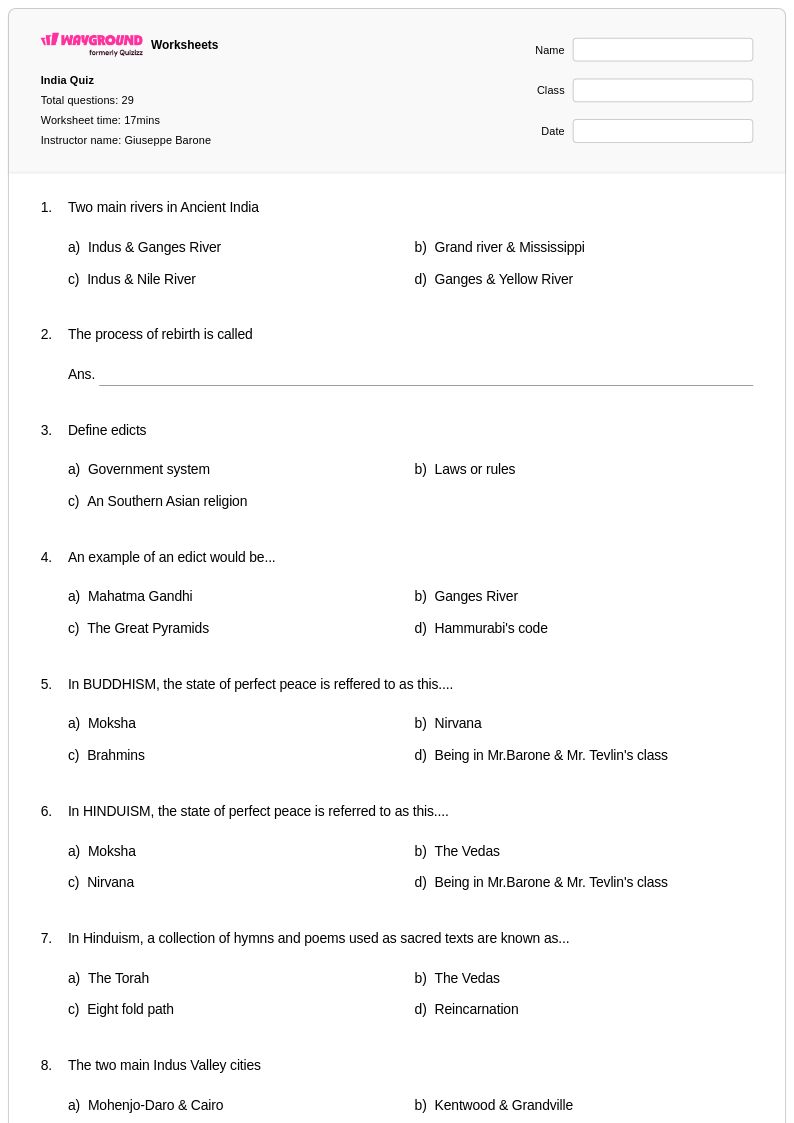
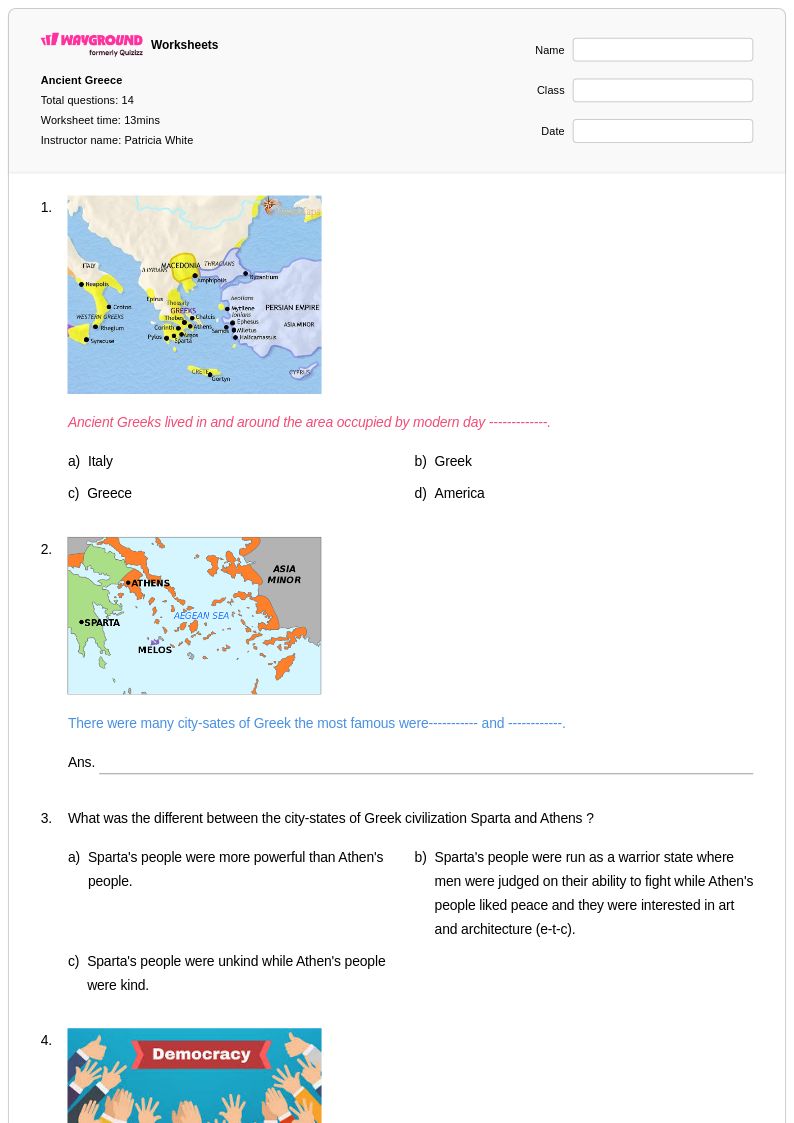
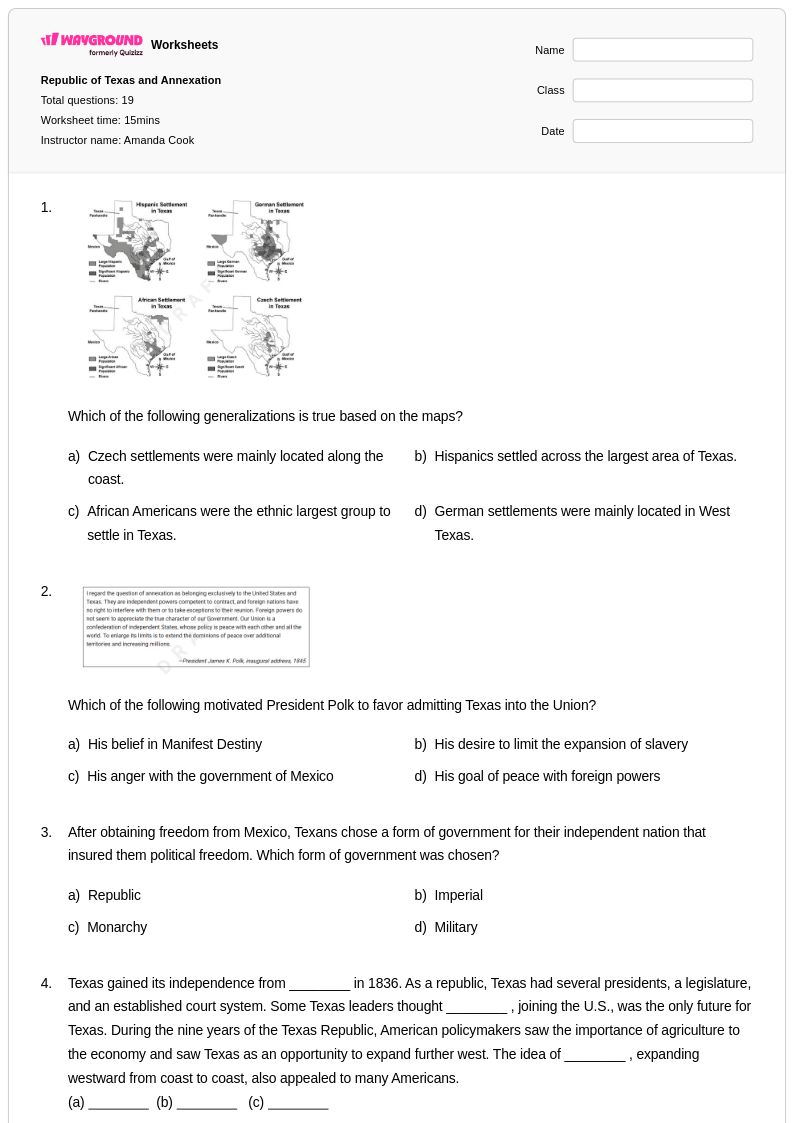
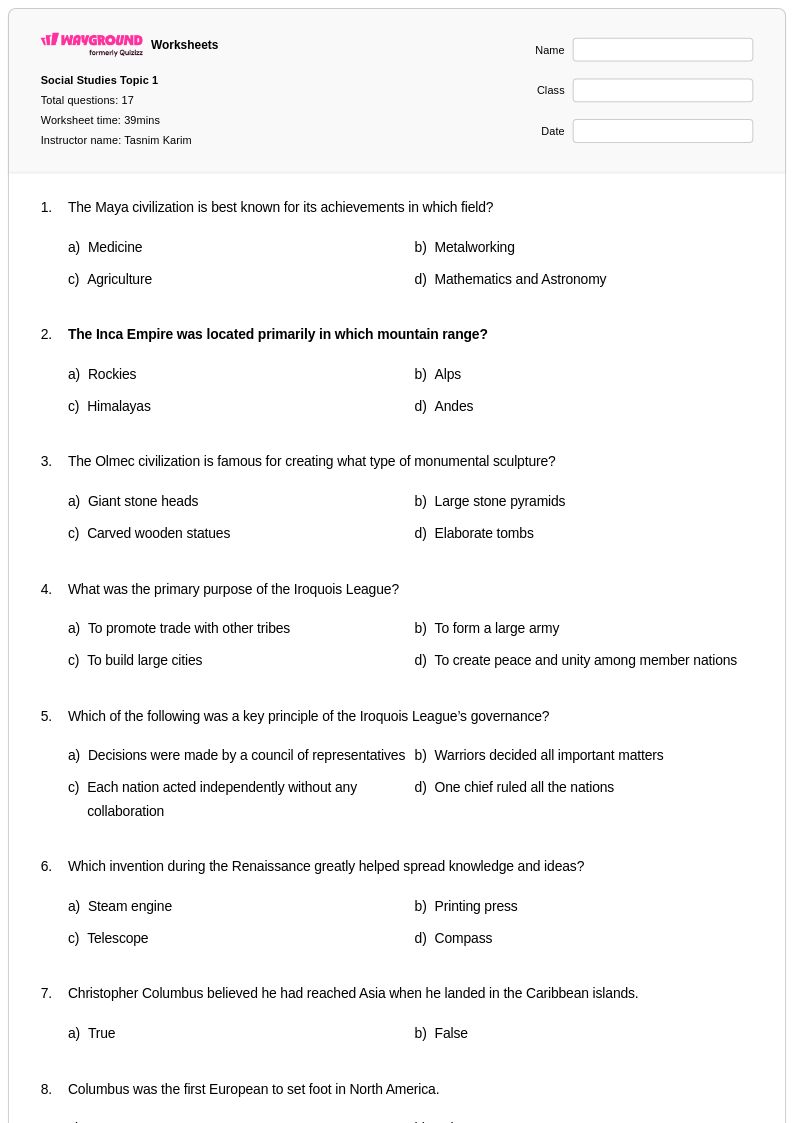
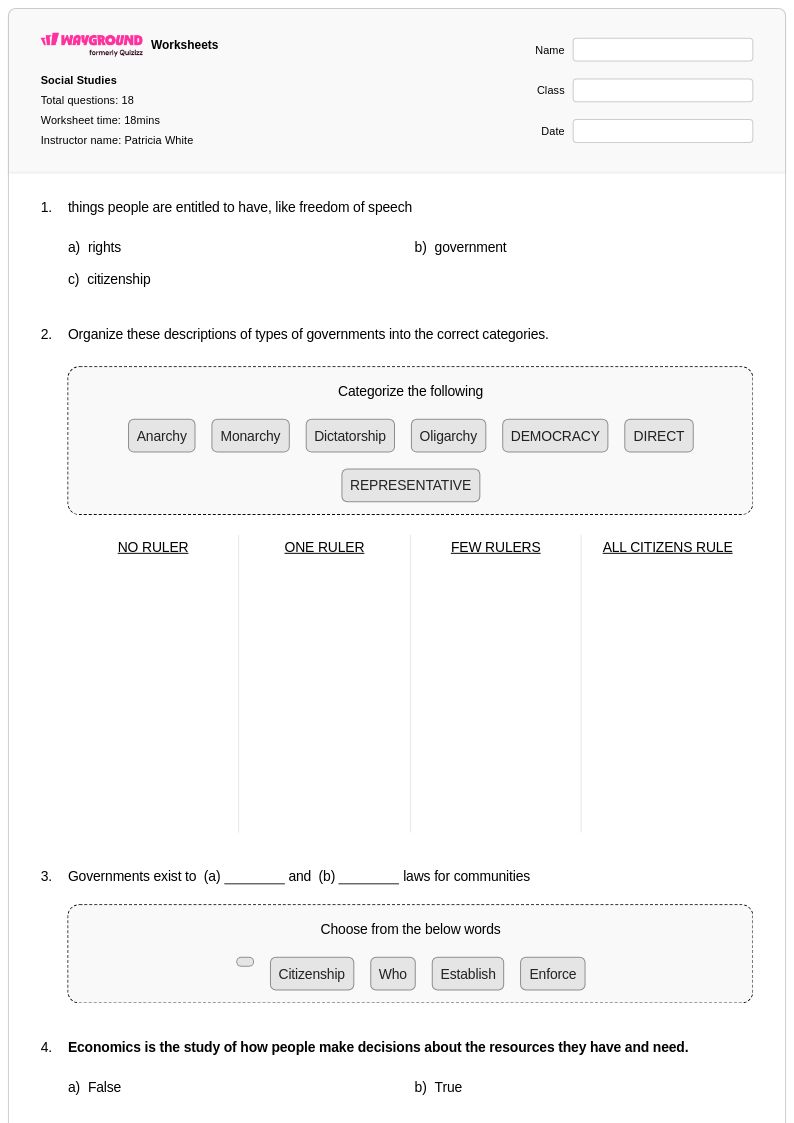
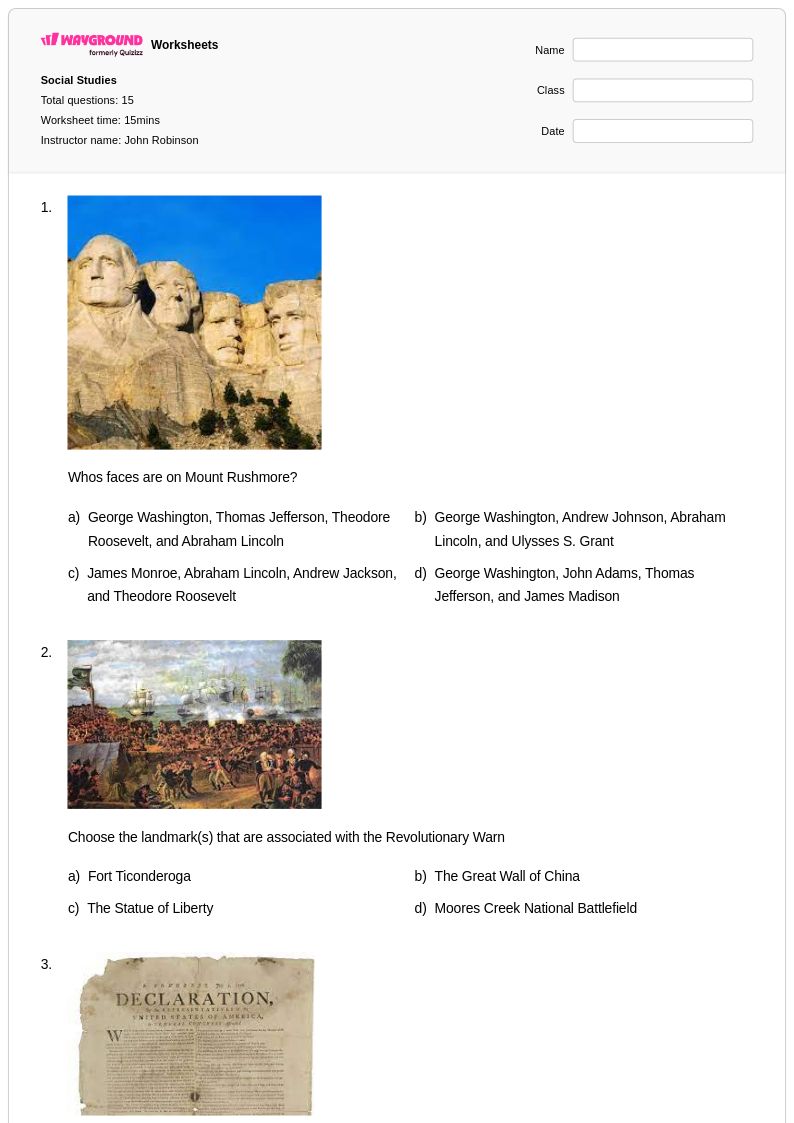
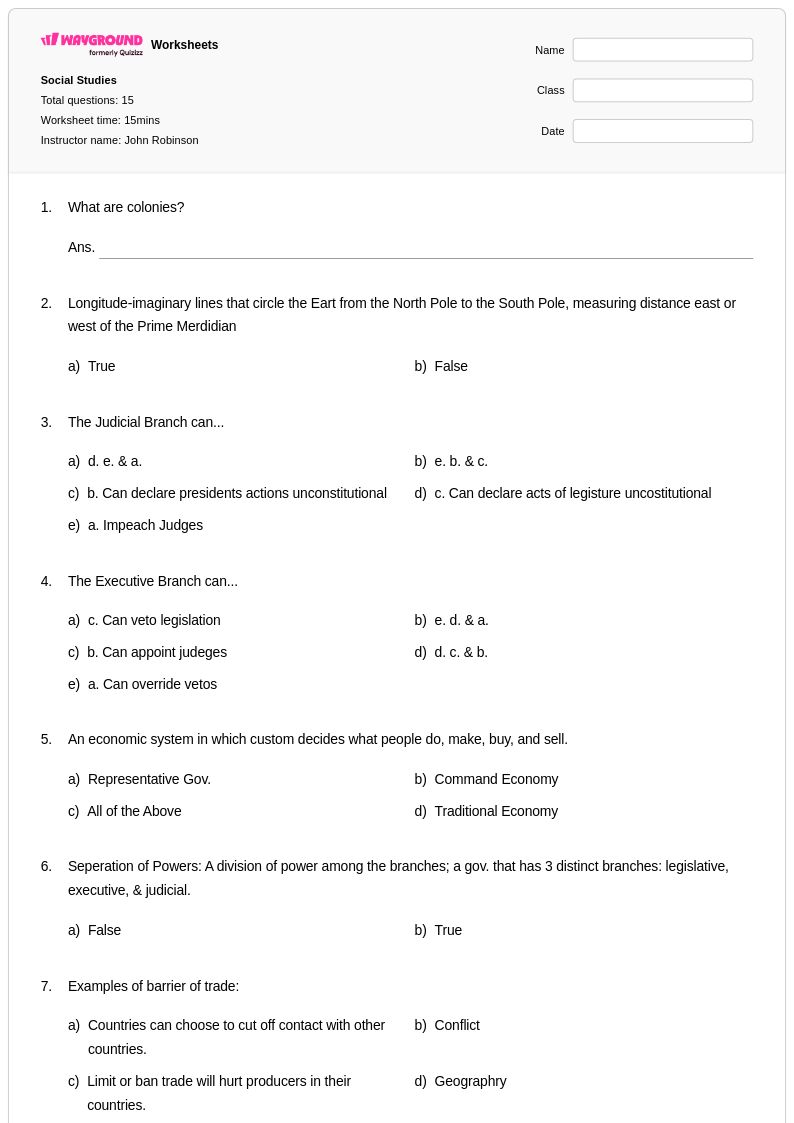
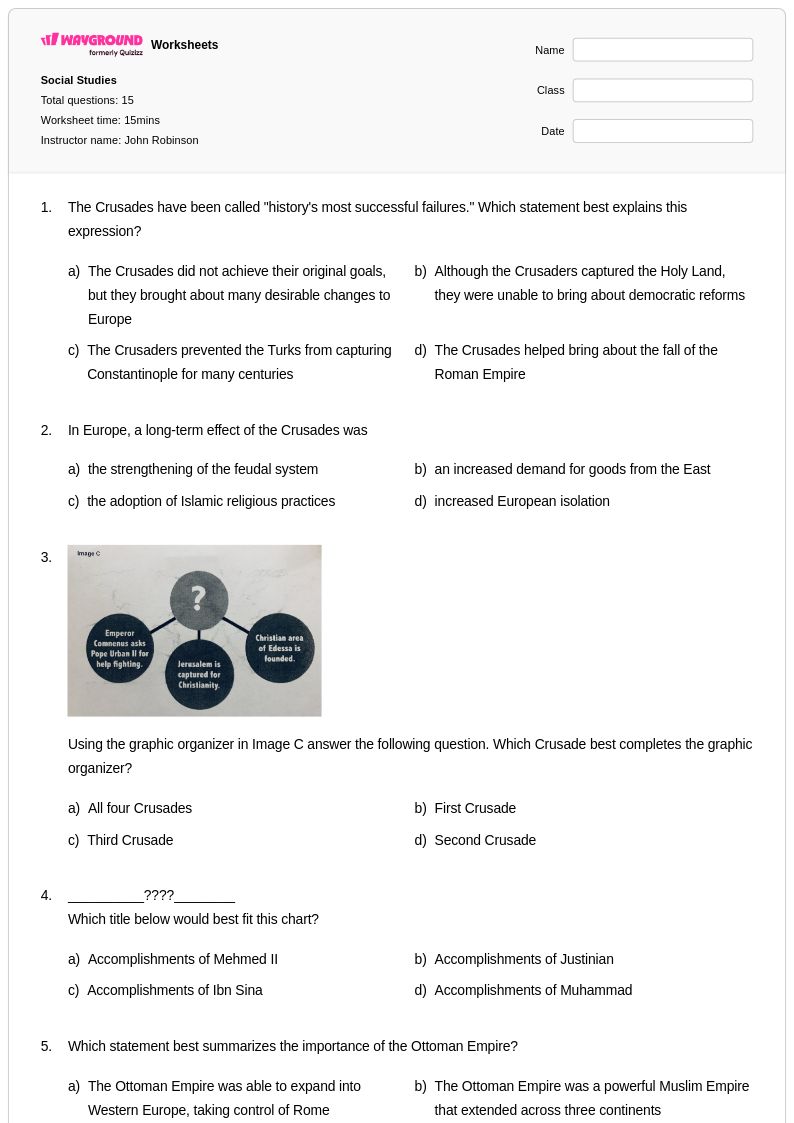
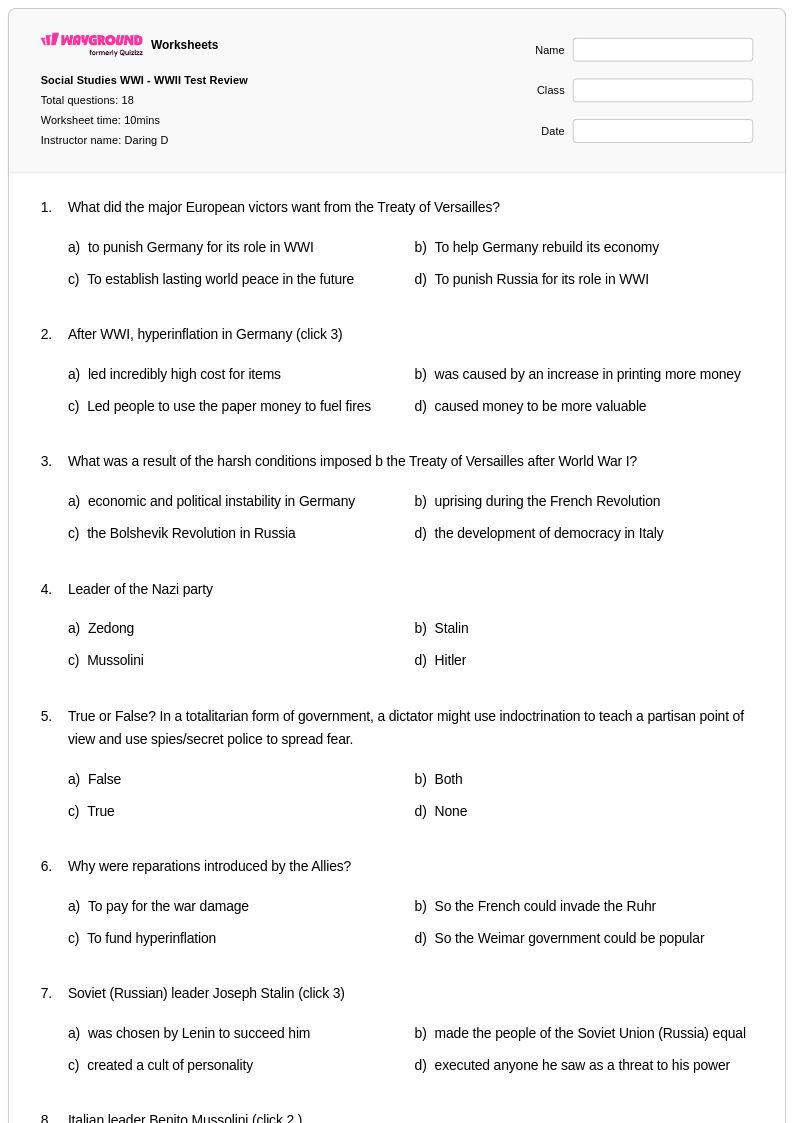
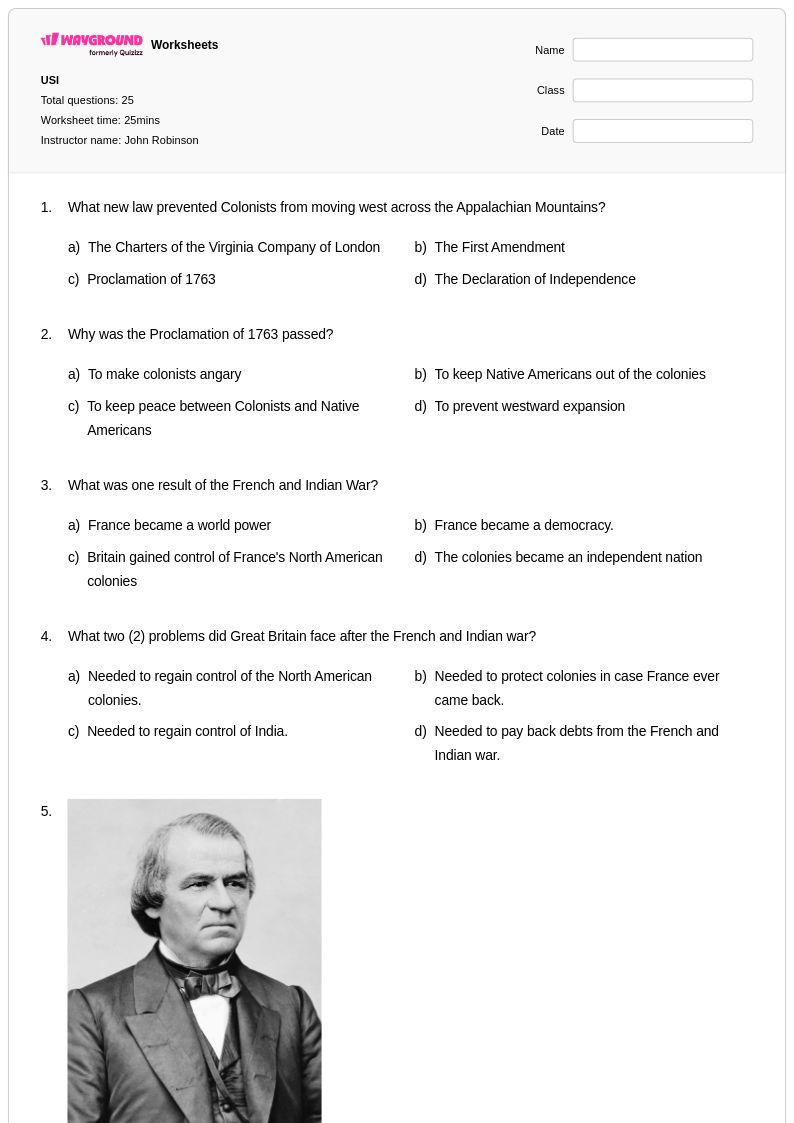
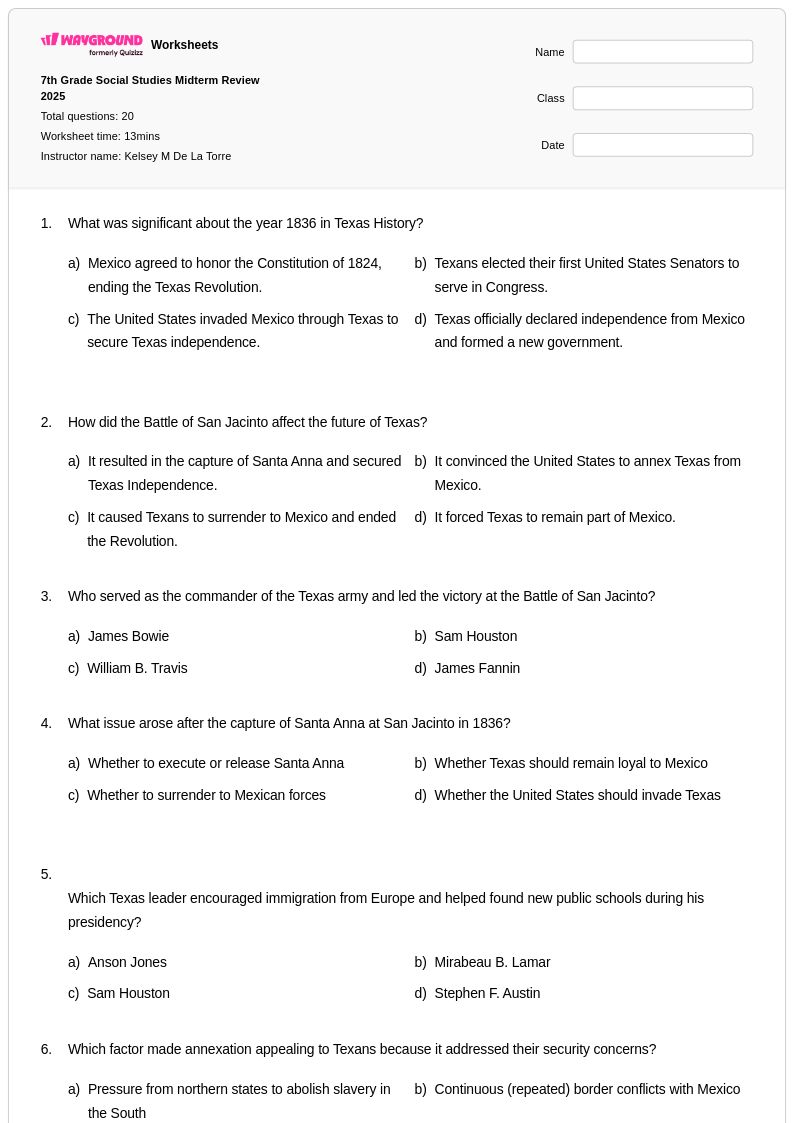
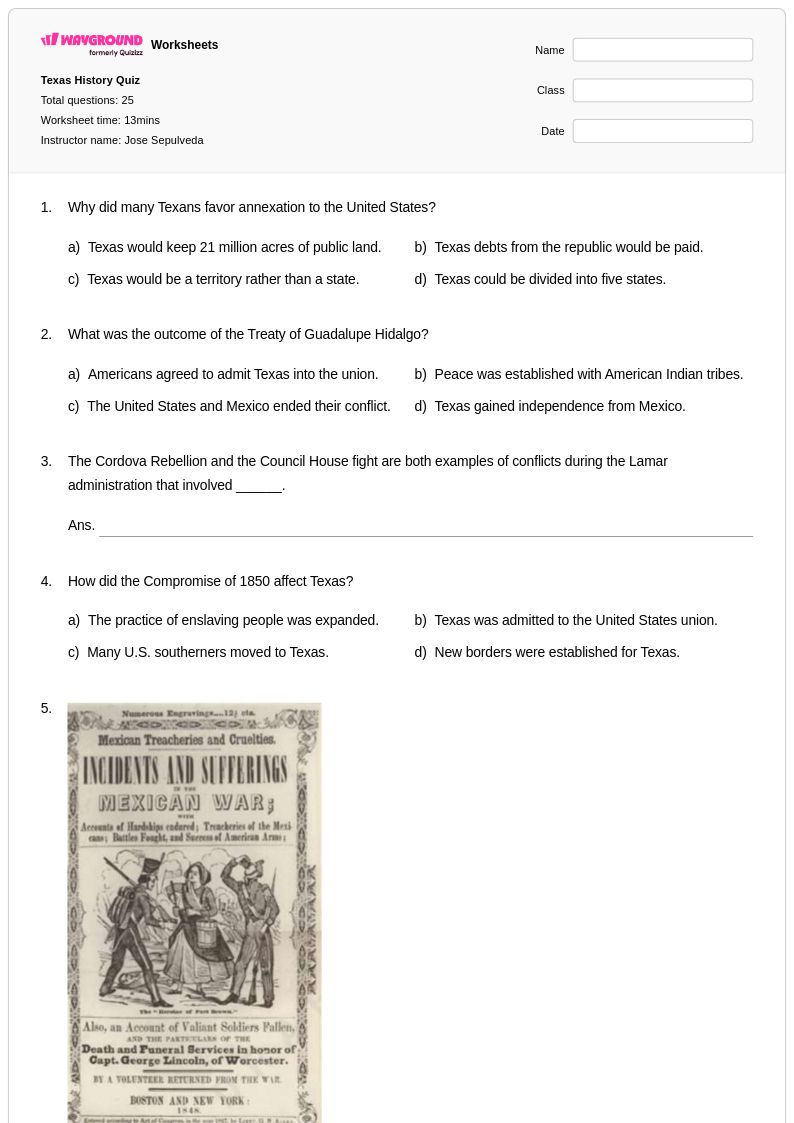
Peace Studies worksheets for Grade 7 students available through Wayground (formerly Quizizz) provide comprehensive resources that help middle school learners explore conflict resolution, social justice, and global citizenship concepts. These carefully designed materials strengthen critical thinking skills as students analyze historical and contemporary examples of peaceful movements, examine the root causes of conflicts, and develop understanding of diplomatic solutions to international disputes. The worksheet collection includes structured practice problems that guide students through case studies of successful peace-building efforts, comparative analysis activities focusing on different cultural approaches to conflict resolution, and reflective exercises that encourage personal connections to peace-making principles. Teachers can access complete answer keys and printable pdf versions of all materials, ensuring seamless implementation whether used for individual practice, small group discussions, or whole-class instruction on this essential social studies topic.
Wayground (formerly Quizizz) supports educators with an extensive library of millions of teacher-created Peace Studies resources specifically curated for Grade 7 Social Studies instruction. The platform's robust search and filtering capabilities allow teachers to quickly locate materials aligned with specific curriculum standards and learning objectives, while differentiation tools enable customization based on individual student needs and reading levels. These versatile worksheet collections are available in both printable and digital formats, including downloadable pdf options that facilitate flexible lesson planning and accommodate various classroom technologies. The comprehensive resource library proves invaluable for targeted skill practice, remediation support for struggling learners, and enrichment opportunities for advanced students, helping teachers create meaningful learning experiences that develop students' understanding of peace-building strategies and their applications in contemporary global contexts.
FAQs
How do I teach peace studies in the classroom?
Teaching peace studies effectively centers on helping students analyze real-world conflicts, examine mediation strategies, and understand the structures that enable peaceful coexistence. A strong approach combines case studies of historical and contemporary peacebuilding efforts with structured reflection activities that ask students to consider their own roles as community members. Grounding lessons in cross-cultural understanding helps students move beyond surface-level conflict resolution toward genuine global citizenship thinking.
What exercises help students practice conflict resolution and peacebuilding skills?
Effective practice exercises for peace studies include analyzing diplomatic case studies, evaluating the outcomes of different mediation strategies, and reflecting on cross-cultural perspectives in historical and modern conflicts. Structured worksheets that ask students to compare peacebuilding approaches or assess the role of global institutions reinforce critical thinking while keeping content grounded in real-world contexts. Writing prompts that require students to propose solutions to contemporary conflicts are also a high-value practice format.
What misconceptions do students commonly have about conflict resolution and peace studies?
A common misconception is that peace simply means the absence of conflict, rather than understanding it as an active, ongoing process involving negotiation, justice, and structural equity. Students also tend to oversimplify diplomatic solutions by assuming that agreement between leaders automatically produces lasting peace, overlooking the role of cultural, economic, and historical factors. Addressing these errors early helps students engage more rigorously with the complexity of real peacebuilding scenarios.
How can I use Wayground's peace studies worksheets in my classroom?
Wayground's peace studies worksheets are available as printable PDFs for traditional classroom use and in digital formats for technology-integrated or remote learning environments, giving teachers flexibility in how they assign and deliver content. Teachers can also host worksheets as a quiz directly on Wayground, enabling real-time student responses and streamlined review. Each worksheet includes a complete answer key, making them practical for independent practice, small group analysis, or whole-class discussion starters.
How do I differentiate peace studies instruction for students at different skill levels?
For students who need additional support with conflict analysis concepts, targeted remediation worksheets that scaffold case study reading and guided reflection questions can reduce cognitive load while maintaining academic expectations. For advanced learners, enrichment tasks that involve evaluating complex geopolitical scenarios or comparing competing diplomatic frameworks provide meaningful challenge. On Wayground, teachers can also apply accommodations such as read aloud support, extended time, and reduced answer choices to individual students without disrupting the experience for the rest of the class.
How do peace studies worksheets help students develop critical thinking skills?
Peace studies worksheets build critical thinking by requiring students to evaluate evidence, compare perspectives, and draw reasoned conclusions about conflict and cooperation rather than simply recalling facts. When students analyze case studies of mediation efforts or assess the effectiveness of diplomatic solutions, they practice the same analytical skills used in historical inquiry, social science research, and civic reasoning. This makes peace studies an effective vehicle for transferable academic skills alongside its specific content goals.