Free Printable Personal Finance Worksheets for Grade 7
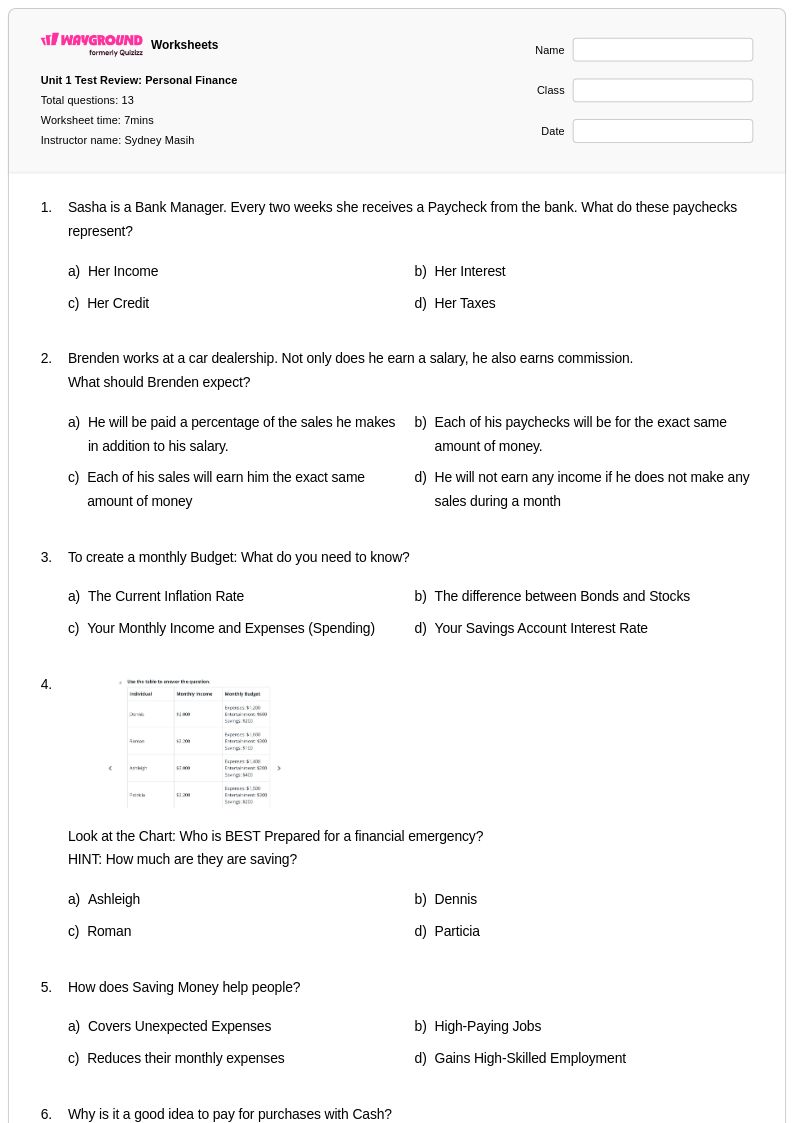
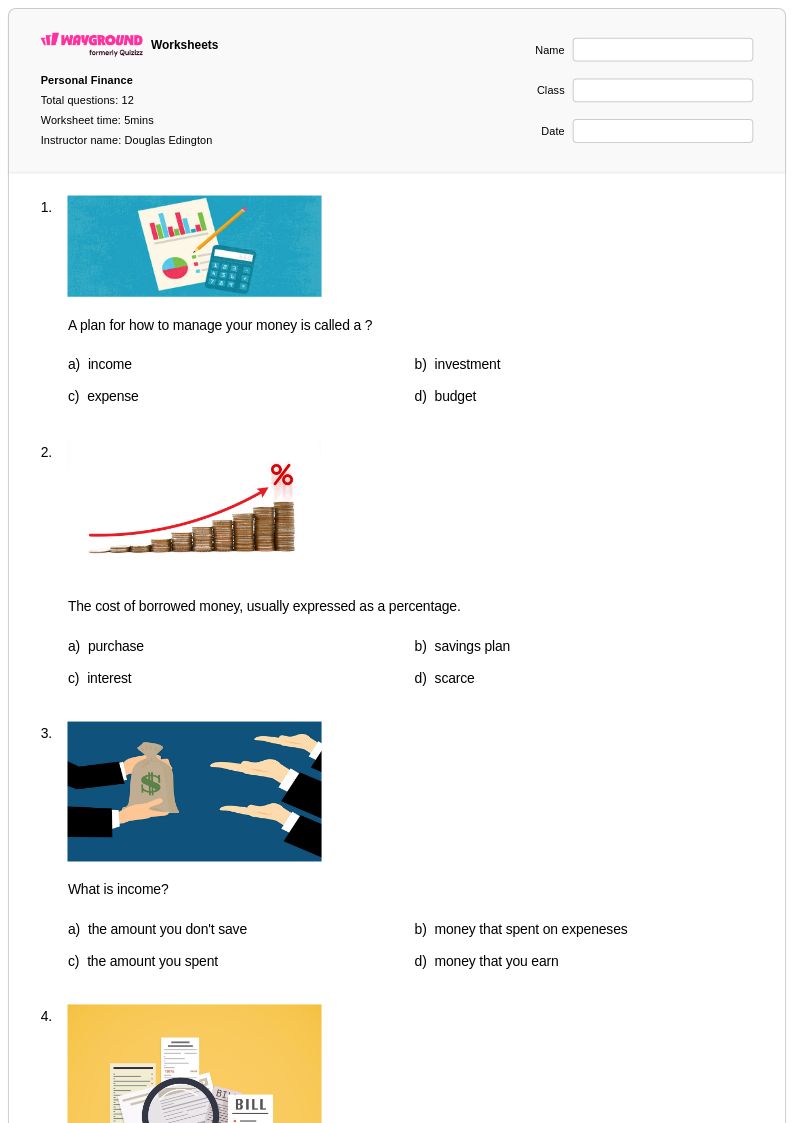
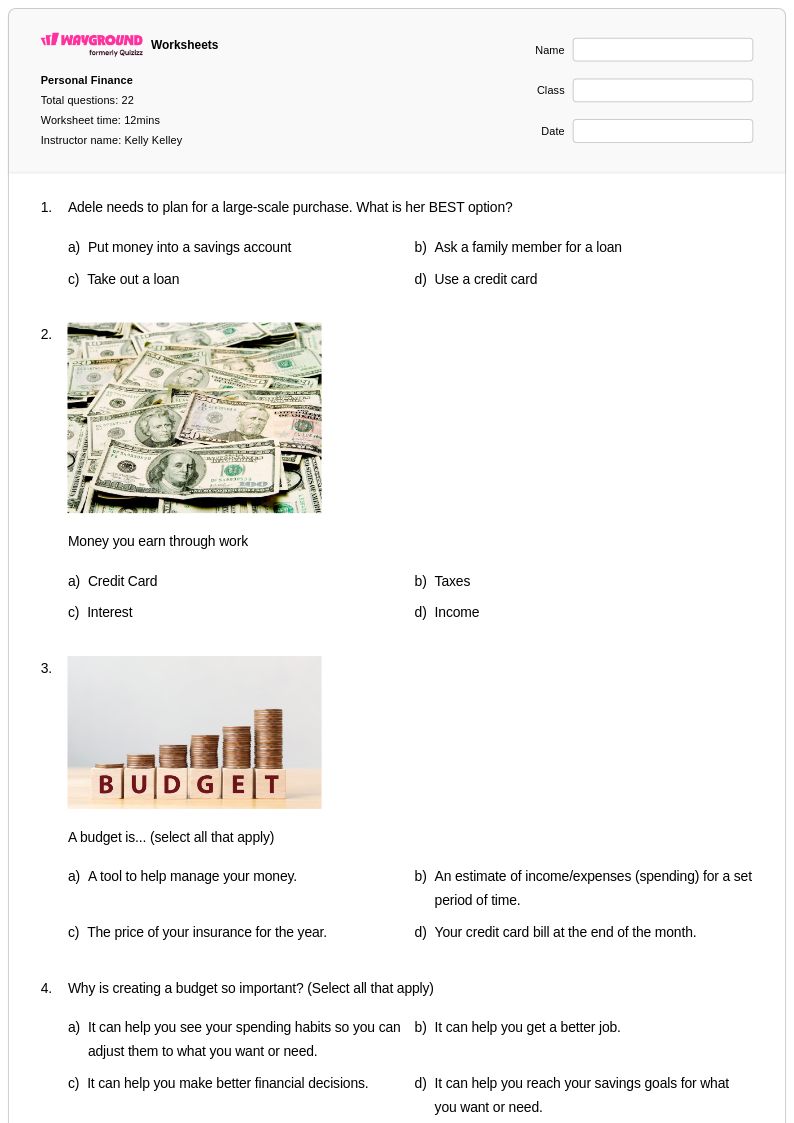
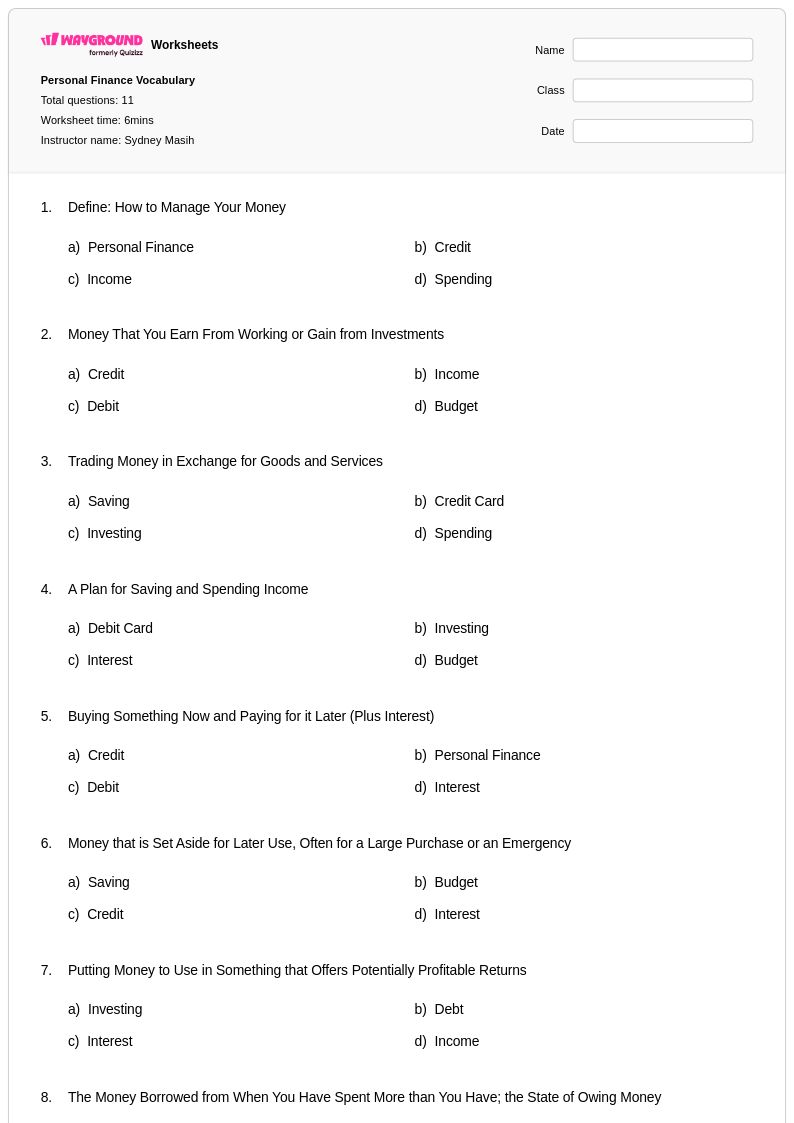
Grade 7 Personal Finance worksheets from Wayground provide free printables and practice problems with answer keys to help students master budgeting, saving, and money management skills.
Explore printable Personal Finance worksheets for Grade 7
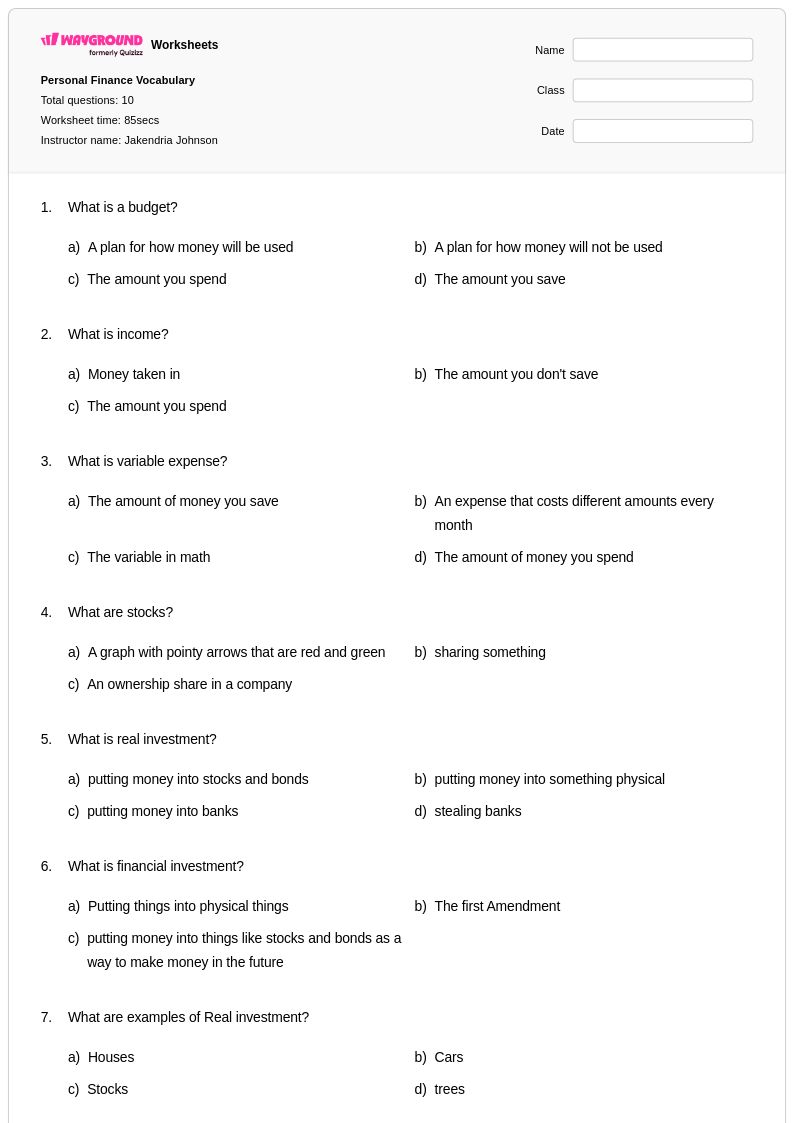
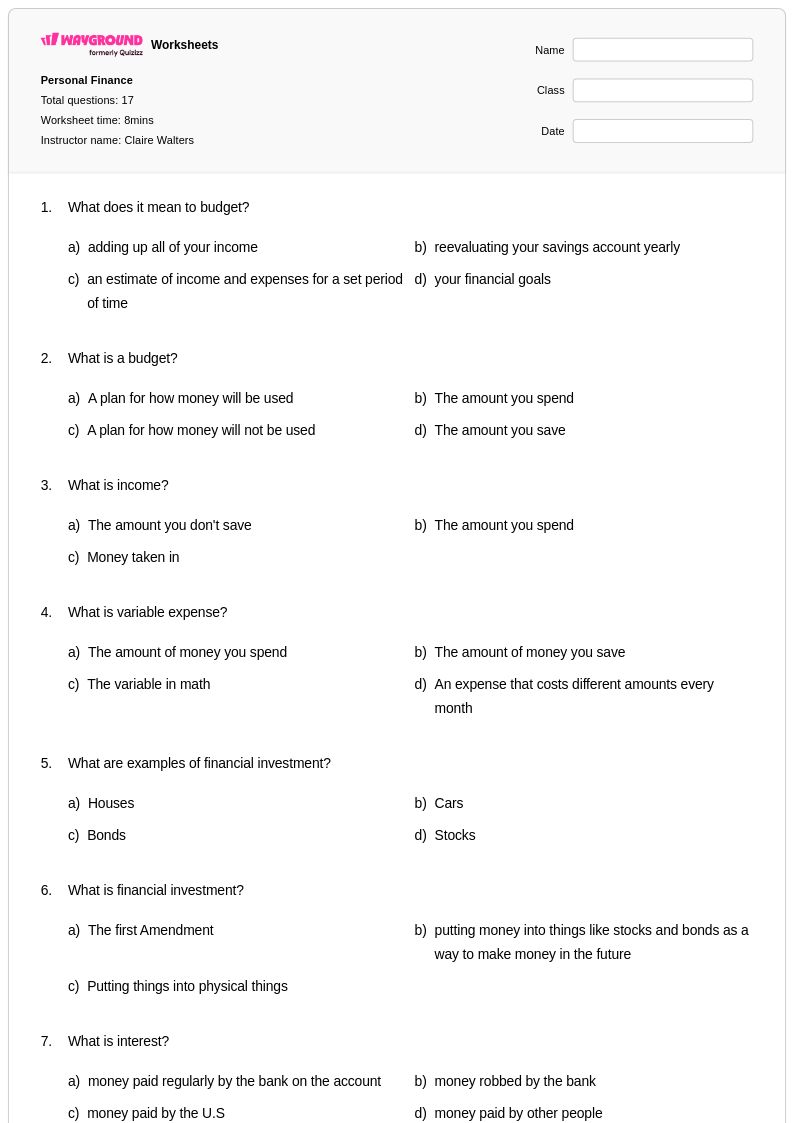
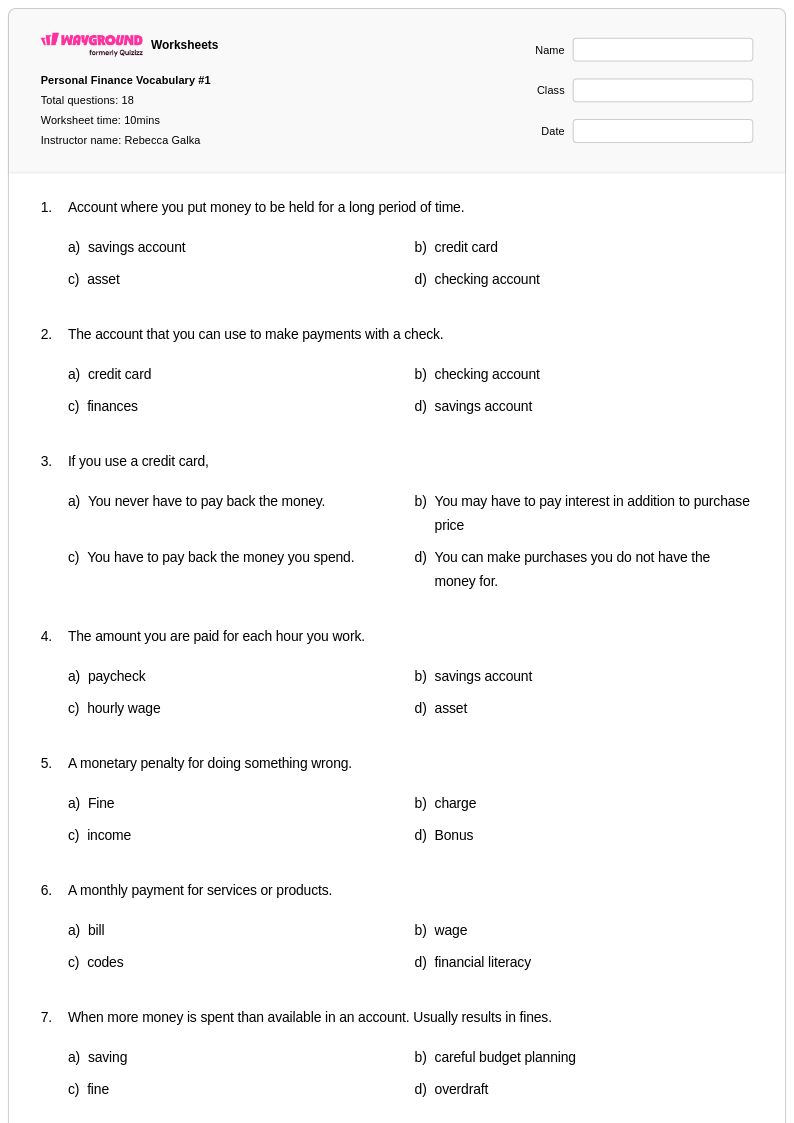
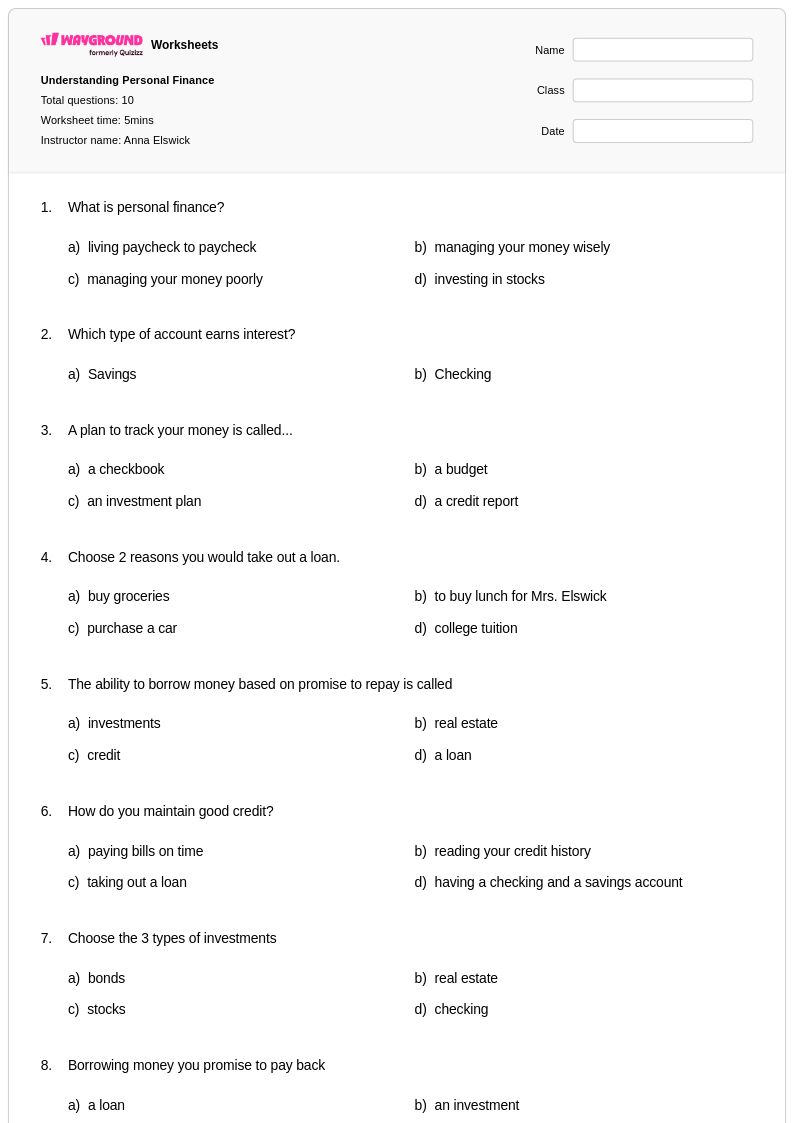
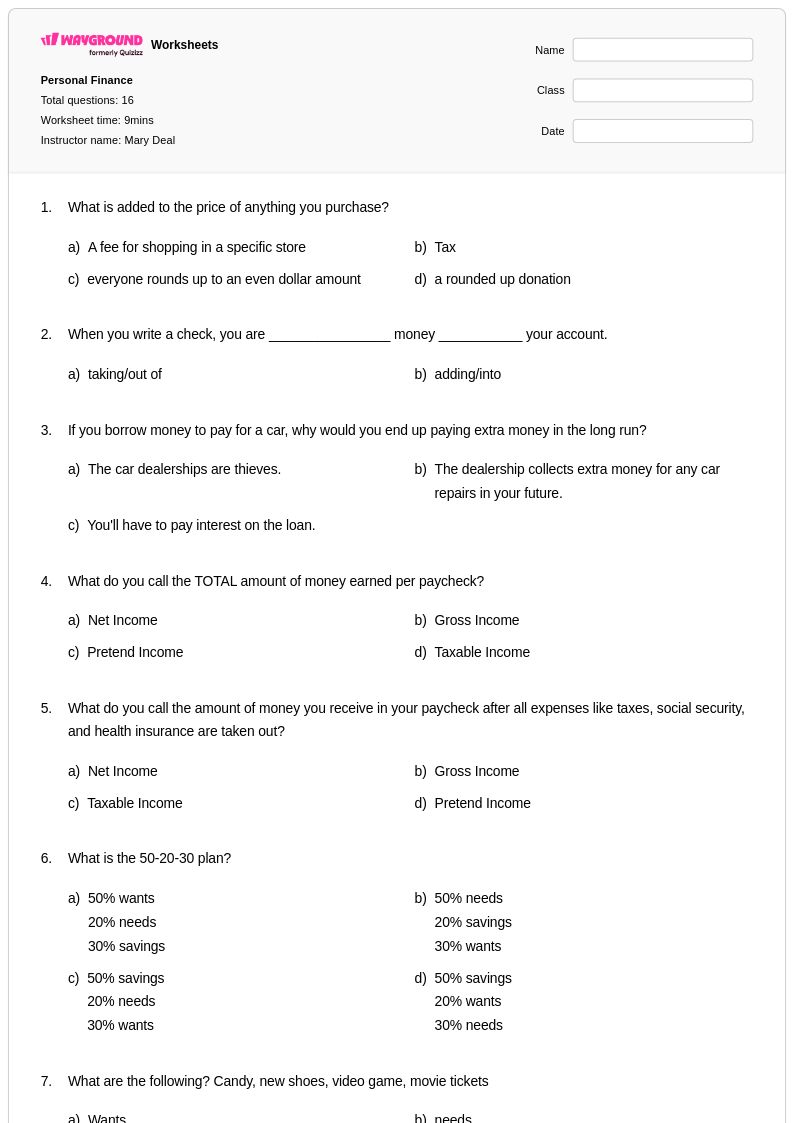
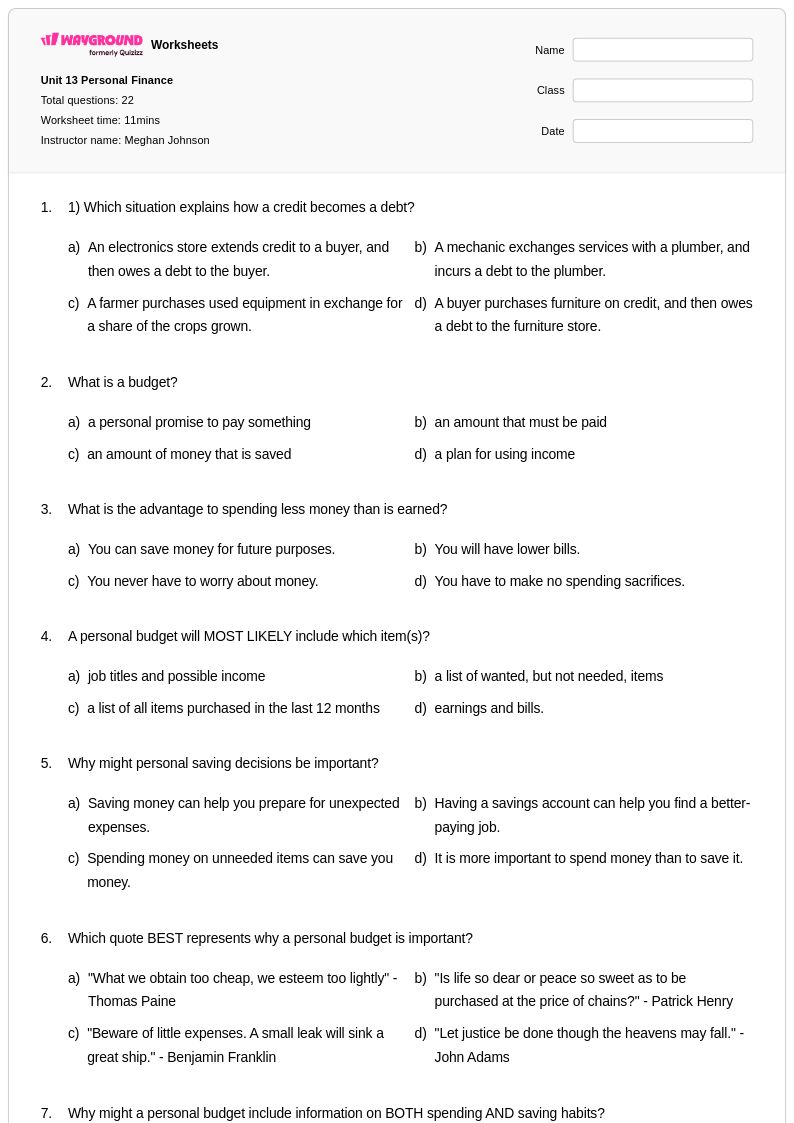
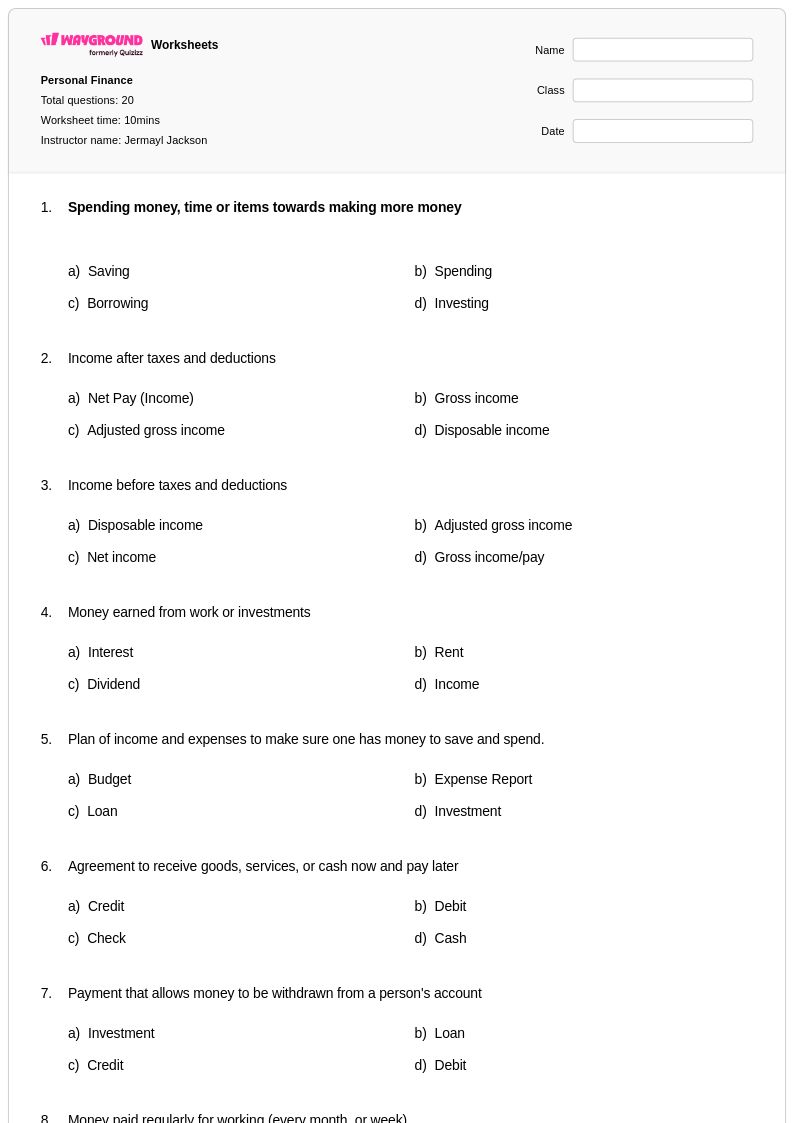
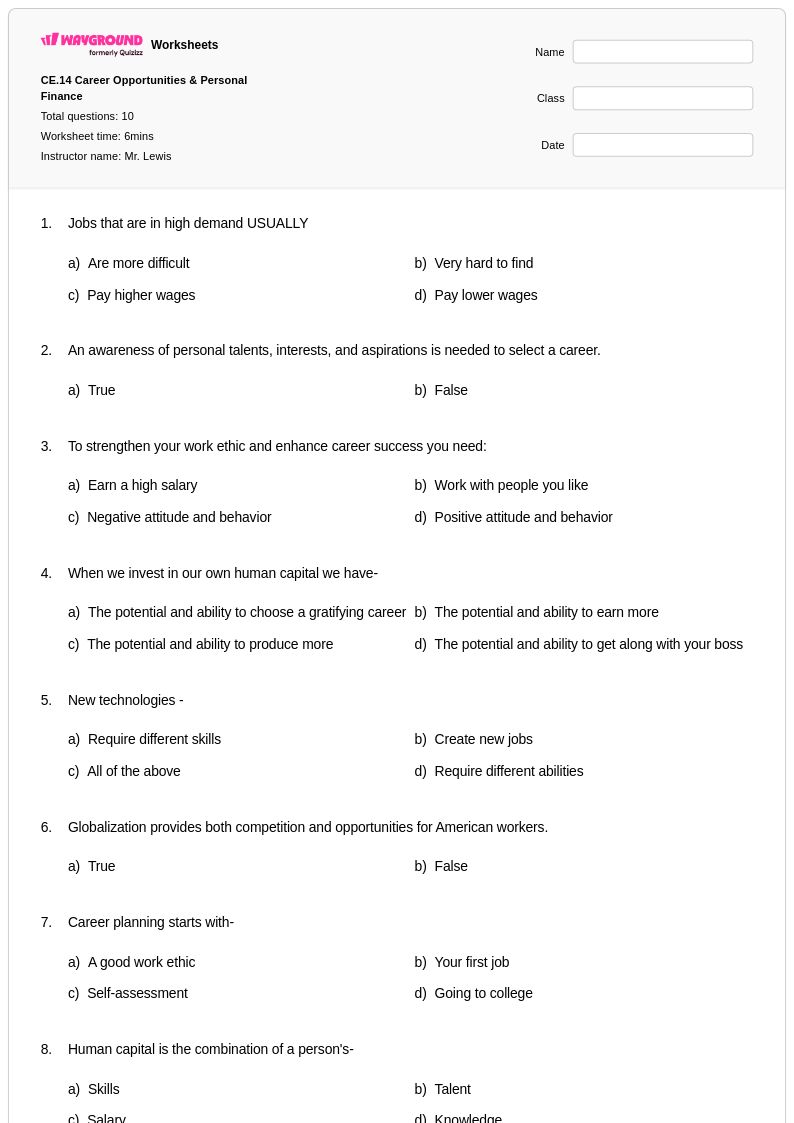
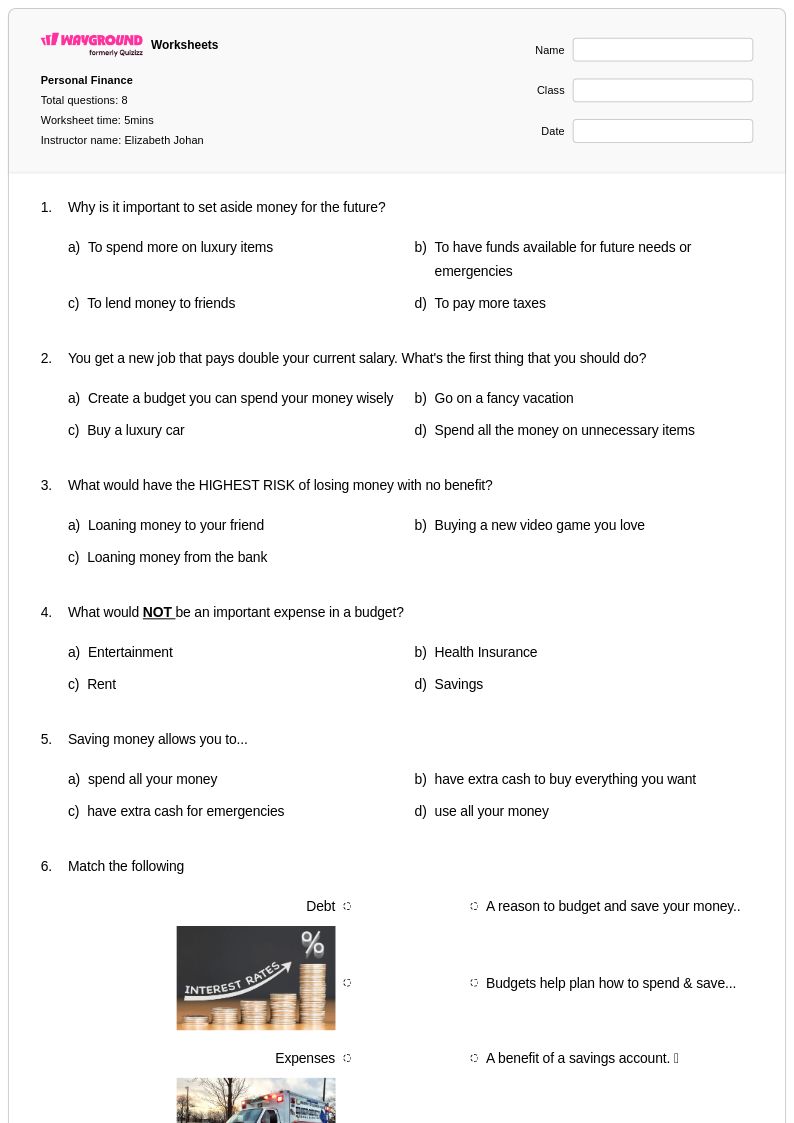
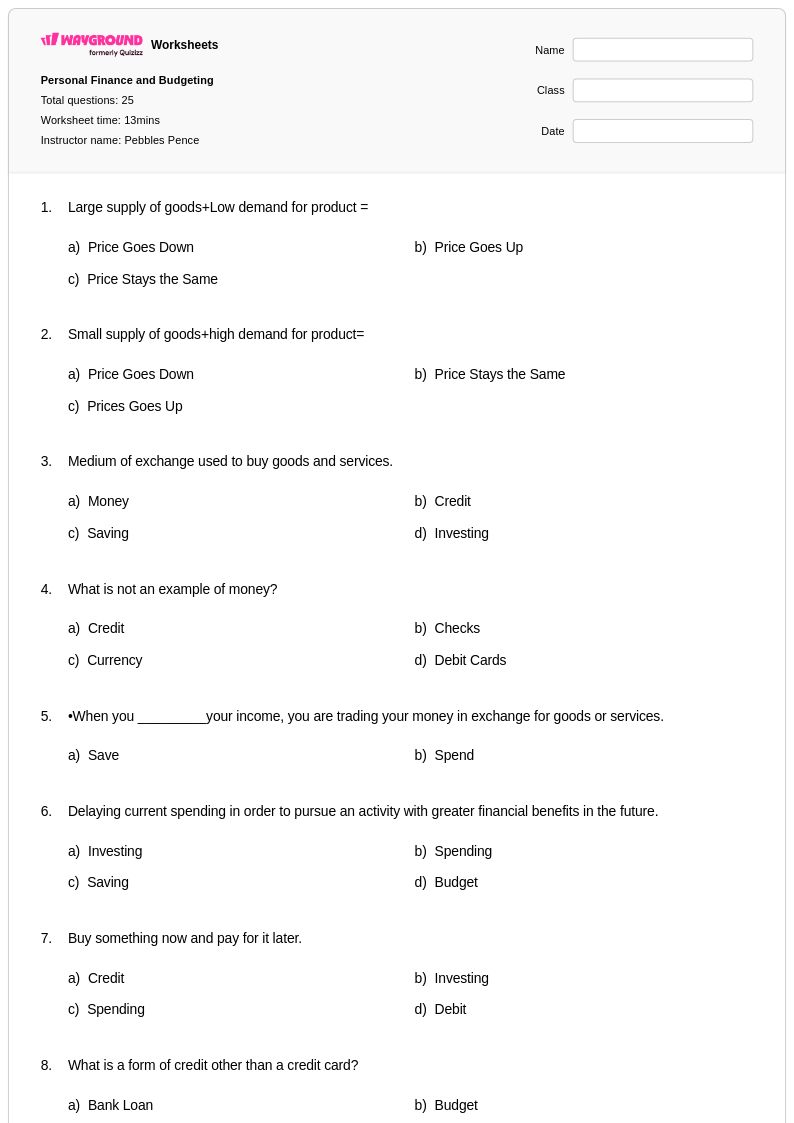
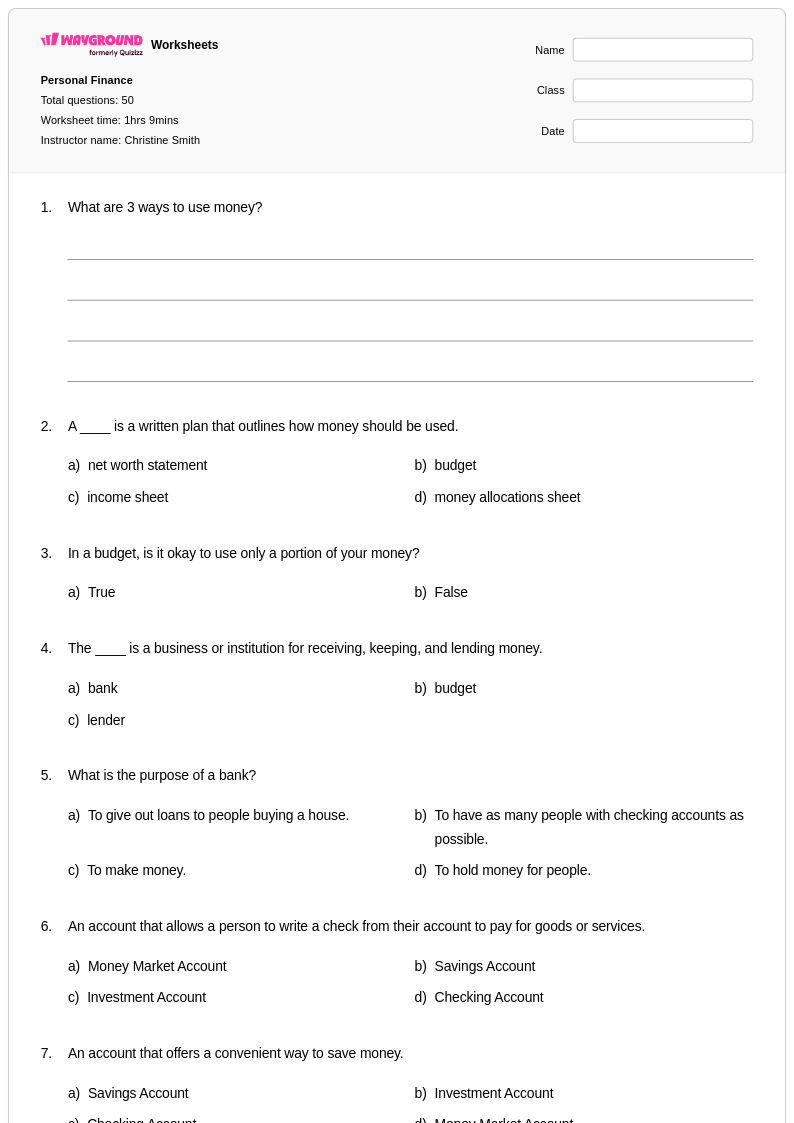
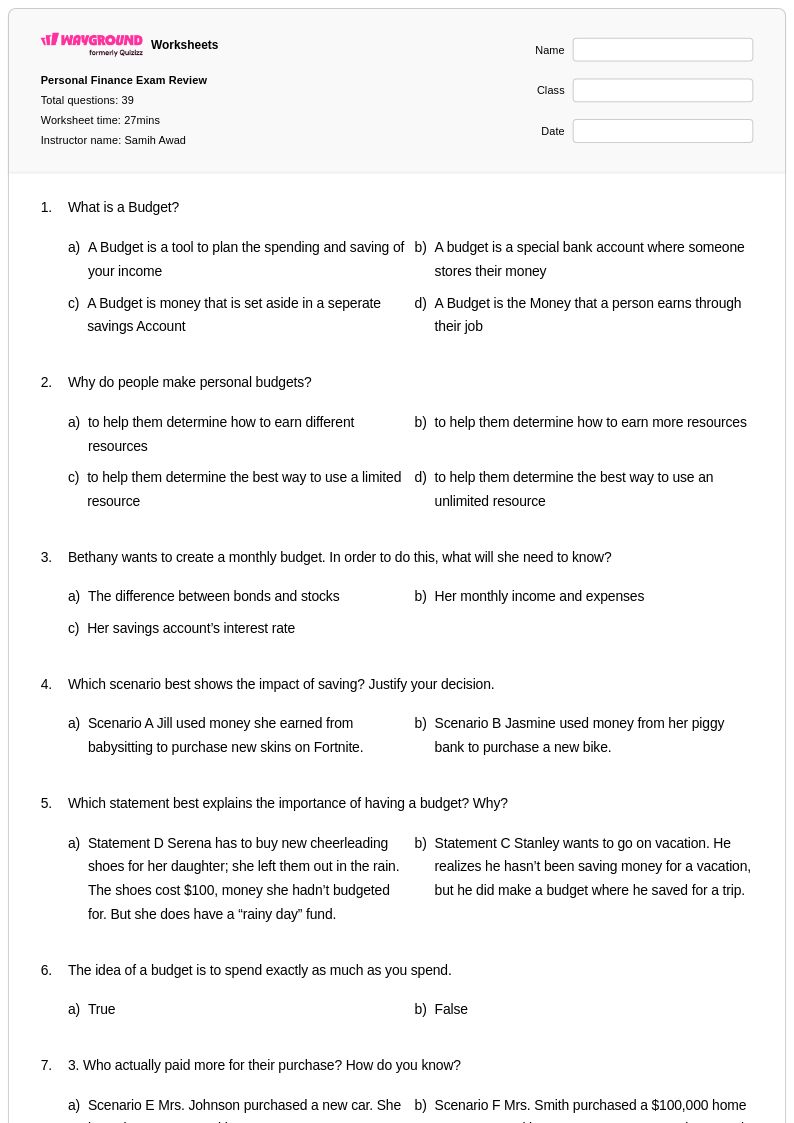
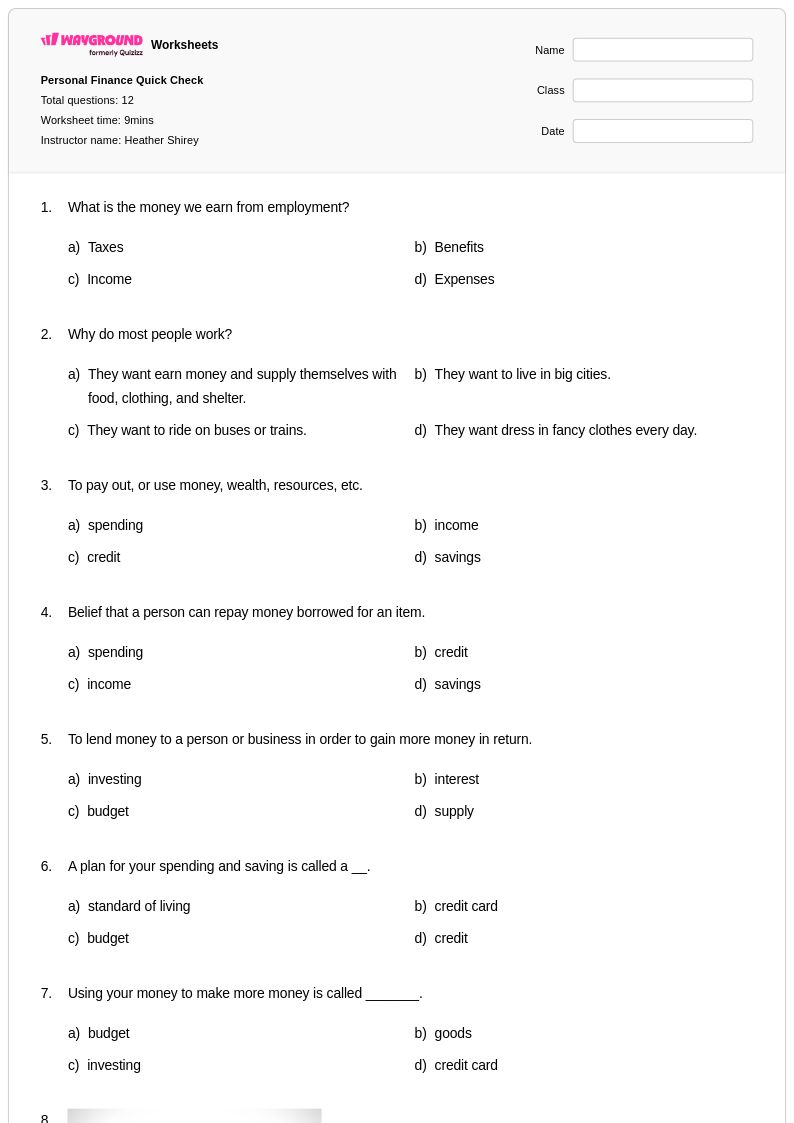
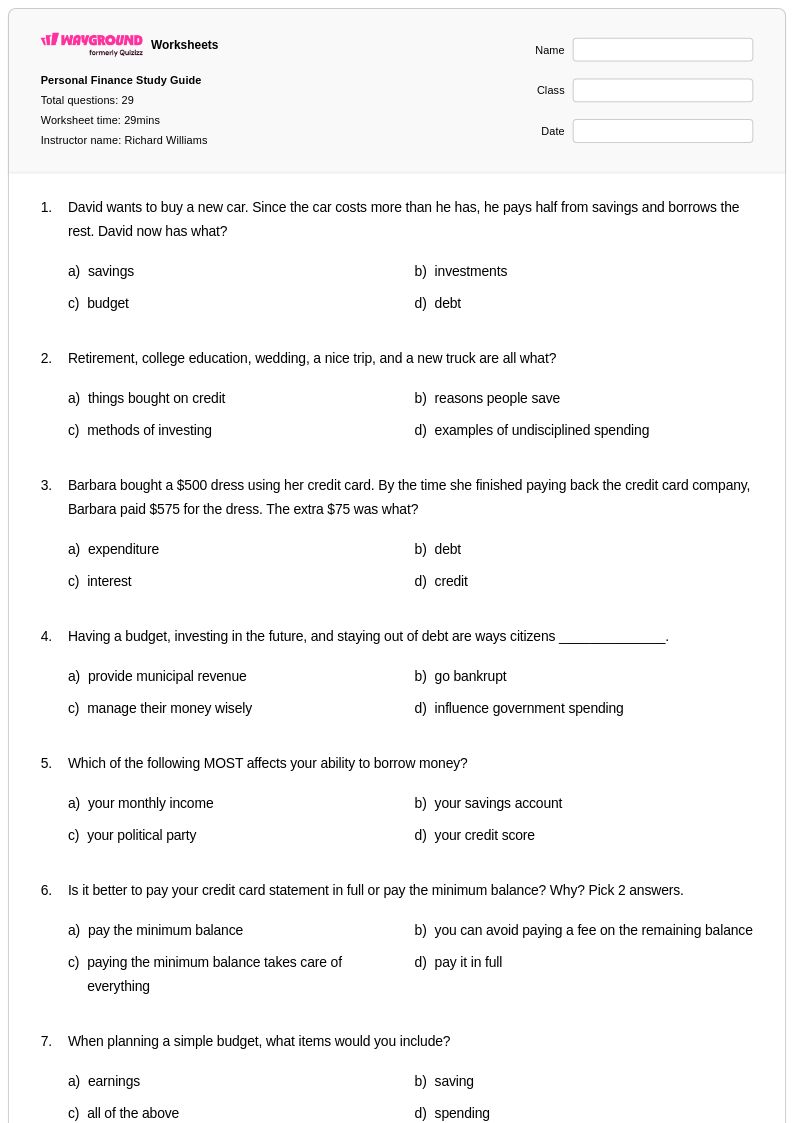
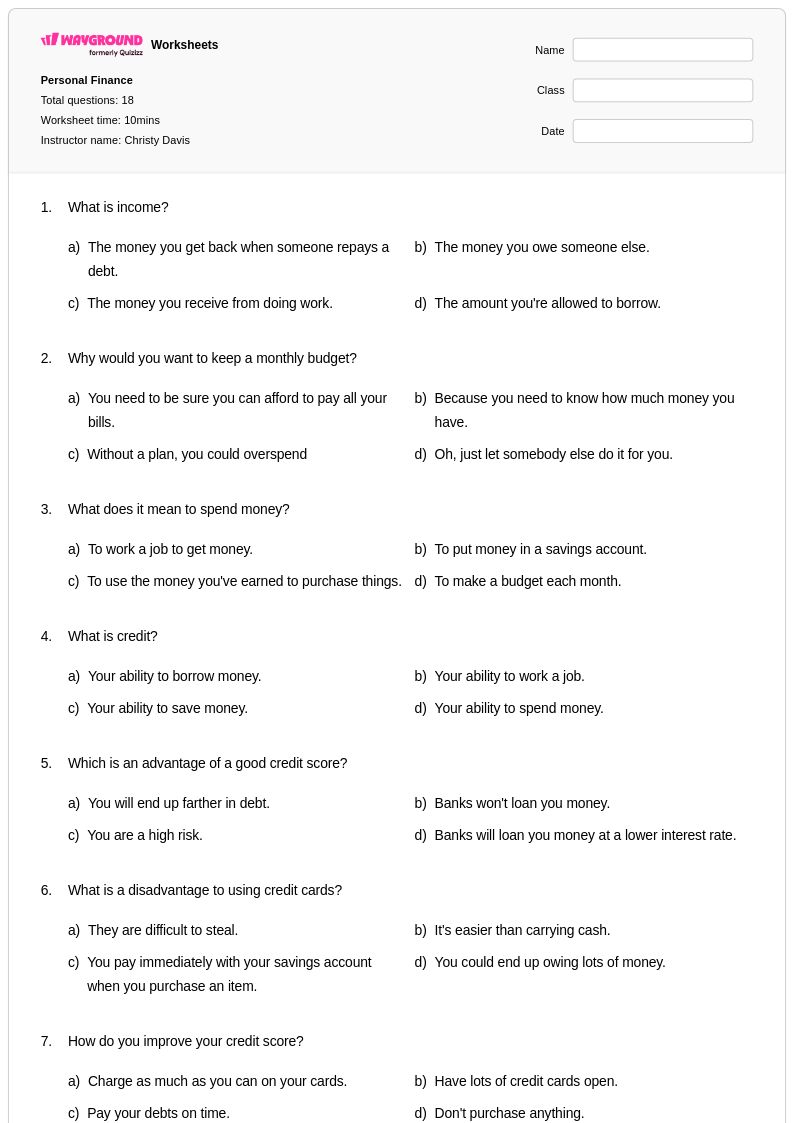
Personal finance education for Grade 7 students becomes engaging and comprehensive through Wayground's extensive collection of worksheets that build essential money management skills. These carefully designed resources help seventh graders master fundamental concepts including budgeting, saving strategies, understanding interest rates, comparing costs, and making informed spending decisions. The worksheets feature realistic scenarios that challenge students to apply mathematical calculations while developing critical thinking about financial choices, with each printable resource including detailed answer keys that enable both independent practice and guided instruction. Teachers can access free pdf downloads that cover everything from basic banking concepts to more complex topics like credit and debt, ensuring students develop the financial literacy skills necessary for responsible money management throughout their lives.
Wayground formerly Quizizz provides educators with millions of teacher created resources specifically focused on personal finance instruction, featuring robust search and filtering capabilities that allow teachers to locate grade appropriate materials aligned with curriculum standards. The platform's differentiation tools enable instructors to customize worksheets for varying skill levels within their Grade 7 classrooms, while flexible formatting options support both digital learning environments and traditional printable assignments. These comprehensive resources streamline lesson planning by offering ready to use practice problems for skill reinforcement, targeted materials for remediation of challenging concepts like percentage calculations in financial contexts, and enrichment activities that extend learning for advanced students ready to explore more sophisticated economic principles.
FAQs
How do I teach personal finance to students who have no prior experience with money management?
Start with concrete, relatable scenarios before introducing abstract financial concepts. Have students track a fictional character's income and expenses before managing a budget of their own, then layer in concepts like saving goals, needs versus wants, and the basics of credit once foundational vocabulary is secure. Anchoring each concept in real-world decision-making helps students connect personal finance to their everyday lives rather than treating it as abstract math.
What worksheets or exercises help students practice budgeting skills?
Effective budgeting practice gives students a fixed income and a set of expenses to categorize, prioritize, and adjust. Worksheets that simulate monthly budget scenarios, income calculation from hourly wages, and expense tracking using real-world prices build the arithmetic and decision-making skills students need simultaneously. Comparison shopping problems and savings goal timelines are also strong exercises because they require students to apply budgeting logic across multiple financial variables at once.
What common mistakes do students make when learning about personal finance?
One of the most frequent errors is confusing gross income with net income, which causes students to significantly overestimate how much money is available to spend or save. Students also tend to treat wants as needs when categorizing expenses, which leads to unbalanced budgets in practice problems. A third common misconception is viewing credit as free money rather than a loan with a cost, so explicitly teaching interest calculations early helps address that misunderstanding before it takes root.
How can I use personal finance worksheets to support students at different skill levels?
For students who struggle with multi-step problems, start with single-variable exercises like calculating savings over time before introducing budget balancing with multiple expense categories. Advanced students can be challenged with compound interest problems, credit card payoff scenarios, or long-term investment comparisons. On Wayground, teachers can also apply accommodations such as reduced answer choices or read-aloud support to individual students, allowing the same worksheet to serve the full range of learners in one classroom without requiring separate materials.
How do I use Wayground's personal finance worksheets in my classroom?
Wayground's personal finance worksheets are available as printable PDFs for traditional classroom use and in digital formats for technology-integrated or remote learning environments. Teachers can also host the worksheets as a live quiz on Wayground, making them suitable for whole-class instruction, independent practice, or formative assessment. The included answer keys make it straightforward to use these materials for self-checking, peer review, or quick grading after class.
What personal finance topics should middle and high school students be able to master before graduation?
By graduation, students should be able to create and manage a realistic monthly budget, distinguish between gross and net pay, understand how credit scores are built and damaged, calculate simple and compound interest, and evaluate basic saving and investment options. These competencies form the foundation of financial literacy and directly affect students' ability to make sound decisions about student loans, first jobs, and independent living. Teaching these topics progressively across grade levels, with applied practice at each stage, is the most effective approach.