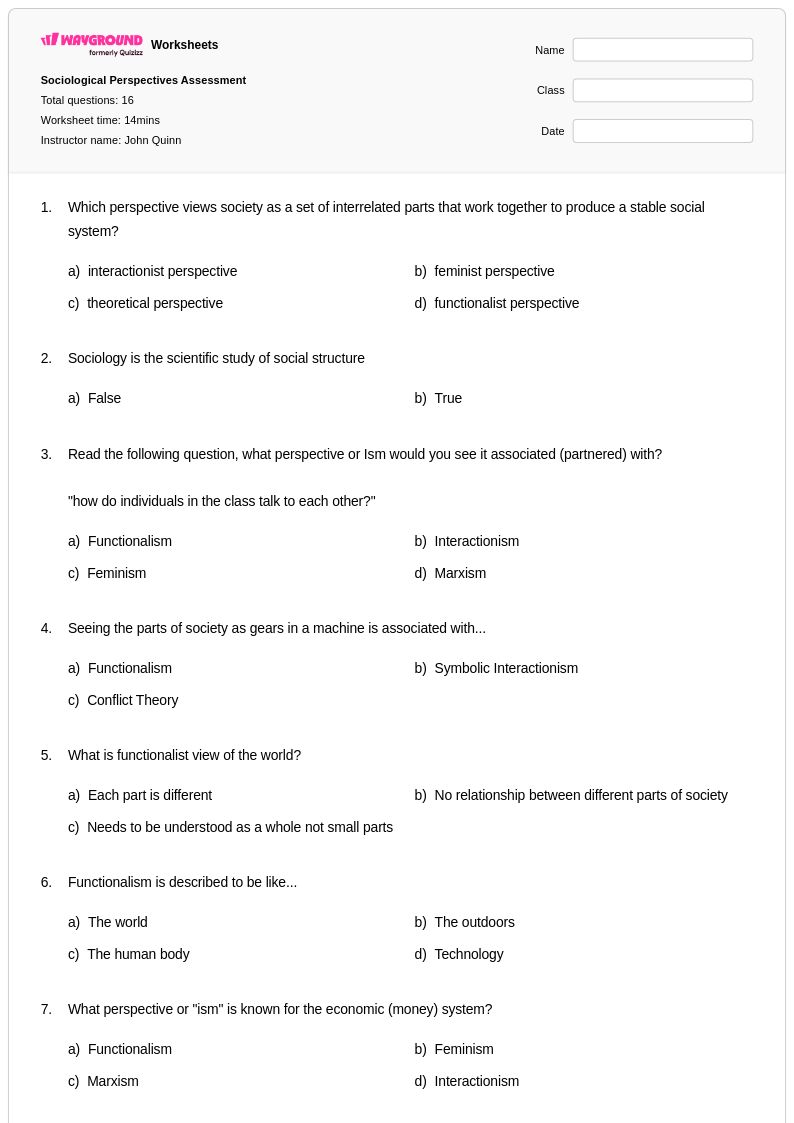
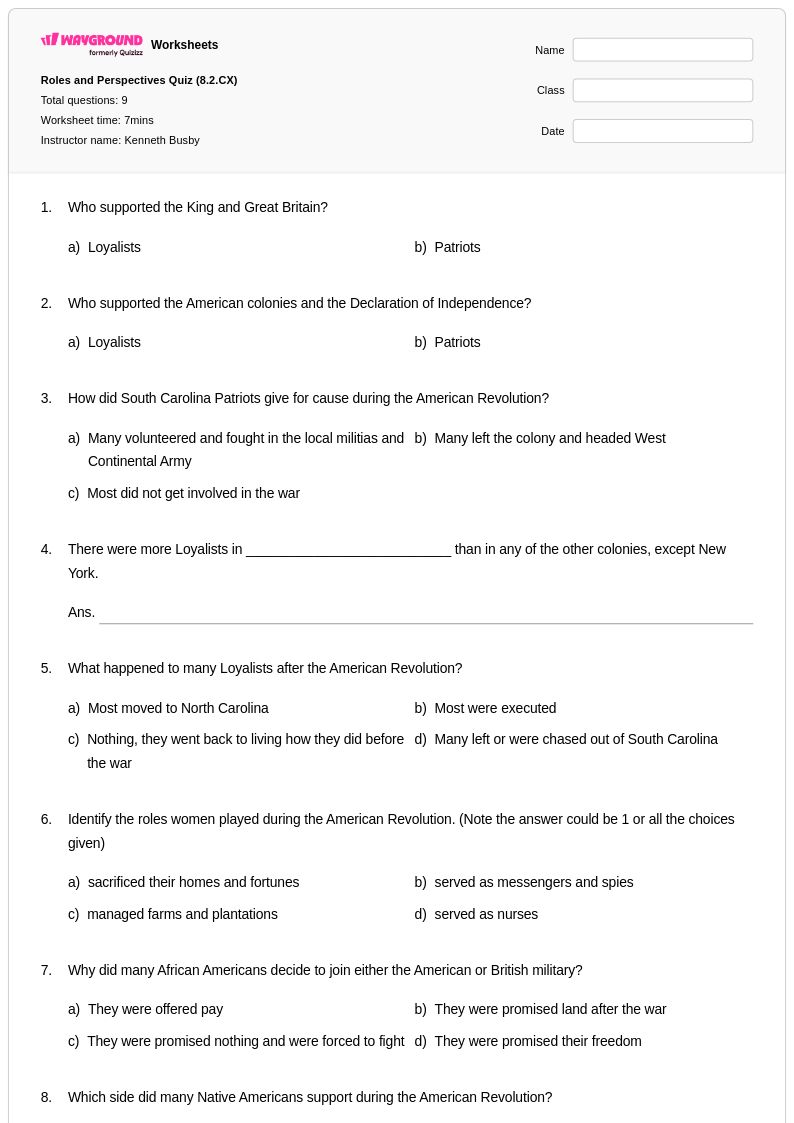
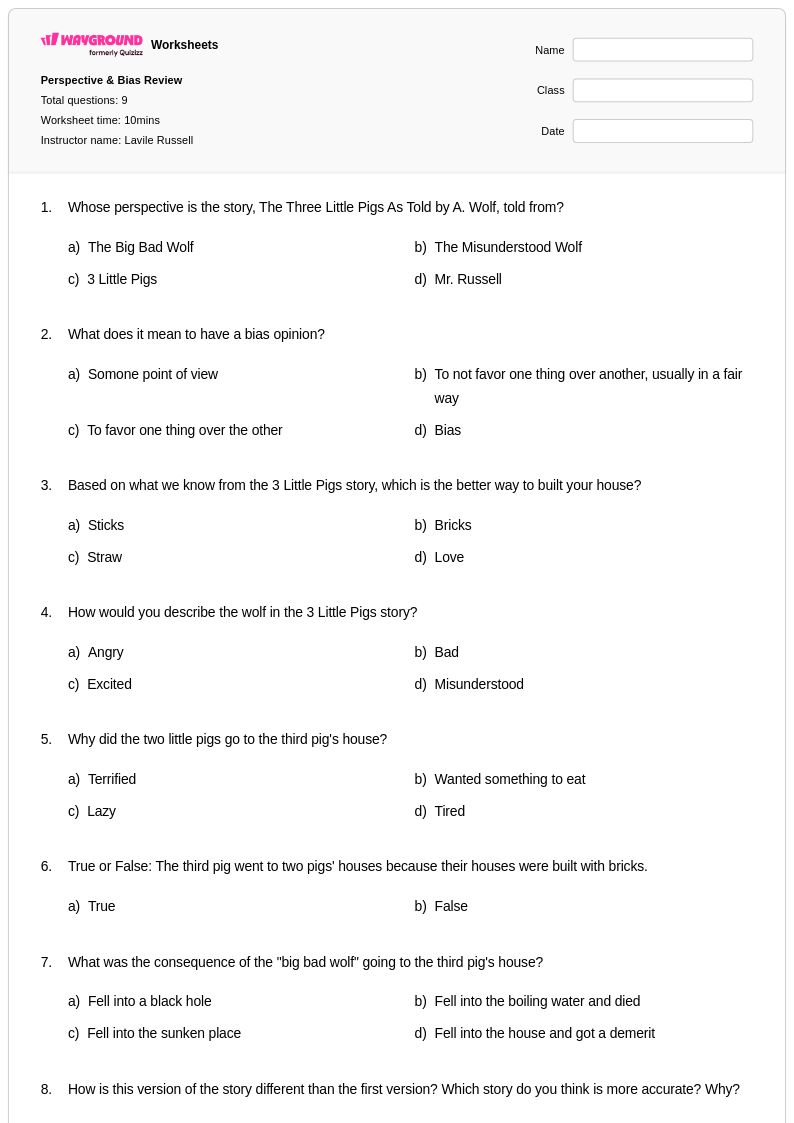
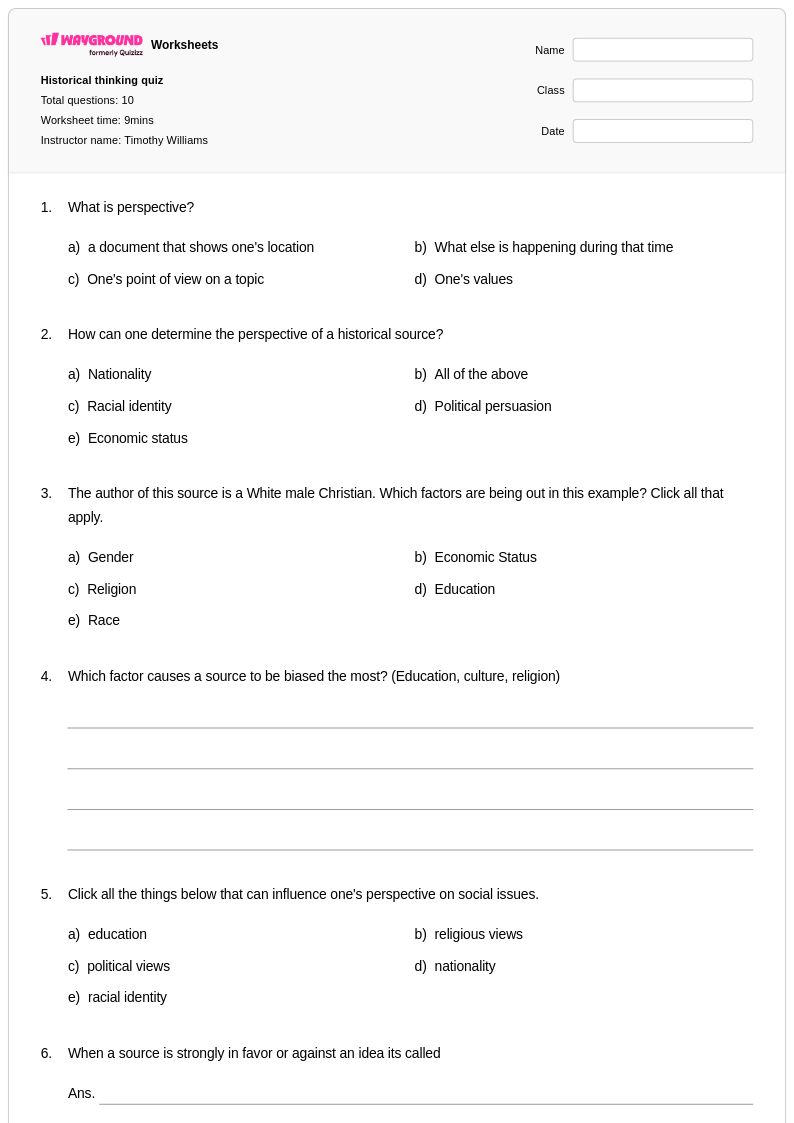
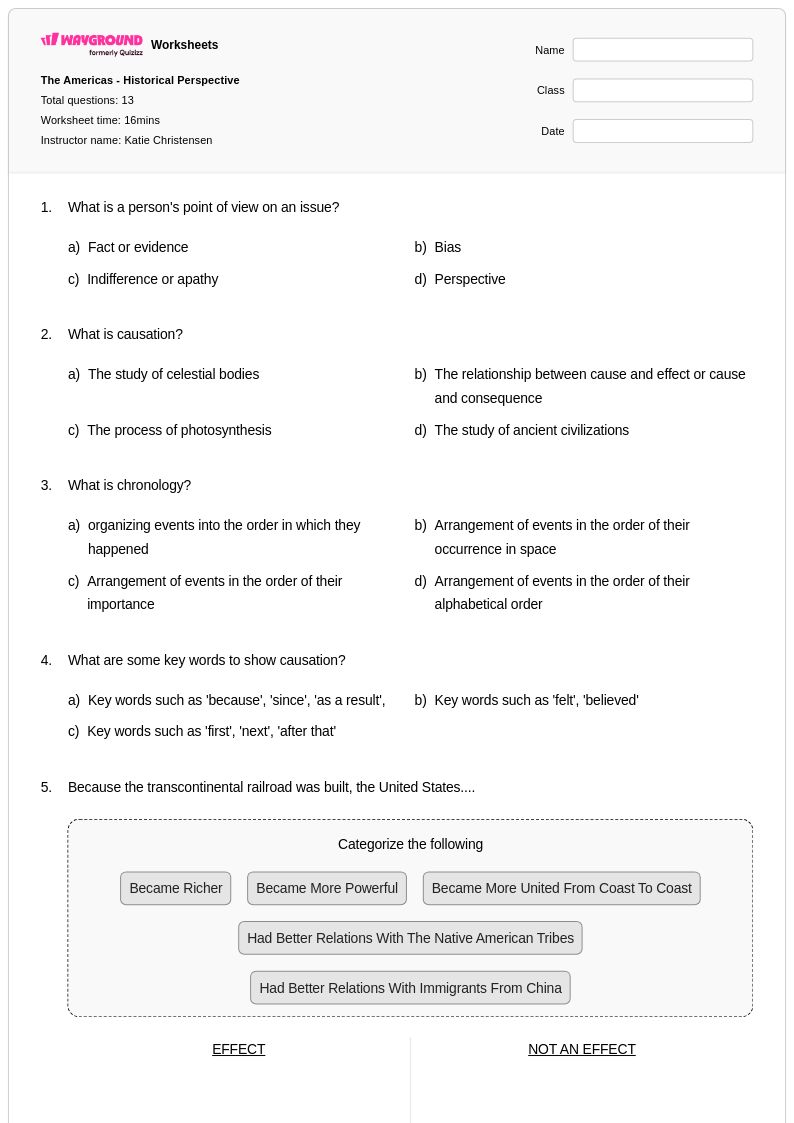
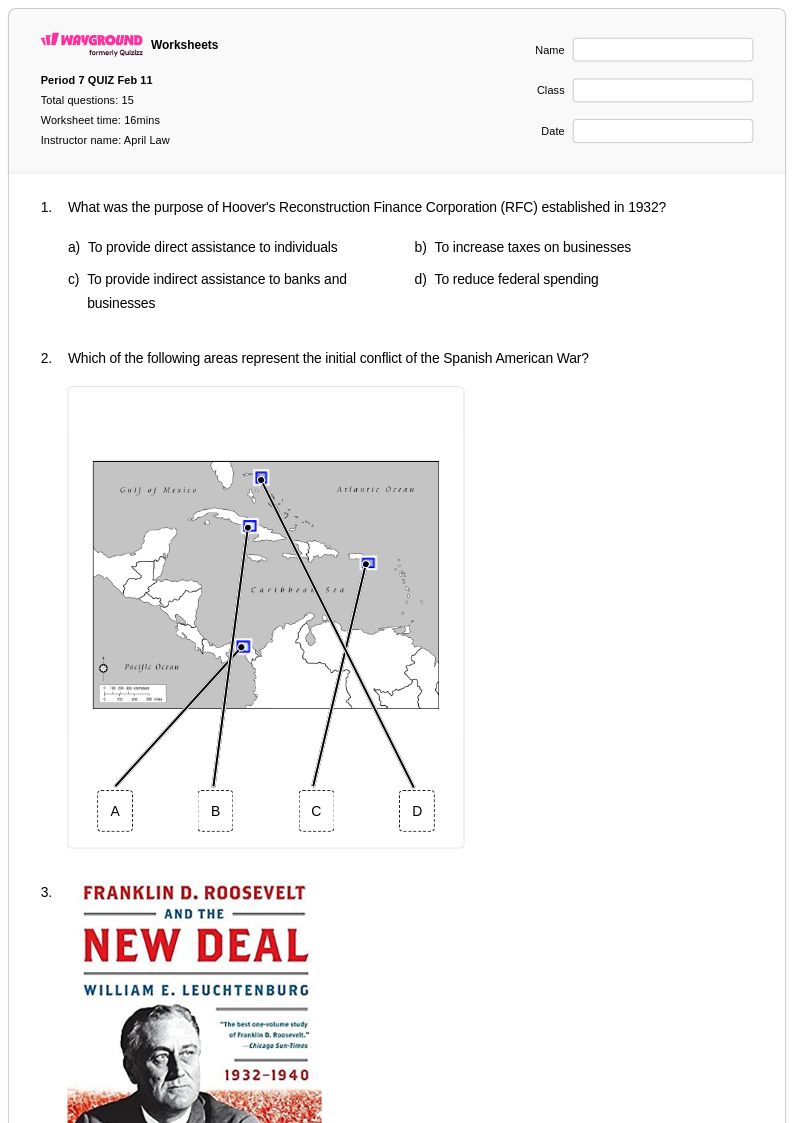
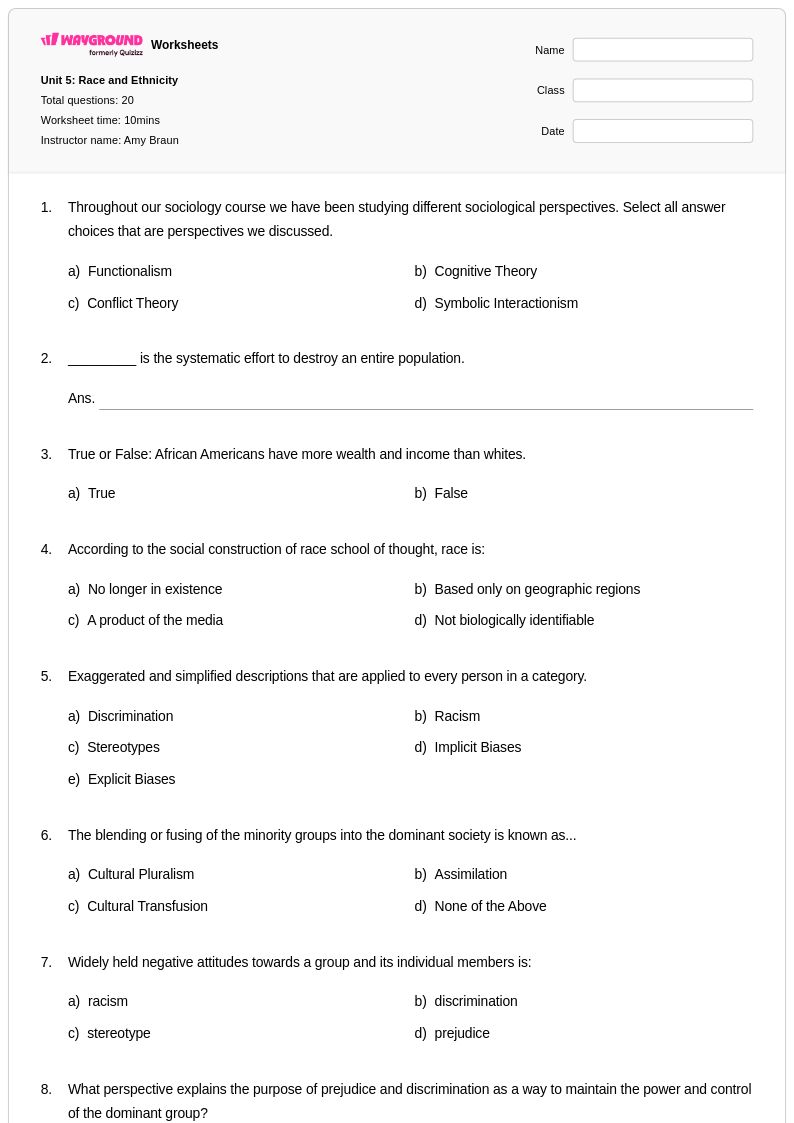
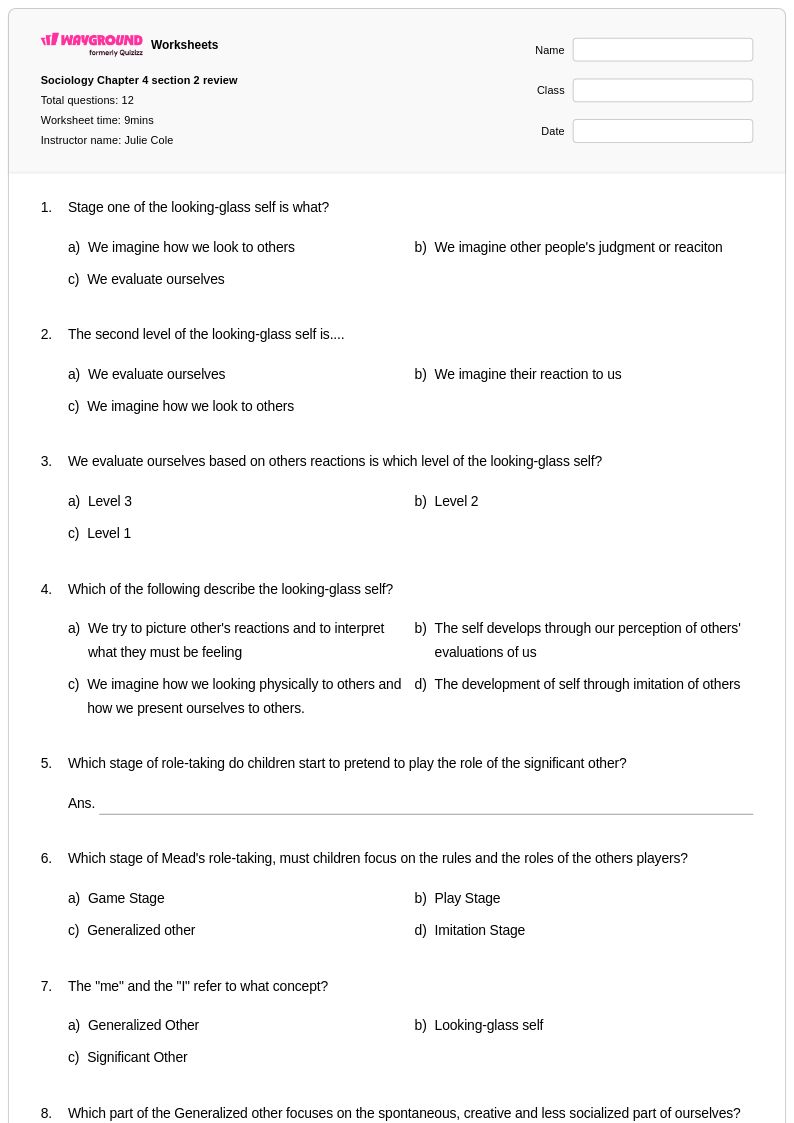
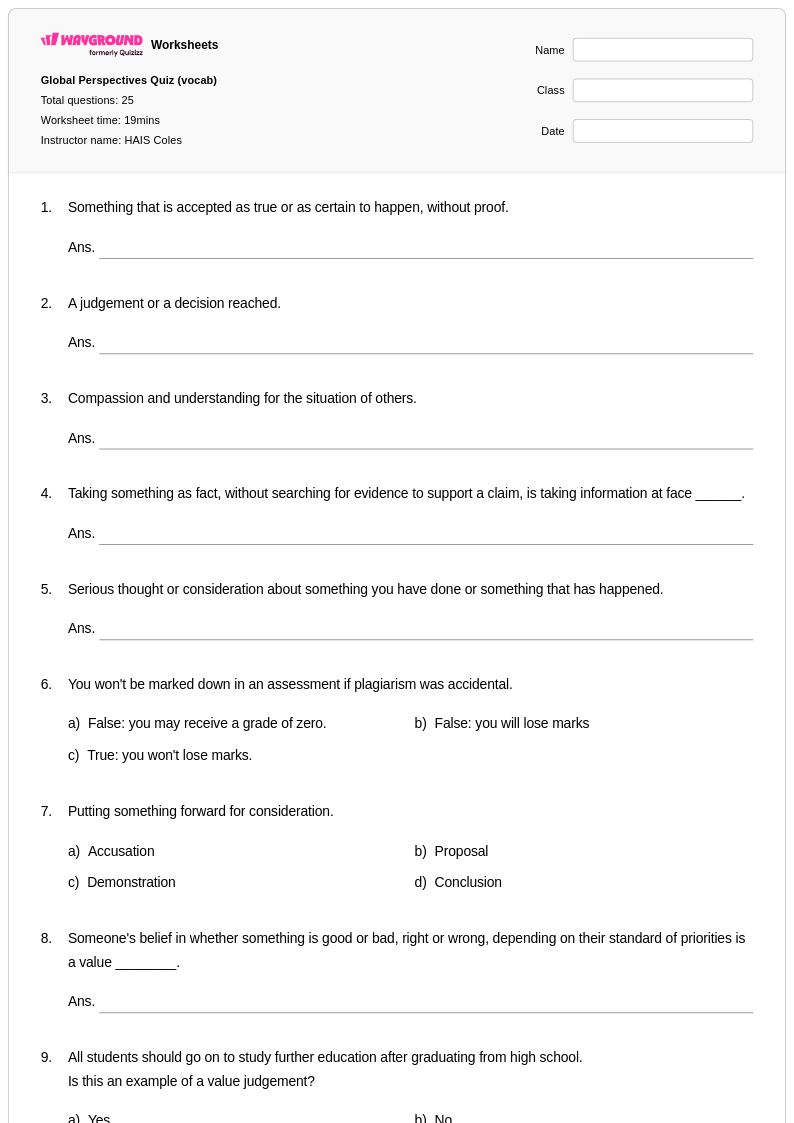
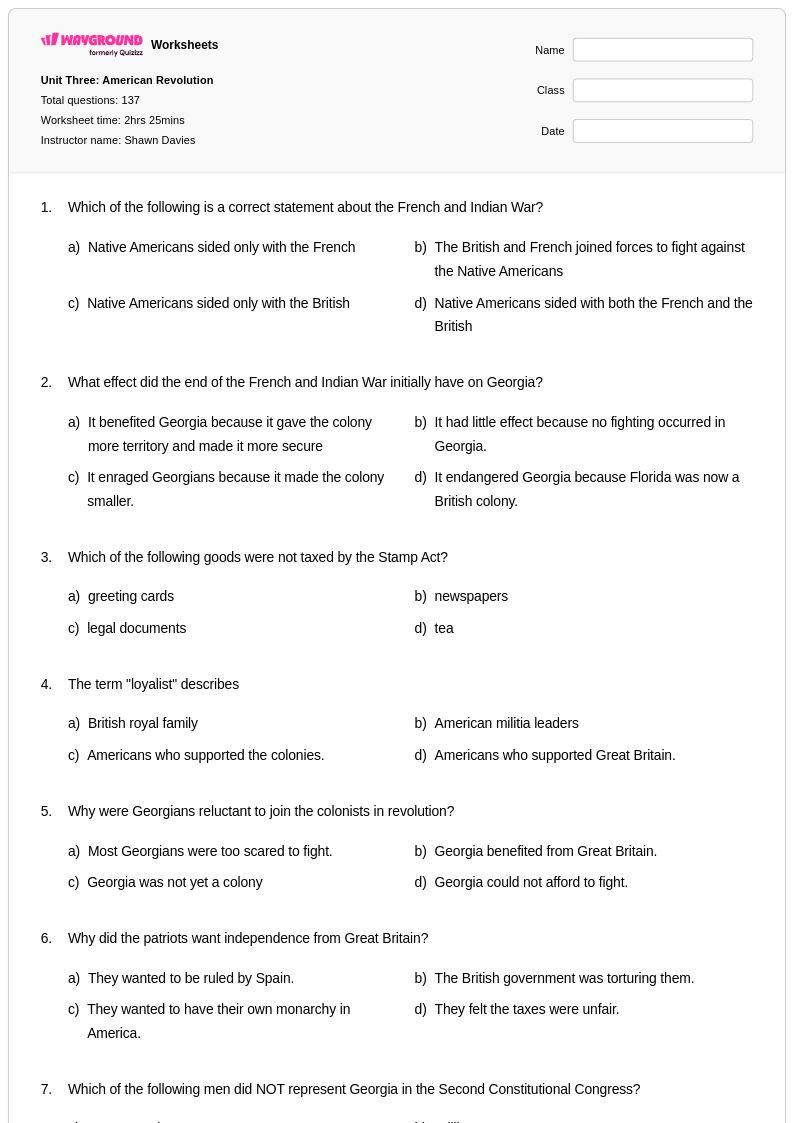
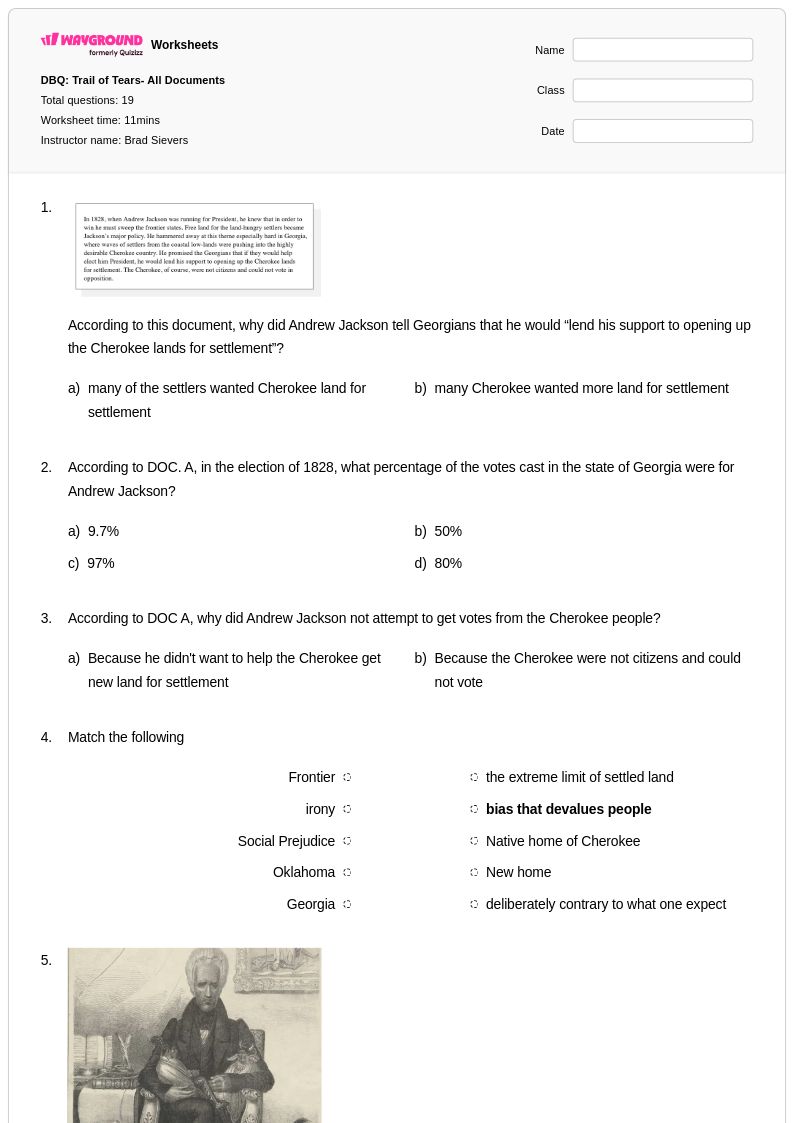
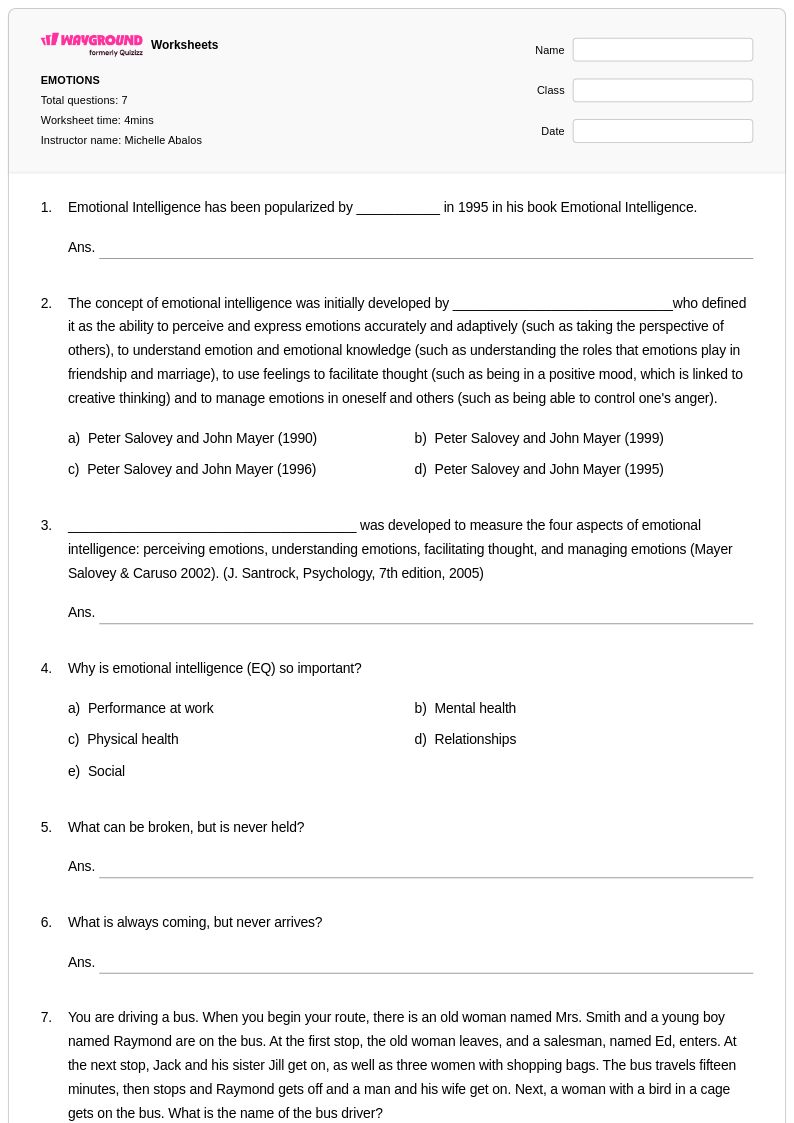
Develop empathy and understanding with our perspective taking social studies worksheets, featuring engaging printables and practice problems that help students learn to see situations from different viewpoints, complete with answer keys.
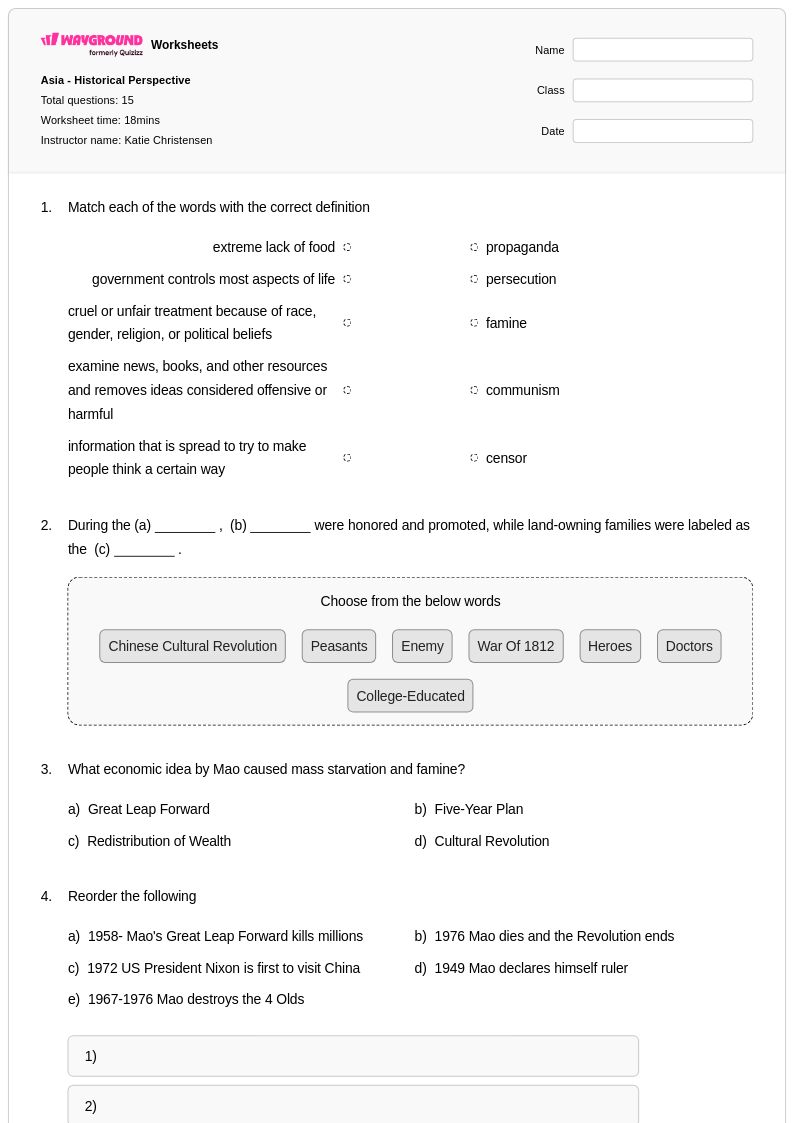
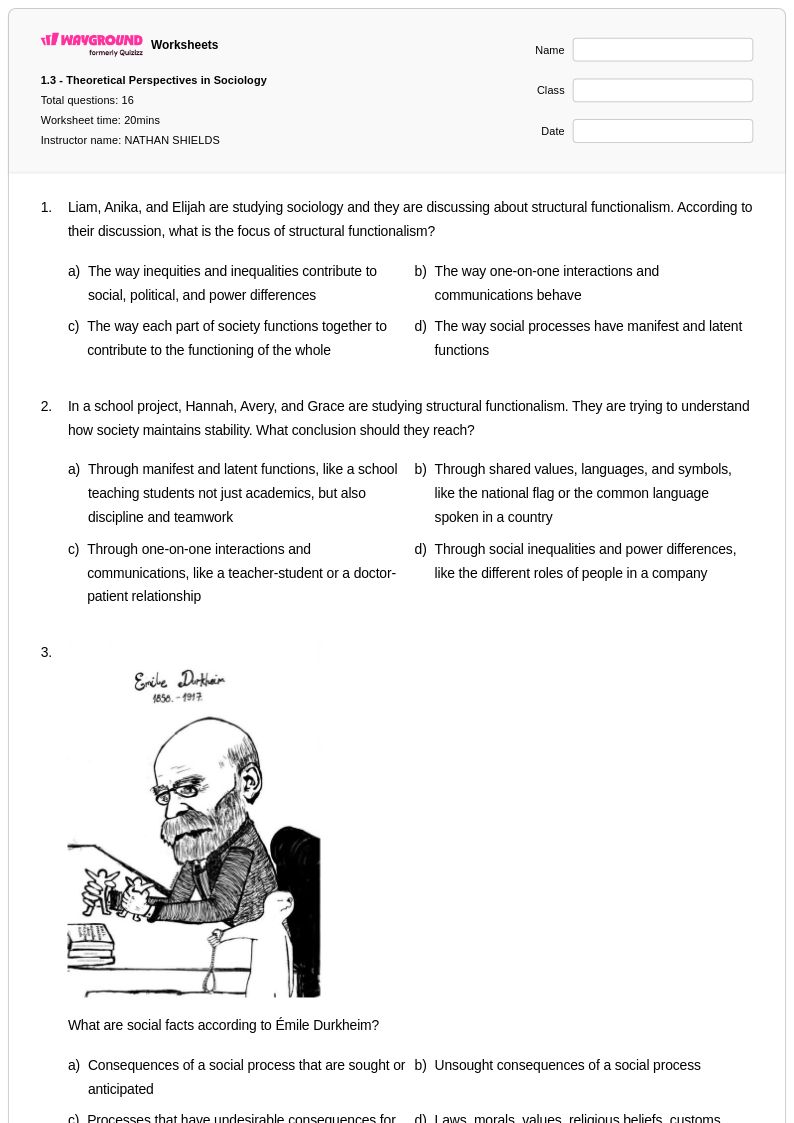
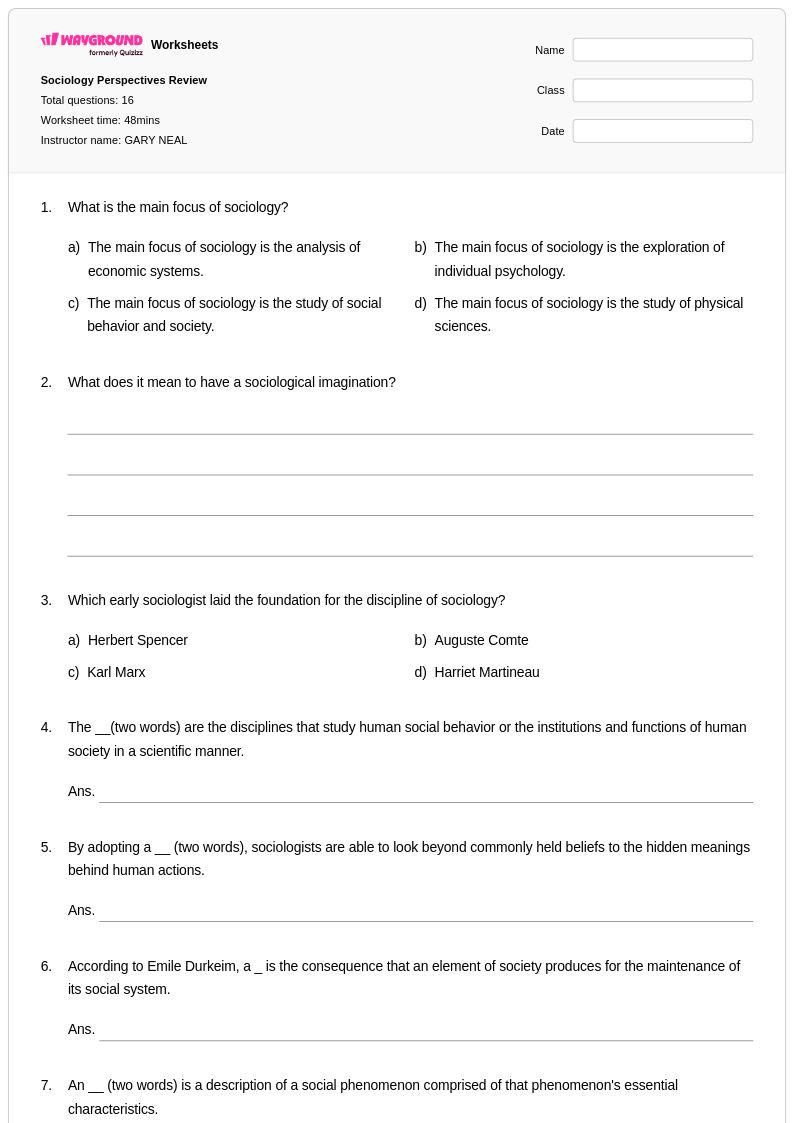
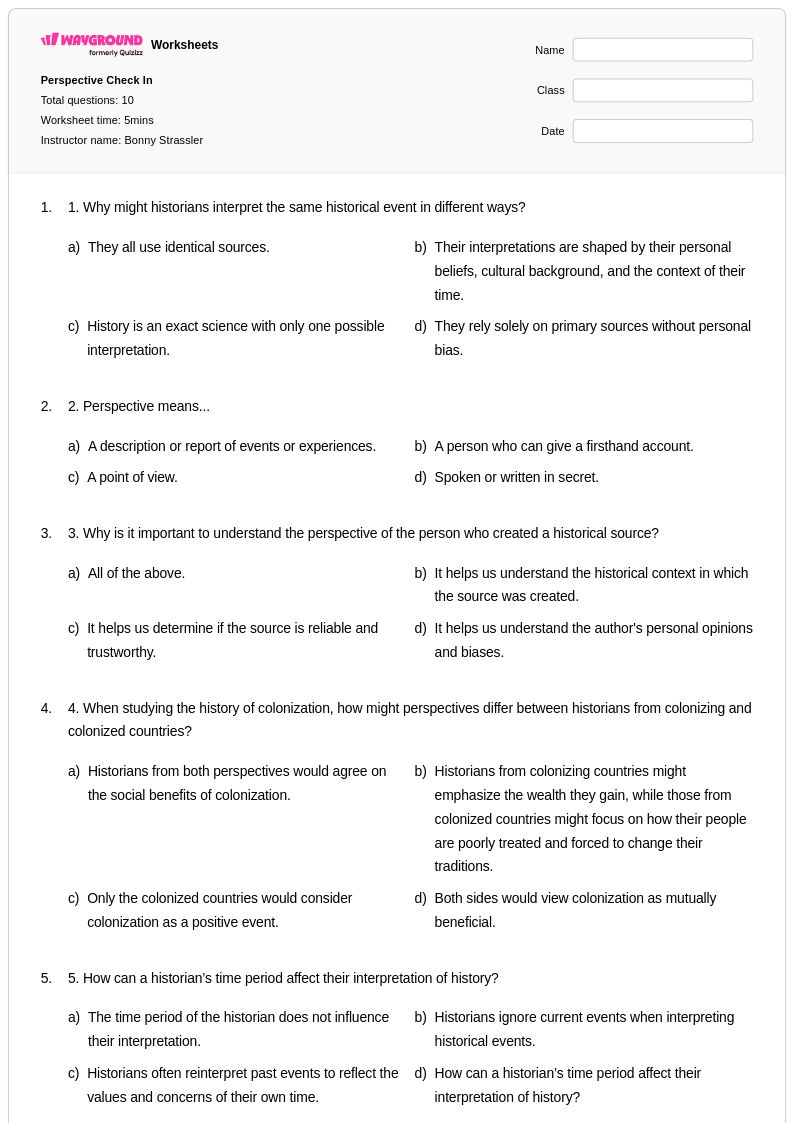
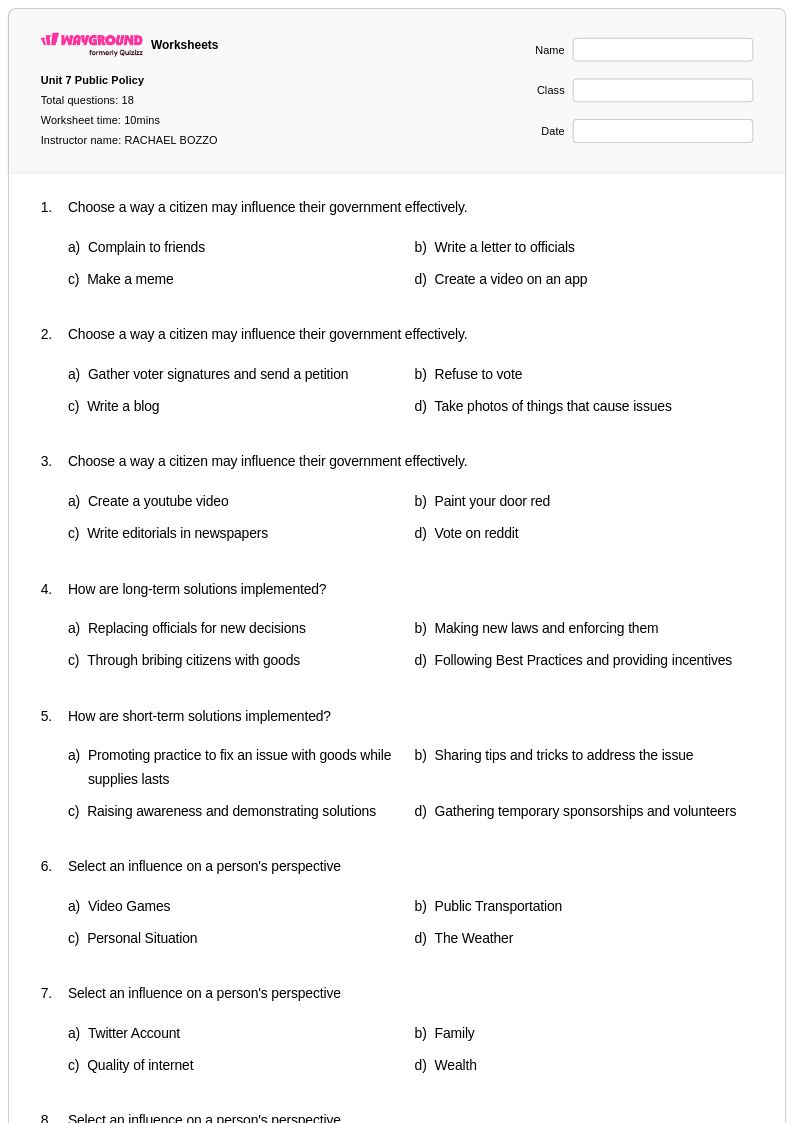
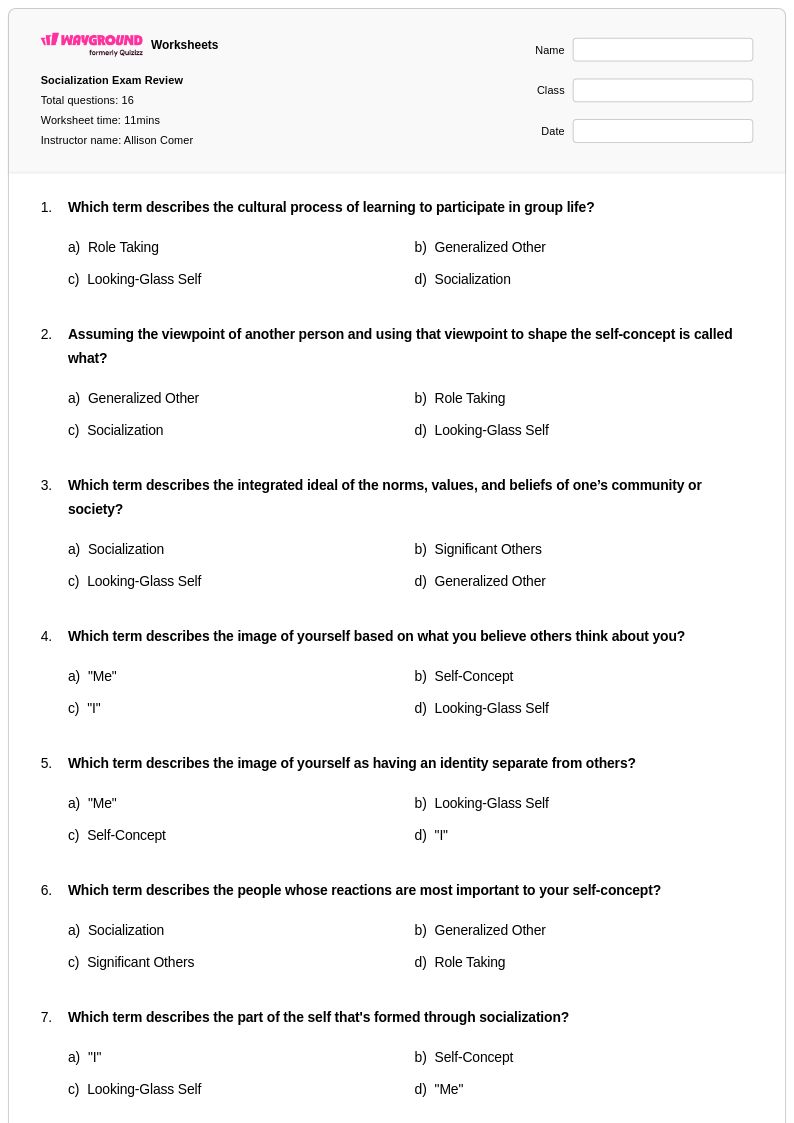
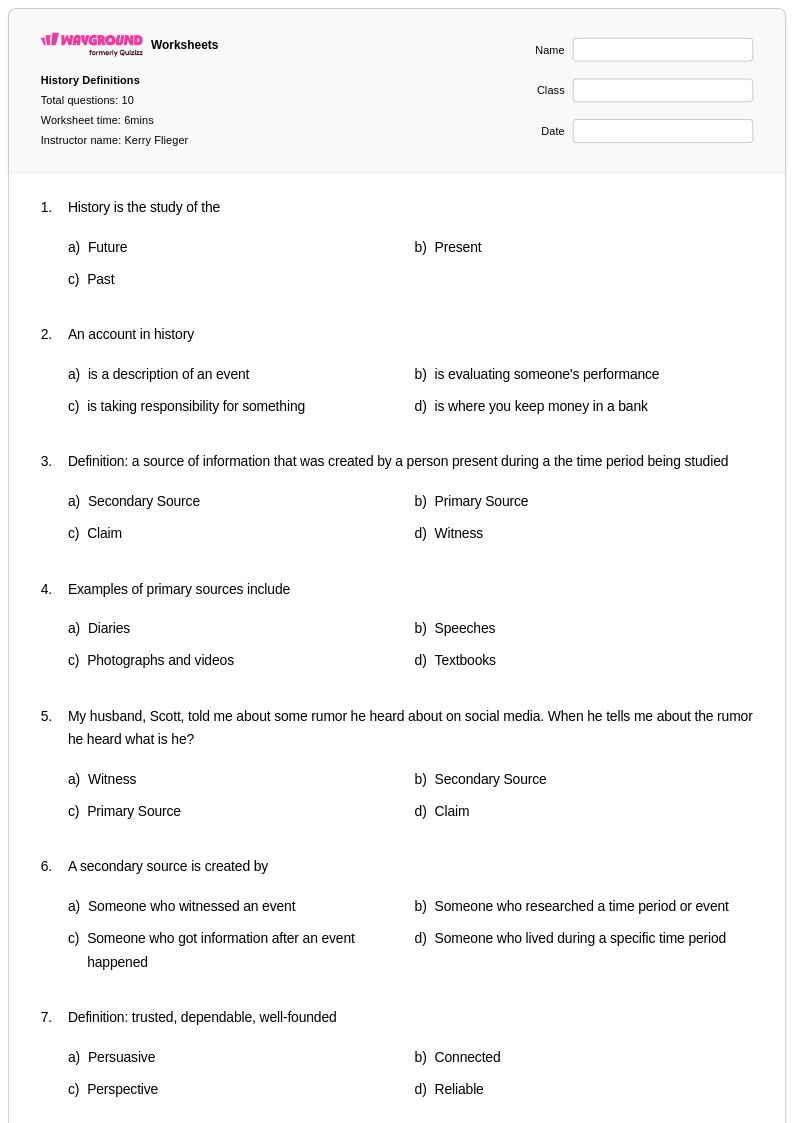
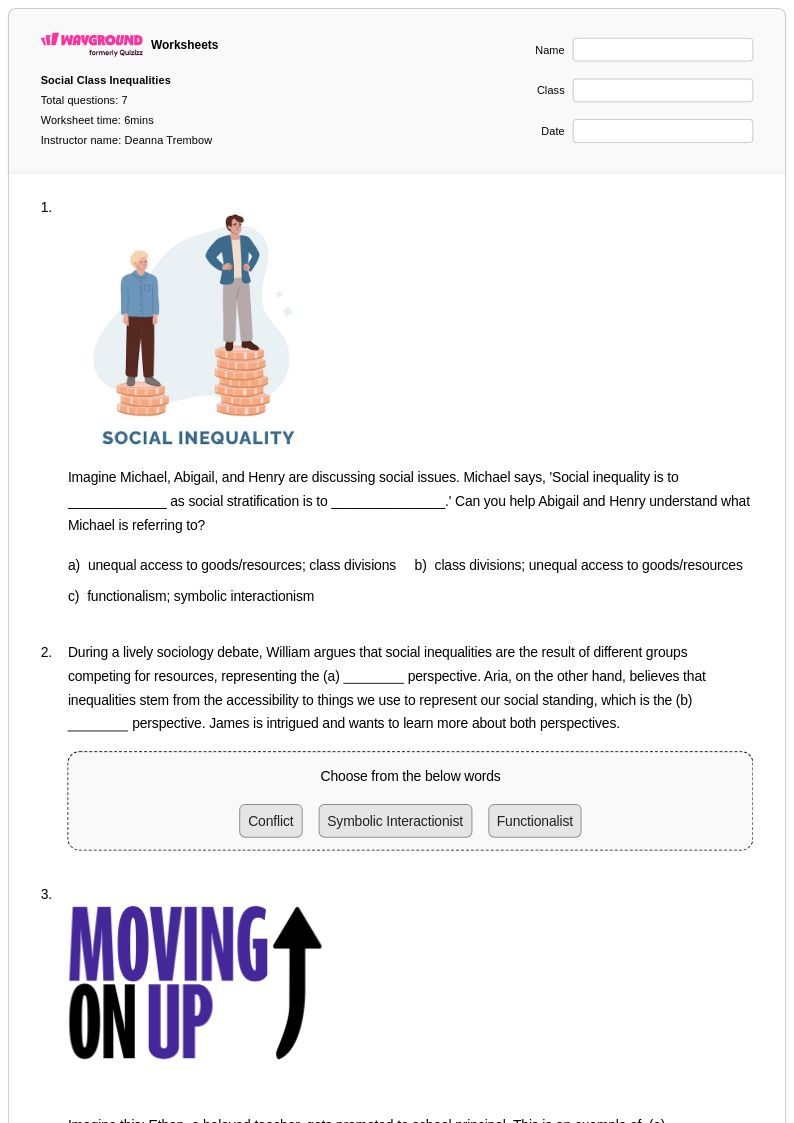
Perspective taking worksheets available through Wayground (formerly Quizizz) provide essential resources for developing students' ability to understand and consider different viewpoints in social situations. These comprehensive materials strengthen critical social skills by guiding learners through scenarios that require them to step into others' shoes and analyze situations from multiple angles. The worksheets feature practice problems that present real-world social dilemmas, encouraging students to examine how different individuals might perceive, feel about, or respond to the same situation. Each resource includes structured activities with answer keys to support both independent work and guided instruction, while the free printables offer educators flexibility in delivering lessons through pdf formats that can be easily distributed and completed.
Wayground (formerly Quizizz) empowers teachers with an extensive collection of millions of teacher-created perspective taking resources that streamline social studies instruction and social-emotional learning initiatives. The platform's robust search and filtering capabilities allow educators to quickly locate materials that align with specific learning objectives and classroom needs, while differentiation tools enable customization for diverse learners and skill levels. These worksheet collections are available in both printable and digital formats, including downloadable pdf versions, making them adaptable for various instructional settings and learning preferences. Teachers can leverage these resources for targeted skill practice, remediation support for students struggling with social awareness, enrichment activities for advanced learners, and comprehensive lesson planning that builds essential perspective taking abilities across different social contexts and academic scenarios.
FAQs
How do I teach perspective taking to students?
Perspective taking is best taught through structured exposure to social scenarios that require students to actively consider how another person thinks, feels, or responds. Effective strategies include role-playing exercises, guided reading of stories with morally complex characters, and facilitated class discussions where students must argue a viewpoint other than their own. Starting with concrete, relatable situations before moving to more abstract or unfamiliar social contexts helps scaffold the skill progressively.
What kinds of practice activities build perspective taking skills?
Worksheets that present real-world social dilemmas and ask students to write or select responses from another character's point of view are highly effective for building this skill. Structured activities that prompt students to identify a character's emotions, motivations, and likely reactions before comparing them to their own help reinforce the cognitive process behind perspective taking. Repetition across varied scenarios, from peer conflicts to community situations, deepens generalization of the skill.
What mistakes do students commonly make when learning perspective taking?
The most common error is egocentric projection, where students assume others think, feel, or want the same things they do. Students also frequently confuse empathy with agreement, believing that understanding someone's perspective means endorsing it. Another common misconception is focusing only on surface behavior rather than the underlying emotions or intentions driving a character's actions, which limits deeper social understanding.
How does perspective taking connect to social-emotional learning?
Perspective taking is a foundational social-emotional learning skill because it underlies empathy, conflict resolution, and cooperative behavior. Students who can accurately read and consider others' viewpoints are better equipped to navigate peer relationships, manage disagreements, and participate constructively in group settings. Integrating perspective taking practice into SEL instruction supports broader goals around self-awareness, social awareness, and responsible decision-making.
How can I use Wayground's perspective taking worksheets in my classroom?
Wayground's perspective taking worksheets are available as printable PDFs, making them easy to distribute for independent work, small group instruction, or homework, as well as in digital formats suited for technology-integrated classrooms. Each worksheet includes answer keys to support guided instruction and self-assessment. Teachers can also host these materials as a quiz directly on Wayground, enabling interactive digital delivery and immediate feedback for students.
How can I differentiate perspective taking instruction for students with different needs?
For students who struggle with social awareness, simplified scenarios with fewer variables and explicit emotion vocabulary support entry-level understanding. Advanced learners benefit from multi-layered dilemmas involving competing valid perspectives or cultural differences. On Wayground, teachers can apply accommodations such as Read Aloud, which reads questions aloud for students who need audio support, or reduced answer choices to lower cognitive load for students who find complex social reasoning challenging.