Free Printable Phonemes Worksheets for Kindergarten
Discover free kindergarten phonemes worksheets and printables that help young learners master individual speech sounds through engaging practice problems, complete with answer keys for effective phonics instruction.
Explore printable Phonemes worksheets for Kindergarten
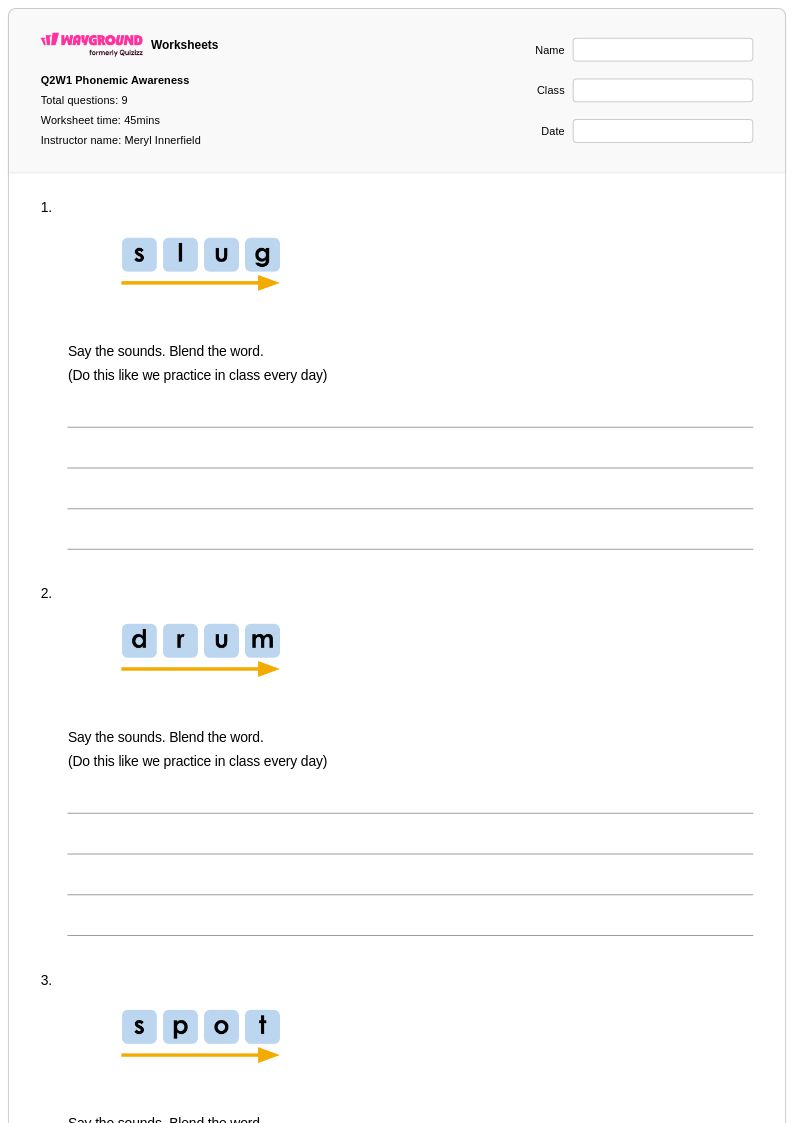
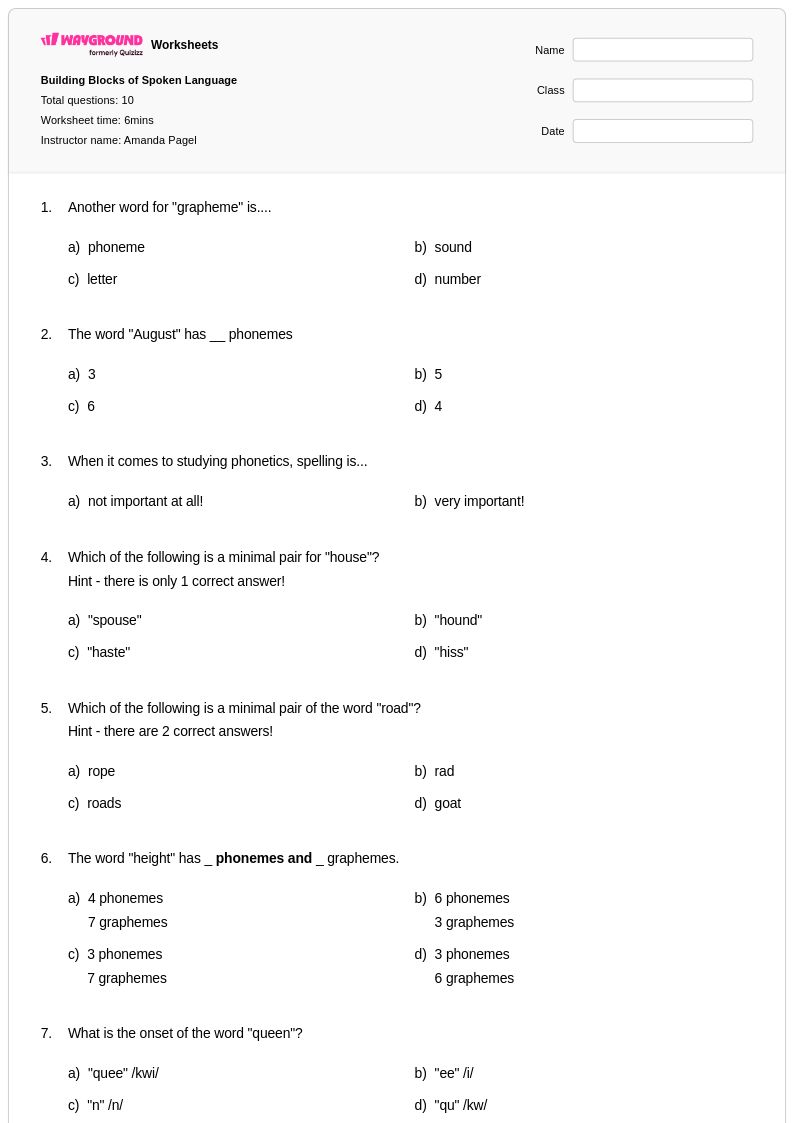
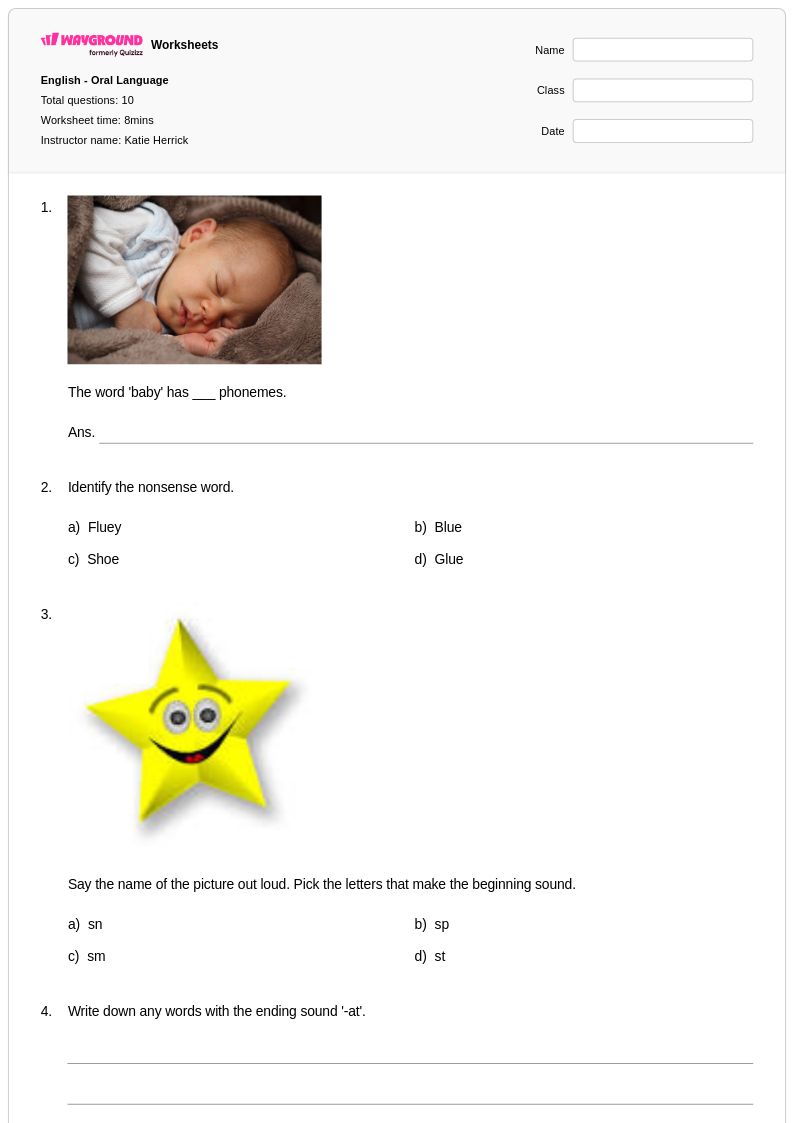
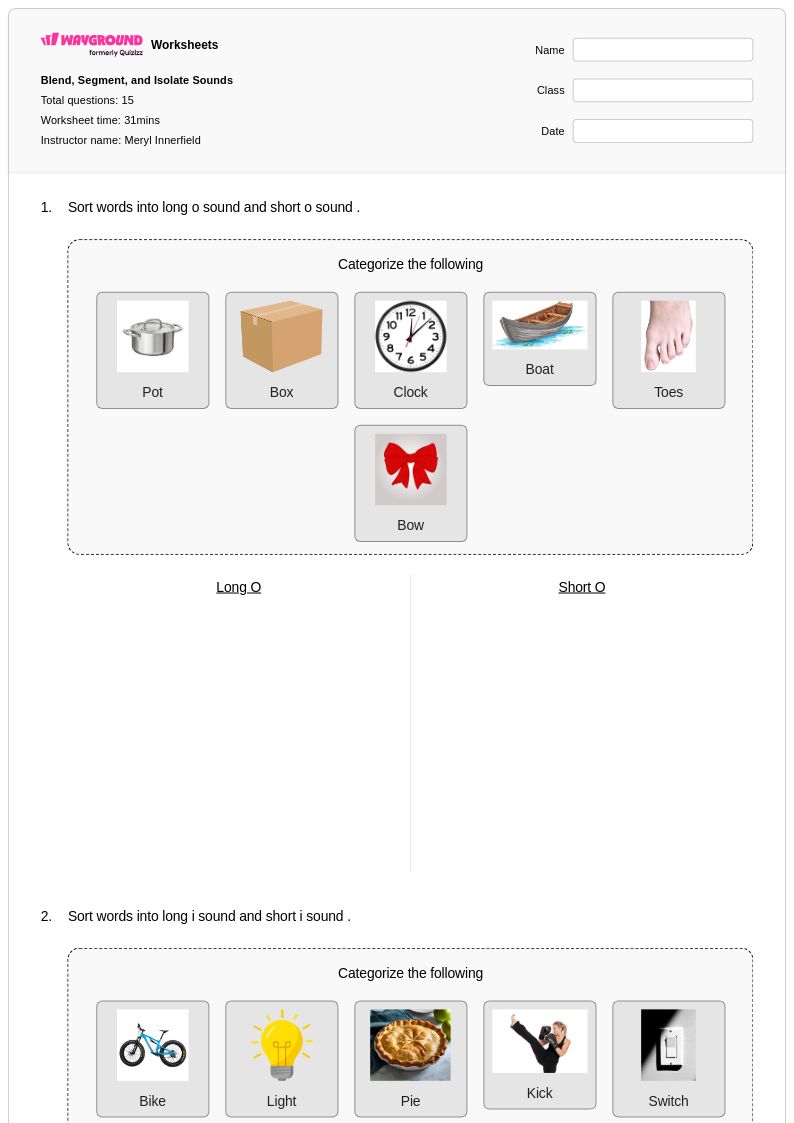
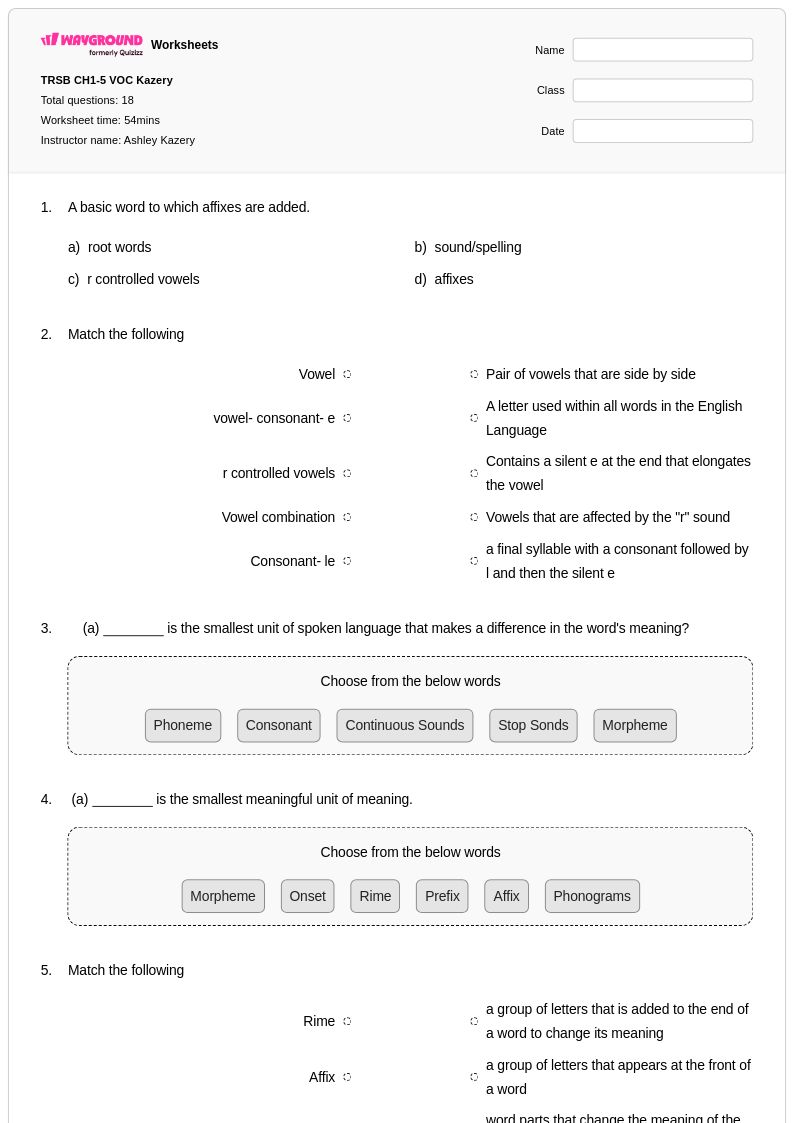
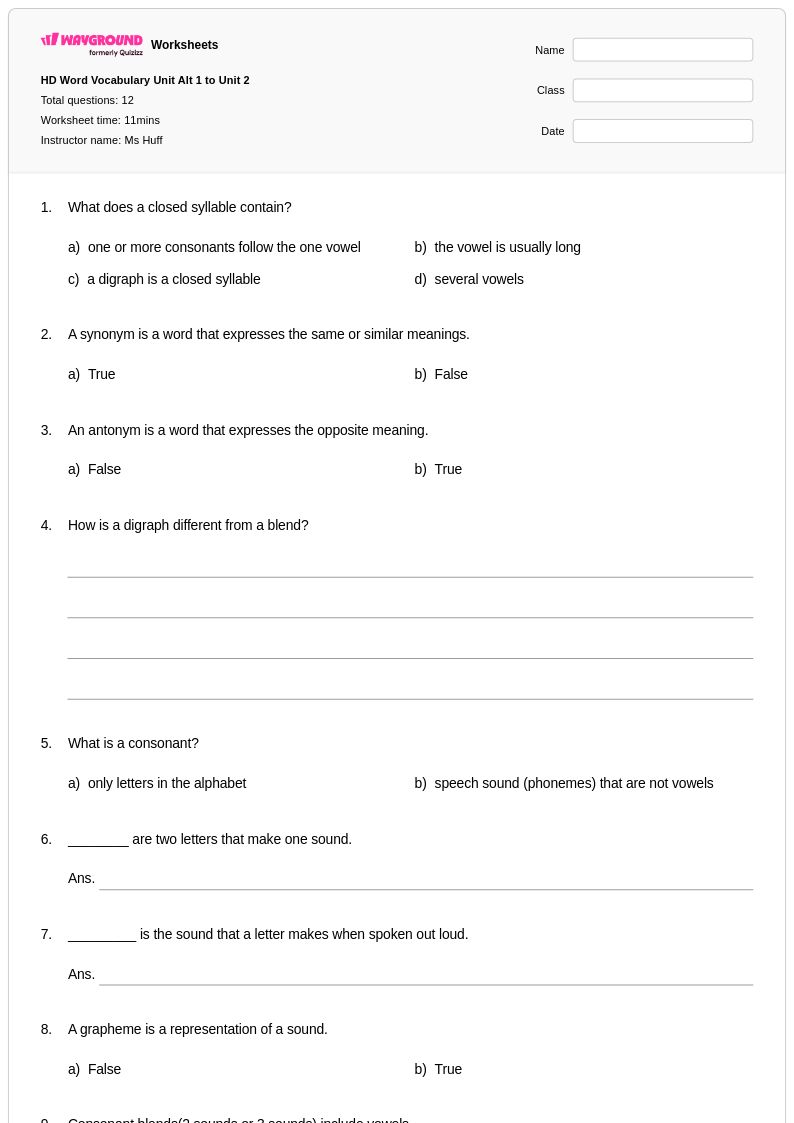
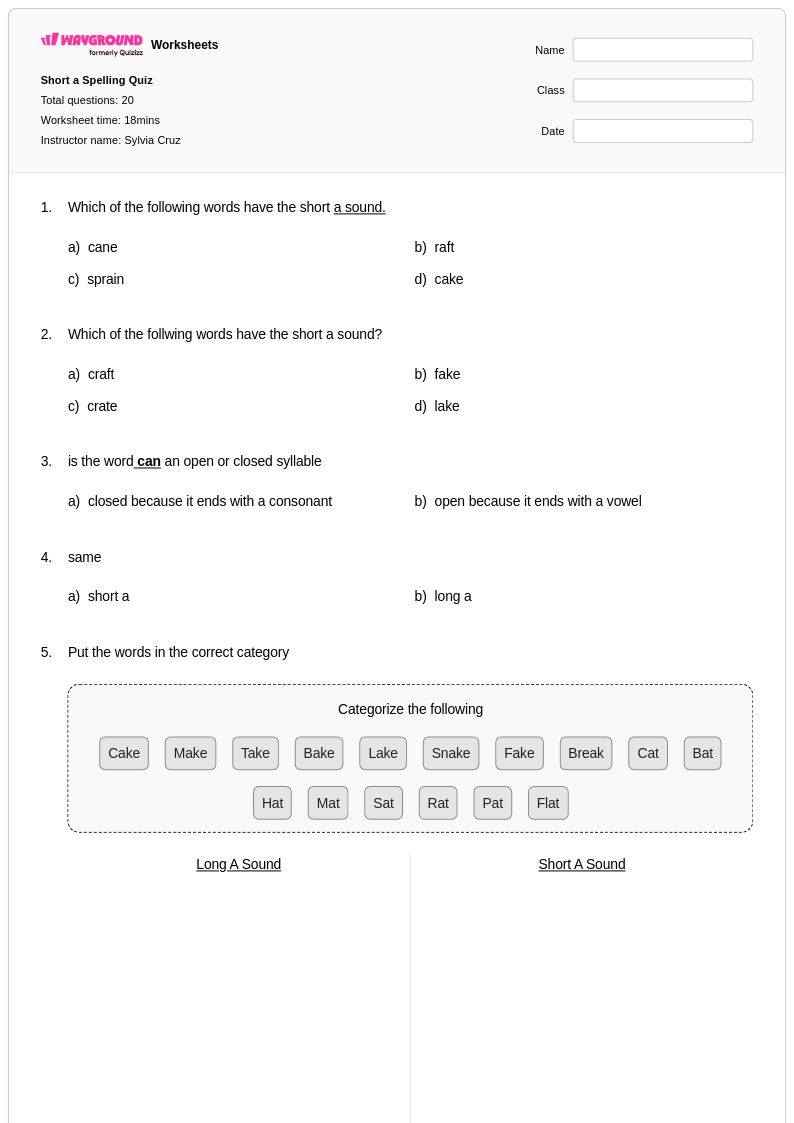
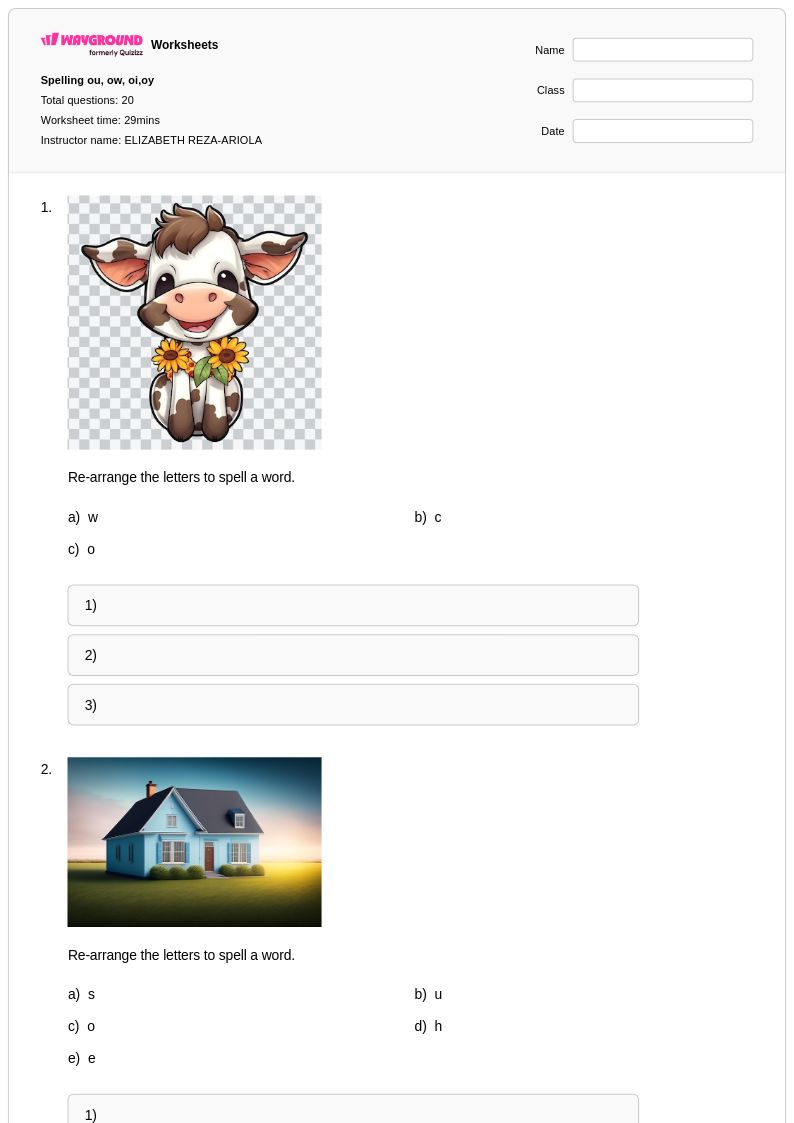
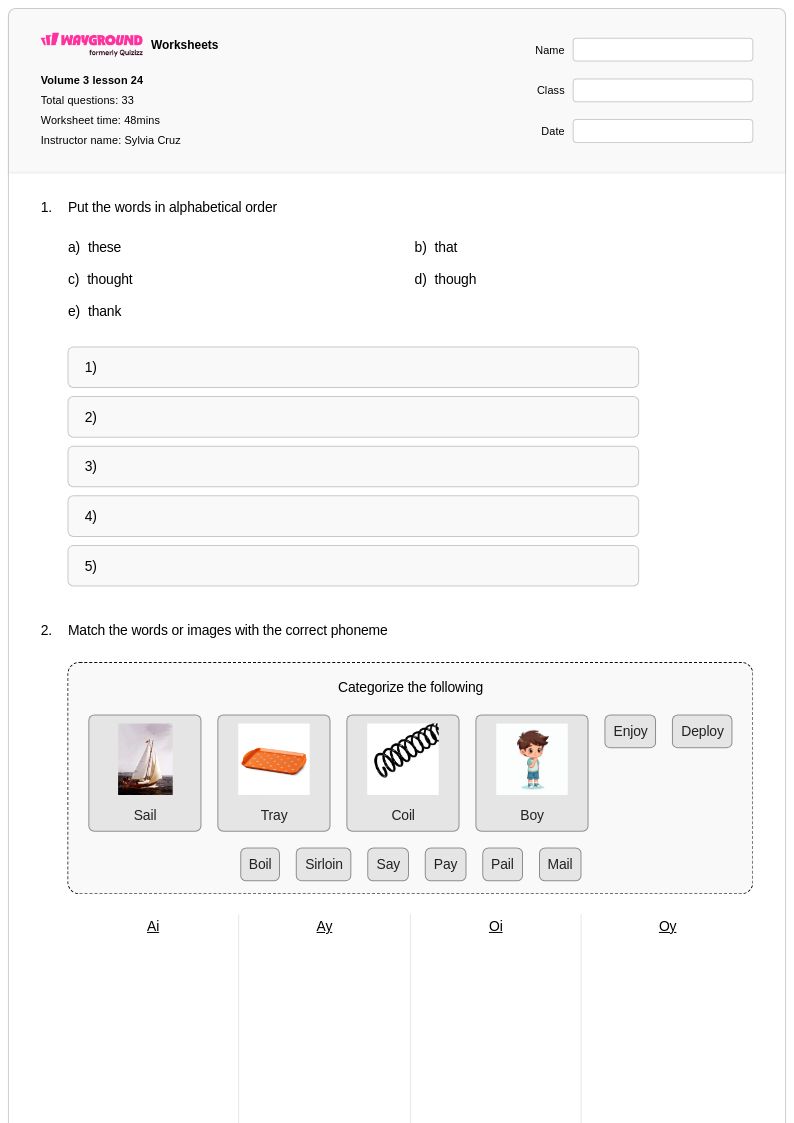
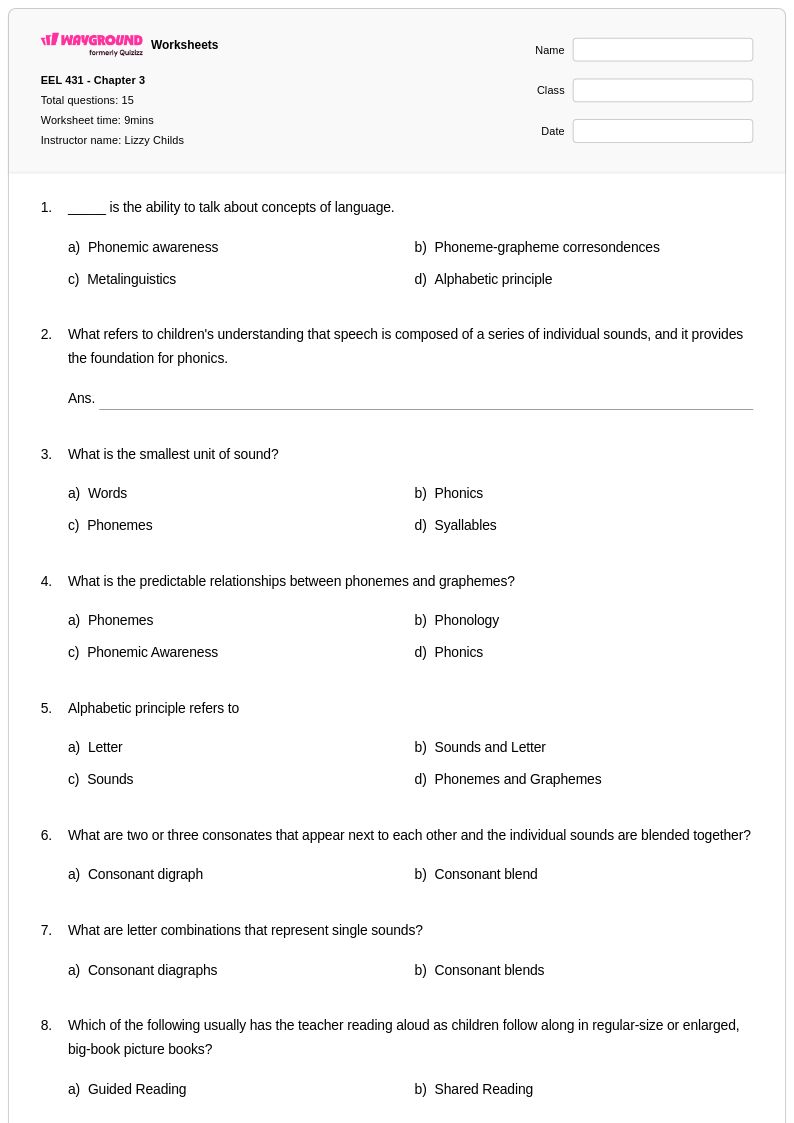
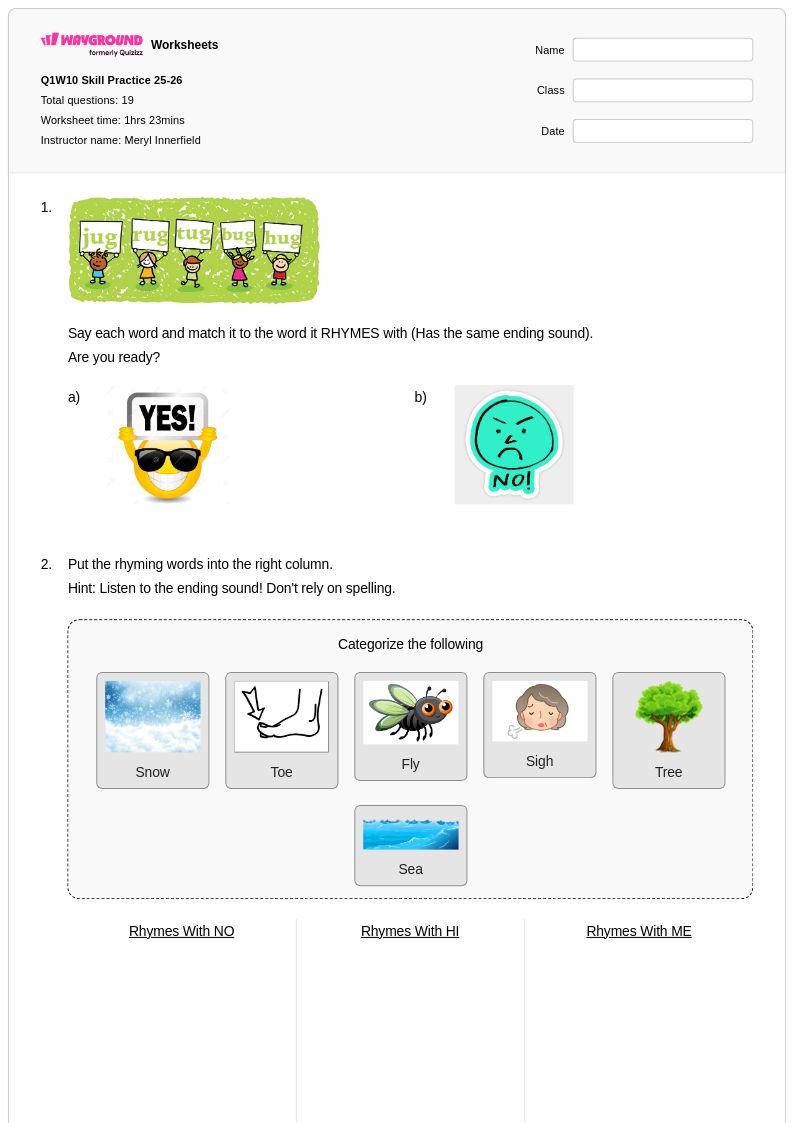
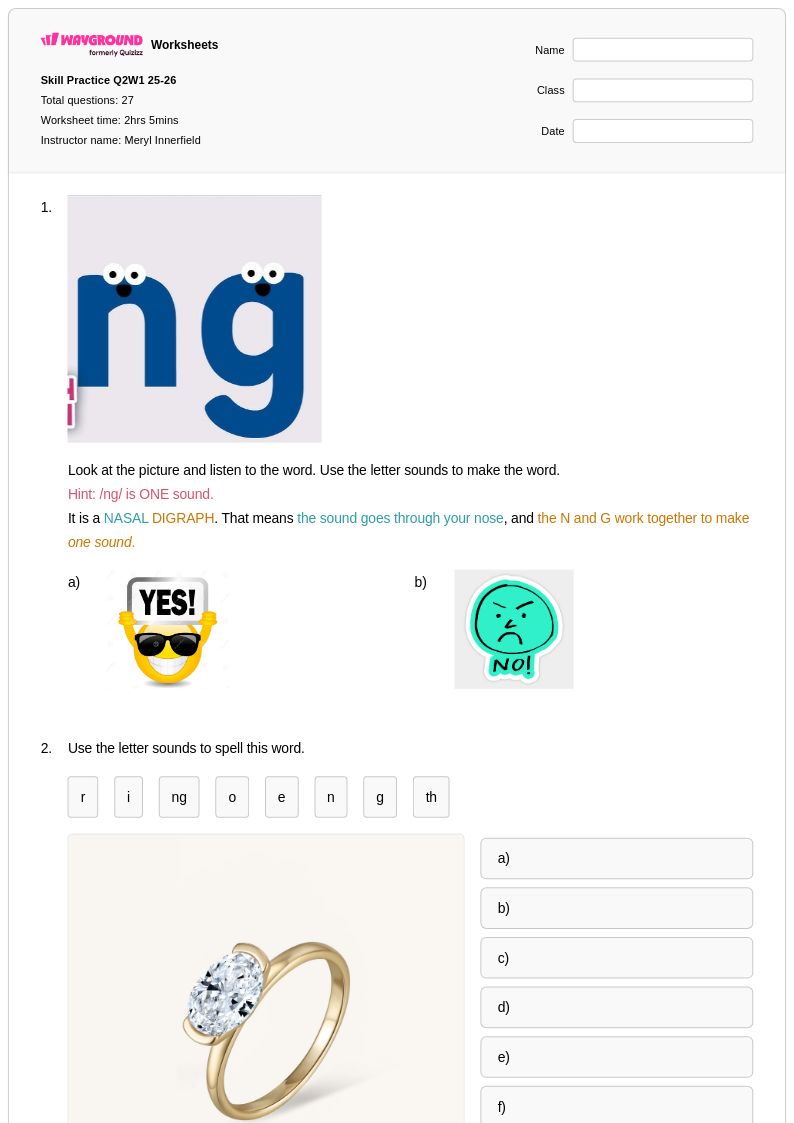
Phonemes worksheets for kindergarten students available through Wayground (formerly Quizizz) provide essential foundational practice in recognizing and manipulating the smallest units of sound in spoken language. These carefully designed printables strengthen young learners' phonemic awareness by focusing on skills such as identifying beginning, middle, and ending sounds in words, blending individual phonemes to form complete words, and segmenting spoken words into their component sounds. Each worksheet collection includes comprehensive answer keys and offers structured practice problems that progress systematically from simple sound identification to more complex phoneme manipulation tasks. Teachers can access these free resources in convenient PDF format, making them ideal for both classroom instruction and take-home practice to reinforce critical pre-reading skills.
Wayground (formerly Quizizz) empowers educators with millions of teacher-created phonemes worksheets specifically aligned to kindergarten learning standards and developmental needs. The platform's robust search and filtering capabilities allow teachers to quickly locate materials that match their students' current skill levels, while differentiation tools enable seamless customization for learners requiring additional support or enrichment opportunities. These versatile resources are available in both printable PDF format and interactive digital versions, providing flexibility for diverse classroom environments and learning preferences. Teachers can efficiently plan targeted phonemic awareness lessons, implement remediation strategies for struggling readers, and offer extended practice opportunities that build the strong sound-symbol foundations essential for future reading success.
FAQs
How do I teach phonemes to early readers?
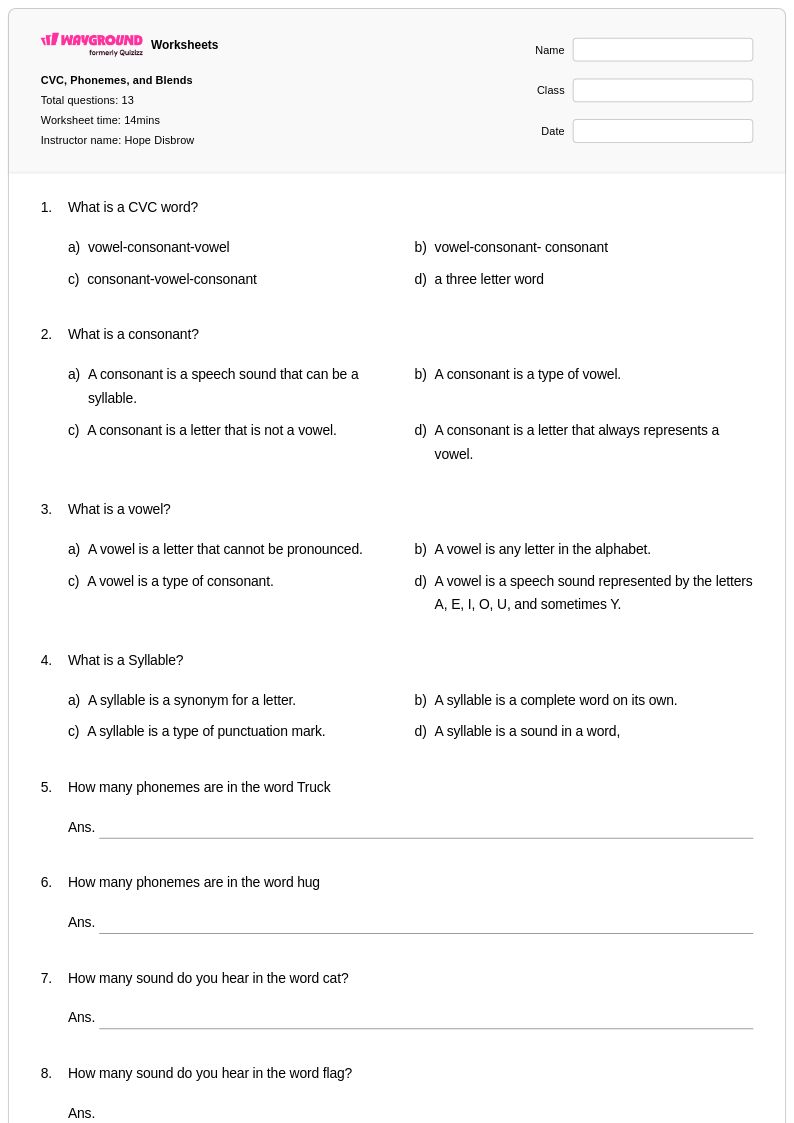
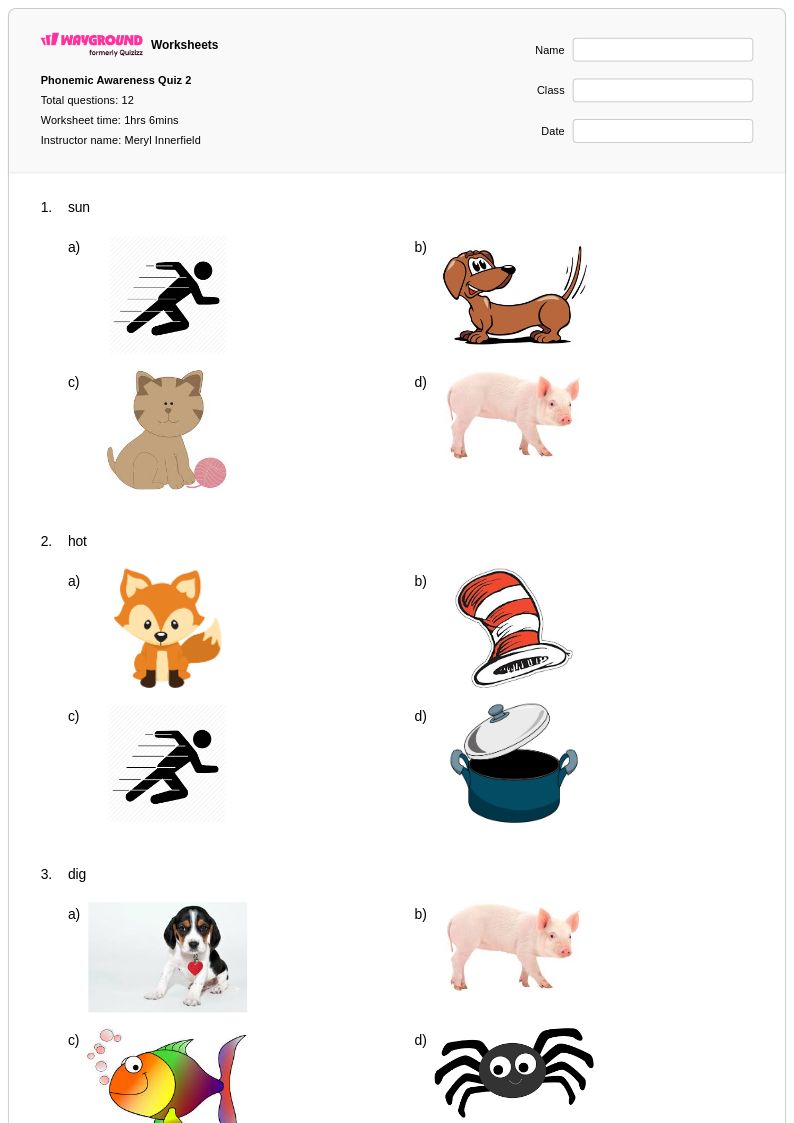
Teaching phonemes effectively begins with helping students hear individual sounds in spoken words before connecting them to letters. Start with simple CVC words and use activities that ask students to isolate the first, middle, or final sound. Gradually progress to blending and segmenting tasks, which build the auditory processing skills children need for decoding. Consistent, structured practice with one or two phonemes at a time is more effective than broad exposure.
What exercises help students practice phoneme blending and segmentation?
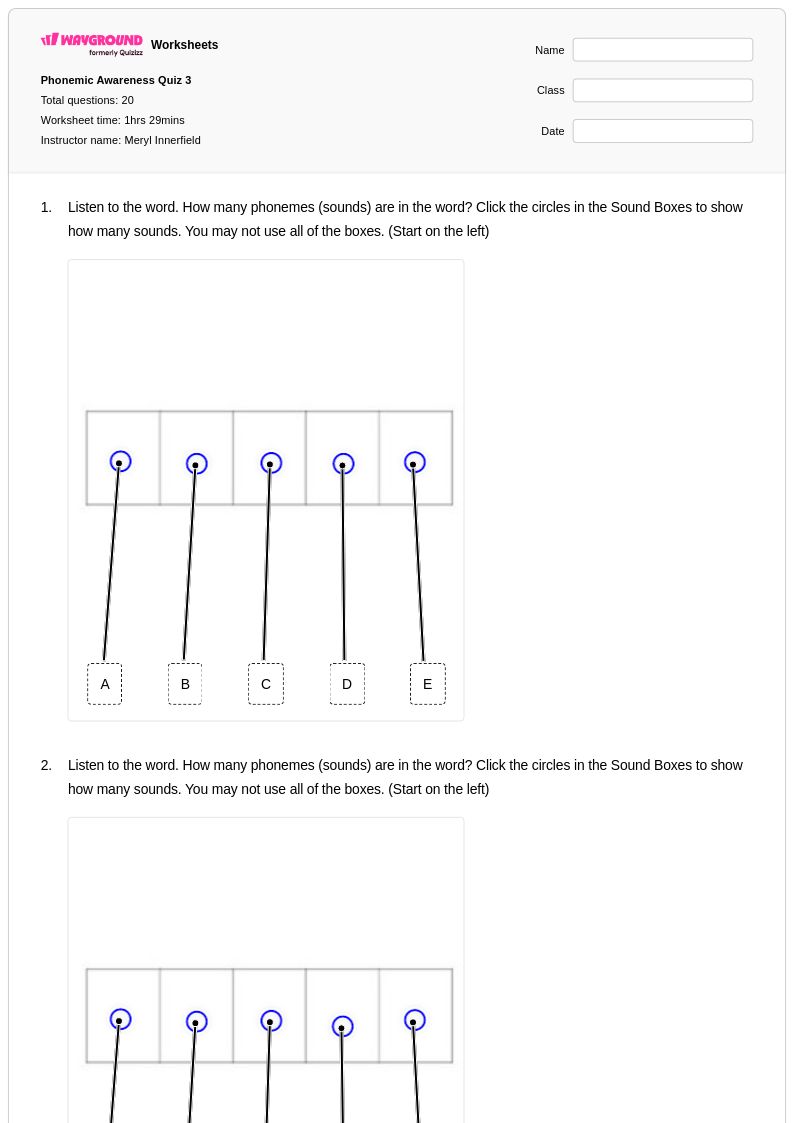
Phoneme blending exercises ask students to listen to separate sounds and push them together to form a word, while segmentation tasks do the reverse by having students break a spoken word into its individual sounds. Practical exercises include Elkonin sound boxes, clapping or tapping syllables, and oral blending drills with picture prompts. Worksheets that progress from two-phoneme to four-phoneme words allow students to build complexity incrementally, which deepens phonemic awareness over time.
What mistakes do students commonly make when learning to identify phonemes?
A frequent error is confusing phonemes with syllables — students may segment 'cat' into two parts instead of three distinct sounds. Another common mistake is conflating letter names with sounds, especially with vowels, which leads to inconsistent decoding. Students also struggle to isolate medial vowel sounds because they are less perceptually salient than initial or final consonants. Teachers should watch for these patterns during assessment and address them with targeted sound isolation practice.
How do I use phonemes worksheets in my classroom?
Phonemes worksheets on Wayground are available as printable PDFs and in digital formats, making them suitable for whole-group lessons, small-group intervention, and independent practice stations. Teachers can distribute printed versions for hands-on work or assign the digital format for technology-integrated settings, including hosting them as a quiz directly on Wayground. Using both formats across a week gives students varied exposure to phoneme-level tasks while accommodating different learning environments. Answer keys are included, so the worksheets also work efficiently for self-paced or homework practice.
How can I differentiate phoneme practice for students at different skill levels?
Differentiation for phoneme practice means adjusting both the complexity of the sound tasks and the level of support provided. Beginning students may need to work only on initial sound isolation, while more advanced students can tackle phoneme substitution or deletion tasks. On Wayground, teachers can apply accommodations such as Read Aloud, which provides audio support for students who struggle with print, and reduced answer choices to lower cognitive load for learners who need it. These settings can be applied to individual students without affecting the experience of the rest of the class.
How is phonemic awareness different from phonics, and why does it matter for worksheet selection?
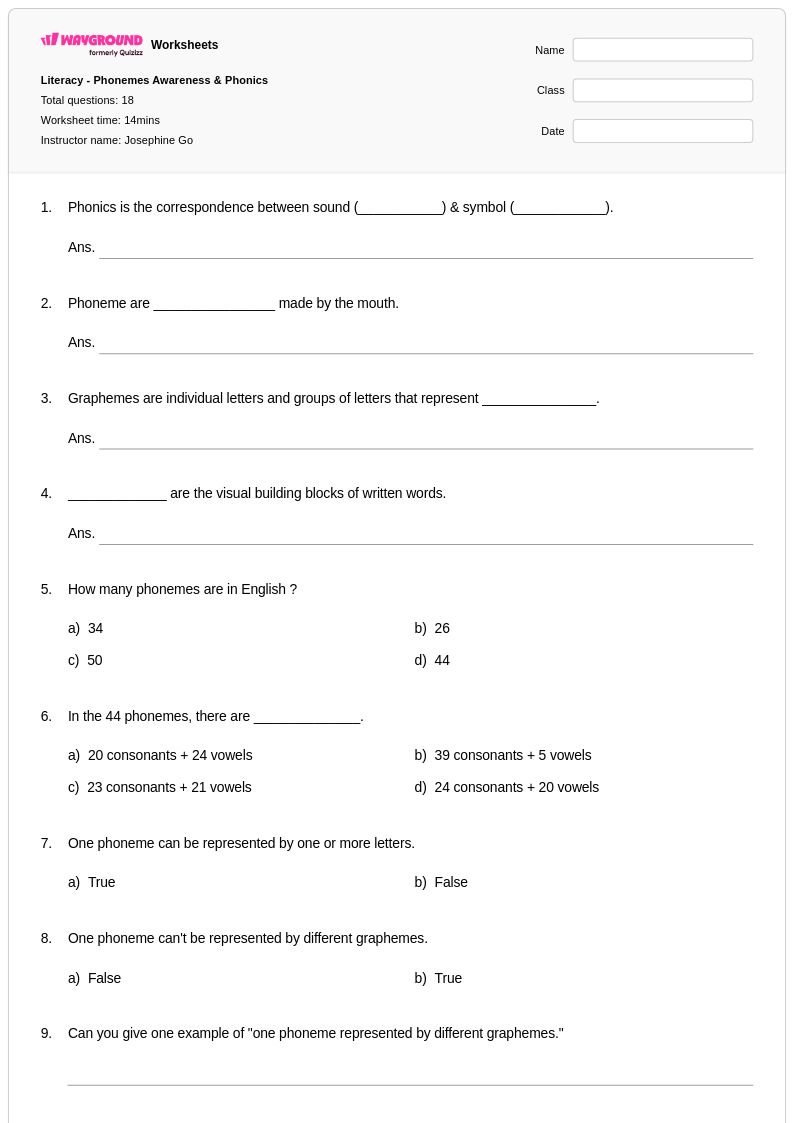
Phonemic awareness is an entirely oral and auditory skill — it involves hearing and manipulating sounds in spoken words with no letters involved. Phonics, by contrast, connects those sounds to written symbols. This distinction matters when selecting worksheets because students who cannot yet hear individual phonemes are not ready for phonics instruction. Choosing worksheets that focus specifically on sound identification, blending, and segmentation — rather than letter-sound correspondence — targets the correct developmental skill.