Free Printable Physical and Chemical Properties Worksheets for Grade 4
Discover free Grade 4 physical and chemical properties worksheets and printables that help students identify, compare, and classify matter's characteristics through engaging practice problems with complete answer keys.
Explore printable Physical and Chemical Properties worksheets for Grade 4
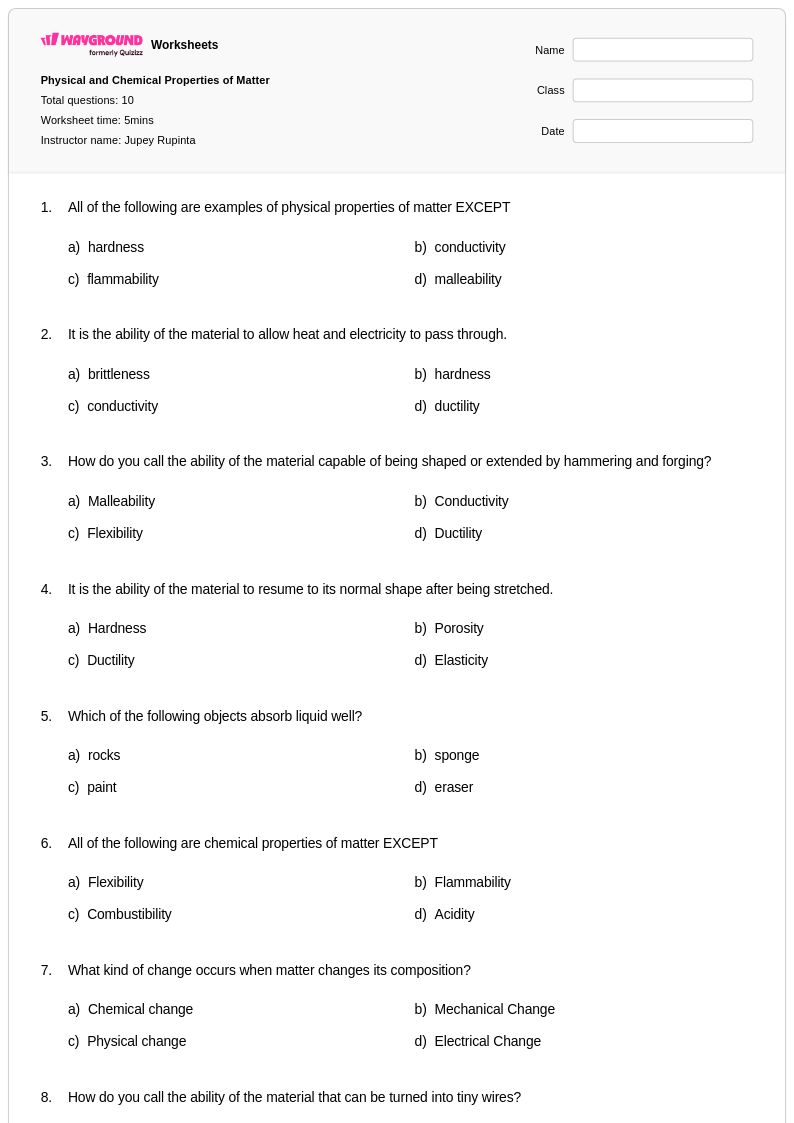
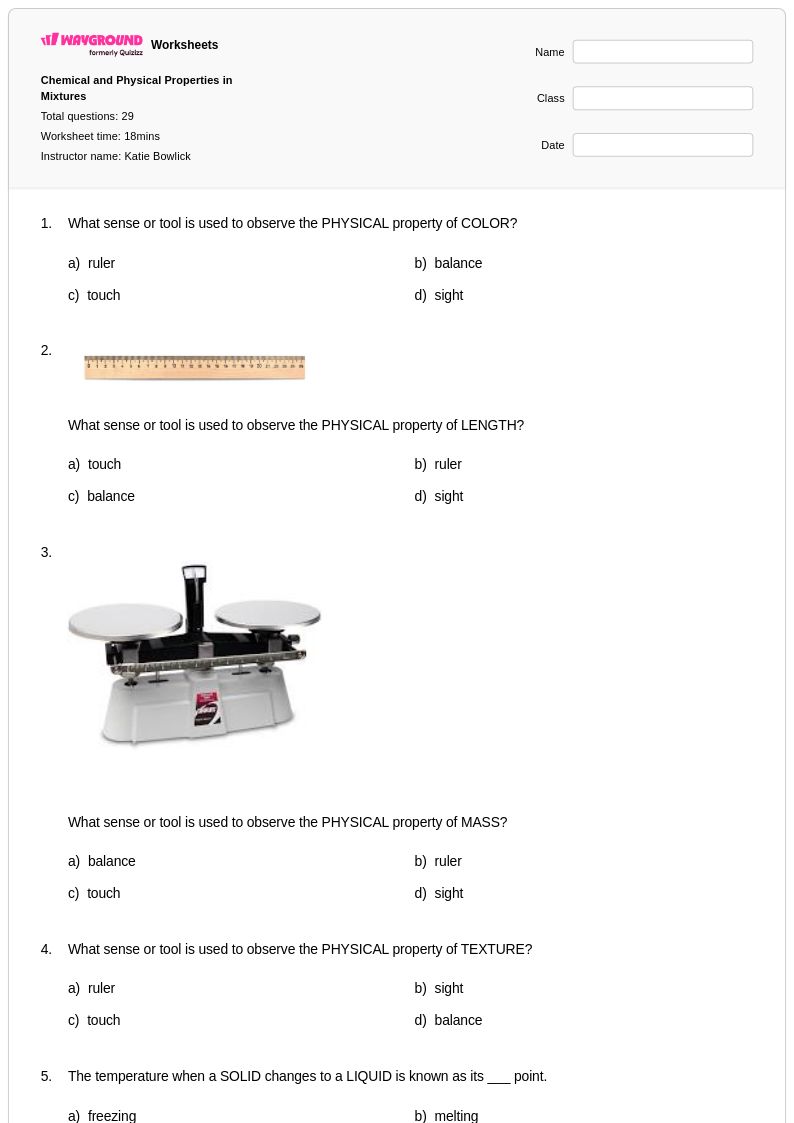
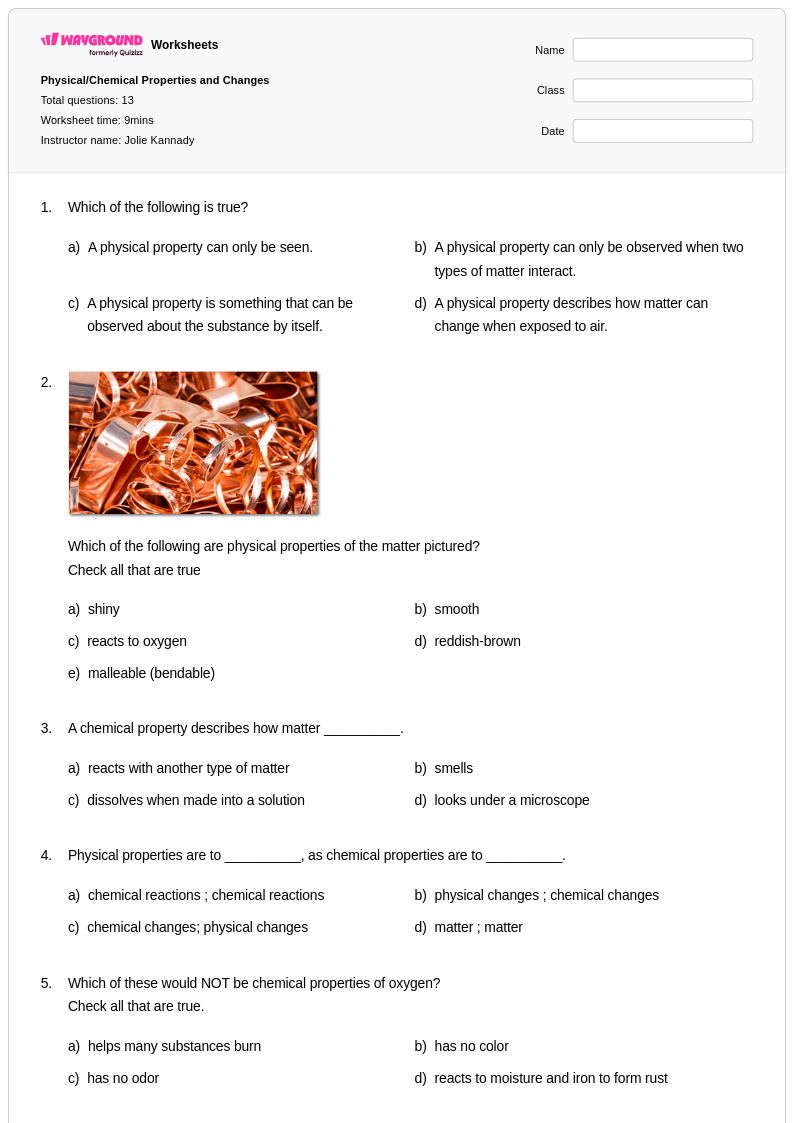
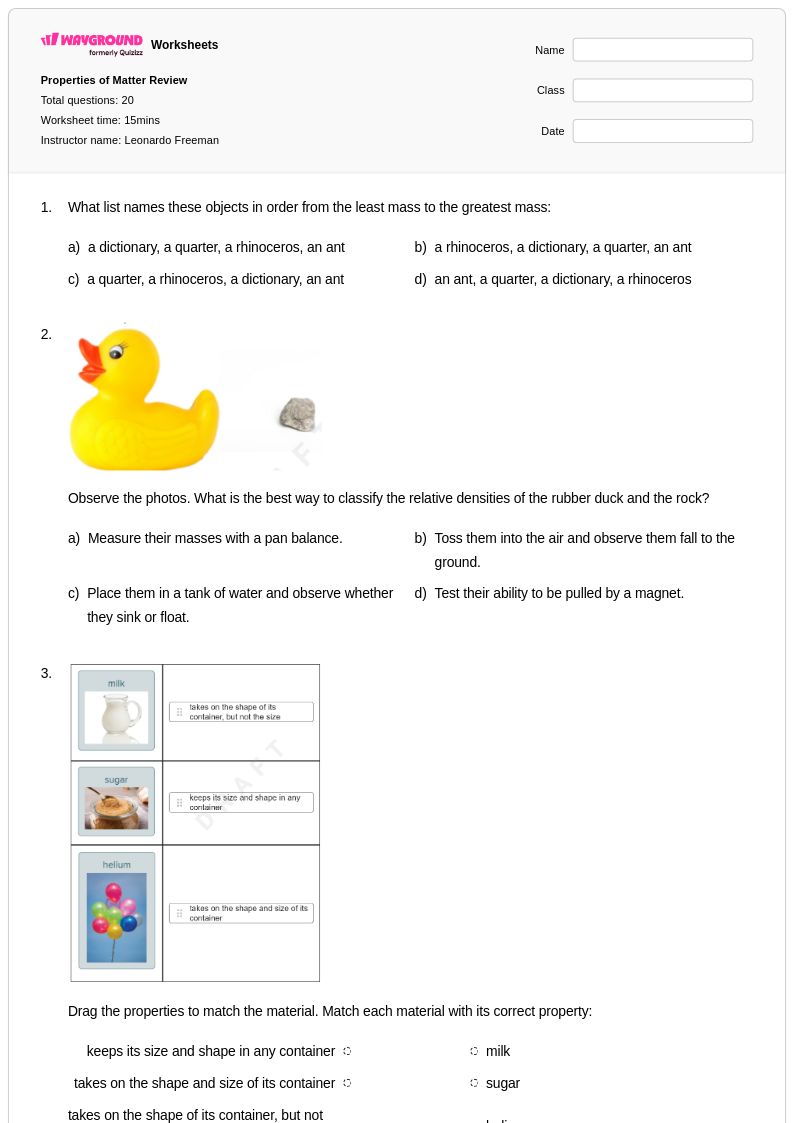
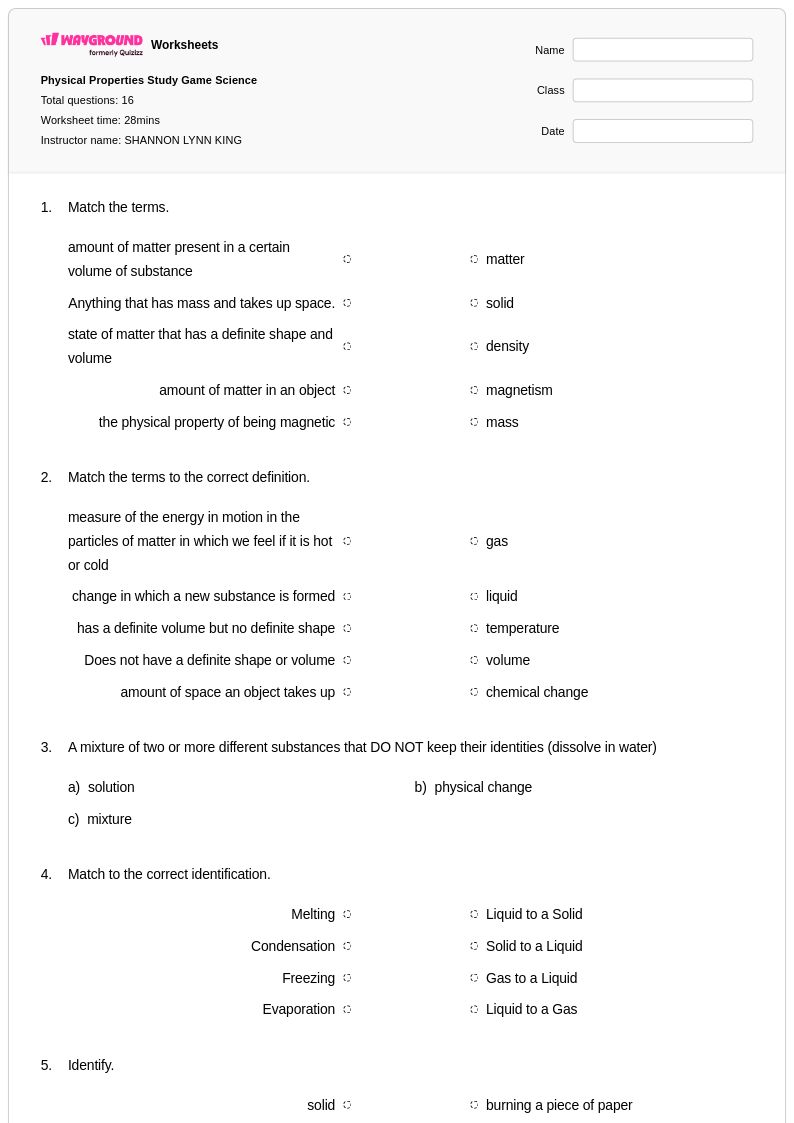
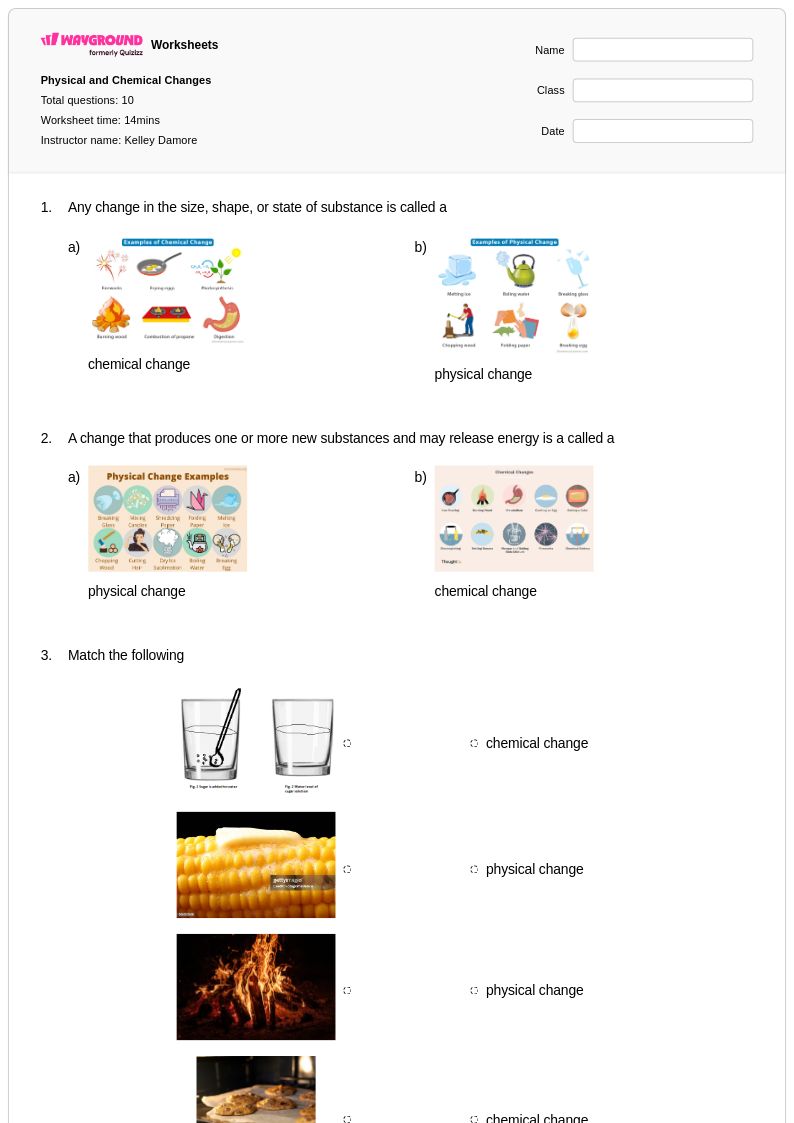
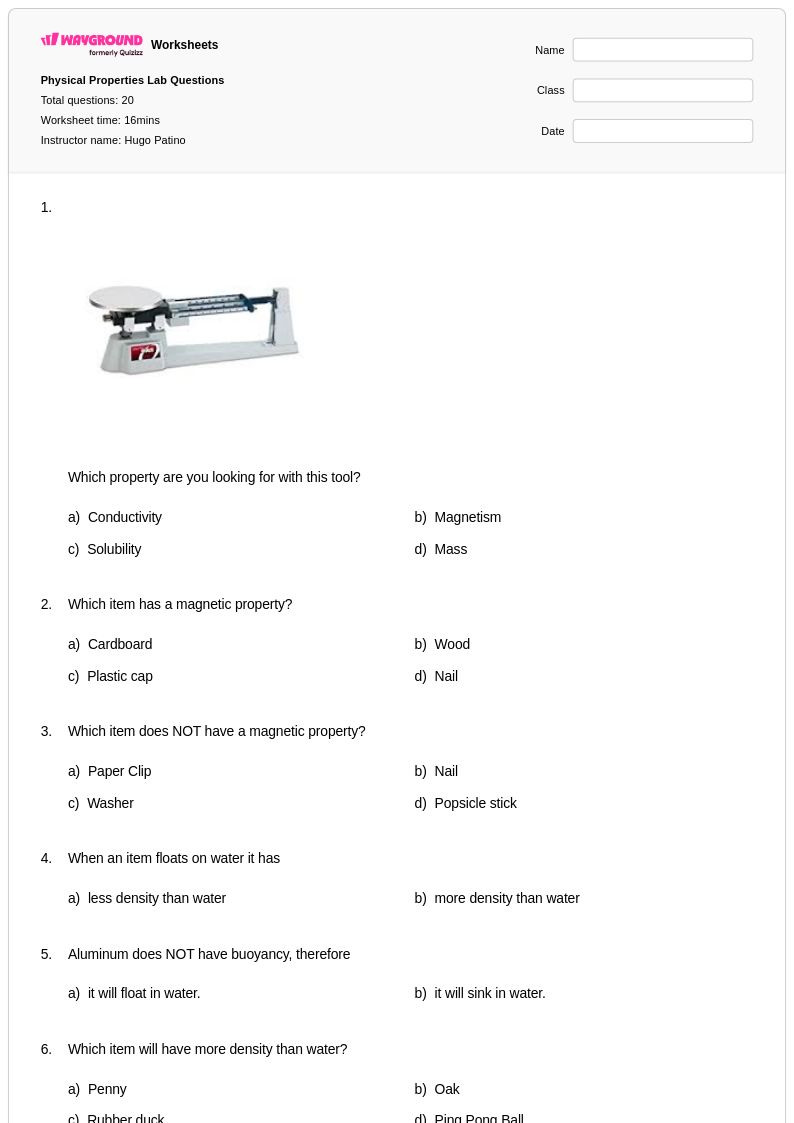
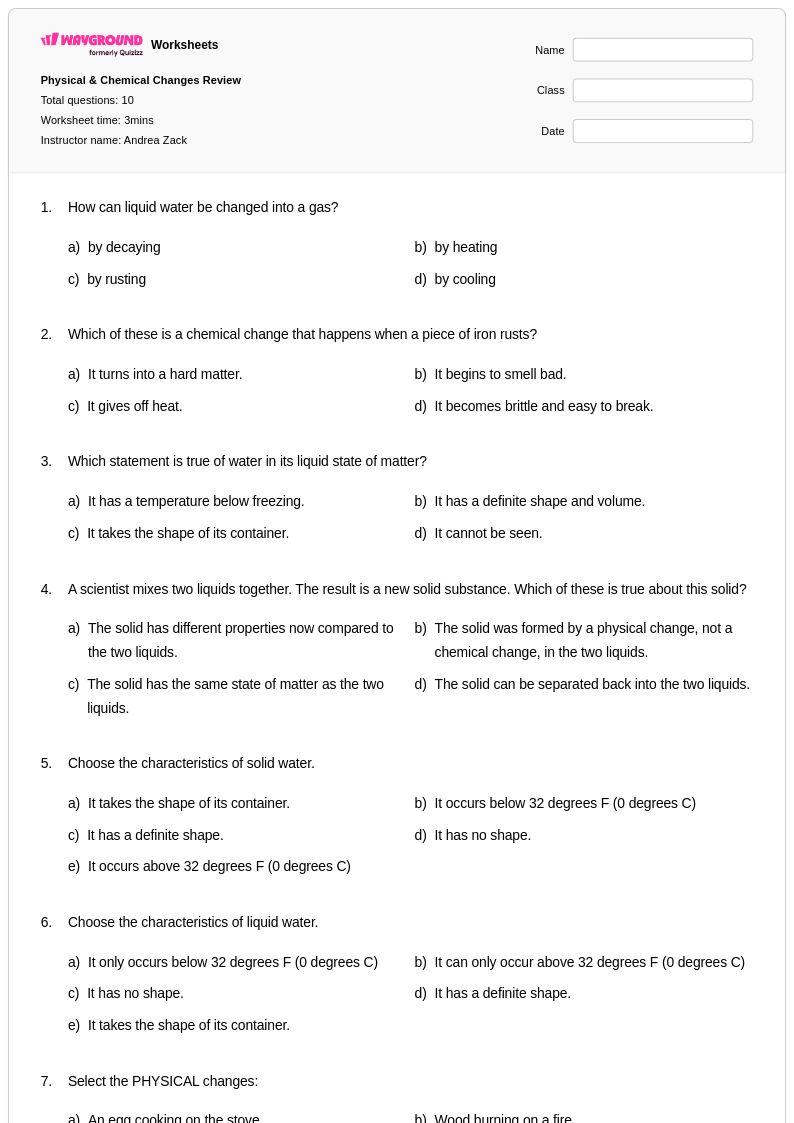
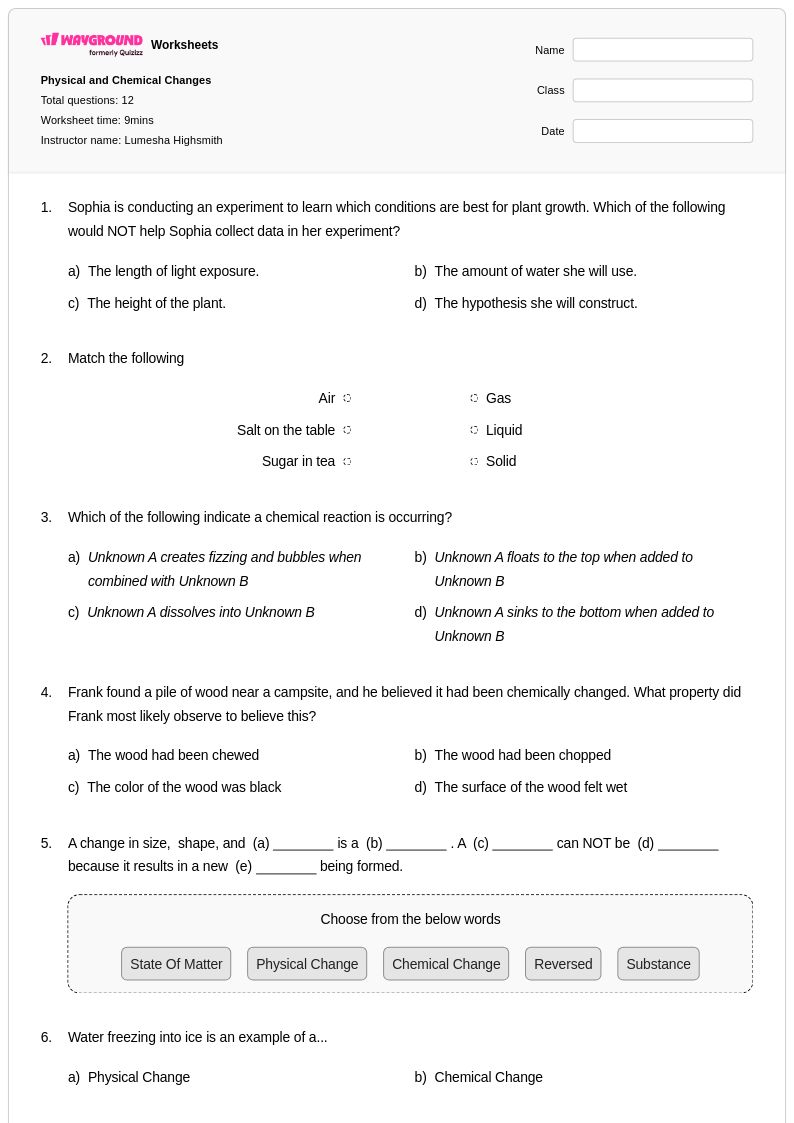
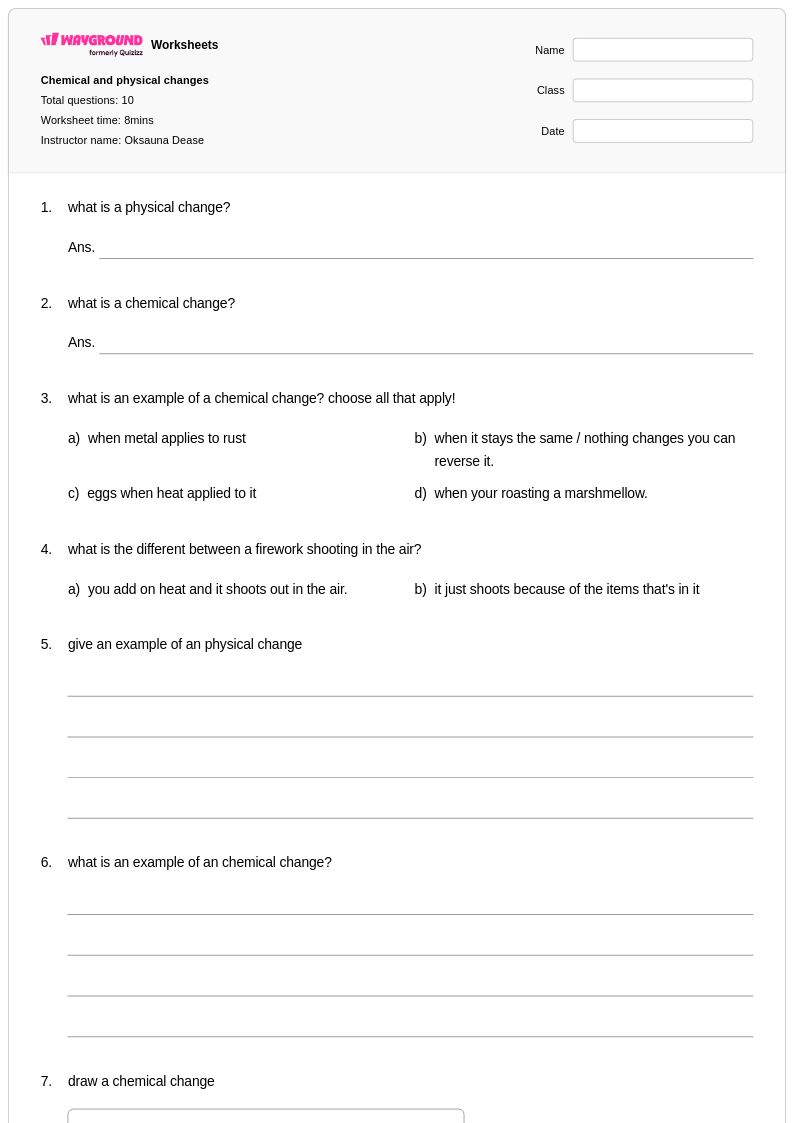
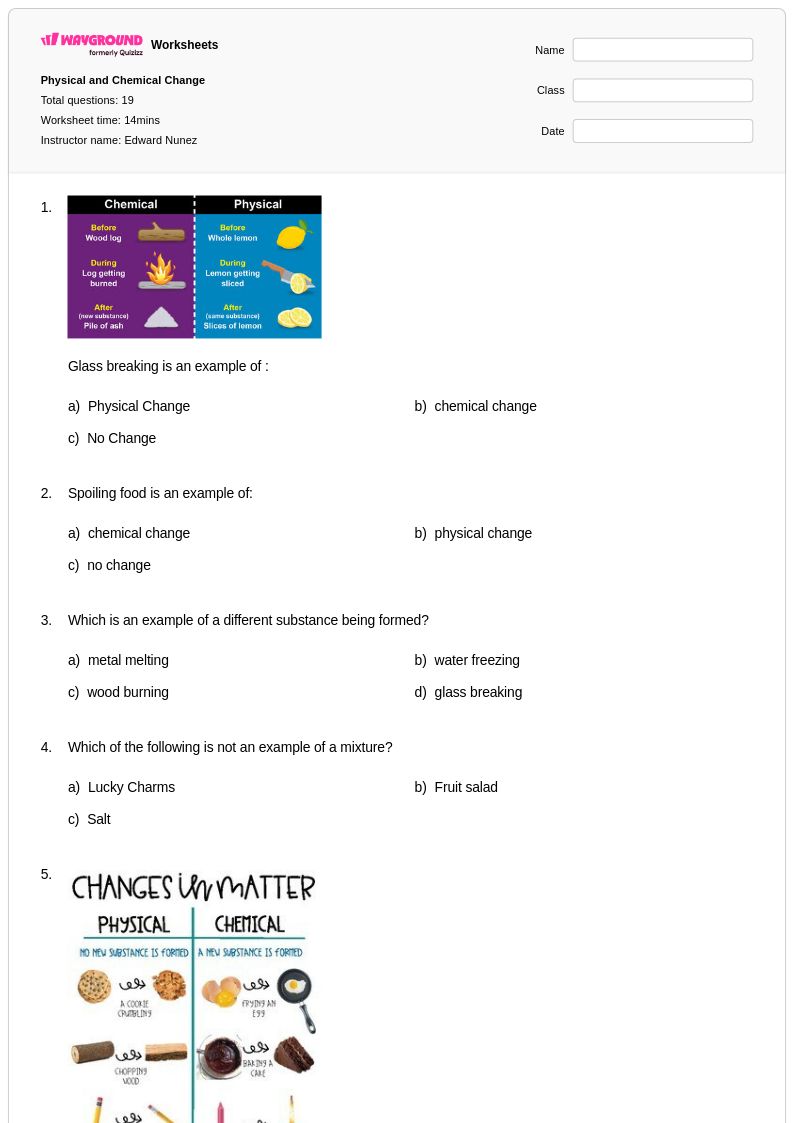
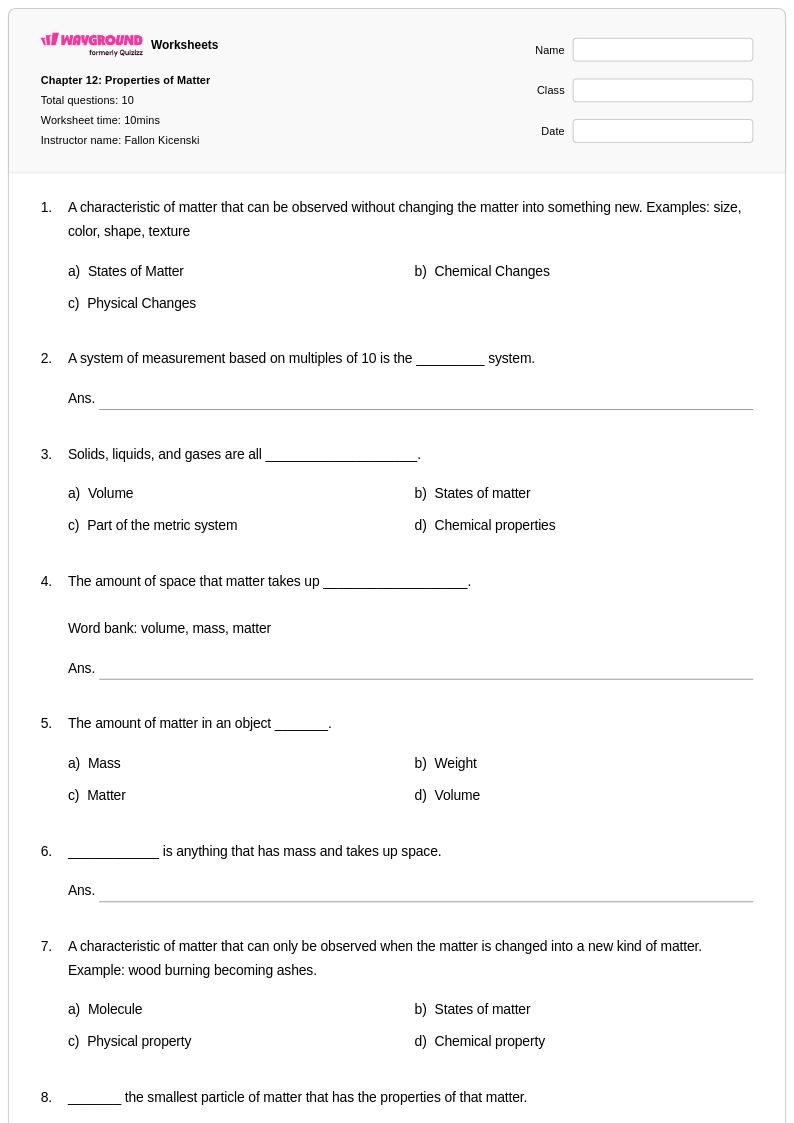
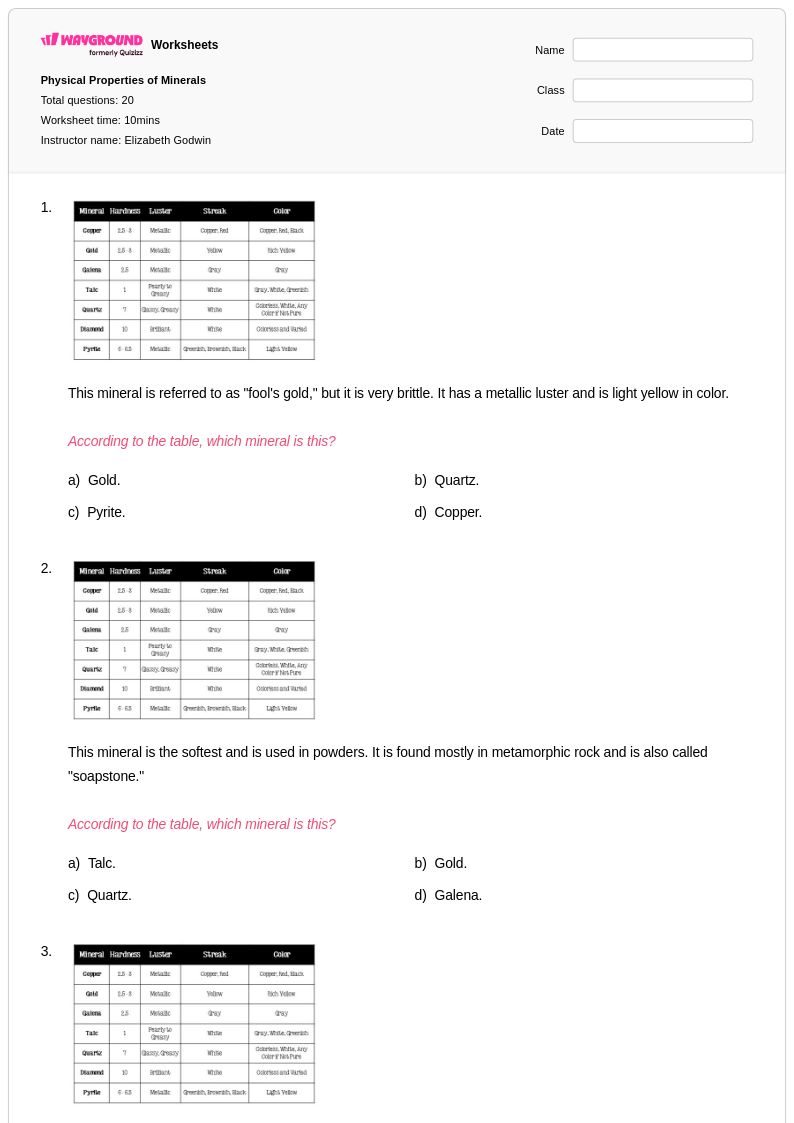
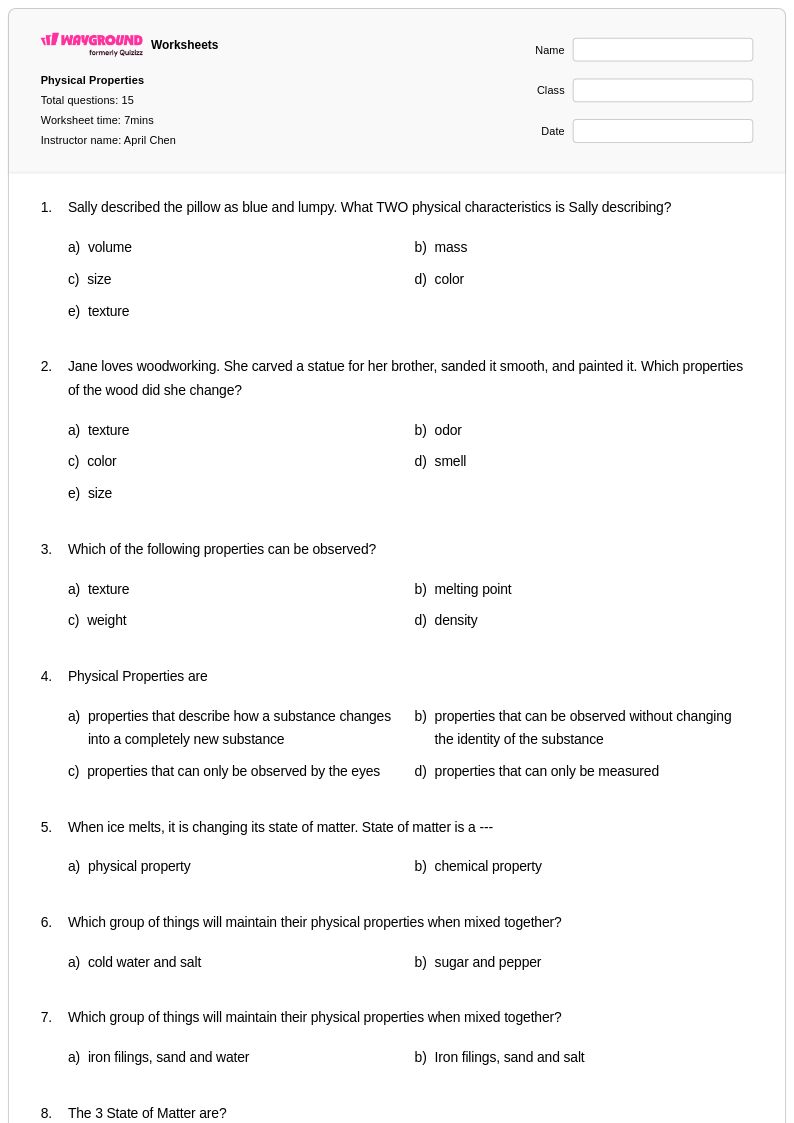
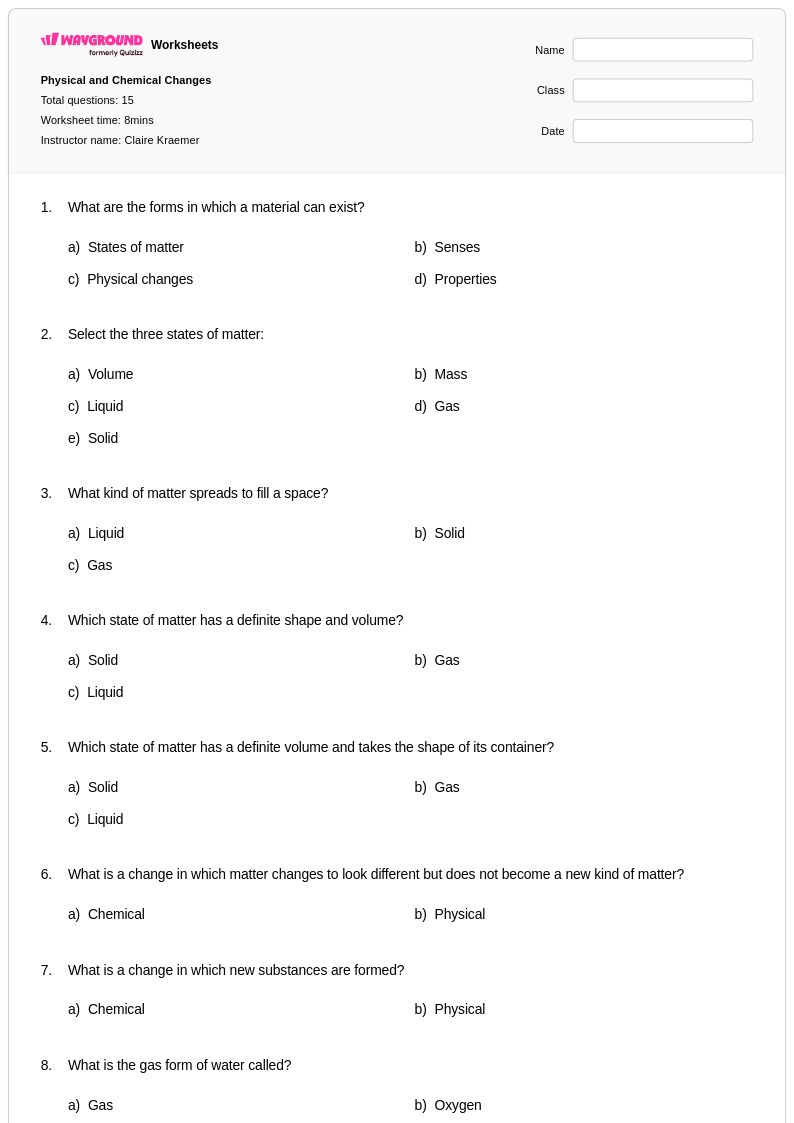
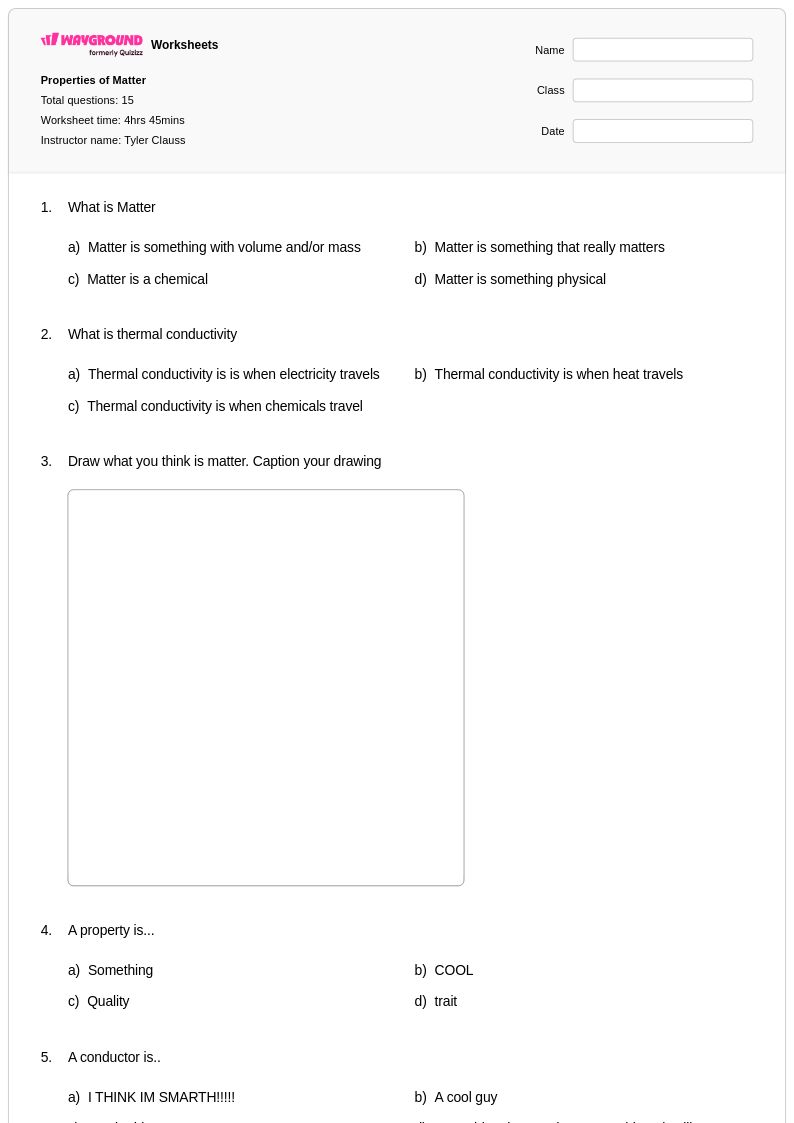
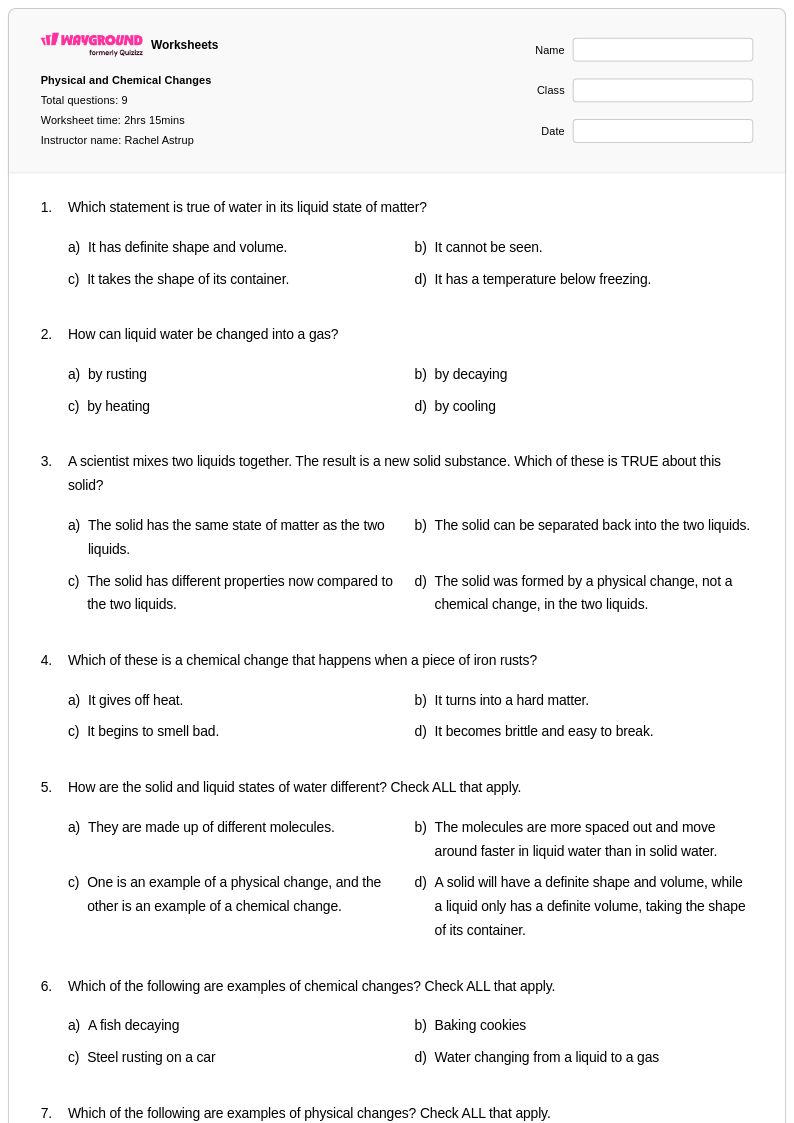
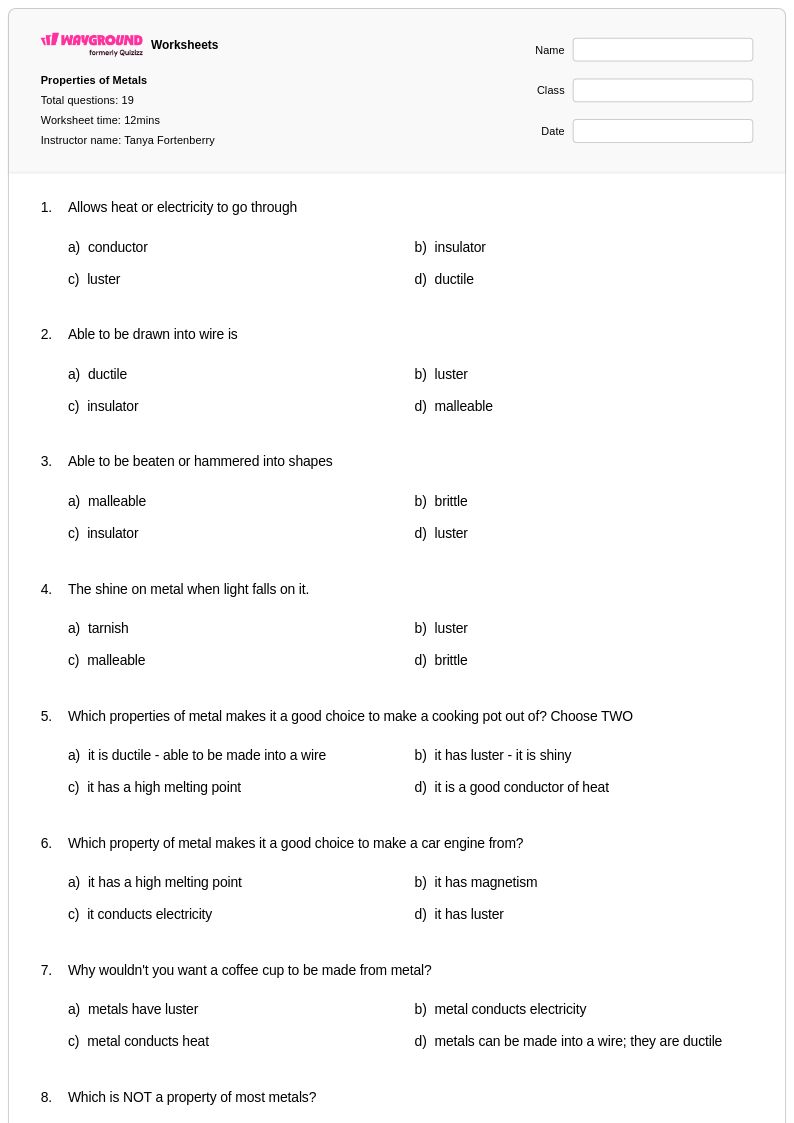
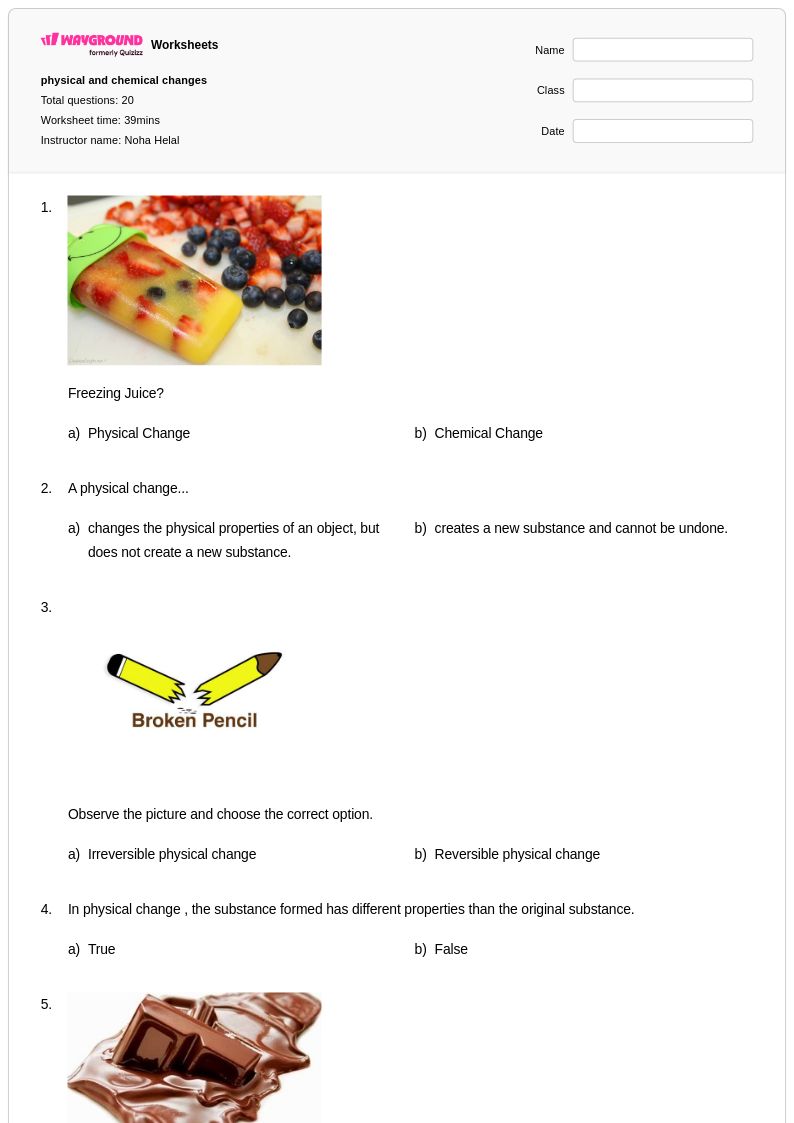
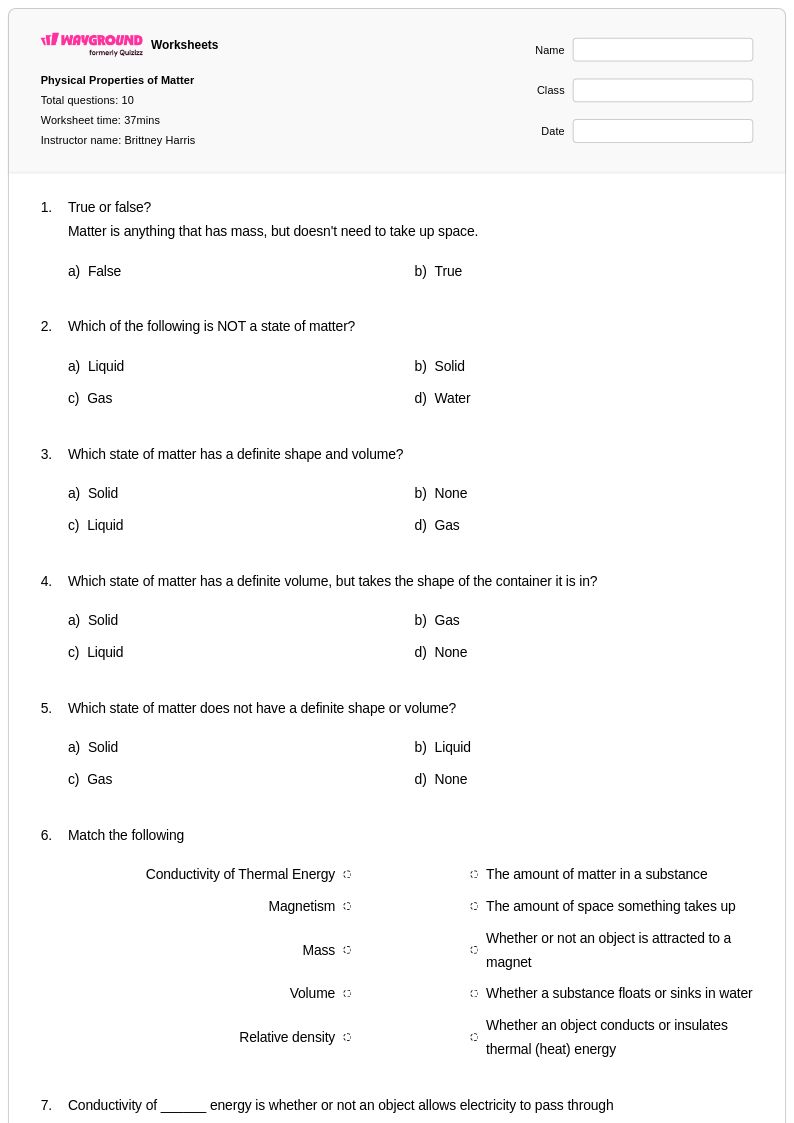
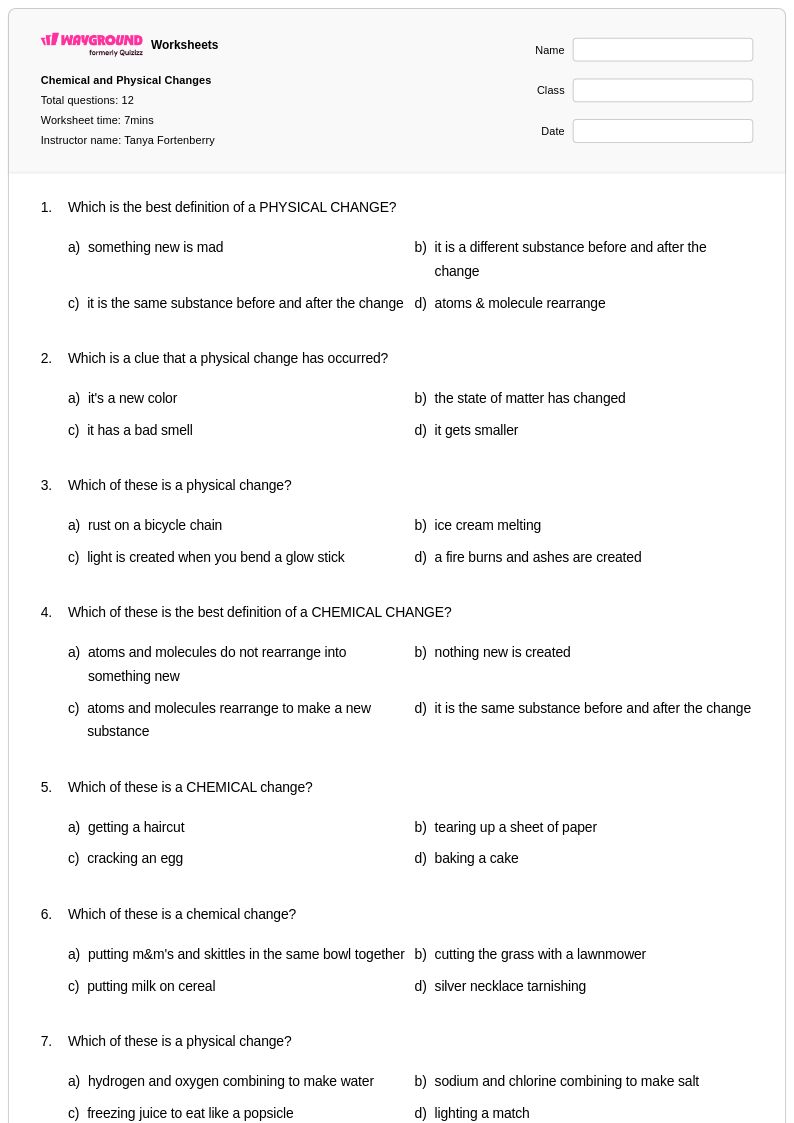
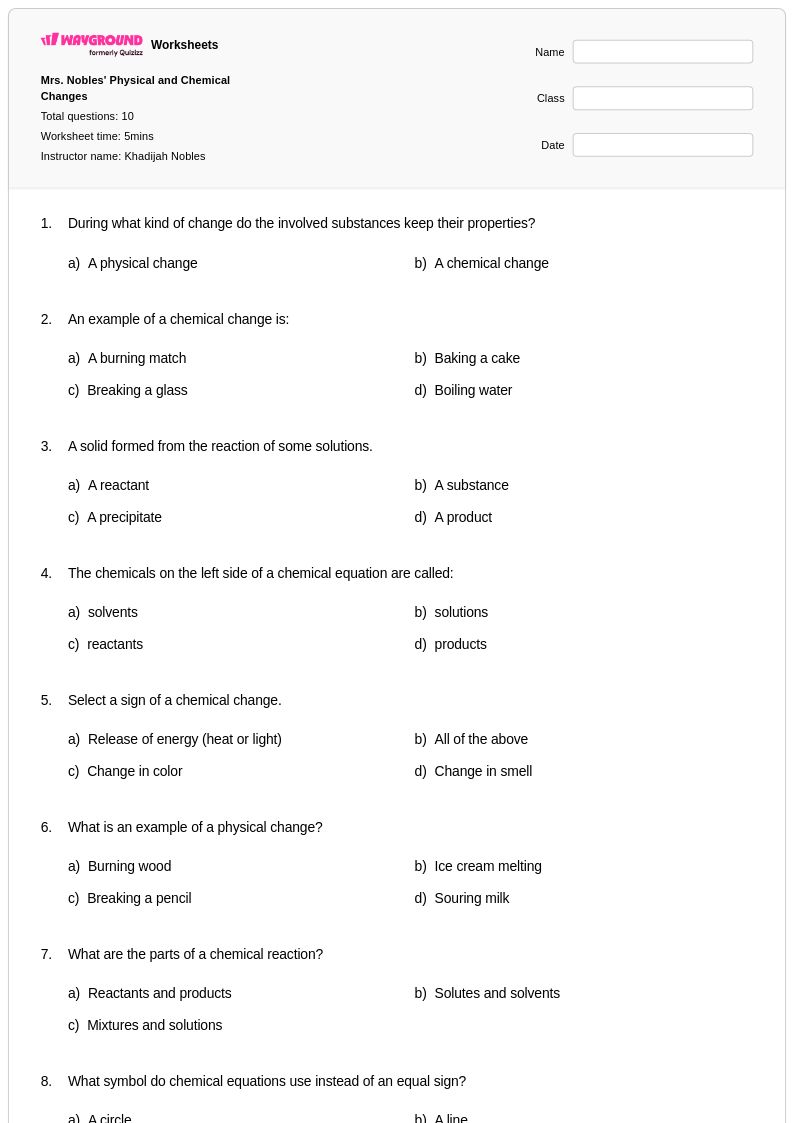
Physical and Chemical Properties worksheets for Grade 4 students available through Wayground (formerly Quizizz) provide comprehensive practice in distinguishing between the fundamental characteristics that define matter. These expertly designed resources strengthen students' ability to identify physical properties such as color, texture, mass, and volume, while introducing them to chemical properties like flammability and reactivity in age-appropriate ways. Each worksheet includes carefully structured practice problems that guide fourth graders through observing, categorizing, and analyzing various materials and substances. Teachers can access complete answer keys alongside these free printables, ensuring accurate assessment and efficient grading of student understanding of how matter behaves and changes.
Wayground's extensive collection of millions of teacher-created resources supports educators in delivering effective Physical and Chemical Properties instruction through robust search and filtering capabilities that help locate grade-appropriate materials quickly. The platform's standards alignment ensures worksheets meet curriculum requirements, while differentiation tools allow teachers to customize content for diverse learning needs within their Grade 4 classrooms. Available in both printable pdf format and interactive digital versions, these resources offer flexibility for various teaching environments and learning preferences. Teachers utilize these comprehensive worksheet collections for lesson planning, targeted remediation of misconceptions about matter's properties, enrichment activities for advanced learners, and consistent skill practice that builds scientific reasoning abilities essential for elementary science success.
FAQs
How do I teach students the difference between physical and chemical properties?
Start by grounding students in concrete examples: physical properties like color, density, and melting point can be observed or measured without changing a substance's composition, while chemical properties like flammability and reactivity only become apparent when the substance undergoes a chemical change. A useful classroom strategy is to present students with a set of everyday materials and ask them to sort observable characteristics into each category before introducing formal definitions. Anchoring the distinction in real-world scenarios, such as melting ice versus burning wood, helps students internalize the conceptual difference rather than just memorizing terms.
What practice exercises help students identify physical versus chemical properties?
Classification exercises are among the most effective: give students a list of properties such as boiling point, reactivity with acid, luster, and toxicity and ask them to sort each into physical or chemical categories with written justification. Scenario-based problems that describe a substance undergoing a process, such as rusting iron or dissolving sugar, and ask students to identify what type of property is being demonstrated add an applied layer of thinking. Pairing these with real-world material identification tasks, where students analyze household substances, reinforces the skill in a meaningful context.
What mistakes do students commonly make when classifying physical and chemical properties?
The most common error is confusing properties with changes: students frequently label 'burning' or 'rusting' as chemical properties rather than recognizing these as chemical changes that reveal an underlying chemical property such as flammability or reactivity. Another persistent misconception is assuming that any measurable property must be physical, which leads students to misclassify reactivity or toxicity. Students also often conflate intensive and extensive physical properties, incorrectly thinking that mass or volume are defining characteristics of a substance rather than size-dependent measurements.
How can I use physical and chemical properties worksheets in my classroom?
Physical and chemical properties worksheets on Wayground are available as printable PDFs for traditional classroom use and in digital formats for technology-integrated environments, making them flexible for in-class practice, homework assignments, or lab preparation. Teachers can also host these worksheets as a quiz directly on Wayground, enabling real-time student responses and instant scoring. Using them before a lab activity helps activate prior knowledge, while assigning them after instruction reinforces classification skills and surfaces remaining misconceptions before formal assessment.
How do I support struggling students who have difficulty distinguishing physical from chemical properties?
For students who consistently confuse the two categories, scaffold instruction by focusing first on a single anchor question: 'Does observing this property require changing the substance?' If yes, it is a chemical property; if no, it is physical. Wayground supports individual accommodations including Read Aloud, which can help students with reading difficulties access question content independently, and reduced answer choices, which lowers cognitive load during initial practice. Pairing these supports with simplified classification tasks before moving to scenario-based problems gives struggling learners a firmer conceptual foundation.
How do physical and chemical properties connect to broader chemistry curriculum standards?
Understanding physical and chemical properties is foundational to topics including states of matter, the periodic table, chemical reactions, and conservation of mass, making it a high-leverage concept across middle and high school chemistry curricula. Most state and national science standards require students to distinguish between physical and chemical changes and to use properties to identify and classify substances, which means this topic appears repeatedly across grade bands. Building fluency with property classification early gives students the analytical vocabulary they need for more complex content such as bonding, reaction types, and thermodynamics.