Free Printable Planet Earth Worksheets for Grade 11
Explore Grade 11 Planet Earth worksheets and printables that help students master fundamental concepts about our planet's structure, systems, and processes through engaging practice problems with comprehensive answer keys.
Explore printable Planet Earth worksheets for Grade 11
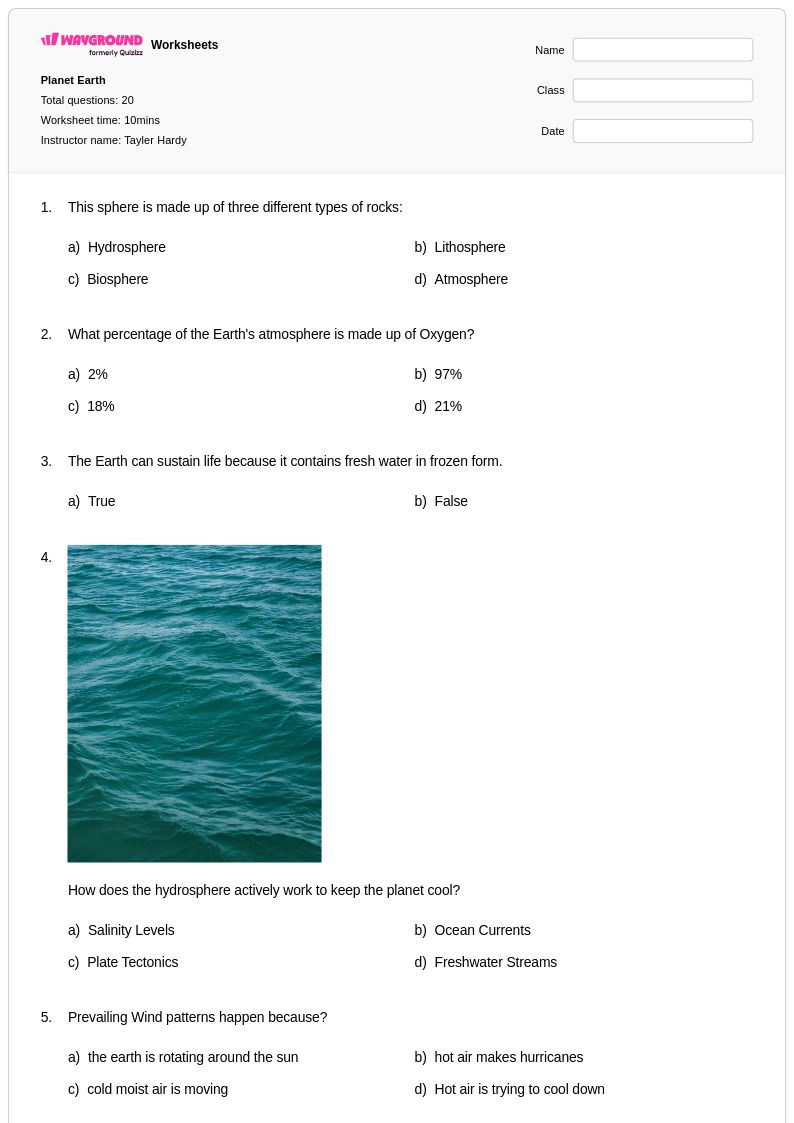
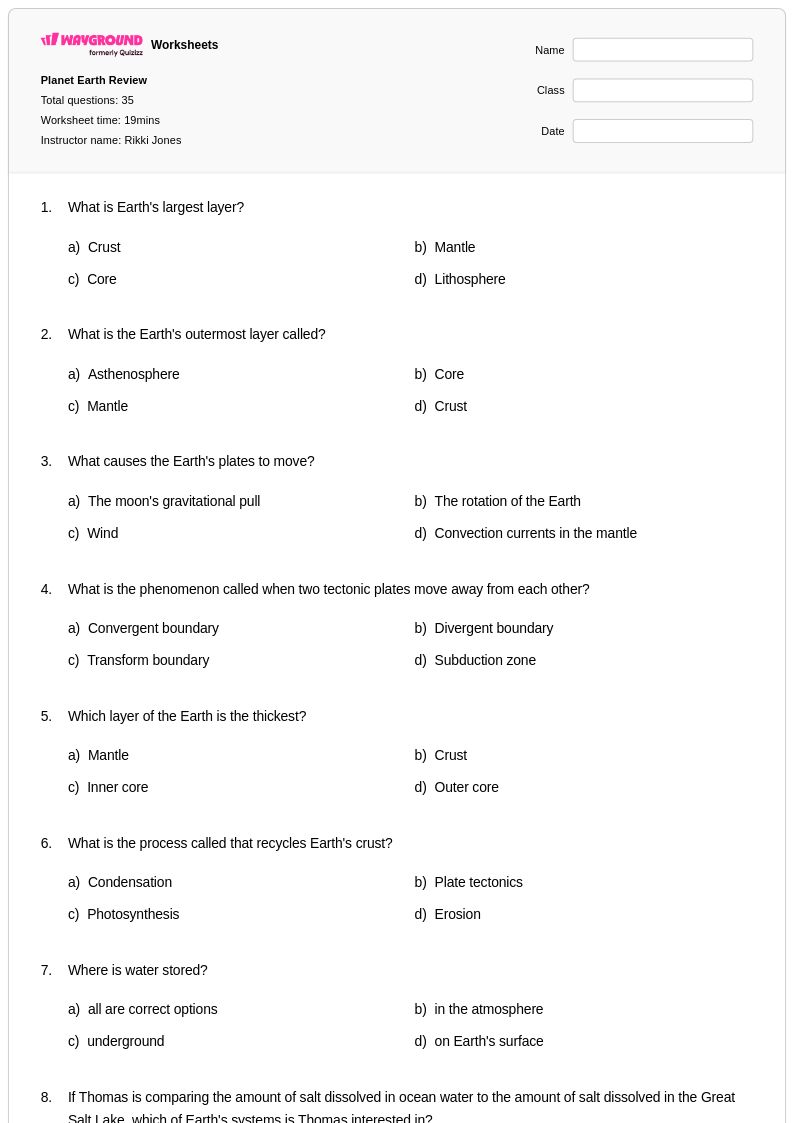
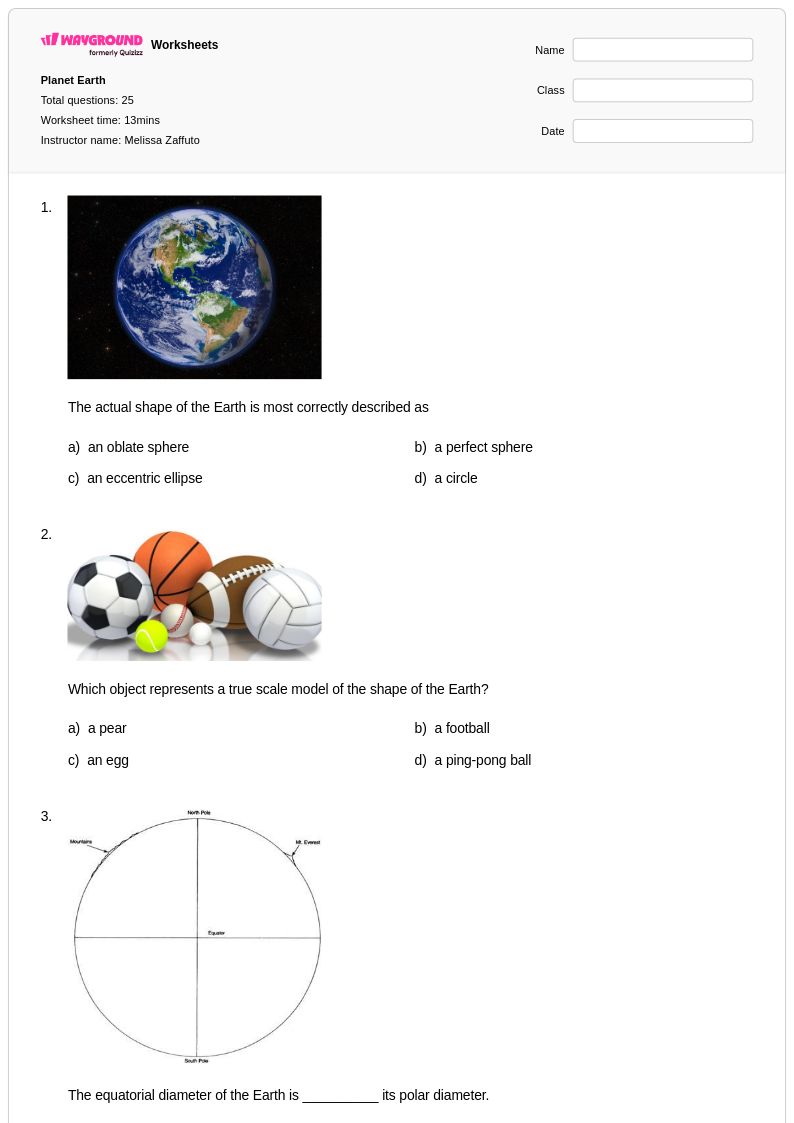
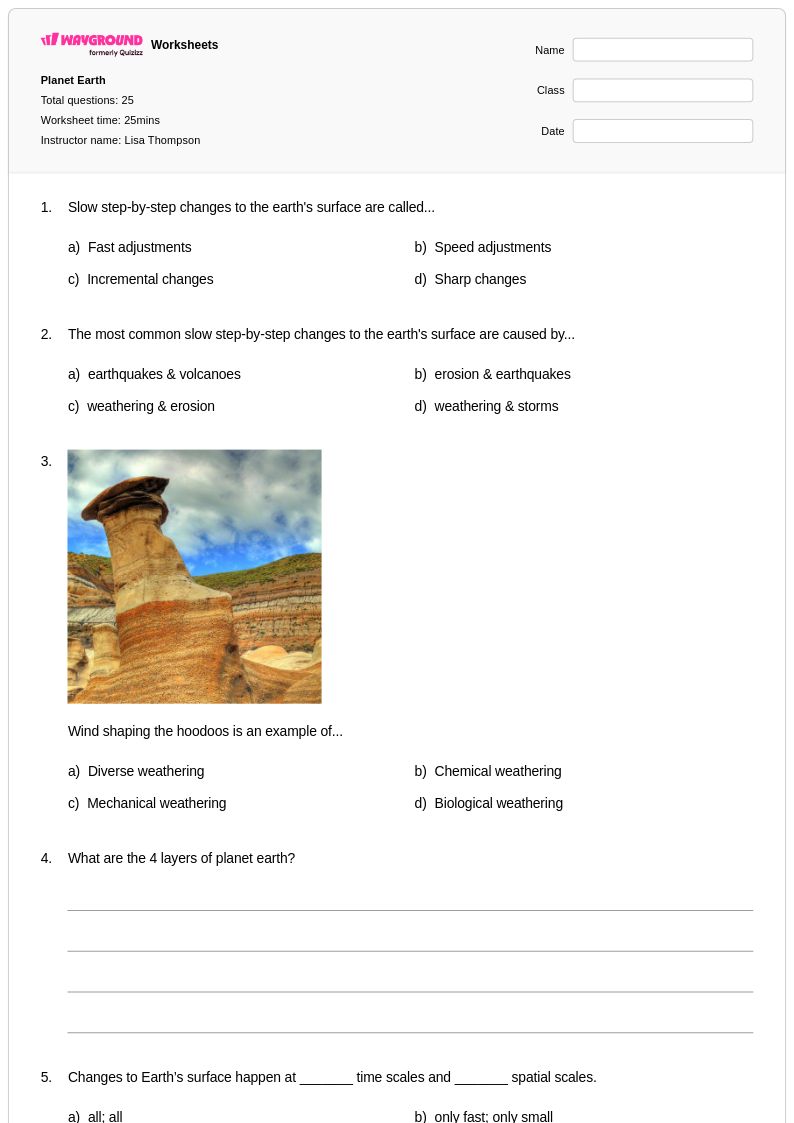
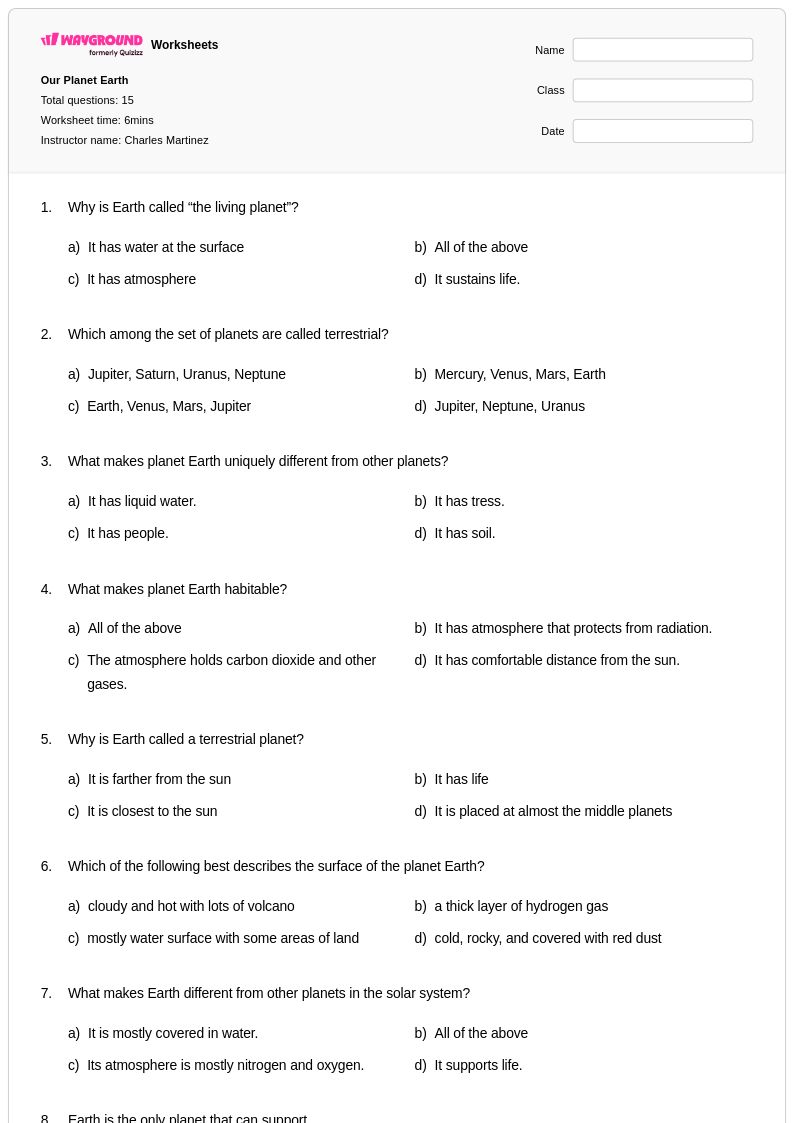
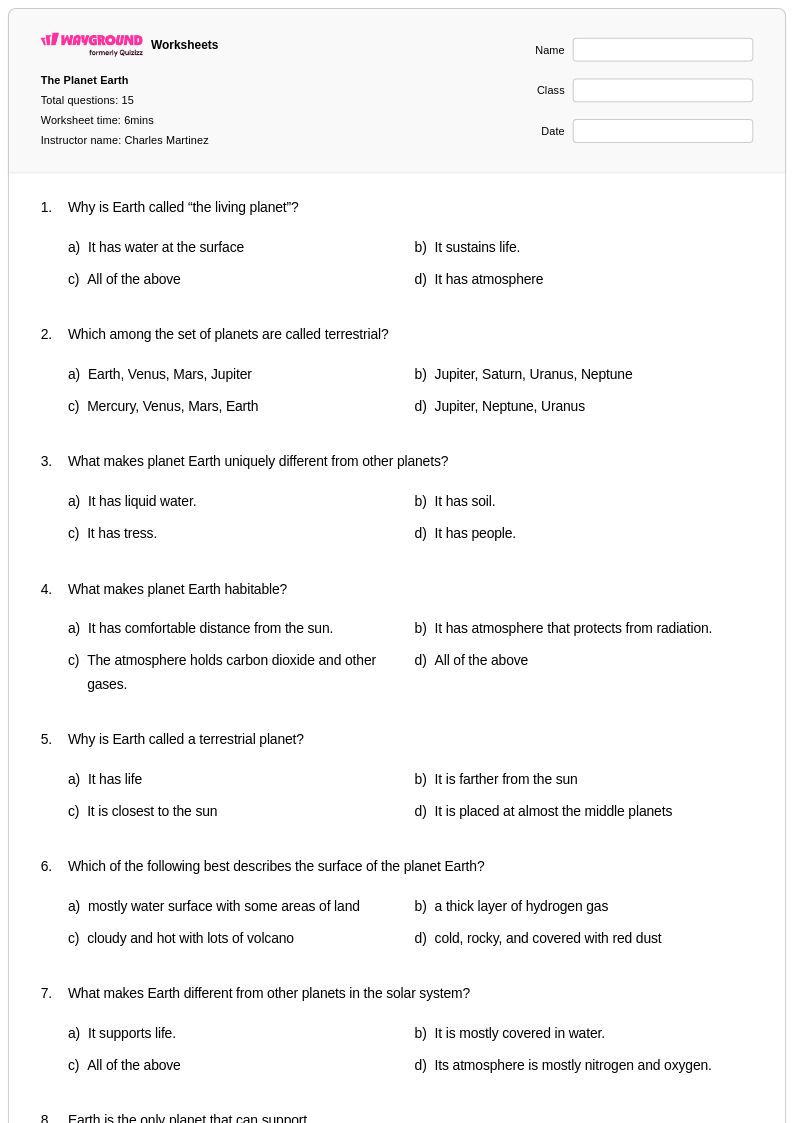
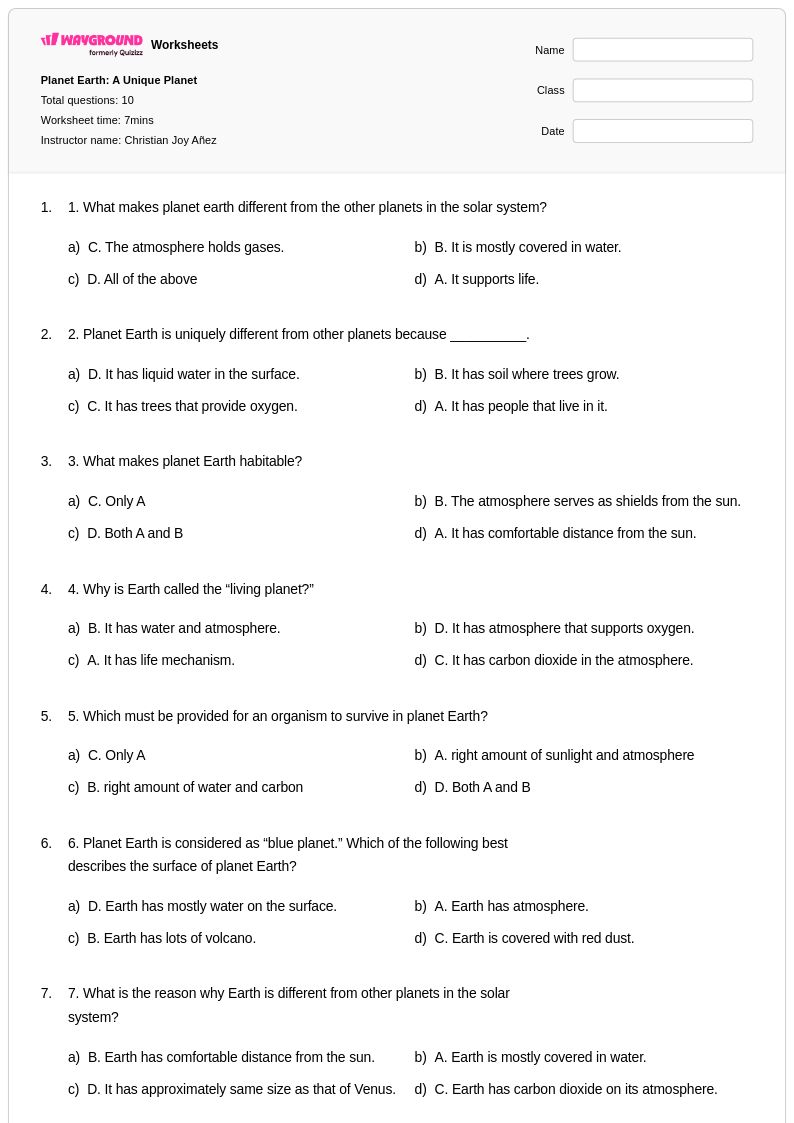
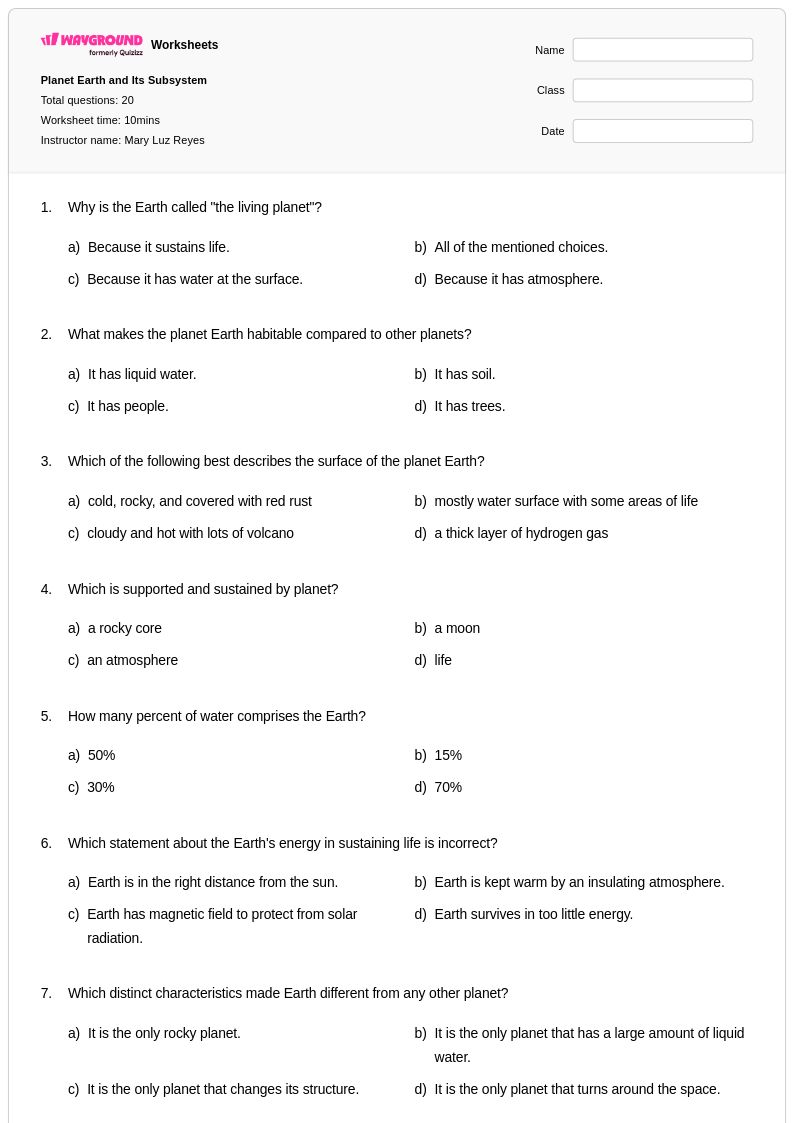
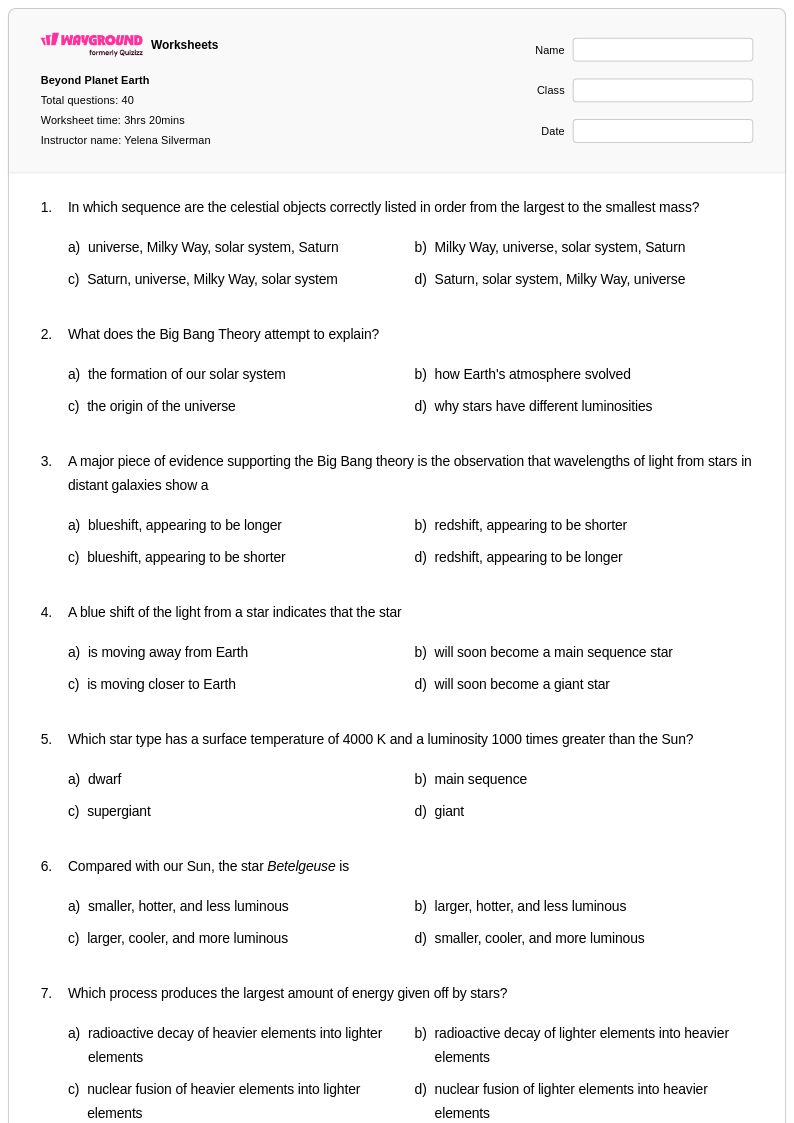
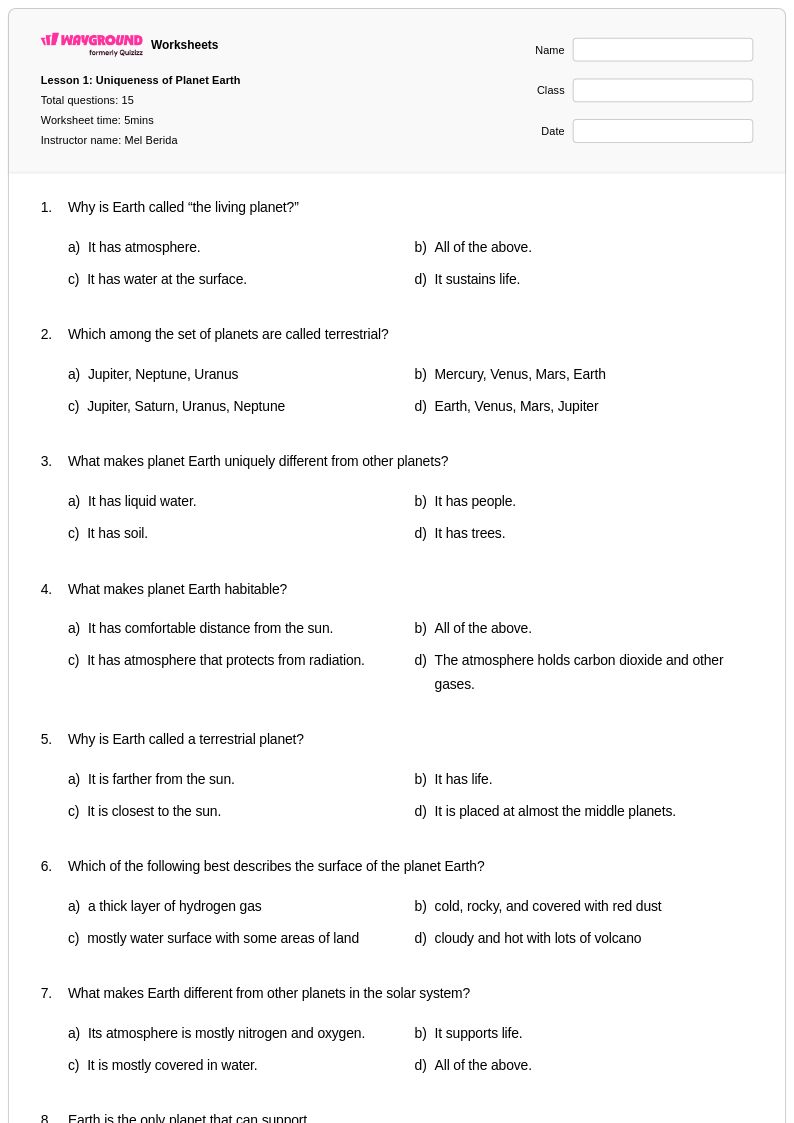
Planet Earth worksheets for Grade 11 students available through Wayground (formerly Quizizz) provide comprehensive coverage of our planet's complex systems and dynamic processes. These expertly designed resources strengthen students' understanding of Earth's structure, from the core and mantle to the crust and atmosphere, while exploring critical concepts such as plate tectonics, rock cycles, weather patterns, and climate systems. The worksheets feature practice problems that challenge students to analyze geological formations, interpret seismic data, and evaluate environmental interactions, with each resource including detailed answer keys to support independent learning. These free printables and pdf resources enable students to master fundamental earth science principles through hands-on exercises that connect theoretical knowledge to real-world phenomena.
Wayground's extensive collection of Planet Earth worksheets draws from millions of teacher-created resources, offering educators powerful search and filtering capabilities to locate materials perfectly aligned with Grade 11 curriculum standards and learning objectives. The platform's sophisticated differentiation tools allow teachers to customize worksheets for varying skill levels, ensuring that both struggling students and advanced learners receive appropriate challenges in topics ranging from geological time scales to atmospheric science. Available in both printable and digital pdf formats, these resources streamline lesson planning while providing flexible options for remediation, enrichment, and targeted skill practice. Teachers can efficiently modify content, track student progress, and access standards-aligned materials that support comprehensive understanding of Earth's interconnected systems and processes.
FAQs
How do I teach Earth's layers and internal structure to my students?
Start with a visual cross-section diagram that labels the inner core, outer core, mantle, and crust, then connect each layer to observable phenomena like volcanic eruptions and earthquakes. Having students analyze seismic wave data is an effective way to build understanding of why scientists infer internal structure indirectly. Follow up with cause-and-effect questions that require students to link the properties of each layer to surface events, reinforcing conceptual depth rather than rote memorization.
What exercises help students practice understanding Earth's systems and spheres?
Diagram-labeling tasks, data interpretation questions, and cause-and-effect scenarios are especially effective for Earth's systems. Students benefit from exercises that require them to trace interactions between the geosphere, hydrosphere, atmosphere, and biosphere, such as explaining how plate movement influences ocean basin shape or how the water cycle connects the hydrosphere and atmosphere. Tying each practice problem to a real-world natural process keeps engagement high and reinforces systems thinking.
What are the most common misconceptions students have about plate tectonics?
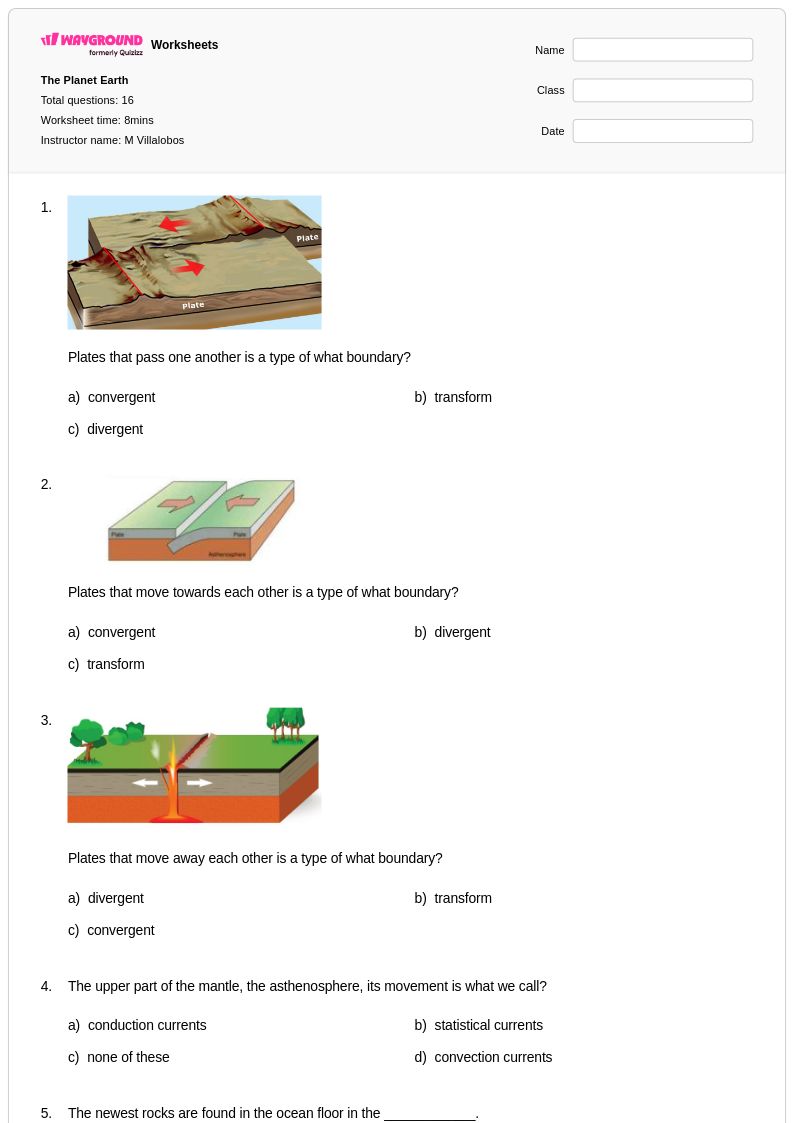
A frequent misconception is that tectonic plates move quickly enough to be observed in a human lifetime, when in reality movement occurs at roughly the rate fingernails grow. Students also commonly confuse the crust with the lithosphere, or assume all plate boundaries produce the same geological activity. Targeted questions that ask students to compare convergent, divergent, and transform boundaries by their specific surface features help address these errors directly.
How can I use Planet Earth worksheets to support students with different ability levels?
Wayground allows teachers to apply individual accommodations directly to students, including reduced answer choices to lower cognitive load, read-aloud support for students who need questions read to them, and extended time settings that can be configured per student. These settings can be saved and reused across future sessions, so differentiation does not require additional setup each time. The result is that struggling learners receive support while advanced students work with standard materials, and neither group is made aware of the other's settings.
How do I use Wayground's Planet Earth worksheets in my classroom?
Wayground's Planet Earth worksheets are available as printable PDFs for traditional classroom and homework use, and in digital formats for technology-integrated environments. Teachers can also host worksheets as a quiz directly on Wayground, making them suitable for formative assessment or structured independent practice. Each worksheet includes a complete answer key, which reduces grading time and supports instructional planning.
What topics within Planet Earth are most important for students to master?
Core content priorities include Earth's internal structure and layering, the rock cycle and geological processes such as plate tectonics and erosion, atmospheric layers and their functions, the water cycle and ocean circulation, and the interrelationships among Earth's four major spheres. Mastery of these topics builds the conceptual foundation students need for Earth and Space Science at higher grade levels. Practice problems that ask students to apply these concepts to real scenarios, rather than simply recall terms, produce stronger long-term retention.