Free Printable Plant Cell Structure Worksheets for Grade 8
Grade 8 plant cell structure worksheets from Wayground help students master cellular components through engaging printables, practice problems, and comprehensive answer keys for effective biology learning.
Explore printable Plant Cell Structure worksheets for Grade 8
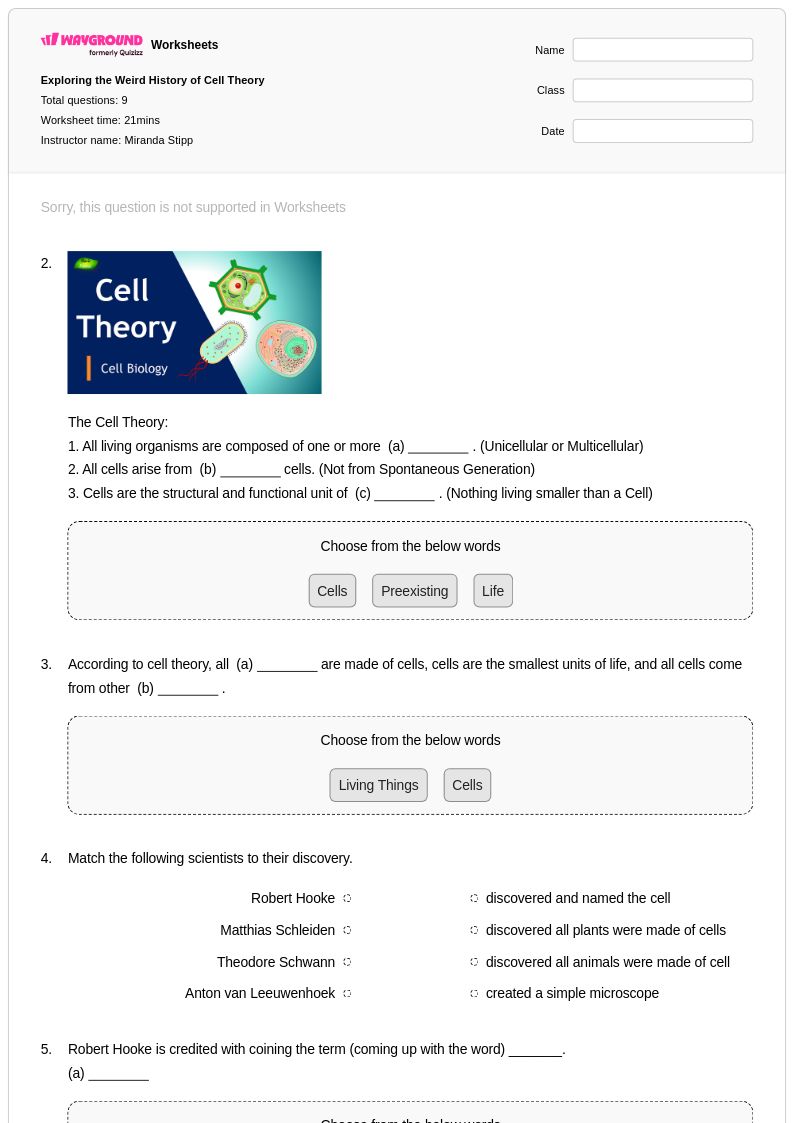
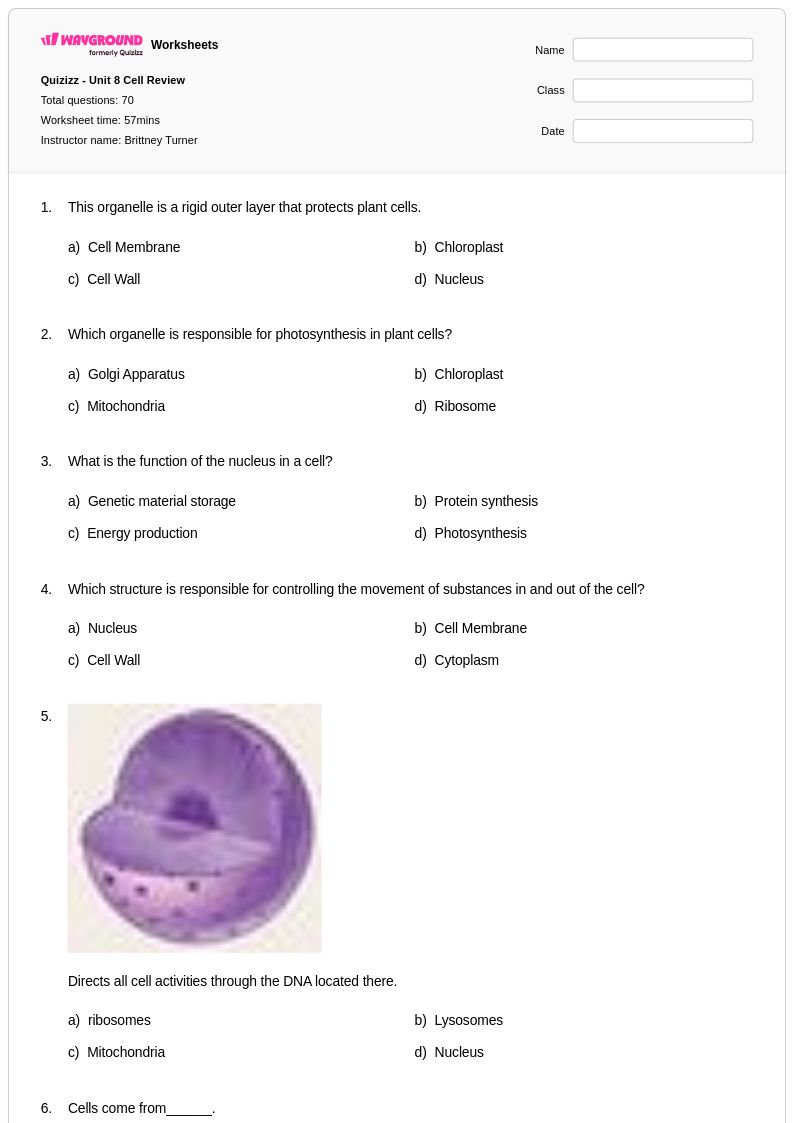
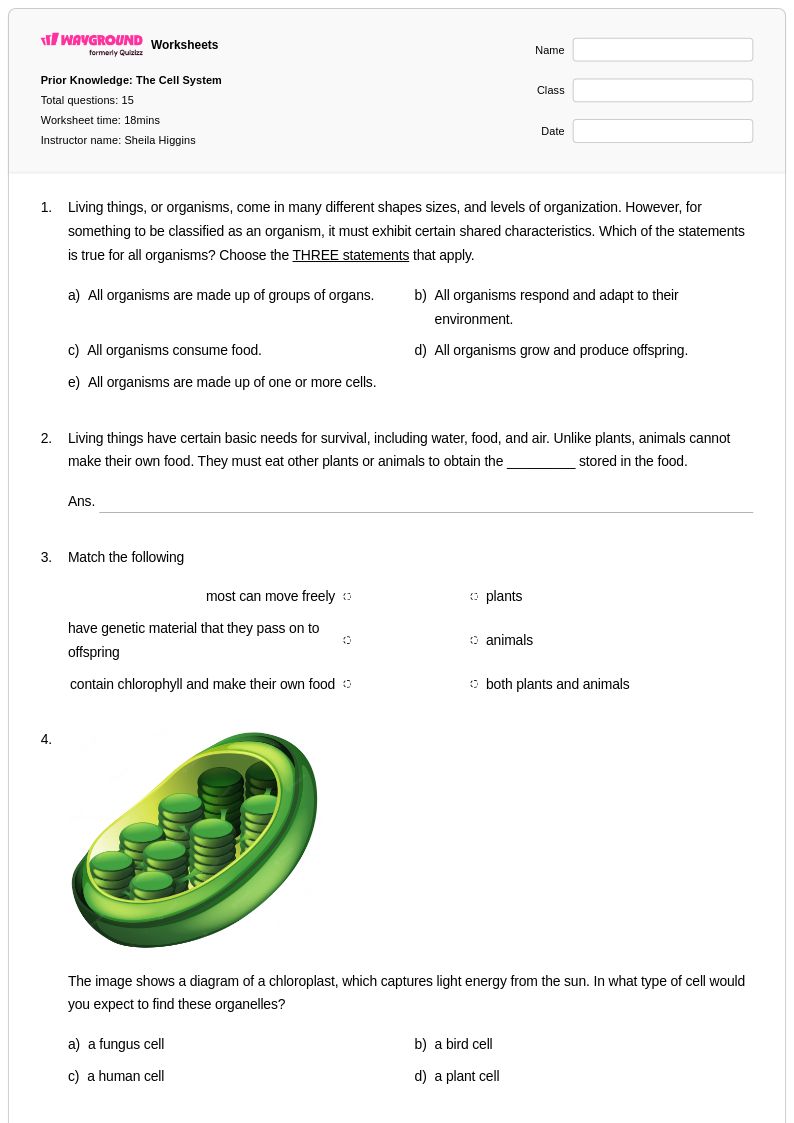
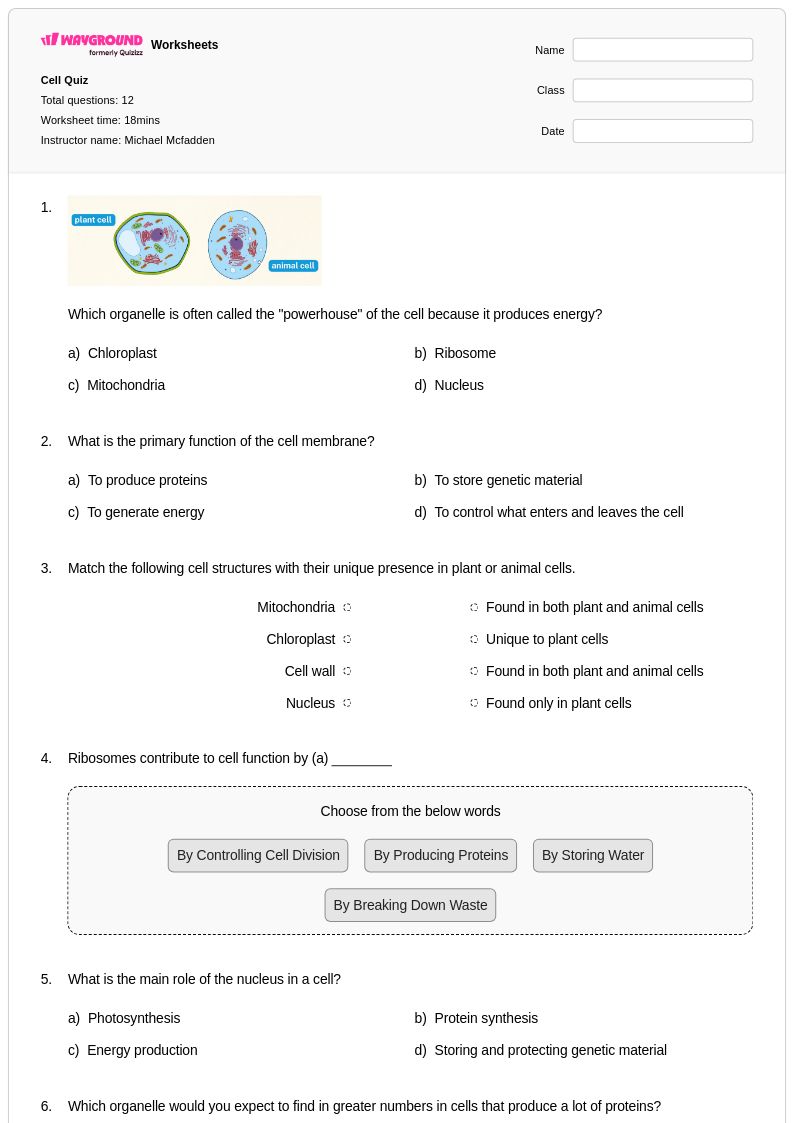
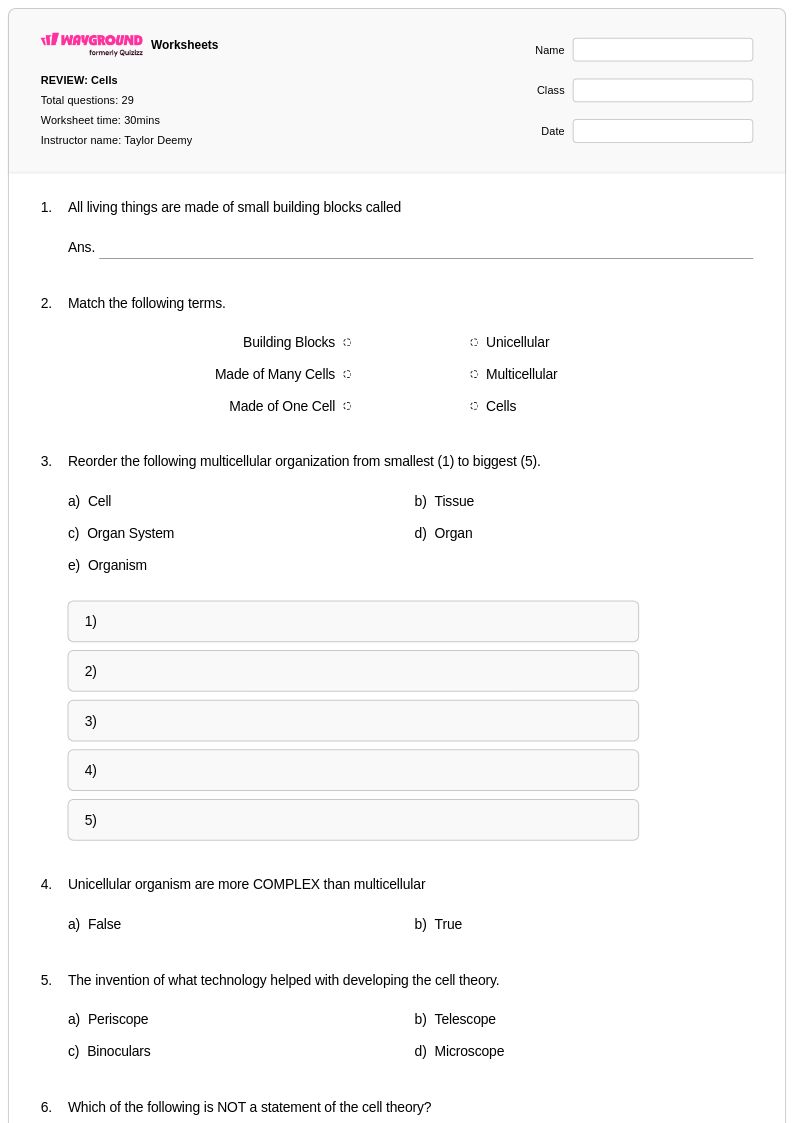
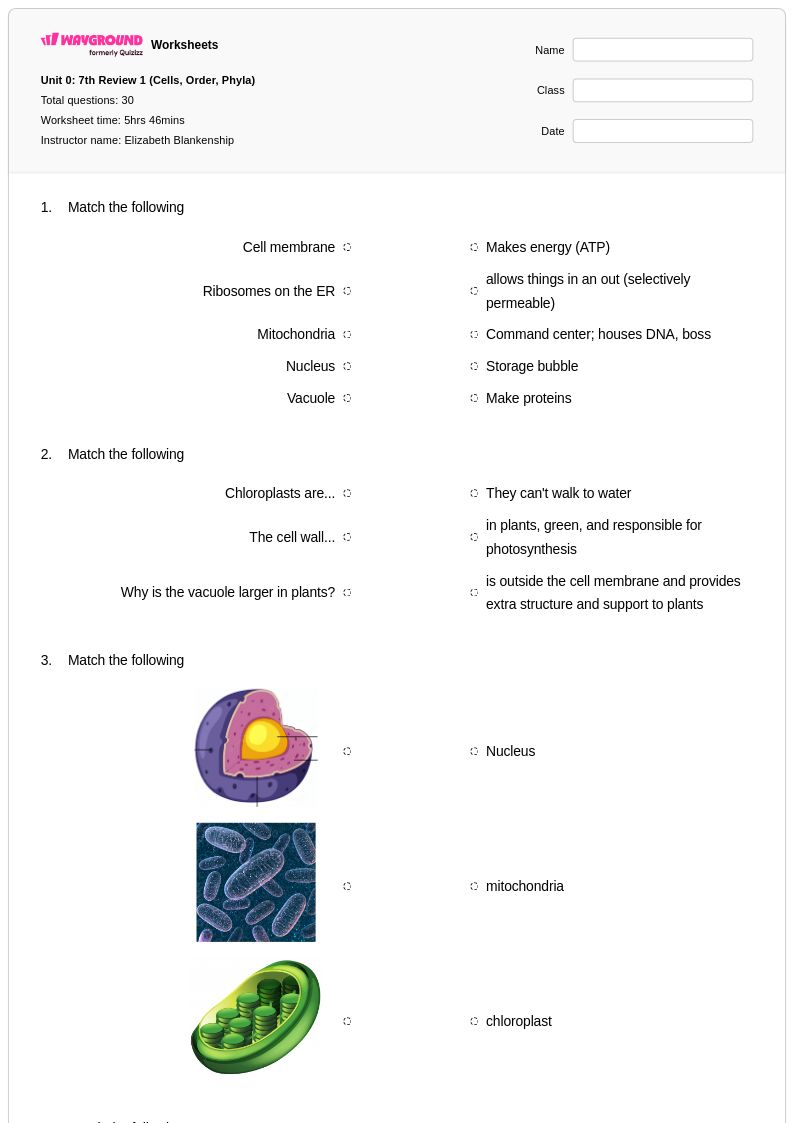
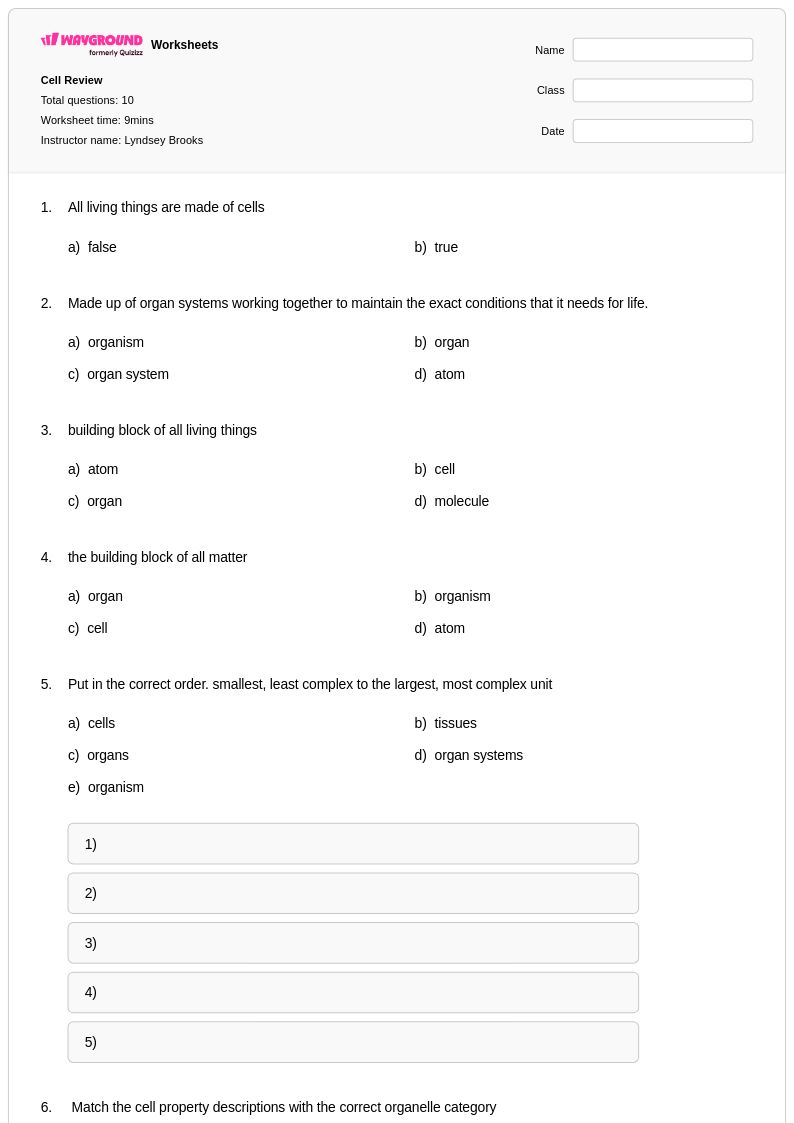
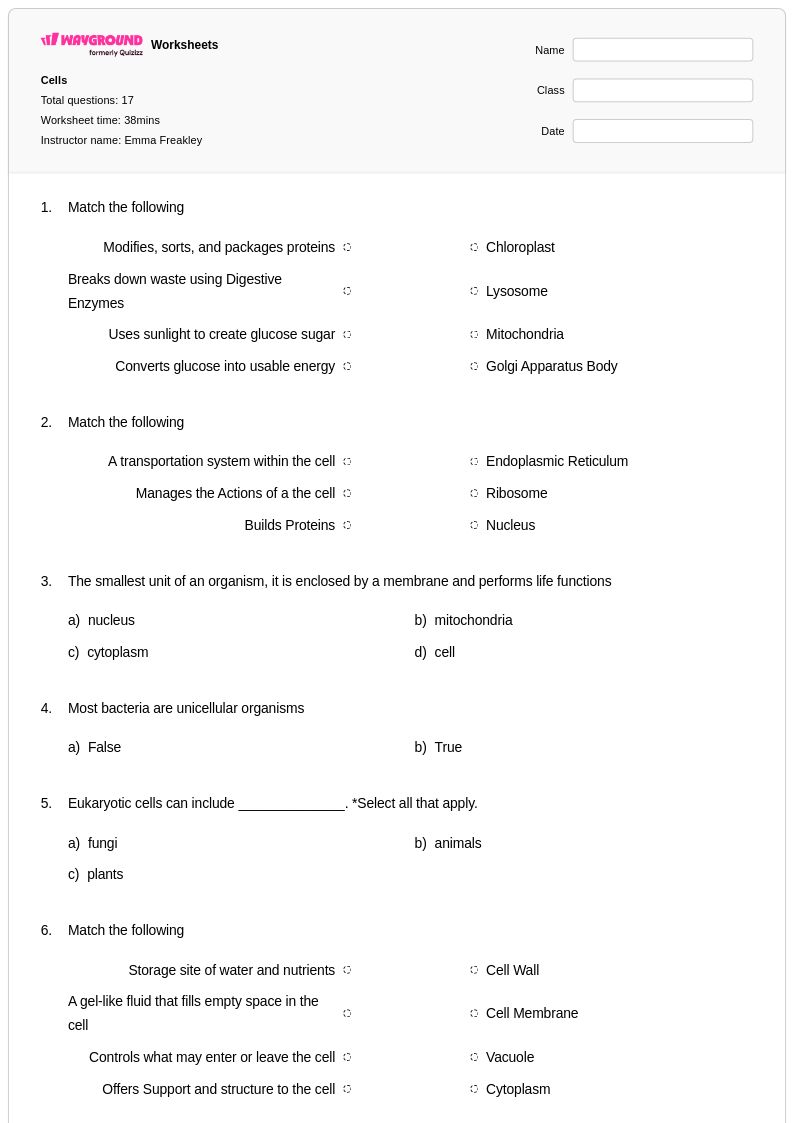
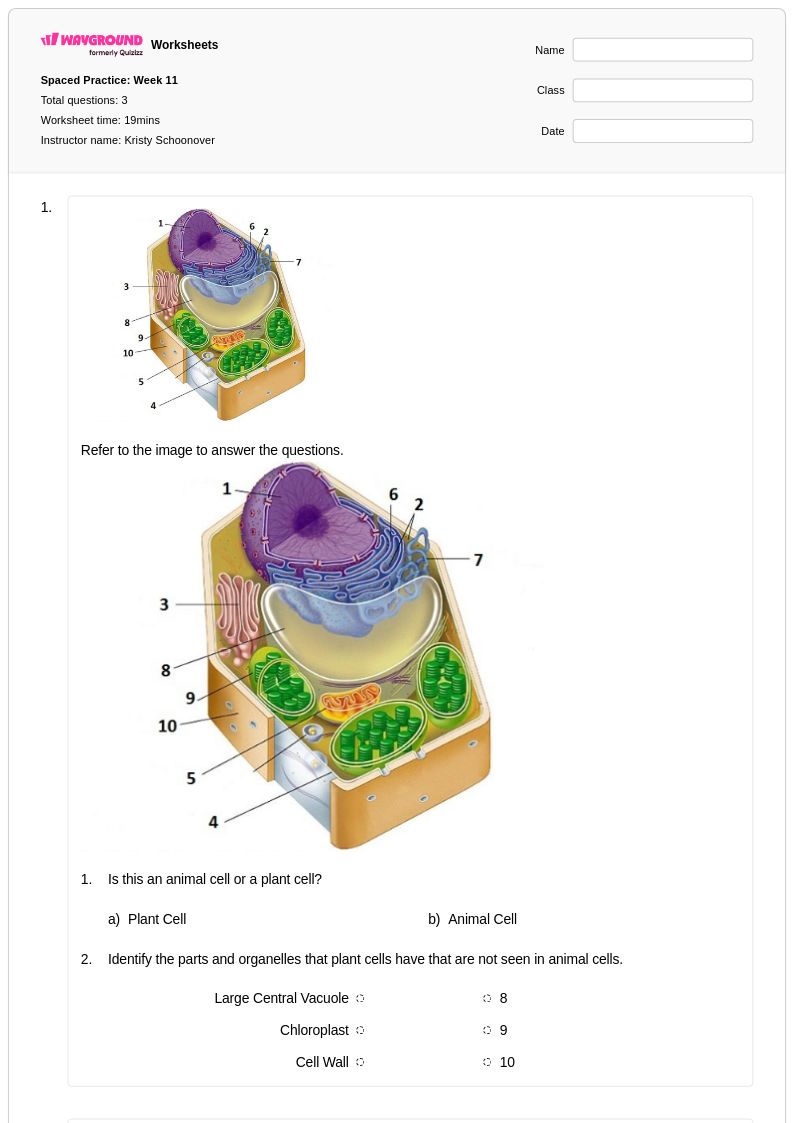
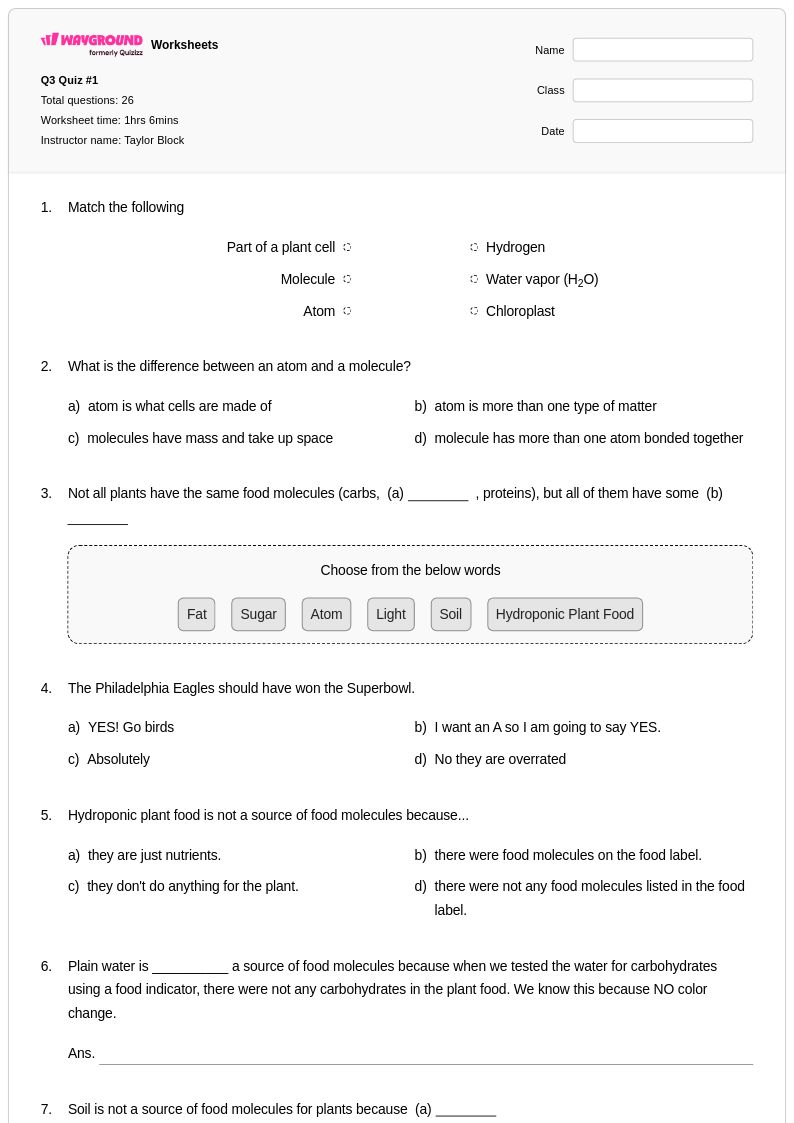
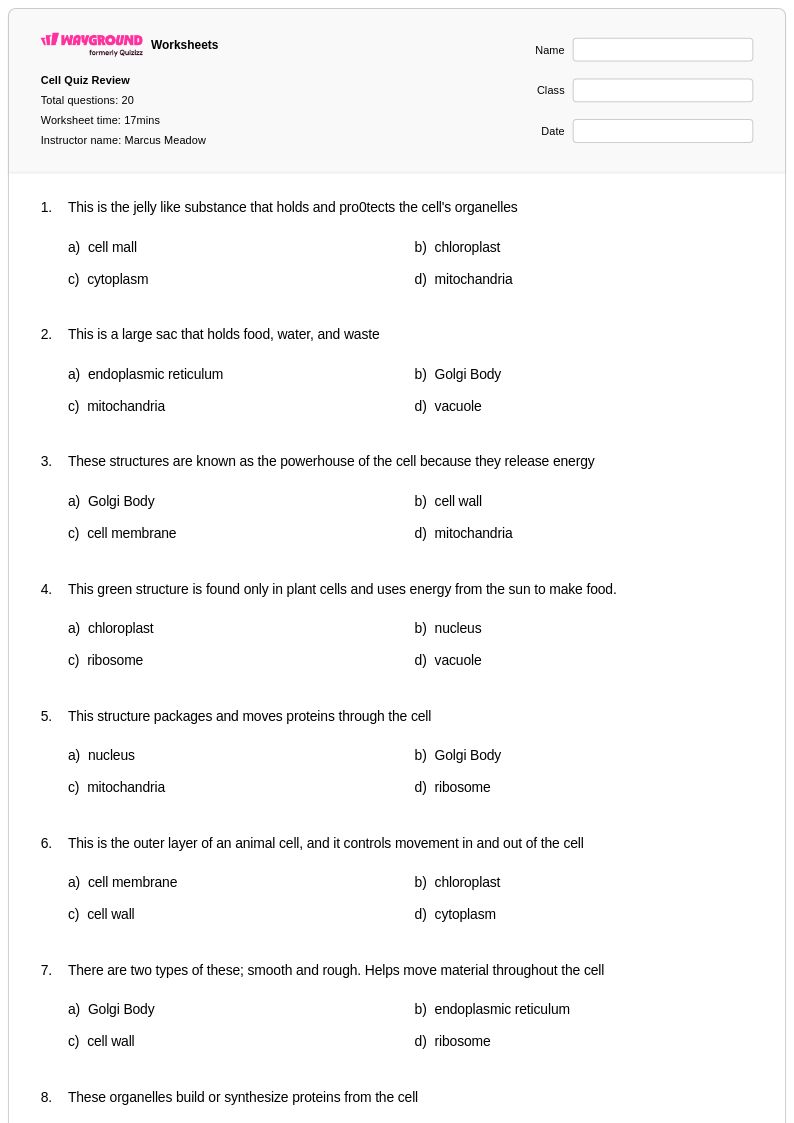
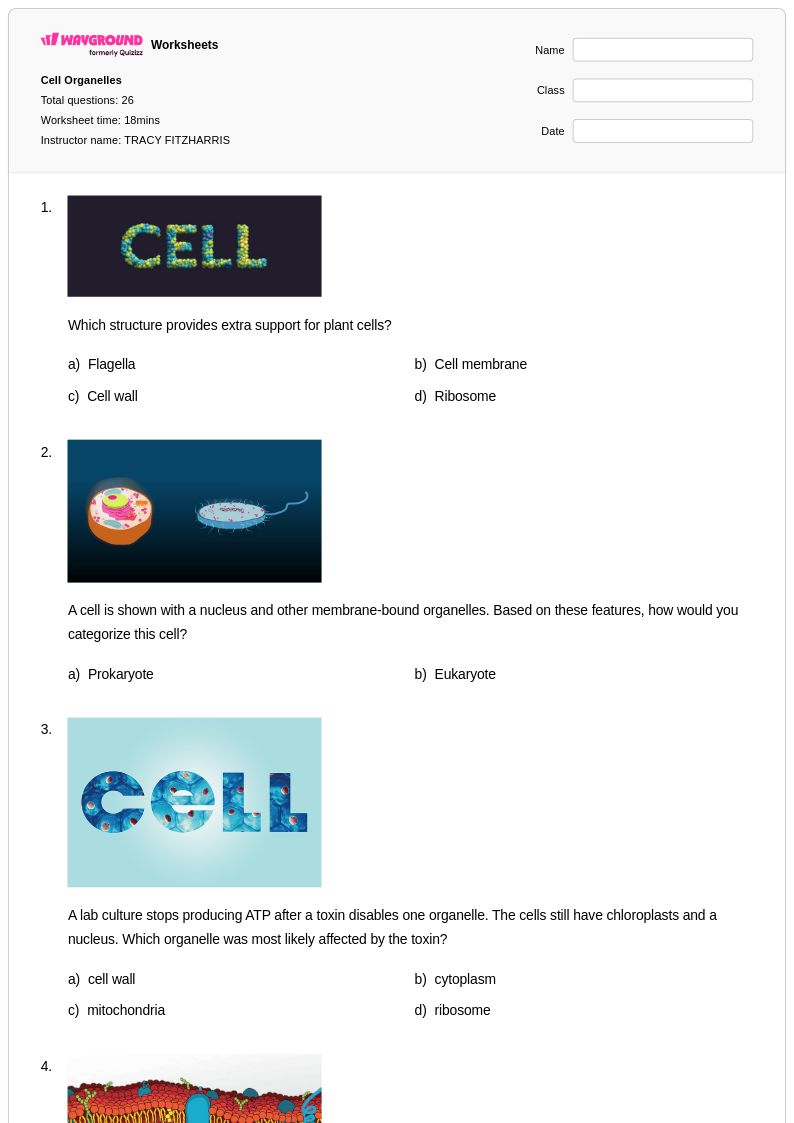
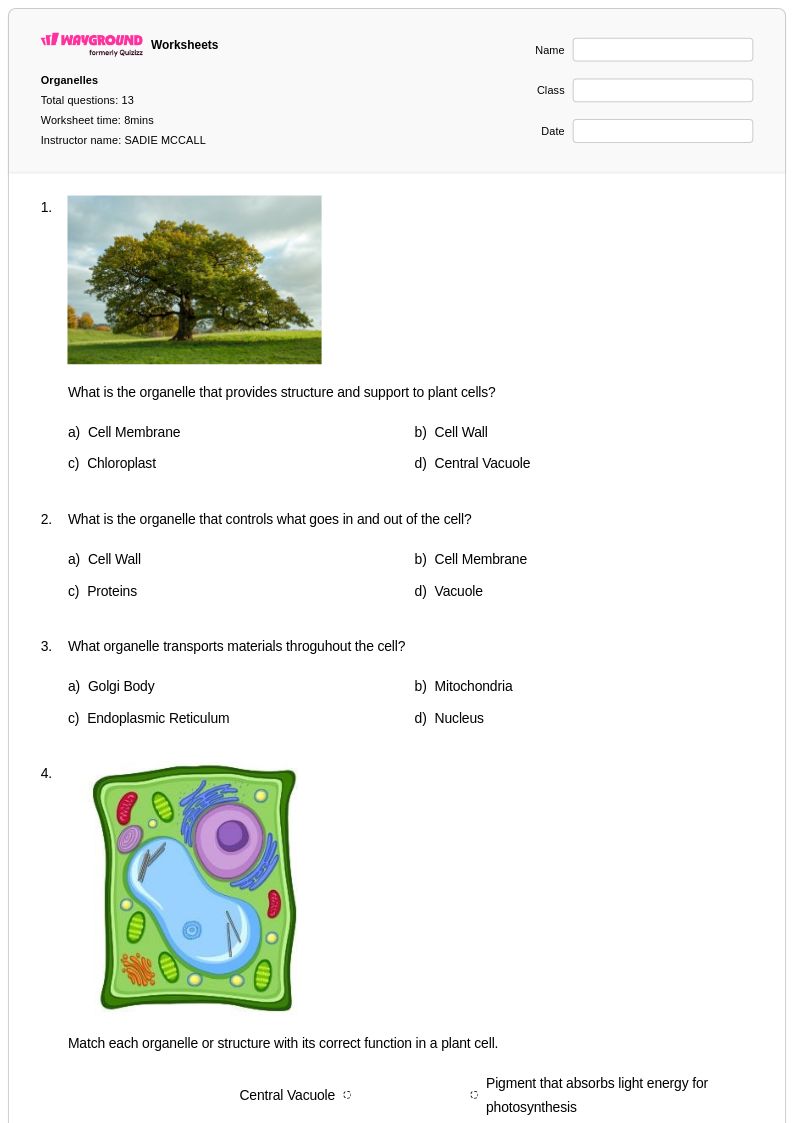
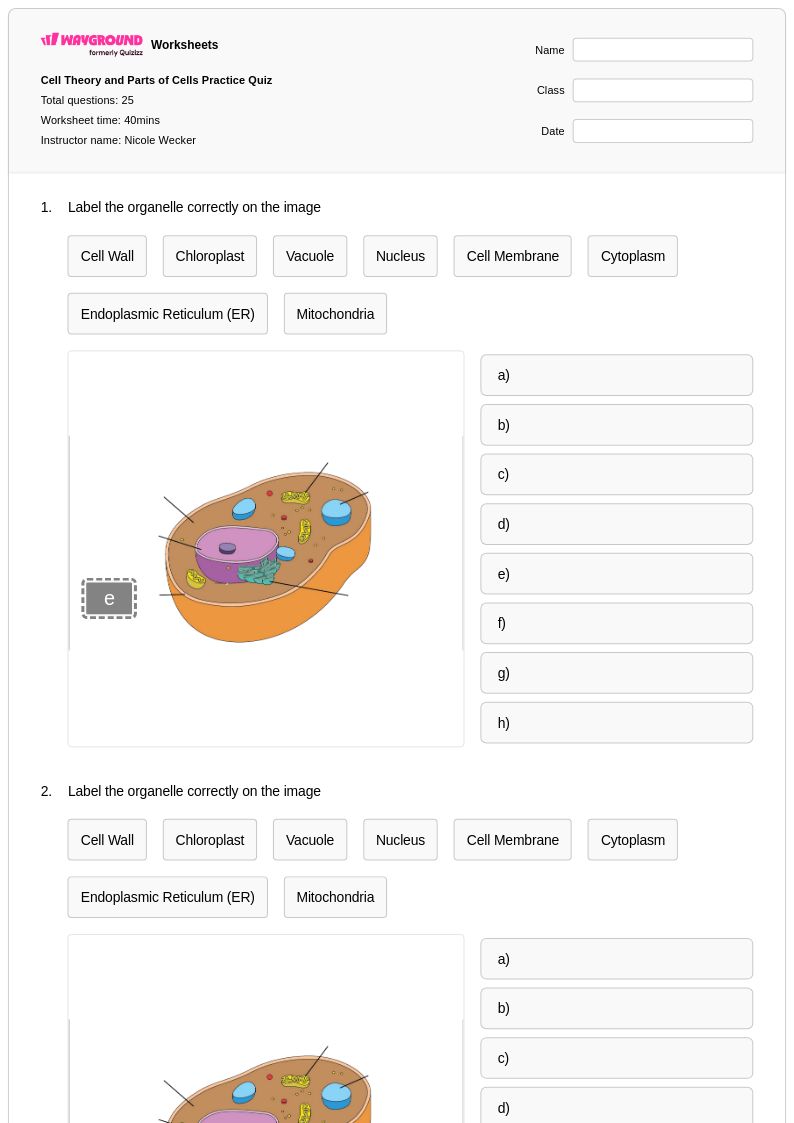
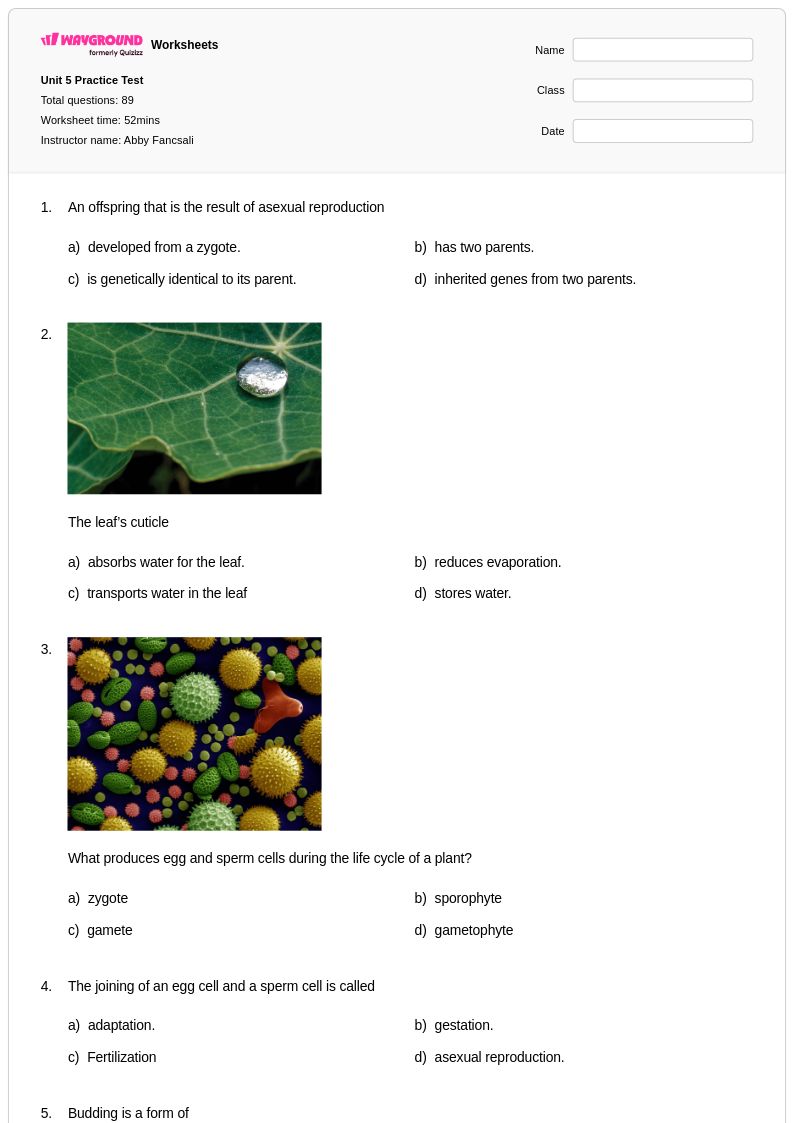
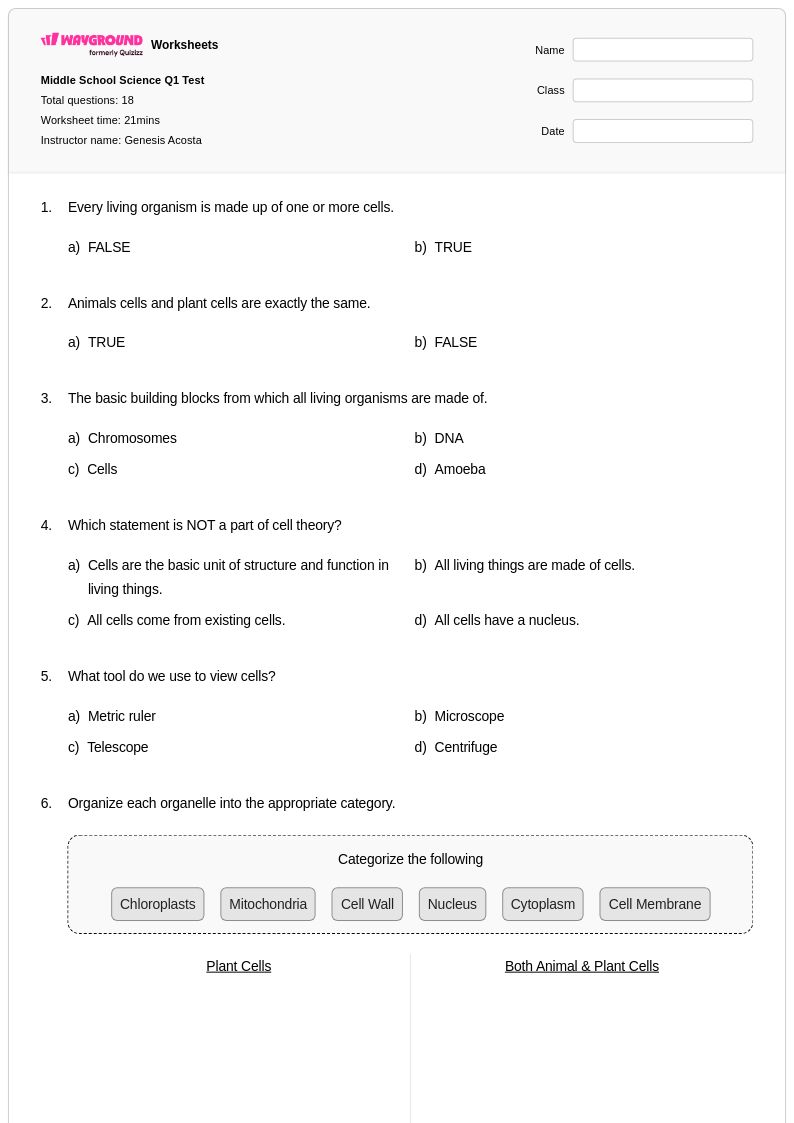
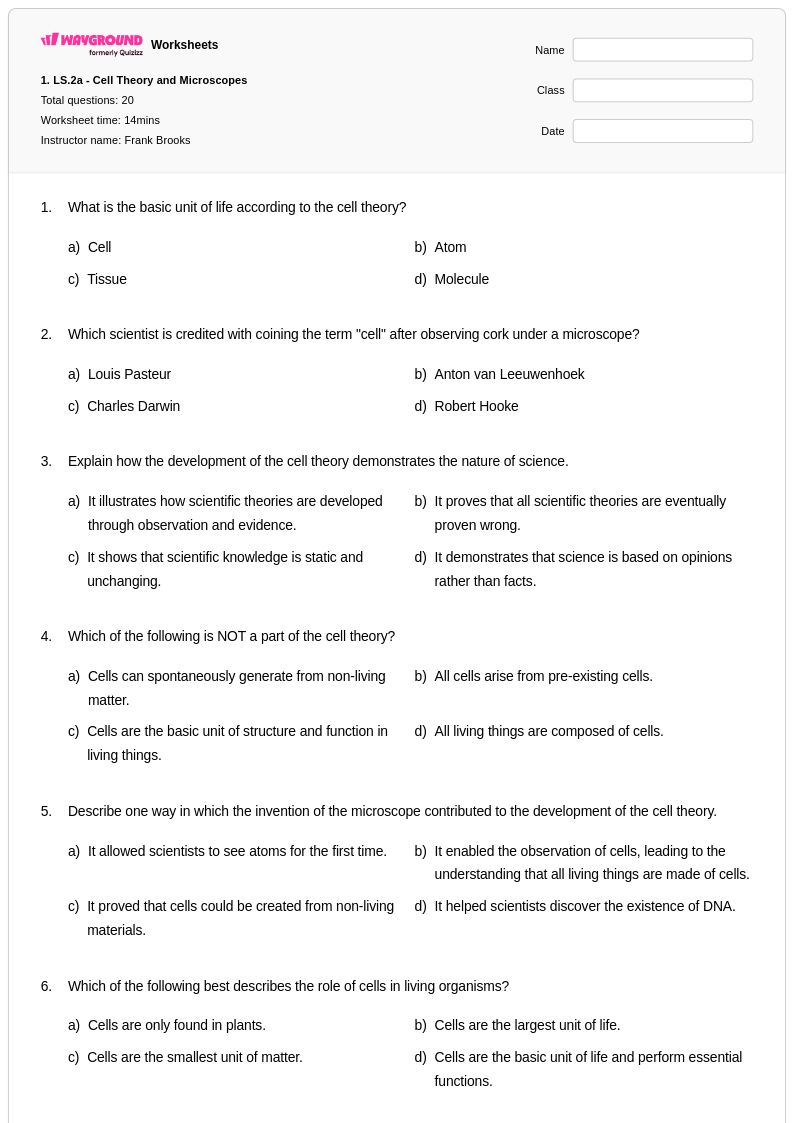
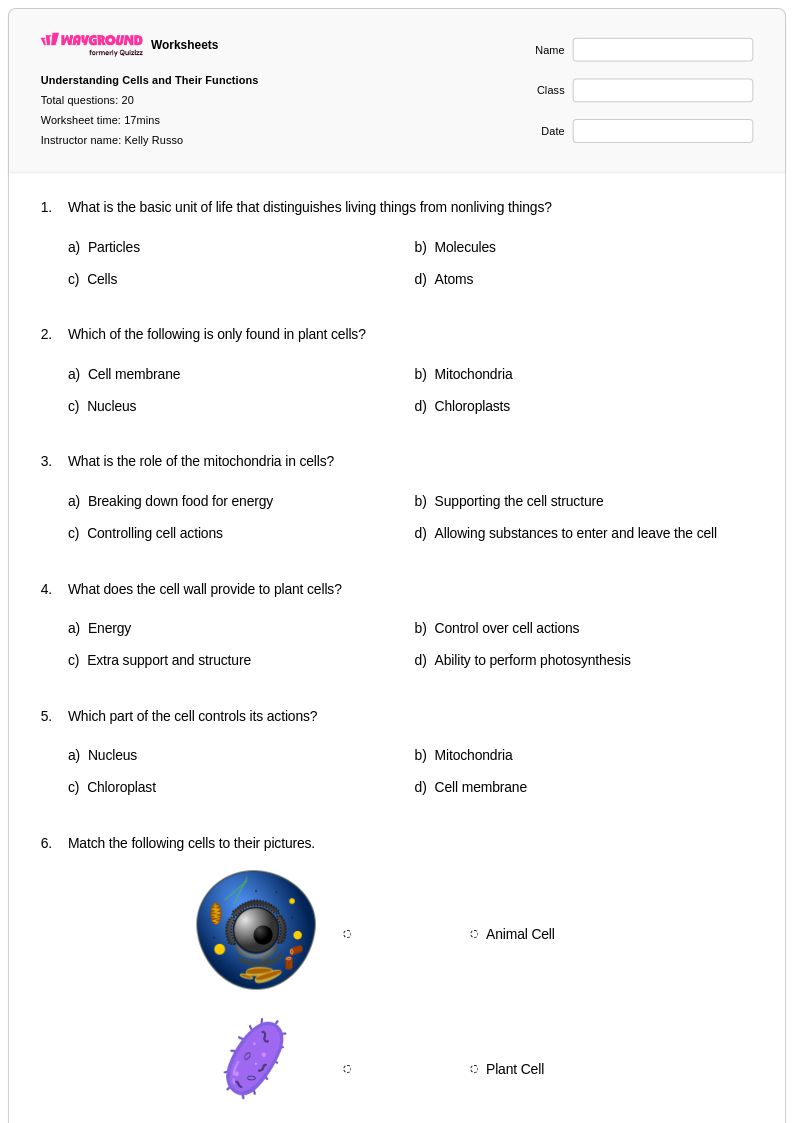
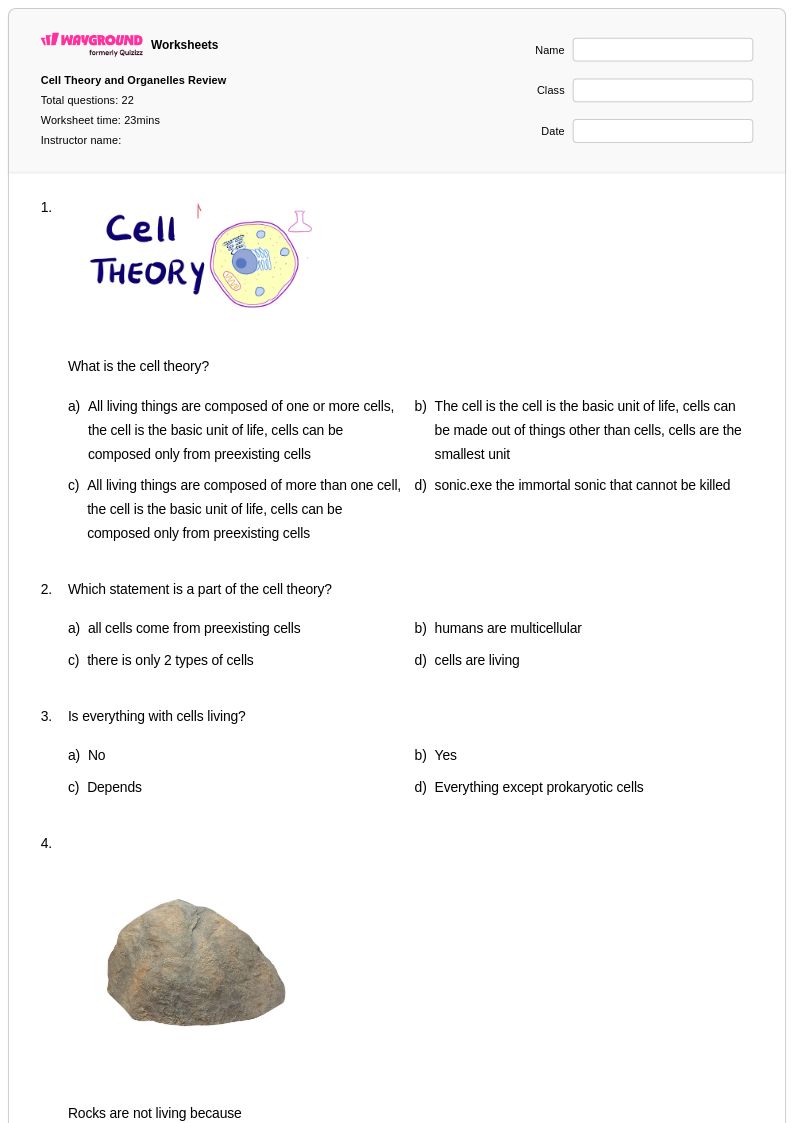
Plant cell structure worksheets for Grade 8 students available through Wayground (formerly Quizizz) provide comprehensive coverage of the fundamental components that make plant cells unique from animal cells. These expertly designed worksheets strengthen students' ability to identify and understand the functions of essential plant cell organelles including the cell wall, chloroplasts, vacuoles, nucleus, mitochondria, and cell membrane. The practice problems guide students through detailed labeling exercises, comparative analysis between plant and animal cells, and critical thinking questions about how cellular structures support plant life processes like photosynthesis and structural support. Each worksheet comes with a complete answer key and is available as a free printable pdf, making it easy for educators to assess student comprehension and provide immediate feedback on this crucial biology concept.
Wayground (formerly Quizizz) supports science educators with an extensive collection of millions of teacher-created plant cell structure resources that can be easily searched and filtered by specific learning objectives and standards alignment. Teachers benefit from robust differentiation tools that allow customization of worksheet difficulty levels, enabling them to address diverse learning needs within their Grade 8 biology classrooms. The platform's flexible format options include both printable pdf versions for traditional paper-and-pencil activities and digital formats for interactive online learning, giving educators the versatility to adapt their instruction to different teaching environments. These comprehensive worksheet collections streamline lesson planning while providing targeted resources for remediation of struggling students, enrichment opportunities for advanced learners, and consistent skill practice that reinforces understanding of plant cell structure and function throughout the unit.
FAQs
How do I teach plant cell structure to my students?
Teaching plant cell structure effectively starts with building a clear visual foundation — have students label and color a diagram of a plant cell, identifying organelles such as the chloroplast, cell wall, central vacuole, mitochondria, and nucleus. From there, connect each organelle to its function so students understand the cell as an integrated system rather than a list of parts. Comparing plant and animal cells is a powerful strategy because it highlights what makes plant cells structurally and functionally unique, reinforcing retention through contrast.
What are common misconceptions students have about plant cell structure?
One of the most frequent misconceptions is that plant cells contain only chloroplasts for energy, when in fact they also have mitochondria for cellular respiration. Students also commonly confuse the cell wall with the cell membrane, not realizing both are present in plant cells and serve distinct roles. Another persistent error is assuming the large central vacuole is just empty space, rather than understanding it as a dynamic organelle involved in turgor pressure, storage, and waste management.
What exercises help students practice identifying plant cell organelles?
Labeling diagrams is the most direct practice format for organelle identification, requiring students to recall and place organelle names accurately without visual cues. Matching exercises that pair organelle names with functions push students beyond recognition into applied understanding. Fill-in-the-blank practice problems that describe an organelle's role and ask students to name it are particularly effective for reinforcing the structure-function relationship central to understanding plant cells.
How can I use plant cell structure worksheets to differentiate instruction?
For students who need scaffolding, use partially completed diagrams or word banks to reduce cognitive load while still requiring active engagement with the content. For advanced learners, extend practice with open-ended questions about how organelle dysfunction would affect the cell's ability to photosynthesize or maintain structural integrity. On Wayground, teachers can apply individual accommodations such as reduced answer choices, extended time, and read-aloud support to meet the needs of diverse learners within the same assignment.
How do I use Wayground's plant cell structure worksheets in my classroom?
Wayground's plant cell structure worksheets are available as free printable PDFs for traditional classroom use and in digital formats for technology-integrated environments, giving teachers flexibility in how they deploy the material. Teachers can also host worksheets directly as a quiz on Wayground, enabling real-time student response tracking. Each worksheet includes a complete answer key, making them efficient for both guided instruction and independent practice without additional preparation.
How do plant cell structure worksheets fit into a biology curriculum?
Plant cell structure is typically introduced as part of a broader cell biology unit and serves as a prerequisite for understanding photosynthesis, cellular respiration, and plant physiology. Worksheets that target specific organelles and their functions help students build the vocabulary and conceptual framework needed before tackling more complex processes. Placing structured practice early in the unit ensures students can accurately describe and distinguish plant cell components before applying that knowledge to metabolic pathways.