Free Printable Prefix 'Un-' Worksheets for Kindergarten
Discover free kindergarten worksheets and printables that help young learners master the prefix 'un-' through engaging practice problems, with answer keys included for easy assessment and learning support.
Explore printable Prefix 'Un-' worksheets for Kindergarten
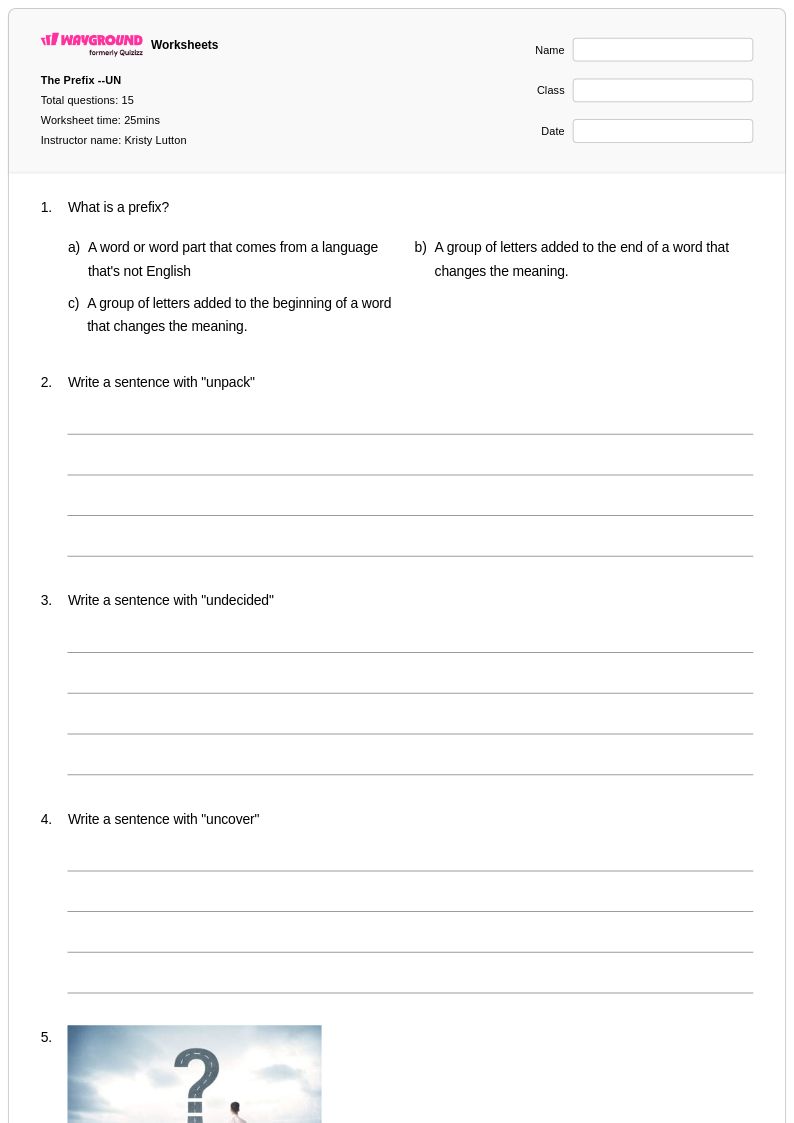
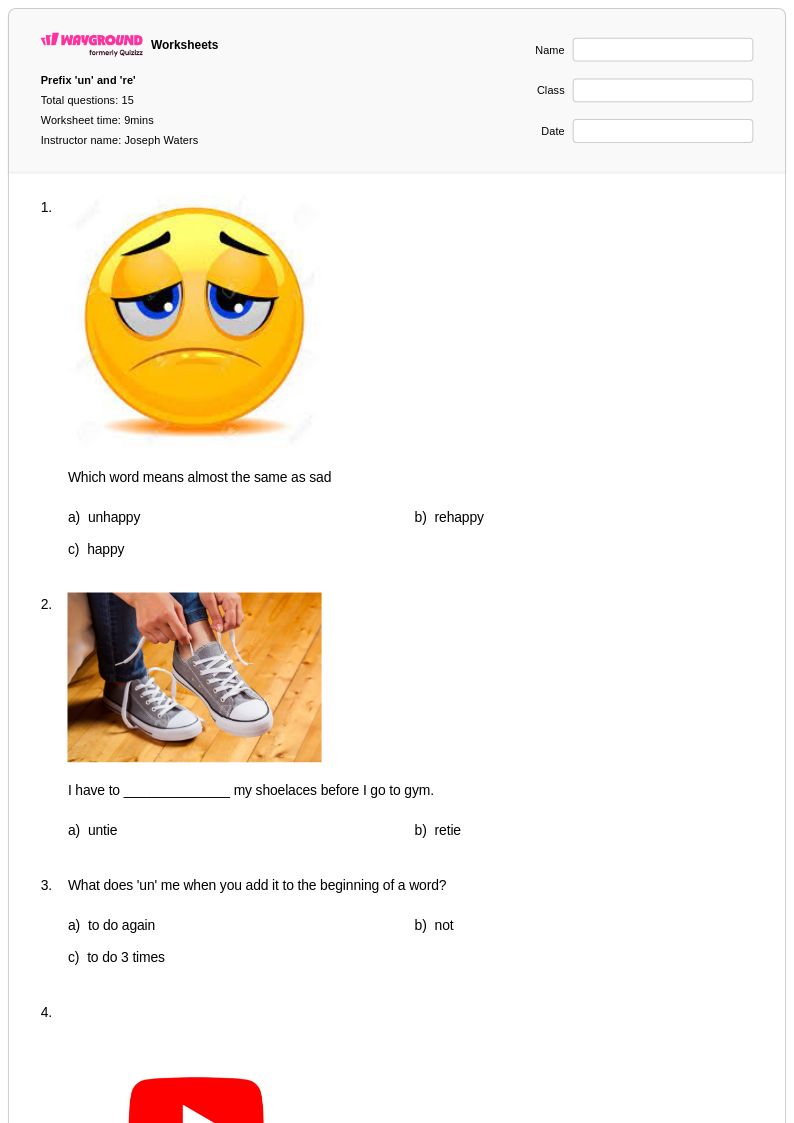
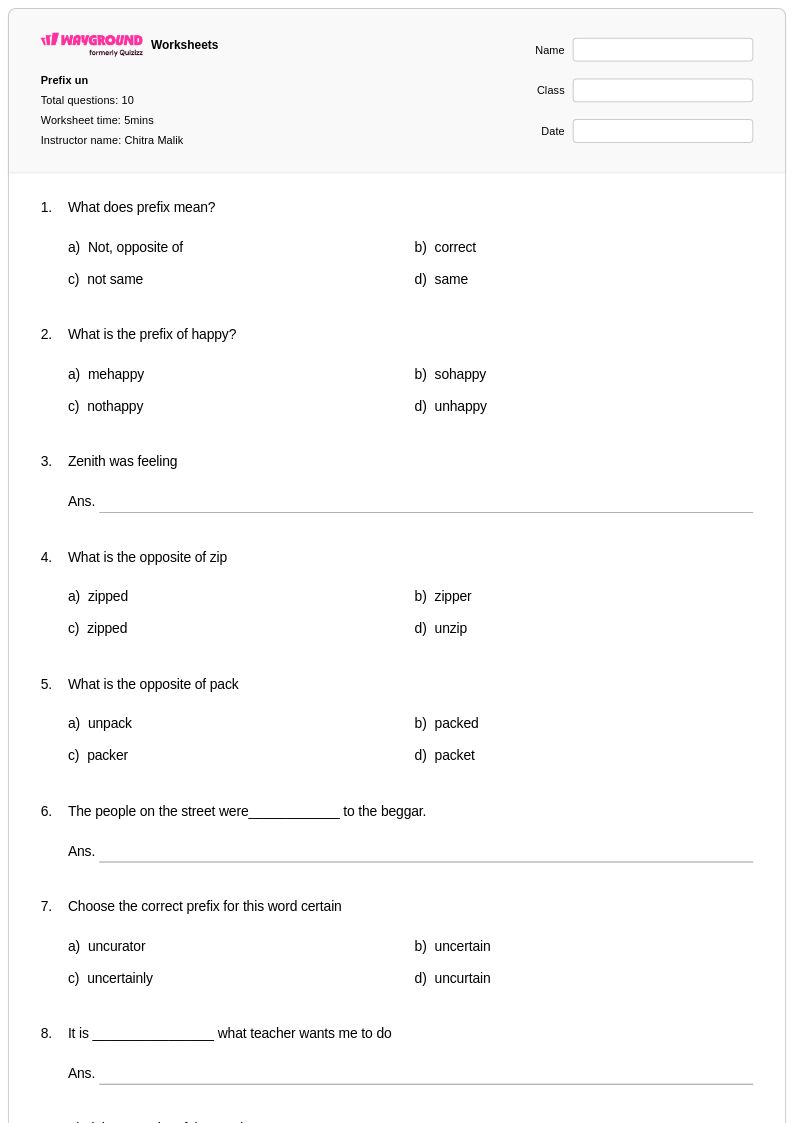
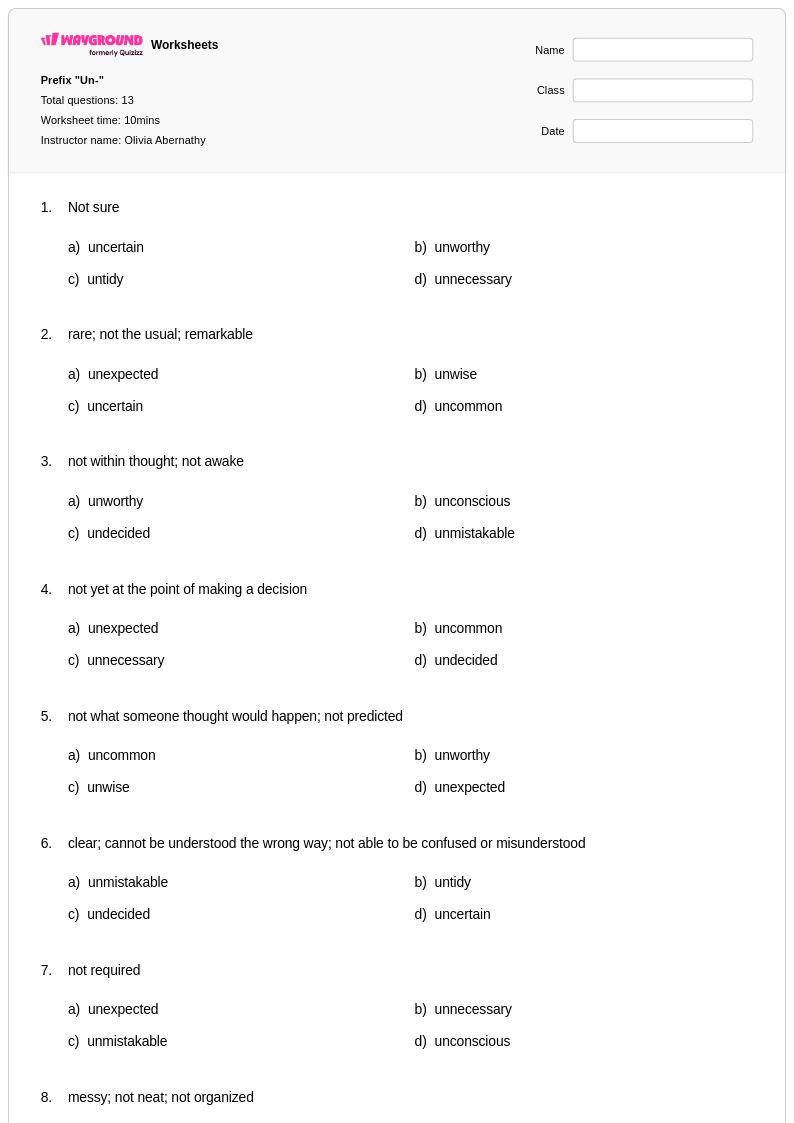
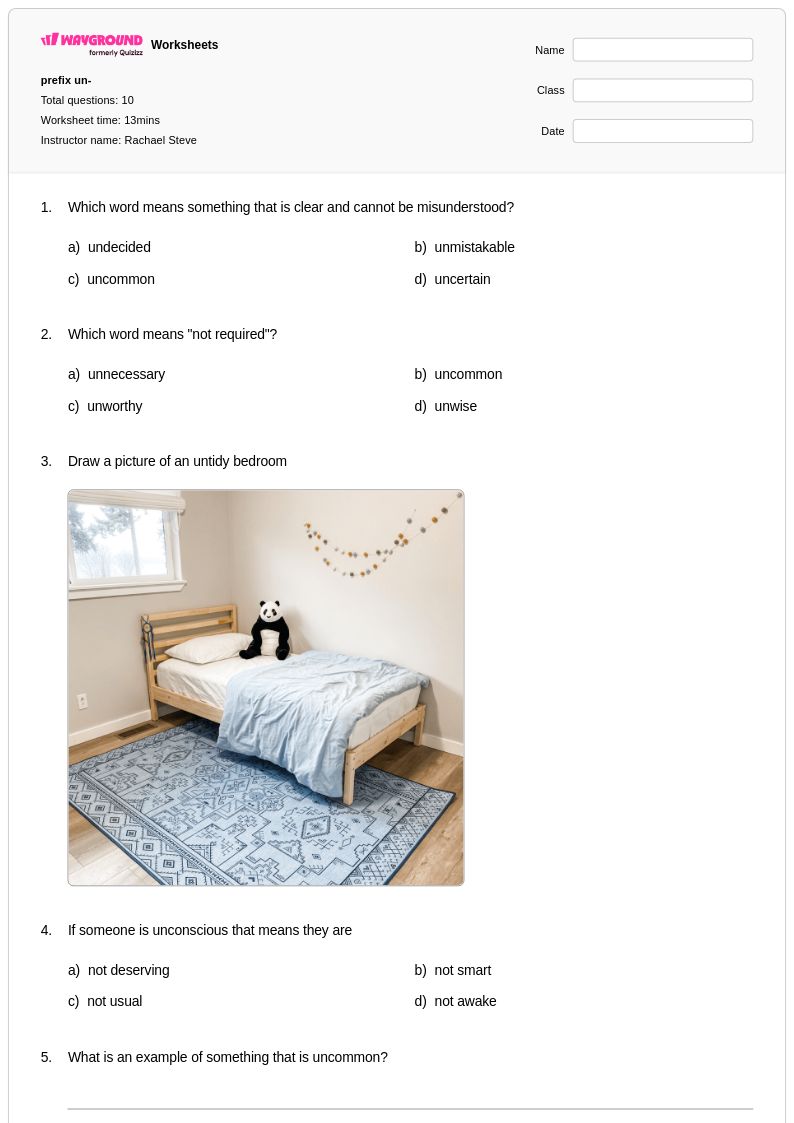
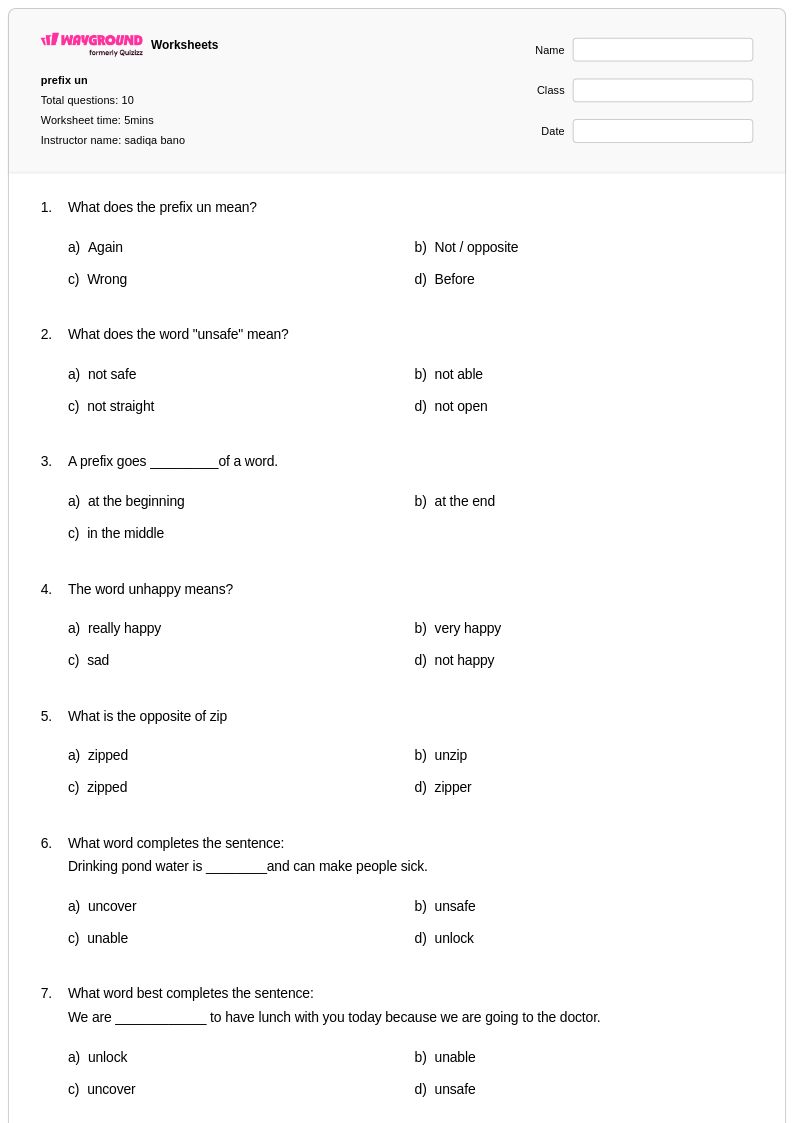
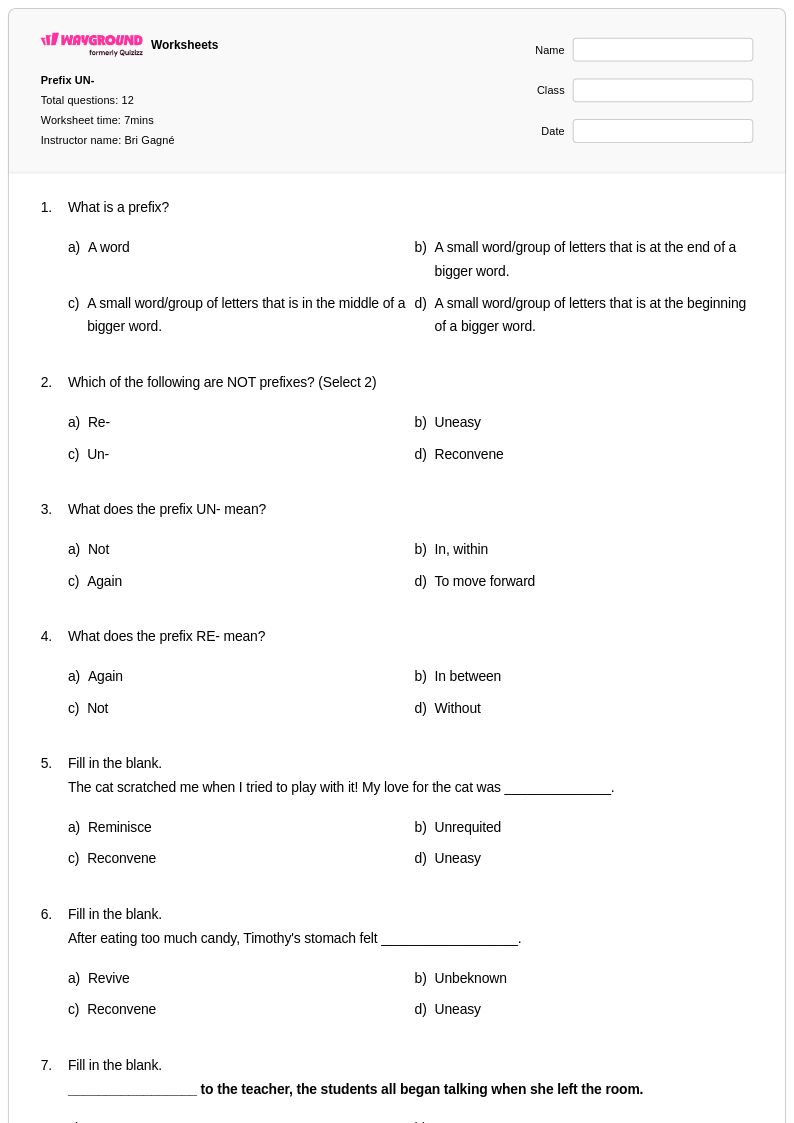
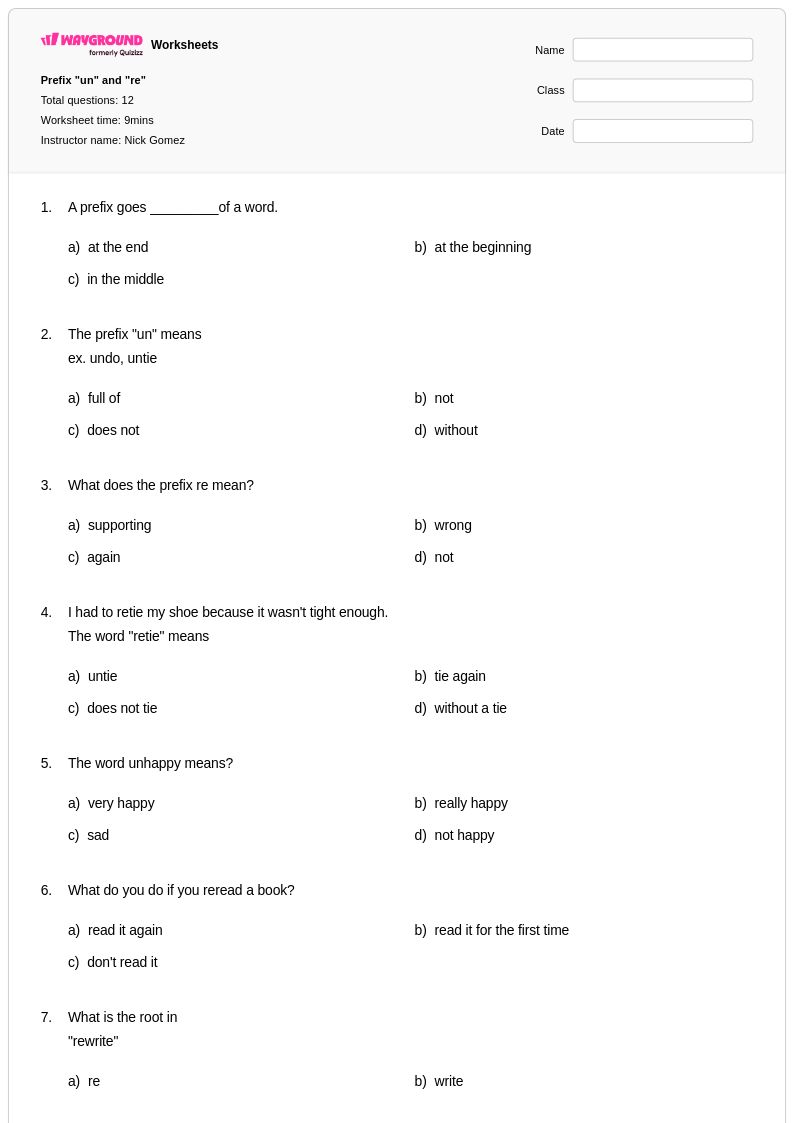
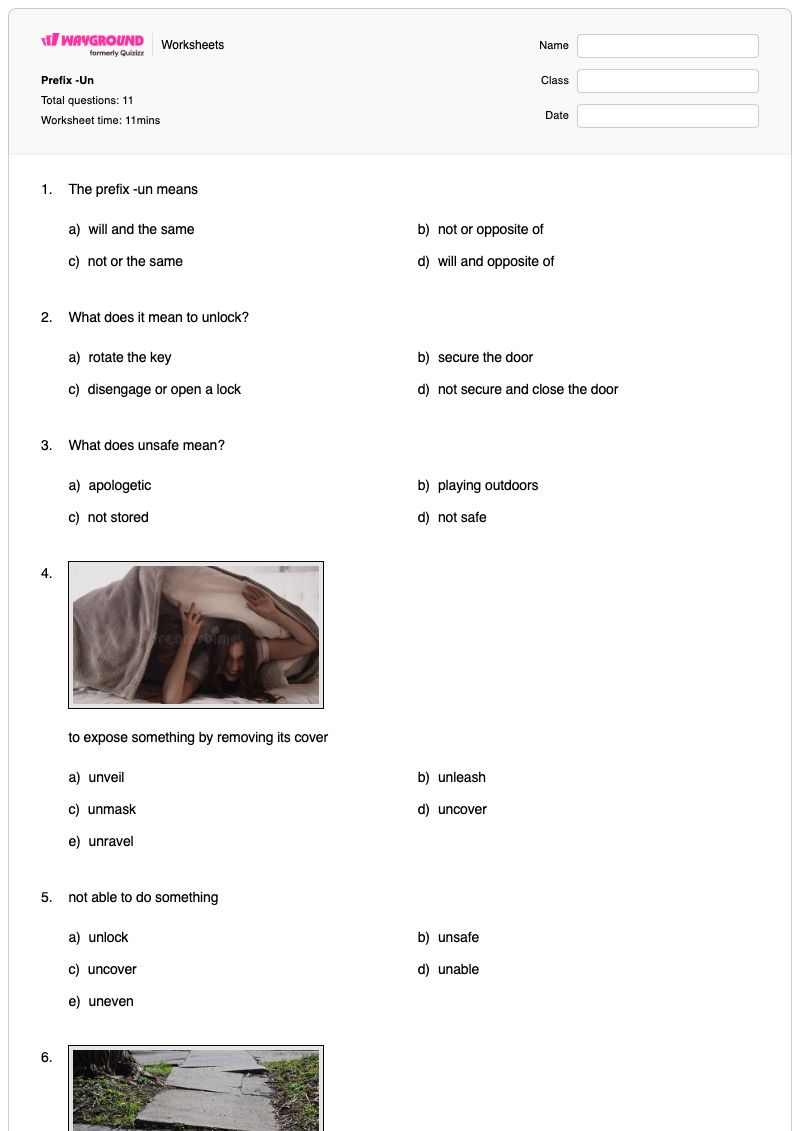
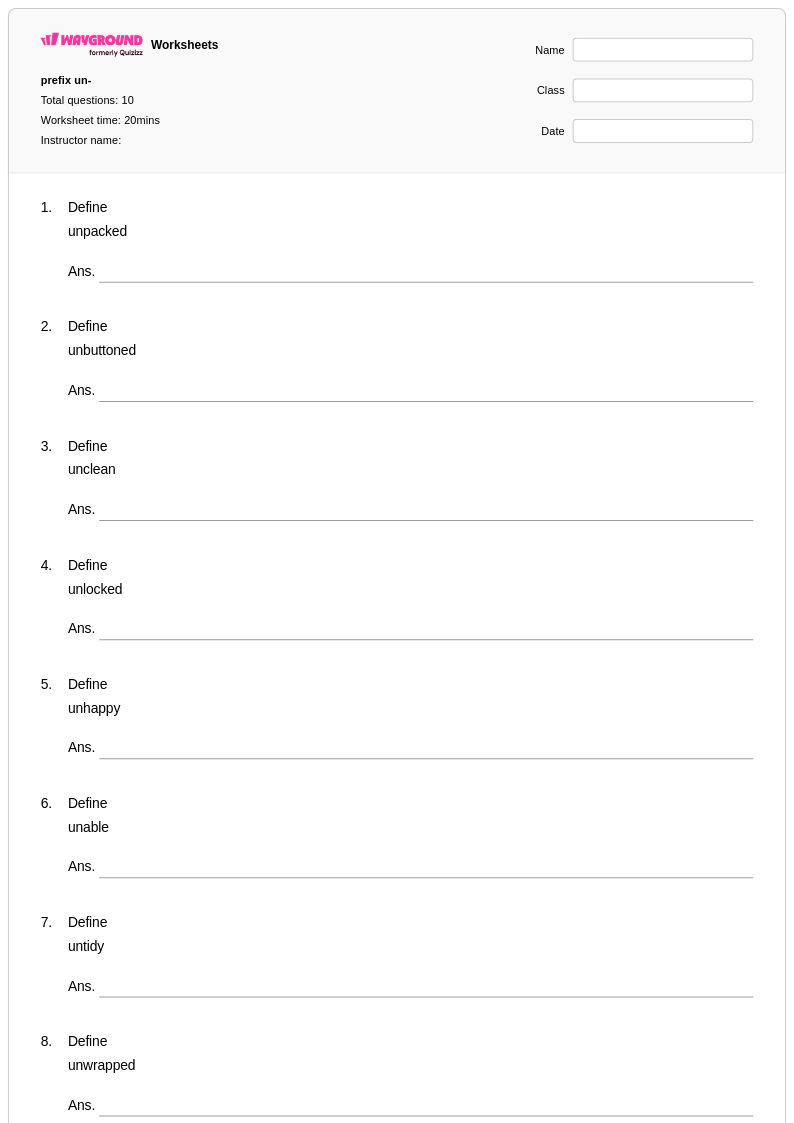
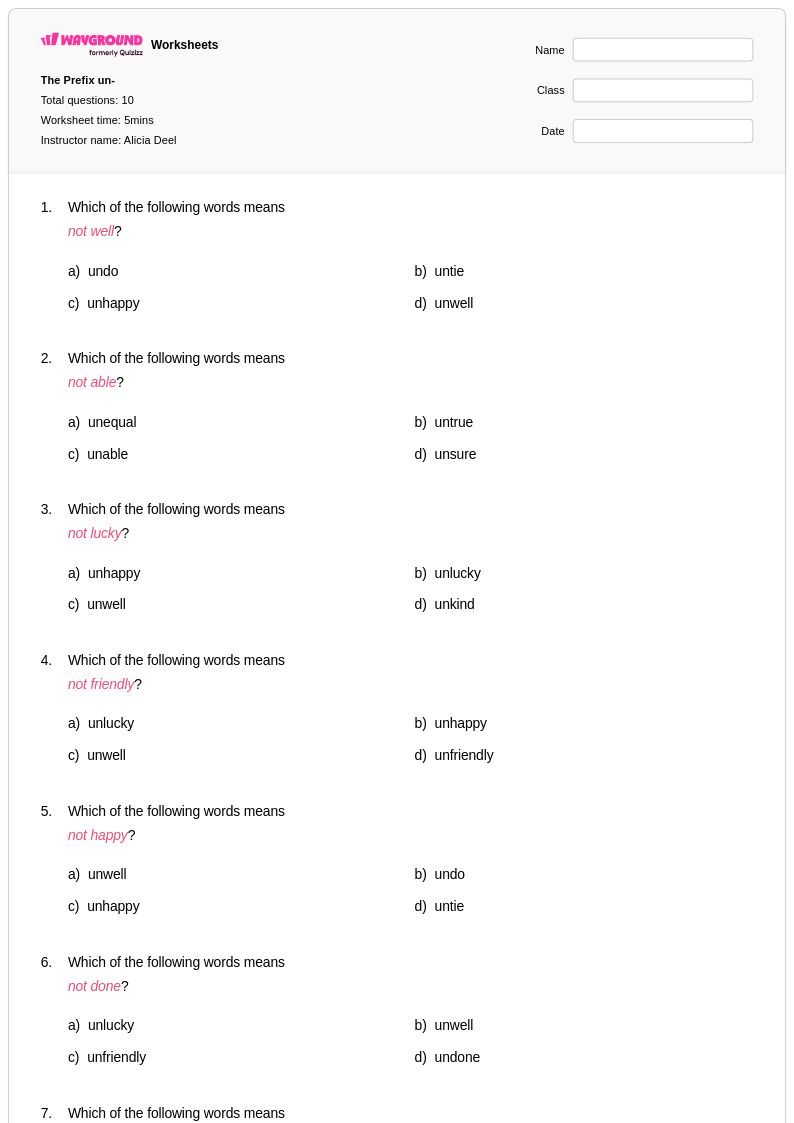
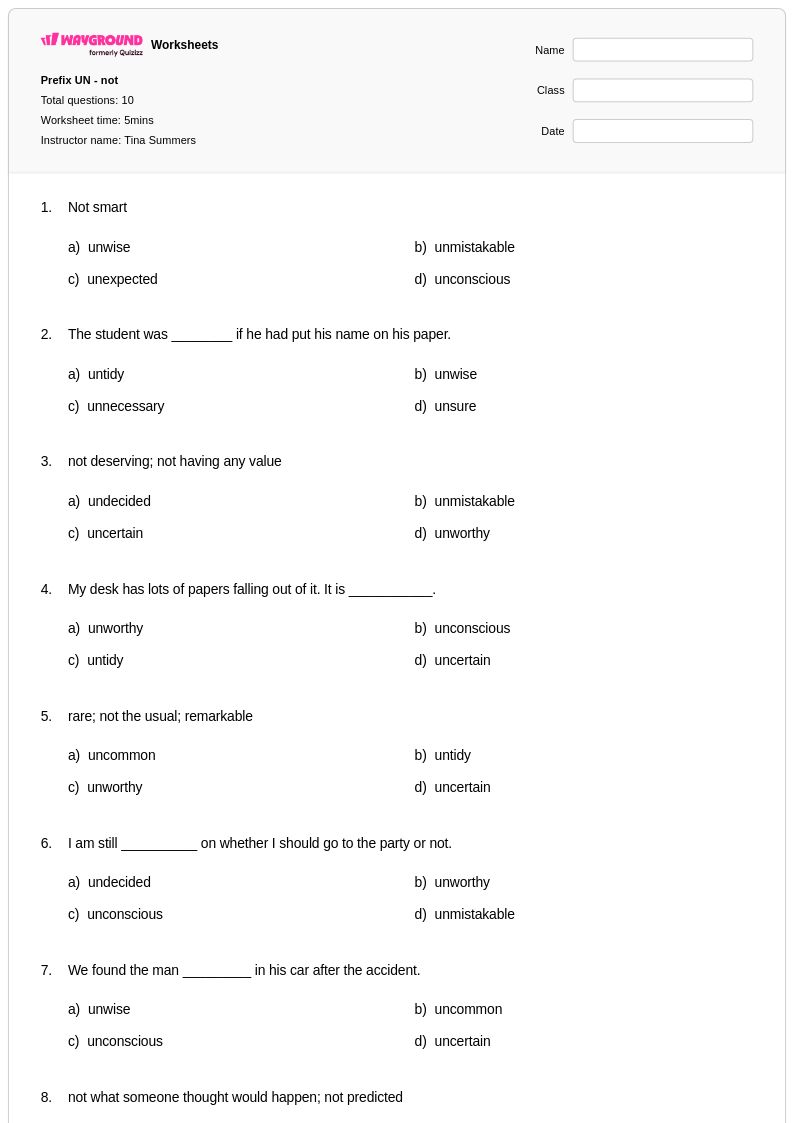
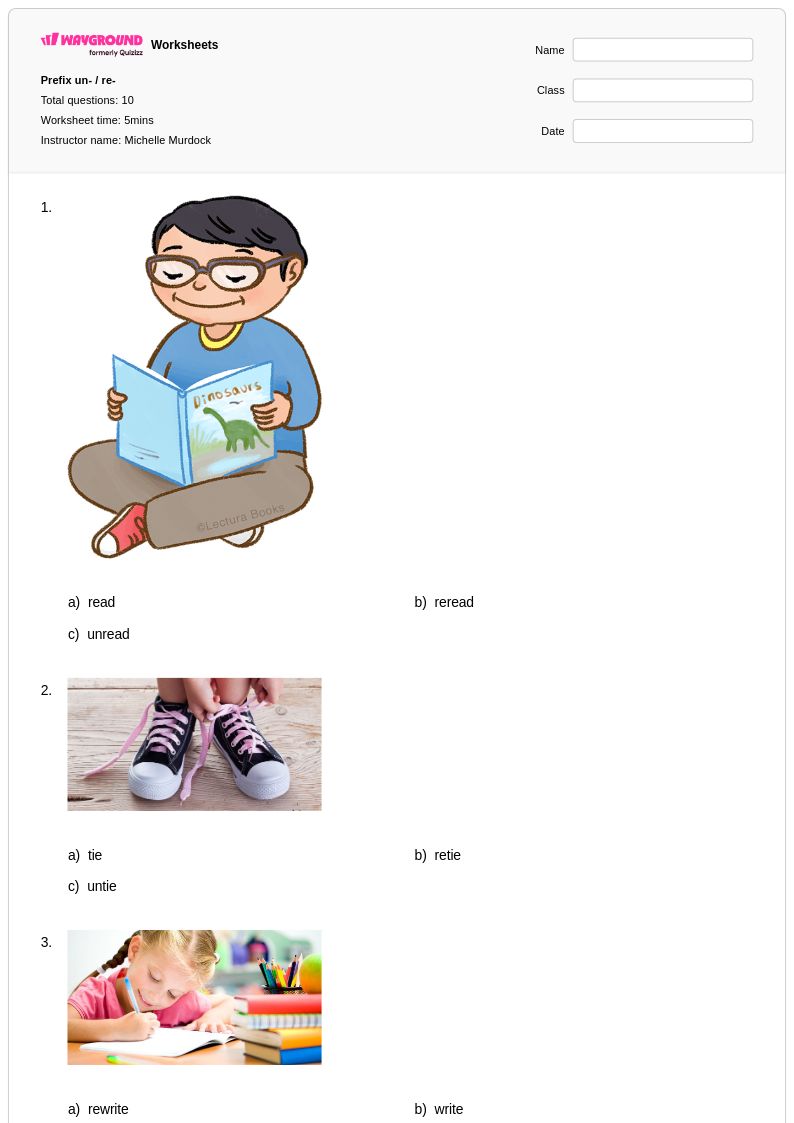
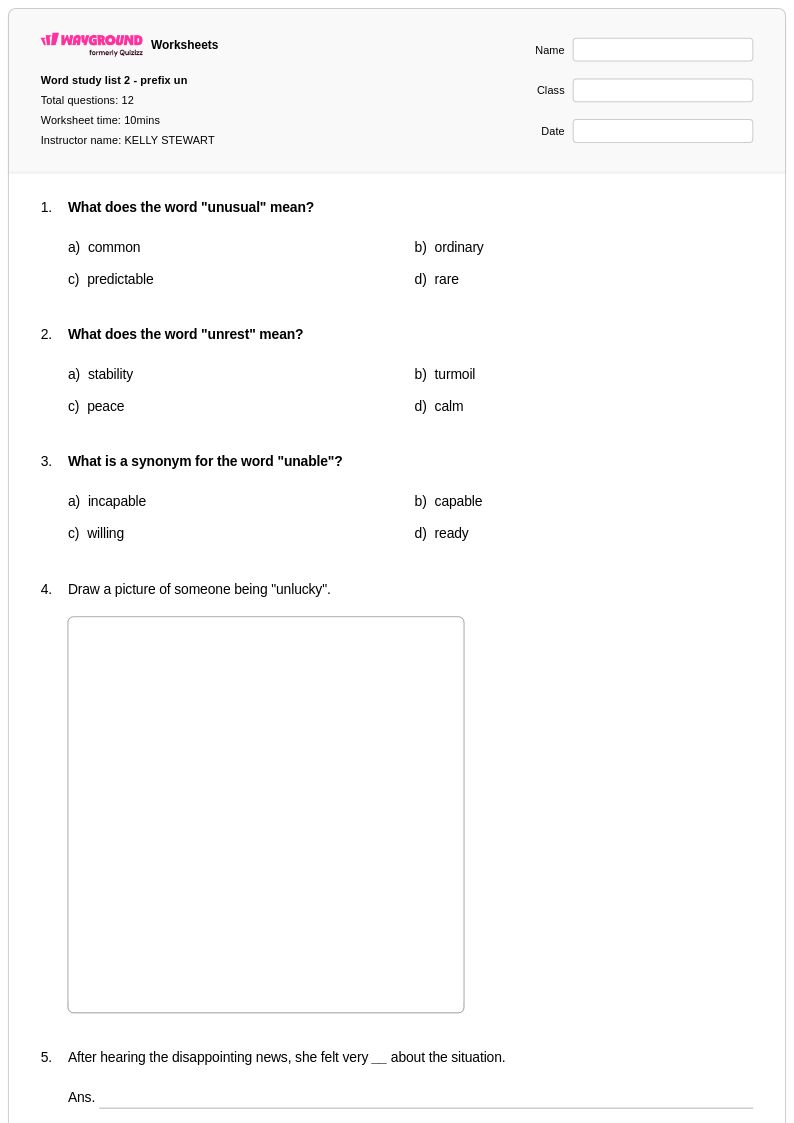
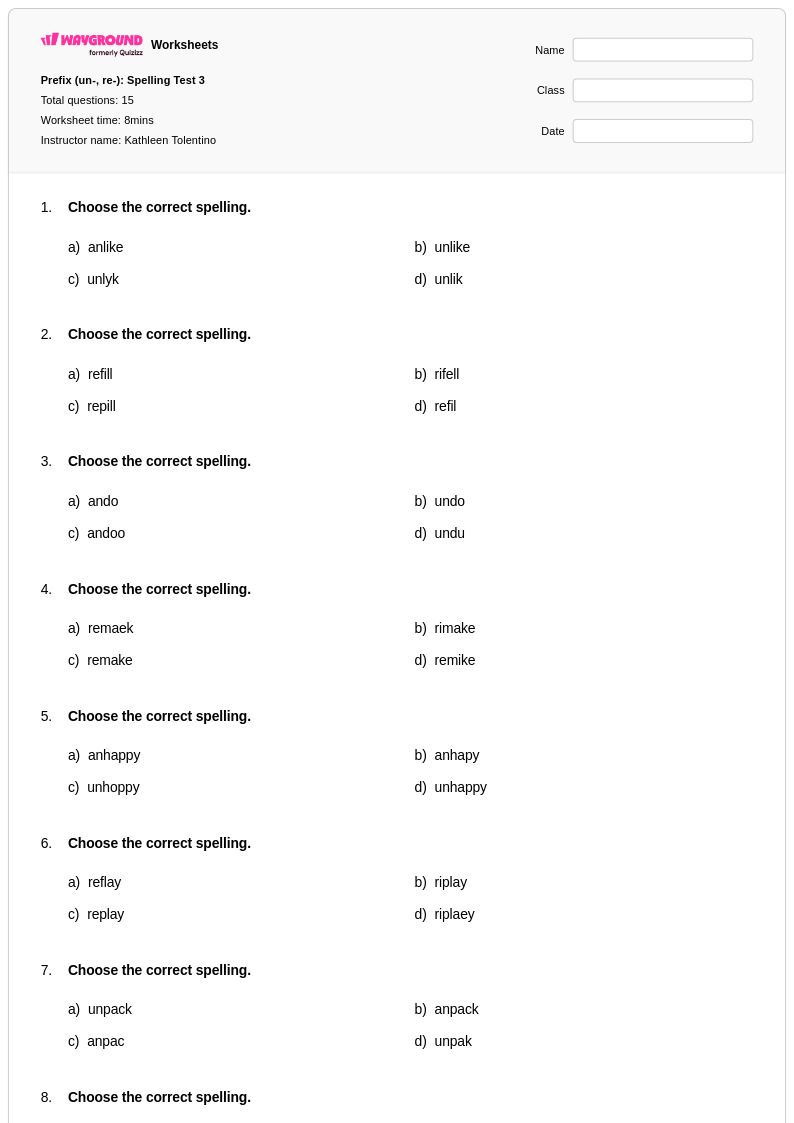
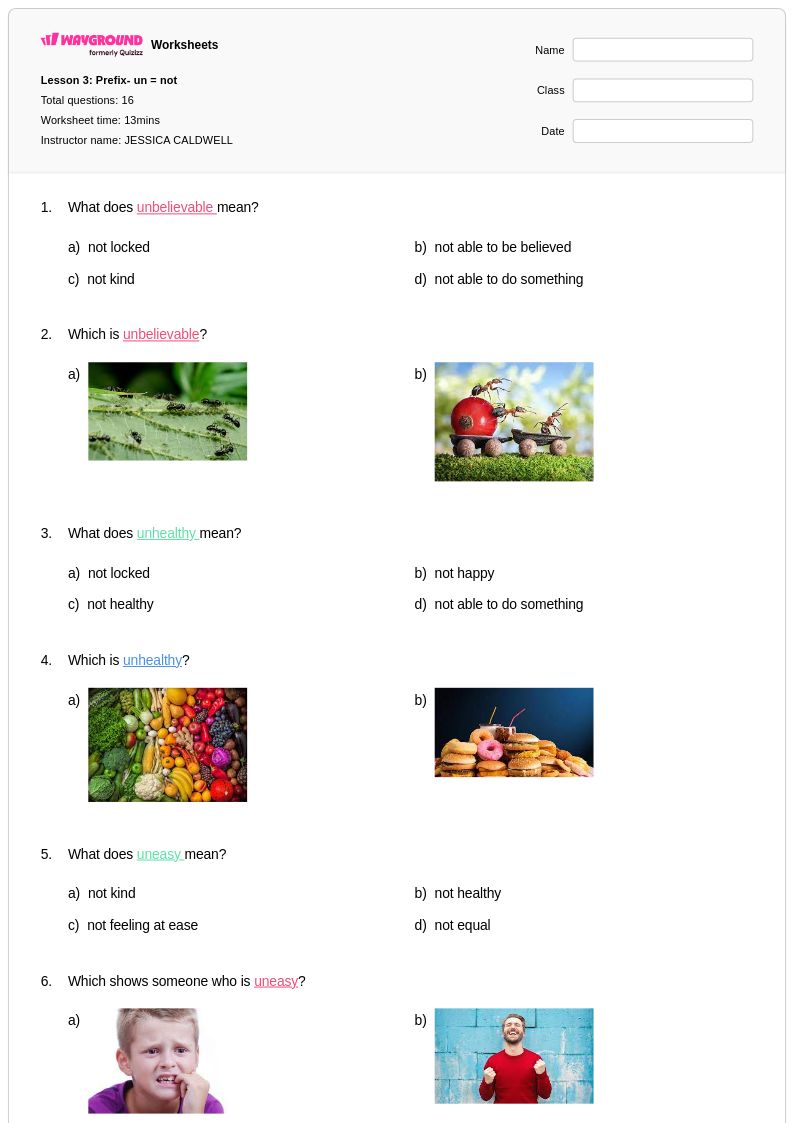
Prefix 'Un-' worksheets for kindergarten students provide essential foundation work in recognizing and understanding how this common prefix changes word meanings. These carefully designed resources help young learners identify that adding "un-" to the beginning of familiar words creates opposite meanings, such as happy becoming unhappy or tied becoming untied. Through engaging practice problems featuring colorful illustrations and age-appropriate vocabulary, students develop crucial phonemic awareness and early reading comprehension skills. Each worksheet includes clear answer keys for easy assessment, and the free printable pdf format makes these valuable resources accessible for both classroom instruction and home practice, supporting kindergarteners as they build their understanding of word patterns and vocabulary expansion.
Wayground (formerly Quizizz) empowers kindergarten teachers with an extensive collection of prefix 'Un-' worksheets drawn from millions of teacher-created resources specifically designed for early elementary instruction. The platform's robust search and filtering capabilities allow educators to quickly locate materials that align with curriculum standards and match their students' developmental needs. Teachers can easily differentiate instruction by selecting from various difficulty levels and worksheet formats, while the flexible customization tools enable modification of existing resources to better serve individual learning objectives. Available in both printable and digital pdf formats, these worksheets support comprehensive lesson planning and provide versatile options for skill practice, remediation activities, and enrichment opportunities that strengthen kindergarteners' foundational understanding of prefix patterns.
FAQs
How do I teach the prefix 'un-' to elementary students?
Start by anchoring the concept to familiar word pairs students already know, such as 'happy' and 'unhappy' or 'tie' and 'untie', so they can see how 'un-' consistently signals the opposite or reversal of the root word's meaning. From there, move into guided word-building activities where students apply 'un-' to new root words and predict meanings before checking definitions. Grounding the lesson in meaning rather than memorization helps students generalize the pattern to unfamiliar vocabulary independently.
What exercises help students practice the prefix 'un-' effectively?
The most effective practice combines multiple activity types: word construction tasks where students attach 'un-' to root words, definition matching that reinforces meaning, and sentence-level exercises requiring contextual usage. Adding a sorting component, where students distinguish between valid 'un-' words and non-words, builds morphological judgment rather than rote recall. Rotating between these formats ensures students encounter the prefix across different cognitive demands.
What mistakes do students commonly make with the prefix 'un-'?
A frequent error is overgeneralizing the prefix by attaching 'un-' to root words that take a different negative prefix, such as writing 'unpossible' instead of 'impossible' or 'unresponsible' instead of 'irresponsible'. Students also sometimes confuse reversal meaning with simple negation, not recognizing that 'unlock' implies an action was previously performed rather than just a state of absence. Targeted practice with contrast sets helps students internalize where 'un-' applies and where it does not.
How does learning the prefix 'un-' help students with reading comprehension?
Recognizing 'un-' as a meaning unit allows students to decode unfamiliar words mid-reading without stopping to look them up, which preserves reading fluency and comprehension. When a student encounters a word like 'uncharted' or 'unprecedented', the ability to parse the prefix from the root gives them an immediate semantic foothold. This morphological awareness compounds over time, as students apply the same decoding strategy to other prefixes they encounter.
How can I use prefix 'un-' worksheets in my classroom?
Prefix 'un-' worksheets on Wayground are available as printable PDFs for traditional classroom use and in digital formats for technology-integrated instruction, making them easy to deploy whether students are working at their desks or on devices. Teachers can also host the worksheets as a quiz directly on Wayground, which adds an interactive layer to what would otherwise be independent practice. The included answer keys make self-checking or teacher grading straightforward, reducing prep time without sacrificing accountability.
How can I differentiate prefix 'un-' instruction for students at different skill levels?
For students at the foundational level, limit practice to high-frequency, single-syllable root words like 'kind', 'safe', and 'clean' before introducing multisyllabic roots. More advanced students can explore morphological analysis by comparing 'un-' to related negative prefixes, identifying patterns in which roots each prefix attaches to. On Wayground, teachers can apply accommodations such as reduced answer choices or read-aloud support to individual students, allowing the same worksheet to serve a range of learners without requiring separate materials.