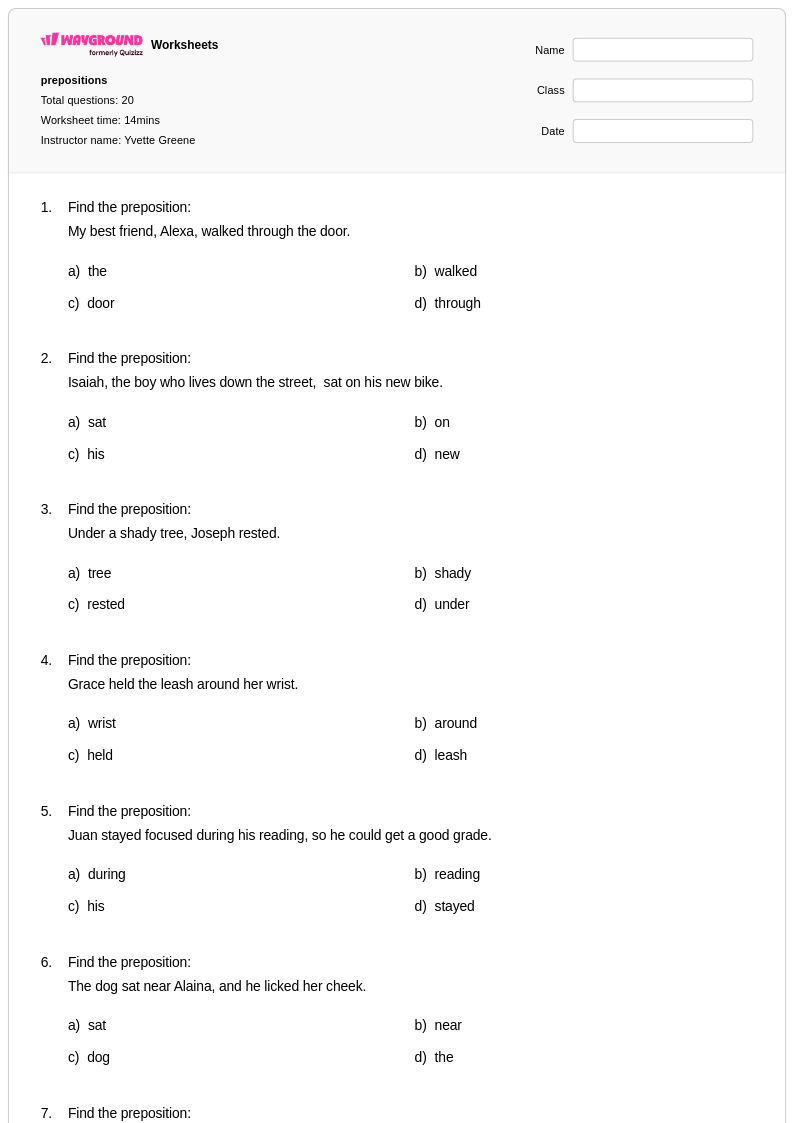
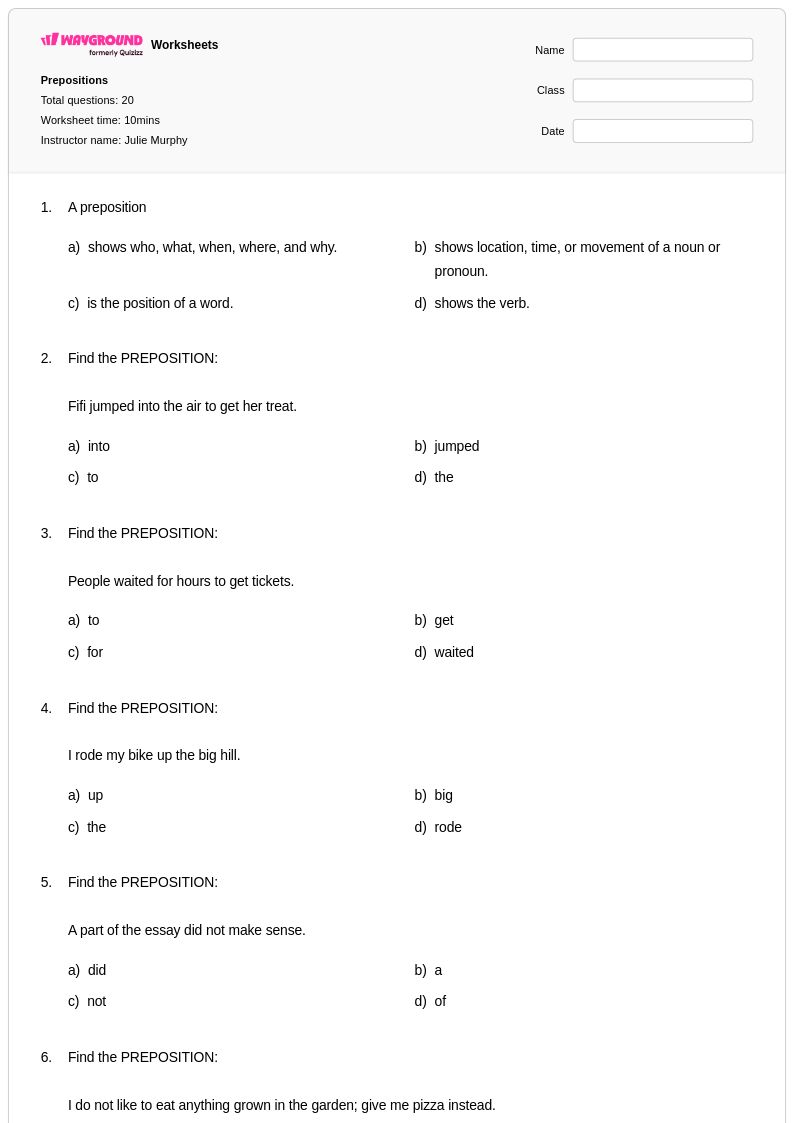
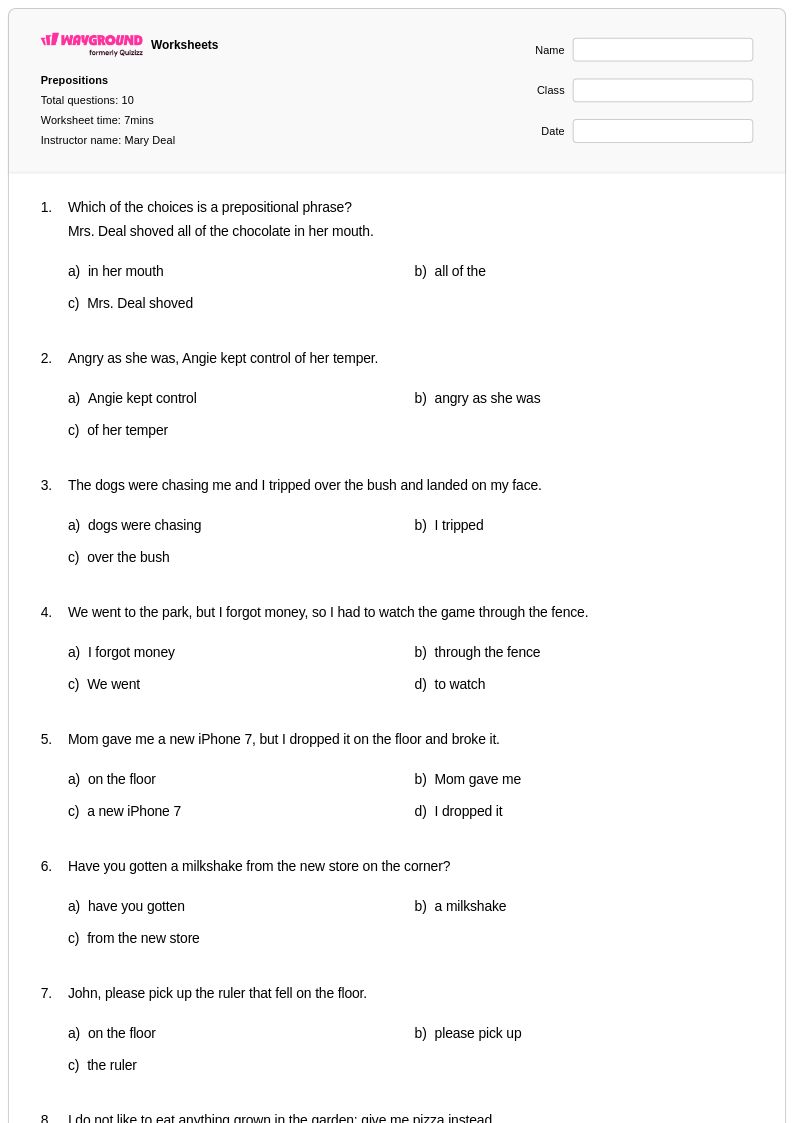
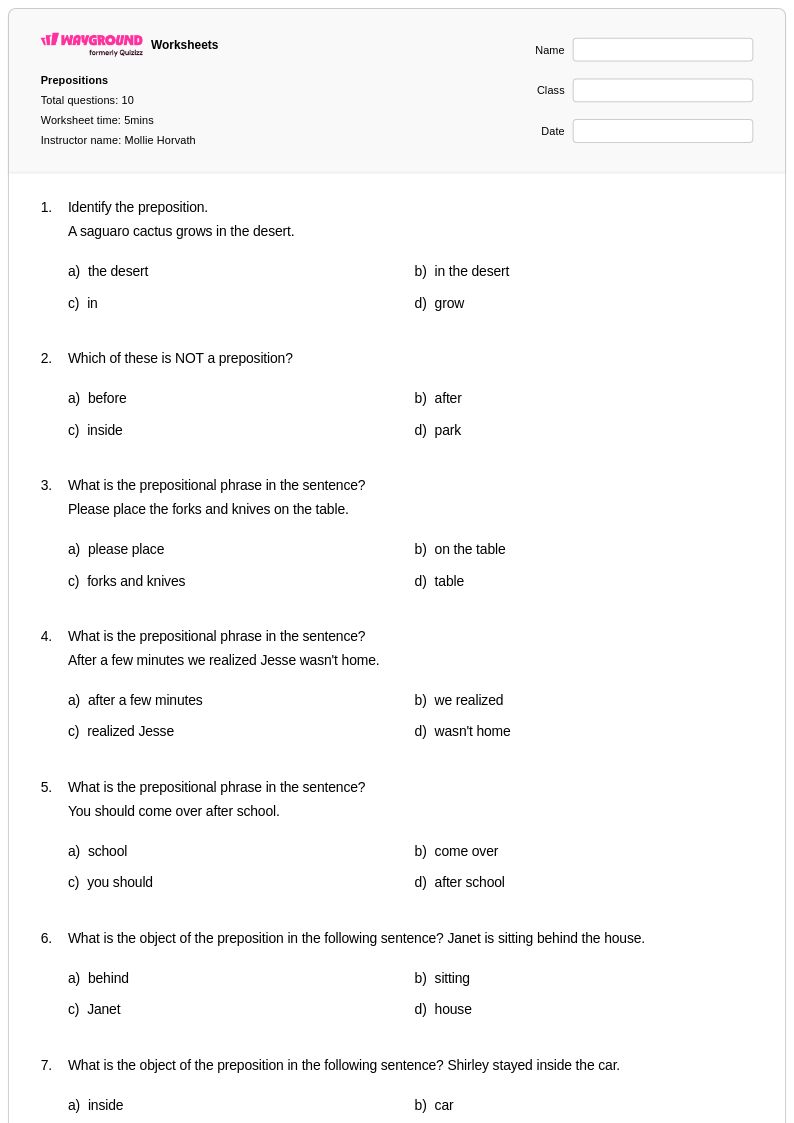
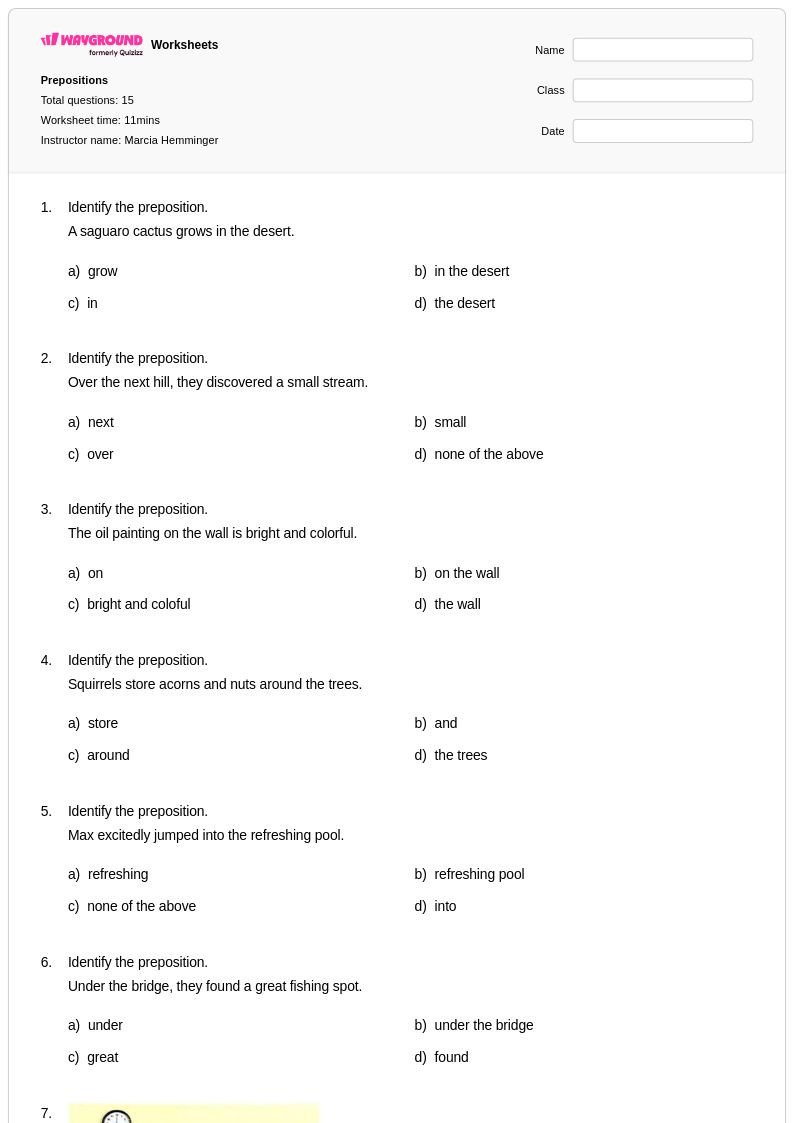
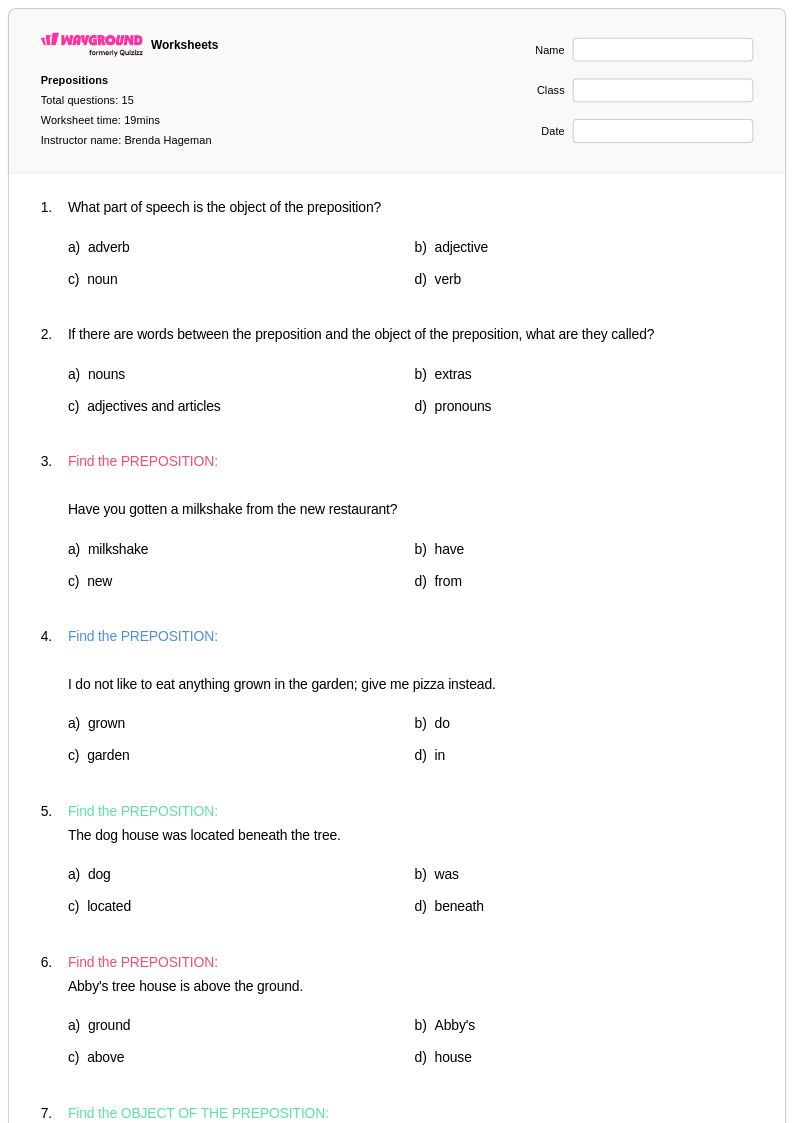
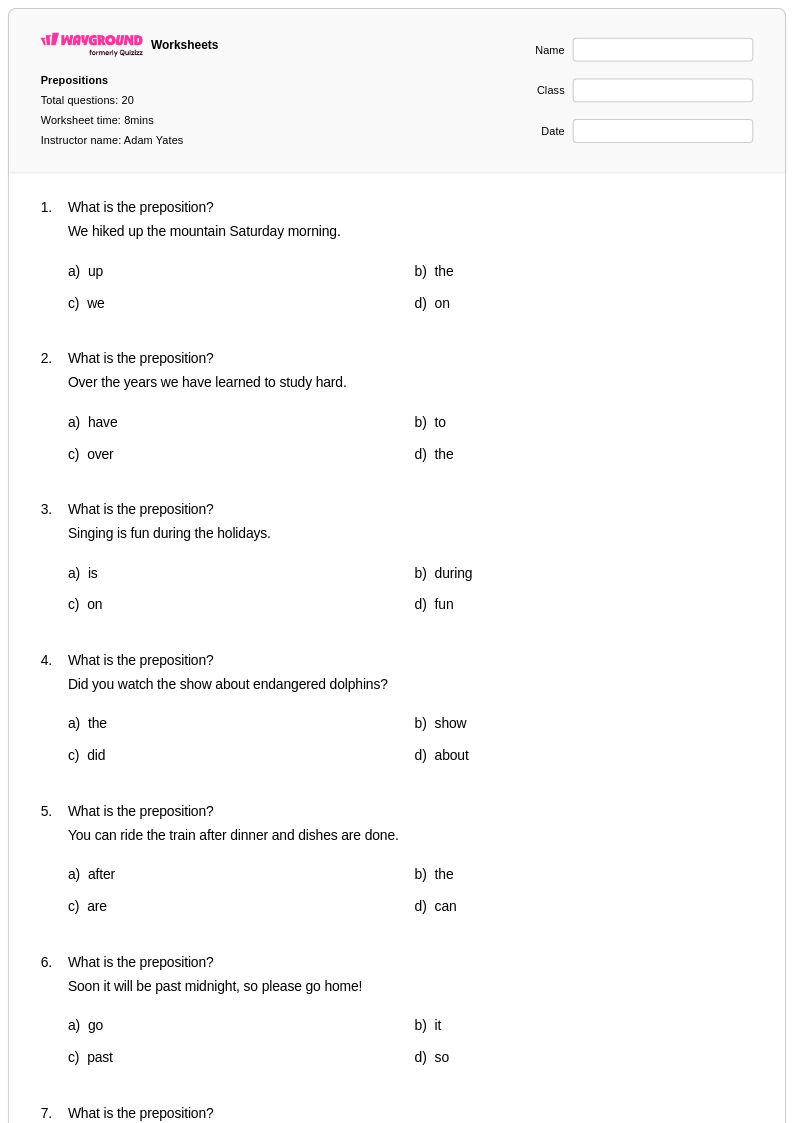
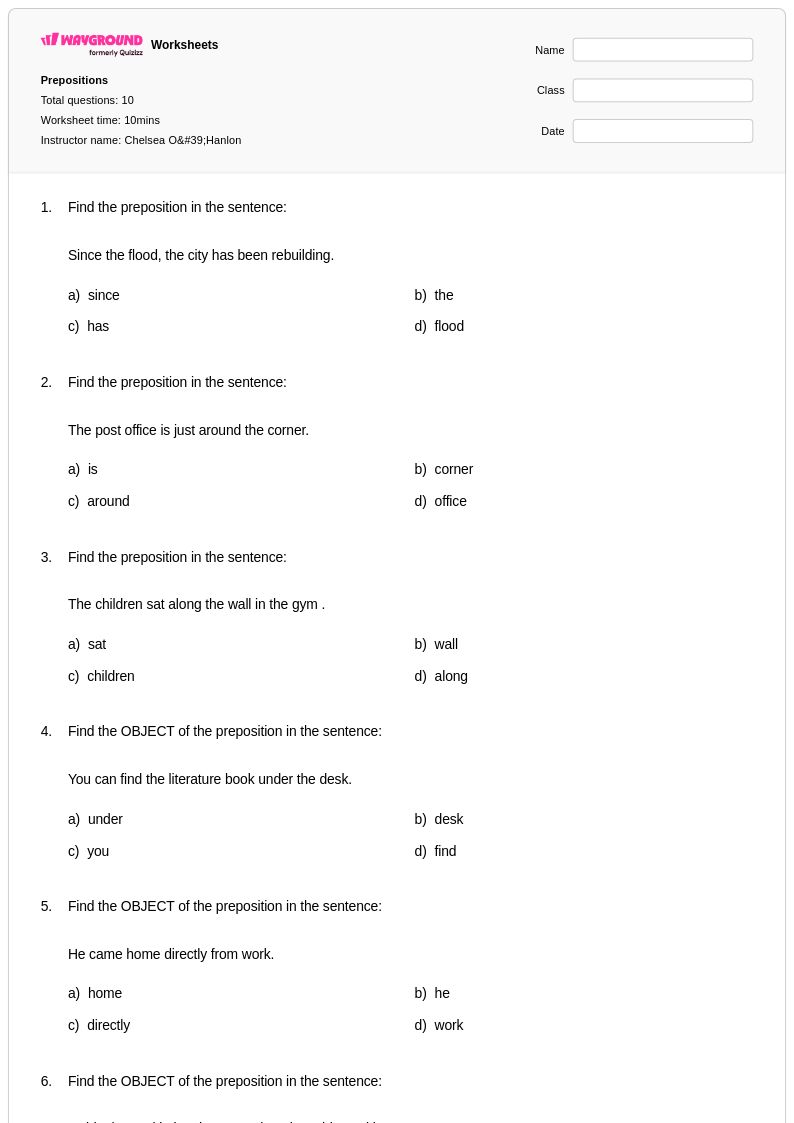
Master prepositions with Wayground's comprehensive collection of free worksheets and printables that help students identify, practice, and understand these essential connecting words through engaging exercises, practice problems, and detailed answer keys.
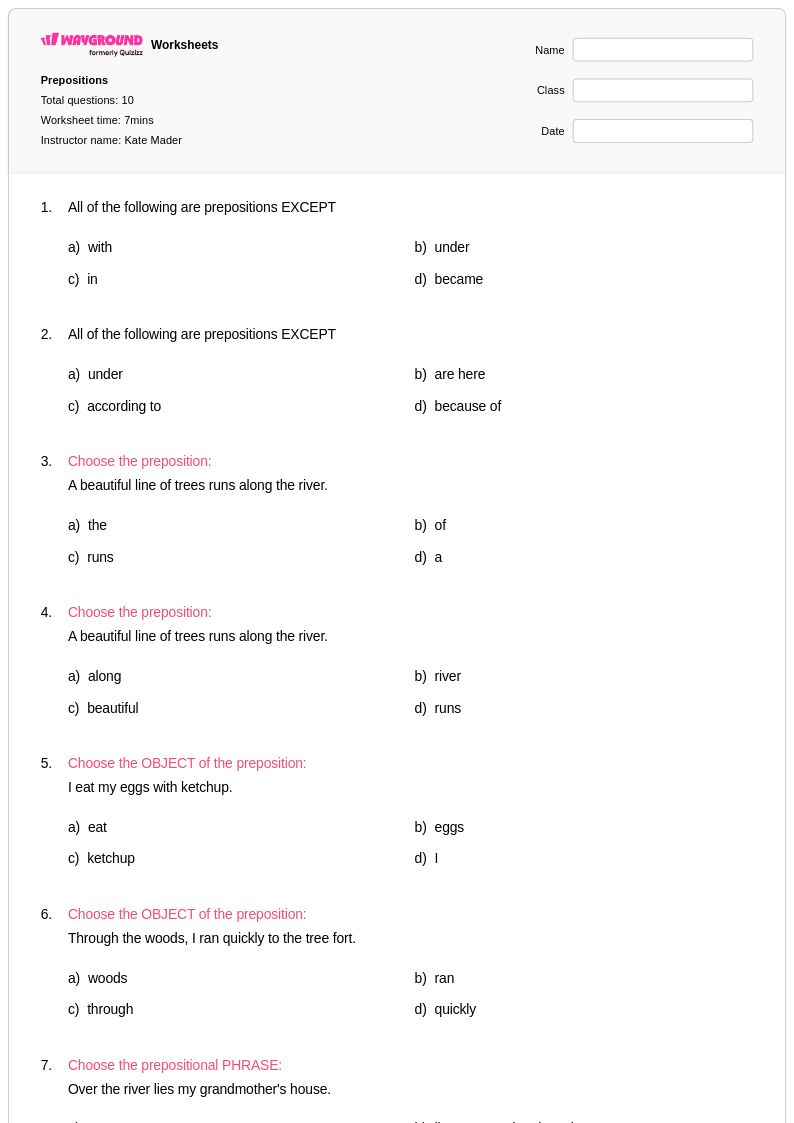
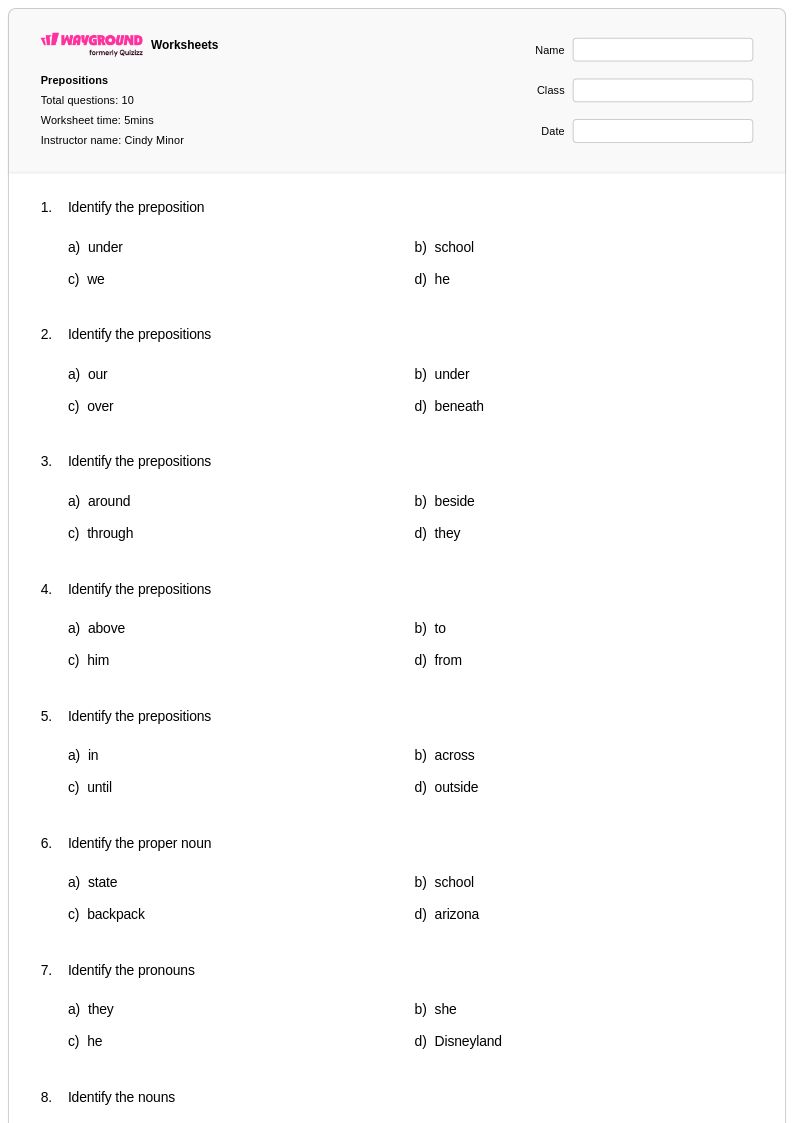
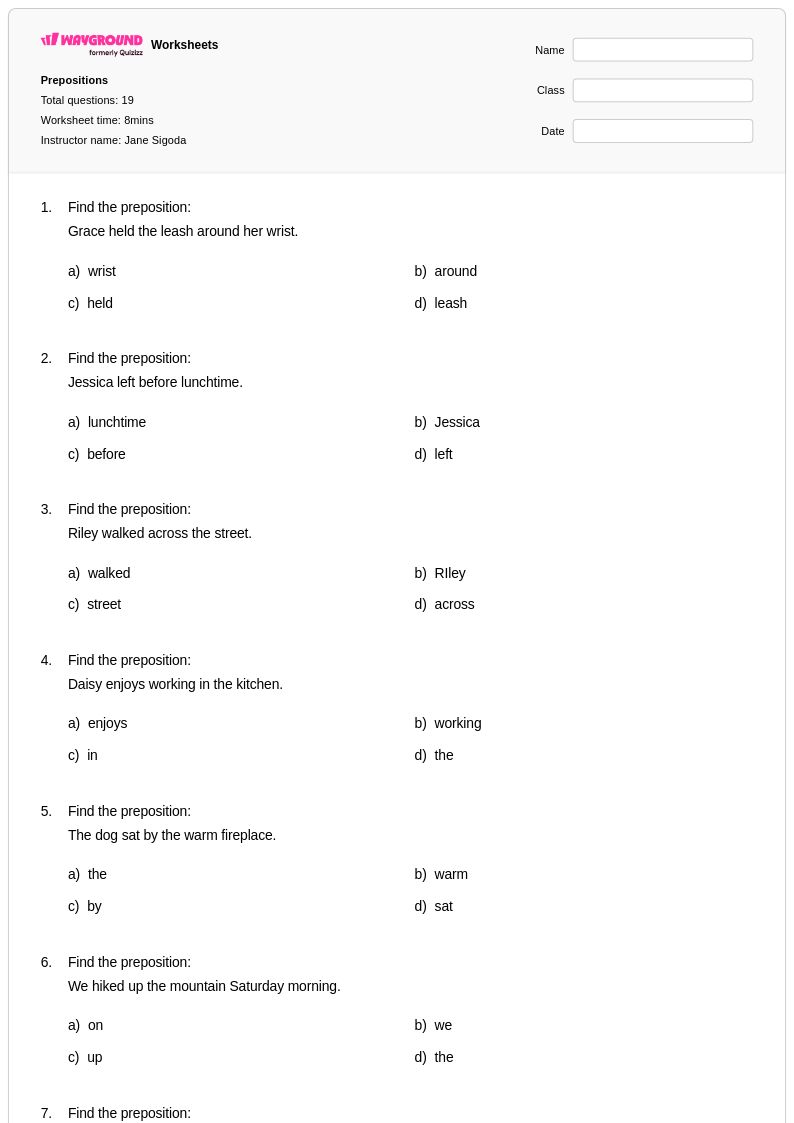
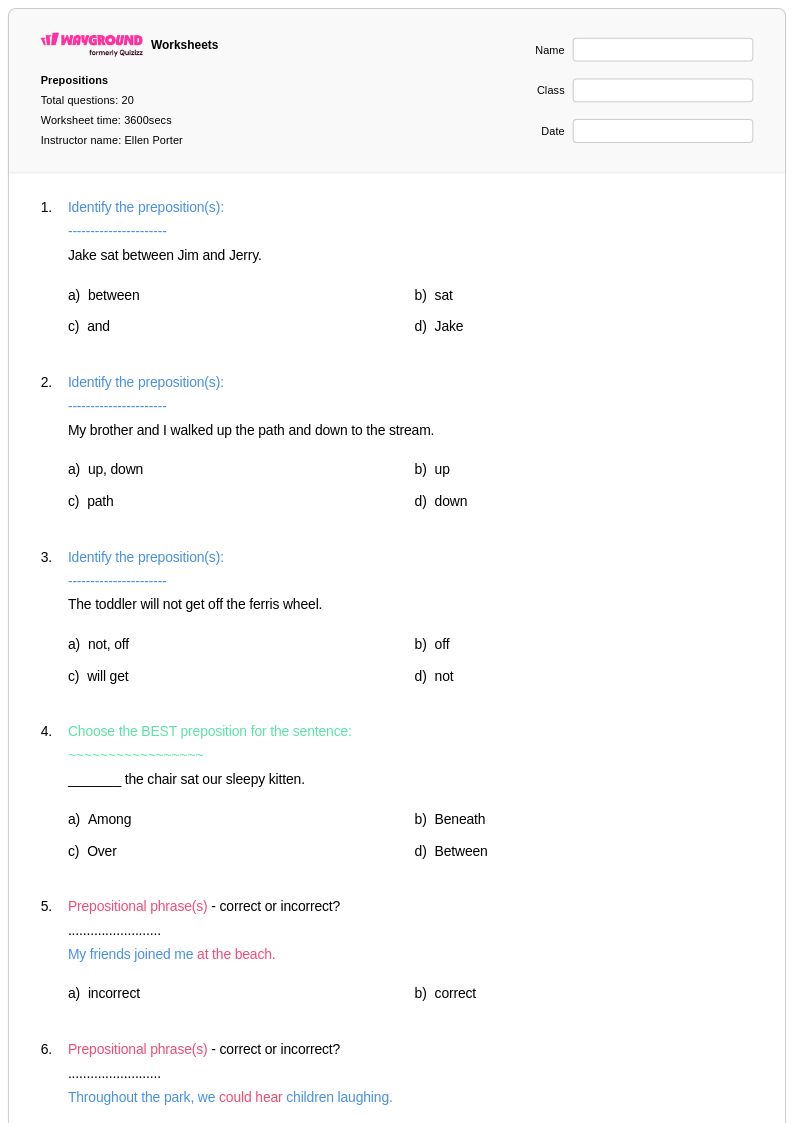
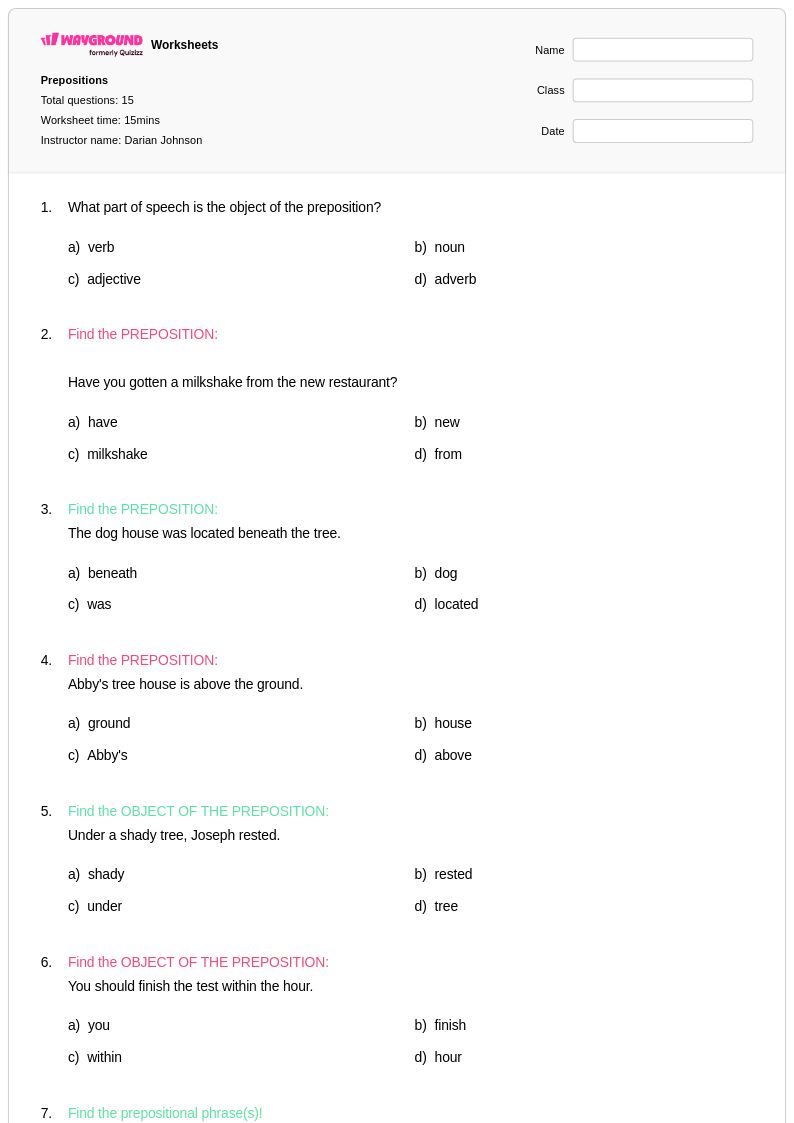
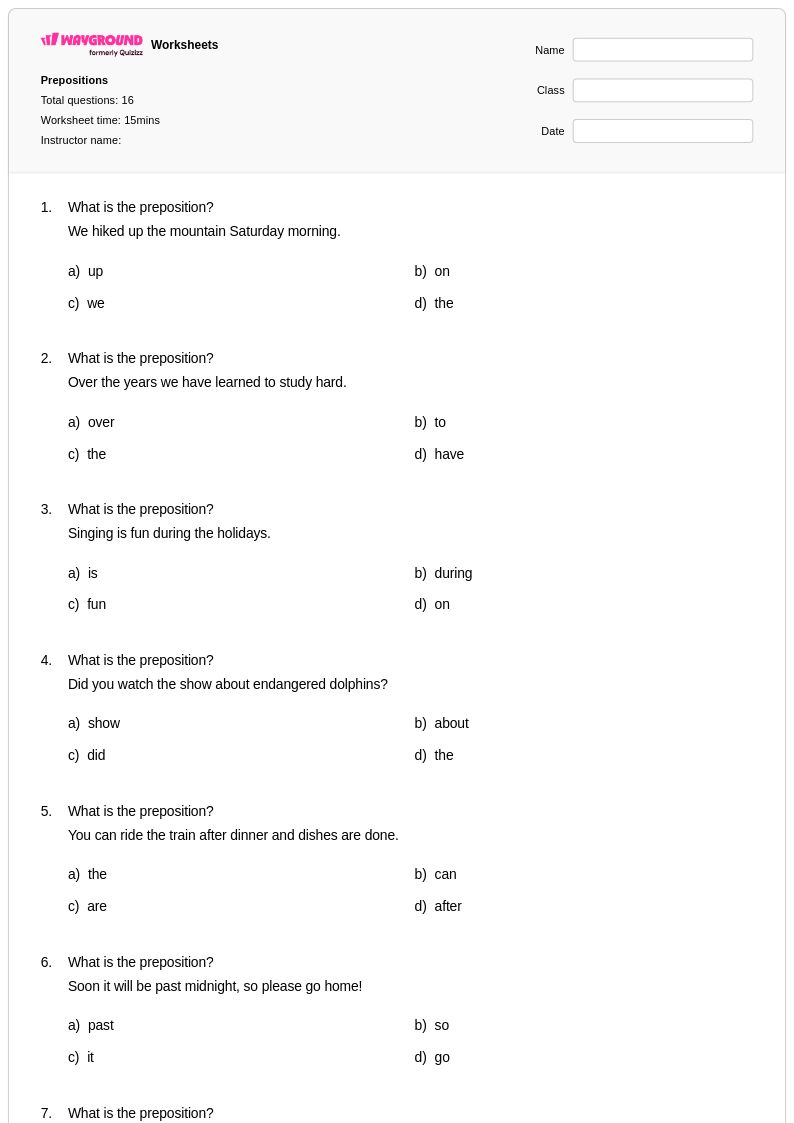
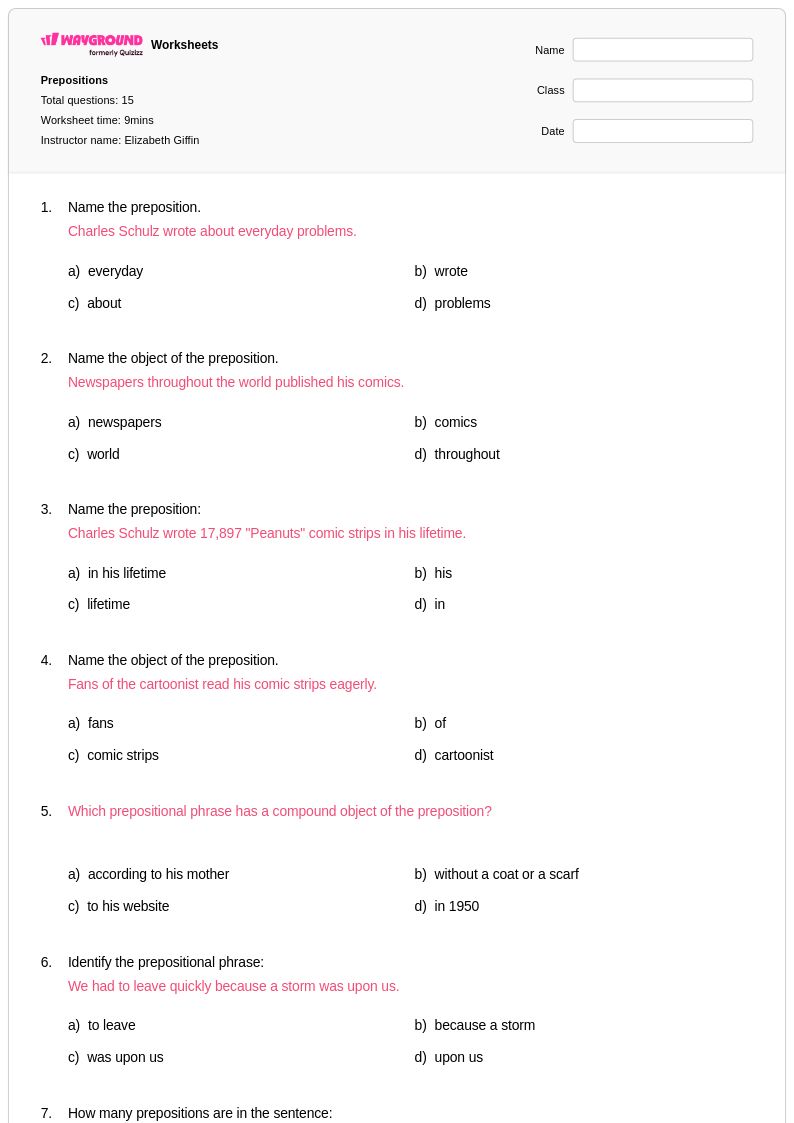
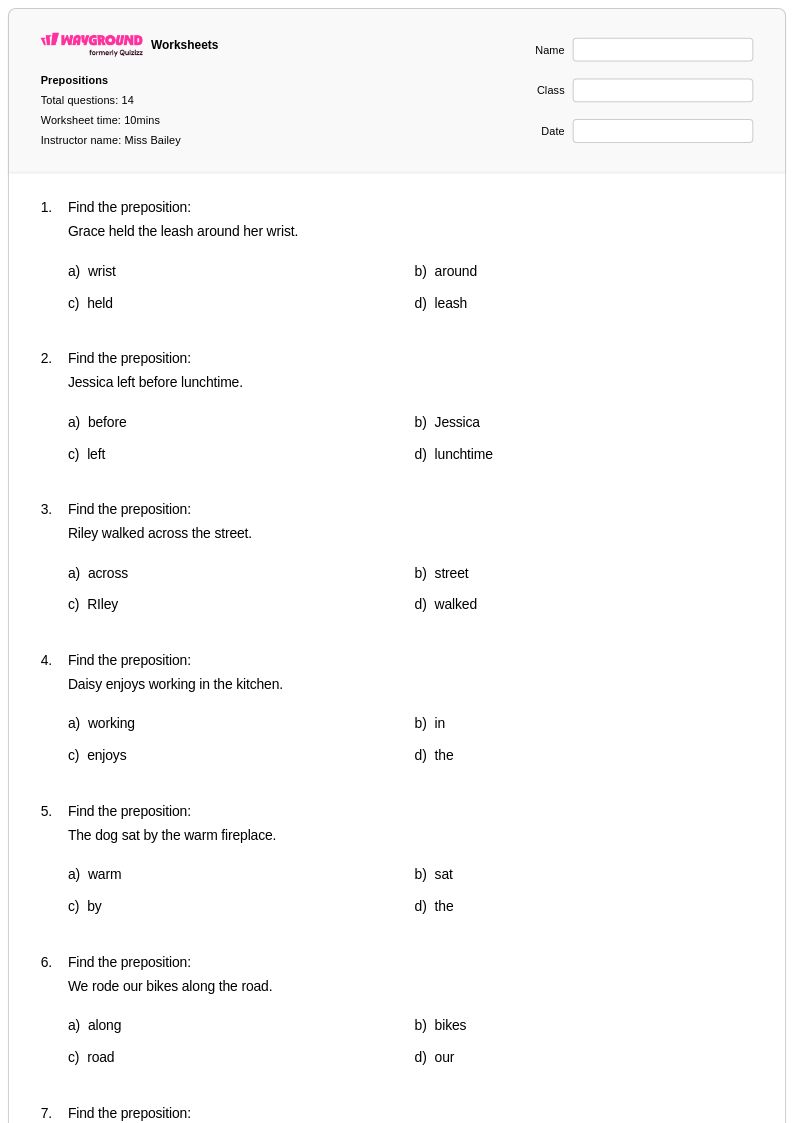
Preposition worksheets available through Wayground (formerly Quizizz) provide comprehensive practice opportunities for students to master one of the most essential components of English grammar. These carefully designed educational resources focus on helping learners identify, understand, and correctly use prepositions in various contexts, from simple spatial relationships to complex temporal and abstract connections. The worksheets strengthen critical language skills including sentence construction, reading comprehension, and writing fluency by offering systematic practice problems that progress from basic preposition recognition to advanced usage in complex sentences. Each worksheet comes with a complete answer key and is available as a free printable pdf, making it easy for educators to implement immediate assessment and provide targeted feedback on student progress.
Wayground (formerly Quizizz) supports English teachers with an extensive collection of preposition worksheets drawn from millions of teacher-created resources that have been tested in real classroom environments. The platform's robust search and filtering capabilities allow educators to quickly locate materials that align with specific learning standards and match their students' proficiency levels. Teachers can easily differentiate instruction by selecting from worksheets that range from elementary preposition identification to advanced prepositional phrase analysis, with customization tools that enable modification of content difficulty and format. Available in both printable and digital pdf formats, these resources seamlessly integrate into lesson planning workflows and support diverse instructional needs including daily skill practice, targeted remediation for struggling learners, and enrichment activities for advanced students.
FAQs
How do I teach prepositions to students who keep confusing them with other parts of speech?
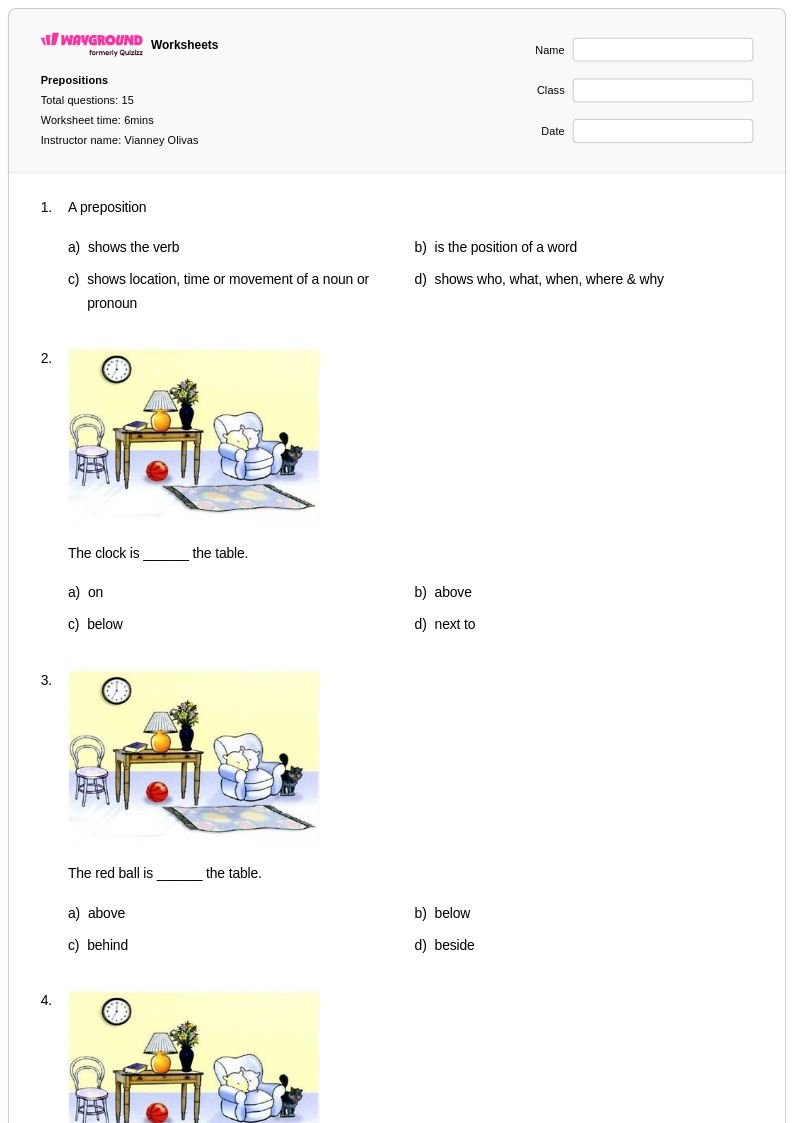
The most effective approach is to anchor prepositions to concrete spatial relationships first — words like 'under', 'beside', and 'through' are easiest to visualize and remember. Once students can reliably identify locative prepositions, introduce temporal ones like 'before', 'after', and 'during', then move to abstract uses. Sorting activities where students categorize prepositions by type (location, time, direction) help reinforce the distinctions before moving on to full prepositional phrases.
What exercises help students practice identifying prepositional phrases in sentences?
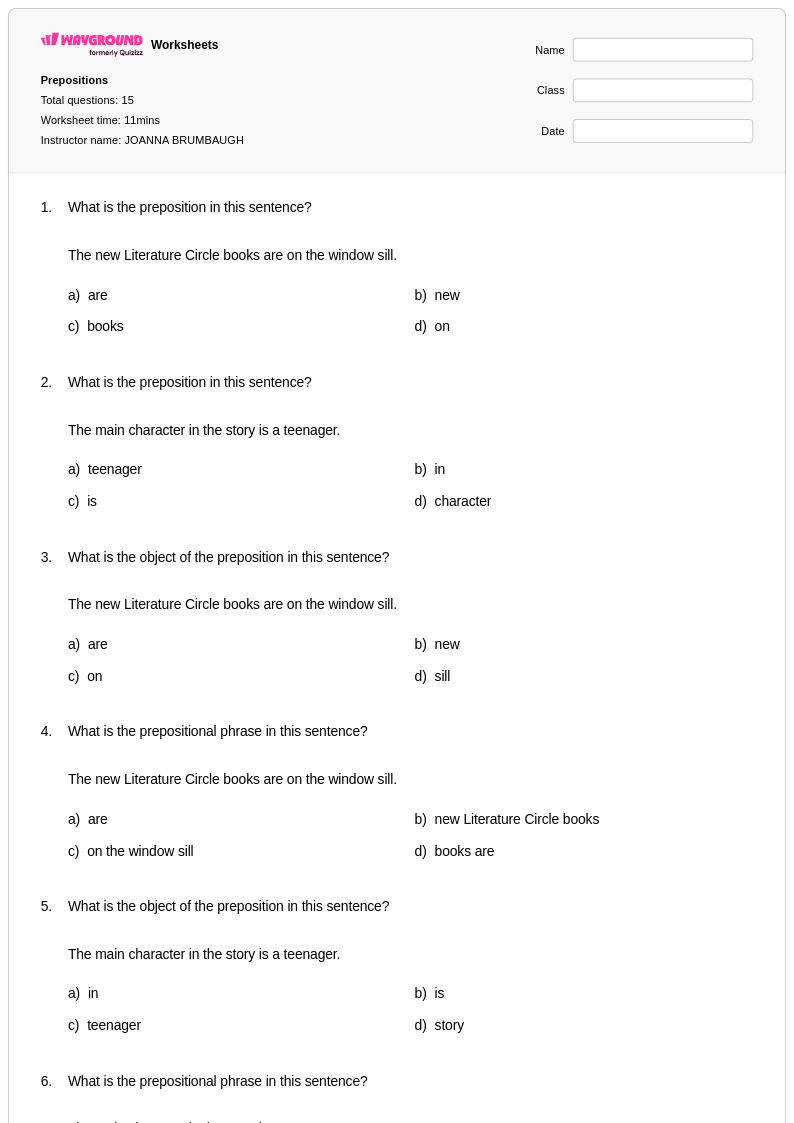
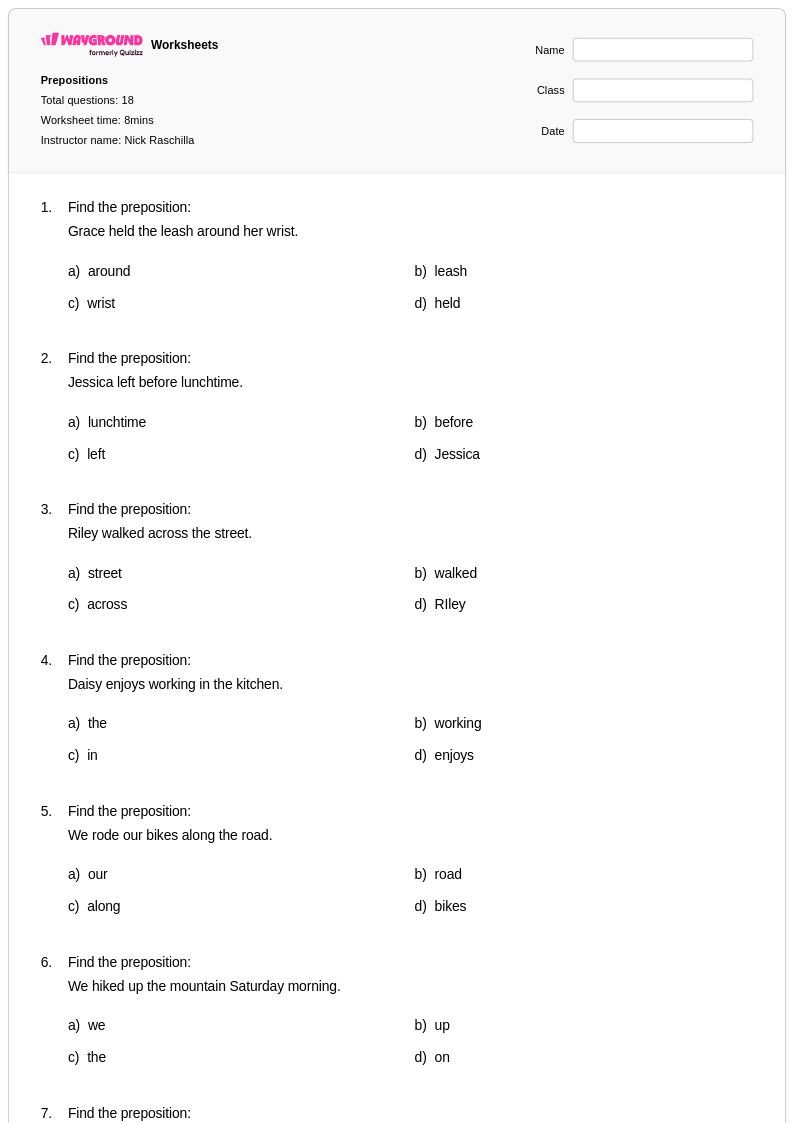
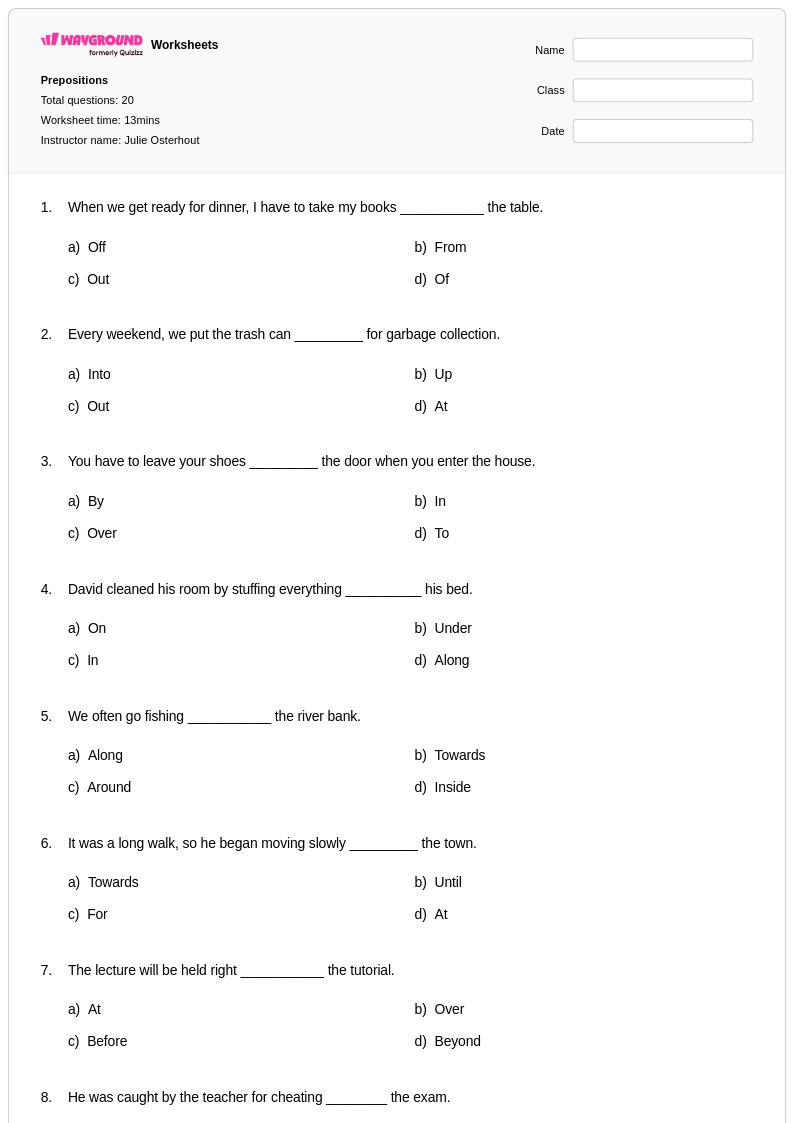
Sentence-level exercises that ask students to bracket or underline the full prepositional phrase — not just the preposition — are especially effective because they reinforce that a preposition never stands alone. Cloze activities, where students fill in the correct preposition within a meaningful sentence, build both recognition and contextual usage skills. Combining both exercise types in a single worksheet gives students practice with identification and application in one session.
What mistakes do students most commonly make when using prepositions?
The most frequent error is preposition omission or substitution — for example, writing 'different than' instead of 'different from', or 'waiting on' instead of 'waiting for'. Students also commonly confuse prepositions that share overlapping meanings, such as 'in' versus 'on' for time expressions ('in the morning' vs. 'on Monday'). A targeted approach is to address these high-frequency confusions explicitly with contrast exercises rather than teaching prepositions as a general list.
How can I differentiate preposition practice for students at different skill levels?
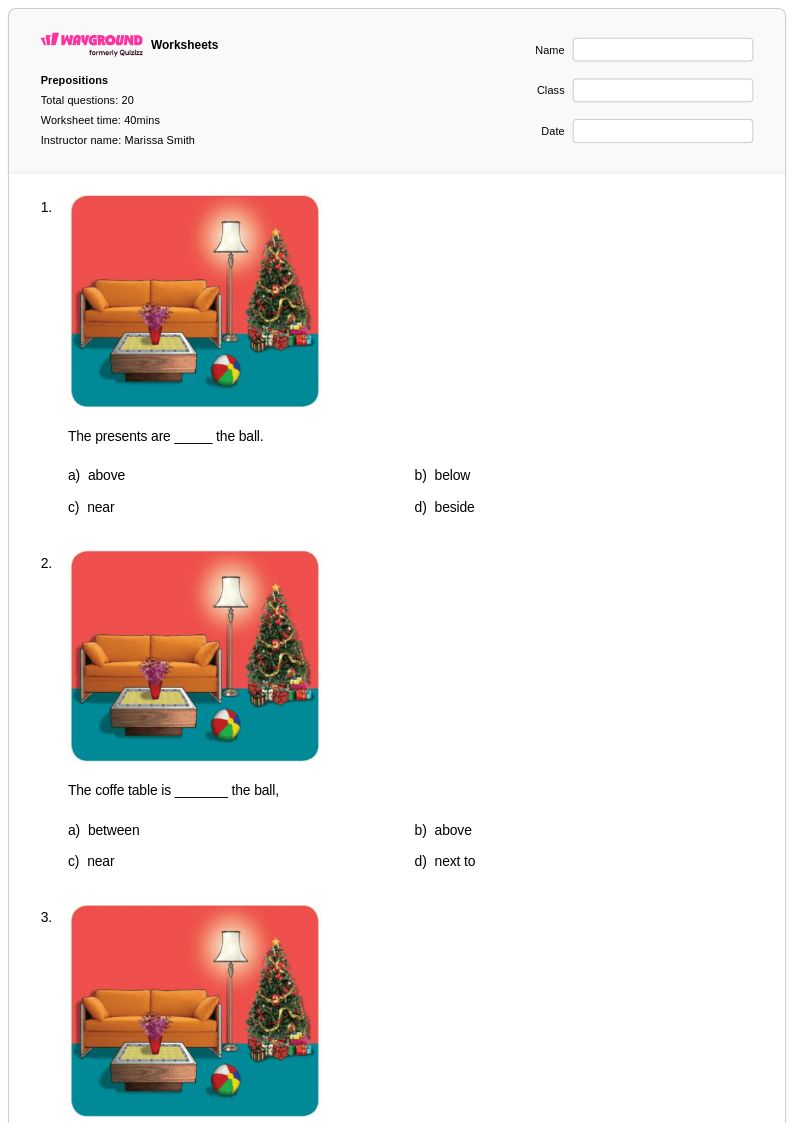
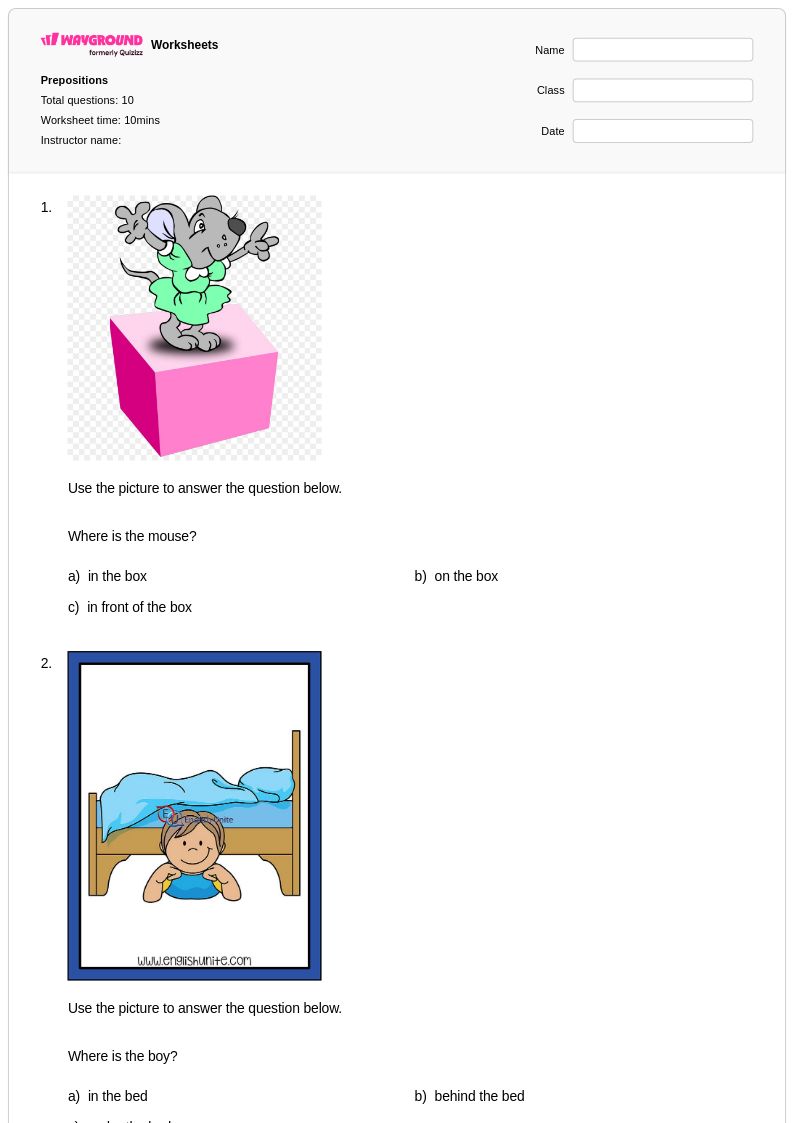
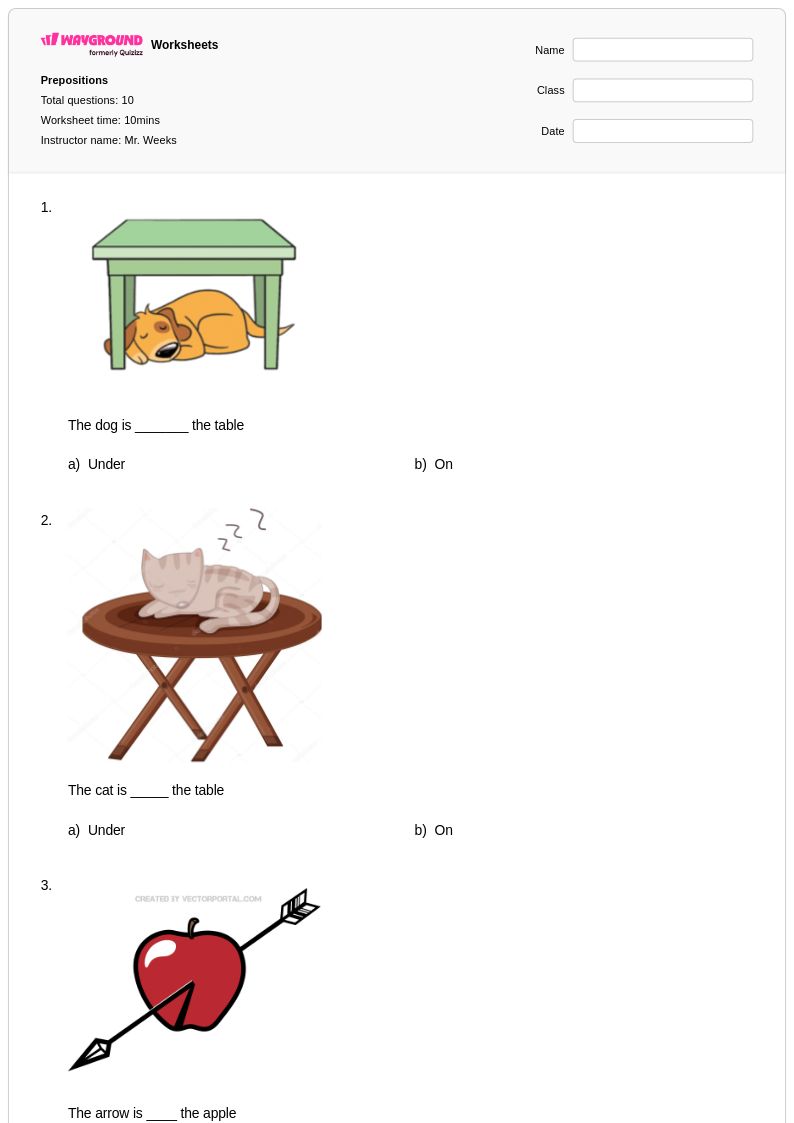
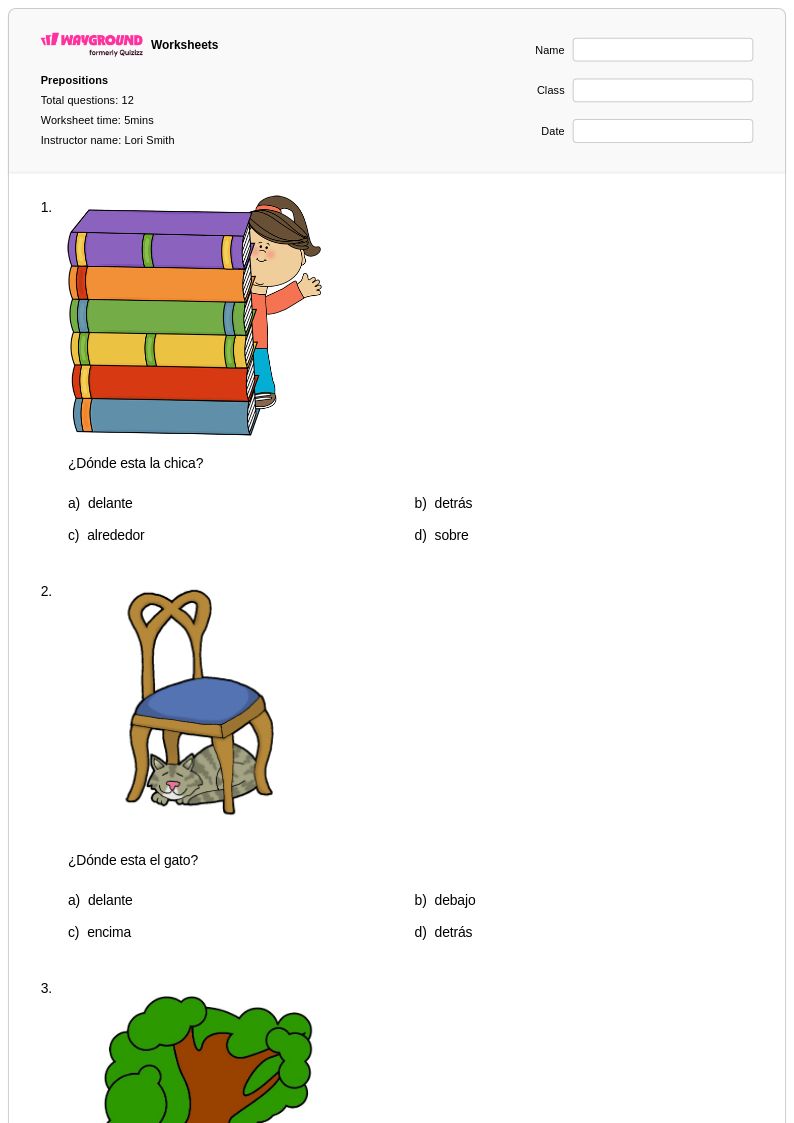
For beginning learners, focus on high-frequency location prepositions paired with simple pictures or diagrams that make the spatial meaning concrete. Intermediate students benefit from sentence-level exercises that require choosing between two easily confused prepositions. Advanced students should work with prepositional phrase analysis in longer texts, identifying the phrase, its object, and the grammatical role it plays in the sentence. Wayground allows teachers to assign specific worksheets to individual students and apply accommodations such as reduced answer choices or read-aloud support to students who need additional scaffolding.
How do I use Wayground's preposition worksheets in my classroom?
Wayground's preposition worksheets are available as printable PDFs for traditional paper-based instruction and in digital formats for technology-integrated classrooms, so they fit a wide range of teaching environments. Teachers can also host any worksheet as a live or self-paced quiz directly on Wayground, making it easy to collect real-time data on student performance. Answer keys are included with every worksheet, so teachers can provide immediate, targeted feedback without additional preparation time.
How do I teach prepositional phrases as opposed to standalone prepositions?
Start by establishing that a prepositional phrase always consists of a preposition plus its object — a noun or pronoun — and any modifiers attached to that object. Use mentor sentences to model how the same preposition changes meaning depending on its object ('in the morning' versus 'in the classroom'). Once students can identify the full phrase, extend practice to include recognizing whether the phrase functions as an adjective or adverb in the sentence, which deepens both grammar and reading comprehension skills.