
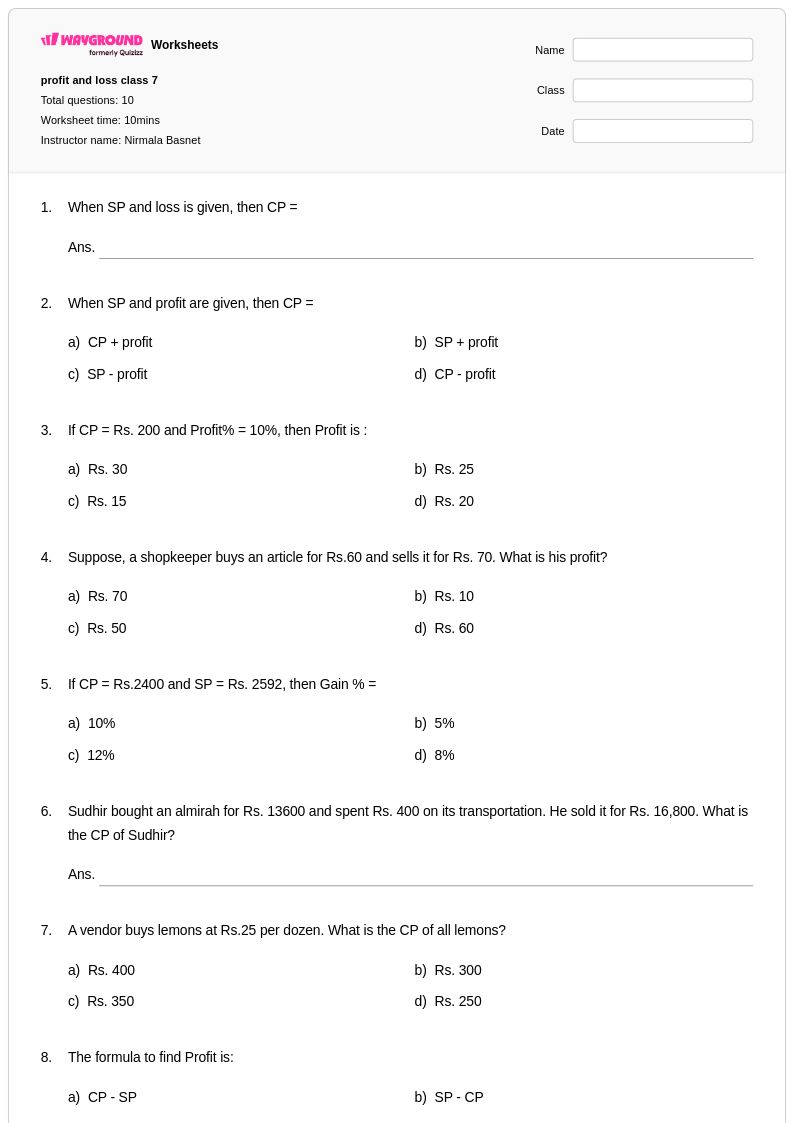
10 Q
7th
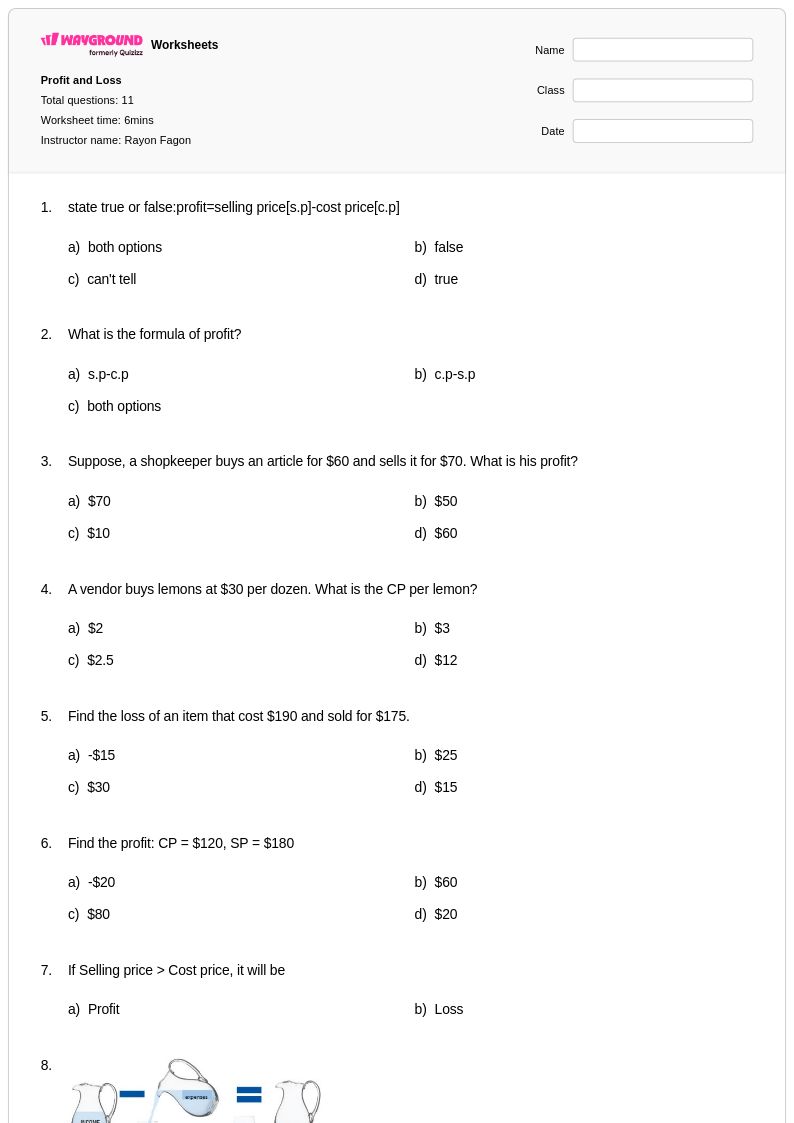
11 Q
7th
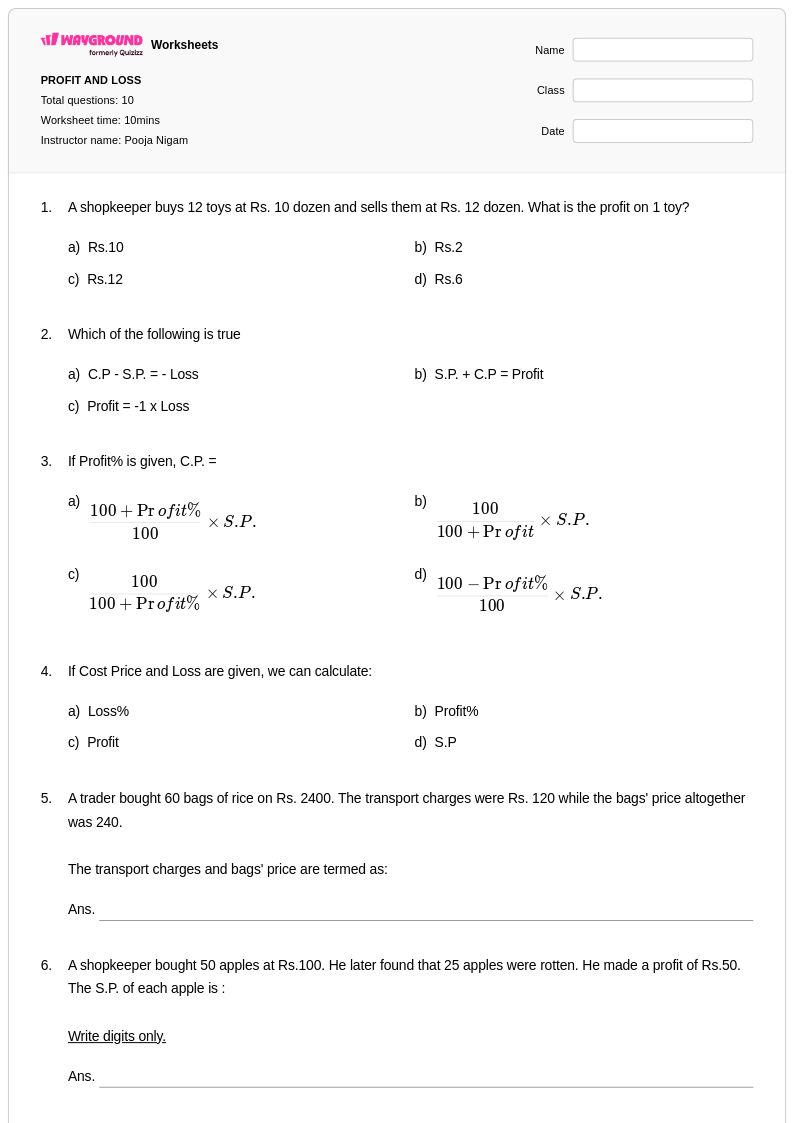
10 Q
7th
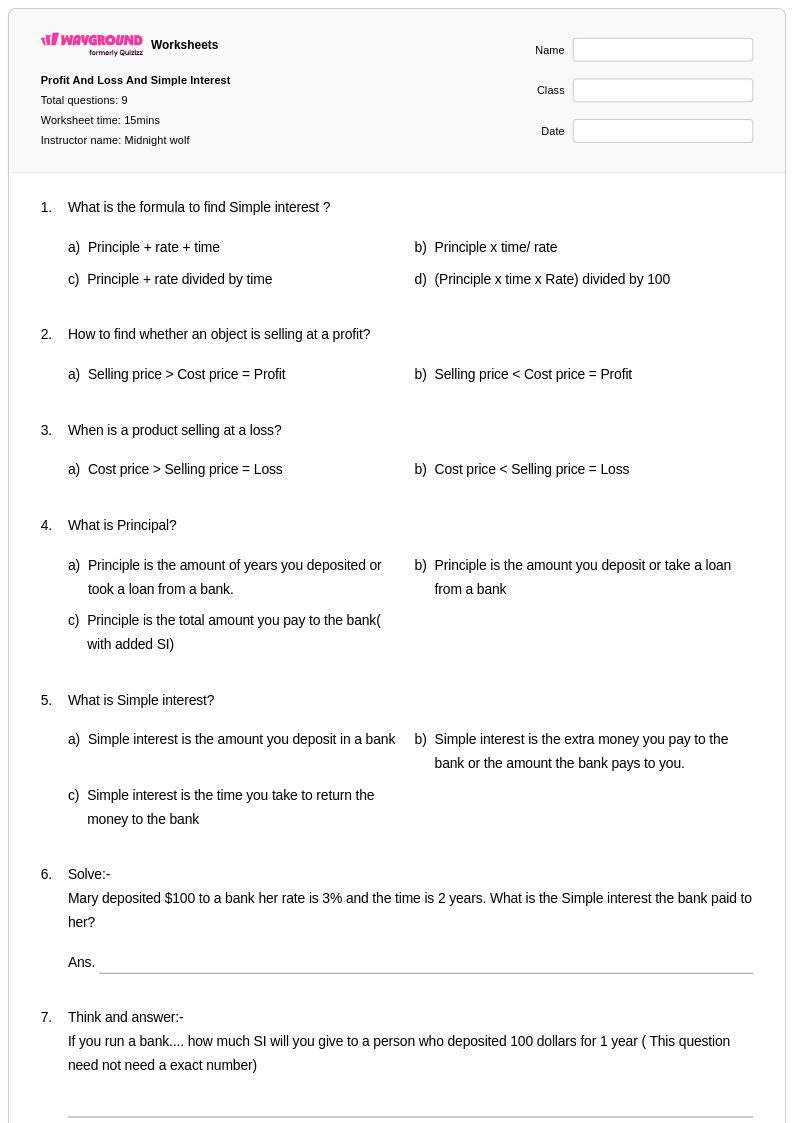
9 Q
6th - 8th
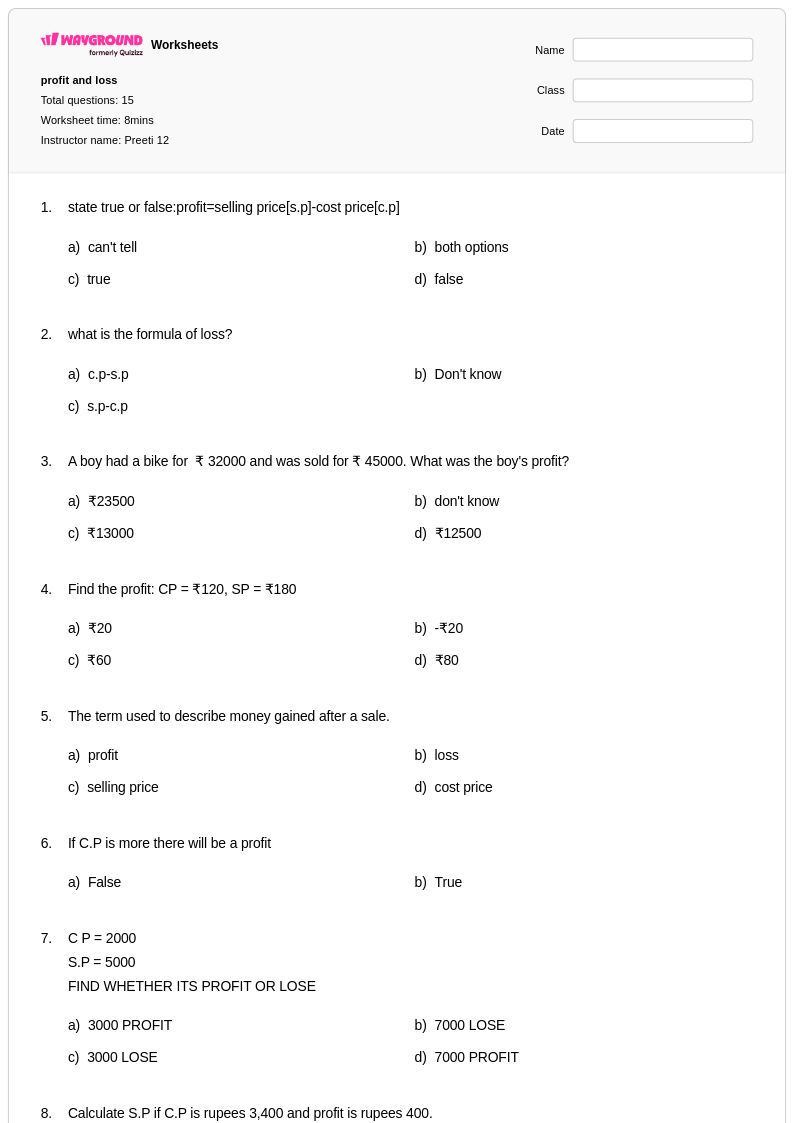
15 Q
4th - 7th
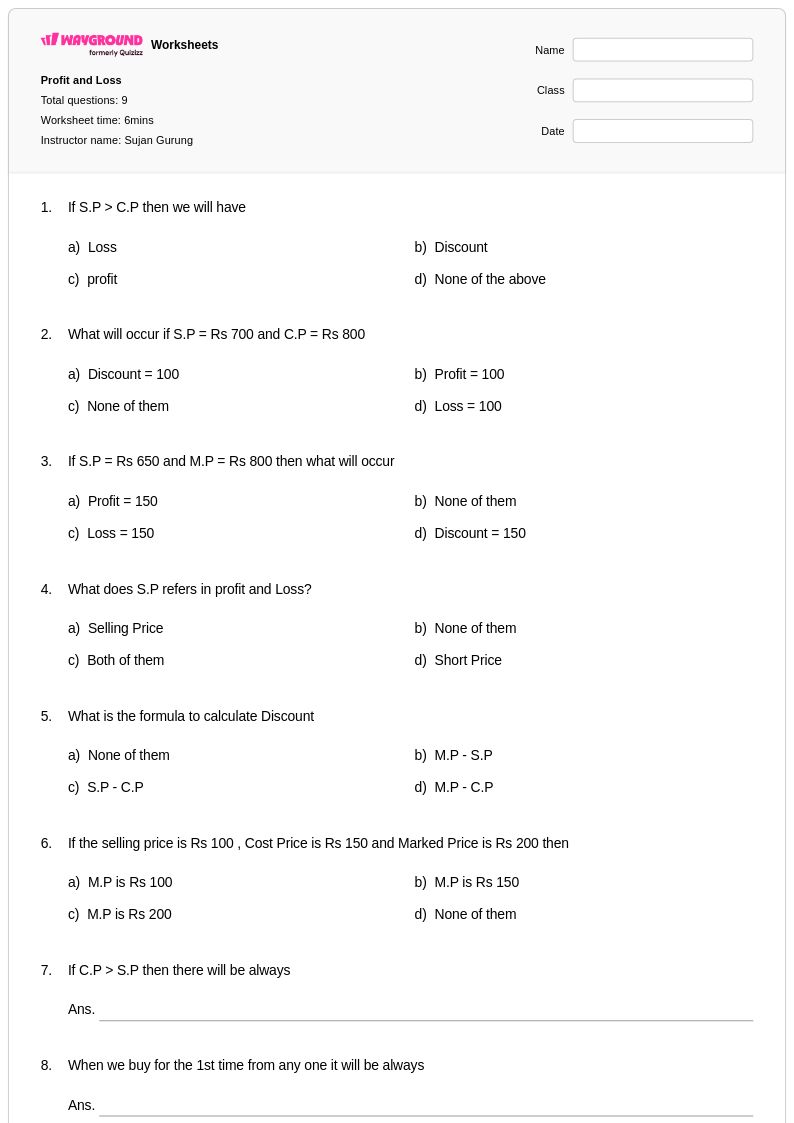
9 Q
7th
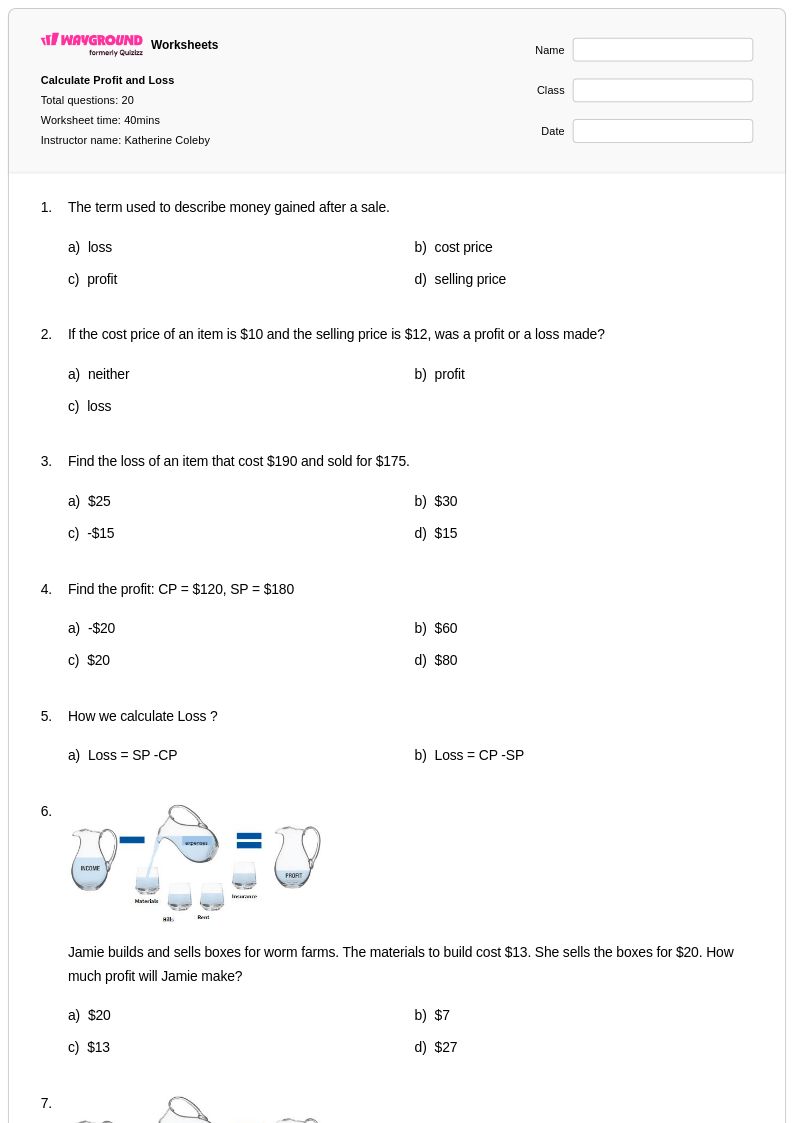
20 Q
6th - 8th
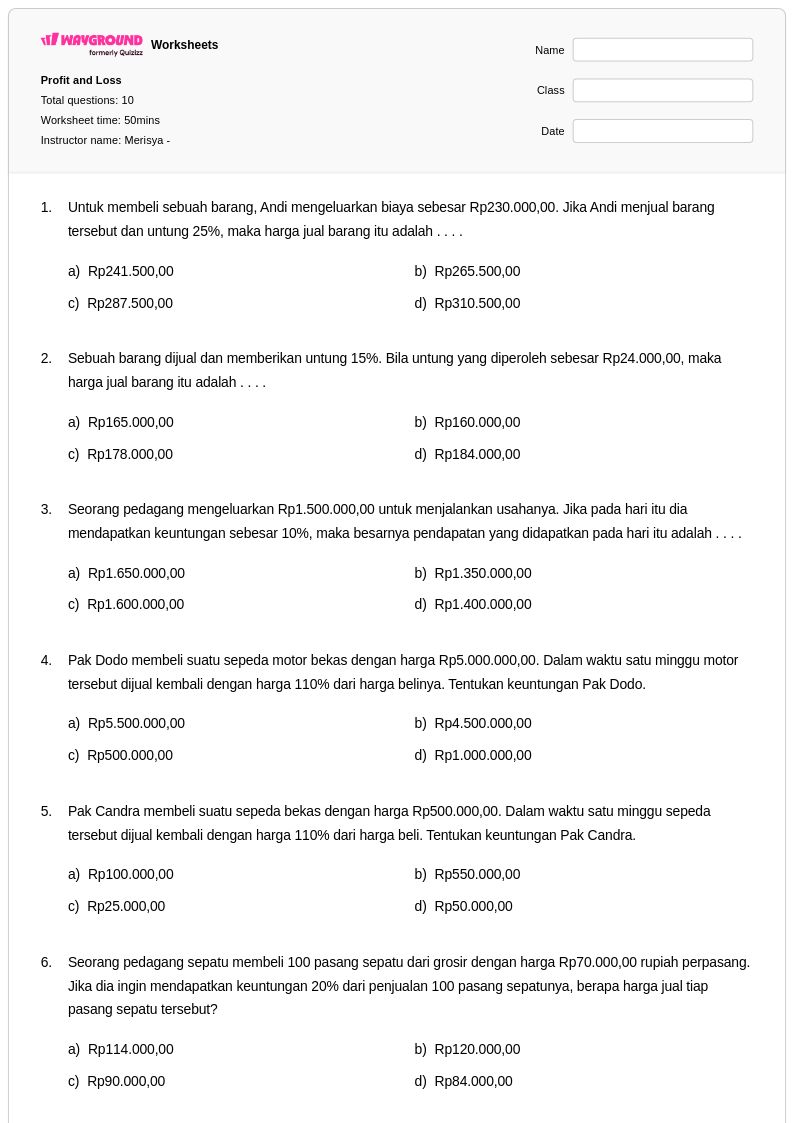
10 Q
7th
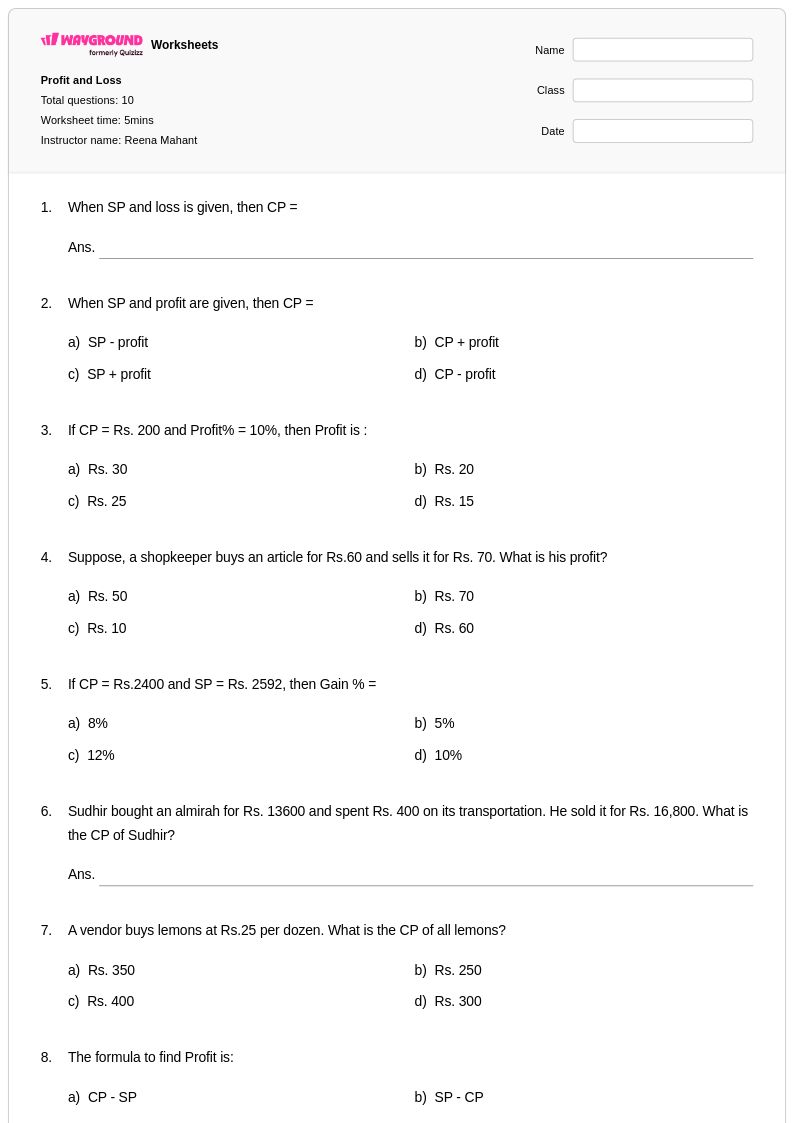
10 Q
7th
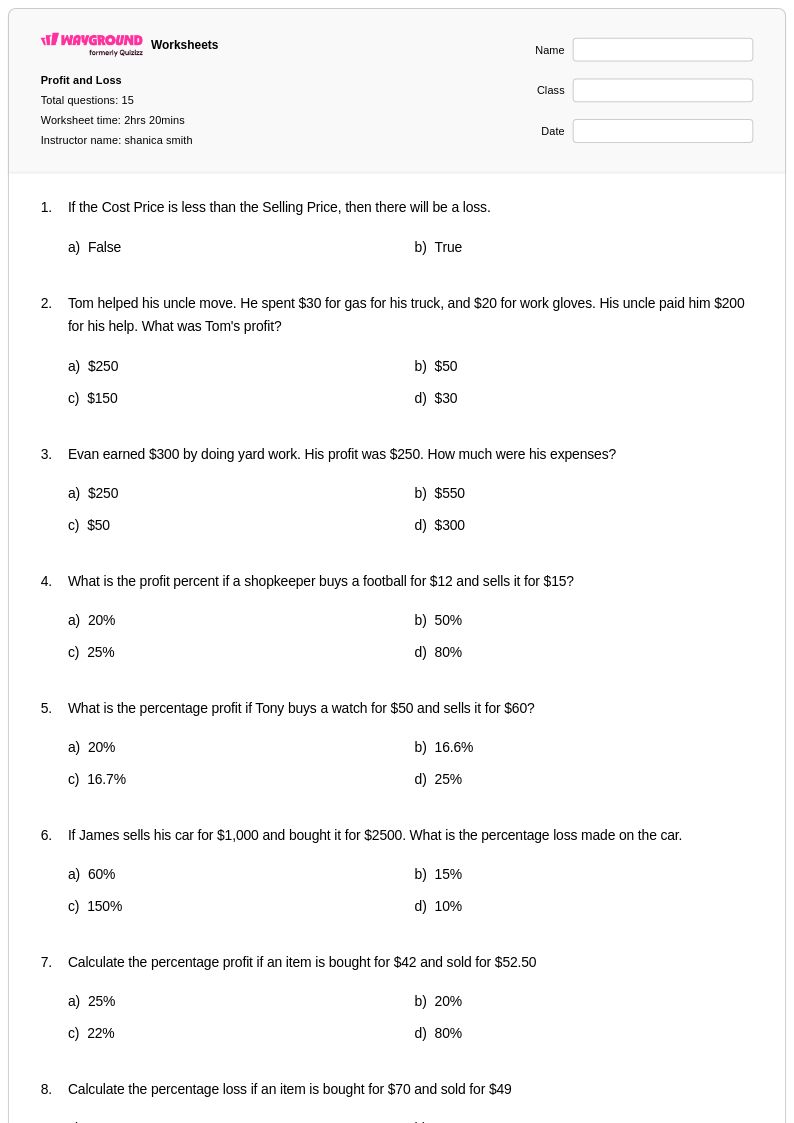
15 Q
7th - 9th
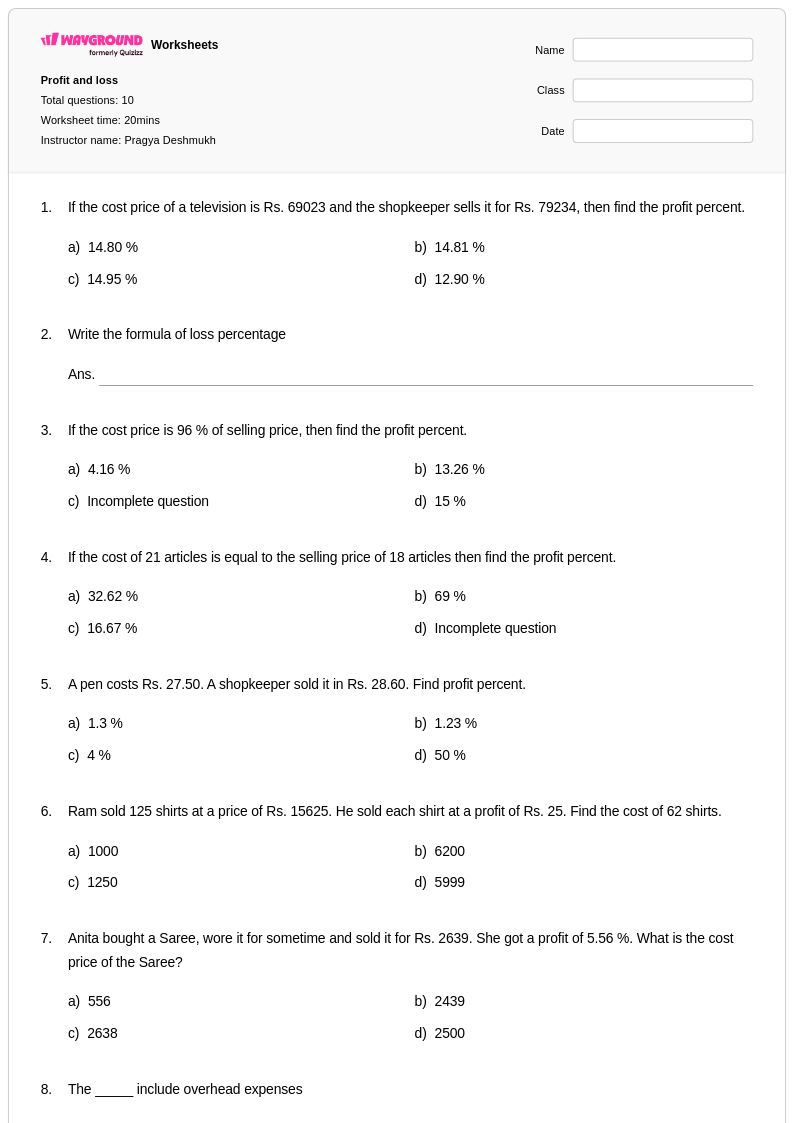
10 Q
5th - 9th
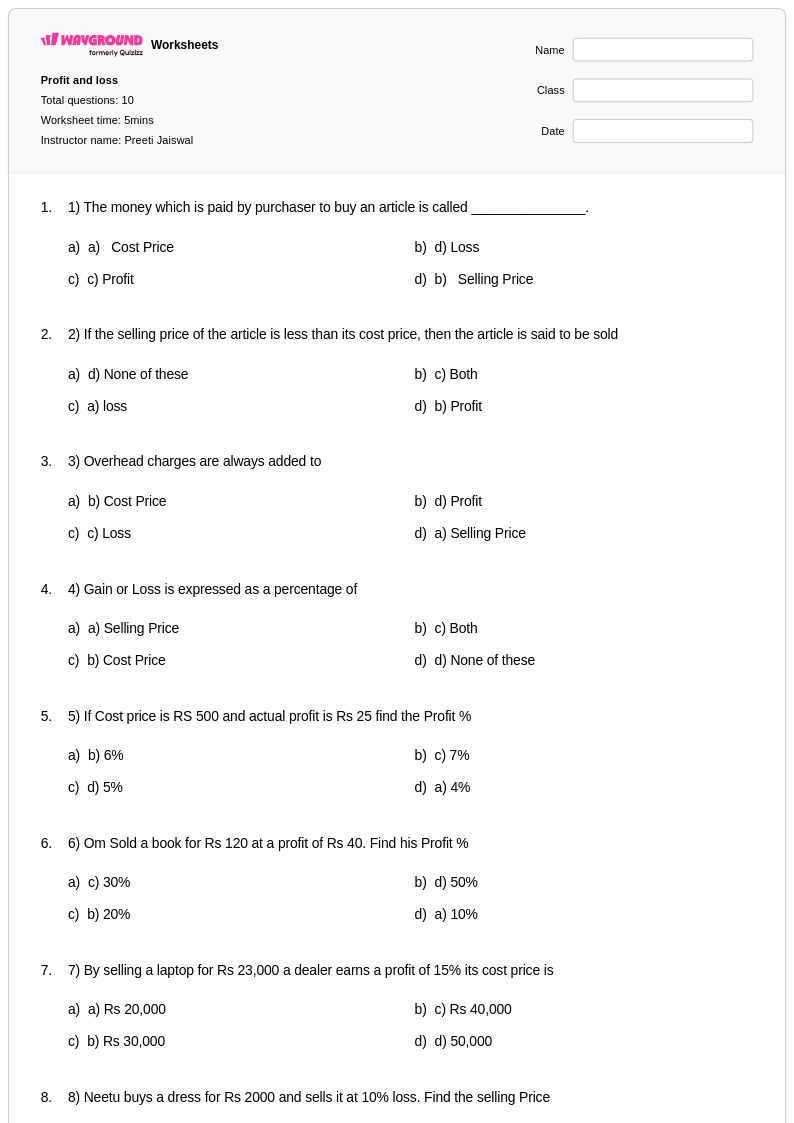
10 Q
7th
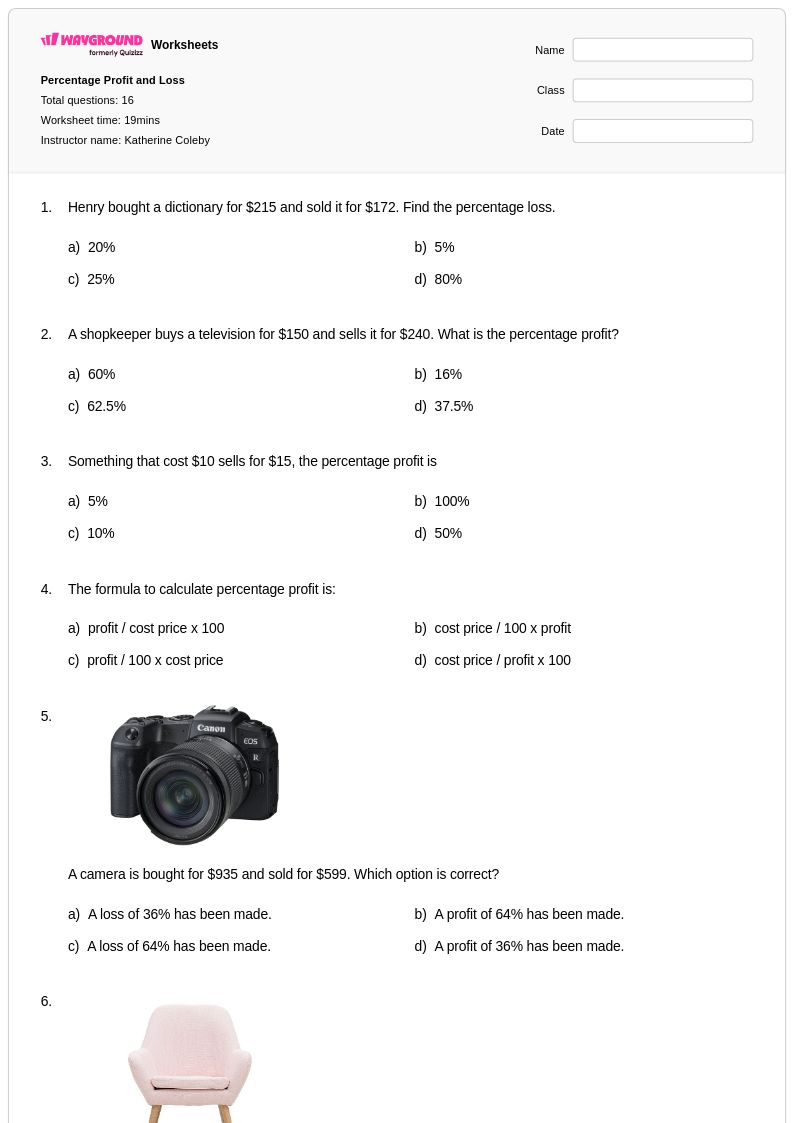
16 Q
6th - 8th
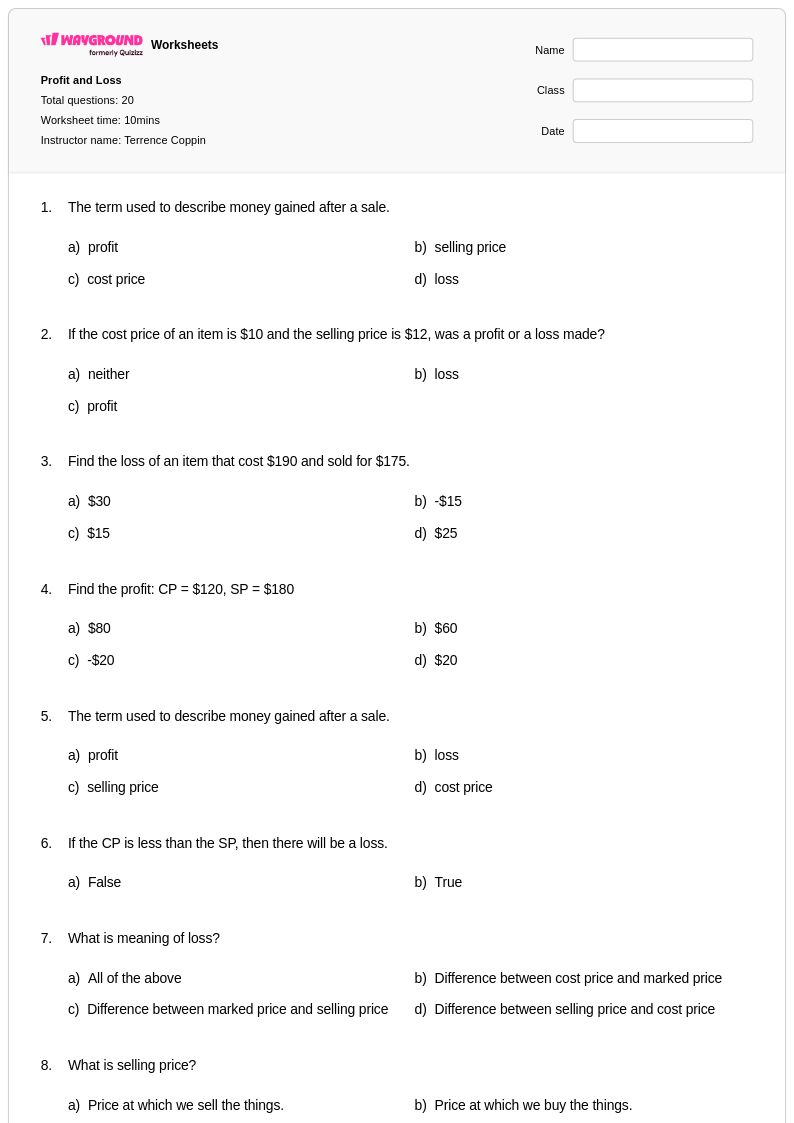
20 Q
7th
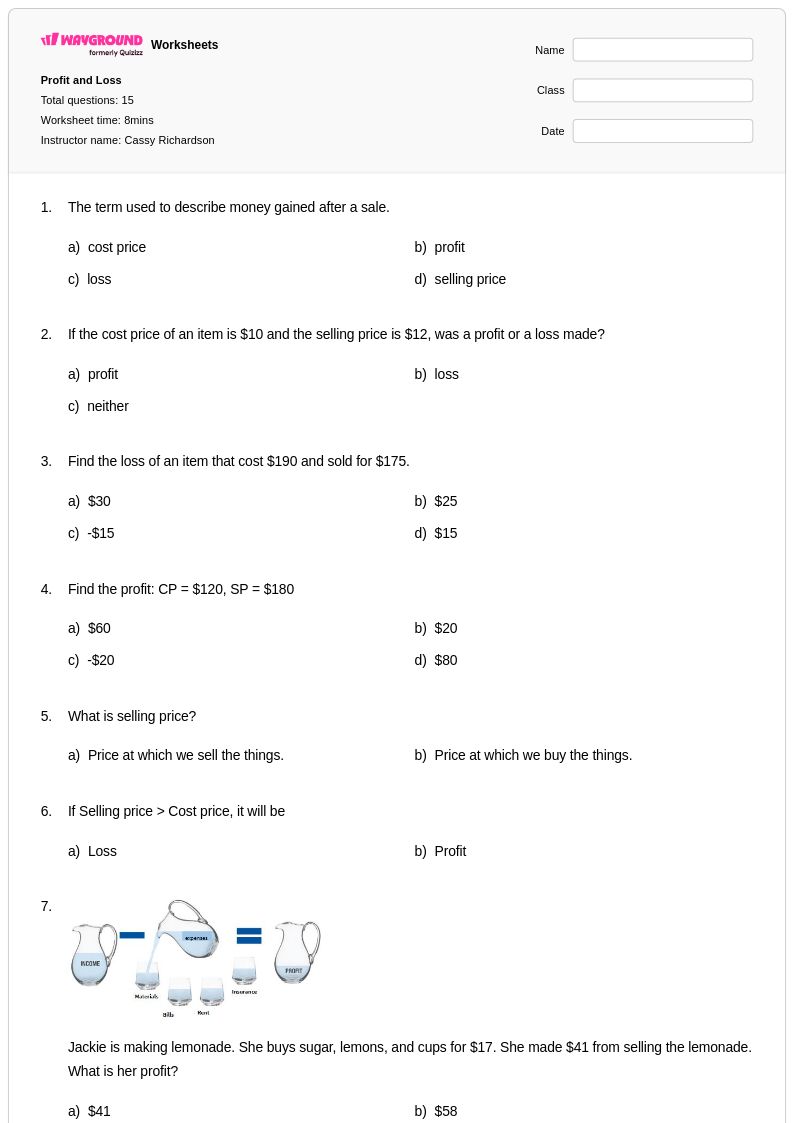
15 Q
6th - 8th
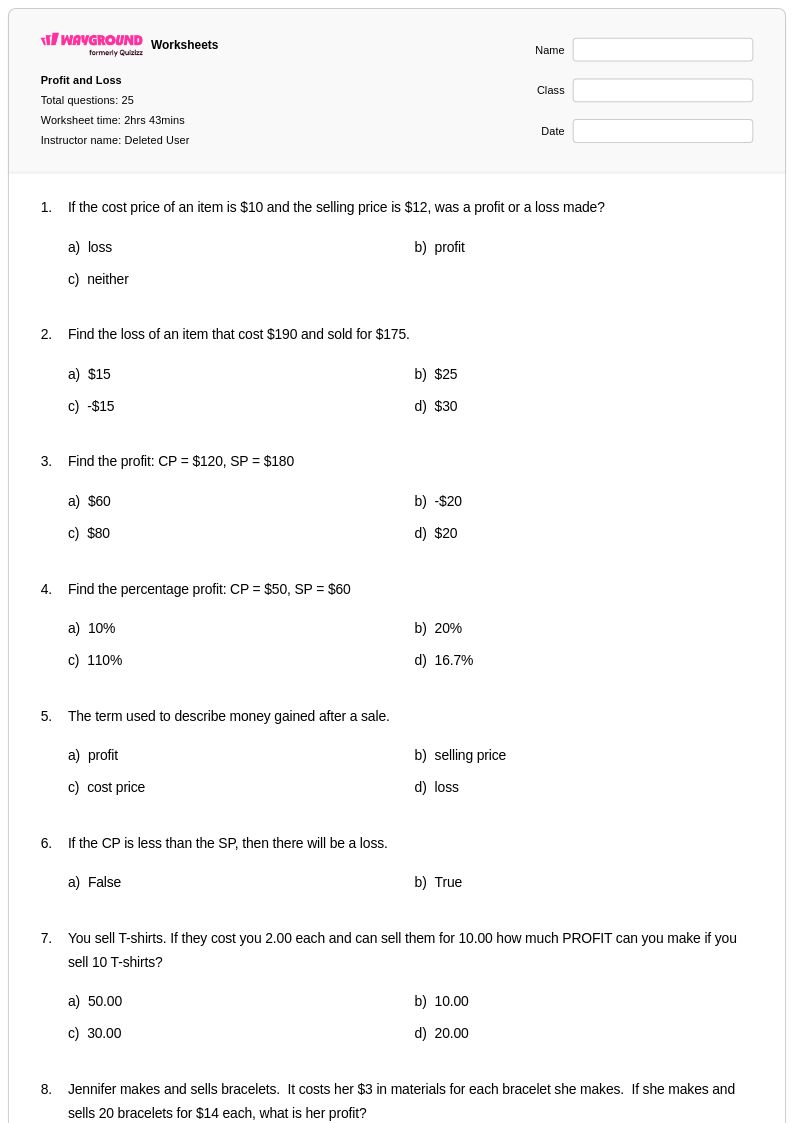
25 Q
5th - 8th
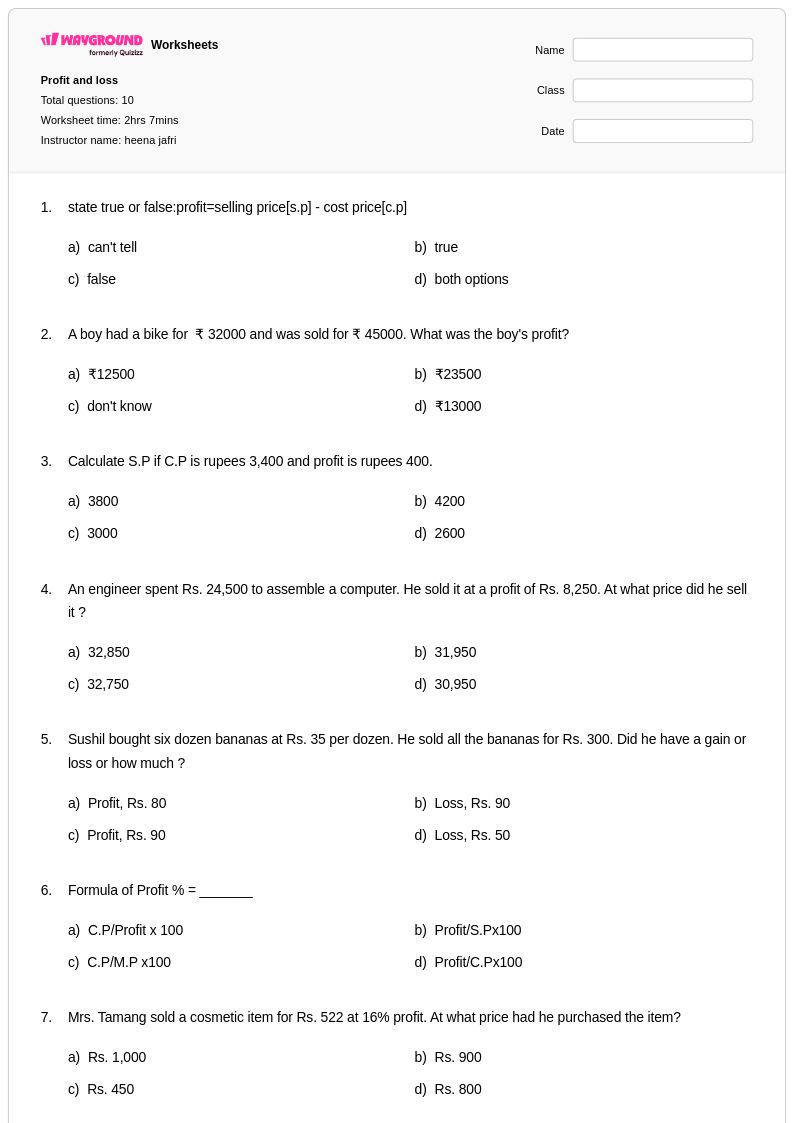
10 Q
7th
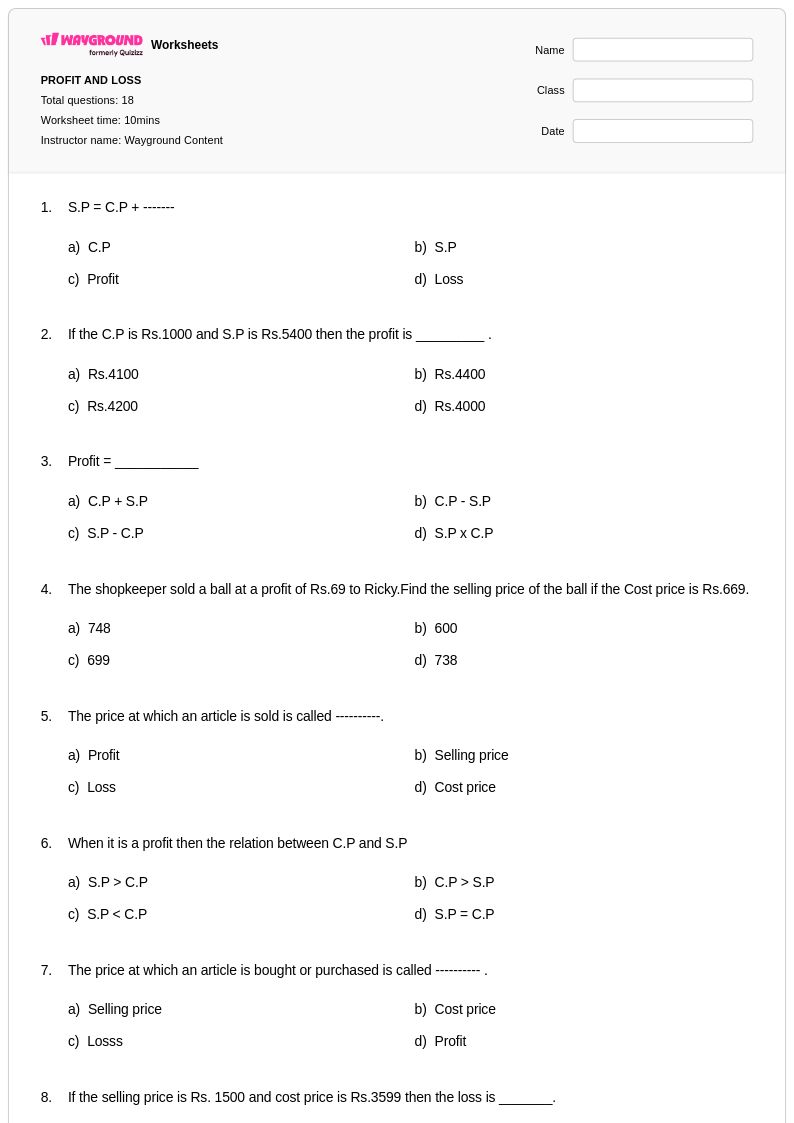
18 Q
6th - 8th
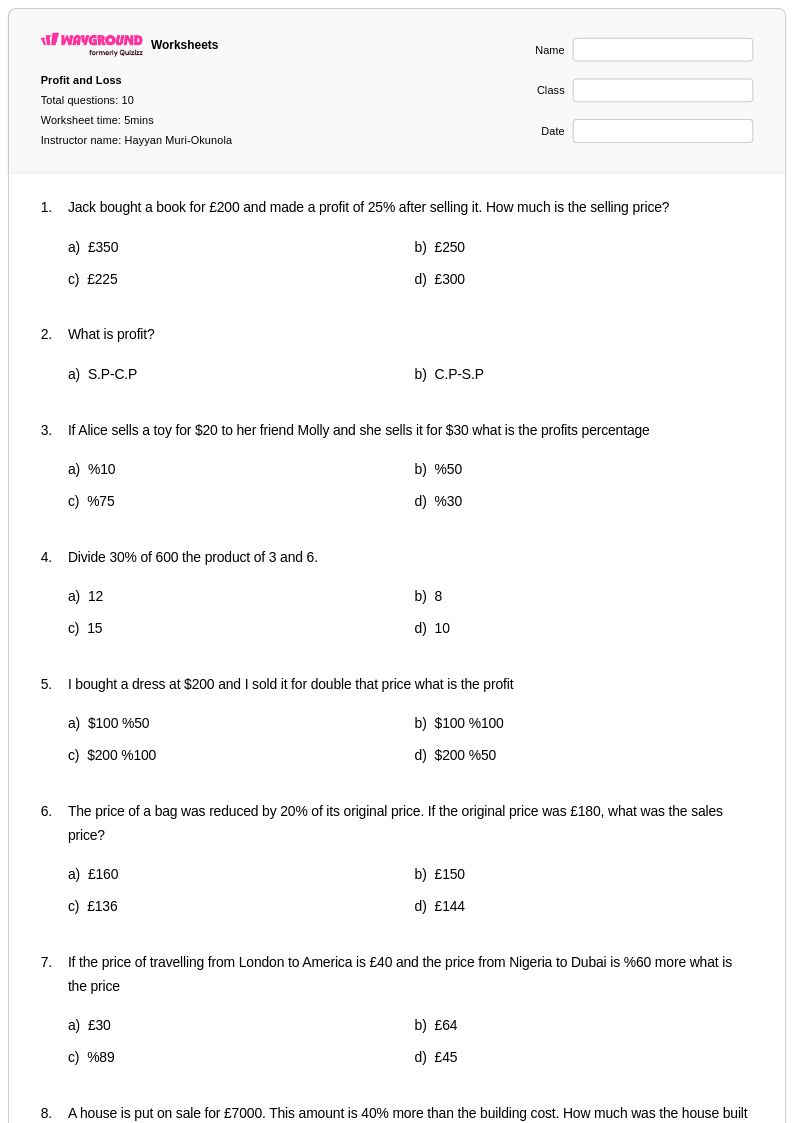
10 Q
5th - 8th
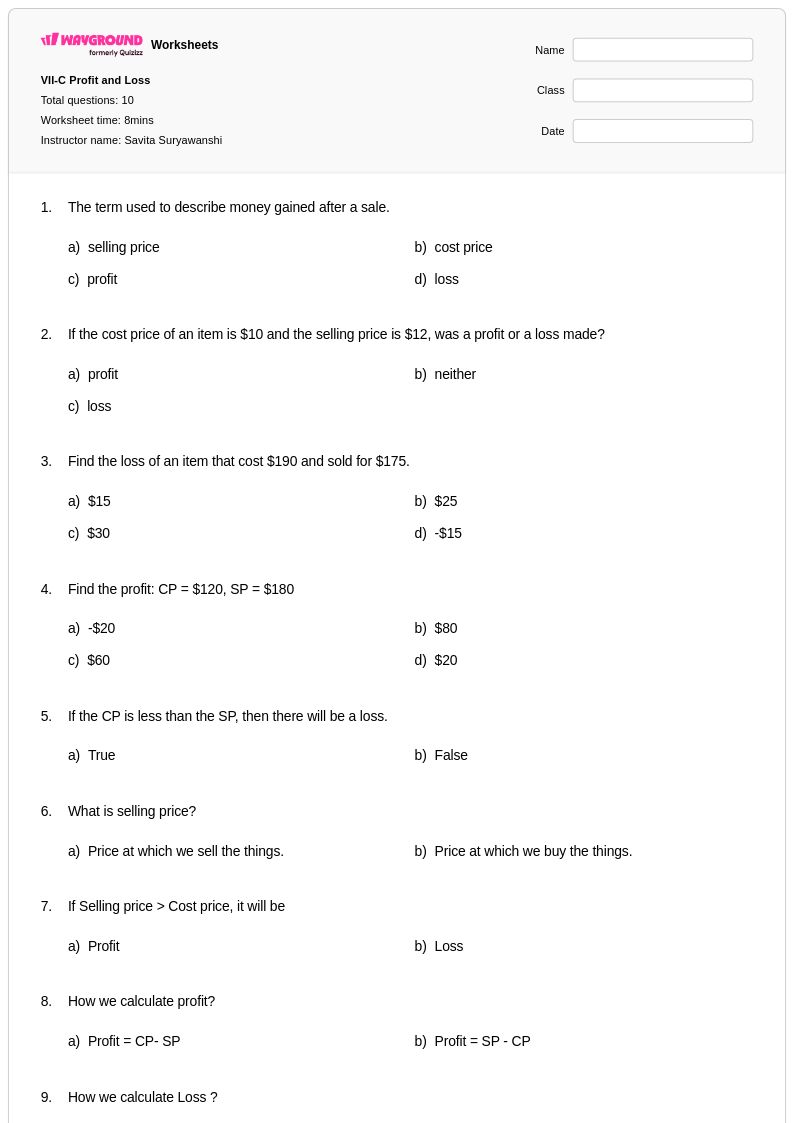
10 Q
7th
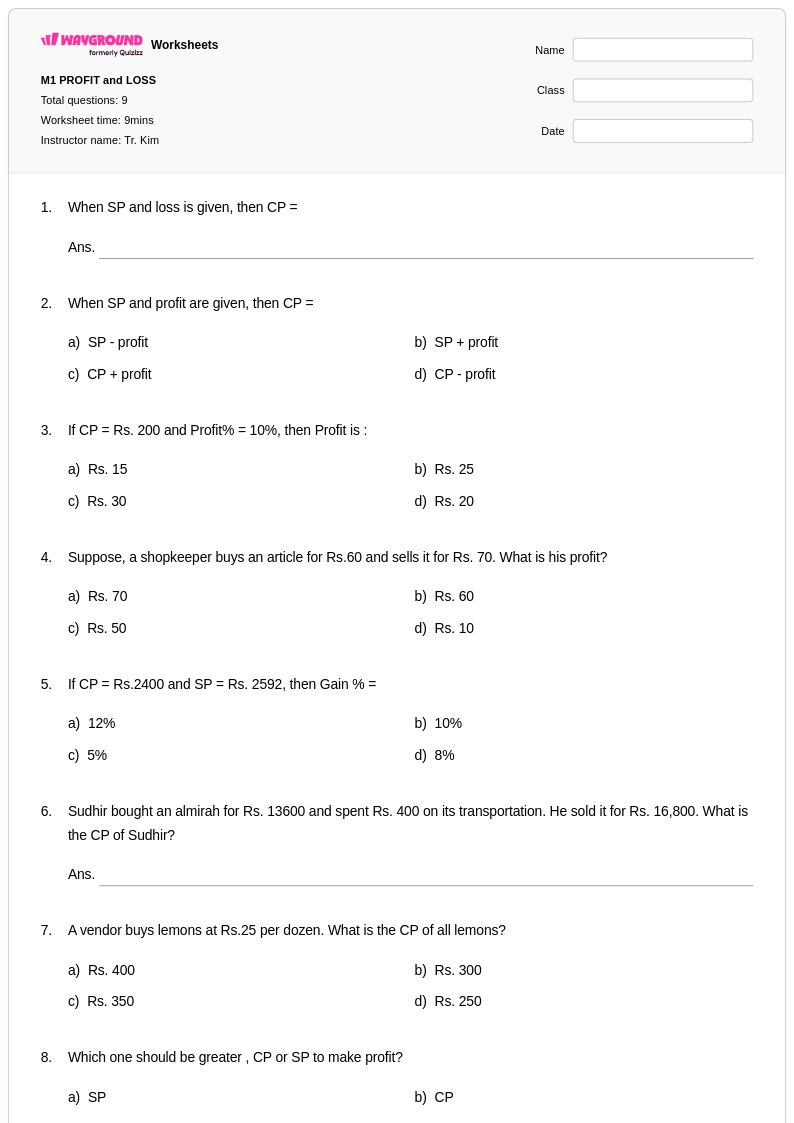
9 Q
7th
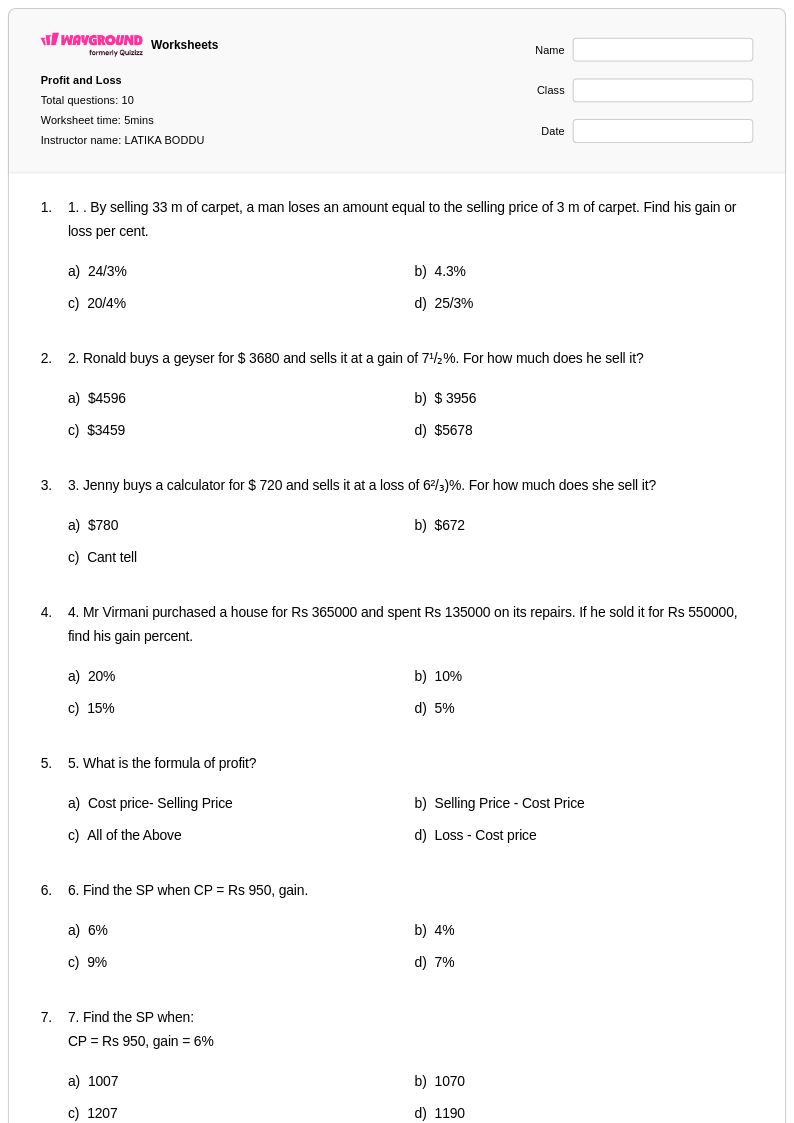
10 Q
7th
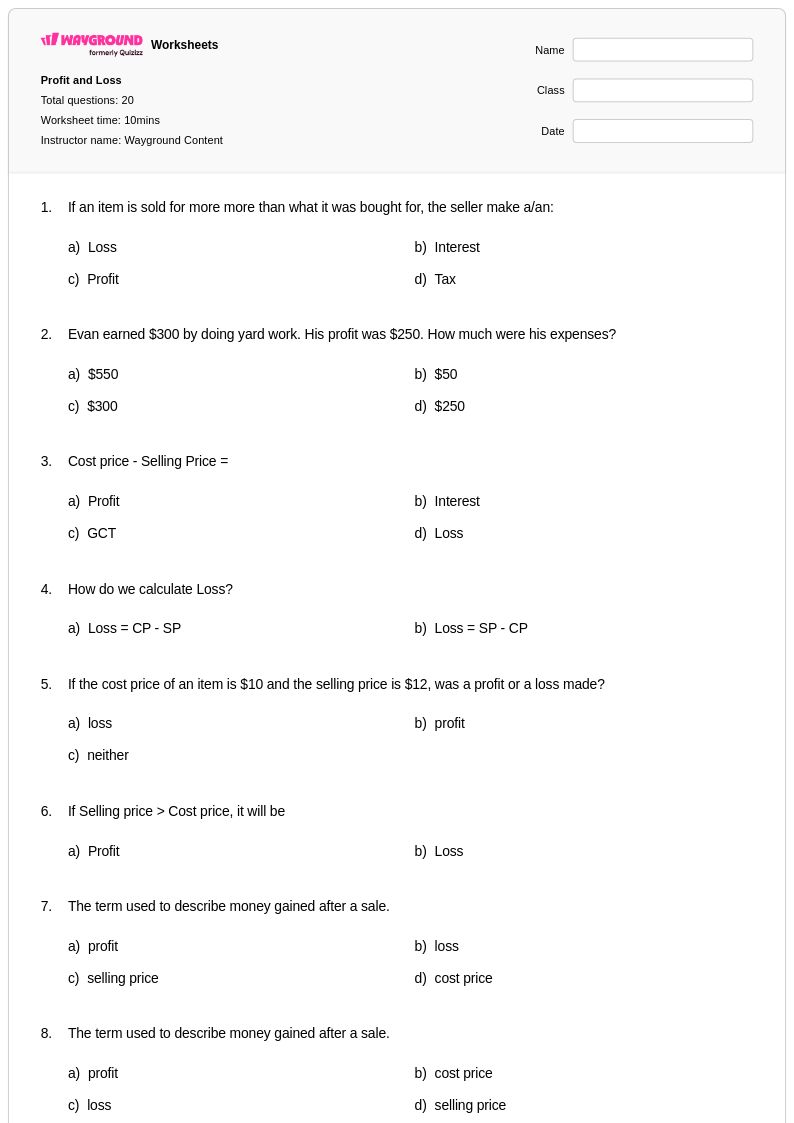
20 Q
7th
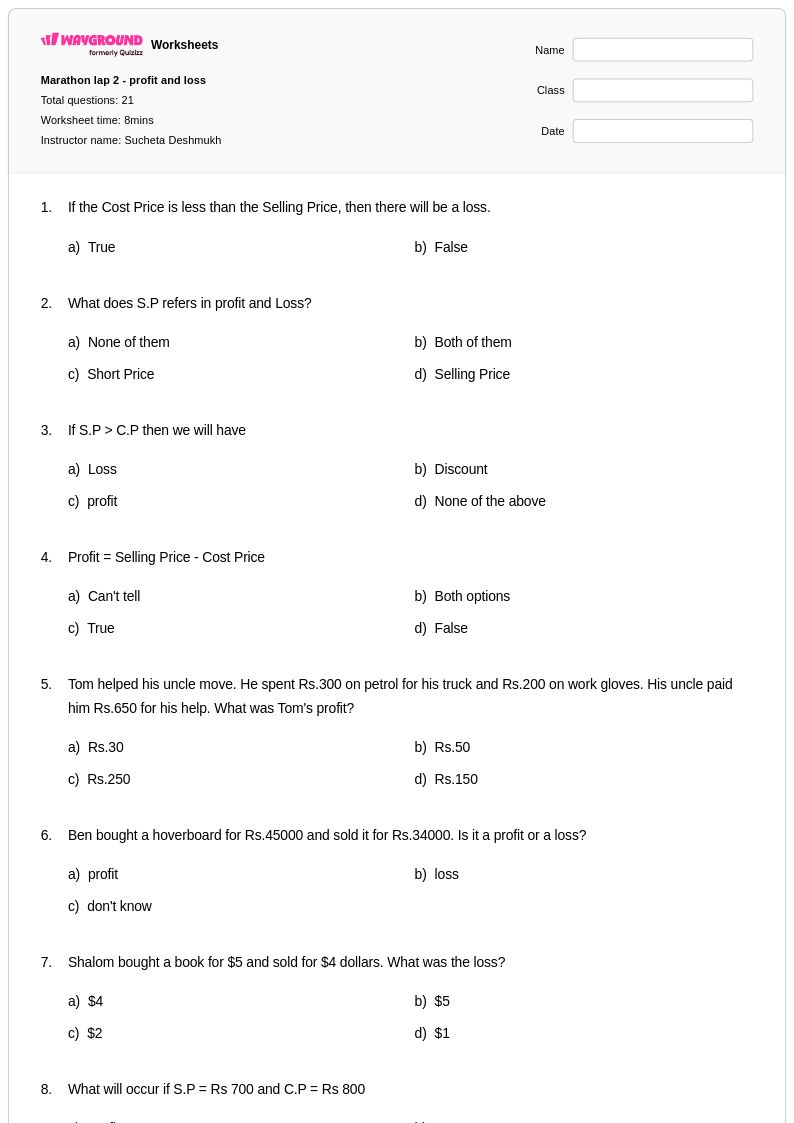
21 Q
5th - 7th
Explore Other Subject Worksheets for grade 7
Explore printable Profit and Loss worksheets for Grade 7
Grade 7 profit and loss worksheets through Wayground (formerly Quizizz) provide comprehensive practice opportunities for students developing essential financial literacy skills in middle school mathematics. These carefully designed worksheets focus on fundamental business concepts including calculating profit, determining loss, understanding cost price and selling price relationships, and computing profit and loss percentages. Students work through practice problems that simulate real-world scenarios involving buying and selling goods, helping them grasp how businesses operate and make financial decisions. Each worksheet collection includes detailed answer keys and is available as free printables in convenient pdf format, enabling students to develop fluency with profit and loss calculations while building critical thinking skills about financial transactions and business operations.
Wayground (formerly Quizizz) empowers educators with millions of teacher-created resources specifically designed for Grade 7 profit and loss instruction, featuring robust search and filtering capabilities that allow teachers to locate materials perfectly matched to their classroom needs. The platform's standards-aligned worksheet collections support differentiated instruction through flexible customization tools, enabling teachers to modify difficulty levels and problem types to meet diverse student learning requirements. Available in both printable and digital formats including downloadable pdf versions, these resources streamline lesson planning while providing targeted practice for skill remediation and enrichment activities. Teachers can efficiently identify student misconceptions about profit and loss concepts and provide focused intervention through carefully sequenced practice problems that build mathematical confidence and financial literacy understanding.
FAQs
What is the focus of profit and loss in 7th grade?
How do I teach profit and loss percentages?
What is a common misconception for 7th graders with this topic?
What kind of practice problems do 7th graders need for profit and loss?
How can I use this Wayground worksheet with my 7th graders?
How does this topic support 7th-grade curriculum standards?