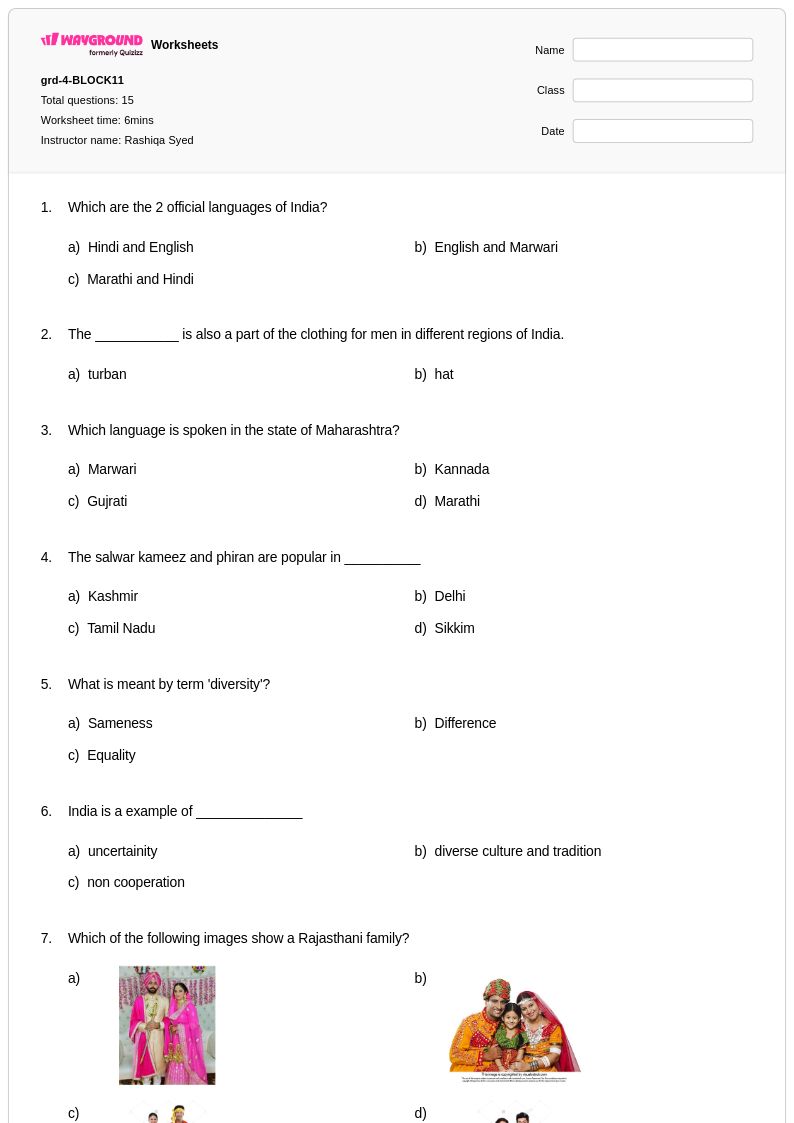
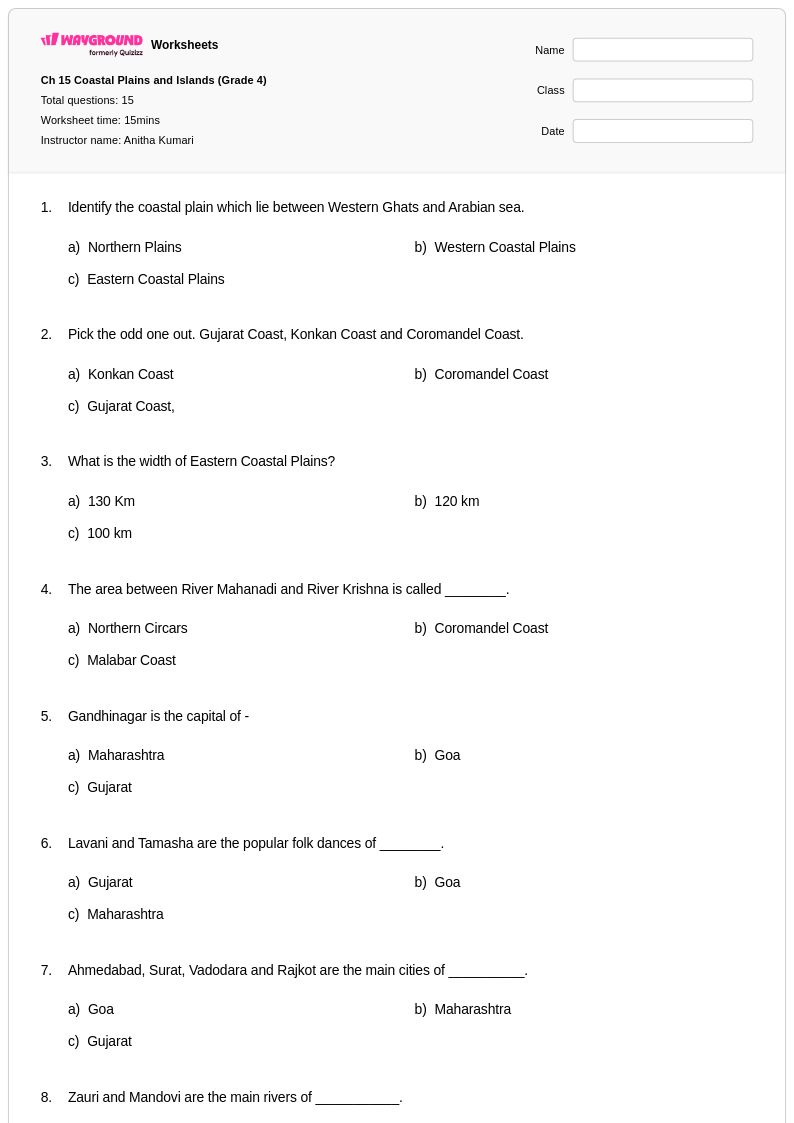
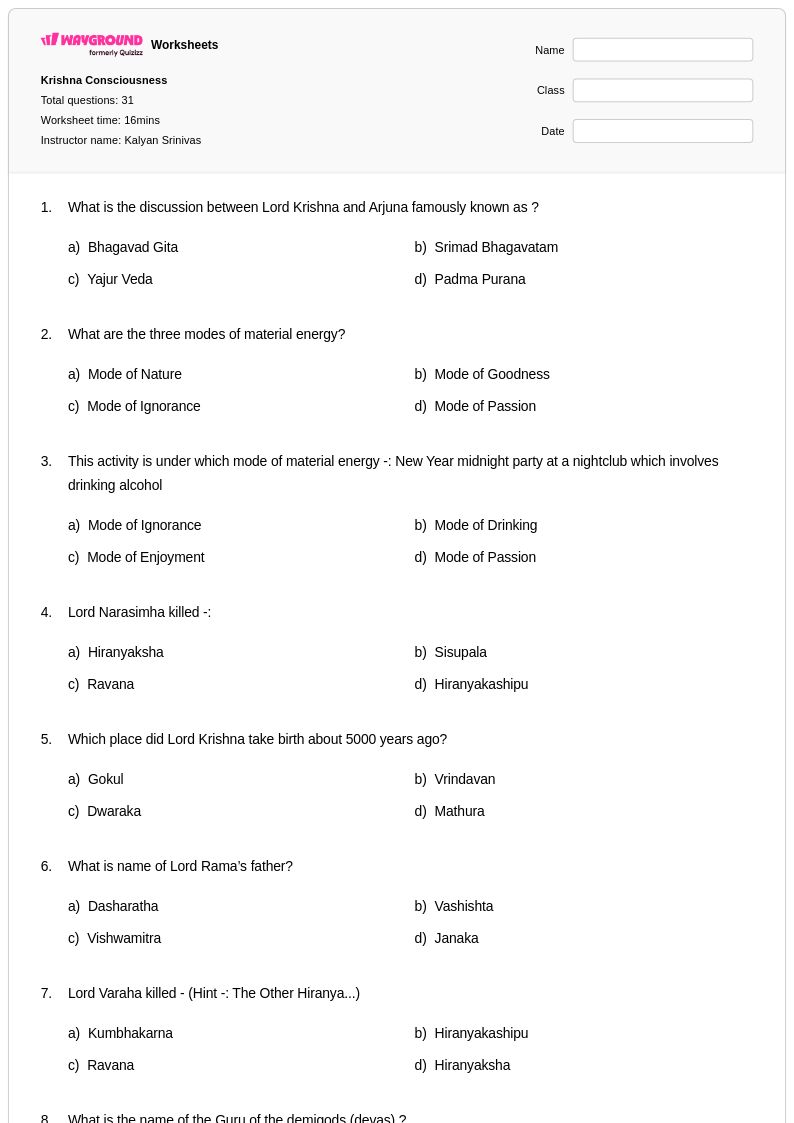
Explore Wayground's free Grade 4 Purim worksheets and printables that help students discover this important Jewish holiday's traditions, customs, and cultural significance through engaging practice problems and comprehensive answer keys.
Purim worksheets for Grade 4 students available through Wayground (formerly Quizizz) provide comprehensive educational resources that explore this significant Jewish holiday within the broader context of community and cultural traditions. These carefully designed materials help fourth-grade learners understand the historical narrative of Queen Esther, the customs and symbols associated with Purim celebrations, and the holiday's importance in Jewish culture and identity. Students develop critical thinking skills as they analyze the story's themes of courage and standing up for one's community, while simultaneously building reading comprehension and cultural awareness through engaging practice problems. Each worksheet collection includes detailed answer keys and is available as free printable pdf resources, making it simple for educators to incorporate meaningful cultural education into their social studies curriculum.
Wayground (formerly Quizizz) empowers teachers with access to millions of educator-created Purim and cultural studies resources, featuring robust search and filtering capabilities that allow instructors to quickly locate grade-appropriate materials aligned with social studies standards. The platform's differentiation tools enable teachers to customize worksheets for diverse learning needs, supporting both remediation for students who need additional cultural context and enrichment opportunities for advanced learners ready to explore deeper connections between Purim traditions and broader themes of cultural identity. Available in both printable and digital pdf formats, these comprehensive worksheet collections streamline lesson planning while providing flexible options for classroom instruction, homework assignments, and skill practice sessions that help students develop a meaningful understanding of how different communities celebrate and preserve their cultural heritage.
FAQs
How do I teach students about Purim in a classroom setting?
Teaching Purim effectively starts with grounding students in the story of Queen Esther and the historical context of the Jewish Persian diaspora. From there, connect the narrative to the holiday's core themes — courage, identity, and justice — before introducing specific customs like reading the Megillah, giving gifts (mishloach manot), and wearing costumes. Using primary-source-style storytelling alongside structured discussion questions helps students engage with both the cultural and ethical dimensions of the holiday.
What exercises help students practice what they've learned about Purim?
Effective practice for Purim content includes comprehension questions about the Book of Esther narrative, matching activities that connect customs to their meanings, and short-answer prompts that ask students to explain the significance of specific traditions. Sequencing activities — where students order the events of the Purim story — are especially useful for reinforcing narrative comprehension and cause-and-effect thinking.
What misconceptions do students commonly have about Purim?
A common misconception is that Purim is simply a costume holiday without deeper meaning, which leads students to overlook its themes of courage and communal responsibility. Students also frequently confuse the roles of key figures, particularly conflating Mordecai and Haman or misremembering Esther's relationship to Mordecai. Addressing these errors directly with targeted reading and comprehension checks helps solidify accurate understanding of the story and its cultural significance.
How can I use Purim worksheets to support diverse learners in my classroom?
Purim worksheets on Wayground are available in both printable PDF format and digital formats, making them adaptable for a range of classroom environments and student needs. When hosting worksheets digitally on Wayground, teachers can apply individual accommodations such as Read Aloud for students who benefit from audio support, reduced answer choices to lower cognitive load, and extended time settings — all configurable per student without disrupting the rest of the class.
How do Purim worksheets connect to social studies or cultural literacy standards?
Purim worksheets support social studies standards related to world cultures, religious traditions, and community practices, making them well-suited for units on cultural diversity and global awareness. They also reinforce cultural literacy objectives by helping students understand how historical narratives shape living traditions within a community. Teachers can use these materials to build cross-cultural understanding and facilitate respectful discussions about religious observance in diverse societies.