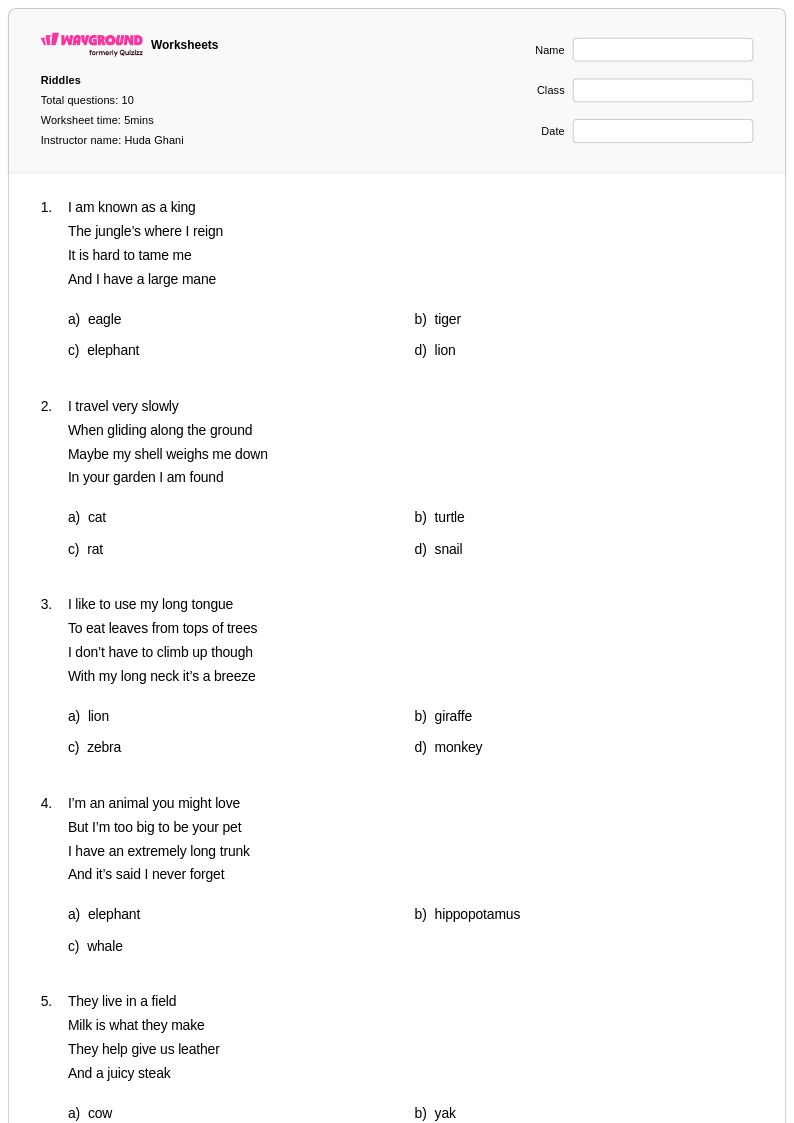
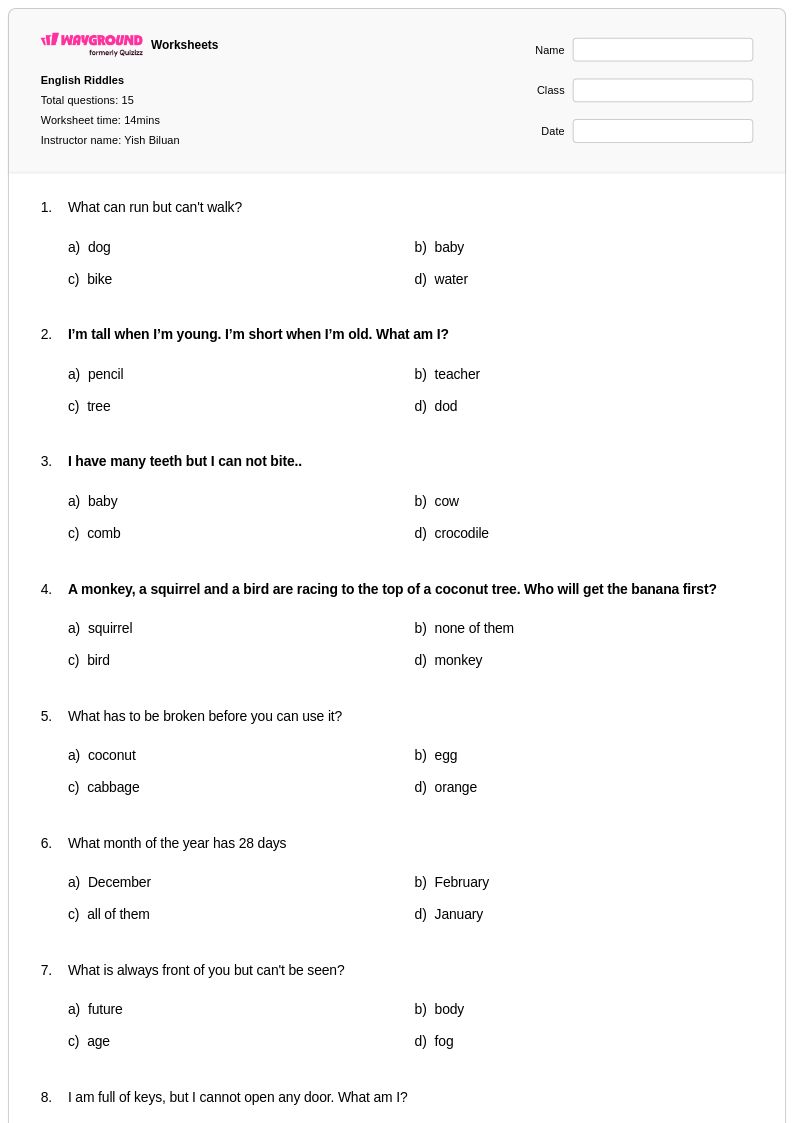
Explore Wayground's free Grade 1 riddles worksheets and printables that help young learners develop critical thinking and reading comprehension skills through engaging puzzle-solving activities with answer keys included.
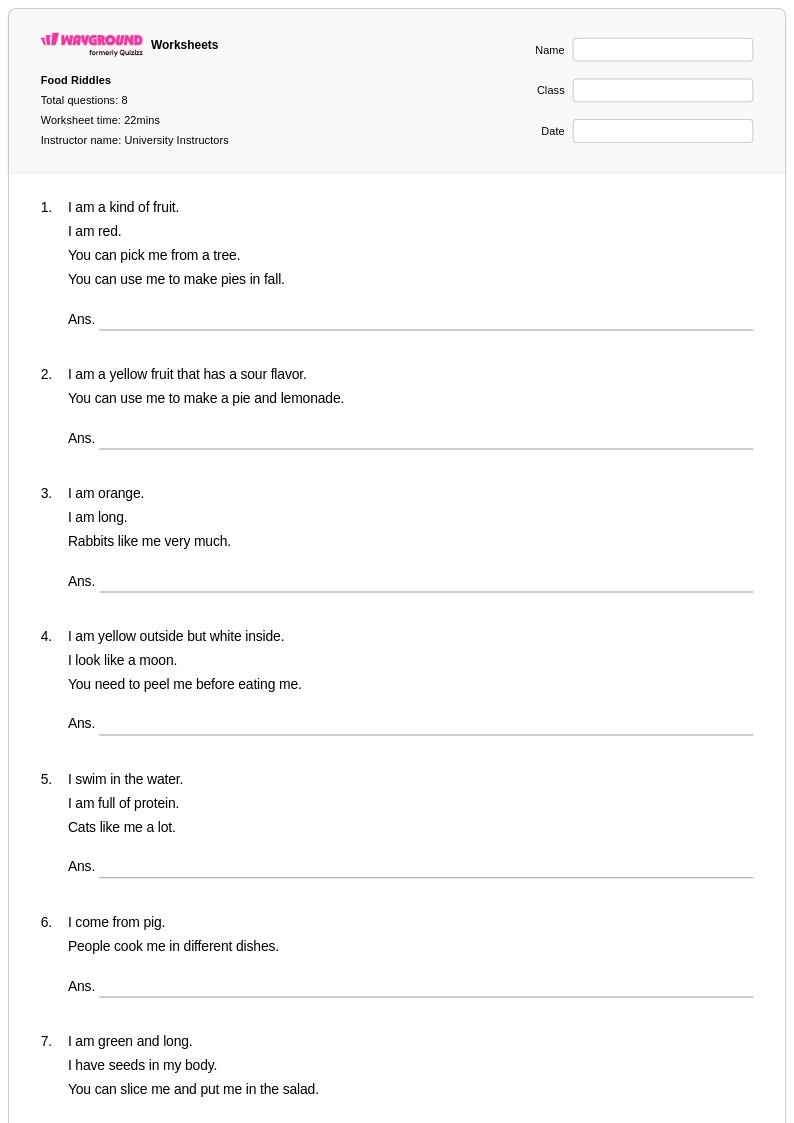
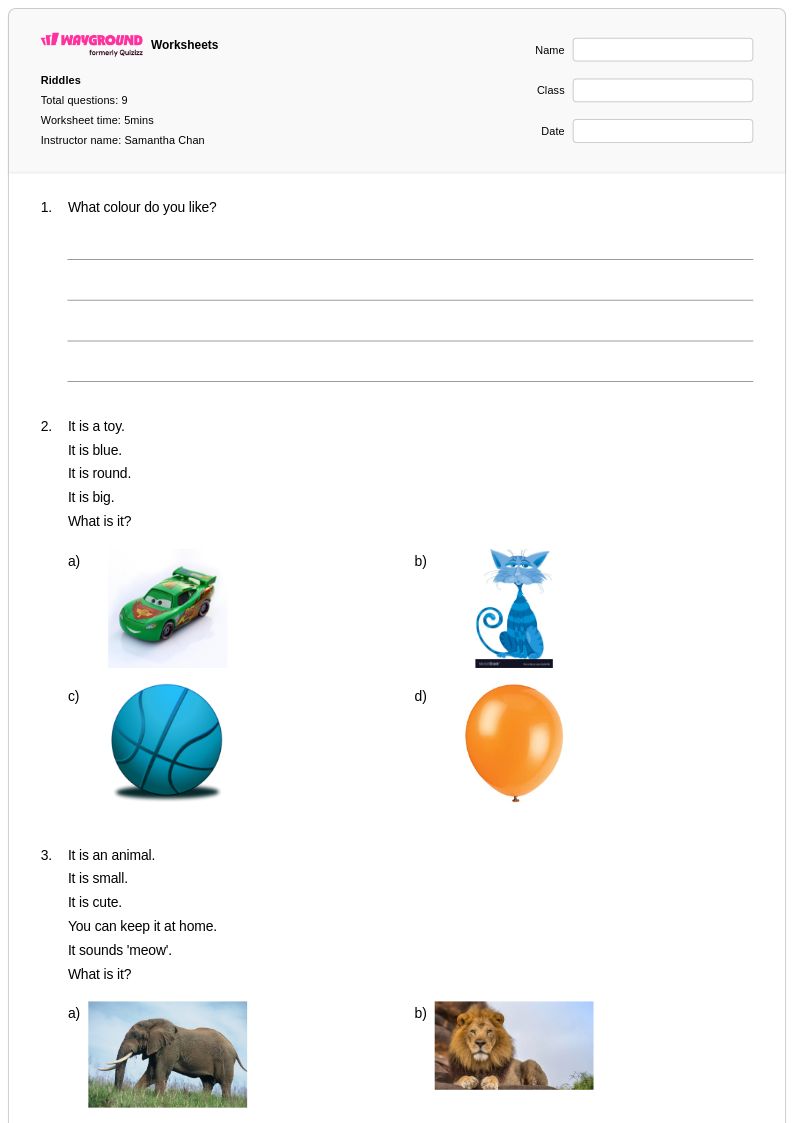
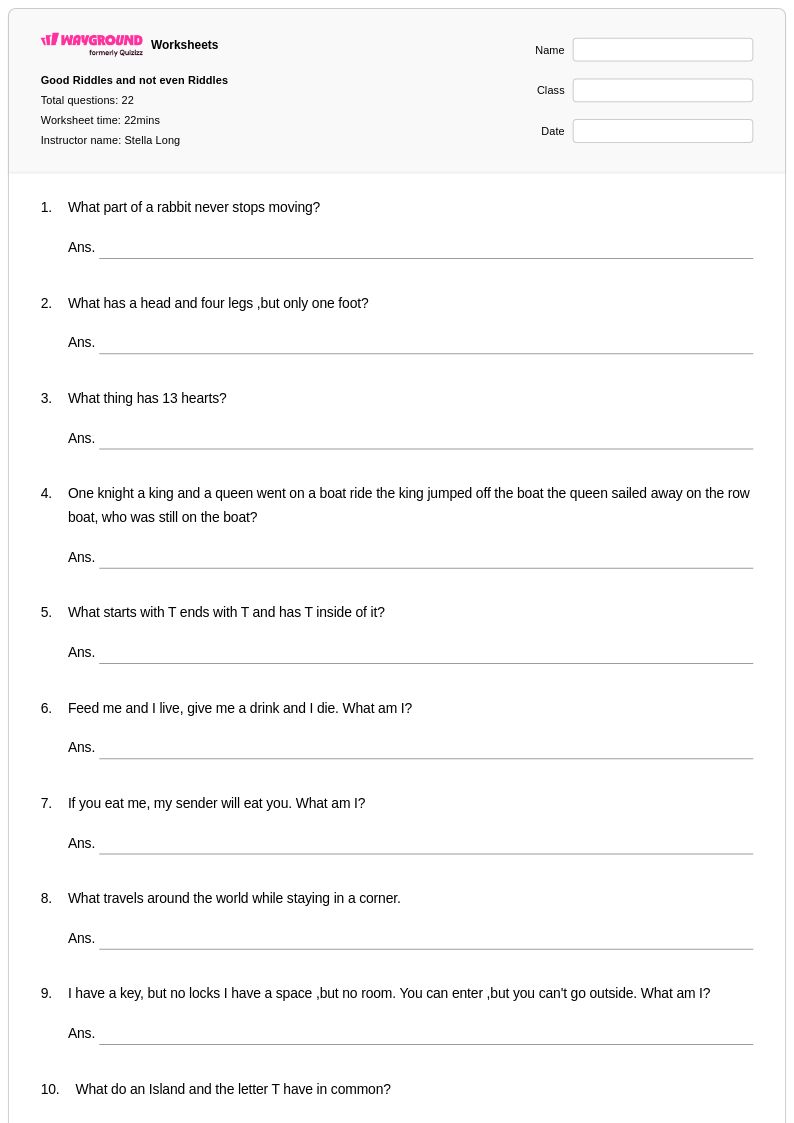
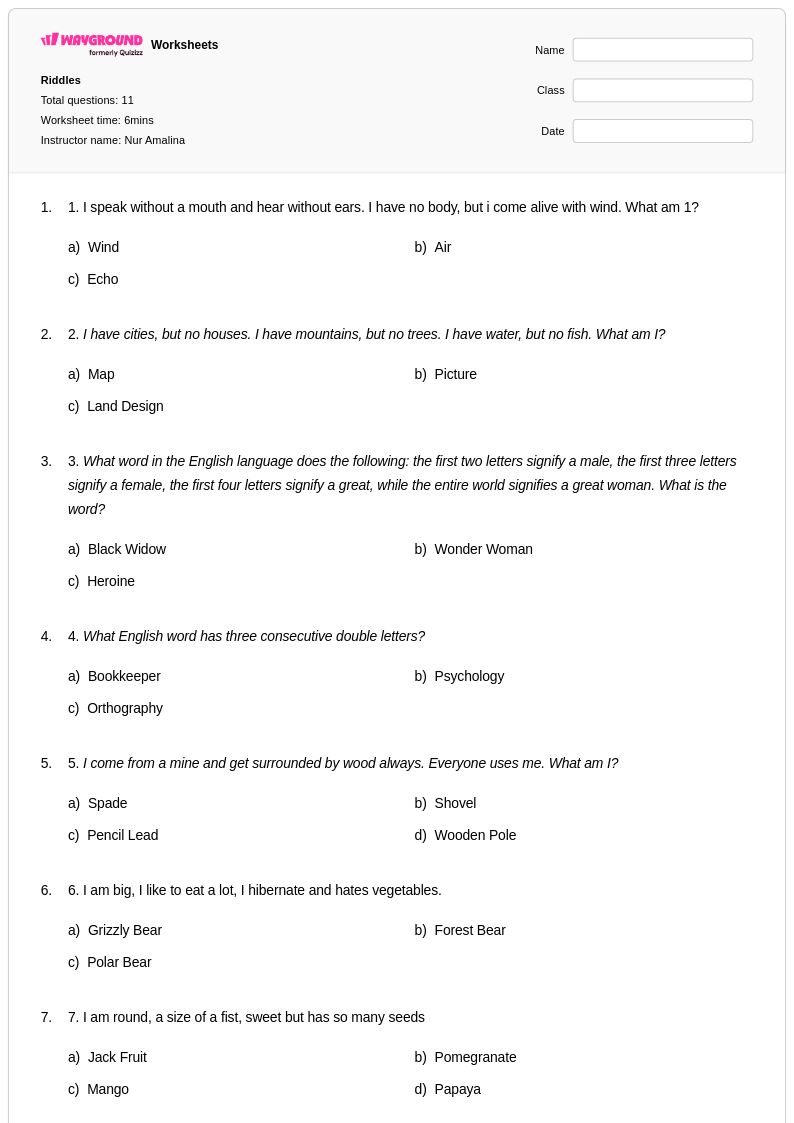
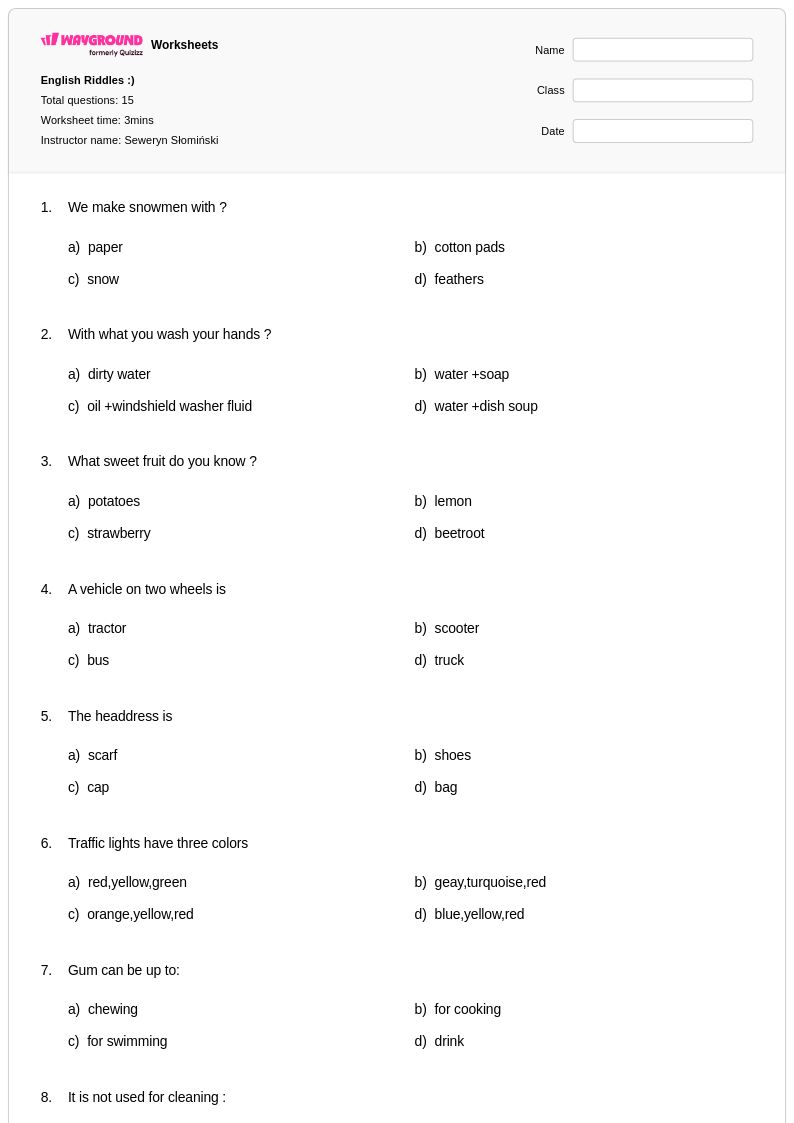
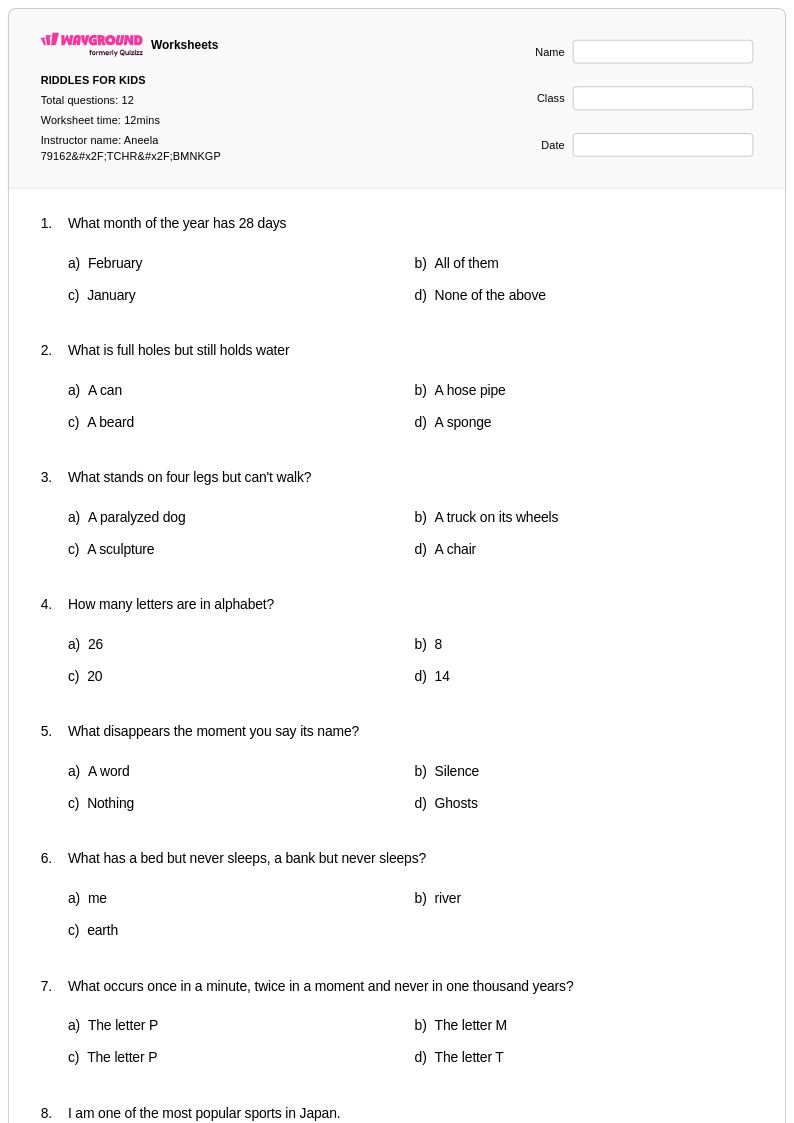
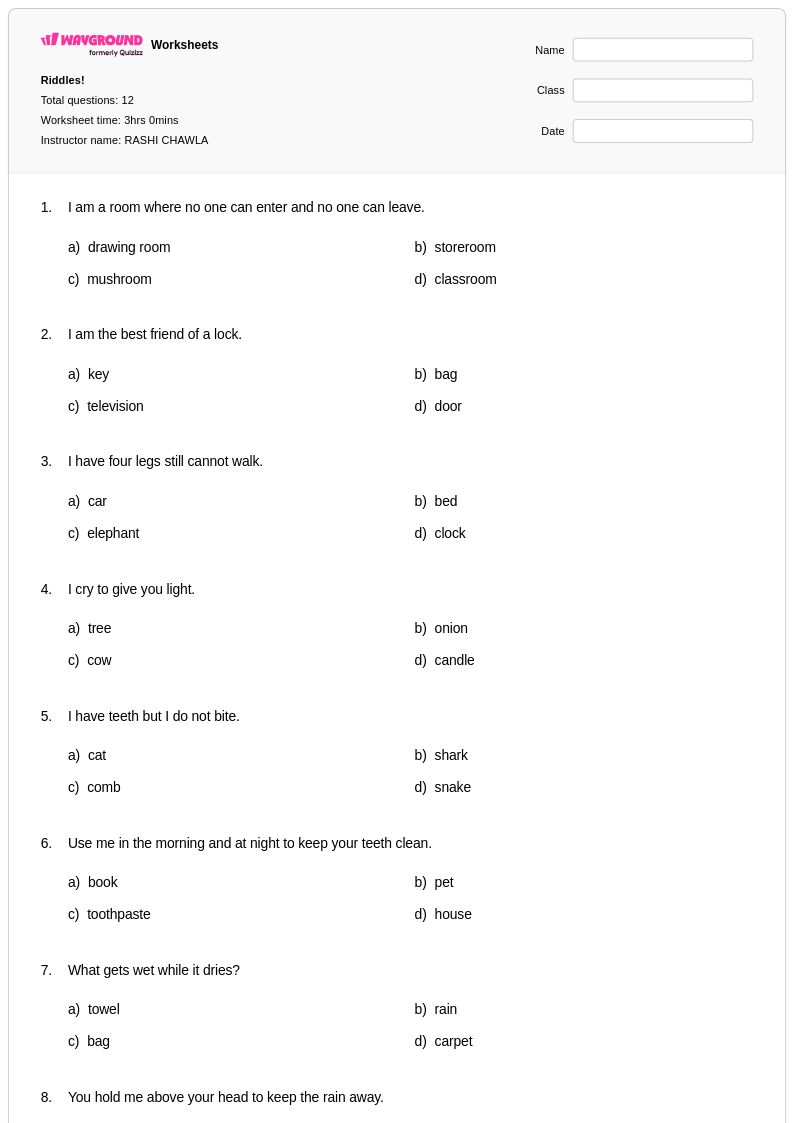
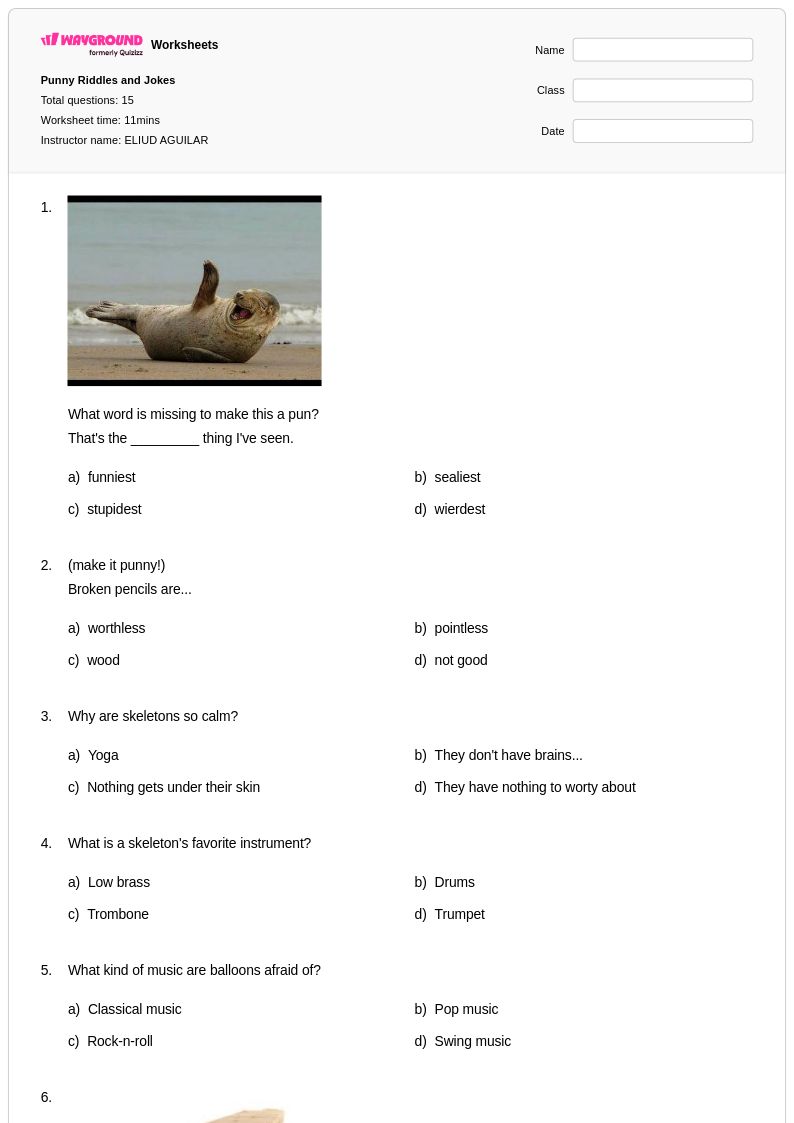
Riddles worksheets for Grade 1 students available through Wayground (formerly Quizizz) provide an engaging introduction to this playful form of literature while building essential reading comprehension and critical thinking skills. These carefully crafted printables challenge young learners to decode clues, make logical connections, and think creatively about language patterns and wordplay. Each worksheet features age-appropriate riddles that encourage students to practice reading fluency, vocabulary development, and inference skills as they work through practice problems that range from simple rhyming riddles to picture-based brain teasers. The collection includes comprehensive answer keys and free pdf downloads that make it easy for educators to incorporate riddle-solving activities into daily literacy instruction, helping first graders develop both analytical thinking and a love for wordplay.
Wayground (formerly Quizizz) supports teachers with an extensive collection of millions of teacher-created riddle worksheets specifically designed for Grade 1 reading instruction. The platform's robust search and filtering capabilities allow educators to quickly locate materials that align with specific learning objectives and curriculum standards, while differentiation tools enable customization for diverse learning needs and abilities. Teachers can access these resources in both printable and digital pdf formats, making them ideal for classroom instruction, homework assignments, remediation sessions, and enrichment activities. The flexible customization options allow educators to modify difficulty levels, add visual supports, or combine riddle worksheets with other reading genre activities, ensuring that every student receives appropriate skill practice while developing their understanding of this entertaining literary form.
FAQs
How do I teach riddles in the classroom?
Teaching riddles effectively starts with modeling the thinking process aloud — show students how to break down a riddle by identifying key words, considering multiple meanings, and testing possible answers against the clues. Begin with simple, familiar riddles before introducing logic problems or wordplay that requires deeper language analysis. Encouraging students to explain their reasoning, not just their final answer, builds the metacognitive habits that make riddle-solving a genuine critical thinking exercise.
What skills do riddle worksheets help students practice?
Riddle worksheets target a cluster of interrelated skills: reading comprehension, inferencing, vocabulary, and logical reasoning. Students must parse language precisely, recognize figurative or double meanings, and use elimination strategies to arrive at answers. Because riddles require students to hold multiple interpretations in mind simultaneously, they are especially effective for building flexible thinking and close-reading habits.
What mistakes do students commonly make when solving riddles?
The most common error is literal interpretation — students focus on the surface meaning of words rather than considering figurative language, double meanings, or misdirection built into the riddle's phrasing. Students also frequently latch onto the first plausible answer without checking it against all the clues. Teaching students to re-read slowly and question their initial assumptions significantly reduces these errors.
How can riddles be used for reading comprehension practice?
Riddles compress complex comprehension demands into a short text, making them ideal for focused, low-stakes practice. Students must identify the subject being described without it being named directly, which develops inferencing and the ability to synthesize multiple clues into a single conclusion. Using riddles as a warm-up activity or exit ticket gives teachers quick insight into how well students are applying close-reading strategies.
How do I use Wayground's riddle worksheets in my classroom?
Wayground's riddle worksheets are available as printable PDFs for traditional classroom use and in digital formats for technology-integrated environments, making them easy to deploy however your classroom is set up. Each worksheet includes an answer key, so they work equally well for independent practice, partner work, or formative assessment without additional preparation. You can also host them as a quiz directly on Wayground, which adds interactivity and allows you to track student responses in real time.
How can I differentiate riddle activities for students with different ability levels?
For students who need support, choose riddles with concrete, familiar vocabulary and fewer layers of misdirection, and consider reading questions aloud to remove decoding as a barrier. Wayground's platform allows teachers to enable accommodations such as Read Aloud, reduced answer choices, and extended time for individual students without disrupting the rest of the class. For advanced learners, logic-based riddles and wordplay that require abstract reasoning provide an appropriate challenge within the same activity.