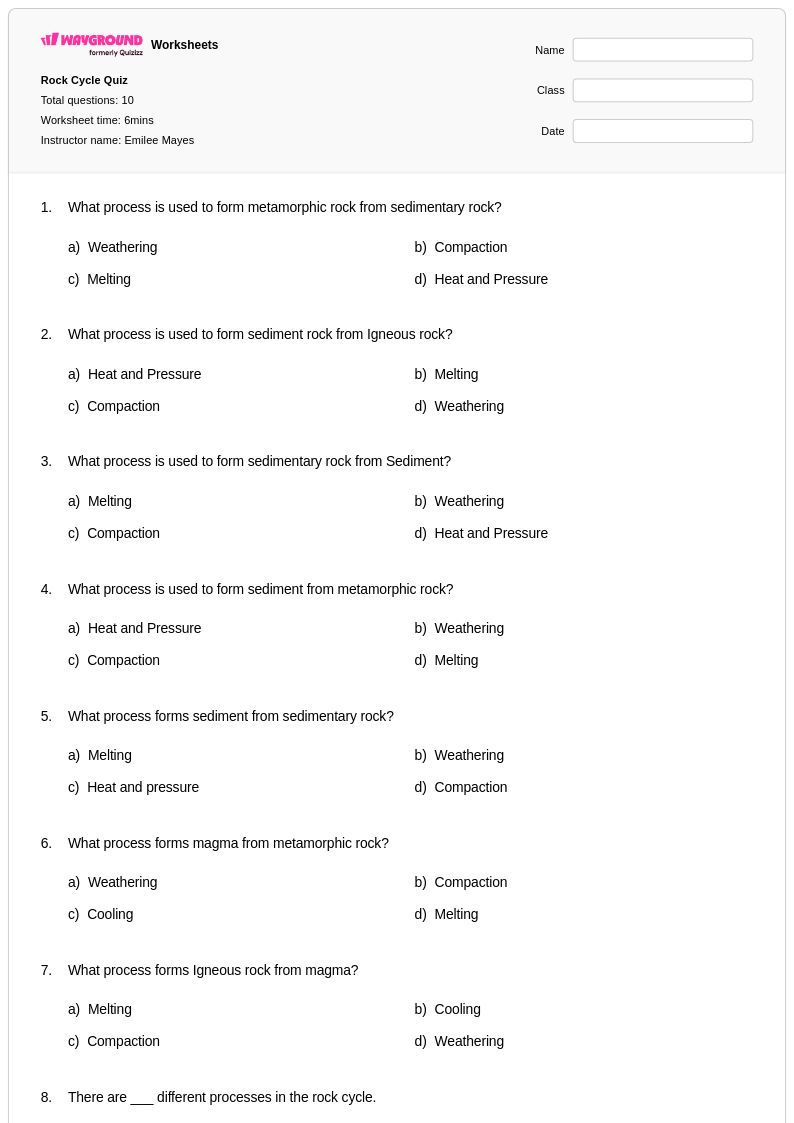
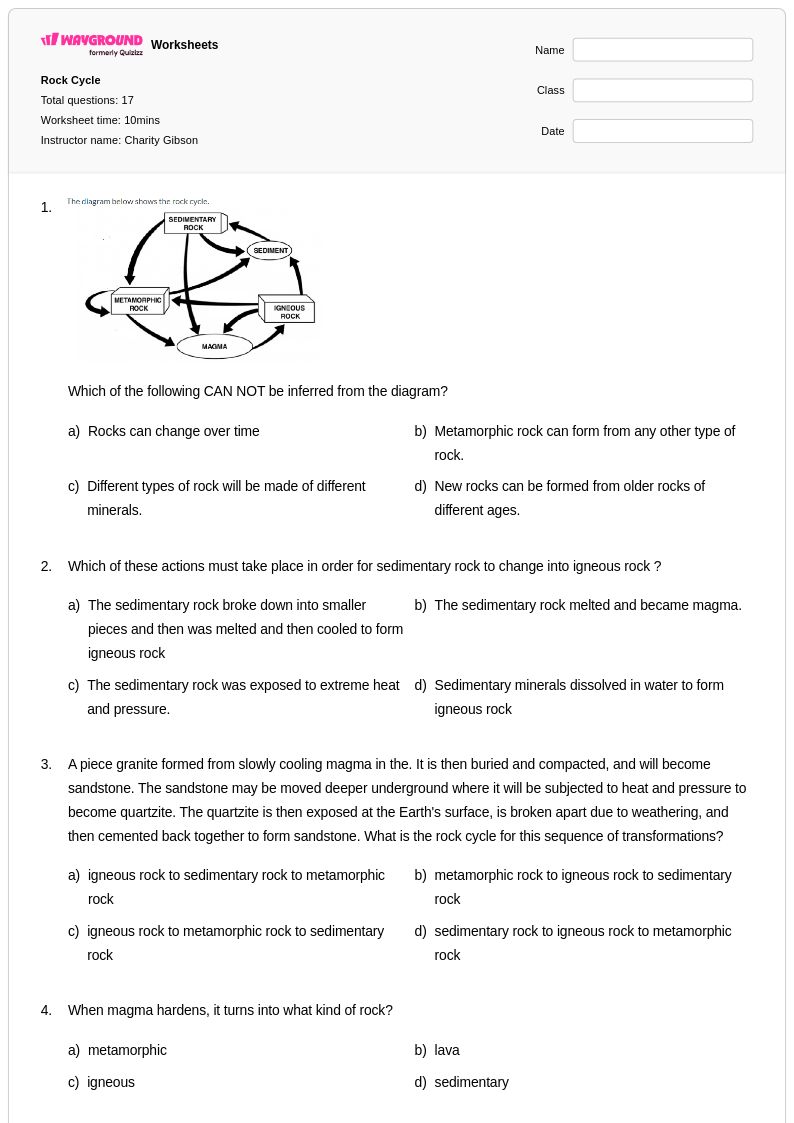
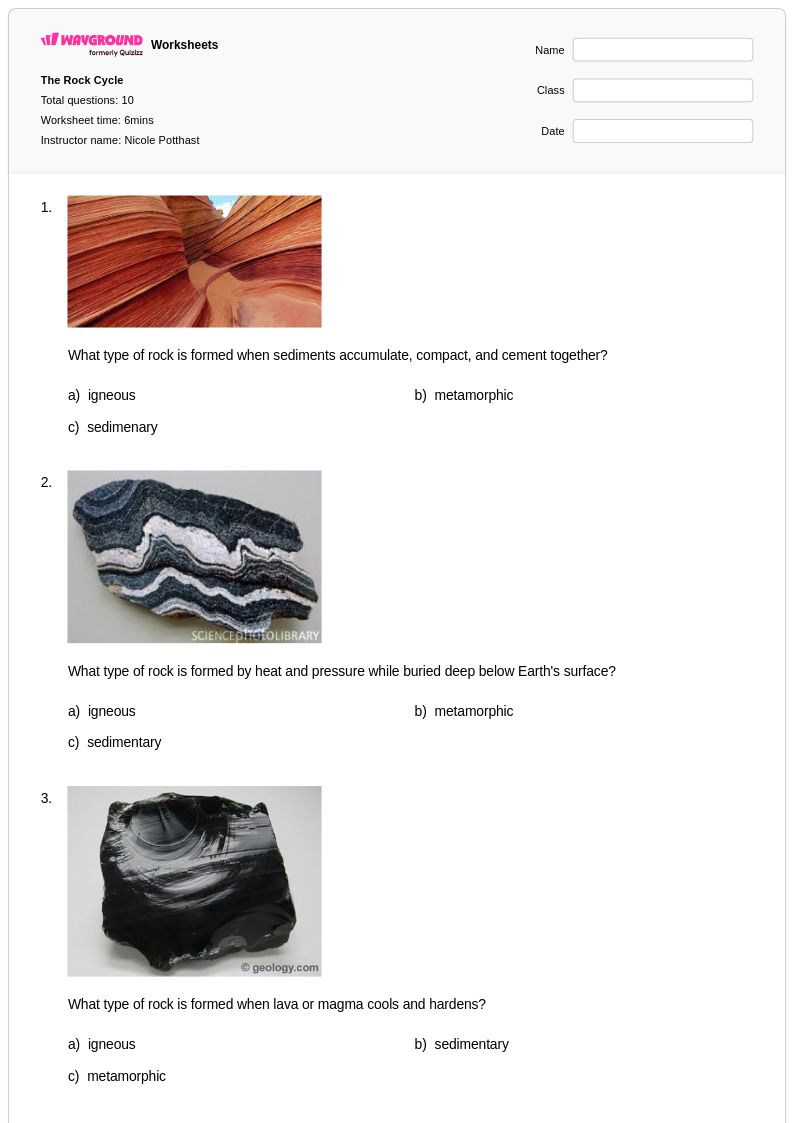
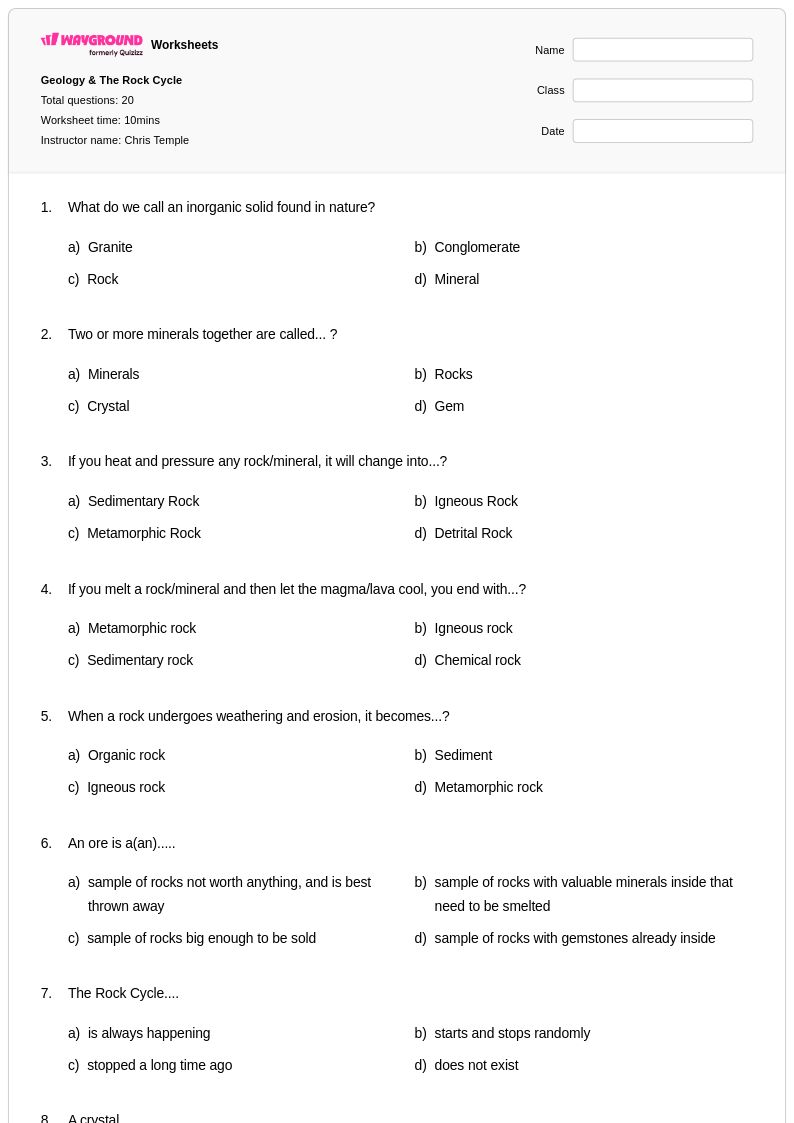
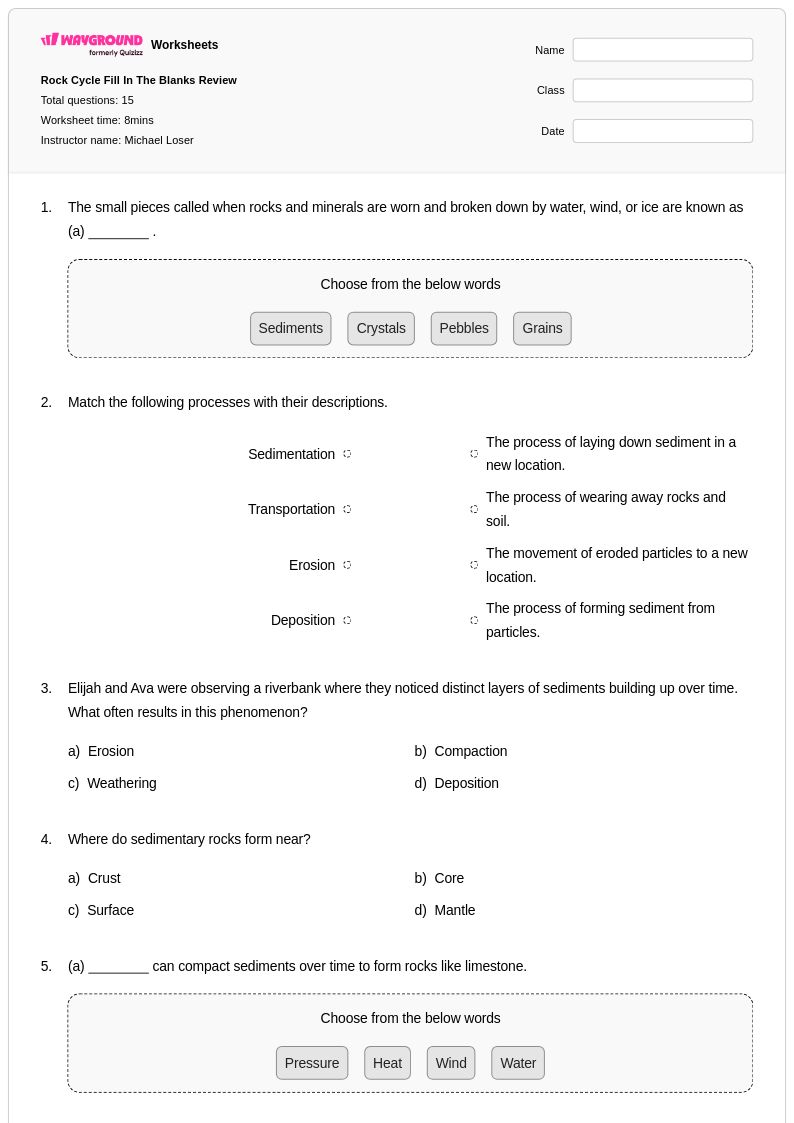
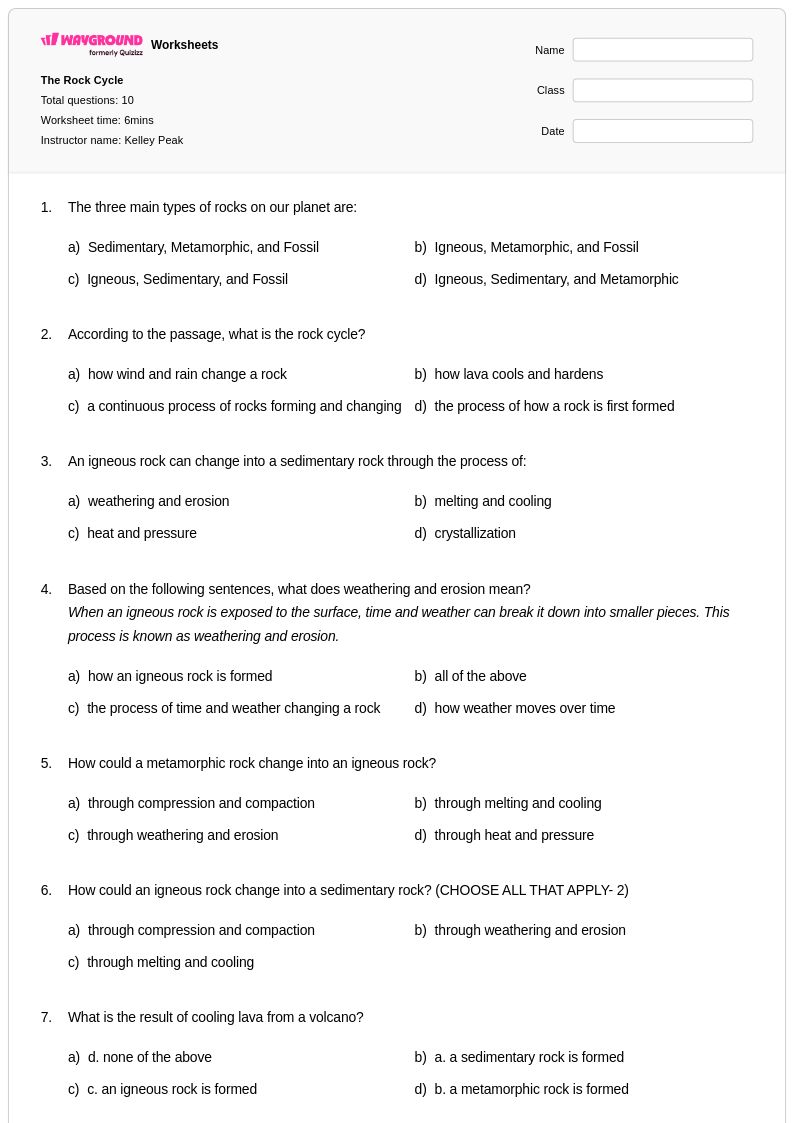
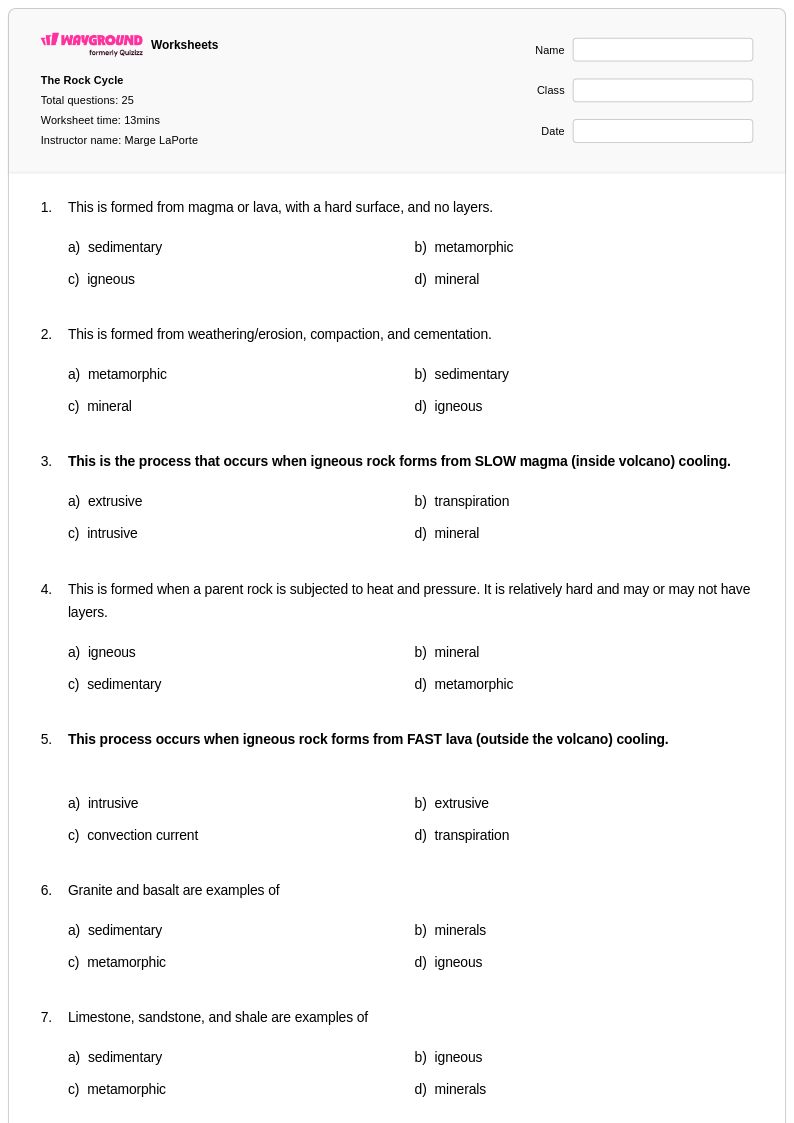
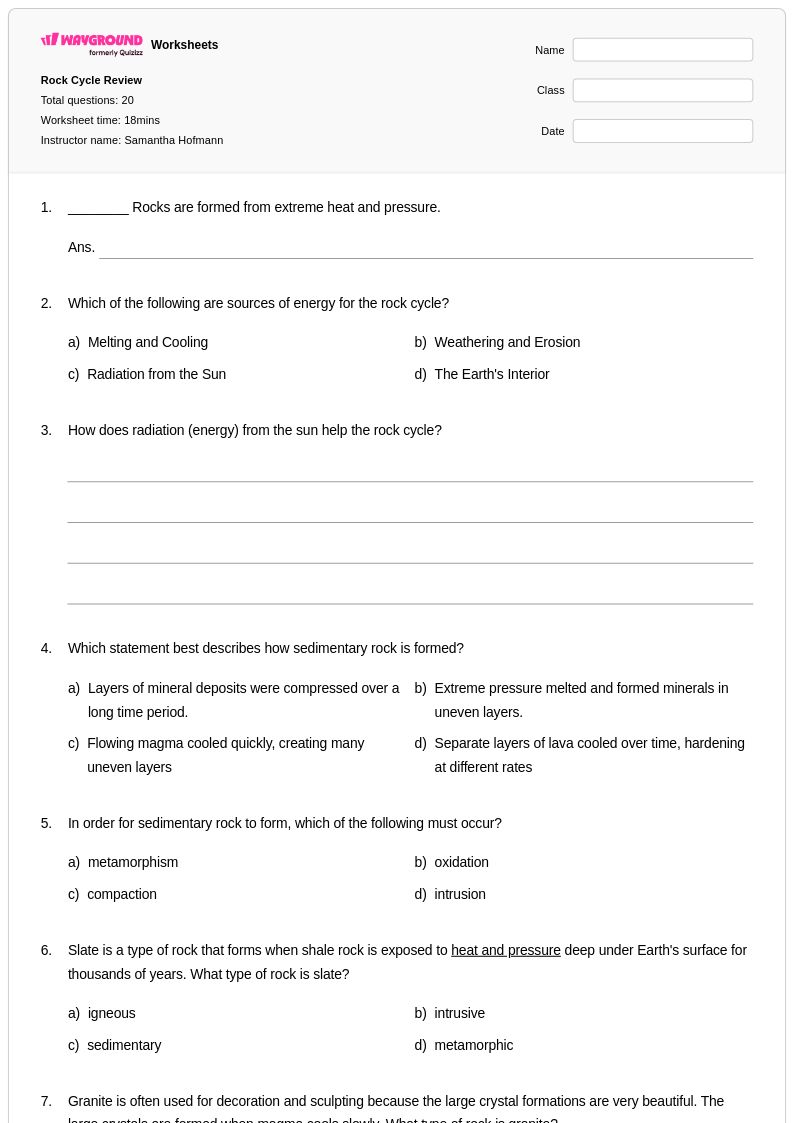
Explore Grade 6 rock cycle worksheets and printables that help students understand the processes of igneous, sedimentary, and metamorphic rock formation through engaging practice problems, free PDF downloads, and comprehensive answer keys from Wayground.
Explore printable Rock Cycle worksheets for Grade 6
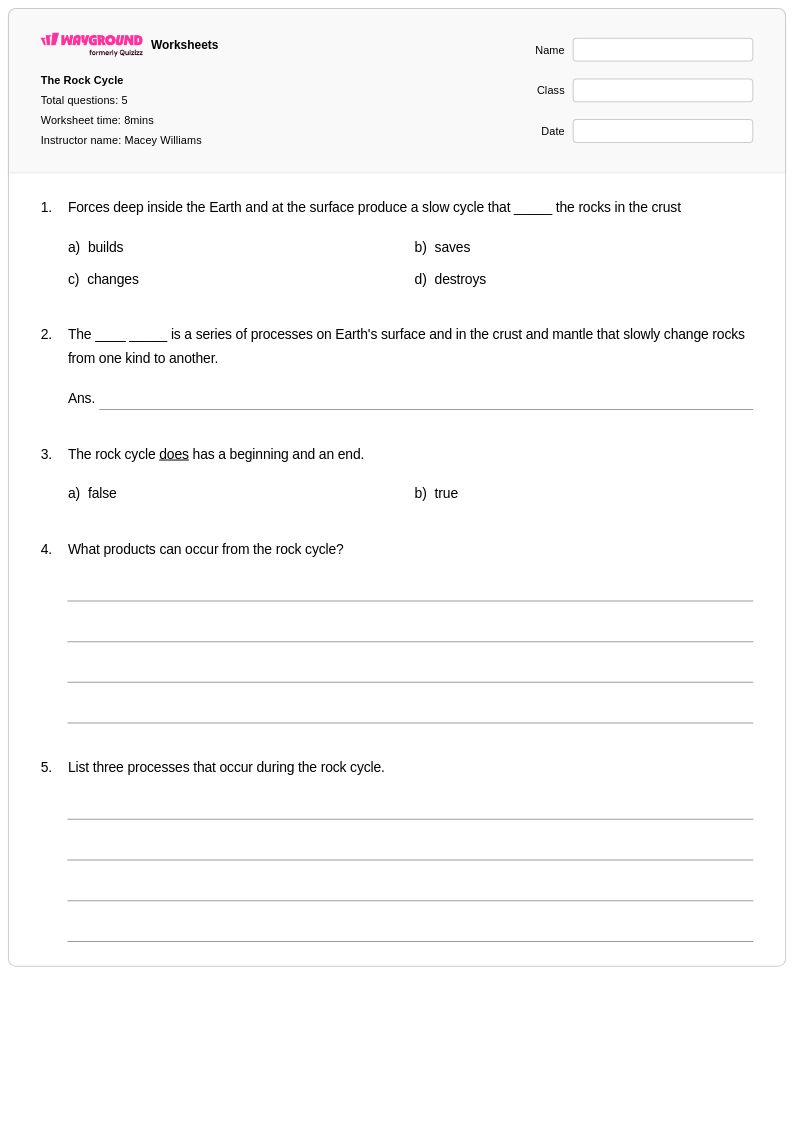
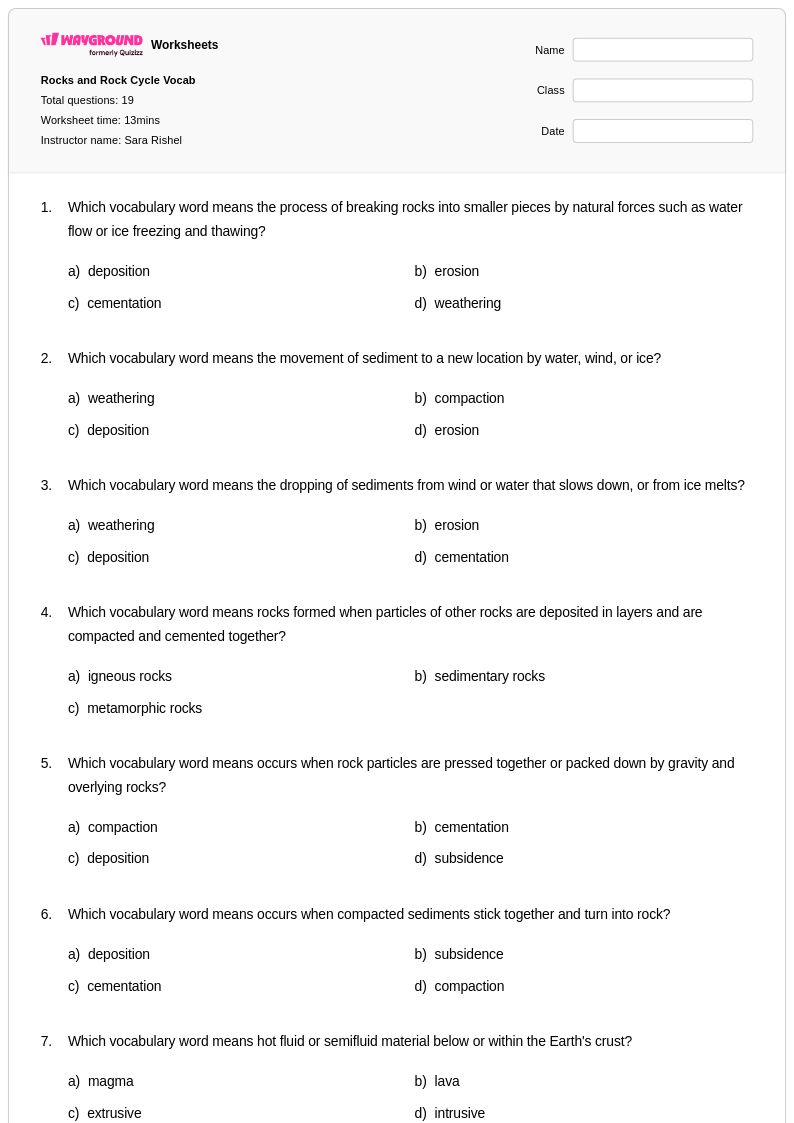
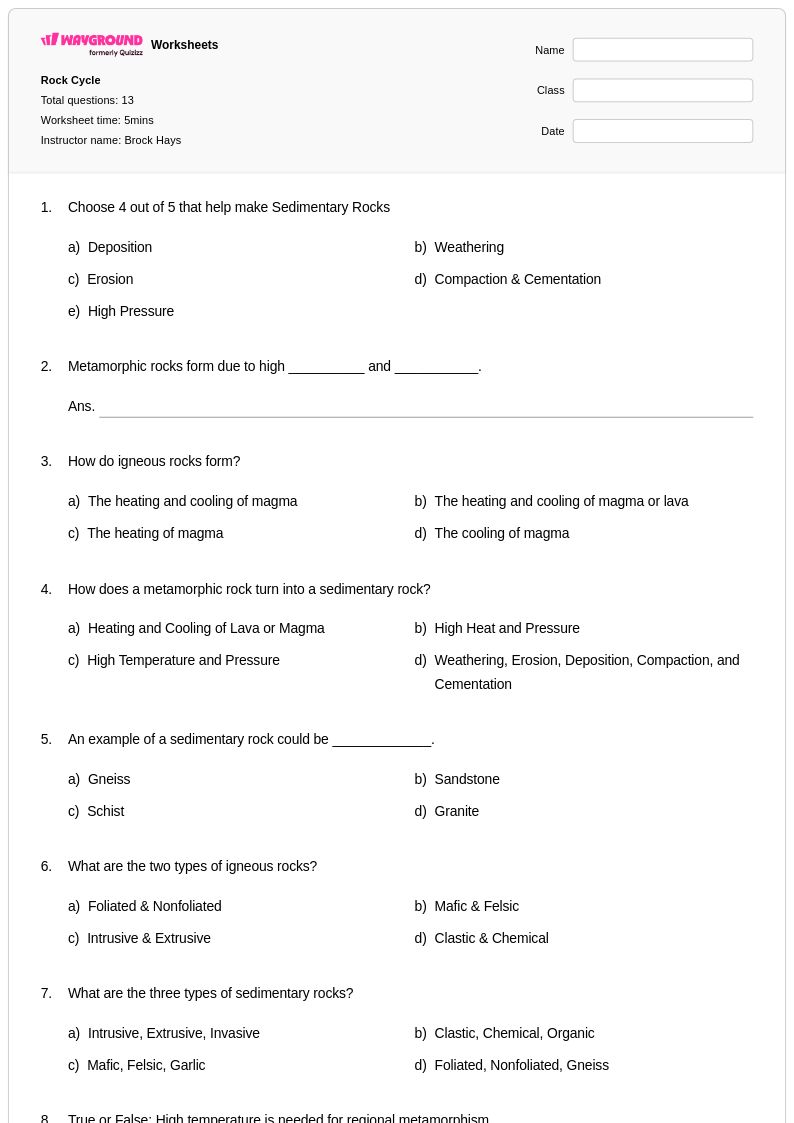
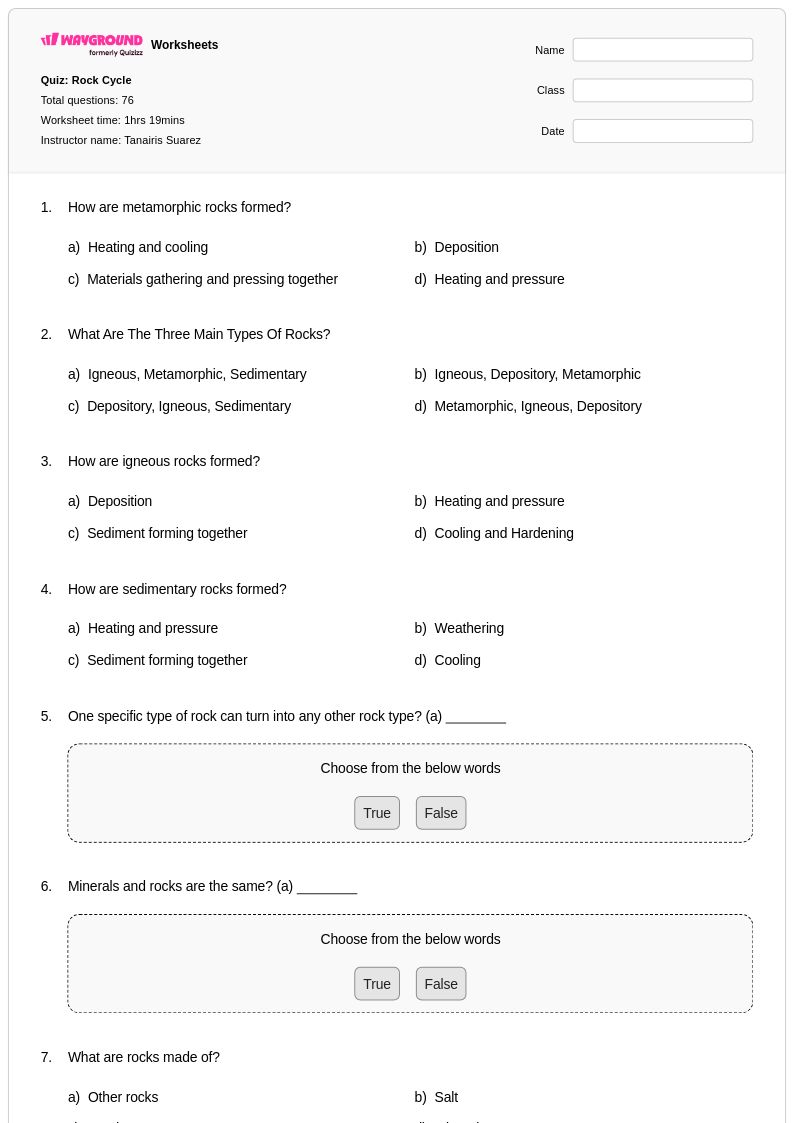
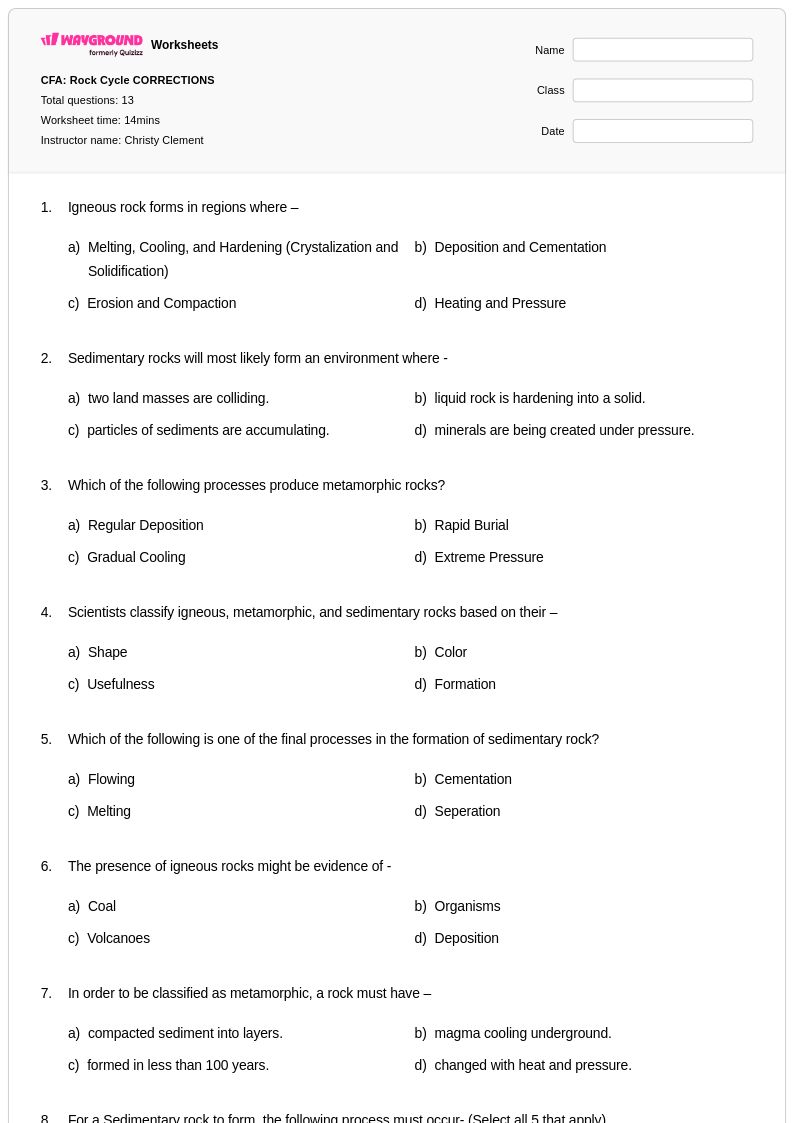
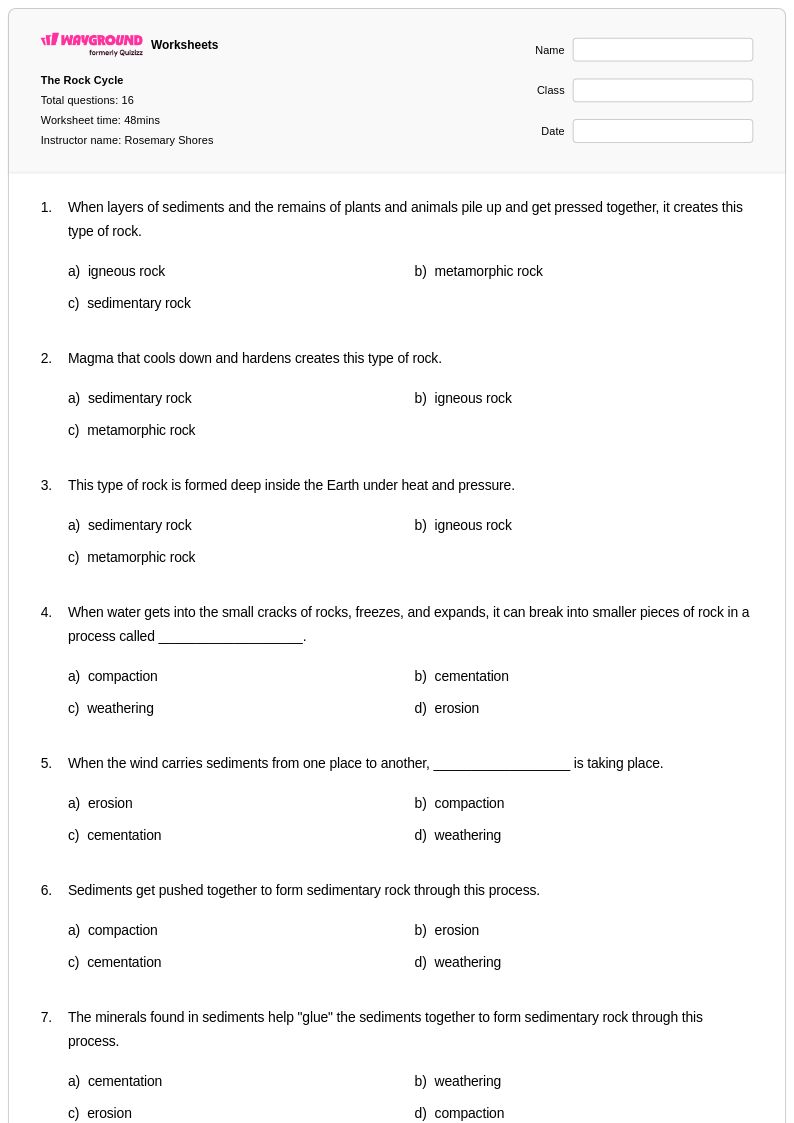
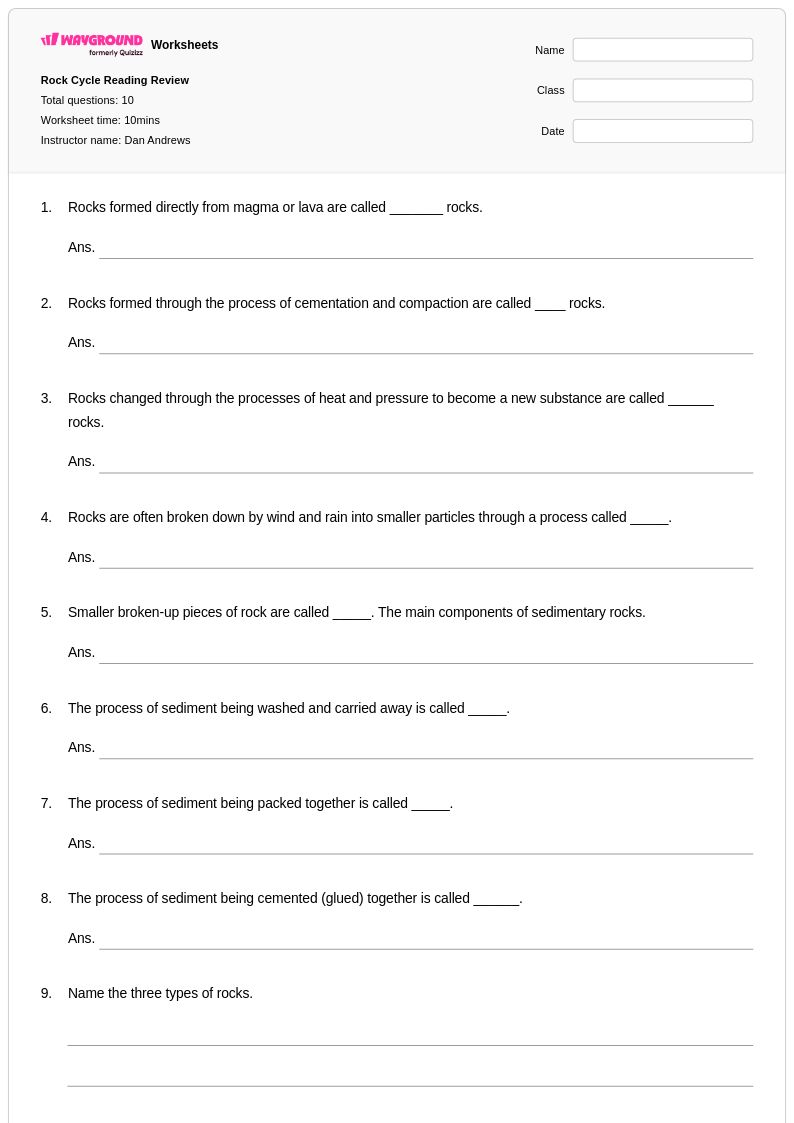
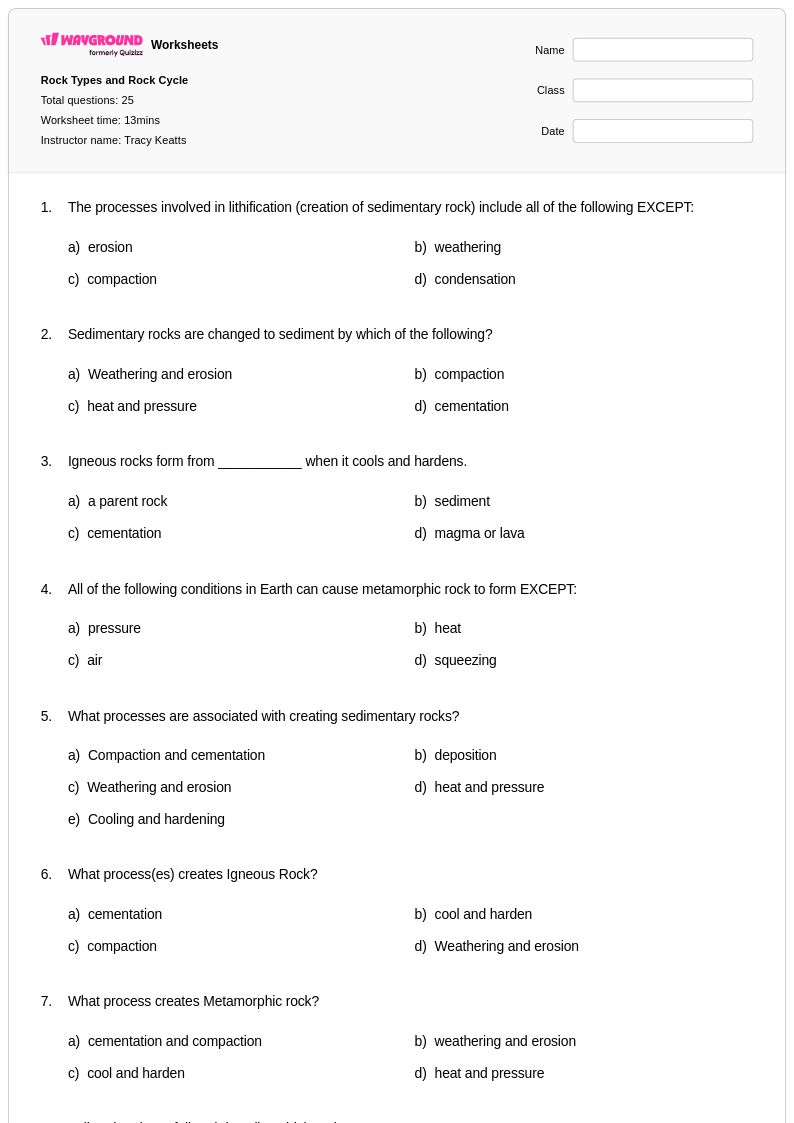
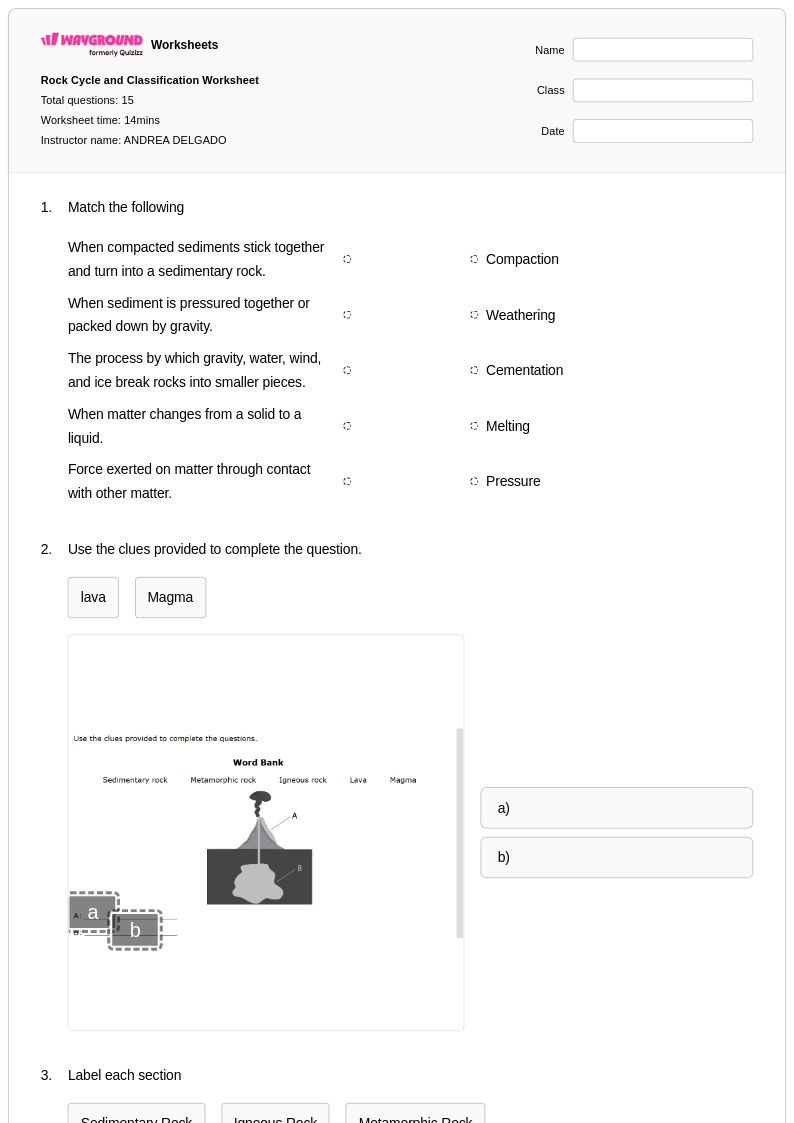
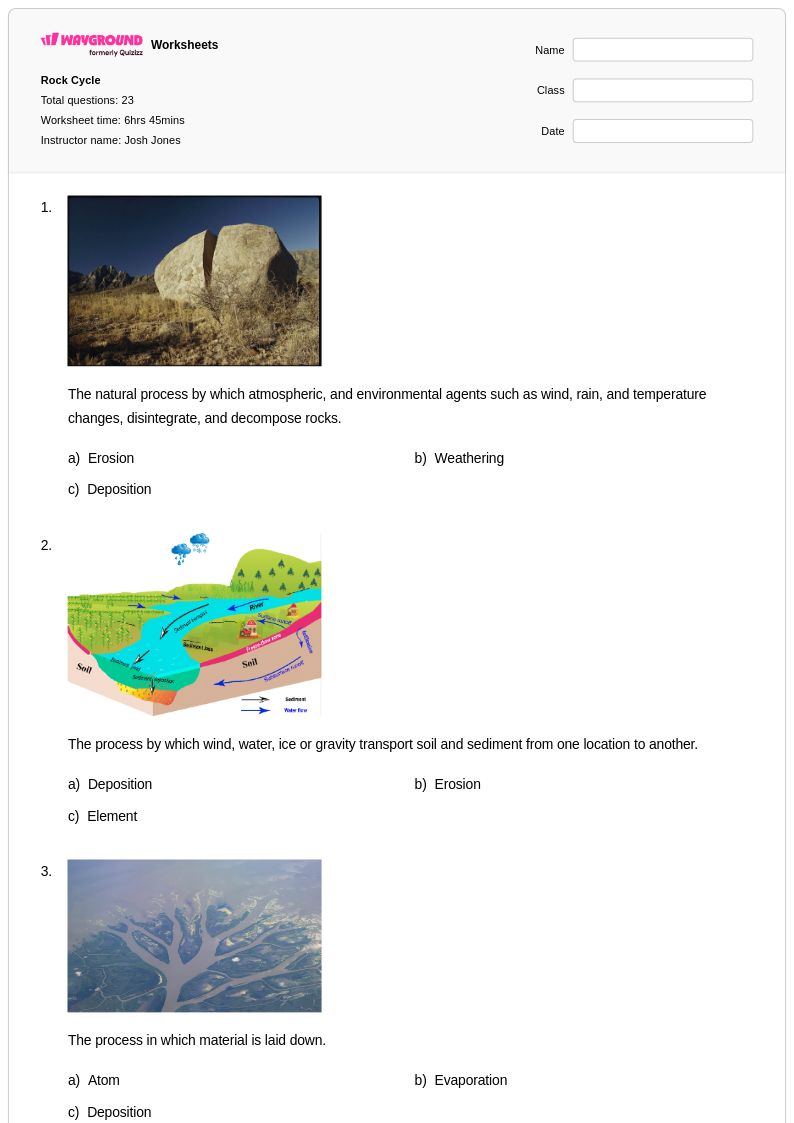
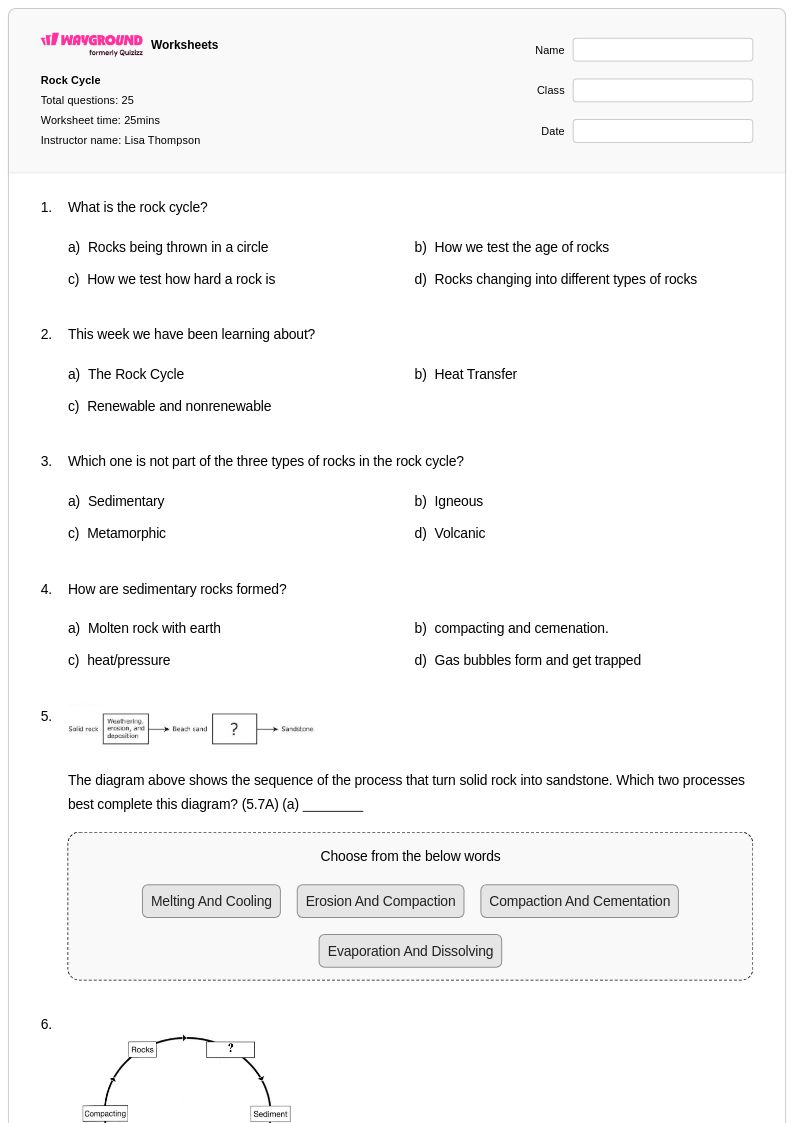
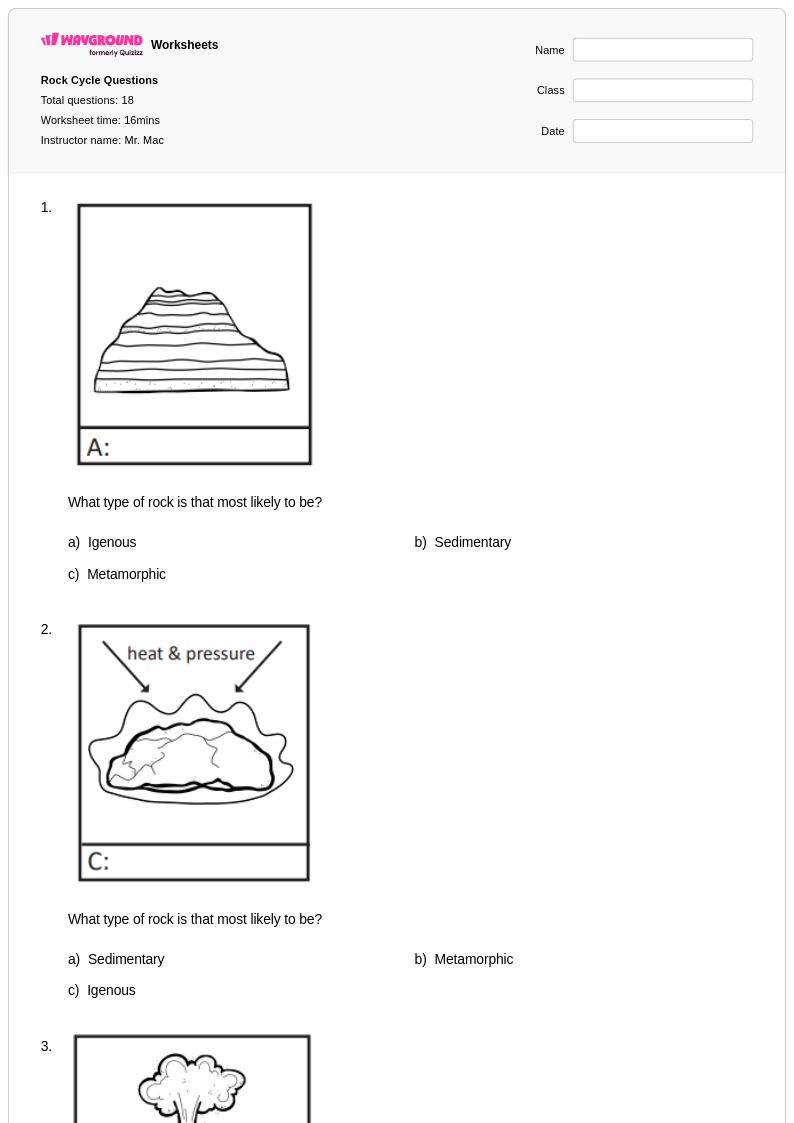
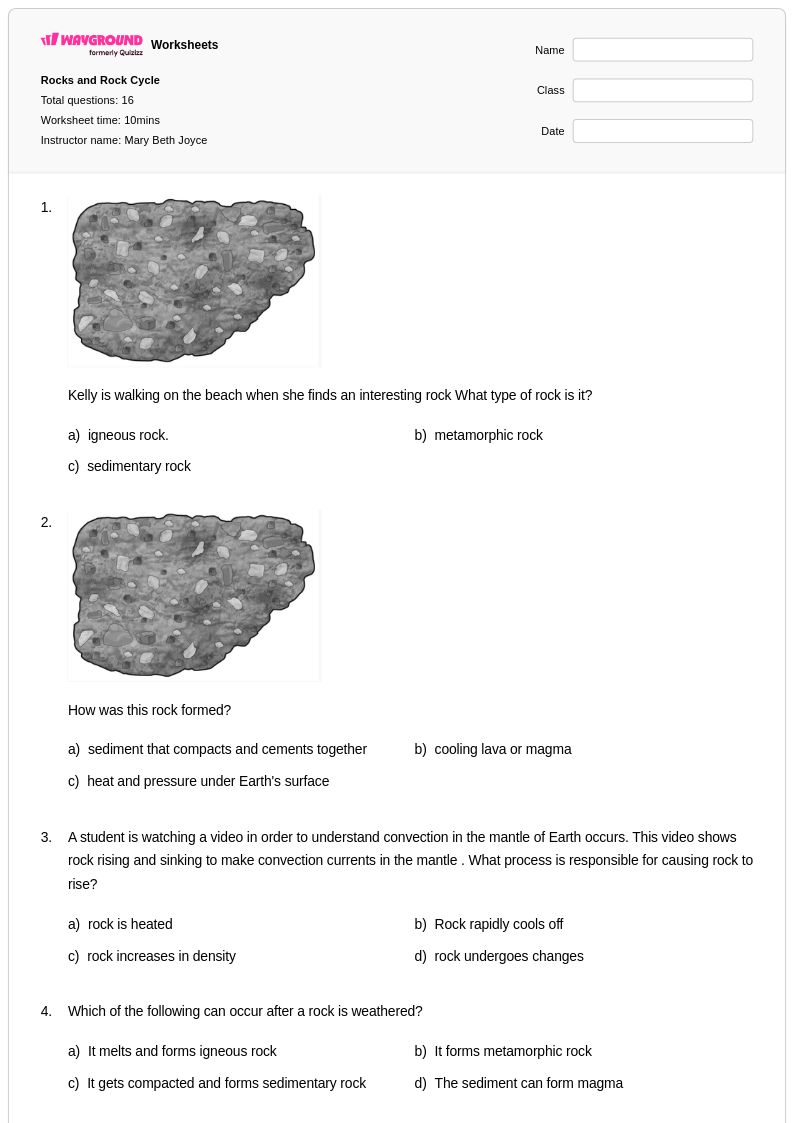
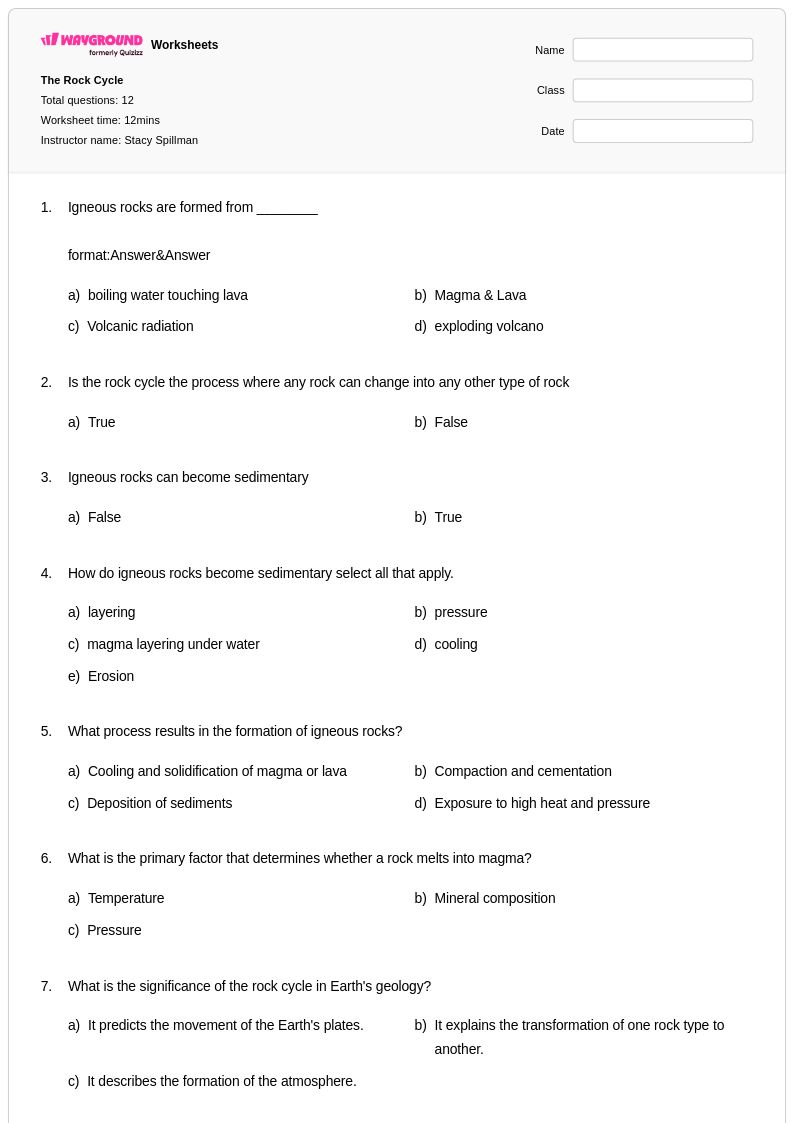
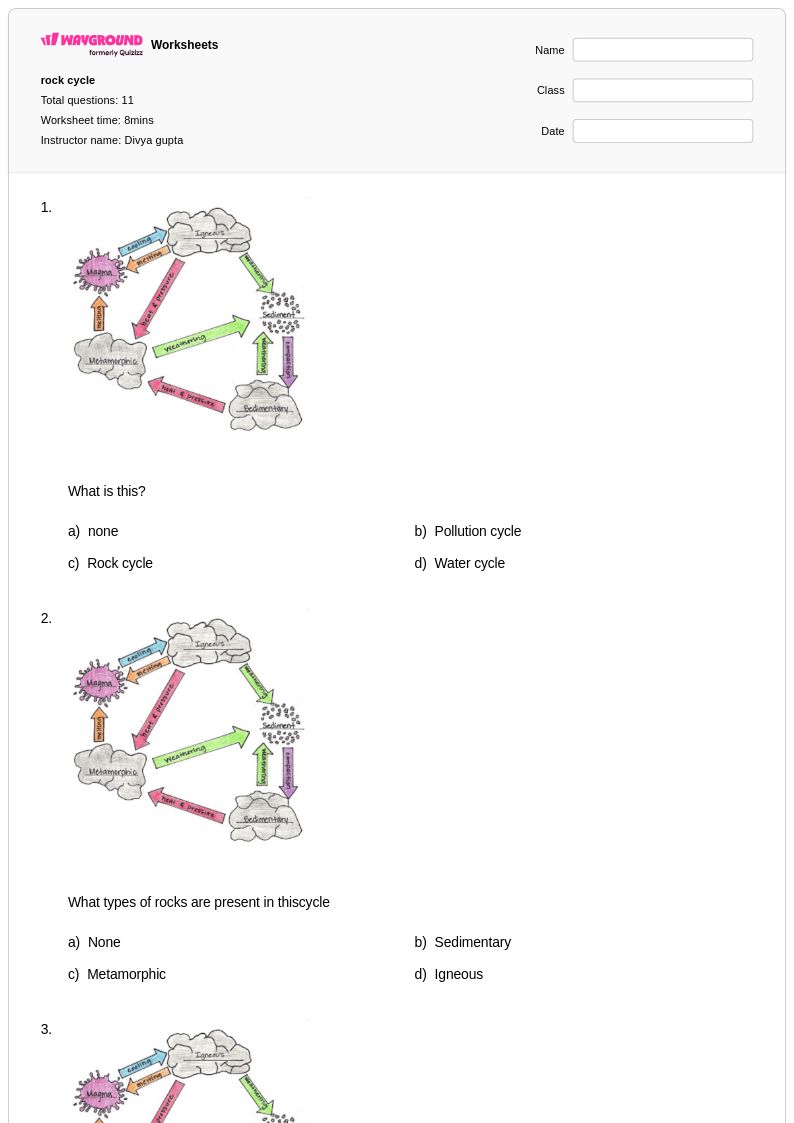
Rock cycle worksheets for Grade 6 students available through Wayground (formerly Quizizz) provide comprehensive practice with the continuous process of rock formation, breakdown, and transformation that shapes Earth's crust. These educational resources strengthen students' understanding of the three main rock types—igneous, sedimentary, and metamorphic—and the geological processes that convert one type into another through weathering, erosion, heat, pressure, and melting. The worksheets feature detailed diagrams of the rock cycle, practice problems that require students to identify transformation pathways, and activities that connect rock formation to real-world geological phenomena. Each worksheet includes an answer key to support both independent study and classroom instruction, with free printables available in pdf format that make it easy for educators to distribute materials for hands-on learning about Earth's dynamic geological processes.
Wayground (formerly Quizizz) supports teachers with an extensive collection of rock cycle worksheets created by millions of educators who understand the specific learning needs of Grade 6 Earth and Space Science students. The platform's robust search and filtering capabilities allow teachers to quickly locate materials that align with curriculum standards and match their students' skill levels, while differentiation tools enable customization of content complexity to meet diverse learning needs. These resources are available in both printable and digital formats, including downloadable pdf versions that facilitate flexible lesson planning and can be easily integrated into classroom instruction, homework assignments, or remediation activities. The comprehensive nature of these teacher-created materials supports effective skill practice and helps students develop a solid foundation in understanding how geological processes continuously reshape Earth's surface through the rock cycle.
FAQs
How do I teach the rock cycle to middle school students?
Start by anchoring instruction in the three rock types — igneous, sedimentary, and metamorphic — before introducing the processes that connect them, such as weathering, erosion, heat, pressure, melting, and cooling. Visual diagrams that show transformation pathways help students see the cycle as a continuous system rather than isolated stages. Having students trace a single rock through multiple transformations builds deeper conceptual understanding than memorizing definitions alone.
What exercises help students practice identifying rock types and transformation pathways?
Effective practice tasks ask students to classify rock samples by type, then explain which geological process would transform each into another rock type. Tracing transformation pathways — for example, mapping how an igneous rock becomes sedimentary through weathering and erosion — reinforces the cyclical nature of the process. Practice problems that require students to analyze the environmental conditions (heat, pressure, cooling rates) needed for each transformation stage are especially effective for building scientific reasoning.
What misconceptions do students commonly have about the rock cycle?
A common misconception is that the rock cycle follows a fixed, sequential order — students often believe rocks must pass through every stage in a set sequence rather than understanding that transformations can occur in multiple directions. Students also frequently confuse the conditions that produce each rock type, particularly conflating the high heat needed for igneous rock formation with the high pressure associated with metamorphic rock. Targeted practice that asks students to identify incorrect transformation pathways can help surface and correct these errors.
How can I use rock cycle worksheets to support students with different learning needs?
Rock cycle worksheets can be adapted for varying ability levels by adjusting the complexity of transformation pathways students are asked to trace or by reducing the number of answer choices on identification tasks. On Wayground, teachers can apply individual accommodations such as read aloud support, extended time, and reduced answer choices to specific students without affecting the rest of the class. These settings are reusable across sessions, making it straightforward to maintain consistent support for students who need it throughout a geology unit.
How do I use Wayground's rock cycle worksheets in my classroom?
Wayground's rock cycle worksheets are available as printable PDFs for traditional classroom distribution and in digital formats for technology-integrated learning environments. Teachers can also host worksheets directly as a quiz on Wayground, enabling real-time student responses and progress monitoring. The included answer keys support both self-directed student review and efficient teacher-led correction, making these materials suitable for instruction, independent practice, and formative assessment.
How do I assess whether students truly understand the rock cycle versus just memorizing it?
Surface-level memorization becomes visible when students can label rock types but cannot explain why a specific set of conditions produces one type over another. Assessment tasks that require students to predict what would happen to a rock under changed conditions — increased pressure, reduced heat — reveal whether understanding is conceptual or rote. Asking students to analyze environmental conditions for each stage of the cycle, rather than simply identify rock names, is a reliable way to distinguish deep understanding from recall.