
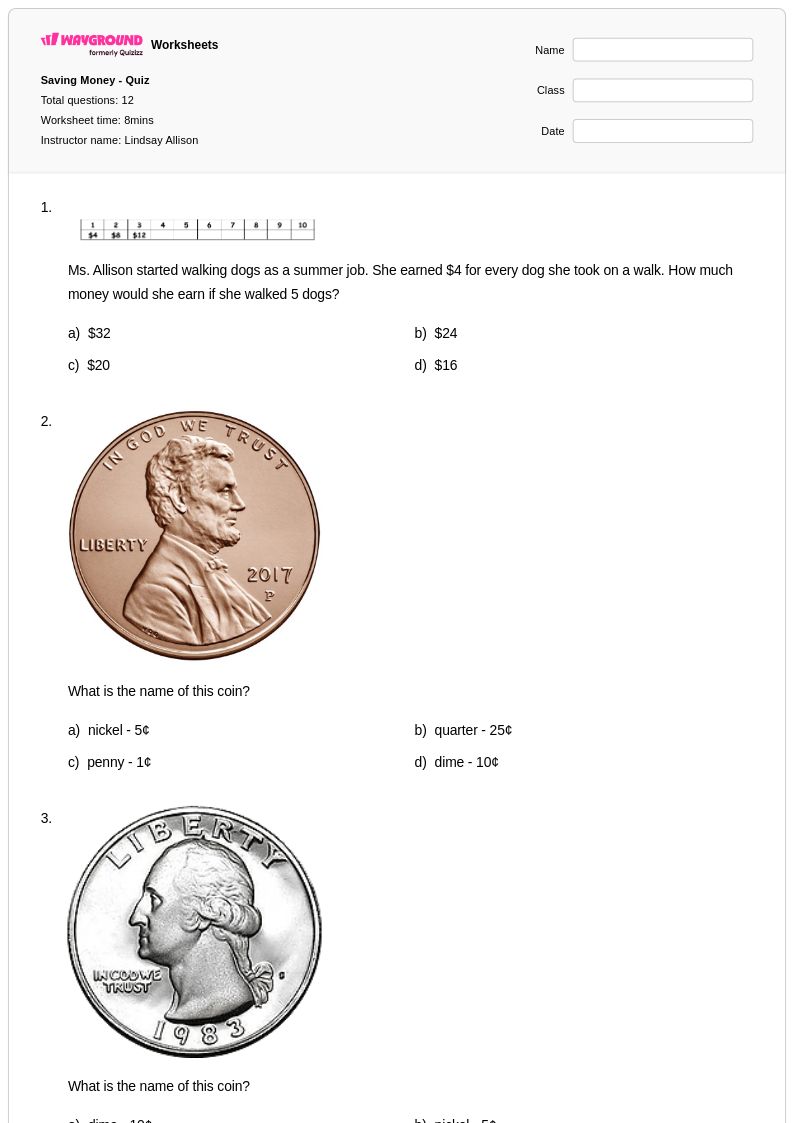
12 Q
3rd
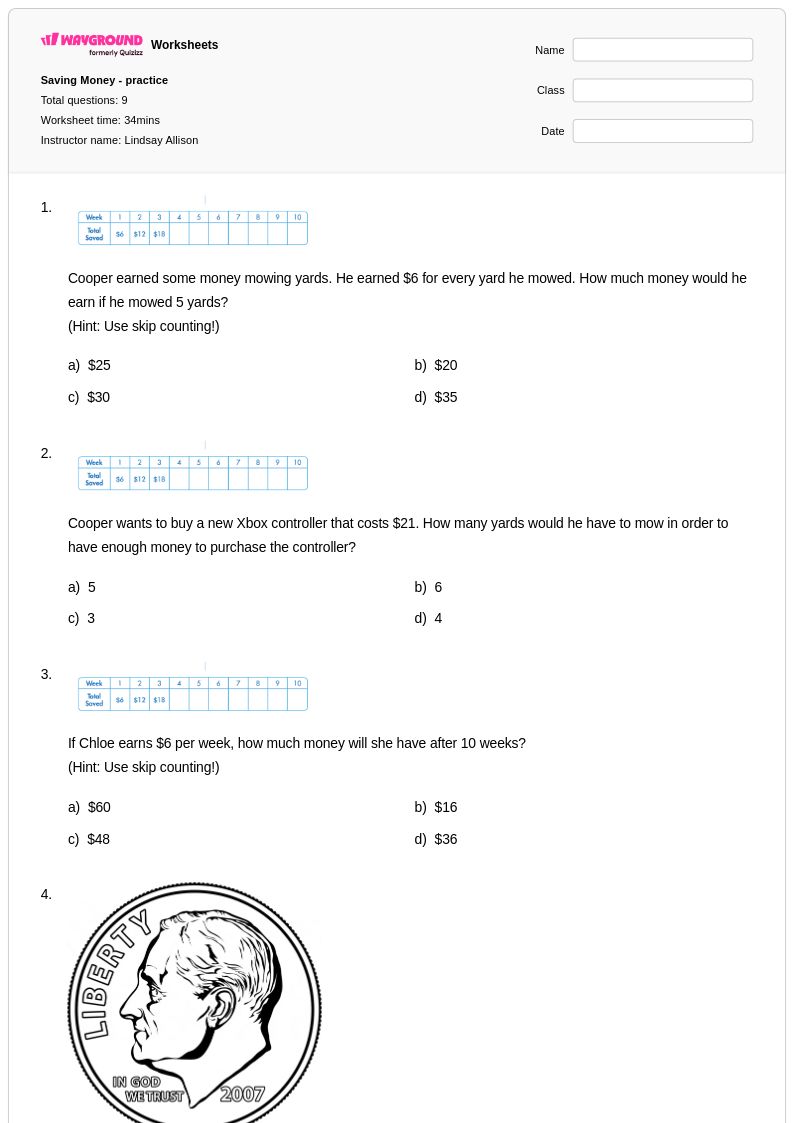
9 Q
3rd
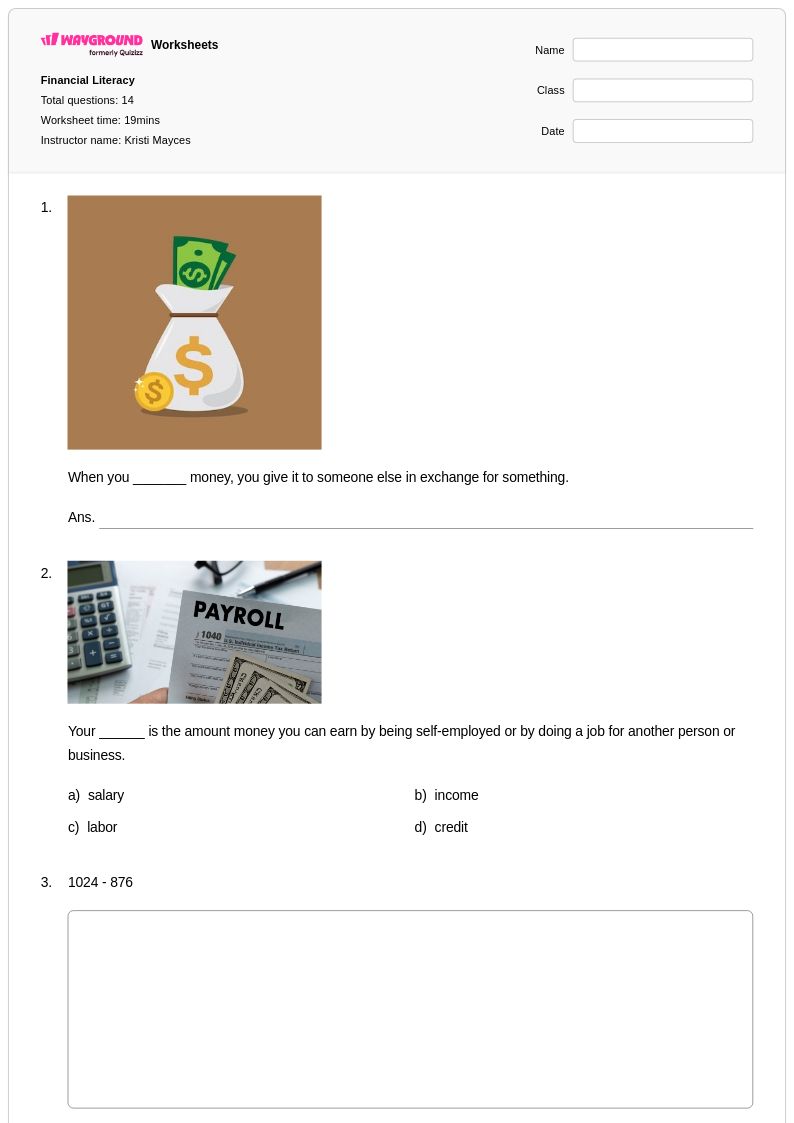
14 Q
3rd
13 Q
3rd
6 Q
3rd
20 Q
2nd - Uni
20 Q
2nd - Uni
15 Q
2nd - Uni
20 Q
2nd - Uni
9 Q
3rd
6 Q
1st - PD
10 Q
3rd
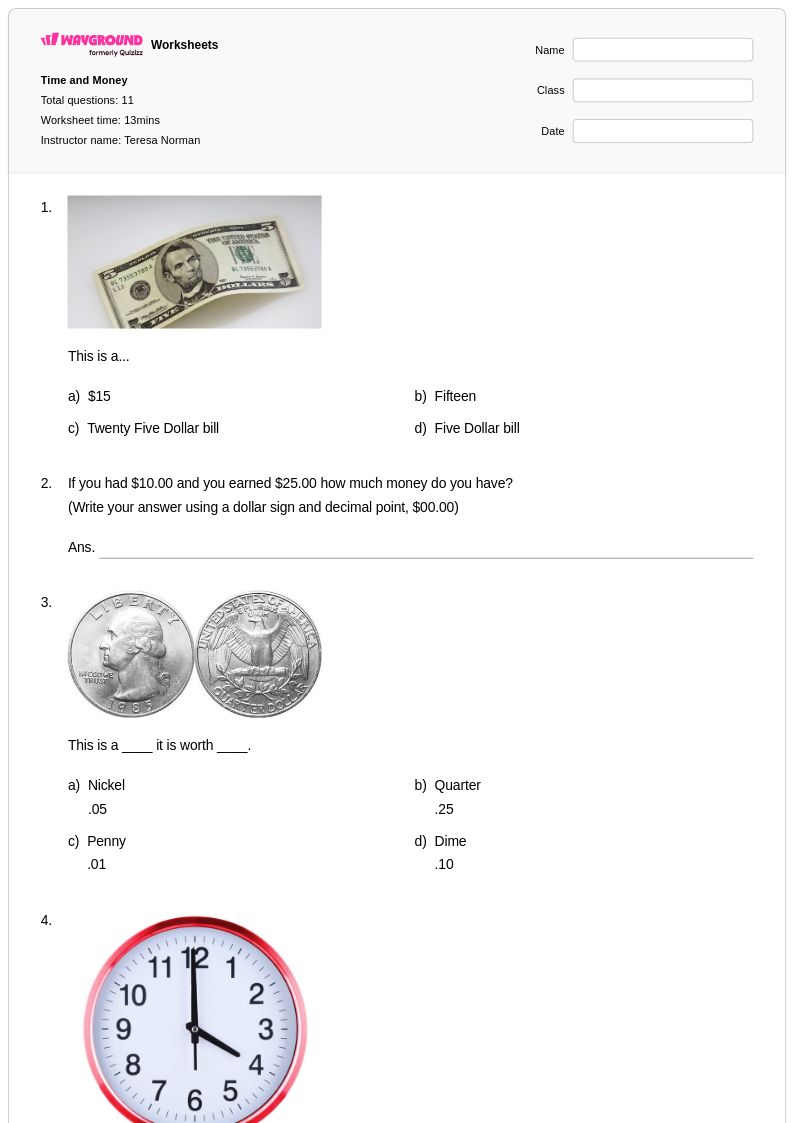
11 Q
3rd - 9th
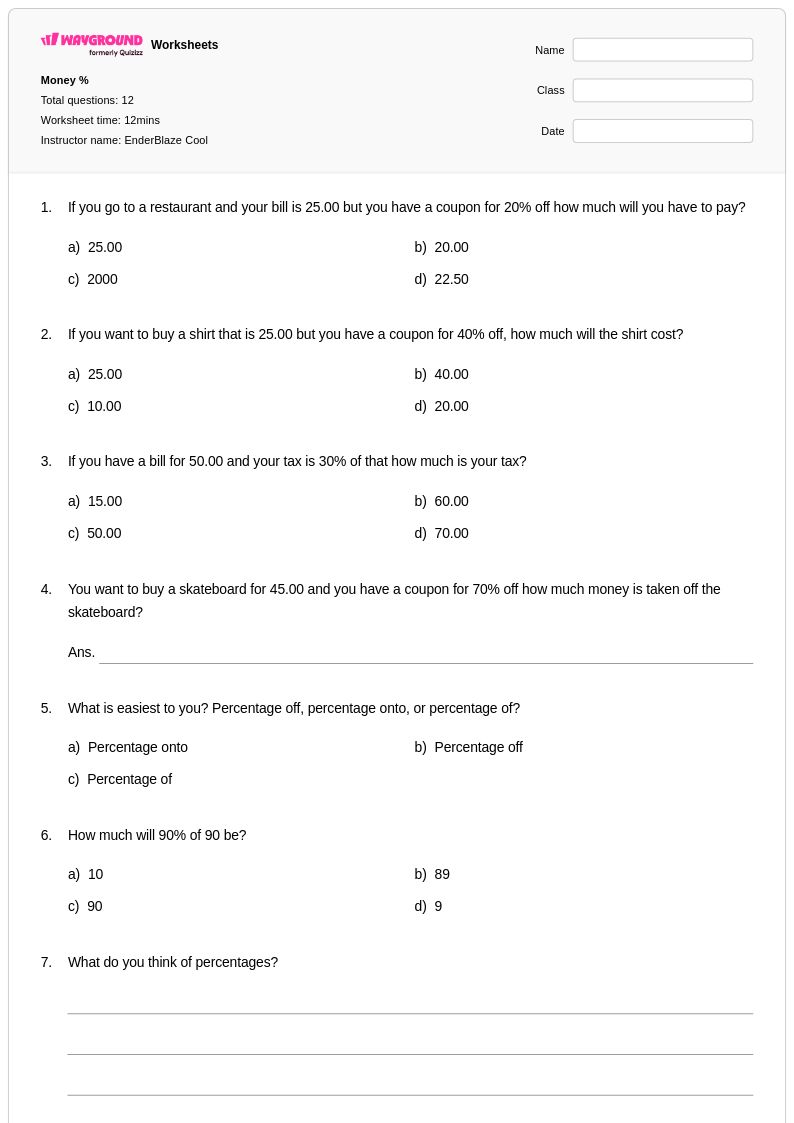
12 Q
3rd - 5th
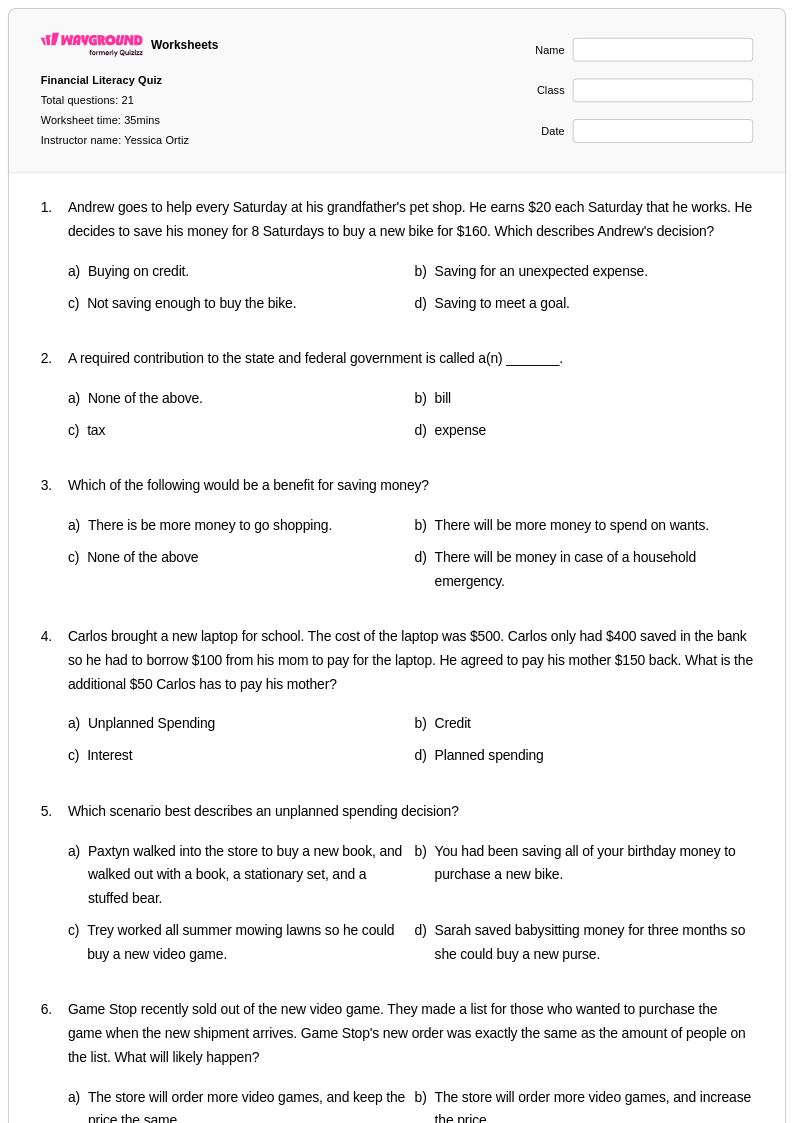
21 Q
3rd
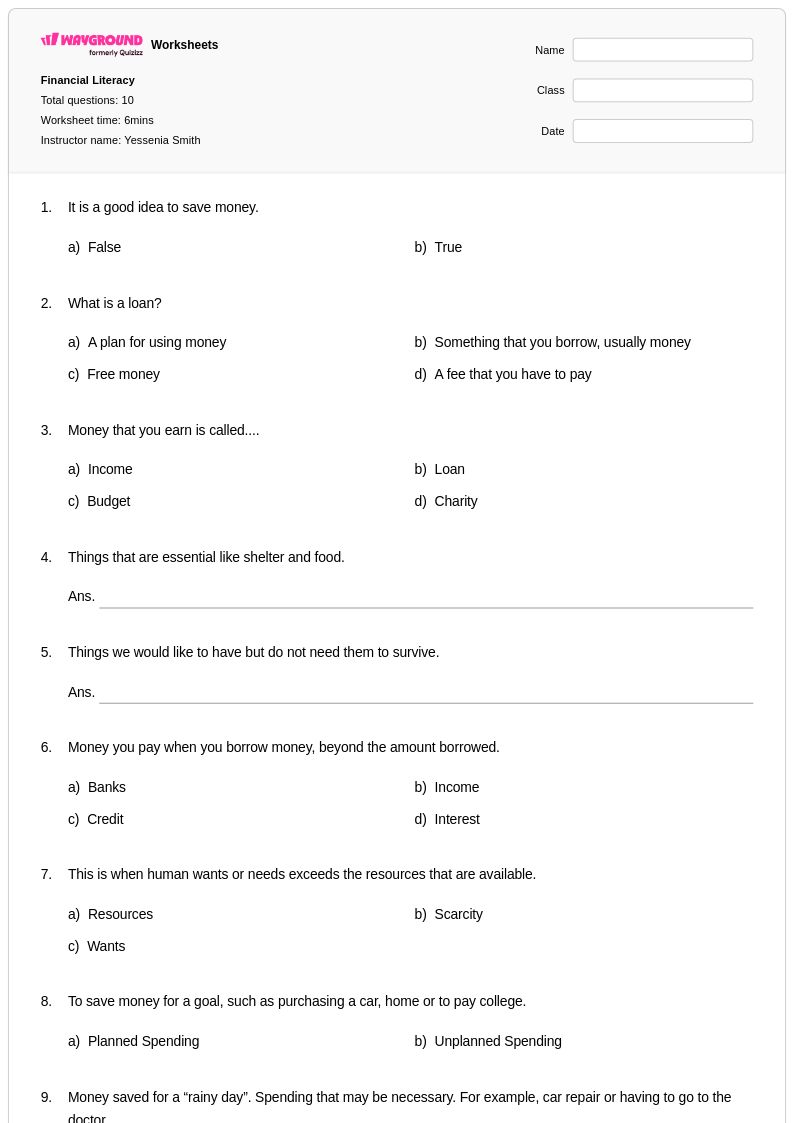
10 Q
3rd
29 Q
3rd
17 Q
3rd
13 Q
3rd
14 Q
3rd - 4th
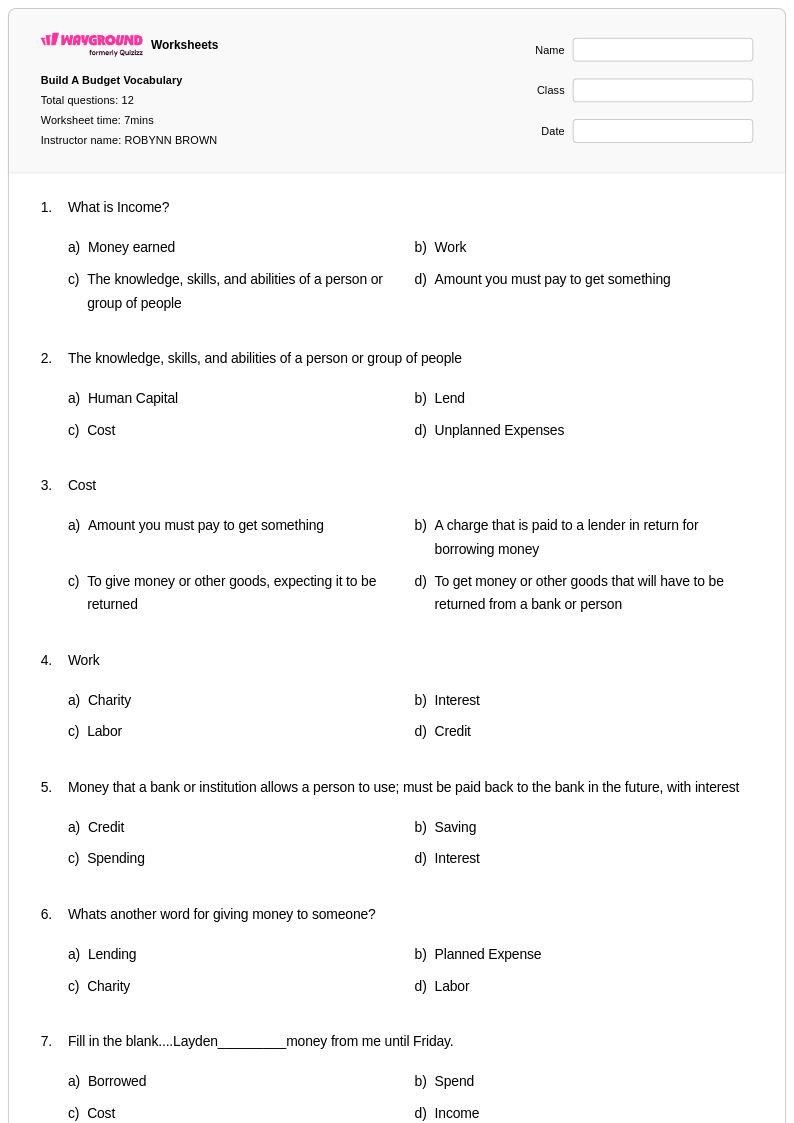
12 Q
3rd
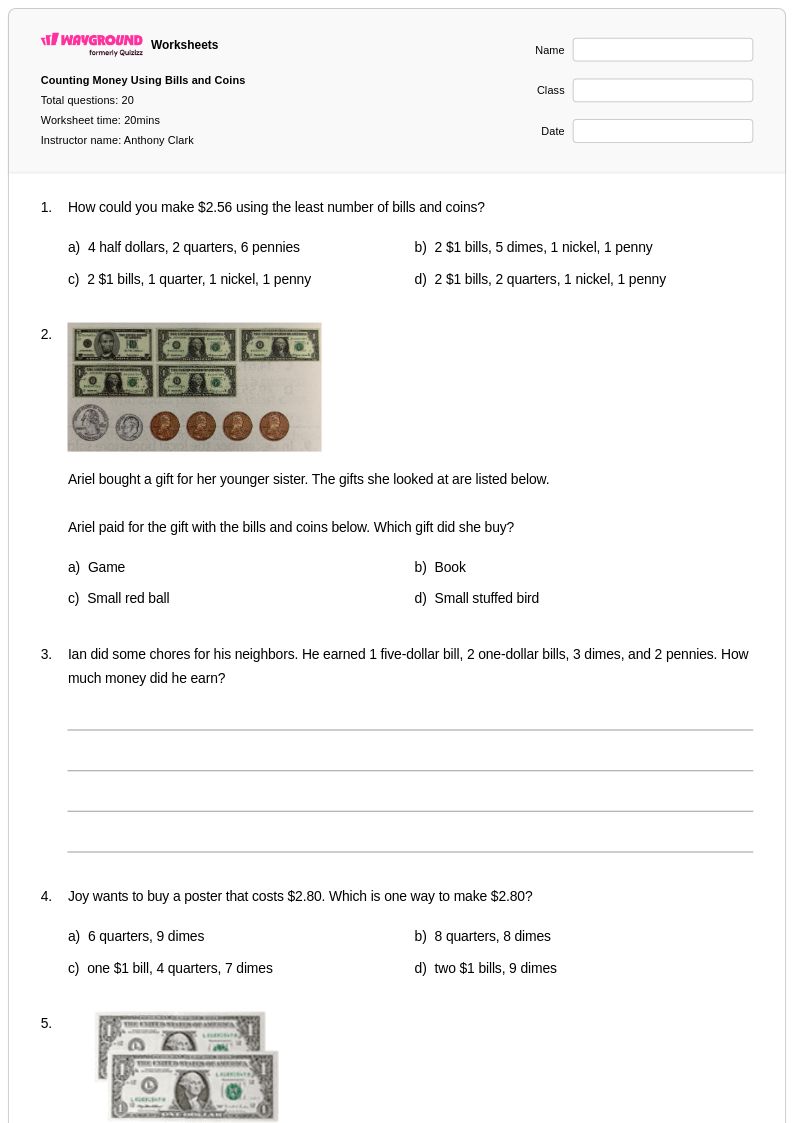
20 Q
3rd - Uni
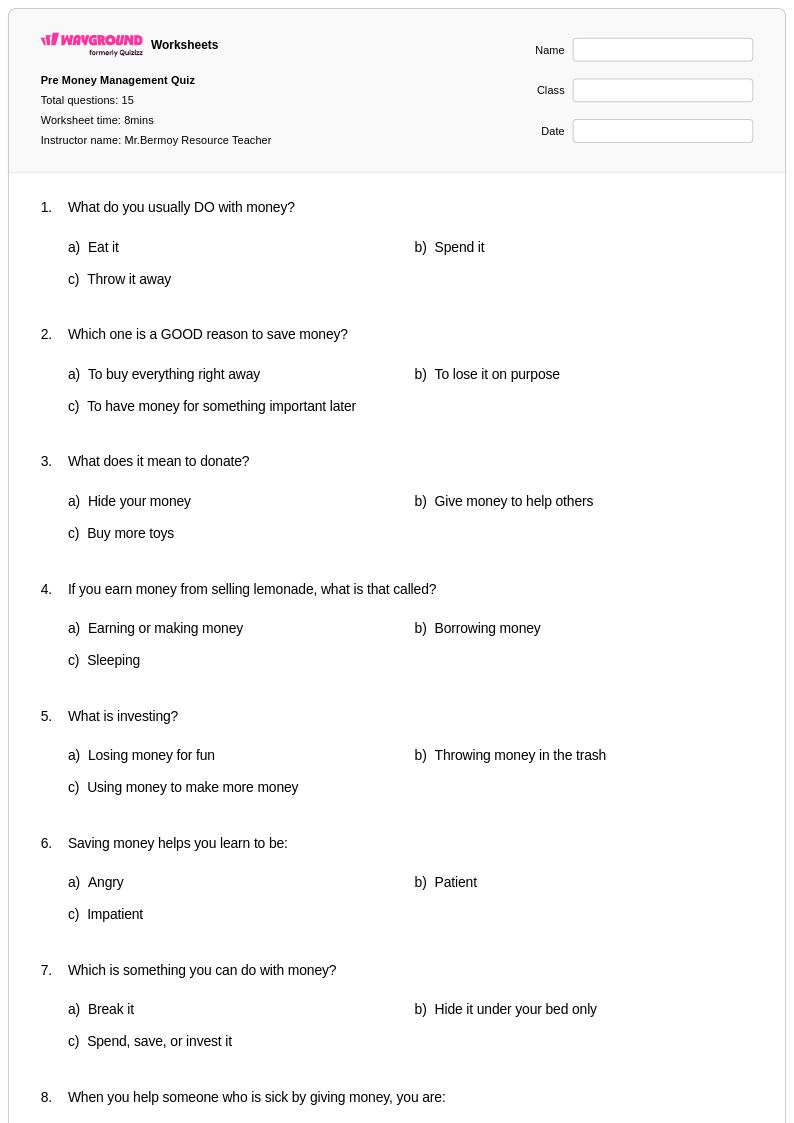
15 Q
3rd
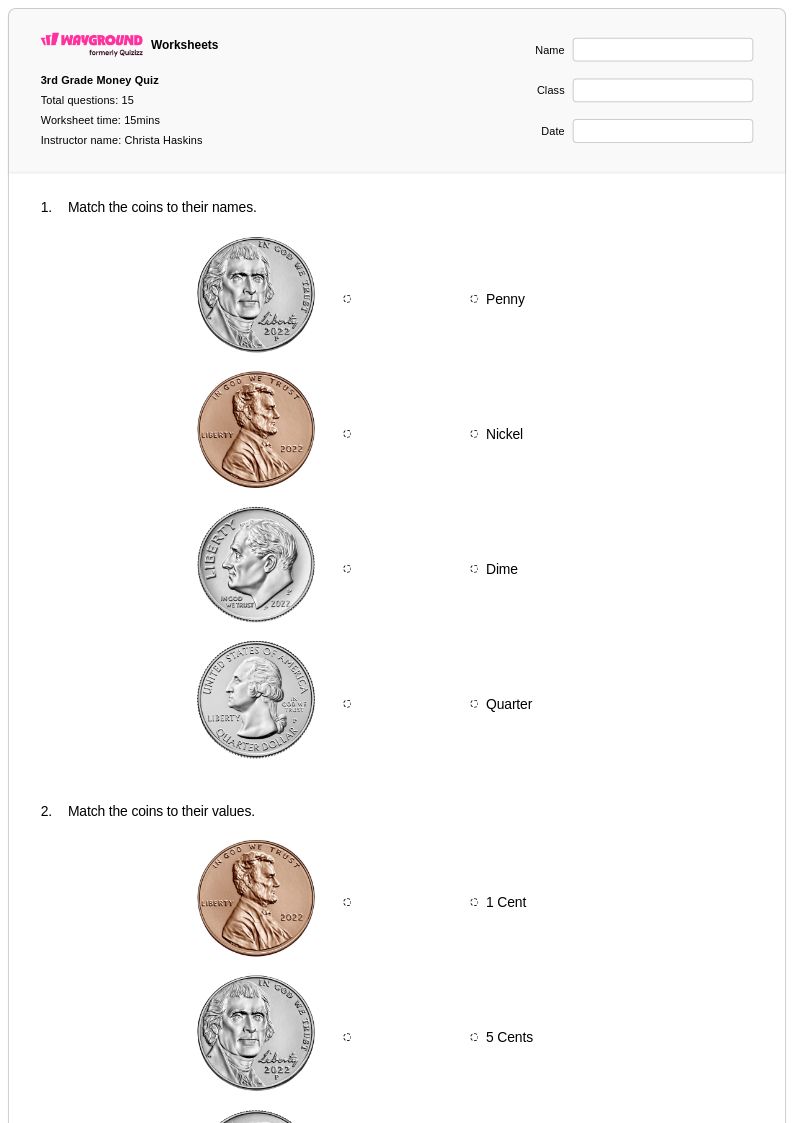
15 Q
3rd
Explore Saving Money Worksheets by Grades
Explore Other Subject Worksheets for grade 3
Explore printable Saving Money worksheets for Grade 3
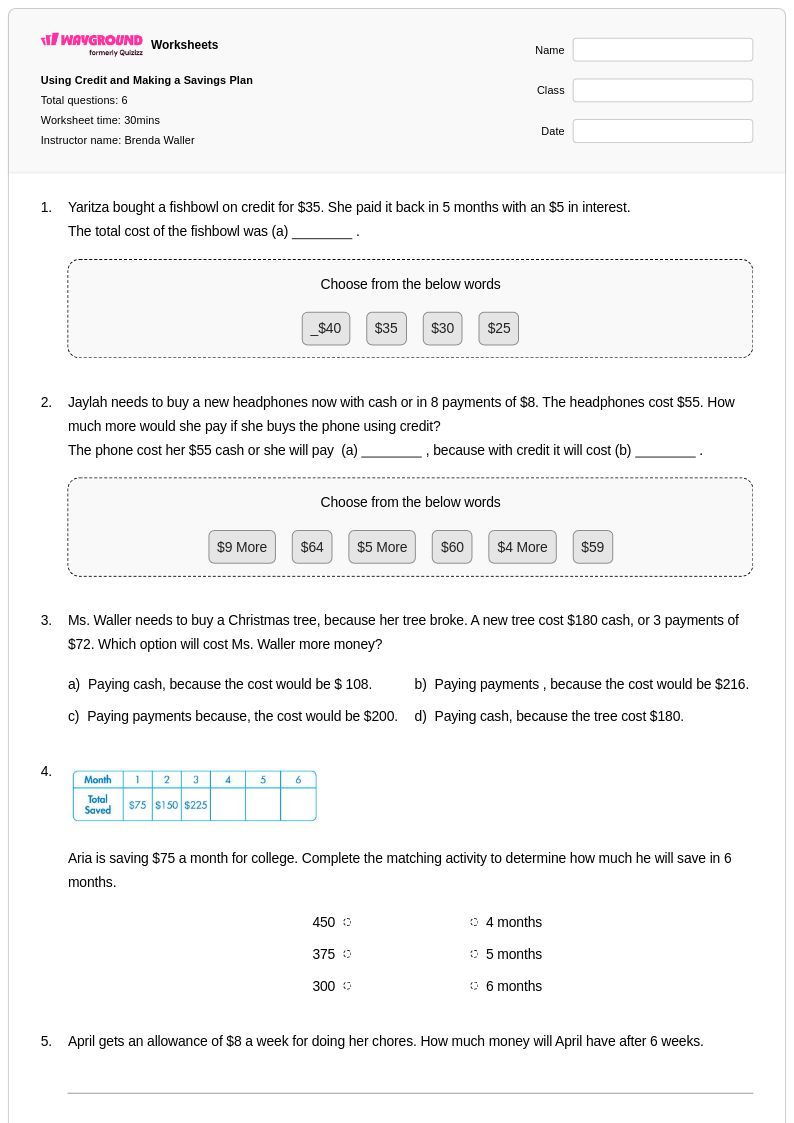
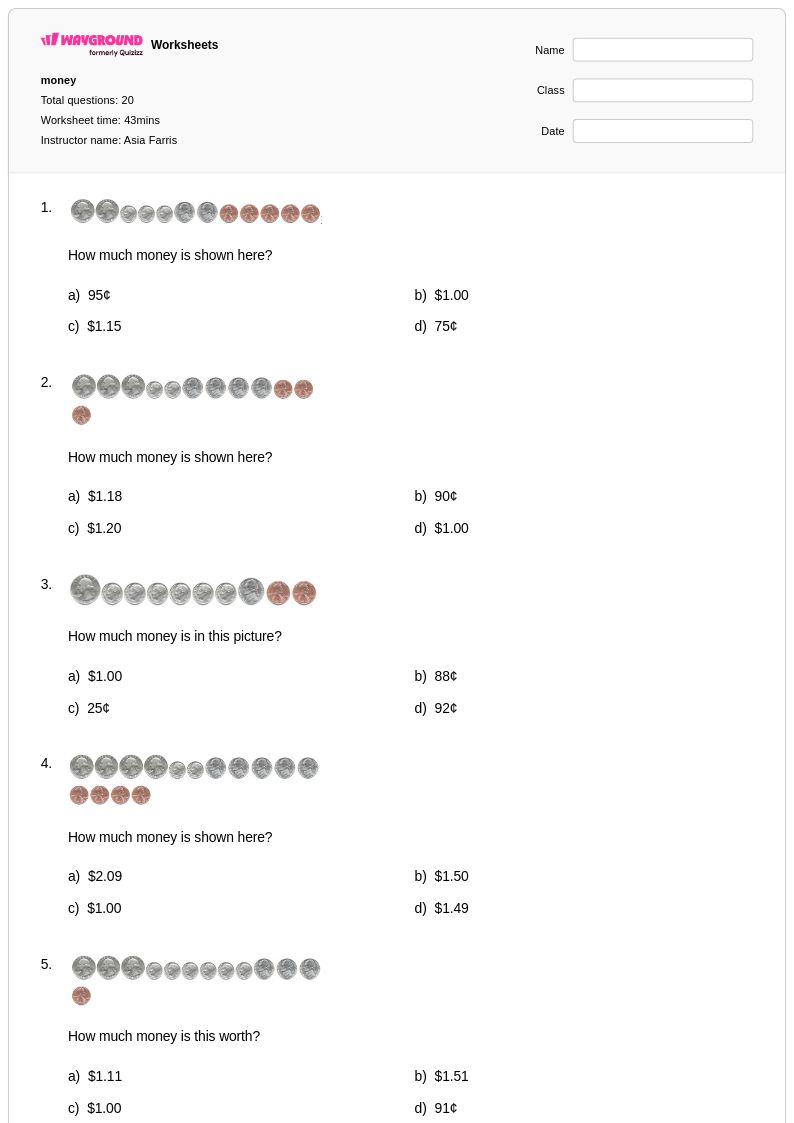
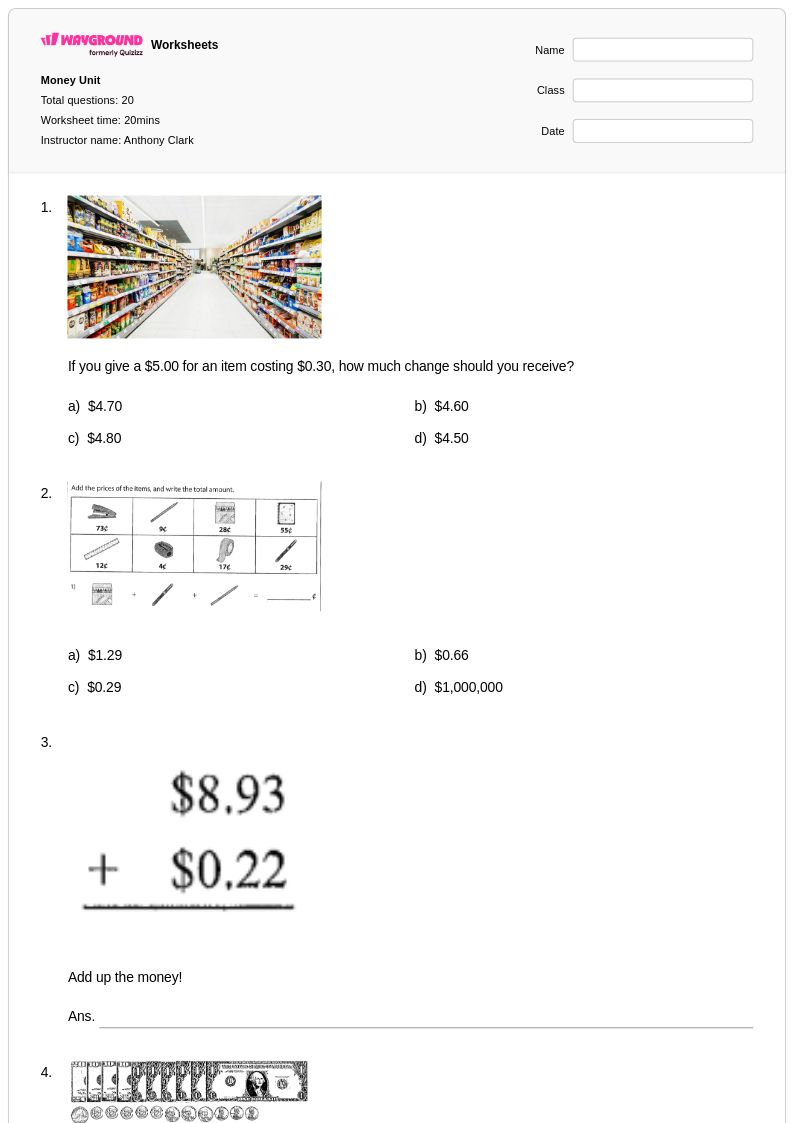
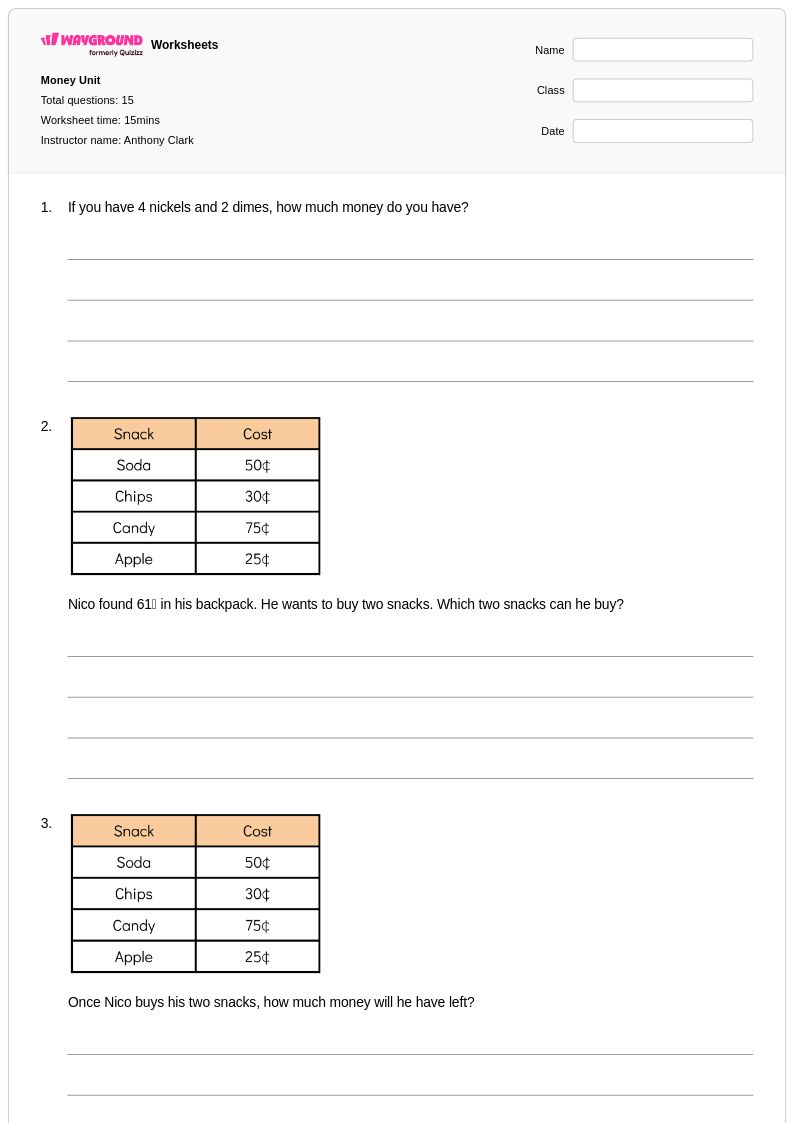
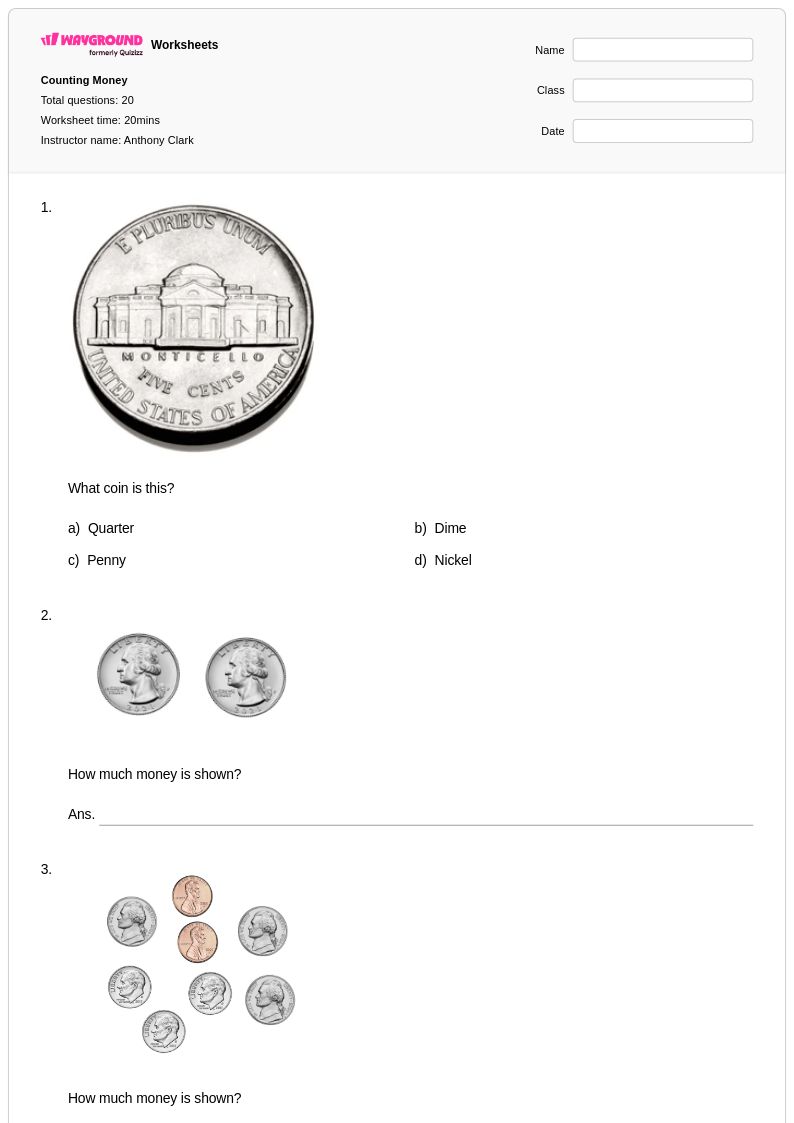
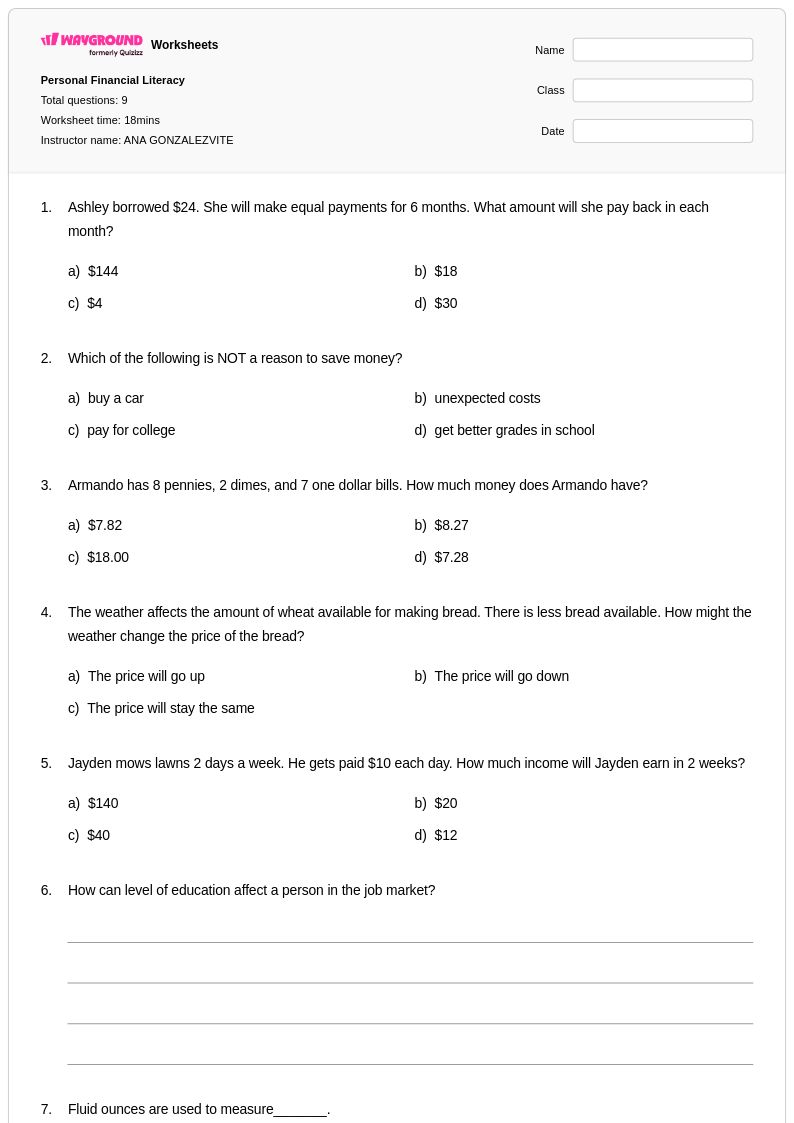
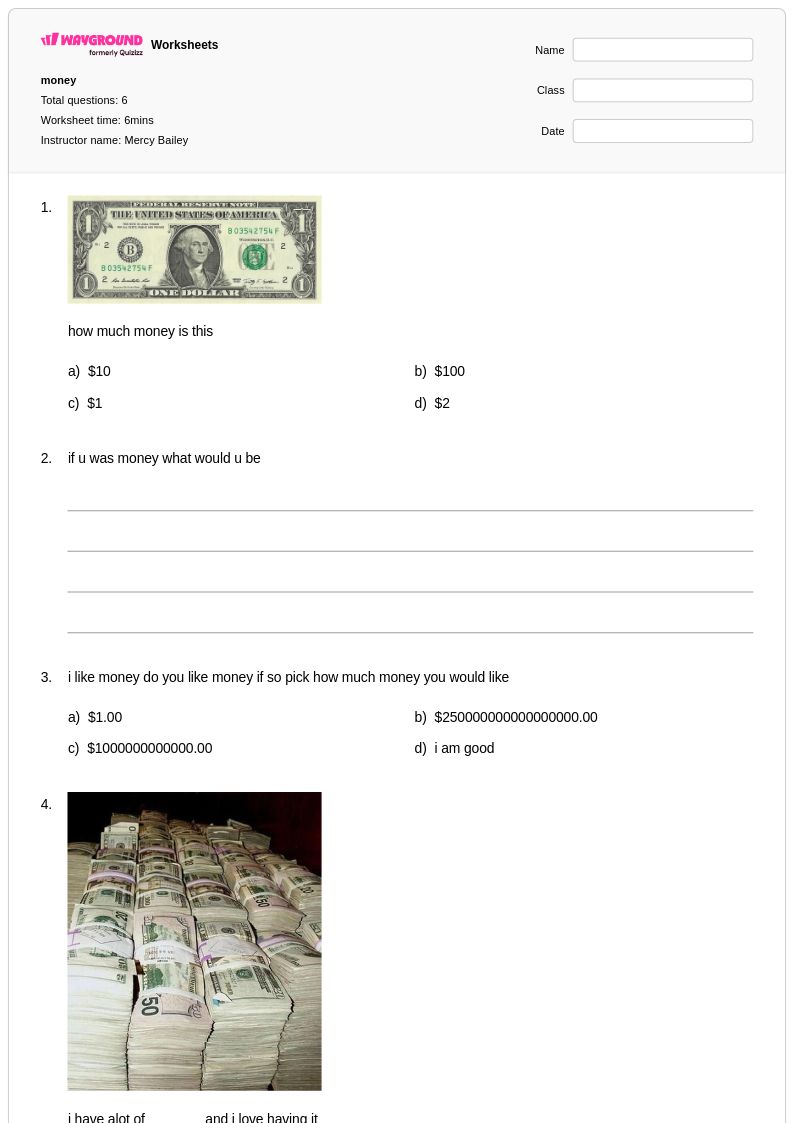
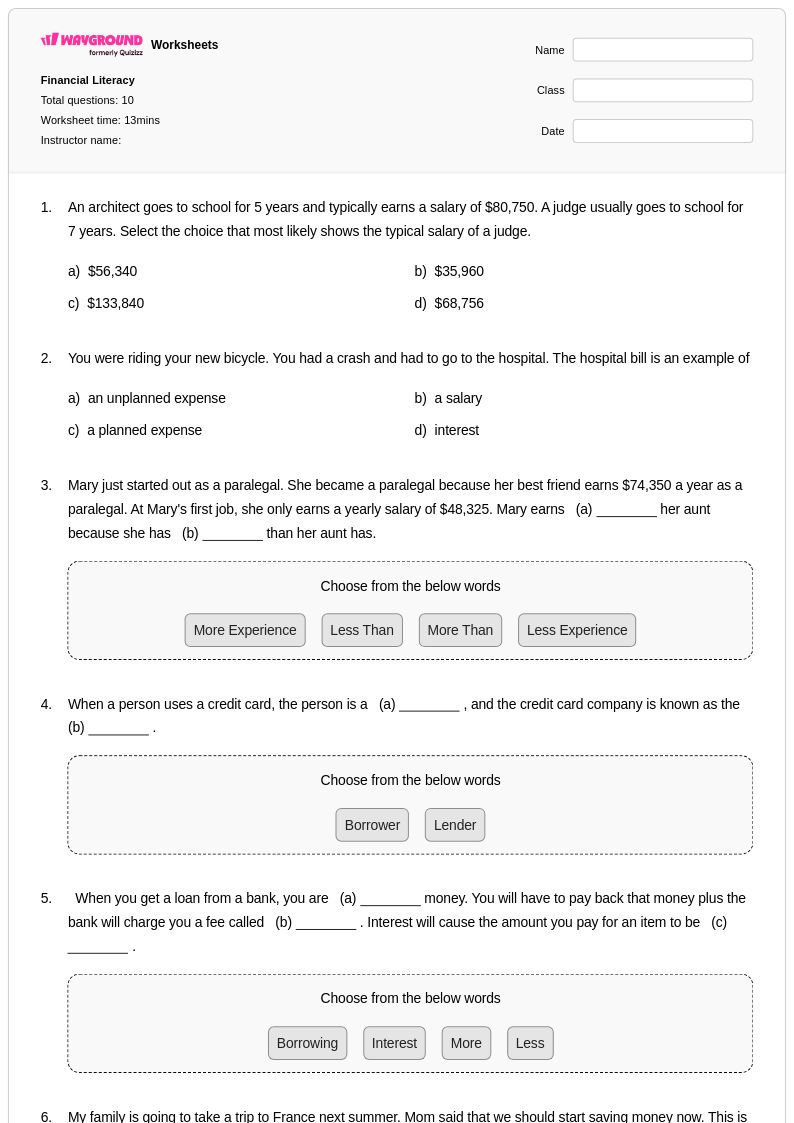
Saving money worksheets for Grade 3 students available through Wayground (formerly Quizizz) provide essential foundational practice in personal financial management and mathematical reasoning. These carefully designed worksheets help young learners develop critical money-saving concepts through age-appropriate scenarios, visual representations of piggy banks and savings goals, and practical problem-solving activities that connect mathematics to real-world financial decisions. Students strengthen their understanding of coin and bill values, practice addition and subtraction with money amounts, and explore the relationship between earning, spending, and saving through engaging practice problems. Each worksheet includes comprehensive answer keys and is available as free printables in convenient pdf format, making it easy for educators to incorporate meaningful financial literacy instruction into their mathematics curriculum while building students' computational fluency and critical thinking skills.
Wayground (formerly Quizizz) empowers teachers with millions of educator-created saving money resources specifically designed for Grade 3 mathematics instruction, featuring robust search and filtering capabilities that allow quick access to standards-aligned materials. The platform's differentiation tools enable teachers to customize worksheets based on individual student needs, offering both printable pdf versions for traditional classroom use and digital formats for interactive learning experiences. These comprehensive collections support diverse instructional approaches, from whole-class lessons introducing saving concepts to targeted remediation for students needing additional practice with money calculations, while also providing enrichment opportunities for advanced learners ready to explore more complex financial scenarios. Teachers can seamlessly integrate these resources into lesson planning, homework assignments, and assessment preparation, ensuring students receive consistent practice with saving money concepts that build both mathematical proficiency and essential life skills.
FAQs
How can I teach the relationship between earning, spending, and saving?
What exercises help third graders become fluent with money calculations?
What are common challenges for third graders when making change?
How can I use these Grade 3 saving money worksheets?
How does this topic connect to the Grade 3 math curriculum?
How can I adjust these worksheets for students at different reading levels?