
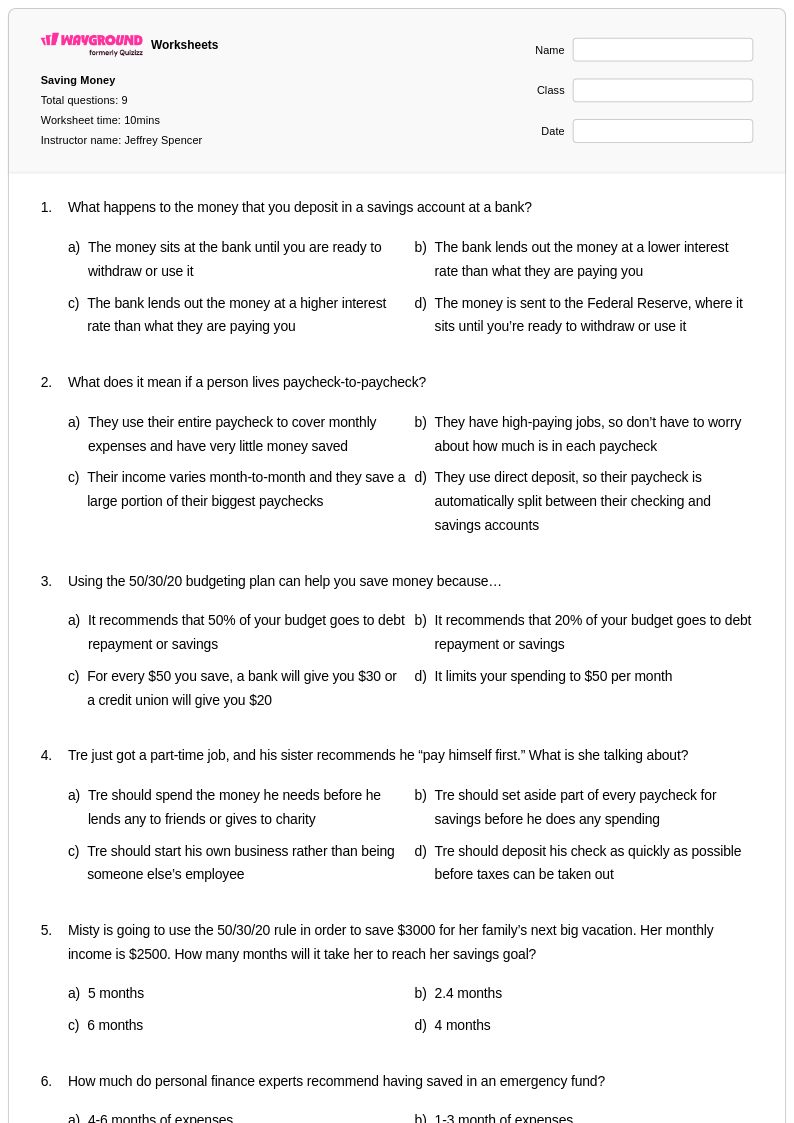
9 Q
8th - 12th
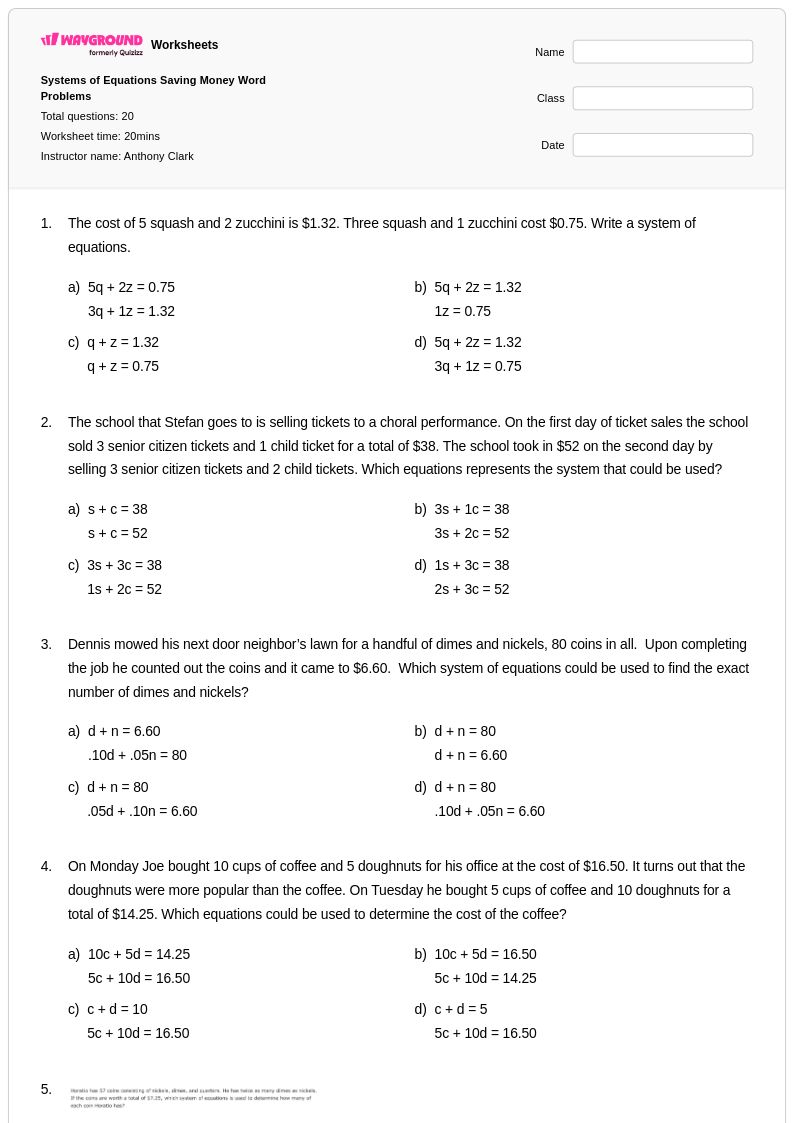
20 Q
9th - Uni
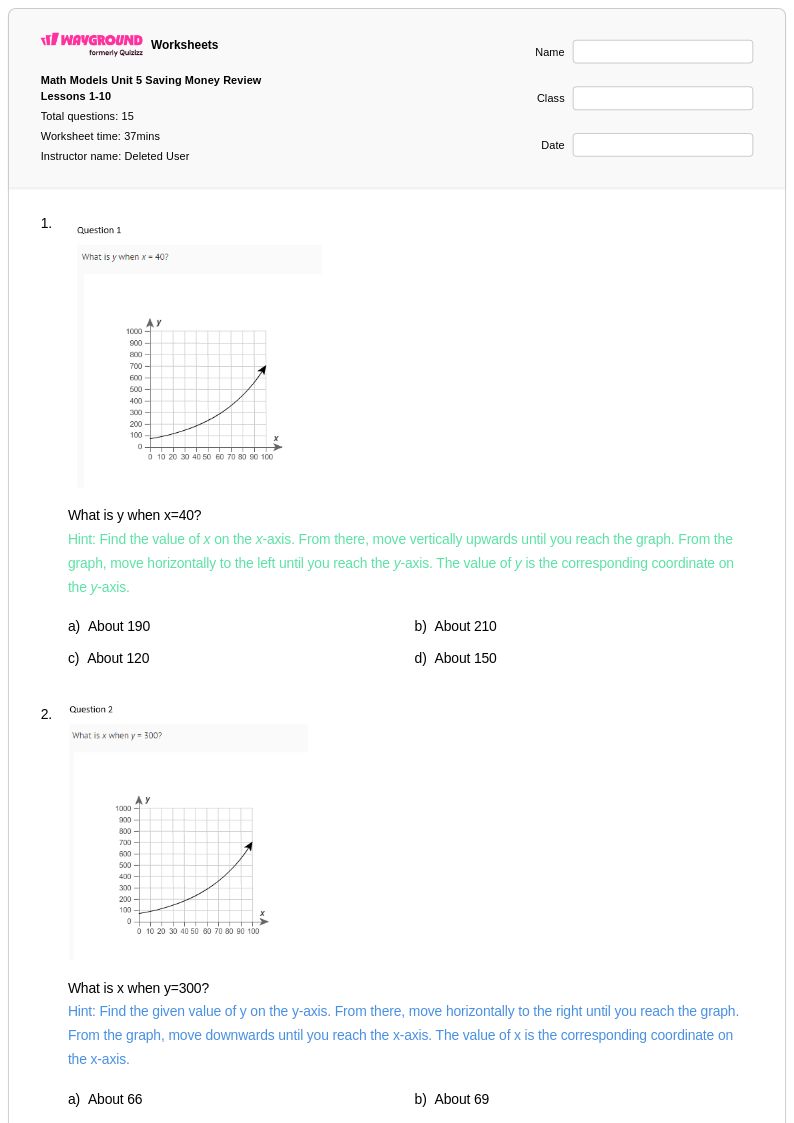
15 Q
9th - 12th
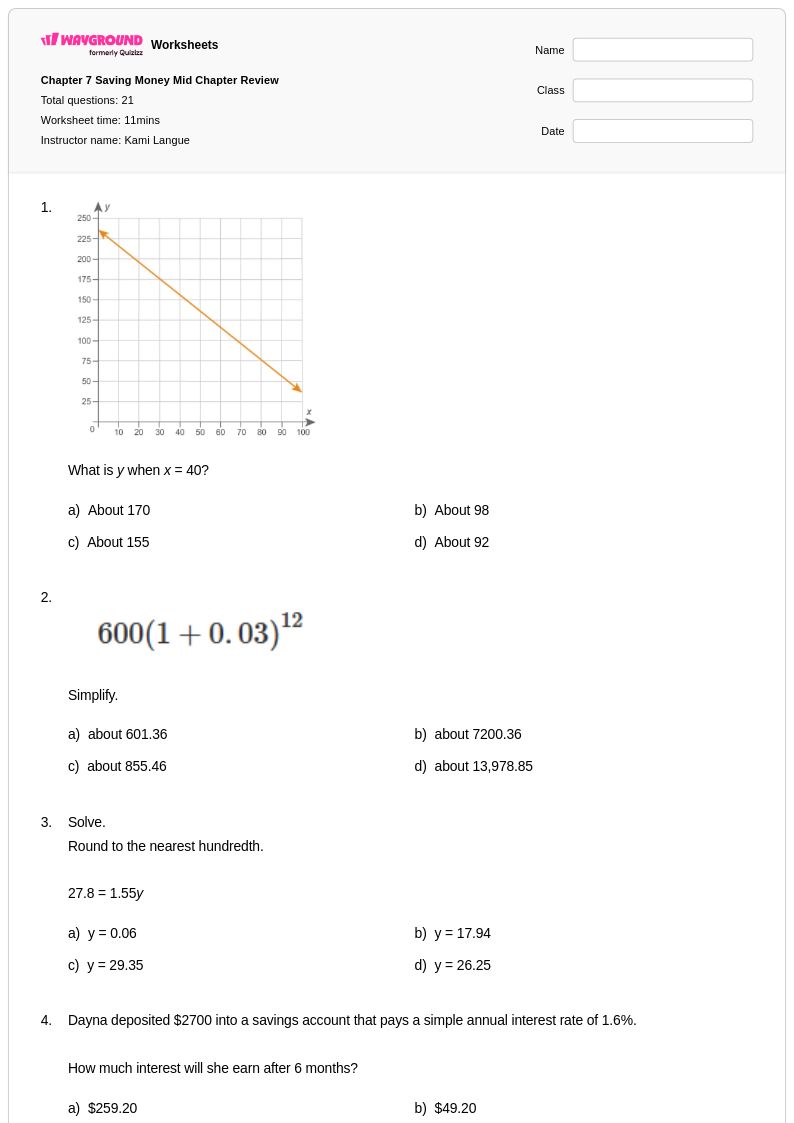
21 Q
9th - 12th

25 Q
9th - 12th

25 Q
9th - 12th
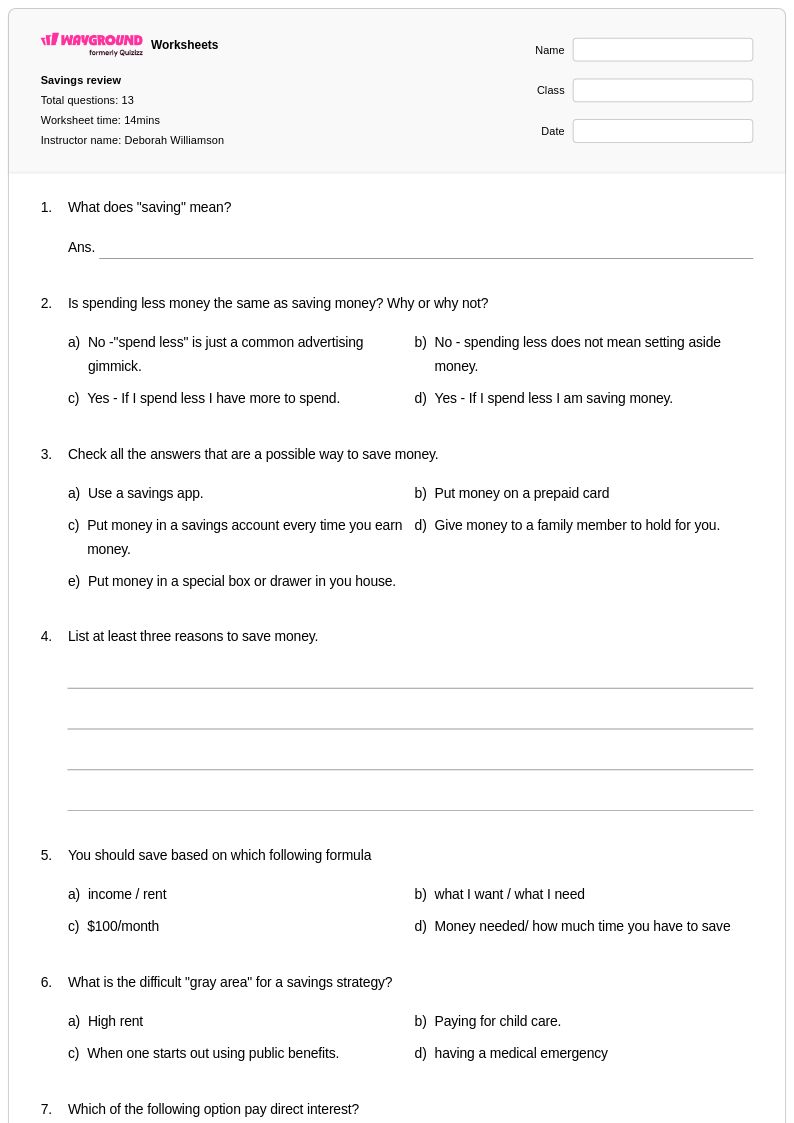
13 Q
11th
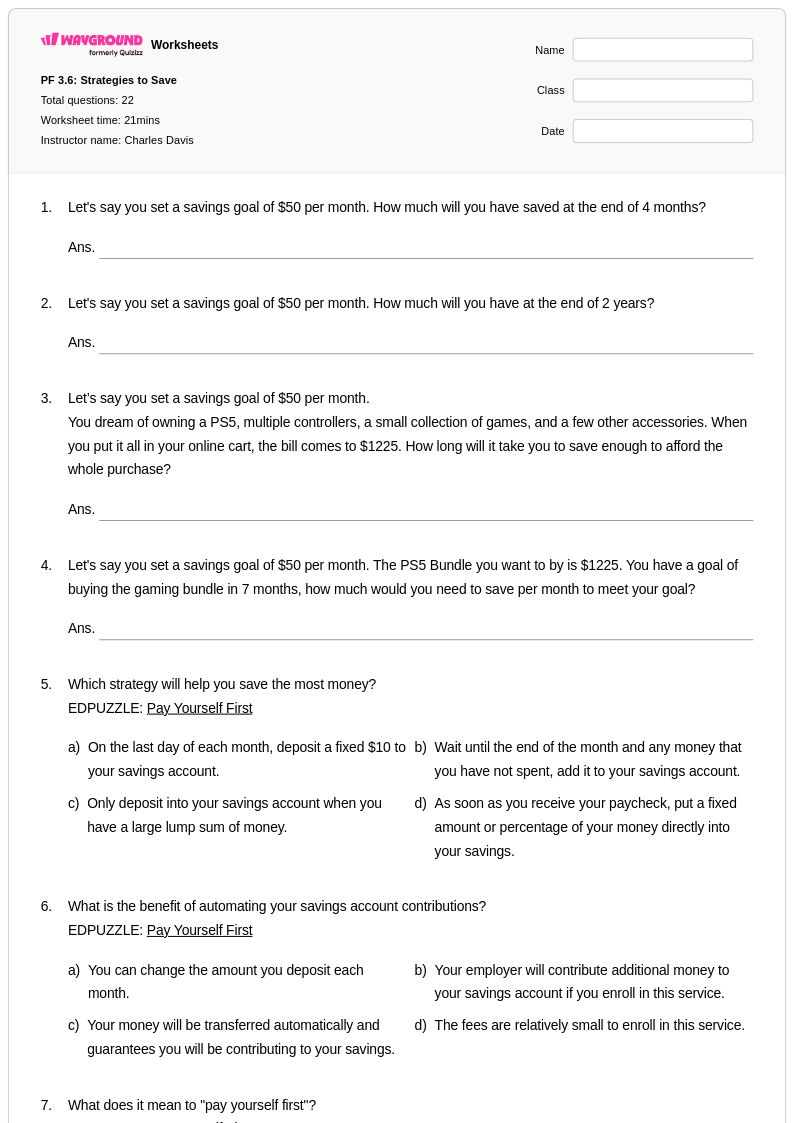
22 Q
9th - 12th
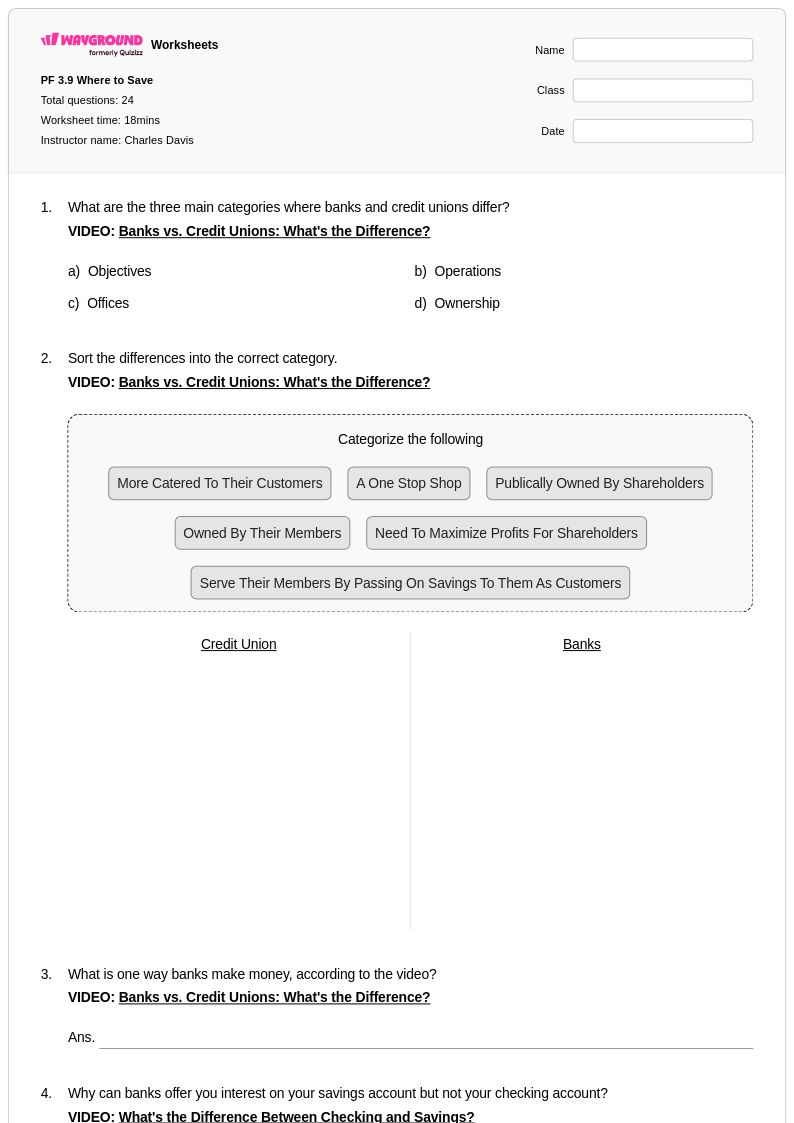
24 Q
9th - 12th
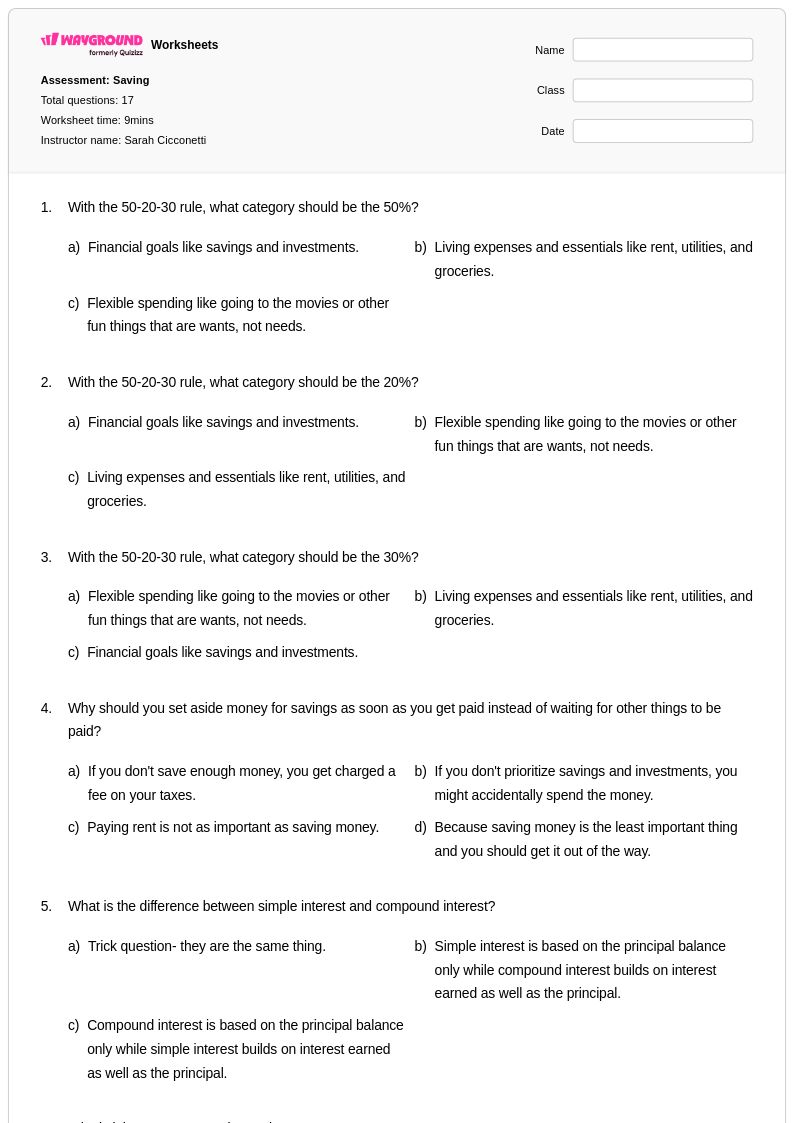
17 Q
9th - 12th
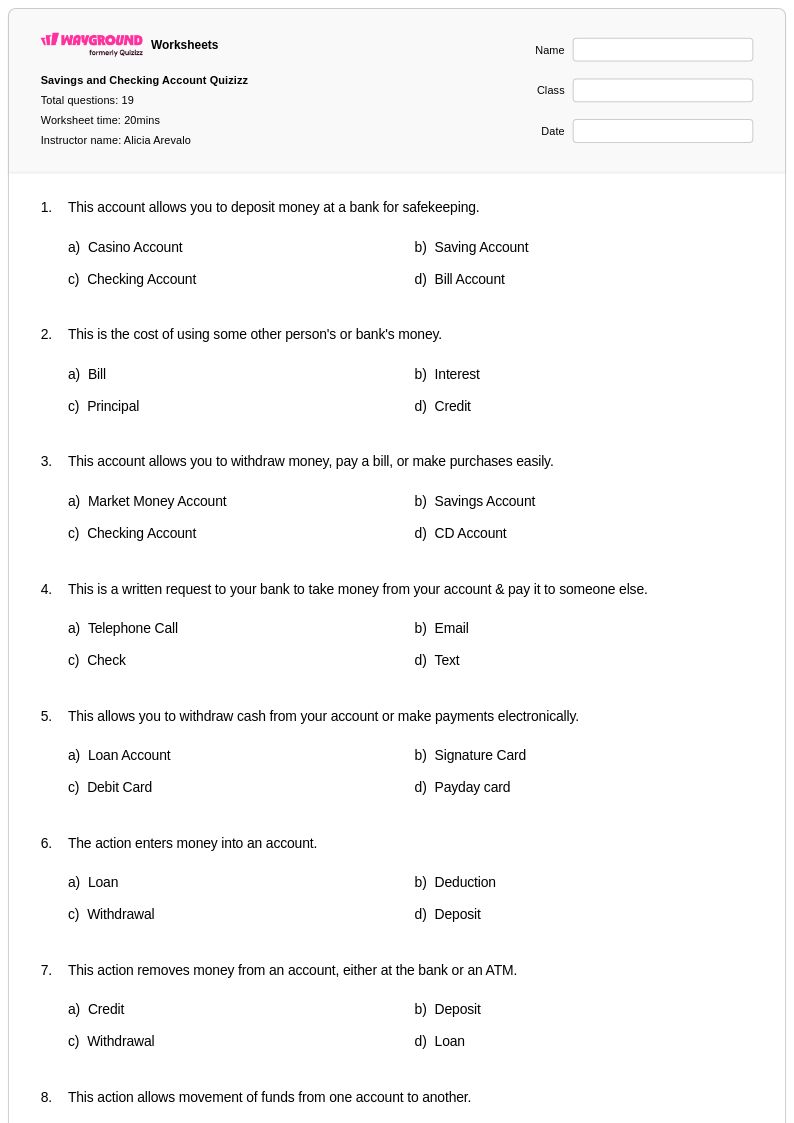
19 Q
9th - 12th
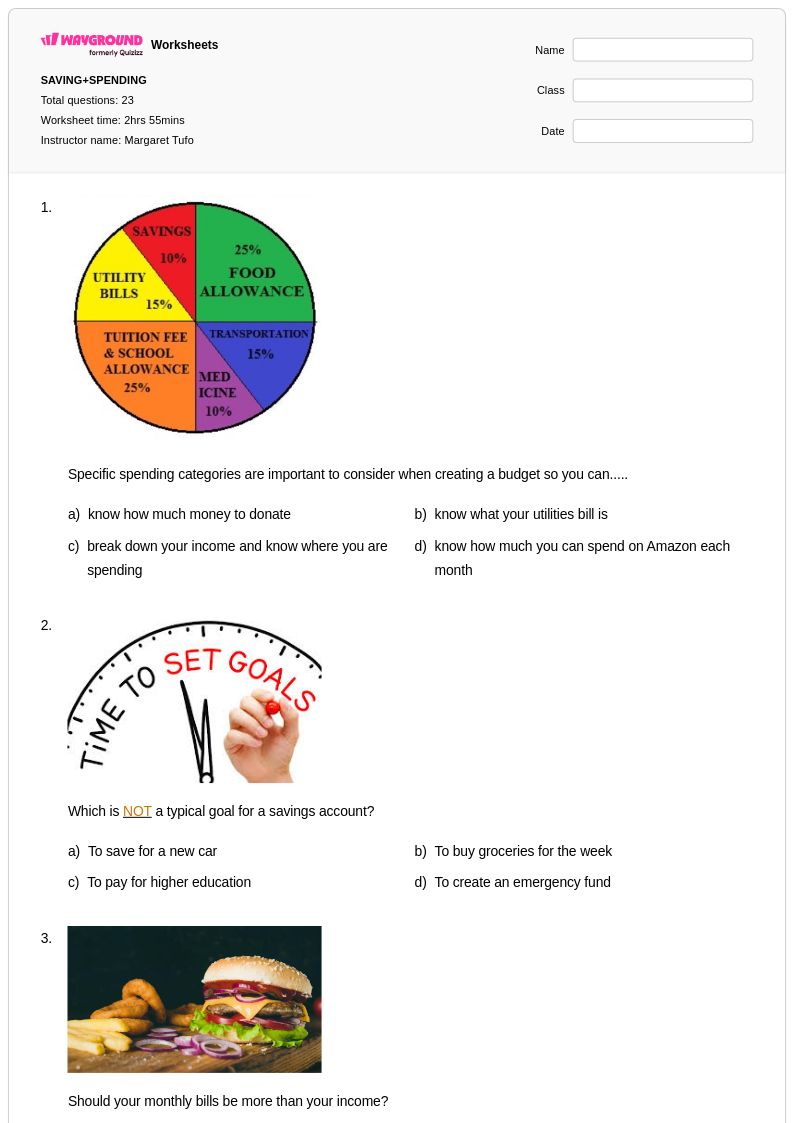
23 Q
9th - 12th
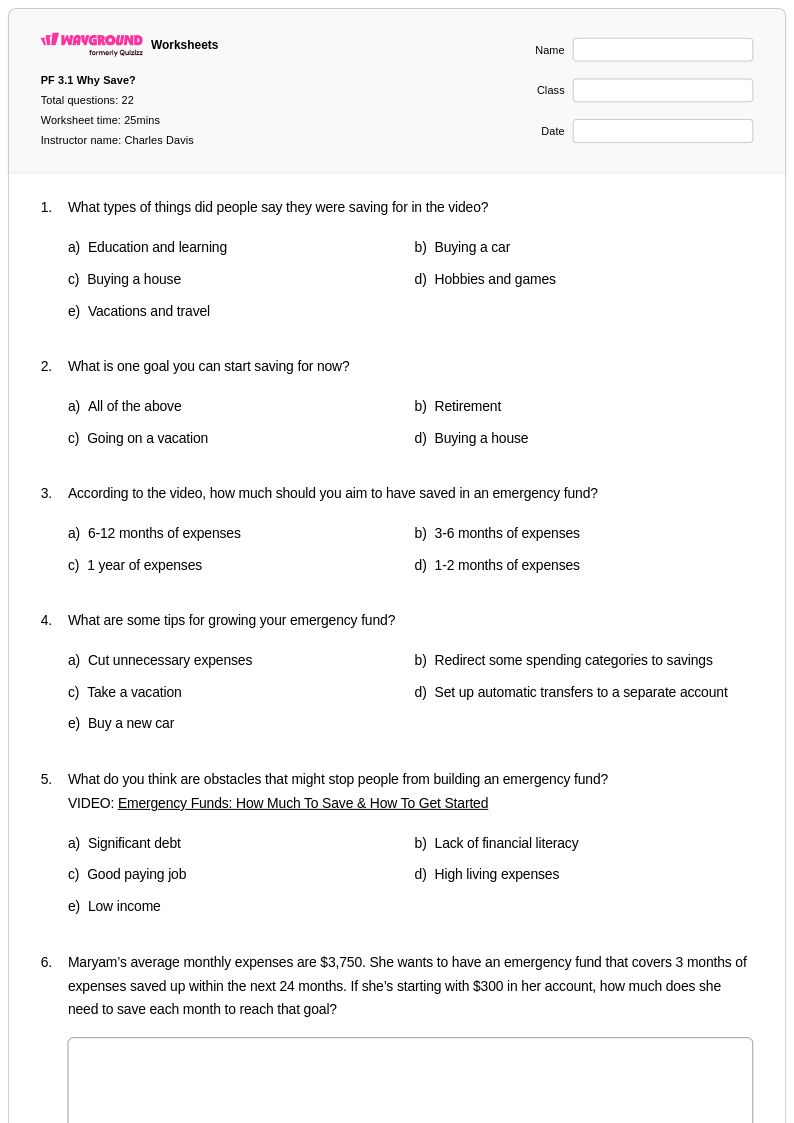
22 Q
9th - 12th
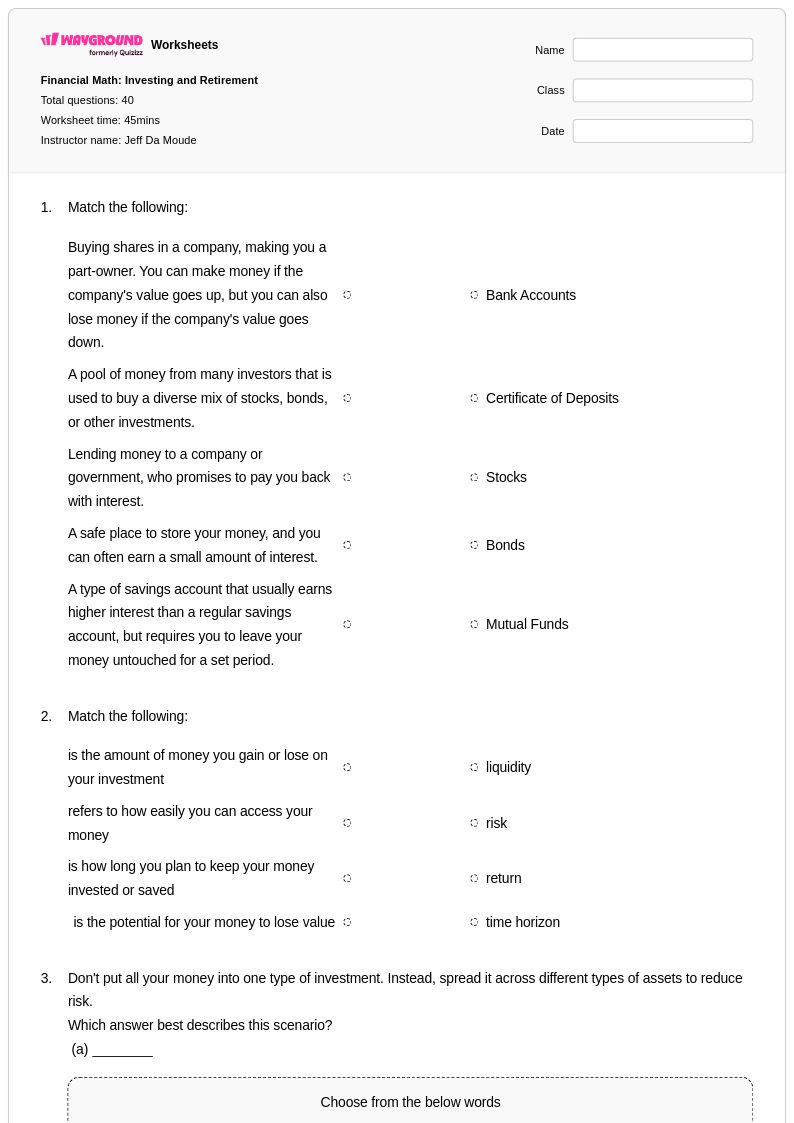
40 Q
9th - 12th
30 Q
9th - 12th
7 Q
9th - 12th
23 Q
9th - 12th
12 Q
9th - 12th
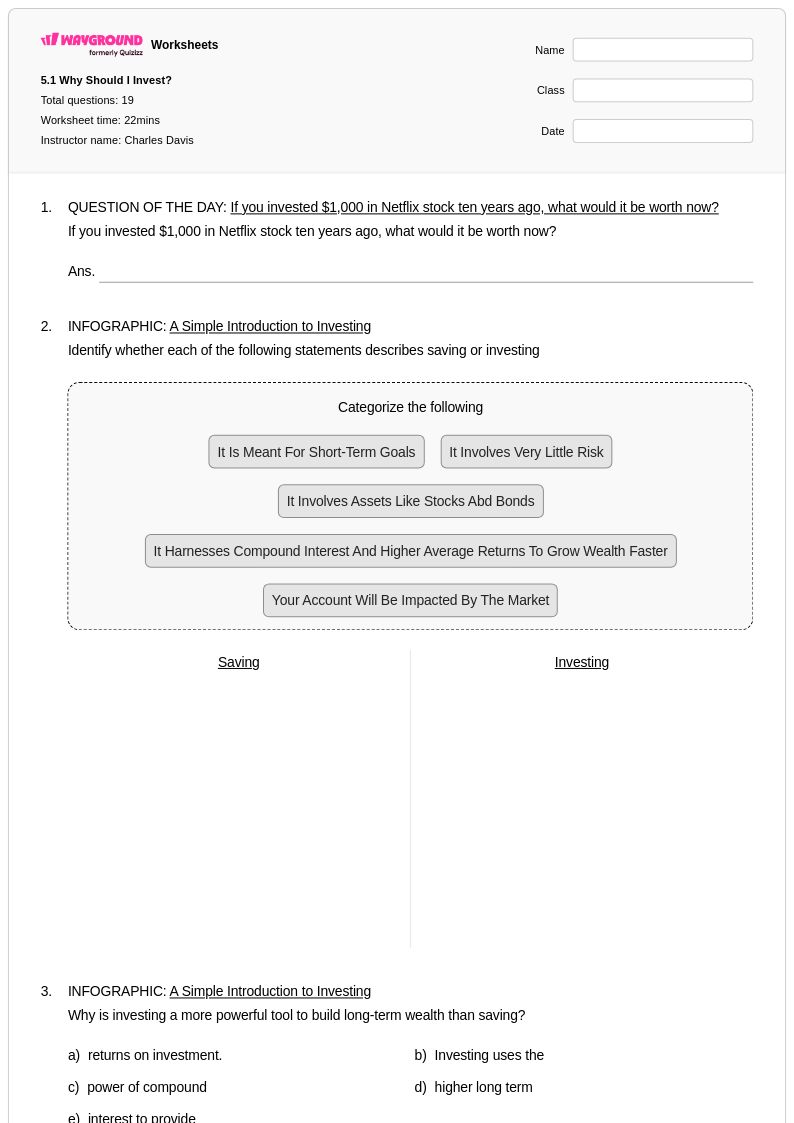
19 Q
9th - 12th
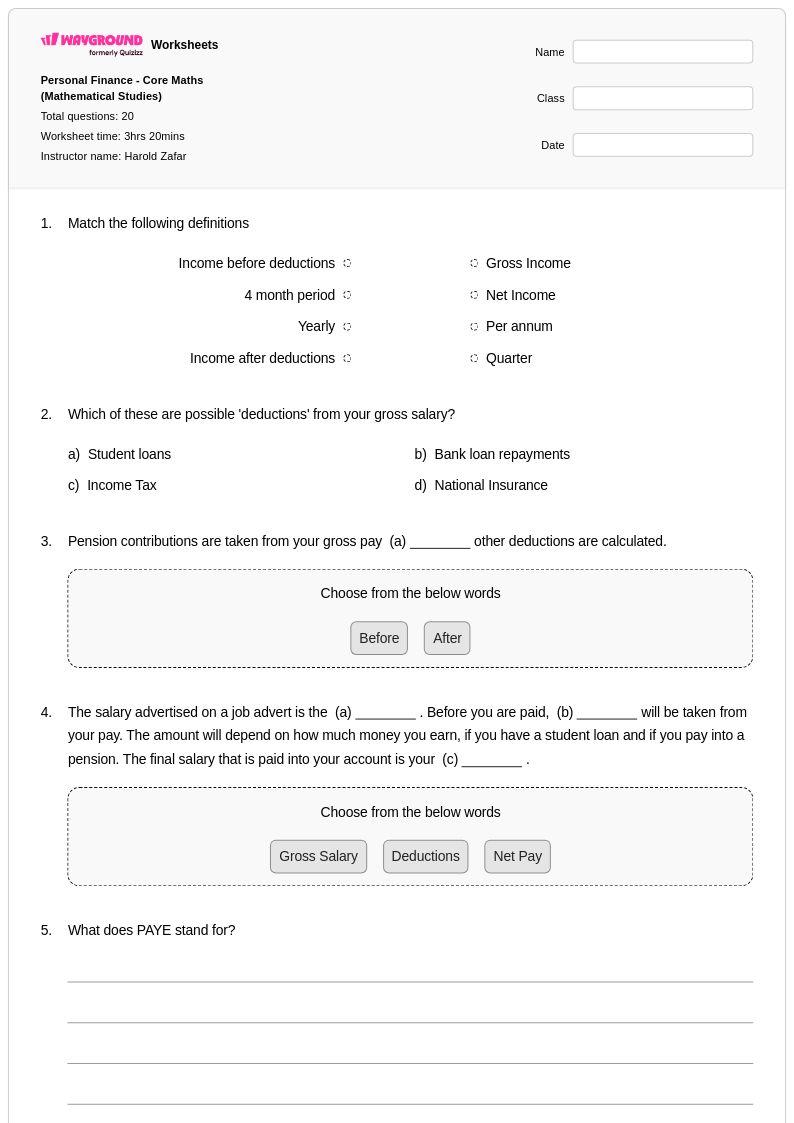
20 Q
9th - 12th
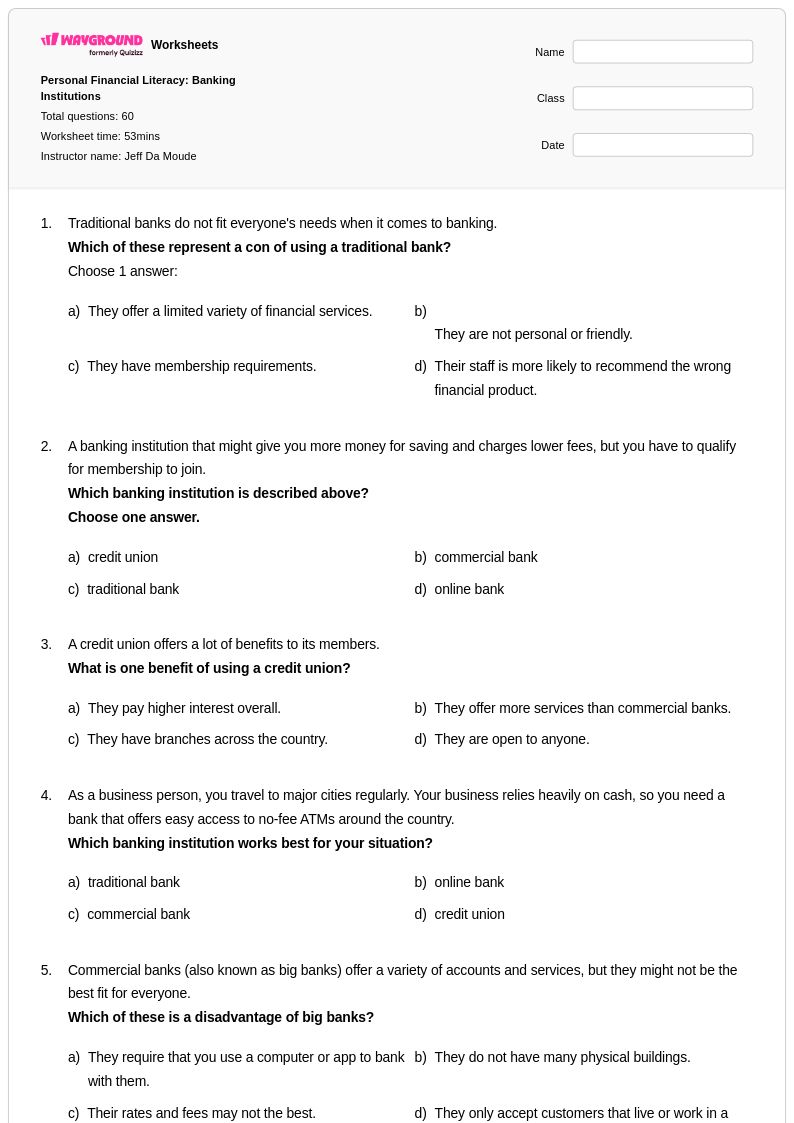
60 Q
9th - 12th
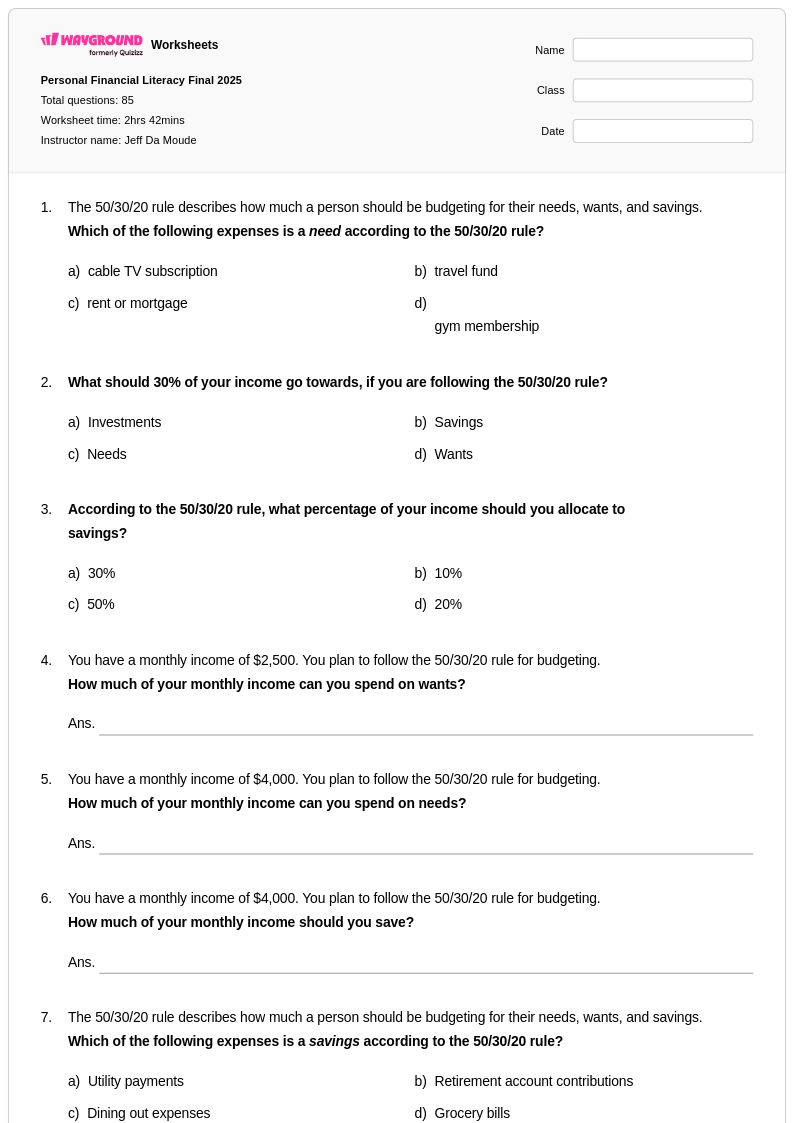
85 Q
9th - 12th
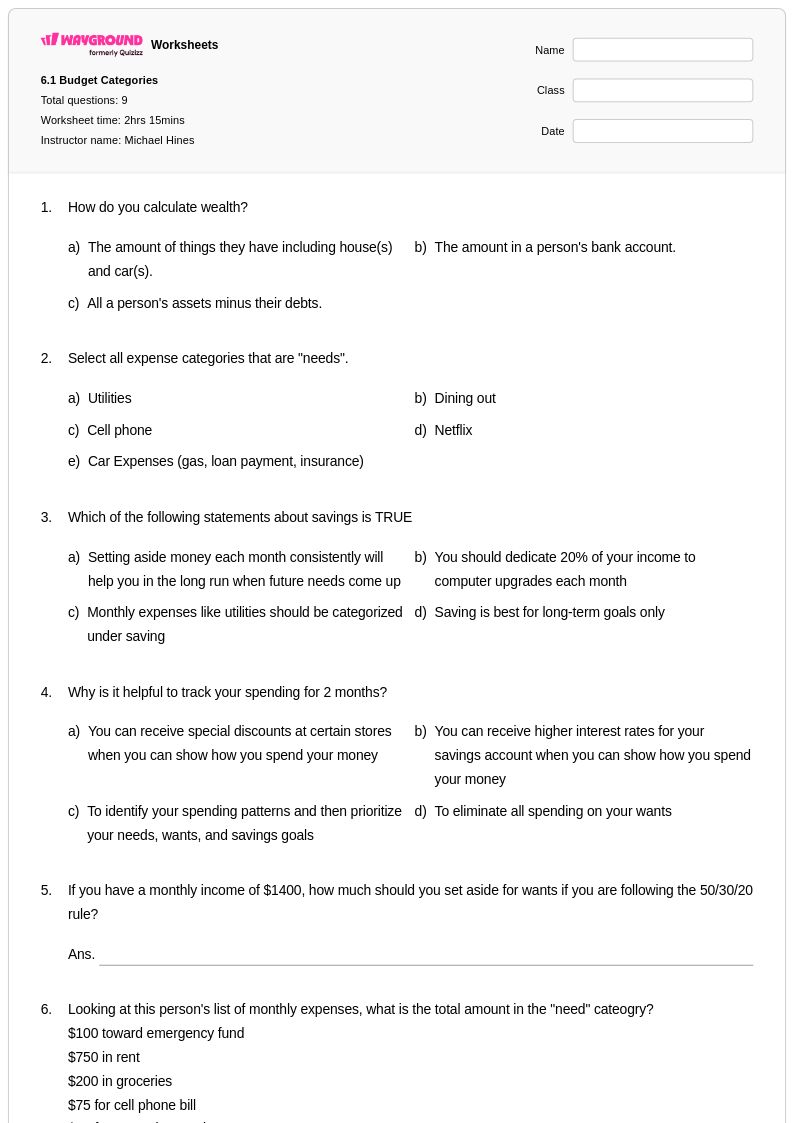
9 Q
10th - 12th
Explore Saving Money Worksheets by Grades
Explore Other Subject Worksheets for grade 11
Explore printable Saving Money worksheets for Grade 11
Saving money worksheets for Grade 11 students available through Wayground (formerly Quizizz) provide comprehensive practice in essential personal finance skills that prepare students for real-world financial decision making. These carefully designed printables focus on critical concepts including calculating compound interest on savings accounts, comparing different savings vehicles like certificates of deposit and high-yield accounts, analyzing the impact of inflation on purchasing power over time, and developing strategic long-term savings plans for major life goals. Students work through authentic practice problems that require them to evaluate savings scenarios, calculate future values using various compounding frequencies, and make informed decisions about emergency funds and retirement planning. Each worksheet comes with a detailed answer key that helps students understand the mathematical reasoning behind optimal savings strategies, while the free pdf format ensures accessibility for both classroom instruction and independent study.
Wayground (formerly Quizizz) supports mathematics educators with an extensive collection of teacher-created resources specifically designed for Grade 11 financial literacy instruction, featuring millions of high-quality worksheets that align with state and national standards for personal finance education. The platform's advanced search and filtering capabilities allow teachers to quickly locate materials that match specific learning objectives, whether focusing on simple versus compound interest calculations, savings goal planning, or comparing investment returns. Teachers can customize these digital and printable resources to differentiate instruction for diverse learning needs, modifying problem complexity and providing additional scaffolding for students who need extra support while offering enrichment activities for advanced learners. The flexible pdf format enables seamless integration into existing curriculum plans, supporting both remediation efforts for students struggling with percentage calculations and skill practice opportunities that reinforce mathematical concepts through practical financial applications.