Free Printable Soil Profile Worksheets for Grade 7
Explore Grade 7 soil profile worksheets and printables that help students understand Earth's layered structure through interactive practice problems, free PDF resources, and comprehensive answer keys.
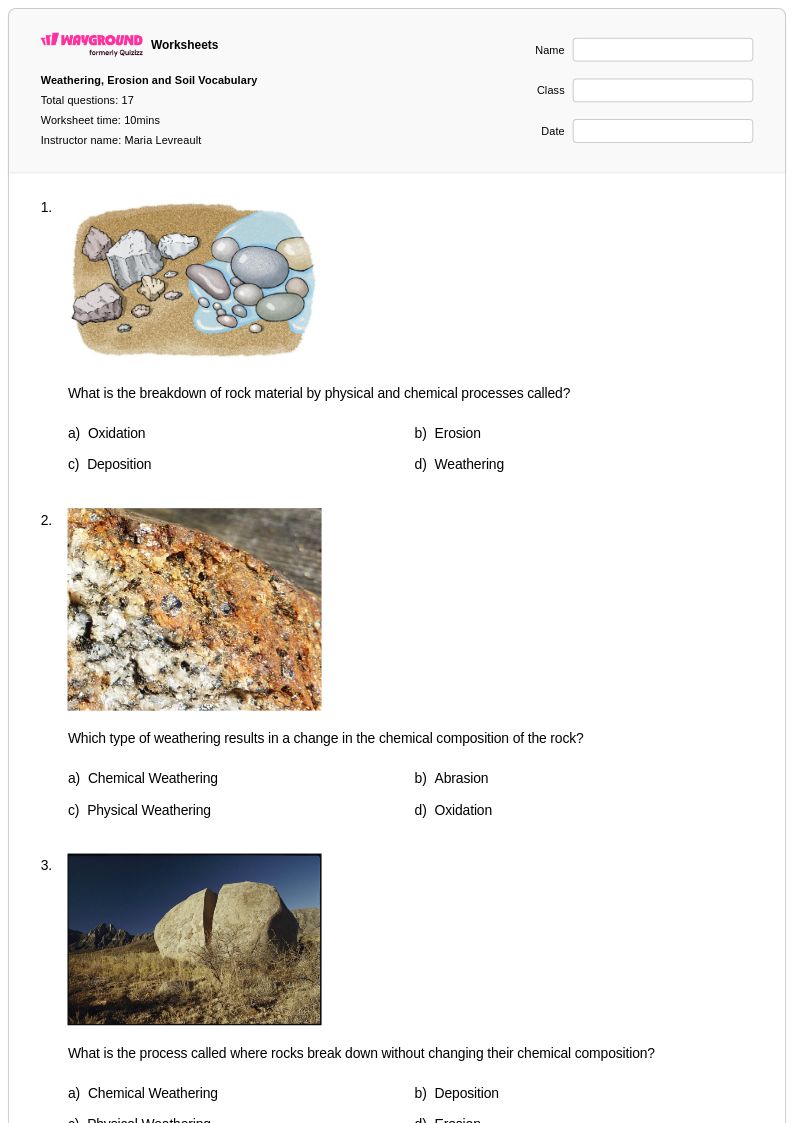
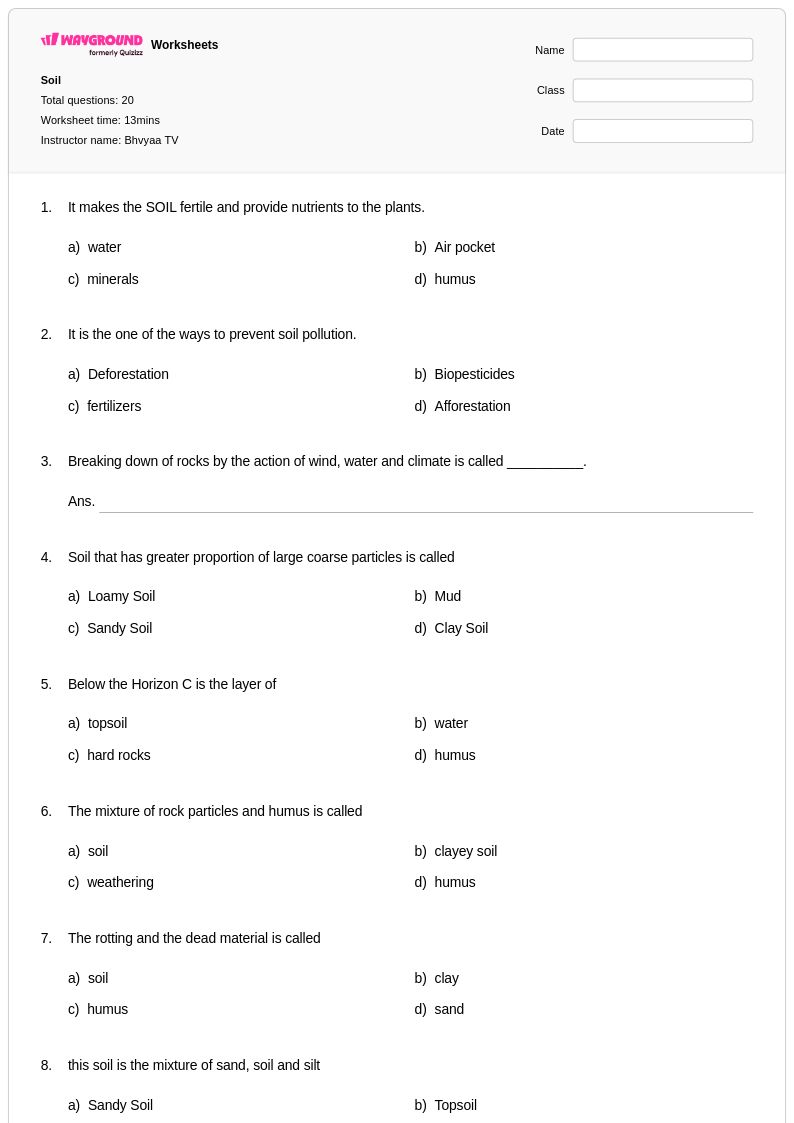
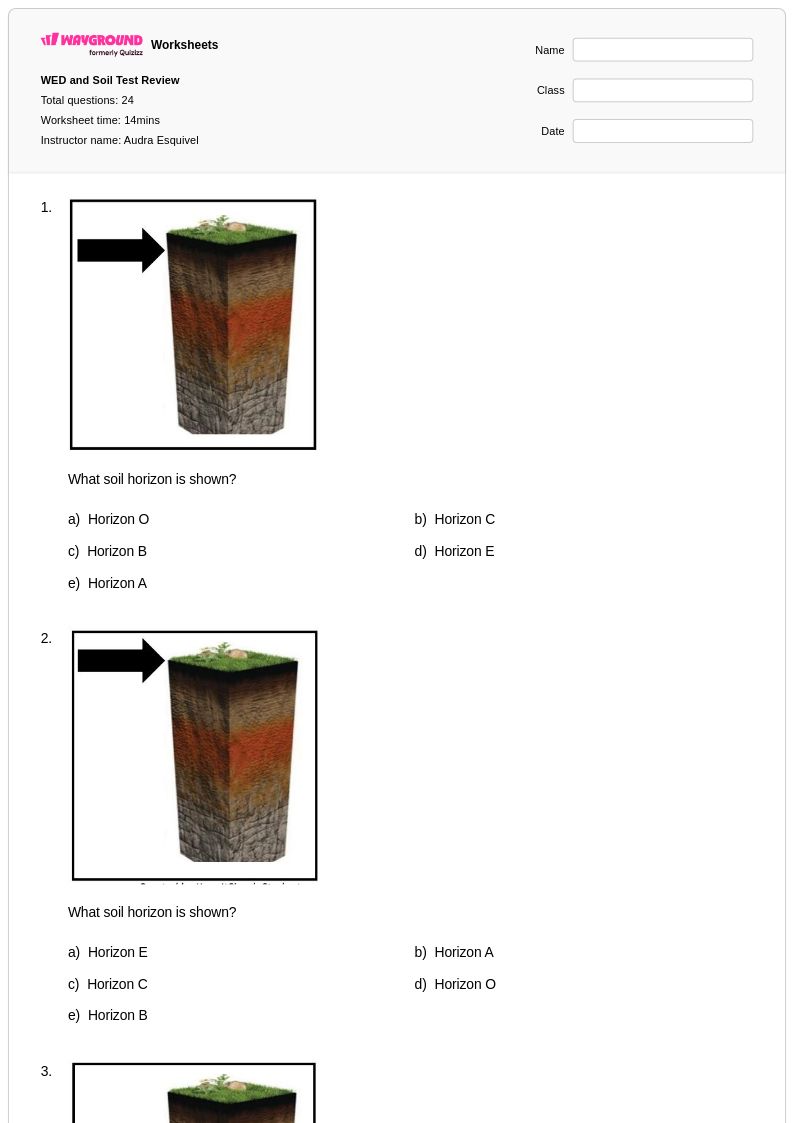
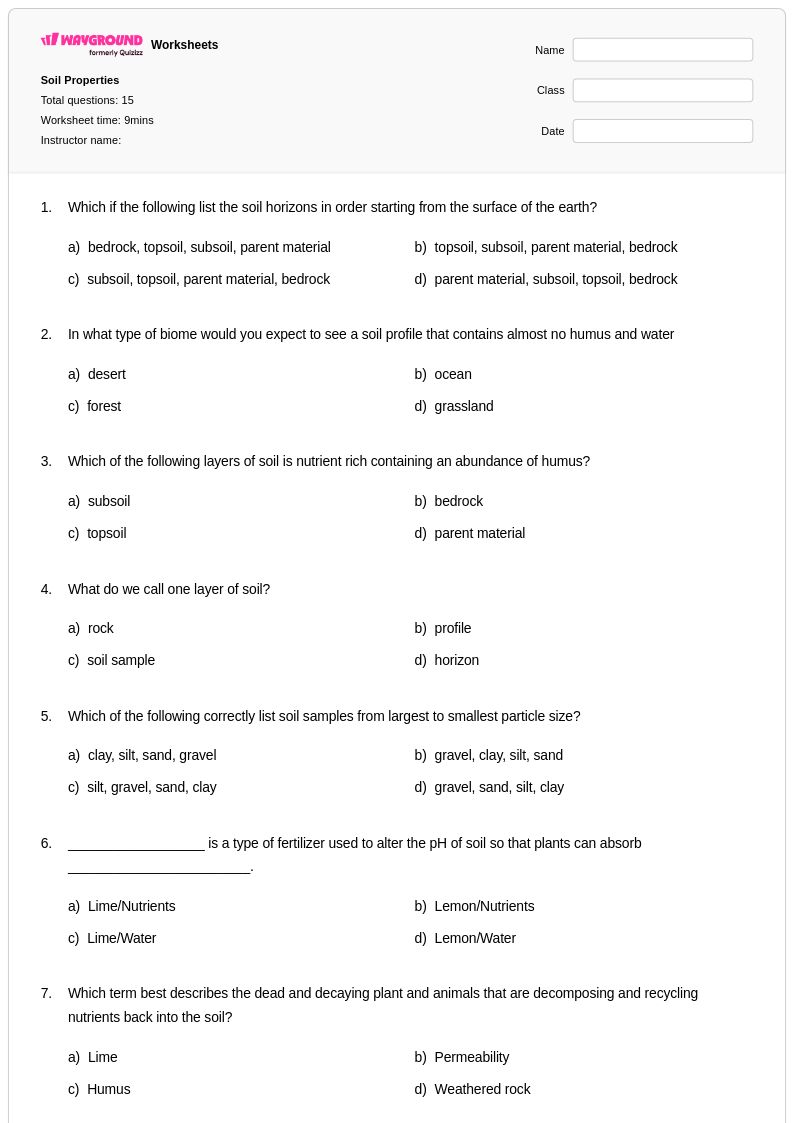
Explore printable Soil Profile worksheets for Grade 7
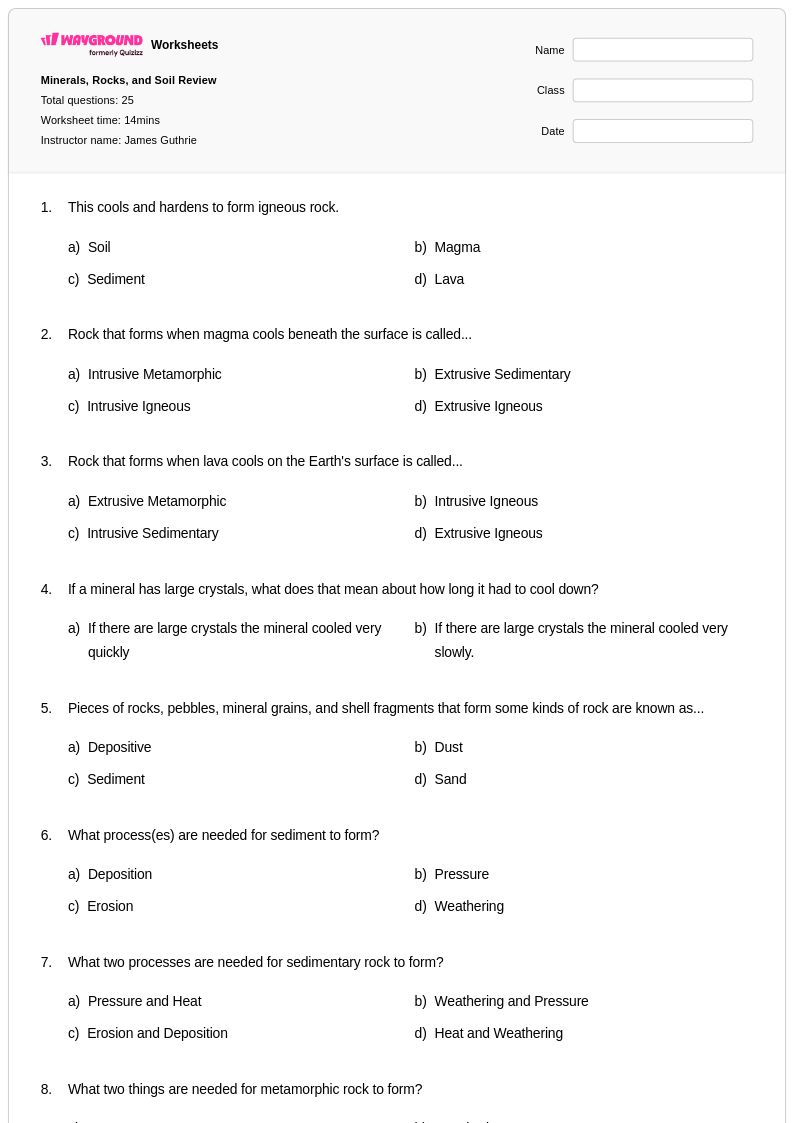
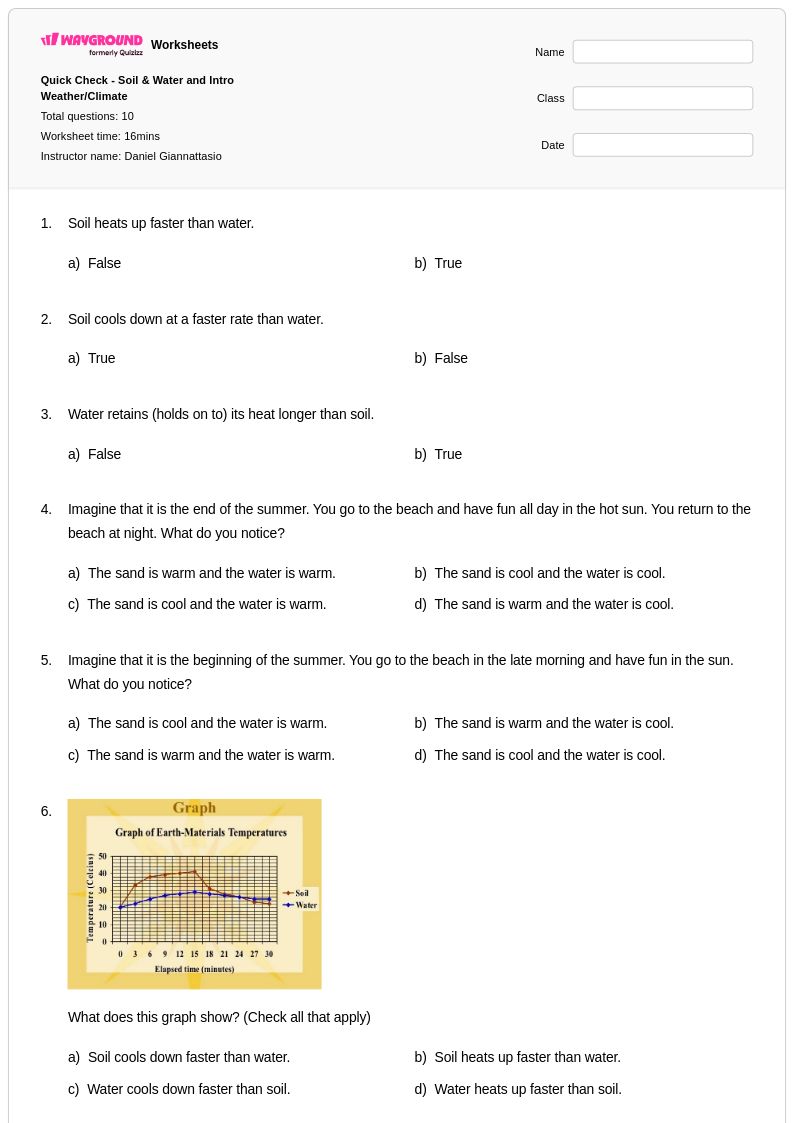
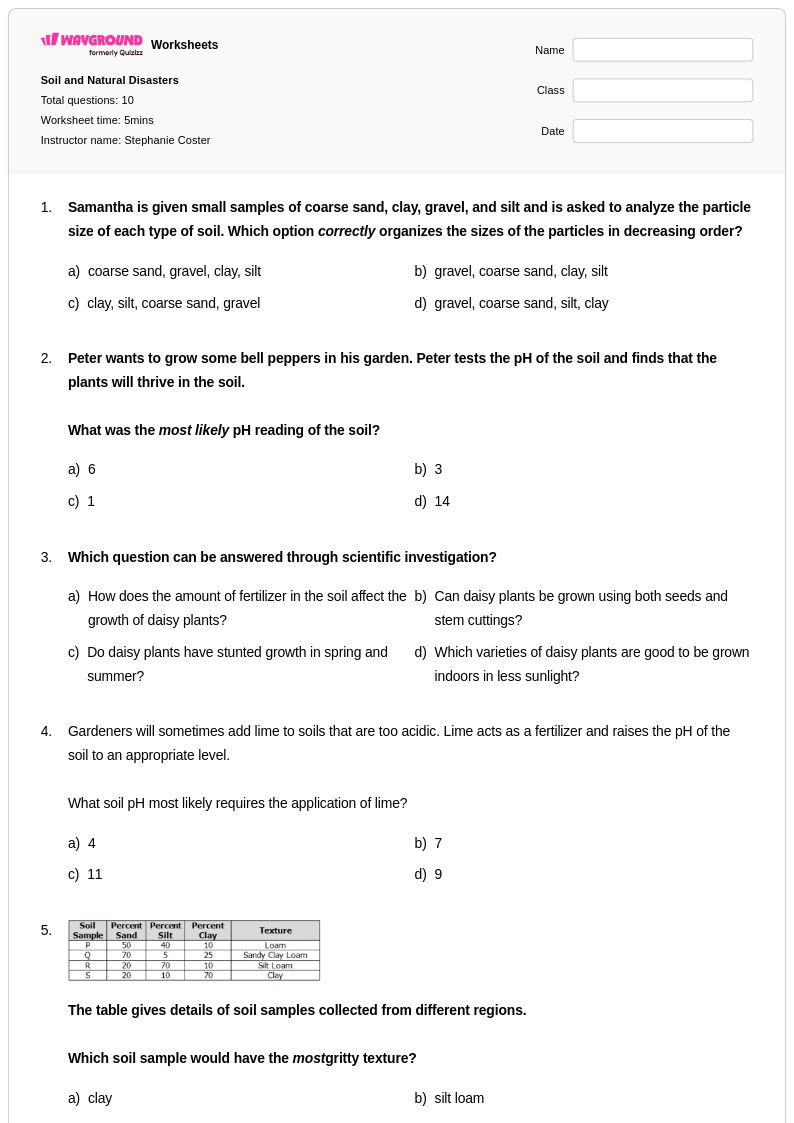
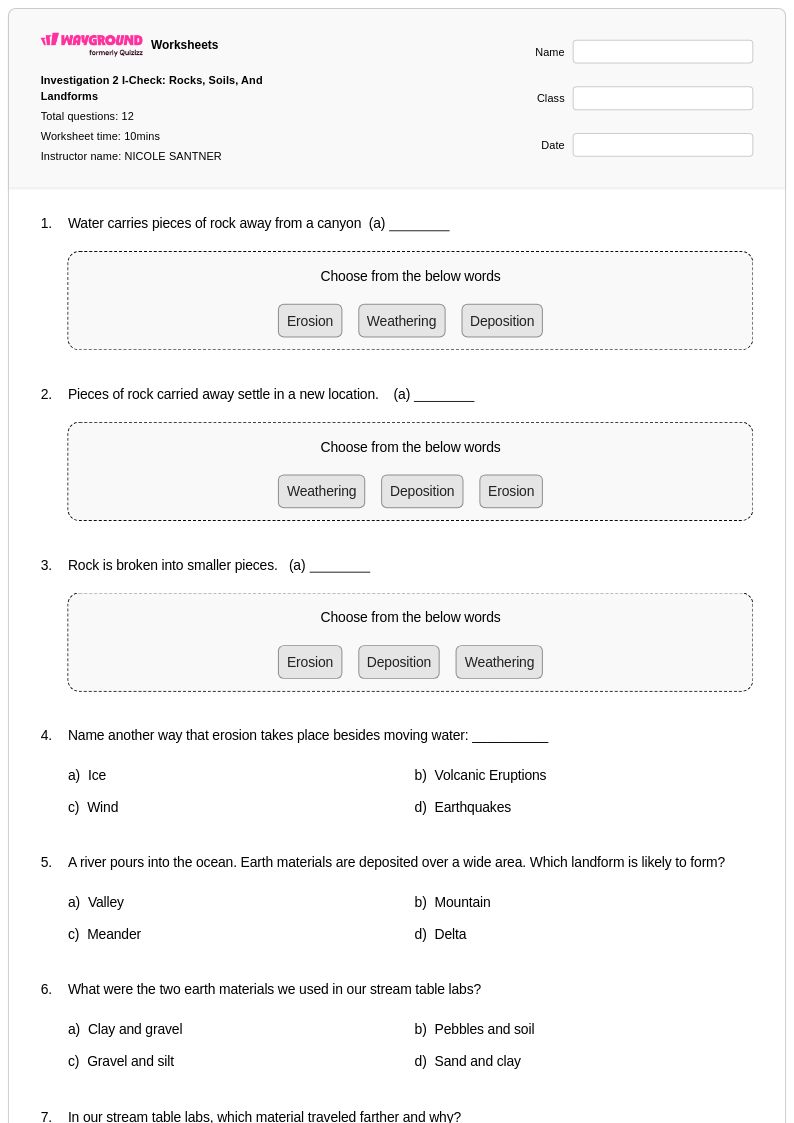
Soil profile worksheets for Grade 7 students available through Wayground (formerly Quizizz) provide comprehensive exploration of Earth's layered subsurface structure, helping students understand the distinct horizons that make up soil systems. These educational resources strengthen critical scientific skills including observation, classification, and analysis as students examine the O, A, E, B, and C horizons that characterize mature soil development. The worksheets feature detailed practice problems that challenge students to identify soil components, analyze formation processes, and understand the relationship between climate, parent material, and soil characteristics. Each worksheet comes with a complete answer key and is available as free printable PDF resources, making them accessible for both classroom instruction and independent study while reinforcing essential earth science concepts.
Wayground (formerly Quizizz) supports educators with an extensive collection of teacher-created soil profile worksheets, drawing from millions of high-quality resources that have been carefully developed and tested in real classroom environments. The platform's robust search and filtering capabilities allow teachers to quickly locate materials that align with specific learning standards and grade-level expectations, while built-in differentiation tools enable customization for diverse student needs and learning styles. These worksheets are available in both printable and digital formats, including downloadable PDF versions, providing maximum flexibility for lesson planning, targeted remediation, advanced enrichment activities, and ongoing skill practice. The comprehensive nature of these resources helps educators efficiently address varying student abilities while maintaining rigorous academic standards in earth and space science instruction.
FAQs
How do I teach soil profiles to my students?
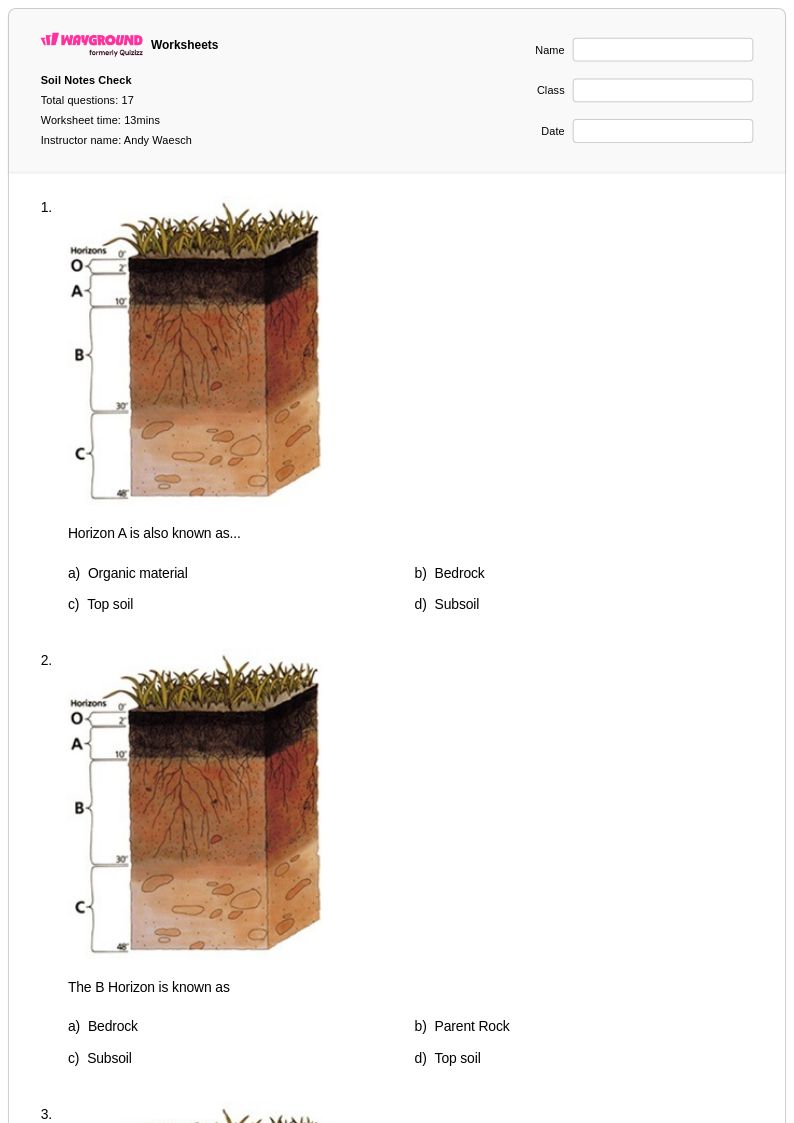
Start by introducing the concept of a soil profile as a vertical cross-section of Earth's surface that reveals distinct layers called horizons, each with unique physical and chemical properties. Use labeled diagrams to walk students through each horizon from the O horizon at the surface down through the A, E, B, C, and R layers, emphasizing how color, texture, and organic content differ at each level. Connecting soil formation to real-world factors like climate, parent material, topography, organisms, and time helps students understand pedology as a dynamic, ongoing process rather than a static structure.
What exercises help students practice identifying soil horizons?
Horizon identification exercises that ask students to label cross-sectional diagrams are among the most effective practice tools for this topic. Worksheets that pair unlabeled soil profile illustrations with descriptive clues about color, texture, and organic content challenge students to apply their knowledge rather than simply recall terminology. Adding data interpretation tasks, such as analyzing soil sample charts or comparing profiles from different biomes, builds the critical scientific skills students need to move beyond memorization.
What mistakes do students commonly make when learning about soil profiles?
A frequent misconception is that all soil profiles look the same regardless of location, when in fact factors like climate, parent material, and vegetation cause significant variation between profiles. Students also commonly confuse the O and A horizons, mistakenly treating them as interchangeable, when the O horizon is dominated by organic matter and the A horizon is a mineral layer enriched by organic material. Another common error is assuming soil formation is a rapid process, so it helps to explicitly address geological timescales when introducing the topic.
How can I use soil profile worksheets to support students at different skill levels?
Soil profile worksheets can be scaffolded by providing word banks or partially completed diagrams for students who need additional support, while advanced learners can be challenged with open-ended questions about how a profile would differ across climates or biomes. On Wayground, teachers can apply individual accommodations such as read aloud for struggling readers, reduced answer choices to lower cognitive load, and extended time for students who need it, all without signaling those adjustments to the rest of the class. These settings are reusable across sessions, making differentiation efficient even for complex Earth science content.
How do I use Wayground's soil profile worksheets in my classroom?
Wayground's soil profile worksheets are available as free printable PDFs for traditional classroom use and in digital formats for technology-integrated learning environments, including the option to host them as a quiz directly on Wayground. Each worksheet includes a complete answer key, which reduces grading time and allows students to self-check during independent practice. The platform's search and filtering tools let teachers quickly locate materials aligned to specific Earth and Space Science standards, whether for initial instruction, guided practice, or remediation.
How does understanding soil profiles connect to broader Earth Science concepts?
Soil profiles serve as a concrete, visual entry point into broader concepts including biogeochemical cycles, weathering and erosion, and the relationship between geology and ecology. Analyzing soil horizons helps students understand how parent material weathers over time, how organic matter decomposes and cycles nutrients, and how surface processes connect to subsurface geology. This makes the soil profile an effective anchor concept for units on Earth's systems, land use, and environmental science.