
20 Q
6th - 8th
20 Q
4th - Uni
22 Q
4th - Uni
20 Q
6th
20 Q
6th - Uni
20 Q
5th - Uni
20 Q
5th - Uni
13 Q
6th
19 Q
5th - Uni
15 Q
4th - Uni
8 Q
5th - 7th
19 Q
5th - Uni
15 Q
4th - Uni
13 Q
5th - 7th
9 Q
4th - Uni
10 Q
4th - 6th
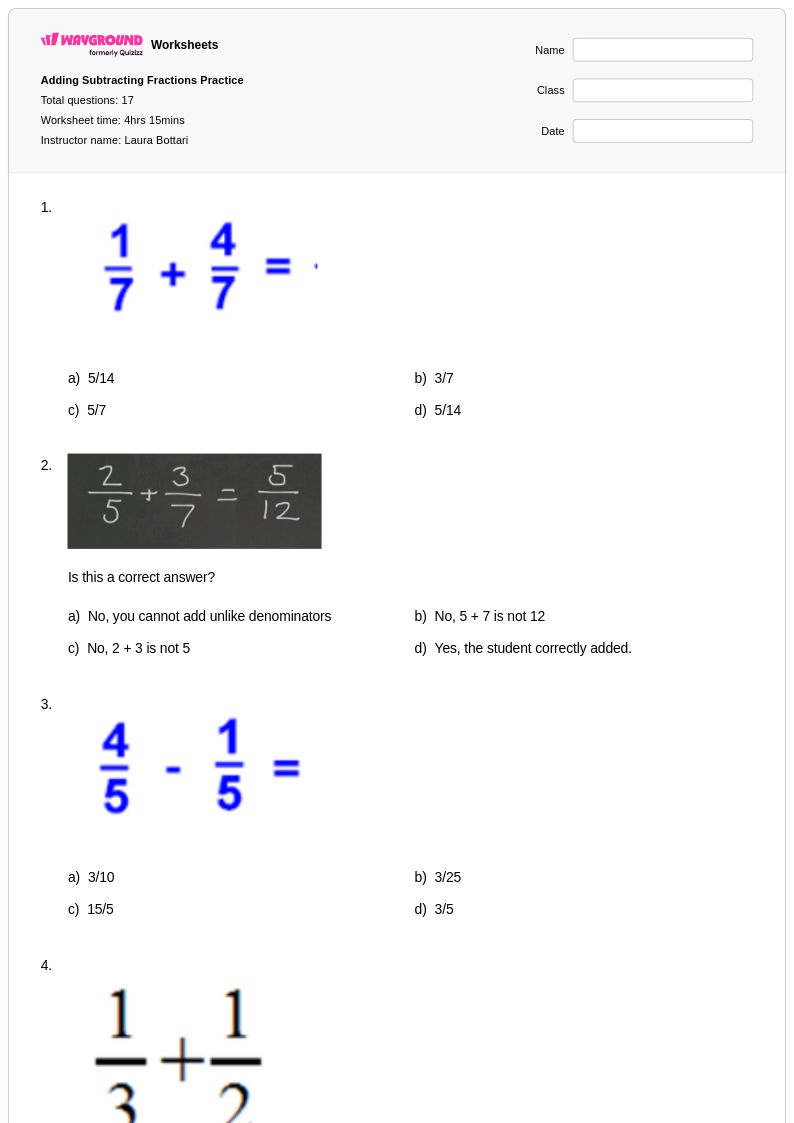
17 Q
6th - 8th
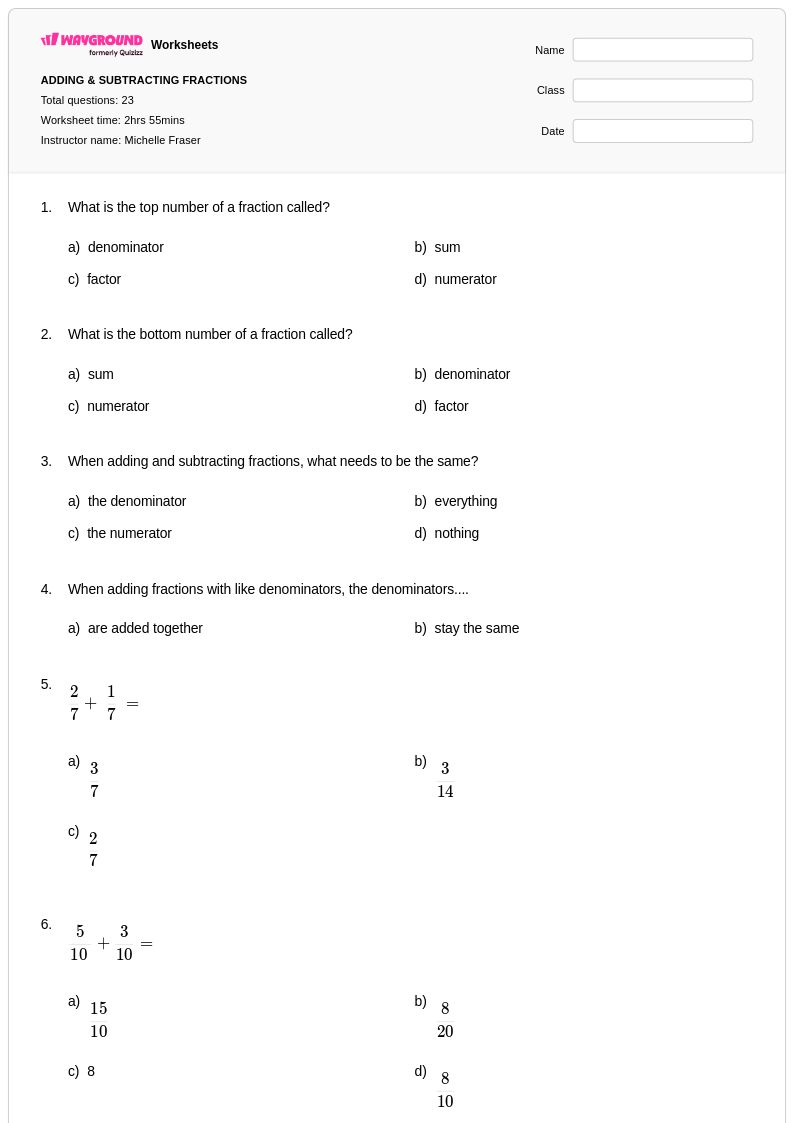
23 Q
5th - 6th
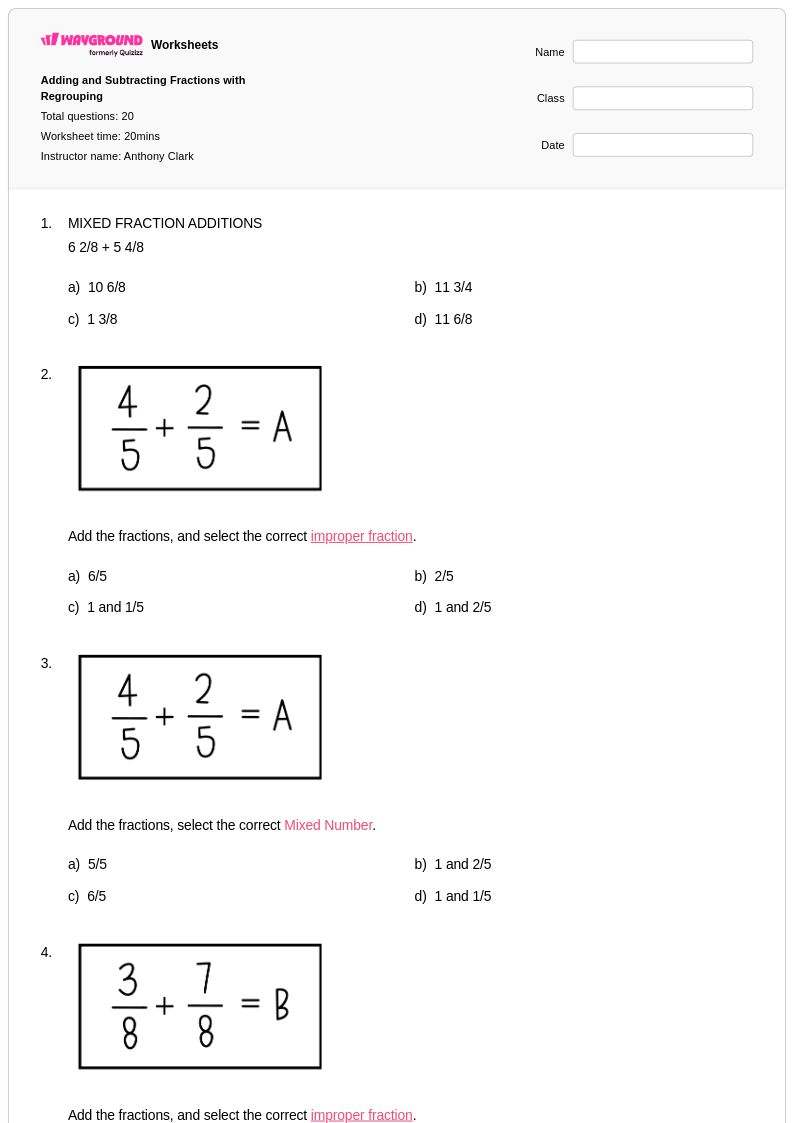
20 Q
4th - Uni
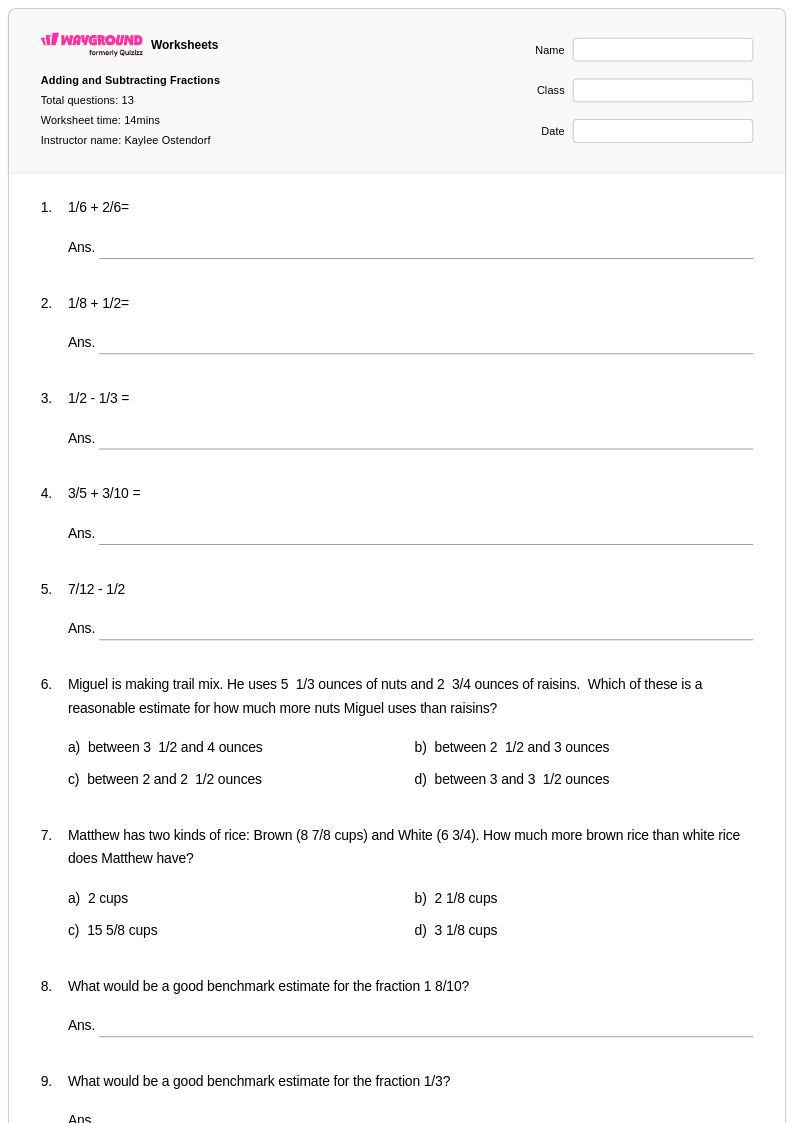
13 Q
4th - 6th
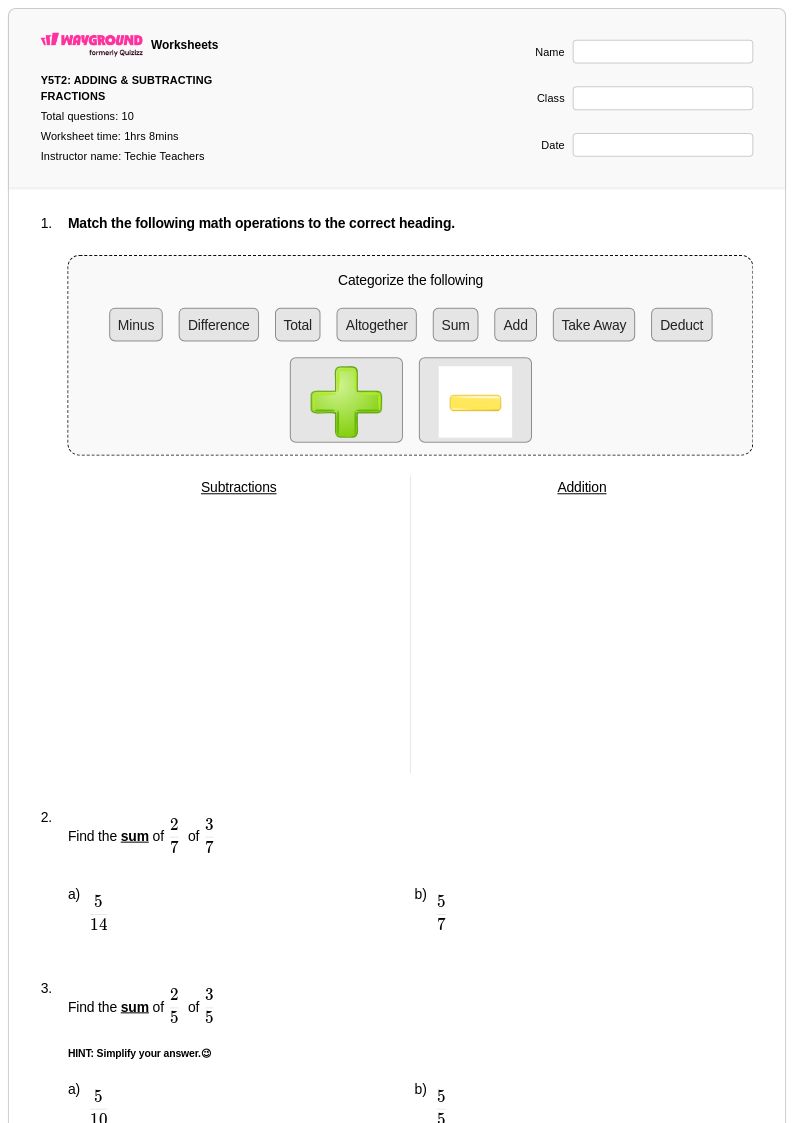
10 Q
5th - Uni
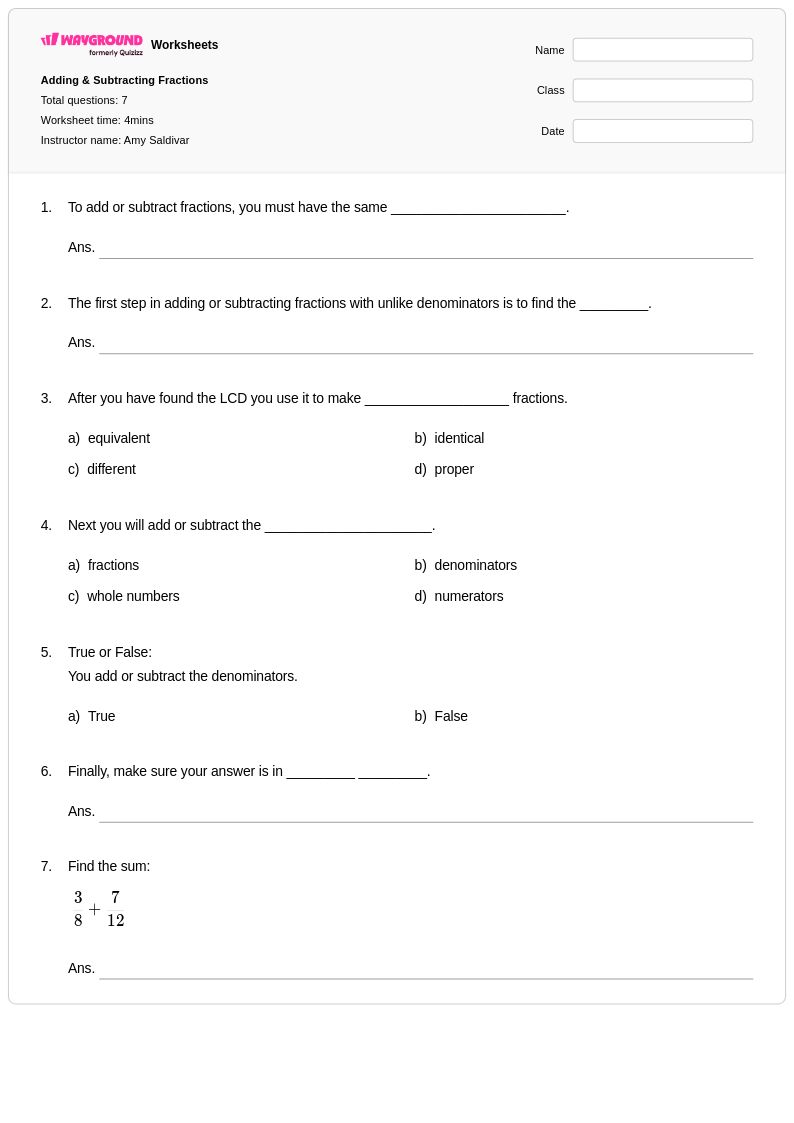
7 Q
4th - 7th
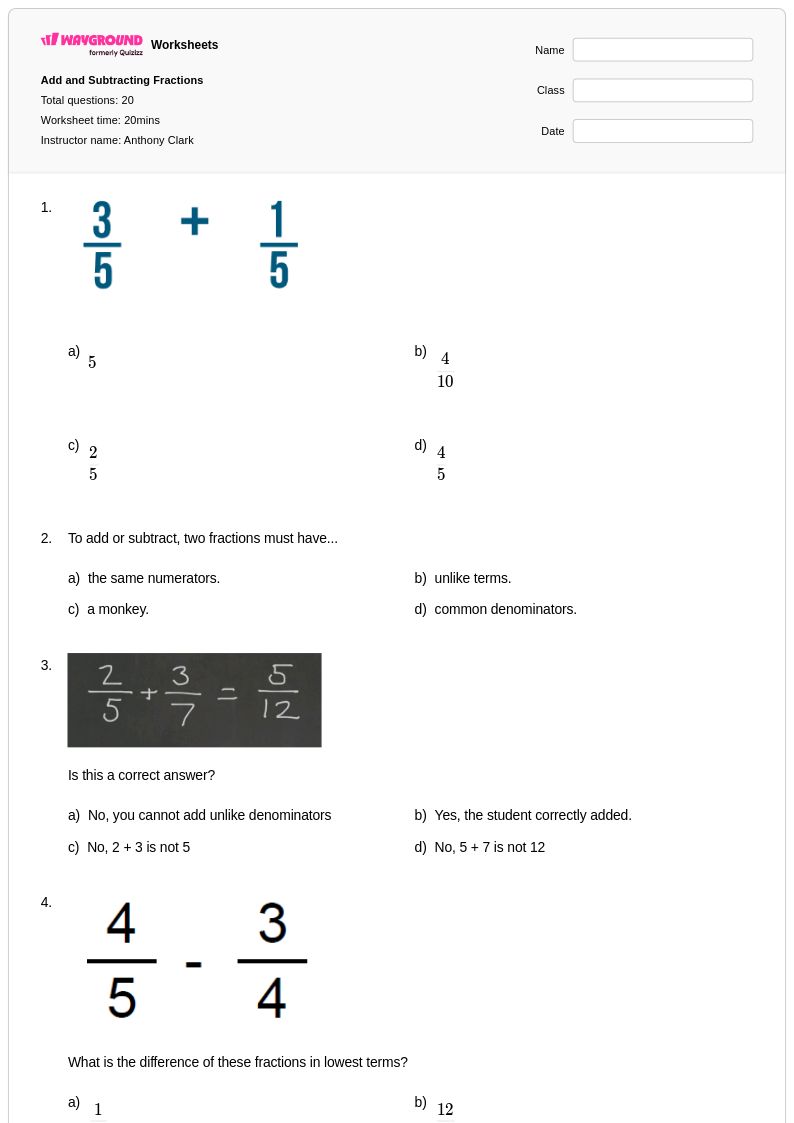
20 Q
5th - Uni
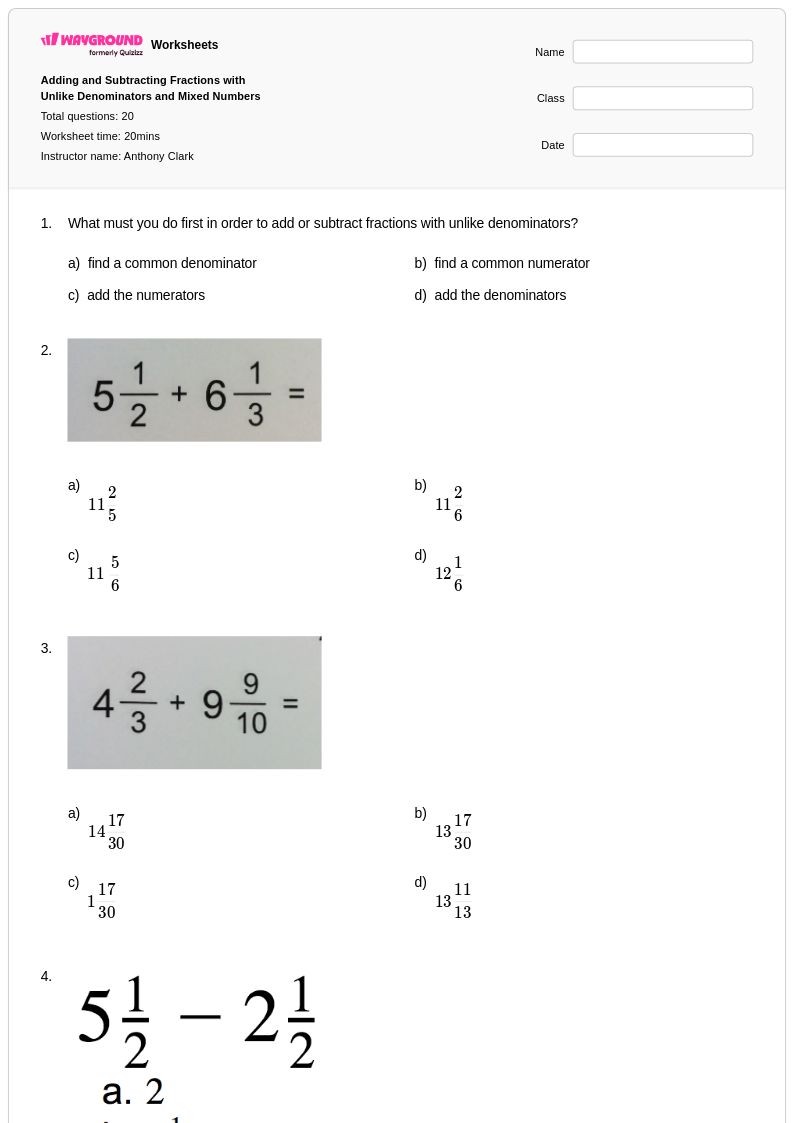
20 Q
5th - Uni
Explore Other Subject Worksheets for grade 6
Explore printable Subtracting Fractions worksheets for Grade 6
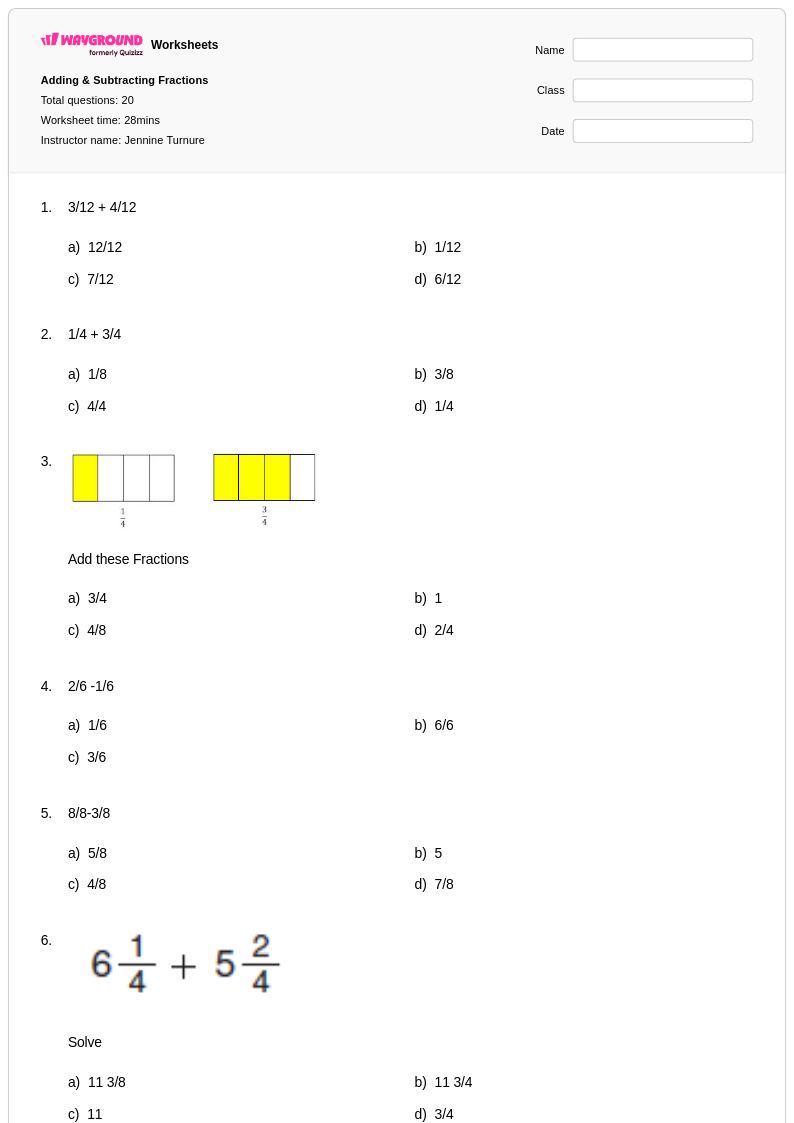
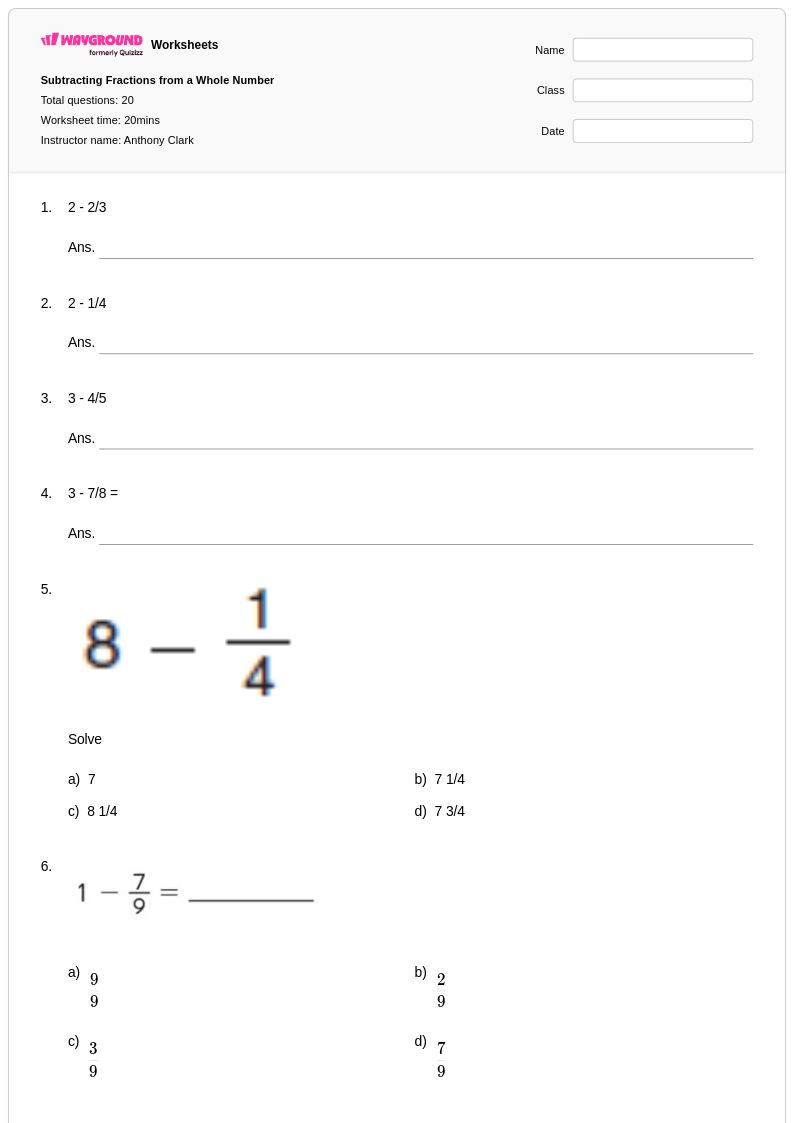
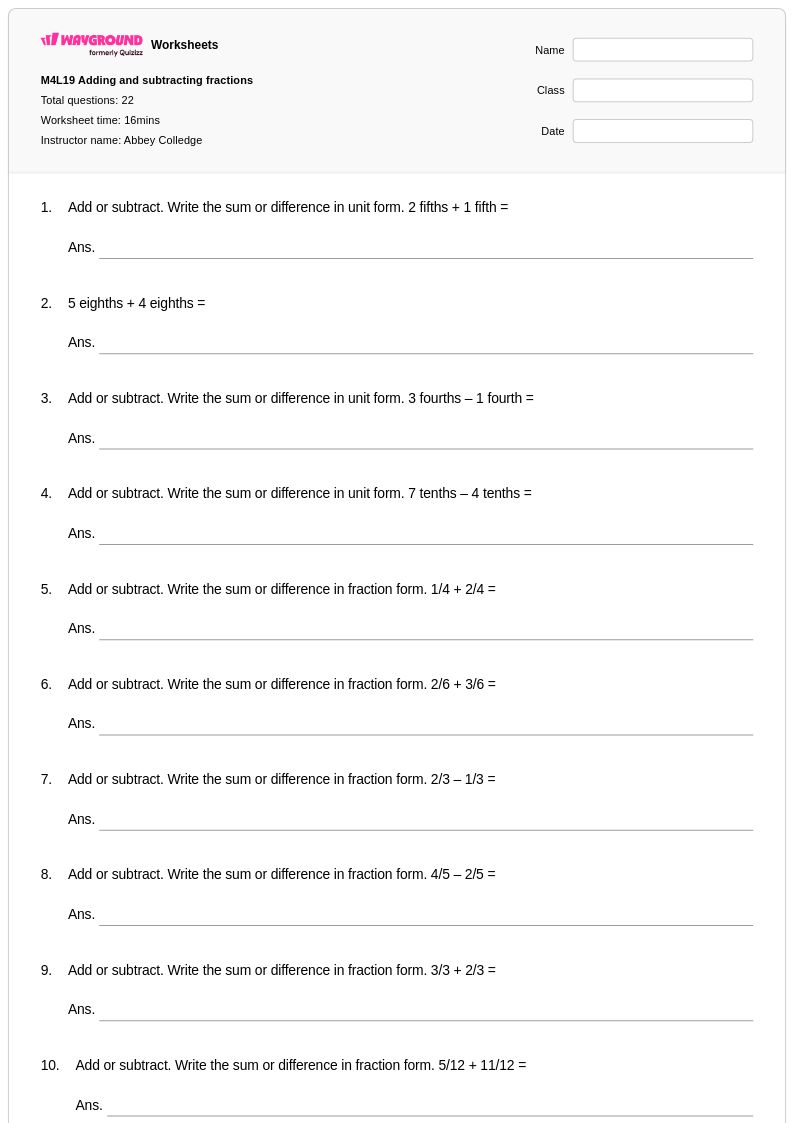
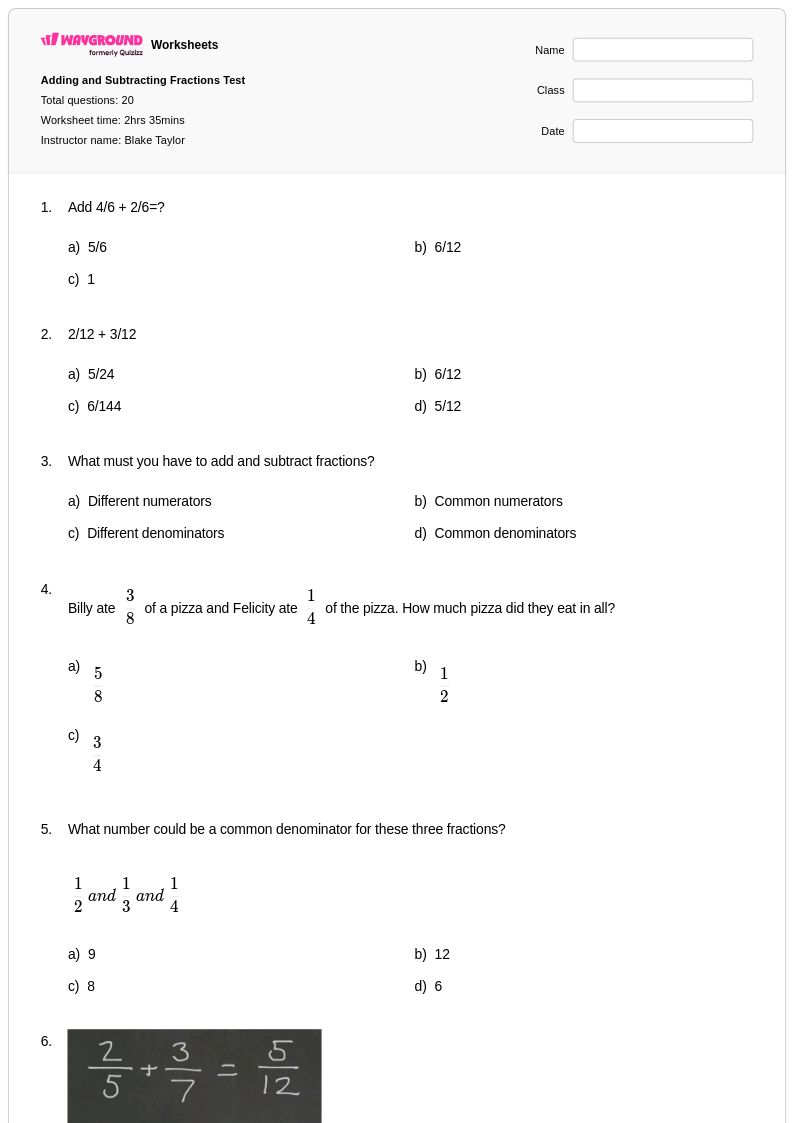
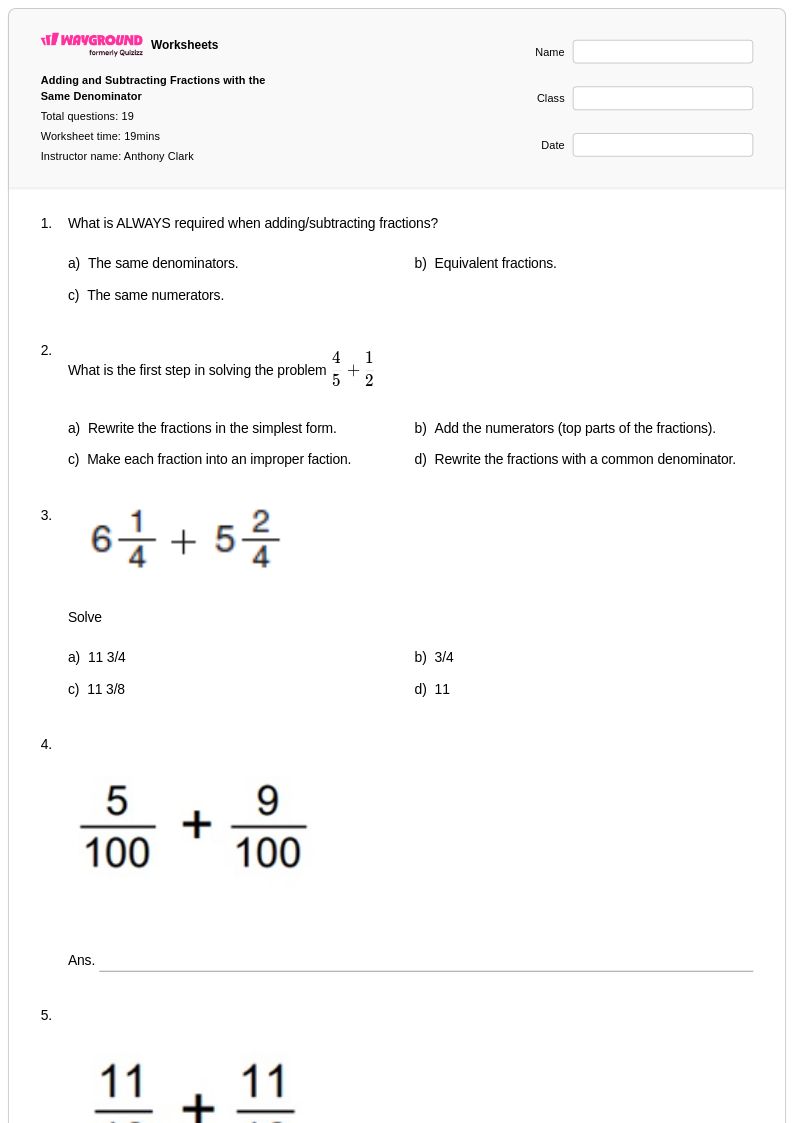
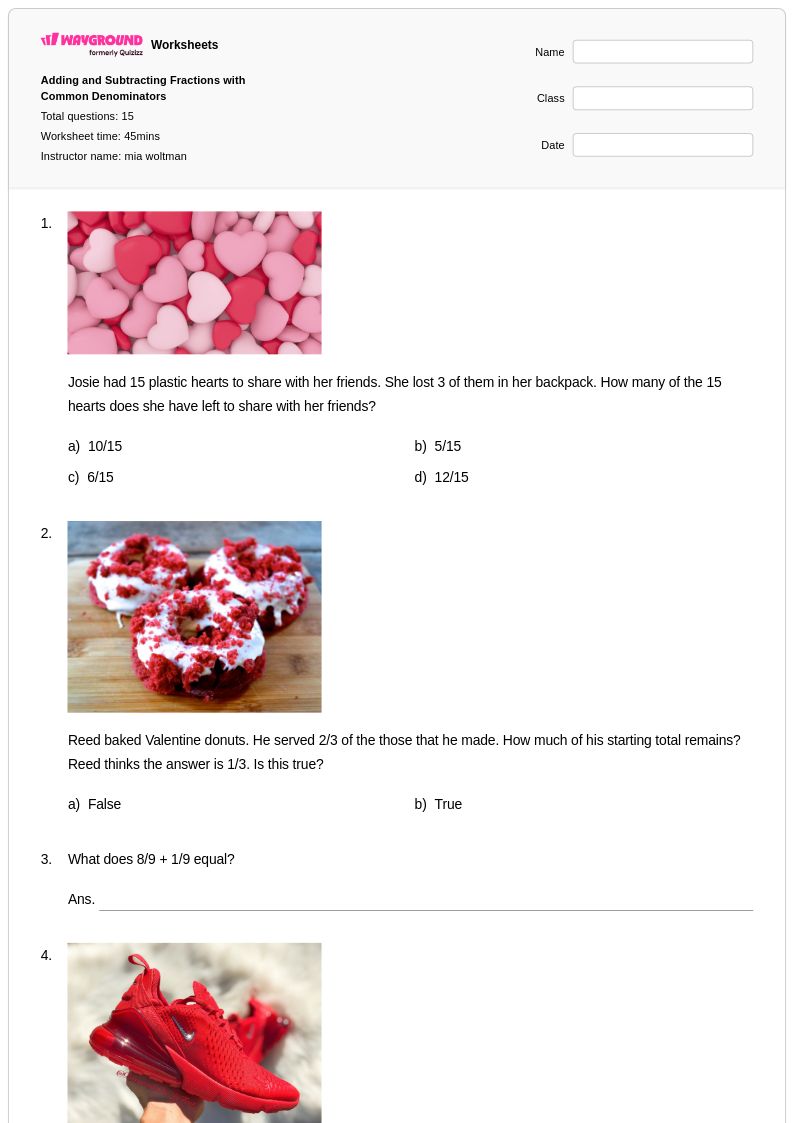
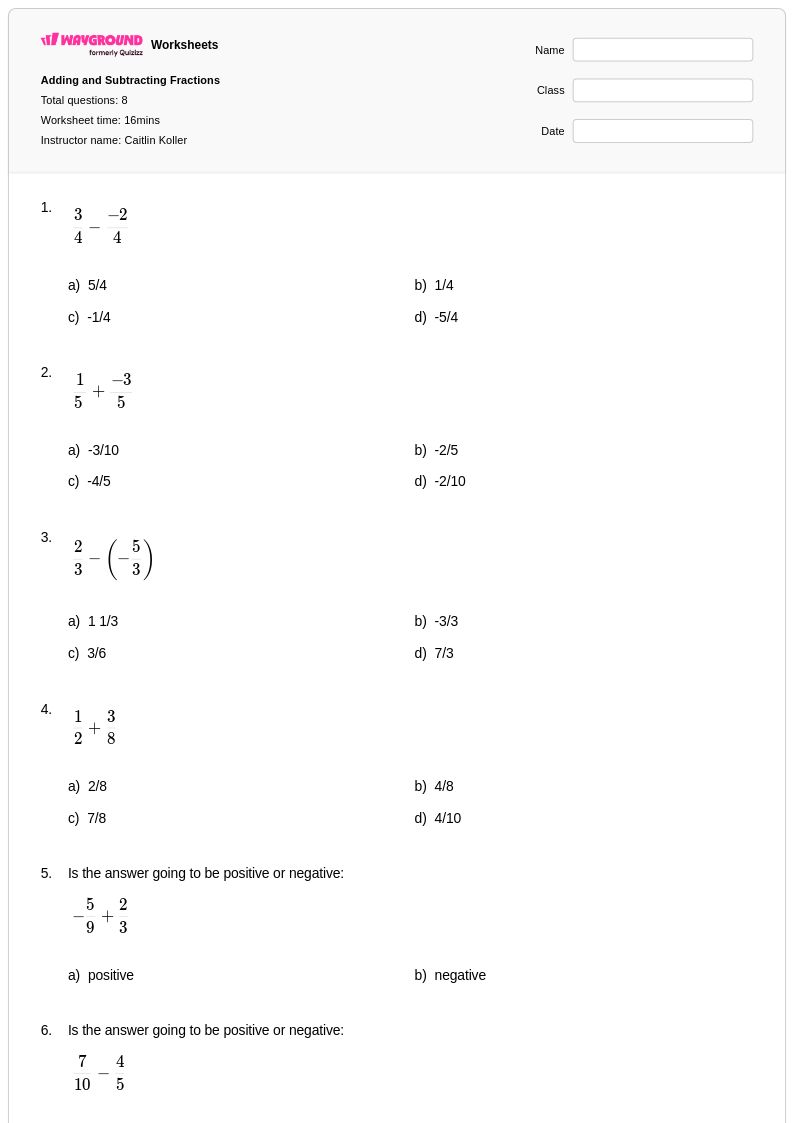
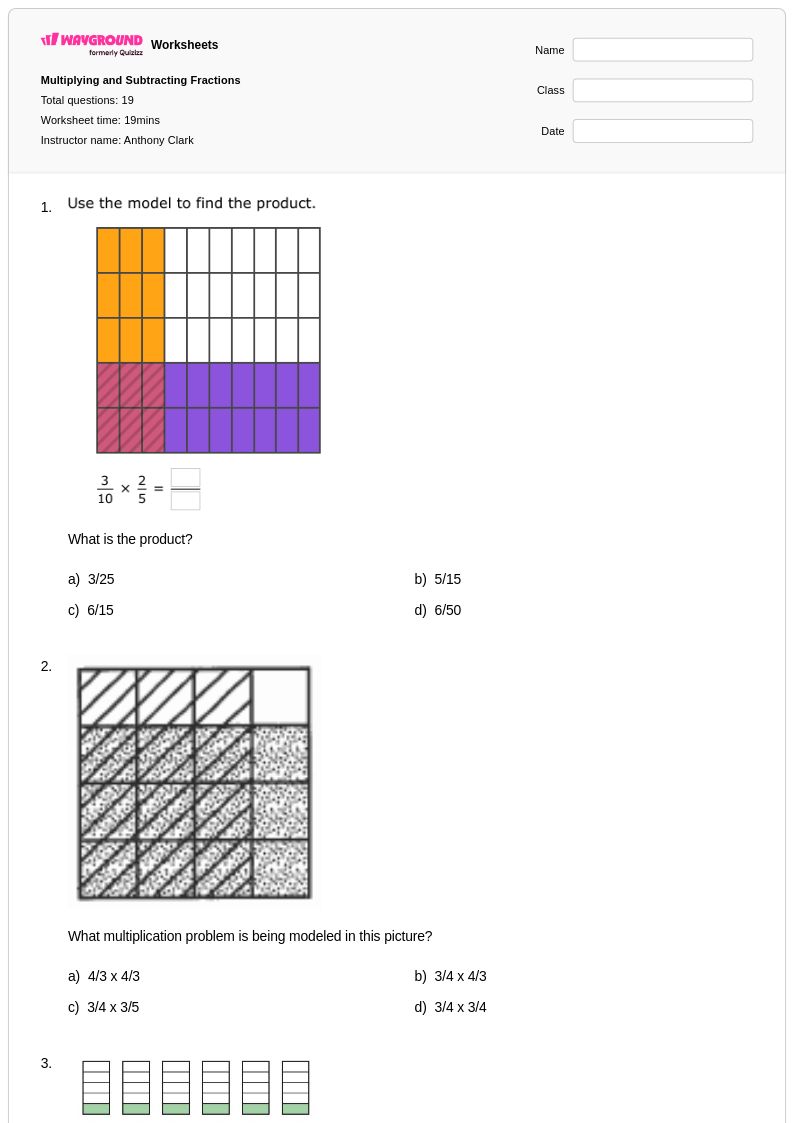
Subtracting fractions represents a fundamental mathematical skill that Grade 6 students must master as they build toward more advanced algebraic concepts. Wayground's comprehensive collection of subtracting fractions worksheets provides educators with expertly designed practice problems that systematically guide students through the essential steps of finding common denominators, converting equivalent fractions, and performing accurate subtraction operations. These carefully structured printables offer varied difficulty levels, from basic problems with like denominators to complex mixed number subtraction scenarios, ensuring students develop both computational fluency and conceptual understanding. Each worksheet includes a complete answer key, making assessment and self-checking straightforward, while the free pdf format allows for immediate classroom implementation and homework assignments.
Wayground's extensive library, featuring millions of teacher-created resources, empowers educators to locate precisely the right subtracting fractions materials through powerful search and filtering capabilities that align with specific curriculum standards and learning objectives. The platform's differentiation tools enable teachers to customize worksheets based on individual student needs, whether providing additional scaffolding for struggling learners or advanced challenges for accelerated students. Available in both printable and digital formats, these resources seamlessly integrate into lesson planning, offering flexible options for in-class practice, remediation sessions, and enrichment activities. Teachers can efficiently modify problem sets, adjust difficulty levels, and create targeted interventions that address specific misconceptions while building student confidence in fractional operations through consistent, meaningful practice opportunities.
FAQs
How should I teach subtracting fractions in Grade 6?
What fraction subtraction exercises are appropriate for sixth graders?
What mistakes do sixth graders make when subtracting fractions and mixed numbers?
How can I use these Grade 6 subtracting fractions worksheets?
How does fraction subtraction support the Common Core Grade 6 progression?
What grade level is fraction subtraction taught at?
How can I differentiate Grade 6 fraction subtraction review?