Free Printable Torque and Angular Momentum Worksheets for Grade 11
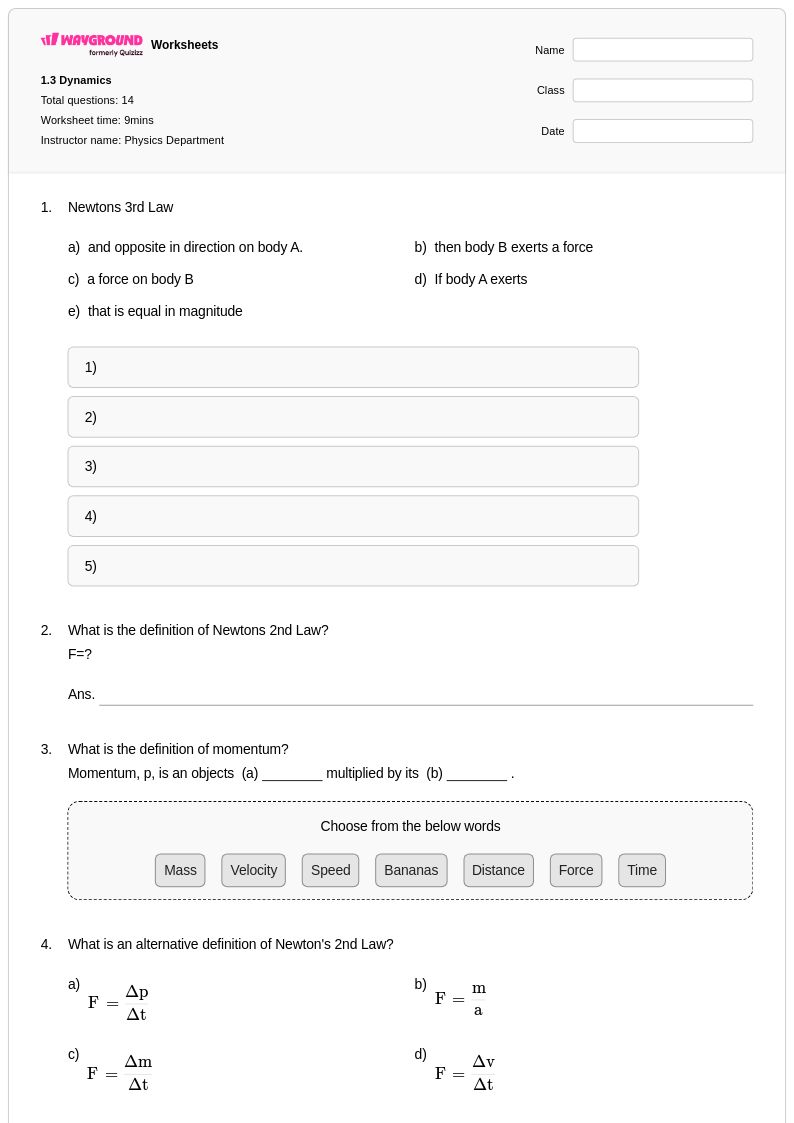
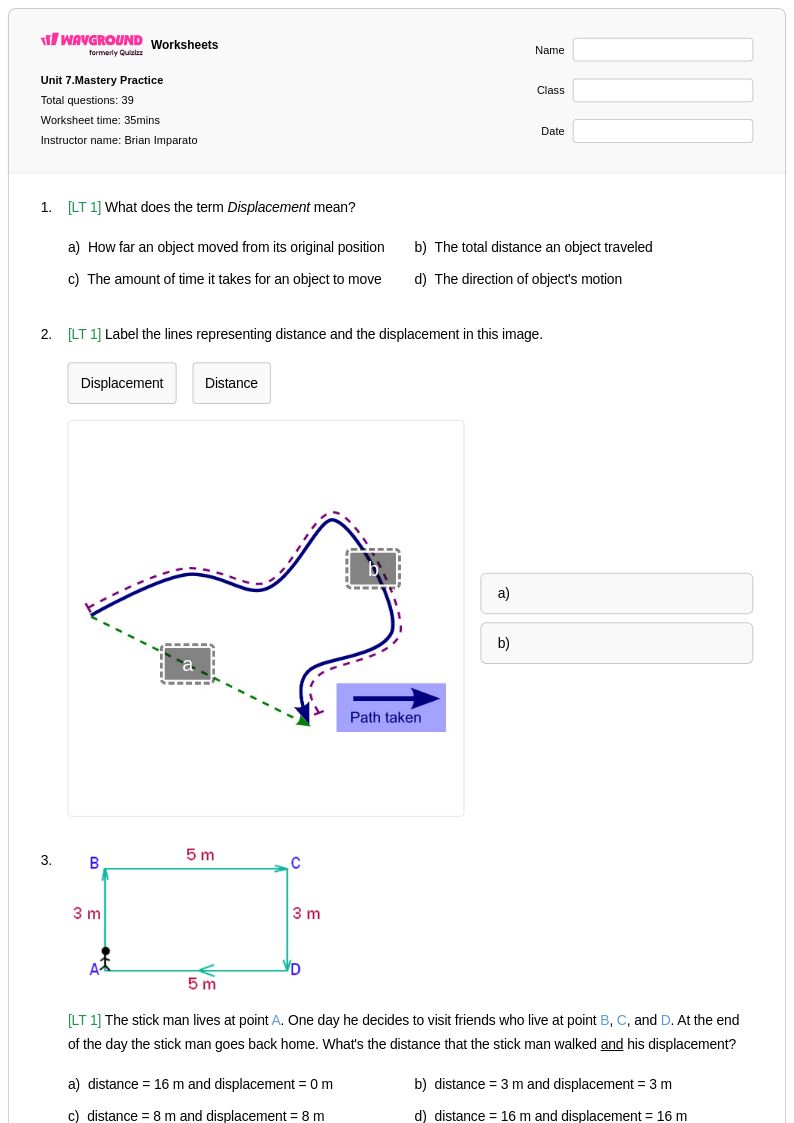
Grade 11 Physics students can master torque and angular momentum concepts through Wayground's comprehensive collection of free worksheets, featuring challenging practice problems, detailed answer keys, and downloadable PDF printables.
Explore printable Torque and Angular Momentum worksheets for Grade 11
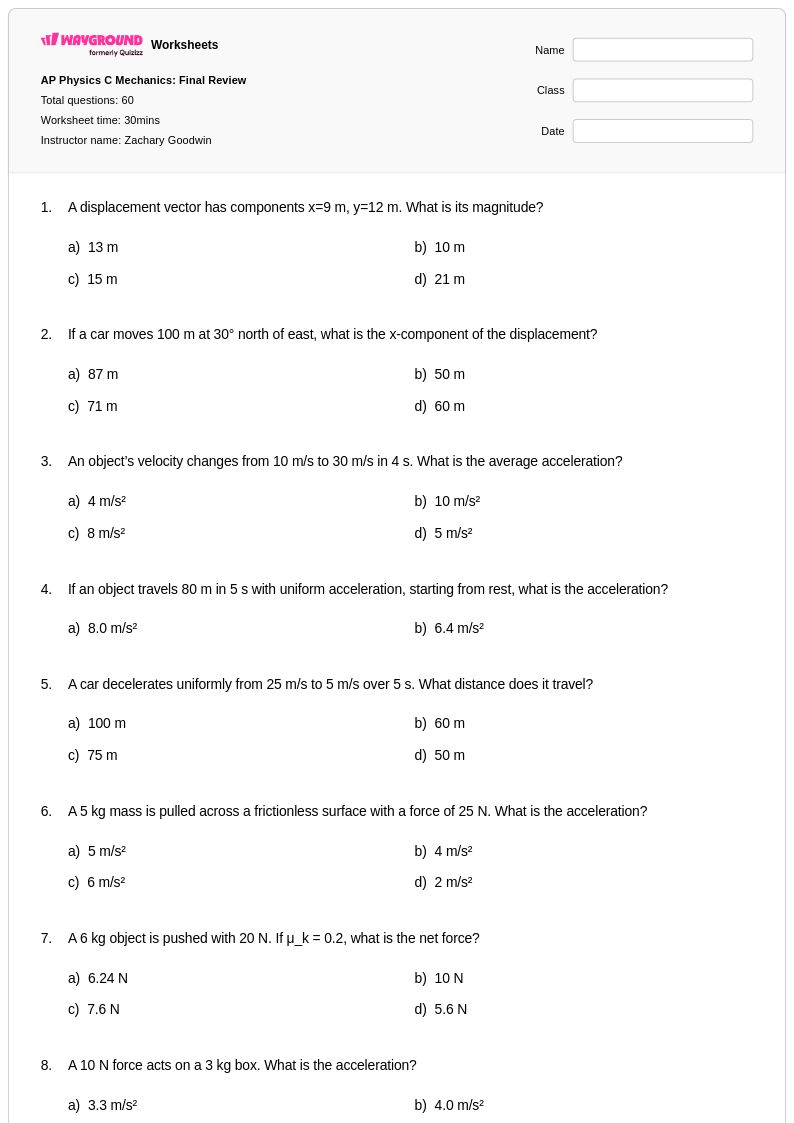
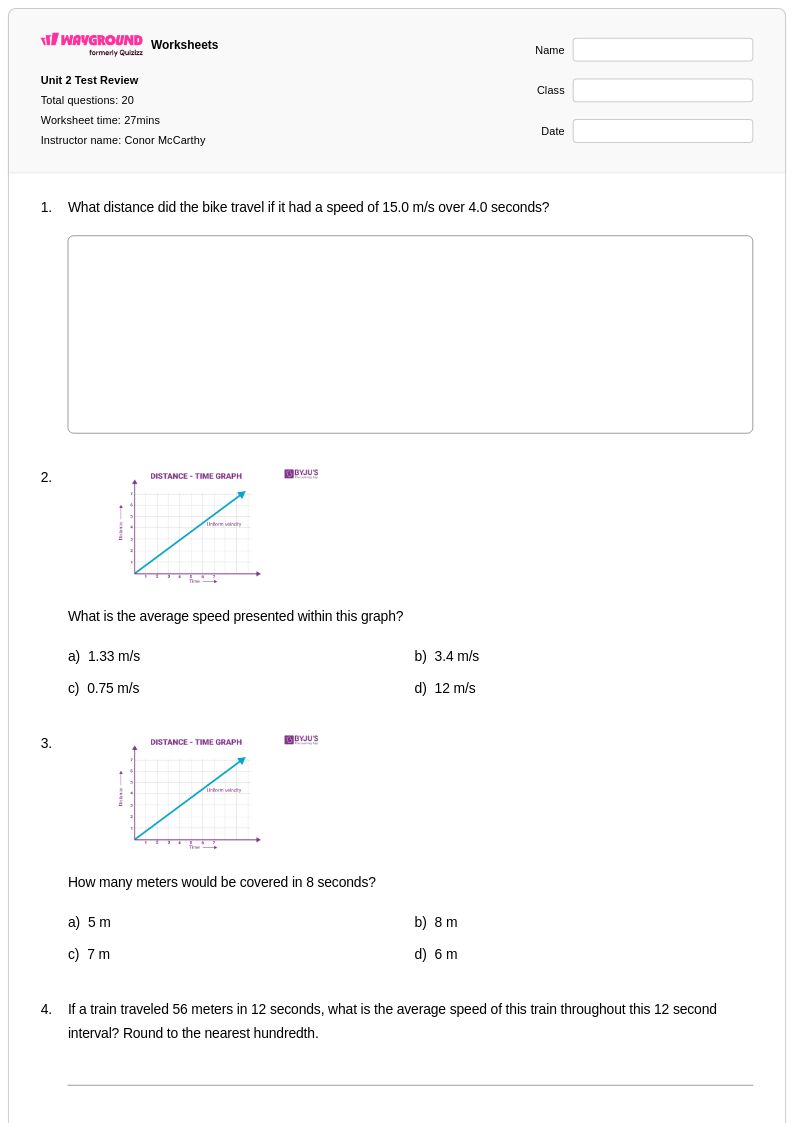
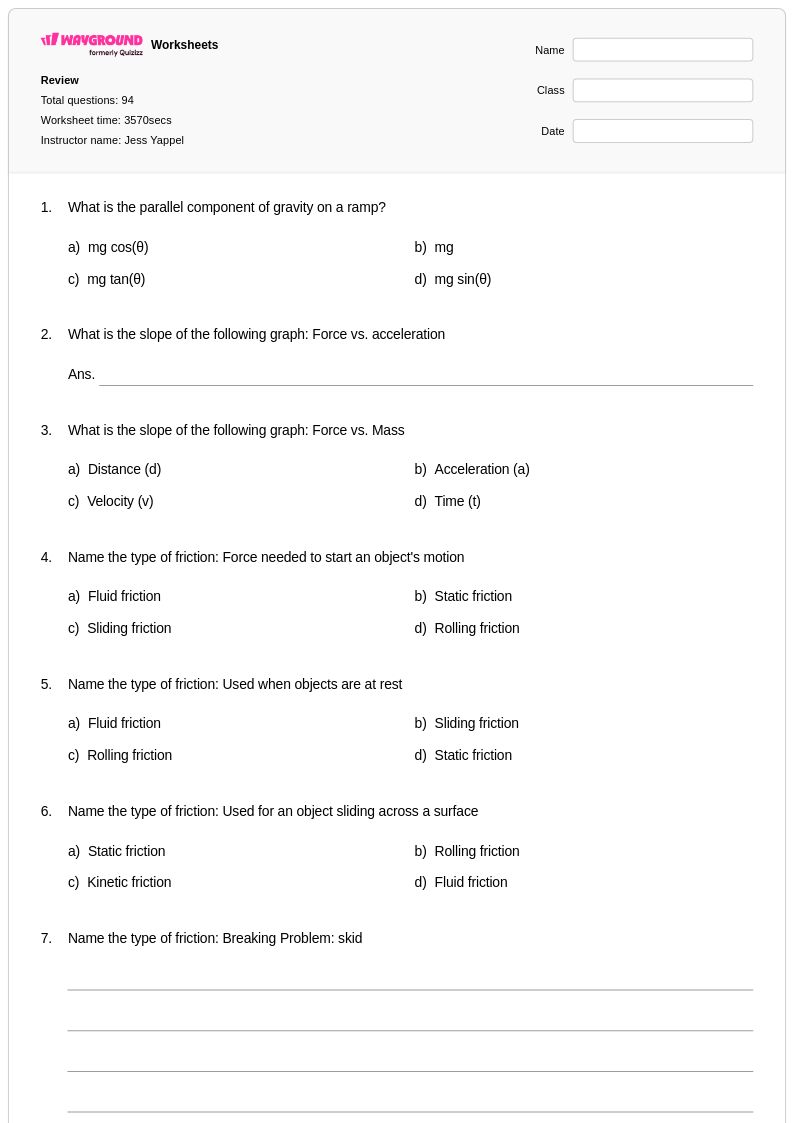
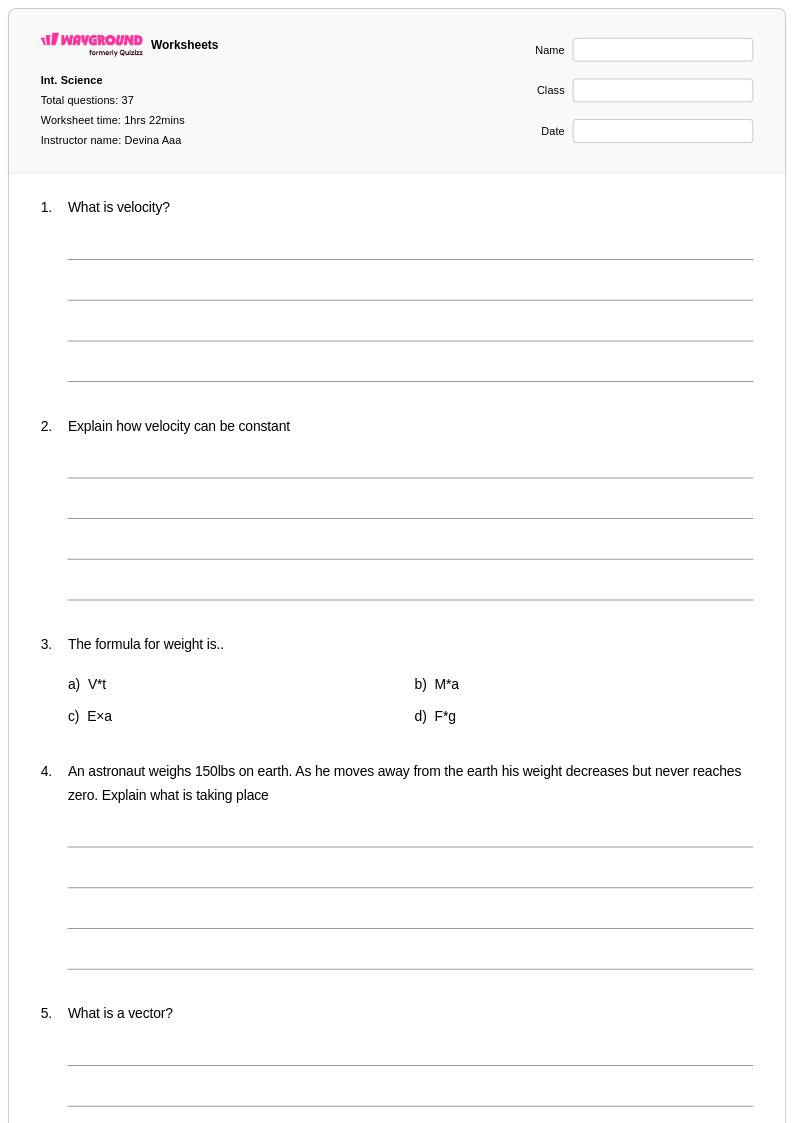
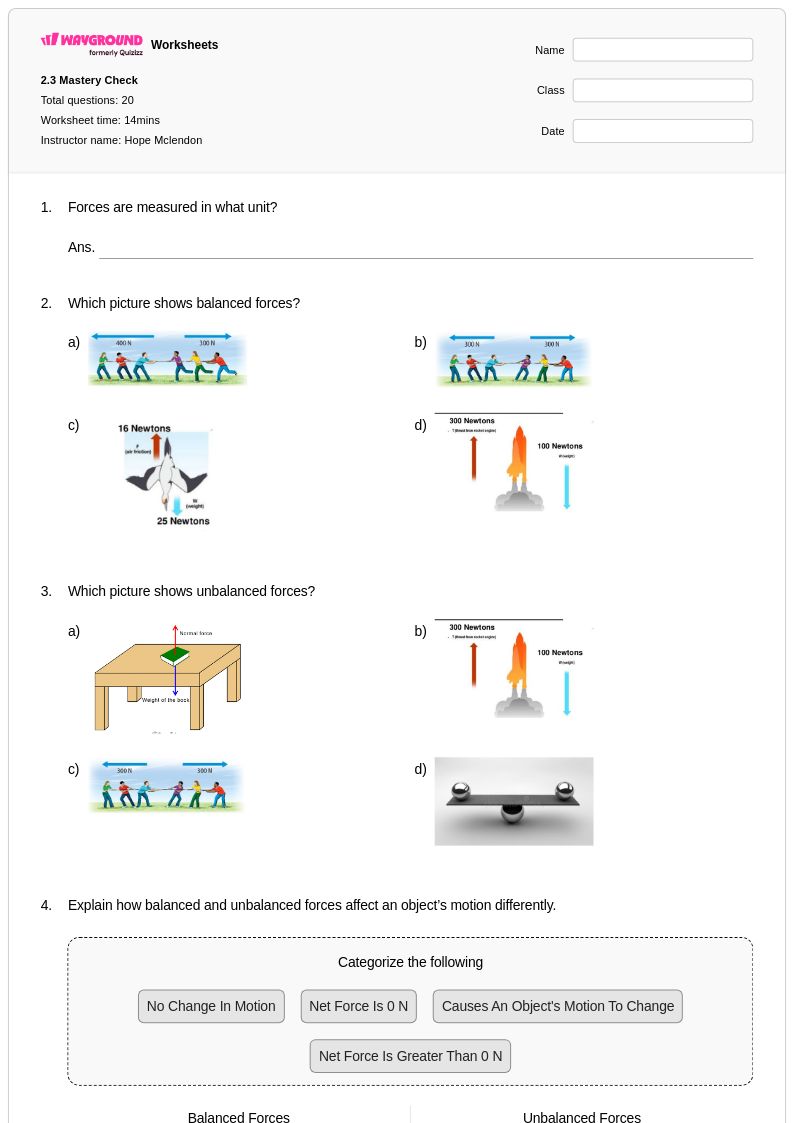
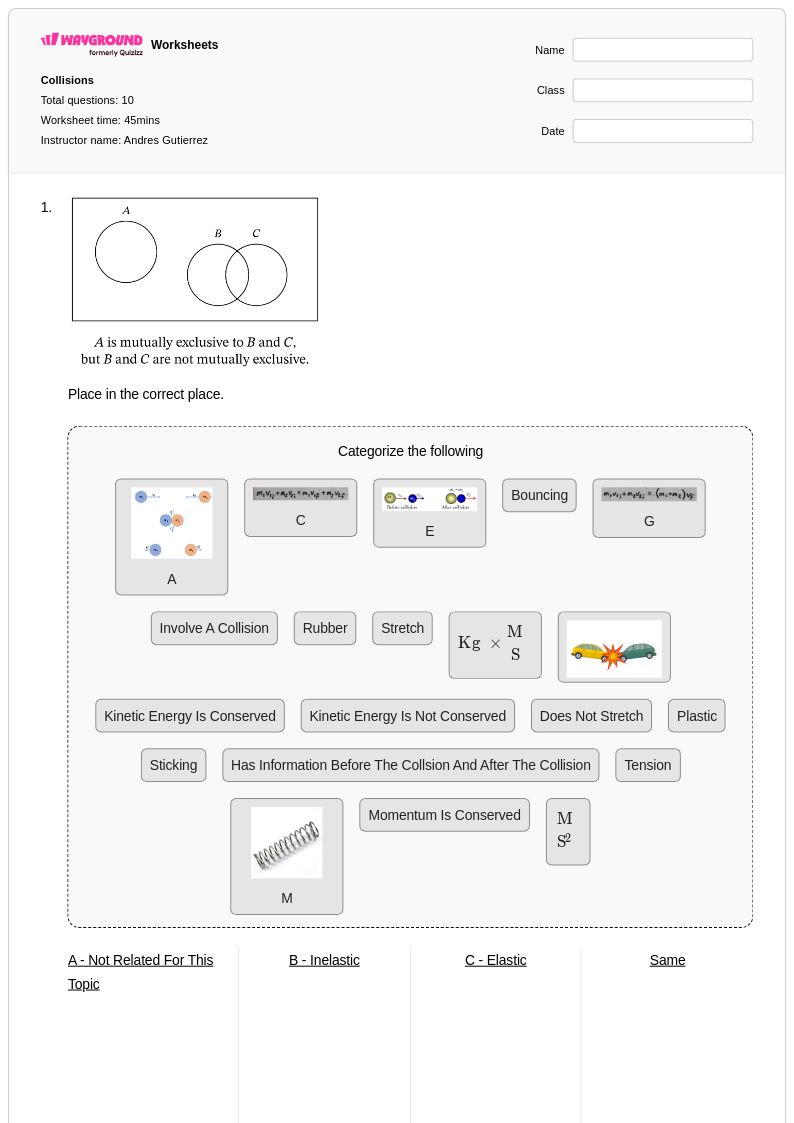
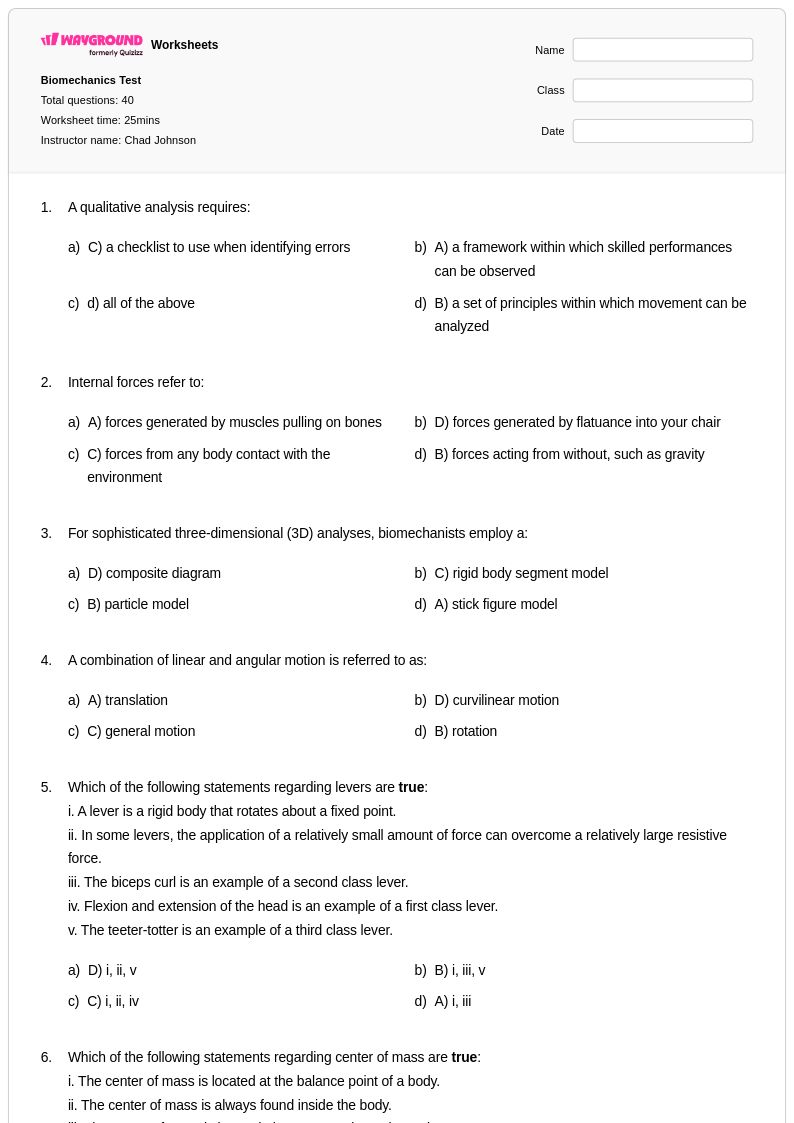
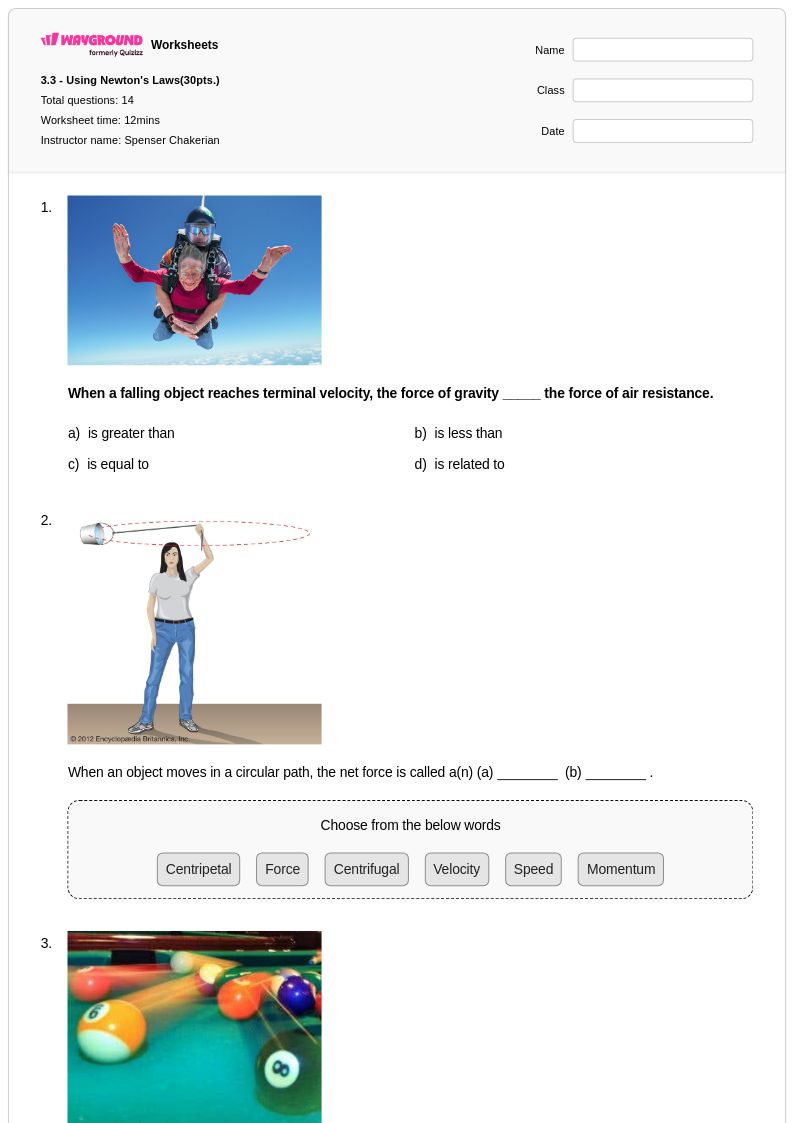
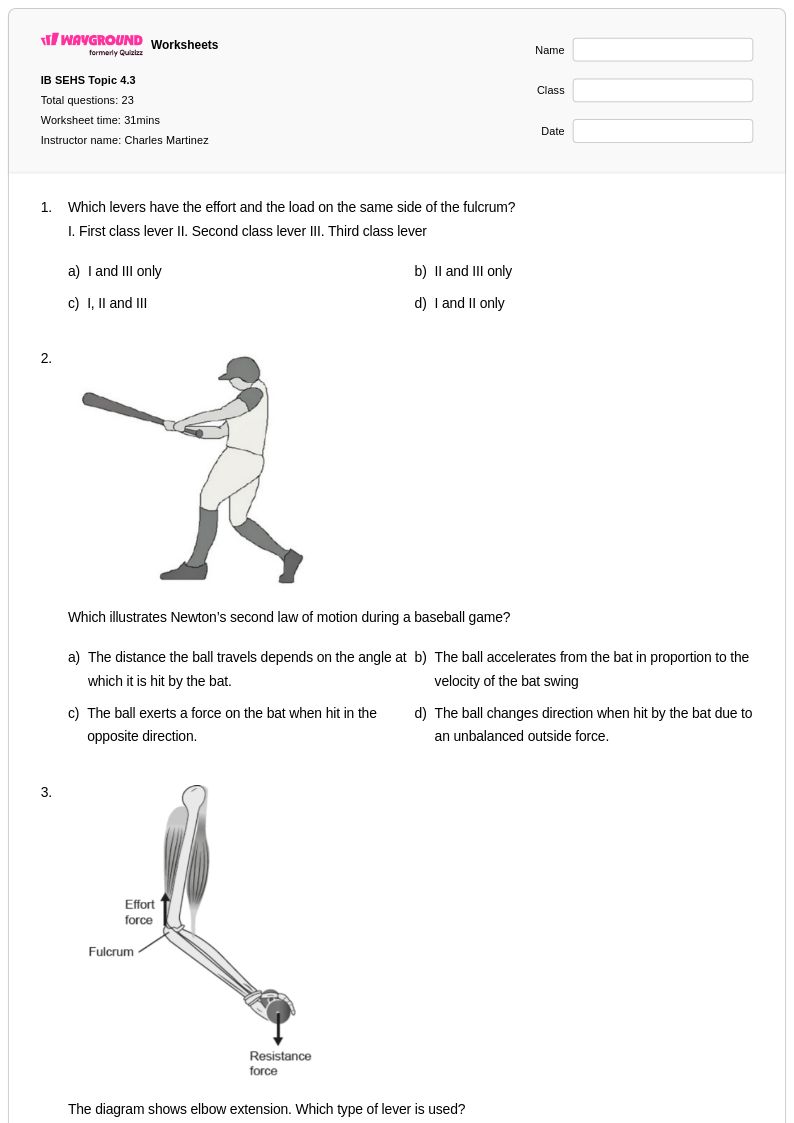
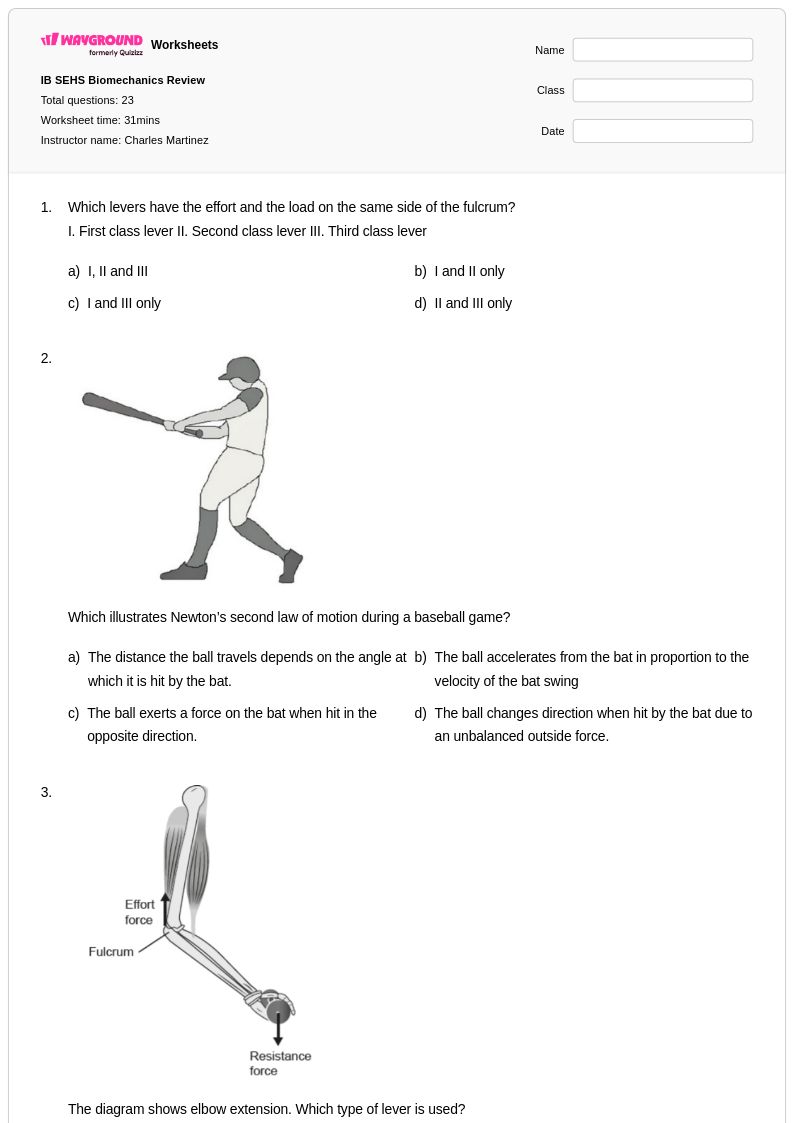
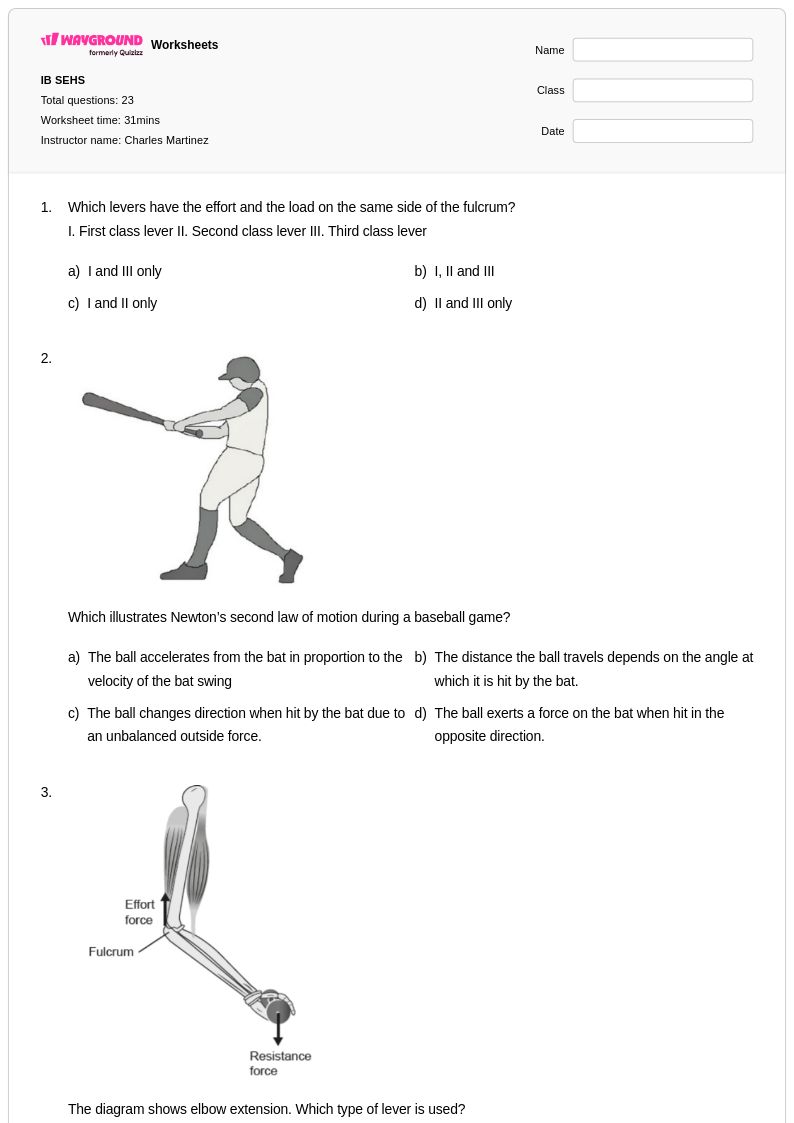
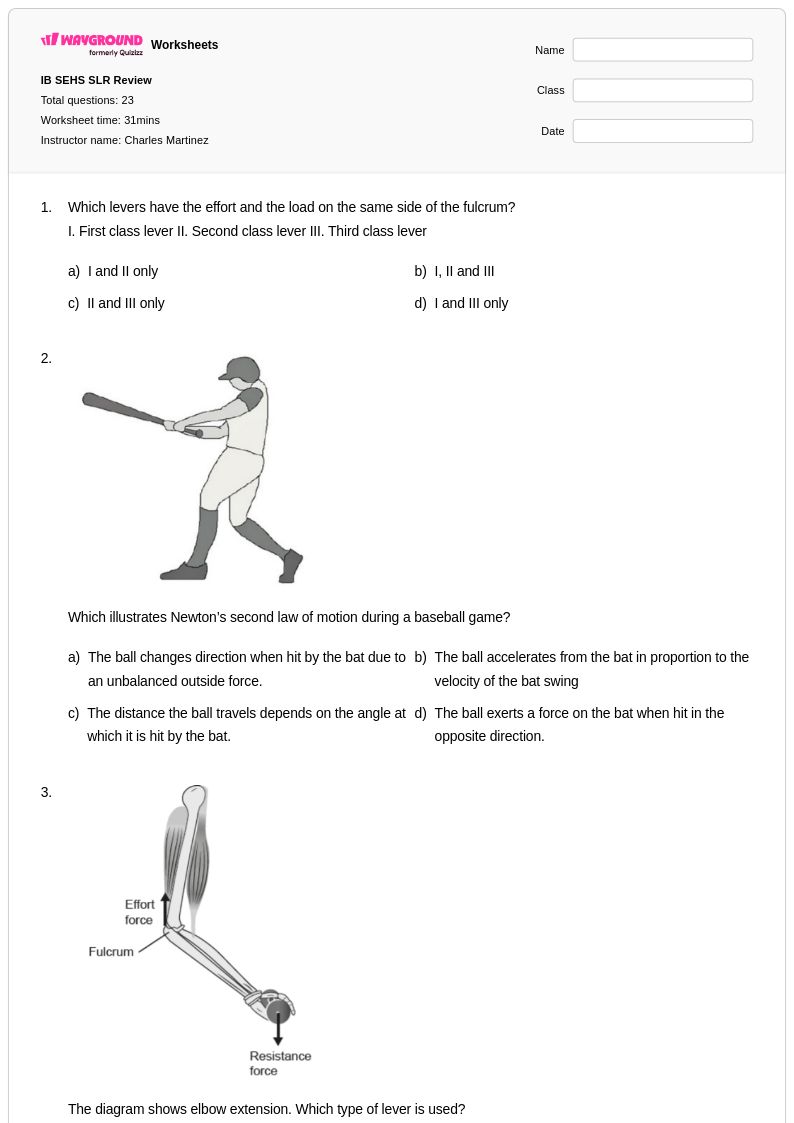
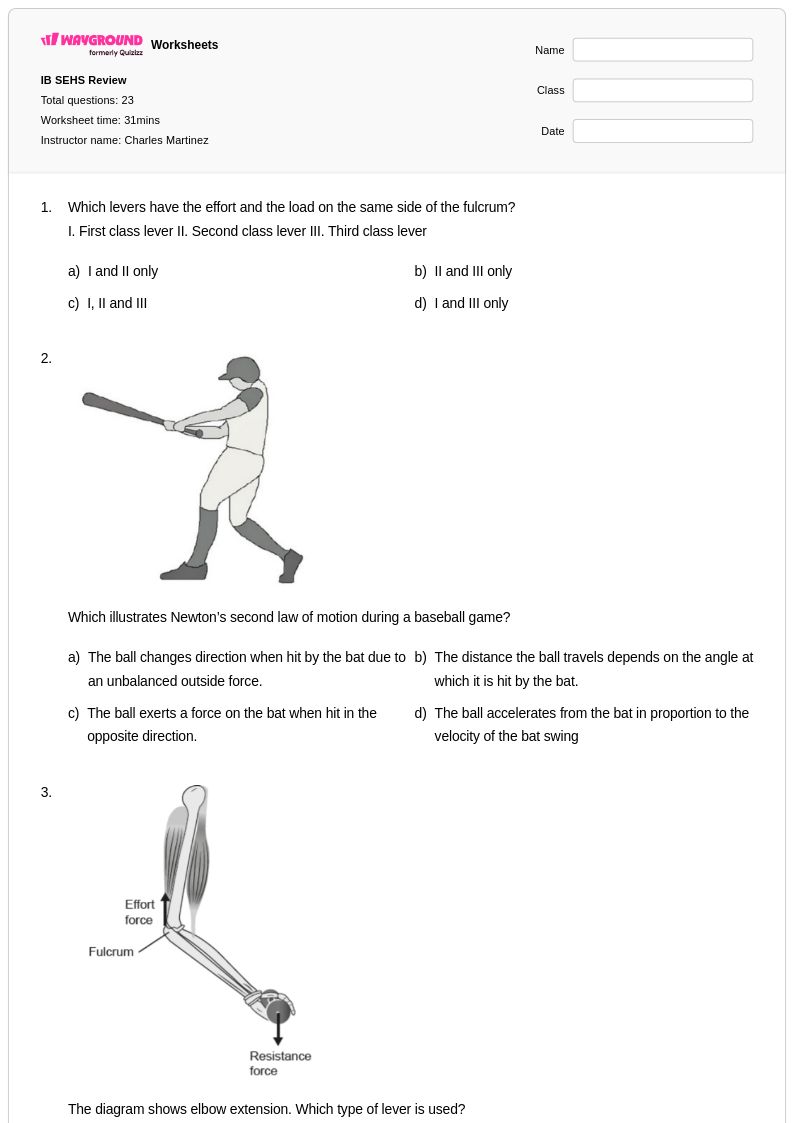
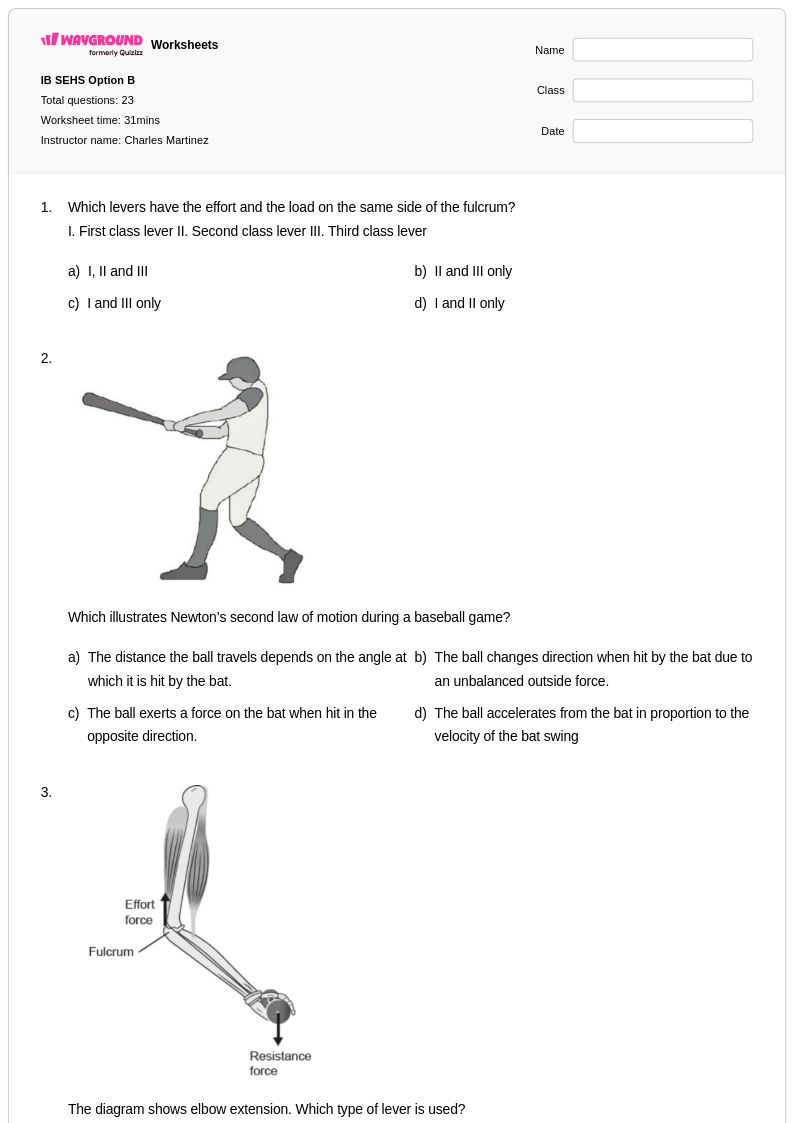
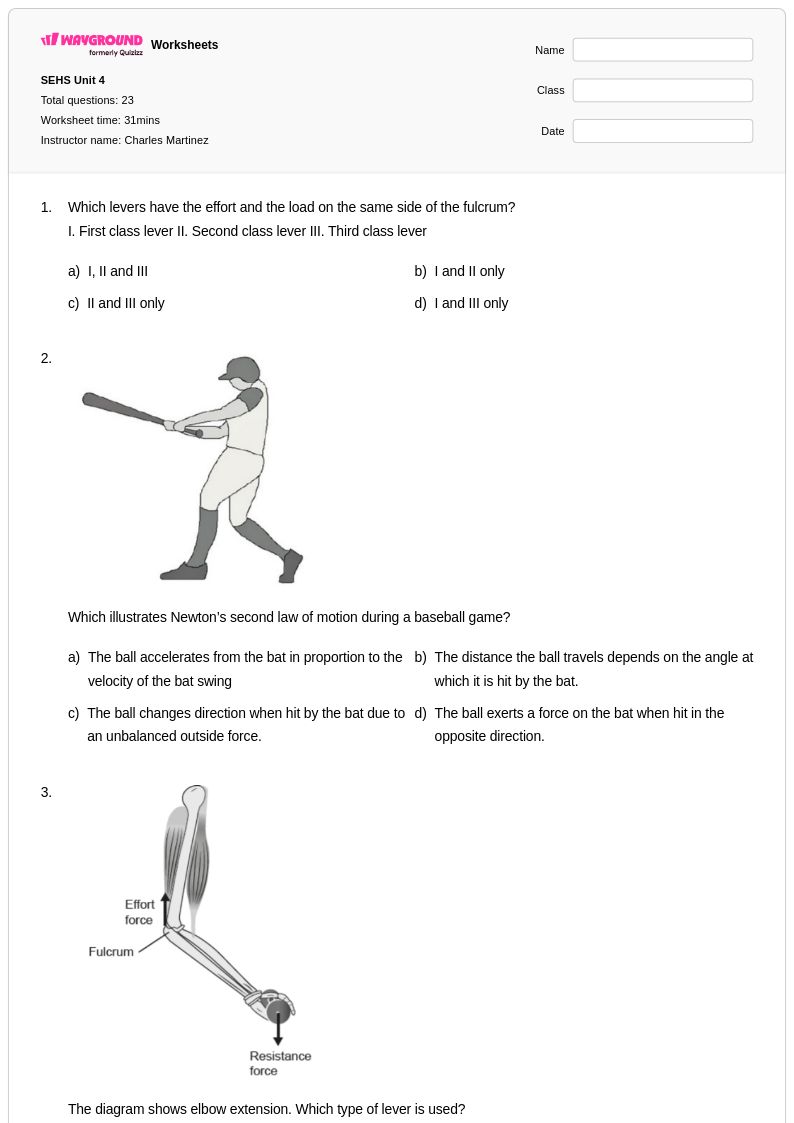
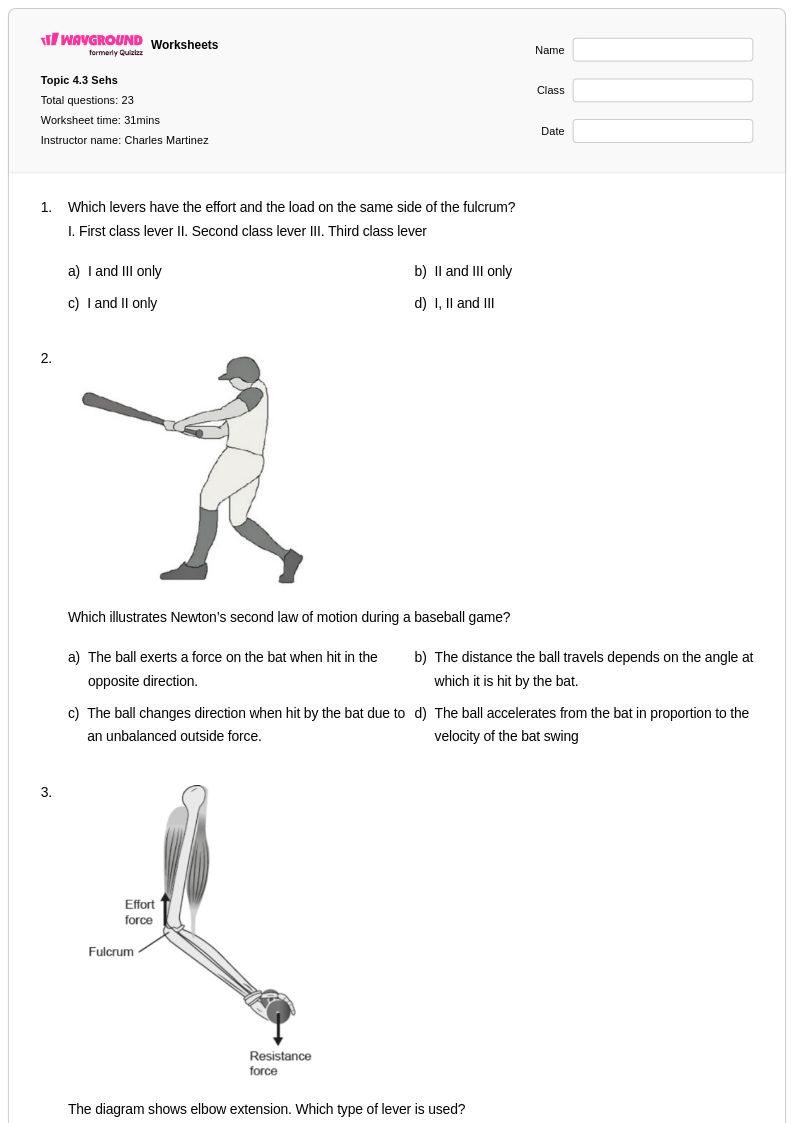
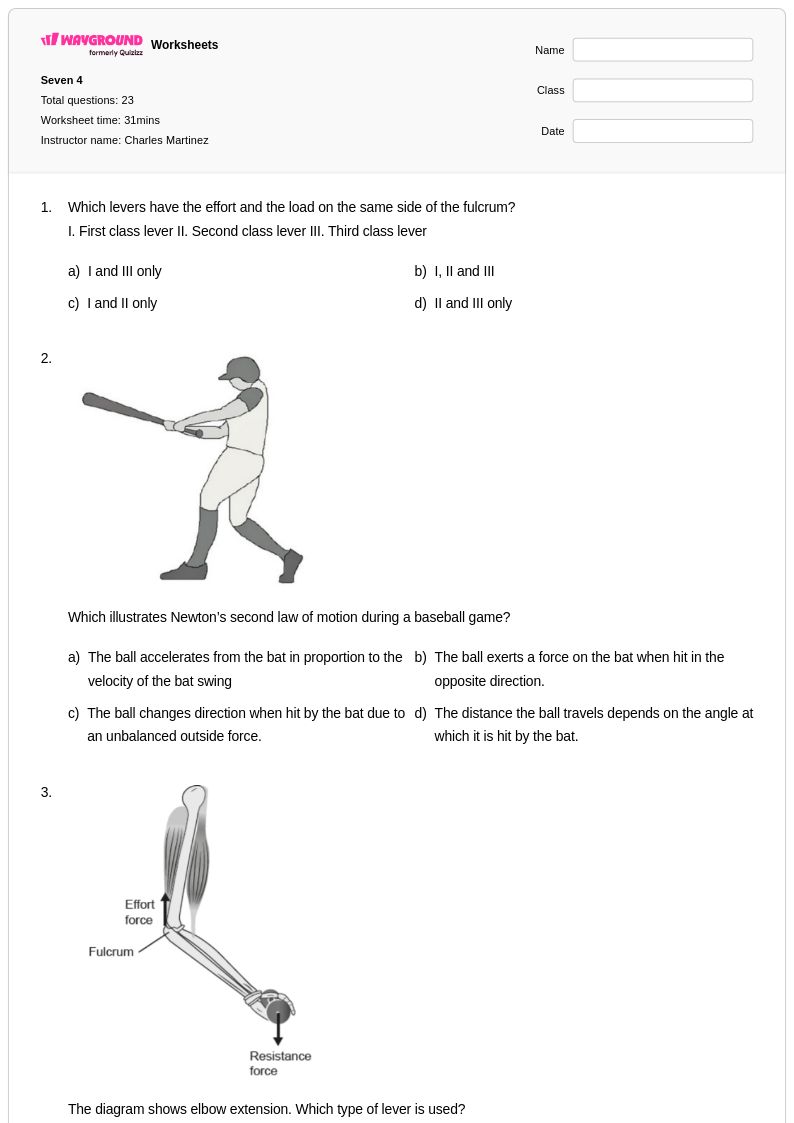
Torque and angular momentum worksheets for Grade 11 physics students provide essential practice with rotational mechanics concepts that form the foundation of advanced physics understanding. These comprehensive worksheet collections available through Wayground (formerly Quizizz) guide students through calculating torque using force and lever arm relationships, analyzing angular momentum conservation in rotating systems, and solving complex problems involving moment of inertia. Students develop critical problem-solving skills as they work through practice problems that range from basic torque calculations to sophisticated angular momentum scenarios involving spinning objects, rotating platforms, and collision dynamics. Each worksheet includes detailed answer keys and step-by-step solutions, with many available as free printables in convenient PDF format, making them accessible for both classroom instruction and independent study.
Wayground (formerly Quizizz) empowers physics educators with an extensive library of millions of teacher-created torque and angular momentum resources specifically designed for Grade 11 curriculum standards. The platform's advanced search and filtering capabilities allow teachers to quickly locate worksheets that match their specific instructional needs, whether focusing on introductory torque concepts or advanced angular momentum conservation problems. Standards alignment ensures that worksheet content directly supports required learning objectives, while built-in differentiation tools enable educators to customize difficulty levels for diverse student abilities. Teachers can seamlessly alternate between printable PDF formats for traditional assignments and digital interactive versions for technology-enhanced learning environments. These flexible resources streamline lesson planning while providing targeted materials for skill remediation, concept enrichment, and comprehensive practice with the mathematical and conceptual demands of rotational physics.
FAQs
How do I teach torque and angular momentum in a physics class?
Start by grounding students in the linear motion analogs — force, mass, and velocity — before introducing their rotational counterparts: torque, moment of inertia, and angular velocity. Use physical demonstrations like a spinning stool or a wrench on a bolt to make lever arm distance and rotational inertia tangible before moving to calculations. Once students can calculate torque using τ = rF sinθ, introduce angular momentum conservation through isolated system problems, such as a skater pulling in their arms, to build conceptual depth alongside procedural fluency.
What are the most common mistakes students make when solving torque problems?
The most frequent error is using the full distance from the pivot rather than the perpendicular lever arm distance, which causes incorrect torque calculations whenever force is applied at an angle. Students also frequently forget that torque is a vector quantity and skip applying the right-hand rule to determine rotational direction, leading to sign errors in net torque problems. A third common misconception is treating angular momentum as always conserved, without first checking whether the system is truly isolated from external torques.
What practice problems help students get better at angular momentum conservation?
Problems involving rotating rigid bodies that change shape — such as a spinning figure skater, a collapsing star, or a student on a rotating platform catching a ball — are highly effective because they require students to apply conservation of angular momentum (L = Iω) while accounting for changes in moment of inertia. Multi-object collision problems where a projectile embeds in a rotating disk also help students distinguish between angular momentum conservation and kinetic energy conservation. Varying problem complexity from single-object scenarios to multi-object systems ensures students build both conceptual understanding and procedural skill.
How do I differentiate torque and angular momentum instruction for students at different readiness levels?
For students still building foundational skills, start with simple lever system problems using perpendicular forces before introducing angled force applications and the sine component. More advanced students can be challenged with gyroscopic motion problems, precession analysis, or multi-object angular momentum scenarios. On Wayground, teachers can apply accommodations at the individual student level — such as reduced answer choices to lower cognitive load or Read Aloud for students who need audio support — while the rest of the class works under standard settings.
How do I use Wayground's torque and angular momentum worksheets in my classroom?
Wayground's torque and angular momentum worksheets are available as printable PDFs for traditional classroom use and in digital formats for technology-integrated environments, making them flexible for homework, in-class practice, or lab follow-up assignments. Teachers can also host the worksheets as a live quiz on Wayground, enabling real-time response tracking and immediate feedback for students. Each worksheet includes detailed answer keys with step-by-step solutions, reducing grading time and supporting independent study.
How is angular momentum different from linear momentum, and how should I explain this to students?
Linear momentum (p = mv) describes motion in a straight line, while angular momentum (L = Iω) describes rotational motion around an axis, with moment of inertia replacing mass and angular velocity replacing linear velocity. The conservation principles are parallel — both are conserved in isolated systems — but angular momentum conservation applies specifically when there is no net external torque, not merely no net external force. Using side-by-side comparison tables during instruction helps students map the two frameworks onto each other rather than treating rotational dynamics as an entirely separate subject.