
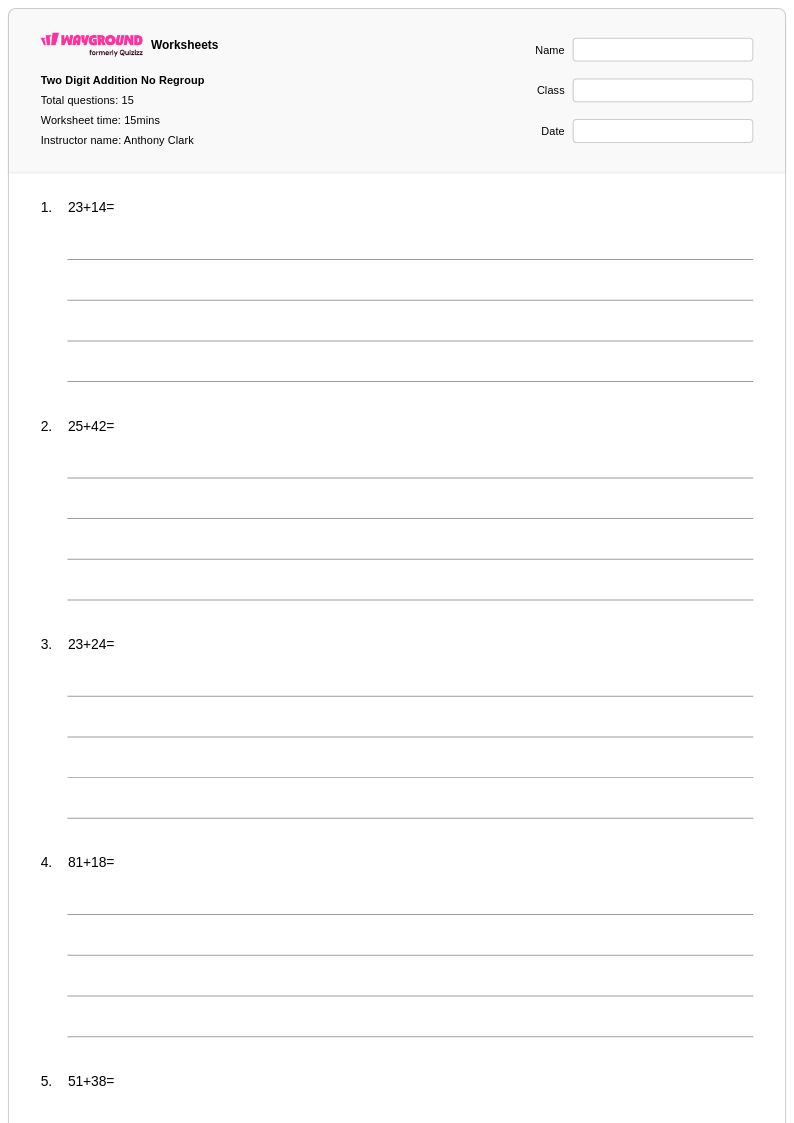
15 Q
2nd - Uni
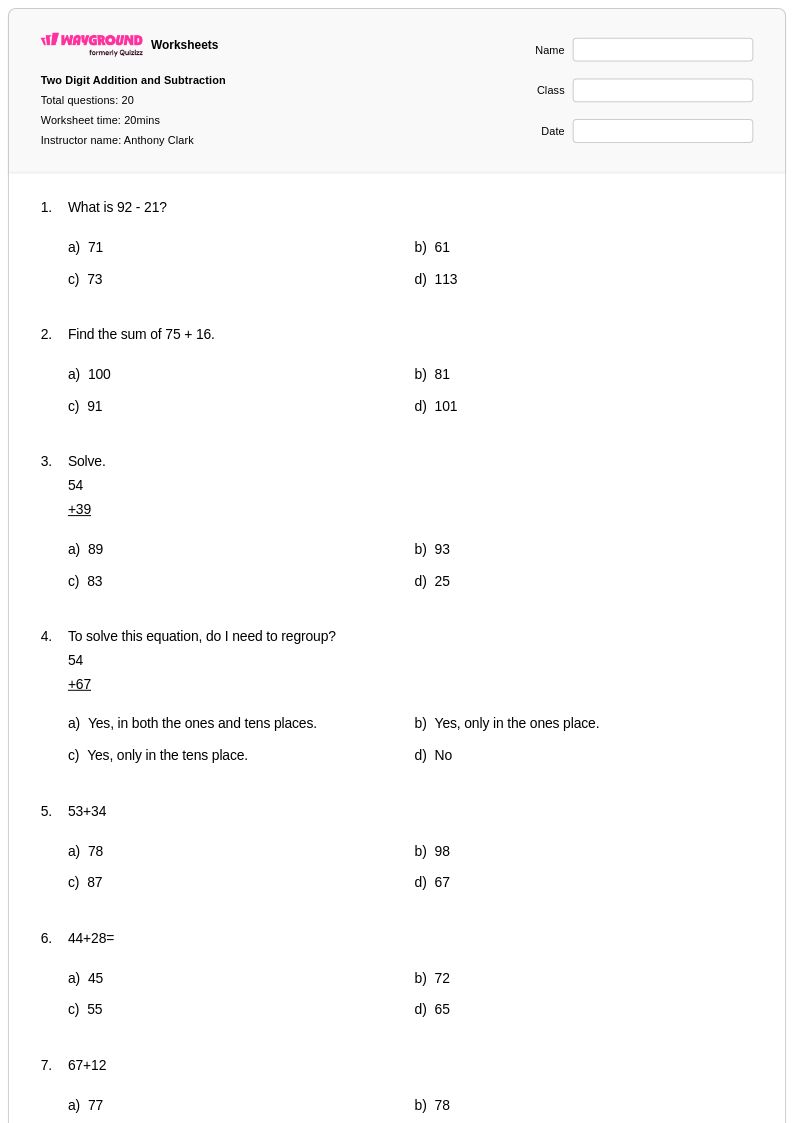
20 Q
2nd - Uni
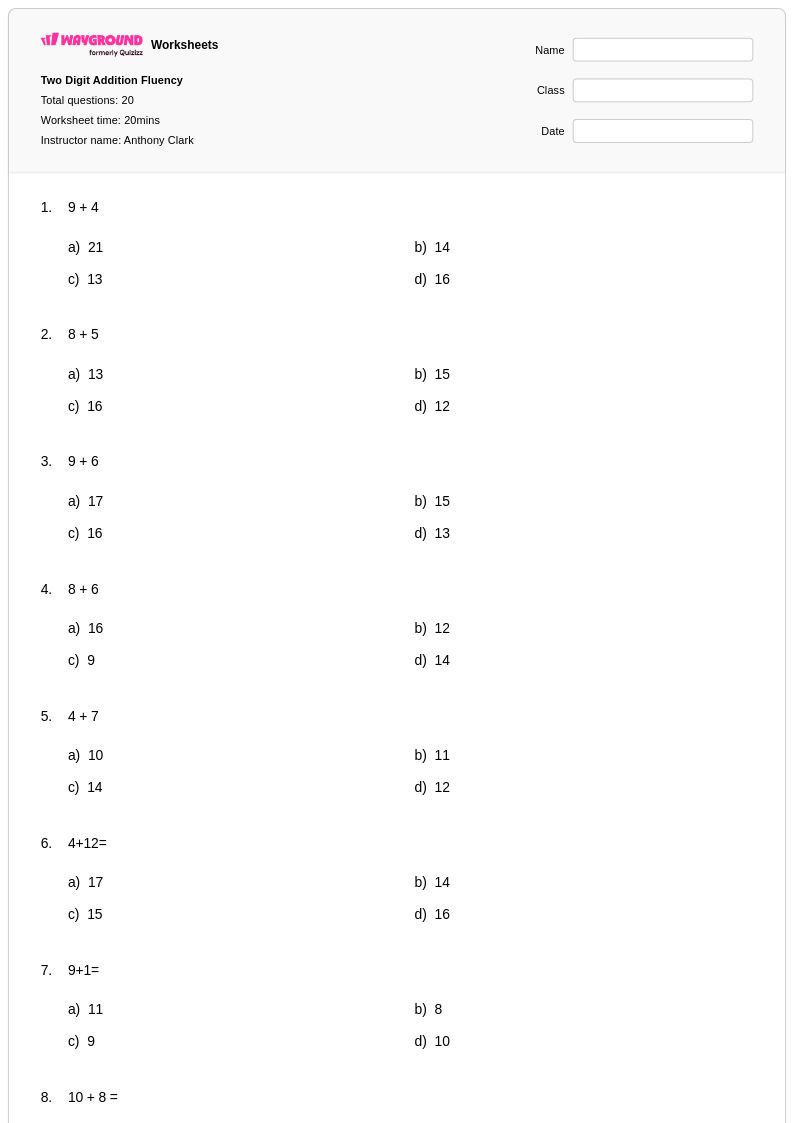
20 Q
1st - Uni
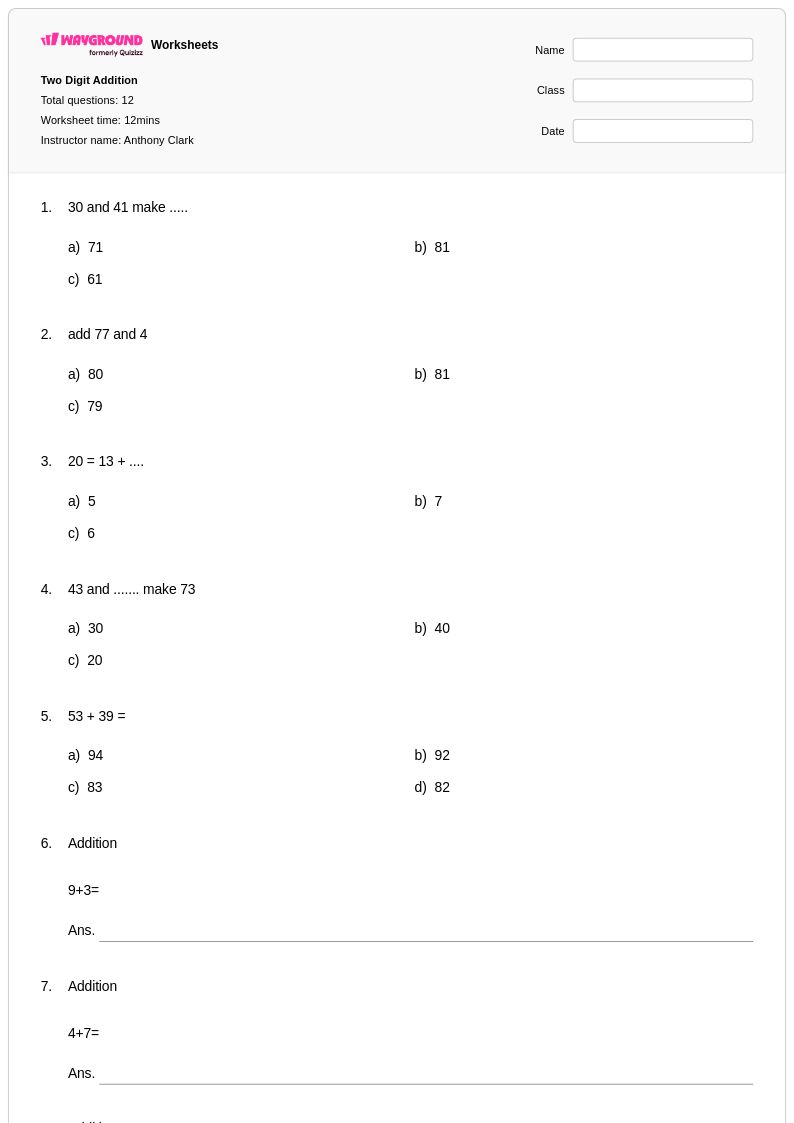
12 Q
2nd - Uni
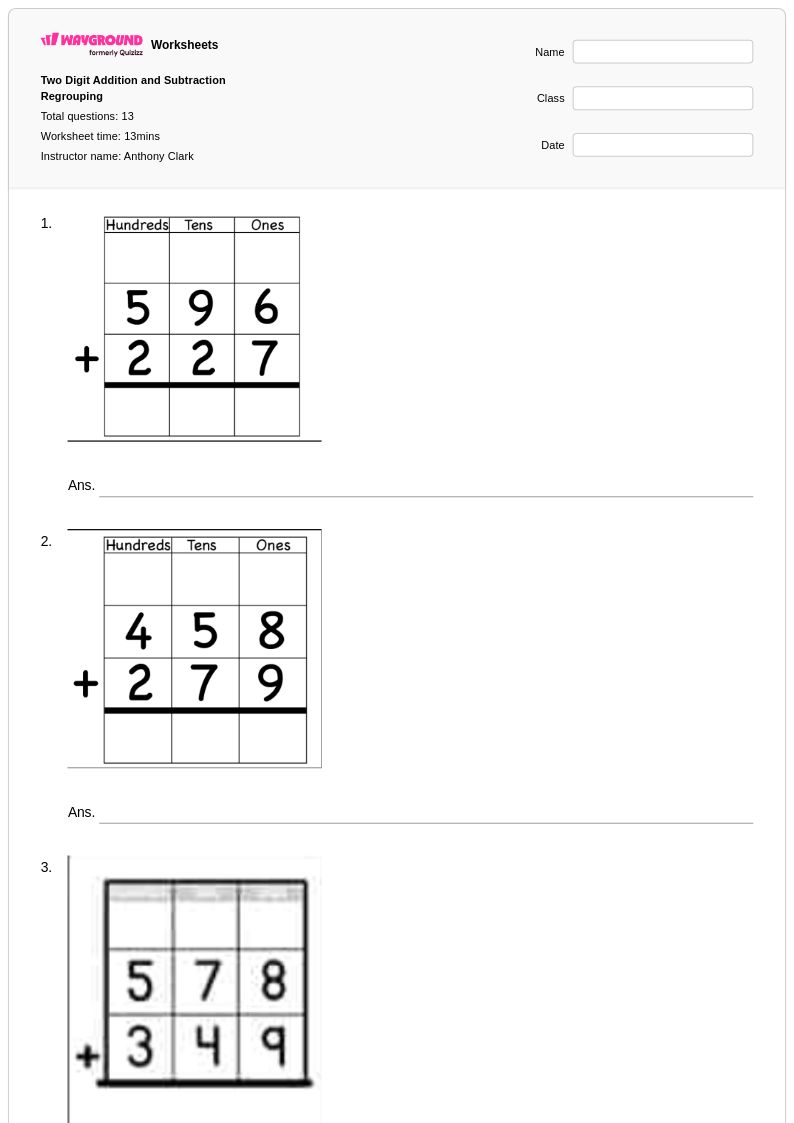
13 Q
3rd - Uni
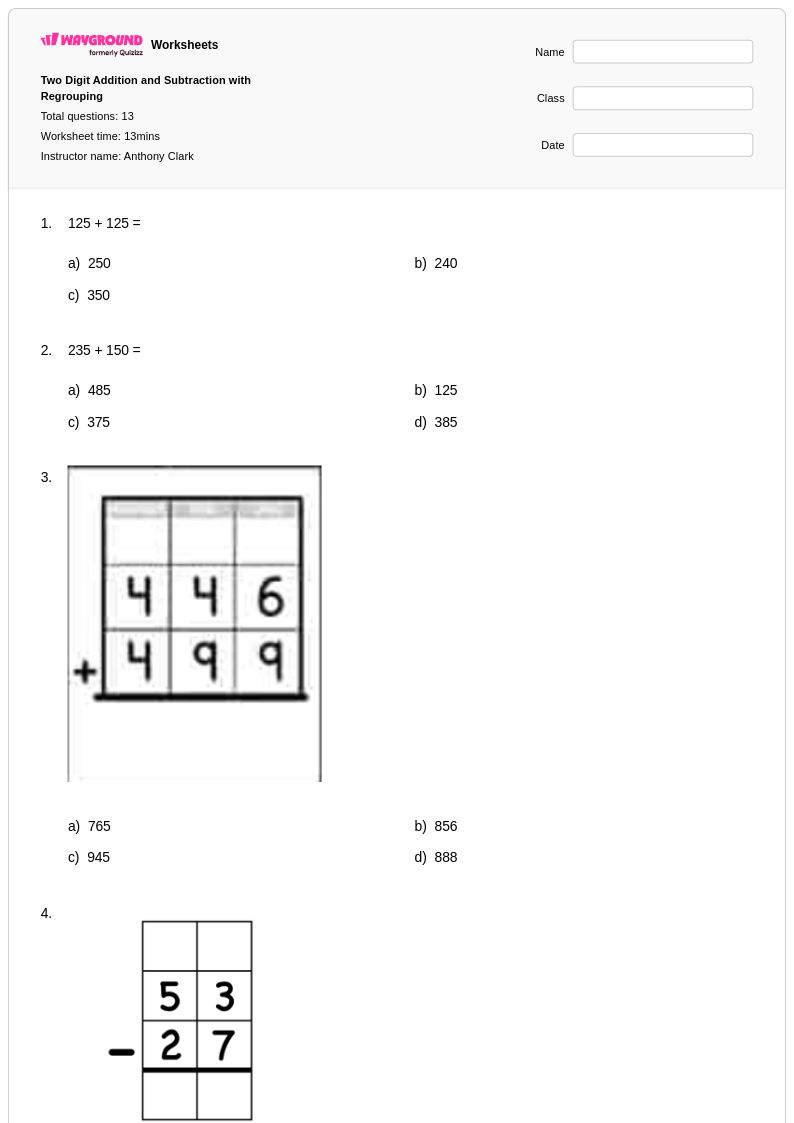
13 Q
2nd - Uni
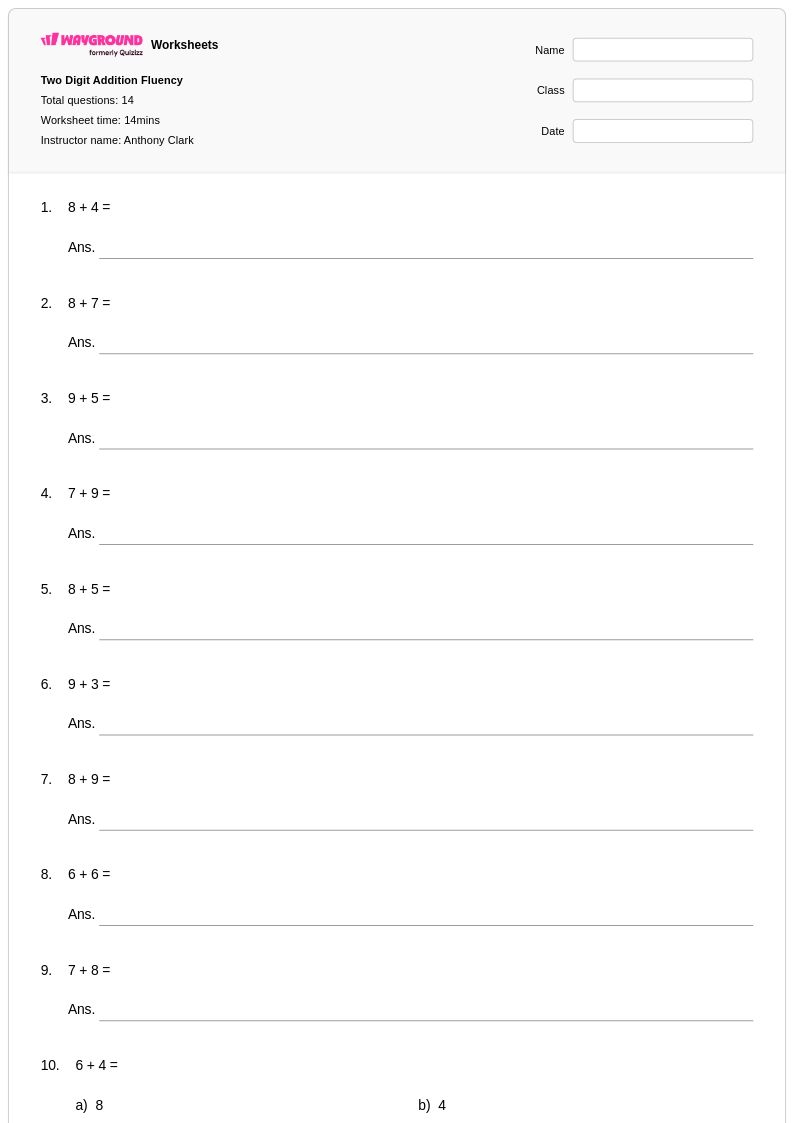
14 Q
1st - Uni
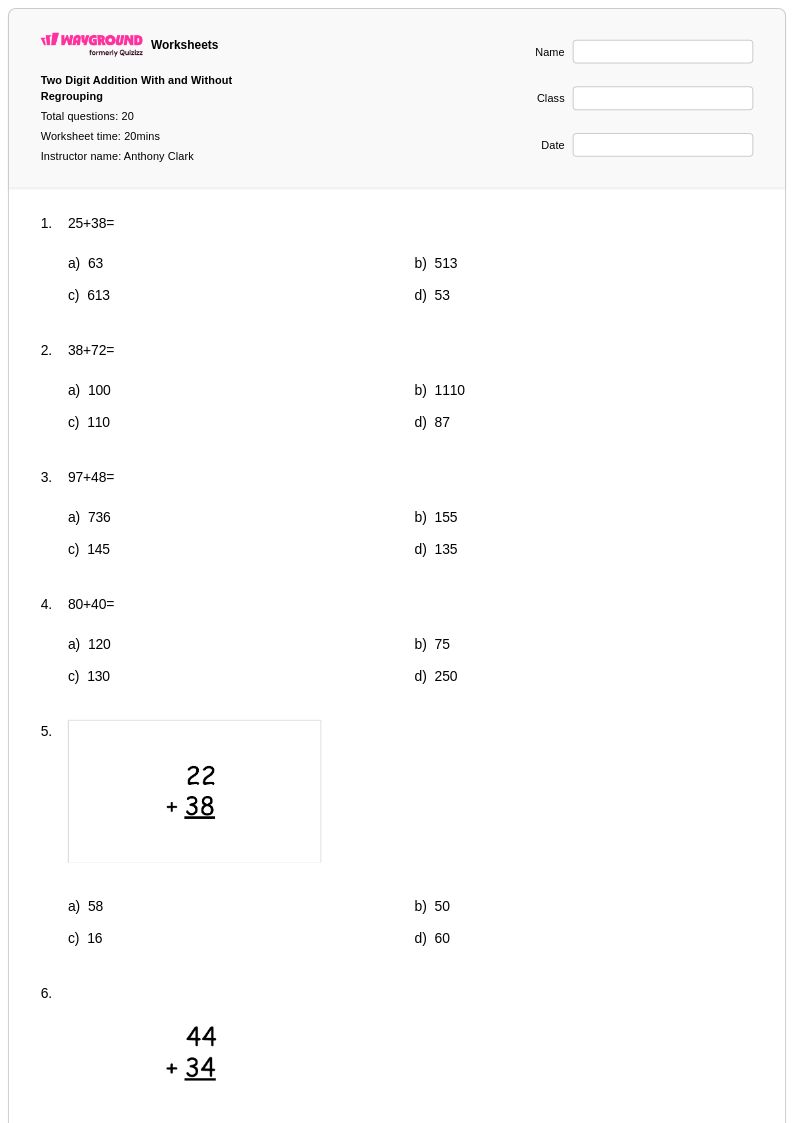
20 Q
2nd - Uni
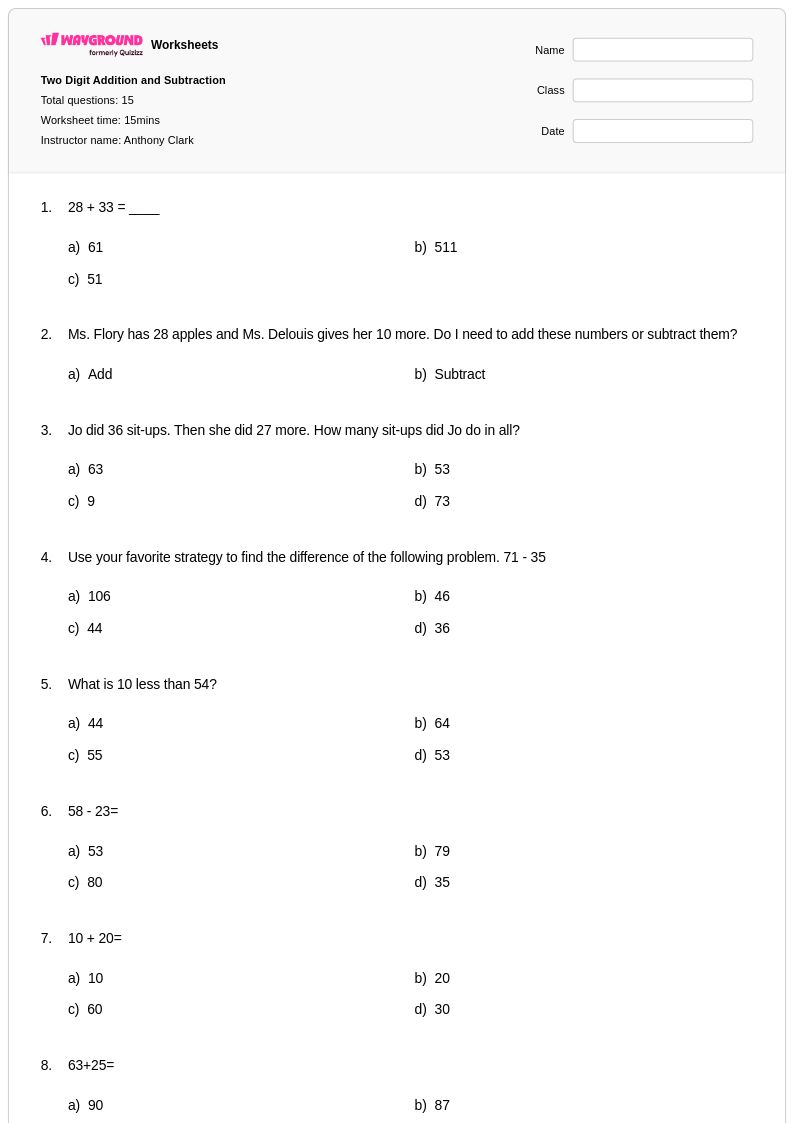
15 Q
2nd - Uni
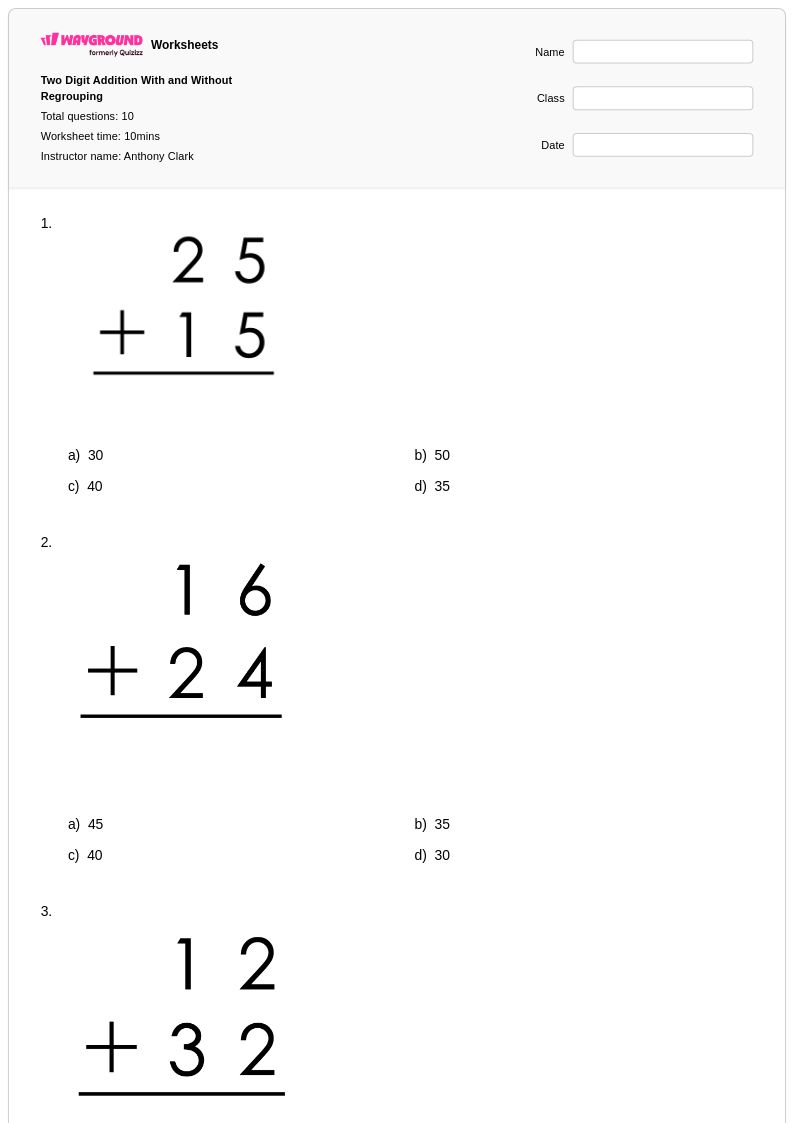
10 Q
2nd - Uni
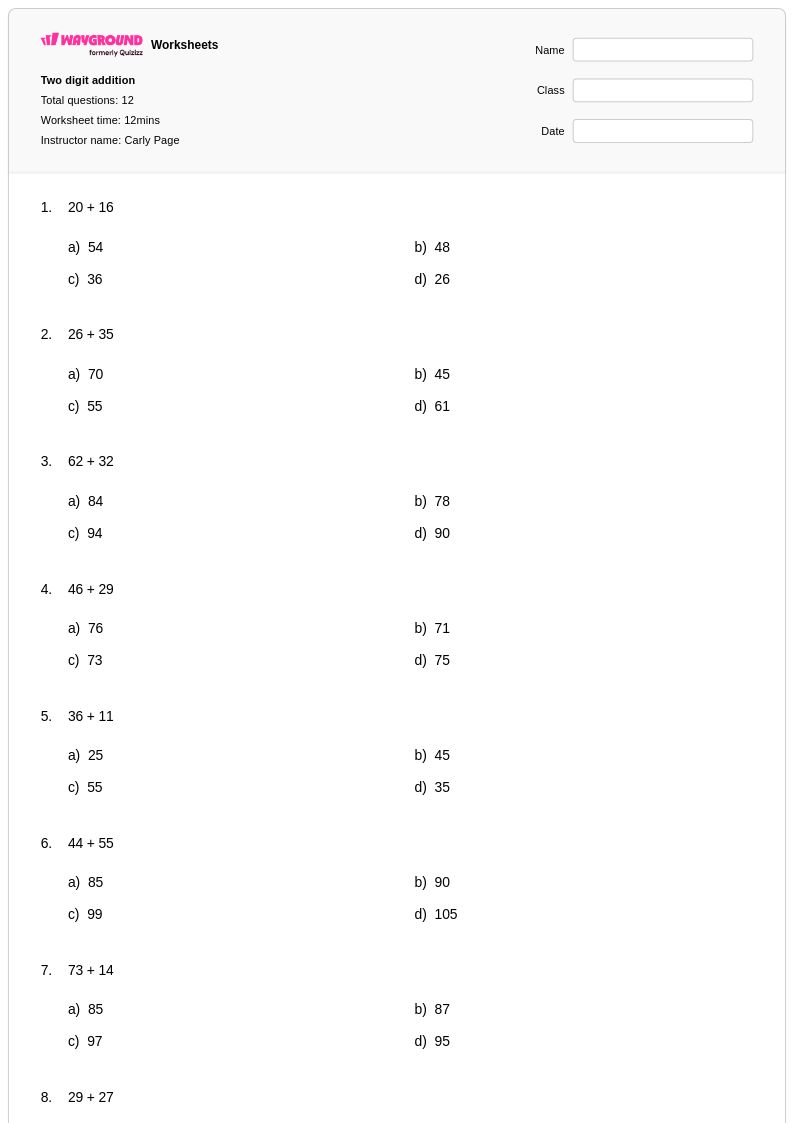
12 Q
2nd - 3rd
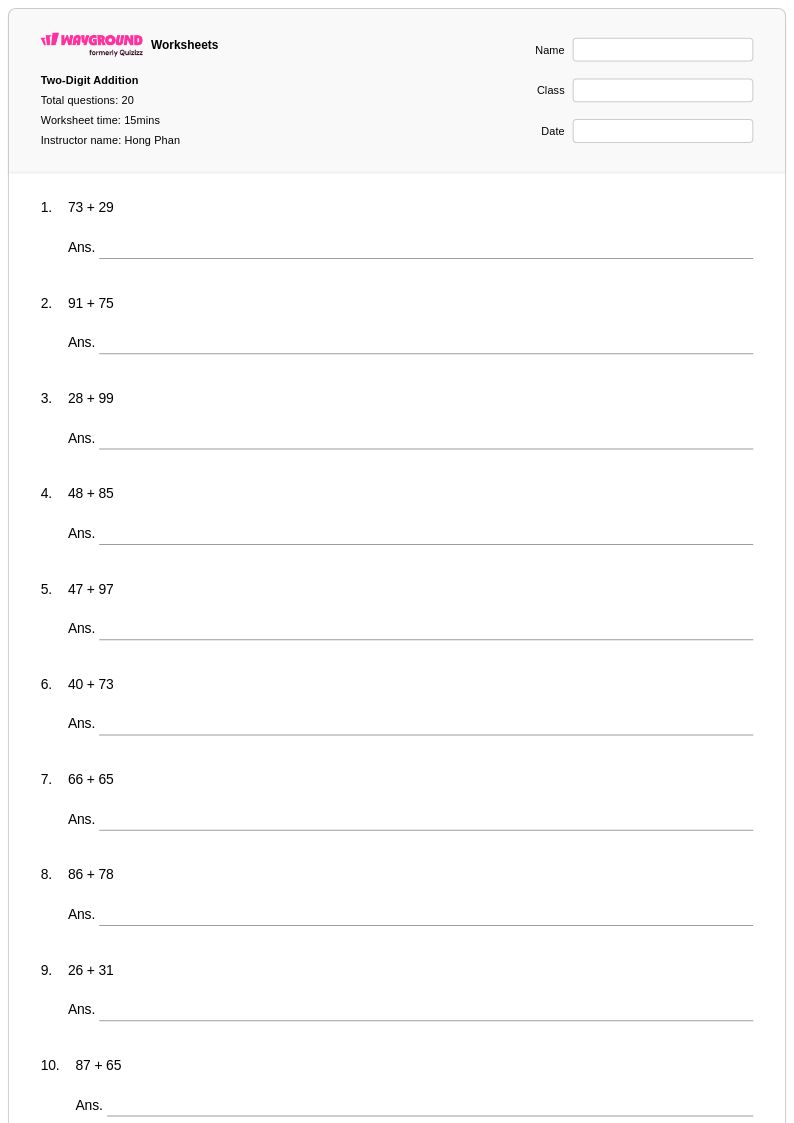
20 Q
3rd
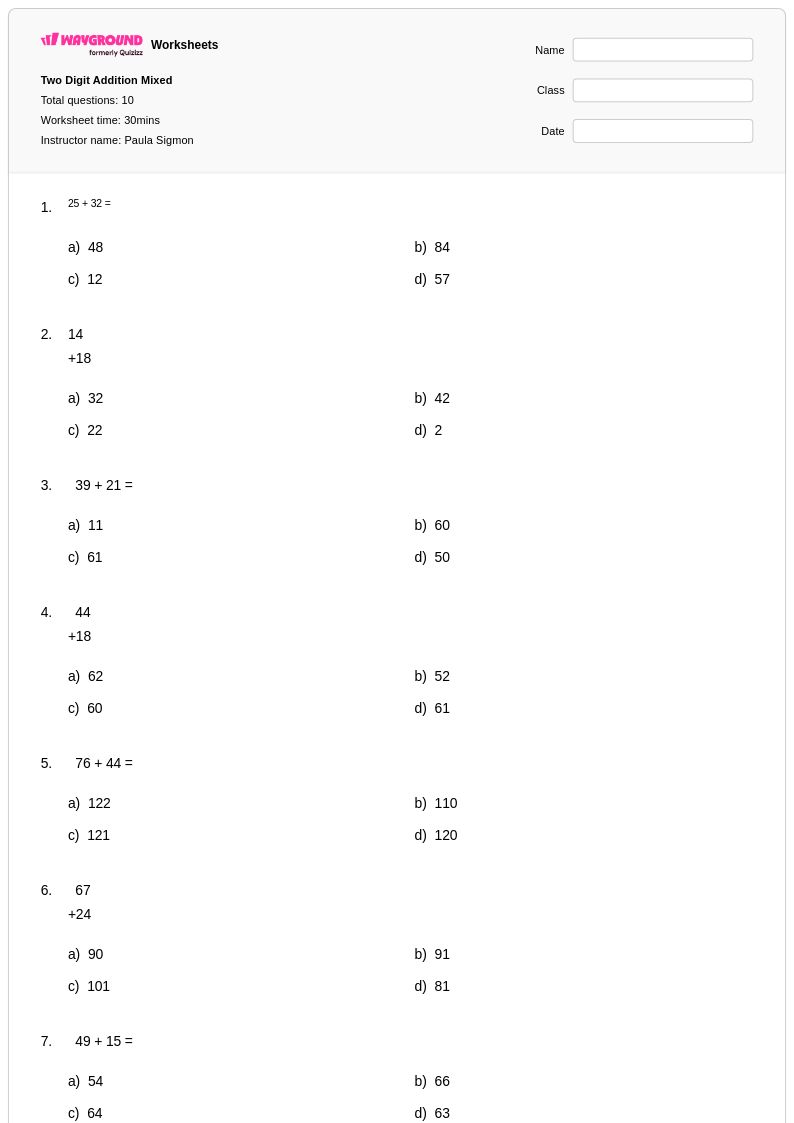
10 Q
2nd - 3rd
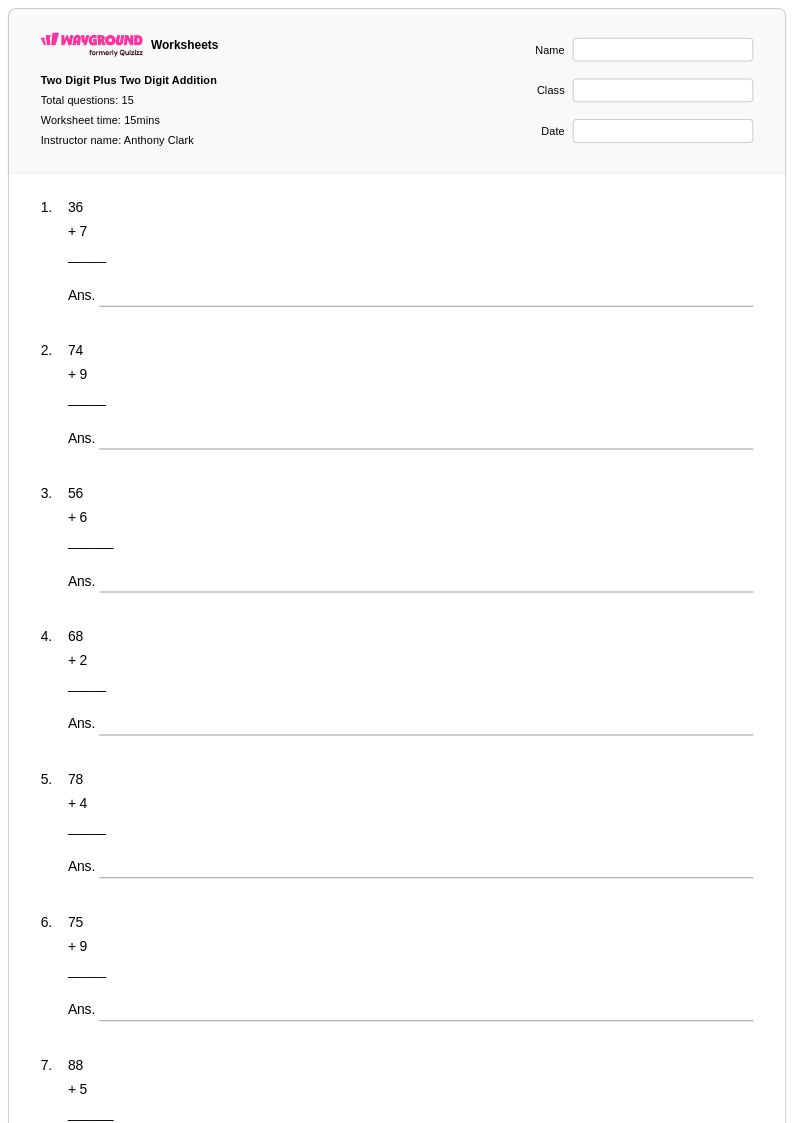
15 Q
2nd - Uni
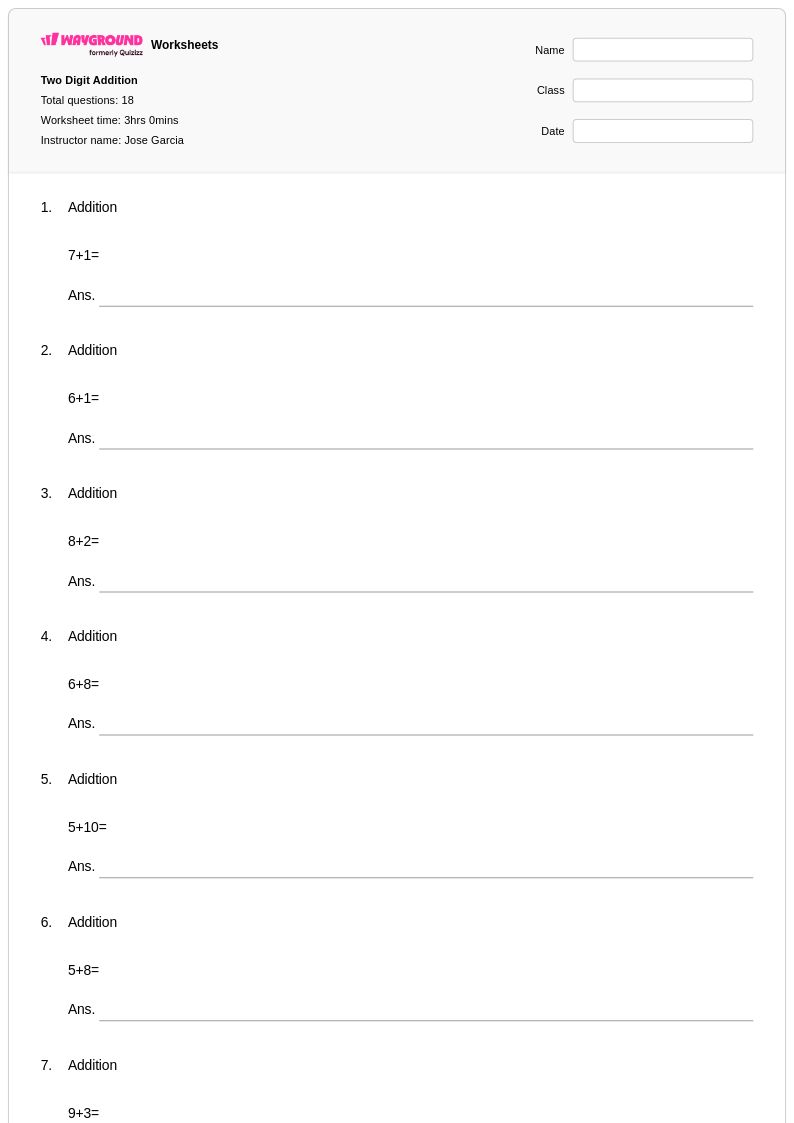
18 Q
3rd
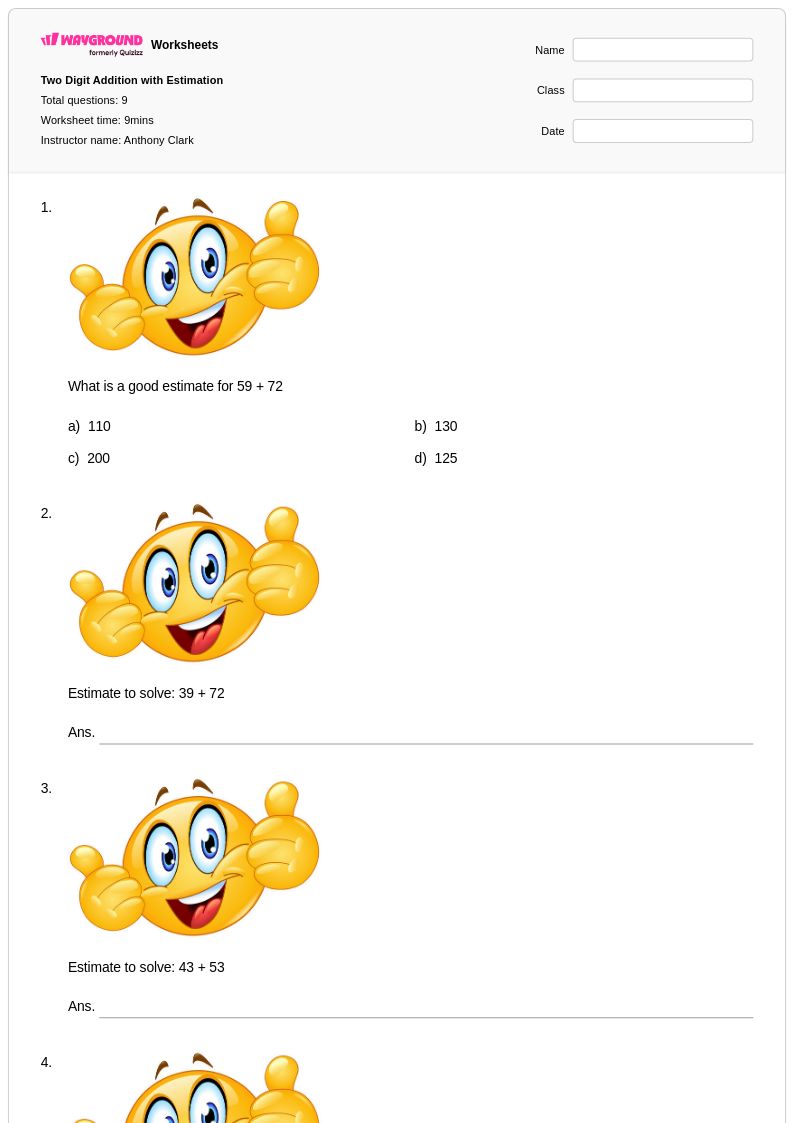
9 Q
2nd - Uni
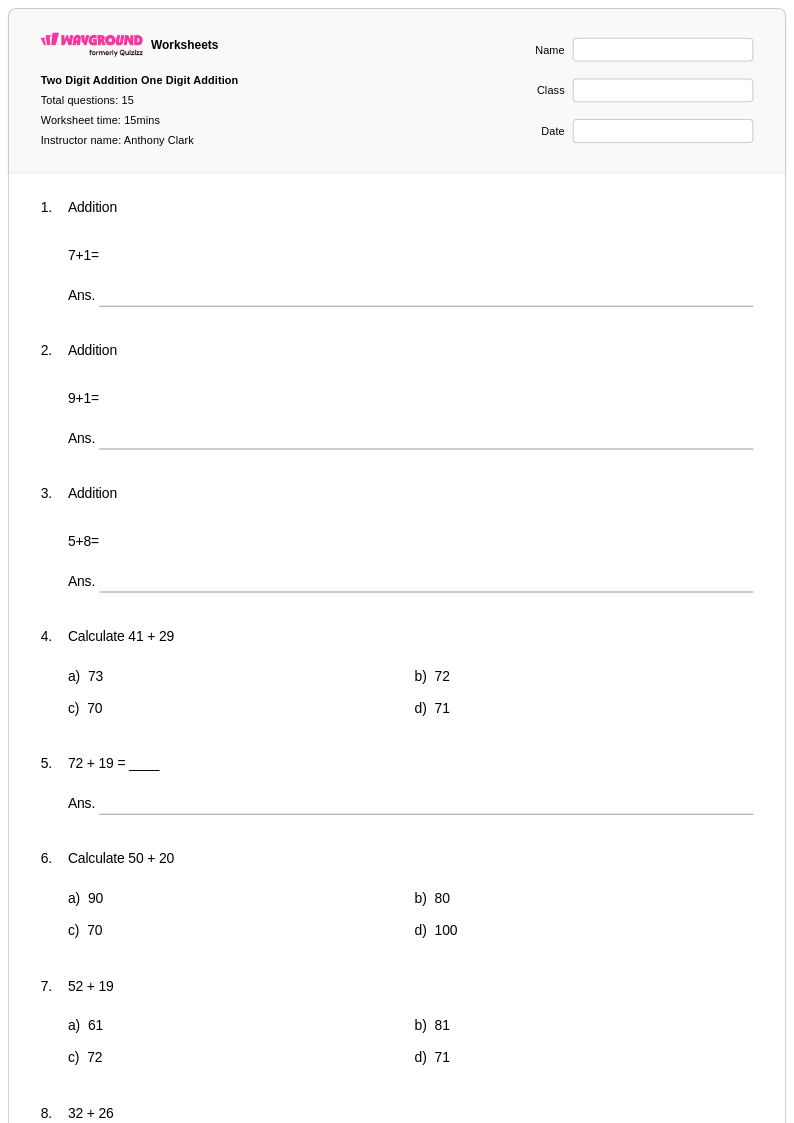
15 Q
1st - Uni
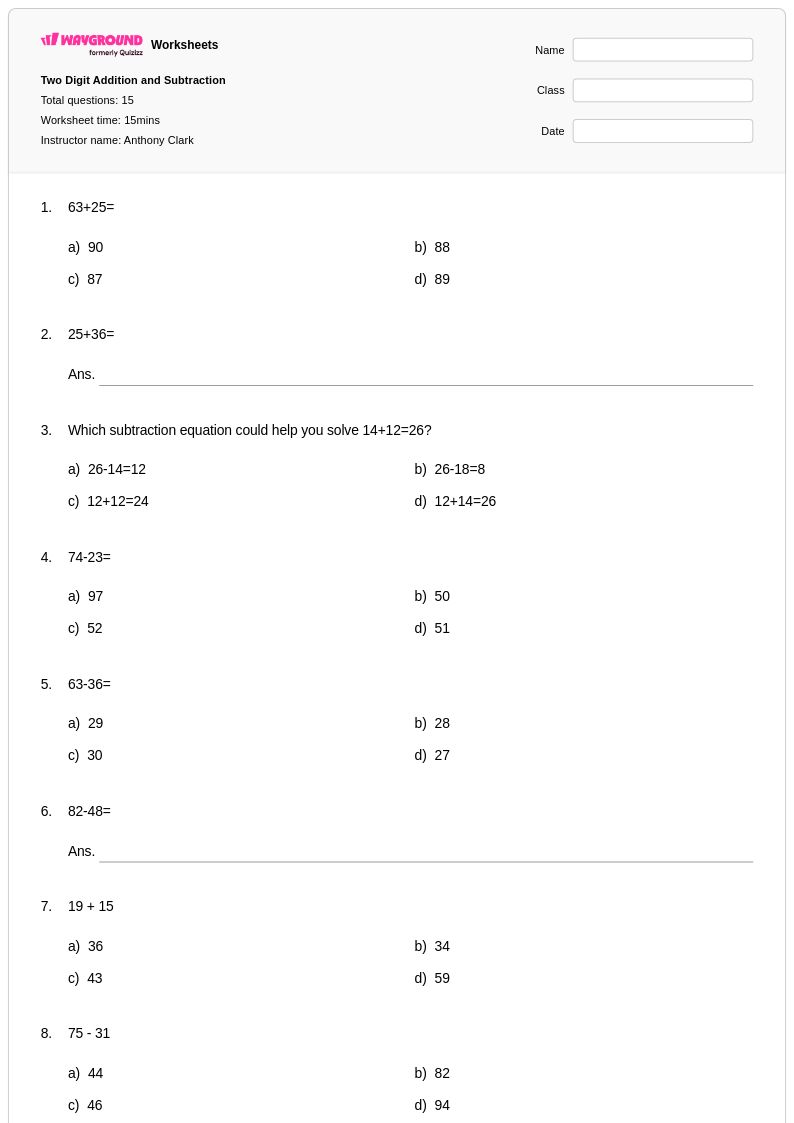
15 Q
2nd - Uni
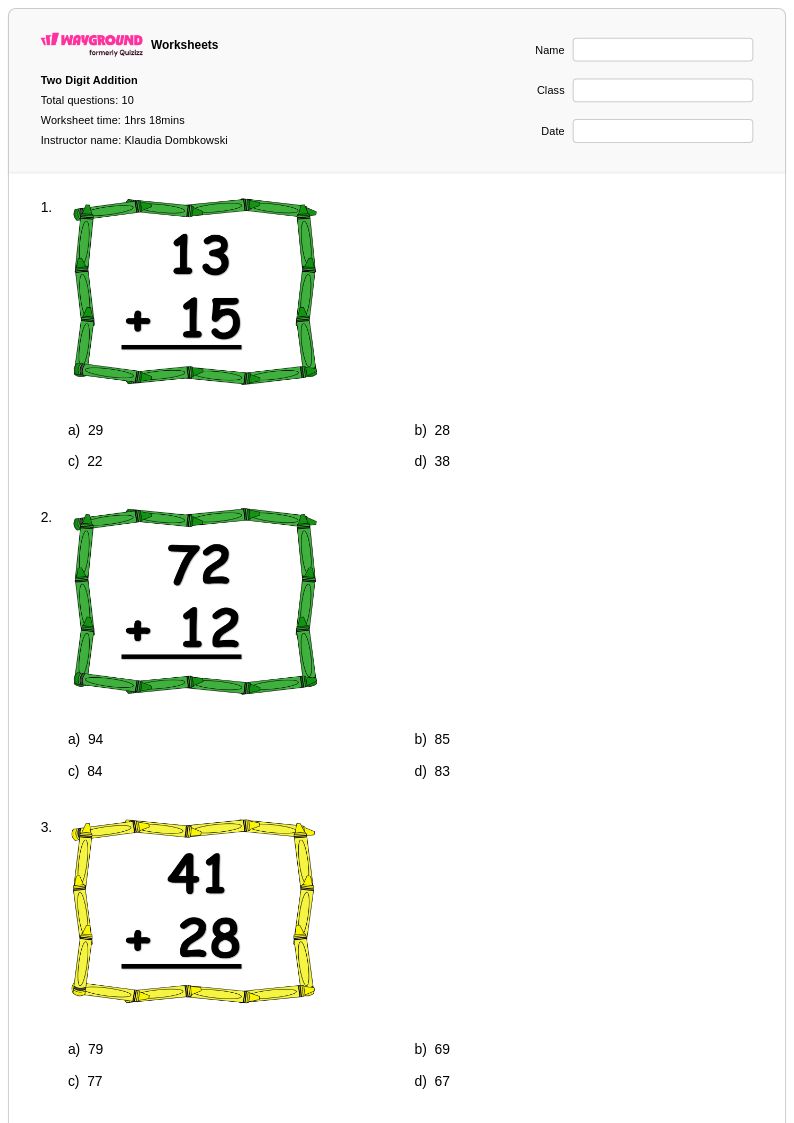
10 Q
1st - 3rd
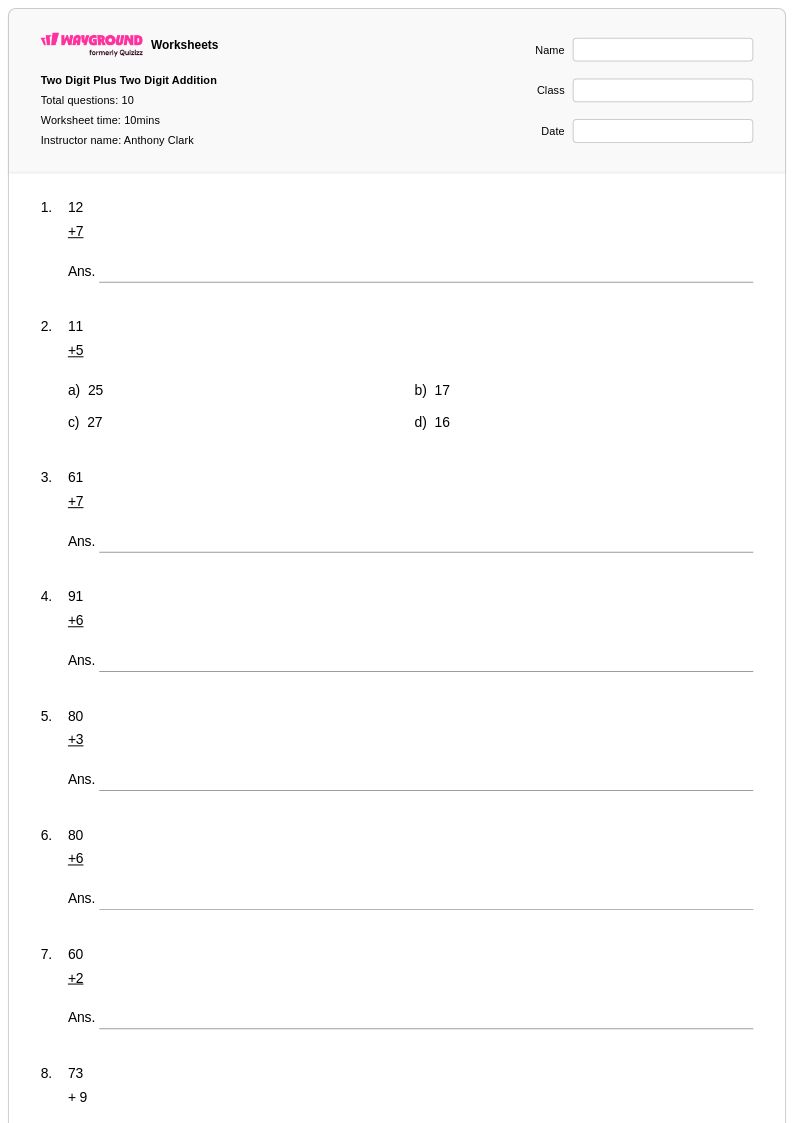
10 Q
2nd - Uni
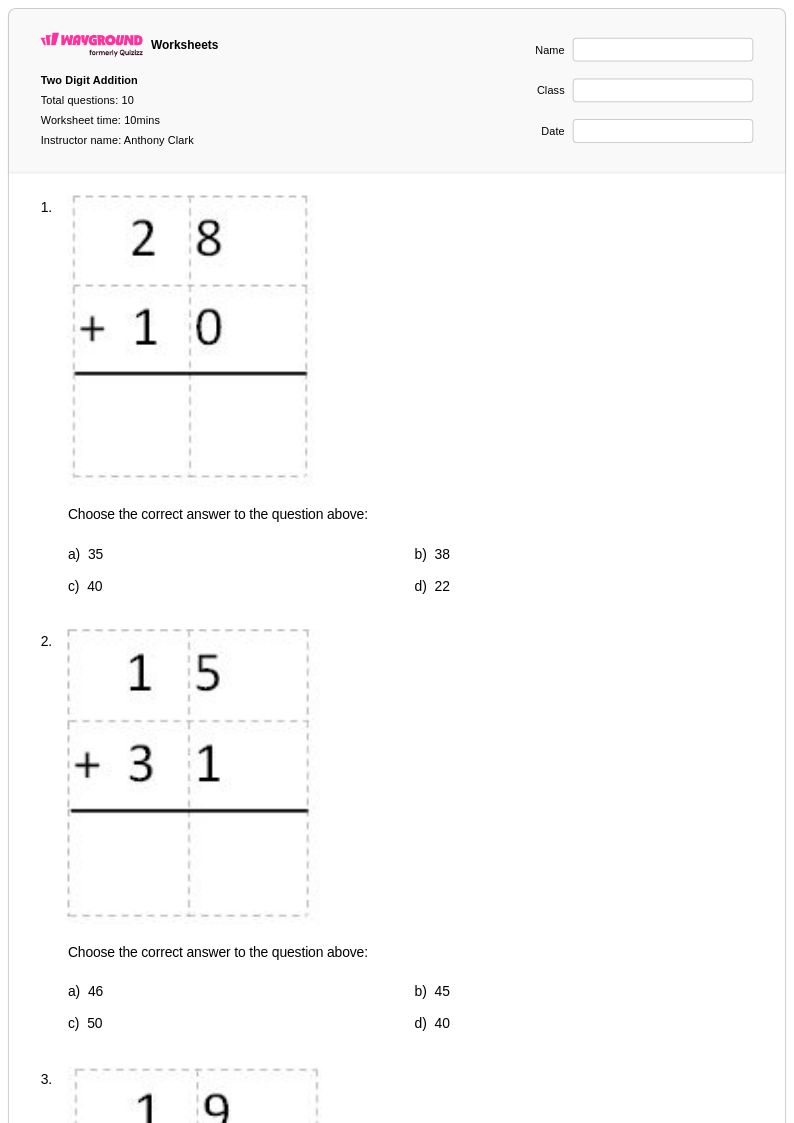
10 Q
2nd - Uni
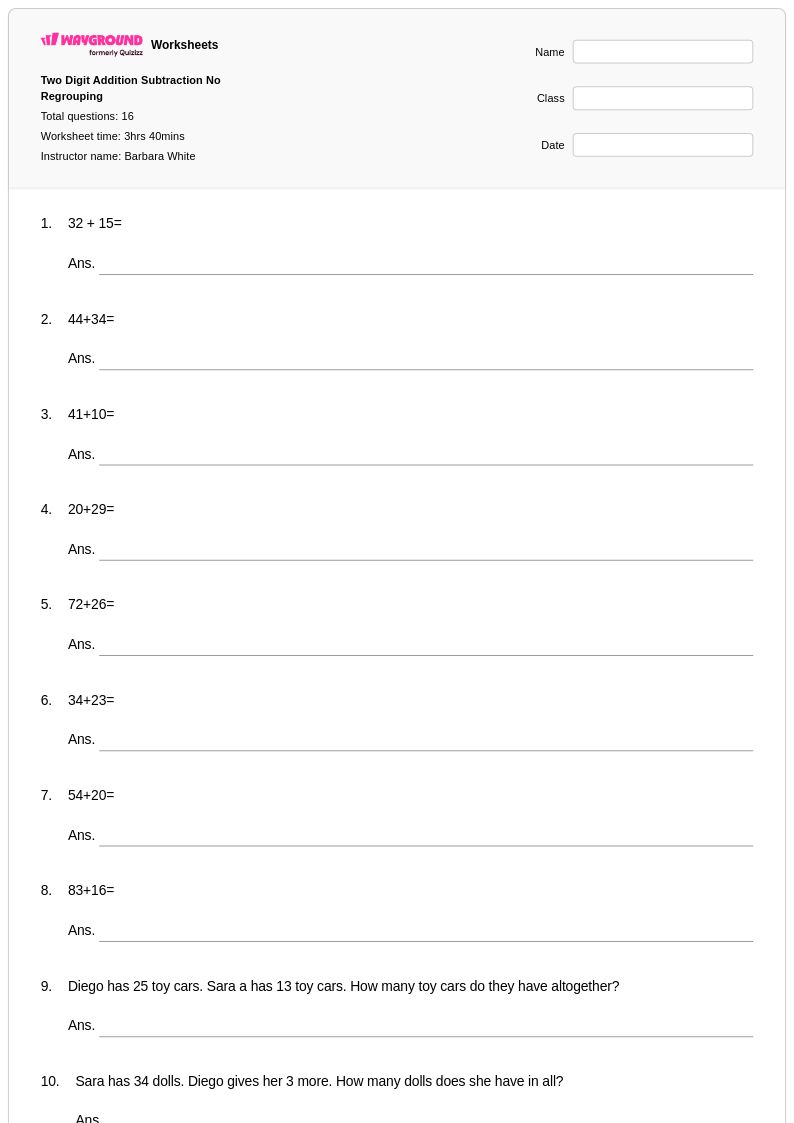
16 Q
3rd - 4th
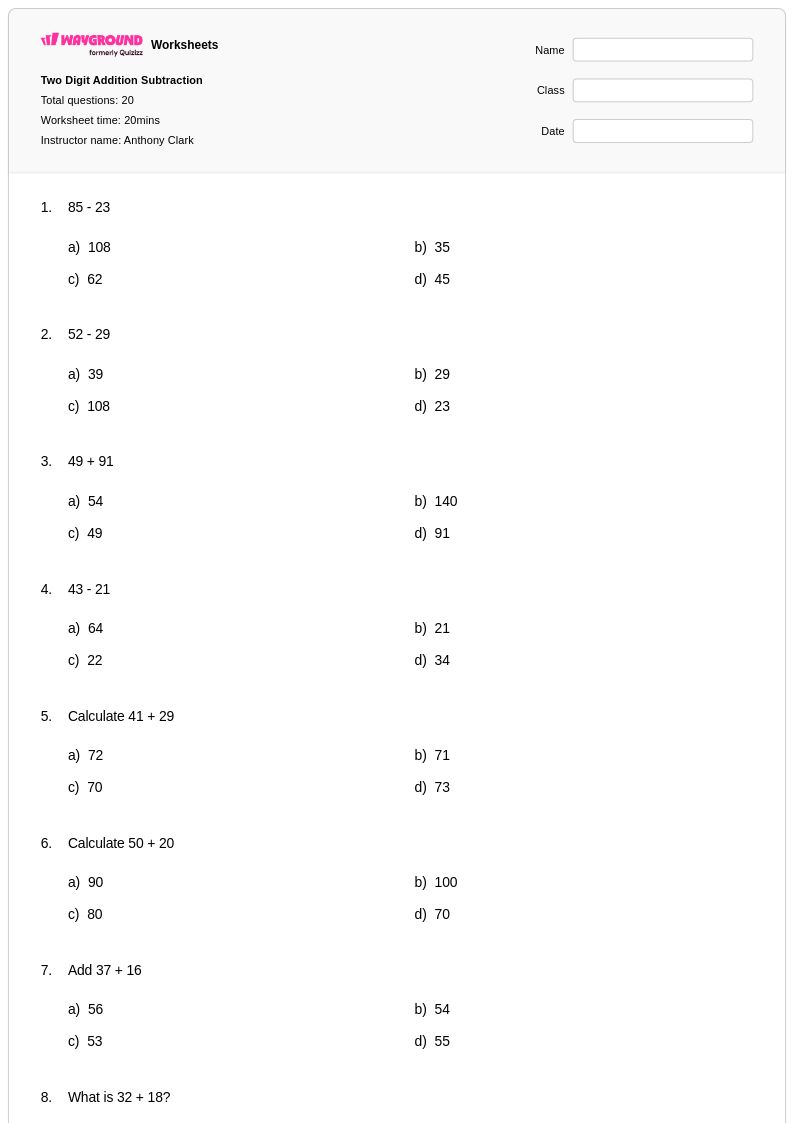
20 Q
2nd - Uni
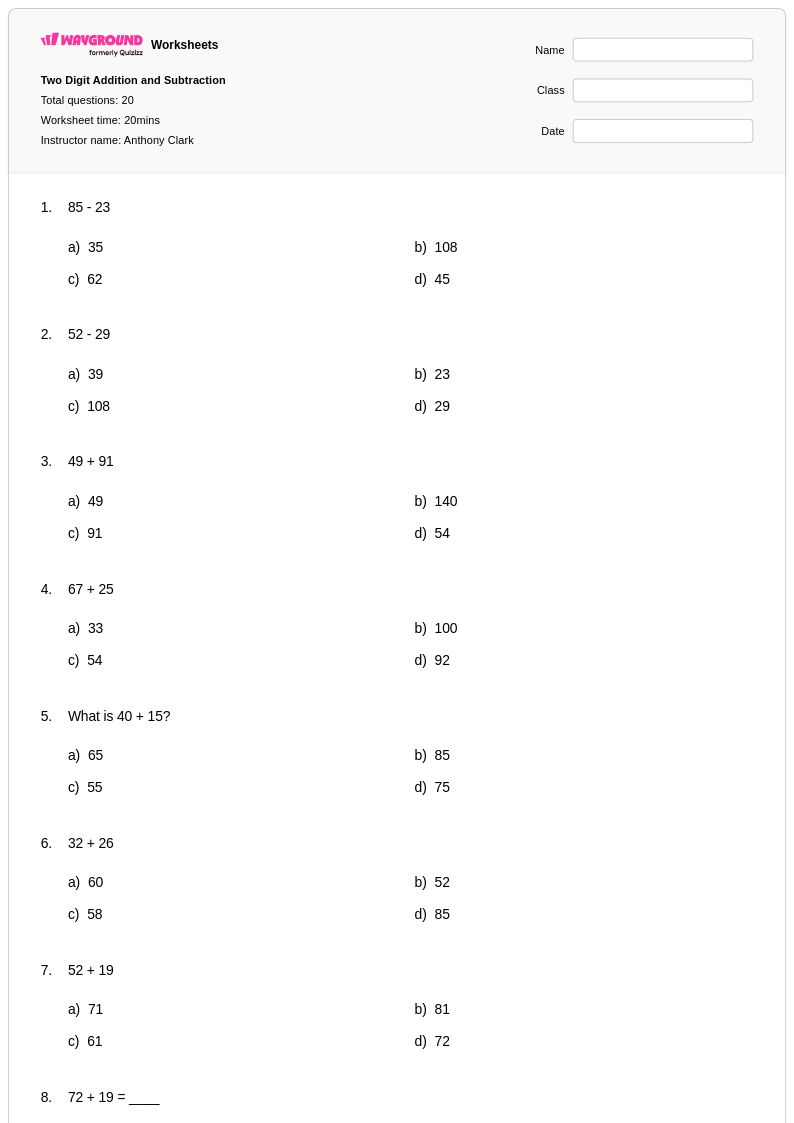
20 Q
2nd - Uni
Explore Other Subject Worksheets for grade 3
Explore printable Two-digit Addition worksheets for Grade 3
Two-digit addition worksheets for Grade 3 students available through Wayground (formerly Quizizz) provide essential practice for developing foundational arithmetic skills that serve as building blocks for more complex mathematical concepts. These carefully designed printables focus on helping third-grade students master the process of adding numbers between 10 and 99, emphasizing proper place value understanding, regrouping strategies, and computational fluency. Each worksheet includes varied practice problems that challenge students to apply different addition strategies, from mental math techniques to the traditional algorithm, while comprehensive answer keys enable both independent learning and efficient assessment. The free pdf resources systematically progress from simpler combinations without regrouping to more challenging problems that require carrying, ensuring students build confidence and accuracy in their mathematical reasoning.
Wayground (formerly Quizizz) empowers educators with millions of teacher-created two-digit addition resources that streamline lesson planning and support differentiated instruction across diverse Grade 3 classrooms. The platform's robust search and filtering capabilities allow teachers to quickly locate worksheets aligned with specific curriculum standards and student skill levels, while customization tools enable educators to modify existing materials or create personalized practice sets tailored to individual learning needs. Available in both printable and digital formats including downloadable pdf files, these worksheet collections support flexible implementation whether for whole-class instruction, small group remediation, homework assignments, or enrichment activities. Teachers can efficiently track student progress, identify areas requiring additional support, and provide targeted skill practice that bridges gaps in understanding while maintaining engagement through varied problem types and age-appropriate mathematical challenges.